This Week In SeniorsSkiing.com (April 10)

Season Wrap: It Was A Very Good Season Until It Wasn’t.

[Editor note: We’re including a few notable pics from the year to accompany this article.]

Credit: Taos

And so ends the sixth publishing year of SeniorsSkiing.com.  A little earlier than planned.  We had some spring skiing in mind around mid-March; we bet you did, too. Nothing is constant but change.

As we move into the blooming part of Spring 2020—the weather breaking, nature waking up—we have to be grateful for what we did have this year. So, in this last This Week of the publishing year, we are going to look back.

The Women’s World Cup on Thanksgiving Weekend at Killington was, luckily, an act of kindness from the snow gods. Thanks to an early snowstorm, there was snow for racing. And the East was poised to have another fantastic year. California also had a early snow. Hopes were up.  Little did we know the season would be U-shaped, snow-wise, when all was said and done. Rockies, BC, Northwest, mostly great to fantastic. The report card for 2019-20: All good West (not California), Meh, East. Maybe next year.

SeniorsSkiing.com continued to publish its directory of 157 ski resorts where seniors could ski for free or almost free. We defined almost free as deeply discounted lift tickets and season passes.  We keep uncovering more of these bargain spots, thanks, in part, to referrals from our readers. We can still download that directory. Note: You will have to re-enter your name and email to access subscriber-only content.

We also published our yearly list of skis for seniors, thanks to our partnership with Realskiers.com. That is still available, too, as a download. Note: You will have to re-enter your name and email to access subscriber-only content.

This season, we had technique tips from Bob Trueman, Pat McCloskey, and Marc Liebman, as well as a new Ask The Expert series, where reader questions were fielded by industry savants. We published personal memoirs about last turns of the season and Moriarty hats, profiles and obits of ski personalities, and fitness routines, personal stories of knee replacements, and health tips especially for seniors. We had a series of pre-season puzzles to keep readers’ interests engaged while we waited for the weather to turn colder.

We also published resort reviews, based on visits by our correspondents, and a collection of cross-country skiing articles, about places, technique, and news.

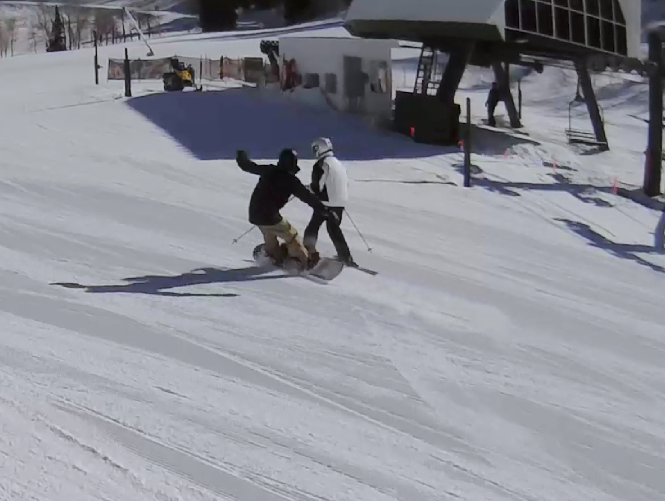
Correspondent Jan Brunvand captured an incident in action.

We were happy to publish the Skiing Weatherman’s weekly predictions all season long.  Thanks to Herb Stevens for delivering interesting analyses of how the weather works.  We actually learned a lot about troughs and ridges in the process.

We published over 20 Mystery Glimpse pictures contributed by the many fabulous ski museums around North America. In looking at your guesses, we realized there are many astute observers of ski history out there.  Thanks for playing the game.

This February, we had our second fundraiser. We were humbled and grateful for the wonderful contributions from our readers that will keep this enterprise going. 

Finally, this year’s Incidents And Accidents series has led to important recommendations, shaped by our readers, to make the on-slope experience safer for everyone.  We are currently bringing our findings to the ski industry for their reaction and action. We will report how that project is processing over the next few months.  Bear in mind, the ski business is pre-occupied with virus management, so we are treading carefully and patiently.

Our Magnificent Correspondents

SeniorsSkiing.com could not exist without the contributions of our correspondents, most of whom are professional journalists. Most of these writers have been with SeniorsSkiing.com since we started six years ago. We hope you appreciate their work; we can’t thank them enough.

This year’s regular contributors are:

  • Harriet Wallis, Salt Lake City, UT
  • Roger Lohr, Lebanon, NH
  • Tamsin Venn, Ipswich, MA
  • Pat McCloskey, Sewickley, PA
  • Marc Liebman, Savannah, TX
  • Don Burch, South Windsor, CT
  • Joan Wallen, Andover, NH
  • Bob Trueman, Welshpool, Wales
  • Herb “Skiing Weatherman” Stevens, Wakefield, RI
  • Mike Roth, Albany, NY
  • Rose Marie Cleese, San Francisco, CA
  • Yvette Cardozo, Issaquah, WA
  • Mary Jo Tarallo, Rehoboth Beach, DE

And thanks to the one-time contributors who made it to our pages.

This Week

Co-Publisher Jon Weisberg reviews Roam Robotics Elevate, a computer-assisted exo skeleton, that supplies subtle support and a completely different approach to assistive ski devices.

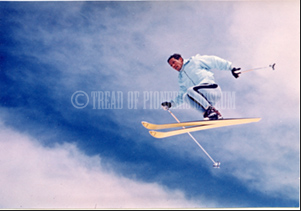
We reveal last week’s Mystery Glimpse picture from the Tread Of Pioneers Museum, Steamboat Springs, CO.  One reader did a Sherlock-like job connecting the dots, deducting the right answer by reading the clues in the article and pic. Nice work.

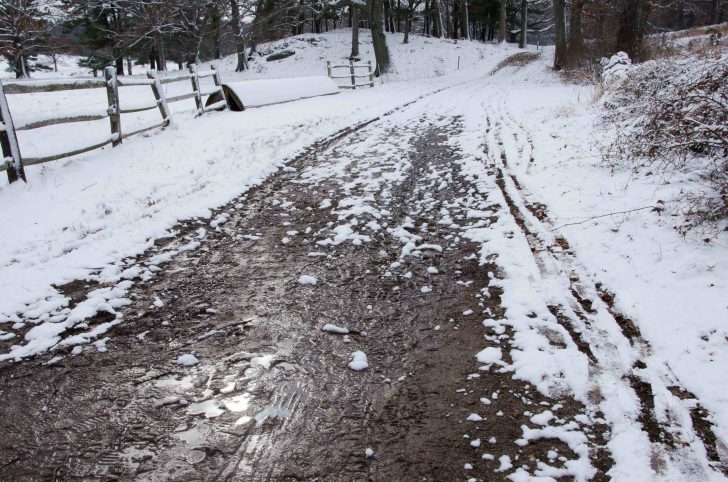
We reprise a verse from Two Tramps In Mud Timeby Robert Frost, which fits the temperament of April. We have also included a link to Frost reading the poem himself. The Snow In Literature series has been fun for us to curate, and we’re glad we’ve reached a number of readers. Just shows you there’s another part of winter besides resorts, skis, gear, etc.

Thanks for reading SeniorsSkiing.com.  Take good care in these disruptive days. We will publish monthly over the non-snow months. 

Remember, there are more of us every day, and we aren’t going away.

Sunday River, ME


Deseret News

Short Swings!

Source: Deseret News

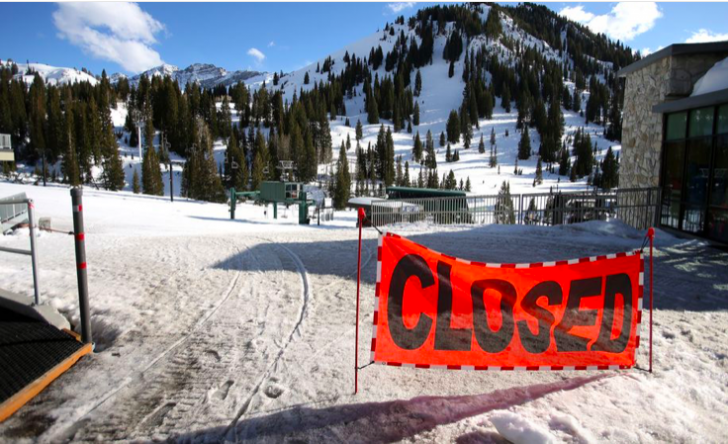
In the past few weeks, we’ve learned that skiing has been identified as a significant vector in the spread of COVID-19. If you have not read this article in The New Yorker magazine about Sun Valley’s role, it’s an eye-opener. 

Germany, described as a “skiing nation,” has traced many of its cases to a beer pong table in the Austrian resort of Ischgl, a popular destination for German skiers.

The outbreak in Mexico, in part, originated from a group of Mexican business leaders returned from a ski holiday in Vail, where they contracted the disease.

It makes sense. When we ski, we share trams, gondolas, and chairs and dine and shop in the same places. These are ideal conditions for picking up an invisible bug and transporting it back home where it can catch fire.

And ski towns are suffering. Sun Valley and Vail have some of the highest infection rates in the country. They and others are discouraging visitors and second homeowners from seeking refuge in the mountains.

This is not to place blame on ski areas. The same could be said of any form of public transportation, terminals, cruise ships, hotels, restaurants, bars, grocery stores, gyms, beauty salons, etc., etc. It’s just that until now, the most dangerous thing about the sport was hitting or breaking something or getting buried. Now skiing has entered the realm of public health hazard.

We can only hope that the aftershocks will not permanently alter the sport.

It would be great to get your points of view on the subject, which you can do by commenting at the end of this article.

On a related note, we normally stop publishing weekly at the end of April and publish monthly June through September.

Because there’s less and less ski-related things to write about, this will be our last weekly distribution for the season. We’ll continue to publish articles throughout the ensuing weeks. The next issue will be emailed in May.

Since last September, counting this column, you’ve been sent more than 200 articles, including 26 Short Swings! columns. Each week in this column I attempt to deliver a point of view and a gathering of interesting and sometimes weird developments from the world of skiing. Since we started publication in 2013, more than 1300 articles including 134 Short Swings! columns have appeared.

We’ll be back in about a month.

In the meanwhile, stay safe, stay healthy, and do what you can to bring this thing to an end.

Alterra Lays off 17,000

An email from Alterra CEO, Rusty Gregory to the entire organization announced that COVID has forced layoffs of 17,000 seasonal employees, substantial cuts to operating expenses, and postponement of more than 50% of previously approved capital expenditures. Gregory also announced he will be working without pay “…until each of our year-round staff returns to work.”

Vail Patrol Training As Paramedics

More than 20 Vail ski patrollers are training to join Eagle County (CO) Paramedic Services. They are part of a contingency plan that could keep ECPS running even if 40% of staff becomes ill.

Video Explains Storing Skis and Boots for Summer

This five-minute Nordica production gives sensible advice on storing your gear for summer. Among other useful tips, don’t use ski straps and be sure to engage the power strap on your boots.

22 Ski Films from Red Bull TV

Red Bull sponsored these ski films ranging from 10-minutes two hours. Now, with the season shortened and many confined to their homes, the company is making them available free-of-charge. Click here to connect.

Two of the All-Time Best Short Ski Videos

Hardship (e.g. sheltering in place) often spawns creativity.

  • Freeride at Home (90 seconds) is one of the cleverest ski films I’ve seen.
  • Lego Skier (40 seconds) is another terrific little film.

Alta Season Recap

DailyPow.com is a site that produces and posts video reports for the legions of Altaholics everywhere. Whether or not you’re an Alta skier, you’ll enjoy it.

The Future Is Here

Among the thousands of reasons the abrupt end to the season is a bummer is this: Those of you who were planning to demo the Roam Robotics Elevate will need to wait until we’re back on the hill.

Roam Elevate backpack and control device

Elevate is world’s first computer-assisted knee exoskeleton for skiers.

I had the good fortune to try the device toward the end of February. I met DJ, a company representative, at Deer Valley on a bluebird day and we spent much of the afternoon trying the Elevate on a variety of terrain.

If you missed our earlier article reporting on Rick Hovey’s experience with Elevate, click here. I think that Rick, a PSIA II instructor and a person with a serious knee condition, reports more thoroughly on the many benefits Elevate delivers.

But I wanted to go on record with my positive experience and encourage any skier with knee or other orthopaedic conditions to give Elevate a test run.

DJ helped me get the exoskeleton on my legs; a simple procedure involving a few easy-to-fasten straps. It’s a good-looking product that the company keeps refining. 

Next, I hefted the pack containing computer, battery and air compressor onto my back and attached air hoses and power connections. The initial sense of weight and bulk disappeared quickly. That said, DJ explained that next season’s version will be lighter and sleeker.

We skied to one of the lifts and took a few runs. DJ asked if I could tell the difference. Elevate is supposed to anticipate your moves and send puffs of air to the exoskeleton to relieve pressure on the knees. I told him I didn’t feel a thing.

Then he asked me to turn it off. The control is a device mounted near the shoulder. I did what he said and immediately and dramatically felt the difference. Elevate had been assisting me in such a subtle and effective way that I couldn’t tell until I turned it off. Amazing!

Then we entered a field of moguls. DJ had suggested moguls farther down the hill that weren’t quite as big. I took that as a challenge and went where I shouldn’t have gone. Not that I don’t ski moguls. I do. But that day was the first using new skis (I had the bindings mounted that morning) and I was a bit tired, and…enough with the excuses. I fumbled my way down and felt foolish.

That was me, not the Elevate. By then I was ready to call it a day and we headed back to where we began.

Bottom line is that Roam Elevate is approaching the end of its development stage and will be ready for primetime and purchase next season. If the season were still going, I’d strongly recommend that anyone trying to avoid knee surgery for a while try Elevate. I’d also recommend it to anyone wanting to add more ski days to the week and more ski hours to the day.

Roam Elevate is an entirely new approach to assistive ski devices. Unlike others that wrap around the knee or use springs or pistons, Elevate uses intelligence to inform how it functions in real time. The manufacturer has been using its demo centers at nine major resorts in California, Colorado, Idaho, Montana and Utah to educate future purchasers, to collect more data, and to further refine an already highly developed piece of equipment.

It’s the future. And as all of us realize, especially at this moment, sometimes the path to the future has some bumps. The difference is that the people at Roam know where their path is taking them and they’re using this time to refine and miniaturize an already elegant solution to a common problem for older skiers.

Knee issues? Wish you had greater stamina? The solution is here and getting better. Tune in this fall.

Snow In Literature: Two Tramps In Mud Time (Excerpt)

[Editor Note: This time of the year, we like to re-publish this verse from Frost’s Two Tramps In Mud Time. We also note that we’ve published a number of Frost’s poems in our Snow In Literature this publishing year. Unintended.  But his words reflect the world of people who know winter and all it brings. You can listen to Frost himself reading the whole poem by clicking on the YouTube link at the bottom.]

By Robert Frost

The sun was warm but the wind was chill.
You know how it is with an April day
When the sun is out and the wind is still,
You’re one month on in the middle of May.
But if you so much as dare to speak,
A cloud comes over the sunlit arch,
A wind comes off a frozen peak,
And you’re two months back in the middle of March.


Mystery Glimpse: Yes, It Was Buddy

Buddy Werner, Movie Star

Many readers identified this Bogner-clad high-flyer as Buddy Werner, the celebrated ski racer. And yes, there is a strong resemblance to Jean-Claude Killy in this pic. Many thanks to Steamboat’s Tread Of Pioneers Museum for contributing this photo.

Just three weeks after the 1964 Innsbruck Olympics, Buddy Werner was in Switzerland to film a movie produced by Willy Bogner. According to Wikipedia, Werner and German racer (and Olympic medalist) Barbi Henneberger, age 23, were caught in an avalanche on the Trais Fleur slope, near St. Moritz. Both skied out of the first avalanche, but were caught up in another; their bodies were found hours later.

Bogner, 22, and Henneberger were to be engaged that summer;  he was tried by a Swiss court for homicide by negligence. He was initially acquitted, but the prosecution later won a conviction on appeal, of manslaughter by negligence, and Bogner received a two-month suspended sentence.

After a memorial service in Denver, Werner’s funeral in Steamboat Springs overflowed the United Methodist Church,and he was buried at the city cemetery at the base of Howelson Hill. Coach Bob Beattie and teammates from the U.S. Ski Team were pallbearers. 

Kudos to reader Bruce Boeder for following the hints and connecting the dots. In case you missed it, here’s his entry: “Went to the Internet Movie Database and find that Buddy Werner did appear in a movie called SkiFascination made by Willy Bogner (Werner and Bogner’s fiancée were killed in an avalanche while making the movie—but people subscribed to this website well remember Buddy Werner). Accordingly, piecing together the clues—photo from the Steamboat museum, Head Comps with long thongs, and Scott poles— it may be Buddy dressed in the Bogner finest?!” Elementary, my dear Bruce.

Here’s a preview of SkiFaszination, released in 1966. Bogner skiwear galore.

Thanks To The Ski Museums Who Contributed To This Series

Our Mystery Glimpse series would not be possible for the many ski museums who allowed us to use photographs and artwork from their archives and collections.

These museums are scattered across the country, all mostly staffed by dedicated volunteers and a few paid employees. If you’ve never visited a ski museum, you have a treat ahead. Please consider a visit—virtually, or in person (when the virus lifts), stop at the museum’s gift shop, make a donation, and marvel at the care taken to curate the history of snow sports.

The ski museums which have contributed paintings and artwork this year:

And many thanks to our insightful readers for their many guesses, comments, memories, and contributions to our trip through snow sports nostalgia.


This Week In SeniorsSkiing.com (April 3)

Biding Time With Classic Books, Incidents And Accidents Editorial, Question For You, Mystery Racer, Nordic Walking, Transition To Cycling.

Like you, we are grounded. Yard work, walking, Zoom with old friends, carefully going to the Post Office, watching Netflix, reading, practicing new music, all the activities you are probably doing.

One rainy afternoon found us sorting through the books at the bottom of one of our many book shelves. Among old titles (Moulton “Monk” H. Farnham’s Sailing For Beginners [1967] and James F. Fixx’s Complete Book Of Running[1977]), we found two classics. Skiing With Pfeiffer (1958) was an early instruction book by the venerable Doug Pfeiffer, a natural teacher whose careful and precise dissection of turns and techniques and easy writing style set the standard for all that would follow. Doug gave me a copy of his book back in 1971 when I was at SKIING magazine, and he was the Editor-In-Chief.  His inscription: “A collector’s item for Mike Maginn. Doug Pfeiffer.” That item is still in the collection, Doug.

Here’s the front cover.

And the back cover. Note the comments from “Pleasure-Loving Weekend Skiers”.

Perhaps the greatest adventure we had at SKIING back in those days was participating in the Great Washington’s Birthday Cross-Country Ski Race in Putney, VT. This race was modeled after the people’s races in Scandinavian countries, not quite the Vasaloppet, but still a large group of both racers and fun skiers all dashing across snow-covered farm fields and into the woods.  We looked forward to participating along with Associate Editor John Henry Auran and some other staff members. The problem was I had never cross-country skied.  In fact, I had never heard of it. After all, XC was the “newest” sport in the snow world and a little esoteric.

So, Executive Editor Al Greenberg gave me a lesson in his office, showing me how to shuffle, “like you’re wearing bedroom slippers”, and how to swing arms.  Then, I bought the book below by Johnny Caldwell, Olympic skier and coach, at the Scandinavian Ski Shop on East 57th Street when I picked up my wooden skis, wax kit, and kangaroo skin boots.  It is truly a classic. Note the back cover comment about how the Cross Country “contagion is spreading”.  Not a great metaphor these days.

Do you still have classics like these sleeping on your library shelves? If you do, tell us about them. What surprises can you find between those covers? Why are you keeping them?  Let us know in the Reply box below. We’d like to know.

This Week

Correspondent Jan Brunvand captured an incident in action.

SeniorsSkiing.com is publishing an editorial calling for action from the ski industry and resort management to address the conditions that our readers have reported all season long in our Incidents And Accidents series. We plan to promote the action item called for in the editorial and get some discussion going in industry circles. Please let us know what you think about our approach.

We are continuing our Question For You series, this time asking what changes you would like to see in the Responsibility Code that might help mitigate some of the issues readers have reported in our Incidents And Accidents series. Our readers input was instrumental in framing the problem of out-of-control skiers/boarders. Now, you can help us develop at least part of a solution.

Correspondent Pat McCloskey offers his advice for transitioning to cycling. His comments make sense, especially for those who haven’t been cycling for a while.

Add Nordic walking to your virus-beating activities to stay in shape.

XCSkiResorts publisher Roger Lohr gives tips on how to do Nordic walking, basically walking with poles that reportedly burns a lot more calories than regular walking. There are right and wrong ways to do this; watch the short video in his story to learn the technique.

Finally, our Mystery Glimpse picture from Tread Of Pioneers Museum is a racer who was in a movie. Check it out here. Last week’s picture from the Journal of the New England Ski Museum was Pete Seibert in the years just before he started thinking about where to build a resort in the Vail Pass. There’s a short video included about Pete’s famous hike into Vail’s back country where he first spotted the landscape that would become the resort.

Thanks to our Skiing Weatherman Herb Stevens who as supplied interesting, informative, and instructional weekly snow forecasts all season long. We appreciate his professional approach and look forward to seeing his column again next season.

Thank you, dear readers, for reading SeniorsSkiing.com. Please take care of yourself and be diligent about following CDC guidelines. And remember, there are more of us every day, and we aren’t going away.

Remember those blue bird days.


Short Swings

Short Swings!

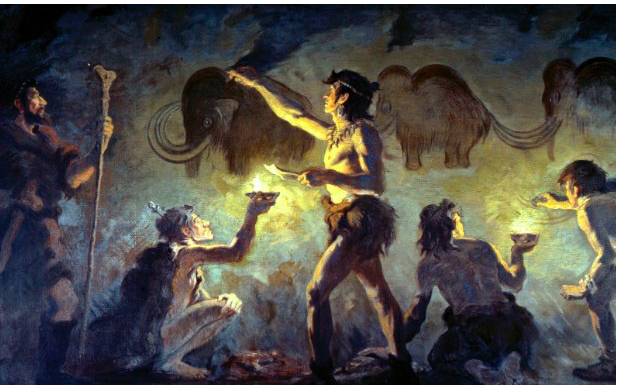
Storytelling is one of the things that distinguishes us from the rest of the animal kingdom. Cave drawings and other prehistoric clues inform us that storytelling predates written history. It preserves memory, forms order out of chaos, and binds people together.

It shows itself in every culture in the form of religion, entertainment, and politics, to name a few.

SeniorsSkiing.com is a storytelling vessel. For the past six years, we have delivered a weekly menu of stories about our shared interest. Volunteers write the stories, Mike and I included. 

I love making up and telling stories and have been doing it in one way or another most of my life. It formed the basis of my professional career, developing narratives that would help clients and employers present themselves in the best possible light or help them rise to the top in a field of fierce competition.

When my kids were young, they went to sleep listening to bedtime stories. Many were made up spur of the moment and probably lost to their young memories. One that stuck with me was the tale of the squeaky forest where trees made squeaky sounds when the wind blew. That was where the squeaky floorboard in one of their bedrooms had come from. They’re now in their 40s. I need to ask if they remember that one.

Two of our grandchildren 6 and 7, soon to be 7 and 8 are on the East Coast. When we’re together they love it when I tell them stories before they go to bed.

But now we’re separated for an indefinite time because of the virus. They’re in Rhode Island and we’re in a remote location on the Colorado Plateau. Thank God for Facetime. A few nights a week, we gather electronically, they in bed, me in the high desert, and I tell them a bedtime story. 

They always ask if it’s fiction or non-fiction. Sometimes I tell them. Sometimes I let them figure it out on their own. I always ask whether or not they liked it. And in the time between those bedtime stories, I’m thinking of another theme or plot or set of characters.

They don’t know it yet, but their next story will be a true one; about the odor of fresh baked bread from the Freihofer’s Bakery in North Troy, NY. I’ll try to paint a word picture of that warm and delicious smell, and I’ll explain how a few mornings each week when I was their age a horse-drawn wagon would stop in front of our house and the Freihofer Man would walk onto our porch with a large tray of freshly baked goods, and my mother would make a selection and ask me what I wanted. I’ll pepper the story with the hay-laced horse droppings that were left on the road. They’re of an age where that type of detail will add credence to the tale and help the story become a permanent memory of their grandfather’s childhood.

Perhaps one day it will influence them to tell their own stories to their own children and grandchildren about a time long ago when they could no longer go to school or play with their friends in the park or attend birthday parties. A time when they and their parents left their home in the big city and escaped to their summerhouse near the beach. A time when their grandfather, Poppa, told them bedtime stories through Facetime and kissed them goodnight over the phone.

US Ski Industry May Lose $2B

National Ski Areas Association, the trade group for U.S. ski areas projects that the season’s early close will result in losses approximating $2 billion, about 30% of season revenues. 

Ski Blandford Closes Permanently

Ski Blandford, about 25 miles from Springfield, MA, announced it’s permanent closure. The area was owned and operated by the Springfield Ski Club from 1936 until 2017 and was the oldest continuously operating club-owned ski area in North America. It was purchased by Ski Butternut which invested substantial sums in the area. Ski Blandford had 27 trails, five lifts and 465’ vertical.

Vail Furloughs Employees, Reduces Capital Improvements

The announcement was made in an April 1 letter to employees from Vail CEO Rob Katz. Year-round hourly employees in the US are being furloughed for “the next one to two months” without pay but with full healthcare coverage with the company paying all premiums. A six-month salary reduction is being implemented for all U.S. salaried employees. Katz is giving up 100% of his salary for six months. The company is reducing capital expenditures by $80-$85 million, “…with the intention to defer all new chair lifts, terrain expansions and other mountain improvements.” 

Goggles For Docs

Goggles for Docs is an effort to get used or new ski goggles into the hands of healthcare workers who currently have no eye protection as they treat COVID-19 patients. Click here, select a state and hospital, fill in the form, and ship your goggles. Some states have reached their capacity with donations. Others, such as Connecticut, New Hampshire, Oklahoma and Pennsylvania are in need.

Cold War

Source The New Yorker Illustration by Thomas Danthony

That’s the title of an article about the science of avalanche study in the March 23 issue of The New Yorker magazine. Authored by James Somers, it starts in Alta, Utah and moves to Davos, Switzerland. The article covers some of the history of avalanche control, including a 1397 Swiss law prohibiting logging because old-growth trees helped minimize avalanche damage. For readers interested in avvys and what is being done to understand and control them, this is an excellent read.

R.I.P. Copper Mountain’s “First Chair Frank”

“First Chair Frank” Walter

Frank Walter, known as Copper Mountain’s most dedicated skier, died on March 5. He was 97 years old. Known locally as “First Chair Frank,” he was born in 1922, raised in Boston, graduated from Tufts University and served in WWII as a fighter pilot for the U.S. Marines Corps, rising to the rank of captain. Post-service he received a Masters degree in engineering from MIT and became a VP in the Chrysler Corporation. One year, Frank skied 160 days out of the 162 Copper was open. During another season, when he was in his early 60s, Frank skied 8.7 million vertical; about 45,000 vertical feet per day. A few years ago, Copper Mountain named a run, Frank’s Fave, in his honor.

An Idea

Some ski friends invited us to a Zoom Après Ski Cocktail Hour where we’ll discuss our respective ski seasons. We participated in a Zoom Cocktail Hour a few days ago with three friends. Two were nearby; the other was in Calgary. A very nice respite from this isolation.

Newest Issue of Skiing History Magazine

The March/April issue of Skiing History Magazine is now available online. If you’re a member of International Skiing History Association, the print edition may already have arrived. If you’re not a member, click on ISHA’s adjacent ad to receive a free digital subscription. You’re in for a nice treat.

Editorial: Too Many Incidents And Accidents

It’s Time To Update The Responsibility Code.

Whoops.

Many senior snow sports enthusiasts have been participating in the sport for decades, in some cases, starting as children or high school or college students. Each year, they return to the ski hills, older, less strong, less stamina, but still dedicated to the sport they love.

They come back despite the concern that most senior skiers share: Getting hit and injured by another skier/boarder.

In late spring 2019, SeniorsSkiing.com conducted its annual survey of readers. Among other topics, we asked what most aggravated them about their on-slope experience.

About half reported they experienced a variety of near-misses, injuries, or dangerous behavior of others. A subsequent SeniorsSkiing.com article reported on the writer being blind-sided by another skier who left the scene. This prompted additional comments from other readers expressing dismay and anger about being involved in similar incidents.

Sensing a need for our readers to express their views about these on-hill collisions and near-misses, we launched “Incidents And Accidents”, a series of personal reports from readers in an attempt to further understand and communicate what was happening. We asked readers to report what occurred and what lessons they learned from the experience.

The combination of comments to Incidents And Accidents and the open-ended responses to the survey formed a clear picture of what seniors saw happening on ski slopes that made them cautious, apprehensive, angry, and even frightened about the sport they’ve been engaged in for so many years.

Their observations can be grouped into three categories:

1) Skiers/boarders skiing out of control or too fast for conditions or their skill level,

2) Reckless and rude skiers/boarders distracted, stoned, intoxicated, or not paying attention, and

3) Skiers/boarders not following proper rules of conduct, ignoring trail etiquette, violating right-of-way protocols, and/or not warning about passing.

Too much speed, lack of attention, and non-compliance with standard on-slope protocols are the dangers. These behaviors result in actual or potential accidents and collisions, leaving senior skiers annoyed and disappointed in how their sport is conducted.

Readers report a) being hit from behind sometimes with serious, long-term injuries; b) being passed too close by a speeding skiers/boarders; c) reckless emergence from side trails or trail junctions, and, perhaps most unsettling, d) being knocked down and the other party not remaining at the scene.

As a result, senior skiers devised their own self-protection tactics, adapting their on-snow experience to better deal with potential injury.

Our readers report adopting a number of self-protection tactics. These include a) avoiding crowds or crowded days; b) staying away from beginner areas; c) maintaining a predictable rhythm of turns; d) vigilantly monitoring surroundings and uphill activity, and e) remaining with friends. Basically, they are skiing defensively at all times, some to the point of being ultra, self-consciously cautious on the slopes.

They have also prescribed actions to take if there is a collision, namely, get an ID from the other party, taking a picture of both the ID and the other’s face with a Smartphone, and report the incident to ski patrol and the resort. If circumstances warrant, call 911 or the police, especially if there are serious injuries involved.

That our senior readers—long time veterans of the sport—have generated their own rules and guidelines for dealing with out-of-control skiers/boarders is telling. While they have learned to adapt, they have done so in the absence of more proactive efforts by ski resorts to curb out of control behaviors.

Skiing/boarding without fear of getting hit wouldn’t be such an issue if resorts stepped up to their responsibility to keep all customers safe.

When we asked our readers for advice on what ski resorts can do to better control danger on the slopes, their solutions were insightful. Rather than put the task of enforcing rules squarely on Ski Patrol whose primary function is rescue and trail management, readers recommend ski resorts create a new role of “Safety Guard” who can be visibly monitoring critical hot spots. Safety Guards can pull tickets, track violators, and bring offenders into “time out”. The resort can establish a system where repeat offenders are barred. Resorts can also visually post the number of tickets pulled in a day. Some resorts already use these tactics. For example, Vail is a pioneer in posting and enforcing ski safe rules.

While enforcement and monitoring is critical to making a safe skiing/boarding policy stick, there is an important role for greater awareness and education. Our readers state that resorts should invest in posting the Responsibility Code more prominently. They also recommend displaying the Code and the ski patrol’s hot line number on lifts, in restaurants, and on runs.
Where do new skiers/boarders learn the Responsibility Code? In lessons where instructors can explain the Code and interpret situations in real time so students can learn to identify what to do.

Finally, to make all these provisions work, ski resorts need to design and implement a safety process. To take the role of monitoring and enforcement seriously, the resort needs to collect incident reports in a consistent and timely manner, analyze the data collected, report it to customers, and use that data to inform policy and decisions.

Recommendations To Ski Area Operators and The Ski Industry: Update The Responsibility Code

At this writing, Vail Ski Resort, CO, has a model program that other resorts can learn from. Its Mountain Safety Program includes a comprehensive list of activities. Education, enforcement, monitoring are keystones. Slow zones and high traffic areas get special attention. Tickets are lifted and daily enforcement results are posted for all to see. At Vail, on-hill safety is a managed priority.

It would be ideal if other resorts copied or adopted a Vail-like program. It wouldn’t take much for resort management to create a new role of Safety Manager who can implement new monitoring and enforcement procedures, perhaps adding responsibilities to an existing position. Also, the national snow sport organizations can help with a set of suggested ideas for the position of Safety Manager with a job description and on-snow deployment techniques and interactions with staff and guests

Right now, resorts have a wide-ranging and inconsistent set of initiatives—and attitudes—when it comes to programs like this. Industry guidance would be helpful in creating consistency and momentum, but that’s not going to happen next season.

So we ask ski resort management and the ski industry to take a small, simple step that will bring attention to on-slope safety and may actually help invigorate awareness of the problem.

Our readers have told us they see an opportunity to update the Responsibility Code, the ski industry’s only guidelines for on-snow safety that hasn’t substantively changed since it was created in the mid-1970s.

SeniorsSkiing.com believes there should be a new provision to “Stay On The Scene” in case of an accident as well as “Provide or Call Help For A Downed Skier/Boarder”. While we’re at it, why not review the other rules and bring them up to date.

These are common sense additions that can help prevent bad situations from becoming worse. Adding these to an updated Code is doable, reasonable, and non-controversial.

It’s up to the ski industry and resort management to decide how to address the on-slope safety issue for everyone, not just seniors. Resorts can consider naming a Safety Manager, enlisting Safety Guard volunteers, and creating awareness with signage and messaging.  Those steps require leadership, commitment, and investment. They are also low cost, high impact.

And, right now, the ski industry can update the Responsibility Code, one simple step that can be done easily, signaling a broad-based effort to curtail unsafe behavior on the hill.

Let’s start there.


Question For You: 5

We Need Your Ideas.

Correspondent Jan Brunvand captured an incident in action.

Our editorial this week calls for the ski industry to re-consider the Responsibility Code with the goal of reducing on-slope collisions, near misses, and even hit-and-runs. This is a serious problem that we’ve explored all season in our Incidents And Accidents series. While a comprehensive solution requires leadership, commitment, and investment by resort management, SeniorsSkiing.com believes a simple, realistic, feasible, and achievable first step is for the industry to update the Responsibility Code.

What do you think? How would you update or amend the Responsibility Code to reflect today’s reality?

Please respond in the Reply Box below.


Mystery Glimpse: Movie Star

Who’s This?

This is a still from a movie this celebrity ski racer was in. Many thanks to the Tread Of Pioneers Museum in Steamboat Springs, CO, for this photo.

Last Week

Credit: Journal New England Ski Museum

From the Journal Of The New England Ski Museum:

“Pete Seibert worked as a ski patroller in Aspen just after the war, then in 1950 attended L’Ecole Hoteliere de Lausanne in Switzerland, learning the art of hotel management on the G.I. Bill. Returning to Colorado, he became manager of Loveland Pass ski area, then moved to Aspen Highlands in 1957.  By then, Earl Eaton had taken Seibert on a March climb up the mountain just west of Vail Pass that Seibert decided he would spend his life developing.”

The video below tells the story of that seminal hike into the hinterlands which would become the Vail resort.


https://www.youtube.com/watch?v=zP4vzekpwjg

Nordic Walking Burns More Calories

If You’re Going For A Walk, Bring Those Poles. Easy, Accessible Efficient.

Add Nordic walking to your virus-beating activities to stay in shape.

Staying active outdoors during the COVID-19 virus crisis is easy and very accessible with Nordic walking, which is a fitness activity that combines walking with specially designed poles to engage the upper body muscles. Like cross country skiing, the poles are used to match each step a person takes. It’s an easy, inexpensive workout with remarkable benefits, according to a study by the Cooper Institute, Nordic walking burns up to 40 percent more calories compared to just plain walking.

It’s better than walking because it provides an easier cardio workout by increasing the heart rate 5-17 beats per minute more than normal walking without increasing the perceived rate of exertion. It also provides an upper body workout that includes shoulders, arms, chest, and back muscles. And it’s a low impact exercise, so it’s easy on knees and joints.

A good pair of walking or running shoes, comfortable clothing, and Nordic walking poles will get anyone started. People of ALL ages and ALL fitness levels can receive the calorie burning and aerobic benefits of Nordic Walking. The winning combination of improved posture and the shock absorbing benefits of the poles help many individuals to walk comfortably – even those with balance issues, knee issues or new knees, hip issues or new hips, back issues (including those with rods in their back), weight issues, multiple sclerosis (MS), Parkinson’s, neuropathy, arthritis, bursitis, scoliosis, lumbar stenosis, fibromyalgia, post polio, osteoporosis, stroke recovery and other limitations to walking.

For those who are unfamiliar, trekking (hiking with poles) and Nordic walking are two different activities that use very different poles and techniques. It may sound silly, but perhaps “walking is not just walking.” The pole angle, weight, grip, and straps are different between those modes of walking. The Nordic walking pole is designed to allow your hands to relax in order to target the larger wrapping muscles of the back. But using poles of any kind automatically stimulates your spine and all of the muscles around it, even with inefficient technique. When walking, the key postural muscles of the core and upper body are engaged.

I’ve been a Nordic Walker for a few years and found many of the claims for the activity regarding posture and exercise to be true. I’ve always been in search of a way to decrease the amount of time spent exercising, so I was sold when I heard that using the poles increases caloric burning by 40 percent. Cross country skiers will find it easy to quickly master Nordic walking. As a bonus, after a summer of Nordic walking, I noticed a marked improvement in my cross country ski poling in terms of strength and timing. It seemed that I increased the amount of forward momentum that was attributable to poling and I was able to pole stronger and longer when skiing.

Nordic Walking provides an exercise foundation for anyone, ranging from those just looking for an activity to lose weight to health aficionados interested in taking it to higher levels of fitness

Transition To Cycling

“Start Slow And Taper Off.”

Keep your distance and take it easy, especially at one your first rides. Credit: Pat McCloskey

The ski season came to a screeching halt as most of us are now staying inside with some socially distanced outings.  As I look back on this shortened season, I can take heart in the fact that I made the most of it before cancelling my last trip.  Skied a lot in the rain locally, dropped some of the Daly Chutes in Deer Valley, and had a great time skiing with my wife and our dear friends out there in Utah.  Skied some great conditions again  locally and was looking forward to another trip with the guys this time and —voila!  Covid -19.  So, for me, I  sharpened and waxed the skis and put them away for another year and look forward to some dry trail time on the mountain bike. 

The good thing about transition time for us seniors is that we can go about it slowly.  We have paid our dues, and those of us who rode over the winter have a good base already on which to build. I have a friend who has a great saying when asked about how he will start his rides.  He smiles and says, “Start slow and taper off”.  We all laugh at this and have made it our motto, but, really, there is some truth to this especially in the spring.  There is no reason to be a world beater when it is still early. Like anything—running, gym work, or any other springtime resolution—if you start too fast or go too hard, you will most likely quit.  Especially if you are new to the sport or perhaps have not done your homework over the winter.  If you approach Spring with the idea that you will start slowly, each day becomes more and more enjoyable as you build your fitness. 

This social distance deal is a bit confining, so it is important to safely get outside and get some fresh air.  You can still build your fitness for the summer in a socially responsible way. For me, I look for trails that I know will not be crowded.  I went out yesterday, for instance, and saw two ladies on horseback—(seniors actually), and a family of hikers.  That was it. 

It was a warm and sunny day, and I felt good getting out under the socially correct protocol.  Eventually, we will be able to regroup with our friends and life will move on. 

For the moment, if you do venture out of your home, avoid the parks, and crowded trails and seek some solace in the more remote places.  A mountain bike is good for that, and, if you take it easy, you will find that you feel good getting out and not killing yourself.  I always say to my friends, “Nobody here is going to the Olympics so slow down.” We will all get through this.  Better times ahead but now is the time to be responsible and “Start slow and taper off.”