private group scheduling app for sharing a ski house or other co-owned or jointly-owned property

Using a Scheduling App for Co-ordinating Ski House or Club Stays

The Challenges of Shared Vacation Property.

I’m connected to a group that has access to a special piece of real estate. It’s not grand or luxurious, but it’s in an epic location and holds years of memories of celebrations, vacations and good times with family and friends. It’s a privilege to be able to go there, and the co-owners work hard to maintain it, to enable fair use, and to share expenses evenly.

The upsides of sharing a vacation property are obvious, but there are challenges. Some of these can be made easier by judicious use of technology. Software can’t repair damaged relationships or solve every problem, but it can go some way to reducing friction and making a shared property easier to manage. 

Scheduling Use

transitioning from a paper calendar to an online reservation system for shared propertyThe first issue that typically arises in group sharing is how to plan use. In our case situation, there was just one person who managed a paper calendar, and you had ask her about availability by phone 9-5 Monday-Friday. 

This was difficult for a number of reasons:

  1. On a particularly good weather weekend, people would be unsure if the place was in use or not and sometimes they would just show up in case no one was there. This didn’t always go over well with people who had called in advance and were already in residence.

  2. Some people found it awkward and uncomfortable to call and potentially disturb the calendar manager. 

  3. It often took more than one call to make a reservation. Playing telephone tennis to establish whether the place was available on a particular date felt like work.

  4. People don’t always make plans 9-5 M-F. Waiting till the next business day to check availability dragged the process out.

Making It Fair

lady justice's scales showing that sharing should be fairThe second issue that we commonly see, and that was the case in our group too, is making use feel fair.

Some members of the group live out of state and might only visit once per season. Others live a short drive away and visit often, when conditions are good.

If everyone is sharing expenses, this lopsided usage is clearly unfair and can prompt bad feelings. We planned to tally up everyone’s use and charge an additional use fee, so infrequent visitors would feel fairly treated.

Building A Website

I’ve been building websites since 2005 (including SeniorsSkiing.com) so it seemed obvious to me that these problems could be solved by a shared online calendar with multiple users.

Rather than build one from scratch, I researched off-the-shelf options. My criteria were:

  1. Group members should be able to see the live calendar.

  2. Group members should be able to make reservations.

  3. The calendar should be private because no-one wants to broadcast when a property is empty.

  4. The available time slots should be customizable so that it’s simple to book a day or overnight, or multi-night stay.

  5. There should be a way to specify use types for example: member, guest or rental. This so different use rates can be calculated.

It seemed simple but I struggled to find something I could adjust to meet our needs. Google Calendar was an obvious option but there was no way to share a calendar without making the link public even if it was unlikely anyone would find it.

There was also too much flexibility—group members could book 10 mins, overlapping stays, and edit the past. We had no way to standardize use and simplify the options.

I must have demoed at least 30 promising apps over the years, systems designed for inns, campsites, rentals management, hair salons, gyms, yoga studios, and even shared workspaces, but all of them had some blocking feature. 

In the end, I became resigned to building a website from scratch. Each owner had a login, you could check the live month-view calendar, see who was going and what days or weeks were available. Reservations were made by clicking on a date and picking from a few simple options and you didn’t need to re-enter your details each time.

The effect was liberating. Everyone had access to the calendar 24/7. There was no need to call a third party. Options and time slots were standardized, it was easy to understand. Members paid extra according to use. We had more money to cover capital expenditures. A big chunk of stressful communication was removed. Sharing felt easier.

Turning It Into A Web App

A few years later the group had a wish list of additions for the site, and there was interest from others wanting a website for their ski house, boat or beach house. It seemed that this was a tool that could potentially do good and maybe generate some income.

I realized that if I created an app that could help groups share with less stress that would feel good, and if special places were kept intact rather than split up and developed there would be a land conservation benefit, too.

Fast forward to 2020 and I contracted with a developer to turn the website I had built into a web application. A web app is essentially one codebase that can be used by multiple separate accounts instead of many separately coded websites. For web apps think Gmail, AirBnB, Shopify etc. I called the app Resercal because it was the most simple and descriptive short .com name I could find.

private group scheduling app for sharing a ski house or other co-owned or jointly-owned property

The new features added by popular demand were:

  1. Annual report of use. Our group’s manager had been tasked with manually tallying visits each year by referring to the original website. It was a time consuming task that had to be correct. Now that’s automated by the app.
  2. Editable Rules page. We had a rules page on the original site but any changes had to made by me as the code had to be edited. Now a manager can easily add to or edit text on the account’s rules page without worrying about code.
  3. Cancellation window. Managers (an admin role) can edit the cancellation window and members (regular users) cannot change their reservation once it’s within X hours of the start date. They also can’t edit dates in the past. We had no bad behavior in our group but it was trust-building to know that no one could edit their past use to reduce their contribution; or block off a date and then cancel on the day to avoid being charged the use fee.
  4. Temporary member suspension. There haven’t been any transgressions in our group but one common issue is that there is no consequence for egregious behavior like not paying your share or constantly breaking agreed upon rules. Now managers can temporarily suspend a member so they can’t see the calendar or book use until they are re-instated. This feature can be used or not according to a group’s bylaws, rules or customs.
  5. Waitlisting. We found that out-of-towners sometimes got blocked out by local members who reserved a date and didn’t know it was the only weekend the member from Florida was able to visit. Now, with waitlisting, you can signal your eagerness to jump in if the original reserver is less invested in that date, or if they are going to cancel anyway. In our group the locals would quickly stand aside for a less frequent visitor if they saw them appear on the waitlist.

shared calendar for groups with waitlisting feature

Launched In 2020

Now Resercal, the scheduling web application for sharing groups, is available for an annual subscription

For the original group that I am connected to, the annual subscription cost is a line item in the budget along with accounting fees and utilities. When we calculate the hours of “busy work” saved at an hourly rate it easily makes sense.

2020 has been a strange year so far. We hope that Resercal can make it easier to manage shared use. We’ve already used it for a summer pool club that needed to separate visitors by “pod”. In that case, use was reserved hourly.

As winter approaches we are gearing up for the ski season, helping clients manage scheduling when dealing with multiple pods, high risk users, work-from-home skiers, and kids who are remote-learning.

Features In Development

We also have some new features in the pipeline:

  1. To-do list where members can easily write notes or post photos communicating repairs needed or low supplies and mark issues as resolved.

  2. “Multiple reservables” so you can have several cabins or main house/guest house etc. in one account and show/hide them in the calendar.

  3. Manager moderation turns member-initiated reservations into requests that are received by the group’s designated scheduling manager. The manager can then edit/confirm or deny the request based on the rules and customs of the group.

  4. Invoicing so managers can bill members for use and/or for their share of expenses.

  5. Payments so members can pay invoices online via ACH or credit card.

How To Get Resercal

If you would like to learn more about how Resercal could work for your ski house, cabin or club please contact us. We’d be glad to schedule a call and learn about your needs, we can also send you a demo link.

If you have features you would like to see developed please let us know. We are keen to hear what ski cabin sharers or ski club members need.

The Resercal shared property scheduling and management app is available on an annual subscription basis from Resercal.com.

2021 Masterfit Buyer’s Guide Sets New Standard

Remember the old Sears and Montgomery Ward catalogs? For many readers, those thick bibles of material culture were a fixture of my youth.

The comprehensive, new Masterfit Buyer’s Guide is close to being their skiing equivalent. In addition to it’s gear reviews, the guide has numerous helpful articles about how skis and boots are reviewed, kids gear, packing for a day trip to the hill, keeping gear in good condition, picking the right pole, pre-season fitness exercises, etc. 

The Guide is intelligently organized and attractively laid out.

Whether a sophisticated ski gear consumer or someone who dials in when the snow falls, the 2021 Masterfoot Buyer’s Guide demystifies gear and gear choices in a series of well written, well illustrated articles.

The Guide, accessible on line, only, sets a high bar for the genre.

While checking it out at  https://masterfitinc.com/seniorsskiing, don’t miss SeniorsSkiing.com’s full page ad.

How will you change

Question For You 12: How Will You Change?

The 2020 Season Will Be Like No Other. Things Will Be Different. Will You Be, Too?

You know the scene: COVID rules in play at resorts, mostly involving reduced capacities, reservations, limitations on indoor activities, restricted food service, and the whatever else ski area managers have created to protect customers.  It ain’t business as usual.

We’d like to know how this is going to impact your behavior this upcoming snow season. Do you find yourself thinking of buying more or fewer equipment items? Are you deliberately planning less outings? More outings? Will ski alone? Will all of these new rules combine to make you skip this season entirely? What are you planning to do to adapt your routine if you venture out to an Alpine resort? Share your thoughts with your fellow readers.

How will you change your usual snowsports/skiing/outdoor habits this winter to accommodate COVID rules?


Question For You 13: CBD?

Fad Or Fabulous? Does The Cannibis Derivative Work For You?

Getting high is not the point of CBD.

We are curious about the emergence of CBD as a medicinal potion for a variety of ailments. Surely, we bet most of you remember the furtive days with Mary Jane back in college. Actually, let’s not go there.

CBD is different.  Cannabidiol or CBD has rapidly become the celebrity ointment or additive for everything from sore joints to anxiety. Although CBD has been around for over 70 years, it’s only in the past three or four years that it has a become ubiquitous on the retail market.

Our question for you. Have you tried CBD? What condition were you using it for? How has it worked out? Would you recommend it?


Make More Tracks: XC Boost Coming?

Is This A Surge Season For Nordic?

Will more people head to skinny skis this season?

Will the upcoming cross country (XC) season fulfill the hoped-for surge projected by many in the industry? The COVID pandemic has some projecting a coming boom similar to the bicycle industry, which saw such a surge of sales and activity last spring. The kids were not in school, people were looking to get out of the house, and there are many other factors resulting in packed bike trails and sold out bike racks at many retail outlets across the world.

XC skiing is similar to bicycling but it is also different in some significant ways. Most people know how to use a bike and many already own one, but few own XC skis or know about using them. You can take a bike out of the garage and go out on the road, while XC skiing requires cold weather and snow cover.

In the US, XC ski sales that once reached a high of 800,000 pairs annually in the 1980s have been on a plateau for decades to fewer than 200,000 pairs sold annually. The Olympic gold medal earned by Americans Diggins and Randall infected us with enthusiasm but it has not resulted in substantial increases in the number of XC skiers or XC ski sales. And now as ridiculous as it sounds, the pandemic offers another anticipated bull market for XC skiing.


In association with the pandemic, XC skiing (and snowshoeing, too) is a recreation that has everything going for it, and it is just what the doctor ordered. The benefits of XC skiing include wellness associated with getting outdoors in nature and exercise. Social distancing is a key element of the sport and last spring during the shutdown, people showed an increased enthusiasm for learning something new.

XC ski dealers (retail shops) are anticipating the upcoming season. According to content in FasterSkier.com, Nathan Schultz founder of Boulder Nordic Sport said, “Everybody started riding bikes because that was all they could do. It went from zero to 500 percent. It seems like more and more people are coming to us saying they want to get into XC skiing this year. They are coming in at the end of August instead of October and November when they usually show up.”

XC resorts like Great Glen Trails in NH offer groomed trails, lodge, instruction.

The word from product suppliers like Fischer, Rossignol, and Salomon, which sell both alpine and XC ski products, is that their alpine ski shop dealers are building their XC ski equipment inventories. They are anticipating the XC ski surge and they’re also concerned about restrictions at alpine ski areas and the projected decrease in travel. How many people are planning to get on a plane to go on a ski trip this coming year? Ski areas that have traditionally relied on travelers are expecting a much larger visitation from locals this year.

The FasterSkier.com article also covered the supply side of the XC ski industry referencing sourcing for raw materials, manufacturing, lead time for orders, and plans to fill mid-season reorders from ski dealers. The ski industry has had time to anticipate this and they think that dealers are expecting a big year and may run out of products to sell. This of course, is a balancing act for retailers because they want to be able to maximize sales while ending the season with minimal inventory.

How much the projected XC ski surge will help XC ski area operators or be limited to retailers will depend on the allocation of XC ski outings. People who want to go XC skiing can go to a XC ski area to enjoy groomed ski trails or they can go out locally on nearby ungroomed public trails, parks or golf courses. The benefits of XC ski areas are multifold, but factors for the equation include awareness of recreationalists about XC skiing, the perception about travel safety, paying for XC skiing, and the relative extensive volume of local places to ski when covered with snow. People appear to be accustomed to the virus mitigation protocols (masks, distancing), so that should not be such a big deal with regard to visiting a XC ski area. One of the biggest tips for newcomers to XC skiing is to get a lesson from a pro.

In a typical year, XC skiers pray for snow but now snowsports industry professionals and XC skiers are on the same page hoping that the pandemic slows while XC skiing surges!

Skating is a racing technique on Nordic skis. Credit: John Lazenby

Sunday River Mid Oct

Snow In Literature: “October”

“October” By Robert Frost

Sunday River, mid-October.

[Editor Note: No, no snow, but a wonderful way to welcome October.]

O hushed October morning mild,
Thy leaves have ripened to the fall;
Tomorrow’s wind, if it be wild,
Should waste them all.
The crows above the forest call;
Tomorrow they may form and go.
O hushed October morning mild,
Begin the hours of this day slow.
Make the day seem to us less brief.
Hearts not averse to being beguiled,
Beguile us in the way you know.
Release one leaf at break of day;
At noon release another leaf;
One from our trees, one far away.
Retard the sun with gentle mist;
Enchant the land with amethyst.
Slow, slow!
For the grapes’ sake, if they were all,
Whose leaves already are burnt with frost,
Whose clustered fruit must else be lost—
For the grapes’ sake along the wall.


Keeping Tight: Maintain Muscle Mass As You Age

Four strategies make fitness simple

When it comes to fitness, the old saw about “use it or lose it” is not only true, for certain age groups, it is a challenge of sorts.  Why?  Because, according to Dr. Frank Lipman, founder of the Eleven Eleven Wellness Center,  New York, muscle decline starts at age 40 and actually accelerates every decade you grow older.  By the mid-70s, there is potential for losing half your muscle mass, he says.  That is, if you are sedentary and inactive.

On the other hand, if you are reading this, chances are you are an active and engaged sportsperson and have been for a good chunk of your life.  Nevertheless, if you want to maintain your muscle fitness as you age and slow muscle-mass loss, there are some important strategies Dr. Lipman recommends.  You may be doing some of these things already; if you aren’t, consider how you might adopt some new practices.

1.  Press and pant.  Dr. Lipman says exercise is the prime strategy.  Resistance training and aerobics are the cornerstone exercises

Light weights are good for bone density and muscle mass preservation. Credit: SeniorsSkiing.com

Light weights are good for bone density and muscle mass preservation.
Credit: SeniorsSkiing.com

to pursue.  Our personal preference is year-round group exercise classes at a good gym, fitness club or YMCA.  Regularly scheduled group classes give you a specific time to show up, and keep you motivated.  You can also learn a lot about muscles and the impact of exercise from an excellent class instructor.  Skilled instructors will vary their workouts, and when you take a couple of classes a week, you get into a habit.  And then there’s the camaraderie of working with a group of like-minded, supportive classmates from week to week. Of course, your personal doctor can give you advice about what kind of exercise is best for you.

2.  Ramp up protein.  Forget the low-fat diet.  Raising your protein consumption is the best weapon in slowing muscle deterioration, according to Dr. Lipman.

“Take your body weight, divide it in half, subtract 10. The resulting number will give you the approximate amount of protein you should be eating every day. So, for example, if you weigh 160 lbs, then half of that is 80, minus 10 = 70 grams of protein spread over the course a day’s worth of meals…If you have renal issues, you should work with your doctor to determine an appropriate daily protein intake for your specific needs.”

3.  Make it high-quality protein.  Dr. Lipman advocates grass-fed beef or organic chicken.  Also organic white beans, black beans,

High-quality protein comes from grass-fed cows. Credit: Mike Maginn

High-quality protein comes from grass-fed cows.
Credit: Mike Maginn

chickpeas, lentils and leafy greens.  He also suggests adding Whey Protein from grass-fed cows.

4.  Add the right supplements.  According to Dr. Lipman,

“the supplements that have shown promise in preserving and supporting muscle mass, topping the list are Omega-3 f

atty acids; Vitamin D; L carnitine; Glutamine and B12/folic acid.”

What are you doing to remain fit?  Are you on a high protein diet?  How’s that working for you?

This article was adapted from www.drfranklipman.com.  Check with your doctor before starting any fitness or diet program.

This Week In SeniorsSkiing.com (10/2)

And So Begins The 2020-21 SeniorsSkiing.com Publishing Season.

Fasten your face masks firmly in place; this winter is going to be like no other.  

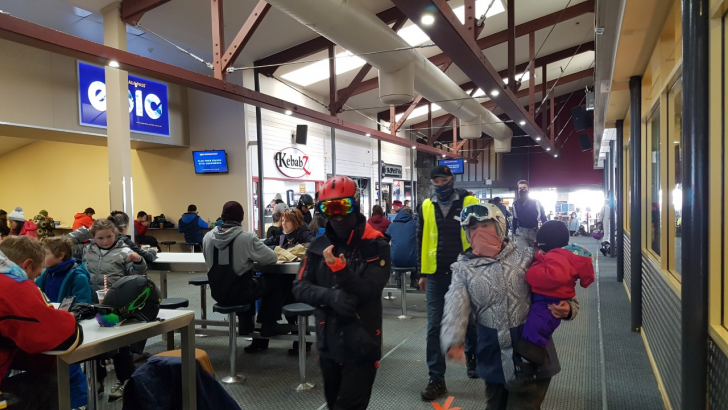
Masks were everywhere in the Perisher lodge. Credit: John Harris

The entire snow sports industry has spent the summer planning how to open up when the snow flies.  Uncertainty about the future makes people anxious, however, the semblance of a cohesive, cogent plan with precautions goes a long way to calming customer nerves. The industry has done a terrific job trying to figure out how to manage this unprecedented public health threat.  Changes in business as usual are keys to managing the “Covid Season.”

We’ve created some changes, too, that might help you as this strange winter starts to evolve.

Classifieds Are Coming!

For one thing, we’re going to launch our brand new Classified Ad section next week.  Starting 10/16, you will be able to place a classified ad on SeniorsSkiing.com.  We’ve developed a number of categories where you can offer  everything from gear or collectibles to ride shares and meet-to-ski to condo rentals.  As a introductory promotion, you’ll be able to post an ad for 30 days in any category for $1.  Regular rates will be quite reasonable and based on how long you want your ad to be accessible to our readers. As with all dealings online, readers are encouraged to use caution and common sense in contacting others through this service.

Alternatives to Alpine: Make More Tracks

Over the summer, we’ve been watching industry news releases and have scrutinized some of the plans for re-opening ski resorts. All of these plans are thoughtful and respectful of both the virus and customers. All contain a degree of restrictions on customer behavior which may or may not wear well as the season goes on. In fact, the Cross-Country Ski Area Association has extrapolated that the rise in walking and bike riding this spring and summer might correlate with increased interest in Nordic skiing, snowshoeing and other ways to get outside in the winter and “make more tracks”. 

As a result, SeniorsSkiing.com is introducing a new section, “Make More Tracks”,  initially devoted to articles about XC skiing, snowshoeing, fat biking, and other snow activities.

Nordic or XC skiing and snowshoeing are ideal for the Covid Season.  Outdoors, of course, socially distanced, reasonably priced, uncrowded, the sports lends themselves as a perfect alternative to Alpine skiing. Snowshoeing, by the way, is also ideal for seniors who have given up skiing due to health, fitness ,or lack of interest reasons.

If you haven’t tried XC skiing as a senior skier, you are missing a completely different way to enjoy winter outdoors. If you’ve been away from the sport for a while, you have a plethora of new types of equipment and gear to learn about.  And, if you haven’t noticed, there are many XC-oriented resorts that have grown in the past decade that offer unique winter vacation experiences. 

Our Make More Tracks initiative includes a Resource Guide with tips and advice from Roger Lohr, editor of XCSkiResort.com, and Jonathan Wiesel, international XC trip planner and guide, trail designer, and resort owner, both experts in all aspects of XC skiing.  We will include at least one Make More Tracks article per weekly issue of SeniorsSkiing.com and devote an entire issue in November to these sports.

This Week 

We’re publishing our new boot recommendations for seniors, developed in cooperation with America’s Best Bootfitters (ABB) and the 2021 Masterfit Buyer’s Guide. This is an industry exclusive, Subscriber-Only offering that can be accessed after confirming your name and email address.  Click on the third box in the top menu to get to the story.  Boot recommendations are graded by traditional or walking, including specific boots for men and women. 

The ski season has just concluded Down Under. We can learn a lot from the experience of Australian skiers and how resorts managed the virus. John Harris, our new correspondent in Australia reports on the recent season, noting what worked and what didn’t. Despite a dearth of snow, the season went on, and “car parks were full.” Click here for the story.

One aspect of the Covid Season that hasn’t been discussed is what happens to shared ski houses.  The problems of distancing, scheduling, cleaning and the like are important consideration.  Correspondent Alice Winthrop discusses these issues and proposes some approaches.  Alice is the designer of Resercal, a new app for scheduling and managing shared vacation properties.  Ski clubs, this is for you. Click here for her story.

Crested Butte Nordic has rentals for $20 a day. Credit: CB Nordic

XCSkiResorts.com publisher and SeniorsSkiing.com Nordic editor Roger Lohr discusses the impact of the Covid Season on Nordic skiing.  This is the first of an ongoing series of Make More Tracks articles.

As a regular early-season feature, we’ve been watching winter weather forecast conditions every year.  This year, La Nina is in. Find out how warmer waters in the eastern Pacific are going to impact snow levels in North America.  We also share the Farmer’s Almanac’s prediction for 2020-21. Compare and contrast.

And to celebrate the last gasp of summer, here’s an article from correspondent Josh Foss on lessons learned from surfing with dolphins. 

Finally, here’s touching video below from Alta, praising the work and dedication of the ski patrol. These guys keep us safe, and they deserve this impressive shout out.

Thank you for reading SeniorsSkiing.com.  Please tell your friends and remember, there are more of us every day, and we aren’t going away.


Bata

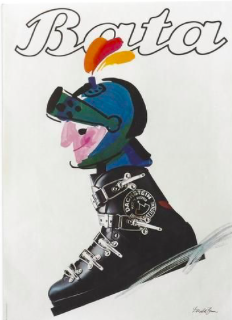
Best 2021 Boots for Seniors Skiers

It’s the skier’s truism. Boots are our single most important piece of equipment.

While many consider their main function to be comfort and warmth, their primary role is the efficient transfer of energy and movement from skier to skis.

A SeniorsSkiing.com reader survey conducted a few years ago showed that in a given season, 25% of you purchase new boots. In that and subsequent surveys, many of you have commented on the need to change boots because the damn things hurt…or because your feet are uncomfortably cold.

But the correct boot fit isn’t that easy. Ski shops try to stock a good range of options, but they’re never complete.  Custom boot shops can provide a good fit, but the customer may pay dearly. 

Getting the best fit is an exercise in both science and art, which is why finding and working with a skilled boot fitter can be essential. Fitters I’ve met take true pride in their craft, often trading shoptalk about the difficult feet they’ve successfully fit.


Older feet, especially, require care in the boot selection and fitting process. 

A great place to start that process is with SeniorsSkiing.com’s list of the Best 2020-21 Ski Boots for Senior Skiers. That list is now available to subscribers by clicking here.

It was winnowed from a more extensive ski boot evaluation organized last Spring by America’s Best Bootfitters, whose principals have been running North America’s annual boot evaluation event for several decades.

The listing groups boots into two categories most appropriate for older skiers. Each category has recommendations for men and for women and each recommendation is accompanied by comments excerpted from the testers’ comments.

Have a foot that’s wide in the front but has a narrow heel? There’s a boot for you. Is your instep high? There’s a boot for you. Prefer the on/off comfort of a rear entry? There’s a boot for you. 

Visit the list, find a prospect or two, and click the link to the extensive boot description and testers’ commentaries, as they appear in the fantastic new Masterfit Buyers Guide, to be highlighted in an upcoming issue.

And if you’re seeking the services of a qualified boot fitter, visit America’sBestBootfitters.com.

foggy chair

Short Swings!

We are entering a season of uncertainty.

Some resorts have discontinued walk-up ticket sales, some will require advance reservations, many will require masks and social distancing; for others, it will be business as usual. Some, unfortunately, will not open at all.

Many resorts are bracing for a sharp reduction in the number of vacationers arriving by air. Air traffic is down, and projections of COVID spiking as Winter advances do not bode well for ski areas.

Quarantine restrictions will impact long weekend trips to the Rockies, unless, of course, you live nearby. Same will apply to the longer ski vacation. You’ll be able to fly from New York, New Jersey, or New England to Utah and enjoy the sunshine and powder. But several of the Eastern states require either quarantine or a negative 72- hour COVID test when returning home. As of this writing, it’s virtually impossible to secure a 72-hour test in Utah unless you’re scheduled for surgery or showing symptoms. Maybe that will change for visiting skiers; a possible but unlikely prospect.

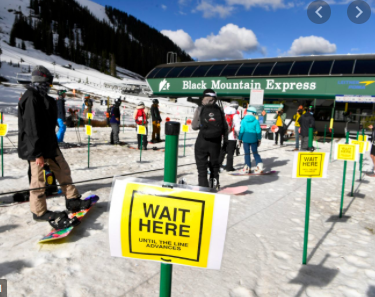
However you get to your resort of choice, expect to have a temperature check and, if you’re solo, ride the lift alone. Refuge in the lodge on a cold and/or stormy day may not be as accessible as in past seasons. Seating will be limited. Food and beverage orders may have to be called in. You may find yourself sitting outside, sheltered by temporary windbreaks.

Maybe this will change by the time snow flies, but entry restriction for Americans traveling to Canada and the EU will require most of those in the U.S. to ski in the U.S.

I decided on a workaround to reduce these and other obstacles this season. We rented what looks like a lovely house in Santa Fe with the expectation of skiing the cluster of areas relatively close by.

If you’re fortunate enough to live near an area, the complications will be much reduced.

An alternative available to many readers will be substituting or mixing cross-country, snowshoeing, fat biking and other activities with Alpine. If you are in or near snow country, these opportunities exist in local parks and golf courses, at some Alpine areas and in freestanding X-C resorts. 

In anticipation of this likely shift, we’re extending our Nordic and snowshoe coverage. The new Make More Tracks Resource Guide is an extensive collection of articles to help you get into Nordic activities. In early November, an entire issue will be dedicated to Nordic, and, throughout the season, each issue will have a Nordic-themed article.

My first priority for the season is to use Alpine boards on New Mexico’s slopes and trails. Like, most of you, I love to be outside in Winter, playing in the snow.  I haven’t been on X-C skis since the last Ice Age. But given the prospects for this season of uncertainty, it certainly will be part of my outdoor Winter mix.

Big Bargains with Indy Pass

Indy Pass holders get two days at each of 55 North American resorts. Available in two versions: Indy Pass+ has no blackouts and costs $299; Indy Pass has blackouts and costs $199. The program offers generous refunds if the pass is used only a few days. There are 20 participating resorts in the West, 17 in the Midwest, and 18 in the East.  Click here to register.

Amazon Patents Skier Drone

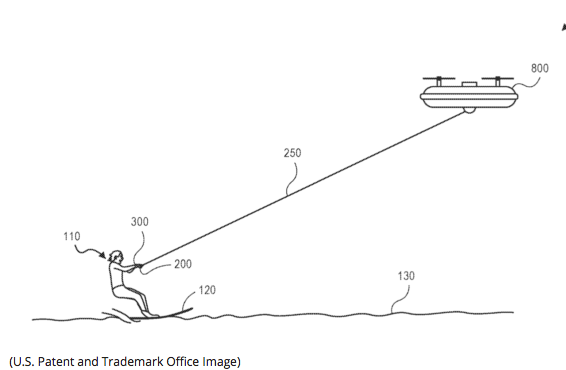
In past issues, we’ve highlighted a series of devices intended to propel or pull individual skiers up the hill. Amazon recently received a patent for a drone that would pull skiers uphill, follow them down, and repeat the process. Will it happen in our lifetimes? No answer to that question, but if it does, it may be the end of chairlift small talk.

Those Lifetime Guarantees

The zipper broke on one of my lightweight Patagonia fleeces. It was in the back of the car when I passed a Patagonia store, open but closed to customers. I called the number on the door, and an employee came out.  He took the fleece, filled out a form, and told me to expect the repaired product in three to seven weeks. It was delivered, repaired, cleaned and free of charge fewer than two weeks later. Good on you, Patagonia.

The Eddie Bauer daypack I purchased in the early 70s has been returned multiple times in the past half century. Once a seam was unraveling. Another time, a zipper was jammed. The company offered to replace it, but I have a sentimental attachment to that old, well-used pack. Each time it’s been repaired , cleaned and returned at no cost to me. Thank you, Eddie Bauer.


Ditto for Farm to Feet, DarnTough, SmartWool, IceBreaker and other reliable brands, although they sometimes require the purchaser to jump through a few hoops.

Bottom Line: When purchasing outdoor clothing and other gear, consider the extra value of brands with lifetime warranties. That way, the purchase becomes an investment.


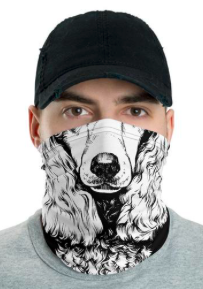
Gaiter vs. Face Mask

Gaiter

Face Mask

A recent Duke University study determined that breathable neck gaiters (I love my Buff) are far less effective blocking pathogens than standard surgical or cotton cloth masks. The study used a neck fleece made of polyester spandex. Lesson learned: Wear neck gaiter for warmth. Wear cloth or surgical mask for virus protection. 


Study and Ski in the Haut Savoie

The French language Alpine French School in the ski resort of Morzine has a new facility in Samoëns ski resort with direct links to the Grand Massif area that includes Flaine and Les Carroz. Many courses combine French and skiing. The school, oriented to long term residents, has strict COVID protocols. A variety of accommodations are available. Click here for more info.

A Trick To Try at Home


I’m always running out of eyeglass cleanser. The Internet has numerous DIY recipes some of which work pretty well. But recently I was in a pinch and used a few squirts of Arm & Hammer™ Simply Saline Nasal Mist to clean my glasses. Worked just fine and the slender canister seems to be bottomless after months on the job.

White Out

Thinking about past winters when you were discovering the joys of being outside in the snow? This three-minute watercolor animation is beautiful and special. Click here. or the image below.

Endnote

We’re experiencing a congruence of odd events. 

  • The global COVID problem has a disproportionate impact on older people. Simple precautions are known to reduce its impact, yet many don’t believe the virus is real and/or resist being told what to do. 
  • The environment is responding to centuries of unwise management. Punishing storms and wildfires are disrupting millions of lives. What we thought was permanent mountain and sea ice is melting at alarming rates.
  • Divisions in beliefs and thinking are dangerously polarized.

I’m not a gardener but I subscribe to the adage of tending our own gardens. Whether you take that literally or metaphorically, looking after the things that matter most to us require being attentive to nurturing and improving the things we value and protecting the things we love.  For our U.S. readers, whatever your political persuasion, this can be interpreted as a call to vote.

✪✪✪✪✪✪✪✪✪✪✪✪✪✪✪✪✪✪✪✪✪✪✪✪✪✪✪

As we start our 2020-21 weekly schedule, Mike and I look forward to providing you with meaningful and entertaining content about what every SeniorsSkiing.com subscriber has in common: the love of skiing or boarding or simply being outdoors in the snow.