
What’s New in Utah for the 2024/25 Ski & Snowboard Season

What were you doing all summer?  Resorts in Utah were working full-time adding new lifts and snowmaking, smoothing out terrain, even adding major expansions.  Those improvements will come in handy in 2034, when the Winter Olympic Games return to Salt Lake City and the resorts around it.

Here’s what’s new in Utah for the 2024/25 season.  In alphabetical order, since that’s the only fair way.

Alta

Improvements have been made to the approaches at the top of the Collins lift on Mambo and on the Ballroom traverse and the High traverse.  Also, there are new covered Sunkid conveyors at the Albion Base Area for beginners.

Brian Head Resort

There are three new trails – two for beginners and one for intermediates – part of a $1.4 Million budget for capital improvements.  Brian Head celebrates its 60th Anniversary in January 2025, with a series of on-mountain activities and events, the week of January 7.

Brighton Resort

There’s new night skiing and snowboarding at the Millicent Chairlift, and increased snowmaking off the Great Western and Snake Creek chairlifts.  Brighton also has added eco-friendly hybrid electric snowcats and an electric snowmobile for operations.

Deer Valley

Where to start?  300 new acres of terrain with three new chairlifts and a new base area with expanded parking.  

The new terrain is being called Deer Valley East Village, and is being opened in bits and pieces as it is developed.  That’s where the new lifts and 500 new parking spots are located.

Keetley Express will be Deer Valley’s first six-person chairlift with a protective bubble, scheduled to open in December.  It will connect the new Deer Valley East Village to the main area, dropping skiers near the bottom of the Sultan lift on Bald Mountain.  The other new lifts are Hoodoo Express and Aurora, both servicing beginner-level terrain.

Park City Mountain

There’s new snowmaking at Canyons Village, to allow terrain accessed via the popular Tombstone Express to open earlier in the season.

Powder Mountain

Under new private ownership this season, Powder is now a hybrid of terrain open only to members and public access. The public portion gets a new lift in Wolf Canyon to Lightning Ridge, which will add 900 acres of lift-served and 147-acres of hike-to access. 

The new owners also are upgrading the Paradise and Timberline lifts, adding new guided adventure experiences, and creating an on-mountain art gallery with outdoor sculptures dotting the slopes.

In February 2025, all Saturdays and Sundays are accessible to only Powder Mountain Season Pass holders.

Snowbasin Resort

Bear Hollow, Snowshoe and Slow Road are being widened to improve flow and safety in the Family Zone, accessed by the Wildcat Lift.  Snowbasin also is making other adjustments to prepare for the new Becker Chairlift, set to debut before the 2025/26 season.  The new lift will be a detachable quad, replacing the fixed-grip triple that dates from 1986. The new lift will be a six-minute ride, getting you to the top in half the time.

Snowbird

The original Wilbere Chair has been shifted from a slow double to a speedy quad with a conveyor for more efficient loading, and also moved to provide easier access from the Creekside base area.  The beloved original red Tram cabin has been refurbished and transformed into a new outdoor extension of the Tram Club for dining and drinks, along with new lunch and apres ski offerings at The Atrium in the Cliff Lodge.

Solitude

The news here is about parking.  Midweek parking costs have been reduced by 50% and vehicles with three or more occupants will continue to park for free.  Also, advance parking reservations – which the resort says reduced congestion in Big Cottonwood Canyon – are now required on just 46 days, down from more than 60 last season.

Sundance Mountain Resort

The new Mountain Camp Day Lodge is opening, with lockers, a ticket office, rentals and more.  It is adjacent to recently-expanded parking with 110 new spaces.  Also, under construction now and due to open in 2025/26, is a new 63-room ADA-accessible luxury inn at the base village.

What’s your favorite Utah resort?  www.skiutah.com

Mine is all of them.

See you on the slopes.

Indy Pass Adds 30 New Resorts Around the World for 2024/25 Season

Kiroro Japan Skiing Credit: IndyPass

The Indy Pass gets better every year.  It just added 30 new resorts in the USA and around the world for the 2024/25 season, on top of the 52 it added last season.

As its name implies, the Indy Pass focuses on independent areas without another affiliation such as biggies Ikon, Epic or even Mountain Collective.  It gives you two days of skiing at each member mountain, plus discounts for additional days. 

With 230 members now, the good news is that means 430 potential downhill days for a buy-in price of $419, with add-on options that include black-out dates. 

The bad news is that Indy strictly limits pass sales, so smaller members don’t get overwhelmed.

Limited Sale Dates

With the new areas, Indy is resuming pass sales for those already on the waitlist, only from Oct. 24-27.  The general public has just one day only  – Oct. 28 – to buy in.

New Resorts for 2024/25 Season

In alphabetical order, since that’s the only fair way –

  • Baqueria Beret, Spain
  • Bear Creek, Pennsylvania
  • Bear Valley, California
  • Bousquet, Massachusettes
  • Bruce Mound, Wisconsin
  • Camp Fortune, Quebec
  • Cascade Welcome Center XC, New York
  • Cazenovia Ski Club, New York
  • Cupid Valley Ski Resort, Japan
  • Dynaland Ski Resort, Japan
  • Hirugano Kogen Ski Resort, Japan
  • Hoedown Hill, Colorado
  • Hunt Hollow Ski Club, New York
  • Innsbruck Resorts, Austria (12 resorts)
  • Lost Valley, Maine
  • Loveland Ski Area, Colorado
  • Massif du Sud Quebec
  • Mont Rigaud, Quebec
  • Christie Mountain, Wisconsin
  • Mt. Holiday, Michigan
  • Ninox Snow Park, Japan
  • Norway Mountain, Michigan
  • Takasu Snow Park, Japan
  • The Snow Center, England
  • Trafford City Snow Centre, England
  • Washigatake Ski Resort, Japan
  • Whitehorse Nordic Ski Society, Yukon
  • WhitePIA Takasu Ski Resort, Japan
  • Yuzawa Nakazato Snow Resort, Japan
  • Mala Upa, Czech Republ

 
Indy Pass Pricing – Final Sale for 2024/25 (No Senior Pricing)

  • Indy Base Pass $419 Adult / $239 Kids (12-and-under)
  • Indy+ Pass $539 Adult / $299 Kids (no blackouts)
  • Indy AddOn Base $319 Adult / $179 Kids
  • Indy AddOn+ Pass $409 Adult / $229 Kids (no blackouts)
  • XC Pass $99 Adult / $49 Kids
  • Personalized Photo Pass $10


FREE ADMISSION Boston Snowbound Expo

You’ve been to the summer tent sale. You’ve been to the local ski swap. Now make tracks to the ski show!

Each November our friends at the SnowBound Expo produce what I believe is the finest ski & snowboard show in the Northeast, perhaps the country. People sometimes ask me why I go? For a lot of reasons. Some psychological, some economic.

Psychologically,  it’s good to be among like minds. Everyone at the show is excited and anticipating the coming season. It stirs the carve junky in me. I know I’ll be on snow somewhere in just weeks. That motivates me to increase my workouts (you never really know just how much gas is in the tank until the first run!) and prep the gear.

The show is a celebration of winter sports as demonstrated by the stellar line-up of guest speakers. This year New Hampshire born and raised Big Mountain Skier, Caite Zeliff, Vermonter Moguls legend, Hannah Kearney, Maine’s finest athlete, Donny Pelletier, and Alice Merryweather, top-ranked American downhill skier, World Cup contender and Olympian will share their experience and knowledge with fans. 

Economically, there’s gold at the show. There are more promotions than you can count. Resorts will update you about their latest improvements to their lodges, lifts, snowmaking and terrain. They’ll be selling gift-cards, ticket packages and season passes at the lowest prices of the year. If you’re lucky, you may win free tickets or passes in a raffle or by spinning a prize wheel. Chachka is everywhere. Stickers, bottle openers, keychains, goggle wipers, lift ticket clips, ski straps, hats, trail maps, water bottles, bandanas and more await you collectors of ski memorabilia. 

On the gear side you’ll find close-out deals on last year’s brand-new skis, boots and bindings. It’s an excellent time to add a specialty pair to the quiver. Get that soft snow or ice ski you’ve had your eye on. You’ll also find manufacturer’s promoting their newest equipment. Get up to speed on the latest ski and boot technology designed to make your day on the hill a little easier and a little more fun. You’ll also find great deals on every kind of clothing. It’s the perfect time to update your look or add to your layers. Perhaps most importantly, there’s no better time to outfit the kids!
You’re invited to Snowbound Expo 2024, November 15-17 at the BCEC! Get FREE tickets with code SENIORSKI. Enjoy 180+ brands with up to 60% off gear, plus experiences like an indoor slope, Learn to Ski, cross-country skiing, and more. Hear from Olympians and top athletes like Hannah Kearney, Caite Zeliff, Alice Merryweather, and more. Don’t miss out on great deals, après-ski, and community fun!

Click the link for FREE tickets: https://snowboundexpo.seetickets.com/event/snowbound-expo-2024/boston-convention-exhibition-center/2926543?OfferCode=SENIORSKI

For a full description of the show and everything happening there please visit https://snowboundexpo.com.

See you there!

peter-james-eisenhaure-PbWJY0M5hRM-unsplash

What’s New in Vermont for the 2024/25 Season

peter-james-eisenhaure-PbWJY0M5hRM-unsplash

Photo by Peter James Eisenhaure on Unsplash

While you were tanning on the beach in the Caribbean or throwing coins in the fountain in Rome this past summer, Vermont resorts were busy upgrading chairlifts, trails, snowmaking, dining and lodging.

Here’s what’s new in the state with some of the most popular ski/snowboard/Nordic destinations in the Northeast. 

In alphabetical order, since that’s the only fair way.  

Bromley Mountain

Bromley has invested in new and improved snowmaking on its lower mountain, to ensure more consistent conditions on such popular areas as Lower Thruway and Lower Boulevard.  Also, there will be live music on holidays and almost every weekend, adding a festive vibe to your ski day, weekend or week.

Killington Resort & Pico Mountain:

Under new local ownership, Killington and sister Pico are embarking on a $30 million investment spree over the next two seasons.  That includes 500 new low-energy snow guns will blanket both resorts, with four fully automated fan guns specifically targeting Superstar.

After this ski season, during summer 2025, Killington will replace the Superstar Express Quad with a high-speed six-pack, and replace more than 110 cabins on the iconic Skyeship Gondola with new ones.

Mad River Glen:

A new mid-station on the Single Chair will provide easier access to beginner and intermediate terrain in Birdland.  Also, the legendary skiers-only destination is speeding up the drive system for the Sunnyside Double to boost loading capacity.

Magic Mountain:

The resort has added 50 new snow guns, including mobile units for expert terrain, to provide more consistent conditions throughout the season.  Also, the  new Throwback Card offers 25% off online ticket prices and a free ski day on your second visit.

Mount Snow:

Celebrating 70 Years this season, Mount Snow marks the milestone with new on-mountain improvements to the most powerful snowmaking system in the East, and participation in the MyEpic premium ski/snowboard rental equipment program. 

Jay Peak:

Nothing new for this season, just a continuation of the reliable infrastructure and programs which have made Jay Peak a popular, family-friendly destination for decades.

Okemo Mountain Resort:

This family-favorite destination has 98% snowmaking coverage, and is also participating in the Epic Pass MyEpic gear rental program.

Saskadena Six:

There’s a new, revised unload zone on Chair One increases safety and flow and trail widening on Easy Mile and Porcupine to improve traffic flow. The area also has added low-energy eco-friendly snow guns.

Stowe Mountain Resort:

No new on-mountain enhancements this season, but new is that Stowe has joined the MyEpic gear program, offering a convenient and affordable way to access premium ski and snowboard equipment for EpicPass holders.

Stratton Mountain:

There are new snow guns on Mikey’s Way and 160 new high-efficiency hydrants throughout the mountain.

Sugarbush Resort:

The highly anticipated Heaven’s Gate Quad at Lincoln Peak opens, providing a faster and more reliable summit experience. Plus, there is improved snowmaking at Mount Ellen for a more consistent experience throughout the season.

If you somebody who loves challenges, koin the Sugarbush community in skiing a billion vertical feet to raise $50,000 for a local mental health non-profit.

What’s your favorite Vermont resort – and why?  www.skivermont.com

We want to hear from you.

See you on the slopes.

Fatal Collision: It’s Time to Act

One week before the end of the ski season in Jackson Hole, a 71-yr old veteran ski instructor, was hit and killed by another skier. Both were skiing the intermediate trail, “Rendezvous”. This should never have happened, especially in mid-April when the season is all but over and crowds have thinned.

The Teton County coroner has ruled it a homicide, because the uphill skier did not “maneuver around” the victim, who was downhill.

When I heard about this, I was shocked and angry but not surprised. It’s getting worse and worse out there – even in mid-April when no one can complain about “the crowds”.

Several years ago, a rogue skier or snowboarder hit me while I was stopped on the edge of a trail at Stratton Mtn. I must have been hit hard, because I blacked out momentarily. When I regained consciousness, I was in a sitting position, just off the trail. The skiers standing on the trail’s edge said the guy who hit me never stopped.  Something similar may have happened to you, too.

The incident was on one of my favorite black diamond trails in Vermont – a mostly very wide, well-groomed and perfect trail for cruising, practicing carved turns or any turns. I was between lessons, and wearing my instructor’s jacket, so I felt any fast skier would know to stay away from me, a resort employee! Stupid me.

Luckily, I was not hurt that day, but sadly the male skier hit at Jackson on April 14, 2023 by an uphill skier who did yield right of way is still dead.

Fellow senior skiers and snowboarders, enough is enough!

It’s time for us to complain to management: firmly, politely, and insistently. Our sons, daughters, and grandchildren are on the mountain now, and all of them are at risk, along with us seniors.   

Pretending the “Skiers Responsibility Code” is doing enough is a joke.

Here’s what we can do about out-of-control skiers and snowboarders –

  1. Speak to ski area management and request “NO FAST SKIING” signs and ropes at key places on GREEN and BLUE runs. If you can force the high-speed dangerous skiers to slow down, it’s a start toward sanity and greater safety.
  2. If you personally witness a dangerous incident, volunteer your name to victims involved. Encourage victims to speak to management.
  3. If you experience danger personally, attempt to get a photo of the person who caused the danger. (Might come in handy down the road.)

ALL the waivers we are required to sign, either when purchasing season passes like IKON or EPIC, or simply by buying a day lift ticket, contain language, upheld by courts going back to 1978. The language says: YOU ACCEPT 100% RESPONSIBILITY FOR ANYTHING BAD THAT HAPPENS TO YOU WHILE MOVING AROUND AT OUR SKI RESORT: SKIING, WALKING THRU CAFETERIA LINE, WALKING TO RESTROOM, WALKING TO/FROM PARKING LOT. The resort is not responsible.

I believe ski resort management should do more to crack down on the super-fast, out-of-control skiers. The time is now for sensible, long-time skiers to begin making noise at ski areas we visit. There’s no alternative, except for you and me to insist that mountain operations must do more to educate their skiing/riding public, and make Green and Blue trails safer with signage. It’s just sensible.

https://www.tetongravity.com/story/news/teton-county-coroner-jackson-hole-skier-collision-death-ruled-a-homicide-sheriffs-office-seeking-witnesses

What is the oldest ski shop in the country?

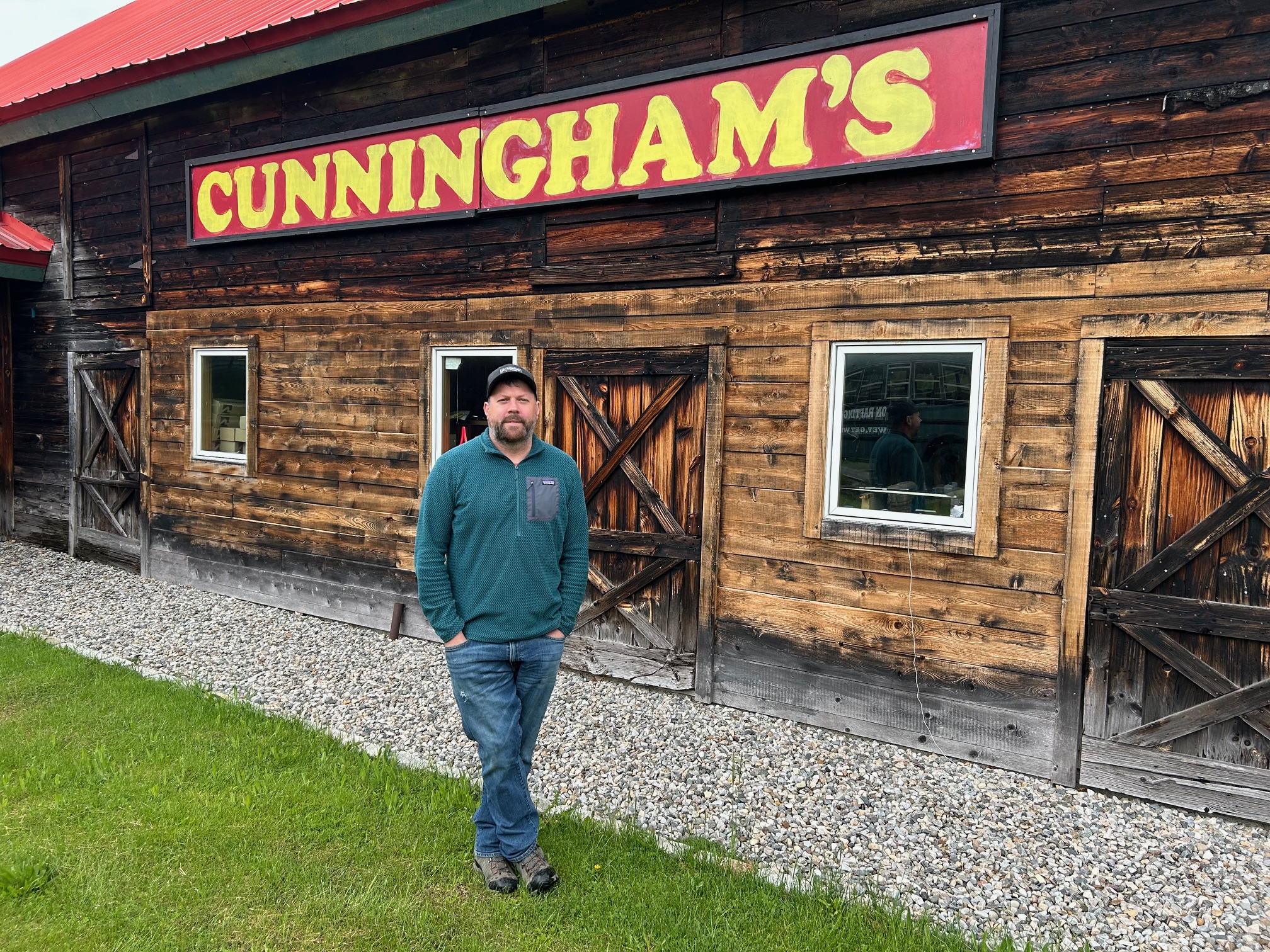
Div I ski racer Tyler Cunningham, now the 4th generation member of the Cunningham family to run the North Creek NY based ski shop.

A common answer to that question is Lahout’s in Littleton NH which was founded by Herbert Lahout who came to the US from Lebanon as a teenager and in 1920 started by selling dry goods from a horse drawn wagon throughout the White Mountains.   After World War II. the store, then run by his son Joe, began selling ski gear and today there is the original store and  seven more Lahout’s  shops in the area where the business began.

However, it turns out now there is another shop with a claim to be the first.

As part of the recent research on the 90th anniversary of the first snow train to North Creek NY, local historians came up with records of The J.E. Cunningham General Store that opened in that Adirondack hamlet in 1918, two years before Lahout’s.

Today, more than 100 years later, both businesses  run by their founding families, still operate in their hometowns

PJ Cunningham, who was born  in Chestertown NY in 1871, was a New York Forest Ranger when he resettled his family in North Creek in 1908. He spent much of his time in the outdoors and became well know for his work building fire towers in the area.  In 1918, he bought the general store in town and named it after his oldest son.

When business slowed in the 1920’s, his younger son Butler dropped out of his engineering studies at Union College to come home to help run the store. While there was no formal ski area at the time in North Creek, there was winter sliding on the logging roads from the nearby Barton Garnet Mines on Gore Mountain. Between mining and logging, the slopes outside the village had been largely stripped and and winter sliding on the open land was a popular pass time.

If you needed skis,  Cunningham’s offered barrel staves rigged with boot toe straps mounted by a local harness shop.

Although primarily a mining and logging town, locals who visited the 1932 Olympic Games in Lake Placid saw the potential for winter recreation in their town 60 miles to the south. The North Creek Ski Bowl just outside the village was established in 1934.  At first there was a rope tow that, in 1947, was replaced by the first T-bar in New York State. Butler Cunningham in 1949 became President of the Gore Mountain Lift Corporation and, while still running the store in town, opened a ski hut on the hill between the lodge and the lift.

Over the next decade, his son Pat was building his reputation as a ski racer. He competed for Norwich University and, after college, while in the US Army in Europe. he  competed in the the iconic Hahnenkamm downhill race in Kitzbuhl Austria. He was training for a spot on the US ski team in the 1964 Winter Olympics when an elbow injury forced him out of competition. Pat came back to North Creek and subsequently joined the family business which was growing as New York opened its third state run ski center at Gore Mountain in town.

There were setbacks.  The original store in town burned down in 1968. At the time, the Cunninghams were also running the retail shop at Gore Mountain. They would eventually lose the concession bid at the ski area, but by then a new store had been built in town on the site of an old horse barn less than a mile from the original general store location. Over the years, the business expanded to other locations including Cunningham’s across the street from the Olympic Center in Lake Placid.

Butler Cunningham died in 1985 and Pat ran the the business until his death two years ago. By then, Tyler Cunningham, a former Burke Academy and St Lawrence University ski racer, had given up a career as a derivatives trader on Wall Street to return home to the family business.

Tyler is the forth generation of the Cunningham family to run the business. It is the same story in New Hampshire where Ron Lahout, grandson of business founder Herbert, has been joined by nephew Anthony and more recently daughter Phebe.

So who can claim to be Number One?

Is it Cunningham’s, founded in 1918?

Is it Lahout’s, doing business in the same location since 1920?

Both families have now been in business in their hometowns, in ski country, for more than a century. It seems that should be more than enough to share bragging rights.


Saas Fee, Switzerland: Season Closeout

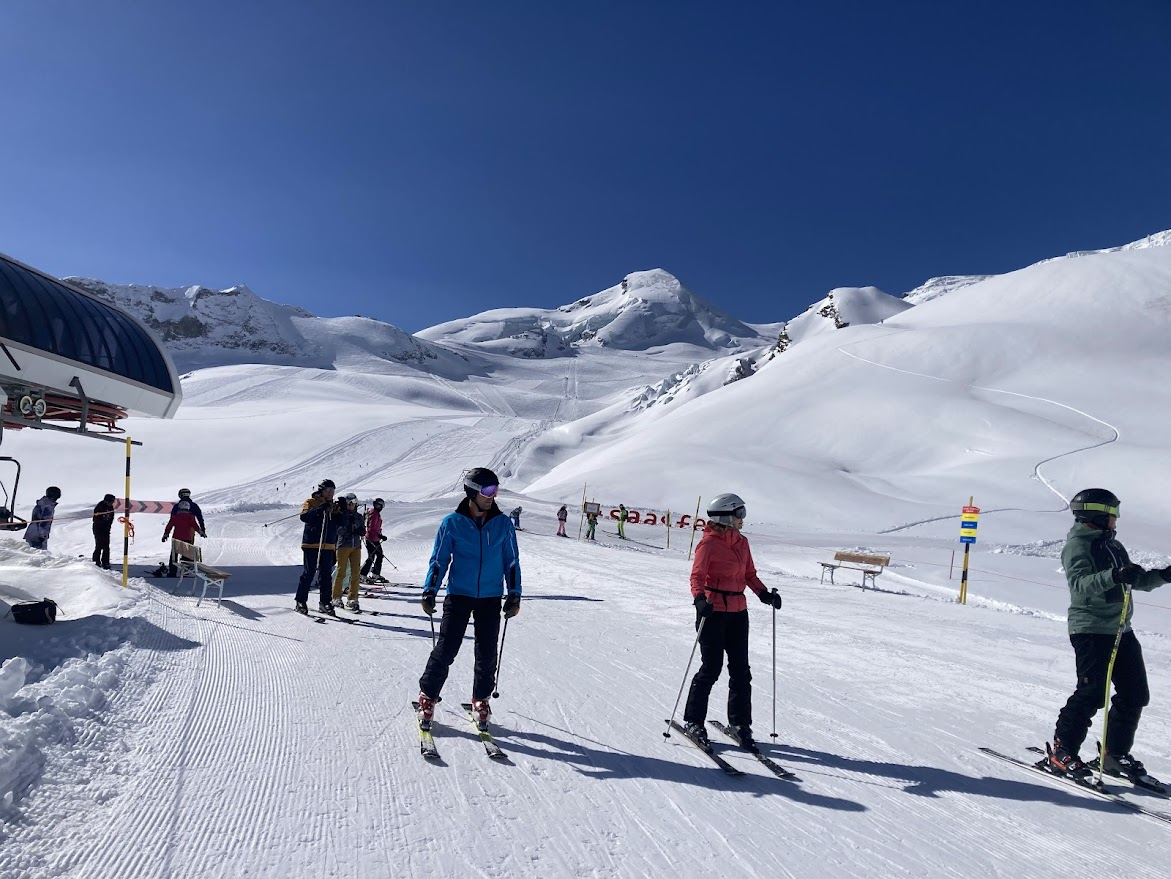
Not as well-known as its neighbor, Zermatt, Saas Fee is a good bet for snow in April. Taking advantage of my granddaughter’s Spring vacation, we planned a week’s skiing on one of Europe’s largest glaciers. But make no mistake about it, there are no closeout bargains in Switzerland. A senior discount for the ski pass, is an unknown concept and food at the resort was expensive compared to other venues in the Alps.

But there are advantages to Switzerland. Getting off the plane in Geneva Airport, we hopped on the train to Visp and from there took the bus up to car free Saas Fee. On the way up we were treated to Heidi-like views of traditional Swiss mountain homes and alpine meadows. Arriving at the bus terminal at the entrance to Saas Fee, the owner of the apartment we booked, picked us up

with his electric cart and brought us and our luggage up to the apartment. Remnants of snow could be seen throughout the village, but there was plenty of snow on the mountain and we could ski all the way down to the village at 1,800 meters. Our apartment was advertised as “ski in – ski out,” and this was basically true, although this late in the season we did have to walk a bit as the snow in the village was disappearing on a daily basis.

The configuration of lifts in Saas Fee is unlike most other alpine ski resorts. Three cable cars, take skiers up to the mid-stations where you connect with a underground funicular, which goes all the way up to the top at 3,500 meters. There are only two chair lifts where you can ski the lift line. Most of the skiing is up on the glacier at this time of year and there are T–bars wherever you look. A caveat for senior folk:, access to the cable car lifts and the funicular involves climbing and/or descending stairs while carrying skis and poles. It’s doable, but requires a deep breath and a slow but steady pace.

The skiing at Saas Fee is huge. The off-piste possibilities are almost unlimited and all within the ski area itself. Nearly all the marked runs are classified as “red,” which means advanced intermediate skiers can ski basically everywhere. The skiing is not difficult and the alpine views are spectacular. The pistes were groomed on a daily basis and we enjoyed winter conditions above 2,900 meters, and spring conditions lower down. There are four mountain restaurants including a revolving restaurant at 3,500 with unforgettable views in all directions.

While we were there, we had the opportunity to watch the annual Allalin amateur ski race, which starts at the top and finishes in town. The race course is a downhill course with vertical drop of 1,700 meters. Hundreds of men and women compete; with the fastest young skiers completing the race in 4 minutes plus and the older racers in their 50’s and 60’s getting down in 10 – 12 minutes. On the day after the race, I skied the top half of the piste with my granddaughter, who was into her second week as a skier. The long gentle sloping course was great for both of us as we cruised, each at his/her own pace, from the top down to the restaurant at the mid-station.

We enjoyed the skiing that Switzerland has to offer; the Swiss alpine atmosphere, good skiing conditions even in mid-April, the convenience of the Swiss rail system, the friendly Swiss folks, and of course the fondue, but we closed out the season with no bargains.

What We Know About Next Season

Thanks to late season storms, some downhill destinations will be skiing and riding into August, while others have closed and already starting construction on new lifts. Here’s what we know now about the 2024/25 season, including pass price changes, so you can put these resorts on your bucket list – or not.

 Prices Going Up for Going Downhill

Don’t wait.  The price of sext season’s Epic Pass goes up on Memorial Day, Monday, May 27.  In addition to paying more, you’ll lose two Buddy Passes for friends and family along with skip-the-lift-ticket-line for any passes you buy or redeem for day-of skiing. The same price increase deadline applies for regional Epic passes, including the Northeast Value Pass and the Epic Military Veteran Pass.

You have until September or October to buy an Ikon Pass before prices go up again.  But do it now, before you forget, because the closer you get to the price increase deadline, the more the website is overwhelmed with procrastinators. 

Jackson Hole

The iconic Wyoming resort is replacing the Sublette lift over the summer with a faster and more powerful detachable quad chairlift, which will be up and running in time for the 2024–25 winter season.  The new lift cuts uphill time from eight minutes to four, while climbing approximately 1,600 vertical feet at 1,000 feet per minute. That means you can get to Laramie Bowl – my personal favorite run at Jackson Hole – in half the time, and wear out your legs and lungs twice as fast. The original Sublette lift was built in 1987.

This past season, JHMR was open 143 open days and clocked 447 inches of total snowfall, helped by a series of heavy late winter and early spring storms that blanketed the West.

 Big Sky 

The Montana resort celebrated its 50th Anniversary last season with the introduction of a new, larger Lone Peak Tram, and making more changes for season 51.

The new Madison 8 lift will replace the Six Shooter 6 on the Moonlight Basin side of the resort.  It will nearly double uphill capacity out of the Madison Base, reducing ride time by an estimated 30%. The Madison 8 is another eight-seater, which Big Sky introduced to the world with its Ramcharger lift on the main mountain. The new lift is named for the nearby Madison River, and expected to be operational by December 2024.

Big Sky also says it is changing ticket pricing to the new Lone Peak Tram, although the changes affect only a small number of guests.

Starting next winter, those who buy lift tickets directly from the resort no longer will have to pay extra to access the new 75-passenger Tram. But that deal applies only to elite Gold and Double Black pass holders.  Everybody else still will have to pay $10-$50 per ride, depending on conditions.

https://www.instagram.com/p/C4gwSW5MomH/?img_index=1 

That means all Ikon, Mountain Collective, and non-Gold and Double Black pass holders will continue to be charged per ride on the Lone Peak Tram, with pricing unlikely to change much from this past season.

Mammoth Upgrade at Mammoth

Mammoth is replacing its very first chairlift – known both as Chair 1 and Broadway Express – from a quad into a high-speed detachable six-pack. It’s part of a larger upgrade to the base area that includes a new lodge and amenities.

 This was a t-bar when the resort opened in 1953, upgraded to a two-seater two years later, and then to a four-seater in 1995.  The new six-pack will be able to whisk 3,200 people up the mountain each hour, reducing wait times at the base at peak times (pardon the pun) to under four minutes.

If you want to buy one of the chairs being retired, contact Mammoth Mountain Community Foundation.  Prices start at $299.

We’ll have more news about next season as soon as it is available.

See you on the slopes!

My Ego as a Senior Skier

The aging process does weird things to the mind. We remember days of yesteryear winding down through moguls on a steep run all day, thinking it was fun. Or floating through knee-deep powder all day from when the lifts open until they close. Today, in my dotage, when confronted with a steep pitch full of knee-high, well-rounded moguls, I go around. Or, after two long runs through knee- or thigh-deep powder, my legs say we’re done for the day. The mind is willing, but the body says, “Hell no.”

A Sunny Day!

Unfortunately, I don’t live near a ski area where I can ski seven days a week. Each year, I work hard to get in less good shape than the previous year. And, what trainers tell me, getting into good skiing shape gets harder with every coming year. The message is that you can’t beat Father Time.

So why ski? Given the image the marketing folks want to portray, if one is not blasting through the trees in deep powder, or bouncing through the moguls, or leaping off rocks, one right after the other, why do I ski?

Because I love it. At 78, my ego no longer needs to be fed by a run through knee- deep moguls or skiing fast down a double diamond. Instead, I enjoy making a round carved turn that controls my speed on any pitch. I now only ski on groomed runs no matter how steep and stay out of trails that look like a hockey rink, bumps and now, even glades unless they are wide open. Nor do I ski in soft, mushy, clumpy snow. So what?

Now I take my time, stopping more often. Each run is precious because it may be my last – not because of death, but because of injury. Like most senior skiers, I am most afraid of being injured by an out-of-control skier who is either stoned, inebriated, skiing
way too fast for the conditions, on a run well beyond his/her ability, or a combination of all the above.

My bones no longer break; they are more likely to shatter. A simple fracture that will heal in a 40-year-old body in a month or two may take major surgery and heal in six or more months if it ever does. So, yes, I am careful where and what I ski and in what
conditions.

I even find myself taking in the vistas around me. There’s not a photograph that does justice to the majesty of snow-covered mountains, whether in Vermont, California, New Mexico, British Columbia, Austria, or New Zealand. There’s nothing like breathing in the cold, crisp air while giving your thighs a breather and admiring the work of Mother Nature.

Double diamond, expert, intermediate, beginner, if it is groomed, I’m in. To me, the degree of difficulty of the trail is irrelevant.

My ego is in doing what I must to keep skiing for as long as Father Time allows. My ego is the simple act of being able to turn a pair of skis and carve a turn in any condition I choose.

My ego is in the fact that I am skiing, not what I am skiing.

Major Changes Coming to Powder Mountain


Photo by Dave Sartwell of fellow Contributor Mike Roth skiing at Powder Mountain

Powder Mountain is about to embark on a private/public ski area development venture. In a bid to sell more real estate, a large segment of the mountain will become the exclusive domain of the on-mountain home owners. Like Homewood in California and Windham Mountain in New York, Utah’s Powder will be a hybrid model with major changes for longtime devotees. Those changes start next season.

“In order to pay our bills, we need to sell more real estate, and to do that we are introducing private homeowner-only skiing,” said Reed Hasting, in a letter to the community in Dec of 2023. The new CEO of Powder Mountain added, “We will be designating the Village and Mary’s lifts, which serve beginner and intermediate terrain, plus a new lift on Raintree for this private skiing, starting a year from now.”

With more than 8,500 acres of skiable terrain, Pow Mow, as it is known by the locals, is the largest ski area in North America. Located in the Wasatch mountains just thirty minutes northeast of Ogden, Utah, it is best known for receiving more 500 inches of snow each year – and free skiing to those who are 75+.  Powder hounds from across the country trek here to ski the off-piste, tree-ladened slopes and laid-back vibe.

 Reed, the co-founder of Netflix, got involved with Powder last April, and then took majority control of the resort in late summer by pledging a reported $100 million in new investment. He signed a development agreement with Meriwether Companies, a leading resort developer perhaps best known for their development of Kelly Slater’s Surf Ranch, to head this new effort.

 They immediately removed from the market 25 of the 57 lots in the Overlook area that had been listed for $1 million each while they develop a new master plan.

 In the meantime, they are investing in some infrastructure upgrades. The horribly slow Paradise lift will be replaced by a high-speed detachable quad that will cut the ride time in half. Additional terrain will be accessed by a new fixed-grip quad on Lightning Ridge, which had been accessible only by cat skiing or skinning in the past. The cat skiing will be moved to another part of the mountain. The new owners are also upgrading the Timberline triple lift with a fixed-grip quad.

 “We believe this blend of public and private skiing secures us decades of exceptional uncrowded skiing for all, funded partially by real estate. To stay independent and uncrowded, we needed to change, and we didn’t want to join the successful but crowded multi-resort pass model (ie, Snowbasin) or sell to a conglomerate (ie, Vail),” Reed stated.

Construction Begins This Summer

This ambitious plan will affect their 2024 summer operations.

“Construction will begin this summer on a number of lift and maintenance infrastructure upgrades that are set to greatly enhance the on-mountain experience at Powder Mountain,” they announced. “We will not be operating lift-accessed mountain biking this summer (2024) due to on-mountain summer construction needs. We appreciate all of the planning and hard work that has gone into making lift-serviced mountain biking at Powder possible for the past two summers, however after evaluating all options, this is a necessary step in order to complete our ambitious plans of installing four new lifts.”

Some new homes already have been built in the designated private area. A few are really are spectacular with truly wonderful views of the mountains.  Meaghan O’Neill recently wrote in Architectural Digest that, “… buildings by acclaimed architects like Marmol Radziner, Olson Kundig, and MacKay-Lyons Sweetapple Architects, the Summit Powder Mountain village promises sprawling views of the Great Salt Lake and a stunning organic modern aesthetic.”

The new grand design has yet to be rolled out.

Changes to Season Passes

There have been several changes in the ticketing prices. For this next year they are lifting season pass caps, but intend to control numbers by limiting day passes.  In a blow to seniors, the complimentary 75+ season pass has been eliminated.

What will the future hold for Pow Mow?

Will this become a private club for the super rich or a necessary blend of public/private that will keep the area open to the general public for generations to come? Stay tuned.

Get the Grandkids Skiing with Early Purchases of Season Passes

If you are like me, whenever I think about holiday gifts for my adult kids and grandkids, I immediately put the thought away, thinking I don’t have the time right now and will do it later. That turns out to be around December 15th, when panic sets in. Not anymore. Now, I gift my adult children season passes, so we can all ski together, including the grandkids.

It was my wife’s idea last season to give multi-resort season passes as holiday gifts. When the monetary – and monetary – shock wore off, I realized it was a wonderful, and sensible idea.  After reviewing the major choices and where the kids and grandkids would ski, we decided to go with Ikon over Epic and Mountain Collective.

Given the date in mid-December when we looked into this, delaying was not an option, since sales would cease in two days. So, I went online, bought two Ikon full passes for five days at each participating resort, and then declared an early happy hour for my wife and me.

Here’s why it was great:

My son lives in the San Francisco Bay area with his wife and three daughters, all of whom are under 7 yrs old, so their passes are relatively inexpensive, which is why I chose the adult pass as a gift. My wife and I live in Massachusetts. We’ve met to ski together in Utah twice in the past three years, and the older one, who is now 6, is now skiing greens with full confidence. The other two girls are younger, and like younger siblings everywhere, they don’t want to be left behind.

In late December, my son, his wife and the three girls were invited by friends to spend the holiday week in Steamboat Springs, an Ikon resort. In February, my son took the family to Palisades Tahoe, another Ikon resort. Later this season, their family joined us at Snowbird, where we got a couple of timeshare units into which we can squeeze everyone for 4-5 days. 

The icing on the cake for our three-generation ski trip was that the kids had already skied multiple days at multiple resorts, and were more than warmed up for skiing with their grandparents.

My point is simple:

If you want to ski with adult kids and your grandkids, the little ones must be skiers. Buying a mega-pass product makes it much easier to create opportunities to ski together with the younger generations.  We would have ended up buying them a lot of day tickets anyway, which would have been much more expensive, so this mega-pass situation is looking pretty, pretty good!

NOTE: We lucked out big time, because my wife made her suggestion TWO days before pass sales stopped last fall. And as anyone who’s been in this mega-pass world knows, when pass sales end THEY’RE OVER.

So, think about it. In some respects, it is literally the Christmas/Holiday gift that keeps on giving. Because what’s more fun than skiing with your adult son or daughter and his or her child or children?

Passes are on sale, do it now, you won’t regret it!  Or, skip the passes for your kids and buy them for your grandkids.  Do whatever works best for you, with the goal of skiing with your family.

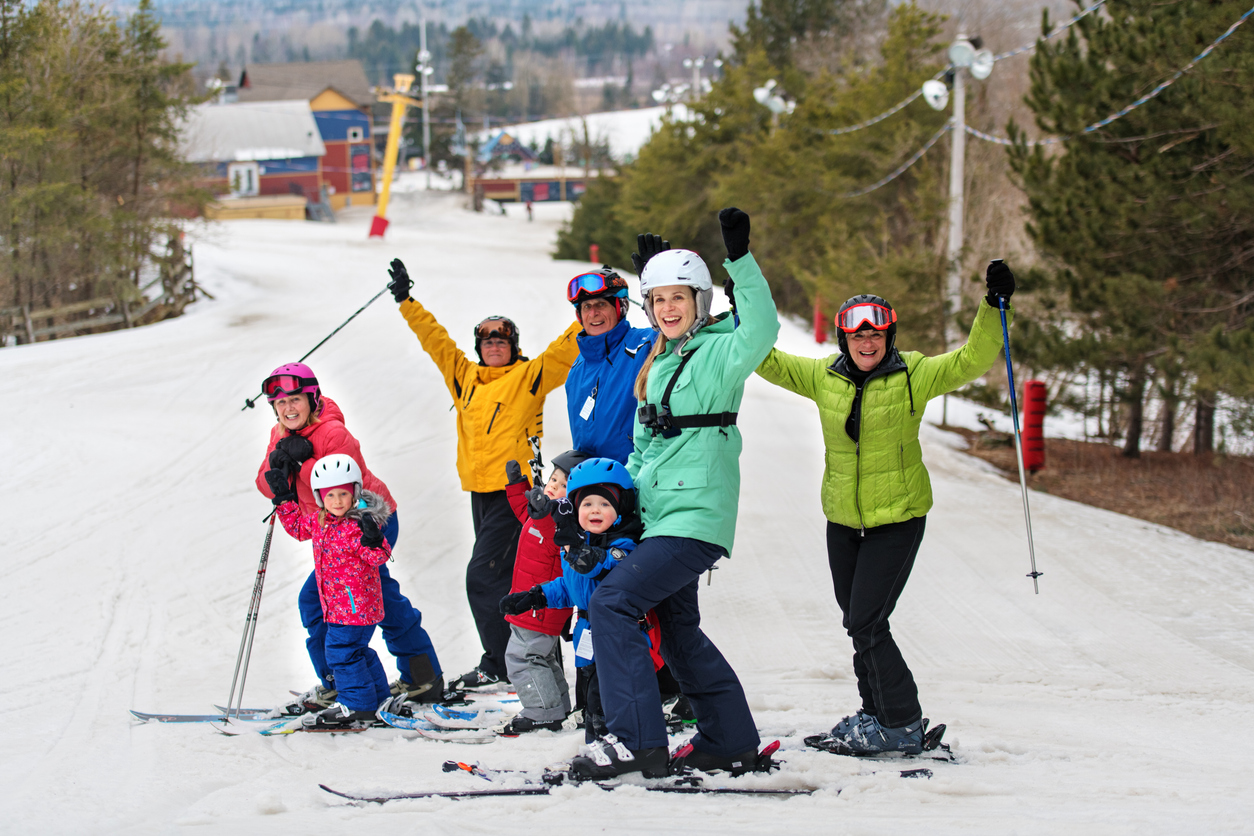
Families and friends in a ski resort

ICYMI for the End of This Season

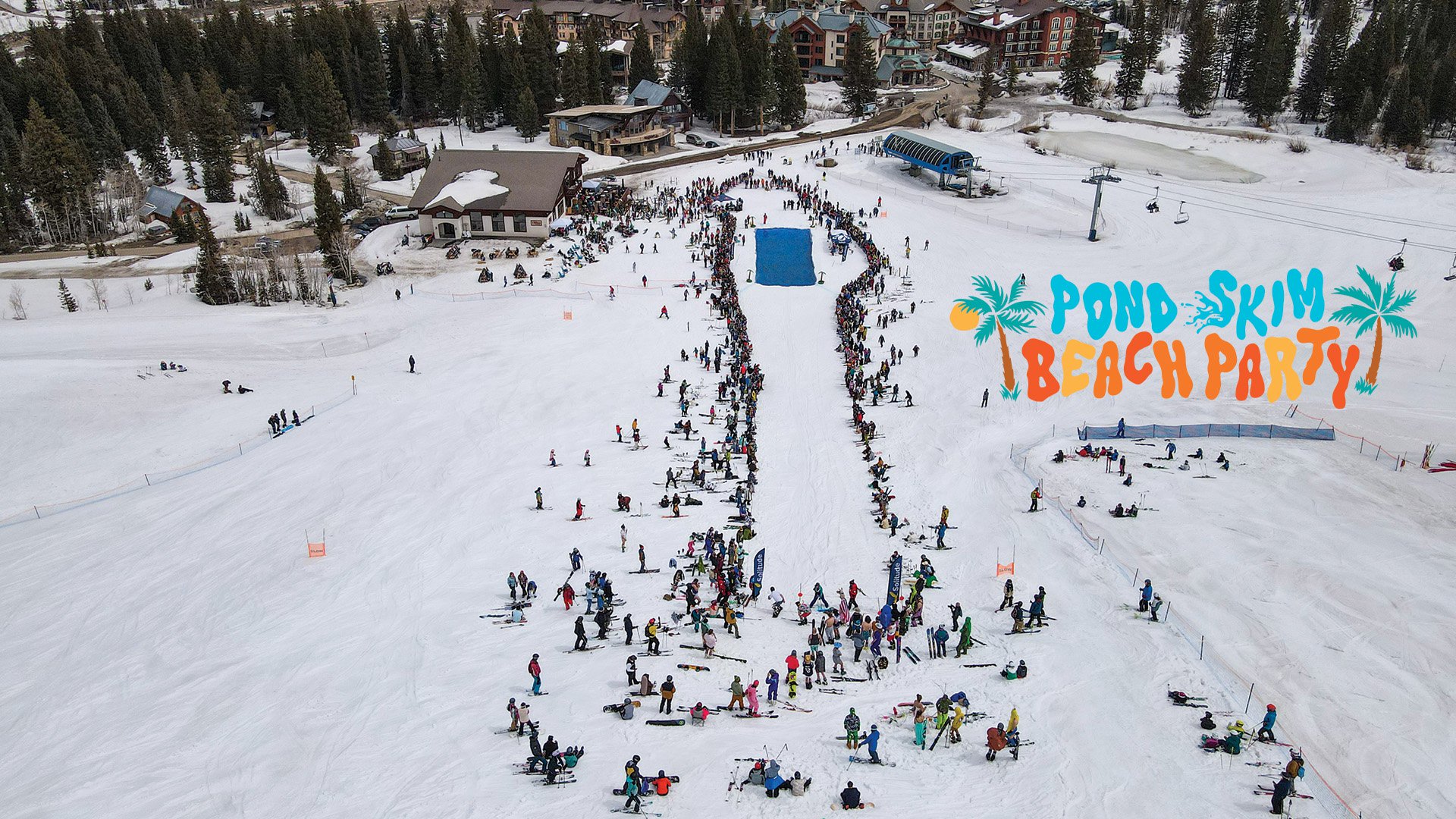
Three cheers for spring.  It means longer hours to linger in the sunshine, wearing fewer layers, ditching goggles for sunglasses, and also enjoying oodles of end-of-season events and early bird discounts for next season, including new season pass options. Here is a round-up of what to check out before you pack away your skis, snowboards, neck warmers and base layers for golf clubs, tennis rackets, mountain bikes and tank tops, including always good-for-laughs pond skimming contests .  Don’t forget the SPF!

In the West

Jackson Hole again features its annual Rendezvous Music Festival the first weekend in April, 5/6 with FREE concerts both downtown in Town Square and at the Teton Village base area, including Country super-star Luke Grimes.  You can also download a Spotify playlist.  Jackson Hole is scheduled to close for the season on Sunday, April 14 https://www.jacksonhole.com/rendezvous

For the 2024/25 season, all Big Sky single day or multi-day lift tickets purchased from the resort will include Tram access, and the new Twin Tips Pass includes early and late season access.  Note that skiers/riders with Ikon, Mountain Collective, and Big Sky Resort passes without tram access will continue to have pay for the tram on a per-ride basis.  Pass prices here. https://bigskyresort.com/24-25-season-passes

Also, the resort is offering 35% discounts through April 28 to explore the challenging terrain off the Lone Peak Tram and upper mountain when you book with a Tram Guide.

Snowbasin is offering a year-round Premier Pass that includes summer activities such as gondola rides and mountain biking trails, and no black-out days in any season.  It’s relatively inexpensive for what it offers – $1,129 for adults to 64 and $829 for adults 65+ – which includes five days of skiing/riding at sister resort Sun Valley, free public transportation on the UTA Bus system, and multiple discounted Buddy and Family passes.  More information here.   https://www.snowbasin.com/tickets-passes/season-passes/

The end-of-season Pond Skimming fun at Steamboat is Sunday, April 14, one week before the official closing date on April 21.  https://mtn-resorts.com/Steamboat-Springs-Event.php?id=49

In the East

Family-owned and operated Tenney Mountain in New Hampshire has one of the least expensive pass deals anywhere, with no blackout dates and six Buddy Passes included in every purchase.  Prices are $399 for ages 19-64, $299 for Veterans/Military and Seniors 65-79, through April 30th.  80+ skis and snowboards FREE.  A bonus is that skiing icon and super-nice guy Dan Egan – who grew up nearby and grew up skiing here – is the new GM, and there are chances to ski with him and learn from him.  More information here. 

https://tenney-mountain.axess.shop/en/Products/Tickets/Category?cID=1

Pennsylvania destinations Blue Mountain Resort in Palmerton and Camelback Resort in Tannersville, now under the same corporate ownership, have a a new joint pass program for skiing, snowboarding and snow tubing. The Peak to Peak Poconos Pass offers unlimited skiing and riding at both for the upcoming 2024/2025 season.  Purchase now and it includes the remainder of the current season.  Adult prices are $899 through April 3. They are also Ikon Pass members.

Pond skimming at Whiteface is Saturday, April 6.  https://whiteface.com/event/pond-skim/

Pond skimming at Stratton is Sunday, April 7.  https://www.stratton.com/things-to-do/events

Spring Bash Weekend at Saddleback is April 5-7, with the fan favorite Pond Skimming contest on Sunday the 7th.  https://www.saddlebackmaine.com/event/spring-bash-pond-skim/

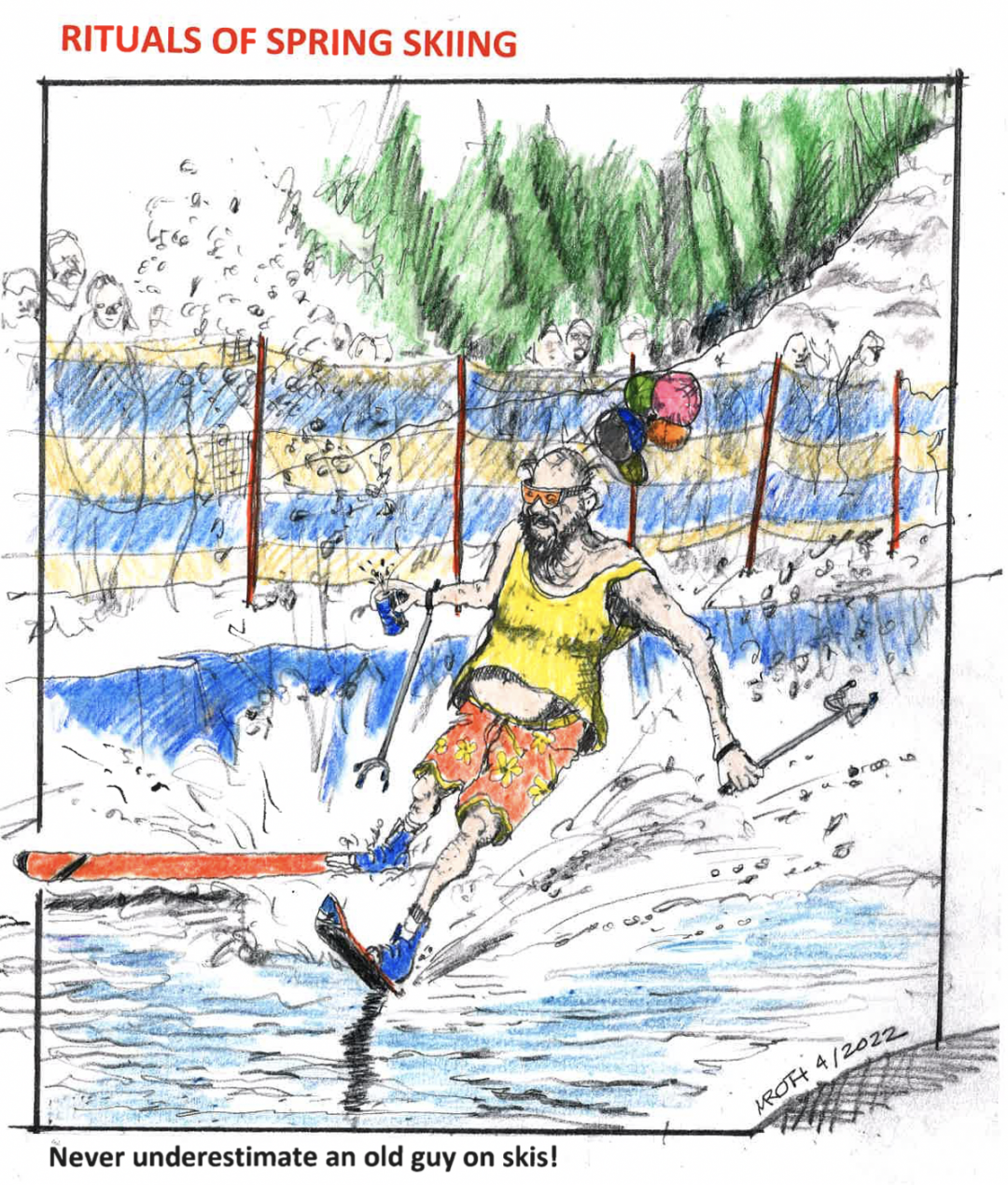
Mike Roth’s Take on Spring Rituals

In Canada

The resorts of Quebec continue to offer a bargain deal for first-timers through the end of the current season.  The Never Ever Days program, for ages 5 and up, is a lesson at a ski resort with a certified instructor, plus full equipment rental for only $29.95 Canadian, which is more like $25 US. The program has helped introduce more than 30,000 already this season.  That’s great news for the future, thanks to introducing newbies to the sport we all love.  More information here.  https://boutique.maneige.ski/en/products/mpf

The annual World Ski & Snowboard Festival at Whistler, April 8-14, is a week full of events and action on and off the slopes. It features ski and snowboard competitions, music, art, photography, filmmaking and exciting nightlife, plus some of the best skiing and après sessions of the season, most of which are FREE and others ticketed. The annual Slush Cup pond skimming event is on the final day.  See the full schedule of events here.

ttps://www.whistler.com/events/world-ski-snowboard-festival/

See you on the slopes – if not again this season, fingers crossed for next season.

$6,000 Lifetime Pass Offer From Washington State Ski Area

With Ikon and Epic season passes costing around $1,000, and some walkup day passes hitting $300, a $6,000 Lifetime Pass sounds like a great deal.

That’s what’s being offered by Loup Loup Ski Bowl, a small and fiercely independent ski destination in Okanagan, in central Washington State about 125 miles northeast of Seattle.  It’s an innovative effort to create a cash flow to survive changing times and the changing temperatures and snowfall levels they bring.

Currently, the area which locals call simply “The Loup”, sells a season pass for $569 for adults 20-64, $450 for seniors 65-69, and $190 for a 70+ Super Senior.  

Clearly, the younger you are, the better a deal it is, since 30 or 40 years of skiing for $6,000 is a better deal than ten. That’s the current break-even point for the lifetime pass, less if pass prices go up for inflation.

Loup Loup also is not hiding the fact that this $6,000 lifetime pass deal will help it survive. This is what you’ll see on the destination website:

https://skitheloup.org/plan-your-visit/passes-tickets/

Win #1 –  By purchasing a Lifetime Pass now, you are entitled to skiing at the Loup for the rest of your life and the life of the Loup.

Win #2  – By purchasing a Lifetime Pass now you help ensure that there is a Loup Loup Ski Bowl for you, your family, and the community to enjoy long into the future. The longer the Loup can thrive and survive the more benefit you get from your Lifetime Pass.

Win #3  – By purchasing a Lifetime Pass for you or a loved one you can inflation proof your or their skiing…for life! Think about it, in the 60’s a brand new car was $3,000 …now the average price is nearly $50,000! Skiing unfortunately has suffered the same effects of inflation and it’s very likely to continue. With your purchase, you can side step inflation and help save a small community ski hill at the same time.

And if that still doesn’t tip the scales…forecasters are already predicting a greater than 70% chance of a La Nina cycle by mid summer…so with a little luck and a whole lotta snow dances…this low snow year will just be a distant memory!

Loup Loup is offering only a limited number of passes at this price, so don’t delay if you want one.

Let’s hope The Loup survives.  Small, independent areas like this are crucial to the future of the ski/snowboard industry. This is where we and the kids and the grandkids learn to ski, before we move on to larger areas like those on the Ikon, Epic and Mountain Collective passes.

Let’s also keep watch to see if this idea spreads to other small, independent areas like Loup Loup Ski Bowl.

See you on the slopes!

Tuning Skis (Part 2)

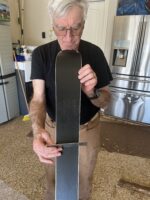
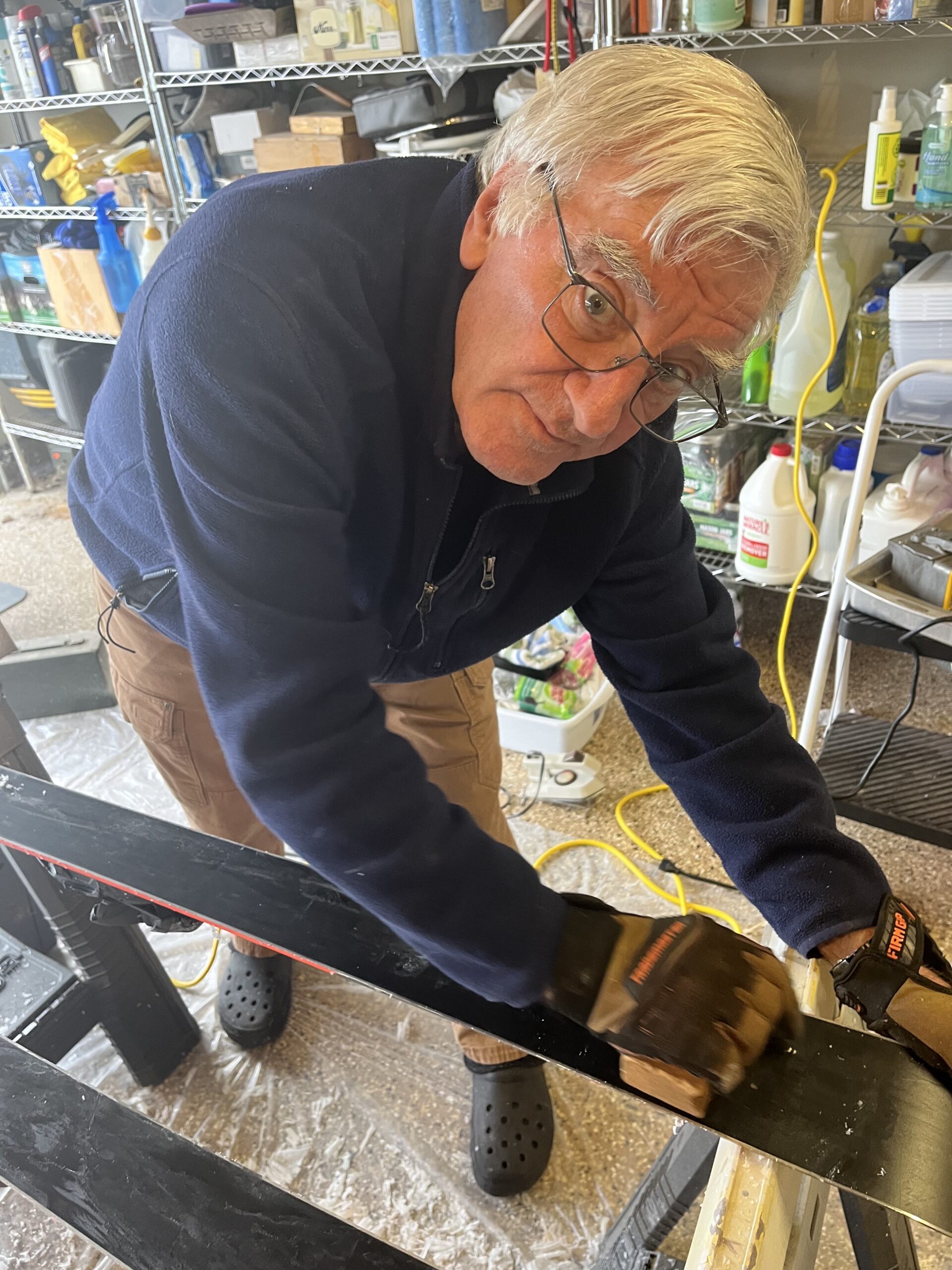
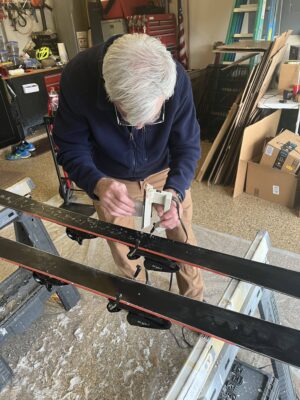
Photo 1: Checking the square of the scraper

As a young ski racer, I learned the importance of properly tune skis. Now as an old a recreational skier, I can assure you skiing “tuned” skis makes the sport more enjoyable. 

Tuning a pair of skis answers three questions. One, do the bindings work as advertised? Two, are the bottoms flat, not convex or concave? And three, are the edges are sharp from tip to tail.  

The bindings are the easiest to check. Simply twist the toe piece left and right. It should turn smoothly. If you feel a grinding feeling, there may be crud inside that has to be flushed out. FYI, if you carry your “naked,” i.e. not in a bag or container, a ski rack on the top of the car, you will have dirt and grit in your bindings. 

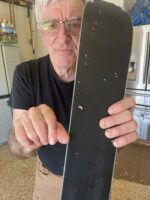
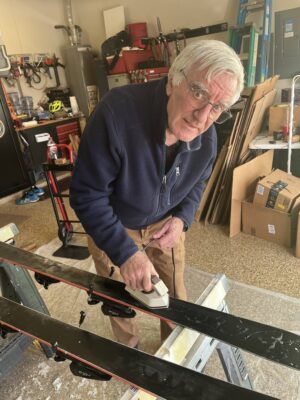
Photo 2: Looking for concavity-convexness.

Open and close the heel piece. Again, it should move smoothly. If it doesn’t, use a hose to clean both t

he toe and heel pieces. Do not use soap or a degreaser which will clean out the dirt as well as all the lubricants.

And last, know your ski binding DIN number. The industry went to great lengths in the 1970s and early 80s to standardize boot sole shapes and the boot binding interface. Out of that came a chart that considers, your age, ability, and weight to create a binding setting number. You should know it and check and see if it moved.

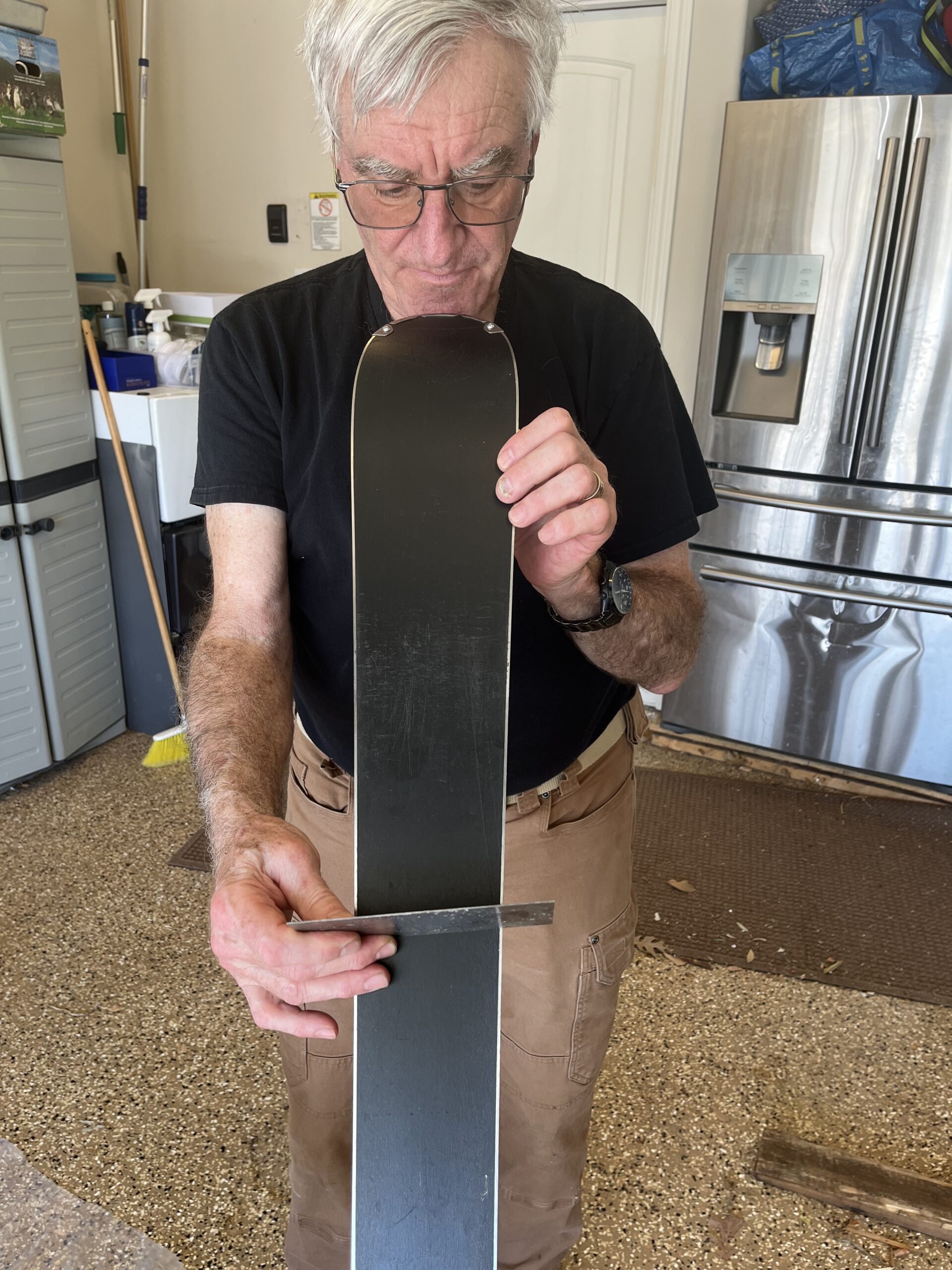
In an earlier piece about waxing skis, I mentioned a scraper. Photo one shows me checking to make sure that it is square. Why? The scraper is the perfect tool to check to see if you have a concave or convex bottom.

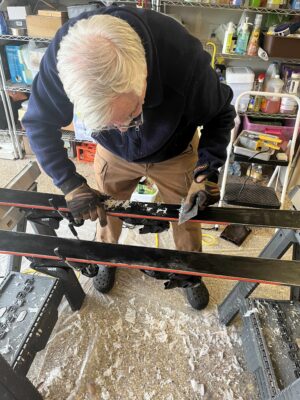
Photo 3: Using the file

To determine if you have a convex bottom, (Photo 2) as you slide the scraper down the ski, you can see daylight along the edges, and the scraper will rock on the P-Tex. In other words, the bottom is higher than the edges. If it is, the ski will swim, even dart to one side when you try to ski with them flat. 

If the bottom is concave, with the scraper resting on the edges, you can see a gap between the scraper and the P-Tex. A concave bottom is another bad condition which causes the ski to be hooky when on edge and often hard to turn. 

Neither condition is good. To fix either, take your skis to a ski shop that has a bottom grinder that will true up the bottoms. Note, that grinding the bottoms will take off both P-Tex and the steel edges and must be done very carefully. BTW, another reason to wax skis frequently is that it reduces P-Tex wear.

Photo 4: Edge sharpness

Most ski bottoms, even after several seasons are neither concave nor convex, but their edges are dull. First, when you look at the edges, they should be 900 where the edge meets the snow. Often, you will, as you run your fingers gently down the edges, feel burrs or imperfections caused by hitting rocks, bare spots, pieces of wood, etc. Both edges need to be smooth and “sharp.”

Most ski shops have files designed specifically for this task. You simply run them down the ski, from tip to tail to smooth out the edges. (Photo 3). When you are finished, use the back of your thumbnail, and gently draw it across the edge at a 900 angle (Photo 4). The edge should scrape off some nail. Once you are finished filing the edges, wipe them down with a damp cloth to clean off any reside and you are done.

Trust me, if your skis are tuned properly, you’ll notice the difference.

CADS: Where Are They Today?

Dr. Jaime Green (circa 2016) wearing CADS.

Riding a chair lift last month, I saw them on a skier below. Ten days later, I saw them again, this time at an area 2,000 miles away.

CADS…  Constant – force Articulated Dynamic Struts … the odd looking, butt-to-boots device designed to keep skiers with knee and other lower body strength and stamina issues on the slopes and skiing without pain. Twenty years ago, it was not unusual to see people wearing CADS. Two of my friends wouldn’t slide downhill without them. That was then. In recent years I hadn’t seen anyone on the slopes wearing them.

What happened?

No marketing. No advertising. No distributors, according to Walter Dandy who first imagined CADS in the 1980s while nursing a case of sore thighs riding up a chairlift at Heavenly Valley after a long run in heavy Sierra snow, he had the concept and the vision. In Tony Nespor, he found the engineer he needed to refine the parts for manufacture.

The idea was a simple one: ‘artificial strength’, a way to use upper body weight to stabilize the ski on the snow, like a suspension system in an automobile.  And that strength needs to be constant. The answer turned out to be a rubber spring that kept up the pressure steady on the skis. It meant less muscle fatigue, less knee strain, and less lower back strain. .

The pully-like devise looked strange: a rubber spring at the skier’s boot is attached to a string that runs up the back of the skiers legs where it is attached to a harness and waist belt.  At the end of a run, it is detached for the lift ride back up the hill. At the top it is then re-attached, which that can take as little at 11 seconds once the skier gets used to the process.

Sure CADS felt strange when first used. But as prominent ski writer Nicholas Howe wrote in Skiing Magazine, “The only strange part comes when the afternoon ends, and my legs feel as if it were still morning.”

Dandy had a prototype of “my contraption” ready to go in the spring of 1987. He approached K-2 but the ski manufacturer indicated it had no money to develop the devise. He then secured interest from George Gillette at Vail and then funding assistance from the ambassador Paul Nitze, an investment banker and  former chairman of the Aspen Ski Company. The first sale was to the Dave Gorsuch ski shop at Vail where CADS were introduced to the public.

The early feedback was very solid. “95% of the early people who tried CADS, bought them.” said Dandy.

Ed Blumstein was one of those. The Philadelphia attorney who vacationed at Vail was one of the early users. ” They made me a more comfortable skier.  CADS extended my skiing life 15 years.”

The early deal was that buyers would receive a box.  Boots and pants would be sent back to Dandy so the device could fitted then returned. There was a money back guarantee if the purchaser didn’t like the product.

Said Dandy: “Only a couple ever came back.”

By the mid-1990s, CADS were catching on not only at Vail and Beaver Creek but also with Izzy Slutsky and Karl Plattner at Hunter Mountain and nearby Windham in New York. Said Plattner at the time: “The two best things ever to happen to skiing were snowmaking and CADS.”

There was other positive feedback too. CADS were accepted early on by orthopedists at the noted Steadman-Hawkins Sports Medicine Foundation in Vail who endorsed the devise. Prominent ski journalists across the country wrote glowing articles. The 1964 Olympic slalom medalist Jimmy Heuga who was diagnosed with multiple sclerosis skied on CADS when he could no longer walk unassisted.

So why with all the positive vibes when they were introduced are CADS not commonly seen on the slopes today?

They are still available to purchase. Today they cost $695 by mail with some assembly required.

‘We sell a handful a year.” says Handy, who still does demonstrations at his home in Vail.

And right now, that seems to be the future too. There is no distributor working the market and CADS hasn’t advertised in 25 years. Seeing the device at work on a slope these days, like I did recently, qualifies as a rare sighting. Handy estimates that there are a maximum of 1,000 people using them today.

What’s next for CADS?

Says Handy: “Maybe I should get in touch with Taylor Swift

New Don Burch Video: Wonderment of Skiing

This week Don Burch brings us A very personal account of what skiing means to him.  Enjoy!


Skiing Ski Santa Fe

View from the top of Gayway

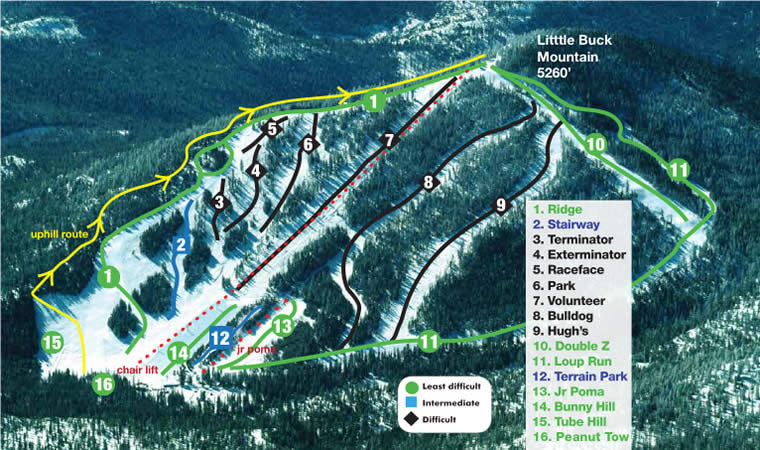
When one thinks of the first ski areas in the U.S., one thinks of Sun Valley or Stowe. Few know that in 1936, in the Sangre de Cristo Mountains east of Santa Fe, NM, Robert Nordhaus installed a rope two to haul people up the slopes of what is now Ski Santa Fe. It was used as a training area for the 10th Mountain Division during World War II.

Ski Santa Fe is about 40 – 60 minutes northeast of New Mexico’s capital, depending on your starting point. Its base elevation of 10,350 feet makes it one of the highest ski areas in the country.

After skiing Ski Santa Fe for three days over the President’s Day weekend. The conditions were excellent, and the lower half of the mountain had a mix of natural and manmade snow. 

The trails remind me of skiing in New England, i.e. narrow, sometimes really steep and bordered by large trees. The trail mix of Ski Santa Fe is 40% expert, 40% intermediate and 20% beginner which tells you who skis the mountain. There are many places at Ski Santa Fe, particularly off where you can ski in and around the trees. The North and South Burn trails off the Tesuque Peak Lift are a giant glade with steep to not-so-steep routes through the trees.

For intermediates, there are many wonderful, well-groomed trails. The wide Gayway, from the top of the Tesuque Peak chair, will present an enjoyable challenge. Before you ski down Gayway, stop, and enjoy the view of the Santa Fe Valley. It is simply incredible. Each time I skied the trail, I’d stop to take it in.

On the Presidents Day weekend, there were hardly any lines after 10 in the morning. For next year, a new quad chairlift will be open which will whisk skiers from the base to the top in about four minutes.

While there, I met many locals in their 60s and 70s who were season pass holders. The mix of skiers and boarders ranges from the very young to folks my age (I’m 78).

For those who want to take lessons, the ski school offers a wide range of classes, including those for seniors taught by instructors who qualify as a senior skier. Ski Santa Fe also has an adaptive skier program. All of three of its season passes – God. Platinum and One Pass – have substantial discounts for skier.

The area also has youth and family programs geared to getting youngsters hooked on our sport. While not designed as such, the ticket prices for seniors make it a perfect excuse to go skiing with your grandkids.

Good news for your legs. Except for Lift 2, all the lifts have footrests and safety bars. The bathrooms at the base lodge are on the same level as the slopes AND there’s an elevator to take you between the floors.

More good news. Santa Fe employs a full-time safety team that works to reign in reckless skiers. 

Totemoffs

There are three restaurants on the mountain. One is the La Casa food court in the base lodge, which has a wide variety of very good food. The outdoor Terrace Grill on the second floor of the base lodge has an interesting menu. If you want a real treat, try the cheeseburger smothered with green chilis at Totemoff’s Bar and Grill near the midway station on Chair Two.

One of the joys of Ski Santa Fe is that there is no lodging at the area, so you must drive up. This is both a plus and a minus. The plus is that you get to stay in one of the hotels in Santa Fe and enjoy the excellent restaurants around the Santa Fe Plaza. The minus is that you must drive up, park, carry your skis, boots, and poles to the base lodge, or put your boots on at the car before you walk up. There are lockers in the base lodge for which you need to buy tokens at $2 each.

I’ve saved the best news for last and that’s lift ticket prices. So, if you are between the age of 62 – 71, weekdays are $76, and holidays and weekends are $84 unless you are 72 and older. Then, its $16/day any day!

Net, net, I’ll be back!

Ski Santa Fe by the Numbers

 Summit elevation – 12,075 feet
 Base elevation – 10,350 feet
 Vertical drop – 1,725 feet
 Average annual snowfall – 325 inches
 Skiable acres – 660
 Snowmaking coverage – 55%
 Number of trails – 86
 Runs groomed daily – 37
 Terrain breakdown – Beginner 20%, Intermediate 40%, Expert 40%
 Terrain parks – 2
 Lifts – 7 – 1 quad, 2 triples, 2 doubles, two conveyors

Prepping Skis (Part 1)

Dripping the wax

Way back when in the last century, after I started skiing, ski bottoms were wood. Then, Kofix, the first polymer bottom, came out in 1956 followed by P-Tex 2000 in 1966. Since then, every ski has a polyethylene bottoms. The lure, besides better gliding over the snow, was that with P-Tex, one didn’t have to ever wax your skis again.

So much for nostalgia. Besides helping the skis run better, wax also helps protect the bottoms of the skis from damage. Again, back in the last century’s good old days, I’d apply a coat of paraffin to the bottoms of a new pair of skis, scrape it off, buff it from tip to tail, and then repeat the process twice.

What this did and still does is fill in the pores in the polyethylene and make it slicker. Slicker means the ski goes faster, easier to skid and/or turn.

Before each ski trip, I’d prep our family’s skis, and each night after skiing, I’d apply a new coat of wax. In the late 80s, hotels and condos had a room where one could prep skis, but they seemed to have disappeared along with the typewriter.

Ironing the wax

Newer ski bottoms are better, but I still wax before each trip. If nothing else, it gets me excited about the coming ski trip. Here’s the process.

Step 1 – set up your work area. This will be messy, so I recommend covering the floor under the sawhorses with plastic used to protect walls and floors when you paint. This way, when you are done, you can pick up the plastic that contains the wax shavings and put it in the trash.

Step 2 – wipe down the skis with a damp (don’t use soap!) rag to clean any dirt or grit off the bottoms.

Step 3 – Drip the wax in a wavy line down the ski using an iron (mine is an old travel iron). It doesn’t matter if you start at the tip or the tail, and when you’re done with each ski, the trail of wax should be about 3/8 to ½ inch wide. For this base wax, you can use paraffin that, once upon a time, you could get in small slabs where the canning goods were at the supermarket, but it is getting harder and harder to find. I’ve switched to LFTurari Ski and Snowboard Wax. The link to get it on Amazon is here.

Step 4 – use the flat bottom of the iron to flatten the wax on the bottom

scraping

of the ski. Don’t worry if some drips over the edge. Be careful not to leave the iron on the bottom on any spot for more than a few seconds. By the time you finish the second ski, the wax on the first one has cooled sufficiently to scrape.

Step 5 – scrape the wax off from tip to tail by holding the scraper at a 30 – 45 ° angle to the bottom and scrape from tip to tail. My scraper is the blade from an old kitchen bench scraper which are easy to find. Just make sure that you deburr it before you use it.

Step 6 – buff the wax, again moving the cork or plastic brick from tip to tail. I prefer cork. This step pushes it into the P-Tex and smooths it out.

Step 7 – run the scraper down the edges to remove any remaining wax. Then, pick up the plastic!

Warning, depending on the snow conditions, your skis may feel sluggish at first until the wax wears off. However, the more you do this, the more protected your bottoms are, and if you wax for specific conditions, the prepped bottoms should hold and retain the wax better.

The Older We Get- The Better We Were

Howard Johnson’s at Tuckerman Ravine- 1984

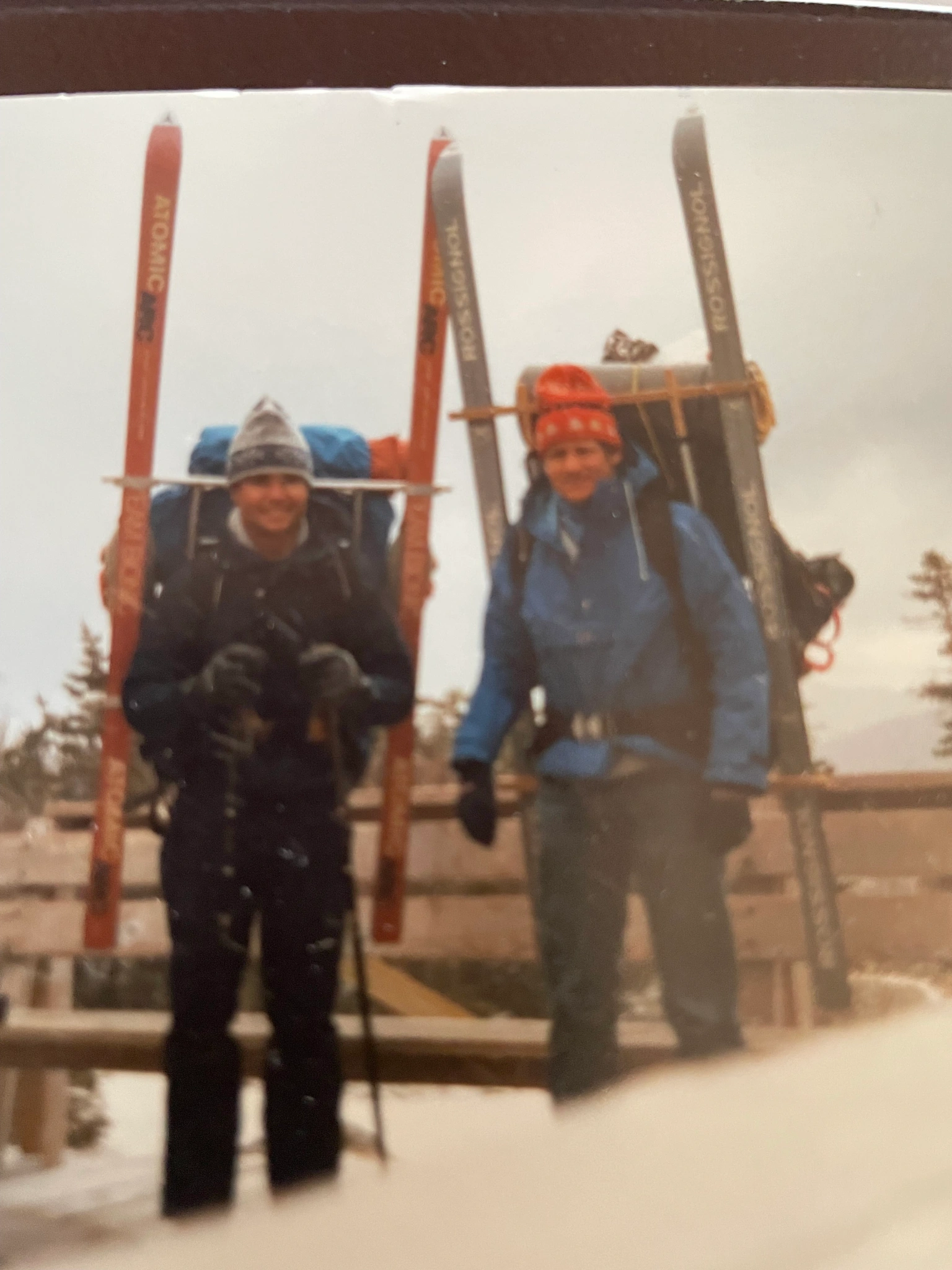
So, I was surprised this week when my friend Eric, from Tahoe (formerly of Vermont), mailed me some pictures from way back when we skied Tuckerman Ravine together. Looking at these 40 year old photos, I thought back to a time when we laid down the only tracks one day in Dodge’s Drop ( and Eric had a cast on his wrist). We had some good times up there as we skied it many times together. But the thing that is amazing about this picture is the equipment we used. I mean, look at the skis. Probably 203 or 205 cm GS skis. Look how narrow compared to today’s equipment. 

The other interesting thing about these pictures was the external frame packs we used. We added cross bars with latches and wing nuts to secure the skis to the frame. He was from Vermont and naturally used wood. I was from the steel city and with the help of my dad, we used aluminum cross bars. All in all, with the boots secured in the bindings, our clothing and food for the week, sleeping bag and mat, the pack weighed in at around 85 pounds which was a pretty good load to haul to the shelters where we stayed. One year, I thought I would save some time and make peanut butter and jelly sandwiches ahead of time. By the time the week ended, that package of sandwiches had been slept on, eaten from, and generally the once nice, neat stack of sandwiches had turned into a peanut butter dough ball. Lots of memories came flooding back to me as I opened the envelope this week from my friend.

In today’s world, people who climb and ski as we did, use internal frame packs. There are slots in the side of the packs that allow easy placement of the skis and the internal frames are much better suited to securing a lot of cargo. Lots of guys today use skins on their skis for climbing, and AT equipment to hike and ski to their destinations. Eric and I basically hauled our alpine equipment up to the shelter, and from there basically climbed up in our ski boots with our skis over our shoulders. Equipment surely changes and evolves over the years and skiing is no exception.

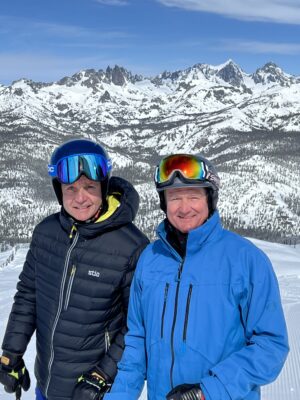
40 years later at Mammoth Mountain, California.

The other things that evolve over time are the stories that we tell about the old days. Sure, there are embellishments, the runs are bigger and badder than perhaps they were, and the stories that we tell each other evolve with the passage of time. But like my friend Paul Vey still says many years later, our trip down Corbet’s Couloir at Jackson Hole, was the highlight of his athletic career. He played Div 1 basketball at UVM and that is still saying something. Somehow the beers taste better when the stories start cranking up. Eric’s wife Helen usually disappears when she starts hearing the old stories. She has heard them way too many times. But when pictures like these start showing up again, they remind me of a time gone by and the good times that we had. I mean, we are still at it – 40 years later. Maybe not camping and hiking Tuckerman Ravine anymore, but still skiing in some pretty good places and having a pretty good time. And still skiing relatively well. 

So, if you get a chance, go look in your old photo boxes and take some time to review your old times with great friends. They will remind you that friendships are important and like equipment and stories, they evolve over time. Having friends that you can still do things with after many years is a true blessing. Encourage each other to stay in shape, stay at it, and make the effort to get together whenever you can. And always remember- the older we get……………the better we were.

ICYMI for March 2024

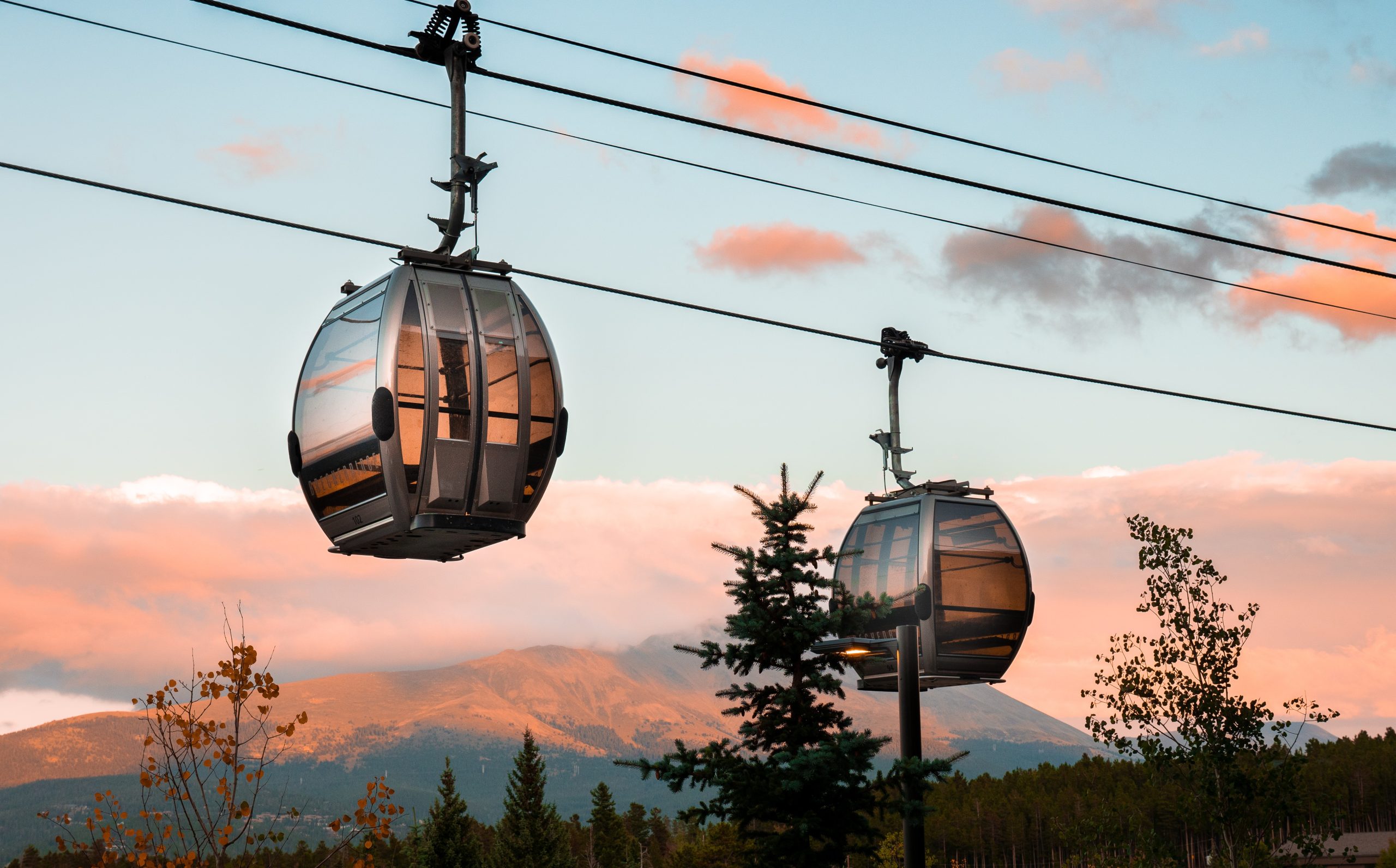
A sunset shot of two gondolas in Steamboat, CO Photo by Phoenix Dorninger on Unsplash

Days are getting longer and warmer, and spring skiing is the reward we downhillers get for braving frosty fingers and toes until now.  Let’s hope the snow holds until April or May. Until then, enjoy these events and deals happening at the destinations we love.  Here are bits and pieces from here and there for March for skiers and riders.

Sugarloaf

The largest ski area East of the Rockies just got even larger with the opening of West Mountain in mid-February.

 “We are thrilled to announce the highly anticipated grand opening of West Mountain”, shares Karl Strand, President & General Manager.  “The magnitude and pure impact of this type of terrain expansion can’t be understated.  It’s the largest terrain expansion to happen in the Northeast since the late 1970’s.”

West Mountain expansion includes 12 new alpine trails, covering approximately 120 acres. The expansion will increase Sugarloaf’s total skiable acreage by nearly 10%, catering to both beginner and intermediate skiers and riders.

They are transported by the new Bucksaw Express, a high-speed detachable quad which will increase Sugarloaf’s uphill capacity by 2,400 skiers per hour. It transports skiers and riders up to Bullwinkle’s Restaurant, providing convenient access to the heart of the mountain and revolutionizing the way guests access and navigate the slopes.

 “West Mountain creates a new family-friendly zone, something Sugarloaf has needed for quite some time”, shares Strand, “the accessibility of the lift and terrain provides a progression platform unlike anything we’ve ever had here.  Our instructors and families will have a separate zone creating confidence and a “safe” zone, if you will, for beginner and intermediate level skiers.”

Extended Hours at Aspen

Starting March 1, all four resorts that make up Aspen/Snowmass are extending the hours of lift operations, to coincide with extended hours of sunlight.

Aspen Mountain: Silver Queen Gondola, Ajax Express and FIS Lifts will operate until 4pm The last ride down on Silver Queen Gondola is 4:30pm.

Highlands: Exhibition Lift will operate until: 4pm. Loge Peak will operate until 3:30pm.

Buttermilk: Summit Express will operate until 4pm.

Snowmass: Big Burn and Elk Camp Gondola will operate until 4pm. The Village Express Lift will operate until 4:00pm to the summit and until 4:15pm to the mid-point.

Steamboat

The popular pre-pandemic free daily mountain tour program for adults only with “yellow jacket” volunteer hosts has been changed into a ticketed tour for all ages, especially families.

Guides still take participants on greens and blues (no blacks), focusing on connecting the various peaks and lifts, along with historic tidbits. 

Now called Full Steam Ahead Mountain Tour, it is being offered Monday-Thursday through early April, 10am to Noon.  The formerly-free tour is now $20 for adults 13+, and free for a child aged 10-12 with a paid adult ticket (children younger than 10 are not permitted on the tour, and children 10-17 must be accompanied by a paying adult).  

Advance registration is required, as is a lift ticket or pass.   Steamboat is a member of the Ikon Pass system, and also offers resort-specific passes. Meet at 9:45am the base of the new Wild Blue Gondola, at which whisks riders to the top of the appropriately-named Sunshine Peak.  https://www.steamboat.com/things-to-do/activity-details/mountain-tours

Skier/Snowboarder Responsibility Code – More Thoughts

Let’s face it, unless you’re an active ski instructor trying to instill key concepts to your students, or a parent/grandparent trying to explain this thing to a relative or grandchild, when’s the last time you actually read this “Code”, now with 10 points?

Instead of reading each numbered point, let’s think about the most important messages we’re trying to convey to anybody and everybody we think needs to know this stuff.

Using the numbered list, and starting with kids, I ‘d go with these over everything else:

1. Ski or snowboard at a speed you can control. That means being able to slow down quickly to avoid other people, trees or objects in front of you. Why? So you don’t get injured, and so you don’t injure other people, because either of those outcomes will wreck your day.

2. Understand who has the right-of-way. That means people who are ahead of you or downhill from you have the right-of-way. Why? Because they are unable to see skiers/riders behind them, and it’s not always safe to be turning one’s head around anyway while descending a ski hill. The rule is simply: anybody ahead/downhill of you have the right to keep on skiing, and YOU have a responsibility to keep out of their way.

For my own kids I always gave them a“perimeter” concept which went like this:

Always keep an eye out for who is getting too close to you. Always try to find space where your progress downhill is not continually interfered with by nearby skiers. This was helpful because –  being kids – they’d always find the loophole in my directions.  

For example, they quickly explained that sometimes there’s a skier on the right, and even on the left, who is either right next to them, or a bit above or below. So who’s got the right of way now, they’d ask me?

3. Stop where you can be seen. This one I demonstrated physically, on the hill, when I took my kids to terrain where there was a slight rise, and then a dip. I’d lie down (assuming no one was around), then yell to them, asking: “CAN YOU SEE ME NOW?” Of course, I chose a spot where the person lying down would be 100% hidden from a downhiller perhaps only 10-15 yards uphill. It amazed my kids that I’d disappeared.

To me, that was possibly the most dangerous situation of all. And once I’d shown my kids how someone lying down on the snow, but slightly ahead of them, and hidden by a dip in the trail following a slight rise, could appear invisible until it was too late, and a fast skier might collide directly into the “lying down” skier/rider. DANGEROUS TO BOTH PARTIES.

4. Get your bearings, and look uphill to make sure it’s safe to start downhill.

5,6,7. (Obey signs, keep off closed trails)  All helpful, but secondary and common sense. Obviously, much more important in the big mountains out West.

8,9. Know how to load/unload lifts, and someone should be with a newbie who does not know such things. The code should indicate that ski area personnel are authorized to “pull lift tickets” from drunk and/or drug-affected individuals. On roads, police will arrest people for such violations, and it should be the same on ski hills and mountains.

10. Finally, besides trading contact info, and especially if it seems someone’s unwilling to share contact info, it’s never a bad idea to get a quick picture of the person.

See full list here: https://seniorsskiing.com/skier-snowboarder-responsibility-code/

Editor’s Note –  

We invite you to add your comments about experiences with downhillers who have violated the safety code. Even more, we invite you to contribute a full article on your opinion of the current state of safety and courtesy on the slopes today.  Add your comment directly to the article, or send us your full article to info@seniorsskiingmedia.com

anne-nygard

Importance of Rental Demo Skis

I love to ski. (My wife says I live to ski).  Most of my adult working life I was too busy  to research new ski technologies and techniques. It is why I wound up skiing the same pair of Head Monsters for a decade until they wore out, and how I learned how important the demo process is to finding the perfect new pair of skis.

For years, my purchasing research typically was reading a few articles, talking to fellow skiers, and with a (hopefully) knowledgeable ski shop salesperson.  Invariably, I would buy what one of them recommended.  Maybe you have, too.

Photo by Anne Nygård on Unsplash

The last time I brought the Monsters in for sharpening, I was told there was nothing left to sharpen. Obviously, I had skied and sharpened the metal edges to death, and they finally died. It was time to buy a new pair. (Not my Salomon boots! I’ve had them spot-stretched three times, and they fit like a glove. I have had to replace the heelpieces, though.)

Instead of running to any ski shop to buy something, I chose to rent on my first full-week trip of the season and not rush to buy new ones. I’ve always shlepped my ski stuff wherever I’ve skied, both domestically and internationally, so this was an extra perk. (The serious convenience of shipping instead of shlepping skis to and from ski trips is a different subject.)

Flying into SLC in the early afternoon for a 70+ Ski Club trip, there was plenty of time to get to a ski shop to rent skis (fitted to my own great boots, of course). We discussed my ability, and he began to point out the differences of several brands and models he was considering for my skill level and body weight.

I asked if I could ski a different pair each day that he would suggest based on my feedback, and he agreed, even encouraging that.  A good shop will let you swap as often as you want. So, I rented for the week, and took the first pair he suggested.

During the next five days I tried to remain focused on the skis while still enjoying my skiing each day, trying all different types of terrain, speeds and turns and paying attention as much as I could to weight shifting, balance, chatter, turn radius, carving, etc.

Whenever I had a few moments, I would dictate my impressions about the skis into my phone. At the end of the day, I would return the skis to the shop, meet the same sales/manager guy, and report what I liked and didn’t like, what it felt like, etc., compared to the previous day’s skis. Then, he would recommend a different pair for the next day based on my pros and cons, and repeat the process for the entire week.  

 At the end of the week I knew exactly which skis I liked the best and why– enough to buy them 

I know ski performance can vary substantially between skis models. I just never felt it myself, until that week, and the differences were both noticeable and meaningful. Simply, my new skis improved my skiing and my enjoyment of skiing. I couldn’t be more satisfied.

They fit me and my ski style better than any other I’ve used in decades, even before the Monsters. They require the least amount of work to achieve the level of comfort I want while skiing, without the negatives of the others.

I can’t recommend this “trial” approach to purchasing skis strongly enough, especially if your purchasing method is to talk with sales folks, read a few articles and ask other skiers how they like what they’re skiing on. Most ski shops will apply your rental fee towards the purchase of a new pair from them at the end of the week, whether you rent one pair for the week or a different pair every day.  Some will even sell you the actual demo pair that you fell in love with.

When these skis are worn out, I’ll be sure to find a new pair the same way.

Personal History of Hunter Mountain

Photo Credit Hunter Mountain

Every time I drive Route 23A to Hunter Mountain, I am reminded of a lifetime connection to the area. I learned to ski here, and so did my kids, but I started visiting Tannersville long before the ski mountain opened in January, 1960.

My family spent two weeks each August at the Rose Garden Hotel when I was little. It was owned by childhood friends of my father from Frankfurt. It was always a joyful annual reunion – for those like my father who had escaped to America before WWII, for those with tattooed numbers on their arms who had survived the concentration camps, and for the American-born generation like me defying the goals of the “Final Solution”.

In addition to the rambling hotel building, there was a separate smaller one we all called The Casino. It was a multi-use facility for the grown-ups gambling for pennies on Canasta, Mah Johng or poker, rainy day activities for us kids, and dances and staff performances that were never the quality of “Dirty Dancing” for everybody.   

It was in the swimming pool in the front of the hotel, adjoining the road, that a son of one of my father’s friends taught me to swim.  I remember wishing he was the big brother I never had. Float. Breathe. Swing your arms like a windmill and kick your legs like you are running.  And I did not drown.

In high school, I discovered skiing when a friend – the only person my age who owned a car – invited a bunch of us to go skiing at newly-opened Hunter.  It was a day-trip, because we could afford gas and equipment rentals, but not a hotel. 

 At the time, I was a pretty accomplished ice skater – good enough to be an after-school and weekend instructor at the Wollman Rink in Central Park. But one day on skis told me I would rather go downhill than around in circles.  

What was then called Hunter Mountain Ski Bowl was founded by Broadway theater people who had skied in Europe on tour and wanted somewhere to ski close to home. But they knew nothing about operating a ski hill and soon sold out to a local company, the Slutzky Brothers Construction Company, which had bulldozed some trails. Brothers Orville and Isadore (Izzy) Slutzky, also were the children of immigrants.

For a time, Hunter was known for its snowmaking – it was a pioneer in the then-new technology – and for its nightlife.  Most of the world’s snowmakers in the 60s and 70s learned from their son/nephew David Slutzky, who pretty much perfected the technique. I don’t think he’s ever gotten full credit for that. The snowmaking – not the party scene.

Hunter also became popular with restaurant chefs who came to the USA when Julia Childs put French cooking on the American map, and who missed skiing their native Alps. They would ski Hunter on Mondays, when their restaurants were closed, and created their own ski club. The US Chefs Ski Club was founded by Andre Soltner, the fabled owner of Lutece, NYC’s top restaurant at the time, and apres ski featured fine French wines, not beer. The club still exists, including charity fund-raising races and other events.  Some members are 40-year-plus friends. 

Another club with deep roots at Hunter, the 70+ Ski Club, will hold their 47th annual race and fun day Wednesday March 6. 

Sometime after I grew up and had kids, the Rose Garden Hotel became the Villa Vosilla. By then, I had traded broadcast news to be a travel writer and ski writer, which meant access to Hunter’s owners for interviews. This is when I told Orville Slutzky about my Rose Garden Hotel history, including learning to swim in the pool there.

 “We built it,” he said simply, in his cluttered office on the second floor overlooking the lodge’s cafeteria.

The beloved vacation retreat of my childhood has changed names and ownership once again. Now, it is the upscale Melour Resort. A thick row of greenery now blocks the view from the road of the swimming pool and the hotel behind it built by the Slutzky Brothers Construction Company.

Hunter also has changed ownership. After Orville and Izzy passed away, the second-generation sold out to the Peak Resorts group, which owned several resorts in the Northeast.  A few years later, Peaks sold to Vail Resorts, which operates it today, putting Hunter on the Epic Pass.

I’ve been known also to get wistful looking at the windows where Orville’s office used to be. They are covered over now and I have no idea what is there. Maybe storage, which is pretty much what his wonderfully messy desk and shelves were.

While I have skied uncounted times at the resort the Slutzkys built and put on the world ski map, I never stayed again at that hotel of my childhood.  Maybe one day soon.

stay warm

What A Ski Instructor Wants You To Know About Keeping Warm

Rescued male Labrador mix wearing his winter scarf ready to go! Credit:Stephanie Phillips

by Stacey Smith

I have been a ski instructor for 18 years. I am also a parent to two grown adults who learned to ski as children by going to work with me. Keeping all of us warm and comfortable for entire days on the slopes was my responsibility, and I make sure my clients, at any age, are warm and comfortable to ensure they have their best day on snow.

Layers

There’s one word to describe how to stay warm – layers. Today’s materials and fabrics are so much thinner and warmer than the heavy knits of decades ago. 

Start with a base layer consisting of a long sleeve top and long underwear bottoms or even yoga pants. Long underwear is made in so many different materials and weights, such as fleece for cold, sub-zero days, and thin polyester blends for warmer spring skiing days.

Stay away from anything with a tight ankle cuff as you will want the ability to pull your pant leg up and over your calf when getting fitted for ski boots.

Socks Are Important

If your feet get cold, that will be enough to distract you from your ski experience. Find a good pair of synthetic/wool blend socks. Just make sure they are long enough to go over your calf.  

Stay away from cotton socks and anything shorter than crew length. Anytime bare skin rubs against the inside of the boot, it creates friction and becomes very uncomfortable. The more coverage you have on your foot and calf, the better.

Fleece

Keeping your body’s core warm is key if you’ll be outdoors for any length of time. Depending on the weather forecast, you may want to wear a thin fleece pullover or vest under your jacket or coat. They can always be taken off if you get too warm.

Snow Pants

Either bibs or standard snow pants, will do. Do yourself a favor and wear the most

comfortable pair of winter boots you have to the mountain. You’ll thank me for that advice at the end of your day!

Mittens or Gloves

Which you choose is an individual preference. In my experience, a thin glove liner in a mitten can help to ensure even more warmth on cold days. If you use hand warmers, the liner acts as a barrier to your skin preventing any burns if the handwarmers get too hot.

Helmets

I cannot stress enough the importance of a helmet, for two reasons, first to protect your head. Secondly, you will find it much warmer than a hat. You don’t need to buy a helmet; you can rent them at most ski areas and most ski schools require them with lessons, including for kids.

If you are renting and feel funny putting your head in a helmet worn by others, wear a balaclava (combined neck warmer and cap) or a thin hat/cap underneath the helmet. This will add an extra layer of warmth. Just be sure the hat is thin enough, so the helmet fits properly.

 Neck Warmers

These are a great way to close the gap between neck and helmet. Depending on the weather, choose toasty fleece or something thinner.  A scarf can work, too, provided the ends are tucked securely into your jacket. The last thing you want is your vision obstructed by a scarf fluttering in the wind as you’re sliding on snow, or – worse – caught in the chairlift when you exit.

 Goggles

These are important all winter, especially when weather conditions are snowy, windy, or just brilliantly sunny. It’s difficult to listen and watch your instructor if you must constantly turn away or cover your eyes because of blowing wind and snow.

 Boots

I mentioned handwarmers with gloves or mittens and it should be noted, toe warmers are also a great thing to have on very cold days. They are best applied when you put on your ski boots,  or right before you go to the rental shop to save time.

When fitting your ski boots, do not place any other clothing in the ski boot other than your sock. The single biggest complaint I hear from “first time” clients when we meet on the snow is “My feet hurt, my boots are too tight”. It’s usually because they have their underlayers and pants tucked into their boot and then the boots are buckled tightly, causing their circulation to be cut off.

I hope this helps you prepare for your first time or perhaps your grandchild’s first time on the slopes. Positive experiences on snow create future skiers and that’s always been my goal!

 Bio

Stacey Smith grew up in NH not far from the Mt. Washington Valley. I realized when mychildren were young, that I could become a ski instructor and at the same time they could learn to ski. I spent close to 18 years teaching all ages and abilities to make their first turns on snow. These days, I live in southeastern MA with my husband. He doesn’t ski but loves apres ski, and we both enjoy all things related to skiing, travel and food.

North Creek Snow Train

90th Anniversary of the First North Creek Snow Train

Photo Credit North Creek Depot Museum

There was no Alpine ski racing at the first Lake Placid  Olympics in 1932 – the first downhill competition in the winter games was held four years later at Garmisch-Partenkirchen Germany. But that didn’t mean there wasn’t plenty of enthusiasm for winter sports in the US at the time and it was shared by skiers throughout the Northeast.

One group that was especially active was based in Schenectady N.Y. where the General Electric Company had gathered engineers and other scientists from throughout the world. Notable among them was Nobel Prize winning chemist and avid outdoorsman Irving Langmuir and his protege at GE, atmospheric scientist Vincent Schaefer who became the first president of the newly organized Schenectady Wintersports Club. 

From the start, skiing was a part of the group’s focus and trails were cleared on local hills. Looking farther afield, Langmuir, with Schaefer alongside, flew his plane over the region looking for a place where there was was snow and train tracks. There was little snow in the winter of 1933 but at the suggestion of a Delaware and Hudson Railroad executive, the pair scouted hills near train tracks that ran alongside the Hudson River leading to the hamlet of North Creek NY. 

Following the 1932 Olympic Games the local American Legion had cleared several trails on local hills, and after several postponements, on March 4, 1934,  the first snow train traveled from Schenectady to North Creek carrying  378 passengers who paid $1.50 for the same day round trip ticket. 

The first trip was Sunday only. But starting in 1936, the  trains originated in New York City, loading at 11:59 PM  Friday evenings and arriving in North Creek at 8 AM Saturday. From there, it was “Ride Up, Slide Down”, the popular slogan coined by Wintersports Club member Bill Gluesing. People were transported by car, or truck, or school buses with ski racks attached,  from the village up to the nearby Barton Garnet Mines where they skied back down, mostly on logging roads 10- 20′ wide. 

In addition to area hotels, accommodations were often provided by local residents who would meet passengers on arrival at the railroad station offering rooms for the night. 

An early hero of this adventure was Schenectady nurse Lois Perret who formed the Safety Committee on site. A precursor to the National Ski Patrol, the committee provided first aid at the site and swept the trails when it was time for the train to leave in the afternoon.  The train trip home was often a highlight with baggage cars cleared and musicians and dancing on board for entertainment. 

The ski trains continued through the 1930s but were halted with the start of World War II. After the War, busses replaced trains for group travel to North Creek and The North Creek Ski Bowl, known as “Little Gore” . New York State opened  the current “Big” Gore Mountain ski area just outside the village in 1964 and skiing remains a popular activity in North Creek today.  

The 90th anniversary of the first snow train has been featured throughout the winter with the highlight set for a  three day celebration March 2-4 in North Creek. An extensive collection of snow train history is maintained by the North Creek Depot Museum located on the site of the original train terminal in the village. It is open to the public daily from May through October.