
Tag Archive for: Steve Hines

Make More Tracks: No Snow? No Problem

Training Tools Are Worthy Substitutes.

“… In winter in the woods alone

Against the trees I go.

I mark a maple for my own

And lay the maple low. …

…I link a line of shadowy tracks

Across the tinted snow …”

Robert Frost

Those of us in the Northern Tier of the U.S. always hope for a snowy winter but as we all know our winters aren’t as wintery as they once were. So cross-country skiing can be often hard to find here in the Northeast. But we can still ski. You can have it two ways, indoors or outdoors.

Indoors

THE Ski Machine
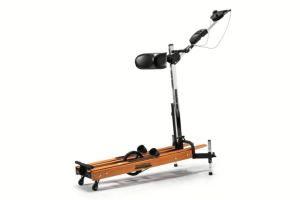
The best ski machine, bar none, is the NordicTrack Classic (NT). The NordicTrack is a stationary machine that recreates the motion of skiing in the classic stride/style. I’ve used a number of competitors and none compare to the NT. The Classic model is a completely manual machine—no electronics. When starting out on the NT set the platform level with the floor it sits on. Then, as you gain familiarity and confidence raise the front legs for increased intensity. Resistance is increased using a strap system the creates drag on the fly wheel. The cushion at the top of the stem supports and works the abdominals (and makes the machine more comfortable).

Newer models have an electronic monitor. The monitor is not related to how the machine works but with this gauge you can track pulse, time, speed, calories and distance. Using the NT requires at least beginner’s skier skill. If you get out of position or your fore foot is too far forward the NT basically stops.

For overall fitness, a ski machine like the NordicTrack Classic offers a year-round option. So, No snow, no problem.

Outdoors

Roller Skis

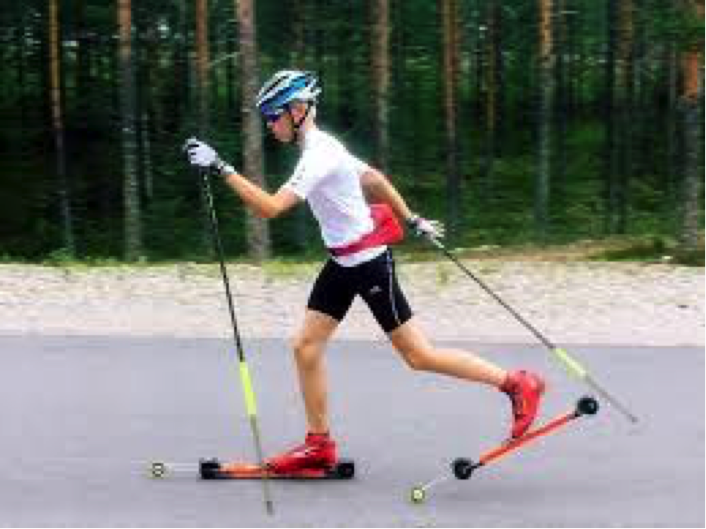
Roller skis are interesting contraptions that allow you to ski year-round outdoors. Brands won’t be reviewed here because the market has exploded with brands and styles. According to Xcskiworld.com the differences between the brands primarily have to do with wheel speed, smooth ride, cost, weight, ability to handle rough pavement or dirt roads, tire wear and skate v. classic stride.
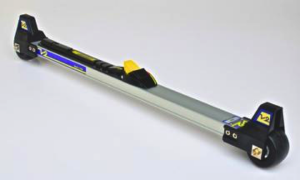
For beginners, aluminum frame roller skis are the best choice. They provide a less expensive first experiences. Also, a wider “roller” or caster provides easier balance .

Advanced skiers might like carbon frames with wheels for greater speed and agility for skate skiing and ski racers who use the roller ski for summer training should use carbon frames.

Many roller ski sets are sold a la cart. Once you choose your ski you will need:

  • Boots
  • Bindings
  • Poles

Buying the same bindings you have on your snow skis has some savings and buying rubber tips for your existing poles saves purchasing additional poles.

Some safety equipment is needed for roller skiing including:

  • Helmet (a cycling helmet will work)
  • Knee and elbow pads
  • Wrist/palm pads

As Mark Vosburgh of Fasterskier.com quipped, “I’ve found roller skis to be a great ski training tool, which I expected.   There’s really no better way to train up all those balance stabilizers, arm, back, core and leg muscles you use when Nordic skiing.

What I didn’t expect, was that my roller skis are so enjoyable to ski on that I love to do it on its own merits.  Cruising along on a quiet country road on a crisp fall day is a blast. I highly recommend them for people who love to ski.”

So, just because there’s no snow on the ground or on the trails, cross-country skiing can still be a part of your active life style.

Prepping Your Mind

Adjusting Your Attitude Is Important, Too,

As I think about preparations for the upcoming Nordic ski season, lots of details come to mind. Fitness of course tops the list. Stepping up my walking and cycling regimen is a must.  Making small incremental increases in intensity and duration and taking appropriate rest days are essential to the senior cross-country skier.

I once read that perfecting one’s XC stride is a lifetime’s pursuit. Now seventy, I still call myself the eternal intermediate skier, and equip and prepare myself accordingly.  

I also try to prepare mentally. These readings help me prepare intellectually and emotionally for a long and lustrous winter. Here’s three:

Cross-Country Cat by Mary Calhoun (1979) with Illustrations by Erick Ingraham.

This charming story follows the adventures of Henry, the lovable, mischievous Siamese cat. He is accidentally left behind at a ski lodge by his human family. Now, he must figure out how to get back to them through deep snow and raging blizzards.  This funny, cute tale which has tickled every child I have ever read it to should be read by every senior skier to their grandchildren.

About Erick Ingraham’s illustrations, Publisher’s Weekly wrote, “Competing with the author’s tale in verve and artistry are Ingraham’s snowy scenes in exactly the right shades of blue, sepia and gray, set off by glaring white.”

Henry’s message of persistence in the face of difficulties and challenges spoke to both me and my children but in a quaint and amusing way.  His “stupid cat” chant as he kicked and glided toward his home and human family continues to inspire me when I’m on a long ski trek in the Maine woods, for example. It also inspired our children at the end of a long ski day to stow gear, take showers and finish their dinners before collapsing for the night.  Memories I cherish.

Some of Calhoun’s other titles about the intrepid Henry include:

  • Hot Air Henry
  • High Wire Henry
  • Henry the Sailor Cat
  • Blue Ribbon Henry
  • Henry the Christmas Cat

I strongly recommend as many “Henry” stories on your grandchild book shelf as possible

Cross-Country Skiing: A Complete Guide by Brian Cazeneuve (1995).

The range of topics in this book dazzles.  Through Brian’s work, I first became interested in back-country skiing. He covers basics, gear, weather, technique and more in this thorough work. 

Cazeneuve intersperses his sage advice with lyrical, humorous bits about the sport itself. “Cross-Country skiing, unlike hang gliding, cattle rustling and iambic Swahili, is disproportionately more difficult to perfect than it is to learn.” (p.10).  This tongue-in-cheek advice has helped me laugh at myself when I take a fall and helped me get back up.

Chapter 11, “Going Farther”, promotes taking the kids (and grandkids) on Nordic adventures as well as teaching seniors who may be considering getting back into xc skiing or trying it for the first time.  This book is a must.

Self Renewal by John W. Gardner (1964). 

A psychologist and head of the department of Health, Education and Welfare in the Johnson administration is a personal hero of mine. In this insightful work, Gardner asserts a society’s ability to renew itself hinges upon its individuals. It is the waning of the heart and spirit—not a lack of material might—that threatens American society. He states that “all humans have several key commonalities: They are flexible, eager, open, curious, unafraid, and willing to take risks.” 

With age comes some wisdom. We seniors who continue hit the trails and slopes each winter probably agree with Gardner, “…even the self-renewing person has fixed habits and attitudes, but they are not the sort that interferes with continuous renewal. If the scientist changed his (sic) pipe weekly but never his theories, he would be in serious difficulty. The moral is clear. If we must have continuity in our lives—and we must—let it be of the sort that does not prevent renewal.” (p.130). I know my cross-country ski goals and ambitions must change as I age but the continuity is each winter to renew and go skiing again.

Renewing the heart, mind and spirit are critical to me as the seasons change and we transition to and hope for a snowy winter for kicking and gliding during these incredibly difficult times.

Little Lyford Pond Camps: Companionship, Adventure and Hospitality in the Maine woods

Long-Time Friends Take To The Maine Woods On An XC Adventure.

Steve Hines (R) and his pals venture into the AMC’s wilderness camps every year.
Credit: R. Boucher

A fresh three-inch snowfall covered the winter parking lot as we arrived for our annual winter ski trip. We felt a quiet confidence as we loaded gear into the gear shed for transport to the Appalachian Mountain Club’s (AMC) Little Lyford Pond Camps (LLPC). The camp is on the outskirts of Greenville, Maine. At about 9:30 that morning, we put on skis and shouldered day packs for the 6.8 mile trip from the parking lot to the camp. The four of us—ages 63 to 70—are all experienced outdoorsmen.

Head of the Hedge Hog Gate Trail into the LLPC. Credit: R. Boucher

Trips like this were not new to my group of friends. But, what makes people our age want to continue to take adventures like this? Hadn’t we all earned our rest? Shouldn’t we be shopping for “over 55” living arrangements? Perhaps the answers would be revealed during the week.

AMC owns three camps which are on land the club purchased near the Katahdin Iron Works region in north central Maine. The camps had been fishing and hunting camps for “sports” from Portland, Boston and New York, typically wealthier men looking for a respite from their harried lives in large cities. LLPC opened in 1873 during the so-called gilded age in America. These were the days of JP Morgan, the Rockefellers and the Carnegies. Now, the three camps: LLPC, Gorman Chairback, and Medawisla are all updated and modernized for 21st century adventurers.

LLPC was our destination this time, and the only way to get there is to ride a snowmobile or ski in on either Hedgehog Gate XC ski trail or the KI Road (logging road) to Upper Valley Road to the camps. Either way, the conventional wisdom is that intermediate skiers have the best time but beginners beware. Two of us decided on the trail and two on the roads thereby observing the “never ski alone” rule.

LLPC at twilight. The AMC maintains three wilderness camps in Maine. Credit R. Boucher

A few hours later, we four were reunited at the lodge at LLPC having lunch and telling stories. The staff at the camp were all on the job less than six months but were eager to please. In a short time, they’d become veteran innkeepers. Food at LLPC ranges from good to excellent, and we all found plenty to eat. The camp staff also accommodates special needs like vegetarians and gluten free. Trail lunches are provided as part of your stay.

The trail system around LLPC is extensive also ranging from comfortable “kick and glide” trails to challenging, ungroomed trails like Gulf Hagas.

Cross Country skiing isn’t the only winter sport enjoyed in the area around LLPC. Snowshoeing is also popular too. And the Lodge has snowshoes to loan.

While we had many conversations around our wood stove over the course of our stay, there were no clear answers to the existential questions listed at the beginning of this article. We did agree, however, that we all look forward to our next winter adventure.

Snowshoeing around the pond at LLPC. Credit: R. Boucher

Rustic Elegance with Fairy Tale Flair In Stowe

It’s More Than “Just Right” Just One Mile From Stowe Resort.

Tucked in the woods, this is a cozy cabin. No bears, too!
Credit: Homeaway

In Stowe, Vermont, a stone’s throw from world class downhill and cross country skiing sits quintessentially rustic Goldilock’s Cottage, welcoming overnight guests. When Jill Evarts purchased the cabin and four acres of land about twelve years ago, she didn’t need to do a lot of work on it. She had helped the previous owner, a friend and colleague, decorate it with fine fabrics and purchases from flea markets and antique shops all over the northeast. The cottage is clean and tidy with many amenities that appeal to eye and requirement for comfort.

I found the cottage warm and inviting far beyond the “just right” of the fairy tale. The kitchen is well equipped, and I was able to easily prepare a pasta primavera for dinner. It has the right pots and pans and cooking implements for cooking lots of delicious meals. There is even a small spice rack above the stove. The kitchen/dining area was immaculate and comfortable.

The kitchen has everything you need, bring our own porridge.
Credit: Booking.com

The living area of the open concept cottage was equally welcoming with a wood burning stove in the center. Plenty of seasoned firewood makes using the wood stove quick and easy. The cottage has one bathroom which is also decorated in the theme of the rest of the cottage and I found it clean and complete with all the towels you’ll need.

The Master bedroom, complete with a sitting area and sleep sofa, also have an interior decorator’s touch. . The cottage has a spacious deck off the bedroom and a deck accessible from the dining room complete with Adirondack chairs and a gas grill. Those details make the cottage appealing year round.

A large sleeping loft lies above the kitchen/dining area is decorated in lighter colors to take advantage of the skylights. Jill’s remarks from her cottage fact sheet demonstrate the features that makes Goldilock’s so attractive;

Bears can’t climb ladders to the loft.
Credit: Steve Hines

“For those staying in the loft: open the skylight before you go to bed, and be sure to let the fire burn down so. You won’t be hot. Some guests like to turn the heat down at night and use the space heater to supplement in the bedroom to keep the temperature in the loft cool”

Everything you may want or need seems to be taken care of. Jill agrees that this attention to detail makes her place perfect for active seniors who want a winter (or any other season) getaway. The area does come alive in winter however because of the outdoor sports, great restaurants and shopping.

The cottage is close to Stowe and the location makes it easy to get to the Alpine and Nordic skiing. The rest of the year the Mount Mansfield locale has great hiking, cycling, mountain biking. The many fine restaurants in and near Stowe make dining out a pleasure as well.

While I’m not a fan of grading accommodations, you might like to know I give Goldilocks’s cottage an A+. For more details about dates, rates, and availability, visit the cottage’s web site here.   Ski season rates start at $250 per night (March) and $270 (Feb). Holidays are more.  The cabin can accommodate up to five folks in one bedroom, a sleeping loft and a pull-out couch.

Here’s the Master Bedroom, ultimate cozy.
Credit: Steve Hines


The Right Hiking Boot For The Senior You

Balancing The Scales: Hiking Footwear—Comfort vs. Support.

HikingBoot

Picking the right kind of hiking boot can make a big difference. It pays to learn the trade-offs between types. Credit: REI

At the shop where I work, questions customers often ask include:

  • “I’ve been wearing the same boots for over twenty-five years, is there anything new?”
  • “How comfortable should my hiking shoes/boots be?”
  • “What’s the boot that gives me the most support?”
  • “Which type of hiking footwear protects my ankles best?”

While hiking footwear is no longer restricted to the heavy leather boots we all wore in our younger days, the variety of hiking boots on the market today and the technology in them can help get you back out on the trails quickly and safely.

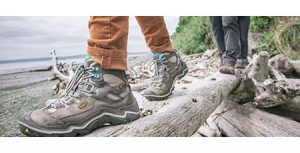
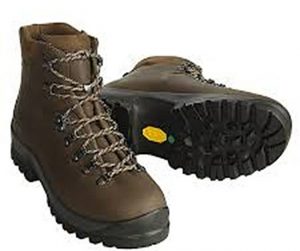
A leather hiking boot is the most supportive, but potentially has some comfort issues. Credit: Steve Hines

A leather hiking boot is the most supportive, but potentially has some comfort issues.
Credit: Steve Hines

I usually suggest either a lightweight and supportive boot or one of the new “mids”. A mid is a lower boot that instead of lacing above the ankle, laces at the ankle. For those who haven’t hiked in a while or are new to hiking and want to “gear up” a balance of features is best.

In a one sense, the choice between Comfort versus Support isn’t binary. Just because a boot is supportive (rigid across the sole from toe to heel) doesn’t necessarily mean the boot must be uncomfortable. Cushioned mid-soles, improved in-soles, softer grippy outsoles and proper break-in all help a boot balance the scale.

SUPPORT

A supportive boot usually needs more break-in time to become that boot you can wear all day. The best supportive boots are usually made of all leather.

Leather boots come in one of three types or “grades” of leather:

  1. Top grain – The lightest and most durable, but they must be cared for.
  2. Suede (split grain) – Resists scratches. However, thicker than top grain can make the boots heavier.
  3. Nubuck (split grain) –Ages nicely. Again, thicker than top grain can make the boots heavier.

COMFORT

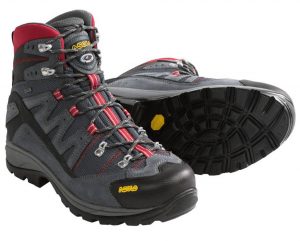
Fabric and leather boots are tipped to comfort. Credit: Steve Hines

Fabric and leather boots are tipped to comfort.
Credit: Steve Hines

Common belief is that boots which combine fabric with leather pieces are more comfortable right away. It is true that combination boots break in quicker. It’s also true that a poor fitting fabric and leather boot can hurt your feet as easily as a non-broken in leather boot.

When people ask me how comfortable a boot should be I use this scenario: Imagine you are involved in some emergency situation in which you are required to have your boots on for 24 hours. Your boots should be comfortable enough that at the end of the 24 hour emergency you would not be dying to get those boots off your feet.

Seems like the hiking world is leaving heavy leather boots behind, instead opting for light weight, low boots and shoes. When I’m asked which is best I usually try to determine the kind of hiking being done and the level of hiking experience. For instance:

  • Terrain – mountain trails, dense woods, higher altitudes
  • Climate, season, weather
  • Duration of the hike or trip
  • Pack weight

In summary, find the right boot for you that will combine the right amount of support and is as comfortable as possible. Remember, a lighter weight boot can have good support and an all-leather boot can be comfortable.


Comparing Five XC Ski Bindings for “Ease of Use”

SeniorsSkiing Correspondent and Cross Country Expert Rates The Big Five Bindings.

You’ve paid for your trail pass and are ready to head out on the trails at your favorite xc ski touring center. How easy is it to put your skis? In this review, I discuss five common binding types, the key features of each, and I rate them on a scale from 1-5 on its “ease of use” (1 being easiest and 5 most difficult).

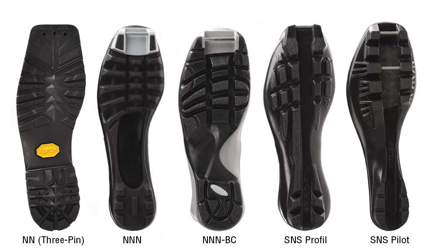
Unless you’re a ski racer or have some other unique requirement, five types of cross country are available.

Untitled1

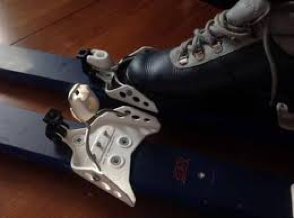
Five types of common XC bindings shown on their respective boots.

NN (Three Pin)

The three pin is the oldest of the five bindings and still used by some skiers. (Editor Note: We have a pair of wooden skis and leather boots to match with four pin bindings we still use; these relics are pre-three pin.) But for most touring purposes it has been replaced by more modern designs. When putting your skis on you must be careful to align the three pins on the binding with the three holes in the toe of the boot before closing the clamp (as shown below).

Untitled2

NN or 3-pin Binding and Boot.

NN EASE OF USE SCORE = 3

NNN and NNN-BC

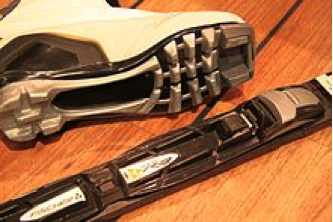
This is the binding used by most ski touring centers for their rental skis. The pivot bar is close to the toe of the boot (as shown below); with the idea being you can almost see where to align it with the clip on the binding. I’ve been to a lot of ski touring centers and observed beginners, recreational and occasional skiers using the NNN binding. Many struggle mightily to get clipped into the ski. I also find that if any ice or dirt gets in the binding, the binding spring gets jammed.

NNN Binding and Boot

NNN Binding and Boot

NNN EASE OF USE SCORE = 4

The Salomon SNS Profil

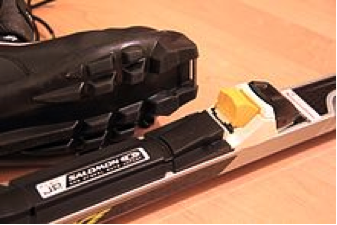
The SNS Profil works like the NNN and NNN-BC bindings (see illustration below). They are a little easier to use because the pivot point is even closer to the toe so you have a chance of seeing what you’re doing. Overall, though, the experience is frustratingly similar to the NNNs.

Salomon SNS Profil

Salomon SNS Profil Binding and Boot

SALOMON SNS PROFIL EASE OF USE SCORE = 4

The Salomon SNS Pilot

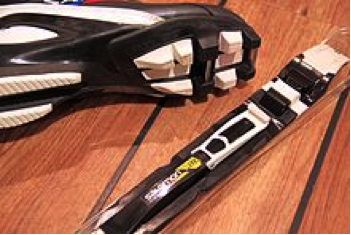
Originally designed for ski racers, the Salomon SNS Pilot has two pivot bars on the boot and clips on the binding which provides additional control. This is also a great binding if you wish to take up skate skiing. In an experiment, I attached the SNS Pilot bindings to a pair of touring skis. The result was surprising. Stepping into these bindings was incredibly easy. The rear pivot bar is used as a guide and the front pivot aligns with the clip. Then with a simple press of the forefoot the binding snaps on. This is a great package for the traditional or classic ski strider like me.

Salomon SNS Pilot

Salomon SNS Pilot Binding and Boot

SALOMON SNS PILOT EASE OF USE SCORE = 1

Bottom Line: My experiment with the SNS Pilot binding worked the best for the ease of use criteria. Clicking in and out of this binding with recreational (touring) skis was a snap. I feel like I have very good control of my skis when on the snow and turning is a breeze.

What’s your XC binding of choice?  How does it work for you?

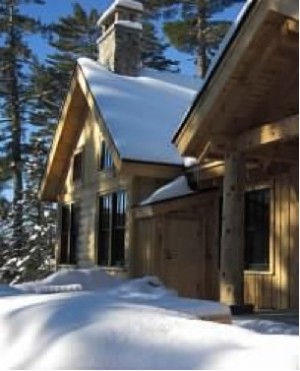
An X-C AMC Lodge Deep In The Maine Woods

X-C Ski Six Miles To Gorman Chairback Camp Lodge and Guest Cabins.

If you’re an active cross country skier, you probably enjoy staying where you ski. Plus, if you’re an active senior xc skier you most likely enjoy comfortable surroundings, pleasant company and staff as much as you enjoy snow covered trails. A number of locations across the USA come to mind like

Gorman Chairback Lodge is a rustic winter retreat that appeals to your inner Thoreau. Credit: Steve Hines

Gorman Chairback Lodge is a rustic winter retreat that appeals to your inner Thoreau.
Credit: Steve Hines

Royal Gorge, CA., Jackson Hole, WY., and Craftsbury Common, VT. But the State of Maine, LL Bean and the Appalachian Mountain Club (AMC) have collaborated to bring the inspired xc skier a wonderful resource—Gorman Chairback Camp and Lodge. The Camp is located near Greenville Maine at the southern tip of Moosehead Lake. Exact directions to the lodge are at www.amcoutdoors.org where you can also make your reservation.

All the cabins have wood stoves amply supplied by the camp staff. As one of our party quite succinctly put it, “cabin accommodations were very comfortable yet simple.” The camp sits on the shore of Long Pond (really a very large lake) with no discernable development in sight or nearby. The food in the lodge’s dining hall was exceptional using many vegetables right from the Camp’s own garden. All meals are included with each night’s stay – and (delicious) coffee is available from early morning to late in the evening.

What makes Chairback unique is that you must ski about six miles from a winter parking lot to the lodge. The staff will bring your other gear and luggage to the lodge for you on snowmobiles. While the staff grooms the trails, you should be at least an intermediate skier. I use a metal edge, back country ski, but others in our group make do on touring skis. Plan to also bring a pair of snowshoes to enjoy the many hiking trails that are not groomed but have scenic terrain and panoramic vistas.

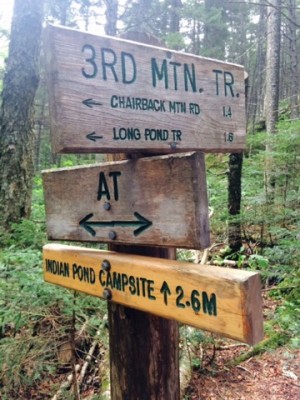
Trail markers point the way to Long Pond. The last few miles of the Appalachian Trail run through the area. Credit: Steve Hines

Trail markers point the way to Long Pond. The last few miles of the Appalachian Trail run through the area.
Credit: Steve Hines

The lodging is what I call “rustic elegance”. The cabins are heated with wood stoves that can be tricky to adjust and often need to be refilled in the middle of the night. So there’s and element of “roughing it” in the winter too. Many guests bring sleeping bags, but I usually bring my own flannel sheets and use the blankets and comforters provided.

I’ve found that skiing in this area always has what xc skiers call dependable snow. There’s never a time in the winter when the snow is missing or the trails have bare spots.

I’d like to make recommendations for specific trails but all the ski terrain is equally excellent.

As a post- script, it is well to remember that the AMC is a club and Not For Profit company. This means all members and guests have a responsibility to keep the camp clean and to provide proper feedback.

Grow A Hiking Habit: Part Two–More Stuff

Outdoor Guru Steve Hines Offers More Ideas For Taking A Hike.

Summer hiking season is in full swing. The temperatures are warming and trails are dry. After covering the ten essentials in Grow A Hiking Habit: Part 1, some other items will help you more enjoy your hiking.

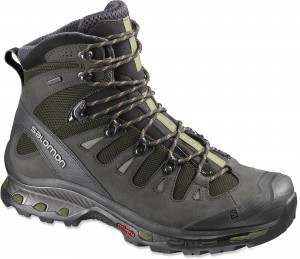
Real hiking boots are lightweight and support your ankle.  Sneakers don't cut it on the trail. Credit: REI

Real hiking boots are lightweight and support your ankle. Sneakers don’t cut it on the trail.
Credit: REI

Boots: Stout boots with good support are a must. Look for boots with waterproof liners. Boots should come to the ankle or above to keep trail debris out and protect the ankles. You should be able to wiggle and spread your toes and walk down hill without “jamming” your toes. Your boots should be wide enough in the forefoot that there is no pinching of any of the toes. Your heel should be held in place without constricting them. If your heel moves around side-to-side with the boot untied try another style/brand. Get fitted at outdoor shop by a qualified boot fitter. If you use orthotics, be sure your boots accommodate them.

Trekking Poles: These are telescoping poles that look like ski poles. When not in use, they can be strapped to the outside of your pack. When in use, they support the legs and lower back. They help with balance and help burn 25 percent more calories.

Comfort Items Now that I’m a little older, several items in my pack make the hike more comfortable.

  • A Dry T-Shirt: A dry shirt mid-hike is great. Avoid cotton; get Dri-Fit or Performance shirts that evaporate quickly.
  • Extra Socks: Even the best socks can’t always keep up with amount of moisture you produce.
  • Foot Powder: Changing socks and rubbing on some foot powder mid-hike is a treat!
  • A Sports Drink: Water is essential. But, a sports drink like Gatorade reduces the risk of dehydration among older hikers.

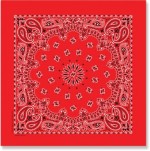
    The classic bandana is an invaluable partner on the trail. Credit: REI

    The classic bandana is an invaluable partner on the trail.
    Credit: REI

Bandana: The ubiquitous hiking buddy: Towel, handkerchief, sun protection, signal caller, sling, and bandage just to name a few uses.

Watch: I like to know how long it takes me to get from Point A to Point B on a hike. If I know the length of the trail I’m on and how long it took me to get there, I can judge my fitness level better. During these last few years, I’ve been aiming for a 1 mile/hour pace on mountain hikes and treks.

Cell Phone: Many people believe cell phones on the trail ruin the wilderness experience. But a phone can be a lifesaver. For many years I left my phone home but now, especially on solo trips, I take it along. Just be aware that in many remote places reception can be spotty or non-existent.

Camera: Helps with memory if you have a time/date stamp option.

Binoculars: Helps with both navigation (identify landmarks for triangulating your position) and spot/identify wildlife.

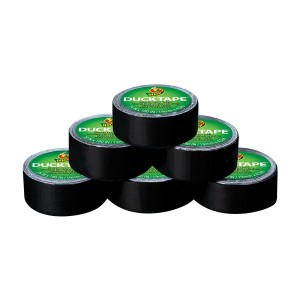
Is it Duct Tape or Duck Tape? Regardless, it comes in small-sized rolls, perfect for a backpack. Credit: Amazon

Is it Duct Tape or Duck Tape? Regardless, it comes in small-sized rolls, perfect for a backpack.
Credit: Amazon

Small Notebook And Pen: Record hiking times and observations, list hiking companions for later memory making.

Duct Tape: Blister treatment, gear repair, unknown problems.  A small roll of duct tape can do miracles.

Please feel free to make comments and provide feedback and additional wisdom. I also welcome questions and clarifications. This can be a wonderful forum for getting your hiking habit started and sharing experiences with others.

The Get Started Basics Of Snowshoeing

Here’s Another Way To Enjoy Winter That Seniors Can Easily Get Into

Snowshoeing, once a practical means of winter travel, is now a winter recreational activity. It provides many folks  an outdoor winter alternative to skiing or X-C. In fact, most ski areas now offer snowshoeing as an option.

If you like walking, you will enjoy getting out on snowshoes. Some tips and a little technique will increase your enjoyment of this growing sport.

Male (L) and female (R) snowshoes accommodate different sized people. Credit: Connie Phillips

Male (L) and female (R) snowshoes accommodate different sized people.
Credit: Connie Phillips

Dress: Use three layers to keep warm in cold, snowy weather. Wool socks will help keep your feet warm. Mittens are warmer than gloves.

Layer 1: Wicks away perspiration. The base layer, next to your skin, should be wool or synthetic. The most common synthetic is polypropylene.

Layer 2: Insulates you from the cold. Again, wool is very dependable. But the various types of synthetics (aka “fleece”) provide enough warmth. Personally, I’ve never been cold when snowshoeing because of the activity level (exertion) involved.

Layer 3: Protects you from wind, rain and snow and should be waterproof and breathable.

Preparation: Many new enthusiasts are surprised to find that snowshoeing is a very aerobic activity. Exercises like walking, running, cycling and/or swimming are good preparation. Start before winter arrives.  Remember to know your own capabilities before heading out; take your first outing slow and easy.

Equipment:  Snowshoes are your main piece of equipment. The longer and wider a snowshoe, the less you will sink into the snow. Most snowshoe dealers will ask you for your body weight plus your pack weight. Let your dealer help you select the right snowshoe and remember this acronym FACT.

F – Flotation: make sure the length supports both you and your pack weight.

Note toe lift technique when walking on the flat. Credit: Connie Phillips

Note toe lift technique when walking on the flat.
Credit: Connie Phillips

A – Articulation: the snowshoe front should tip up when you raise your foot using a hinge at the forefoot position (See  photo).

C – Comfort: the right snowshoe should not make you spread your legs too wide apart and should keep your hips in a near normal position. Also, the bindings should be easy to use. Most snowshoe brands now make “gender specific” snowshoes. (See photo)

T – Traction: spikes or “crampons” on the bottom of the snowshoe help with traction going up and down hills.

Boots are important too. Most snowshoers will need insulated boots. Boots that lace up (rather than zip up or pull on) are best. Many snowshoe boots have a lip or spur a few inches above the heel which help keep the snowshoe binding strap in place.

Poles are another useful piece of equipment. Many snowshoers prefer the telescoping trekking poles. Large baskets on the end of your poles prevent sinking too far into the snow and help with balance. Gaiters, those nylon tubes that extend from the boot to just below the knee, help keep snow out of your boots.

Technique: A little technique goes a long way. When moving on flat terrain or going uphill, walk by moving your back foot forward with your toe dropped. On the downhill, walk heel to toe like normal.

Start your snowshoeing on broken out trails and not in deep snow. As you gain strength and experience, head into deep snow. Start off by going for time and then go for distance.

hinesHeadshot_1


Steve Hines is a sales associate at REI, Inc. (Steve’ does not necessarily reflect REI’s views). He has been a wilderness guide, a Wilderness First Responder and a volunteer trip leader for the Appalachian Mountain Club.