My Fitness Journey Continues: Part Two

This Month’s Main Event: Sound Advice From A Medical Expert.

In Part Two I’m going to focus on fitness and heart health, the latter particularly important to me as a favorite nephew of mine who’s only 49 suddenly ended up in the hospital two days ago having a stent put in due to a 100 percent blocked artery. I may have company soon on my fitness journey! My primary doctor, internist Anne Chang, who’s the medical director of women’s health primary care at UCSF, one of the world’s leading hospitals, took time out of her busy schedule earlier this week to call me and answer some questions I e-mailed her recently about health and exercise. Read on.

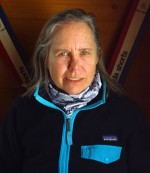
Dr. Anne Chang, UCSF's women's health primary care medical director, offers sage advice. Credit: UCSF

Dr. Anne Chang, UCSF’s women’s health primary care medical director, offers sage advice.
Credit: UCSF

Rose Marie: How important is it for people over 50 to check with their doctor before they embark on a fitness program? And why? Dr. Anne Chang: Probably most of the time, it’s wise for seniors to check with their doctors before starting a fitness program, primarily to check the cardiac risk factor. Are they having symptoms? Does it take effort to lift a bag of groceries or climb two flights of stairs? Things to watch for are shortness of breath, lightheadedness, chest pains, or palpitations. On their doctor visit, the doctor needs to take a good history of their health. Seniors who want to continue skiing or get back into it should proceed with caution or perhaps reconsider the sport if they have any back issues or problems—such as arthritis—in their hips, knees, or ankles.

RM: I had a couple of bone density tests when I was in my 50s. Should I have another one? AC: Yes, you should. The guidelines for these tests have been refined quite a bit since your previous tests. Now the recommendation for women with no documented risk factors is to get their first bone density test at age 65; depending on what that test shows, the recommendation for their next test is anywhere from two to five years later. For men the recommended age for their first bone density test is 70, with the same subsequent test recommendations. You probably didn’t need to have those tests when you were younger, but you should have another one now. [I’m scheduling it next week!]

RM: What, in your mind, are the three most important things for a 50-plus individual to do before he or she begins a fitness program? AC: The first thing is to talk to your doctor. Second, based on how fit you are, make sure that the fitness program fits your activity level going in. If you’ve been really sedentary, you don’t want to start off, for example, in one of those more aggressive fitness programs. Finally, choose a fitness program that fits your particular needs and goals. [Note: for skiers and boarders, those would be exercise programs that focus on cardio, muscle stretching, strength, and balance.]

RM: There have been a lot of conflicting recommendations out there regarding how much and what type of exercise someone needs to do weekly as a minimum to reach a healthy level of fitness. What do you say? AC: I go by the American Heart Association’s recommendation of 30 minutes of aerobic exercise daily, such as fast walking.

When asked about which is more important on one’s road to fitness, diet or exercise, Dr. Chang said they are equally important. “Doing one without the other won’t bring you the results you want.” When asked about electronic measuring devices, such as FitBit or iPhone apps, Dr. Chang said, “Anything like that is good because it engages your attention.” When she said that, it struck me that those devices are to your physical fitness what nutrition labeling on food is to your diet! Speaking of diet, that will be my topic of discussion next month, and hopefully I will have made greater strides with that half of my fitness plan. As the good doctor said…!

Correspondent Rose Marie Cleese goes to the Senior Center in Golden Gate Park for free exercise classes. Credit: SFP&R

Correspondent Rose Marie Cleese goes to the Senior Center in Golden Gate Park for free exercise classes.
Credit: SFRecPark

Speaking of my fitness plan: here’s the straight skinny as of today. I have a long way to go before “skinny”—I’ve lost only two pounds since I posted Part One of my journey to fitness four weeks ago—but I’m undaunted. At least I’m going in the right direction and haven’t backslid. The exercise part of my plan is going really well; I’m continuing my mix of four exercise classes a week, and I’ve missed only one during this 11-week session. I’ve lost an inch all around since I last measured (the usual three measurements plus my stomach and thighs) two months ago. Several people have commented, unsolicited, about my looking thinner. Plus I’m able once again to wear a pair of black jeans that have been in the drawer for quite some time.

A parting exercise tip: you know how hard it is to remember when you’re supposed to inhale and exhale when exercising? I’ve come up with a easy way to remember! Think of the “3 ex’s”: example: exertion means exhale. You’re welcome…and again, I welcome any and all comments and suggestions.

Editor Note: You go girl!  Keep it up, Rose Marie!
Mont Blanc Panorama Leaves You Breathless

Highest Mountain in Europe in 360 High-Res Photography

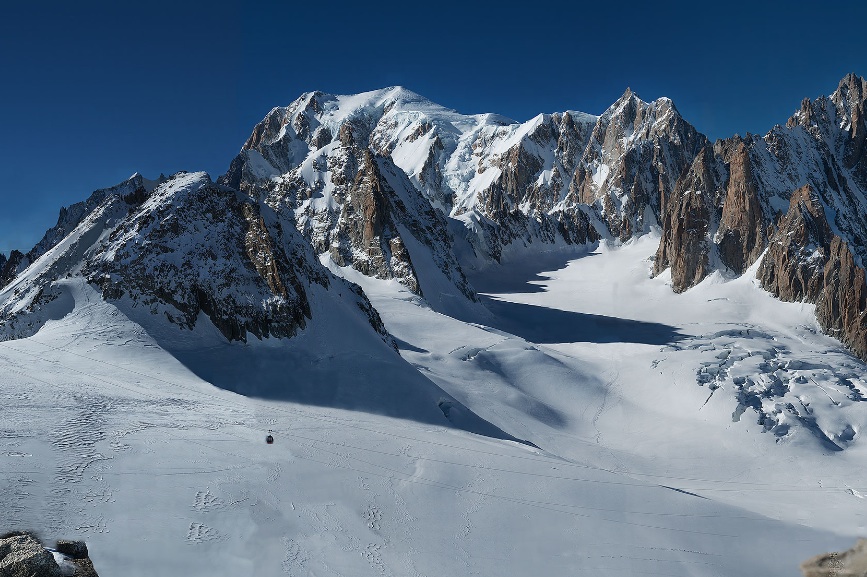
We discovered a post from In2White, a team of extraordinary high-tech Alpine photographers that is definitely worth a diversionary look.  Featured is the fabled Mont Blanc, the highest peak in Europe, captured in the highest resolution panorama ever made. Photographed by Filippo Blengini, this high-altitude, giga-pixel shot lets you macro-zoom into a number of selected peaks almost to the point you  can spot the butterflies fluttering around the crags.  If you look closely, you can see ski tracks throughout the area.

Mont Blanc and surrounds in crystal clear air. Click to access panorama. Credit: Filippo Blengini/In2White

Mont Blanc and surrounds in crystal clear air. Click to access panorama.
Credit: Filippo Blengini/In2White

The Late, Late Show: Killington Still Killin’ It

Skiing In New England In May?

Yes, it has been a curious winter and curiouser spring.  We had a snow drought in the West, a middling winter in the Rockies, and bitter cold in the East.  Now, it’s mid-spring, and we’ve heard of quite unexpected, new powder skiing in the Rockies and the Dakotas.  Did people actually go skiing out there after the lifts closed down?  Someone please tell us; we thought most areas in the region closed early to less-than-ideal snow conditions this spring.

Superstar Trail is open for business at Killington on May 22. Credit:  Paul Remillard

Superstar Trail is open for business at Killington on May 22.
Credit: Paul Remillard

Now we hear from SeniorsSkiing.com Subscriber Paul Remillard who reports he and his pal Joe spent May 22 at Killington, VT., on the bumps and has pictures to prove it.  He reports conditions were still top to bottom on Superstar with corn snow and a hard base between moguls.  “Sweet,” says Paul.

This unusual ski season refuses to end.

Pal Joe dismounts the lift at the top of Superstar. Note trees. Credit: Paul Remillard

Pal Joe dismounts the lift at the top of Superstar. Note trees.
Credit: Paul Remillard

How Much To Exercise And Why Bother

Is There A “Right” Amount Of Exercise Time?

Most readers of SeniorsSkiing.com are active, engaged folks who enjoy snow sports in the winter and lots of different non-snow activities in the summer.  And, most of us like to keep active, because it makes us feel good.  That’s important as we become more experienced in years.

You might wonder if the amount and intensity of the exercise you are doing is enough or too little or too much.  For what purpose, you ask.  If you want to lose weight, keep fit and nimble, then you already know the answer: If what you are doing now in the gym or on the roads or golf course gives you that bounce in your step, it’s working.  But if your goal is longevity—pushing back that time horizon—then there are some specific numbers you should pay attention to.

NYT

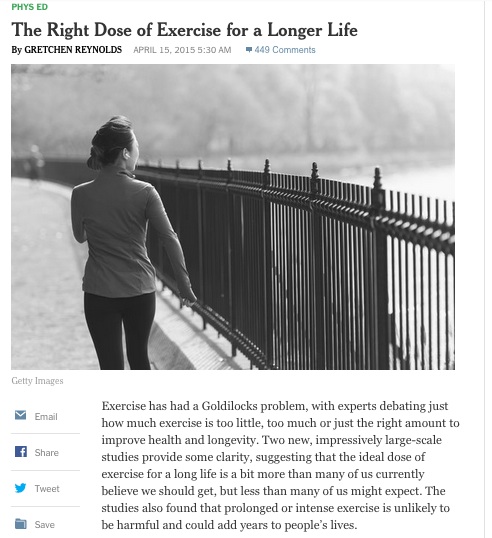
An April 15 New York Times article by Gretchen Reynolds reports on two different studies that now give a prescription for the amount and intensity of exercise that is linked to increased longevity.  We learned that “broad guidelines from governmental and health organizations call for 150 minutes of moderate exercise a week to build and maintain health and fitness.” For those who exercise more—450 minutes a week—then longevity goes up almost 40 percent over non-exercisers.  And, if 20 to 30 minutes of that activity switches gears from moderate to intense, the longevity number goes up even more. If that’s your goal, then those are your guidelines.

In reading readers’ comments accompanying the article, there are many who just think feeling good is a good enough reason to hit the slopes, roads, trails, links and by-ways.  What are the right numbers for you?  And why bother?  Let us know.

Ski Lessons Improve Senior Skiers’ Technique

It’s Never Too Late to Take A Lesson.

William Smith, age 91, started skiing at Mt. Cranmore, N.H., after WW II. His wife even took lessons from ski legend Hannes Schneider. She quit skiing when she was 73, but Smith continued. He was skiing with his son that morning when I rode the lift with them at Waterville Valley Resort, N.H. Father Smith taught his kids and grandkids to ski, but he doesn’t want to take lessons himself.

Senior Skiers take lessons at Waterville Valley Resort. Good technique means more enjoyable skiing. Credit: Steve Bryan

Senior Skiers take lessons at Waterville Valley Resort. Good technique means more enjoyable skiing.
Credit: Steve Bryan

“I’m skiing as well as I’m going to. My legs aren’t holding up as well.” I then watched him push off down the slope swiftly in well balanced short parallel turns. So much for weak knees.

Like Smith, many seniors are skeptical of what they call teaching old dogs new tricks, unless they plan to do something very different, like ski powder in Utah for the first time.  However, a senior ski lesson can actually lead to more enjoyment.

“Most senior skiers like the medium to long radius turns and cruising the mountain and enjoying it,” says Peter Weber, Snowsports Director at Waterville Valley Resort for 15 years. But that is no reason not to ramp up your technique.

“Whether you’re 7 or 77, technique trumps all. The better you are technically, the easier everything gets,” Weber says.

In teaching seniors, an instructor would most focus on pacing—how fast you ski, how many time outs for trailside chats vs. pushing top to bottom runs, and the need for biobreaks.

Fitness level in general is key, adds Weber. “Skiing anything above a moderate level is an athletic endeavor,” he says.

Like other resorts with comprehensive snow sports schools, Waterville Valley Resort matches you to the right instructor, so you don’t end up in a class with a bunch of young hot shots. Weber also recommends a private lesson as well as taking several group lessons.

Mark Hanabury, an instructor at Waterville Valley, says, “I think it’s more important for seniors than anyone else to take lessons.” He feels seniors will be safer and will enjoy skiing more if they embrace the new techniques including a wider stance and shorter, wider shaped skis.

“Skiing has evolved so much,” he says.

He knows first hand. Last year,  he took his dad Dick Hanabury, age 83, to ski Snowbasin, Utah, after convention in Las Vegas.

“He’s been an avid skier all his life and skied on long Head Standard skis when he was younger. I told him he had to retool his techniques to ski safely at his age. I drilled it into his head,” says Hanabury.

“My dad’s outside ski was getting hung up. He was used to stepping onto the outside ski, but his balance wouldn’t allow that. So, a fellow instructor told him to slide the ski forward and free it up. That allowed him to keep both skis on the snow so it was no longer a balance issue,” says Hanabury.

“My son Mark is keen on knowing the latest technique, so he’s done a good job for helping me to keep up as far as turning techniques,” says Dick Hanabury.

“I used that technique, letting the skis do the work, not throwing your body into the turn but just weighting the skis properly and making sure the outside ski in the turn is well weighted, that’s about the best way I can explain it,” he adds.

“If you’re in good condition, I would recommend skiing at any age. I play tennis a couple of times a week, exercise daily, so I’m ready when the time comes,” says Dick Hanabury.

No matter if seniors are updating old technique or learning for the first time, “I feel it is never too late to learn. Skiing is a dynamic sport and seniors enjoy learning just as much as younger folks. This enables them to ski longer and enjoy more terrain with family and friends,” says Mark Hanabury.

Many ski areas have created programs for those interested in new movement patterns associated with shaped skis or improving techniques. They list these programs on the resort website under the snowsports school tab.

Force Majeure: Skiing Is Back In The Cinema

SeniorsSkiing’s First Movie Review A “Runaway” Hit From The Alps

We remember the New Wave of French cinema in the late-50s to mid-70s when going to a “Foreign Film” was an intellectual exercise. That’s when you and your date went to those black and white, sub-titled classics, The Four Hundred Blows, Shoot the Piano Player, Breathless or Jules and Jim, and afterward settled into a discussion about what it all meant. To jog your memory, check out this scene from Annie Hall, where Woody Allen squelches an academic babbler by dragging none other than media theorist Marshall McCluhan into the scene to settle an argument. We were all into interpretation, the more philosophically zealous the better.

Which brings to mind the 2014 movie Force Majeure, from the Swedish director Ruben Ostland. We were attracted to it because it takes place in a French ski resort in the Alps. Since the last film we remember that had skiing as a central element of the plot was Downhill Racer (1969), we thought we’d take it in. It certainly brought back the old-days of trying to “figure out” the message.

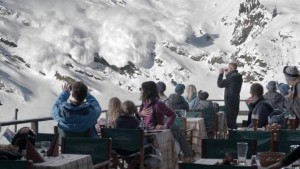
A vacationing Swedish family of four enjoys lunch on the deck of a mid-mountain lodge when an avalanche envelops the scene. It’s actually an

An avalanche triggers a family crisis. Credit: Ruben Ostland

An avalanche triggers a family crisis.
Credit: Ruben Ostland

astonishing sight as the assembled lunch crowd first marvels, then gasps, and finally panics at the approaching cloud of snow. What happens then propels the plot: The father of the family runs away, leaving his wife and two children behind to fend for themselves. The avalanche evaporates into a mist, the father returns, but the wife and mother is left with doubt. That uncertainty grows in several uncomfortable scenes including long, slow takes without dialogue, semi-humorous encounters with other couples at the resort and a foggy ski run that ultimately leads to the climax of the movie and its equally foggy denouement.

While the plot may drive some reflective conversations with your date, we loved our new insights into European-style skiing, the silent actor that we feel stole the show. The movie was filmed at Les Arcs in Savoie, France, which is a cluster of different resorts near Mont Blanc.

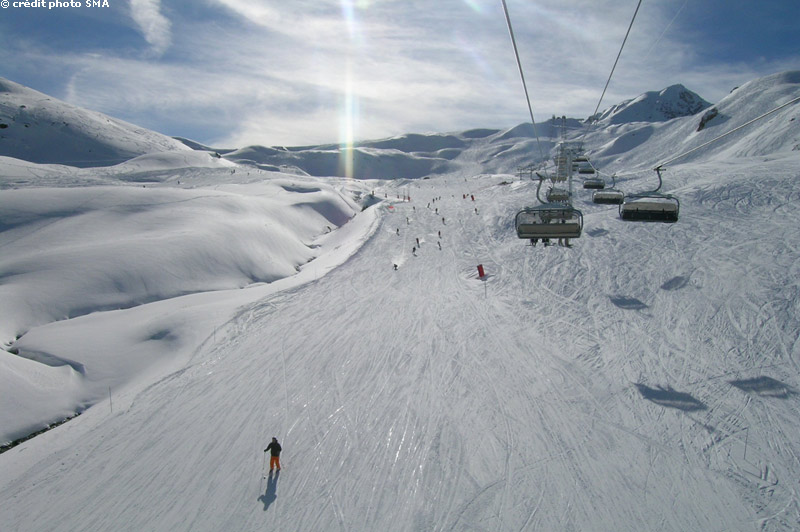
Open-piste skiing is a featured character in Force Majeure Credit: LesArcsNet

Open-piste skiing is a featured character in Force Majeure
Credit: LesArcsNet/SMA

We got a sense of what it is like to spend a week in the alps, open-piste skiing between different resort areas, taking tele-cabine gondolas from place to place and living in a tres chic, modern hotel with luxury dining and service. Les Arcs has a series of large, apartment-block-like hotels located at different altitudes, all connected by a web of lifts. When two characters in the movie head off-piste for some adventure skiing, the solitude and the scenery are exquisite.

Aside from a few thrilling mountain chases in James Bond films, we’ve not noticed ski resorts, skiing or ski racing in any recent movies. So, thanks to Force Majeure and director/writer Ruben Ostland, perhaps another auteur de cinema can realize the dramatic opportunities in alpine vistas.  Force Majeure is currently available on Netflix.

https://youtu.be/3nTJIc_e6Ns

Is Your Down Jacket Responsible?

Contributor Steve Hines’ Explainer On Humane Goose Down Harvesting.

Harvesting goose down in humane conditions is a movement in the outdoor clothing industry.

Harvesting goose down in humane conditions is a movement in the outdoor clothing industry.

If you ski or do any winter outdoor sport you probably have or have had a down jacket. Now is a good time to evaluate what you have and will need for next winter.  If down is truly the answer, then you have to know there are choices between vendors who provide humanely harvested down and those who don’t, at least not yet.

Down consists of the small protective feathers from the chest and bellies of geese. And, while the geese are raised by farmers in Europe and China for this purpose (and for food), many geese are badly mistreated during their lives.

Among the most egregious abuses of these birds are:

  • Being kept in small coops where they cannot move around or change position
  • Being force fed to gain weight rather than eating at what would be their regular intervals
  • Being live plucked – having their feathers pulled off while they are still alive (the farmer hoping that the feathers will grow back so they can pluck them again).

Geese are sentient beings and feel pain. However, efforts are underway to correct these abuses by some of the largest retailers in the outdoor industry.

For good advice about the best down jacket for you, see Chris Simrell’s article on Outdoor Gear Lab.

Most manufacturers contract with suppliers who buy down feathers from farmers. So, the supply chain can be long and convoluted. The abuses happen at the farms themselves. Animal rights groups have spent time and resources documenting these abuses.

When the controversy first broke in late 2013, the first company to respond was Fjallraven, a Swedish clothing and gear company. Their response was to send teams to Europe and China to find and purchase goose farms that were already acting responsibly or which they could convert to responsible practices.

Quickly following was Patagonia, an American company founded by the famous mountaineer Yvon Chouinard. Patagonia has certified that all down suppliers for their garments come from farms that act responsibly. They hang a tag on their jackets carrying the term “Traceable Down”, which means that they know exactly which farms the down came from.

Look for this label when buying down-filled outerwear.

Look for this label when buying down-filled outerwear.

According to Leon Kaye at greengopost.com, Down & Feather Co., Down Linens, Helly-Hansen, Mammut, Marmot, Montane, Nau and Outdoor Research are all following the lead set by Fjallraven and Patagonia.

While researching this story, at least three conflicting articles about The North Face’s (TNF) standards were uncovered. But, the most convincing article said TNF was working on it and the majority of their down garments will be using Responsible Down Standard (RDS) by fall 2015. So, this fall start looking for the tag that claims the product is certified as “Responsible Down”.

As of this writing, Columbia Sportswear claims they have demanded all suppliers adhere to RDS but have made no plans to certify or inspect. Your retailer should be able to provide this information.

Let’s applaud the efforts of companies who are acting responsibly.

Your Turn: Announcing SeniorsSkiing’s New Forum

Connect With SeniorsSkiing.com Subscribers: Share, Debate, Create

CrowdScene2_AWe are very pleased to announce that SeniorsSkiing.com is launching its new FORUM for our subscribers.  We learned from SubscriberSurvey2015 that our readers would be very interested in both reading comments on a forum as well as entering their own thoughts.  So, our technical team has created the FORUM, accessed by a menu tab at the top of our page.

For those of you who remember, the FORUM is the same as the Bulletin Board format.  You will have to register your name and email address as well as select a password to participate in the FORUM. This is separate from signing up for a SeniorsSkiing.com subscription. Feel free to start a new topics or contribute to one that’s already there.  We have some pretty common sense rules about what can be posted and what’s not appropriate.  You can find them at the head of each category area.

What we hope is that our readers will:

  • Contribute reports about super deals for seniors—equipment, destinations, fitness, etc.
  • Find friends to ski with or pal around in general.
  • Recommend super senior-friendly ski areas—Alpine or Nordic—that go out of their way to make seniors feel welcome.
  • Offer health and fitness ideas and advice for keeping in shape, staying in shape, avoiding injury and recovering from injury, and the like.
  • Locate clubs in their area looking for new members.
  • Share memories of skiing days of yore—heros, histories, legends, pictures of the past.
  • Offer encouragement, support, advice, camaraderie and good cheer to each other.
Click here to go to the SeniorsSkiing.com's FORUM.

Click here to go to the SeniorsSkiing.com’s FORUM.

We will be moderating the group, and we look forward to opening up this opportunity to hear from our subscribers.  Thanks for your ongoing support for SeniorsSkiing.com.  Just remember, there are more of us every day!

It’s Official: Deer Valley Owns Solitude

Changes In Uphill Capacity For 2015-16 Already Planned.

As we reported last October, the deal is now done.  Deer Valley has scooped up Solitude Resort, put a new general manager in place and is announcing lots of capital improvements for next season. Read all about it here. 

Will Deer Valley Change The Sign? Credit: CityWeekly.Net

Big Changes Coming From New Lifts To Restaurant Renovations.
Credit: CityWeekly.Net

My Fitness Journey Begins: Part One

My six-month plan to go from being a couch potato to a mogul masher.

I had a revelation and a wake-up call on the slopes of Heavenly Mountain Resort this winter while skiing a few runs with the resort’s director of skier services. I had not taken my own advice regarding pre-skiing conditioning or done anything to lose the pounds that have piled on in the last decade or so. And even though I had been able to squeeze into my ski pants and didn’t seem to be affected by the 7,000-foot mid-mountain elevation, I felt like a lumbering whale as I went down the slopes. When I got into gunk, I really had to struggle to work my way out of it. I just didn’t have any strength.

Correspondent Rose Marie Cleese BEFORE she started her fitness program. Credit: Rose Marie Cleese

Correspondent Rose Marie Cleese BEFORE she started her fitness program.
Credit: Rose Marie Cleese

But having my ski gene reactivated and sitting amid all that alpine splendor at lunch, I realized how much I love this invigorating sport and all that comes with it. I decided then and there that one of the things on my bucket list (which I still haven’t put together) is going to be skiing down a slope somewhere at age 90!

So I’m going public with my fitness plan; if that doesn’t keep me on track, I don’t know what will! Plus I’m hoping that my personal journey to fitness will encourage other seniors to make the effort to get in the shape they need to be in to return to the slopes and be able to ski safely and with great satisfaction. And I hope that we’ll learn from each other as I share my progress over the next six or seven months. Comments and suggestions are encouraged! My monthly progress reports will be interspersed with bold-faced suggestions to help readers take action.

So, first things first. Before folks at our age jump into a fitness and diet regimen, it’s vital to have the blessing of one’s doctor. I had a complete physical a few months ago, and my doctor was encouraging me to move more, eat less and more healthy. I’m planning to include a few comments from her in a future progress report. Check with your doctor before you begin any fitness and/or diet program.

Since I can’t afford a personal trainer and have a big DIY streak in me, I’m planning to do a mix of things that I think I can stick with, keeping in mind the elements of fitness and health in general and for skiers and boarders specifically. Ignoring any one of these will not get me where I need to be next November. But at its simplest, it all gets down to exercise and diet.

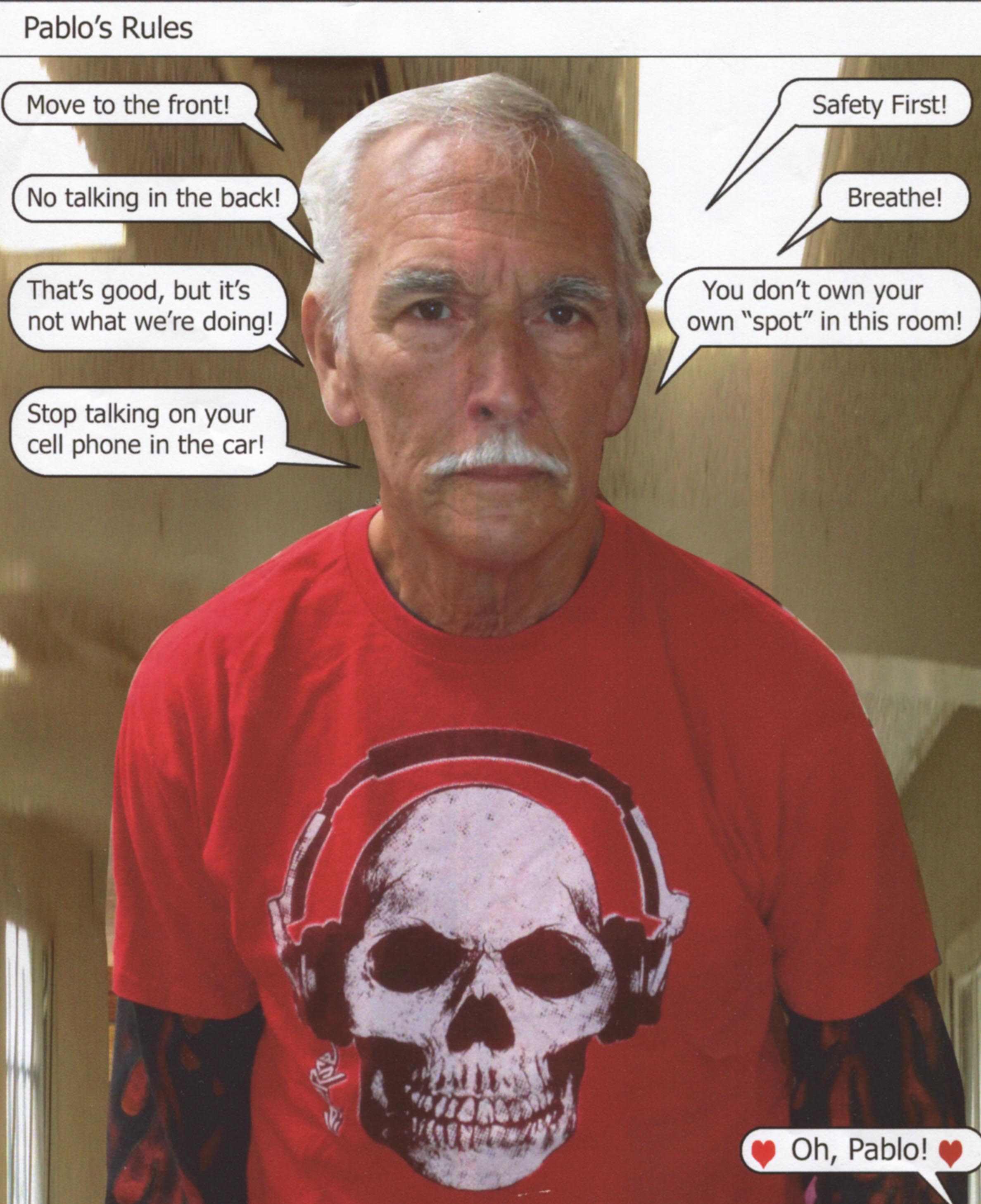
No nonsense aerobics instructor Pablo Molina keeps his classes hopping. He'll be 73 in June, just a few months older than Rose Marie

No-nonsense aerobics instructor Pablo Molina keeps his classes hopping. He’ll be 73 in June, just a few months older than Rose Marie. Credit: San Francisco Recreation and Parks Department

First, I plan to move a lot more. In March, I started several once-a-week classes at the local San Francisco Park and Rec Senior Center located in Golden Gate Park two blocks from my flat: a low-impact and a medium-impact aerobics class, a stretching and strengthening class, and a weights class. And they’re all free. Look for free fitness classes or programs for seniors; they’re more common than you’d think. These classes have shown me in no uncertain terms what I have to work on most: building up my core strength and regaining my balance!

Cardiovascular-wise, I’m finding that, after just six weeks, I’m hardly out of breath now when I walk up the hill to my flat after class. My exercise goal is this: by the end of the summer, to be able to do all the floor core-building exercises and the aerobics exercises that involve balance without batting an eyelash. It’s a pretty pathetic sight to see right now!

My other big move toward fitness and good health was joining Weight Watchers. I’ve known many people over the years who have sworn by it and were also able to maintain a healthy weight once they quit. Choose a dietary program that you can stick to. I signed up for Weight Watchers’ online program in mid-April for three months and after figuring out how to navigate around the website, I’m finding that I’ve become a lot more conscious of my food consumption. Since Weight Watchers’ integrates activity into the point system, I’m also seeing quantitatively the connection between exercise and what and how much one eats. When I started, I weighed 170 pounds and today my weight is 166 pounds. My goal is to reach 140 pounds by the end of my three months with Weight Watchers’, next maintain that weight for a couple of months, and then get down to 130 pounds before the flakes fly.

And finally, I want to concentrate on getting adequate sleep. I’m still working on that one, inveterate night owl and all-nighter puller that I am. I am, however, making sure I get a good night’s sleep when I have an exercise class the next morning. It’s a start!

One more caveat before I sign off: set realistic goals. I expect that I will hone this fitness plan in the coming months, possibly adding some yoga classes, hiking the trails in the wealth of parklands that surround me, and adding more fruits and vegetables to my larder. All I have to do, whenever I waver, is picture being at the top of some fabulous snow-covered mountain, and everything seems possible. Wish me luck!

[Editor’s Note: SeniorsSkiing.com salutes Rose Marie for publicly chronicling her personal journey back to fitness  She is an inspiration to us and we hope to those seniors in our readership or friends of our readership who would benefit from getting back into shape.  Please support her with advice and comments as she travels down that challenging road.]