My Skiing in College

Our First Ski Date Didn’t Go Well.

[Please consider supporting SeniorsSkiing.com with a donation. We appreciate your help. Click here.]

Growing up Norwegian-American in Lansing, MI, I was introduced early to skiing and became fairly proficient by my teens. When I entered college in 1951, I was ready to improve. I joined the Ski Cub at Michigan State College (not University then), and I took part eagerly in their activities.

I hoped to qualify for the racing team, but guys with Norwegian names like Snilsberg and Iverson were way beyond me. Besides, I was still using those heavy U.S. Army war surplus skis my brother Tor and I acquired through our Boy Scout troop. Schussing was OK; turning was challenging

At spring break 1954 I joined the MSC club trip to Aspen. We went five in a car, split the gas costs, drove day and night, lived cheaply, and managed to get in a week at Aspen and a day at A Basin.

The length of the runs, the snow, and the scenery blew my mind. My memory may be faulty, but I think we paid $21 for a week lift pass.

I can’t remember where we stayed, but I know we had facilities to make breakfast and pack lunch. We ate dinner at the Red Onion where the “Skier Special” fit our budgets. In this photo, I’m the middle one wearing the striped Norwegian cardigan.

For 1955 spring break, Tor and I organized our own Aspen trek. We enlisted three other guys and drove Tor’s 1950 Chevy. I took this shot of the others when we crossed into Colorado. Tor is on the right wearing a cap. I think we paid about $5 a night each for bunks in a small cabin next to a boarding house where we could use the kitchen and bathroom. Again, dinners were at the Red Onion.

We had a big dump of powder during this trip. Our technique was to ski straight down until we fell, then get up and start over. 

Back at college, which became MSU in June, I met my future wife in a summer class. To impress her, I mentioned that I had been twice to Aspen. She asked, “What’s Aspen?” Then Judy tried to wow me by mentioning that she had gone by train in 1954 with other Spartan boosters to watch Michigan State play in the Rose Bowl.  I think I was dumb enough to ask, “Who won?”   (For the record, MSC beat UCLA 28-20.)

Judy had never skied. So in January 1956 I took her to northern Michigan to try it. The last thing her mother said as we left was “Don’t break your leg!”  Naturally, she broke her leg, and worse, I was responsible for the accident.

Her rental skis with cable bindings and a bear-trap front clip kept falling off. Instead of doing the right thing and having the shop adjust them, I found a length of leather lacing and tied them on. Bad idea!


 Judy was game enough later on to come to the Lansing Ski Club on crutches and pose with me on skis. And she stuck with the idea of marrying me. I had a Fulbright to Norway, so off we went in June on an ocean liner to Oslo for a year of studies, travel, meeting my relatives, and, of course, skiing.

To be continued  . . 

Take A Lesson And Improve 25 Percent?

That’s the simple question, would you like to improve your skiing and enjoy it more?

[Please consider supporting SeniorsSkiing.com with a donation. We appreciate your help. Click here.]

When was the last time you took a lesson? Perhaps a mid-season lesson might boost your skill. Credit: Breckenridge

Would you love skiing as much if you were a wedge skier?  Probably not.  What about a pretty good parallel skier, but anxious on the more challenging black diamond runs?  Maybe you’d avoid them, stick to the corduroy and feel great.

My point is this: The more skilled we are, the more we love our skiing days!  It’s that simple.  And when I began as a part time ski instructor in VT eleven years ago (my kids had moved west, and so had my ex-wife), I got myself hired at Stratton.  First thing I learned while doing “clinics” with the best instructors: There was a lot to learn about technique that I DID NOT KNOW.  I thought all my expert skills learned in the 1960s-1970s were enough.

Wrong.  Skiing techniques have changed, because ski design has massively morphed.  Back in the day, longer skis meant you were a better skier.  Today, not so much.  And ski shape has changed dramatically: One shape for all-mountain, and something very different when you’re going into the deep pow.

Here’s what I see the most among my own “senior” skiing friends, and those I teach:

1. Many skiers forget about the importance of maintaining the “athletic stance” on skis, but it’s so important because it’s what brings us forward into our boots, and gets us over our skis for maximum edging and  balance effectiveness.

2. Skiers like to look straight ahead over their ski tips, when much of the time they should be facing more downhill than their skis, such twisting thus keeping the hip into the hill and edges carving.  This is where the saying “move the skis more than the jacket” comes from.

3. Skiers get lazy and stand up too straight and tall, and by doing so, lose control and confidence on more challenging terrain.

These are all little things that can easily be fixed, but it’s easier to “show” the error to skiers and then have them fix it in their own skiing than to simply “tell” them to do it without any demonstration of what’s being done incorrectly.  And with some focus and concentration, any skier can correct these bad habits and see/feel their improvement so quickly,

So what if you could instantly take a step up to a higher level of skiing with one or two short private or semi-private lessons?  Remember the way we used to hop at the moment of turning in order to cause the weight change from one downhill ski to the other?  We don’t do that with today’s skis, because the skis are much more effective, and they have the ability to be moved from one edge to the other almost magically with subtle movement. All it takes is a little new knowledge.  It’s called carving, and it works.  But even as an instructor, I thought I didn’t need it.  Now that I’ve got it worked into my skill set, I would never get rid of it.

And don’t you hate it when you get to a run (usually a black diamond), and you don’t feel confident enough to turn your skis downhill on that run?  A single lesson or two at the beginning or middle of the season could set you on a glorious path of improvement enabling you to ski previously daunting black diamond runs you’d avoid.  Or enjoy them much more!

Let’s face it, we’re not getting younger, but as Mike’s recent piece pointed out, getting more skilled and proficient at the sport we love is just one more way of “keeping the old man away” (or “old lady”), so we can still feel young plunging down the trails we love. And there’s nothing like improvement to make us feel younger.

When you think about all the money you’ve spent (and still spend) on ski clothing and equipment, don’t you owe it to yourself to spend just a fraction on actually getting better?

One lesson each season, that’s all it takes. Just find a great instructor. I’ll tell you more about doing that in another column.

Group or private, a lesson opens new capabilities. Credit: Vail Resorts

This Week In SeniorsSkiing.com (Feb. 5)

Supporting SeniorsSkiing.com, Time For Gratitude, StratWarm, XC Ski Length, Reflections On Comments, Best Restaurant Ever, Odyssey Between US And Canada, And More Ski Art.

About eight years ago, Jon Weisberg, a college friend and fraternity brother, mentioned on a holiday phone call that he had been thinking about starting a website for senior skiers. He even chatted up fellow senior skiers on lift chairs across the West to validate his vision.

Interesting idea, he had.  We discussed. Why a website? Why not an online magazine? Published for free. To senior skiers. Advocating for their interests, concerns, and needs. Providing information about best skis, best boots, where to ski free (or almost free). Highlighting topics of interest to older sports enthusiasts. Conducting survey research to better understand the readers. Recruiting writers from around the world, both professionals and amateurs.

So, we became co-publishers of SeniorsSkiing.com, not knowing anything about online publishing, Mail Chimp, Survey Monkey, web hosting, WordPress, or any of the realities involved with putting out weekly editions. We tapped into our 401Ks to start pulling the threads together. We lucked out when we found Alice Winthrop of Gatehouse Design who produced our prototype and taught us how the backend worked.

We found a group of extraordinary journalists who clicked with the idea and who had stories to tell. This stalwart group has been the cornerstone of how we grew. We simply could not have “gone to press” without them. As a completely shoe-string operation, we couldn’t pay them, but they provided first-rate stories that resonated with readers.

And, SeniorsSkiing.com started to catch on. In truth, we never really tried to “sign up” new readers; we just encouraged readers to tell their friends about us. And so, we grew.

Sometime last year, we realized that we were publishing more than an online magazine. We had created a community of seniors who loved the outdoors, winter and summer, and who were active, engaged, experienced, opinionated, and knowledgeable. And who used SeniorsSkiing.com to talk to one another.

SeniorsSkiing.com has become more than an online magazine. It represents a forum for seniors who love the active lifestyle.  Help us to keep this going.

Please consider supporting SeniorsSkiing.com with a donation. We appreciate your help. Click here.

__________________________________________

This Week

Avalement was the French answer.

Ski Coach Bob Trueman has reviewed the comments to the Question For You article: How Did You Learn? He offers his opinion about the state of ski instruction. You may disagree or agree, but you can’t deny he has some interesting points. Click here.

Skiing Weatherman Herb Stevens has identified a wrinkle in the arctic atmosphere called a StratWarm condition. It means cold is coming.  Find out what a StratWarm is and why you should love it. Click here.

Don Burch has another unusual ski art video. This one is really different. What do you think? Click here.

How do you select the proper cross-country ski length? Hold your arm up and measure the ski against your wrist? Think again.  Here’s the straight skinny on skinny skis from Jared Manninen from TahoeTrailGuides.com. Click here.

This week’s Question For You asks you to identify the best restaurant you’ve been to in ski country. It doesn’t necessarily have to be the most gourmet or luxurious, although it could be.  It could be a remarkable hamburger joint on a mountain road. Tell us your story. Click here.

Curlew Saloon is a taxidermist’s showcase. Credit: Dave Chambers

Our traveling Australian correspondent Dave Chambers offers a narrative about traveling across the border from Washington state to British Columbia, the little towns he went through, what he found, and a hidden gems ski resort in BC. Click here. Click here.

Finally, correspondent Pat McCloskey takes stock in mid-season about how this sui generis year is turning out. Nice story about being grateful for what we have. Click here.

Thanks for reading SeniorsSkiing.com. Please tell your friends, and remember, there are more of us every day, and we aren’t going away.


Short Swings!

This week’s Short Swings! message is straight-forward:

If you enjoy receiving SeniorsSkiing.com, please support us financially.

Many of you have been generous in our past February fundraisers.

This month, we hope to expand the number of donations by asking more of you to donate a minimum of $10; not much considering the cost of a hot chocolate or a bowl of chili.

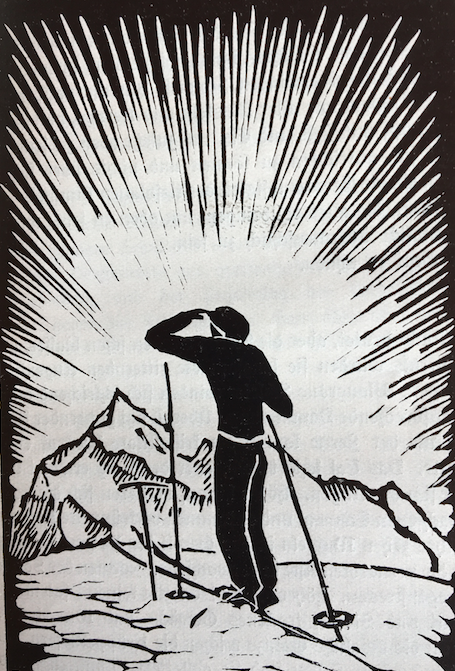
For those readers donating $50 or more, we’ll send a terrific navy blue BBQ apron imprinted with this striking vintage skiing woodcut.

All donors will receive a personalized thank you note and some SeniorsSkiing.com stickers.

The fundraiser will continue through the month.

To donate, click here.

Thank you!!!!

Ski Patrol Drones Used at Val Thorens

Many ski resorts outlaw drones for a variety of safety reasons. But ski patrol in Val Thorens, the French mega-resort, are employing drones to monitor lifts and avalanche management systems, and to perform a host of other duties. Among the examples you’ll see in this short video produced by drone-manufacturer, DJI Technology, is how an infrared-equipped drone, is able to detect a skier buried in an avalanche. This is impressive stuff that, before long, we’ll be seeing at many areas.

Idaho’s Tamarack Resort Plans Expansion

Tamarack Resort

Tamarack, which opened in 2004, went bankrupt in 2008, and got new owners in 2018, recently applied to the US Forest Service to add 3000 acres to its existing 1100. The addition, including multiple lifts, would elevate it to one of North America’s biggest. Tamarack, in west central Idaho, averages 300” a season.

Elan’s Folding All-Mountain Ski

Elan, the Slovenian ski brand, is big on innovation. I used their asymmetrical skis a few seasons ago in the Dolomites. Right and left ski were used on hard pack. Switch the skis and they performed differently in powder and soft, heavy snow. Now, Elan is using a similar approach in its new, folding Voyager model. The technology was developed as tactical equipment for the Slovenian Army. It incorporates a hinge and locking swivel-plate which holds the binding.  The company appears to be promoting Voyager for ease of carry-on and transport. Click here for an amusing explanation. Another Elan product currently under development is a “smart ski”, embedded with sensors that will provide real time coaching feedback through a headset. Couldn’t find a price for the Voyager.  

Yellowstone Club’s New Trail Map

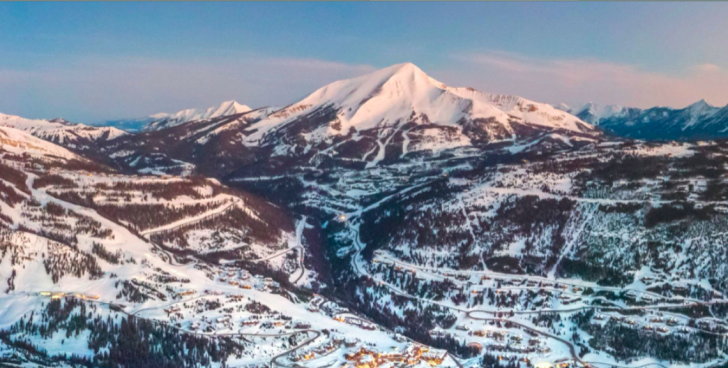
Yellowstone Club, adjacent to Big Sky

The closest I ever got to the Yellowstone Club, was skiing a perimeter trail at Big Sky in Montana. Yellowstone Club is the “private and secure” ski and golf resort where business and entertainment celebs have homes. Bill and Melinda Gates are there, as are Tom Brady, Justin Timberlake, and before his death, Warren Miller. Click here to see the resort’s new trail map.

Two Idaho Areas Join Low Cost Multi-Pass

They are Soldier Mountain and Pomerelle Mountain. Indy Pass costs $259 and gives passholders two days of skiing at each of 61 participating areas.

Death and Fantasy Ski Videos

Arianna Tricomi is a three-time Freeride World Champion. In 2018, the Italian was Euro Skier of the Year. She recently recorded this touching and informative video after being unable to save a 15-year-old buried in an avalanche. The point she makes is that little is discussed publicly about risks and preparations made when filming fantasy skiing in challenging terrain. The final edited versions may attract less prepared skiers to mimic the lines, often with tragic results. Her message, while it may not apply to many older skiers, is still an important one: In order to prevent more unnecessary deaths, there needs to be more open discussion and disclosure about behind-the-scenes planning of extreme skiing videos.

Classical Guitar Après Ski

Dr. Jon Paul Yerby is a gifted classical guitar artist and educator who performs globally. He’s not a skier, although, he’s told me that skiing is one of his aspirations. But he is an outstanding musician, as demonstrated in this performance of the  J.S. Bach Prelude. This and other of Jon’s performances are a nice way to enjoy a relaxing senior skier après-ski.


Skiing Weatherman: Thank You, Stratwarm

Hint: Cold Air Coming Your Way.

[Please consider supporting SeniorsSkiing.com with a donation. We appreciate your help. Click here.]

I assume that this week’s headline has many of you scratching your head wondering “What in the world is a stratwarm?” I will try and explain but the bottom line is that this phenomenon is in large part responsible for the colder than normal pattern that covers much of the country, much to the delight of snow lovers. The past ten days or so have brought fresh snow to just about every resort in the country, and the coming two-three weeks look very promising, as well.

Okay, what is stratwarm? The technical term is Sudden Stratospheric Warming (SSW), and it is an almost exclusively northern hemispheric winter event that typically occurs in about six out of every 10 years. Unusually warm air develops in the top 10 per cent or so of the atmosphere (the stratosphere) over the high latitudes. The warming works its way down in the atmosphere and then reverses the winds circling the North Pole from westerly to easterly. Those winds weaken as well, which disturbs the polar vortex. If you imagine the strong westerlies around the pole acting as a dam of sorts, keeping the coldest air trapped at the top of the world. When the wind shifts direction and weakens, the dam breaks and cold air heads southward to the mid latitudes. Here is a map of the current temperature anomalies at the 10 millibar level of the atmosphere, right near the top

Notice the orange/brown swatch draped over the North Pole. The warm air is in place and has been for a couple of weeks. Stratwarm episodes take weeks to develop and mature, and this one started in late December. You may have heard that both Europe and China experienced severe cold outbreaks last month as pieces of the vortex broke loose and reached the mid-latitudes. The next thrust of cold is now aimed at Canada and the U.S. It will first move into the northern Plains next week before spreading east-southeastward. Here is a forecast of surface temperature anomalies for Monday, the 8th

The greens/blues/purples indicate where temps will be below normal, with the core of the coldest air moving into the Dakotas. A week later, the cold has pushed southward to envelope most of the lower 48. Have a look.

Now, cold air doesn’t always lead to snow, but with an upper trough likely to cover much of the same area as the cold mid-month, the likelihood of significant snow events from the Rockies to the east coast will be enhanced. Resorts west of the continental divide and along the west coast will be more influenced by upper ridging over the eastern Pacific, so snow events will be harder to come by, except in the Pacific NW, where a typically snowy La Nina winter will carry on. Stratwarms can cause some uncomfortably cold days on the slopes, but this one will also lead to a cold and snowy February for a majority of the slopes we love.

REGIONAL HIGHLIGHTS:

Pac NW/B.C.:

Snow this weekend, only B.C./Washington resorts pick up snow next week as west coast ridge builds.

Central and southern Sierra:

Very snowy late January morphs into dry first half of February as new ridge on west coast keeps the flakes away.

Rockies:

Occasional rounds of light snow across the south, somewhat heavier spells of snow central and north from small disturbances embedded in cold northwesterly flow.

Midwest:

Cold shot from the arctic arrives this weekend and dominates for more than a week. Several rounds of light snow during that time.

Northeast:

Light/moderate snow event early next week. Arctic air gradually spreads into region thereafter. Potential for sizable storm around the 15th.

Mid-Atlantic/Southeast:

Higher elevation snow early next week, colder weather follows and dominates through mid-north. Next shot at significant snow around the 15th.

Make More Tracks: How To Pick Ski Length

If You Thought It Was Based On Height, Think Again.

[Please consider supporting SeniorsSkiing.com with a donation. We appreciate your help. Click here.]

Thanks to Jared Manninen from TahoeTrailGuide.com for this advice. We’re curious.  Are readers able to buy cross-country equipment at mid-season?  We’ve heard inventories have been depleted. Let us know.


How Did You Learn To Ski: Reflections On Comments

Austrian Ski School had its principles for better or worst.

[Please consider supporting SeniorsSkiing.com with a donation. We appreciate your help. Click here.]

Perhaps The Underlying Question Is: “What Do You Want Your Skiing To Be?”.  

There is no right or wrong answer.

If you want your skiing to be about maximizing bar time, that’s fine. I’m happy with that.  If you want it be “covering as many miles, or ticking off trails, in a day as possible”, that’s fine, too.  If it’s checking your wearable gadget to see your maximum speed that day, so be it.   If it’s “having a laugh”, who could complain?

But none of those is concerned with developing skill.   The replies to the recent Question For You on How Did You Learn suggested that a considerable percentage of skiers did not commit to any structured long term learning process, instead choosing to get out there and “do it” perhaps with a few intermittent lessons, perhaps in the belief that skill is developed by learning a few “secret” tips.  It isn’t.  But I can live with that, it’s your skiing after all.

The tacit belief is that practice makes perfect. It doesn’t.  Any expert observation of a skiing piste with plenty of skiers on it, confirms that: though it fully supports paragraph two, above.

The reason is that practice does not make perfect: practice makes permanent.  Only perfect practice makes perfect. SeniorsSkiing contributor Pat McCloskey made that crystal clear with his video of Kristoffersen proving the point. The racer has a deep understanding of his subject and spends hours perfectly practicing his technique, to become more skillful at executing it. Practice is a process of habituation; the psychologists call it an “associative” phase of learning.

Skill is the learned ability to bring about pre-determined outcomes with maximum certainty, often with minimum effort. Accurately throwing an American football to a wide receiver is not a skill; watch me try it! It is a technique at which you can either be skillful or useless.  Guess which I am? Answers on a postcard to …..

And so to my main point: respondents made reference to all sorts of unfortunate mis-understandings which will perforce have constrained the respondents’ skill development. They may not care too much about skill development, but there was a sense of slight frustration. The sort of feeling that, “You know, I was hoping to improve on this year’s trip, but I came back at the end of the week no better than last year. Still, it was fun”.  A trace of disappointment.

Some examples of incorrect perceptions from those responses (please, I’m not picking on anybody!)  –

  • “Shifting your weight”: No, please no! I see this being taught today! Was that forward/back, or side to side?  Shifting your weight laterally will reduce the tilt on the ski.  It will obtain less resistance and may slip.
  • “Rotating the ski” (to ‘do’ a turn): It depends, but usually it’s better not to. It will work, sort of.  But what it is doing is commencing the new arc with a skid.  It’s better to end with a skid.
  • “Steering with the inside ski”: Don’t tell Kristoffersen that, it’ll kill him. Quite possibly the writer didn’t mean this. For stability, the snow resistance (steering force) needs to be obtained with the outside ski rather than a “leaning-in” toward the arc’s centre. Pressurizing the inside ski is destabilizing.
  • “Counter rotation”: An ancient and thoroughly mistaken and mistaken Austrian idea from the 40s and 50s that grew from faulty observation. (Which, incidentally grew from “watching and copying”!) My comments about this concept deserve a more extensive discussion. Basically the idea started as a misconception of what Austrian racers were doing and became a branded, “national” ski technique. More on this at another time.

Further reference made by a number of respondents was to “styles” of skiing. This is treacherous terrain. There is only ever one correct solution to a problem of physics. The idea of skiing “styles” is a marketing one, not a technical one. The skiing nations needed to try to differentiate what they were selling, from what the others were selling, and pretend it is (was) in some way superior.

Avalement was the French answer.

So, you got a “French style” of skiing, involving feet clamped together, swish the tails about by waggling your bum, keep your elbows near your torso and flick them “stylishly” behind you after your pole plant. Or the “Austrian style” involving clamped feet, skis across the mountain, and arms and torso twisted to face down the mountain. The “Italian style” involved (don’t know if it still does) a weird kind of extra bobbing up and down, immediately prior to any attempted direction change.  They all get you down the mountain, but not as well as you might.

Stein had ankles welded together and that famous Comma Position.

Mine is not a criticism of SeniorsSkiing respondents, they may well get from their skiing everything they want, and I hope they do. But all that (what I call) “instructor speak”, and potted short-cuts will not develop your skill as a skier – there are few short cuts to anywhere worth going.  My job was/is as a sports coach specializing in skill development, and in particular in recreational skiers.  I care about it.

Gratitude

Half-Way Through The Season, Pat McCloskey Takes Stock.

[Please consider supporting SeniorsSkiing.com with a donation. We appreciate your help. Click here.]

My Ski Lodge. Credit: Pat McCloskey

We are halfway through winter, and the groundhog has come out to let us know what he thinks about the rest of the winter. I wonder if he will be masked? In any event, this has been a different ski year with booting up in the parking lot and eating lunch in the car or at a tailgate. The good news is that, for the most part, snow has been really good this winter, and lots of folks are getting out to enjoy the slopes nationwide.

Here in Western Pa, the snow has been plentiful, and all of our ski areas have been operating well. There have been a few glitches along the way but for the most part, I am grateful that the lifts are spinning. The outside fireplaces are roaring, and, when there are only a few people in the lodge, I sneak in early to sit by the fire, one of my favorite things to do.

There’s been snow in western PA. Gratitude. Credit: Pat McCloskey

There have been a lot of changes this year in the operation of skiing. We don’t really know the half of it, but I am sure that operating a ski resort in Western PA is challenging enough let alone in a year with a pandemic. In the fall, there were questions about whether there would be skiing this season.  However, the resorts have made it possible even though their bottom lines are probably not as robust with the lack of bar and restaurant business. Tough to survive on take out and limited indoor seating. But they are doing it, and, for that, I am grateful. When I ride up that old chairlift and look out over the Laurels, I am so thankful that I have the health and the skill to enjoy skiing. And an hour and a half from where I live, I will take it.

Janet and I are headed west in February and I will be going again in March. From what I am hearing from friends out there, the resorts are doing a good job in general. Sure there has been the issues with long lines due to social distancing on the chair lifts, but it seems to have sorted itself out as the season has progressed.  This past week, most of the west has seen a significant snowfall which will hold them in good stead for the rest of the season. Outdoor recreation is essential to all of us if we want to get through this pandemic and nothing better than enjoying the snow in the winter.

As I sit in my folding chair at the beginning of the day and boot up, I look around and think we are much better off than we thought we might be. The weather has been cooperative, and it has led to good times outside for a lot of us. So the next time you see a snowmaker at the resort, any resort, thank them. They work hard in really adverse conditions. When you see the patrol, the ski school, a groomer , restaurant employee, ticket booth personnel, or management at an area, take a moment to thank them all and tell them how much we appreciate their efforts to keep us all going strong this winter. The good news is that no matter what that ground hog says, we have a lot of winter left.


And More Ski Art

Don Burch Has Yet Another View Of The Ski World.

[Please consider supporting SeniorsSkiing.com with a donation. We appreciate your help. Click here.]

Don has created a series of artistic videos depicting impressions of the sport. He uses different AI techniques to create the images, some of which are startlingly beautiful. Please let him know what you think of his work in Leave A Reply below.


Breckenridge

Question For You: Best Restaurant Ever In A Ski Town

During This Pandemic, We Are Yearning For Those Fantastic Meals. Let’s Have Them Vicariously.

[Please consider supporting SeniorsSkiing.com with a donation. We appreciate your help. Click here.]

St. Marcel, French Alps, three Michelin stars

Part of the fun of going on a ski vacation, a ski weekend, or even a day trip is eating out. Whether it’s a hamburger from a grill on a sun deck, magnificently pungent Chili from a cafeteria line, a crowded sit down restaurant on a mountain road that “everyone goes to”, or a luxurious, white table cloth, meal with wines and candles, these experiences are memorable and, we think, worth sharing.

What we are looking for this week are the places where you’ve dined at a ski resort or ski town that were totally terrific. Where was it? Mountain town or at a resort? What was the place like? Fancy schmancy? Or rustic and rugged? What kind of food? Pub grub? Gourmet? Have you been back? What made it so special that it stands out from countless other dining out experiences you’ve had in your snow sports career?

Breckenridge lunch deck. 0 Michelin stars.

What’s the most memorable dining-out experience you’ve had in a ski town or resort?

Please enter your comments in Leave A Reply below.

An Odyssey Between US And Canada

Our Traveling Australian Skier Recalls Characters, Odd Places, And Skiing In The US/Canadian West.

[Please consider supporting SeniorsSkiing.com with a donation. We appreciate your help. Click here.]

Beautiful downtown Curlew, WA, a ghost town stop on the way to BC.

Have you been to Curlew, WA? We try several routes in an attempt to exit the USA, having already skied at Schweitzer Ski Resort. When I say skied, I use the term advisedly. Due to lack of snow, most of the ski hill is closed. But now we are still in the wild vacant Northwest back woods.. The landscape is quite depleted of signs. You wouldn’t think it would be that difficult to get back into Canada. I mean, the border, is 5,000 miles long.

The Curlew Saloon on Main Street

While pursuing a route, we chance upon the town of Curlew. I say town, it was once a town now a ghost town more than any ghost could conceive. I walked casually, quietly, through the door of the Curlew Saloon. I notice the licensee, silver hair, beau-fount style, piled high on her head, like Dolly Parton but raggedy eyed. A patron, her worn body reflecting all of her ninety years affected by smoke and booze. She eyed me, a stranger, with a leery eye. A stranger is noticed here.

Curlew Saloon is a taxidermist’s showcase. Credit: Dave Chambers

Ahead of me, launching out of the ceiling, a Cougar, within its snarly jaws, sharp and yellowed teeth. Further in a delicate patterned rattlesnake skin now devoid of its body is flattened against the weathered timber wall. The scene is old, faded and dreary. Several skulls and horns decorate. No one really engages with a stranger here. Two of three other occupants whisper in the quiet space. One a city slicker wants to move to a quieter town. Maybe he could move to this old gold mining town, its heyday long now a memory. I say g’day to the cowboy in the big hat. With an efficiency of movement, a vacant stare, he leans forward and barely nods a response.

The short wide Main Street looks like a western set in an old Hollywood back lot. The rear of which is littered with the ruins and detritus of the last century. Old cars, a fire truck still equipped with ladders on the side sits on flat tires adding more junk to the back streets. Part of the scene is the General Store in Curlew near the hotel on the main street. It fits in to this worn landscape, dilapidated and tired. The owner here also of advanced age sells items almost equal to her age. Brand new cassettes all covered in dust lie waiting for purchase. Century old posters decorate the splintered paintwork. It’s now a forgotten town Curlew, with history slowly seeping out of the old grey wooden buildings, like sand through an hourglass.

We leave Curlew, head north, and exit America. Apex, Penticton, BC is a ski town inside the Canadian border in the Okanagan region.  On this occasion, we find the border guards are Canadian. Almost like magic, the landscape changes to fields and hills laden with snow.

Apex resort, a hidden gem in British Columbia

Our disposition is much improved with a few new snowflakes drifting in the occasional sunshine. Here at Apex where the vertical is surprisingly anything but the average height for a Canadian Resort, we learned, that Apex is still two hundred feet higher than Whistler.

We are greeted in the morning by wafting light snow drifting down between the large fir trees. Lovely. Our mountain host, Dale, likes Aussies, he says. Doesn’t everybody. Took us on a tour and regaled us with stories of his son and daughter and a guy named Fred Smith, an Aussie, rich, says Dale, but lives in an old camper van near the resort for the season.

Somewhat of a legend is Fred. He took his chainsaw to the firs in a steep gully here at Apex and cut his own tree glade. The management of the mountain, when they found out, were not pleased but eventually consented and included it within the ski boundary. Over our only two days at Apex we have three mountain hosts. Russill with an I, Dale with an A and Fred with an E. Dale is a character and is referred to by the local skiers as the Apex CEO.

Cruising all day down blacks that are really blue runs, we had a great time with Dale. The next day we had Fred with an E and in the afternoon Russill with an I.

Don’t tell anybody but Apex is a secret waiting to explode. Russill with an I, seemed quite excited when Ray and I suggested a shoot down the back runs over at Wildside. Double Blacks and Impossible Blacks abound. There almost seems no way down. Russill with an I said he couldn’t ski down there. He is an excellent skier in my estimation. And now Whistler beckons but the snow reports are quite ordinary. We are not surprised at this a strange season indeed. But off we go.

Apex Resort is several hundred feet higher than Whistler.


Support SeniorsSkiing.com

Once In A Year, It Is Not Thought Amiss.

SeniorsSkiing is halfway through its seventh publishing year. Over that time, we’ve advocated for seniors, conducted research on on-hill accidents, published best skis and best boots listings, recognized those seniors who really ski a lot, and provide a directory of where seniors can ski for free or almost free.

We publish articles about conditioning, gear, resorts, ski history, alternatives to Alpine skiing, interesting personalities, the weather, instruction, personal narratives, and lots more.

All for free.

No subscription.

But we do have expenses.  And our once a year appeal for support helps defray those costs which, by the way, keep going up as SeniorsSkiing.com’s number of readers grows.

So please consider a donation.  Hey, $10 is a tuna fish sandwich, five gallons of gas, a bowl of chili and a diet coke, three tubes of toothpaste, a bottle of okay Pinot Noir.  You get the idea.

Thanks.

[give_form id=”29538″]