It’s Everywhere!

If you have been shopping for cold weather gear lately, PrimaLoft is hard to miss. This ubiquitous synthetic insulation marked by a triangular red shield is now featured in more than 1,000 cold weather brands that cater to the winter wear market. Very likely it is an important part of your winter wardrobe now.

What is PrimaLoft? And where did it come from?

As the popularity of skiing grew in the 1960s and 70s, so did the need for clothing to stay warm on the slopes. Goose down insulation was the answer.  A down parka was the epitome of popular fashion and practical comfort. But it turned out there was a problem. Once that down insulation got wet, its ability to hold heat went away. So long outdoor comfort!

In 1983, the US Army research lab in Natick Ma. asked  the Albany International Corp., a pioneer in advanced textile and material processing, to develop a water resistant alternative to goose down for military issue clothing. The goal was 97 percent of the warmth, weight and compressibility of down, whether wet, or dry.

The result:  PrimaLoft, a synthetic down, that was patented in 1984 and established for commercialization as a subsidiary of Albany International in 1989. . A year later, the first commercially available PrimaLoft insulated garment was manufactured and marketed by L.L.Bean. PrimaLoft Inc became a privately owned independent company in 2012 with headquarters in Latham NY, outside Albany. Today, one form or another of the insulation is used in jackets,, pants, gloves, shoes, sleeping bags and just about anything insulated offered by companies that sell outdoor products.

PrimaLoft products are mainly a polyester microfiber, often made from reclaimed plastics like water bottles that have been through a clean, shred, and melt process and designed to be biodegradable. There are also versions that are blended with merino wool.

Currently,  in addition to the headquarters in upstate New York where product research and development activities are based, the company has representatives in Europe and an office in Asia. The emphasis is creating insulation featuring recycled content using advanced manufacturing technology and renewable energy that significantly reduces carbon emissions in production. The trademark you see for this is PrimaLoft P.U.R.E. A serial innovator, this fall (fall of 2025) the company introduced six new products that enhance and  fine tune commercial applications of the insulation fibers.

Originally conceived for all-weather use by the military, PrimaLoft has emerged over the past 40 years as a mainstay in the recreational clothing industry and regular feature in the wardrobe of skiers everywhere.

Skiing Les 3 Vallees, World’s Largest Connected Area

My favorite ski trip last season was with the 70+ Ski Club to Meribel, in the heart of Les 3 Vallees, the world’s largest ski/snowboard resort, in the French Alps.

There are more than 375 miles of groomed trails and many more miles of ungroomed that the Europeans call, simply, “off piste”.  In six days, I hardly ever skied the same run or took the same lift more than once – easy to do with nearly 200 trams, gondolas and chairlifts. 

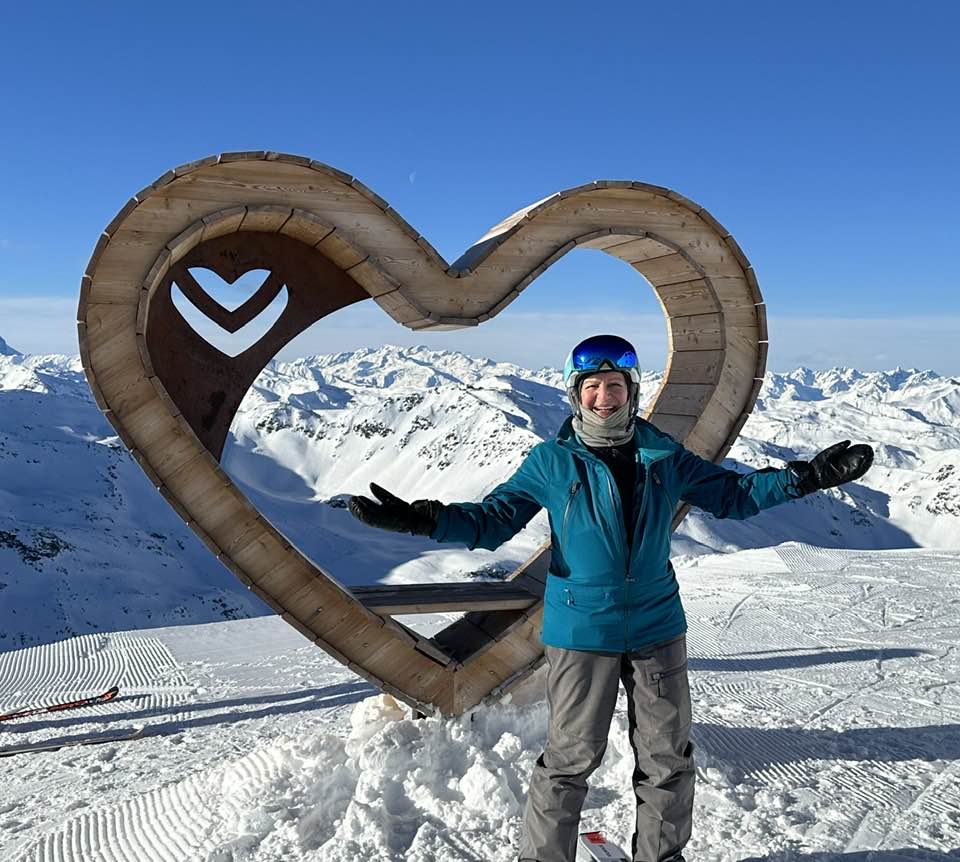
Meribel bills itself as the “heart” of Les 3 Vallees, since it is in the center valley, making it easy to ski over to Courchevel on one side or Val Thorens on the other.  Heart-shaped wooden sculptures polka-dot Meribel’s many trails, all of them – of course – placed at a picture postcard view for selfies, including with Mont Blanc in the distance.

Each valley is large enough to have several villages, and it’s important to remember the name of yours so you can ski back to the right one at the end of the ski day.  Otherwise, it’s a long and expensive taxi ride, as much as 90 minutes and a matching number of Euros. 

One of the perks of skiing in Europe is that rentals or passes cost the same for a full week as for one single day back home, which balances out the higher cost of your airline ticket.  A weeklong pass for a zillion acres and non-stop scenery was around $150 for those over 70 ($450 if you are under 70), including insurance for the French version of ski patrol.

The main run in Meribel is Mont Vallon, with long – and I mean LONG – wide cruisers on either side of the lift.  Everything here is supersized – one day I skied 23 miles with my guide, and that’s with stopping repeatedly for photos or to catch my breath and the hour-plus mid-day meals which are an integral part of the experience in the Alps.

The French take lunch seriously and just don’t understand the American style of grab-and-go.  Maybe it’s because – unlike back home –  there are dozens of mid-mountain restaurants serving gourmet fare.  So I indulged – including a local beer brewed in a land better known for its wines.

Courchevel is the most famous of the three valleys, with villages named for their location in meters – 1350, 1550, 1850 – plus a couple of others with actual names.  The higher you go, the more expensive the hotels get, including a Vuitton hotel and one owned and operated by the Rossignol family. 

Courchevel also is where the best nightlife is. But those who know me know that I’ve been saying for at least the last 30 years that when I ski all day, my idea of nightlife is a pillow at 10pm.  Maybe 9pm, now that I’m 70+. So, you’ll have to ask somebody else about nightlife in Courchevel.  Or shopping.

I loved discovering trails in 1550 named for Native American tribes, along with a teepee with Native American artifacts inside – a slopeside example of Europe’s ongoing love affair with the Wild West. 

Val Thorens is the highest of the three valleys, so the season usually starts earlier and finishes later then elsewhere.  My favorite run here was another goes-on-forever cruiser, off the Ponte de la Masse lift to the village of Les Meniures, below the village of Val Thorens.

Val Thorens, perched at an altitude of 2,300 meters, has just been crowned “Best Ski Resort in France and the World 2025” for the tenth time in 12 years by the World Ski Awards.

There’s also a backside bowl, Orelle, that would be rated black and double-black in the USA.

Evelyn Kanter at Meribel Les 3 Vallees

Trail ratings are similar to the USA – green for beginner, red (not blue) for intermediate, and black for expert.  Unlike the USA, trail markings are minimal – just poles with the color designation and a sign at an intersection with the names and direction of connecting trails.

So it’s up to you – or your guide – to know where you are, where you are going, and how to get back to your hotel later. Maybe that’s why there are more than 1,400 uniformed instructor/guides in Les 3 Vallees.  Mine was originally from Scotland, who visited during college eons ago and never left. 

The nearest airport is Geneva, then a 90-minute drive to your destination in one of the three valleys.  I added a few days after skiing to visit Lausanne and Montreux, both hugging the shores of Lake Geneva. Several others in the 70+ Ski Club group added on Geneva, Paris or London, depending on their airline connections, before or after.

I’m ready to return, since there are still several hundred of the 375 miles of trails and 200 lifts and dozens of mid-mountain restaurants that I need to check out.

A bientot – which is French for see you soon, hopefully on the slopes.

It’s All Waiting for You in Idaho!

While still relatively unknown for its’ amazing skiing, Idaho has a long and storied ski past with 2026 being their 102nd anniversary of ski operations. 102 years ago, Idaho’s first ski area took shape as Blackwell’s Jump. According to “Ski the Great Potato: Idaho”* it was created for the inaugural McCall Winter Carnival, Jan. 24, 1924, and was maintained and operated through 1937. This marked the start of a skiing revolution that transformed small-town hills into world-class destinations. You may ask, “Why Idaho?”. Here’s why:

Idaho is uncrowded – Even on holidays and weekends lift lines with more than a 10 min wait are rare. Idaho offers a range of reasons to ski there. There are 19 Ski Areas with epic terrain. You’ll find a total of 29,000 vertical feet on over 22,000 skiable acres. From smaller, very affordable “breeder and feeder” ski areas to larger areas offering on mountain lodging; you’ll find a range of additional activities including cross country skiing, night skiing, award-winning restaurants, sledding, horse-drawn sleigh rides, indoor water parks, spas, skating, guided snowshoeing tours and more.

Resorts offering on mountain lodging include Schweitzer, Silver, Tamarack, Sun Valley and Grand Targhee. Many others have lodging (and relationships) with lodging partners in nearby towns including Lookout, Brundage, Bogus, Soldier, Pebble Creek and Kelly Canyon.

Beginners will find amazing programs and lesson packages at Rotarun, Bald Mountain, Pomerelle, Cottonwood Butte, Snowhaven and Little Ski Hill. Over half offering an extremely affordable daily lift ticket under $70. Please check out the comparison page at https://skiidaho.us/compare

There’s natural beauty with epic views all around. Schweitzer offers views of three states plus Canada. Grand Targhee offers spectacular views of the Grand Tetons (I know because I’ve been there). Silver has the longest gondola in North America with epic views of the Silver Valley. Sun Valley, perhaps Idaho’s best known resort, has 250 sunny days a year. Brundage boasts stunning views of nearby mountain ranges and Payette Lake. Tamarack offers similar views of Cascade Lake.

Bringing the kids along? Fifth graders can ride 18 mountains, three times each for only $29, sixth graders can ride two times each with the purchase of a 5th /6th grade Peak Season Passport.

Idaho enjoys high snowfall averages at all of its major resorts. And you can visit many of them in one trip. Idaho has six regions with two or more ski areas within easy distance of one another.

Idaho is served by two major airports: Spokane WA (GEG) and Boise (BOI). Additionally, we have four regional airports in Idaho Falls (IDA); Sun Valley (SUN), Pocatello (PIH) and Magic Valley (TWF). Please check out the Ski Idaho travel page at https://skiidaho.us/traveling-to-idaho for more detail or click on the Idaho banner ad and be sure to Visit Idaho.

*“Ski Areas Past and Present” by Margaret Fuller, Doug Fuller, and Jerry Painter.

Amtrak Ski Train Returns for 2025/26 Season With Expanded Service

All aboard! Take the train between Denver and Winter Park and avoid both traffic jams on I-70 and base area parking problems.  This season, Amtrak has expanded its service to add both Thursdays and nearby historic Fraser, Colorado to the schedule.

The 2025/26 Amtrak Winter Park Express operates Friday-Sunday between December 19 and January 4.  Expanded service is Thursday-Sunday, starting January 8, through March 29.

One-way fares start at just $9 and $4.50 for kids, with no baggage fees for your gear.  Now that’s a deal!  Especially since close-in parking at Winter Park this season is a whopping $50 on weekends and $40 on weekdays.

Amtrak Benefits on All Ski Trains

Unlike airline checked baggage or car rental agency add-ons for a luggage rack, you can bring your gear on board for free, and there are special ski storage racks on most trains. Plus, Amtrak offers discounts to passengers 65+, to members of the military and to disabled passengers. Families can save money, too, as children (and grandchildren) aged two to 12 are eligible for 50 percent off tickets.

Choose a one-day round-trip, or split your outgoing and return to spend an entire weekend, a full week or longer. Each way takes about three hours.

The Amtrak Winter Park Express leaves Denver at 7:00 am and leaves Winter Park Resort at 4:35 pm local time. While onboard, you’ll enjoy a trip in Coach class, featuring wide, reclining seats, big picture windows, ample legroom and no middle seat. And free wi-fi.

Be sure to visit the bi-level Sightseer Lounge for panoramic views of the Rocky Mountains and Moffat Tunnel from upstairs and café service with snacks and drinks for sale downstairs.

If you stay on to the additional stop in Fraser, you can learn about the town’s frontier history at the Cozens Ranch Museum, or zip down the Frazer Tubing Hill, or both.

Amtrak Guest Rewards members earn 2 points per dollar spent on the Winter Park Express.

Amtrak Trains to Other Resorts

Glide into some of the Northeast’s top ski destinations aboard Amtrak’s Vermonter, between St. Albans – Essex Junction (Burlington) – Springfield – New York – Washington, DC, while you pass quaint New England villages and towns tucked beneath the beautiful backdrop of the snowcapped Green Mountains.

Resorts accessible on the Vermonter include Stowe Mountain Resort, Jay Peak Resort, Bolton Valley Resort and Okemo Ski Resort.

  • Vermont Ski Resort
  • Berkshire East Mountain Resort

The Ethan Allen Express operates daily between NYC, Albany, Rutland and Burlington, including a scenic stretch along the Hudson River through the Hudson Valley.

Killington is accessible from either Rutland or Burlington, via regularly scheduled public bus service on Vermont Translines.

California Zephyr

Th classic and scenic California Zephyr travels year-round between Chicago and the snow-capped Sierras beyond San Francisco, through some of the most beautiful scenery in the USA.  Although you might not want to make the full 51-hour trip in winter, it’s each to choose in-between destinations such as Denver and Salt Lake City, or via connections to Emeryville.

Ski/snowboard resorts accessible from the California Zephyr include Palisades Tahoe and Diamond Peak in California;  Alta, Deer Valley and Park City in Utah; Keystone, Breckenridge, Vail and Arapahoe Basin in Colorado.

See you on board.

The Comeback XC Skier

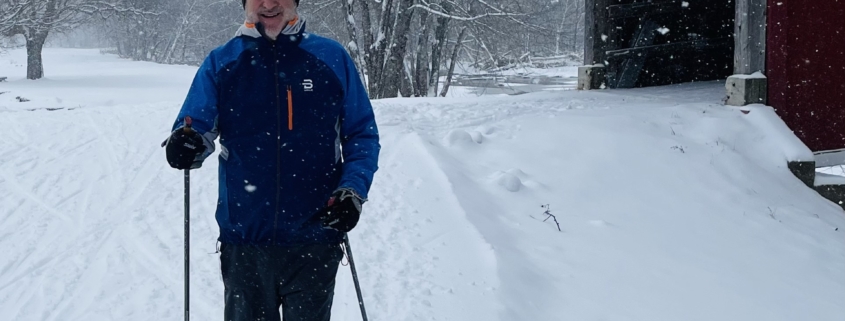
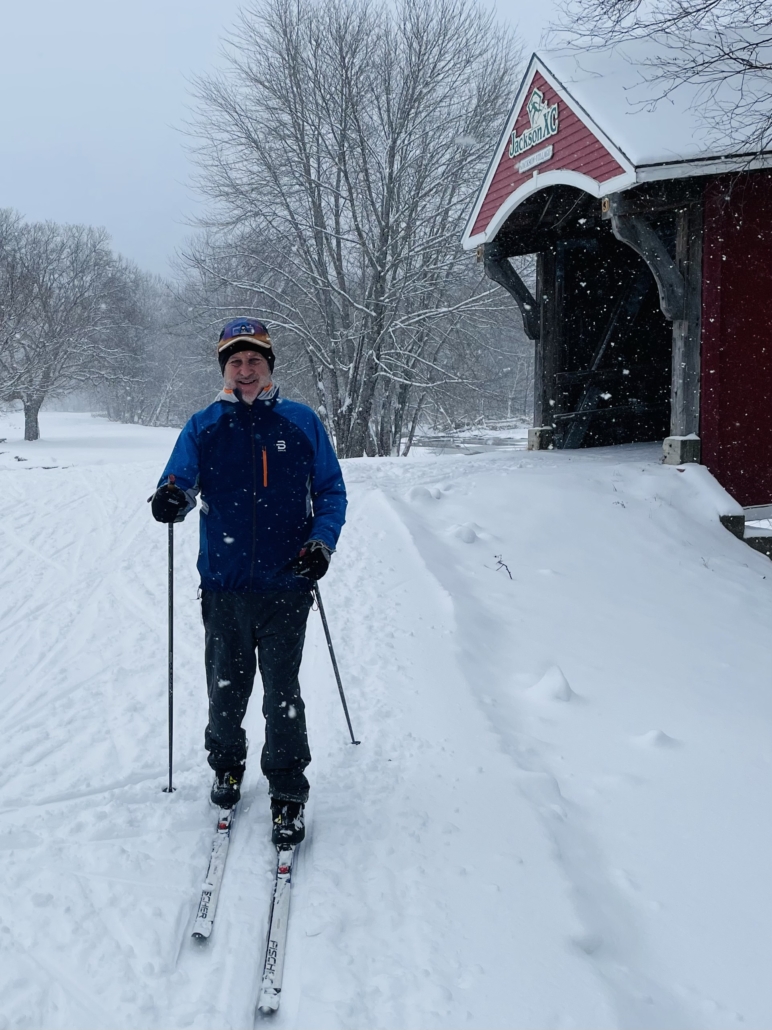
RBL at Jackson XC

There is a ski industry statistic that cross country (XC) skiers have owned their skis for an average of 17 years. I don’t remember the source of the information and it is probably outdated, but I’ve quoted it for more than three decades and after attending an excessive number of ski swaps, reused ski equipment sales, and local yard sales, I can attest that indeed there are a lot of really old XC skis out there. Every now and then I buy an old pair of wooden XC skis that are in pristine shape so I can use my pine tar stuff to recondition the ski bases and use them once a year.

This talk about old XC ski gear got me to thinking about the “comeback skier.” You know, the people who tried XC skiing in the past, and then put the gear in their garage and took a rest- of-their-life hiatus. In general, many of these folks tried XC skiing and felt it was too much work particularly when comparing it to alpine skiing where they could ride a ski lift up a mountain followed by skiing back downhill. A ski industry term for these people is “lapsed skiers” but recently the skier participation statistics are showing a resurgence in XC skiing which may be a resurrection or revival and is likely connected to the aging baby boomers and a new group of younger people interested in winter recreation, wellness, and getting outdoors.

This potential returning lapsed XC skier may have originally thought that the sport was not their cup of tea, but Father Time and Mother Nature may have conspired to change the outlook on XC skiing for older and younger people, respectively.

There are reasons that one might consider coming back to XC skiing. The sport is soft on the body and you can do it at your own pace. You can ski on the flat terrain which is relatively easy rather than climbing uphill on trails that will require returning on high speed adventures that could cause concern. You could XC ski for a short time such as a half hour, which would cover a short distance. I go XC skiing for about 4-5 kilometers (2-3 miles) on flat terrain and it takes about 45 minutes, but that distance may require a bit more time for the comeback XC skier.

TIPS FOR THE COMEBACK

For the first few days of the comeback, keep it on a manageable level of time and effort while you become accustomed to it. Like anything, if you do it regularly you will improve in every aspect XC skiing. You probably have light layers of clothes (base layer, outer layer, good noncotton socks, light gloves and a hat) that can be used for XC skiing.

Perhaps you would consider going out with a ski instructor to get tips that will make the sport easier and give you some goals to achieve. In fact, it is highly recommended that returning XC skiers rent XC ski equipment and take a ski lesson to see if it is something that might be pursued further. The newer XC ski gear (skis, boots, poles) may surprise the comeback skier because the gear makes the sport much easier than decades ago. Waxless skis give better grip and glide than ever before, XC ski boots are both supportive and comfortable, bindings can be adjusted out on the trail, and even the new pole straps are helpful.

Ellen Chandler, executive director at Jackson XC and board member at Ski NH commented “Sometimes these former skiers bring their old gear which has not benefited from sitting around for the past 20 years.  We do get some rescue calls when old boots “blow out” on the trail.  Boots are the weak link. Also, some things have improved with the passage of time, so a person who can reenter the sport with new, responsive boots (plastics have improved over the years) attached to skis with bindings that have benefited from improved engineering, and a ski with a more subtle but effective pattern base, or a “skin base,” is setting themselves up for success.”

XC skiing still does not cost an arm and a leg to either acquire equipment or visit a commercial XC ski area like Jackson XC, where a trail fee is paid to access groomed trails and maybe they’ll even use snowmaking. At the ski area you can get rental gear, a trail pass, and take a lesson for a package price. Jackson XC 2025 Day rate – $25 for adults; Rental day rate – $25; Group lesson Super Saver package – $89 and it is lower for kids and seniors.

In the Rocky Mountains, the folks at Breckenridge Nordic Center will give a 20% discount if you register on the Internet for a group lesson. They specialize in working with people who have never been on snow and share the joy of the XC skiing by helping skiers learn efficiency and control. Josh Dayton, who runs the operation has produced a 9-minute video that can be accessed with a QR code by skiers to watch in advance of their experience on the snow which covers the touch points about controlling the skis and maintaining balance. It’s great for first timers or folks who want a refresher in the basics! All staff at the resort are ambassadors who offer ski tips to anyone. As soon as the skier steps out the door there is a staff person there who helps skiers put the equipment on, review the trail map, talk about body balance, and so on. When people come to Breckenridge Nordic with old equipment, they get offered a free upgrade to see the difference that new gear can make in the skiing enjoyment. Here’s the video https://www.youtube.com/watch?v=_i6978nfvEw

After XC skiing, expect a little soreness if you have not used the specific muscles associated with XC skiing recently, but typical over-the-counter medicines, rub-on creme, or pads should take care of any of those problems. If you go XC skiing at a groomed ski area a few times, you will quickly get the feel of gliding along the snow in the tracks or on packed trails; you’ll be traveling at a slow speed that provides immersion in the outdoors and nature; you’ll be enjoying one of the best forms of exercise and with a regular schedule of XC skiing, wellness (physical and mental) will be yours to experience in very little time.

What’s New in Idaho for the 2025/26 Season

The Gem State is feeling the stoke of the new season with special anniversaries, new terrain and lifts, expanded parking lots and more RFID technology at the 19 member resorts of Ski Idaho.  Here’s what to expect, so get those skis and boards tuned and ready for some fun in the snow.
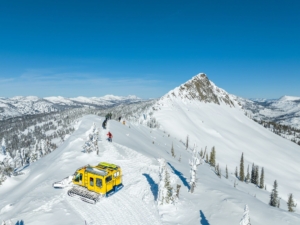
Brundage scenic with snowcat

Here are the details – starting with Idaho’s most famous, even legendary, resort, and then alphabetically for the others.

Premiering amidst an array of upgrades during Sun Valley Resort’s 90th season, there are 90 acres of newly gladed terrain for advanced skiers between Canyon, Exhibition, and Olympic.

Developed through the resort’s Bald Mountain Forest Stewardship Project with the U.S. Forest Service, Bureau of Land Management, and National Forest Foundation, the effort reduces fire risk and improves forest health while providing heating firewood to local indigenous communities like the Shoshone Bannock at Fort Hall and the Shoshone Paiute in Duck Valley. The project also unlocks some of the most exciting advanced terrain on the mountain and has led Sun Valley to develop more than 350 acres of glades over the last 5 years.

The family owned Central Idaho ski area — renowned as America’s first destination resort and the birthplace of the chairlift — is introducing RFID technology across all base areas of Bald and Dollar mountains to improve guest experiences and efficiency.

Sun Valley is also launching new ski and ride clinics — including multiday adult camps — as part of its award-winning ski school programming. Plus, Dollar Mountain will debut Sunny’s Adventure Park, a whimsical addition with fun terrain-park-style features.

Alphabetically now for the rest of Idaho’s downhill and XC destinations –

Bogus Basin Mountain Recreation Area in Southwest Idaho near Boise thinned undergrowth and opened more gladed terrain across Pine Creek and Bitterroot Basin. Plus, it graded two aspects off the top of the Morning Star Express chairlift for a more direct, beginner- and intermediate-friendly path toward the Bitterroot and Morningstar sides of the mountain.

The big news is that guests will be skiing on snow from last winter, because it’s been piloting innovative snow-storage technology from Finland in use only at three North American ski areas. The system stored approximately 11 acre-feet of snow over the summer with a 70 percent to 80 percent retention rate regardless of temperature, elevation, or aspect. Dubbed a clear success, the effort preserved roughly. 2.6 million gallons of water in snow form on Lower Coach’s Corner.

The nation’s largest nonprofit ski area, Bogus Basin undertook a major remodel of the Pioneer Lodge, turning it into a modern, multi-use hub. Upgrades include a new elevator, providing full ADA access to all lodge floors. The mountain also upgraded and expanded lighting in the Pioneer Parking Lot and launched a new e-commerce platform for online sales.

Brundage Mountain Resort added a new 1,800-square-foot emergency services building to house the ambulance and fire engine it added in 2024 to support its independently operated fire protection agency and emergency medical service. The resort once again offers its popular preseason 4PAK Sale and is celebrating its 65th season with $65 Tuesday Tickets, and other weekday tickets for as little as $70.

North Central Idaho destinations Bald Mountain Ski Area near Pierce and Cottonwood Butte Ski Area near Cottonwood — both nonprofits run by local ski clubs — have not announced any significant upgrades beyond maintenance and brush cutting.

Grand Targhee Resort — rated #5 in SKI Magazine’s list of the top 30 ski resorts in the West for 2026 — is not introducing any significant upgrades this winter. Just four miles across the border in “Wydaho,” the only way to reach the resort is through Driggs, Idaho, either over the Teton Pass from Jackson Hole, Wyoming, or from elsewhere in Idaho.

In Eastern Idaho near Ririe, Kelly Canyon Resort cleared and graded a new cat track between the tops of Lift 2 and Lift 4 for easy access to more terrain, including a whole new glade. The resort also installed a new rope tow to serve its terrain park, which will boast 13 new features, including dancefloors, F-boxes, spines, and 10-inch-diameter tanker tubes. And Big Jud’s, a small but popular Idaho chain of burger joints, has taken over the lodge restaurant.

Little Ski Hill in Southwest Idaho near McCall hasn’t announced any significant infrastructure improvements this winter.

Lookout Pass Ski & Recreation Area in North Idaho near the historic town of Wallace upgraded several runs, including removing all the stumps on two black diamond trails on Chair 3, smoothing and grading Big Dipper and Hercules, and removed large, exposed rocks on Whitetail, Keystone, Cloud 9, and Sundance.

Lookout Pass, which straddles the Idaho-Montana border and the Pacific and Mountain time zones, also regraded its Success beginner area, conducted additional grading on the recently opened Eagle Peak terrain, mowed virtually all the slopes on Chairs 1 and 2, and removed standing dead wood in several glades.  Other upgrades include repainting Chair 3 and expanding the lower parking lot.

Plus, it is offering a new, affordable Lift Ticket 3 Pack for $179 if purchased by Dec. 1.

Lost Trail Ski Area is launching RFID ticketing this winter. Events planned at the family owned mountain, one of two that span Idaho and Montana, include ski clinics with Olympian Deb Armstrong in January and Smash Life Banked Slalom, which blends freeride fun and avalanche awareness.

Family-owned Magic Mountain Ski Resort in Southern Idaho near Kimberly, doubled its surface lift capacity with a second magic carpet to serve an expanded beginner area. It is also expanding the Twilight Tubing Hill with new beginner/child area and new private weekday tubing sessions for groups.

For the first time, guests can rent Magic Mountain for private full-day events on its non-operational days (it is typically closed Mondays-Wednesdays except holidays). It will begin selling single-ride lift tickets for backcountry and Nordic skiers, and snowshoers desiring a “lift bump.”

Plus, Magic Mountain is new to the Indy Pass this winter, bringing the total number of Idaho ski areas accessible via the multi-resort pass to eight.

Pebble Creek Ski Area in Southeast Idaho near Inkom, completed a major overhaul of the Aspen Beginner Lift and upgrades to its snowmaking system and rental shop. Plus, Pebble Creek installed two brand-new fryers in the kitchen to keep cranking out its world-famous, homestyle (i.e. skin-on) fries from spuds sourced from a local potato farmer.

Pomerelle Mountain Resort added $30,000 worth of new gear to its rental fleet and replaced the conveyor belt on its magic carpet, which at 440 feet is one of the longest in the West. The family- owned resort also upgraded the lodge with new high-tech, energy-efficient windows.

Rotarun Ski Area is installing a magic carpet, which will be free to all users, although a lift ticket will be required to ride the Poma lift (for guests ages 5 and up). Adult lift tickets increase to $20, with Wednesday nights still free from 6-9 p.m. Weekend hours have changed to 11am to 3pm  New and returning events include monthly Friday Night Silent Discos.

Schweitzer is launching a themed pre-fixe early breakfast series called Summit Sunrise Breakfast at Sky House on select Saturdays and Sundays, and Sky House Snowcat Dinners return on full-moon evenings.

Expanded Ski & Ride School offerings include new full-day group lessons for kids ages 6-12 and a multiweek Freestyle Camp to teach kids freestyle and freeride skills in terrain parks and natural terrain. Families will enjoy Kids Ski Free Week Dec. 6-12 when children 17 and under can ski or ride at no cost with pre-registration online.

Silver Mountain Resort in Kellogg in North Idaho, thinned out new areas of the North Face Glades, yielding additional steep, fall-line tree skiing and reducing the need for traversing, and also expanded adjoning Sheer Bliss. The resort also trimmed and gladed traverses throughout the mountain to improve flow and access and updated signage with more accurate run status updates and links to backcountry forecasts at backcountry gates.

Tubing sessions are now extended to seven days per week, and Silver Rapids — Idaho’s largest indoor waterpark – now offers extended midweek hours. Plus, a new partnership brings the Rossignol Experience Center to Silver Mountain Sports, including expanded demo experiences.

Silver Mountain features North America’s longest single-stage gondola.

Snowhaven Ski & Tubing Area completely overhauled the T-bar. Owned and operated by the City of Grangeville, the North Central Idaho ski area is celebrating its 80th birthday in 2026.

Soldier Mountain in southern Idaho near Fairfield opened 250 acres of intermediate and expert terrain last season; this season it will be open for guided excursions aboard the resort’s TRAX side-by-side UTV. Guests with the necessary skills and equipment also can reach the Bridge Creek Sidecountry Project’s steep, north-facing ridges and trees by foot on established bootpack trails or by skinning up in alpine touring gear. The resort is also adding Ladies Backcountry Days and Intro to Backcountry Days to an expanded, world-class cat-skiing program.

Improvements include a reforestation project with the US Forest Service, expanded snowmaking, new restraint bars on chairlifts and the return of its tubing park.  Once owned by actor Bruce Willis, the resort now is run by the Alden family, and hosting several major competitions, including U.S. Ski & Snowboard Cross Training in April.

Turning lemons into lemonade after this summer’s Rock Fire scorched 80 acres of forest near its boundary, Tamarack Resort is transforming more than 60 acres south of Bliss into terrain for advanced skiers and riders. The fire began with lightning less than two miles from Tamarack in August,  and burned nearly 2,800 acres across Idaho’s West Central Mountains.

Tamarack also enhanced its main green run, Waltz, to allow more room for progression and learning, and added snowmaking to ensure early opening conditions and consistent coverage throughout the season. The resort also added specialized Aebi mowers to cut brush on Tamarack’s most popular runs, including Serenity, Showtime, and Encore, for earlier openings and to provide smoother, more manicured surfaces all winter.  New loading and unloading ramps at key chairlifts, including Discovery Chair, Tamarack Express, and Summit Express, ensure smoother transitions for skiers and riders of all ability levels.

The resort, in Southwest Idaho near Donnelly, plans to limit day ticket sales on peak dates — a measure adopted by other ski areas to minimize crowds and improve the on-mountain experience. Tamarack also is expanding Nordic rentals, lessons, and programming, too, and it’s taking après to new heights, introducing a mobile DJ Snowcat to bring high-energy experiences to different areas of the mountain. Plus, the mid-mountain lodge, which debuted last winter, will offer expanded dining offerings, live music, and enhanced outdoor seating overlooking Lake Cascade.

The Tamarack Sports School has been relocated to a new, centralized location in the Village, along a new Central Reservations and Lodging Check-In center in the Village. A new Elevation Studio offers a range of fitness and wellness classes from yoga and mobility to guided stretch and recovery sessions.

Expansions to Tamarack’s upper and lower Village parking lots will ease congestion during peak weekends, and the new Aspen lot will significantly grow capacity. The new lot offers more than a dozen camping spots large for Class A and C motorhomes and for Sprinter and Class B camper vans.

See you on the slopes – in Idaho.

Preparation

Author Pat McCloskey

My friend Pete always laughed and said that ” Pat rides a bike to prepare for ski season.” And in many ways that was true. I wanted to ride to be able to have strong legs for skiing. And although the ski season is fairly short for us in the mid- Atlantic, even with our trips, it still requires physical preparation to execute what you need in skiing. It is even more important for people my age, because we can’t just ski ourselves into shape anymore. Nothing worse than going on a ski trip and your legs fail you. All the time and effort is lost if you are not in shape. Buying the passes, making the air and lodging arrangements, schlepping the bags through the airports, driving to the area in the dark and snowy conditions. All is lost if you are not prepared physically. Same with skiing locally. The excitement of that first run and the rest of the day can be tempered if you have not prepared.

So fall is here, and for us, the best riding and hiking of the season is upon us. Yes- my crew rides all year with lights and in all kinds of weather. But it is important to keep the legs strong. I always wonder how the first turns of the season will go and if I can still execute after 8 months off. But usually I am confident that with a yearly riding schedule, and hiking mixed in, at least my legs will be strong enough. That gives me confidence when I push off for the first time.

This time of year, I start to get excited because I know the leaves have fallen and the first frosts of the season are upon us. As much as I like the fall season with the colors, the anticipation starts to get to me and I start monitoring the weather more closely. There seems to be a more urgent need to do my stretches in the morning, do my pushups, and keep riding so as to be totally prepared when the opening day announcement is made. As I have always said, it is good to ski locally to get your ski legs ready for trips out west or to New England. People who say they only ski out west really are missing a good time locally. And they only ski 5 days out of a year or maybe a little more. They are what I call people who ski, not necessarily ……….skiers.

Preparation is key so when you do travel, you click in and you are ready. You are not trying to find your legs the first few days of a trip. You would be amazed at the fun and progress you can have at a mid-Atlantic area. And talk about enthusiasm, just look to the mid-west to Michigan and you will see some of the most rabid skiers in the country on hills with vertical drops smaller than we have. They are second to only New York State in total operating ski areas. Skiing is fun no matter where you go. You can always make a fun day as long as you are turning and breathing in that cold winter air.

So we are all waiting patiently, or not, and hoping for the best this winter. Pete is probably right. I ride to ski and perhaps if you have not prepared the way you would have wanted, it is not too late. Enjoy the upcoming season. But remember what Ben says. Thanks for reading.

Please follow the blog on http://www.chroniclesofmccloskey.com It helps me.

I Thought Skiing in the US was Becoming Increasingly Risky, Then I Went to France!

Photo by Boris Misevic on Unsplash

Last season I was fortunate to be skiing in the French Alps. One day I was skiing a crowded feeder trail to a lift and was about 200 yards from the maze. As I was making my way down, using the eyes in the back of my head I saw a snowboarder on an intercept course with me. Within seconds he was threatening my space. As he closed on me, I instinctively resorted to my defensive tackle days and gave him a straight arm to avoid an impact. He fell. I stopped and asked if he was OK. He said yes and apologized for nearly hitting me. I saw this scenario repeated over the week I was there. In fact, one afternoon while having lunch I couldn’t help but notice that about every 20 minutes or so, the ski patrol was bringing another person down in a sled escorted by a snowmobile. The rate of injured skiers seemed as steep as some of the trails there.

Of course, not everyone in France skied like a nut (in fact, French skiers in general were quite courteous). But every day, on every run there were skiers heading straight down the trail at excessive speeds, making no turns and never, ever saying ‘on your left” or “on your right”. They just flew by you in a flash. Our guide told us, for reasons he didn’t understand, teaching that particular safety rule had fallen out of vogue. It shows.

Seniorsskiing.com is a proud supporter of Snow Angels, an organization that promotes skier safety and Ski Guardians, a company producing a safety device consisting of banners on your poles that help you claim the space immediately around you as you ski down the mountain. Of course, they have their work cut out for them here in the US but if they saw what I saw in France they would cover their eyes and cringe.

There is no doubt advancements in equipment have made skiing safer. Skis are now designed to be more stable, enabling skiers to maintain control and allowing them to carve turns more efficiently and reach higher speeds. When combined with crowded slopes, this can be a recipe for disaster. Even skilled skiers may have difficulty reacting in time to avoid a collision in such conditions. Design innovations in ski bindings, which release more effectively during falls, help prevent leg injuries, particularly ACL tears (There was a time when a boot-top break was the #1 ski injury.) Helmets are now considered essential gear, significantly reducing the severity of head injuries. Despite these improvements, accidents still occur at an alarming rate, leading some to question whether other factors are offsetting these advancements.

Given the popularity of the corporate resort passes one undeniable change in the ski industry is the increasing number of people hitting the slopes at the same time. Resorts are experiencing higher visitor numbers, leading to more crowded conditions. This congestion can result in a higher risk of collisions, especially when skiers of varying skill levels share the same slopes. Beginners may struggle to control their speed and direction, while more experienced skiers may weave through crowds at high speeds, increasing the likelihood of accidents.

Climate change has also played a role in ski safety, altering snow conditions in ways that make skiing riskier. Warmer temperatures and erratic weather patterns have led to a more unpredictable snowpack, increasing the chances of avalanches and unstable skiing surfaces. Ice patches, slushy snow, and thinly covered areas with hidden rocks or tree stumps all pose hazards to skiers, making falls and injuries more likely. Moreover, inconsistent snowfall patterns mean that ski resorts rely more heavily on artificial snowmaking. While artificial snow can provide coverage, it often creates a harder, icier surface than natural snow, increasing the likelihood of high-speed falls and injuries. Skiers who are accustomed to powdery snow may struggle to adjust to these conditions, further contributing to the risk factor.

Data on skiing injuries provides mixed insights into whether skiing has become less safe over time. While overall injury rates have remained relatively stable, the nature of injuries has changed. Fatal accidents, often linked to high-speed impacts or avalanches, continue to occur, though at a low frequency relative to the total number of skiers. Head injuries have decreased due to increased helmet use, but severe leg injuries, including fractures and ligament tears, remain a concern.

Some studies indicate that collision-related accidents have become more common due to crowded slopes and high speeds. Additionally, backcountry accidents have seen a rise as more skiers venture off-piste without adequate preparation. Despite safety advancements, these emerging trends suggest that skiing’s risks are evolving rather than diminishing.

So, is skiing becoming less safe? Unfortunately, the answer is not straight forward. Here are some current statistics on ski safety in the United States:
  • In the 2022–2023 season, there were 46 fatalities, 37 of which were skiers. The common cause? Excessive speed, loss of control, and collisions with stationary objects.
  • Snowboarders are 33% less likely to be killed in a crash than skiers.
  • Most fatalities occur on more difficult “intermediate” terrain.
  • More men are victims of skiing accident deaths than women.
  • Skiing and snowboarding have similar injury rates. There are about 1.2 injuries per 100,000 participants and around 2-3 injuries per 1,000 skier days.
  • Fractures are the most common injury, followed by strains and sprains.
  • Fatalities from chairlift and aerial ropeway mechanical malfunctions are rare.

Some studies show a significant rise in ski-related emergency room visits over recent years, indicating a potential trend towards more accidents. Approximately 200,000 skiing and snowboarding related injuries are treated in US emergency rooms annually. While most skiers with injuries are discharged the same day roughly 7,000 or 1% of those cases requiring hospitalization each year.

For skiers looking to stay safe, the key lies in awareness and responsibility. Choosing appropriate slopes, wearing protective gear, following resort safety guidelines, and avoiding reckless behavior can help mitigate risks. While skiing will always carry an inherent level of danger, mindful decision-making and respect for safety measures can help keep the sport as safe as possible.

alg turkey best

How Okemo saved Thanksgiving

photo credit: Harriet Wallis

Publishers Note:

It is with great sadness that we learned of the recent passing of one of our most popular contributors, Harriet Wallis. This is one of her many wonderful articles we are republishing this season.

Quick. Look over there. Do you see what I see?”

The fog was as heavy as a wet blanket. I’d already been driving for 3 hours and most of it was in the pea soup as I headed north up the Connecticut River Valley. High beams were too much. Low beams weren’t enough. Just stay on the road.

Destination: Killington, Vermont.

We left home in Connecticut in the middle of the night with the intention of being first on Killington’s slopes. It was the late 1970s, and Killington was the only New England ski area that was open – on just a few trails on the top of the mountain. We’d have to ride several chairlifts to get to those trails. We built in extra time for that, but we hadn’t expected heavy fog and slow travel.

It was the first Thanksgiving that I was a divorced mom. The three of us – Craig, 12; Alison, 10; and I – agreed that it wouldn’t be any fun sitting around a turkey by ourselves, so we decided to start a new Thanksgiving tradition. Let’s go skiing!

That’s where we were heading. It was vaguely becoming daylight as I left the fog-bound interstate and headed north on 2-lane roads toward Killington. Fog was thinning a bit, but I still had a white-knuckle clench on the wheel. I was beginning to wonder if we’d get to Killington in time to make the long drive worth it.

Waves of fog continued. Horses looked over pasture fences and exhaled plumes of frosty breath. Little farm houses appeared ghostly and then quickly dissolved away. The images were magical, but we wanted to get to the slopes.

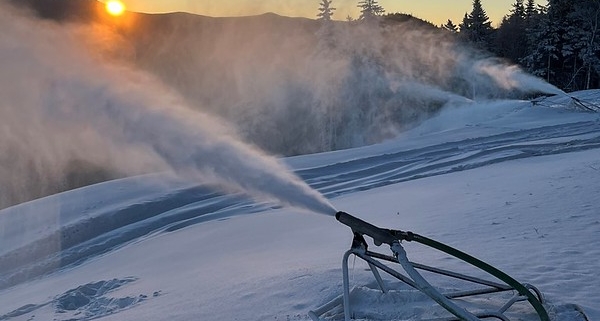
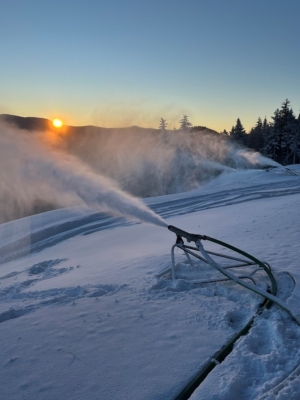
Just beyond Ludlow, the wispy curtains of fog opened for a moment and we saw snow guns blasting snow at Okemo.

Quick. Look over there. They’re making snow!”

It was still another hour to Killington, but I needed a break. I drove to Okemo and we took a look. Snow guns were pounding the beginner slope – and skiing was free for anyone who dared to ski it.

Skip Killington. We’re here. Let’s ski Okemo’s beginner slope. The price was right and the drive was over. The snow guns turned us into frosted doughnuts on every run. We crinkled from our wool hats to our ski boots, and we had to chip the ice off each other after every run. But we’d started our new ski on Thanksgiving tradition.

What’s New in New Hampshire for the 2025/26 Season

Sunrise 2024 at Bretton Woods Credit: Ski NH

New Hampshire’s ski areas were hard at work this summer adding new lifts and upgrading technology and snowmaking, to create an even better than before experience for skiers and snowboarders.

Here’s what’s new this season from our friends at Ski New Hampshire, the statewide association representing more than 30 alpine and cross-country resorts.  Alphabetically, of course, since that’s the only fair way.

Bretton Woods will debut the new Bethlehem Express Quad II (BEQII), a four-person Leitner-Poma detachable quad. Its installation also includes a redesigned base area layout to ease congestion and improve safety.

The resort also is unveiling a new black diamond glade on Mount Rosebrook. This never-before-skied, steeper section features tree runs and cliff elements between the Upper Swoop and Upper Express trails, giving advanced skiers and riders exciting new terrain to explore.

Cannon Mountain retires its iconic tram, with plans in motion for a next-generation replacement – but that will be next season, 2026/27, not this one, and invested more than $200,000 in new pipelines and tower guns.

This season, guests will notice new roofing on the Notchview and Brookside lodges, fresh paint on the Peabody, Notchview and Brookside buildings and Peabody lift terminal, as well as new lighting, flooring, stair grips, and fans in the Peabody Lodge. There’s also new digital signage in Peabody.

Cranmore Mountain Resort is introducing Arctic Light Tubing, New Hampshire’s first glow-in-the-dark nighttime tubing adventure with lights and music. This experience will be available every Friday, Saturday, and Wednesday night throughout the season.

Dartmouth Skiway’s Master Plan has an ambitious goal of becoming the nation’s most sustainable ski area, featuring all-electric automated snowmaking, expanded glades, and a new Learning Center.

Great Glen Trails has widened several trails, which will reduce tree debris, leaves, branches, and blowdowns on the trail and result in improved skiing conditions.

King Pine has transformed its Evergreen Room into a multi-use event space featuring a custom bar, handcrafted post-and-beam ceiling, updated dance floor, and upgraded A/V systems. This follows recent improvements including the addition of a rooftop deck, which provided expanded base lodge outdoor seating, and a ‘magic carpet’ uphilllift at the Tubing Park.

Loon Mountain Resort will begin work this winter on New England’s first pulse gondola to connect the hotel to the base. There’s also new conveyor belts, or “magic carpets’ at Sasparilla Learning Center for safe, easy uphill transport for children and beginners.  The resort also doubled its snowmaking capacity on North Peak.  Loon has also added another Ford Lightning vehicle to their lineup, bringing them to five EVs in total – the most of any ski resort in the East.

Pats Peak will introduce the Hurricane Quad, a SkyTrac fixed-grip lift with a loading conveyor and enhanced loading zone for improved efficiency and guest experience;

Waterville Valley Resort will unveil a new MND Ropeways T-Bar, expanding uphill capacity and access to terrain for training programs, athletes, and recreational skiers and riders.  And, they

upgraded night skiing operations with energy-efficient LED lighting,

Whaleback Mountain is adding a new surface lift serving Lower Spout, the racing trail, as well as Canyon, Scrimshaw, and new connector trails.

Snowmaking and Sustainability

Snowmaking is energy-intensive, but advances in technology are making it more efficient than ever. Today’s systems allow areas to produce more snow with less energy while using smart monitoring tools to optimize when and where snow is made. This summer, several New Hampshire resorts made major snowmaking investments.

Gunstock Mountain Resort installed 24 new HKD Impulse tower guns and Klik hydrants to boost efficiency. Snowmaking upgrades also were made at Ragged Mountain Resort and Tenney Mountain.

Nordic areas also continue to benefit from expanded snowmaking capacity. Jackson XC and Great Glen Trails both added new snow guns at their cross-country centers this summer.

Energy efficiency efforts extend beyond snowmaking.

Cranmore Mountain Resort and Loon Mountain Resort have each added the PistenBully 600 E+ to its fleet—the cleanest and quietest snow groomer in its class. With its Tier 4 engine, the E+ reduces fuel consumption, noise, and CO₂ emissions by up to 20% while allowing staff to cover more terrain, faster.

Ski New Hampshire is the statewide association representing 30+ alpine and cross-country resorts in New Hampshire. For more information on ski areas, trail conditions, vacation planning, and updated events at Ski New Hampshire resorts, visit SkiNH.com.

For statewide travel info, go to VisitNH.gov.

See you on the snow!

Adirondack’s historical Hickory Ski Center will not operate this season

Photo from ‘Reviving the Legend’ courtesy of Ian McGrew

The long-struggling Hickory Ski Center, which dates to the post-war period, will not be opening this season.

The historic area announced on its website Nov. 7 that they won’t be open for either lift-served or human-powered uphill skiing in the 2025-26 ski season.

“Currently, there are no plans to operate this season,” reads a statement on the News section of the area’s website. “Our hope is that as a new management model unfolds, Hickory will again be a place for families to gather, friends to connect and kids will learn to ski.” 

“Please be advised that public access is no longer available for hiking, skinning, snowshoeing, disc golf or camping. There will be opportunities for reserved group use. There will be construction work on the lodge and a new web page being designed. New beginnings for The Legend that will emerge in the coming months.”

Despite its respectable 1,200-foot vertical rise and some genuinely twisty, challenging trails, Hickory has long been hindered by its lack of a snowmaking system and an ancient lift system featuring two poma lifts and a t-bar.

The area opened last February when enough natural snow piled up but was quickly held back when the two poma lifts broke down.

The area’s travails briefly went viral in November 2023 when they said on Facebook that they still needed $38,000 to pay the insurance premium needed to run the lifts. They urged fans of the area to purchase season passes or to donate to an affiliated foundation to raise the funds.

News media and a number of websites picked up the plea.

That led to a partnership with Entabeni Systems, a company that provides digital technology to ski area, the Indy Pass program and the Unofficial Networks website. They put in enough money for Hickory to pay their insurance premium.

The effort also inspired a documentary ski film, “Reviving the Legend,” by Hudson Valley cinematographer Ian McGrew. See our story here.

Hickory had been on-again, off-again for several years, depending largely on how much snow fell during each winter.

For the 2021-22 season, Hickory operated solely as a skin-up ski-down area, charging $10 per visit on the honor system. Before that it had been closed since 2015.

The area was built after World War II by a group of veteran ski troopers and local ski enthusiasts.

In keeping with that history, Hickory is redolent of a nearly by-gone era in skiing, with low prices (day passes last year were $45 for those 70 and older and free for those 17 and under), basic accommodations and a proud lack of style consciousness. It was the kind of place where skiers could wear their 80s-era C.B. jackets or kit-made down parkas without feeling out of place.

Hickory is located in Warren County, not far from Gore.

Recommended Skis for Senior Skiers 2026 (subscriber only)

Credit:Ljupco

Don’t ski as aggressively as you used to? Looking for a ski that makes the sport a little easier? Realskiers.com, my go-to site for finding the perfect ski, has shared their recommendations of the best skis for older skiers. Their ”Silver Skier” selections are models, in their estimation, either inherently easier to steer with light pressure or possess such a broad performance envelope that their charms are accessible to lower-energy skiers.

Recommended 2026 Skis for Senior Skiers

FRONTSIDE

This is a huge category, if only because it occupies every price point from the cellar to the penthouse. If you’ve been riding an All-Mountain model for a few seasons, you’ll find a narrower Frontside ski easier to maneuver and more terrain agnostic than you’d expect.  Whether your skills are eroding or as sharp as ever, you’ll find a Frontside model takes less effort to steer and holds a more accurate line.

Atomic Redster Q 9.8
Blizzard Anomaly 84
Blizzard Stormbird 82 DTi
Head Supershape e-Titan
Head Supershape e-Rally
Kästle MX84
Rossignol Forza 70o Ti
Salomon Stance 84
Stöckli Laser AX
Völkl Peregrine 82

WOMEN’S FRONTSIDE

One of the oddities of the women’s ski market is that the narrower the model, the more likely it is to use a rich construction that targets the elite skier. The top-of-the-line women’s models in both the Technical and Frontside genres tend to sport more made-for-women features than the typical All-Mountain and Big Mountain women’s models. Point being, the best made-for-women skis aren’t aimed at seniors, but at hard charging, technical skiers.  Mellower models can be found further down the pricing pyramid and in wider categories like All-Mountain East.

Blizzard Black Pearl 84
Nordica Wild Belle DC 84
Salomon Stance W 84

ALL-MOUNTAIN EAST

If you need one ski that can handle whatever conditions you encounter, it should be plucked from this genre. Versatility is their dominant personality trait; quick enough to the edge to navigate choppy bumps, fat enough to float in boot-top powder, narrow enough to bite into eastern boilerplate, mellow enough to turn at slow speeds and stable enough to charge the fall line.

Atomic Maverick 86 C
Blizzard Anomaly 88
Head Kore 94 Ti
Nordica Enforcer 94
Rossignol Arcade 94
Völkl Mantra 88

WOMEN’S ALL-MOUNTAIN EAST

If all you ever ski is groomers, fine, get a Frontside ski. But for those women with the slightest inclination to travel off trail, the all-terrain, in-resort skier belongs on an All-Mountain East model.

Blizzard Black Pearl 88
Head Kore 93 Ti W
Nordica Santa Ana 92

ALL-MOUNTAIN WEST

If your preferred playground lies the big mountains of the American west, you’ll encounter enough mixed conditions to justify the added surface area built into an AMW model. The less you sink on each turn, the less effort required to maintain momentum and the easier it will be to change directions with a sudden swivel, an essential off-trail technique. The top models in the genre are generally Power skis that take some added mojo to bend, which is why you won’t find the Blizzard Anomaly 94, the Stöckli Stormrider 95 or Völkl Mantra M7 on this list.

Blizzard Rustler 9
Dynastar M-Pro 100 Ti
Nordica Enforcer 99

WOMEN’S ALL-MOUNTAIN WEST

Women of modest skiing skills looking for a wider ski to make their off-trail life easier should probably look elsewhere. Women’s AMW models tend to target the talented lass who rips the sidecountry to shreds, rather than the timid who tiptoe into choppy snow. Our two Silver Skier Selections aren’t meant as training wheels for so-so skiers, but as facilitators that open up the sidecountry to those who already have the requisite skill set.

Blizzard Sheeva 9
Head Kore 99 Ti W

BIG MOUNTAIN

Lower skill skiers will be out of their depth here. Sure, they’ll get the benefit of more flotation in deep, uncut pow, but how many perfect runs like that are you going to get? And will the less talented be able to even bend a burly Big Mountain? Sure, some Big Mountain models are softer-flexing than the norm, but the extra width also makes it harder for the less-than-expert skier to rake the ski up to a high edge angle. If a Silver Skier really wants more help in new snow, get a full-on Powder model, forget edge angle and smear your blues away.

Salomon QST 106
Head Kore 112 Ti
Völkl Revolt 101

WOMEN’S BIG MOUNTAIN

A Women’s Big Mountain ski to too wide to serve as an everyday ski for most women, so consider these recommended models to serve as one’s powder ski when conditions merit. The principal “womanizing” feature of their design – if any – is to reduce the amount of metal in their make-up.

Head Kore 104 Ti W
Völkl Blaze 104

NON-FIS RACE

This isn’t the genre for someone trying to conserve energy, but the addiction to the feel of a true race ski doesn’t fade with age. By definition, all Non-FIS Race skis are made to the highest standard. The three GS/SL models I’ve selected here are notable for being readily accessible without world-class conditioning. If you’re good enough to ski a true race ski, you don’t need my advice on how I perceive their particular merits, hence no thumbnail sketch for each model. Suffice it to say, if I were picking for myself, these are the models I’d choose from. They all ski better than whatever else you own. But you need to bring a polished skill set to the party…

Atomic Redster G9 Revoshock S
Atomic Redster S9 Revoshock S
Rossignol Hero Elite LT Ti
Rossignol Hero Elite ST Ti
Völkl Racetiger GS
Völkl Racetiger SL

TECHNICAL

This genre has all but disappeared from the U.S. market, although it remains popular in Europe. Some are combi race models; all are made to arc perfect carves.

Atomic Redster X9 Revoshock S
Head Supershape e-Magnum
Kästle M9 76
Nordica Dobermann Multipista DC
Salomon Addikt 76

If you are thinking of buying near gear this year, a Realskiers subscription isn’t a luxury; it’s a necessity. One receives the best advice from those most qualified to provide it. You can read the full article on Realskiers by clicking here.

Related content Snow Sports Leaders: Jackson Hogen, Publisher of realskiers.com

Ski Strong, Ski Long: A Chiropractor’s Guide to Preventing Injuries on the Slopes

The sensation is universal for skiers. That crisp mountain air, the stunning vista of snow-covered peaks, and the pure joy of a perfect turn. As both a lifelong skier and a chiropractor, my mission is to help my fellow enthusiasts, especially those of us in the 50+ community, enjoy that feeling season after season without being sidelined by injury.

Although expert technique helps, what’s really important is having a well-thought-out strategy for preparing, maintaining, and recovering your body. True longevity in this sport comes from respecting your body’s mechanics and understanding that the best run of the day is often the one you finish healthy and strong.

The foundation of a safe ski season is laid weeks, or even months, before you click into your bindings. Your body must be prepared for the unique demands of skiing, which combines strength, endurance, balance, and sudden, explosive movements.

Bird Dog Exercise Credit:Rani Nurlaela Desandi

A pre-season conditioning program is your most powerful tool for injury prevention. Focus on building a resilient foundation with exercises that mimic the movements you’ll be doing on the hill.

Pre-Season Conditioning Checklist

Build a Powerful Lower Body. Your legs are your primary shock absorbers. Incorporate squats and lunges to build quadriceps, hamstring, and glute strength. Don’t forget lateral lunges, since they specifically target the muscles needed for powerful, side-to-side skiing movements.

Forge an Unshakable Core. A strong core is your secret weapon for stability and balance, protecting your lower back from the torsional stresses of skiing. Planks and the bird-dog exercise (alternately extending opposite arm and leg while on all fours) are exceptionally effective for building the deep core stability you need.

Practice Balance.
Simply standing on one leg for 30-60 seconds at a time can dramatically improve your proprioception, that is, your body’s ability to sense its position in space. This is critical for navigating uneven terrain and catching an edge before it becomes a fall.

Getting Started

Even with the best preparation, what you do on ski day itself determines your immediate risk. A cold, stiff body is an injury waiting to happen. Before you even get on the lift, invest 5-10 minutes in a dynamic warm-up.

This means moving while you stretch, not holding static positions.

Leg swings, arm circles, torso twists, and a few body-weight squats will increase blood flow, raise your core temperature, and prime your muscles and nervous system for action. Remember that dehydration happens just as easily in cold weather.

Drink water consistently throughout the day, especially at high altitudes, since dehydration leads to premature muscle fatigue, which significantly increases your risk of injury.

Staying Safe

Now, let’s talk about the most dangerous part of the ski day, the infamous “last run.”

We’ve all been there. Your legs feel heavy, fatigue is setting in, but you’re tempted to squeeze in one more descent. This is when most injuries occur. Your form breaks down, your reaction time slows, and your tired muscles can no longer support your joints effectively.

Learning to listen to your body is a non-negotiable skill.

When you feel that fatigue, when your technique starts to falter, that is your body’s signal to call it a day. There is no glory in a final run that ends in the clinic. The true victory is returning home healthy, ready to ski again tomorrow.

Your responsibility to your body doesn’t end when you step off the mountain. Post-ski recovery is essential for reducing soreness and preparing for your next day of adventure.

After your last run, take a few minutes for gentle, static stretching, focusing on your quads, hamstrings, calves, and glutes. Follow this with a nutritious meal or snack containing protein to help your muscles repair themselves.

If you start to feel specific aches or pains (particularly in the knees, hips, or back), don’t simply ignore them. Applying ice to a sore joint can reduce inflammation, and seeking a professional evaluation from a physical therapist or chiropractor can address a minor issue before it becomes a season-ending problem.

Final thoughts

With a holistic approach that includes intelligent preparation, mindful practice on the hill, and dedicated recovery, you can significantly reduce your risk of injury. This allows you to fully embrace a lifelong joy of skiing.

*LIMITED TIME OFFER – FLASH SALE FOR FREE SNOWBOUND TICKETS NOW LIVE*

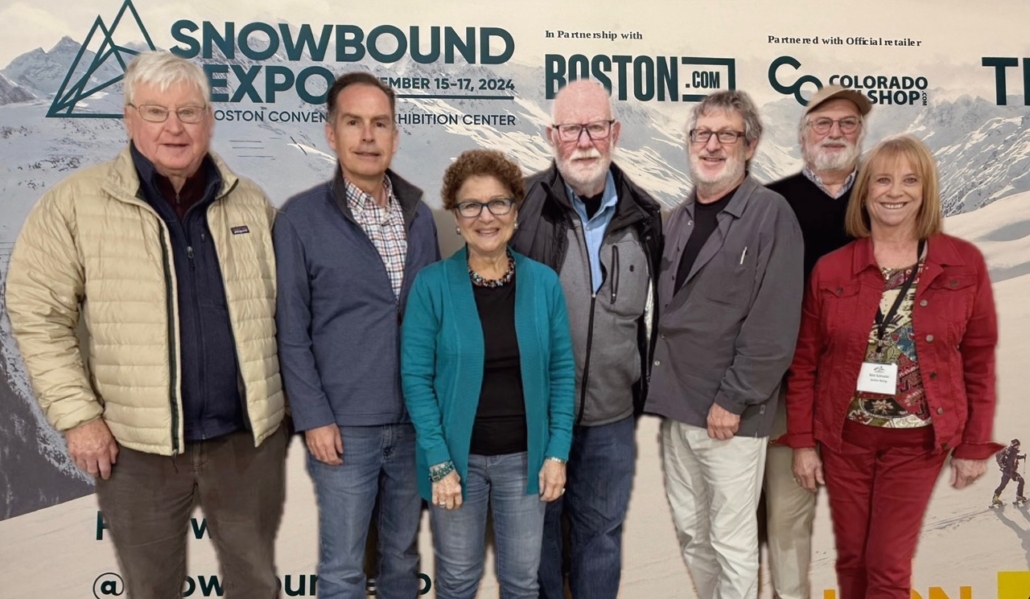
Some of the SeniorsSkiing team at the Snowbound Expo in 2024.

*LIMITED TIME OFFER – FLASH SALE FOR FREE SNOWBOUND TICKETS NOW LIVE*
For 48hrs you can register for FREE Snowbound Expo tickets (usually $32).

Snowbound Expo is where winter truly begins! Discover the latest gear, tech, apparel, and resorts, hear from snow sport icons, and connect with the community that lives for the mountains. Catch Zeb Powell, Amie Engerbretson, Donny Pelletier, and Shannon Dunn on the Ikon Pass Inspiration Stage, snag up to 70% off gear in the Colorado Ski Shop Retail Zone, and check out brand-new attractions like the East Street Archives Snowboard Zone and Epic Pass Winter Arcade. Bring the family—it’s the can’t-miss kickoff to the 2025/26 season!

You can use the code SRSKIFREE at www.snowboundexpo.com for FREE tickets or  CLICK HERE


KOSSAK

Living My Dream – Joining the Ski Patrol After Decades of Skiing

By Robert Kossak

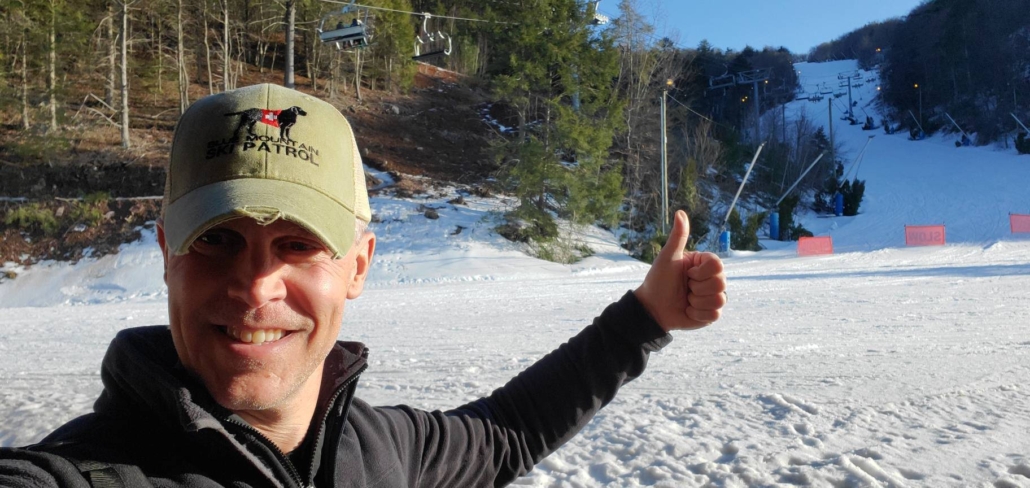
Robert Kossak

I’ve wanted to be a Ski Patroller since I was a kid, and finally got to do it as an adult. It’s a dream come true.

Growing up in New Jersey, my first time skiing was an elementary school class day trip to Holly Mountain, more hill than mountain, which no longer exists. I remember speeding downhill while my buddies cheered me on as they passed overhead on the ski lift. It was great.

Unfortunately, I didn’t know how to stop.  Luckily, a chain link fence at the bottom of the run stopped me. Later that day I learned something called the “hockey stop”, which I still use when necessary.

The years passed and I continued to ski. Whenever, wherever and with whoever wanted to tag along with me. These days, my favorite tagalongs are my wife and kids.

In 2023, I decided to join the Ski Patrol at Blue Mountain, close to home.  After surviving the ski off, I was given a huge book, “Outdoor Emergency Care: A Patroller’s Guide to Medical Care, Sixth Edition” and told, simply,  to learn it, report every Tuesday night at 6pm starting from April to August. That’s when I would be tested on the material and must pass to continue on as a Ski Patrol candidate.

I have no medical background. I thought I just had to ski around looking cool in that Ski Patrol jacket. It was a surprise that I would have to learn medical stuff.

Okay, I’ll study, I’ll train and do whatever is needed to be listed among the ranks of the National Ski Patrol! Let’s rock! I passed with a 90% grade, only to learn that was just a start.  Next would be OET (Outdoor Emergency Transport) as soon as there was snow.

On the first night of OET I was told by the Patrol Director that it’s a shame I paid full price for my skis because I’m only using the back third. But  I press on. Two nights per week plus Saturday mornings meant a two hour drive each way with about $23 dollars in tolls each trip. Never mind the cost. I’ve been wanting to do this since I was a kid.

I failed that first OET test but encouraged to try again next season.  The instructors also advised me to get new boots and learn to get out of the back seat. My parting words were, “I’ll be back.” One instructor said, “I like your attitude.” That meant the world to me.

Spring, summer and fall came and went and I couldn’t wait to get back to the mountain. I was literally the first one in line on opening day, remembering the parting advice from my OET instructors: “Never let good snow go to waste.”

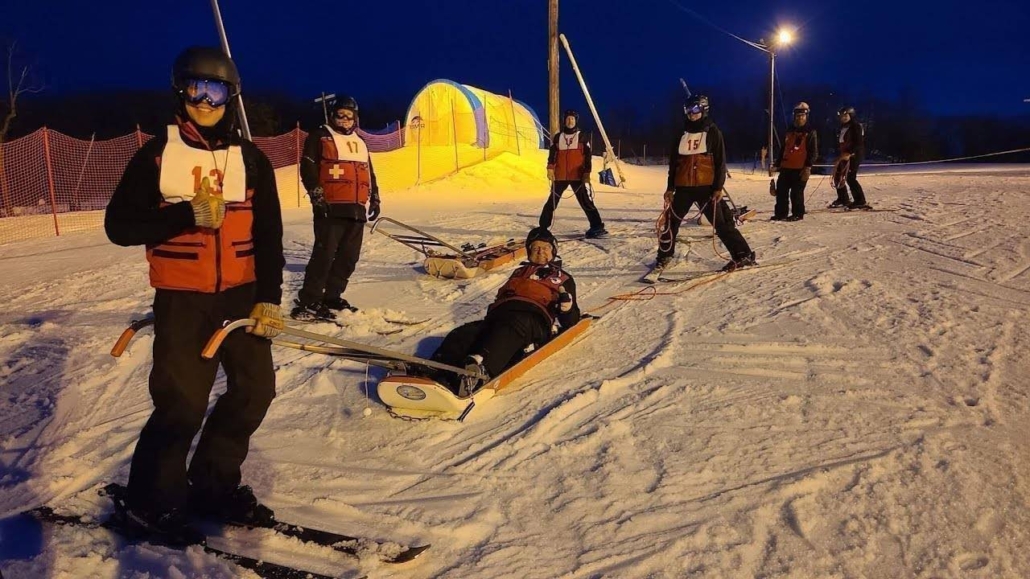
I would train solo. I would attend every OET training session. I would ask anyone better than me (which was pretty much everyone on Ski Patrol) for tips and advice, and before I knew it, it was OET test night, when 26 OET candidates gathered at Patrol Base. There was a stack of numbered beanies and we were told to grab a number. I chose 13. Nobody ever grabs number 13. I don’t believe in luck and always felt that number 13 has gotten a bad rap.

KOSSAK

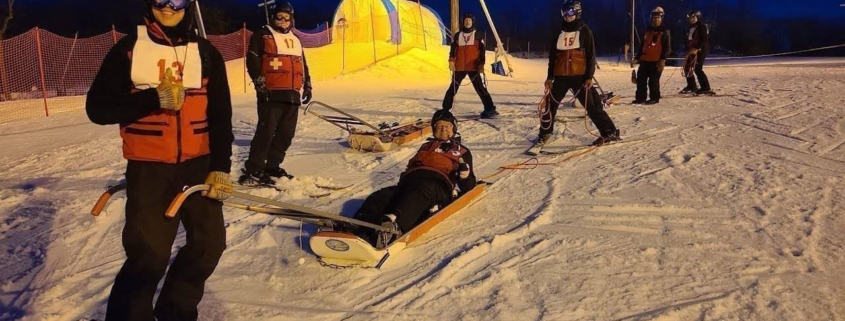
OET Test Night

We headed to the hill. Test night was on the double black diamond “Challenge.” Appropriate. Then, back to Patrol Base to wait while the OET Instructors rated us.  When my name is called, our lead instructor says they all wanted to recognize my hard work and perseverance and that … I passed!

I will never be able to fully articulate my thanks, appreciation, admiration and love for my Blue Mountain Ski Patrol family, and the joy and purpose it has given me to help and protect skiers and snowboarders.

Recently, I visited another local mountain. I called their Ski Patrol for a courtesy pass for the day. When I got there, I met some of the Patrollers, who asked where my home mountain was.  When I said Blue Mountain, one replied with, “Blue Mountain Ski Patrol is intense. It is known for making Patrollers.”

I can testify first hand that the Blue Mountain Ski Patrol is known for making Patrollers, because they made one out of me. Within two seasons, I went from Tag Along to Sled Hauler. And for that, I’ll forever be grateful and proud to wear the red jacket.

CARPE SKI’EM PHIL

“Carpe Ski’em”,  the seventh and latest in the popular ski themed mystery novels by long time television journalist Phil Baily,  has hit the book stores this month (November 7).  

Like his others, Carpe Ski’em ( a take on the Latin phrase for Seize the Day) is a hefty novel of more than 300 pages, this one located in Colorado Ski Country where a death from a fall from a chair lift is the start of the latest adventure for TV journalist JC Snow. Once again Bayly offers up a plot with lots of textured narrative and local color framed by crisp dialogue. 

Author of Carpe Ski’em Phil Bayly

A lifelong skier and competitor beginning in college and continuing through masters competitions, ski settings became the natural environment for Bayly’s work. An Evanston Il native, he learned to ski on the modest slopes of southern Wisconsin, where he developed a love for the sport that led him to Colorado State University where he was on the ski team his senior year. He was also active on the college radio station which led him to work on air in Denver then a transition to television in Fort Collins. From there it was a stint in TV news in central Pennsylvania then, in 1986, to upstate New York where he admits that one of the appeals of the area was the proximity of downhill skiing.  

 THE BEGINNING

The Murder on Skis series made its debut with a novel of the same name published in 2019, a year after he retired as a reporter and long time morning anchor for WNYT in Albany NY. Like many of us, Bayly, now 71, had wondered what he would do in his post employment years. He found his calling in a re-write of a novel he had drafted in his spare time some 25 years earlier. Thus began the series that since has featured an annual release every November, just in time for holiday reading. 

Having worked as a journalist for more than four decades, the writing part came naturally, said Bayley recently. As someone who has skied lots of places over lots of years, choosing the settings for this work has been an important part of the process too.  “I have always like to travel. And with a story in mind, I pick a location and make a plan to go there. When I do, I like to read about it before I leave,” he said recently.”  When I started, I couldn’t find much fiction that matched my interests.  That’s when I pulled out my old manuscript and began re-writing.” 

People have liked what they read. While not intended for skiers only, Bayly acknowledges the connection with many of his audience.  “There is skiing in all the books. And skiers relate.”

In addition to Colorado in his first and his latest, other books feature ski locations in Montana, Wyoming, Vermont, Wisconsin, and the Adirondacks of New York. He knows them all. 

Bayley is an inveterate note taker. In the den at his home in suburban Albany, next to drafts of three more books in the series he has already completed, is a big box filled with notes from trips he has taken that will become the basis for his next project. 

NEAR CATASTROPHE

While he expresses no doubt about it, that there is a next project for Bayly is remarkable.

In past years, when not at his desk writing, weather permitting, he skis. As a long time AM TV anchorman, he is accustomed to getting going early in the day  so last March 18, he was on one of the first chairs up the hill to catch first tracks at West Mountain, half an hour north of where he lives. West, a medium size hill in the southern Adirondacks, has a growing reputation for its racing program and Bayly, the ex-racer, likes to ski fast. 

That morning, however, his first run was a warm-up on a groomed intermediate trail, easy stuff for an experienced skier. 

The surface at the top was firm, softening up as he went down the hill.

Or so he has been told. 

The next thing he recalls is after two weeks in the the intensive care unit at The Albany Medical Center, 40 miles away,  where he had been medivaced by helicopter after the accident. He had been found off the trail, unconscious, in the rocks, one ski off and blood on his helmet, with a serious concussion, lung damage,  and multiple broken ribs. From intensive care he went to a rehabilitation facility for two more weeks before going home in mid April. Since then he has had regular therapy, especially for memory and vision issues. Months later he still is not allowed to drive a car, or even ride a bike. 

While he has made remarkable progress in returning to a normal routine, wife Carolyn, who is also the designer of Bayly’s books, carefully watches over her husband’s daily activity. After an ambitious schedule of book signings this fall, he is hoping to get back to writing by the end of the year.  

WHAT’S NEXT  

As a skier now for more than 60 years, given the circumstances it might seem like a good time to reassess plans for this winter. 

Not Bayley.

“The morning  I was injured I had bought my pass for this coming season. No question I’ll ski this winter. It is too big a priority. I’m looking forward to getting out on the hill once again by the end of December.” 

Carpe Ski’em, Phil            

New England Ski Museum Honors McLane, Macomber Families with “Spirit of Skiing” Award

George Macomber – Photo courtesy of the New England Ski Museum

Franconia/North Conway, NH- The New England Ski Museum’s 2025 Spirit of Skiing Award will be presented to the combined McLane and Macomber families on Nov. 22, 2025, at the Omni Mount Washington Hotel in Bretton Woods. The award was inspired by the late Otto Schniebs who famously said, “Skiing is not just a sport, it’s a way of life”.

The late Malcolm McLane and George Macomber were ski racing friends and patriarchs of prominent skiing families. They teamed up together with fellow ski racers Mack Beal and Brooks Dodge to create Wildcat Ski Area in Pinkham Notch which opened in 1957. The area would offer the first gondola type ski lift in North America. Still today, Wildcat offers one of the highest elevations, greatest vertical drop and deepest snowpack in all of New England.

Beyond Wildcat, they went on to support ski racing across the region in many ways over the years including leadership with the US Eastern Amateur Ski Association and the US Ski Team Foundation. Their children and grandchildren have gone on to continue the rich tradition and have supported skiing and ski racing in numerous ways, and they too will be honored in November.

Awarded since 2006, past “Spirit of Skiing” honorees have included Waterville Valley founder Tom Corcoran, Norwegian Olympic gold medalist Stein Eriksen, and Olympic silver medalist Penny Pitou of Gilford. Each of these honorees has embodied the true spirit of skiing, of “flight without wings.”

Malcolm McLane -Photo courtesy of the New England Ski Museum

This year’s festive event includes a reception with delicious hors d’oeuvres, followed by a buffet dinner in the Hotel’s famous grand ballroom.

Tickets for the event are $125 per person and can be purchased online at skimuseum.org/sosa. Or make a reservation by mailing a check to New England Ski Museum, 135 Tramway Drive, Franconia, NH 03580-4403, or pay with a credit card over the phone at (603) 823-7177. Those interested in attending should RSVP before Nov. 7.

All proceeds support the nonprofit New England Ski Museum whose mission is to collect, preserve and exhibit elements of ski history for research, education and inspiration. For more information about the event or the New England Ski Museum, visit SkiMuseum.org.

The New England Ski Museum is a member-supported 501(c)(3) nonprofit organization dedicated to the history of skiing and the 10th Mountain Division. Its mission is to collect, preserve, and exhibit equipment, art, and artifacts of ski history for research, education, and inspiration.

Its two museum branches in Franconia and North Conway, NH host over 25,000 visitors annually; admission is always free. Its collection includes one of the largest and most comprehensive ski- and snowsport-related archives outside of Europe. For more information about the New England Ski Museum or to become a member, visit SkiMuseum.org.


Colorado

What’s New in Colorado Ski Country for the 2025/26 Season

ColoradoWhile you were busy all summer re-applying sunscreen on the beach or changing gears on your mountain bike, Colorado ski/snowboard resorts were busy widening trails, cutting new ones and adding lifts and amenities. 
In alphabetical order, here’s what’s new to experience and enjoy –

Arapahoe Basin brings back The Legendary Learning Package, making it simple for new skiers and riders to get started by bundling lift access, equipment rentals, and lessons into one easy offer.

Aspen Snowmass debuts a high-speed six-pack replacing the Elk Camp quad, and upgrades the Cirque platter to a double-capacity T-bar.  Also, work begins on rebuilding Snowmass’s mid-mountain Ullrhof restaurant, which will reopen in 2026–27 as the resort’s first all-electric on-mountain restaurant.

Copper Mountain hosts the Stifel Copper Cup World Cup races in November and continues its multi-year snowmaking modernization, installing additional snowmaking to improve reliability and support early-season training for ski teams from around the world.

Echo Mountain,  just 36 miles from Denver, offers an affordable season pass starting at $109, plus night skiing, tubing, rentals, and a lively base lodge scene.

Eldora is introducing new Alpine Pass products, including a Family Unlimited option and a flexible 4-Pass, to help families and beginners spend more time on snow.

Granby Ranch opens a new intermediate zone on West Mountain, expanding skiable terrain.  Granby Connect, a $2 shuttle linking the Amtrak station to the base lodge, makes it easier for visitors to arrive by train.

Howelsen Hill, the downtown destination owned by the City of Steamboat Springs, keeps skiing within reach through Ski Free Sundays and affordable access to alpine, Nordic, fat biking, and tubing.

Loveland has replaced Lift 7 with a new fixed-grip triple chairlift and reshaped its learning area for smoother terrain flow, improved snow conditions, and a more welcoming experience for beginners and familie

Monarch Mountain, the long-awaited No Name Basin expansion adds 377 acres of intermediate and advanced terrain — a 50% increase in skiable acres. A new SkyTrac triple chair will serve the area, giving guests access to runs that now extend onto both sides of the Continental Divide.

Powderhorn continues its Mission Affordable promise with the flexible 4-Pack, four shareable lift tickets valid any day of the season

Purgatory Resort marks its 60th anniversary with new snowmaking, expanded Wi-Fi, upgraded rental equipment, and refreshed dining, along with celebratory events throughout the winter. Plus, the Power Kids program offers unlimited free skiing for children 12 and under.

Silverton Mountain expands its rugged, advanced-only experience with new Six Run Heli Days and enhanced private heli-skiing options, alongside its iconic lift-served high-alpine terrain

Ski Cooper simplifies tickets with one straightforward price online and at the window, with the best value available midweek outside peak holidays.

Steamboat celebrates its Olympic legacy with two new offerings: Ski with an Olympian, a full day on the slopes alongside a Steamboat Olympian, and Dinner with an Olympian at the newly reimagined Crooked Antler restaurant. There’s also expanded United Airlines service to Steamboat Springs, making it easier than ever to reach the resort this winter.

Sunlight Mountain Resort completes the largest capital project in its history, debuting new Primo and Segundo chairlifts, while giving passholders 8:30 a.m. early access on powder days.

Telluride advances a multi-year modernization project with upgrades to Lifts 5 and 12, and major snowmaking infrastructure improvements, ensuring great early-season coverage.

Winter Park Resort celebrates the 50th birthday of Mary Jane with a January 10 bash and additional anniversary events all season.  Also, there is expanded Winter Park Express train service four days a week, whisking riders directly from Denver’s Union Station to the base of the resort.

Family Deals

NEWLY EXPANDED Ski Passport (grades K-6)

  • 4 days each at 19 Colorado resorts (76 days total)
  • $67 for kindergarten–2nd grade (new this season!)
  • $72 for 3rd–6th grade
  • 2 FREE junior ski or snowboard rentals compliments of Christy Sports.

Gems Teen Pass (ages 12–17)

  • 2 days each at 10 Gems resorts
  • 20 days on the slopes for $207

Gems Discount Card

  • 2 uses each at 10 Gems resorts
  • 20 days of discounts for $49.99
  • Additional purchase of adult lift ticket required.

Gold Pass Membership

  • Fully transferable; no blackout dates, for $4,600

Thanks to Colorado Ski Country USA (CSCUSA), the not-for-profit trade association representing 20 ski and snowboard resorts in Colorado, for this seasonal update.

Find out more about these Colorado resorts at www.ColoradoSki.com.

See you on the slopes!

What’s New in Vermont for the 2025/26 Season

Photo by Peter James Eisenhaure on Unsplash

SeniorsSkiing is now a proud partner of Ski Vermont, the association representing the state’s downhill and XC areas, which have been busy all summer adding and upgrading new trails, lifts, snowmaking and guest amenities.  That’s a great quartet, and it describes what skiers, snowboarders and X-C will find in Vermont this new season  

Here are the details, in alphabetical order, the only fair way.

Bromley

Bromley has replaced signage across the mountain, added new high-efficiency snow guns on Corkscrew and Lower Boulevard and the base lodge a fresh new coat of paint. Arena Snowparks is slated to return from Canada this season to craft an incredible terrain park.  There’s also a revamped First Timer Lesson Package to encourage newbies, and rental shop has been revamped to eliminate the staircase.

Burke

Burke made headlines in 2025 after being unleashed from receivership with new owners, Bear Den Partners. The small group, led by skiers, snowboarders, bikers and mountain sports enthusiasts, comes to the role with more than 100 years of collective experience recreating on Burke Mountain.  SeniorsSkiing wishes them great success operating this family-friendly gem.

The resort’s snowmaking system has been reconfigured for increased energy efficiency, including the addition of 150 new HKD and SMI snow guns. That more than doubles snowmaking capacity and should allow Burke to open earlier than in the past several years.

This season the Jbar will be operational with totally rebuilt line equipment and a new gearbox. Located in Burke’s dedicated learning hill, the Jbar provides the learning area a dedicated lift for those starting their skiing or riding journey. Burke’s two high speed quads and the Jbar were overhauled to operate more efficiently. 

This season will also mark the first official season as a member of the Indy Pass. For passholders, that means two free days at Burke, and a great way to celebrate skiing/riding at other independent resorts in North America.

Jay Peak

The centerpiece of improvements is a $500,000 snowmaking investment, which include 49 new energy-efficient HKD Low E air-water snowmaking guns (32 on Queen’s Highway and 17 on Perry Merrill), the first step in a 10-year upgrade plan. The upgrade will improve the connection between the Tramside and Stateside areas, making it easier to navigate the mountain.

Jay now operates the largest fully automated air-water snowmaking system in Vermont, New Hampshire, and Maine, and is partnering with Efficiency Vermont to retrofit older snowmaking guns with updated nozzles that cut energy demand while improving snow consistency.  There’s more energy news at the Ice Haus Arena, which now be resurfaced with a new electric Zamboni, reducing emissions while maintaining the ice for skaters and hockey players.

Killington

Killington Resort continues its multi-year transformation, investing $38 million (an increase from the initial $30 million) in upgrades across the resort. That includes an additional $22 million in for its second year of independent ownership, bringing the two-year total for capital investment to $60 million to upgrade aging lifts, among other improvements.

The cranky old Superstar Express Quad, which has been in operation since the 1987 season, is being replaced with a high-speed, six-person Doppelmayr detachable lift. It features a diesel generator which can operate at full capacity in the event of power supply issues. The new lift also is expected to be more wind resistant thanks to its heavier chairs.

The second-generation Skyeship Gondola cabins have been replaced with 116 brand-new cabins. They will be housed in the newly upgraded Northbrook Gondola barn, which will be heated,  ensuring they are free of ice and in good condition each morning.

The Learn-to-Carpet surface lift on Snowshed is being replaced with an extended version of the Progression Carpet II, which is being relocated from Ramshead, offering beginners an enclosed ride, shielded from the elements, making access to signature learning terrain more comfortable. The Ledgewood Yurt, one of the resort’s most unique slopeside dining experiences, has been rebuilt with a new roof, wood siding and an expanded kitchen area.

Mad River Glen

The legendary skiing-only destination has painted its lifts and will continue offering the area’s unique winter Naturalist hikes. Known for its reverence for natural snow, it maintains a fleet of groomers and other vehicles—all of which will be maintained using the new hydraulic lift installed this summer.

Magic Mountain

The new, larger Abracadabra beginner area will work in tandem with the current Nelson Family Learning Area’s 100’ conveyor lift to bring a more graduated learning experience before novice skiers advance to the mid-mountain chairlift. The new advanced beginner area will also allow night skiing to be open for more levels, on Fridays, Saturdays, and Holidays, with instructor-led ski and ride lessons available.  Previously, this was the location of the Terrain Park, which moves to the lower skiers left side of Hocus Pocus (underneath Black Quad).

There’s also improved snowmaking from Black Line down to Show Off. This will allow for a more consistent snowpack on the lower mountain, on groomed terrain, and on high-traffic beginner and intermediate trails.

Middlebury Snowbowl

The Bailey Falls lift returns after a two-year hiatus. While the lift serves runs reliant on natural snow, the aspens that border it serve as a natural windbreak, making the lift more resistant to wind holds.  There’s also improved snowmaking, including Allen West up to the summit.

This season, the area upgrades to a new RFID and a modern point-of-sale system. That means you can purchase tickets online, reload passes, reserve rentals, and book lessons in advance. The long-awaited upgrade includes the ability to offer combo passes that work at both the Snowbowl and Rikert Outdoor Center. Fans of alpine and XC will be able to purchase one pass for both areas at a 10% savings. 

Mount Snow

This popular resort has been giving generations of skiers and riders their first taste of sliding on snow for more than 70 years. More than 900 high-output, low energy snow guns are capable of 83% snowmaking coverage via the world’s most powerful snowmaking system. Using state-of-the-art technology, providing reliable and premium coverage even when natural snowfall is light.

Okemo

This is the 70th season for Okemo, with multiple celebrations scheduled throughout the season, including a special birthday bash on Saturday, Jan. 31.

Pico

Flexing its independent-ownership muscles alongside sister mountain Killington Resort, Pico enters the season with updated snowmaking as part of the over 1000 new low-energy snow guns installed across the two ski areas over the last year. That improves snowmaking efficiency, which saw upgrades that tripled its snowmaking capacity coming into the 2023-24 season.

There also are plans to replace the Bonanza Double, which has been in operation since 1965, with a new magic carpet surface lift.

Saskadena Six

This past summer the nearly 50-year-old Chair Two double lift was disassembled and removed after a top engineering team determined that it could not be restored. While a new lift may be built in the future, for this season, access to the Chair Two side, including the Milky Way terrain park, continues via Duane’s Drop and The Gully trails.  There are plans to auction the old chairs for a community fund-raising event.

This is the area’s 90th season (1936-2026), with plans for special events all winter.  As the longest running snow sports school in the country, Saskadena Six remains committed to consistently providing enjoyable recreation, a safe environment, and memorable experiences for all.

Smugglers Notch

This season includes snowmaking upgrades and a new snowcat for more efficient operations and enhanced snow quality across all three mountains, Madonna, Sterling and Morse, and a new digital baseline of the mountain’s natural terrain snowmakers can see real-time measurements of snow depths on the mountain. The improved precision allows them to know exactly how much snow is needed in a given space, improving water and energy efficiency while helping cover terrain faster than before.

Guests can continue to enjoy the Nordic Center and Activities introduced last season, including the popular Scavenger Hunt, Adventure Dinner, Moonlit Mile, and biathlon experiences.

Stowe

This season marks the 90th anniversary of Stowe’s iconic Ski and Ride school, and the 30th year of Stowe Parks, with special events throughout the season. Also, Midway Lodge has been upgraded, including a new Tower 5 bar.

Stratton

This summer American Express was upgraded with modernized components, allow for a more reliable lift experience with smoother overall operations. There’s also an additional 200ft of 30-foot wind fence adjacent to the summit gondola to help decrease wind-related holds and delays. Snowmaking has been improved on Way Home and in the Main Base Area, including on Sun Bowl Super Trail

To better accommodate housing needs of its employees, Stratton purchased four properties in Manchester, VT, about 20 minutes away from the resort, and upgraded them with new roofs, electrical systems, heating, interior and exterior paint, appliances and furnishings.

Trapp Family Lodge & Resort

Summer projects included widening trails like Parizo and Slaton Pasture Trail, as well as improving drainage in several places. The Outdoor Center team continues to add fun events like Sunday Fundays that are full of guest speakers, a Poker Ski, treats on trails, and other fun non-competitive events for skiers of all ages.

Woodstock Inn & Resort Nordic Center

This season it becomes one of just seven Nordic ski areas in the state with ability to make snow. The purchase of an HDK fan gun will produce snow to keep skiers, snowshoers, and fat-tire bikers on the trails this winter. The addition follows last season’s temporary rental of a snow gun when periods of the season lacked natural snow. The new equipment snow to keep 5m of core trails in the over 45km network covered, regardless of natural snowfall, and extend the season.

For more information about one or more of these Vermont destinations, check the Ski Vermont website https://skivermont.com/whats-new

Tribute to Harriet Wallis

“A fighter, a writer, an avid skier and an optimist—nothing stops Harriet.” Harriet Wallis (center) was twice awarded Ski Utah Journalist Of Year. Shown with Ski Utah Communications Director Paul Marshall (left) and Ski Utah Director Nathan Rafferty. Credit: Pam Weisberg

It is with great sadness that we learned of the recent passing of one of our most popular contributors, Harriet Wallis. She was a longtime ski writer, editor and photographer. In 2016, Harriet earned Ski Utah’s top award – Journalist of the Year – for outstanding and consistent ski stories and photos about skiing in Utah.  She had 64 stories and 71 photos published that year in a variety of publications, including SeniorsSkiing.com. It’s the second time she earned the award.

Earlier this year, Harriet was featured in a local newspaper article aptly titled “A fighter, a writer, an avid skier and an optimist—nothing stops Harriet.”  Her indomitable spirit was a great inspiration to family and friends. Below are 3 lessons she shared with family and friends in one of her annual Christmas letters.

Adapt
They said I’d never be the same after chemo. They were right.There are lots of things I can’t do as I did in the past. I have 2 choices: Quit – or tackle challenges. Quitters never win. So accept reality, make changes & find new ways to do things.

Be positive
The best way to go forward is to quit looking in the rear view mirror. Don’t talk about pain or difficulties.
That gives credibility to the negative – and the negative will eat you alive. Look forward – only forward.

Be super good to the machine
The body is a healing machine if you give it a chance. Eat extra healthy. Fill the tank daily with water. Lube the moving parts (exercise) & pump fresh air through the system.

Harriet always managed to convey her enthusiasm and cheer in every article. Look for her previous articles to be reposted throughout this season.  She will be missed. 

Mountain Collective Expands Resorts and Perks for 2025/26 Season

Mountain Collective Pass

Can’t decide between an Ikon Pass or an Epic Pass? Then you should look into the Mountain Collective pass, which gives skiers and riders two days each at 27 top resorts around the world and half-off additional days and no blackout dates, for half the price of the Big Two.  At just $669 it’s a deal, even a steal.

This year’s new addition is Whiteface, in New York’s Adirondaks, and benefits extend to sister areas Gore Mountain and Belleayre.

In the last two seasons, Mountain Collective has added Sunday River, Maine; Bromont, Quebec; and Megève, France, while Arapahoe Basin, Colo. to join the Ikon Pass.  Other participating resorts include Sugarloaf, Maine; Alta, Utah; Sun Valley, Idaho; Revelstoke, British Columbia; and Niseko United, Japan.  Here’s what’s new at the Mountan Collective collection of mountains, in alphabetical order, the only fair way –

Aspen Snowmass, Colorado

Snowmass has upgraded the Elk Camp chair from a 4-seater to a high-speed 6-seater, along with replacing the Cirque platter lift with a T-Bar, to allow for easier access to some of the best high alpine terrain in North America.

Big Sky Resort, Montana

The new Explorer Gondola finally opens from base to summit; the lower stage opened a few seasons back, linking this season with the upper section. This unlocks the 11,166 ft summit of Lone Mountain for the first time in history.  Explorer now also connects with the Big Sky Tram.

Bromont Resort, QC, Canada

The opening of the Residence Inn by Marriott, allowing groups a ski-in/ski-out experience. Outdoor heated pool and spa, cozy fireplaces, and a vibrant resto-bar, the hotel offers the full experience.

Grand Targhee Resort, Wyoming

This destination on the other side of the Teton Pass from Jackson Hole will be the host for the FIS Western Regional Ski Finals, one of the largest ski races in the region, and the first for the resort.

Le Massif De Charlievoix, QC, Canada   

The new Bertha is a luxury chalet for group stays. It offers direct access to the slopes and breathtaking views of the Saint Lawrence River, less than 90 minutes north of Quebec.

Niseko United Resort, Japan

The King #3 Lift has been upgraded from a 4-seater to a 6-seater. Allowing for shorter wait times and more of a party with friends and family on your way up the mountain.

Panorama Mountain Resort, BC, Canada

Coming in February 2026, Corona Beach, this venue will be the hub of mountain festivals, featuring outdoor BBQs, culinary delights, refreshing beverages, and live entertainment every weekend.

Revelstoke Mountain Resort, BC, Canada

The new Karl Hotel is a luxury hotel that will include 154 rooms over 7,300 sq ft for the Chop Steakhouse, impeccable fitness and spa facilities, and it will be the home of the Selkirk Tangiers Heli Skiing.

Snowbasin Resort,  Utah

The resort is introducing two things this season, both sure to be popular.  One is free parking, because nothing is better than getting to the lots with no reservation and no need to pay for parking.  The other is RFID lift access, so no more taking your pass out or a pocket for hand-held scanning.

Snowbird Resort, Utah

The Nest is a brand new mid-mountain restaurant opening in December, with floor-to-ceiling Swiss glass windows that offer panoramic views throughout.

Sugarloaf Mountain, Maine

After the expansion of terrain last year, there is the development of Snowcross, a brand new slopeside neighborhood.

Sunday River Resort,  Maine

A brand new booster pumphouse that will double the snowmaking capacity on Barker and Locke peaks.

Sugar Bowl Resort, California

There a new two-tiered outdoor deck, with firepits and expanded seating in the village, including The Terrace, a self-service restaurant using QR code ordering

Sun Peaks Resort, BC, Canada

More than $5.5 million snowmaking enhancements include new snow guns in new locations and automation of the system, all designed to  improve the mountain experience.  

Sun Valley Resort, Idaho

This venerable and historic resort celebrates its 90th winter season with 90 acres of newly gladded terrain. This is a part of an expansion of the Bald Mountain Forest Stewardship project.

Whiteface Mountain, New York

This is the newest mountain to join the Mountain Collective pass, starting with the 2025/26 season, expanding the pass’s Northeast footprint. Whiteface, operated by the New York State Olympic Regional Development Authority (ORDA), is the first New York resort in the coalition. It boasts the greatest vertical drop in the East.

The partnership extends Mountain Collective benefits to ORDA’s SKI3 full season pass holders, who will receive 50 percent off lift tickets at all Mountain Collective resorts. The full season SKI3 pass provides unlimited access to Whiteface, Gore and Belleayre Mountains.

Reader Submission: 80 and Pushing Ahead

Author Elliot Entis and his son

Once upon a time, perhaps two years ago, a torch was passed. I know that is an overdone, banal expression. But it does resonate. Or maybe it was just another downhill ski trail. My son and I were floating down the trails at Bretton Woods silently carving and slipping when he saw the sign for one more double black diamond. An invitation to exuberance, tinged with chills of danger. For many years it was I, the experienced fearless leader who had rushed ahead, exhorting the children, now growing older and more composed, to follow, to learn, enjoy and repeat. But when I saw the sign, with the narrow gnarled tree branches reaching into the twisting bumps, I hesitated, and told my son, “No, you go ahead”. He was surprised; he gave homage to the past, and I believe with some sadness he honored the giant image of parenthood. “”The great Elliot Entis is afraid?” And he whooshed ahead, leaving me to find a gentler decline.

Elliot Entis
80 and Pushing Ahead

Nordic Walk for a Fitness Option

Over 17 million Europeans are walking with special Nordic Ski Walking Poles (ALL ages and ALL fitness levels) as a fitness activity that turbocharges the typical walking campaign. For those who are unfamiliar, Nordic walking is a fitness recreation that combines walking with specially designed poles to engage the upper body muscles. It can be practiced for exercise and wellness on neighborhood and city sidewalks, mountain trails, city parks, sandy beaches and on hiking trails.

Nordic Walking burns up to 40% more calories than regular walking. Using the Perfect Length Poles automatically improves walking posture. Walking with the Perfect Length Poles tricks us into standing taller and helps to radically reduce the stress to the shins, knees, hips, and back. Nordic Walking is ideal for athletes, kids, adults of all ages, and even those with balance issues.

Pete Edwards of SKIWALKING.COM LLC has been coaching runners and skiers of all ages and fitness levels for over 40 years. Edwards is a former ski school director, ski coach, running coach and the owner/founder/coach of his company headquartered in Empire, Michigan. He has also introduced Nordic Walking to thousands of Americans through Nordic Walking clinics, radio interviews, newspaper interviews, and TV interviews. Hosting Nordic Walking clinics is extremely enjoyable for Edwards, and he especially likes hosting Nordic Walking clinics for MS, Parkinson’s, and Diabetes support groups, plus Wounded Warrior Programs.

Nordic walking can help individuals with bad/new knees, bad/new hips, back problems, balance, and other issues. A SkiWalking.com customer asked if it would help improve her balance problems stemming from an inner ear issue. By using the correct length poles, she was able to navigate even the roughest terrain with balance and security provided by the poles.

Nordic Walking has a winning combination of improved posture, unique 4-Wheel-Drive type action, and shock absorbing benefits. Nordic Walking Poles can help individuals with balance issues, knee issues, hip issues, back issues (including those with rods in their back), weight issues, multiple sclerosis (MS), Parkinson’s (PD), amyotrophic lateral sclerosis (ALS), diabetes, neuropathy, arthritis, bursitis, scoliosis, lumbar stenosis, fibromyalgia, post-polio, osteoporosis, stroke recovery, cancer recovery, and other limitations to walking. Nordic Walking is getting thousands of Americans off the couch, outside, walking safely, and helping to effectively launch much-needed walking campaigns.

The perfect length poles can actually trick us into walking with a super straight back and better walking posture which is biomechanically a good thing. This improved walking posture, when combined with the unique 4-Wheel-Drive type action of walking with poles, radically reduces the stress to the shins, knees, hips, and back. Nordic Walking is low impact and yet provides a highly effective workout burning more calories and working more muscle groups than regular walking.

Edwards reviews details about Nordic walking from advantages of metal pole tips in the snow and rubber pole tips for walking on pavement to appropriate sizes of pole straps which enable walkers to keeping relaxed fingers so as to avoid gripping the pole too tightly. He suggests walking with a normal stride and gait while planting the poles at an angle.

According to Edwards, one-piece poles are safer, lighter, and much more durable than adjustable/telescoping/collapsible poles and he states, “We recommend quality one-piece poles that won’t collapse unexpectedly.” Using the correct length poles can radically improve balance, stability and gait and there are 32 different lengths of one-piece poles ensure a perfect fit.

Trekking (hiking with poles) and Nordic walking are two different activities that use very different poles and techniques. It may sound silly, but perhaps “walking is not just walking.” The pole angle, weight, grip, and straps are different between the aforementioned modes of walking. The Nordic walking pole is designed to allow your hands to relax in order to target the larger wrapping muscles of the back. But using poles of any kind automatically stimulates your spine and all of the muscles around it, even with inefficient technique. When walking, the key postural muscles of the core and upper body are engaged.

I’ve (Roger of XCSkiResorts.com) been a Nordic Walker for many years and found the claimed attributes regarding posture and exercise to be true. I’ve always been in search of a way to decrease the amount of time spent exercising, so I was sold when I heard that using the poles increases caloric burning by as much as 40 percent. Being a cross country skier, it is easy to quickly master Nordic walking. After a summer of Nordic walking, I noticed a marked improvement in my cross country ski poling in terms of strength and timing. It also seemed that I increased the amount of forward momentum that was attributable to poling and I was able to pole stronger and longer when skiing.

For more information such as how to get started Nordic Walking and how to buy poles – contact Pete Edwards, the owner/founder at the website: WWW.SKIWALKING.COM

If uncertain about Nordic Walking for your health level, check with your doctor. For additional specific information and exercise plans for Nordic walkers, see the Human Kinetics book entitled “Nordic Walking for Total Fitness” by Suzanne Nottingham and Alexandra Jurasin which has got it all covered. “Nordic Walking for Total Fitness” is available in hard cover, ebook or PDF versions from Human Kinetics at www.humankinetics.com or a paperback version at $7.98 from Amazon.

Photos from Pete Edwards, SKIWALKING.COM


Nordic walking for all ages


Nordic walking on a brick path


Nordic walking on the beach


Nordic walking barefooted

More on Safety, My Favorite Subject

On trail signage at Park City Mountain Resort Photo: Jon Weisberg

As I sat around this summer counting the days until ski season begins again, I started thinking of my most favorite subject. SAFETY!

While I was out on the bike path for my run (more like walk!) someone approached on their bicycle, and as they were getting closer to my back side they announced, “on your right”.  That was a good sign, much appreciated and just good common sense, and I started thinking about other instances outside of ski season when such politeness is expected, even required.

When one plays golf to pass the time between ski seasons, someone will shout FOUR if they think a ball might have a possibility of hitting you.  It’s a warning, to protect everybody’s safety.

A couple incidents while driving my car also got me thinking. When we drive, we use – or should use – directional signals when preparing to turn.  Agan, it’s for everybody’s safety.  When someone is a reckless driver, there is a chance they can get a ticket, get in an accident, even lose their license.

Driving on the Garden State Parkway in New Jersey recently, a pickup truck sped past me on the inside lane at 80+  mph and suddenly cut in from of me with no directional signal.  So I flashed my lights, in case this driver was trying to run me off the road.  He hit his brakes and tried to edge me off with a few birds flipped at me.

That was extreme and only happened twice in my life of 82 years, both times young and crazy drivers.

Luckily, there are few such these incidents – including on the slopes when a reckless skier or boarder cuts you off and you yell and get the bird.

Recently also, two motorcycle drivers sped by me on the inside at an extreme speed weaving in and out of traffic to a point that I expected to see them somewhere off the road in an accident. Such young drivers on crotch rockets are the basic statistics of motorcycle accidents and deaths – although they won’t stop me from riding my motorcycle or downhilling on my skis.

Driving is dangerous and lethal at high speed and is a weapon of sorts, so you must pass a skill test to get a license, and insurance to own, even rent, a car.

What else requires a license?  Boating.  You need to take a safely course before you can operate a boat, of course all reason disappearing when one drinks, but that never happens when out boating! Now the waters are patrolled by the local jurisdiction frequently.

Hunting – the same goes, with safety courses required before getting a license.  Also scuba diving. Because recklessness can cause injury and/or death.

So, let’s talk about what we could do to improve our chances on the slopes, which appear to be the most under regulated situations.  Possible introduction to skiing should be a safety course.  It should be requried when newbies rent ski equipment.

There must be other ways to get the message out. An article here on SeniorsSking about “Ride Another Day” aka “Snow Angel” promotes safety education to know to give the skier in front of you the right of way.  In my opinion of all the safety rules that is the most important because it deals with the other person and not just yourself. Technically the other skier is a weapon, and you are the target and with limited protection it can and has been lethal.

I have had many instances when someone passed me too close, but when I caught up to them and said something, I was yelled for getting in their way, instead of apologizing for nearly causing an accident.

Recklessness is a common issue on the slopes, whether that’s caused by alcohol, cannabis, or a simple lack of education and courtesy.

The big question is what and how can we do something about it?

Shipping vs. Schleppng Your Gear

Photo by Lala Azizli on Unsplash

If you recall wooden skis that broke in half if you land too hard on a bump, leather boots and cable bindings, then you know how long I have been skiing – and schlepping – my gear around the globe.

While I stay in decent shape, I’ve reached the point when schlepping skis, boots and rolling duffle a few blocks to a bus, trying to get them into a taxi, or asking someone to drive me to the airport is something to be avoided. Ditto waiting for my stuff at the baggage carousel and then schlepping it to the taxi line or van pickup is just too much for me now, as a senior passing eighty.  

Since sherpas are not always available, I now ship my “stuff”. It’s the price of convenience. Shipping is pricey, but it’s worth it to me.

There are several methods – and costs – depending on destination. Sometimes I spend as much time planning the shipping as I would waiting at the baggage carousel.

Commercial courier services such as DHL, USPS and FedEx ship skis, boot bags and suitcases, pricing each one separately by size, weight and other factors including distance.

There are also intermediary companies – middlemen – that specialize in sports equipment and will ship skis, golf clubs, bikes, surfboards and luggage wherever you want. They often use the larger, commercial couriers, who apparently have made volume arrangements with them for lower prices. They will hold your hand and assist, and handle all the large carrier interactions. How much and how well differs from company to company.

The cost of shipping is its biggest negative, and depends on such variables as where you are shipping from and to, weight and size of what being shipped, packaging and the number of days between pickup to delivery. I’m guessing they also add in the remoteness o pick-up and delivery locations. 

There also is usually a small additional charge for pickup from your location vs you bringing it to a carrier drop-off point, whether that is Manhattan or Mammoth, and additional fees for oversized skis or luggage.

Here’s a hypothetical round-trip shipment from my home in NYC to Big Sky and back, as I’ve done for real on trips with the 70+ Ski Club, with a general package that a skier like me) might ship for comparison: skis/poles at 25 lbs and a suitcase/duffle/roller bag of some kind at 65 lbs (oversized because I ship my boots in the duffle). I would ship on Monday and want it all delivered by Friday, with a return trip for pick-up Monday and delivered home by Friday.

Based mostly on my use of each company’s online calculators and reasonable assumptions, here’s a price comparison. Shipping is pricey, no question. 

FedEx             $615.00
DHL                $904.00           For Luggage alone
USPS               $718.00           (Luggage is most of this)
Lugless           $815.00
Shipgo             $520.00
EasyShip         (Does not ship to Big Sky)
ShipSkis          $560.00
SendMyBag    $683.00

Seriously, you could rent for that price – but you won’t have your own skis, which you obviously love and trust enough to pay the shipping price.  Also, you won’t have them to use during the shipping periods, which can be an issue if you plan on skiing elsewhere while your gear is traveling without you.

Sometimes I use a carrier-middleman, other times I ship direct.  It depends on the location, but I always ship out on Thursday or Friday, for Sunday delivery.

Bad weather can slow down carrier deliveries, just as they slow down flights. One time FedEx was two days late, because of undrivable weather conditions; trucks simply could not get through. I kept calling them and they always responded, but weather is weather.

The point is, whether you fly to Big Sky, Cortina d’Ampezzo or Portillo, or any other destination, domestic or international, all you need to take on the plane (or cruise ship, for that matter) is a backpack or other carry-on, and/or your beloved boots you don’t trust to check or ship.

 Shipping avoids schlepping anything heavy to the airport or train station, checking your baggage or equipment, picking it up from the carousel to a car or bus or train, dealing with risk of bodily harm due to heavy lifting or moving stuff around, and certainly not hanging around an airport to find your lost luggage.

The carrier-middlemen rarely lose items, and their Customer Support is consistently better than that of the larger carriers.

 Shipping allows my arms, back, patience and temper remain unstressed and calm for the trips. Again, it can get pricey, especially on faster delivery times, but nothing like a hospital bill for compressed discs. If you’re anything like me, it is 9worth the price for my back, arms, hands and patience.