Tag Archive for: Alan Engen

This Issue: March 18, 2022

In Short Swings!, Jon pairs French philosopher Simone de Beauvoir’s thoughts about aging with giving the finger to some disrespectful kids at Park City.

Skiing Weatherman, Herb Stevens, previews what to expect in ski country over the coming weeks.

Wendy Clinch of TheSkiDiva discusses what the women on her forum are saying about the state of on-hill safety.

Tamsin Venn profiles Deer Valley and the pleasures it delivers for senior skiers.

You probably didn’t know about Alta’s role in the development of a national approach to ski-teaching. Alan Engen, who headed Alta’s Ski School, shares that important chapter in American skiing history.

Jonathan Wiesel, President, Nordic Group International, encourages readers to propose that local golf courses start cross-country ski operations. He establishes a strong case and provides information resources to help make the pitch.

Finally, Mike Roth illustrates a verrrry long fall he took years ago in the French Alps; Test Your Skiing Knowledge poses a new puzzler and announces the winner of the last one, and LUV2SKI presents a few new reader-submitted license plates for your pleasure.

Enjoy the issue. The entire site, including our archive of more than 1,700 articles is accessible at any time. The next editorial package will be distributed Friday, April 1.

Make lots of happy turns, and, remember, Senior Skiers Rock!

Email jon@senorsskiing.com to request the new Senior Skiers ROCK! helmet sticker.


Your Next (or Last) Ski Lesson Can Be Traced Back to Alta

Your Support Helps!

Help us keep SeniorsSkiing.com free. Please support SeniorsSkiing.com with a donation.

DONATE

The origins of the Professional Ski Instructors of America’s (PSIA) harmonized approach to ski instruction in the United States can be traced back to Alta.

When skiing was first taking hold as a participation sport around the Intermountain region in the mid- to late-1930s, ski instruction was informal; limited to tips provided by anyone who had been on a pair of skis more than once.

By the early 1940s, many people were taking up the sport, and it became evident there needed to be some form of training, control, and certification for people teaching others how to ski.

During the 1946-47 season, the Intermountain Ski Association (ISA) took the first steps to form a unified approach to ski teaching in the Intermountain region. One of the organizers was my uncle, Sverre Engen, at the time, head of Alta’s ski school.

During the 1946-47 season, the Intermountain Ski Association (ISA) took the first steps to form a unified approach to ski teaching in the Intermountain region.                                                                                  Source: Alan Engen Collection

Two years later ISA conducted the first Intermountain region instructor examination at Alta.  According to Bill Lash, former Alta ski instructor and founder of the Professional Ski Instructors Association (PSIA), “Alf and Corey Engen ran the program.  The test was given in three grades: master instructor, instructor, and apprentice instructor.  The cost of the exam was $10.00 and the renewal fee was $2.50 per year.  In 1950, instructor pins were given out.  There were two pins and classes of certification: apprentice and instructor.” My father was Alf, who headed the Alta Ski School from 1948 to 1989 and for whom the Alta Ski School in named.

Early December,1950, another certification examination was conducted at Alta. This time, under the direction of Friedl Lang, a noted ski instructor who had been certified by the U.S. Eastern Ski Instructors Association. Lang had taught skiing in North Conway, New Hampshire for Hannes Schneider, father of the Arlberg Technique. He brought special insights to the new ski instructor certification process.

At the same time, the Intermountain Ski Instructors Association (ISIA) was created to oversee certifying instructors.

1958 National Ski Association Certification Meeting at Alta                                                  Source: Alan Engen Collection

Throughout the 1950s, Alta hosted numerous Intermountain Ski Instructor Association examinations. And in 1958, coordinated by the Alf Engen Ski School, Alta hosted the first National Ski Association “on-snow certification conference” to establish national certification standards. A significant outcome of this gathering was Outline of Ski Teaching, by Bill Lash. The first complete ski-instructors manual, it was distributed nationwide and became the basis of the American Skiing Technique. A few years later, in 1961, representatives of the National Ski Association met and agreed to formalize teaching the American Skiing Technique under a new umbrella: the Professional Ski Instructors of America.

So, wherever you take your next ski lesson at an area in the United States, if the instructor is PSIA-certified, she may not know it, but Alta played a role in bringing professional, harmonized instruction to the sport.

Short Swings!

Each season, at this time, we pass the fund-raising hat. Your contributions, modest and generous, help keep SeniorsSkiing.com arriving to your inbox free of charge.

Please click here to access our fundraising page. We’re requesting a minimum contribution of $14, or $1 per issue. Readers contributing $50 or more will receive Licensed To Ski, the original 28” x 22” poster of clever ski-themed license plates from around the US. All readers who make a gift of $14 or more will be mailed the new “Senior Skiers Rock!” stickers for use on helmet, skis, car, locker, wherever you choose to express support for and pride in older skiers.

SeniorsSkiing.com started in 2014 to provide an information source for 50+ skiers and snowboarders. After a few seasons, it became evident that the site also serves as a virtual community, connecting older snowsports enthusiasts around the globe.

To date, we’ve published almost 1,700 original articles about issues relevant to the older participant, resorts, people, equipment, technique, injury and recovery, etc.

Keeping the lights on carries a price tag: maintaining the site’s platform and its subscriber mailing lists; employing parttime services of webmaster, graphics people, etc.

Your gifts, along with revenue from a handful of advertisers, allow this shoestring operation to collect and distribute, free, original content written specifically to your interests.

Over the next four issues, reminders of the fundraiser will be posted with each article. Please take a minute now by clicking here and making a contribution.

Thank you for subscribing and for your support!

SeniorsSkiing Featured on The Storm Skiing Podcast

For the past few years, Stuart Winchester, of The Storm Skiing Journal and Podcast has been interviewing ski industry insiders and thought leaders. He takes an informed approach with the 90-minute podcasts, that many followers listen to while driving to the mountain. In the current Storm Skiing Podcast, Stuart and I discuss SeniorsSkiing.com and the role and influence of older skiers in the US. Click here to tune in to this just-published interview and the 70+ others in The Storm Skiing Podcast archive.

Update: Stevens Pass Passholders vs. Vail Resorts

A few weeks ago we reported that 20,000 Stevens Pass (WA) pass holders had signed a petition asking owner Vail Resorts to refund 60% of their pass cost because only 40% of the area is open. As of this writing, the number of signatories had grown to almost 45,000. The ski area, now with a newly installed manager, has opened far more terrain, and Vail Resorts is offering discounts on next season’s Stevens Pass and Epic season passes.

Vail Introduces “Phone Free” Zones

Credit: John LaConte/Vail Daily

In an effort to reduce lift line delays due to skiers distracted by their cell phones, the resort has started “Phone Free Zones.” Not a bad idea, especially if they extend it to the chair ride, itself. A few days ago, I was riding a four-seater at Alta while the guy next to me gave a Zoom lecture on economics. Interesting info. Wrong venue.

Klaus Obermeyer Is 102

Happy 102 Klaus!!

Aspen legend, Klaus Obermeyer, celebrated his 102nd birthday last week. An early instructor at the resort, he went on to develop such skiing staples as the quilted down parka, the first nylon windshirt, the dual-liner ski boot and the 2-prong ski brake. Klaus once told me that as he aged, he found it easier to ski than to walk. Happy Birthday, Klaus!!!

Alan Engen Reflects on His Father, Alf

Alf (l) and Alan Engen in 1989, when Alf was 80. Source: Ski Utah

Ski Utah podcaster, Tom Kelly recently interviewed Alan Engen about his father, Alf, and his own experience as a member of one of the nation’s most prominent skiing families. Listen to it by clicking here.

South Korean Chair Rolls Back

https://www.youtube.com/watch?v=-9LNcmi6H9g

No serious injuries occurred recently when a chair at South Korea’s Bear’s Town Ski Resort lost control and rolled backward. Passengers jumped to safety before the chairs piled up in the terminal.

Fan Mail

Jim Cobb, manufacturer of The Bootster ski boot shoehorn, received this note last week from a SeniorsSkiing.com reader: I tried a friend’s Bootster and had to get my own because it works so well!   I have very limited range of motion in my left big toe joint due to bone spurs, so it is VERY difficult getting my ski boot on.  The Bootster makes it so much easier!

Mikaela Outskis T-Rex

More from the world of bizarre Beijing Olympics promo videos. Readers in the US may already be seeing this on their screens.

BABY OLYMPICS

How can we not fall for this three-minute video of toddlers in Olympic garb competing for Gold? (Be sure to click “Watch on You Tube.)

An Interesting Ski Video

Those of you who follow Short Swings! are aware of my general criticism of me-too ski videos. This one, featuring Sam Cohen and Michelle Parker, takes a different and more interesting approach. It documents a ski mountaineering expedition into a remote region of the North Cascades. The two adventurers carry gear for several days in North Cascades National Park, eventually taking the steep climb to a thrilling ski descent. 12 minutes of really interesting scenery, climbing and skiing.

Beijing Winter Olympics

The games start today. As you already know, a lot will be different: virtually all ski and board events will be on manmade snow; there won’t be big, international crowds, and a lot of attention will be on non-sporting activities. But, like every other Olympics, this one will be exciting to follow. I can’t wait for the men’s and women’s downhill. The course has some heart-stopping drops and jumps. Enjoy the Games!!!!

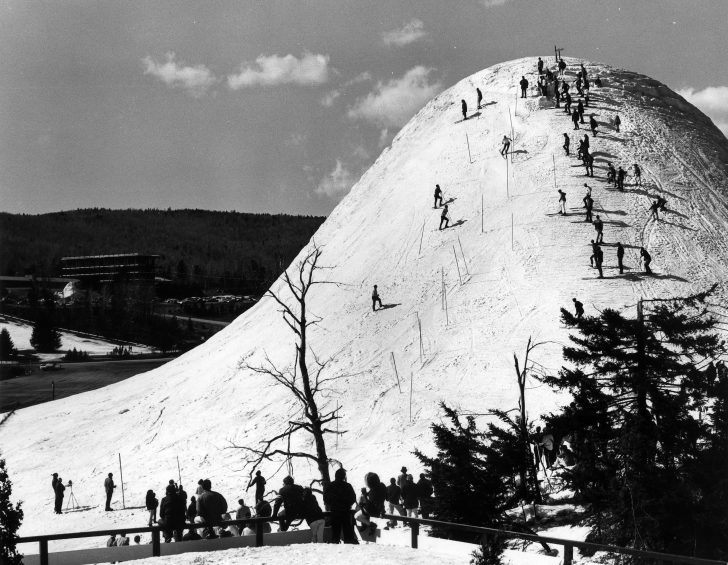
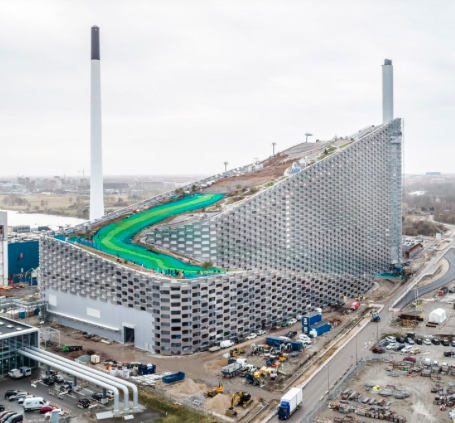
Mystery Glimpse: Ski The Cone

This Should Be Easy.

If you’ve skied this…structure, tell us your story. Where, why?

Last Week

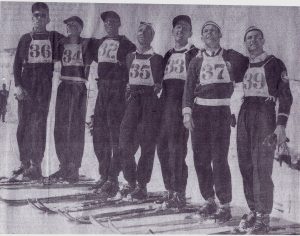
Feb 1941. Ski Jumpers.

This iconic image is of seven great ski champions from the past.  All have been inducted into the U.S. Ski and Snowboard Hall of Fame and are regarded as SkiSport Legends.  The image comes from a early 1940s clipping Alan Engen included in his donated ski history, four volume scrapbook series, The Engen Skiing Dynasty.  The books currently reside in the University of Utah J.Willard Marriott Library Utah Ski Archives. 

The photo was taken in Sun Valley, ID at the base of the old Ruud Mountain Ski Jumping Hill in February 1941.  In the photo are, left to right:  Corey Engen, Barney McClean, Sverre Engen, Gordon Wren, Alf Engen, Torger Tokle, and Art Devlin.  Not long after this photo was taken, the great ski jumper, Torger Tokle, went into the military service, joining the 10th Mountain Division at Camp Hale and ultimately lost his life in combat during WWII.  Torger and Alf father were two of the greatest U.S. ski jumpers of that time period.


Mystery Glimpse: On Patrol

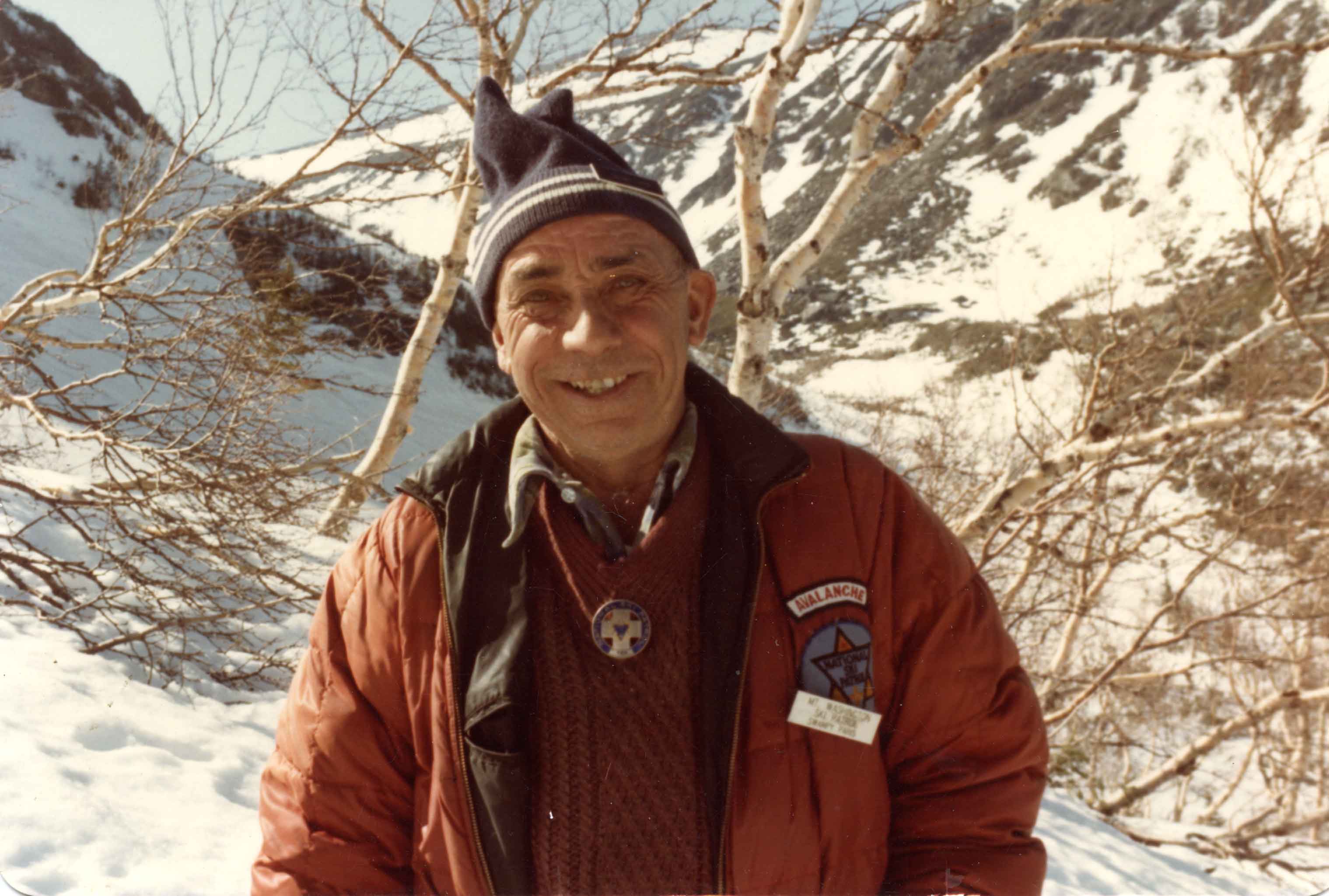
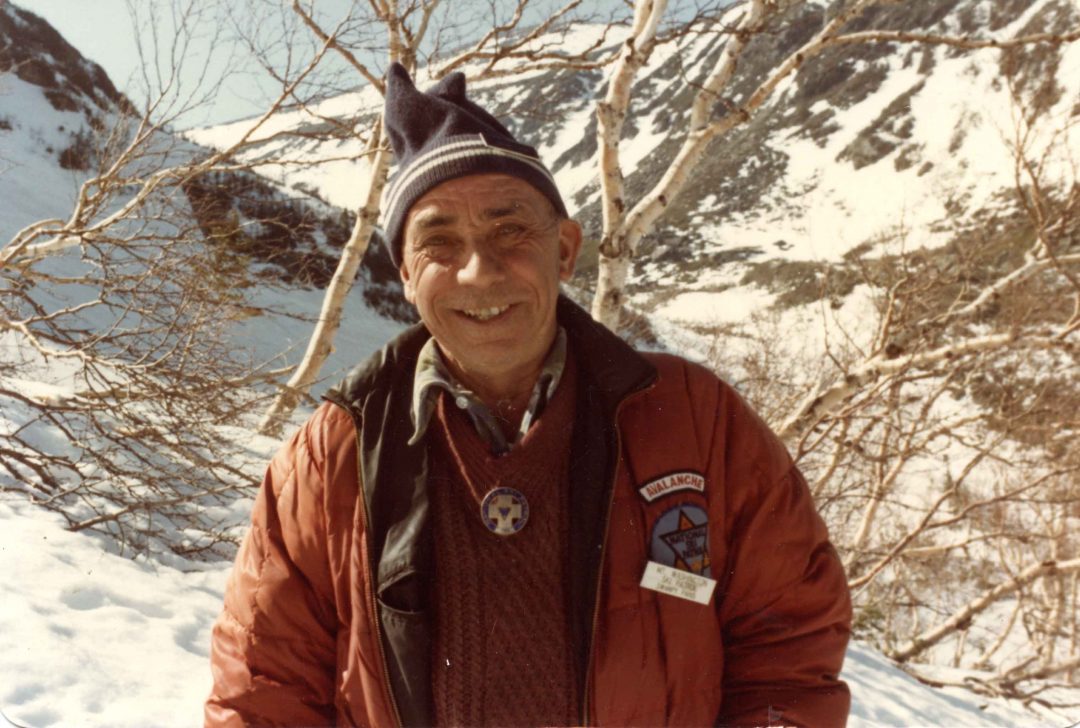
Early Red Parka Person

Who is this guy? Sure looks like he knows the snows. Photo courtesy of the New England Ski Museum and executive director Jeff Leich. Worth visiting their online gift shop by the way if you’re looking for skier/snow sport presents. The New England Ski Museum now has two locations: Franconia and North Conway, NH.

Last Week

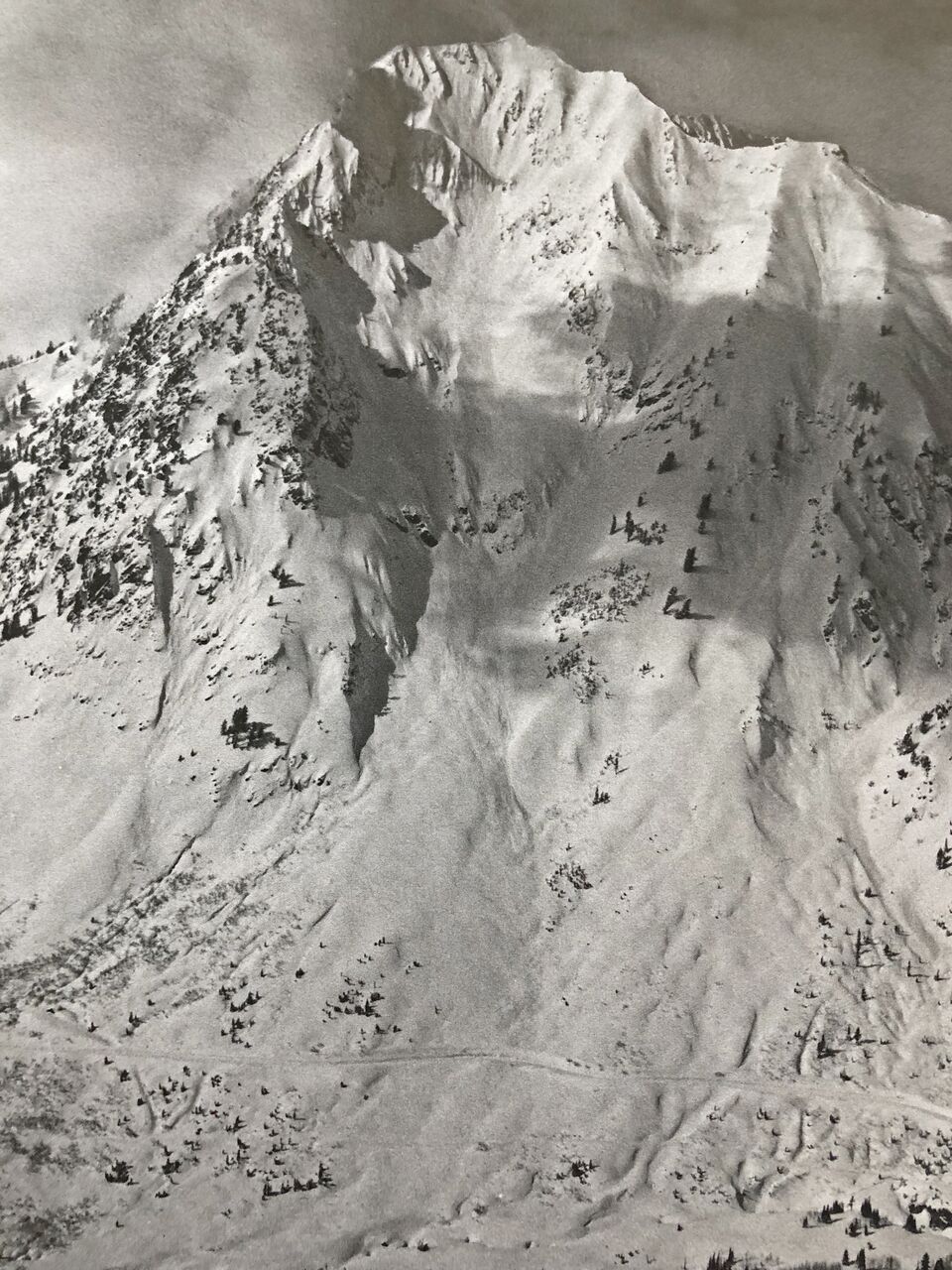
Yes, Mount Superior. Here’s a wonderful description from Alan Engen, recent winner of the S.J. Quinney Award from the Utah Ski Archives, honoring his life time achievements in the snow sports world. Thanks to Alan and the Alf Engen Ski Museum for contributing these photos.

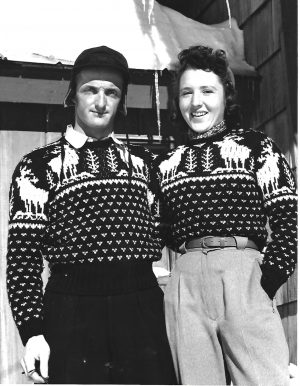
“The photo was taken by the legendary early ski pioneer/legend, Dick Durrance in 1940.  He was living at Alta at the time with his new wife, Miggs Durrance.  Here’s a good photo of both of them on the deck of the old Alta Lodge, which Dick helped to initially build.

“The “Pointy Peak” photo shown is of Mount Superior and was taken not far from the top of Alta Ski Area’s current Wildcat Lift location.  It is an impressive shot.  Both Dick and his wife, Miggs, were excellent photographers.”

Dick and Miggs Durrance at Alta circa early 1940s

In the book The Man on the Medal, about the life of Dick and Miggs Durrance, written by John Jerome (1995), the following information was provided on their coming to Alta.

Dick and Miggs first came to Alta in the spring of 1940 to attend the wedding of Friedl Pfeiffer and a Salt Lake City girl (name not identified in the book).  So recorded, they both “fell in love with the place.”  They were married shortly after on June 9, 1940.  In the fall of that year, Dick made contact with the Salt Lake Winter Sports Association (who ran the Alta ski area operation) and expressed interest in coming to Alta and helping to build the fledgling area with one chairlift and a lodge which at that time was only half finished.  The Alta group welcomed Dick’s proposal with “open arms.”

It was through Dick’s efforts that he made contact with a friend named James “J” Laughlin and invited him to come and see the area he was involved with.  Laughlin did come, and quickly fell in love with the beauty of Alta and ended up purchasing the Alta Lodge from the Salt Lake Winter Sports Association.  The lodge had been started through a $25,000.00 gift to Salt Lake Winter Sports by the Rio Grande Railroad.  The gift had been authorized by one of the trustees of the railroad, Wilson McCarthy.  Laughlin agreed to finance completion of the Alta Lodge in return for interest in the lodge and the lift operation which the Salt Lake Winter sports Association agreed to do.   

Laughlin, in turn, quickly hired Durrance to oversee the lodge completion and general lodge operations.  This was in addition to running the ski school operation (which he had been granted through Forest Service approval).  Dick’s ski school staff consisted of his wife, Miggs, Gordy Wren (who would become one of America’s finest Olympic ski jumpers), and Si Brand, a racer from California.  The Durrance Ski School at Alta was based on the stem turn, “Which Mathias Zdarsky had advocated shortly before the turn of the century in Lilienfeld, Austria.”

Dick and Miggs first lived at Alta in one of the small mining buildings, below the Alta Lodge, left over from the mining era.  Unfortunately, the old mining shack burned down and some of Durrance’s valuable competition awards were lost in the fire.

The Durrances lived at Alta for the first two years of their married life and left Alta after completion of the 1941-42 ski season.

In reflection, Alta has had a number of skiing legends who have, at one time or another, called that place at the top of Little Cottonwood Canyon, home.  For certain, the Durrances fit that category and both contributed in helping to develop Alta into a world class ski resort.

Miggs passed away at the age of 83 on November 11, 2002.  Dick passed away at age 89 on June 13, 2004.

Archives Honors Ski Club And Life-Long Influencer

Alta Icon Alan Engen and Wasatch Mountain Club Earn Top Honors At Ski History gala

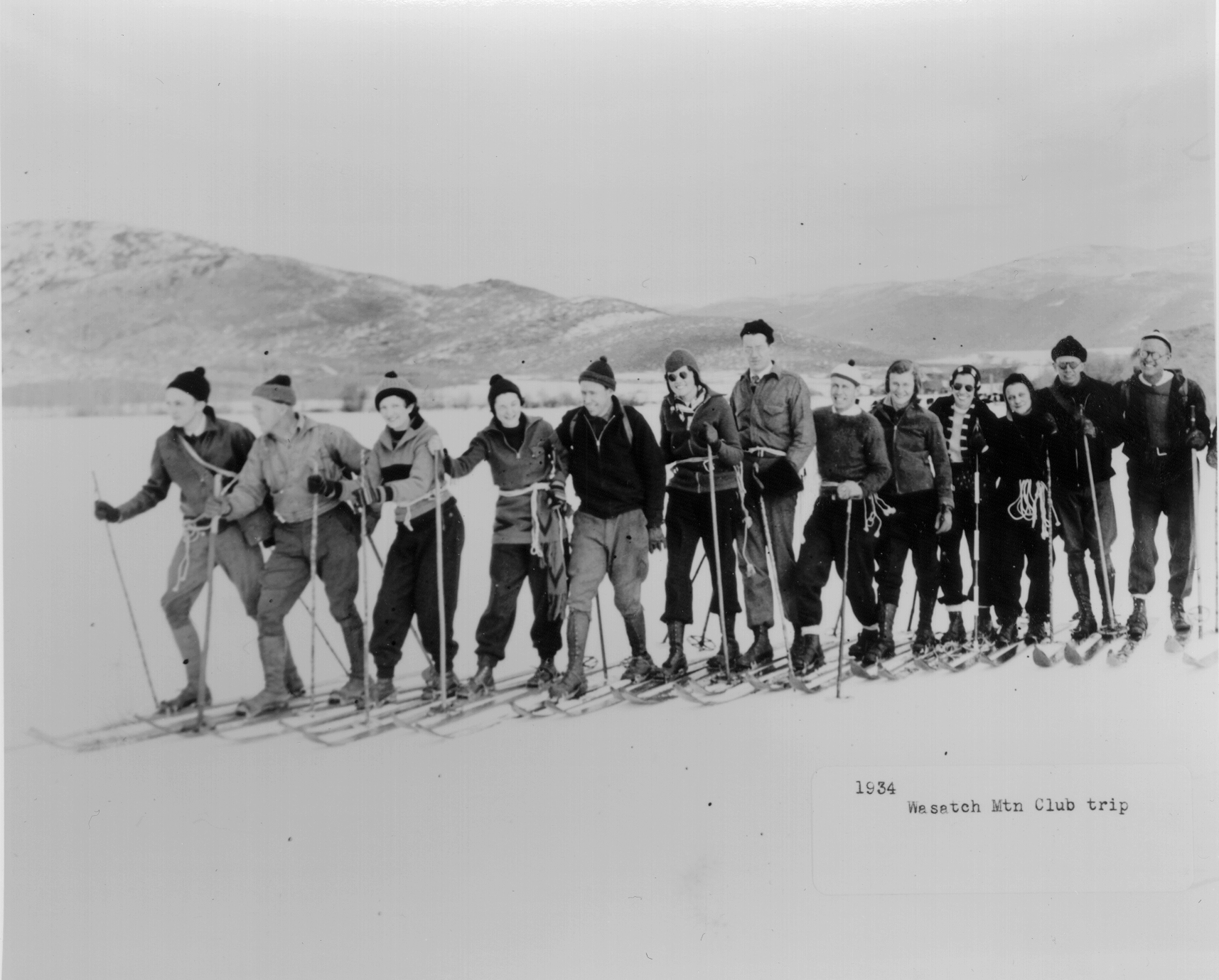
Ski fun in 1934 with the Wasatch Mountain Club. Credit: Special Collections J. Willard Marriott Library, University of Utah.

Every year, the country’s largest ski history research organization, the Utah Ski Archives, awards honors to movers and shakers in the ski industry.

This year the Wasatch Mountain Club earns the History Maker award for offering outdoor recreation for 100 years. It was founded with just 13 enthusiasts who enjoyed hiking, ski touring, and snowshoeing. A few years later it played a key role in the growth of skiing by offering “ski trains.”

Today it has about 1,000 members, and outdoor activities have changed with the times. The club’s non-competitive, muscle-powered offerings now include river running, mountain biking, back packing, and more. It also focuses on conservation and education.

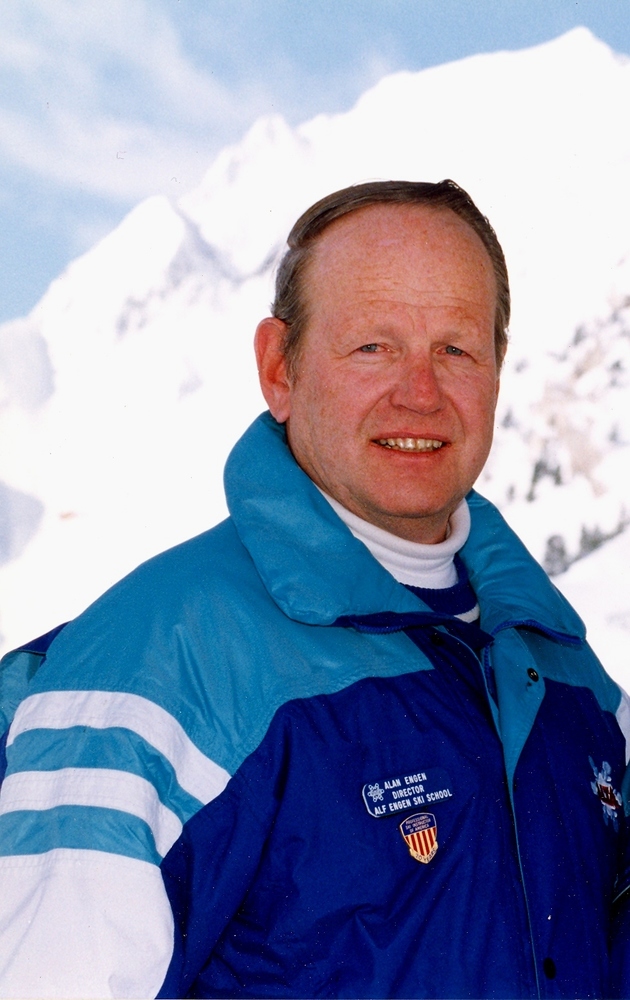
The coveted S. J. Quinney award goes to Alta’s iconic Alan Engen for his life-long influence on skiing. Engen began as an award winning national and international ski champion, and his dedication to the sport continues to evolve today. He became the Director of Skiing at Alta, he’s in the U.S. Ski & Snowboard Hall of Fame, he’s a ski historian, and he’s authored several in-depth books about skiing. Then he found the Alf Engen Ski Museum in Park City, UT. It’s an interactive, must-see for everyone who visits here.

About the Utah Ski Archives

The Archives collection currently contains 500,000 images, 250 manuscripts and 6,000 audio, video and films. The collection is open to the public and is located in the University of Utah campus library in Salt Lake City. Every year, it holds a gala fundraiser to help support its mission of preserving ski history. And the gala honors individuals and organizations that are a major influence on ski industry.


Award winner Alan Engen smiles next to the photo of him at about age 2 wearing a diaper and ski boots and gleefully holding his first pair of skis. Credit: Harriet Wallis

Short Swings!

A subscriber recently brought to my attention the SnowSport Safety Foundation, a non-profit, with the mission to encourage and enable ski area safety improvement through research, education and public access to reliable safety information.

Dan Gregorie, MD, MsM, Trustee, Founder, President, SnowSport Safety Foundation

It was conceived by Dan Gregorie, after losing his adult daughter in a terrible snowboard accident at Alpine Meadows. Dan, a Physician Executive, Board Certified in Internal  Medicine, set up the foundation to research the issue and to encourage greater transparency regarding safety procedures, accident reporting, etc. 

When we spoke, he explained that the resort industry has no requirements to disclose information about accidents. In fact, other than the mechanical operation of lifts, the ski resort industry has virtually no safety regulation, government oversight, or accident/injury reporting requirements.

He and his team have made impressive progress identifying safety issues and developing a protocol for evaluating the safety profile of individual areas. The foundation’s website lists safety scores for the California and Nevada resorts. It also lists a decade of Colorado resort fatality stats.

The website encourages concerned skiers to become advocates with area management and local and state authorities.

We’ll have more about the work of the SnowSports Safety Foundation in future issues.

On a related note, a reader alerted us that last season he noticed that Vail posted “…the number of lift passes they voided for reckless and dangerous skiing.” I emailed Vail to learn more and to see if this is something they are doing or plan to do at their other resorts. Will report when I hear back.

If you’re aware of what areas are doing to improve on-snow safety, please email me (jon@SeniorsSkiing.com) or post them in Comments.

Prediction: Snow to Favor Eastern Canada

Accuweather, which is said to make highly accurate weather forecasts, predicts that Quebec and Ontario will experience a snowy winter.

A-Basin is First to Open

Arapaho Basin opened last Friday. Keystone was running on Saturday.

Wolf Creek’s 80th

Wolf Creek will be celebrating it’s 80th season. You’ll see in our list of North American resorts with big bargains for seniors (look for it next week), that Wolf Creek has good day ticket prices if you’re 65; once you hit 80, its free.

Lotsa Flights to Big Sky 

Bozeman Yellowstone International Airport (BZN), gateway to Big Sky, has 13 daily non-stops to Atlanta, Chicago, Dallas/Fort Worth, Denver, Detroit, Houston, Los Angeles, Minneapolis, New York, Portland, Seattle, Salt Lake City, and San Francisco. 

Artificial Skiing on Copenhagen Power Plant Roof


Copenhill is the artificial ski run on the roof of a new trash-to-energy facility in Copenhagen. It uses a magic carpet lift. The same architectural firm has designed a hotel in Western Switzerland with a zigzag skiable roof.

Alan Engen to be Recognized at University of Utah’s Annual Ski Affair

Alan K. Engen, retired Director of Skiing Services at Alta, will be honored at the 29th Annual Ski Affair, November 5 in Salt Lake City. Alan, a member of the SeniorsSkiing.com Advisory Council, is a highly celebrated skier. Among many other accomplishments, he was an All-American skier in college for the University of Utah and has been inducted to several Halls of Fame, including the U.S. National Ski Hall of Fame (2004).  As a ski ski historian he authored  the award-winning book, For the Love of Skiing – A Visual History (1998) and co-authored First Tracks – A Century of Skiing in Utah (2001). He is Chairman Emeritus of the Alf Engen Ski Museum Foundation; Chairman of the Alta Historical Society, and a former member of the board of directors for the U.S. Ski and Snowboard Hall of Fame and Museum. More on Alan and his many contributions to the world of skiing in the coming weeks.

Comic John Pinette on Skiing

I got a kick watching this 2 minute video of comic John Pinette talking about his adventure on skis.

Short Swings!

This morning only the silver slice of moon interrupted the pure blue sky. 

Capitol Reef NP

The landscape here in south central Utah is exceptional. My summer grounds are at the base of Boulder Mountain, not far from Capitol Reef National Park. Boulder Mountain is the eastern end of the Aquarius Plateau, the highest plateau on the continent. The mountain peaks at 11,328’ and is crowned by an escarpment currently spotted with snow. One north facing section is long enough to get about twenty turns. It probably would take a few hours to get up there and find the spot. More runs would be guaranteed if I drove the 3½ hours to Snowbird, where lifts are still running. It’s a possibility, but a few hours of turns may not be worth the effort.

Last weekend, 20” fell at Steamboat Springs. Snowfall this late in the year is due to a warmer and wetter atmosphere. At cooler, higher elevations it turns to snow. The last time Colorado had this amount of snow in June was 91 years ago.

If you’re fortunate to live close to Snowbird, Mammoth, Squaw Valley, Arapahoe Basin or Timberline Lodge, you may be enjoying an extended season. I’m envious. 

If you plan to be visiting my corner of the West, please let me know (jon@seniorsskiing.com).

***

Elan Introduces First Foldable Ski

Elan’s new folding ski

Elan’s Ibex Tactix is the world’s first foldable ski. Made for backcountry, skis, bindings and skins weigh in at 5.5kg. The 163cm skis use a folding mechanism that reduces skis to 90cm for easier transport. The company’s claim that the package is good for all conditions is demonstrated in this video.

***  

Many National Parks Plagued by Air Pollution

Ninety-six percent of America’s national parks are plagued by significant air pollution problems reports the National Parks Conservation Association. The group evaluated air, haze, and soil and water pollution in 417 national parks. The results are available in NPCA’s report, Polluted Parks: How America is failing to protect our national parksNPCA is the leading voice safeguarding America’s national parks. 

***

Alta’s (Now Past) Ski and History Tour with Alan Engen

For many years, Alan Engen served as Alta’s Director of Skiing. Alan is a strong contributor to the history of skiing in the Intermountain West and was the driving force behind the Alf Engen Ski Museum in Park City (named for his father, one of Alta’s founding fathers). Alan took great pleasure in sharing Alta’s history and its terrain with its senior visitors. This poster announcing the program is from the late 1990’s.

Videos Worth Watching

I recently stumbled across this 7-minute review of skiing in the US from the 1930’s through the 1950’s. It’s great fun. 

This 8-minute instructional film from 1941 appears to be a US Army production explaining skis, bindings, boots, and skins. The difference between then and now is amazing!!! 

The History of Alpine Skiing shows the evolution of the sport from its earliest days. Produced by Alpine Life, the video is about 12 minutes.

Mystery Glimpse: This Isn’t Easy

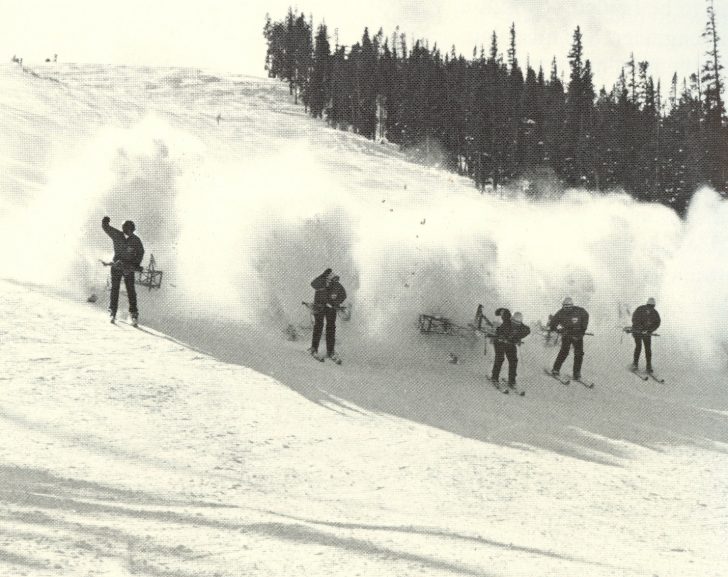
Bombing Down

What is going on here? Party? Race? One thing we will tell you is that this looks like (and was) a very tricky maneuver on skis. One resort made these famous.  Name it? The inventor?  Thanks again to the Colorado Snowsports Museum at Vail.

Last Week

Indeed, this is Alf and Alan Engen doing some father and son ski jumping at Alta circa 1952. Alf was an early ski jumper who mastered Alpine skiing and helped start the ski school at Alta. He and his two brothers helped popularize skiing in the West, especially Utah and Idaho. Alf’s son, Alan, carries on the family tradition today at Alta.

The Alf Engen Museum at Park City contributed this photo.

The photo came from the Museum’s Ray Atkeson collection. Atkeson (1907-1990) was a photographer best known for his landscape pictures, particularly in the American West. His black and white ski photos are considered some of the finest ever captured.

The museum contains more than 300 trophies, medals, uniforms, scrapbooks, skis, boots, photos, films and other collectables that span some 70 years in the career of the Engen family. The museum’s educational component gives school children a skiing-based foundation to study subjects such as the water cycle, physics and Utah’s colorful history.

Alf Engen. Check those pole baskets.

The Museum recently added a fully functional virtual ski experience designed and built by Utah-based company Unrivaled. The ride takes you through an amazing downhill ski experience and even gives the authentic feeling of skiing by adding wind and even snow to the overall downhill experience.


Ski Champion Jim Gaddis: When Life Got Tough, He Surged Ahead

Advice Jim Followed: When You Come To A Fork In The Road, Take It.
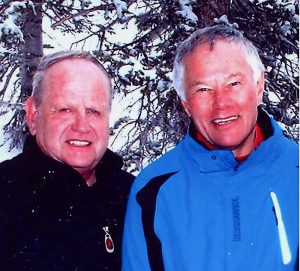
Ski buddies Alan Engen (l) and Jim Gaddis at Alta c. 2001. Credit: Alan Engen Collection

From the time Jim was a youngster, his single goal was to be an Olympic ski racer. He lived for that. He trained for that. But when he was shut out of the Olympics, it didn’t stop him. He generated ways to help others in the sport he loves.

His accomplishments include being an elite Intermountain ski racer, an inspiring coach, a great salesman, an imaginative program starter, a premier fundraiser — and he’s still moving on. Just try to keep up with him.

Yankee baseball legend Yogi Berra had a saying for it: “When you come to a fork in the road, take it.” Every time Jim came to a fork, he took action, reinvented himself, and moved forward. It’s a lesson we all can learn.

From Sears Skis To Winning National Racer

As a youngster Jim sledded on a golf course and saw someone using strange equipment: skis. He asked for skis for Christmas, and his parents bought him a complete set: skis, strap bindings and boots from the Sears catalog for $5.

He practiced at Alta and Brighton when his older brothers could give him a ride there. And he strived to ski like his good friend and acclaimed ski champion Alan Engen, son of famed Alf Engen.
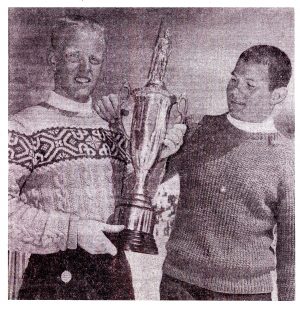
Alan Engen (l) and Jim Gaddis hold the Intermountain Ski Association Alpine Combined trophy. Each won the championship 3 times. c. 1959. Credit: Alan Engen Collection

Early on, he entered his first race on his $5 skis. It was a slalom-type course on the steep face of Collins at Alta. “I don’t know how many times I fell, but I made it down in about 4 minutes,” he said. The winning time was 40 seconds! Defeat spurred him on.

His skills and determination grew, and he entered — and won — national races. He won the National Giant Slalom Championship. And three times he won the NCAA Alpine Championship and three times the famed Snow Cup. But three was not his lucky number. His dreams were derailed when he broke his legs not once, but three times in race accidents, Still nothing stopped him.

Finally he was on target for the 1964 Olympics, and he qualified for it. But his dream was crushed. He was shut out of the elite team that included Jimmie Heuga, Buddy Warner, Billy Marolt and Billy Kidd, with Bob Beattie as the coach.

“It was very hard to deal with,” he said. “It was my whole life’s ambition to be an Olympic racer — and maybe win.” At that point, he didn’t even have a job because he was totally focused on being an Olympic racer.

It was a fork in the road. He took action, reinvented himself and surged ahead.

Metamorphosis

Using his degree in banking and finance, he became a stock broker. But his passion was skiing, so he created the Gaddis Training Organization to coach elite and youth racers. The program grew to 110 racers with seven coaches, and he ran it for 12 years. It became Park City Mountain Resort’s ski team.

His Olympic dream had a legacy. But he didn’t stop there.

Another fork

Jim discovered he had a natural ability to promote and sell. When the University of Utah had trouble raising funds to expand its stadium, Jim took the challenge and quickly sold 40 seats.

From that beginning, his fund raising expertise expanded. His accomplishments read like a Who’s Who of skiing.
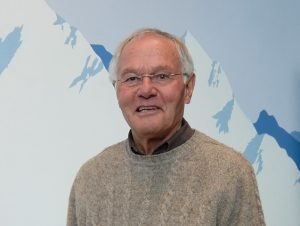
Energetic and active Jim Gaddis today. Credit: Harriet Wallis

He spearheaded fundraising for many ski organizations, and founded and chaired others including: the Youth Winter Sports Alliance which gets kids involved in winter sports; the National Ability Center, teaching skiing to handicapped; the Stein Eriksen Opportunity Endowment, which raised $2 million in two years to help local athletes with equipment and travel expenses; and the U.S. Ski and Snowboard Foundation Ski Ball, raising funds for the U.S. Ski and Snowboard teams.

He also chaired the Jimmie Huega Express, which raised $1 million annually for the Huega Multiple Sclerosis center; was instrumental in fund raising for construction of the Alf Engen Ski Museum, which preserves the Intermountain history of skiing; and helped found and raise funds for the Utah Ski Archives, the country’s largest ski research repository of historic material. The Archives collection currently contains 500,000 images, 250 manuscripts and 6,000 audio,video and films, and it’s open to the public.

Just recently, Jim once again raised funds for his Alma Mater. He chaired the University of Utah’s campaign that raised $2.5 million and built a dedicated training facility for the University’s winning ski team.

His Olympic dream lives on in unique ways. He really is a gold medal champion.

Jim’s life demonstrates his philosophy: “Always do a good job. Do it right, and do it honestly. Don’t let anything stop you.”

Today, energetic and active, he takes time from initiating programs and raising funds to ski with a group of friends at Deer Valley and Park City Mountain Resort.

To read more from Harriet click here for her stories on SkiUtah.

SnowSports Leader: Alan K. Engen

When Alan Engen was born, Dr. Wherritt put wooden tongue depressors—like miniature skis—on the bottom of his little feet and handed the newborn to his legendary father, Alf Engen.

“I think I can safely say that I came pretty close to being born on skis,” says Alan. He learned to ski when he was two.

Thus began a lifetime of ski achievements. He competed at nine, earned a place on the United States Ski Team in the 1960s, and won the United States Ski Association Intermountain Masters Alpine title six times. He served Alta for 50 years as an instructor, the ski school director, and then the Director of Skiing.

Alf Engen and Alan Engen jumping at Alta, circa 1949.

Alan and Alf—both world class ski jumpers —put on jumping exhibitions to demonstrate “Summer Snow,” a cornstarch-like substance. Father and son schlepped the product to the Los Angeles Fair Grounds for exhibitions on a 130 foot jump. In the grand finale the twosome jumped through a flaming hoop. After the demo, they shoveled the “snow” into gunny sacks and hauled it away.

Alan has dedicated more than six decades to skiing (click here to watch a video about Alan’s career) and is a member of the U.S. National Ski and Snowboard Hall of Fame. The Engens are the only family to have four Hall of Fame members: his father, Alf; two uncles, Sverre and Corey; and Alan.

Importantly for the entire skiing community, Alan is an accomplished scholar, author, and historian. His dream to showcase hundreds of Alf’s ski trophies and memorabilia in a small museum grew instead into the $10.5 million Alf Engen Ski Museum at Olympic Park in Park City, Utah. It was funded entirely by private donations (including Utah’s famed Quinney and Eccles families).

Alan with wife, Barbara.

Alan also is an active contributor to SeniorsSkiing.com where he serves on the online publication’s Advisory Council.

His advice to senior skiers: Use new boots, bindings and skis because the technology will help you enjoy skiing more.

This article is adapted from the original which first appeared in SkiUtah.com.

Buddy Up: Senior Ski Clubs Have More Fun

Alan Engen Recounts How Alta’s Wild Old Bunch has been meeting on the mountain since 1969.

With the baby boomers now reaching retirement age, there is a growing population of senior age skiers on the slopes, some of whom are even active in competitive skiing activities.

As a result, senior ski programs are becoming a significant part of many ski area activities in the Intermountain Region.  For example, at Snowbird, Junior Bounous has his “Silver Wings” program.  I used to have an Alta seniors program called “Silver Meisters.”  In addition, various “seniors” ski clubs abound such as The Over the Hill Gang, The One Ski in the Grave Ski Club, The 70 plus Ski Club, and a special group here in Utah called the Wild Old Bunch.

WOB clowning around at Alta circa 1970. Credit: WildOldBunch.com

WOB clowning around at Alta circa 1970.
Credit: WildOldBunch.com

In 1969, several senior ski buddies started the Wild Old Bunch by getting together on a weekly basis to enjoy Alta’s famous deep snow conditions.  The founders were Art Wilder, Foley Richards, Johnny Bell, and Rush Spedden.

Shortly after, Rush Spedden made a home movie of the group skiing powder.  Spedden named the film “The Wild Old Bunch.”  This title gained immediate favor with Wilder, Richards, and Bell.  It was decided by unanimous decree to

adopt the name on a permanent basis. Foley Richards created a patch for identification purposes which, in turn, became the groups logo.  The smile face is well-known around local ski circles and quickly sends a message as to what the group is all about—namely enjoying the pleasure of winter skiing and the companionship that goes with it.

By 1973, the group had grown to about a dozen or so regulars and, by the end of the 1970s, it had about 130 active skiers from ages 50 on up.  Because most of the membership consists of men and women retirees from the hectic pace of the corporate world, they have time to ski whenever they wish throughout the week.  Rush Spedden solemnly told me the club’s rules when I was given my special membership WOB patch.  He said, “The only rule is…there are no rules.”

Throughout the winter ski season at Alta, the Wild Old Bunch can be found congregating at Alta’s ALF’S mid-

WOB is one of the many ongoing senior ski clubs that endure across the country.

WOB is one of the many ongoing senior ski clubs that endure across the country.

mountain restaurant at 11:00 a.m. several times a week.  One of the articles written about the WOB said, “There, they swap jokes, agree to disagree, boost a few toddies and welcome other skiers.”

The driving inspiration binding this group was Rush Spedden who passed away at age 97 in late 2013.  He served as the WOB primary spokesperson for many years.  He was not only an outstanding skier; he was a noted engineer/scientist, teacher and historian in Utah.  Rush Spedden’s generous donation to the Alf Engen Ski Museum Foundation made it possible to add a special pair of handmade skis from the Alaska gold rush days of the mid- 1800s to the permanent exhibit in the Alf Engen Ski Museum near Park City.

Intermountain ski history certainly includes the wonderful contributions of senior groups such as the Wild Old Bunch, and they deserve special mention as ambassadors for the joys of skiing at any age.

Alan Engen is a SeniorsSkiing Advisory Council member and recognized ski historian and author.