Tag Archive for: dehydration

Have You Been Drinking? It’s Time To Start!

Hydration and Stretching: Two Things You Must NEVER forget to do before you hit the slopes.

If you’ve taken to heart the advice in a previous seniorssking.com article of Paul Petersen, president of Bear Valley Cross-Country in California, on the best way for seniors to get in shape for skiing, you’ve developed and faithfully followed a fitness regimen focusing on balance, strength, flexibility, and cardio. But the 56-year-old certified alpine and cross-

Bear Valley Cross Country's Paul Petersen swigs water, something we should all remember to do. Credit: Paul Petersen

Bear Valley Cross Country’s Paul Petersen swigs water, something we should all remember to do.
Credit: Paul Petersen

country ski instructor will quickly tell you that this is not enough. What you do in the days before and right up to the minute that you put ski or board to snow is just as important as all the pre-season conditioning you’ve done.

One of the most overlooked factors in preparing for a day on the slopes is hydration. When your body is well-hydrated, your body temperature and heart rate are more stable, your joints and muscles function better, and you have more stamina. Conversely, if you’re dehydrated, which can happen more quickly at elevations above 5,000 feet—especially to flatlanders, you won’t be able to perform well for any length of time, you’ll tire more easily, and you may experience dizziness, headaches, or shortness of breath. Says Petersen, “When it comes to hydration, you have to think ahead. You can’t properly hydrate for athletic activities the day before; you need to begin several days beforehand. Remember, you’re not trying to hydrate your stomach, but rather your joints and muscles and that takes a while.”

If you’re a typical skier, before you head out for the slopes, you probably have a cup of piping hot coffee or tea in the lodge (this may be in addition to the glass or two of wine you had at dinner the night before). This is a total recipe for dehydration! “Any liquids with caffeine or sugar, including sodas,” says Petersen, “are NOT a net positive in the hydration department!” For every cup of coffee or other caffeinated beverage you drink in the morning or while on the mountain, Petersen insists that you drink an equivalent amount of water.

Noting that senior wintersports participants schedule longer trips and thus ski more consecutive days than the average skier, Petersen emphasizes the importance of recovery for seniors after a day on the slats and boards. “Right after you’re done on the slopes and before you hit the bar, hit the protein bar,” he strongly advises. “For me, the magic bullet is protein powder in water. Either helps you recover from that day and helps your body get ready for the next day.”

An equally important factor in ensuring a safe, fun day on the slopes is adequately stretching your muscles right before you start out. We’ve all done those cursory arms over our heads while stretching our waists and quick calf stretches, right? Not good enough per Petersen! “You can’t just touch your toes, grab your ankles, stretch your thighs, and then walk out the door,” he warns. “The night before, put aside a few minutes to stretch your hips, calves, and thighs, and again the next morning before you put your boots on, either in the parking lot or at your locker.”

In sum, make “water, stretch, go” your wintersports mantra if a perfect day “doin’ it” is what you’re after!
Most Active Seniors Probably Have This Problem

But, There’s A Free Miracle Drug You Can Take.

You can live better when you're hydrated. Credit: TreeHugger

You can live better when you’re hydrated.
Credit: TreeHugger

At the risk of sounding like a spam email headline, I have re-discovered a miracle drug. It’s completely free, it acts quickly, and it can be found anywhere and everywhere. It’s a drug that can directly change your life for the better. I say re-discovered because I knew about this drug, loved its restorative properties, but like many things, I took it for granted and thoughtlessly stopped taking it as much as I should have, especially this summer. The impact of stopping was immediate and perplexing.

Of course, I’m talking about water. And what happened to me just over the summer is what can happen to any senior who is active. You forget to or ignore taking a water bottle to the gym, or you don’t drink after a walk or bike ride. You don’t ask for water with a meal. You spend a sunny day on the water fishing, sailing, kayaking, drinking sodas or beer with a sandwich.

You probably don’t think much about drinking water, but if anyone asks you why you don’t, your rationale is brilliant. Mine was: I have enough coffee, wine, tea, etc. during the week to keep me floating, or that water with a meal takes away my appetite, or I don’t like the taste of water at home because the well is low. (Common in parts of New England these days.)

Or glasses of water are for kids, right?

For me—a fairly active senior, the result of ignoring to hydrate was not positive. My symptoms: Logy, headache, irritability, lower than normal blood pressure (got a heads up during a routine visit), rapid resting heart rate, musty, dark-ish urine, and frequent, yes, frequent urination. I never once connected these to my being dehydrated, just getting a little more senior by the day.

But what signaled that I might have a hydration problem was a gym class instructor mentioning in passing that stiff joints might come from not having enough water onboard. Click. I had developed stiff joints and muscles this summer. I found walking a distance challenging because my hip flexors, psoas, hamstrings and glutes were tightened up. Stretching didn’t seem to help as much as it should have. I thought I was the victim of sitting at a desk for long stretches. That contributed, but lack of drinking water as a clear accomplice.

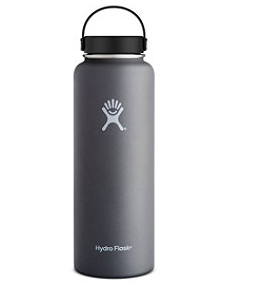
Expensive water bottle, insulated, vacuum. Credit: LL Bean

Expensive HydroFlask water bottle, insulated, vacuum.
Credit: LL Bean

My remedy is to start drinking water again, simple as that. I now have at

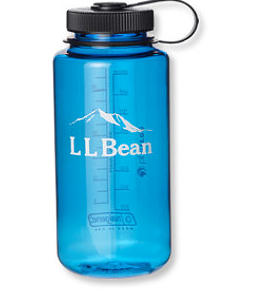
Reasonably priced, Nalgene water bottle. Credit: LL Bean

Reasonably priced, Nalgene water bottle.
Credit: LL Bean

least three eight-oz. glasses before noon and three after. I use spring water to replace the mineral-filled well water. When I first started this regimen, the results were immediate. I felt more alert, energetic, upbeat, and the muscle/joint stiffness—combined with dutiful and targeted stretching—is gradually going away. At least, this is working for me. Your mileage may vary.

I am not a medical professional, but I’ve learned that most seniors tend to walk around in a dehydrated state. Medications, living at high altitude, certain conditions like diabetes, just getting older can all contribute to dehydration. And forgetting to drink.

Easy tips from MedicalNewsToday:

  • Drink water, juice or milk at each meal.
  • Moderate how much coffee, tea, alcohol you drink. They are diuretics, and, to varying extents, take water out of your body.
  • Drink small amounts of water frequently throughout the day.
  • Drink small amounts during a workout as well as after to replace what you lose in sweat.
  • Consider an electrolyte-type drink.

Final tip: Buy an expensive water bottle so you feel guilty if you don’t use it; keep it full and handy.

If you have symptoms or questions, see your primary care physician.


Product Review: Goodbye, Water Bottle. Hello Hydrapak.

Dehydration Comes Easy When Skiing: Collapsible Water Bottle Is An Answer.

Staying hydrated on the slopes is important, but rigid plastic water bottles are a pain to carry in a parka. Hydrapak makes soft and pliable water bottles that fit comfortably in the pocket.

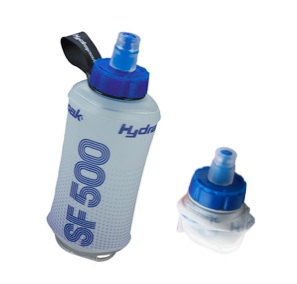
Paul tested the SoftFlask. Fits in a parka pocket. Credit: Hydrapak

Paul tested the SoftFlask. Fits in a parka pocket.
Credit: Hydrapak

We tested Hydrapak’s half-liter SoftFlask sports bottle over a few days on the hill. The 500-ml version held enough water without crowding a chest pocket, and it fit the palm securely. Made of BP-free thermoplastic polyurethane, it had no noticeable off-taste for some users. The company says it’s developing “no-taste” containers for sensitive palates.

The plastic cap is a bit unwieldy, and it took some practice to twist the valve open and closed. But it seals tightly with no leaks. A rubber nipple makes it easy to take a swig when the valve is open. The flask collapses to a small fraction of its size when empty. It retails for $20.

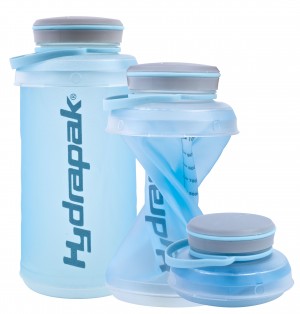
Hydrapak sells larger flexible water bottles with an ingenious design. These 750-ml and 1-liter Stash bottles resemble a Nalgene bottle but don’t take up valuable real estate inside pack or pocket when drained. They stand up full or empty, thanks to a rigid top and bottom, yet can be twisted and folded into a small disk when empty. The 1-liter retails for $23.

Most of Hydrapak’s business is with brand partners, notably Osprey Packs, which

Here's the Stash. Notice it collapses down into a hockey puck. Many colors available. Credit: Hydrapak

Here’s the Stash. Notice it collapses down into a hockey puck. Many colors available.
Credit: Hydrapak

incorporates the company’s reversible water reservoirs into backpacks with drinking tubes. The smaller flasks are for runners, skiers and anyone looking for a compact water container. Dishwasher-safe, they’re just as easy to hand-wash with mild soap.

Hydrapak claims its sports bottles are rugged enough to survive being run-over by a car. These portable, collapsible reservoirs work well. Now there’s no reason for not hydrating throughout an active ski day.

Hydration Chronicles: An Easy Way To Keep Drinking

Carry Water On Your Back Like A Camel.

In my younger days, my friends and I launched our adventures without giving a thought to proper nutrition, hydration and so on. On one fondly remembered camping trip, provisions were down to shredded wheat, peanut butter and warm beer, and we still had fun.

Dehydration is pretty common and may be the reason for low energy.

Dehydration is pretty common and may be the reason for low energy.  Benefits of drinking water are many. No joke.

Now we have the benefit of decades of research in sports medicine, nutrition and physiology. When planning my slope time, I try to take advantage of this knowledge to give myself any boost I can, whether it’s diet, exercise or technique. Proper hydration, while an often-discussed topic, is easy to overlook when it comes to winter sports yet surprisingly easy to maintain.

Easy to overlook, because, well, it’s cold out! Cold, dry air and modern technical clothing which so effectively manages perspiration combine to mask how much you may be sweating even on the most frigid day. The “start/stop” exertion common to skiing, where you do a run then relax on the chair, can further hide the amount of water you may be losing through sweat. Medium intensity steady exercise can cause you to lose an average of two liters of water an hour; even if you halve that because the exertion in skiing isn’t steady, it’s still a significant loss. If you get cold, you can still lose through “cold dieresis”, where the body loses water through increased urine production.

The benefits of staying well hydrated are many: You avoid fatigue, confusion, irritability, dizziness. Your joints function better. When dehydrated, the body will draw water from the blood; decreased blood volume leads to colder extremities and greater susceptibility to hypothermia and frostbite. As dehydration increases the heart rate can rise as blood pressure drops.

For my water supply, I like to wear a hydration pack. I prefer a simple, minimal design like the CamelBak Bootlegger ($55) which is made to be worn under your jacket. This keeps the drinking tube from freezing and keeps the pack from shifting around as I ski, or snagging on a chairlift. It’s a simple matter to unzip my jacket a bit & pull out the tube to take a sip every 15 minutes or so,

Camelbak Bootlegger carries the right joy juice to keep hydrated. Credit: Camelbak

Camelbak Bootlegger carries the joy juice to keep you hydrated.
Credit: Camelbak

whether stopping for a breather on a run or while sitting on a lift. The Bootlegger holds 1.5 liters; usually I’ll only fill it halfway and press all the air out to keep it as flat as possible. It’s easy to refill when stopping for a break or lunch. The bulk is barely noticeable, and the water bladder is sturdy enough that I can lean back on the chair lift without fear of bursting it.

I use plain water, which makes keeping the bladder and tube clean very easy. Sports drinks like Gatorade aren’t necessary; they all contain some form of sugar, and some contain up to 150 mg of sodium per cup, which may be an issue if you need to watch sodium intake. I think electrolyte loss in skiing is minimal; it’s more an issue when hot-weather exertion causes copious sweating.

A hydration pack is a much more comfortable way to carry water than having a big bottle banging around in your pocket. Making access easy and convenient means you’re more likely to stay well-hydrated and keep the fun going!