Tag Archive for: rose marie cleese

Slope Safety Reigned Supreme In Far West

[Editor Note: SeniorsSkiing.com is asking our readers to contribute to support our online magazine. Yes, we have grown in the number of subscribers and advertisers. But our expenses have also grown. You can help us defray some of these expenses by helping us out with a donation.]

Support SeniorsSkiing.com by clicking here.

______________________________________________________

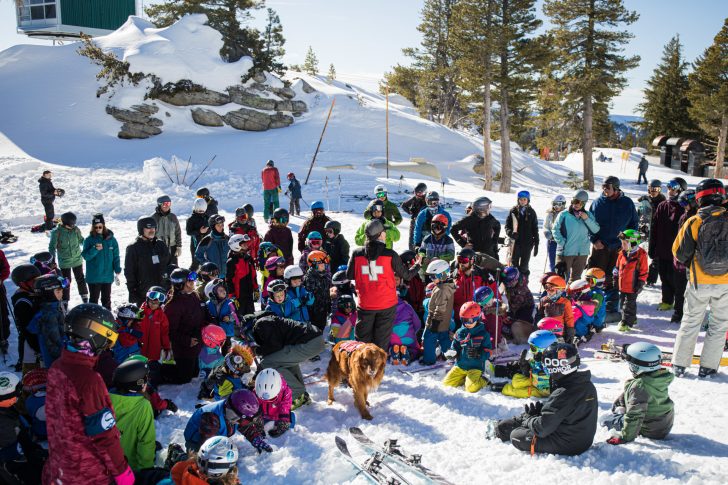
During the second annual Ski California Safety Day, some 15 resorts in California and Nevada held a slew of events to promote on-slope safety.

Avy dog demos were a big hit at Sierra-at-Tahoe. Credit: SkiCalifornia

On the last Saturday in January, slope safety was in the air at more than a dozen ski resorts from the Sierra Nevada range in the north to the San Bernardino mountains in the south. The occasion was the second annual Ski California Safety Day, during which Ski California, the state’s ski industry trade organization, premiered its fourth ski safety video and participating resorts held a wide range of fun and fascinating demonstrations and events to promote safety on the slopes.

According to statistics gathered by the National Ski Area Association, the 42 fatalities reported in the US during the 2018/2019 wintersports season accounted for one fatality per one million skier/snowboarder visits; the 31 reported catastrophic injuries accounted for 0.52 such injuries per one million visits. So the odds of a skier or snowboarder being killed or seriously injured on the slopes is one or 0.5 in a million, yet that is little solace for those who were injured or for the families of those who died. Surprisingly the majority of these deaths and injuries were not the result of avalanches but rather males under the age of 30 skiing or snowboarding on intermediate terrain and having collisions with other people, trees, or stationary objects, or falls on the snow surface. So on-slope safety awareness is key to making skiing and snowboarding safer for all.

NSAA is promoting three actions for skiers/boarders to keep in the forefront of their minds when they hit the slopes: 1) Always be ready and in control so you can slow down or avoid objects at any time; 2) Always be alert to what is going on around you, from other skiers to snow conditions; and 3) Plan ahead, including looking uphill when you merge onto a larger slope from a trail, being aware of blind spots, scoping out a run slowly the first time you ski or board it, and giving other skiers/boarders a wide berth. Advice to skiers and boarders is all well and good but resorts believe that leaving safety awareness to individual skiers and boarders is not enough. There is now a concerted effort underway among California and Nevada ski resorts and the Ski California association to greatly reduce these statistics, and Ski California Safety Day is a vital part of that effort.

Resorts are going an extra step, holding events where they have captive audiences that will hear the safety messages loud and clear and retain what they hear. Says Michael Reitzell, president of Ski California since 2015, “Over seven million people ski and snowboard in California and Nevada annually. While the risk of serious injury remains extremely low, we are proactive about educating wintersports participants about the importance of safety. If we can prevent just one serious injury, our extra efforts are worth it.”

A couple of ski areas came up with quite ingenious ideas to promote safety on the slopes. Kirkwood Mountain Resort, for instance, cranked up its “Bars for Bars Down” program: anyone using a chairlift restraint bar at the proper time on the resort’s Timber Creek beginner chair was handed a candy bar when getting off the chairlift. At the top of Chair 2, ski patrollers enticed people getting off the lift with hot dogs so they’d stick around and listen to an avalanche awareness talk given by the Sierra Avalanche Center and get the chance to pet some “avy dogs.” Mammoth Mountain came up with “Know the Zone,” painting a few big circles in the snow, each with a 15-foot radius and a mannequin in the middle, beneath the Broadway Express Chair, its busiest chair, to help chairlift riders visualize the optimum distance skiers and boarders should leave between each other on the slopes.

Boreal/Woodward Tahoe hosted a “Helmets Are Cool” event during which participants could decorate their helmets with various stickers and view a “Helmets Are Cool” video. Homewood Mountain Resort also focused on helmets, offering free helmet rentals all day. The resort also had ski patrollers and instructors on hand, along with Ruckus, the avy dog, at five interactive stations at the base area during the lunch hour, talking about a wide range of safety topics.

Heavenly Mountain Resort went all out with terrain park safety clinics, avalanche dog demonstrations, avalanche beacon park and backcountry preparedness beacon hunts, various ingenious raffles, and a “Helmet Head” photo booth where folks could post on social media photos of themselves wearing helmets.

Sierra-at-Tahoe had a great turnout at its avalanche dog demonstration, during which the resort’s ski patrollers talked about avalanche danger and how the dogs are trained. This was followed by a ski patroller actually being buried in the snow and “rescued” by one of the avy dogs. The patrollers also demonstrated the various safety devices available today, from beacons and whistles to AvaLungs and airbags. Northstar California followed suit with its own avalanche/rescue dog demonstration and also emulated Kirkwood with its own “Bars for Bars Down” event on selected chairlifts .

Sugar Bowl hosted an on-slope Scavenger Hunt and a poster contest for kids aged 12 and under. Squaw Valley/Alpine Meadows set up safety booths, held a raffle, and had a meet-and-greet with the ski areas’ patrol dogs. Tahoe Donner held a few demos on slope safety, and Diamond Peak offered a behind-the-scenes tour of its Village Terrain Park that included discussion of its construction, safety, maintenance, and boarder etiquette. Mt. Rose Ski Tahoe treated its guests to an “On-mountain Safety Poker Run” and free hot chocolate or coffee for anyone who reviewed the skiers’ Responsibility Code at its welcome booth.

In the Southland, Big Bear Mountain Resort went the Hollywood producer route, hosting an on-mountain Instagram story contest, in which participants had to create an Instagram story highlighting five safety items and tagging their creations with a series of hash tags. China Peak gave visitors a chance to accompany the ski patrol on its rounds, and Snow Valley Mountain Resort offered a free lift ticket to anyone who purchased a helmet at the resort’s sports shop on the 25th.

Mike Reitzell sums it all up, saying about safety, “You can never do enough for ski resort guests. We are committed to a consistent and constant effort to increase safety awareness. The resorts are all in this together; we’re not competing with each other [in this area]. As an industry, safety is at the forefront. We ultimately want to say to skiers and boarders: Come skiing; we have the safeguards in place.”

Ski Patrollers explain safety rules to kids at Sierra-at-Tahoe Safety Day. Credit: SkiCalifornia

How The Ski Industry Is Fighting Climate Change

Climate Change Is Literally In The Air. Here’s A Roundup Of What’s Going On.

[Editor Note: This article first appeared on the Liftopia.com blog and can be found at http://blog.liftopia.com/ski-industry-fighting-climate-change/.]

Cold, snowy weather is the very foundation of the ski industry. So, it’s not surprising that climate change has been at the top of the industry’s priority list since the turn of this century. Before that, ski areas relied on rudimentary snowmaking to get them through bad snow years. Today, snowmaking is a much more sophisticated and dependable operation, and resorts and industry associations are doubling down on their environmental efforts, using energy-conscious snowmaking, other sustainable technologies, and climate sensitive business practices and policies. They know how high the stakes are—the very future of wintersports.

Here’s what ski industry organizations and ski resort management are doing in order to ensure that you’ll be able to slide down snowy slopes for many winters to come.

Julian Carr (POW Riders Alliance Member), Snocru, Ski Utah, and POW at Powder Mountain in Utah at POW Day in January 2017. Credit: Jana Rogers

1. The National Ski Areas Association has been pushing environmental initiatives over the past 15 years.

The National Ski Areas Association (NSAA) has been rolling out environmental initiatives for the past 15 years and is not about to let up. Says Geraldine Link, NSAA’s director of public policy, “Climate change presents challenges to the ski industry that require proactive planning, bold action and leadership. The good news is that the ski industry is adept at managing challenging conditions and began work on addressing this issue 15 years ago with the adoption of a cutting-edge climate change policy in 2002. While every industry is affected by climate change, impacts to the ski industry receive a great deal of visibility in the media, given the operations’ natural connection to climate. This visibility provides a unique opportunity to lead by example, and we have done so successfully with respect to climate change education, mitigation, advocacy and adaptation.”

NSAA emphasizes several important areas with its member ski areas and resorts:

  • Reducing carbon emissions through energy efficiency, on-site renewable energy, green-building/retrofitting, and alternative fuels, among other actions
  • Increasing investments in snowmaking, water facilities, and water resources
  • Developing smarter grooming technology
  • Shifting to a four-season model
  • Advocating for legislation and regulation on broader-based climate solutions

Aspen Mountain reflected in Solar Panels at resort.
Credit: Aspen Skiing Company

The association works on many fronts: Since 2009, NSAA has been providing its member ski areas grants through its Sustainable Slopes Grant Program that provides cash and in-kind funding to support resorts’ sustainability projects. Its Climate Challenge is a voluntary program that helps participating ski areas reduce greenhouse gas emissions and reduce energy costs. Its annual Golden Eagles Awards for Environmental Excellence recognizes ski resorts for their performance in several environmental categories, from overall excellence to water conservation to visitor education and community outreach. And its online Green Room provides links to resorts’ environmental web pages listed by state (and Canada) so that fellow resorts and the public are all up to speed on the latest environmental actions and ideas.

Director Link adds, “In light of the political climate in Washington, the industry needs to be even more proactive about climate solutions to forge a sustainable path forward for the industry.

Her call for advocacy is not misplaced. In a study released by the Natural Resources Defense Council in 2012, it was calculated that the ski industry loses $1.07 billion in revenue in low snowfall years. And according to a report recently issued by the EPA and prepared by Elsevier, a global information analytics company based in the Netherlands, estimates show that climate change will cause a drop of about 30% of current snow sports revenue and skier/snowboard visits in the U.S. by 2050. The report states that the drastically shortened snow sports seasons, in the Northeast and Southeast in particular, will force many resorts out of business between now and 2050.

Kelly Davis, director of SnowSports Industries America (SIA) says, “The industry must determine whether to accept the impacts and wither [or] consider options that include opening new areas for snowsports in less-affected regions, improving snowmaking technology, developing gear innovations that make skiers and riders less dependent on snow conditions, [etc.] to thrive in the next 50 years.”

POW founder, Jeremy Jones, on Capitol Hill testifying at a House Subcommittee Hearing in April 2017. Credit: Protect Our Winters

2. Protect Our Winters is dedicated to engaging and mobilizing outdoor enthusiasts in climate issues.

Protect Our Winters (POW) is a nonprofit organization, founded in 2007 by professional snowboarder Jeremy Jones to encourage various groups to be active participants in the fight against climate change. POW works closely with outdoor businesses, ski resorts, professional athletes, and outdoor enthusiasts to be in the front lines of environmental action and green practices. Its volunteer professional athletes talk to students in schools, and POW staffers are frequent visitors to state capitols and the power centers in Washington, D.C., advocating for the reduction of greenhouse gas emissions via carbon pricing, solar energy, and the electrification of public and private transportation.

3. Aspen Skiing Company is one of many ski resorts combating climate change.

Matthew Hamilton is Aspen Ski Company’s sustainability director, overseeing its community philanthropy and supporting the company’s internal environmental programs. He says, “Today there is much more significant discussion of climate change and its impact than there was 12 years ago.” Aspen’s sustainability department was the industry’s first such entity when it was founded in the early 2000s, and the company has emerged as a major industry leader in environmental issues, from issuing an annual sustainability report that dutifully records both its successes and rare failures to developing a program to use the methane from a nearby defunct coal mine to generate 24 million kilowatt hours annually—enough to power its entire operation—four ski areas, three hotels and 17 restaurants— for a year.

A presentation at Aspen’s methane-to-electricity conversion operation at Elk Creek Mine. Credit: Aspen Skiing Company

Whether it’s lobbying in Washington, funding educational opportunities, or having its visitors use paperless apps for receipts and lift tickets, Aspen is solidly in the forefront of tackling today’s environmental challenges. To get inside the head of Aspen Skiing Company’ president and CEO Mike Kaplan, read his bold manifesto that appeared in The Aspen Times last December.

Aspen is just one of several U.S. ski resorts that are environmentally proactive. Even the simplest actions make a difference. For instance, to save water, the Resort at Squaw Creek in Squaw Valley, CA, gives its guests $5 coupons to spend at the resort’s shops and restaurants every day they opt out of having their bathroom towels replaced. To learn more about what U.S. ski areas are doing to meet the challenges of a changing climate and other environmental issues, check out NSAA’s list of resorts’ environment-specific web pages.

4. Ski resorts’ commitments to the environment keep snowballing.

On July 25th, Rob Katz, chairman and CEO of Vail Resorts Inc. announced to its 30,000-plus employees at a company-wide town hall meeting Vail’s commitment to zero net emissions, zero landfill waste, and zero operating impact on forests and habitats by the year 2030. Its Epic Promise for a Zero Footprint includes everything from purchasing 100% renewable energy, restoring equal forest habitat for any habitat displaced, working with vendors to up their “green” quotient, and educating resort visitors to diverting 100% of waste from landfills and financially supporting environmental stewardship projects. Says Katz, “The environment is our business, and we have a special obligation to protect it.”

Vail Resorts’ subsidiaries operate nine major ski resorts and urban ski areas in the U.S., plus Whistler Blackcomb in Canada and Perisher in Australia, as well as RockResorts, a collection of luxury hotels in Colorado. 

What can you do to make a difference?

Want more specifics about the environmental actions many ski industry organizations, areas and resorts are currently undertaking or planning for the future? Here are some informative and action-oriented links you may want to check out!

Night time snowmaking at Aspen Mountain. Credit: Aspen Skiing Company

Learning To Ski As An Adult

The Number Of Senior Skiers Is Growing By Leaps And Bounds Every Year. Join The Gang. 

[Editor Note: This article first appeared in Liftopia Blog. SeniorsSkiing.com thanks Liftopia for sharing Rose Marie Cleese with us.]

Statistics show that many people who give skiing a try—regardless of age—never return after their first day. Why? Because it wasn’t the most pleasurable of experiences. They didn’t prepare (wrong clothing, out of shape, etc.) and they didn’t start with proper instruction on Day One. To give skiing and boarding an honest shot and ensure that you’ll want to go back for Day Two, be prepared for Day One and make sure that day includes a good ski lesson. You’ll be rewarded with a lifetime of exhilarating days on the slopes. Here are four important first steps…

Step #1: Check yourself out.

Before you sign up for those beginner senior lessons or if you’ve been off the slopes for a number of years and you’re itching to get out there again, the first step is to have a physical exam and get your doctor’s blessing.

If you’ve turned into a couch potato, get back in shape. Attend aerobics classes weekly; walk a lot; start a daily regimen that includes balancing exercises, weights, and some cardiovascular activities.

Here’s the recommended conditioning checklist for older skiers issued by the Professional Ski Instructors Association (PSIA):

  • Check with your doctor before starting any physical training
  • Choose a low-impact exercise regimen that includes stretches, half-squats, drive-ups, lunges, leg curls, crunches—avoid polymetric exercises, such as box jumps
  • Include weight training in your exercise program—start with light weights and low reps, gradually increasing both
  • Don’t over-train; alternate among walking, biking, stretching, and active rest.

If you’re over the age of 50, see important tips for cardio, balance and strength exercises that senior skiers can do to prep for the slopes.  Click here for some ideas from Liftopia and here for the beginning of an exercise series from SeniorsSkiing.com.

Step #2: Gear up.

If you’re a first-timer, either purchase ski apparel that you can wear both on and off the slopes or rent ski clothing. You can also rent a helmet and equipment (boots, skis, poles, boards) until you’re sure that you’re going to continue. If you’re returning to the sport after a hiatus, consider upgrading since ski equipment has improved markedly in the past couple of decades and makes skiing easier, safer, and more enjoyable. And buy a helmet!

Step #3: Start smart.

Seek out mountain resorts that offer special instruction programs or workshops for adult or senior skiers. For your first day, pick a day with great weather and good snow conditions and go on a weekday when the slopes are more empty.

Choose a ski area that employs PSIA-certified instructors who have been trained and accredited to instruct skiers 50 years of age and older. PSIA’s Accreditation I offers its Levels 1-, 2- and 3-certified instructors two days of training to address the instructional needs of beginning and intermediate senior skiers; Accreditation II is three days of training available to Levels 2- and 3-certified instructors to enable them to teach all levels of senior skiers modern ski techniques that will optimize their strength, balance, and enjoyment of the sport.

Step #4: Be enlightened.

Talk to other older skiers about skiing at a certain age. What are the pluses? The minuses? Helpful hints?

To sum it up…

When considering sports that seniors typically take up, Snowsports Industries Association’s Director of Research Kelly Davis says, “While golf and sailing and hiking are amazing activities, skiing gives you an experience of freedom that’s difficult to match. While working your core, you get the thrill of flying down a snow-covered hill. Plus the bonds you form on the slopes and on ski lifts are second to none.”

Her message is obviously resonating. The number of senior skiers is growing by leaps and bounds every year. In 2014, skiers aged 55 and older accounted for 6% of all skiers (double that of 1994); today in 2017, approximately 15% of all skiers are over the age of 50. Make this the year you join (or rejoin) the growing ranks of older skiers. You won’t be alone!


Sierra Nevada Blowout Version 2.0

And The Snow Just Keeps Piling Up!

Credit: Homewood Mountain Resort

A month ago I wrote that, barring a barrage of rainstorms, 2016–17 would be going down as an epic ski season in the Sierra Nevada.

What’s a word that’s greater than “epic”?! Stupendous? Mammoth? Ginormous?

Credit: Squaw Valley Alpine Meadows

All apply to the Sierra’s burgeoning snowpack that just keeps growing, thanks to another string of snowstorms in February. This last Wednesday ski resort operators could stick their heads out the window for the first time in weeks and not see snow falling. The respite will last only until the weekend, however, when another storm is forecast to hit the mountain range. In the meantime, resorts will have a couple of days to dig out buried chairlifts and clear the decks before it starts snowing again.


Like the snow itself, snowfall records across the Sierra keep falling.

To get an idea of just how, uh, stupendous this season has been, consider the snowfall statistics to date at Squaw Valley Alpine Meadows. As of Wednesday, the resort has surpassed its annual average snowfall of 450 inches by an additional 115 inches—and this a week before March! Since last Friday, more than seven

Credit: Mammoth Mountain Resort

FEET of snow have fallen on top of the already prodigious snowpack, bringing the season’s total snowfall to the aforementioned 565 inches. As of today, the base clocks in at 138 inches (11.5 feet) and the top of the mountain has 243 inches (20 feet).

The statistics are no less impressive across the Sierra. In the past week, most resorts around the Tahoe basin have received six to seven feet of new snow and have already gone past their snowfall averages for the entire season. Even Homewood Mountain Resort, which sits on the western shore of weather-moderating Lake Tahoe, accumulated five-and-a-half feet of snow in the last week and now has an impressive 95 inches at its base and 201 inches on top. In the central Sierra, Dodge Ridge

Credit: Homewood Mountain Resort

added another five feet of snow to its pack in the last week and now has 83 inches at its base and 132 inches on the summit. Most importantly, temperatures have stayed low, so fluffy light powder is currently ruling the day throughout the Sierra.

Ski and snowboard until the Fourth of July!

Although many Sierra resorts have yet to post a closing date (Easter weekend, this year April 15–16, is usually when most resorts wrap things up), a few have already extended their mountain operations well past that. Squaw Valley Alpine Meadows, for instance, plans to stay open well into June and then crank up the lifts on July 4th, conditions permitting. Mammoth Mountain, which currently has 200 inches at its base and 350 inches on top, plans to stay open through the 4th of July weekend and beyond, if possible. As of today, Heavenly

Credit: Sugar Bowl Ski Resort

and Northstar plan to extend their operations one week past the Easter weekend. As long as temperatures stay cool through the spring, other resorts will likely join the ranks of resorts remaining open beyond Easter. For Northern California skiers and riders, who have suffered through a five-year string of utterly abysmal ski seasons, this record-breaking season has been a long-overdue gift from the heavens.
Now, if there was only a way to save snow!

Credit: Northstar California
Sierra Nevada Blowout!

Think Feet, Not Inches.

Homewood: Monumental snow, lake level.
Credit: Homewood Mountain Resort

“Nevada” (Spanish for “covered in snow”) is back with a vengeance at the end of “Sierra” (“mountain range”) and California’s skiers and ski resorts are jubilant! Since January 1st, the Sierra Nevada has been

Mt. Rose lodge buried.
Credit: Mt. Rose Ski Tahoe

clobbered with one storm after another, and except for one spate of warmer temperatures that brought rain for a couple of days earlier in the month, it’s been nothing but fluffy white stuff ever since—feet of it! This week, it’s experiencing a nice long stretch of cold days and sunny skies that isn’t predicted to end until next Wednesday when another storm rolls in. Last year, many resorts were forced to close off and on because of no snow; this season nearly every Sierra ski area has had to close a couple of days here and there because of too much snow!


January has broken snowfall records across the mountain range.

Northstar shoveler at work.
Credit: Northstar California

The remarkable record-breaking snowfall statistics that Squaw Valley Alpine Meadows has tallied up in the first 23 days of January are typical of many Sierra Nevada ski areas. According to Public Relations Coordinator Sam Kieckhefer, the combined resorts have seen 276 inches (that’s 23 feet or an average of one foot a day!) fall since the month began, easily surpassing the previous record snowfall in a single month (241 inches in March of 2011) since record-keeping began 46 years ago. Its total snowfall since the 2016–17 ski season began—381 inches—is more than double the average for this point in the season.

This jubilant tale is being repeated throughout the Sierra, from Mt. Shasta in the north to Southern California’s cluster of Big Bear Mountain ski areas. Like Squaw Valley Alpine Meadows, many ski resorts in the northern and Central Sierra are reporting record-breaking total snowfall amounts to date averaging around 380 inches. Mt. Rose over the hill from Tahoe in Nevada has a season-to-date total at 412 inches and Sugar Bowl sitting atop Donner Summit back in California may be able to claim the highest total snowfall to date of 451 inches.

At the top of Crow’s Nest lift
Credit: Sugar Bowl Resort

This latest storm that wrapped up this past Monday added tons of light, fluffy powder to an already impressive snowpack. Dodge Ridge in the Central Sierra, which has often found itself on the short end of the snow stick, had 10 feet of snow fall in just five days, bringing its total January snowfall to 19 feet! Other impressive storm totals were 97 inches at Kirkwood, 88 inches at Heavenly, 94 inches at Northstar, and up to 106 inches at Sugar Bowl. Most ski resorts in northern California currently have top-of-the-mountain snowpacks ranging from 150 to 185 inches. Mammoth Mountain in Central California has a upper base of 300 inches and even Homewood Mountain Resort, which sits near the shore of temperature-moderating Lake Tahoe, can lay claim to impressive base figures: lower and upper bases of 77 to 156 inches respectively.
Squaw Valley lift
Credit: Squaw Valley Alpine Meadows

Are the ski resorts happy that Easter—the weekend that most Sierra ski resorts traditionally close—is relatively late this year (April 15th)? You betcha. It’s likely that a good number of them will keep the lifts running well past that date. And, with the exception of 2015–16, which was the first respectable ski season in the Sierra after five years of sparsely covered slopes, thin layers of man-made snow, and some resorts not even opening, skiers and boarders are happy campers, too. Barring a barrage of warm “Pineapple Express” storms emanating from the Hawaiian Islands or the storm door slamming shut, 2016–17 is going to go down as one epic Sierra ski season!


Shovel all the day and nothing moves away. Digging out at Kirkwood resort.
Credit: Kirkwood Mountain Resort

On The Fitness Road Again!

How My Fitness Journey Took A Detour, And How One Powerful Documentary Is Going To Help Me Get Back On Track.

Michael Pollan's PBS documentary and book have inspired RoseMarie to renew her fitness quest.

Nutritionist Michael Pollan’s PBS documentary and book have inspired RoseMarie to renew her fitness quest.

So, to let all of you who were following my fitness journey here last summer know, I was doing great…and then I wasn’t. I don’t know exactly when I lost momentum or let complacency set in or thought I could let some old bad habits wiggle back into my life here and there without bad effect. But here I am again a year later feeling like a stuffed sausage in too-tight jeans and nowhere near fitting into that favorite dress of mine again. Somehow I’ve managed to gain back half the weight I lost.

But I’m not throwing in the towel or losing the tape measure or chucking the scale. I’ve got three-plus months to get back to where I was last fall, and I vow to continue this time until I reach my goal. My plan is to continue my exercise program, finally conquer my habit of staying up late and getting up early, stick to a healthy and sensible diet, and make all of this a permanent, everyday part of my life going forward. I’ll report periodically on how I’m doing and share with you any insights or good tips I’ve found on my renewed journey to fitness.

My big piece of advice for you today is to check out In Defense of Food, the excellent two-hour PBS documentary about nutrition produced by Michael Pollan, America’s most personable, passionate, and brilliant nutrition activist, journalist, and award-winning author. At the heart of the documentary, which is based on his best-selling book of the same name and which first aired on PBS last December, is Pollan’s seven-word maxim to help Americans figure out how to eat to be healthy: “Eat food. Not too much. Mostly plants.”

During my fitness program last summer, I had actually incorporated some of his philosophy into my new eating regimen. I became very vigilant about portion control, and I started eating less meat and white food (e.g., bread, cheese, etc.) and more fruit and veggies. But after watching Pollan’s riveting documentary, I have a whole new view on what “food” is.

When Pollan says to “Eat food”, he’s talking about 100% real food, not quasi-food or “edible food-like substances”. Believe it or not, probably most of the food in your local supermarket falls into the latter category. Anything artificial or with additives does not qualify as real or pure food. When Pollan says “the quieter the food, the healthier the food”, he’s talking about the “health” claims that cry out from the packaging, most of which are horribly misleading or worse, untrue. As much as the government tries to regulate what can be said on packaging, the manufacturers find clever ways around the rules. To follow this part of the maxim, always read the labels and buy food that’s free of packaging, which will make it easier to follow the third part of the maxim: “Mostly plants”. Eat lots of fruits and vegetables and consider meats “special occasion” food. For the freshest produce with the least amount of packaging, shop at your local farmers’ markets.

And to follow the middle part of the maxim, “Not too much”, Pollan suggests eating your fruits and vegetables first during a meal, and use smaller plates and glasses. And of course, be mindful of your portion sizes—think palm-full, not plate-full.

Enjoy Mr. Pollan’s documentary…and wish me luck!

Pollan's seven word rule for selecting and consuming food. Makes sense.

Pollan’s seven word rule for selecting and consuming food. Makes sense.


California Wrap: Sierra Nevada Resorts Are Jubilant!

…And There May Be More Snow Coming Next Week!

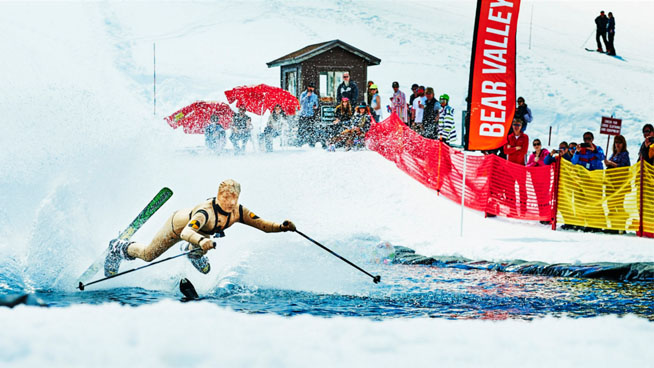
Bear Valley Pond Skimming. Silly season is in out in happy, snow-filled California. Credit: Steve Peixotta/ Bear Valley

Bear Valley Pond Skimming. Silly season is on out in happy, snow-filled California.
Credit: Steve Peixotta/ Bear Valley

As one of the best ski seasons in the Sierra Nevada in the past five years winds down, resort operators can look back and smile broadly about the steady stream of mid-size snowstorms that rolled over their resorts on a regular basis all season long, making for consistently ideal conditions and doubling the overall snow depths, operating days, and skier/boarder visits, compared to last year and the several years before that. And it’s not over! Although rain is forecast for this weekend at most locations, a few inches of snow are predicted for next Thursday, April 14th.

April—And May!—Closing Dates

Corduroy corn on Mt. Rose. It's been a good year for the Sierra Tahoe area. Credit: Mt. Rose/ Ski Tahoe

Corduroy corn on Mt. Rose. It’s been a good year for the Sierra Tahoe area.
Credit: Mt. Rose-Ski Tahoe

If you haven’t stowed away your wintersports equipment yet, you still have time in the coming weeks to get in a few more runs on some nice corn snow. Here are the closing dates as of April 7  for the following ski areas (may change, subject to snow melt and snowfalls!):

Last day of operation this coming Sunday, April 10th: Bear Valley and Bear Valley Cross-Country, Homewood, June Mountain, Soda Springs, Tahoe Donner.
Operating through Tuesday, April 12th: Donner Ski Ranch, Mt. Shasta.
Open through Sunday, April 17th: Boreal Mountain Resort, Diamond Peak, Kirkwood, Northstar.
Open until Sunday, April 24th: Heavenly Mountain Resort, Ski China Peak, Sugar Bowl.

Open through Saturday, April 30th: Sierra-at-Tahoe

Operating through Sunday, May 8th: Mt. Rose – Ski Tahoe.

Staying open through Memorial Day, Monday, May 30th: Squaw Valley/Alpine Meadows and Mammoth Mountain (the latter will operate longer if there’s still skiable and boardable terrain).

Those resorts that have already closed include all Southern California ski areas, Badger Pass in Yosemite, and Dodge Ridge.

How Much Snow Was There?

Senior XC skier Pat Van Mullem after skiing 50 km at Bear Valley XC. Credit: Paul Petersen/ Bear Valley

Senior XC skier Pat VanMullem, 62,  after skiing 50 km at Bear Valley XC.
Credit: Paul Petersen/ Bear Valley

Currently, in this first week of April, the major Northern and Central California ski areas are still swathed in snow with base depths ranging from 43 inches (Northstar) to 96 inches (Bear Valley) and top-of-the-mountain depths ranging from 94 inches (Heavenly) to 201 inches—nearly 17 feet! (Mammoth). But what’s really impressive is the total number of inches of snow that fell this winter, with many resorts getting three times the amount of snow as they did in recent past seasons. Here are some of the prodigious snowfall totals for this season to date: Sugar Bowl, 547 inches; Squaw/Alpine, 463 inches; Northstar, 446 inches; Mt. Rose, 381 inches; Heavenly, 341 inches; Kirkwood, 437 inches; Bear Valley, 325 inches; Bear Valley X-C, 348 inches; Mammoth, 342 inches. Snowmaking kept some snow depths even deeper!

End-Of-Season Deals Still To Be Had!

Hit the slopes in the coming days and weeks, and you may be able to score some savings. Several resorts will let you apply your lift ticket purchase to next season’s season pass. Buy a 2016–17 Squaw Valley/Alpine Meadows season pass and ski free at both resorts for the rest of this season (until the end of May, conditions permitting). Sugar Bowl has special reduced spring rates, and most areas have early-bird pricing in effect for season pass purchases (check individual resort websites for “early bird” deadline dates and savings info).

A Few Closing Thoughts…

Most Sierra Nevada resorts will have had a nearly five-month season this winter by the time the mountain streams start raging with snow melt. And their staffs couldn’t be happier. Says Lauren Burke, communications manager at Mammoth, “Nature has brought us a return back to a ‘normal winter’ and we’ve seen so much excitement this season… This year’s snowfall passed last season’s total in January, and the mountain has been 100 percent in operation since mid-December.” Bear Valley Cross-Country’s Paul Petersen concurs, “What a difference a year makes! We are super-excited to have had a real winter return to the High Sierra and are grateful for a spirited and enthusiastic return of our customers to this great trail system.” Across the road at Bear Valley downhill resort, its director of marketing Rosie Sundell adds, “The snow enthusiasts came out in droves to make up for the powder they missed over the past four seasons.” Says Northstar’s Cassandra Walker, “ We are thrilled with how well the season has gone and are excitedly skiing our way out of the 2015–16 season on this famed Tahoe corn snow, with bluebird skies and sunshine above.”

And with that said, the finger crossing begins that next season will be a repeat of this one!

The Palisades at Sugar Bowl are a dramatic background to a season filled with awesome skiing. There's still 82 to 165 inches at SugarBowl. Credit: Sugar Bowl Resort

The Palisades at Sugar Bowl are a dramatic background to a season filled with awesome skiing. There’s still 82 to 165 inches at Sugar Bowl.
Credit: Sugar Bowl Resort

Master’s Clinic: Fabulous Idea For Senior Skiers

The Secret To Breaking Decades-old Bad Habits: Attending A Master’s Clinic At Dodge Ridge.

Jon Mahanna, creator of the Master’s Clinics, has class members follow his every move down the slopes. Credit: Dodge Ridge

Jon Mahanna, creator of the Master’s Clinics, has class members follow his every move down the slopes.
Credit: Dodge Ridge

I hadn’t skied at Dodge Ridge, the closest ski area to the San Francisco Bay Area, in years. But as soon as I arrived at the base area a couple of Thursdays ago for one of its Master’s Clinics, a four-hour-long freeski instructional program designed for intermediate and advanced skiers over 50 years of age, the memories flooded back. It was the first place I had ever put skis to slopes back in the ’50s, unwittingly grabbing on to a rope tow and finding my 12-year-old self being flung into the nearest snowbank. In the ’60s, it was the area my friends and I headed to when classes were over for the day at San Jose State College, taking a hit of blackberry brandy from our bota bags each time we headed down the rudimentarily “groomed” slopes on our brakeless wooden skis with bear-trap bindings and with long leather straps bound around our leather boots.

Now a saner, much older me was back to do things right! My friends and I were going to get this ski season headed in the right direction: by letting a seniors-certified PSIA instructor spend a few hours with us, helping us to break bad habits we’d acquired over the years and showing us how to adapt our skiing styles to today’s more-efficient shaped skis.

We met up with our group of nine other fellow seniors, ranging in age from 58 to 79, at the base promptly at 10 AM and headed up the mountain to do a ski-off for our two instructors: Bryan Jarratt, 61, an Aussie who’s been with the resort for 15 years, and Jenny Matkin, 64, who has deep roots in the region and has been teaching for decades. As we all did our “exhibition” run down the hill, I could instantly tell when my fellow participants had learned to ski. Yep, those two guys standing tall and stately over their skis with their ankles seemingly tied together were from the Arlberg “reverse-shoulder” method days. And that guy making the quick turns probably learned during the “short skis” phase. Our instructors split us into two groups, those itching for some “black diamond, off-piste” skiing and we more-timid ones who still had some cobwebs to dust off our skis before going full-out.

After three-and-a-half hours of skiing with frequent instructional breaks, we learned at least four or five specific things from Jenny that we could take away and work on the rest of the season in order to ski with much more ease and efficiency and not be exhausted after a full day of skiing.

DodgeRidge3A

Dodge Ridge’s Jon Mahanna saw the need to help senior skiers adapt to the new, shaped skis. “Let the skis do the work,” he says. Courtesy of Jon Mahanna

Jon Mahanna, 68, explains the strategy behind the Master’s Clinics best. He, along with Dodge Ridge’s current owners, Frank and Sally Helm, came up with the concept three years ago. Jon had been Dodge Ridge’s ski school director for 15 years in the ’80s and ’90s, and after serving in various capacities at ski areas in Colorado, New Mexico, and back in California, the “retired” Mahanna saw a need for older skiers, Level 5 and higher, to improve their skiing technique, especially with the advent of all the new equipment. Says Mahanna, “I saw that a lot of older skiers, especially those returning to the sport, needed to work on creating a balanced, ‘stacked’ stance so that there’s the least amount of resistance on their skeletal frame and muscle groups. This open, athletic stance gives them better lateral stability and is easier on their knees and backs. Balance is the key to everything.”

The instruction focuses on medium-radius turns on groomed slopes. “The modern equipment out there lets you stand there and go for the ride while you let the skis do the work,” avows Mahanna. “The idea is to have fun and to be able to ski all day, where your knees and muscles don’t give out on you.”

When we all met up at the lodge afterwards for lunch (which is included in the clinic package), the participants, to a person, were Master’s Clinic converts, and most were planning to sign up for more. One of them, Ralph Purdy, 75, happened to be the son of Dodge Ridge founder Earl Purdy, who opened the resort back in 1950. Said Purdy, “This is the first lesson I’ve had in many years. I thought that there’s gotta be something I’m missing. I saw this as a drill, and today I learned about unweighting and keeping my legs apart a little.” Another clinic attendee, Mark Sahines, 58, skied a lot in his 20s and 30s, then kids and work put skiing on a back burner. “I want to get to an advanced level, and my goal is to be skiing at 75 or 80. A lot of the guys older than me in today’s class ski a lot better than I do. Today I learned to do a hockey stop, something I could never do before.” My friends, Jim, 65, and Kathy, 70, Clarke, have a cabin near Dodge and are season ticket holders. They’ll definitely be back for more Master’s Clinics. Kathy called her teacher “one of the best” and appreciated Jenny’s focus on older skiers and the different techniques required with the new equipment. Jim shared that “every year I fret about being ‘ready’ to hit the slopes. Will my legs hold up? Will my funky right knee start giving me problems? Jenny, our wonderful instructor, brought my focus back to the skills and techniques needed to get the most out of my fancy, red shaped skis. By the end of our class, I was able to remember and use several of Jenny’s methods for getting the most out of my skis. In the end, there’s no reason I can’t learn this stuff if I keep a positive attitude, pay attention, and practice, practice, practice.”

To learn more about Dodge Ridge’s Master’s Clinic program or sign up for one of its Thursday or Sunday clinics, click here.  Tell them Rose Marie sent you! And if you love uncrowded slopes, sign up for a Thursday clinic.

[Editor Note:  SeniorsSkiing.com salutes Dodge Ridge and Jon Mahanna for creating a program focused on helping seniors optimize their technique and continuing to enjoy skiing.  If you, our readers, think this is a good idea, please forward a link with this story to your local ski area to show them how easy it is to support seniors skiing.  Or, if you’re in the Bay Area, enroll in Dodge Ridge’s Masters’s Clinic. We hope to see the idea of focused events for seniors—especially mid-week— growing in the ski resort industry.]

It’s Snow Sport Heaven This Season In The Sierra Nevada!

All Systems Go As The Snow Keeps Falling On Sierra Resorts.

"There's no comparison to last season" at Dodge Ridge. Everyone is happy! Credit: Dodge Ridge

“There’s no comparison to last season” at Dodge Ridge. Everyone is happy! Almost 180 inches so far this year.  Check the mounds of “cold gold” on the trees.
Credit: Dodge Ridge

As the East Coast got a taste the last couple of months of what’s it like when the inclement winter weather fails to show up, the situation has been quite different on the West Coast. After four years of a crippling drought, the rains have returned to the flatlands and the snow to the Sierra Nevada mountains. Although California is not home-free yet drought-wise, things were looking good when the California Department of Water Resources did its December 30th water content survey off Highway 50 near Sierra-at-Tahoe ski resort. The snow depth this year was 54.7” or 136 percent of the January 1st average. A year ago, the snowpack state-wide was at just 50 percent of normal.

After barely being able to open the last two ski seasons, Homewood Mountain Resort is no longer suffering from its location right above the shores of Lake Tahoe, finally enjoying a bumper crop of snow and a five-foot-deep base. Credit: Homewood

After barely being able to open the last two ski seasons, Homewood Mountain Resort is no longer suffering from its location right above the shores of Lake Tahoe, finally enjoying a bumper crop of snow and a five-foot-deep base.
Credit: Homewood

Although there haven’t yet been any of the legendary Sierra storms that can dump up to eight feet of snow in a couple of days, the small yet persistent stream of snowfalls thus far this winter has resulted in a gangbuster season. Every single ski resort in the Sierra is open (some opened as early as Thanksgiving), with all or most lifts operating. And the base and peak numbers for the high-altitude resorts are impressive (as of January 13): Mammoth, 75”–115”; Kirkwood, 76”–80”; Sugar Bowl, 57”–96”; Mt. Rose, 63”–92”, as are the stats at resorts that struggled mightily to open last year: Homewood, 60”–76”; Dodge Ridge, 50”–72”; Badger Pass (Yosemite), 60”–72”.

“There’s no comparison to last season; it’s been night and day,” says Jeff Hauff, marketing and sales director at Dodge Ridge. “It’s phenomenal. Everybody’s happy! We’ve had a total of 179” of snowfall so far this winter, with 38” in just this last week. It’s been staying really cold, in the teens and 20s.” That would be “California cold” to our Midwest and East Coast readers!

Those cold temperatures are giving Sierra Nevada skiers an experience they don’t often have: day after day of FLUFFY white stuff to fly through rather than having to deal with “Sierra cement.” Plus the combination of smaller storms with spaces in between them has made the trip “up to the mountains” much less of an ordeal than it often is.

The San Francisco Chronicle’s outdoors writer, Tom Stienstra, headed to the Sierra recently and observed in his latest column that he had run into “dozens of people who said they had not skied in years, and some said they had been away for more than 10 years.” Nothing like a four-year drought to make people long for those idyllic days on the slopes! If  El Niño continues to deliver like it has been for the first two weeks of January, Californians will have ample opportunities to get their ski and board on this season…and on powder if temperatures continue to stay low!

Editor Note:  Here’s a cool video from Sugar Bowl about the El Ninuary experience in the Sierra.

My Fitness Journey Continues: Part Eight

Correspondent Rose Marie Cleese reports on her fitness journey, noting that regular exercise makes a big difference in how you feel. Credit: Pinterest

Correspondent Rose Marie Cleese reports on her fitness journey, noting that regular exercise makes a big, big difference in how you feel.
Credit: Pinterest

The Journey That Began With A Single Step Isn’t Over Yet!

Although this will be the last official installment of my personal fitness journey series that began on May 1st, it’s definitely not the end of the journey. I have many more pounds to lose before I sleep and promises to myself to continue to keep. I’ll be posting an update some time in the next three months, at which time I hope I can tell you that I’ve met all of my goals, including losing that last 20 pounds and tipping the scales at 130 pounds. I’ve already lost 20 pounds so I’m halfway there.

Even though I haven’t yet reached my desired weight, I’ve added a number of habits to my life that have made me a healthier, happier person with a body that’s so much better prepared to hit the slopes (hopefully in the next couple of weeks) than the one that floundered on them last March. I tried on my ski clothes last week and they fit comfortably rather than my feeling like a stuffed sausage. People who haven’t seen me in a few months are noticing my weight loss and telling me how good I look. Most importantly, I feel so much healthier…and bouncier.

So what am I taking away from these past seven months? The number one lesson I’ve learned is how important regular exercise is. My twice-weekly aerobics classes and my once-a-week stretching classes and weight classes have had a considerable effect on me. I don’t get out of breath exerting myself anymore, my balance has improved 100%, and my arms and legs actually look and feel toned. I’ve rarely missed my classes because I feel so energized at the end of them. This is one habit that has become solidly entrenched. In the near future I’d like to add some yoga to my exercise regimen and I’ve put a Fitbit on my Christmas wish list.

Regarding my weight loss, I’m happy that I haven’t gained back any of the weight I’ve lost (even over the Thanksgiving holiday!), but I do need to get back on track in the coming months. I plan on being more religious about mindful eating, portion control, food choices (less “white” food, more fruits and vegetables), not eating late meals, and saying “no” at least a couple of times a day when I’m tempted to snack or eat something that’s unhealthy. I’ll continue the daily food diary that I’ve been faithfully keeping the last seven months, and I’ll continue to weigh in once a week and also check my measurements once a month. If I find that the pounds are refusing to come off, I may participate for a couple of months in one of the several diet plans out there that are the top choices of the medical establishment.

As I write this article at 3 AM, I have to admit that I have failed miserably at getting enough sleep and am beginning to wonder if a night owl can ever be an early bird. I’ll let you know in my update in a few months if I’ve found an answer to this perennial problem of mine. Suggestions welcome!

Speaking of suggestions, I want to thank all of you out there who have sent me your thoughts, insights, and encouraging words over the past seven months. It really does make it easier when you’ve got some cheerleaders urging you on. In the meantime, there are some snowy slopes out there that are calling my name, and I can’t wait to make some tracks on them. Stay fit…stay tuned…and have a great winter!

Editor’s Note: SeniorsSkiing.com salutes our correspondent Rose Marie Cleese for sharing her journey with our readers over the last few months.  Her project took courage and fortitude.  Please join us in acknowledging her efforts and her willingness to tell us about her experience.

Sierra Resorts Give Thanks

Forget the Turkey! Sierra Skiers And Snowboarders Are Getting To Carve Up The Slopes This Holiday Weekend.

First turns of a hopefully long season at Heavenly Valley. Credit: Rachel Woods

First turns of a hopefully long season at Heavenly Valley with beautiful Lake Tahoe on the horizon.
Credit: Rachel Woods

pgoto1

Celebratory mood on the lift line at Northstar in the California Sierra as the 2015-16 season opens with lots of snow, boding well for a great year. Credit: Paul Plaza

California wintersports lovers have a lot to be happy about this Thanksgiving holiday weekend, and they—and the industry—are hoping that this earlier-than-normal start to the ski season is a harbinger of things to come. Nearly every major resort in the Sierra has at least a few runs operating this holiday weekend (Squaw Valley opened for business on Thanksgiving Day andSugar Bowl the weekend before). Snowpacks this week grew to an average depth of two feet after the latest in a string of quick storms added several more inches to resorts’ bases. Two feet of snow on the ground is not all that impressive in a mountain range where up to eight feet of snow in a single storm has not been uncommon in years past, but, when coupled with cold temperatures allowing resorts to make snow, these little snow dumps have been enough to get the lifts rolling.

Several major areas in the Sierra opened way ahead of Turkey Day. Leading the pack was Boreal Mountain Resort, which opened even before Halloween, on October 28th. Next to open was Mt. Rose on November 4th. Mammoth Mountain’s opening day was November 11th, and Vail Resorts’ Tahoe triumvirate—Heavenly, Northstar, and Kirkwood—followed suit a few days later, on November 14th. Sierra-at-Tahoe cranked up its lifts on November 20th. Says General Manager John Rice, “The last time we opened this early was 11 years ago. A November opening is giving us a great outlook for the rest of the season, as, in a similar year, we logged as much as a total of 499 inches of snowfall!”

The existence of actual skiable snowpacks in the Sierra has had a ripple effect in the flatlands, where some shops selling gear and clothing for skiers and boarders have seen sales double over the same time period last year.

Of course, the frequent mini-storms could become infrequent, and the temperatures could rise, obliterating this happy scene. But everyone connected to the California wintersports scene is counting on the growing prospect that the strong El Niño forming in the equatorial Pacific Ocean will bring normal precipitation to Northern California and above-normal precipitation to Southern California, starting around late December and early January. If the weather scientists at NOAA are right, who knows—skiing at Big Bear on Memorial Day?


My Fitness Journey Continues: Part Four

The Ritz-Carlton, Lake Tahoe is nestled in the forest halfway up Northstar’s Mount Pluto. I Credit: The Ritz-Carlton, Lake Tahoe

The Ritz-Carlton, Lake Tahoe is nestled in the forest halfway up Northstar’s Mount Pluto. 
Credit: The Ritz-Carlton, Lake Tahoe

Exercise your right to stay fit when you go on that summer trip!

To all you senior winter sports aficionados out there who still have your summer escape ahead of you: Is fitness a part of your plans? It should be, and it should be easy to pull off. Those days of lazing about day after day, taking afternoon naps on an Adirondack chair on the lawn of a summer resort or reading a pile of paperback novels on a deck chair aboard a big ocean liner are long gone. Although relaxation is still a major part of summer getaways, the operative words today are “go, go, go!”  That bodes well for us skiers, skaters, snowshoers and boarders who want to be ready to fly when the snow does. Staying in shape during the off-season has never been easier because resorts and cruise companies have geared up handsomely for today’s active senior vacationers.

With my very public fitness journey in the forefront of my mind, I decided to test out this fitness vacation thing and spent three days sampling the fitness options offered by The Ritz-Carlton, Lake Tahoe, a luxury resort situated in the forest halfway up the mountain at Northstar ski area. In addition to all the activities one can do right at the resort, the staff can also arrange any number of active adventures available in the Tahoe area for its hotel guests.

Kayaking is a great upper-body workout for skiers in the off-season and especially relaxing on the calm waters of Lake Tahoe, one of the clearest lakes in the world with water clarity of more than 70 feet. Credit: The Ritz-Carlton, Lake Tahoe

Kayaking is a great upper-body workout for skiers in the off-season and especially relaxing on the calm waters of Lake Tahoe, one of the clearest lakes in the world with water clarity of more than 70 feet. Credit: The Ritz-Carlton, Lake Tahoe

Before we had even checked in, we stopped off at Tahoe Vista on the shores of Lake Tahoe and took the Tahoe Adventure Company’s “Discover Kayaking” tour with a guide, learning how to get into and maneuver a kayak (we were both first-timers), and paddling over to King’s Beach and back, learning about the geology and natural wonders of the lake along the way. One of the beauties of kayaking is that it can be as laid back or as rigorous as you want to make it. And for first-timers, you can’t beat a placid lake!

Our fitness vacation was now officially launched, and after checking in at the hotel, we plotted out the rest of our activities for our short stay. Our main venue would be the hotel’s fitness center, which offers an array of one-hour classes free to hotel guests on selected days, classes such as Active Stretch, Core Focus, and Healthy Back. There’s also a full complement of cardio equipment—treadmills, elliptical machines, recumbent and upright stationary bikes—as well as free weights, etc., available for use 24 hours a day. (It’s amazing how much more enjoyable exercising is when you’re looking out onto a forest.)

Ritz-Carlton guests can also enjoy a lap pool (in addition to the regular hotel pool), and staffers can help guests plan rounds of golf, hikes, mountain biking, white water rafting (when there isn’t a drought!), tennis, or fly fishing. There’s enough active outdoor stuff to do here that you don’t even have to feel guilty when you overindulge in the resort’s superb Manzanita dining room.

Of course, when staying at a five-star establishment, one must spend a certain amount of time luxuriating, which we did: Sunning and swimming at the main pool in between sips of daiquiris served poolside, chilling in the hot tub, and wrapping up our stay with a soothing massage at the resort’s beautiful spa.

Whether you’re headed for a luxury resort or Uncle Joe’s log cabin in the woods, with a little research ahead of time and a little planning,

Ritz-Carlton fitness instructor Nancy Brest demonstrates “dynamic stability” during her Active Stretch class, one of several  fitness classes offered by the resort hotel on selected days.  Credit: Katie Cleese Photography

Ritz-Carlton fitness instructor Nancy Brest demonstrates “dynamic stability” during her Active Stretch class, one of several fitness classes offered by the resort hotel on selected days.
Credit: Katie Cleese Photography

it’s easy to make sure that your vacation has a robust fitness component. Make a list of all the things you can partake in within a 20-mile radius of where you’re staying, then prioritize the items on the list and commit to the top however many. And every time you overindulge at mealtime, make sure you’re out there the next day, hiking or biking or swimming or running. You’re most likely in a very scenic place, so get out there and enjoy the view!

For more information on The Ritz-Carlton, Lake Tahoe, go to www.ritzcarlton.com/en/Properties/LakeTahoe/Default.htm

To contact Tahoe Adventure Company, go to www.tahoeadventurecompany.com or call (530) 913-9212.

My Fitness Journey Continues: Part Three

How and what we eat is the second half of being fit.

Well, they never said it would be easy. Although the exercise part of my journey to fitness is going well (I’ve lost another inch in my upper body measurements), the changing of my diet is going a bit more slowly (I’ve lost only two pounds this month). The good news is that I’m going in the right direction, weight-wise, and I’ve also read that you gain heavier muscle mass as you get into better shape, which means my body composition is better than the scale would indicate.

In this Zesty Lime, Shrimp and Avocado Salad recipe, healthy avocados play a starring role! (Credit: skinnytaste.com)

In this Zesty Lime, Shrimp and Avocado Salad recipe, healthy avocados play a starring role! (Credit: skinnytaste.com)

Regarding food management, we’ve probably all followed some popular diet (or several) over the course of our lifetime, with varying degrees of success. We’ve likely lost some or a lot of weight in a matter of weeks or a few months. But as we all know, within a year or two, we’ve put the weight back on. The problem is that diets with extreme components are not sustainable (or even healthy) over the long term. The key is to instill lifelong healthy eating habits that we can live with (both literally and figuratively!).

Long-popular diet plans (such as the South Beach Diet, the Atkins Diet, Weight Watchers, etc.) and even the more extreme ones (e.g., the Cabbage Soup Diet, the Fast Food Diet) can be good “jump-starters” but over the long haul, the only way to keep the weight off is to develop good eating habits. I’m finding out changing decades-old habits is not something you can do overnight. I’ve made a few changes, such as eliminating a roll or piece of bread with dinner and saying “no” to myself a few times a day when I feel compelled to grab a nibble of something, but I plan on doing a better job of practicing what I preach in the coming months, so hopefully I’ll have great news to report in this area by fall.

And what do I preach? My jump-starter, as mentioned in an earlier article, is Weight Watchers, which I plan to continue for another three months. What’s been good about the program this first three months is that it’s gotten me in the habit of recording everything I eat and drink every day. Over the next three months I plan to do a better job of staying within my allotted daily points.

When it comes to lifelong habits, I’m working on developing the following behaviors:

  • Drink several glasses of water a day (in lieu of diet soda; a study cited in the University of California, Berkeley Wellness Letter showed that people over 65 who drank diet soda every day had gained two more inches in their waist over a nine-year period than those who hadn’t imbibed). Often, when we feel hungry, we’re actually thirsty. A glass of water can subdue hunger pangs, plus it helps keep your body hydrated, which becomes more challenging as we age. Nancy Brest, who’s been a fitness instructor at The Ritz-Carlton Lake Tahoe for five years and works with the U.S. snowboard team, adheres to drinking daily in ounces half your body weight, so if you’re 160 pounds your daily allotment would be 80 ounces.
  • Eat a few small meals a day rather than one or two large ones, and nearly every article I’ve ever read on nutrition and diet has stressed how important it is not to skip breakfast. Save bigger meals for earlier in the day; I try not to eat any meals later than 7 PM.
  • Practice “mindful eating.” In a nutshell, it’s all about chewing slowly and consciously tasting your food. It’s about savoring every mouthful as opposed to shoveling it in. Take twice as long to eat a meal than you usually take. Google “mindful eating” and you’ll find many articles if you want to delve deeper into developing this habit.
  • And finally, you don’t have to eat plain steamed vegetables on a plate to eat healthily. One way to make the transition from bad habits to good ones is substitution: e.g., putting Greek yogurt on your potato instead of butter. And one of the best sites around to find incredibly delicious and savory recipes of your favorite dishes that have been made more healthy is skinnytaste.com. Be sure to check it out, especially the black bean burgers (better than beef ones!).

One final surprising diet tip: the feature article in the latest issue of UC-Berkeley’s Wellness Letter is packed with incredible facts on the health benefits of avocados. Don’t be put off by the calories. There are so many other health benefits packed into the little fruits that outweigh the calorie count. The story won’t be available online for a couple of months, but in the meantime, here are a few avocado facts you can check out on the website now, just click this link.

Bon appetit!

My Fitness Journey Continues: Part Two

This Month’s Main Event: Sound Advice From A Medical Expert.

In Part Two I’m going to focus on fitness and heart health, the latter particularly important to me as a favorite nephew of mine who’s only 49 suddenly ended up in the hospital two days ago having a stent put in due to a 100 percent blocked artery. I may have company soon on my fitness journey! My primary doctor, internist Anne Chang, who’s the medical director of women’s health primary care at UCSF, one of the world’s leading hospitals, took time out of her busy schedule earlier this week to call me and answer some questions I e-mailed her recently about health and exercise. Read on.

Dr. Anne Chang, UCSF's women's health primary care medical director, offers sage advice. Credit: UCSF

Dr. Anne Chang, UCSF’s women’s health primary care medical director, offers sage advice.
Credit: UCSF

Rose Marie: How important is it for people over 50 to check with their doctor before they embark on a fitness program? And why? Dr. Anne Chang: Probably most of the time, it’s wise for seniors to check with their doctors before starting a fitness program, primarily to check the cardiac risk factor. Are they having symptoms? Does it take effort to lift a bag of groceries or climb two flights of stairs? Things to watch for are shortness of breath, lightheadedness, chest pains, or palpitations. On their doctor visit, the doctor needs to take a good history of their health. Seniors who want to continue skiing or get back into it should proceed with caution or perhaps reconsider the sport if they have any back issues or problems—such as arthritis—in their hips, knees, or ankles.

RM: I had a couple of bone density tests when I was in my 50s. Should I have another one? AC: Yes, you should. The guidelines for these tests have been refined quite a bit since your previous tests. Now the recommendation for women with no documented risk factors is to get their first bone density test at age 65; depending on what that test shows, the recommendation for their next test is anywhere from two to five years later. For men the recommended age for their first bone density test is 70, with the same subsequent test recommendations. You probably didn’t need to have those tests when you were younger, but you should have another one now. [I’m scheduling it next week!]

RM: What, in your mind, are the three most important things for a 50-plus individual to do before he or she begins a fitness program? AC: The first thing is to talk to your doctor. Second, based on how fit you are, make sure that the fitness program fits your activity level going in. If you’ve been really sedentary, you don’t want to start off, for example, in one of those more aggressive fitness programs. Finally, choose a fitness program that fits your particular needs and goals. [Note: for skiers and boarders, those would be exercise programs that focus on cardio, muscle stretching, strength, and balance.]

RM: There have been a lot of conflicting recommendations out there regarding how much and what type of exercise someone needs to do weekly as a minimum to reach a healthy level of fitness. What do you say? AC: I go by the American Heart Association’s recommendation of 30 minutes of aerobic exercise daily, such as fast walking.

When asked about which is more important on one’s road to fitness, diet or exercise, Dr. Chang said they are equally important. “Doing one without the other won’t bring you the results you want.” When asked about electronic measuring devices, such as FitBit or iPhone apps, Dr. Chang said, “Anything like that is good because it engages your attention.” When she said that, it struck me that those devices are to your physical fitness what nutrition labeling on food is to your diet! Speaking of diet, that will be my topic of discussion next month, and hopefully I will have made greater strides with that half of my fitness plan. As the good doctor said…!

Correspondent Rose Marie Cleese goes to the Senior Center in Golden Gate Park for free exercise classes. Credit: SFP&R

Correspondent Rose Marie Cleese goes to the Senior Center in Golden Gate Park for free exercise classes.
Credit: SFRecPark

Speaking of my fitness plan: here’s the straight skinny as of today. I have a long way to go before “skinny”—I’ve lost only two pounds since I posted Part One of my journey to fitness four weeks ago—but I’m undaunted. At least I’m going in the right direction and haven’t backslid. The exercise part of my plan is going really well; I’m continuing my mix of four exercise classes a week, and I’ve missed only one during this 11-week session. I’ve lost an inch all around since I last measured (the usual three measurements plus my stomach and thighs) two months ago. Several people have commented, unsolicited, about my looking thinner. Plus I’m able once again to wear a pair of black jeans that have been in the drawer for quite some time.

A parting exercise tip: you know how hard it is to remember when you’re supposed to inhale and exhale when exercising? I’ve come up with a easy way to remember! Think of the “3 ex’s”: example: exertion means exhale. You’re welcome…and again, I welcome any and all comments and suggestions.

Editor Note: You go girl!  Keep it up, Rose Marie!

My Fitness Journey Begins: Part One

My six-month plan to go from being a couch potato to a mogul masher.

I had a revelation and a wake-up call on the slopes of Heavenly Mountain Resort this winter while skiing a few runs with the resort’s director of skier services. I had not taken my own advice regarding pre-skiing conditioning or done anything to lose the pounds that have piled on in the last decade or so. And even though I had been able to squeeze into my ski pants and didn’t seem to be affected by the 7,000-foot mid-mountain elevation, I felt like a lumbering whale as I went down the slopes. When I got into gunk, I really had to struggle to work my way out of it. I just didn’t have any strength.

Correspondent Rose Marie Cleese BEFORE she started her fitness program. Credit: Rose Marie Cleese

Correspondent Rose Marie Cleese BEFORE she started her fitness program.
Credit: Rose Marie Cleese

But having my ski gene reactivated and sitting amid all that alpine splendor at lunch, I realized how much I love this invigorating sport and all that comes with it. I decided then and there that one of the things on my bucket list (which I still haven’t put together) is going to be skiing down a slope somewhere at age 90!

So I’m going public with my fitness plan; if that doesn’t keep me on track, I don’t know what will! Plus I’m hoping that my personal journey to fitness will encourage other seniors to make the effort to get in the shape they need to be in to return to the slopes and be able to ski safely and with great satisfaction. And I hope that we’ll learn from each other as I share my progress over the next six or seven months. Comments and suggestions are encouraged! My monthly progress reports will be interspersed with bold-faced suggestions to help readers take action.

So, first things first. Before folks at our age jump into a fitness and diet regimen, it’s vital to have the blessing of one’s doctor. I had a complete physical a few months ago, and my doctor was encouraging me to move more, eat less and more healthy. I’m planning to include a few comments from her in a future progress report. Check with your doctor before you begin any fitness and/or diet program.

Since I can’t afford a personal trainer and have a big DIY streak in me, I’m planning to do a mix of things that I think I can stick with, keeping in mind the elements of fitness and health in general and for skiers and boarders specifically. Ignoring any one of these will not get me where I need to be next November. But at its simplest, it all gets down to exercise and diet.

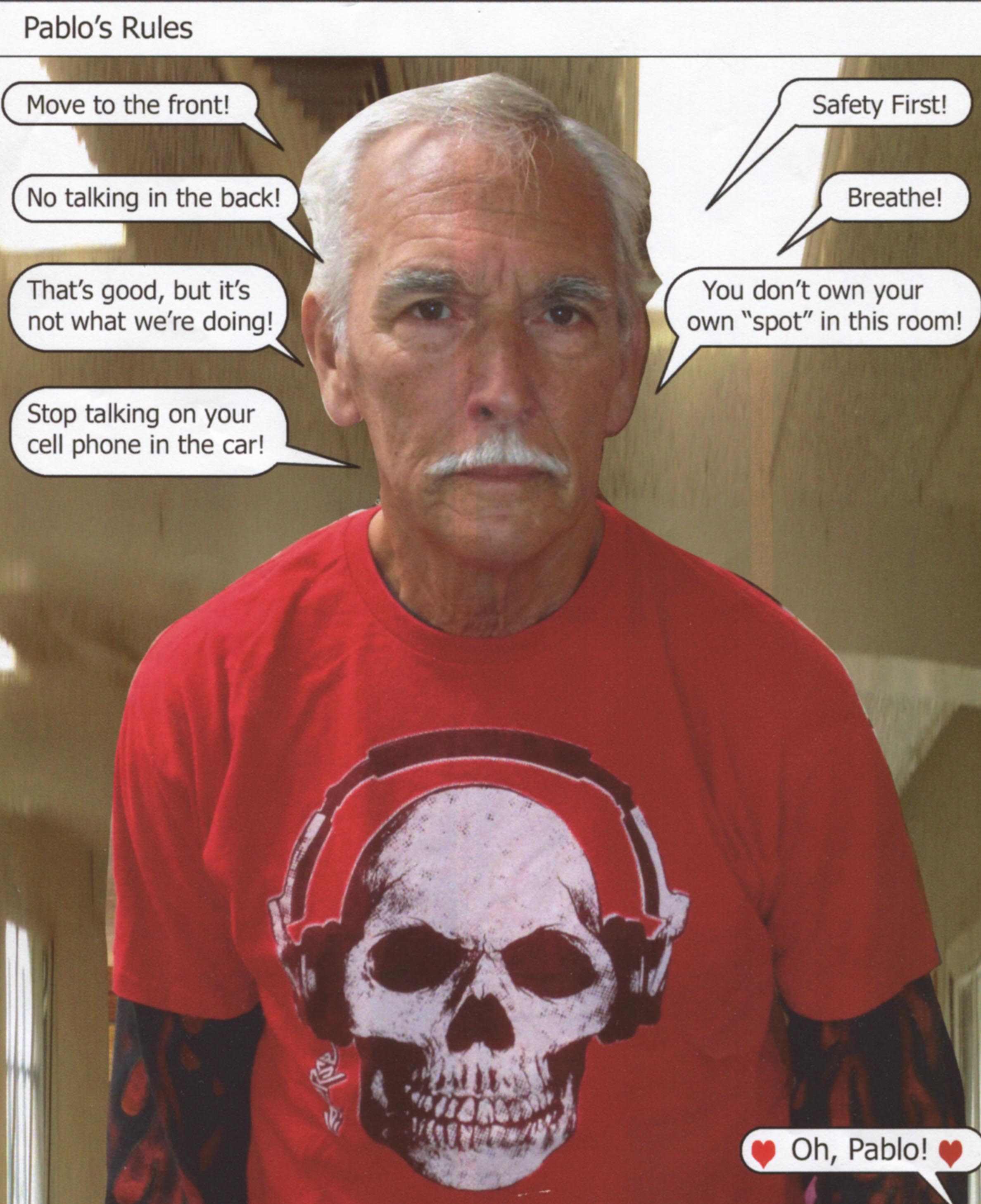
No nonsense aerobics instructor Pablo Molina keeps his classes hopping. He'll be 73 in June, just a few months older than Rose Marie

No-nonsense aerobics instructor Pablo Molina keeps his classes hopping. He’ll be 73 in June, just a few months older than Rose Marie. Credit: San Francisco Recreation and Parks Department

First, I plan to move a lot more. In March, I started several once-a-week classes at the local San Francisco Park and Rec Senior Center located in Golden Gate Park two blocks from my flat: a low-impact and a medium-impact aerobics class, a stretching and strengthening class, and a weights class. And they’re all free. Look for free fitness classes or programs for seniors; they’re more common than you’d think. These classes have shown me in no uncertain terms what I have to work on most: building up my core strength and regaining my balance!

Cardiovascular-wise, I’m finding that, after just six weeks, I’m hardly out of breath now when I walk up the hill to my flat after class. My exercise goal is this: by the end of the summer, to be able to do all the floor core-building exercises and the aerobics exercises that involve balance without batting an eyelash. It’s a pretty pathetic sight to see right now!

My other big move toward fitness and good health was joining Weight Watchers. I’ve known many people over the years who have sworn by it and were also able to maintain a healthy weight once they quit. Choose a dietary program that you can stick to. I signed up for Weight Watchers’ online program in mid-April for three months and after figuring out how to navigate around the website, I’m finding that I’ve become a lot more conscious of my food consumption. Since Weight Watchers’ integrates activity into the point system, I’m also seeing quantitatively the connection between exercise and what and how much one eats. When I started, I weighed 170 pounds and today my weight is 166 pounds. My goal is to reach 140 pounds by the end of my three months with Weight Watchers’, next maintain that weight for a couple of months, and then get down to 130 pounds before the flakes fly.

And finally, I want to concentrate on getting adequate sleep. I’m still working on that one, inveterate night owl and all-nighter puller that I am. I am, however, making sure I get a good night’s sleep when I have an exercise class the next morning. It’s a start!

One more caveat before I sign off: set realistic goals. I expect that I will hone this fitness plan in the coming months, possibly adding some yoga classes, hiking the trails in the wealth of parklands that surround me, and adding more fruits and vegetables to my larder. All I have to do, whenever I waver, is picture being at the top of some fabulous snow-covered mountain, and everything seems possible. Wish me luck!

[Editor’s Note: SeniorsSkiing.com salutes Rose Marie for publicly chronicling her personal journey back to fitness  She is an inspiration to us and we hope to those seniors in our readership or friends of our readership who would benefit from getting back into shape.  Please support her with advice and comments as she travels down that challenging road.]

Sierra Ski Season 2014–15: A Mixed Bag

In a winter with the lowest snowfall in the Sierra Nevada since record-keeping began, some resorts fared well while others barely managed to open.

On April 1st, it was no joke when California’s Department of Water Resources snow surveyors went to Phillips Station off Highway 50 near Echo Summit to do their official April 1st measurement of the snowpack. Whereas the average

Despite snow drought, author's daughter Katie Cleese and friend Rose Cendak practice Quidditch at Heavenly Valley. Credit: Rose Marie Cleese

Despite snow drought, author’s daughter Katie Cleese and friend Rose Cendak practice Quidditch at Heavenly Mountain Resort.
Credit: Heavenly Mountain Resort

snow depth at that location is 66.5 inches on that date since record-keeping began there in 1941, the measuring crew—with Governor Jerry Brown by their side—found themselves in a meadow devoid of any snow at all. It was unprecedented. Since it’s now likely that there will be very little Sierra snowpack runoff into the state’s reservoirs this year coupled with the previous three years of statewide drought, the governor announced on the spot a mandatory 25 percent reduction in water usage for everyone—companies, institutions, and individuals alike.

Yet, despite there being grass instead of snow in the meadow at Phillips Station, one can still ski and snowboard in the Sierra—at least for a couple more weeks. A small handful of wintersports areas will remain open past the traditional Easter weekend closing date, thanks to their snowmaking efforts, their higher elevations, and/or their careful protection and manicuring of the snow they were lucky enough to have fall on their slopes.

To catch a few more runs before all the snow is gone, you can head to any of the following (closing dates as of April 2nd are in parentheses): Bear Valley (Sunday, April 12th), Boreal (Sunday, April 12th), Heavenly (Sunday, April 19th), Mt. Rose (Sunday, April 19th), Kirkwood (Sunday, April 19th), and Mammoth Mountain (Sunday, May 31st). Bay Area skiers rarely make the trek to Mammoth on the eastern slope of the Sierra off Highway 395 since the quickest route there, via Tioga Pass in Yosemite, closes every winter after the first major snowfall. This season, however, Mammoth was and remains a great option since the Tioga Pass road never closed this winter—a first! As of March 31st, Mammoth had 19 of its 28 lifts operating, with a base of 30–60”. The resort has often been open for skiing over the 4th of July weekend; don’t hold your breath this year!

Only one Sierra wintersports resort is closing this Easter Sunday, April 5th, the traditional end of ski season: Alpine Meadows.

Katie Cleese soaks up the bennies in the too-warm patio at Heavenly Mountain Resort.  Note snow melt in background. Credit: Rose Marie Cleese

Katie Cleese and Mike Allen, Director of Ski Services, soak up the bennies in the too-warm, mid-mountain patio at Heavenly.  Note snow melt in background.
Credit: David Koth

Several Sierra resorts had a tough season, especially those with no snowmaking capacity or besieged by higher temperatures that prevented snowmaking or located in the Central Sierra, which didn’t get as much snow as their neighbors farther north. Sierra-at-Tahoe managed to open on December 12th and ran its lifts for a total of 94 days before it had to close on March 16th. Badger Pass in Yosemite National Park opened on December 14th but had to close on January 19th, never to reopen. Dodge Ridge racked up similar stats to Badger Pass, opening on December 17th and closing in mid-January. Homewood on the west shore of Lake Tahoe opened on December 20th but then closed on February 23rd to wait for another significant snowfall that never came. Tahoe Donner closed on March 15th and Diamond Peak closed on March 29th. Sugar Bowl had to cut its 75th Anniversary season short, closing on March 22nd.

Hopefully, all the resorts will have a banner year next year, but with the new normal, it looks more and more like any California resort that hopes to survive the changing climate will have to take the plunge into a robust snowmaking system.

There’s Snow In Them Thar (California) Hills

Although Snow Conditions Have Been Less Than Golden This Season,
There IS Some Great Skiing To Be Had In California’s Northern Sierra Nevada.

Northstar-at-Tahoe has been operating full blast since Thanksgiving. Credit: Northstar

Northstar California has been operating full blast since Thanksgiving.
Credit: Northstar California

While much of the U.S. has gotten battered all winter long by massive dumps of snow and other inclement weather, California’s Sierra Nevada has been having a tough time living up to its name (“snowy mountain range” in Spanish). But, a crazily configured jet stream and a persistent giant high off the West Coast notwithstanding, most of the mountain resorts of drought-stricken California have been able to carve out a decent wintersports season.

As of March 8th, most Northern California resorts, particularly those in the Lake Tahoe region and at the higher elevations, have more than half of their lifts running and terrain open to skiers and boarders, thanks to a storm during the first weekend of March that dumped as much as 28 inches of snow on the slopes and to colder temperatures that have allowed for accelerated snowmaking.

Squaw Valley, with a base of 22″ to 52″, has all but five of its 29 lifts going, and its neighbor area, Alpine Meadows, has nine of its 13 lifts operating on a base of 19″ to 47″. Heavenly Mountain Resort, which boasts “the West Coast’s largest snowmaking” operation, is running 19 of its 28 lifts with an average snow depth

Heavenly Valley's been making snow, producing outstanding conditions. Credit: Heavenly Vally

Heavenly Mountain Resort has been making snow, producing outstanding conditions.
Credit: Heavenly Mountain Resort

of 39″. Says Heavenly p.r. coordinator Liesl Kenney, “Everybody is surprised at how good conditions are when they get up here.” Convincing skiers and boarders of this is probably one of the biggest challenges facing many resorts, seeing as how the San Francisco Bay Area has been experiencing perennially sunny skies and basking in 70° temperatures week after week this winter!

Northstar California is “thriving” this season, according to senior communications manager Rachael Woods. “Every chair is served by our snowmaking system, which can be controlled by a smart phone!” The resort has been operating top to bottom since opening shortly after Thanksgiving and hopes to do so until its planned April 19th closing date. The resort currently has an 18″ to 49″ base with 18 of its 20 lifts operating. The higher-elevation resorts, Sugar Bowl (base: 6,883 feet) near Donner Summit, Sierra-at-Tahoe (6,640 feet) near Echo Summit, Kirkwood (7,800 feet) near Carson Pass, and Bear Valley (6,600 feet) near Ebbetts Pass, can all crow about their healthy snowpacks that stack up to as much as 72” (Sugar Bowl).

The two resorts located northeast of Lake Tahoe in Nevada can’t complain this season either. Mt. Rose, with the Tahoe region’s highest base elevation at 8,260 feet, has all 60 trails and all eight of its lifts going, with snow depths of 32″ to 66″. Diamond Peak, at 6,700 feet, has two to three feet of snow with five of its seven lifts in operation. And SoCal favorite Mammoth Mountain off US-395 in Central California has 19 of its 28 lifts running, a base of 30″ to 60″, and a planned closing date of May 31st. Its fellow Central California resorts, alas, have not fared as well. China Peak, Badger Pass in Yosemite, and Dodge Ridge are all currently closed due to a lack of snow cover. Up near Tahoe, Donner Ski Ranch, Tahoe Donner, and Homewood are also temporarily closed—permanently for the season if that high ridge doesn’t budge!

With most currently open Sierra resorts planning to close the third or fourth weekend in April, West Coast skiers 65 years of age and older still have at least six weeks to enjoy some quality spring skiing or boarding and to catch some senior savings. Most resorts offer discounted lift tickets (65+) and you can even ski for free if you’re 75+ (Bear Valley) or 80+ (Diamond Peak). Several resorts offer clinics for 55+ skiers early on, but that’s a story for next season. May it be ever so snowy! Like Boston-snowy!