Tag Archive for: SKIING Magazine

Mystery Glimpse: This Lady Created The First…

…What?

Hints:  New Hampshire. She went to Smith. Her husband’s last name was the name of the creation.

Credit: New England Ski Museum archive

Many thanks to the New England Ski Museum, now with an Eastern Slope branch in North Conway, NH, in addition to their home base at the foot of the Cannon Mountain gondola, Franconia.

Last Week

Lots of clues here. Who’s in the speed suit?

Yes, Buddy Werner is the skier on the cover of the January 27, 1964 edition of Sports Illustrated, harkening the Winter Olympics, held that year in Innsbruck, Austria.  At the time, Werner was a vibrant, new personality in the ski world, a Steamboat native, and a persistent competitor. Werner, as many senior snow sports people know, went to the 1964 Winter Olympics with Billy Kidd and Jimmie Heuga, but never placed. It was just after the Olympics that Buddy joined other athletes filming a movie in Switzerland, produced by Willy Bogner, the fashion designer. He and German racer Barbi Henneberger were lost in an avalanche during the production.  He was only 28.

What makes this photo so interesting to me is that I had a similar photo tacked above my desk at SKIING Magazine, One Park Avenue, NY, NY. That was in 1970. The photo which you can see below, you have to agree, is pretty dramatic, an airborne downhill racer coming full on, in helmet and speed suit. There was no identification on the print as to who it was or when it was taken. I always wondered.

Last week’s photograph from the Tread of Pioneers Museum archive, triggered a response. I rifled through several old files, and there it was. That old picture matched the cover shot of Sports Illustrated, but obviously a different frame from the shoot.  It been taken at the same on-hill session as the cover photo, and somehow a print made its way to SKIING magazine’s offices, where I commandeered it, and pinned it to the wall. When I went on to other things, I took it with me, and it’s been around ever since.  And here it is.

After almost 50 years, we now know this is Buddy Werner.
70s Ski Testing: On The Snow

Step 2: Go Out, Do It.

One of the joys of working at Ski Magazine was that I was paid to test skis!!!  Ski manufacturers shipped skis to our lab for testing and when it was completed, the skis were covered with self-adhesive shelf-paper and numbered so the testers couldn’t identify the ski. 

Mother Nature dictated our location and we didn’t want to test at the same area Skiing used.  One year we started at Mount Hood but weather and poor snow forced a move to Mammoth before we settled on Park City the following year.

Areas were picked that could give testers access to a lift that served terrain suitable to our needs.  To create a hard, icy surface, the area allowed us to spread ammonium nitrate on the snow to create a hard frozen granular.

For racing skis, we set up a NASTAR type course with thirty gates and applied ammonium nitrate to make it rock hard.  Racing skis were tested just like the others before we pulled them aside for the days when we would ring them out on a racecourse.

Our contract testers – six men and four women – and me were all certified instructors with either coaching and/or racing experience.  John Perryman and his wife Joan were expert skiers and were part of the test team.  We wanted strong skiers who could ski consistently and could handle a ski without changing their technique. 

To get it right, it wasn’t about blasting down the mountain on one ski after another.  SKIpp demanded a disciplined methodology.  Each year, we reviewed the on-snow maneuvers designed to replicate how beginners through experts skied.

Because some brands were putting their name under clear P-Tex, testers were not allowed to pick up the ski prior to skiing on them.  To help ensure that each ski was tested the same way, the methodology was designed to minimize the tendency of a tester to adapt his/her technique to the ski.  Testers were limited to two runs per ski. 

 The tester came to the tent to score the test ski and write his or her comments before taking another ski.  Each day we tested ten skis because we learned beyond that it became hard to differentiate each ski’s performance.

The best skis didn’t generate many memorable comments although one tester wrote “On the icy snow, this ski tracks like a train on rails and in the soft stuff, it will derail you.”  Another wrote, “A two-by-four with an upturned end would be better than this ski.”

In the evening, skis were prepped for the next day and the day’s data tabulated.  Even though it was preliminary, we were pleasantly surprised at how well the on snow results compared to the lab’s prediction.

Testing ten skis took us to lunch.  For the afternoon, the testers could pick a ski from that day or prior days to enjoy.  It was tough, demanding skiing, but somebody had to do it!

John Henry Auran: Ski Journalist Extraordinaire, Dies At 90

The Creative, Intense, Funny, Unique Journalist Will Be Remembered As One-Of-A-Kind.

John Henry Auran, journalist, raconteur, skier, sailor, innovator, enthusiast.

Ski journalist John Henry Auran was the kind of person you could never forget. I worked for John Henry, or JHA, as he was known to some, in the early 70s at SKIING Magazine, then located at One Park Avenue in New York City. Despite different life paths since then, we kept in touch, even as his declining health brought him farther and farther away from the sports he loved.

John Henry was always interested in delving into new products, new racing results, new personalities on the ski scene, new ideas for connecting the reading public with the outdoor winter sports industry. His enthusiasm was uncontainable for finding, thinking, analyzing, reporting, and watching the world for news.

I will never forget when he and I went to a ski boot manufacturer somewhere in New Jersey who promised to show us a then new development in boot fitting. This was the first foam-fitting demonstration ever, as far as I know, in the business. Since John Henry was SKIING’s boot expert, he went for a sneak preview, and I tagged along to take pictures.

At the manufacturer’s “plant”, John Henry was seated in a high chair, like the shoe polishing chairs you see at airports or train stations.  His foot was placed in a plastic bladder which was gradually filled with foam and placed in a boot shell. I distinctly recall him reporting all the sensations that involved: “It’s getting warmer, I feel some pressure,” while a big smile crossed his face. “I’m getting foamed!”

After that, John Henry couldn’t resist asking people if they’ve been “foamed”.  Since no one had, that gave him license to launch into describing the experience complete with gestures and enthusiastic and dramatic commentary. “Everyone should try it.”

He was also an innovator in what created a new genre: the industry show newsletter. At the time, the ski business had three regional shows for equipment and clothing manufacturers and wholesalers to meet retailers run by Ski Industries America. John Henry had a terrific idea: Publish a daily newsletter at each show that reported news, gossip, personnel moves and the like every morning of the show. Sounded like a great idea.

JHA enlisted the staff of SKIING to do some reporting, bring it to us in our editorial corner where he and I would create columns by typing copy into an IBM Selectric. We then pasted the columns to a piece of oaktag with a pre-designed masthead and logo and brought it to a printer where we waited until the job was done. We picked up the edition and distributed it throughout the show venue. Did I mention this process took almost all day AND all night? Trial and error was the name of the game. Despite being exhausted, we knew we had a hit when we saw the show people reading the Show News over coffee. That was true journalism.

John Henry always had a story ready whenever we talked over the years. One of his favorites was about his hometown where he was born in Germany. As a young boy, he was a witness to Kristallnacht in November 1938.  A few years ago, the town government had a commemorative event marking that dark past and invited JHA to come back to join the few other surviving town residents to bear witness and tell their stories of what happened.  Despite his disability, he went all the way back to Germany with a companion, all sponsored by the town. It was a remarkable and touching journey.

John Henry was also an enthusiastic member of SeniorsSkiing.com’s Advisory Board.

John Henry lived in a nursing home in upstate New York for the past decade or so. When I called, the nursing staff would chat while John got to the phone. They would tell me he enjoyed being taken to nearby Hunter Mountain where he would sit in the base lodge watching the skiers and the lift traffic. I can see him there, in my mind’s eye, reminiscing to himself about the equipment, the racers, the dramatic places, the deadlines, and the great writers he knew. Watching the lift go around and around.

Rest in peace, John Henry.

Mystery Glimpse: Shiny Gizmo

Whatizzit?

This beautifully designed object comes from the Vermont Ski and Snowboard Museum. What’s it for? Have you used one? When was that, by the way? Let us know.  Scroll down to add your COMMENTS below.

Credit: Vermont Ski And Snowboard Museum

Last Week

Once again, it is clear there are some sharp-eyed ski historians out there in reader-land.  There were lots of very astute comments.

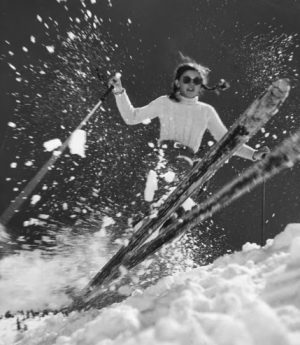
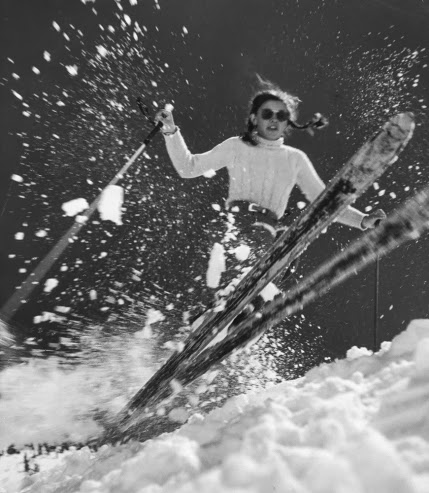
This photo comes from a SKIING Magazine Oct 1969 story by John Jerome.  His article reports on the revival of New Hampshire’s legendary Inferno Race on Mt. Washington’s Tuckerman Ravine in the spring of 1969, the event pictured here. Unfortunately, the article didn’t report the name of the racer in the picture.
According to Jerome, the last previous Inferno race was in 1939 when Toni Matt scared himself silly by schussing the headwall. Numerous debates have ensued about whether his run was a mistake or intentional. Regardless, Toni found himself deeply rooted in ski history lore.

Thirty years later, in 1969, the race was held as a “loosely controlled Giant Slalom”, hence the gate you see in the picture. [Dave Irons, you got that right!]  The idea was to prevent anyone from doing a Toni on the headwall which, by the way, has a 55 degree pitch.  The weather was miserable, temp rising from 13 degrees to mid 20s at race time with a wind blowing at 75.  For the record, here were the winners:  Veteran’s Category—George Macomber, Junior Category—Duncan Cullman of Franconia, NH.  But, Jerome reports, the bravest of all was 55 year old Adams Carter who, in honor of his participation in the three original Infernos in the 30s, foreran the course.


SKIING Magazine Folds: Goodbye, Old Friend.

After 7o Years Of Chronicling The Sport, The Venerable Publication Closes.

The rumors are true.  SKIING Magazine, like so many other classic magazines, has finally closed down after nearly 70 years of publishing.  This is especially sad for me because I worked for SKIING in the early 1970s as a junior editor.  It was there I found myself catapulted into the whole ecosystem of the ski business where SKIING and its uptown rival, SKI, were the nexus of all that was happening.

Under Doug Pfeiffer, editor-in-chief and already an industry legend, and Al Greenberg, executive editor, the magazine in those days was a creative, innovative and exciting place to work and for readers a valuable and entertaining look at what was emerging as a growing winter sport. Interest in skiing was bursting in the early 70s; celebrities were being recognized and promoted by the press:  Billy The Kid, Jean-Claude Killy, Karl Schranz.  Harry Leonard’s Ski Shows—with a young Bernie Weichsel on his staff—descended on major cities.  The movie, “Downhill Racer”, starring Robert Redford, brought the drama and beauty of racing to the public. There were new boots, new bindings, new skis, new everything from destinations to accessories, and SKIING covered it all with expertise, a touch of irreverence and some really great writing.

I will never forget learning the basics of cross-country skiing in Al Greenberg’s office at One Park Avenue, New York.  Or watching Senior Editor John Henry Auran getting his feet “foamed” for ski boot liners, an outstanding innovation back in the day. “Have you been foamed?” he always asked mischievously. There were also 3:00 AM deadlines, last minute changes, hysterical laughter when coming up with headlines with Managing Editor Dinah Witchel. It was always fun watching Fashion Editor Cathie Judge sort through piles and piles of new clothes for photo shoots.

One month, we were so late in getting final editorial done that I—the junior person— was tasked to personally hand deliver the physical page layouts and copy down to the printing plant in Doraville, GA. I was driven to the airport in New York for an ultra-early flight straight from the office after an all-nighter by John Henry and some other anxious production people. When I landed, I took a cab from Atlanta miles out to Doraville only to find the plant was closed for Confederate Memorial Day.  So I left the whole edition—packaged in a giant cardboard sandwich bigger than two super-sized pizzas—with the security guard at the gate who promised to get it to the right person the next day.  I gulped, left it with him, got back into the cab, and flew back to New York.

And of course, I will never forget the early 70s ski tests with Wayne Wong, Doug and Ginny Pfeiffer and Jim McDill out in Mammoth Mountain after Memorial on spring snow and bright sunshine near the top of the mountain.

Memories, bound volumes, and reunion phone calls from long-ago colleagues are left.  Thanks SKIING for the run.

If you worked at SKIING, what are your stories?  I know that several contributors to SeniorsSkiing.com were on staff back when the magazine was a vibrant center of the skiing community.  Tell us your memories.


Rediscovering John Jerome: Looking Closely At Everyday Things

Leafing Through An Old Magazine Reminds Us Of A Great Writer

Back in the early 70s, as assistant editor at SKIING Magazine, then located at One Park Avenue in New York, we would occasionally watch a typescript from John Jerome arrive in the mail and work its way through the editorial process. After reading a couple of paragraphs, it became clear that these words were not the usual ski article patter. John was a skilled observer, first requirement of an essayist extraordinaire, and was able to tell stories and administer advice about simple things in a way that revealed a writer was at work.

CarSkier


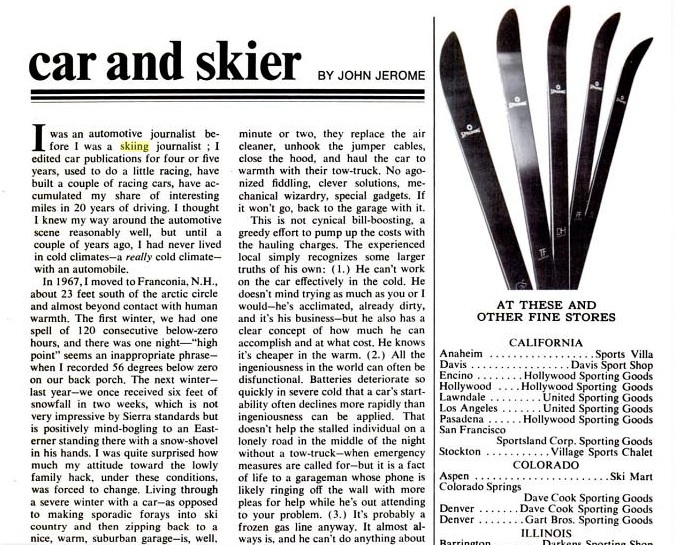
John Jerome was a polymath; he started in automotive journalism (he was editor at Car and Driver), became a skiing savant (he was editor at SKIING), re-located from the “city, working for magazines, wrestling with words and paper in tall buildings under fluorescent lights” to New England. There, as a freelance, he wrote books and many articles about running, building stone walls, becoming an aging athlete, mountains, the value of stretching, and, yes, skiing. And the halo of subjects around skiing, like cars and winter. Here’s an excerpt we just re-discovered by glancing through a November, 1969, SKIING article, “Car and Skier”. He’s talking about one of the two main problems of winter driving he learned by living in cold-winter New Hampshire, getting unstuck:

“Getting unstuck, or not getting stuck, is a much more diffuse problem, against which logical, ordered stops are not so effective. I hate and despise snow tires, but I put ‘em on, and they saved me a lot of grief. My prejudice was based on their noisiness and feel at highway speeds; what I didn’t realize is that a large part of the process of not getting stuck is a kind of metaphorical shifting of gears that takes place when you are a severe-winter resident. You simply slow down. When winter closes in, you bank your metabolism and your frustrations, and settle down into a calm and bumping 25-mile-per hour way of life. It does wonders for keeping you out of snow banks, and it also overcomes a lot of prejudices about snow tires. You can spot winter tourists by how fast they drive more quickly than by their plates. So can the cops.”

The first problem of winter driving, if you’re wondering, is getting started.  Solution: Bring car battery into house at night.

JohnJerome

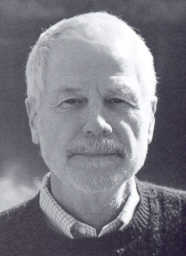
John Jerome, prolific writer, observer, athlete, contemplator of things.

Good writers see connections between things in the world that others either don’t see, or don’t see until the writer points them out. John Jerome was good at that. Here—in this excerpt from his book Stone Work— he makes a link between the rhythm of placing stones on a wall and making linked turns in skiing. On finishing the placement of a stone—the last step of the cycle: start, the move, the finish—he says:

“Sometimes, there is more difficulty in finishing moves than in starting them. I first ran across this principle in downhill skiing, where great instructional emphasis is placed on completing one turn in order to get the next one started right. This didn’t make a whole lot of sense to me: you have to stop turning in one direction if you’re going to start turning in the other, don’t you? I flailed and flummoxed my way through a lot of awkward moments before the significance of the advice sank in. Finishing is a positive act. A ski turn carried to its logical physical conclusion ends with an edge-set that make a stable platform from which to start the next turn. ‘Finished’ means your weight is in the right place, your body and skis prepared for whatever comes next. Without it, you’re in trouble. You have no ‘timing’.’

John Jerome was contemplative writer who wrote in a way that made you feel you were talking with a very interesting friend over a very good drink.

His books are still available on Amazon.com. Have you read Truck, Staying With It, or Staying Supple?

Long Time Between Runs

SeniorSkiing

It is a sunny and cold Thursday morning in early February.  There are a handful of other skiers on the mid-New Hampshire ski area lift.  I decide to go right at the top.  Trail is untouched, the corduroy grooming marks fresh and waiting.  I turn, effortless.  Ahhh.  I turn again, making a big, wide arc.  The feeling is like floating, my new skis carving and then, almost without a conscious notion, shifting to the other edge.

Hard to believe this is my first real run in thirty-five years.  Okay, there was an expensive, uncomfortable holiday weekend on rental skis and boots in the 90s with cranky children, cheesy condo and unrelenting cold.  It was an exception.  I had left my real skiing behind long time ago.

I started in college, in the mid-60s.  Back then, it was blue jeans and rice-paddy parkas with Moriarity hats, wooden skis, leather boots and Cubco bindings.  In the early 70s, I lucked out and worked as an assistant editor at Skiing Magazine working and rubbing elbows with some of the greats.  Now, that was fun.

I was Associate Editor in the early 70s

I was Associate Editor in the early 70s

The next few decades had me running a business, flying here and there, finding and keeping clients.  No time, no interest in skiing.  Too cold, too time consuming.  The closest I made it to the slopes was working on my laptop while watching my wife kids from the day lodge window.

Then I came back.  With retirement came time.  I looked at boots and skis in a ski shop one day and said to myself, “I can do this now.”

I find almost everything about skiing has changed for the better during my long hiatus.  The skis are magical instruments, boots are comfortable, clothes are warmer, the lifts are faster, the trails well groomed and, because of my senior status, the lift tickets are relatively cheaper.  And, there is no more need for speed.  Instead, I relax into the slow turn, pressing down to feel the slice of the edge.

Parabolic skis rule! Turning has never been more easy or more fun.

Parabolic skis rule! Turning has never been more easy or more fun.

Apparently, I’m not the only veteran coming back to skiing.  Although we are still a small percent of the total, the number of skiers over 65 has doubled since the 1997-98 season, according to a National Ski Areas Association demographic study published in 2013.  And we ski more often than younger skiers, too.  We get in 9.5 skiing days per season compared to a national average of five days.  We are using the gift of time that retirement has bestowed.

What does it take to get back?  Fitness for starters. That’s a good idea, regardless. A good ski shop to fit you out with the proper equipment, maybe starting with decent rentals.  A lesson might be helpful, too.  A couple of friends to go with.  A nice winter day in the middle of the week.  More and more runs.

What’s your return-to-skiing advice?