
Tag Archive for: XC Skiing

BEHIND THE SCENES WITH CCSAA

Your Support Helps!

Help us keep SeniorsSkiing.com free. Please support SeniorsSkiing.com with a donation.

DONATE

I recently was part of a conference call of U.S. and Canadian cross country ski area operators. The conversation touched on who our guests are, their wants and their needs; whether we’re in a growing business (short and joyful answer: yes!); and what we need to do to create new skiers and to retain past visitors. The questions are all part of the normal agenda at these monthly meetings; they’re survival matters in our industry.

On the call were Board Members of Cross Country Ski Areas Association (CCSAA, usually pronounced “Kssaa”), an unassuming but extremely effective force in the Nordic ski world in North America. It’s a familiar name among Nordic area operators and suppliers; less so among the several hundred Nordic clubs with groomed trails; and an enigmatic acronym to most retailers.

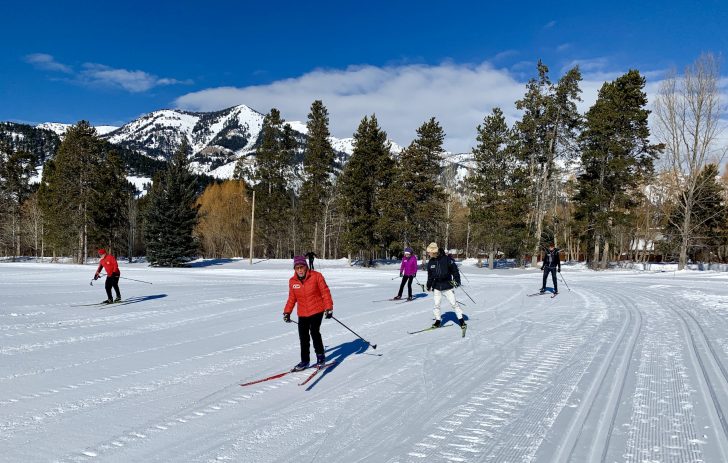
Group Lesson Source: Jackson Hole Nordic

As for the skiing public, about the only folks who know about CCSAA have learned of it through the logo on its exceptionally useful consumer website, https://xcski.org, which provides information on why, where, etc. to enjoy XC skiing. If you have any interest in XC, take a look at the site – it’s incredibly informative about the value of groomed trails, benefits of instruction, spotlights on XC areas and regions, etc.

That unfamiliarity is ironic but not surprising when you consider that CCSAA is a trade organization that promotes the sport but historically hasn’t tried to promote itself to the public. At the same time, it not only represents the entire recreational side of the Nordic industry (including ski publications and organizations) but generates and serves as a resource for much of the media coverage of cross country skiing.

Reese Brown, Executive Director, Cross Country Ski Areas Association.

CCSAA’s Executive Director is 62-year-old Reese Brown, a vigorous and versatile leader who has given the organization a more recognizable face and name in the industry at in-person meetings, frequent Zoom calls that discuss implications of the COVID era, and bi-weekly newsletters. Most of CCSAA’s Board are in their 50s and 60s, with, literally, decades of experience in a challenging industry.

For XC skiers, CCSAA’s accomplishments are pervasive but often may seem subtle or even mundane. Examples include helping persuade major snowcat manufacturers to explore Nordic markets; working with insurance companies to provide liability coverage at reasonable premiums (otherwise your trail pass would cost many times the current rate); and negotiating with the U.S. Forest Service to grant multi-year use permits.

CCSAA has developed a consistent signage system so skiers understand what direction to ski in; whether

CCSAA trail signage

skating/snowshoeing/fatbiking/walking is allowed on certain trails; what difficulty rating suits you best, etc. There’s also a defined way to measure trail length (sometimes called “non-repeat kilometers”). This approach may seem self-evident, but years ago some managers measured two-way routes in both directions. In one instance, a trail “network” advertised 30+ kilometers for a single non-repeat two-way 6-kilometer trail.

New in the CCSAA repertoire is primary-level consumer, retailer, and operational research, so we’re able to determine what’s growing, shrinking, or has plateaued. Knowing that you’re in a healthy business not only encourages improved services and facilities but may also enable XC areas (for example) to find new investors or loans, community partners, event sponsors, and media coverage.

So next time you’re out on the XC trails, smile at the signage, enjoy the grooming, and recognize that CCSAA may also be responsible for sensible COVID policies, inexpensive trail passes, and your use of public lands.

Eat Your Way To Fitness

Cross Country Ski and Snowshoe Food Events Offer Exercise And Gourmet Food.

Nordic Nibbles are happening across the country. Eat and lose weight.

[Editor Note: This article first appeared in XCSkiResorts.com, published by Roger Lohr.]

Want a guilt-free way to indulge yourself with food while exercising? Cross country (XC) skiing and snowshoeing are some of the best forms of aerobic exercise, but if you go on a “Gourmet Ski Tour” on your XC skis or snowshoes, you may very well eat your way to fitness at a number of trailside food stops. What a grand time so go ahead, eat, ski, and be merry—appetizers, wine, champagne, fondue, entrees, desserts, and more.

Here’s a cross section of the culinary XC ski events that are planned this winter across the country with a varied menu of fun and fine cuisine.

East

Smugglers Notch, VT has the Snowshoe Adventure Dinner at the mountain summit on Tuesdays. The Maple Experience is on Tuesdays on a tour to learn about maple sugaring and get to take home a sample. The Sugar on the Snow snowshoe tour is on Wednesdays. The Hot Chocolate Warm Up is daily at 3:30 PM with a bonfire.

Notchview Reservation,  Windsor, MA hosts the the Breakfast Ski Club with a short tour followed by beverages, pastry and fruit (9 – 11:00 AM on Jan 18, Feb 1 and 15).

The Chocolate Festival at Mt. Washington Valley Ski & Snowshoe Center, Intervale, NH on Sunday, February 23 is an inn-to-inn affair at about 12 stops to experience your chocolate fantasies including moose and fondue. Go on a tour of any length and actually gain calories, even if you ski as far as 20 kilometers. A shuttle is also available for those that have overindulged at the event dubbed the “Sweetest Day on the Trails.”

Check out those goodies, then burn cals.

Central

Treetops Resort, Gaylord, MI has the Skiable Feast Getaway Package that features a winter gourmet adventure with five buffet food stations along six km of trails. It is offered at 8 AM – 2 PM on seven dates on Saturdays during January-March. Also the Wilderness Sleigh Ride Dinner is on Saturdays at 5-9:30 PM on a tour to the cabin for a culinary adventure.

Cross Country Ski Headquarters, Roscommon, MI has the “Around the World Wine & Ski Tour” is a new event with XC skiing, and Ribs & Blues food music event, and the Gourmet Chili Bard. Look for the Fill at the Grill and Fire on the Mountain food events.

The Upper Peninsula of Michigan in Ironwood features cuisine from local restaurants that can be purchased at a nominal fee for a food court with local restaurants at the Taste of the Trails on the ABR trails on March 14.

Mountains

Just Desserts Eat & Ski in the Enchanted Forest, Red River, NM on February 22 features goodies from 20 different local restaurants at three trailside stations with up to 100 desserts within a four kilometer loop. Their motto is, “It’s not a race, just a gorge fest.” Additionally, on Feb 14 there is a Yurt Dinner Party for Valentine’s Day.

Look to the Galena Lodge, Ketchum, ID for the Full Moon Dinners on nights with the full moon, whereby you can go ski or snowshoe ($5 snowshoe rental offered) and then return to lodge for a four-course dinner at $40 or half-price for kids under 12. There are also special Wine Dinners, Holiday Dinners, and Valentine’s Day Dinner scheduled from mid-December to mid-March.

At Devil’s Thumb Ranch Resort & Spa, Tabernash, CO,  the Ski, Sip & Spa is an all day event that includes lunch and wine & cheese is scheduled for Feb 9, 2020. Also, set for Jan 25 is the Stagecoach Classic Race & Tour starting at Devil’s Thumb into the town of Winter Park followed by an event with a beer garden and hosted by multiple food vendors.

The Rendezvous Trails, West Yellowstone, MT, features cuisine that is homemade and from local restaurants that can be found along a designated route on the trails at the Taste of the Trails on Feb 16. Pay in advance at West Yellowstone retailer Free Heel & Wheel.

Frisco Nordic Center  in Colorado has the Ski, Eat and Be Merry event on Feb 1 from 6:00 – 10:00 PM with a progressive dinner along the trails featuring food, drink, 3 bonfires and luminaries on a 2 km loop.

West

Bear Valley Adventures, in California,  hosts the Wine Tasting in the Meadow in late November to sample local wineries with appetizers.

Tahoe XC, Tahoe City, CA, has the Fish Taco Night is a fundraiser on Jan 29 at the Sunnyside Restaurant & Bar in Tahoe City.

Cypress Mountain, outside Vancouver, BC has Fondue Dinner Snowshoe Tour, S’Mores Tour, and Cheese & Chocolate Fondue Tour all scheduled with a snowshoe trek to the Hollyburn Lodge Building to start in January. These programs include rental equipment, trail access, and guides/instructors.

Changing XC Skiing Stereotypes

“Aren’t Groomed Trails Free?”

Grooming is more complicated and expensive than most people think.

There are at least three unfortunate stereotypes that are really important to the cross country ski world:

“If you can walk, you can cross country ski”

“Oh, it looks like so much work!”

“It’s free, right?” Meaning: Well, I heard it was free, so I expect it to be free.

Okay, a lot of cross country skiers and not-yet-skiers take all three for gospel, but here is an xc ski area operator’s view of these stereotypical views:

First, if you can walk, you can ski. But “it takes time – and at least one lesson – to really improve, glide, and enjoy skiing more.”

Second, it’s a lot of work. “Well, it’s a lot of work if you ski a marathon, but what most people do is ski at their own pace for a couple of hours and still have tremendous fun and get some exercise and fitness while they’re doing it.” New cross country ski equipment performs better (glide easier, get better grip on uphills, and have better overall control) and allow skiers to be more efficient and save their energy.

Third, it’s free right? A response to the trail fee question is that there’s no free lunch. This answer is more complex than the others because there are a lot of groomed trails maintained by clubs, communities, states, provinces, federal agencies, etc. where there’s no formal fee. Also, skiers have the option of breaking their own trails.

Appreciating Trail Grooming

Grooming is something that’s not only misunderstood by the public but also sometimes goes unrecognized. Lo! Pristine tracks and corduroy appear in the morning because grooming occurs mostly at night. What you didn’t see happen, you may not appreciate.

First, grooming has huge value, makes skiing—and especially learning— easier than breaking your own path. Grooming is expensive, and running an over-snow vehicle is just the most visible part of the cost. Even “no-fee” groomed trails aren’t free. They cost someone time and money.

Groomed trails typically aren’t just old logging roads through the woods and usually don’t just follow golf course cart paths. Area operators can tell you that it can be expensive to develop the best routes, create trails, and keep them in great shape for the public to enjoy. Selecting the best paths at golf courses without damaging grass isn’t simple either. More than 230 golf courses in North America now have machine-groomed trails.

The cost of trail grooming includes machinery (purchase, maintenance, fuel, storage, payroll, depreciation, replacement), land use fees (purchase, lease, taxes), signage and marking, insurance, parking lot construction and snow clearance, perhaps warming huts or yurts, ski patrol, lighting, snowmaking , etc. Ah yes, and there’s the cost of creating some trails.

Methow Trails Example

According MethowValleyNews.com, grooming at Washington’s Methow Trails—cited as the largest XC ski area in North America—is estimated to cost $6,400 for an average night of work. Think about clearing trails, trimming trees to make a wider canopy to allow snow to land, minimize debris on the trails, and to help skiers to avoid branches, angling the surface to complement the sunshine or avoid the wind and so on. Maintaining trails covered in wet snow is very different from dry snow. Icy conditions present a completely different challenge of grinding the surface and setting tracks.

It takes about a gallon of diesel fuel to groom one mile of trail according to Methow Trails. The snowcat blade allows a skilled operator to harvest snow moving it around so it covers the trail where needed. The operators could also use a bucket on the snowcat to collect snow and deposit it to uncovered spots.

Trail groomers can be responsible for maximizing every inch of snow, provide more consistent conditions and deliver more skiable days. As you can see, it’s not a simple task. But it’s one that is often unrecognized and under appreciated.

So hats off to the trail groomer and their cross country ski trails.It’s certainly worth the cost of the trail pass!

Beautifully groomed trails make the xc experience accessible and easy for all, especially beginners.

Group Or Private XC Lesson?

Here’s What The Experts Say.

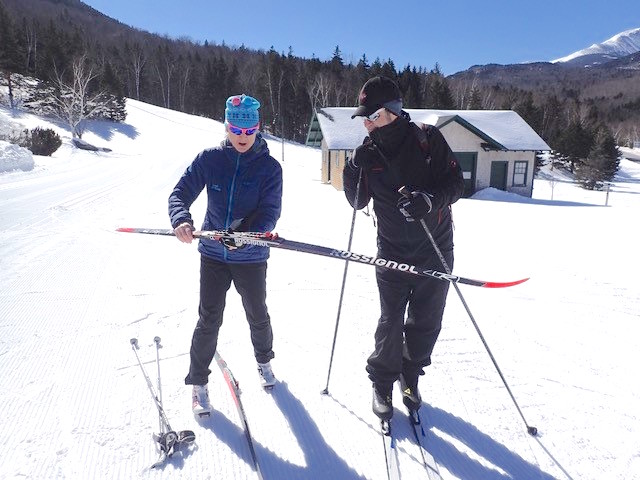
Olympian Sue Wemyss, instructor at Great Glen Trails, NH, gives a student some tips on adjusting bindings. Credit: Roger Lohr

Let’s say you want to learn how to cross-country ski relatively quickly and easily: How to move with grace and minimal effort, develop endurance, and enjoy what you’re doing from the git-go.

Well, it’s going to take time on skis to develop that self-assurance, balance, and muscle memory (though kids can do a lot of that with amazing ease); but the surest shortcut to becoming a good xc skier is to take several lessons or clinics – not just one – with a professional instructor.

I’ve wondered for years what’s the simplest way to speed up the learning-and-fun process for people of any age, not just us perennials: group lessons or private instruction. Figuring that it would help to ask the pros, I contacted three renowned Nordic instructors/coaches/ski school directors. They all have long strings of credentials, but a quick overview: Emily Lovett is co-director of the famous West Yellowstone Ski Festival’s XC Ski Camp in Montana;and Scott McGee is a celebrated cross country, telemark, and alpine instructor, trainer, and examiner in Jackson Hole, Wyoming; JoJo Toeppner has run two XC areas in California at Royal Gorge and Tahoe Donner. They’re experts not just at technique but also at communication and accelerating the learning curve.

They explain that there can be a bunch of factors involved in your choice, ranging from expense to self-consciousness.

All three experts agree that cost can be a factor. Emily makes the point that group lessons can be really fun and meaningful as you learn from each other and bond through a shared experience. She adds, “I think taking a private sometimes depends on if you like having more of a one-on-one experience and attention.” She adds that a group lesson involves some willingness to be open to others’ abilities, questions, and learning styles, which can be fun and interesting.

In a group lesson, you learn from other students and through repetition. Credit: Jonathan Wiesel

Scott comments, “When your goals are specific enough, or if the price difference isn’t an issue, private lessons give you the tailored experience that is most likely to meet your goals and be targeted at your abilities.” JoJo feels that “It’s much more expensive to take a one-hour private where everything is charged separately (ticket, rental, lesson, as opposed to a 75-minute discounted package). But privates can be customized to what the student wants if there’s a specific need, such as mastering hills, corners, or stopping, while groups cover a little of everything.”

Scott feels that a group lesson is a great way for new skiers to meet people, plus they’re easier to book than privates. He says, “Nordic centers most likely have a beginner lesson once or twice a day. As skiers progress, up through intermediate level, there are many undiscovered breakthroughs waiting to happen. Small improvements to efficiency and effectiveness take time to integrate into technique. So multiple group lessons at a beginner-ish level can provide great value as long as repetition (“Here’s how you put a ski on”) is not an issue.”

It sounds like above intermediate level, the likelihood that a group lesson will meet your goals decreases. One great exception to this is the fall “camps” with multiple groups for different ability levels, like the West Yellowstone Ski Festival or Silver Star Mountain Resort in BC, which see dozens of senior skiers among participants each November.

Fast and happy trails to you!

Breaking News: Rottefella Introduces the Move Switch for Enhanced XC Ski Performance

New, Adjustable  XC Binding Concept Hits The Trails.

Rottefella Move Switch allows for adjustable weight distribution. Credit: Rottefells

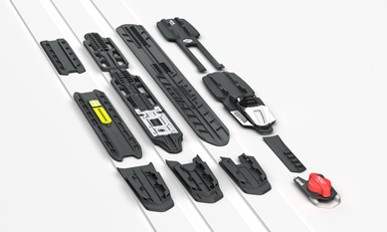
The Rottefella company has created the binding solution for waxless and skin cross country skis. The Move Switch is a dial on the front of the binding that will allow skiers to slide the binding forward or backwards without releasing the ski from the boots. That’s right, while you are on the ski trail, you can just bend over and turn the switch for the binding to slide and adjust to the desired weight distribution on each of the skis.

The intention of the Move Switch is for quick adjustment and better performance on flat or hilly terrain for recreational skiers who use waxless skis and particularly the quiet skin skis that have a mohair-type strip embedded in the ski base. If you want to glide better on a slow snow day on the flat trail, then stop and slide the bindings backwards to distribute your weight on the ski to provide more glide. If you need more grip to go up a hill, then slide the bindings forward to attain an enhanced grip to prevent slipping backwards on the snow.

Rottefella has created a moveable binding system that will be available for and can adapt to work with major existing ski plate systems at the other binding manufacturers including Rottefella NIS, Fischer, Rossignol, Salomon, and Atomic. There is also a binding, Rottefella Classic or Skate Quicklock plate that is moveable when skis are removed for those not expecting to move the bindings while skiing.

The Move Switch will make it easier to adjust the ski bindings as necessary correlating to the snow conditions or terrain. In the olden days, such changing required applying different waxes but with the new products, those days should be in the past for recreational cross country skiers. Using waxless skis eliminated the need for waxing the bases, but they worked differently in varying conditions or terrain – some grip well but are slow on the flats, while others glided well but did not hold when going up a hill. The retail price for a system or plate package will run between $69.99 and $149. Currently, the skin waxless skis may comprise about 25 percent of the new XC ski market as skiers are opting for the quiet base that provides good grip and glide in various ski conditions.

Spike Clayton at Skirack, a retail outlet in Burlington, VT, commented that he’s impressed that a Nordic company came out with a product that can be used universally on any ski brand for the ever expanding skin ski market.  “The product will give our customer a true choice to improve the performance of the skis easily.  The great thing about The Move system is it simple and effective for the skier to use.”

Rottefella Move Switch adapts to many brands of bindings. Credit: Rottefella

Developing Golf Course Ski Trails

New Revenue Source For Those Beautiful Fairways.

Snowmaking at a golf course? When it is too cold to play golf, might as well ski. Credit: Nordic Group International

Cross country (XC) skiers hit a hole-in-one once their local golf course, which has been converted to an XC ski area, is covered in snow. Golf courses are ideal for XC skiing as they are often easier than other trail networks for skiers, and they provide easy access to people looking for a convenient winter excursion. And now, Nordic Group International (NGI) will pay $500 for a referral of a golf course that is interested in developing winter recreation such as tubing and cross country (XC) ski operations (and becomes a client of NGI). There are currently more than 170 golf courses in North America that have groomed XC ski trails.

Jonathan Wiesel of NGI wrote an article for Golf Course Management Magazine in 2009, and he is now putting his money where his mouth is.  That is, he is looking to help golf courses in snow regions develop winter operations. Why would a golf course facility want to add winter activities? The opportunity includes increased revenue, maintaining staff positions, providing community recreation, providing winter amenities for existing or prospective property owners, and so on.

A gold course in winter is a perfect setting for xc skiing, and perfect for seniors who prefer gentle slopes. Credit: Nordic Group International

Profitable winter operations could include XC skiing, tubing, sledding, snowshoeing, fat biking, sleigh rides, dog sledding, ice skating, food and beverage sales, lodging, and special events such as winter weddings and meetings. NGI has teamed up with the SE Group (an premier mountain/outdoor planning firm) to offer services such as feasibility studies, planning and design, snowmaking and lighting, tubing/snowplay layout, turf management strategies, construction oversight and marketing planning.

While such an operation makes sense in a region where it snows regularly during the winter, having a snowmaking operation would guarantee favorable snow conditions. Regular programming can extend the operating season at both ends to increase revenue from early and late season activity. Additionally, lighting the trails will attract skiers and tubers that are unable to visit during the daylight hours.

Such a winter operation would work well in an area that is a major population center, but it also allows resort destinations to take advantage of the winter season. The capital investment for an operation would involve variables such as site topography, extent of existing infrastructure and facilities and the size and orientation of the market. With as little as four-six inches of snow, a winter operation could be launched.

The golf course winter operation is not a pipe dream. Successful winter trail facilities have been in existence across the continent for many years in places such as Woodstock Resort, VT, Sun Valley, ID, Bretton Woods, NH, Weston, MA, Garland Resort, MI, Calgary, AB, Bozeman, MT, and in Breckenridge, Aspen and Steamboat in CO. For more info, contact the trails and land planning consultant at www.nordicgroupinternational.com.

Cross-Country: Lessons Are The Best Way To Out-Think Your Feet

To Make The Switch To Cross-Country, Please Start With A Lesson And These Tips.

In the early 1970s, in a visionary but totally wrong-headed move, the fledgling Nordic ski industry declared that, “If you can walk, you can cross-country ski.”

It would have been a lot more helpful to say, “If you can walk, you can learn to cross-country ski. And it takes only one lesson from a professional to learn how to glide.”

Those were times when an alpine resort manager pigeonholed skinny skiers as, “Guys who head into the woods Friday night, and come out Sunday without having changed either their underwear or their $5 bill.” We were on the defensive—and dang, it’s tough to fight clever stereotypes!

Those were also the days that New Englander John Frado, who designed a lot of the best trails in North America, coined the hilarious phrase that’s the title of this article. And boy, was he right, because you’re going to become a better skier, use less energy, go further faster, and have more fun sooner if you start the sport with instruction. (And by that I mean ideally not just a single lesson, but one, followed by practice, then another lesson. And so on.)

Cross-country can be filled with grace—not just the dynamism, self-discipline, and athleticism you see at the Olympics, but true beauty. Or it can be an awkward downer.

So here are half-a-dozen tips to make skiing euphoric, quickly.

Credit: Ski Museum Of Maine

First, please do something the Nordic business has never been able to and come up with more endearing descriptions than “lesson,” “instruction,” “teaching,” and “ski school.” Who wants to go back to studies when you’re out to have winter fun?

Next, don’t even think of learning from a loved one—instead, learn from a ski professional. There’s always an uncomfortable level of stress and self-consciousness if your instructor is also a relative, or your sweetie. Too distracting; and incidentally, your kids or grandkids are likely to absorb everything depressingly faster than us oldies. But once you can glide, that’s the moment you discover that cross-country is incredibly social, skiing side by side with friends and family.

Third, learn to ski at a cross-country area or club with machinegroomed trails, where the compressed tracks will guide your skis. (More on this in a future article—promise!) A good resource on places to go is www.xcski.org and  www.xcskiresorts.com.

Fourth, your ski pro needs to explain, early-on, how and why to hold your poles properly (my cliché: reach for the sky along the shaft, then shake hands through the grip). Grabbing the poles tightly means you’ll be upright, stiff, walking rather than gliding, and a lot more fall-prone.

Fifth, if you’re renting equipment, check to see if your instructor uses the same skis you do. It kinda levels the playing field.

And finally, think about a second lesson—or a private lesson—that concentrates on the whole range of descent techniques on these narrow skis that don’t have metal edges or heels held down, while you’re using footwear akin to sneakers. Wedge turns, step and skate turns, parallels, telemarking, traversing with kick turns, side stepping—they’ll all get you down that hill.

And as I found even in my prideful youth, sometimes you just have to take your skis off and walk down. It’s all legit!

XC Skiing: Older, Wiser, And Cheaper

A Veteran Ski Instructor Finds Nordic Matches His Senior Skiing Philosophy.

A seasoned Alpine skier (left) compared to a pro Nordic skier. XC is easy to do wrong.
(Credit: Brad Noren_

Older, wiser, cheaper, what is this about? It reflects on what happens with age for most, but let’s put it into a skiing context. Having taught skiing since 1971, I’ve discovered these are the three adjectives that seem to reflect on one’s skiing philosophy with the passing of time.

Most of us in this age group probably skied a lot in the 70s and 80s, maybe even the 60s. I’m sure those memories are rich with fun, challenge and thrill. But as we move into the present, the love of the sport is struggling against those three words in many ways, and, for some, as the song says, “The Thrill is Gone”.

Over my many years of skiing and teaching skiing, I watched aging skiers make changes that were hard to accept (me included). This often resulted in some quitting the sport (not me included). Back to the “older” adjective; in brief, “the body doesn’t do that anymore”. The “wiser” adjective points to personal safety issues, and the “cheaper,” well, you know what that means.

Being “older, wiser, and cheaper,” I have found cross country skiing to be an excellent sport for seniors but often not understood or accepted by the once serious downhill skiing fanatic of decades past.

XC skiing will give you the opportunity to circumvent most of the “older” issues by building muscular strength, adaptive fitness, respiratory health, and the thrill of learning will return. A new challenge is in your future. XC skiing will make you much “wiser” on how your body parts really work, because you will be focusing on efficient movement, good diet, refined balance and more. XC skiing can also be “cheaper” than the downhill sport.

Being both an alpine and Nordic ski instructor, there’s a problem I’ve seen with the move from alpine to Nordic. Alpine skiers sometimes feel that since they are a seasoned, 40-year plus alpine skier, black diamonds, powder, NASTAR gold and all that they can put on a pair of XC skis and master the Nordic/XC sport.

Yes, you can try that but you will surely miss the fun, challenge, and the thrill. You must learn to XC correctly. XC skiing is easy to do BUT even easier to do wrong. I have seen this happen over and over again with close ski friends who are expert alpine skiers in their day. Ditch the ego and take a Nordic/XC ski lesson, you will not regret it. Yes, you will bring many skills in from your downhill resume, but you will also learn things you never even thought of. Your health will likely improve; you are going to be wiser learning a new skill, and you might—probably will—spend less cash.

And don’t give up your love for downhill because I also know your downhill skiing skills are going to be strengthened, and you will find a new thrill there as well.

For more information on properly learning XC skills, check out my web site, Nordic Fusion. As I tell all I ski with “Glide Long and Prosper”.

What A Difference A Day Makes

Cross-Country Skiing In Appleton Farms, Ipswich, MA., January 10-11.

January 11, 52 degrees, 12:30 PM

January 10, 28 degrees, 11:30 AM

Milestones of Modern XC Skiing In the US

Remember Skiing On Wooden Skis With A Pine Tar Base And Lathered In Klistervox? Wasn’t That Long Ago.

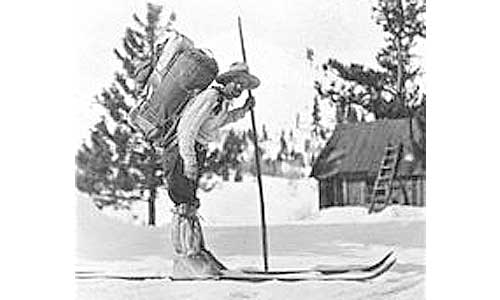
Norway-born Snowshoe Thompson learned to ski in Telemark, his home town.

Editor Note: XCSkiResort Publisher Roger Lohr has catalogued the main events that propelled XC skiing from a peculiar sport with a small following in the US to a major recreational and racing enterprise with a huge following.  Thanks, Roger, for tracing the trail.

Since wooden skis were found in a peat bog in Sweden dating to 2,000 BC, there have been many milestones that brought xc skiing to where it is today. In the US, the forefathers of xc skiing include legends like Snowshoe Thompson, who delivered the mail in the Sierra Mountains of California and Jack Rabbit Johannsen, who xc skied in northern New York.

The editors of XCSkiResorts.com researched the milestones of modern XC skiing in order of significance:

1. Development of synthetic xc skis in 1974.
2. Development of the waxless based ski in the early 1970’s, most notably the Trak ski with synthetic fish scales on the ski base to eliminate the need for ski waxes. The waxless base gave the recreational skier grip on uphill travel while also allowing gliding downhill.
3. Integrated xc ski binding systems, which provided substantial improvements in simplicity of boot/binding interface and control in the mid 70’s.

4. Bill Koch won the Olympic silver medal in 1976  at Innsbruck and at the World Cup in 1982, the first American to ever win at that level. The Nordic Track exerciser used the Koch image as a fitness icon in advertisements for years. In 2010, there were US Olympic medalists in Nordic Combined and in 2012 there was a World Cup winner in women’s sprint.
5. The onset of the commercial xc ski area concept began in 1968-69 at Trapp Family Lodge. This brought designed, groomed, and maintained trails making xc skiing easier and safer for the average person.
6. The skating technique proliferated for a faster paced and higher performance form of recreation.
7. Revolution Skis developed by Fischer led the way to shorter skis, which were easier to use and consolidated ski sizing and simplified ski selection.
8. New, lighter clothing with synthetic and breathable materials made XC skiing more comfortable; company brands such as Mother Karen led the way in the late 1970’s.
9. Other technological advances such as the 2 Wax System that offered one wax for cold temperatures and one for warm temperatures simplified ski waxing.  BackCountry binding systems provided a beefed up boot/binding system that provided substantially more support and control for backcountry recreation.

New NIS bindings link boot with ski using a plate.

10. Will the Nordic Integrated System (NIS) developed in 2005 change the ski/binding interface? This system combines the ski and binding at manufacture rather than at the retail store.


Comparing Five XC Ski Bindings for “Ease of Use”

SeniorsSkiing Correspondent and Cross Country Expert Rates The Big Five Bindings.

You’ve paid for your trail pass and are ready to head out on the trails at your favorite xc ski touring center. How easy is it to put your skis? In this review, I discuss five common binding types, the key features of each, and I rate them on a scale from 1-5 on its “ease of use” (1 being easiest and 5 most difficult).

Unless you’re a ski racer or have some other unique requirement, five types of cross country are available.

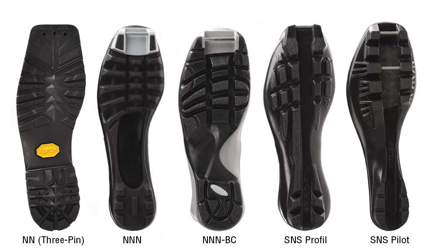
Untitled1

Five types of common XC bindings shown on their respective boots.

NN (Three Pin)

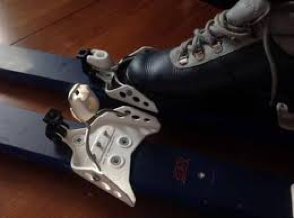
The three pin is the oldest of the five bindings and still used by some skiers. (Editor Note: We have a pair of wooden skis and leather boots to match with four pin bindings we still use; these relics are pre-three pin.) But for most touring purposes it has been replaced by more modern designs. When putting your skis on you must be careful to align the three pins on the binding with the three holes in the toe of the boot before closing the clamp (as shown below).

Untitled2

NN or 3-pin Binding and Boot.

NN EASE OF USE SCORE = 3

NNN and NNN-BC

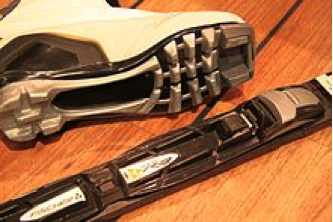
This is the binding used by most ski touring centers for their rental skis. The pivot bar is close to the toe of the boot (as shown below); with the idea being you can almost see where to align it with the clip on the binding. I’ve been to a lot of ski touring centers and observed beginners, recreational and occasional skiers using the NNN binding. Many struggle mightily to get clipped into the ski. I also find that if any ice or dirt gets in the binding, the binding spring gets jammed.

NNN Binding and Boot

NNN Binding and Boot

NNN EASE OF USE SCORE = 4

The Salomon SNS Profil

The SNS Profil works like the NNN and NNN-BC bindings (see illustration below). They are a little easier to use because the pivot point is even closer to the toe so you have a chance of seeing what you’re doing. Overall, though, the experience is frustratingly similar to the NNNs.

Salomon SNS Profil

Salomon SNS Profil Binding and Boot

SALOMON SNS PROFIL EASE OF USE SCORE = 4

The Salomon SNS Pilot

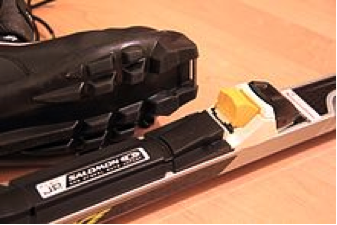
Originally designed for ski racers, the Salomon SNS Pilot has two pivot bars on the boot and clips on the binding which provides additional control. This is also a great binding if you wish to take up skate skiing. In an experiment, I attached the SNS Pilot bindings to a pair of touring skis. The result was surprising. Stepping into these bindings was incredibly easy. The rear pivot bar is used as a guide and the front pivot aligns with the clip. Then with a simple press of the forefoot the binding snaps on. This is a great package for the traditional or classic ski strider like me.

Salomon SNS Pilot

Salomon SNS Pilot Binding and Boot

SALOMON SNS PILOT EASE OF USE SCORE = 1

Bottom Line: My experiment with the SNS Pilot binding worked the best for the ease of use criteria. Clicking in and out of this binding with recreational (touring) skis was a snap. I feel like I have very good control of my skis when on the snow and turning is a breeze.

What’s your XC binding of choice?  How does it work for you?

“Road Scholars” Flock To Winter Learning Programs

XC Skiers mug it up at Craftsbury VT's Outdoor Center. Programs include Yoga, Film, Music & Dance, Credit: Roger Lohr

XC Skiers mug it up at Craftsbury VT’s Outdoor Center. Programs include Yoga, Film, Music & Dance,
Credit: Roger Lohr

XC and Snowshoeing Plus Study Opportunities From Lapland to Oregon.

From Roger Lohr, founder and editor at XCSkiResorts.com:

The Road Scholar program is a brand within the Elderhostel program intended for adults who want to travel and learn and stimulate discourse and friendship among other people for whom learning is the journey of a lifetime. This is an institution that attracts 97,000 participants on multiple-day travel programs enjoying a wide variety of subjects while providing comfortable and inexpensive lodging. This year there are 17 different winter outdoor adventure programs (Nordic and alpine skiing, snowshoeing, dog sledding, etc.) and participants can select from among domestic and international travel and scores of dates from January and March.

The Minnesota Winter Sampler (6 nights, $776, program #7933) has dog sledding, snowshoeing, and XC skiing, learning about the dynamics of wolf packs at the International Wolf Center and an overnight in a yurt.

The Trees For Tomorrow program (Road Scholar program #7310) has been offering natural resources education workshops to students, teachers, adults, and others in Wisconsin’s Northwoods in Eagle River, WI since 1944. Participants stay in rustic dormitories that have comfortable bedrooms, central bathroom facilities and a lounge with a fireplace.

This is a week of XC skiing and snowshoeing on trails, and ski instruction is provided for all skill levels. Naturalists will talk about how animals and plants adapt to the difficult northern winter conditions. Participants will visit a waterfall and learn orienteering skills on snowshoes. They’ll also visit the Kovac Planetarium, the world’s largest rotating mechanical globe-style planetarium.

Classic New England XC scene at Craftsbury Outdoor Center. Credit: Road Scholars

Classic New England XC scene at Craftsbury Outdoor Center.
Credit: Road Scholars

Annually there are many Road Scholar programs in Yellowstone National Park but the variety of Road Scholar programming is best exemplified at the Craftsbury Outdoor Center in Vermont (program # 20276). They’ve got three yoga programs (in January, February, and March) that incorporate daily outdoor activities such as XC skiing and snowshoeing. A program for Film & Fiction is scheduled with participants viewing a variety of film genres with a North Country theme and discussions following each film. The group will also read short fiction set in northern settings by contemporary authors ranging from contemplative to humorous with following discussions. A New England Music & Dance program is scheduled for early February to learn the history of traditional country dance and song from New England, the Canadian Maritimes and beyond with live music and a contra dance, too.

Road Scholars can visit Lapland where Auroras live. Credit: Road Scholars

Road Scholars can visit Lapland where Auroras live.
Credit: Road Scholars

There are winter trips to Colorado, Alaska, and Oregon but if you want to discover your inner Arctic explorer, there’s a trip to Finnish Lapland (11 nights, $6,500, program #21695) where reindeer outnumber the indigenous people by 10-1. You’ll drive your own dog sled team, spend a night in a glass igloo to bask in the aurora borealis show, and join the crew aboard an icebreaker.

Participant surveys show that 92 percent of the individuals on a Road Scholar trip learned something new and 20 percent fulfilled a lifelong dream. For more information about Road Scholar programs, call 800-454-5768, or visit www.roadscholar.org to view a myriad of programs to select among hundreds of national and international regions.