Skiing North America: Every Resort, Everywhere

An 85-Year Old Believes Someone Has To Do It; It Might As Well Be Him.
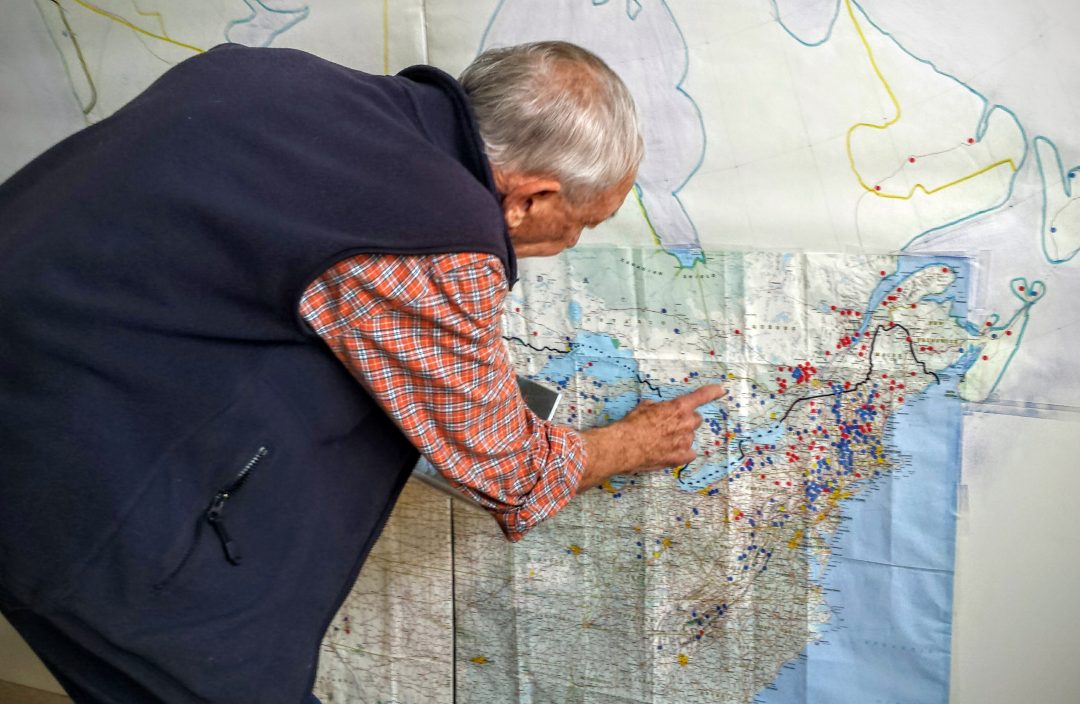
John Andrew points out ski areas he's skiied on a the wall-sized map in his Renton, Wash., home. Credit: John Nelson

John Andrew points out ski areas he’s skiied on a the wall-sized map in his Renton, Wash., home.
Credit: John Nelson

So many ski areas, so little time.

Yet at age 85, John Andrew is still busily crossing them off his list. Over the past 20 years, Andrew has been on a mission to ski all 700 alpine resorts in North America. He’s currently at 528, and he has several new targets in sight for this winter.

“I’m going to die trying to finish my quest,” says Andrew, a retired Boeing executive from Renton, Wash. “I won’t get it done, but I’m going to keep trying.”

It’s a big project, one that has consumed Andrew’s life since he retired at age 65.

It began innocently enough with a book. Andrew and his wife Jewel were shopping for a vacation home in the mountains using a guidebook of every ski resort in North America. Instead of narrowing the choices, the book opened up possibilities in Andrew’s mind.

“If we were going to buy a ski condo, I didn’t know where I wanted to buy it,” he remembers. Then, leafing through the resort guide, he wondered, “Why don’t we ski them all and find out?”
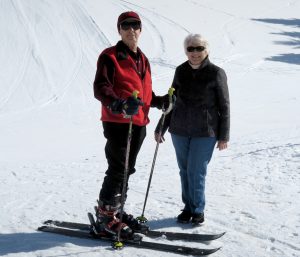
John Andrew and his wife Jewel on the slopes of Pine Creek Ski Area in Wyoming last February. Photo courtesy of the Andrews

John Andrew and his wife Jewel on the slopes of Pine Creek Ski Area in Wyoming last February. Photo courtesy of the Andrews

Over the following years, the Andrews embarked on their quest with gusto, sometimes with friends, sometimes with family, always keeping detailed records, grabbing trail maps, souvenirs and taking pictures. Jewel skied with John until 2007, when she quit the slopes after a knee replacement surgery. She still comes along on most trips.

“We are still skiing North America as a team,” he says.

“I think it’s fun,” Jewel says. “It gets you to all these places that you’d never go to—in the dead of winter.”

Their longest road trip covered 13,000 miles across the northern U.S. and Canada, when they hit 45 resorts in 16 states and provinces, including White Hills, the easternmost ski area in North America near St. John’s, Newfoundland.

Other trips took them to California, to New Mexico, to the mid-Atlantic, to the Deep South. They skied Cloudmont in Alabama, Ober Gatlinburg in Tennessee, Hidden Valley in Missouri. It’s all there, detailed on the spreadsheet and on the wall-sized map where Andrew places blue dots for the completed ski areas, red dots for those he has left to do.

Andrew gets the biggest thrill out of skiing places like Sawkill Family Ski Center, N.Y., with its 70 vertical feet, the smallest hill in North America.

When he stopped in at Sawkill, the lifts were closed. Andrew asked at the resort office if he could hike up and ski down, but the friendly general manager offered to drive him to the top in a pickup truck instead.

They roared up, Andrew hopped out, clicked into his skis and another resort bit the dust.

As he ages, Andrew has slowed down a little. Expert runs are a thing of the past—now it’s mostly greens and blues.

“It’s easy to get hurt and I don’t take foolish chances,” he says. “I look at the slope and if I don’t think I can do it, I won’t do it.”

“There’s a lot more to do,” he says as he gazes at his ski map on his living room wall . “But I like a job that’s tough. Even if I don’t get there, it’s something to do.”
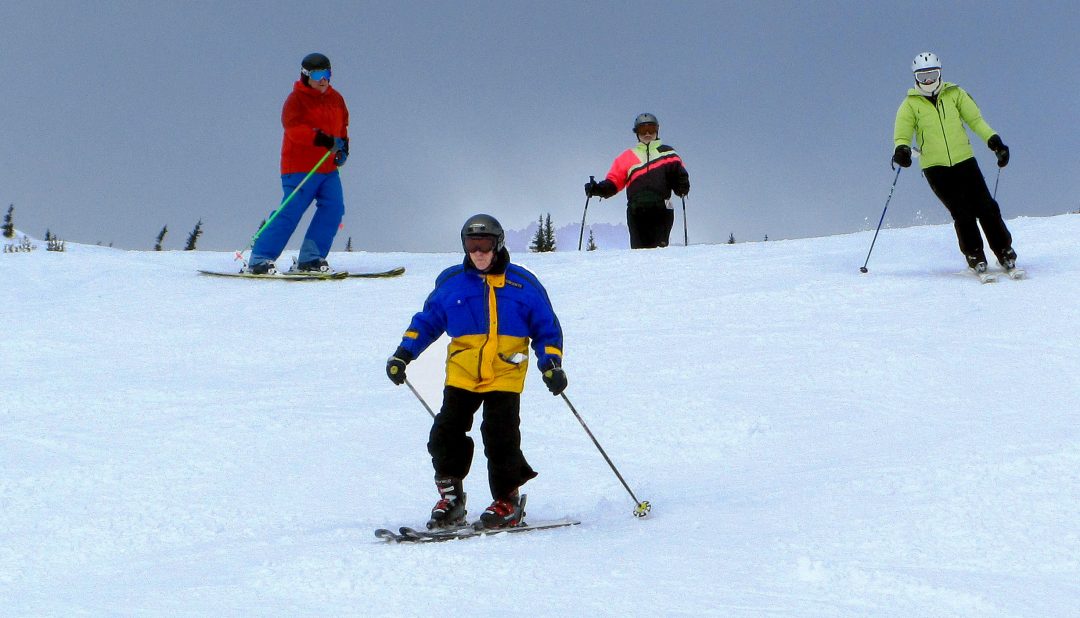
John Andrew, 85, skis at Crystal Mountain, Wash., last March, checking another resort off his list. Credit: Emilio Trampuz

John Andrew, 85, skis at Crystal Mountain, Wash., last March, checking another resort off his list.
Credit: Emilio Trampuz
This Week In SeniorsSkiing.com (Oct. 28)

Congratulating The Ski Diva, Warren Miller’s Latest, Exercise Tips Part 1, Retail Drop Ins.

Warren Miller and

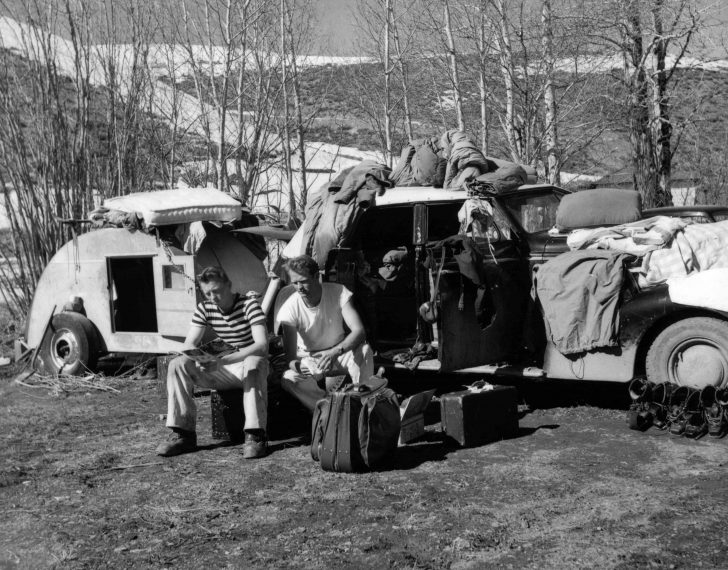
Warren Miller and Ward Baker as original ski bums in a scene from Warren’s newest, “Here, There & Everywhere.” Credit: Warren Miller Personal Archive.

What a flurry of activity we’ve had around SeniorsSkiing.com since the publication of our ski recommendations for senior skiers!  We welcome the many new subscribers who found their way to our online magazine through Facebook and Huffington post.  We hope you like our editorial content, now approaching 450 stories and articles, and please visit our advertisers.  Come back often.

If you are already a subscriber, note that we sent you an email containing a link to our ski recommendations for seniors on Oct 14th.  Check your inbox if you want to download this terrific asset, all free of course.

In this week’s Short Swings!, our new industry news feed, we salute our friend and colleague The Ski Diva whose women’s online forum and blog won a prestigious award from the North American Snowsports Journalists Association.  Other news includes which ski area opened first in New England and selected industry tidbits.

Co-publisher Jon Weisberg was lucky to have a chance to review Warren Miller’s newest movie, Here, There & Everywhere, which goes from awesome ski cinematography to nostalgic reminisces from Warren himself, who, at 92, is an inspiration to us all.

With the snow sports season happening in some places and looming in others, it is definitely time to spend some time toning up.  Whether you’ve been hiking, cycling or golfing this summer, you might want to consider doing some exercises for legs and hips. When you try them, you’ll soon see how ready you are for slopes or trails.  We worked with Rick Silverman, a physical therapist, to guide us through the first of a series of basic, relatively easy exercises that focus on legs and hips.  In future editions, Rick will ratchet up the intensity of these exercises.  Please, don’t go out for your first run or trail loop without getting physically ready.  Big mistake.

Finally, we asked three SeniorsSkiing.com correspondents to visit three ski shops in three different parts of the country to find out what’s hot for seniors this year.  Our retail round-up has an array of interesting product recommendations and gift suggestions. Bluetooth-controlled heated socks, anyone?

Take advantage of the discounts being offered by our advertisers.  Click through to their sites.  That’s helps all of us and shows everyone the influence that senior snow sports enthusiasts have.

And remember, everyone, there are more of us every day, and we aren’t going away!

Short Swings!

historic5aNATIONAL

SeniorsSkiing.com salutes The Ski Diva for winning the prestigious Harold S. Hirsch Award for Best Ski Blog from the North American Snowsports Journalists Association. Wendy Clinch, a refugee from the advertising business, started the Ski Diva, a women’s ski blog, in 2006. Since then, she has written on a wide-range for topics for women snowsport enthusiasts and has attracted about 5000 readers to her very active online forum. ‘Way to go, Ski Diva!

COLORADO

Apex Ski Boots announced its XP Big Mountain Ski Boot. The Apex is infinitely adjustable and features a soft walkable inner boot and a hard shell exoboot. They’re sold online and through select retailers.

NEW YORK

The Northeast Ski & Craft Beer Showcase, presented by Alpin Haus, will take place at the Empire State Plaza Convention Center in Albany, NY, Friday, November 4 through Sunday, November 6.

QUEBEC

Mont-Tremblant received its first dusting on October 23.

UTAH

Ski Utah reports the following resort opening dates:

  • Alta – Nov. 18
  • Beaver – TBD
  • Brian Head – Nov. 18
  • Cherry Peak – TBD
  • Brighton – As early as possible
  • Deer Valley  – Dec. 3
  • Eagle Point – Dec. 17
  • Nordic Valley -Dec. 10
  • Park City – Nov. 18
  • Powder – TBD
  • Snowbasin – Nov. 23
  • Snowbird – Nov. 18
  • Solitude – Nov. 18
  • Sundance – Dec. 9

Park City may hold the world record for simultaneous shot ski drinkers. Confused? Wasatch Brew Pub bolted hundreds of skis together and mounted shot glasses for the momentous occasion. 2000 people showed up for the Big Gulp — double the number expected. They’re waiting for Guinness to confirm the record, previously held by Breckenridge, which attracted 881 participants. he event was a fundraiser for a local Rotary Club.

Black Diamond has issued Live, Ski Repeat, a one-minute video preview to the season.

WYOMING

Teton Gravity Research issued its latest film, Tight Loose, with exceptional powder beauty shots. Tour Dates: http://www.tetongravity.com/films/tight-loose/tour

NEW HAMPSHIRE

Killington is now open for season pass holders.  First in the East (again).

Wildcat Mountain is kicking off its 59th season with snowmaking operations, thanks to cold temps and natural snowfall above 3,000 feet.

Mountain Collective, the consortium of 14 iconic ski resorts is offering two day passes at each resort for a total of $419. Under 12 kids pass is $99. Season pass holders at Alta and other Mountain Collective resorts get half-price skiing at participating reports.OTHER

Review: Warren Miller’s Latest Is A Winner!

“Here, There, & Every Where” Brings Out Pre-Season Inner Child.

As he did with so many things, Warren finds his own way to wax. Credit: Warren Miller Personal Archive

As he did with so many things, Warren finds his own way to wax. Credit: Warren Miller Personal Archive

Warren Miller has been bringing out my pre-season Inner Child since I was a kid in Troy, NY. Every Fall he presented and narrated his latest film to a full house. For me he conveyed an impossibly aspirational message: Make a life choice that will allow you to ski, whenever and where ever you choose.

Like others, my choices were different, and it wasn’t until later in life that I was able to follow his advice. Over the years I’ve met many people who decided early to spend their lives in the mountains. They chose to work where they lived. Until 57, I chose to live where I worked.

Which brings me to the latest edition in the annual procession of Miller films.

Here, There, & Every Where,” coincides with the release of Miller’s autobiography, Freedom Found, My Life Story (reviewed a few weeks ago on SeniorsSkiing.com). The book provides a loose plot line for the film, with two young guys reliving Warren and Ward Baker’s very early experience bumming around in a small teardrop trailer and enjoying the mountains.

The film starts with Warren, now 92, reminiscing on camera and over footage of his early days. He explains how, in 1946, after leaving the Navy, he and Ward met surfing in California. That summer he shot surfers with a wind-up 8mm camera. That winter they parked in Sun Valley’s lot and shot people on skis.

It “jump-started what I wanted to do with my life,” he explains. “It’s crazy how the whole thing happened. I couldn’t have orchestrated it.” These lines have typical Warren Miller delivery: after all these years, he seems genuinely surprised with his own life story.

For me and the 2000-plus people at the film’s premier in Salt Lake City, it all rang true. We sang Happy Birthday to this 92 year old ski film pioneer, which was streamed live.

We then entered a world of stunning beauty and of great ski and boarding scenes across the globe. Like all Miller films, this one presents a host of amusing mishaps and crazy stunts by those too young to drive.

Freestyler Jonny Moseley is the superb narrator with a style surprisingly similar to Warren’s classic delivery.

The enthusiastic Salt Lake audience was not as young as I anticipated. A company representative said audiences generally are in the 25-50 range. That said, I saw teenagers, entire families, and very generous representation of those in their 60s and 70s.

Here, There, & Every Where is touring the country and should not be missed. Link here for trailer and schedule.

This is a Warren Miller production at its best. If you ski or board, see it. If you’ve retired from snow, it may be enough to get you out there again.

Warren Miller and

Warren Miller and Ward Baker living the ski bum life. They went from surfing in the summer to Sun Valley’s parking lot in the winter, shooting movies along the way.  Credit: Warren Miller Personal Archive

Retail Drop In: Three Shops Make Recommendations For Seniors

[Editor Note: It’s buying season, and we know from our reader surveys that many senior snow enthusiasts are looking for new gear and clothing.  We decided to do an experiment and drop into three different ski shops in three different parts of the country to ask, “What’s hot for seniors?”  That means, what stands out this year for seniors that’s comfortable, safe, and convenient?  Here’s what we found shop owners recommending. Thanks to our participating shops for talking with our correspondents Harriet Wallis, Yvette Cardozo, and Mike Maginn.]

FROM THE ROCKIES: Two Innovative Boots Rock The Scene With Features Seniors Want.

Correspondent Harriet Wallis visited Lift House Ski Shop near Big Cottonwood Canyon in Salt Lake City.

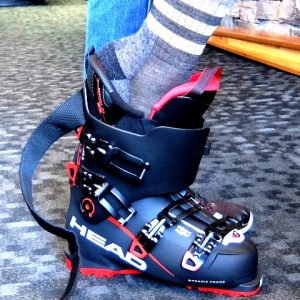
Head's Easy On boot. Credit: Harriet Wallis

Head’s Easy On Boot. Credit: Harriet Wallis

Look ma, no hands!

Head made a slight change in the inner cuff of the Head Vector 110. Skiers can easily slip into the boot—no contortions or yanking needed. You can even push your foot in while standing.

“I skied the boot and had good control even though it’s softer than a race boot,” said Luke Larsen, a ski racer and owner of SLC’s Lift House. Price: about $499.


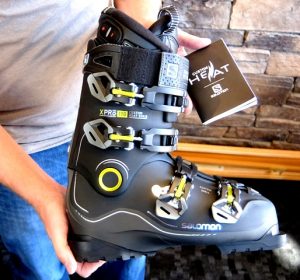
Salomon Boot With Heat. Credit: Harriet Wallis

Salomon Boot With Heat. Credit: Harriet Wallis

Toast your tootsies.

At last, integrated boot heaters make their debut in Salomon Custom Heat. Until now, boot heaters had to be retrofitted into boots, and the bulky battery packs clipped onto the shell.

“This makes the heated boot less expensive than buying boot and buying heaters separately,” said Larsen.

Price: Boot with integrated heat about $749.


FROM NEW ENGLAND: Bindings, Heaters And Snowshoe Bindings

Correspondent and co-publisher Mike Maginn spoke with shop owner Matt Thibeault and manager Chris Woods at Sports Stop Wenham on Boston’s North Shore.

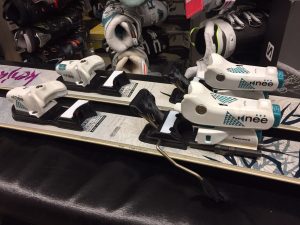
The Knee binding releases at the heel as well as the toe. Credit: Mike Maginn

The Knee binding releases at the heel as well as the toe. Credit: Mike Maginn

“Seniors Are Searching Out This Binding.”

Matt said the Knee binding is being sought by seniors. “It is designed to release laterally at the toe and the heel,” an important safety feature for many seniors. “The binding doesn’t sacrifice performance either,” said Matt, “but you do have to designate a right and left ski.” The Knee binding retails for about $379.


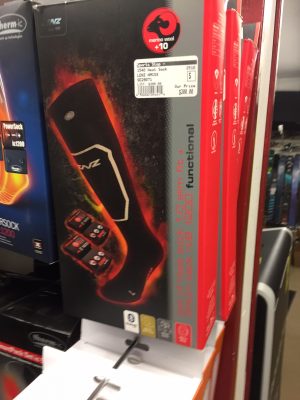
The world needs a Bluetooth-controlled heated ski sock. No? Credit: Mike Maginn

The world needs a Bluetooth-controlled heated ski sock. No? Credit: Mike Maginn

Heated Socks Are Getting Smart.

We know that heated socks are, mmm, cool, but when Matt and Chris showed us two different approaches to keeping toesies warm, we were impressed.  Lenz has a battery-powered, heated sock that, get this, is Bluetooth-controlled by a Smartphone app.  Turn the temp up or down by flicking the screen. Knee high, these socks are $300.

Therm-Ic Supermax Set has a different approach with an thin insert that slips into your boot sole and a connection to a battery pack with three heat settings.  It’s a real plus for seniors with circulation issues.  Retail price is about $220.


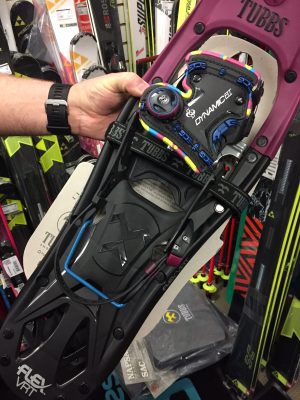
Boa closure system: Turn the dial, tighten up. Credit: Mike Maginn

Boa closure system: Turn the dial, tighten up. Credit: Mike Maginn

Finally, An Easy On-Off Snowshoe Binding.

We are so happy that snowshoe binding designers have come up with this one.  The new Boa system binding is much easier to use than the old tug-the-ties models.  You just put your foot in the toe and turn the Boa binding knob. To get out, you twist it the other way.  This example is on a Tubbs snowshoe model.  At last. Various models, starting at $189.


FROM THE PACIFIC NORTHWEST: Pin Tail Skis For Seniors And More Heat

Correspondent Yvette Cardozo talked to Kevin Dreher, ski shop manager at Gerk’s, a ski chain in western Washington.

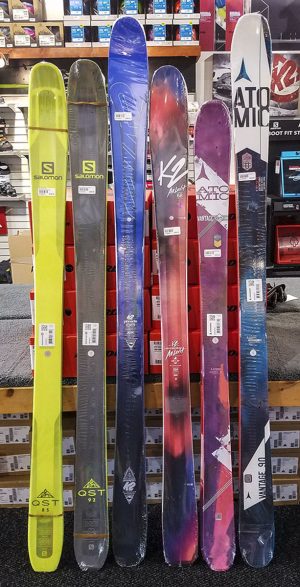
Examples of tapered tail skis. Wide shovels, slightly narrow waists but tails that don't flare out as much as classic shaped skis do. Credit: Yvette Cardozo

Examples of tapered tail skis. Wide shovels, slightly narrow waists but tails that don’t flare out as much as classic shaped skis do. Credit: Yvette Cardozo

Compromise Ski Shape

A lot of older skiers grew up skiing on skinny skis with their feet close together (picture Stein Erickson), Dreher said.

For some, learning to break that habit has been hard.  Still, modern tech in the form of shaped skis has made the sport so much easier.

So enter the compromise, the pin tail shape ski.

It still has a wide shovel and a more narrow waist but the tail tapers, so it’s not quite so wide, not so much an hourglass shape.

This, said Dreher, does two things: allows a skier to keep his/her feet closer together and also, if they are tired, to slightly skid the turn. But it also has all the easy skiing benefits of shaped ski tech.

It’s not brand new technology but seems to be getting more popular lately, perhaps as a segment of the ski population has gotten older.

Dreher mentioned two brands in his shop that have tapered tails, Salomon and Atomic. Salomon’s QST 85 and 92 run $400 and $500 respectively. The more expensive ski is aimed at a more aggressive skier.

Atomic’s Vantage also has two models, the 85 and 95, again $400 and $500 retail.

[Editor Note: These skis are on SeniorsSkiing.com /realskiers.com’s list of ski recommended for seniors.]


Better shop now for this. They sell out pretty quickly.

Better shop now for this. They sell out pretty quickly.

And More Heaters

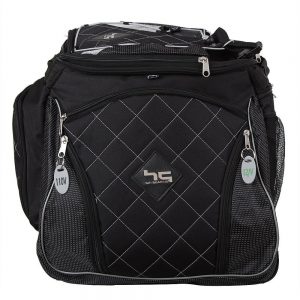
Then, we get to my favorite: the heated (yes, heated) boot bag.

Don’t you just love driving hours to the hill and then trying to wrench stone cold boots on?  Now, there’s a boot bag with a cord that works on either AC (house) current or DC (your car).

One version of this bag is made by “Hot Gear,” but appears to be sold as Zip Fit through Amazon.com for about $200. Another version, Transpack, is sold for about $180 through Amazon and REI.

But honestly, you can also get those disposable foot warmer packs and do as the patrollers do, put them ON TOP of your toes instead of under them. Take it from one with chronically cold toes, that works.

This Week In SeniorsSkiing.com (Oct. 21)

New Features: Industry News, Ski Recommendations For Seniors, Plus Advice On Carving, And An Often-Neglected Miracle Drug.

Pat McCloskey's article on the Modern Ski Turn explores the power of what you see Ted Ligety doing. Credit: NY Times

Pat McCloskey’s article on the Modern Ski Turn in this week’s edition explores the power of what you see Ted Ligety doing above.
Credit: NY Times

As the season ramps up in the West (A-Basin opens today!) and snow forecasts start to appear in Vermont, SeniorsSkiing.com is moving into snow season mode. There are some important new features we are launching this week.

  • Short Swings! is our brand new round-up of industry news organized by state.  Many ski resorts, equipment vendors and others in the industry have discovered SeniorsSkiing.com and have sent us buckets of news almost every day.  We decided to start a new weekly feature that gives you access to this information.  Tell us what you think.
  • The Best Skis For Seniors.  We are often asked for equipment recommendations for seniors, particularly skis. We are very excited to announce that we’ve worked with realskiers.com, a much-respected source of technical evaluations of skis and other equipment. The result is a list of 38 skis just for seniors culled from the many than were tested by realskiers.com. This is an exclusive, FREE offering for our subscribers who have already been sent a notice and link for downloading the article.  New subscribers will receive the link when they submit their email address.  This is a big deal, folks, and we hope you find this a valuable addition to SeniorsSkiing.com

With snow in the air in so many places, we thought we’d help you start think about the season. Correspondent and PSIA instructor Pat McCloskey offers some pre-season advice to seniors about the modern ski turn.  We are guilty of buying new, shaped skis and never taking a lesson on them.  This year, Pat’s article encourages everyone to think about technique, and we are sure going to take a lesson to put this advice to work.

Finally, we hear about the critical importance of hydration for seniors, especially active seniors.  If you are exercising in any way, you are going to have to replace fluids.  If you don’t, you will suffer some unpleasant symptoms.  It’s a personal story from one of our editors, one that we hope you find useful.

So let the lifts start to spin.  We are getting ready.  And remember, there are more of us every day, and we aren’t going away.


Short Swings!

A Weekly Round-Up Of Industry News.

historic7_CALIFORNIA

11th annual Alpenglow Sports Winter Film Series will be held at Squaw Valley’s Olympic Village Lodge, November 17.

Squaw Valley Alpine Meadows promoted Tom Feiten to VP, Marketing and Business Development, overseeing marketing and sales. Before joining the resort in 2011, he helped Teton Gravity Research revitalize the Teton Gravity Research annual film tour. He also worked eight years as Director of Strategic Finance for Booth Creek Ski Holdings in Vail, CO.

COLORADO

Arapahoe Basin will open for the season on Friday, October 21.

Ski Younger Now, instructed by Seth Masia at Vail Ski and Snowboard School, is a great program for older skiers. This season there will be four monthly midweek clinics (Tuesday thru Thursday, December 13-15, January 17-19, February 14-16, March 14-16) and one over the Martin Luther King Jr Day weekend (January 14-16). More at skiyoungernow.com or call Seth at 303.594.1657.

Colorado Cross Country Ski Association (CCCSA) announced the lineup (classic and skate skiing) for the inaugural 2017 Colorado Nordic Race Series taking place at four iconic Colorado destinations between January and March 2017.

GetSkiTickets.com announced it now offers discounts on ski lodging as well as lift tickets for resorts across North-America.

MICHIGAN

Boyne Resorts appointed Ian Arthur Chief Marketing Officer, a new position on the company’s executive team. He joins Boyne Resorts with 30+ years of marketing and related experience. Much of his career success has been achieved in the resort and travel industries. 

NEW HAMPSHIRE

Omni Mount Washington Resort, Bretton Woods, NH was named one of the Top 25 Resorts in New England in Condé Nast Traveler’s 2016 Readers’ Choice Awards. The awards recognize the best travel destinations from around the world.

UTAH

Ski Utah published its fifth annual Ski Utah Magazine, including, among other features, a comprehensive guide of all of Utah’s 14 ski resorts. Highlighted is an article about the Ski Utah Interconnect Tour, a great opportunity to ski six Utah resorts in the central Wasatch Mountains in one day. Online at: http://bit.ly/SkiUtahMagazine2016-17.

Deer Valley Resort has a new offering: Guests can hit the slopes with Olympic athletes such as Heidi Voelker, Shannon Bahrke, Kris “Fuzz” Feddersen, Kaylin Richardson, and Trace Worthington.

POWDR, owner of “experiential businesses” (e.g. Copper Mountain, Killington/Pico, Mt Bachelor, Boreal, others) announced it has rebranded. www.POWDR.com.

VERMONT

Okemo is offering its transferrable “3 & Easy” multi-pack that includes three days of lift access, valid any day of the season, with no restrictions. Lift access can be redeemed one day at a time or all on the same day. $204 for seniors (ages 65-60); $186 for super seniors (age 70+). Special offer available until October 31.

OTHER

SeniorsSkiing.com co-publisher was interviewed on Rudy Maxa’s World with The Careys, a nationally-broadcast radio program. Podcast of interview: http://rudymaxa.com/podcasts/2016-2/

Vail Resorts announced that it has added three days at Whistler Backcomb to its Epic Pass and Epic Local Pass.

schusser_2_skier_491

The Best Skis For Senior Skiers

 Soft Flex. Minimal Exertion. Skis for Six Different Scenarios.

Update Dec 27, 2016:  Subscribers can now download the list of recommended skis by going to the top navigation bar, click on Community, select Subscriber-Only-Content, choose the download and reconfirm your email address.  If you are not a subscriber, consider subscribing. It’s free, lots of interesting articles for seniors who love winter sports.

Ski manufacturers have never designed a ski for senior skiers. With about one million on the slopes, there’s enough of us to justify the investment.

But don’t hold your breath.

schusser_2_skier_491There is a breakthrough this season. For the first time, an in-depth evaluation of the best skis for older skiers is available. This is good news since choosing a new pair of skis, regardless of age and ability, has never been easy, and the abundance of brands and models is always confusing.
The evaluation is the result of collaboration between SeniorsSkiing.com and realskiers.com, the go-to site for in-depth ski equipment evaluations. The free list is available to all SeniorsSkiing.com subscribers. 

Of the many 2017 skis tested, 38 were identified as suitable for senior skiers. Most have relatively soft flex, allowing the sidecut to engage with minimal exertion. The result is ease of turning and forgiveness, which, regardless of physical condition, reduces stamina loss.

In other words, using these skis, it’s easier to ski more runs and have more fun!

Working with testers from around the country, realskiers.com has been reviewing ski equipment for many years. The results are gathered each spring and published in September, where abbreviated reviews are available free and in-depth information comes with a modest, paid annual subscription.

The recommended skis are grouped into six categories, each based on skiing preference, location, and snow conditions. They are:

Frontside (aka “Carving” skis)

  • These skis encompass the broadest range of skier abilities from entry-level to experienced and are for general use on groomed terrain. Wider models are usable off-trail.

 All-Mountain East

  • Skis that are extremely versatile and for general use on groomed terrain. They also work off-trail.
  • This category is suitable for those who have not skied in a few years.

 All-Mountain West

  • These are good for use in the West by high performance skiers and are good both for groomed trails and for powder.

 Big Mountain

  • Skis for use on big mountains with selections for strong and for less strong skiers.

 Powder

  • Specialty skis for use in deep powder.

Technical

  • These have high performance race ski characteristics and are suitable for carving turns on hard-snow.

While many consider skis to be unisex, some women prefer skis with weight and flex more suitable to their size and physique. The list identifies women’s skis, as well.

When selecting skis…

  1. Identify the most suitable category.
  2. Work with a quality ski shop.
  3. If possible, demo selections to compare before purchasing.

To Access the List

SeniorsSkiing.com subscribers were emailed a link to the list. The email was sent on October 14, 2016. Check your inbox or spam folder.

If you have not yet subscribed, click on this link and sign up using the subscription form in the right column or the pop-up which will appear on the page. After confirming your subscription, you will receive and email with a link to the list of senior ski recommendations. And, as a new subscriber, you will have access to discounts and deals on gear and clothing from top brands, and a lot of info relevant to the older snow sports enthusiast!


Pre-Season Advice: Carving The Modern Ski Turn For Seniors

A Ski Instructor Reviews How To Turn On Shaped Skis.

You don't have to ski hard over like Ligety, but look how he bends those skis into the turn. Credit: New York Times

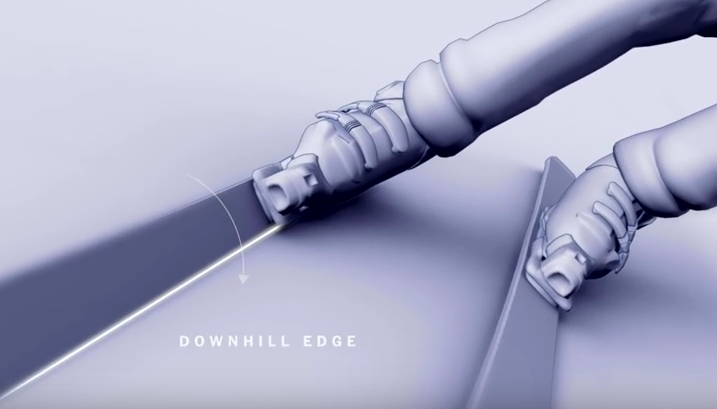
You don’t have to ski hard over like Ligety, but look how he bends those skis into the turn. See how those ankles flex? From the New York Times tutorial on Ligety’s approach.
Credit: New York Times

[Editor Note: Our Spring Survey 2016 revealed an interesting statistic. About 30 percent of seniors take one or more lessons during a ski season. For those of us who are still skidding around turns and wondering how other skiers make those clear, sharp, carved ski tracks, PSIA ski instructor Pat McCloskey has some advice. But, it’s one thing to read about and even see a video of carving turns, it’s another to perform on a hill.  Our advice: Take a lesson and learn how to really navigate on those new skis.]

Remember when we had to up-unweight to make a pair of skis turn?  In the old days, the skis were longer and had minimal side cut so the only way to release the gripping edges at the end of a turn was to literally up-unweight, rotate the tips downhill and finish the turn.

As skis developed more sidecut, the up-unweighting became more subtle and edge engagement was easier facilitating more of a carved turn.  The modern ski turn is aided by shorter skis with radical sidecuts that virtually eliminate up-unweighting. The movement is more lateral across the skis where the skiers center of mass seeks the next turn.  I call it belly button to the next turn.

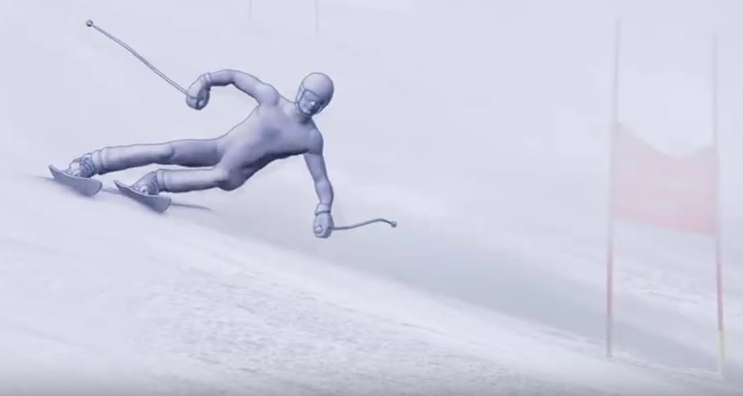
Ted Ligety, US Ski Team star GS racer, says that the reason he is faster than the competition is that he starts his turns earlier than most competitors by getting on a high edge early in the turn.  He then pressurizes the ski with a good ankle flex, finishes the rounded turn across the fall line and then releases the pressurized skis which actually slingshots him into the next turn.

Key moment in Ligety's carved turn, engaging the uphill ski earlier. Flexing the ankle puts pressure on the edge. Credit: NY Times

Key moment in Ligety’s carved turn, engaging the uphill ski earlier. Flexing the ankle puts pressure on the edge.
Credit: NY Times

If we slow that down for the mortal senior skier, the key is to engage the new edges early in the turn by getting that belly button to face towards the next turn.  Then as the turn progresses, the ankles flex in the boots to hold the pressurized edges and the skier can finish his or her turn controlling the skis with a carved turn instead of a skid.

There is an element of trust in what the modern ski can do when you engage it early.  But if you are patient and trusting, allow the edges to grip and carve; you can use your ankles to micro manage turn shape which controls speed.  One of the keys to success here is to make sure you have a ski than can easily flex and a pair of boots that can also flex.  A race boot is sometimes not the best choice for a senior skier.  Make sure you can flex your ski boots which is critical during the progress of a modern ski turn.  You especially need that flex at the end of the turn to pressurize the skis to make a strong, across the fall line, rounded turn.  Just like Ted.

Check out his carving in this video clip below.  For a more complete explanation of Ligety’s approach to the turn, click here for a tutorial from the New York Times and clips from the 2015 Sochi Olympics. 

Most Active Seniors Probably Have This Problem

But, There’s A Free Miracle Drug You Can Take.

You can live better when you're hydrated. Credit: TreeHugger

You can live better when you’re hydrated.
Credit: TreeHugger

At the risk of sounding like a spam email headline, I have re-discovered a miracle drug. It’s completely free, it acts quickly, and it can be found anywhere and everywhere. It’s a drug that can directly change your life for the better. I say re-discovered because I knew about this drug, loved its restorative properties, but like many things, I took it for granted and thoughtlessly stopped taking it as much as I should have, especially this summer. The impact of stopping was immediate and perplexing.

Of course, I’m talking about water. And what happened to me just over the summer is what can happen to any senior who is active. You forget to or ignore taking a water bottle to the gym, or you don’t drink after a walk or bike ride. You don’t ask for water with a meal. You spend a sunny day on the water fishing, sailing, kayaking, drinking sodas or beer with a sandwich.

You probably don’t think much about drinking water, but if anyone asks you why you don’t, your rationale is brilliant. Mine was: I have enough coffee, wine, tea, etc. during the week to keep me floating, or that water with a meal takes away my appetite, or I don’t like the taste of water at home because the well is low. (Common in parts of New England these days.)

Or glasses of water are for kids, right?

For me—a fairly active senior, the result of ignoring to hydrate was not positive. My symptoms: Logy, headache, irritability, lower than normal blood pressure (got a heads up during a routine visit), rapid resting heart rate, musty, dark-ish urine, and frequent, yes, frequent urination. I never once connected these to my being dehydrated, just getting a little more senior by the day.

But what signaled that I might have a hydration problem was a gym class instructor mentioning in passing that stiff joints might come from not having enough water onboard. Click. I had developed stiff joints and muscles this summer. I found walking a distance challenging because my hip flexors, psoas, hamstrings and glutes were tightened up. Stretching didn’t seem to help as much as it should have. I thought I was the victim of sitting at a desk for long stretches. That contributed, but lack of drinking water as a clear accomplice.

Expensive water bottle, insulated, vacuum. Credit: LL Bean

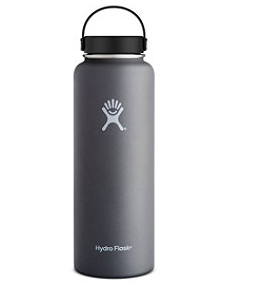
Expensive HydroFlask water bottle, insulated, vacuum.
Credit: LL Bean

My remedy is to start drinking water again, simple as that. I now have at

Reasonably priced, Nalgene water bottle. Credit: LL Bean

Reasonably priced, Nalgene water bottle.
Credit: LL Bean

least three eight-oz. glasses before noon and three after. I use spring water to replace the mineral-filled well water. When I first started this regimen, the results were immediate. I felt more alert, energetic, upbeat, and the muscle/joint stiffness—combined with dutiful and targeted stretching—is gradually going away. At least, this is working for me. Your mileage may vary.

I am not a medical professional, but I’ve learned that most seniors tend to walk around in a dehydrated state. Medications, living at high altitude, certain conditions like diabetes, just getting older can all contribute to dehydration. And forgetting to drink.

Easy tips from MedicalNewsToday:

  • Drink water, juice or milk at each meal.
  • Moderate how much coffee, tea, alcohol you drink. They are diuretics, and, to varying extents, take water out of your body.
  • Drink small amounts of water frequently throughout the day.
  • Drink small amounts during a workout as well as after to replace what you lose in sweat.
  • Consider an electrolyte-type drink.

Final tip: Buy an expensive water bottle so you feel guilty if you don’t use it; keep it full and handy.

If you have symptoms or questions, see your primary care physician.


This Week In SeniorsSkiing.com (Oct. 14)

The Benefits Of Solitude, Grandkid Book Recommendation, Boot Revival.

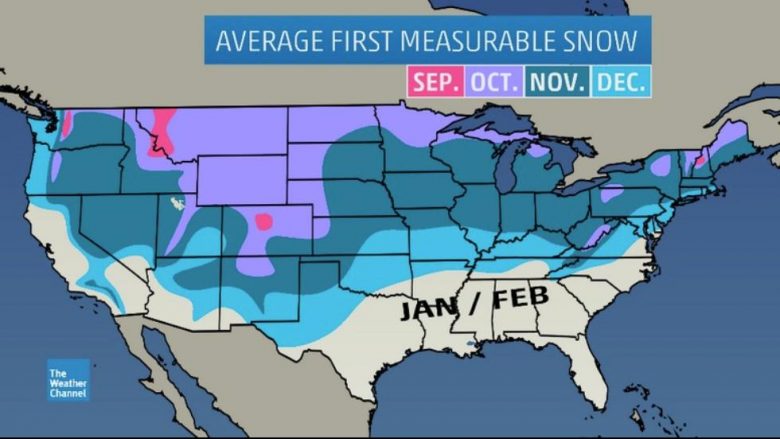
This week we are anticipating a big, big snow fall in the Pacific Northwest coming from a huge cyclone off the coast.  And thanks to Snowbrains.com, a really terrific snow sport site, we learn where the snow will accumulate enough for resorts to open first.  Here’s the official view from NOAA/NWS.  Just a matter of days in some places.

Killington usually vies for being the first in the East. When you read this, we think lifts will be spinning in the Northwest. Credit: NOAA/NWS, Thanks to Snowbrains.com

Killington usually vies for being the first in the East. When you read this, we think lifts will be spinning in the Northwest.
Credit: NOAA/NWS. Thanks to Snowbrains.com

XCSkiResorts.com publisher Roger Lohr writes about skiing (or riding in his case) alone.  Let’s face it, there are many benefits to flying solo, not the least of which is to contemplate, reflect, and/or zone out into a Zen-like state.  Skiing/riding/x-c with friends is one experience; going alone is another.  Clearly, there is a time when one prefers being an “ace”. Perhaps more often than not.

Co-publisher Jon Weisberg recommends a cute book for your grandkids, bunny slope, about a rabbit who skis.  Adorable illustrations, fun story, something to read aloud on a snowy afternoon by the fire with a youngster or two on your lap.  Fun stuff.

Finally, correspondent Jan Brunvand reflects on the re-appearance of rear-entry boots, manifest as FullTiltBoots.com. Perhaps you remember the convenience and comfort of those old Raichle, Hansen, and other rear-entry brands.  Well, Full Tilt has bought the Raichle molds, updated the design and is marketing these without much fanfare, it seems.  Funny, we just tossed an old pair of re-entry boots in the dumpster.  Who knew they are now cool?

Next week we will be bringing you news of a great new asset for our subscribers.  Hint:  It has to do with skis and seniors and matching the two. Please watch for this really terrific new benefit of being a SeniorsSkiing.com reader.

And tell your friends.  Remember, there are more of us every day, and we aren’t going away.

Flying Solo

Making The Case For Going Alone.

XCSkiResorts.com publisher Roger Lohr likes to go alone, sometimes on the spur of the moment. Anti-social? Expedient? Credit: Roger Lohr

XCSkiResorts.com publisher Roger Lohr likes to go alone, sometimes on the spur of the moment. Anti-social? Expedient? 
Credit: Roger Lohr

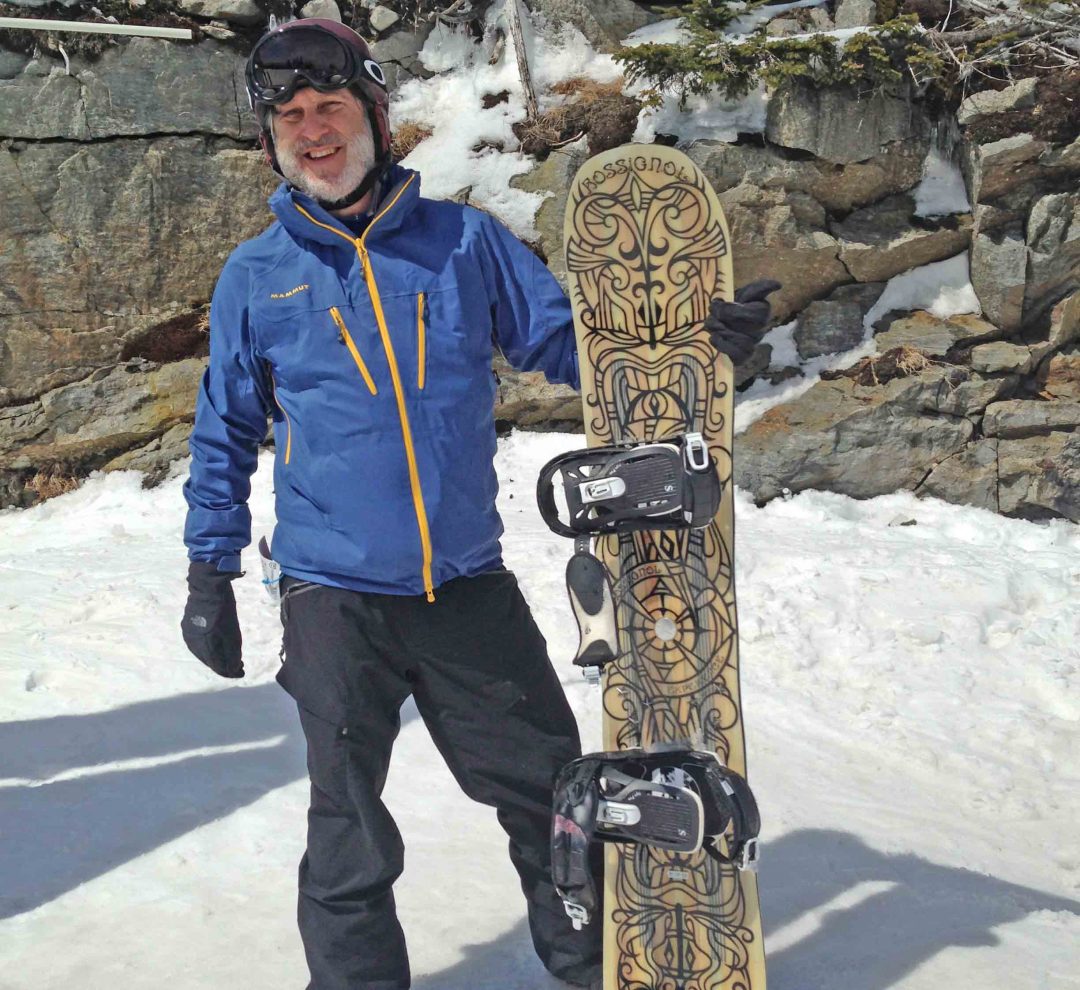
Ski areas don’t really want to hear about people snowboarding by themselves because they like the multiplier effect of groups and families. At the risk of being called a loner, anti-social, or a follower of the British punk band the Anti-NoWhere League, I can surely admit that I like going SNOWBOARDING BY MYSELF. Self centered? You betcha!

One big benefit of going alone is avoiding the negotiation about the time to leave for the slopes, meeting up, when or if to stop for some food or drink, when to go home, etc. Sometimes, I decide in the morning on a given day that it is just right to be out there snowboarding and within 20 minutes I’m in the car and off to the mountain. It just doesn’t take much time to don the base layer, put in contact lenses, grab the accessories bag, boots, board, jacket/pants and car keys.

Of course, I must disclose that going snowboarding might mean only a 10-minute drive to the closest ski area but it also could be an hour or two to a further destination that has better snow conditions. I also admit that sometimes I like my favorite mountains because they have easier runs or a better lunch selection. And being a writer, going alone allows time flexibility to go snowboarding during the week or any day for that matter. When I go snowboarding with someone else, all of these issues become a group decision.

Getting to the ski area, I get on the chair lift pretty quickly after changing in the car, getting a lift ticket, and hopping on the lift. There is no waiting for any acquaintance with their idiosyncratic snow sport rituals. I’ve streamlined my rituals and I’m happy to practice them every outing.

Always open to meeting people on the chairlift, I’m willing to put my music on pause to have a conversation about anything. Some days I don’t meet anyone willing to chat and there are some other days when I meet someone who I’ll join to do some runs. There’s also the rare occasion when I’ll befriend the person that I meet on the chairlift but, more often, I ride the lift listening to my own tunes, selecting the desired runs, and navigating the mountain as I wish.

Based on momentary whim, I do some warm-up runs, cruise some easy runs, drop in on an occasional dash into the glades, turn on the jets on the groomers, pursue powder stashes, and so on. No discussions, no joint decisions, no concerns about the partner’s prowess, boredom, or whether he/she needs to hit the head. There’s no guilt about how much I’m getting for the value of the lift ticket. There’s no worry about bailing because that day’s snow or weather conditions are not conducive to having very much fun. I like riding in a snowstorm for the freshest powder, or doing runs in the spring time mush, and there’s no concern that perhaps I drove an hour to ride only three runs and decided to leave because I wasn’t feeling it.

Yeah, I like snowboarding by myself.

bunny slopes. Wonderful Book For Grandkids Who Ski.

A Day on Skis with a Bunny Rabbit.

bunny-slopes_fc

When my daughters were young, I read them to sleep with Goodnight Moon, Animal Cafe, and other terrific children’s books. The words and pictures of these simple stories always delighted, regardless of how many times they were read.

Now that I’m grandfather to four, I actively look for new children’s classics. It’s not easy to find books without too many words, with simple graphics and magical stories.

Last week, I found a new one about skiing that more than qualifies!

The book is bunny slopes. It’s the story of a bunny who likes to ski. The art is deliciously simple, and the book is interactive, in a clever, analog,way

“Oh, It’s you. Want to join me for a ski day?” asks the bunny.

A few pages later he wants us to shake the book to make snow. On the next page there’s snow.

bunny-slopes_int-3

When bunny wants to go downhill he asks us to tilt the book. Soon he’s headed off a cliff and we help bunny recover by turning the book upside down. A bit later, bunny drops into a rabbit hole and tumbles into a cozy den where Mommy serves a cup of something warm.

bunny-slopes_int-1

bunny slopes is written and illustrated by Claudia Rueda, a New York Times bestselling children’s book author/illustrator. It was just published (October, 2016) by Chronicle Books  and is also available in French. Cost: US $15.99; Amazon lists it from $5.65 to $11.74.

For skiing grandparents who want to share their love of the sport with the little ones in their lives, bunny slopes is a gem.

Click the short video below for more bunny slopes.

Back to the Future With Full Tilt Boots

Rear Entry Boots For Comfort And Convenience.

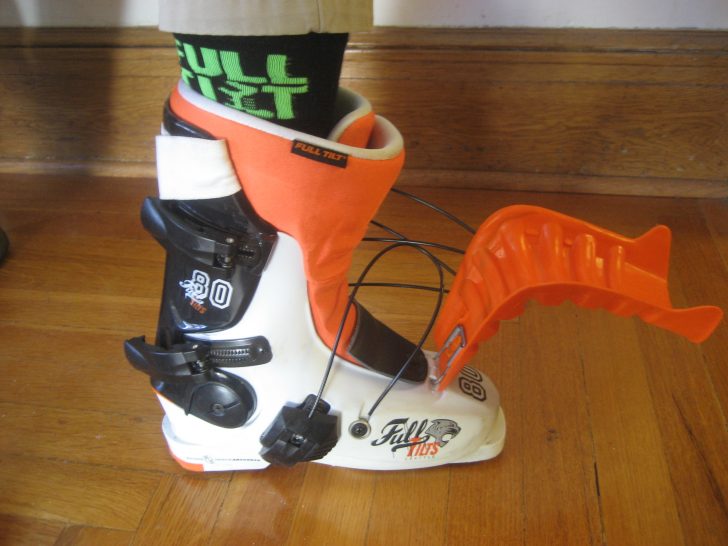
Full Tilt boots: comfort, warmth, convenience.

Full Tilt boots: comfort, warmth, convenience.

If you bring up the subject of ski boots among senior skiers, you’re bound to hear someone lament the demise of rear-entry boots or praise the old Raichle Full Flex boots (AKA Flexon Comps). Today when some oldsters need boot horns to get into their ski boots and boot jacks to remove them, these defunct models have a nostalgic appeal.

Rear-entry boots pivoted open from a center point to provide a wide space to insert the foot, while Flexon Comps had a tongue that hinged forward, with wires and clamps to secure them. Neither style won much appeal from ski racers, and instructors talked recreational skiers out of using them, presumably because they were not judged sufficiently stable.

True, Bill Johnson won his downhill gold medal in the 1984 Winter Olympics wearing Flexon Comps, but that wasn’t enough to save the pattern. By 1999 both models were gone.

Some devotees stockpiled the boots. Others turned to thrift shops and Ebay for boots or parts to keep them going. For most skiers these old comfort boots seemed to be gone forever.

Enter Full Tilt boots! Someone had the good sense to buy the original Raichle molds, improve the dynamics of the older models, and re-launch them in the mid 2000s. I never see Full Tilts reviewed or advertised in ski magazines, but you can find all their current boots online at www.FullTiltBoots.com and locate a dealer.

My wife and I own two pair of Full Tilts each and find them comfortable, warm and convenient. My older pair are the original black-and-yellow “Bumble Bee” style, and they even have “Flexon Comp” molded into the back side of the tongue. Nowadays they come in a variety of attractive colors and designs and are popular with freestyle skiers and other hotshots.

Once we met a group of young ladies from a college in Vermont training for freestyle at Brighton, Utah who all wore Full Tilts, so we posed with them for a picture—Grandpa and Grandma flanking the kids, all in colorful boots.

Full Tilt boots have heat moldable liners that wrap around and conform to the shape of your foot. A dealer will heat and fit the boots properly, or you can just warm them with a hair dryer and wear them around the house to get a good fit.

The boots come with a user manual detailing adjustments for liners, cables, buckles and tongues (all replaceable) for setting the forward lean or canting. We’ve never had to make such micro-adjustments; the only changes I’ve made are replacing the exterior heel pads secured by two screws about once a season.

Prices for Full Tilts are comparable to other modern ski boots, but—as with most ski gear—if you look online or check local shops off-season you can usually find some on sale.

I was on a gondola once at Sun Valley with a couple wearing Flexon Comps. I stuck out my Full Tilts for a comparison photo—comfort ski boots, old and new. You gotta love it, seniors!

This Week In SeniorSkiing.com (Oct. 7)

More Layering Advice, Finding Ski Buddies, And A New X-C Leader Emerges.

Just to get the mind ready, here’s a micro video clip of our friend’s son, Chris Thomas, doing the powder at Steamboat last spring. Hang on folks we are almost there.

Now is the time of the year to be browsing through the ski magazines and websites for new gear and clothing.  As we have learned, it pays to be knowledgable about the new kinds of clothing available for outdoor activity.  So, tossing on your old waffle-weave long underwear isn’t good enough anymore.  We learned the hard way on an insanely freezing day in Quebec when we clearly overdressed and chilled throughly through and through.  Pay attention to Vy E.’s update on layering.  He’s got some insight into how to do it right.

We are constantly asked by our readers where they find ski buddies.  One very clear finding of our Spring Survey 2016 is that senior skiers want to find others to ski with.  We have several ideas for how to connect with like-minded seniors in this week’s article.  We hope to hear from you about your advice, too.  And please use our Forum—SeniorsSkiing.com’s message board—as a way to get in touch with others.

Finally, this week we salute the new Executive Director of the Cross Country Ski Areas Association, Reese Brown. As a new Snow Sports Leader, Reese is poised to make an impact on the cross country world.  We know that many of our readers love to go gliding through hills and dales on snow shoes and cross country skis.  It’s accessible, affordable, and incredibly healthy for our demographic.  Reese is rejuvenating CCSAA’s programs and services to the cross country industry.  We look forward to hearing about changes throughout the season.

Coming Up

As we mentioned last week, we are busy at a redesign of our online magazine. We are also planning a very special bonus to our readers: Recommendations for skis that are most suitable for seniors. All of this is in the works and coming soon.

And remember, tell your friends about SeniorsSkiing.com.  There are more of us every day, and we aren’t going away.

Layering Redux: More Tips For Senior Skiers

What A Modern Senior Skier Needs To Know About Layers.

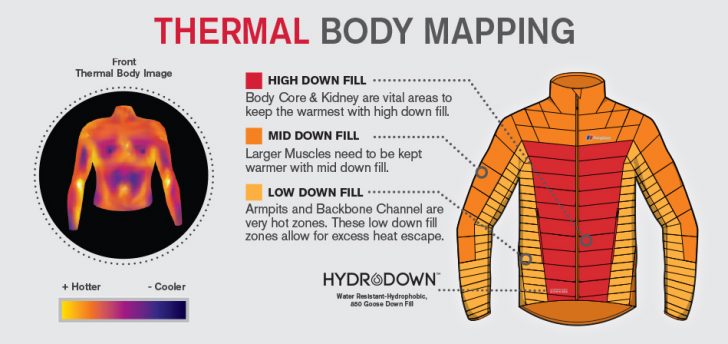
Body mapping clothing--allocating insulation in different zones--is an innovative idea being used by clothing manufacturers. Credit: Berghaus

Body mapping clothing–allocating insulation in different zones–is an innovative idea being used by clothing manufacturers.
Credit: Berghaus

[Editor Note: Last September, SeniorsSkiing.com published an article about layering prompted by an unfortunate experience in extremely cold weather when we over-layered and paid the price for it. This year, here’s a list of tips from Val E., our new correspondent who has deep background in the ski industry. He’s bringing us up to date on the new technology view of layering. Here’s his advice.]

Thoughts On Hats, Gloves, Socks:

  • A thin skull cap (1/32 inch thick) doesn’t add much warmth to a helmet (which has about an inch of foam). However, a balaclava protects your face, neck areas exposed to cold air.
  • Let’s be real, glove liners (very thin gloves made out of silk, wool or synthetic fabric) add very little warmth to a decent pair of gloves. They also separate your fingers if you’re wearing outer mittens. But liners do keep your hands drier by taking moisture off your skin, and, most importantly, they protect your skin from exposure when you take your outer gloves off.
  • Socks must be skiing-specific,(i.e., not hunting socks, etc.) made of a synthetic or wool/synthetic combination. And, a ski sock must be knee high, no exceptions. All real ski socks are, anyway. Thicker is not always better, because comfort, staying dry and avoiding blisters are critical. Avoid old school equally thick tube shape socks. And, only one sock per boot! Never use sock liner, no matter what the propaganda says. Feel cold? Get the boot fitting right, install heaters, take a break inside.

 Base Layer Thoughts:

  • Lightweight (thick as a nylon sock) –For warm weather or people who “run hot”
  • Midweight (thick as a cotton t-shirt) –For most conditions or most people
  • Heavyweight (thick as a warm flannel) –For cold conditions or people who “run cold”
  • Three-quarter base layer pants are relatively new and very practical, because a skier doesn’t need to have pants extend into the boots which can get bunched up and cause comfort and  circulation problems.
  •  Compression base layers (shirts, pants, socks) are becoming more popular. Manufacturers claim they support muscles, improve recovery time, and more. There are skiers who love them and skiers who don’t. Try a pair of compression socks to see what you think. [Editor Note: See our article on Injinji compression toe socks here.]
  • These days, some base and mid layers have extended sleeves with so called thumb loops to keep the sleeves in place. Majority of outer jackets on the market have sleeves cut longer than we are accustomed to. You can adjust them with Velcro closures. The idea is to keep the wrist area well covered for people of different height.

Outer Layer Thoughts:

If you ski most of the time in:

  • Wet conditions (high humidity, wet snow, rain, wind), then stick to pants and jackets made of the best waterproof/breathable fabric (Gore-tex, Dermizax).
  • Dry climate and not very cold conditions with moderate snowfall, you can select clothing made of any breathable membrane fabric.
  • Warm conditions with no or limited precipitation,  then try a soft shell jacket. These are highly breathable, windproof and water resistant (but not waterproof!).
  • Many companies use the idea of mapping insulation or “body-mapped clothing” in mid and outer layers, putting more insulation in the zones, where the skiers need them most. Mapping for women and men is different.

For an in-depth discussion of technical clothing of all kinds, check out this article from the European Outdoor Conservation Association.

And here’s a short video produced by Berghaus on its experiments with body mapped outer layers in Greenland. Worth a look.

Five Ideas For Finding Ski Buddies

Here Are Five Starter Ideas.  Do You Have Any More?

trailmasterimage_SeniorsSkiing.com’s Spring 2016 Survey revealed a pretty interesting statistic. Half our respondents—49.33% to be precise—were interested in meeting other seniors to ski with.  We know that many people drop out of snow sports because their spouse either isn’t able or isn’t interested in winter sports.  An alternative to quitting is to find kindred spirits.  Here’s an attempt to get some ideas flowing.  If you have any other ideas or are a member of a ski club or group looking for members, please go to SeniorsSkiing.com’s Forum and post a comment in the Meet Up/Get Together category.

1) Check the 70+ Ski Club.  They specialize in trips but may have knowledge of standing clubs also, based on their experience with their clients. They are a SeniorsSkiing.com advertiser so just click on one of their ads on this page.

2) Next, try the National Ski Council Federation, an association of ski clubs. Look up your state and find clubs in your area. You will get the names of the clubs and the email address of the regional council president who can give you a steer. The Ski Council also offers discounts and other benefits for joining.

3) SeniorsSkiing.com has a Forum for people who want to meet up and get together. Just click on Forum in the upper right in the blue menu bar or click here. You’ll be asked to register. Please give this a try.

4) Get in touch with some of the resorts in the area you want to ski.  Chances are, the General Manager or Marketing Director might know of formal or informal groups that get together mid-week. In fact, the resort might sponsor a club of its own like Waterville Valley’s Silver Streaks.

5). Click on over to MeetUp.com, a site that is specifically designed to get people with mutual interests together. You can zone in on your local area or expand outwards, depending on your interests. When we checked, there are lots of opportunities for people to get together for skiing and snow sport activities.

Of course, another option is to show up mid-week at your favorite resorts and look for the guy or gal eating lunch alone. One of the reasons we started SeniorsSkiing.com is because we saw lots of folks having lunch alone in ski lodges on a mid-week afternoon. Say hello, who knows, you might make a friend.

You are certainly not alone in looking for ski buddies. Please let us know what else can work out there.


Snow Sports Leaders: Reese Brown, X-C Ski Area Association Exec

New Ideas For X-C Skiing With New Director.

New CCSAA Exec Director Reese Brown brings energy. Credit: Roger Kohl

New CCSAA Exec Director Reese Brown brings energy.
Credit: Roger Lohr

Reese Brown is taking over the reins at the Cross Country Ski Areas Association (CCSAA) as Executive Director after a long run by former leader, Chris Frado. CCSAA is a nonprofit organization founded in 1977 with about 350 ski area members in North America and is dedicated to promoting growth and improving the quality of the cross country (XC) ski area operations.

The XC ski area members of CCSAA include businesses including resorts and inns, and public facilities such as parks and club-run trail systems that offer skiers groomed trail XC skiing, instruction, ski clinics, lessons and programs, and so much more. The organization coordinates conferences and member services such as a website directory, snow conditions reporting, and educational support.

As the new executive director, Reese Brown is charged by the organization board of directors with reinvigorating the group and increasing the value of membership with tangible benefits. Additionally, Reese serves as the Nordic Director of Snowsports Industries America, the trade association of product suppliers recently moved to Park City, UT.  He is involved with a US Ski Team committee and runs the Winter Trails introductory program. He’s a personal interlocking directorate for cross country skiing.

XCSkiResorts.com asked Brown about his perspectives on CCSAA and XC skiing on a number of issues. He wants to help XC ski areas raise their game, and he intends to increase the educational benefits for ski area members.

Regarding older skiers, who represent 12.4% of the XC ski population, he said, “cross country skiing and snowshoeing are the perfect forms of recreation for seniors because they are low impact activities that can be done into the later ages. With cross country skiing and snowshoeing, seniors can go at their own pace, get some exercise, join with like-minded people, and just enjoy the scenery.” He points out that senior skiers and snowshoers can socialize with friends or a group of people at the Nordic ski areas on midweek days when there are no crowds. Many cross-country ski areas coordinate specific senior programs with a short outing on the trails, a snack, coffee or hot chocolate and some company to enjoy it with on the same day each week.

After decades under the same CCSAA leadership, the new executive director and CCSAA’s rejuvenated working board is taking ownership of the organization’s efforts to revamp. For example, at the CCSAA spring conference Brown and some Board members orchestrated educational programs on grooming, snowmaking, and website effectiveness. These programs were parlayed with one-on-one sessions that were tailored to attending individual ski areas. These tailored sessions were scalable to the different ski areas so a small area could apply specific information at a lower level of commitment be it for a snowmaking investment or enhancing a website.

Brown is working on educational programs such as effective snow condition reporting, dealing with fat bikes on the trails, making rental equipment inventories more productive, and financing. “We intend to up the level of cross country ski providers’ games, which will benefit the skiers.”

When meeting with XCSkiResorts.com, the energetic Reese Brown reported that he had recently met with a company to work on an Internet-based ski trail ticket program.  Then, he was on his way to a snow gun company in the area to discuss biathlon ideas. This level of adrenaline at the association can only help the cross country ski areas and in turn provide better service to cross country skiers.