This Week In SeniorsSkiing.com (March 30)

Easter/Passover/Spring Arrives, Song Sample, Stumped-The-Crowd Mystery Glimpse, New XC Editor, Ski Boot History, Season Pass Quandary Redux, Big Sky Report, Big Party At Alta For 94-Year-Old Skiin’ Guy.

Credit: FamilySkiNews

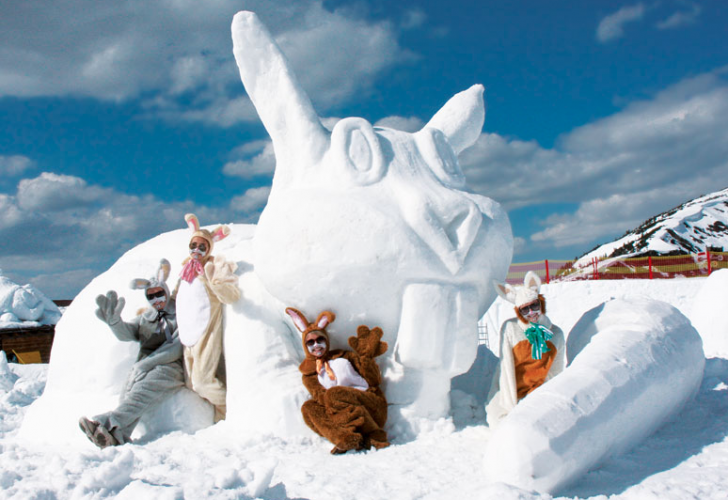
This week is a milestone pivot point for the 2017-18 ski season; it’s Springtime in full glory, and ordinarily parkas come off, t-shirts abound, zaniness ensues, and the snow sport world looks like the Mad Hatter’s Tea Party with bunnies galore.

This year, snow will still be falling in the Northwest and Upper Rocky Mountains.  According to OpenCountry’s Joel Gratz, snow showers will continue this week with a big storm in the possible future for all the mountains out there at the end of next week.  Clearly, this season is hanging on, and if you’ve put your skis away for the season, time to rethink.

The Sierras have a huge base, and corn snow seems to be growing out there. In the East, several New England resorts are extending their season for a couple of weeks, deep into April. See Jon’s Short Swings column for more information.  If you haven’t tried spring skiing, you have a perfect chance this year. Wear sun screen. Bring a t-shirt with a relevant message. There’s plenty of snow in the mountains.

Ray Conrad Ski Songs Of The 60s Available Now.

Last week, we announced that you can now download a collection of ski songs recorded by Ray Conrad back in the 60s. The response from our readers has been quite impressive. Nostalgia rules, we think. Here’s a sample of one of Ray’s songs, one of our favorites, “Two Cubes And A Slug Of VO”.  Click below to play and listen. Fun stuff.  TO ORDER AND DOWNLOAD ALL 16 SONGS, CLICK HERE.

This Week

Mystery Glimpse Unsolved. No one guessed who that rugged looking skier was from last week’s Mystery Glimpse. Click here to find out who he was.  Quite a personality, and, had he survived, he clearly would have made a much more lasting impression on the world of snow sports. This week’s Mystery Glimpse is also a real puzzler, thank to the Museum of Sierra Ski History and 1960 Olympics.

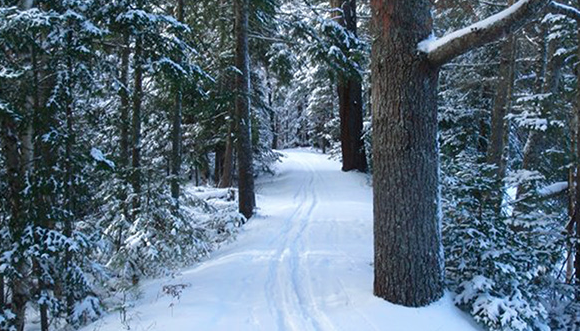
You will also see that Roger Lohr, publisher of XCSkiResorts.com and a frequent contributor to SeniorsSkiing.com has now joined as Cross Country Skiing and Snowshoe editor.  XC skiing is a terrific sport for seniors; it’s safe, accessible, inexpensive, and brings many benefits of movement, achievement, and the joy of being outdoors. Snowshoeing is also terrific for older former skiers. We love to cross-country ski right across the street in Appleton Farms. It’s something you can do basically all your life and never get tired of it. Roger brings his expertise to our pages, and we welcome him.

And here’s Roger’s story on spring cross-country skiing.

Marc Liebman, another frequent SeniorsSkiing.com correspondent, weighs in on why ski boot design has lagged in innovation. Basically, the fundamental concept of your current ski boot is the same as those old Rosemounts you had in college.  Check out his story.

The season pass uproar surrounding the IKON versus M.A.X. pass doesn’t seem to be fading away.  Here’s another opinion from correspondent Don Burch who focuses on the advantages and disadvantages of each for Eastern skiers.

Co-publisher Jon Weisberg reports on another stop on his now-famous ski trip through Idaho and Montana.  He skied Big Sky and found it, well, big.  Check out his story.

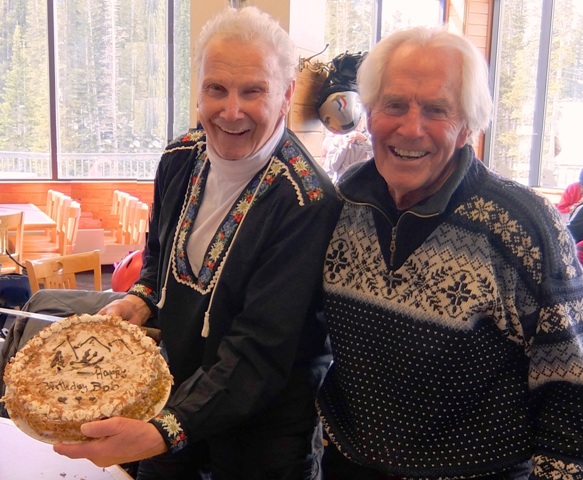
Correspondent Harriet Wallis honors 94 year old Bob Murdoch, who is the second oldest member of Alta famous Wild Old Bunch. Here’s her report on his birthday party and how he started skiing at Alta before there were lifts.  Think about that for a second. Congratulations Bob.  Keep on keepin’ on.

Discounts For Seniors

Please visit our Discounts For Seniors page.  There are some unusual and useful products that you purchase for yourself or as gifts.  Just click on the ad you like to go the vendor’s site.

This week, we are highlighting Parakito Essential Oil Mosquito Repellent.  “What?” you say, “Mosquito repellant?” Yes, think about it. Summer is coming, and some people just don’t get along with DEET and other potions found in commercial products.  Parakito is different with natural ingredients and can be used with wristbands and various clip-on devices and roll on dispensers.  Check out their comments section to see what users have to say. Yes, it is definitely different, and it might just keep those nasty skeeters away from you this summer.

Remember mosquitoes can carry some nasties that result more than an itch.


Thanks again so much for reading SeniorsSkiing.com.  Please tell your friends, and remember, there are more of us every day, and we aren’t going away.

Snow in the Sierra last week. Credit: Nathan Kushian


Short Swings!

Finding Meaning and Happiness in Old Age” is the title of Jane Brody’s March 19 Personal Health column in The New York Times. The article is about developing a healthy perspective on the aging process.

It gathers information from two recent volumes on aging. She describes them as “inspired and inspiring.” One is The End of Old Age; the other, Happiness is a Choice You Make. Brody writes, “After reading the books, I have a new way of looking at myself: as a “good-enough” aging adult who continues to pursue and enjoy a variety of activities commensurate with the limitations imposed by inevitable changes in body and mind that accrue with advancing years.” One of the authors writes about the late concert pianist Arthur Rubinstein. He “…dealt with age-induced declines in his skills by selecting a more limited repertoire, optimizing his performance through extra practice, and compensating by altering his tempo during certain sections to highlight the dynamics of a piece.” Are there lessons here for senior skiers? Readers who follow Short Swings! know that I advocate slowing down and adjusting technique so we ski as we currently are, not as we were when we were younger. I take my time getting down the hill. Lodge breaks are a bit longer. Reaching a certain amount of vertical is no longer a priority. Staying on the hill for more years and enjoying the experience are what matter. To read Jane Brody’s full column, click here.

ROAM Robotics is a new SeniorsSkiing.com advertiser. The young company is seeking skiers to help it develop its soft robotic exoskeletons. The devices, which strengthen knees, quadriceps, and backs, are being developed in San Francisco where ROAM has an indoor ski deck. Volunteers don the devices and ski while company technicians document a variety of data points that will be used to fine-tune the product’s performance. The company also is scheduling on-hill sessions in Park City and Tahoe resorts. If interested in being a test subject, click on the advertisement with the headline “Robotic Exoskeleton: Looking for Test Pilots,” view the brief video, and answer a short questionnaire.

Several New England areas plan to remain open. Killington expects to be skiing until June 3. Bromley and Jiminy Peak will continue through April 8, Cranmore through Sunday, April 1. In Quebec, Mont-Sainte-Anne will end it’s season April 22.

Visit the Discounts for Seniors page to receive 25% off Brilliant Reflective Strips kits. Each kit has an abundance of durable press-on or sew-on reflective material. This is a fundamental safety item for seniors and their families. The strips turn any garment into the equivalent of a reflective safety vest.

Snowsports Industries of America, the winter sporting goods trade group, predicts that new government tariffs on international trading partners “…would lead to higher costs for outdoor products produced domestically that utilize steel and aluminum imports, like…skis and snowboards.”

Patagonia has a website that matches volunteers with environmental organizations in the volunteers’ locales. Click on Volunteer Your Skills.

Outside Magazine‘s article, “The Boy Who Lived on Edges,” tells the story of extreme skier, Adam Roberts. Roberts was a brilliant back country skier whose mental illness drove him to ski ever riskier slopes. It is well written and worth reading. Roberts was killed by an avalanche in 2016.

Best wishes for a good Easter, Passover, Spring.

Mystery Glimpse: Who, Where, And What?

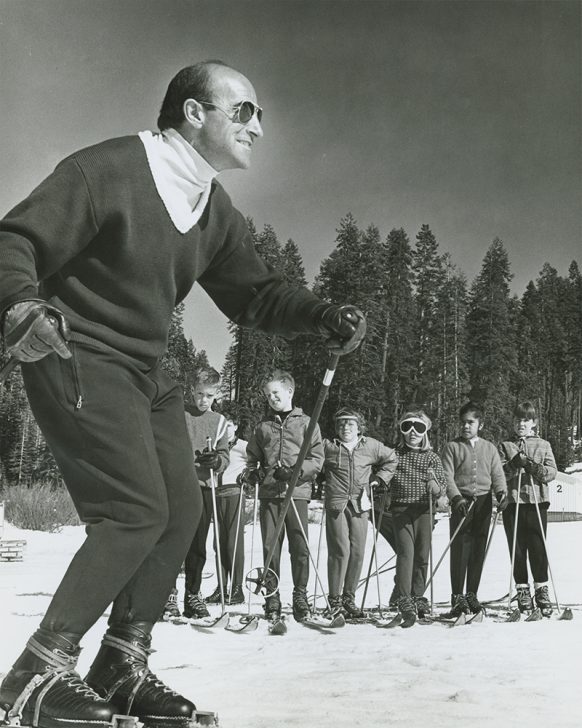
Here’s A Classic-Looking Skier In A Classic Pose.

Looks like an instructor demonstrating to a kids’ class. Check the straps around his boots, and you will get a hint about the era depicted here. Don’t you love that turtleneck? No, parka, hmmm. Looks a little like California-stylin’.  That’s enough of a hint for this one. Who is he, where did he hang out, and what’s his claim to fame?

Thanks to the Museum Of Sierra Ski History and 1960 Winter Olympics for contributing this.

Last Week

Mystery Glimpse has stumped the collective hive mind for the first time.  No, not Stein Eriksen’s older brother, but good guess.
The handsome, young skier is Dick Buek, an extreme skier before there was extreme skiing.  Here’s John Jerome, the noted ski writer, talking about Dick back in the January, 1970 issue of SKIING magazine.

“To Dick Buek, the human body was a device with a certain potential, and the only sensible course for the intelligence which guided that body was to find out what that potential was….Collecting Dick Buek stories is an exercise in the suppression of disbelief.  Shussing Exhibition the first time he saw it. Winning a ski jump the first time—maybe the only time—he ever went down an in-run. Sky-diving with a parachute he found in a scrap heap. Diving off cliffs in Acapulco to win a bet for gas money. Piloting a light plane over a slalom course around lift towers at Squaw Valley, beneath  the cables. And so on. The stories are legend.”

He won the 1952 National Downhill Championship. Then, severe injuries from a near fatal motorcycle accident left him in really tough shape. Despite his knee and shoulder being held together by pins and plates, his leg only able to extend to 60 degrees, he entered and managed to win the Downhill at the 1954 Nationals at Aspen. He was passed over for the 1954 FIS World Championships because he was “a basket case.”

Dick Buek, 1929-1957

There are other stories, like watching Stein Eriksen do his famous flip at Sun Valley and immediately trying it himself, crashing spectacularly, catching a ski in the face, getting up, skiing down the rest of the run on one ski, handing the broken one to Ed Scott (Scott Poles) and telling him to fix it. Reports were he was trying a double flip.

Dick was a daredevil stunt pilot and managed to crash twice into Lake Tahoe, the first time when he was towing water skiers. In the second crash, he was actually giving a flying lesson to a friend, the wings froze up, and the plane went straight down.  He was just short of his 28th birthday.

He was inducted into the National Ski Hall of Fame in 1974.

You can read more about Dick Buek here.


XC Skiing In Spring Is The Best

XC Ski In Shorts And T-Shirts This Spring: A Peak Experience!

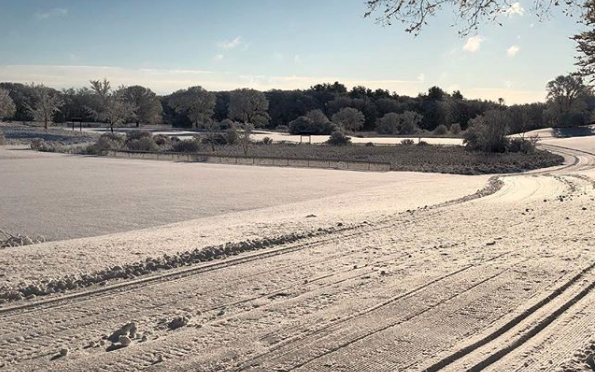
Appleton Farms, Ipswich, MA

As the cross country (XC) ski season winds down most XC ski areas close because of lack of skiers rather than lack of snow on the trails. The sun comes out, the temperature rises, and the XC skiers quit. Why? Are we infected with winter fatigue? Is the lure of spring time recreation too strong to ignore?

Lapland Lake, NY, has plenty of snow

XCSkiResorts.com spoke with some xc ski area operators around the nation to get their take on spring skiing. Many areas host springtime season pass holder parties and offer big discounts for purchasers of season passes for next year. Lapland Lake in Northville, NY, commented that their trails are compacted on a daily basis so the snow does not disappear like in the city or open areas in suburbia. Lapland’s Kathy Zahray encourages skiers and snowshoers to “get out and enjoy this weather and these great spring conditions!”

Zahray admits, “The reality is that in the spring it costs more for grooming and staffing than the amount of income earned from the diminishing number of skiing patrons. However, this is one of the most fun times of the year to enjoy the outdoors. The milder temperatures and discounted rates are terrific for everyone, and it is fun to ski in shorts and t-shirts.” Lapland Lake is offering special lodging prices through March.

Carters XC Ski Centers  in Bethel and Orford, ME have been very busy this spring renting cabins and selling equipment. Carter’s hosted the Burger, Beer & Bike Festival for their patrons to try fat bikes and enjoy the area.

In Minnesota at Maplelag Resort, proprietor Jay Richards concurs, “People want to get on the snow early but get tired of winter and ready for warm spring days.” He feels that “skiers in the Midwest are conditioned to colder and drier snow compared to skiers in other regions who are more accustomed to a wider variety of snow conditions.”

At Cross Country Ski Headquarters in Roscommon, MI, they run spring events on machine-made snow such as the Hawaiian Barbecue where they have locally raised pork hocks, along with island style veggies, and, of course, fresh grilled pineapple. Proprietor Lynne Frye invites everyone to celebrate all that is great about spring: long, sunny days of great cross country skiing in MI!

Skier Brenda Winkler, who is a regular at Izaak Walton Inn said, “There is nothing like skiing on Piston Bully groomed trails at Izaak Walton Inn. I skied yesterday and then enjoyed the best Buffalo burger in the restaurant. Izaak Walton Inn has had great grooming all season and there is a lot of winter left at the Inn!”

Breckenridge Nordic Center

The Breckenridge Nordic Center, CO, has skiers who are enjoying the patio and lounging around with a glass of beer or wine. They’ve held some well-attended fundraising events this spring and expect to remain open through April 22. Owner Josh Dayton said “We’re having really warm days but our snow holds up very well.”

The folks at Methow Trails, Winthrop, WA, stated, “This season has been another fantastic snow year!  We have no shortage of snow but people stop skiing in the spring which is really too bad because we often find the best skiing of the season comes in the spring. The trails are well packed, and the days are lighter and warmer making it much more comfortable to ski. We’re seeing that in the Methow right now there’s some of the best ski conditions we’ve had all year!

brief history

A Brief History of Why There Aren’t More Innovative Ski Boots

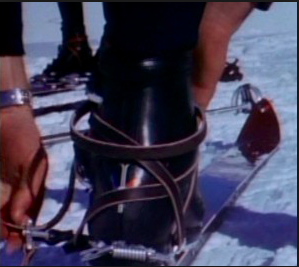
As a SeniorsSkiing.com reader, you may remember how much plastic inserts increased the lateral stiffness of your boots. Back in those days, if you were really cool, your boots were further stiffened when wrapped with a six-foot long thong.

Photo: Dick Barrymore

Then the plastic boot shell arrived, along with innovative designs from Rosemount, Scott and Hanson.

Hanson

Rosemount

Scott


The plastic boot made long skis easier to control and turn but hasn’t evolved much over the past fifty years. Liners made from foam, air, cork and other materials, coupled with adjustments for cant and forward lean, made them more comfortable. Standardized soles improved binding function.

What has changed the sport are shaped skis. They are lighter, easier to turn, and just as, if not more stable, than the 200+ centimeter skis of yesteryear.

The molded plastic boot was designed to optimize the amount of leverage a skier could apply to a long ski. Initiating a turn required unweighting the ski, rolling the knees and pressing forward to pressure the ski tips. A job for a stiff boot.

To turn a shaped ski, the skier rolls his knees back and forth across the fall line. The technique requires less forward pressure because of the skis’ greater side cut.


Back to boot design.

Most, if not all the boots on the market today are based on designs so old they’d qualify for a subscribsciption to SeniorsSkiing.com. Each boot size requires a separate mold and most boots come in nine sizes making a set of molds a million dollar investment. With manufacturing runs in the thousands, the amount the maker can recoup per boot is limited. ROI is one holdback to new boot design.

The second is flex. In the mid-70s, when I was running the ski equipment test programs for SKI Magazine, we thought measuring boot flex patterns and creating an objective way to measure ski boot performance would be relatively simple. It wasn’t.

Boot flex is determined by the:

  1. Mold design;
  2. Material from which the boot is made;
  3. Air temperature;
  4. Tightness of buckles;
  5. Fit;
  6. Foot volume; and
  7. Co-efficient of friction between the skier’s socks and the liner!

In an attempt to fill the “metrics void,” boot makers created flex indexes and measurements. Each boot maker has its own formula, so comparing one index to another is an apples-oranges affair. The only real way to test/compare ski boots is to ski on them. Even then, “normalizing” the test is difficult because each skier:

  1. Has a different foot;
  2. Doesn’t weigh the same;
  3. Skis differently;
  4. Has different leg strengths;
  5. Buckles them differently; and
  6. On and on, ad infinitum.

So now you know why new boot designs are few and far between.

Next week: How Apex is Rethinking Ski Boot Design

Reader Opinion: The IKON vs M.A.X. Pass For Northeast Skiers

Compare Ikon and M.A.X. And Major Differences Are Revealed.

To evaluate the Ikon Pass I’ll compare it to what it replaces, the M.A.X. Pass, and look at what it offers in and of itself. Because they are at similar price points I’ll be comparing the M.A.X. Pass with the Ikon Base Pass. While both passes include a variety of resorts across the US and Canada, this discussion is based solely on Northeast resort offerings.

Apologies in advance to fellow skiers in other parts of the country for I’m writing about what I know about, the Northeast—New York and New England, I’ve skied at 12 of the 13 resorts mentioned in this article. In recent posts to SeniorsSkiing Torry Hack (3/15/18) and Jon Weisberg (3/20/18) also discuss the Ikon Pass.

The early purchase price of the Ikon Base Pass for 2018 -19 is $599 while the early purchase price of M.A.X. Pass for 2017-18 was $630. The Ikon Base Pass offers skiing at six  resorts in the Northeast compared to 13 with the M.A.X. Pass. The Ikon pass adds Sugarbush but eliminates Belleayre, Pico, Gore, Mount Sunapee, Okemo, Wachusett, Windham and Whiteface. There are no special price categories for seniors for either pass.

With the Ikon Base Pass, we’re offered five days at three of the resorts and a total of five days combined at Loon, Sugarloaf and Sunday River. That’s a total of 20 days, and there are 10 blackout days.

The M.A.X. Pass had five days at 13 Northeast resorts for a total of 65 days and no blackout dates.

When I contacted Ikon pass with my concerns about their new product, they responded quickly which was appreciated. However, this is the response I received:

“We feel this new product will replace former existing products by adding more opportunity, benefits, and appeal to skiers and riders. As this new product grows, there is always potential for more resorts to be added.”

I struggled a bit on how to comment on the first sentence. There were many responses I considered but after reflection I’ll just say it’s akin to fake news.

The second sentence is encouraging. It would be wonderful for additional resorts to be added to the Ikon Pass and all the better if there were more privately and publically owned resorts included.

Though the Ikon Base Pass is disappointingly inferior to what it replaces, it will still offer value and variety for some Northeast skiers. Like any pass, if you use them enough they are a terrific deal. Multi-resort passes such as the Ikon Base Pass offer variety, and each of the Northeastern resorts included in the Ikon Pass is top-notch. If you plan a trip to any of the Ikon resorts out west, buying the pass is a no-brainer.
The full Ikon Pass at $899 offers unlimited skiing at Stratton and seven days at the other Northeast resorts mentioned. For those interested in a lot of Stratton, this may be a very attractive option.

Whether the Ikon Base Pass is right for you obviously depends on your individual preference and circumstances.

For me and my three ski buddies who also have the M.A.X. pass, we’re going to pass on the Ikon Base Pass for next season.


Big Sky: Unpretentious. Uncrowded. Unbelievably Great Skiing.

Big Sky is not ritzy. It is not pretentious. It is not crowded.

And, as one of country’s greatest ski destinations, it is not to be missed.

Big Sky is big…really BIG!

With 4350′ of vertical and 5,800 acres, Big Sky justifiably calls itself “The Biggest Skiing in America.”

The last time I skied there was before the acquisition of Moonlight Basin, a smaller adjacent area I always assumed was for beginners.

That assumption was wrong.

A tour of what had been Moonlight revealed a world of interesting black diamonds off Lookout Ridge. I explored a few of them before heading toward Mountain Village, the resort’s commercial heart and onto the blue and black terrain on Andesite and Flatiron Mountains.

At day’s end, gear stashed with ski valet, I walked to Huntley Lodge, one of four hotels a short distance from the lifts.

Named for NBC news anchor Chet Huntley, it was bustling with people there for conferences and skiing. My room was clean and pleasant, and, like me, showing some age. The night before, following check-in, I had walked across the plaza to a well-populated bar and enjoyed a few beers and a surprisingly good meal. This night, I drove six miles to Town Center, where the Lotus Pad‘s curry was excellent and its vibe, big city.

Big Sky is attracting a lot of visitors and permanent residents. The place is booming. In Town Center, construction cranes and hard hats are everywhere. Winter is part of the equation. Other times of year fishing, golfing, mountain biking, hiking, and nearby Yellowstone National Park contribute to the draw. There’s a beautiful new high school and, especially important for seniors, the new Bozeman Health Big Sky Medical Center.

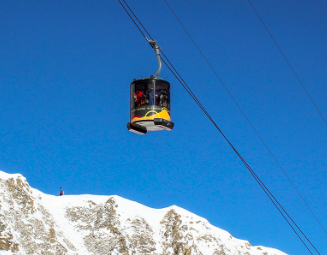
Next morning, following the Huntley’s substantial breakfast buffet, I returned to the lifts with the goal of reaching 11,166′ Lone Peak before the clouds rolled in. On the way I took Powder Seeker, the resort’s high-speed six-pack with blue bubble and heated seats. It’s then a short run to the base of Lone Peak Tram, the canister transporting 15 at a time. Depending on what awaits you at the top, the wait at the bottom may or may not be worth it.
By the time I reached the peak, it was socked-in, and I felt my way down a black bowl until visibility improved. Entering Bavarian Forest, an area of beautiful glades on manageable black terrain, I saw no one until reaching the bottom of the Dakota triple chair.

Big Sky has few on-hill amenities. There’s one permanent upscale restaurant recommending reservations, an over-sized yurt serving brats, burgers, and beers, and two limited-menu food trucks.

Toilets are equally scarce. PortaPotties next to the yurt, required an overly high step onto a slippery floor. They need to take care of that for skiers of any age. The trail map is a good one and will help you know before you need to go.

In the near distance, contiguous to Big Sky but not accessible to the rest of us, is Yellowstone Club, the famed, private resort. An instructor I met pointed out Bill and Melinda Gates’ home.

Seniors (70+) get a break on day passes (5-day advance purchase is best). Season pass options vary and have two senior categories, one 65-79, the other 80+. Big Sky participates in IKON and Mountain Collective.

Numerous direct flights to Bozeman, an hour from Big Sky.

There are a surprising number of non-stop flights from most major cities to Bozeman, about an hour away.

Depending on your skiing preferences, Big Sky is either a very good place to visit or a must place to visit. Its size, scope, and reliable snowfall make it a resort where senior skiers simply can’t go wrong.


It’s Birthday Party Time at Alta.

Hip, Hip, Hooray! Skier Bob Turns 94!

Bob Murdoch celebrates his 94th on skis at Alta. Credit: Harriet Wallis

You might say that 94-year-old Bob Murdoch is a “senior’s senior” skier. He represents many skiers across the country who are skiing into their 90s and enjoying their mountain friendships as much as the slopes.

Ski friends matter. Skiers gave Bob a birthday card that said: Count your age in how many friends you have, not in years.

Bob’s pal, Nick Looser, baked two special cakes
for the party at Alta. Credit: Harriet Wallis

At Alta, Bob is following in the footsteps—in the ski tracks—of 100 year old George Jedenoff who celebrated his milestone birthday on skis in July. Alta’s snow had melted by July, but its neighbor, Snowbird, gathered enough snow to groom a long swath so George could ski on his 100th birthday.

Next to George, Bob is the oldest skiing member of Alta’s senior group, the Wild Old Bunch—and the Wild Old Bunch threw an on-mountain party to honor him. And what a party it was!

Age has its rewards.

Bob, a retired hydro engineer, skis with his good friend Nick Looser, a retired culinary artist, who baked two specialty cakes for the event. He knew there would be a big crowd to celebrate Bob’s 94th birthday.

Bob currently skis three days every week, and his love affair with Alta goes back a long way. He skied the mountain in the 1930s before it was a resort and before it had lifts. He hiked up to ski down.

Skiing has changed a lot since the days of ungroomed snow and long uphill hikes, but we’re lucky we can celebrate with those hardy, early skiers, and we hope we can grow up to be like them.

To read more from Harriet click here for her stories on SkiUtah.

Kingdom-Trails-Fatbike

This Week In SeniorsSkiing.com (March 23)

60s Ski Songs Available Now, More Pass Wars Comments, Ski New Zealand Soon, Fat Bikes, And More.

Back in the early 60s, folk music was just beginning to become popular. Colleges, concert halls, and coffee houses were hosting a wide variety bands like The Kingston Trio and The Weavers with stringed instruments singing old time music as well as newly written tunes. One sub-genre soon emerged in parallel to the growth of the fast-growing sport of skiing. Oscar Brand, Bob Gibson, and a Navy vet named Ray Conrad created their own skiing songs which spread like an avalanche through the growing, ardent band of skiers.

Ray had a knack for composing clever, funny songs about the new world of the skier and skier wanna-bes. His tunes contain a full cast of caricatures like egotistical ski instructors, skiing cowboys, skiing Casanovas, skiing drinkers, you get the idea.  For years, these songs were out of print and only available to those who had saved their decades-old vinyl albums. Now, SeniorsSkiing.com has worked with Ray to make these songs available again.

You can download Ray’s 16-song album, The Cotton-Lickin’ Lift Tower and Other Songs, for $20 from CDBaby. This is a download only. You can listen to short clips on the CDBaby site. Seniorsskiing.com is sharing the proceeds with Ray, who, at 95 years old, is ecstatic people are still interested in his music.

For an earlier article on famous skiing songs of the 60s, click here.

More Season Pass War Puzzlements

Yes, the new editions of season passes and their features are confusing. We are hearing complaints from SeniorsSkiing.com readers about feeling left out by these passes. In this week’s edition, Co-Publisher Jon Weisberg opines on who wins and who loses in the season pass lottery.

And here’s a link to The Ski Diva, our friend and colleague, who writes a somewhat tongue-in-cheek advice column on how to choose between Mountain Collective, IKON, Epic and the rest.

Please let us know how you are navigating these choices.  Are you happy? Unhappy? If unhappy, have you complained to the pass vendors to let them know how you feel?  Remember, there are lots and lots of senior skiers affected by these pass changes. When we shout together, it’s pretty loud.

Think More Skiing In New Zealand

March has brought extraordinary, mind-bending, other-worldly snow conditions to the Sierras, the Northwest, parts of the northern Rockiers, and, thankfully, New England. Spring snow sports should be over the top. If, however, that isn’t enough for you, and you have the time and curiosity, you can always go to New Zealand, where the ski season will soon be “cooling up.”  Here’s a promo video from The Remarkables near the recreation city of Queenstown.  You should recognize The Remarkables from Lord of The Rings.

For another review of En Zed skiing, check out last September’s report from SeniorsSkiing.com advisory council member Bernie Weichsel here.

Ski The Remarkables, Queenstown, NZ

This Week

Check out our new Mystery Glimpse. It’s a dashing ski personality who left us too early.  Do you know who he is and what he was known for?

Correspondent Tamsin Venn reports on the first annual Ski Museum of Maine Senior Legends Race. This looks like a lot of fun, and congratulations to the competitors, most of whom were north of 70.

Correspondent Jonathan Wiesel has an interesting question: Better to cross-country ski on groomed trails or au naturel? Each has its unique qualities.  Your thoughts?

Fat biking is a new-to-us snow country activity although we hear its been around since 2007, starting in Alaska and working into the western US. XCSkiResorts.com publisher Roger Lohr introduces us to fat biking on snow with a visit to Kingdom Trails in northern Vermont.  For course, people also fat bike on beaches and mountain trails in the summer, but snow country is an interesting idea.

Discounts For Seniors

Two interesting vendors on our Discounts For Seniors page for this week’s highlight:

FitterFirst, exercise equipment emphasizing balance and coordination, and Injinji, compression socks that also accommodate individual toes.

Please visit all our Discounts For Seniors vendors. There are some interesting deals in gear, clothing, and gifts you should check out.

Thanks for reading SeniorsSkiing.com.  Tell your friends about us and remember, there are more of us every day, and we aren’t going away.

Short Swings

Short Swings!

I’m in the desert with my skis. There’s snow in the higher elevations but the nearest lifts are a few hundred miles away.

It’s nice to be enjoying a respite from winter. But I feel like a city dweller, removed from my favorite pastime. It’s not permanent. I have the good fortune of being able to get in the car and drive to a mountain. One ski friend just had shoulder surgery. Another is recovering from a spine operation. A few have new hips or knees. They’ve been sidelined for the season. Mine is self-imposed R&R. Resting for a few weeks before returning for a few final days on the hill. I need the hill. I need the snow. I yearn to be back on skis.

Discounts For Subscribers

Ear buds are difficult for me. I feel like using Crazy Glue or nails to get them to stay in my ears. Conventional headphones work but can be bulky; they tend to block out other sounds. Aftershokz headphones use bone conduction to deliver sound to the inner ear. Instead of covering your ears, AfterShokz rest against the bone in front of your ears. They deliver superb sound, but they don’t interfer with other sounds around you, like that snowboarder coming in fast or the the approaching car when you’re road biking. The company is selling them to SeniorsSkiing.com subscribers for 15% less than they can be purchased elsewhere. The wireless version costs as little as $110; wired as little as $42.00. Visit the Discounts for Seniors page and click on the Aftershokz ad.

Late Snow

Don’t give up on the season quite yet. Late March and early April generally produce excellent snowfall. I just visited SnowForecast.com, a site reporting on snowfall around the globe. Each area receiving snow in the past seven days is represented with a red dot. The U.S. map looks like it has measles!

Alpskitour

Alpskitour is our newest advertiser. The Italian company organizes 5-day ski tours limited to groups of seven, each accompanied by a professional guide/instructor who knows the best routes and dining locations. General areas covered include Aosta Valley, Breuil-Cervinia, Zermatt, Cormayeur Mt Blanc, and Pila. Unless requested otherwise, the terrain explored is intermediate to advanced. My wife and I plan to try it out next March. If interested in joining us, please drop me a line: jon@seniorsskiing.com.

Other

News from the resorts is slowing down. Most of the announcement have to do with season pass offerings, new snow, and the occasional fund raiser. This week, the most interesting items are from Colorado and Killington.

On March 19, Colorado Ski Country USA reported that resorts across the state received up to a foot of overnight snow, the first wave of several expected by month’s end. Telluride led the state with 12″, Winter Park got 10″, Steamboat and Powderhorn got 9″. The least amount was 6″ at Eldora.

Killington‘s year round season pass, with access to everything at any time, is available to 65+ for $79 a month ($948 for the year) until June 14. The Unlimited Season Pass is on sale through June 14 for $629 (65 – 79). The Mid-Week (M-F) pass (all ages) is $519. 80+ skiers pay a nominal processing fee for free season passes.

If you, your ski area, ski club, or others have information to be shared with the SeniorsSkiing.com community, please email  jon@seniorsskiing.com.

60s Ski Songs Now AVAILABLE!

You Can Now Download Ray Conrad’s Classic Collection Of Ski Songs.

After many delays, procrastinations, and technical ups and downs, SeniorsSkiing.com is happy to announce that Ray Conrad’s The Cotton-Pickin’ Lift Tower And Other Ski Songs, is now available for download from CDBaby. CLICK HERE.

Ray has kindly agreed to exclusively offer his songs recorded back in the 60s to readers of SeniorsSkiing.com. The music is download only and costs $20. SeniorsSkiing.com is sharing the proceeds with Ray who, at 95 years old, is ecstatic that people are still interested in his music.

In the early 60s, Ray Conrad wrote and performed skiing songs in a folk music style that was gaining popularity in cafes, clubs and college campuses. His songs are satirical, silly, clever, and funny, spoofing the people who ski or want to look like skiers. You can listen to clips of the songs on CDBaby.

Here are the songs from The Cotton-Pickin’ Lift Tower And Other Ski Songs:

  • The Cotton-Pickin’ Lift Tower
  • Snowdrift Saloon
  • The Flatlander
  • Three-Pin Bill
  • Two Cubes and a Slug of VO
  • Mogul Mouse
  • A Skier’s Daydream
  • The Big Downhill Skis
  • Marie
  • Number One Fun
  • The Ski Instructor
  • La La
  • Skier’s Bible School
  • Nastar
  • Round-Bottomed Bogners
  • An Ounce of Prevention

Remember, this is download-only from CDBaby. Once downloaded and on your hard drive, you can play these songs through your iTunes or  music player, transfer them to your Smartphone, listen at the gym or heading up to snow country in your car.

Let us know what you think about this little bit of ski history on SeniorsSkiing.com.


Mystery Glimpse: Straight Down

Who Is This And What Is He Best Known For?

Let’s see if you can identify this skier who blazed some very impressive trails back in the 40s and 50s.

Hint: He was also a pilot.


Last Week

We are frequently impressed by the deep knowledge our readers have on the personalities and history of snow sports.  This week, we were blown away by the several contributors who absolutely nailed the story behind this famous picture.  Well done, readers.

Here’s the story: In 1206 AD, a Norwegian king died and left his baby son, Hakon Hakonsson, as heir to the throne. To protect the infant from enemies, two skiers carried him through treacherous winter terrain to safety in Lillehammer. Their rescue is commemorated every year in the 54=kilometer Birkebeiner race, named for the birch bark gaiter they wore to protect their legs.

Thanks again to the New England Ski Museum for the painting and caption. Congratulations to NESM for opening its new facility in North Conway, NH.

My Sun Valley Serenade

A few rides on the lift can say a lot about an area. At Idaho’s Sun Valley I was reminded of its friendly vibe and older population of very good skiers.

Sun Valley with Ketchum and Baldy in the background

Anyone reading this knows Sun Valley is one of America’s oldest and most celebrated resorts. In the late 30s to the 60s/70s, Sun Valley helped establish the glamor of skiing by attracting celebs like Ernest Hemingway, Gary Cooper, Clark Gable, and Ingrid Bergman. The 1941 romantic comedy, “Sun Valley Serenade” starring Olympic skater Sonya Henie; actor, John Payne, and bandleader, Glenn Miller (“Chattanooga Choo Choo” was one of its songs), is played 24/7 on a resort TV channel.

All of that might be lost on Millennials, but as part of the SeniorsSkiing.com demographic, the importance of Sun Valley should not be lost on you.

It’s the location of the world’s first chairlift. It’s where Warren Miller spent his post-WWII years, and it was and continues to be home town for Olympic champions such as Gretchen Fraser and Picabo Street.

Sun Valley is the resort community adjacent to the town of Ketchum. There are two places to ski: Bald Mountain, in Ketchum, tops out at 9,150′ and has 2,054 acres of almost every type of terrain. At a lower elevation (6,638′), Dollar Mountain mixes terrain parks with blues and greens.

The day of my visit, I got an early start; parking at the River Run lot and taking a short, downhill stroll to the lodge. At the drop-off area there’s a fleet of fat tire wagons to carry equipment the short distance to base lodge. For the most part, Sun Valley’s day lodges are posh and serve excellent food. Restrooms are as nice as in a fine hotel; well-maintained, private stalls, and high-end fixtures. One minor downside is that typically they’re at the bottom of a flight of stairs.

The gondola goes to mid-mountain, where you have access to the rest. From there, I chose a chair that got me close to the top of Warm Springs, the face with more than 3000′ vertical.

About 6″ had fallen overnight and the run, first on black, then blue, was a great way to start. Back at the top, I headed down a ridge where sun-exposed snow was starting to firm. Several chairs and runs later, I stopped in Seattle Ridge Day Lodge to rehydrate and enjoy the great views.

Baldy is about to expand by 380 acres. Cold Springs Canyon, a steep pitch adjacent to Seattle Ridge, is expected to open next season with a new detachable quad.

The cost of skiing Sun Valley is a mixed bag. Seniors (65+) can purchase lift tickets in advance for $89 a day, significantly less than $135 for the youngsters. But there are no senior discounts for season passes. Sun Valley is a Mountain Collective participant. That pass includes two day passes and 50% off the price of subsequent days. If I planned to ski there five or six days, I’d probably use Mountain Collective, currently selling for $409.

I stayed at the newly remodeled Sun Valley Inn. My room was large and tastefully decorated. Off the lobby is the beautiful and understated Ram Restaurant. The menu is diverse, the room has a casual elegance, and the service is excellent. Hemingway could still be perched at the bar.

The Pioneer Saloon

In Ketchum, about a mile down the road, is The Pioneer Saloon, the classic bar and meatery that has been attracting locals and visitors for decades. One evening I met friends at Sawtooth Brewery for first-rate pub food and beer.

Delta, Alaska Airlines, and United have daily direct flights to nearby Hailey from Chicago, Denver, Seattle, Portland, LA, San Francisco, and Salt Lake City.


Sun Valley, America’s first destination ski resort, is a classic. I know it’s on a lot of bucket lists. But, like Warren used to say, “Why wait another year? You’ll only be that much older.”

Kingdom-Trails-Fatbike

Kingdom Trails: Vermont’s Fat Bike Mecca

A New Sport Bridges Snow and Non-Snow Seasons: Fad Or Here To Stay?

On the Kingdom Trails in Lyndonville, VT. Credit: Herb Swanson

[Editor Note:  SeniorsSkiing.com is interested in bringing new activities to our reader.  In this story originally published on XCSkiResorts.com on biking with fat, balloon tires, publisher Roger Lohr does an explainer and reports the adventures of a group of neophytes on Kingdom Trails in Northeastern Vermont.]

Fat bikes, dubbed the “Hummers of the two-wheelers’ world” are proliferating with more than 150 cross country (XC) ski areas in North America that welcome fat bikes on their snow covered trails. These specially-made bicycles accommodate ultra-wide tires that can be run at very low pressure 4-8 pounds of pressure, allowing fat bikes to roll over soft, slippery surfaces like snow. XC ski areas and regional pockets across the nation from Vermont to Michigan and Arizona to California and Washington now have fat bike trails with single track groomed and signed trails, rental bikes, and special events.

Snow Sport journalists head off on a fat bike familiarization tour. Credit: Roger Lohr

A small group of North American Snowsports Journalist Association members were recently introduced to fat biking by the welcoming folks at Kingdom Trails in Lyndonville, VT. The group found the bikes easy to balance and maneuver. Similar to XC skiing, the fat bikes provide exercise when going on flat terrain with more effort required up hills, earning thrills on the downhills.

An industry source at QBP, manufacturers of fat bike brands Surleybikes and Salsacycles, boots, gloves, accessories and apparel recently reported that 150,000-200,000 fat bikes that have been sold since 2010. These bikes provide a great way for avid cyclists to stay in shape during the winter season, and they provide different recreational fun for people who are active or love the outdoors.

Fat biking at Kingdom Trails in northeastern Vermont is no small matter. It is the foremost mountain bike destination in the east with more than 40,000 day passes sold in 2017 (20 percent increase from the previous year), and they’ve quickly parlayed this notoriety into becoming a mecca for fat bikers in the winter. Kingdom Trails has 100 miles of bike trails, 30 of which are used in winter for XC skiing, snowshoeing and fat biking, and works with 80 different land owners. Kingdom Trails also hosts Winterbike, which is the biggest fat bike festival in the east. The organization conducted a survey of bikers showing that they are generally aged 45-60 and reportedly attract $8-10 million of business to the region!

At Darling Hill Road in Lyndonville, the Village Sport Shop has a trailside facility adjacent to the Kingdom Trails Nordic Adventure Center renting fat bikes for $55 a day and sells the bikes ranging from $1,800 to $2,800. Fat bike products include softgoods, accessories, and bikes available from companies such as Liv Bikes, Giant, and Pivot among others.

Bike in winter? Fatties make snow country accessible.
Credit: Herb Swanson

Another option for those who would like an introduction to fat biking is to have a guide at Kingdom Experiences take care of all the details. They’ve got certified instructors and want to help cyclists have an experience catered specifically to rider skill and ability levels offering kids camps, women’s clinics and getaways and more.

Kingdom Trails employs three paid groomers, who pack and maintain about 30 miles of trails. Day membership prices (day pass for trail access) are $15 a day for those aged 16-69 and $7 for youth aged 8-15. There are also year-round memberships available with an annual family membership priced at $150. Memberships and rules of fat bike etiquette can be found at the Kingdom Trails Welcome Center in East Burke or the Kingdom Trails Nordic Adventure Center on Darling Hill Road in Lyndonville.

IKON Pricing Hurts Some Older Skiers. May Help Others.

Pricing of the new IKON Pass has raised concerns among older skiers, especially people living close to Mammoth and Squaw Valley. Those and some other IKON resorts are eliminating local season passes, most of which had senior discounts.

Like EPIC, Mountain Collective, and other bundled packages, IKON generally offers good value.

Ski pass pricing is complicated and making a decision about which bundle, if any, to buy should be determined by where you live and where you intend to ski.

Next season, many of the IKON resorts will have IKON as their only season pass option. Mammoth, Squaw Valley/Alpine Meadows, and Steamboat are among those retiring their local season passes.

Now, people living near those areas will be required to purchase the $899 IKON pass for unlimited skiing. One extreme example of the penalty they’ll pay is at Squaw Valley/Alpine Meadows. This season, 65-75 year olds had unlimited skiing for $719, a $180 difference from what they’ll pay to ski there in 18-19. The most dramatic sticker shock will be for 76+ skiers: This season they paid $389 for (mostly unlimited access). Next season, IKON will force a $500+ increase.

Granted, IKON provides access to many other areas. It really is a very good bundled option. But for the 76+ group at Squaw/Alpine who limited their skiing to those resorts, it will cost a lot more.

The cost difference between IKON and this season’s Cali4nia Pass at Mammoth is about $400 more, but the resort plans to continue its free skiing policy for the 80+.

 Friends of Squaw Valley has started an initiative to persuade Alterra Mountain Corporation, the resort conglomerate behind IKON, to include local passes and senior discounts.

IKON has two pricing levels, neither of which includes senior pricing.

  • Unlimited costs $899 and includes unlimited skiing at 12 specific destinations. In addition, it offers seven days at each of 13 other resorts.
    • Of the areas with unlimited access, four are in Colorado (Steamboat, Winter Park, Copper, Eldora) and four are in California (Mammoth, Squaw/Alpine, Big Bear, June). The others are Stratton, Tremblant, Snowshoe, and Blue Mountain.
    • Resorts where pass holders can ski up to seven days each are Alta, Snowbird, Deer Valley, Jackson Hole, Big Sky, Aspen/Snowmass, Killington, Sugarbush, Loon, Sunday River, Sugarloaf, Revelstoke and SkiBig3.
  • Base Pass costs $599 and offers unlimited skiing at 10 destinations and up to five days each at 15 other resorts.
    • The areas with unlimited access are Tremblant, Winter Park, Copper, Big Bear, Blue Mountain, Snowshoe, and Eldora.
    • The five days apply to each of the other areas in the Unlimited package.

Copper Mountain is one of the IKON resorts. It’s 2018-19 season pass is $369 for 70+ seniors and gives unlimited access plus three days, each, at Purgatory, Monarch, Powder Mountain and Taos. It has other free skiing with lodging benefits elsewhere.

If I lived near Copper and planned to ski there exclusively, the $369 purchase would be a no brainer. If I planned to take a few excursions to Aspen/SnowmassWinter Park, Eldora, Steamboat or any of the other resorts covered by IKON, I’d spend the additional $230 for IKON’s $599 Base Pass.

The bundled ticket trend requires careful determination of what is best, based on where we live, where we ski, and what next season holds in store.

Marketers know that it’s easier to get a bit more out of the customer when they throw in the extras, even though most purchasers will use a small portion of what they bought.

Bundled ski passes — IKON, EPIC, Mountain Collective, etc. — offer good value. Study the options and make choices based on a realistic appraisal of where you think you’ll ski next season.

New Legends In The Making

Ski Museum Of Maine Holds First Annual Seniors Race.

Medaling were left to right: Leigh Breidenbach (Turner). Ginny Bousum (Kingfield), Paul Rogers (Camden), Jill Gray (Farmington), Michael Becker (Winthrop), Tip Kimball (Cumberland Center)
Credit: David Eden

Just when the afternoon light was at its best, the Ski Museum of Maine hosted its first Legends of Maine GS Race at Sunday River. The goal was to benefit the growing museum based in Kingfield as well as to show racing for seniors is both doable and fun.

Off and running. Credit: David Eden

Twenty skiers, 50 to 80 somethings, were assigned decade-appropriate heats. Younger competitors presumably most able to handle the ruts went last. Everyone enjoyed a well pitched course, groomed to perfection by Sunday River officials on Monday Morning off Barker Mountain.

Many racers were veterans of Sunday River’s Wednesday race group clubs, but for some it was a step up from the usual NASTAR course.

Tip Kimball, the only male to enter the 50-59 category, was fastest overall. Maybe youth does still have some advantages. Greg Sweetser, Executive Director of Ski Maine, was only 5.34 seconds behind in the 60-69 division, not bad for an older guy.

Leigh Breidenbach of Turner and a manager for Sport Thoma ski shops, took first in the 60 plus category. She says she raced because, 1) she is a board member and 2) she was the director of the Ski Industries Program at UMaine, Farmington for many years under Doc DesRoches, so she supports the industry any way she can. Her husband, Bede Wellford, 64, was gamely racing “on a new hip.”


Beth Hodgkins in the 60 plus group.
Credit: David Eden

Wende Gray of Bethel and President of the Ski Museum of Maine, also took part. The last time she entered a race was in 1988 at Lost Valley for a ski association event. Her words of triumph after this race: “I did not crash, and I finished.” She took the gates wide to stay out of the ruts, enough to earn a bronze medal.

Top woman finisher in the 70 plus category was Virginia Bousum, 77, of Kingfield, and 13th overall.

Virginia was nervous despite her freshly tuned Dynastar GS skis, her “visualization” prep of Michaela Schiffrin running GS on YouTube, and not listening to the other “guys” warning each other about the tricky gates ahead. Her pre-race training had gotten sidetracked by teaching six-year-olds over the busy school vacation week at Sugarloaf. For moral support, she brought along her granddaughter who had taken the day off from school.

Ultimately though, “It was fun, just ski down, nothing tricky. It was a nice course. They set it up really well,” she says.

For the record, her last major race was a Bonne Bell suntan lotion sponsored race back in the 70s at Sugarloaf.

Bill Hayes, 82, placed third in the 70 plus category on his G9 GS skis. He continues to train at Sunday River with the kids from Gould Academy, where he used to coach. No slouch, he was also on the UNH ski team and coached the U.S. Ski Team. A downhill specialist, he came close to the 1955 Olympics in Cortina but an injured leg kept him out.

How was the race?

“Great, but I gave it too much room. What else am I going to do, sit at home?”

An awards ceremony following at the Barker Bar, with food and drink and Gray’s presentation of medals, plus two trophies, Centrum, ski wax, and Bandaids.

Going forward, plans are to move the race around to other Maine ski areas to spread the word. With any luck the race will take place at Sugarloaf next year with more legends in the making.

Cross-Country: Tracks vs Touring

Groomed XC Trails Are Becoming More Prevalent; Does That Ruin The Aesthetics Of The Sport?

The “natural” experience, just like it was meant to be…Or…

For the past 50 years or so, there’s been a generally amicable debate whether cross-country skiing on machine-groomed trails is preferable to making your own way over the fields and through the woods. The argument has a lot of angles, including “Free vs. Fee” and “Pristine, Silent, and Serene vs. Speedy, Social, Service-based, and Secure”.

…Groomed trails at Appleton Farms, Ipswich, MA, easier and less tiring.
Credit: NS Nordic Assn

Clearly, you don’t have to choose one over the other – they’re both delights (and the world’s best exercise), in somewhat different ways. The thing is, as my increasingly complaining bones and joints frequently announce, groomed trails for classic and skate techniques have more and more going for them.

One huge differentiator is that if you want to take up the sport, you’ll be smart to start with one or two lessons from a professional instructor at a cross-country ski area, learning and practicing efficient movement. Undesirable options are learning by yourself off-track (I know someone who tried to do that while consulting a printed manual – results weren’t pretty) or getting often-incoherent suggestions from a friend while floundering in unpacked snow (‘nuff said).

Whether you’re a long-time practitioner or a newcomer, groomed trails make things easier, faster. For classic style, you’re riding on a consistent, packed surface, with your skis guided forward in compressed tracks. (It takes some effort to get lost that way too; whereas I’ve been known to ski in circles in fresh snow, totally convinced I was moving in linear fashion.) Gotta love it, especially if you have balance or vision issues, as I do.

Almost as important, your pole tips are digging into packed snow and no further; while breaking your own trail, the entire basket may sink, throwing off your balance and helping you to get up close and personal to the snowpack. And as many of us have discovered, getting up in deep snow is challenging.

Skate skiers need a packed surface even more than diagonal striders. Two or three inches of fresh snow even on a groomed trail are enough to grab an edge. It’s nearly impossible to skate in ungroomed snow except for spring crust-cruising (not the same as skiing on ice – you can set your edges), which is a joy – crust lets you go almost anywhere, speedily zipping along. Euphoria!

One of the delights of cross-country is that you can evolve from a groomed trail skier to a tourer, if you wish. You’ve developed good classic technique in the tracks; you know how to make your legs do the work and your arms help out – now you can apply those skills in a quieter setting, with shorter strides but still good balance.

Cross-country areas have services – anything from plowed parking to lodges with food and drink, heated bathrooms (also heaven on a brisk day!), rental, retail, even overnight accommodations. Also, groomed trails may have signs, maps, possibly ski patrol, probably snowshoeing – and if you’re wild for something different, increasingly there’s fat biking available.

If you’re taken by the charms of overnight tours, there may be Forest Service cabins in your area (bring your own food, clothing, sleeping bag…). (Editor Note: See Steve Hines’ article on skiing to the AMC Little Lyford Pond Camp in Maine.) And finally, for true adventure, there’s snow camping (bring your own stove, too). Touring with a pack in fresh snow is truly character-building (been there, done that, I happily leave it to today’s kids).


This Week In SeniorsSkiing.com (March 16)

St. Patrick Brings Snow To (Much Of) Ski Country, Mystery Myth, The Snow Song, Bundled Pass Impact On Seniors, Maine AMC XC Lodge, Friendly Little Mountain In Idaho.

Brodie Mtn, MA, ground zero for St. Patrick festivities, circa 1970.
Credit: NewEnglandSkiHistory.com

The good St. Patrick might have driven the snakes from all of Ireland, but his advent this year has brought late winter snow into the resorts of the West and Northeast which have all been waiting patiently all season for some healthy depth. If you’ve been praying for snow, you got it.  Now also buy a lottery ticket.

Please Give Our Discounts For Seniors Page A Visit 

This week we’d like to feature two vendors who have joined our Discounts For Seniors page, where you can find a collection of offers of interesting products at steep discounts.

The Tea Spot, a purveyor of specialty-artisan teas and infusers, may seem like an unlikely participant for senior outdoor enthusiasts. But think about. The Tea Spot’s products are not just Lipton look a likes. Tea Spot’s products are loose-leaf teas and its innovative Steepware, designed to extract the full health benefits of tea. The company’s founder, Maria Upsenski, is a cancer survivor who was drawn to the health benefits of tea during her recovery. With a steadfast mission to foster health and wellness through tea, The Tea Spot donates ten percent of all sales in-kind to cancer and community wellness programs. To date, they have supported over 100 organizations and touched more than 10,000 lives. The Tea Spot is a Colorado-based, woman-owned and operated philanthropic business. So, that’s why they are with SeniorsSkiing.com.

Another terrific vendor we discovered at the OR show is OS1st which offers medical grade supportive compression sleeves for knees, feet, arms, elbows, and wrists. OS1st’s compression technology is designed to basically hold joints, muscles, ligaments, and tendons in the right anatomically place. That supports and stabilizes the underlying anatomy is either speeds recovery or prevents common injuries.  Currently on the Discounts For Seniors page is a KS7 Knee Compression Sleeve Brace which we think many readers will find useful to relieve or a least mitigate knee pain.

Another product is the FS6 Foot Brace Compression Sock that is designed to prevent PF pain. If you’re an active senior who runs, hikes, skis, plays tennis, golfs, you know that Plantar Fasciitis can create foot pain that ranges from uncomfortable to miserable.  Here’s a product that might be helpful.

All these products are currently being or will soon be reviewed by readers and correspondents.  We’ll let you know their impressions.

This Week

After missing our deadline last week because of a power outage, we have a very challenging Mystery Glimpse this week. Readers who are steeped into the deep history of skiing might get it. Check it out here.

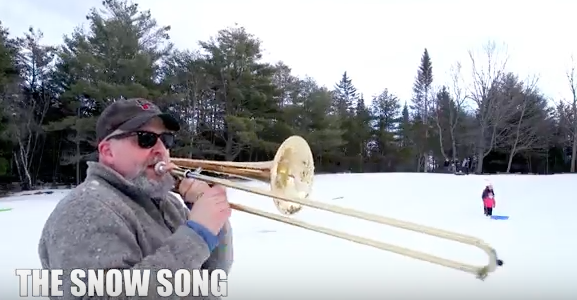
With all the snow in the East (and West) this week, we couldn’t help passing along a really funny song by a Maine journalist aimed at the perpetual grouches who think snow is the enemy. The production is fun, too.  Watch it here.

Correspondent Steve Hines visits a remote AMC hut deep in Maine via cross-country skis with a small crew of friends who have been heading into the woods annually for many years.  Here’s his report on the Little Lyford Pond Camp.

Co-Publisher Jon Weisberg reports on his visit to Pommerelle—no, not a wine. Pommerelle is a small area east of Twin Falls, ID, the kind of area that is a magnet for seniors. Gentle terrain, accessible, not expense.  Read his dispatch from a great off-the-beaten track resort.

Next Week

Thanks for reading SeniorsSkiing.com.  And thanks for the contributions you’ve made that are really helpful in defraying expenses. It is gratifying to see the support we’ve received.

Visit our Discounts For Seniors page, tell your friends, and watch for a very special surprise next week having to do with ski songs!

Remember, dear readers, there are more of us every day, and we aren’t going away.

Short Swings!

We need to adjust our skiing to our age.

Some readers will probably react with a “Mind your own business,” and that’s fine.

But I keep running into too many people beating themselves up on skis: either forcing old bodies to ski like they did when they were young, or not knowing how to adjust to a more age-appropriate technique.

Several years back I was skiing with a contemporary in her sixties. She skied like she did as a college racer. Impressive, but way to fast for my taste. I waited a long time at the bottom of a bumpy Snowbird trail where her husband met me after patrol had put her into the sled. Broken leg.

I tell everyone I ski with that I ski slowly. I turn a lot, aspiring to graceful form. There are two downsides: it can be tiring, and it makes me vulnerable to being struck by a speed demon. I frequently glance uphill. A few weeks ago while linking tight turns at trail’s edge, I glanced back and saw a youngish boarder on my tail. “Thanks,” she called out. “I enjoyed following your turns.”

Epic Pass Additions

The Vail-owned bundled pass has added Crested Butte, Okemo, and Mount Sunapee for next season.

Boyne Aquiring 6 Areas

They are: Brighton (UT), Cypress Mountain (BC), Loon (NH), Sugarloaf (ME), Sunday River (ME), and The Summit at Snoqualmie (WA).

Harlem Globetrotter on Skis

Globetrotter, Bucket Blakes took a lesson at Arapahoe Basin to promote the team’s March 16 – March 18 Colorado tour. The resulting short video is a refreshing treat.

Colorado

Copper Mountain will upgrade two of its Center Village lifts. American Eagle will become a combination gondola/chairlift. American Flyer will become 6-passenger high-speed bubble chair.

Winter Park will replace its Zephyr Express quad with a gondola.

Montana

Big Sky will replace its Ramcharger quad with North America’s first eight-passenger chair. The new lift, to be ready for next season, will have heated seats and blue bubbles. The older, high-speed Ramcharger will replace the much slower Shedhord double chair.

Quebec

Mont Tremblant will replace its Lowell Thomas chair with a detachable quad. Its main summit lodge, Le Grand Manitou, will be expanded.

 Vermont

Snow gods seem to be favoring the Green Mountain State. Six to seven feet have fallen since beginning of the month. Great time to plan a Spring Skiing trip. This weekend will be filled with green snow and green beer as Vermont areas celebrate St Patrick’s Day.

Killington, part of the IKON pass, will continue to offer discounts on its season pass for seniors, 65-79. The pass for 80+ is essentially free (nominal processing fee required).

Stratton will replace its Snowbowl chair with a high-speed detachable.

High Fives Foundation

Jan and Judy Brunvand with their special edition Parlor Skis

Frequent contributor Jan Brunvand sent in this photo with his wife, Judy, holding her special edition High Fives Foundation Parlor Skis. Parlor gives 15% of its High Fives design sales to the non-profit which helps injured athletes reach their recovery goals. Jan is holding the trout skis Parlor made for the American Museum of Fly Fishing.

Reader Opinion: MAX Pass Replaced by Less Diverse IKON Pass

The MAX Pass offered skiers 5 days of unrestricted access to 44 ski areas ranging from local, family-oriented areas to large, destination resorts spread out evenly across the East and West.

The MAX Pass was available through Intrawest and included 5 of its resorts. My understanding is that the Boston area had the highest concentration of MAX Pass holders, and that Mt. Sunapee and Okemo ranked in the top 5 ski areas for total MAX Pass visits.

Last April, Intrawest was bought by KSL Capital Partners, a private equity firm investing in leisure properties, and Henry Crown, the owner of Aspen Skiing Company. They formed a new company called the Alterra Mountain Corporation (www.alterramtnco.com), self-described as “a curator of 12 premier mountain destinations”, including Mammoth, Squaw, and Deer Valley. Alterra replaced the MAX Pass with the IKON Pass, starting next season.

The differences between MAX and IKON are significant:

  1. 44 diverse ski areas offered under MAX reduced to 26 large, destination ski areas, which are now skewed to the West. 12 of the 26 resorts are owned by Alterra.
  2. Unrestricted ski days reduced depending on IKON level and specific resort.
  3. Elimination of the season pass-holder discount. Max Passes were only $199 for those that paid for season passes at participating ski areas.

Now, as a MAX Pass holder I am personally disappointed that this is a less diverse product with fewer choices. There are only 8 IKON areas in the East where a lot of Max Pass holders live and ski, and those are reduced to “destination” resorts.

With all of Alterra’s acquisition and start-up activity over the past year, the company appears to be using IKON as a way to push its owned properties.

With a little feedback from current customers, Alterra may still make some changes to return greater ski area diversity to IKON so it can be enjoyed by a broader base of skiers.

Mystery Glimpse: What’s The Story?

Dire Straits Require Heroic Acts.

Credit: New England Ski Museum

This week, a historic event for Mystery Glimpse.  Can you identify the characters involved in the above picture? What’s going on? Where are they headed? Why? And yes, they are skiing.

Thanks to the New England Ski Museum, Franconia, NH, for hosting this jewel. Congratulations to NESM for opening its new branch in North Conway!

Last Week

Who, where, 1950.

Yes, Stein Eriksen is the racer and the event is the FIS World Championships at Aspen in 1950. This was the first FIS event held outside Europe when Aspen was open for only four seasons. Italy’s Zeno Colo missed sweeping all three events by losing the slalom by 0.03 seconds. Stein Eriksen placed third in the slalom.


Hey, Hey, Ho, Ho, This Is Maine, It’s Gonna Snow

The Half Moon Band Delivers Truth About Living In New England.

It’s been snowing a lot around New England this March. Three Nor’easters in less than two weeks delivered plenty of snow and have basically rescued the spring skiing season for most resorts from Pennsylvania to Maine. But, there are people who think that snow is just frozen water that blocks them from getting to their flight to Aruba. Grousing brings a negative force field.  Embracing the reality of New England weather is healthy.  Proof?  Just watch this ditty by Bangor Daily News journalist Troy R. Bennett and performed by The Half Moon band. Relax, forget those power outages; it’s gonna snow.

Little Lyford Pond Camps: Companionship, Adventure and Hospitality in the Maine woods

Long-Time Friends Take To The Maine Woods On An XC Adventure.

Steve Hines (R) and his pals venture into the AMC’s wilderness camps every year.
Credit: R. Boucher

A fresh three-inch snowfall covered the winter parking lot as we arrived for our annual winter ski trip. We felt a quiet confidence as we loaded gear into the gear shed for transport to the Appalachian Mountain Club’s (AMC) Little Lyford Pond Camps (LLPC). The camp is on the outskirts of Greenville, Maine. At about 9:30 that morning, we put on skis and shouldered day packs for the 6.8 mile trip from the parking lot to the camp. The four of us—ages 63 to 70—are all experienced outdoorsmen.

Head of the Hedge Hog Gate Trail into the LLPC. Credit: R. Boucher

Trips like this were not new to my group of friends. But, what makes people our age want to continue to take adventures like this? Hadn’t we all earned our rest? Shouldn’t we be shopping for “over 55” living arrangements? Perhaps the answers would be revealed during the week.

AMC owns three camps which are on land the club purchased near the Katahdin Iron Works region in north central Maine. The camps had been fishing and hunting camps for “sports” from Portland, Boston and New York, typically wealthier men looking for a respite from their harried lives in large cities. LLPC opened in 1873 during the so-called gilded age in America. These were the days of JP Morgan, the Rockefellers and the Carnegies. Now, the three camps: LLPC, Gorman Chairback, and Medawisla are all updated and modernized for 21st century adventurers.

LLPC was our destination this time, and the only way to get there is to ride a snowmobile or ski in on either Hedgehog Gate XC ski trail or the KI Road (logging road) to Upper Valley Road to the camps. Either way, the conventional wisdom is that intermediate skiers have the best time but beginners beware. Two of us decided on the trail and two on the roads thereby observing the “never ski alone” rule.

LLPC at twilight. The AMC maintains three wilderness camps in Maine. Credit R. Boucher

A few hours later, we four were reunited at the lodge at LLPC having lunch and telling stories. The staff at the camp were all on the job less than six months but were eager to please. In a short time, they’d become veteran innkeepers. Food at LLPC ranges from good to excellent, and we all found plenty to eat. The camp staff also accommodates special needs like vegetarians and gluten free. Trail lunches are provided as part of your stay.

The trail system around LLPC is extensive also ranging from comfortable “kick and glide” trails to challenging, ungroomed trails like Gulf Hagas.

Cross Country skiing isn’t the only winter sport enjoyed in the area around LLPC. Snowshoeing is also popular too. And the Lodge has snowshoes to loan.

While we had many conversations around our wood stove over the course of our stay, there were no clear answers to the existential questions listed at the beginning of this article. We did agree, however, that we all look forward to our next winter adventure.

Snowshoeing around the pond at LLPC. Credit: R. Boucher

Pomerelle Mountain Resort: Vintage Family Area Named for a Favorite Wine

I recently visited Pomerelle Mountain Resort, a smallish ski area in the Sawtooth National Forest, 75 miles east of Twin Falls, Idaho.

It’s about 25 miles from the Interstate. You get there driving through a long, flat valley and small villages (e.g. Albion, pop 300) before turning onto a road that climbs to the 8,000′ base. Lodge, lifts, and trails are easily accessible from the lot.

Pomerelle typically gets 500″ of snow! Even during this relatively meager season, it’s doing well. About a foot had fallen overnight. Two triple chairs provide access. A long magic carpet serves a dedicated beginners area. The mountain offers 1,000′ of vertical, mostly green and blue. There’s ample tree skiing.

Pomerelle Mountain Resort. Photo: OnTheSnow

There’s also an outstanding school which has taught tens of thousands of people to ski and board. “I tell my friends over at Sun Valley to be thankful for what we do here,” Barry Whiting told me. The 72 year-old has been Pomerelles’ Ski School Director for three decades. “It’s small areas like ours that introduce newcomers to the sport. They learn here and go on to explore Sun Valley and other larger resorts.”

Barry is probably correct, but I met numerous people who learned at Pomerelle and keep returning. In addition to lots of snow, the gentle terrain and lack of crowds appeal to families and older skiers. Prices are part of that appeal. If you’re 70, a day ticket is $25. Group lessons are $35 ($40 with rental) and privates are $60 an hour.

If I wanted to hone my skills with new equipment or following injury, Pomerelle would be on the list.

The lodge is sizeable with a kitchen serving really good basic food. It stays open late to feed night skiers. I didn’t visit the women’s restroom (obviously) but the men’s was clean and well maintained.

Displayed behind the cashier are three bottles of Pommerelle, a long-discontinued brand of fortified wine. The early developers liked it so much that they’d toss bottles in the snow. People who found them got to enjoy the fruity stuff. They decided to name the area after that tradition, dropping one of the ‘m’s.

Even though I didn’t find the terrain challenging, I did find it interesting. I can’t say that for most gentle slopes and trails in other places, but there was enough vertical for a good workout and enough acreage to keep my attention for the time I was there.

Drift Inn, Rupert, ID

There are places to stay in nearby Albion and in Burley, 28 miles away. I chose Drift Inn in the small town of Rupert. It’s in a turn-of-the century National Historic Register bank building across from the town square. Its six rooms and suites are tastefully done. On the ground floor is Henry’s, a full bar and restaurant. Across the square is Sophie’s Chatterbox, known in the area for breakfast.

There’s a certain magic associated with uncrowded, out of the way ski areas that get a lot of snow. Older skiers looking for interesting, gentle terrain, great value, and friendly, old-fashioned hospitality should visit Pomerelle.