Mystery Glimpse: Ski Legend Of The Rockies

That’s A Big Hint.

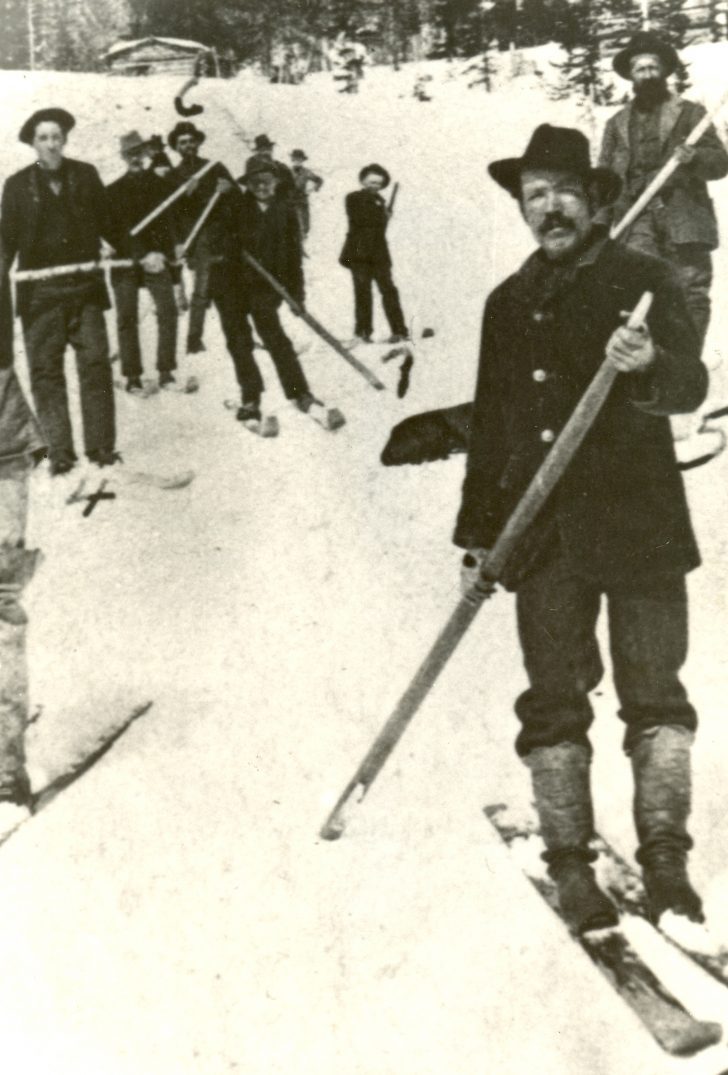
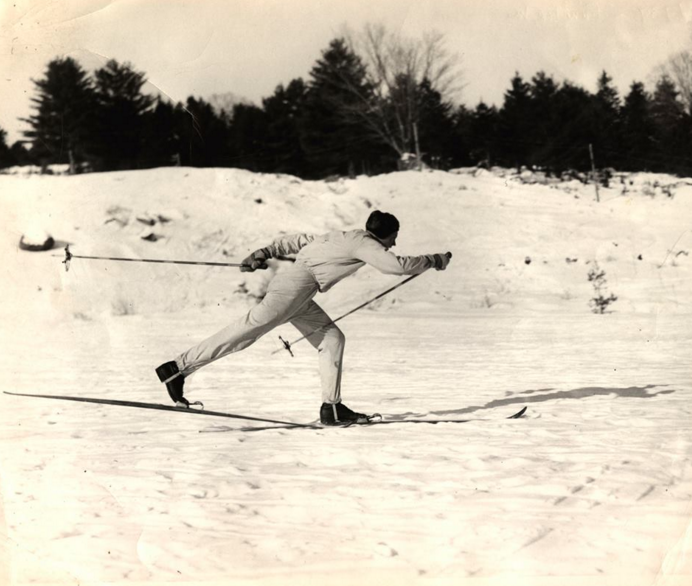
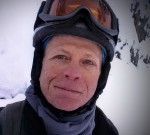
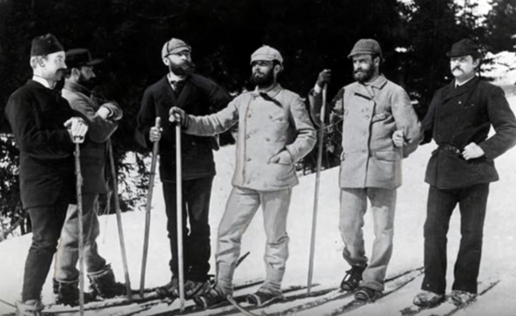
He sure looks like a rugged dude.  Considering what he did for a living, you shouldn’t be surprised to learn he was a thorough outdoorsman.  Do you know who this is? Where he hung out? What he did for a living? Our bet is a lot of our readers know who this is.

Last Week

Two jumpers? Looks like a long time ago.

This photo comes from the archives of the Tread of Pioneers Museum in Steamboat Springs, CO.  The scene is Hot Sulphur Springs, CO, and the date is 1913.

The following description is from Katie Adams, curator at the Tread of Pioneers Museum.  We thank her for this explanation.

“Carl Howelson, “The Flying Norseman,” who introduced skiing and ski jumping to the West, emigrated to the US from Norway in 1905 and settled in Colorado.  When in Denver, he met new friends who shared an interest in ski jumping and cross-country skiing. Some of those friends, specifically Angell Schmidt and James Presthus, traveled with Howelsen and helped organize some of the first ski clubs and the first Winter Carnival event in Hot Sulphur Springs. The purpose was to gain appreciation and enthusiasm for skiing, and Howelsen knew the best way to do that was to amaze the crowd. He had experience with this as a performer for Barnum & Bailey Circus. He convinced the best ski jumpers he could find to come to Hot Sulphur Springs, to Inspiration Point in Denver, and to Steamboat Springs to dazzle the crowds. As part of putting on the show, jumpers would perform dual or twin jumps, two people jumping at one time. This picture is one of those crowd-pleasing dual jumps, and it probably (but I can’t confirm for certainty) is Carl Howelsen and James Presthus. So, the short answer to why two men jumping: for the razzle and dazzle.”

A great source referenced for this article: “The Flying Norseman” by Carl’s son Leif Hovelsen. The Tread of Pioneers Museum in Steamboat Springs is a center for the history of not only Steamboat, but also the Rockies, Colorado, and the West.  In addition to skiing, many different aspects of pioneer life and culture are preserved and displayed.

When we researched the background for this photo, we came across a more modern attempt to ski as a duo.  Here’s a report on the World Record first-ever tandem ski jump.  We’re not sure why people do this, probably for a bit of “dazzle” like Carl, but when it comes to challenges, there’s always room for one more.


Report From The NSAA Winter Meetings

SeniorsSkiing.com Correspondent Makes Presentations On Senior Skiers’ Needs and Wants.

NSAA is the National Ski Areas Association, publishing the NSAA Journal six times a year. The publication’s audience, along with its competitor, the independent Ski Area Management, are those who manage and market ski areas. A growing topic of interest is the senior skier and how to bring them to their area.

NSAA’s own data supports SeniorsSkiing.com’s research. Here’s why the sudden interest. Senior skiers represent about 16% of the overall market and ski approximately 21% of the skier days. We also ski off-peak—the industry buzzword for mid-week and not holiday weekends—and visit an average of three resorts a year. The number of senior skiers is growing because many of us see it as part of our healthy active life style. Put another way, age 70 is the new 50.

What leapt off the page in this year’s NSAA data was that the number of new senior beginners, i.e. people over the age of 55 who have never skied before until they showed up at the base of a ski area and bought a lesson, grew at the rate of 1% per year.

Since the 1970s, the number of skiers has been declining steadily, and it was only in the past two or three years that the number of skier visits/active skiers leveled off. From a ski area owner’s perspective, this good news but is not going to lead to lower prices.

One of the marketing themes of this year’s NSAA’s East and West Regional events was bringing back the lapsed skier who is defined as someone who skied at an early age but has dropped out of the sport for family, economic, geographic and/or professional reasons. Seniors can be lapsed skiers; areas now see us as a way to increase the number of skiers by introducing their grandchildren to the sport as well as bringing friends.

Your humble scribe held a 90-minute presentation/seminar at each event. Each was well attended and received! Space doesn’t allow me to cover everything that was discussed, but what follows are some takeaways.

Marketing strategies targeted at senior skiers differ widely. Major destination resorts tend to view us differently than those near major metro areas. Some, because of their name and branding, offer only token incentives. Others really want us.

Resorts are struggling to find ways to attract senior skiers. It is a combination cost, technology, lack of focus, and talent issue. However, next season, there will be some innovative approaches to senior skiers.

Ski areas realize their facilitates are not senior friendly. The top three areas to improve, which are not limited to seniors are 1) Need to use stairs to get to bathrooms, 2) Long walks from the parking lot or drop off point to the lifts, and 3) Need to climb from lift exit to another.

Net net, we’re now a bigger blip on ski resort’s marketing radar scope, and the interest is there.


SeniorsSkiing Guide: Wolf Creek—The Snowiest Surprise

This Resort Has All The Characteristics Senior Skiers Love.

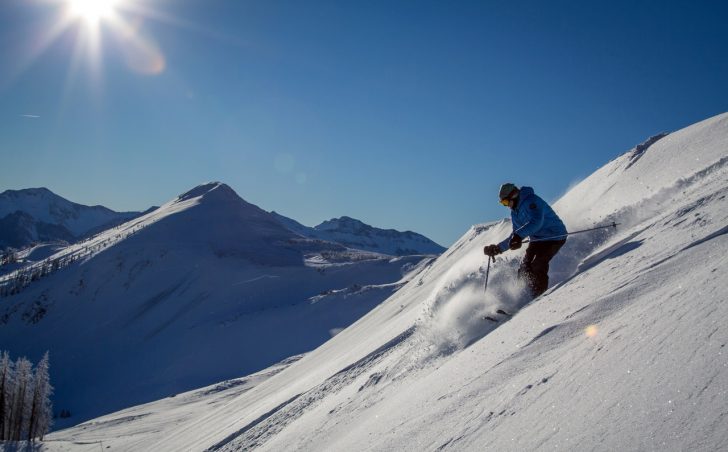
Skiing off the top of Wolf Creek, with Alberta Peak in the distance. Credit: Samual Bricker courtesy of Wolf Creek Ski Area.

It was a powder day at Colorado’s snowiest resort when we pulled in.

Where were the crowds? Not here, they were in places like Aspen, Vail, and Winter Park.

“There are maybe 500 people here,” said our shuttle driver. “Have fun!”

The unassuming base area at Wolf Creek Ski Area is a throwback, with no developed village. Credit: Samual Bricker courtesy of Wolf Creek Ski Area.

Wolf Creek Ski Area is a delightful throwback situated on the Continental Divide in the southern part of the state. And if you’re shocked at the price of skiing in Colorado’s glitzy mountain enclaves, you’ll be pleasantly surprised at how they hold the affordability line at Wolf Creek.

“We’re not out to squeeze every last dime out of our customers,” said Rosanne Haidorfer-Pitcher, vice president of marketing and sales at the resort.

Walk-up ticket prices are $72 for adults, and just $43 for seniors 65-79. If you’re 80, congratulations, your ticket is free.

The skiing is phenomenal, especially if you can hit Wolf Creek on a powder day, which is often. Rocky Mountain storms drop more snow here than anywhere else in Colorado—430 inches a year.

Tree-Skiing Paradise

A skier gets ready to drop in off of Knife Ridge, a short hike into double-diamond powder terrain. Credit: John Nelson

Wolf Creek has a vast array of tree-skiing runs scattered over its 1,600 acres. Topping out at 11,900 feet, its 10 lifts serve a long ridge line that is steep at the top, but rolls into intermediate pitches for most of the area. All in all, 55 percent of the mountain is rated as beginner and intermediate.

If you’re an advanced skier, hiking along the ridge line will deliver you into double-diamond alpine drops. Some of the best are off the Alberta Lift, where a 10-minute climb puts skiers into rare territory of steep untracked lines.

You’ll find great powder elsewhere at Wolf Creek, particularly in the resort’s vast maze of tree-skiing. During my visit in February, I skied powder all day.

Transportation, Where To Stay

Wolf Creek has no on-mountain village. It’s an unassuming collection of old-school lodges, with accommodations 23 miles to the west in Pagosa Springs and 18 miles east in South Fork. If you don’t want to drive, shuttle service is offered by Wilderness Journeys in Pagosa Springs.

Pagosa Springs offers the biggest variety of lodging and restaurants, and it’s also home to several hot springs establishments where you can soak your quads after spending the day skiing powder.

After our big powder day, we spent the shuttle ride down talking about how much we loved the skiing at Wolf Creek.

“This is my new favorite resort in Colorado,” said Jan Mosman, who was visiting from Minnesota with her husband, Mark. “I love the tree skiing.”

The Mosmans had just come from Winter Park, where they had done battle with 15,000 other skiers.

“What did you like best about Wolf Creek?” I asked them.

“No lift lines,” Mark said.

Food, Travel

For a small ski area, Wolf Creek has some surprising amenities. On mountain, there are eight places to eat.

The main Wolf Creek Lodge has daily hot specials and homemade soups, along with burgers served on the sundeck. Don’t miss the Continental Espresso Bar at the top of the Treasure Stoke lift, surely one of the highest places to get a coffee buzz in the Rockies.

The closest major airports to Wolf Creek are in Denver (246 miles away) and Albuquerque (237 miles away).

Click here for Wolf Creek Web Cam

Click here for Trail Map

Skiers make the 10-minute climb off the top of the Alberta Lift to access advanced terrain at Wolf Creek Ski Area. Credit: John Nelson.


This Week In SeniorsSkiing.com (Feb. 22)

Thank You So Much for your supporting SeniorsSkiing.com. Your response has been gratifying. If you haven’t sent a donation, please help us defray expenses. There are different premiums for different contribution levels. Please click here to make a donation. 


Senioritis, RV and Ski, Flat Light Blues, Mystery Jump II, More Gratitude

Not us.

When we started SeniorsSkiing.com, we struggled with what to call this senior-focused online magazine for snow sport enthusiasts. Geezer Ski Gazette, Elder Skier, Flyin’ Old Folks, Boomer Bombers didn’t pass the silliness test.  We settled on SeniorsSkiing.com and almost immediately got feedback from readers who said they didn’t consider themselves “senior.”  To them, a senior was someone like your grand daddy, but not you. Don’t call me a senior! Our Boomer subscriber base, it seemed, had Senioritis.

Clearly, our readership is defined by their engagement with activity: skiing, snowshoeing, even biking in winter, and all kinds of sports from kayaking, sailing, hiking to fishing, tennis, and even fox-hunting in non-snow months. It’s not about, or maybe in spite of, age. We still rock to and even play the “good” music of the “old” days, participate on teams, raise goats, make pots, paint, volunteer.  No rust on us.

This week, the Boston Globe published a story about the disconnect between the self-image of today’s “seniors” and community senior centers,senior associations, and senior non-profits which are struggling to attract members or customers. What caught our eye, was a comment made by SeniorsSkiing.com reader, Jack Murray, 70. When asked by friends to join them at the local senior center in town, he said, “No interest.” Jack spends his time skiing when he can in Bretton Woods, NH. Other interviewees said when they think of senior groups, they think of old people. Joining them is not an option.

Here’s the point. These various senior-focused organizations realize they have to treat today’s 60+ crowd differently than before. Out with the bingo, in with kick boxing and poetry slams at the Senior Center. And serious book clubs, exercise programs, and yoga.  “We have to refresh ourselves to bring in new talent and energy,” said one director of a senior program in Boston.

Now, shouldn’t management of ski resorts, manufacturers of equipment, travel companies, and other stakeholders in the winter sports business be “refreshing themselves,” too, to better serve a changed senior population? Remember, there are more of us every day, and we aren’t going away.

Alpine Ski History Video

Here’s a kind of okay video about Alpine ski history. Kind of okay because some of the narration doesn’t quite fit the image on the screen, but it is interesting. Worth a look.

https://www.youtube.com/watch?v=NzOJeFbAJKI&fbclid=IwAR1jLDb8TwwVX4ADS72Vu7cBIQ0s4L5ZtHkQbtLS8PlvchHJTc6Gy20Eows&app=desktop

This Week

Correspondent Marc Liebman offers some advice on coping with the flat light blues.  We know from personal experience that flat light conditions can cause the day to end after a couple of runs. Marc mentions some techie googles and other tips.  What works for you? Heading back to your car? Gingerly working each trail? Sticking to a single run?

If you RV, chances are you won’t be alone. Credit: Practical Motorhome

When you were younger, you may have thought living in a trailer in a ski resort parking lot was not only cool, but also economical. After all Warren Miller started his snow career as a ski bum gypsy in a tiny trailer. This week, we offer some basic thoughts about how you can RV your way from resort to resort, perhaps a little more comfortably than you did in the 70s or 80s. Thanks to this contribution from Bill Widmer who has an RV podcast worth checking out.

Our Mystery Glimpse picture this week is another ski jump. Last week’s was identified by some very savvy readers who nailed it as the Big Nansen jump in Berlin, NH, built in the late 30s.

Finally, Roger Lohr, publisher of XCSkiResorts.com and SeniorsSkiing.com cross-country editor, offers a book review of Snowboarding In Southern Vermont, From Burton To US Open by Brian Knight.  From his report, those were pretty wild days.

Thanks again for reading SeniorsSkiing.com.  Please tell your friends, and remember, there are more of us every day and we aren’t going away.

Sarah Hendrickson’s jump from a restored Big Nansen in 2017. Credit: Red Bull


Short Swings!

Many thanks to each of you who has generously responded to SeniorsSkiing.com’s fund raising campaign. We soon will be sending out decals, patches and hats. The campaign will run through February.

The Things We Carry

What do we really need for a week or two on the hill? Answers will vary depending on whether we’re flying, driving, or returning to a  mountain home. Other factors are weather and whether or not skiing will be just one part of the journey.

Some of you may be familiar with Marie Kondo, whose organizing principles are presented in the new Netflix reality TV series, “Tidying Up With Marie Kondo.”  Her process involves piling everthing in one spot, sorting though, and keeping only those things that “spark joy.”

Let me admit something my wife has been telling me for years: Some things I find hard to toss. Recently, I cleaned out my boot bag. You may ask, why even bother with a boot bag? It’s an important way to keep boots and accessories organized. I found a lot of old, expired, unnecessary stuff in there. One balaclava is enough. I got rid of two. Disposable hand warmers are always handy, but several were years past their due dates. Then the miscellaneous lip coatings, expired sunscreens, etc. I have a separate bag for powder cords, and over the years have assembled quite the collection of those colorful ribbons, not because I needed more, but because they were at home when I needed them at the mountain. The boot bag now has a single set. It no longer has dried-up contact lenses; ancient pain killers, old area maps, expired passes, multiple goggle defogging products, etc. etc. My boot bag now sparks joy.


I also have a large, rolling duffle with many zippered compartments, including a full-length “basement.” The monster is large enough to hold multiple parkas, ski pants, more layers than a Bermuda onion, socks, shirts…wardrobes for most skiing scenarios, après ski scenarios, receptions with royals, and a quick trip to the beach. The operative word here is “rolling,” and that’s helped by both a soft handle and a hard one that extends from the frame. 

As I prepare for an upcoming, extended journey in the Alps and in big and small cities, that bag, intelligently packed and organized, will be a godsend. 

Another confession: Since I don’t have the mental discipline to anticipate every possible travel scenario, I limit travel and ski garb to combinations of black and gray. Truth be told, that pretty much defines my wardrobe, in general.

Everything else – laptop, chargers, spare glasses, things to read, meds, and toiletries – go into a backpack that stays with me on plane, train and automobile. Everything, except for credit cards and cash; I’ll need those to purchase the things I forgot to pack.

West Coast Snow Report: DEEEEEEEEEEEP!!!!

Squaw Valley has received 492″+  so far. That’s 41′; eight of them in the last week. Other California areas getting similar amounts. Boreal 432″; Kirkwood, 425″; Sierra at Tahoe, 400″.  Super snow storms are creating travel and avalanche issues.

Well Worth Reading

Jackson Hogen, publisher of Realskiers.com (SeniorsSkiing.com subscribers can subscribe to Realskiers.com for $9.99) sends out weekly short essays about different aspects of the sport. His current piece, titled, “To Ski Better in All Terrain, Tweak Your Tactics,” offers sound advice on making small adjustments that render big results. Click here to read.

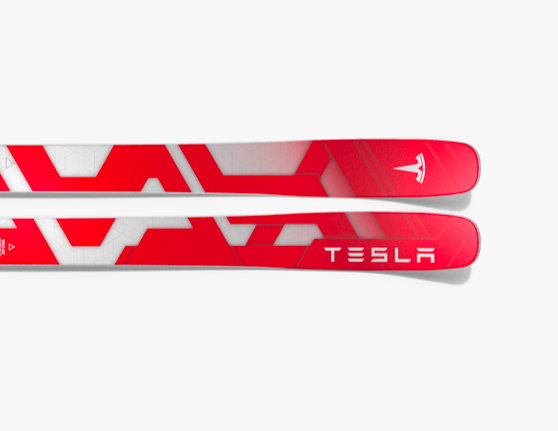
The One-Off Tesla Ski 

Renoun is an award-winning maker of high-end skis. Among other innovations, it uses HDT, a putty-like material that causes skis to feel stiffer as they go faster. The Burlington (VT) company says the HDT makes them ski smoothly and with greater control. Renoun recently sent Elon Musk a custom pair sporting the Tesla logo.  “The guy is a badass. He deserves badass skis,” said Renoun CEO, Cyrus Schenck.

March 2 Mont Tremblant Fund Raiser

Skiers young and old are invited to join the 6th Legends Classic, a giant slalom fundraiser where participants rub shoulders with Tremblant’s mountain legends while supporting the Canadian Hall of Fame and the Canadian Ski Museum. Racers are eligible to win prizes, and spectators and racers are welcome to compete in the Vintage Skiwear Contest held during the Awards ceremony.

Fun Vintage Cartoon

Walt Disney’s “The Art of Skiing,” features Goofy learning to ski. Produced in 1941, and seen by millions, this 90 second excerpt will bring a smile. Click here to view.

Book Review: Boarding Southern Vermont

[Editor Note: SeniorsSkiing.com is again asking our readers to contribute to support our online magazine. Yes, we have grown in the number of subscribers and advertisers. But our expenses have also grown. You can help us defray some of these expenses by helping us out with a donation.  This year, we have a mix of premiums for different level of donations, including stickers, sew-on patches, our new SeniorsSkiing.com ball cap. All donors will be entered into a drawing for a pair of bamboo Polar Poles to be drawn in late March.  You can donate by clicking here.]


How Did A Then-Revolutionary Sport Become Mainstream? Hint: Epic Parties.

[Editor Note: Roger Lohr is the publisher of XCSkiResorts.com and SeniorsSkiing.com’s cross-country editor.]

The book Snowboarding in Southern Vermont: From Burton to the U.S. Open” by Brian Knight on History Press is a snapshot of the 1980s and 1990s during the early days of snowboard lore. The book is a fine encapsulation of snowboard history with an amazing collection of photos of those early days at the region’s ski areas Stratton, Bromley, Magic Mountain, and Snow Valley.

The book traces Jake Burton Carpenter’s life through Londonderry, Manchester, and Stratton Mountain, VT, as he became the proprietor of Burton Snowboards. He shared the spotlight with Donna Carpenter,  a woman he met whom he eventually married. She is cited in the book for “heavy lifting” in the early development of Burton Snowboards which was to become a significant force in the sport. Jake’s infectious enthusiasm and the lengths he went through to get Burton Snowboard started required visionary decision-making and resulted in a very influential company in the snowsports world.

There are hundreds of names that are weaved into the Southern Vermont story such as Paul Johnston the Stratton mountain manager, who had an open mind about snowboarding in the beginning; Lyle Blaisdell, the backhoe operator with the half pipe-carving Midas touch; and other snowboard dignitaries such as Tom Sims, Chuck Barfoot, the Hayes brothers, Neil Korn, Lindsey Jacobellis, Mark Heingartner, Craig Kelly, Dave Schmidt, Terje Haakonsen, Tricia Byrnes, Ross Powers, and Shaun Palmer.

The book’s vibe of the times is also expressed with tales of epic parties and Burton home-grown spirit. The competition parties perhaps far-out shined the half pipe competition.  Spectators at the U.S. Open experience left the event site littered with beer cans and booze bottles, enjoying debauchery and mayhem at “snowboarder residences” throughout the region. The parties hosted by Burton and other purveyors of every imaginable snowboard-oriented product were often topped by the Hayes’ brother infamous gatherings.

The early days were rife with teenage posse behavior both on and off the slopes and age antagonism as skiers fought back to reject the newcomers at the ski areas. The book outlines the certification concept which was a test that snowboarders took to earn the right to get access to the slopes at Stratton. There were many nights when sneaking snowboarders walked up the ski area slopes to make some runs.

The U.S. Open was established as an institution before snowboarding got any television coverage. The time when the Olympics gobbled up snowboarding as a prime time hook for viewers was still in the distant future. During the sunrise of snowboarding, the camaraderie between participants was more important than winning the Open. But the event declined as limits were continually pushed with profanity, violence, and even death when two guys snow caving in the parking lot were crushed in a very sad mishap.

The road to the Olympics was very bumpy for snowboarders coming out of Southern Vermont. Jake Carpenter called the Nagano Olympics, which was the first of the quadrennial competitions to feature snowboarding, “kind of a disaster.” The U.S. Open grew each year and eventually mainstreamed with the elimination of alcohol, superior rider athleticism, and a send off to Stratton’s Sun Bowl so it was not in the main area.

Southern Vermont in the late 80s may have been the epicenter of snowboard culture and the U.S. Open was the crown jewel of snowboard contests. By 2012, that sub-culture had run its course, and it was the end of the era. The event was moved to Vail. The book states “The Vermont brand can launch a business but rarely can sustain it.” For years, coverage of snowboarding was invariably about the jargon, the fashion, and the rebelliousness rather than the joy of floating in powder, dodging trees after a snowstorm, or twisting in the air. “Snowboarding in Southern Vermont” is a quick read that establishes the record of snowboarding’s early days there, and we should be thankful that this record is now public for all.

Take A Ski Trip In An RV

[Editor Note: As the new year begins, SeniorsSkiing.com is again asking our readers to contribute to support our online magazine. Yes, we have grown in the number of subscribers and advertisers. But our expenses have also grown. You can help us defray some of these expenses by helping us out with a donation.  This year, we have a mix of premiums for different level of donations, including stickers, sew-on patches, our new SeniorsSkiing.com ball cap. All donors will be entered into a drawing for a pair of bamboo Polar Poles to be drawn in late March.  You can donate by clicking here.]


For The Peripatetic Skier, Adventure Awaits In A “Mobile AirBNB” With Wheels.

[Editor Note: This article was written by Bill Widmer, a former full-time RVer and skiing enthusiast. He’s also a content creator, travel lover, and co-host of the Better Life Better Business podcast.]

A rolling hotel. An adventure to some, a frugal alternative to others. Credit: Frank Valentine, Upsplash

Have you ever taken a ski trip in an RV?

If not, maybe you should try it! In this guide, you’ll learn exactly how to rent an RV for your next ski trip, why you should go this way, and some suggestions on where to stay.

Taking an RV allows you to have a little tiny slice of home with you and can be way more affordable than booking a room at a resort.

RVing offers the flexibility to stay at one ski resort or to visit several. You get the convenience of being able to explore on your terms while still having the comforts of home.

The Best RVs for Cold Weather & Snow

Given that most RVs have very little insulation and not all of them have great heat, you have to choose wisely. Here are some of the best RVs to make your ski trip memorable (and not freeze your butt off):

  1. The Jayco Redhawk 26XD.  It has a pretty decent furnace (30-BTU auto-ignition) and a six-gallon water heater.
  2. The Lance 4 Seasons Travel Trailer.  This bad boy is heavily insulated to keep you warm, even if it is frigid cold outside. It also has a winterized hot water heater so you aren’t stuck with cold showers!
  3. The Forest River Arctic Wolf is great if you get one with the extreme weather package. It comes with a heavy duty furnace, an enclosed and heated underbelly, and an insulated upper decking.
  4. The Jayco 327CKTS Eagle is another awesome snow option. It comes with dual pane windows to keep in the warmth and a tankless water heater with thermostat for hot showers to warm up on demand!
  5. The Keystone Montana is a luxury fifth wheel that has insulated everything from the slide out floors to the walls to the underbelly. Pair that with a high-powered furnace and you will stay nice and toasty.

How to Rent a Winter-Ready RV

If you don’t want to buy one of the above RVs (they are pretty expensive if you’re not going to use them often), renting is your best bet.

We recommend renting from a reputable peer-to-peer RV rental company, such as Outdoorsy or RVshare.

Try searching for any of the five RVs listed above. If you can’t find any of those models in the area you want to stay, search for Amenities > Heater. That’s the key ingredient you are going to need in a winter RV rental.

You can also search for handicap access if you need it. But make sure you ask the owner if their RV is winter-friendly. They are the best judge to help you decide on which camper to rent. You can message them right through the rental site or even call them if they listed their phone number.

If you need more options, click here to see a list of other winter-ready RV models.

Five Campgrounds to Stay At For Skiing

Wondering where to stay during your RV ski trip? Here are five RV campgrounds that are on or near senior-friendly ski resorts (campground on left, ski resort on right):

And that’s all there is to it! It’s an adventure and, for some, a way of life. Perhaps you’ll get the urge to go RVing on other vacations, or take it up as a lifestyle. Many seniors have hit the road and found communities of like-minded folks. Click here for more information on RVing.

If you RV, chances are you won’t be alone. Credit: Practical Motorhome

Mystery Glimpse: More Ski Jumping

[Editor Note: As the new year begins, SeniorsSkiing.com is again asking our readers to contribute to support our online magazine. Yes, we have grown in the number of subscribers and advertisers. But our expenses have also grown. You can help us defray some of these expenses by helping us out with a donation.  This year, we have a mix of premiums for different level of donations, including stickers, sew-on patches, our new SeniorsSkiing.com ball cap. All donors will be entered into a drawing for a pair of bamboo Polar Poles to be drawn in late March.  You can donate by clicking here.]


While We’re On Ski Jumping…

Two jumpers? Looks like a long time ago.

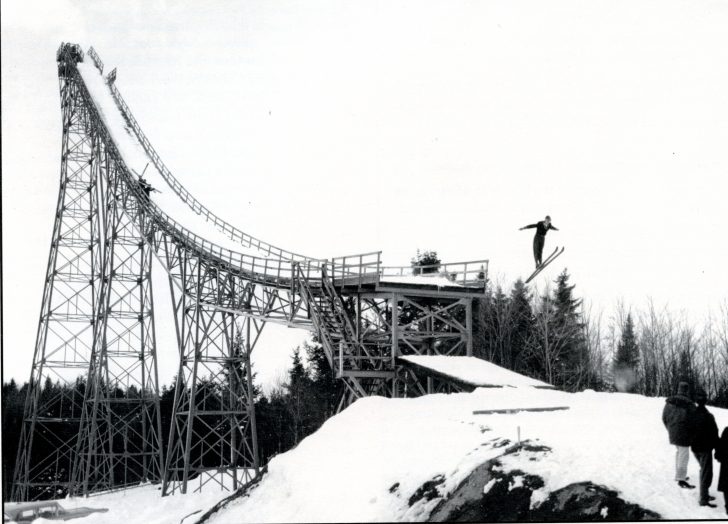
Last week, a few readers who know their ski history, nailed the Mystery Glimpse Big Jump as the Big Nansen Jump in Berlin, NH (see below).  Let’s see if anyone can identify what is happening here and where. Hint: Not New Hampshire.

Last Week

The Big Jump is Big Nansen, the venerable jump in Berlin, NH. Some highly knowledgeable SeniorsSkiing.com commentators got the facts exactly right. Built circa late-1930s, Big Nansen dominated US ski jumping for many decades. Here is an excerpt about the jump published in the Journal of the New England Ski Museum (Winter, 2018):.

“Built on steep trusses and towering 171 feet high, the Nansen jump was at the time the largest ski jumping tower in the world. In 1938, the jump’s inaugural winter, the Nansen hosted the Olympic trials. Over the next several decades, it would be the site of the myriad jumping competitions, from Winter Carnival events to four U.S. Ski Jumping National Championships in 1940, 1957,1965, and 1972 before falling into relative obscurity.”

The last competition was held there in 1985. A severe accident to a college-age ski jumper in 1977 had brought a lawsuit to the US Ski Association, the Nansen Ski Club, and others that added to the jump’s decline. However, in recent years, the Friends of Nansen Ski Jump was formed to revive the jump and the sport in Berlin. Red Bull, the energy drink folks, happened to be working on a documentary about US Ski Team Jumper Sarah Hendrickson, and became interested in restoring the jump. In 2017, Hendrickson took off from Big Nansen, the first jump from the structure since 1985.  She went on to compete in the Pyeongchang Olympic games.

The Friends Of Nansen are planning to use the site as a training ground for young jumpers.

SeniorsSkiing.com highly recommends exploring The New England Ski Museum and its well-researched Journal. The Museum has two locations in New Hampshire, one at the base of Cannon Mountain’s gondola in Franconia  Notch, and a newly opened Eastern Slope Branch in North Conway. For more information, consider visiting online and in person. 

Sarah Hendrickson’s jump from a restored Big Nansen in 2017. Credit: Red Bull

Coping With Flat Light

[Editor Note: As the new year begins, SeniorsSkiing.com is again asking our readers to contribute to support our online magazine. Yes, we have grown in the number of subscribers and advertisers. But our expenses have also grown. You can help us defray some of these expenses by helping us out with a donation.  This year, we have a mix of premiums for different level of donations, including stickers, sew-on patches, our new SeniorsSkiing.com ball cap. All donors will be entered into a drawing for a pair of bamboo Polar Poles to be drawn in late March.  You can donate by clicking here.]


Ski In It If You Must. If You Must, Here’s Some Advice.

Go slow and watch the snow. Credit: MechanicsOfSport

If you’re like me, skiing in flat light isn’t fun, but it beats not skiing. It is as if one is skiing inside of a milk bottle. Like different types of snow conditions, we’ve all had to deal with it.

For the record, flat light occurs when there’s no contrast, and one can’t see shadow and/or gradients of light that define shadows. On a mountain, flat light occurs when it is snowing, or under a thick overcast or when you are skiing in the clouds and sunlight can’t reach the trail on which you are skiing. In other words, there’s little or no contrast, and you’re eyes can’t see the “texture” of the snow surface.

Flat light affects everyone differently and us older folks are more affected than young whipper-snappers. You can’t change the weather that leaves three choices:  Ski only when the sun is out; ski wearing goggles that improve contrast; and/or alter the way you ski.

Not skiing is, at least to me, not an option so let’s move to goggle technology. The buzzword is visible light transmission or VLT. Lighter tints of amber, yellow, rose, green, gold colored lenses transmit more light than the same level greens, copper, browns and gray tints. Flat light varies from on one slope from another and day to day. Sp, if you need goggles to manage flat light, wait until you get to the ski area and step outside to see what shade lens works best.

To see “better” in flat light, years ago, I tried yellow and other colored lenses which helped but….still not great. Frustrated, I tried a pair of yellow Ray-Ban shooting glasses that were better than goggles with yellow lenses. On my last trip, I wore polarized sunglasses with the brown Serengeti tint. They were better than yellow lenses, but not practical when it was snowing.

Goggle makers such as Oakley, Smith, Scott, Giro all have products they claim help you see better in flat light. Be prepared to spend big bucks, i.e. $200+ for a pair. How well they work depends on the ambient/flat light, lens color, tint of your glasses or contacts, the health of your eyes, and other variables.

There is something that works and doesn’t cost a dime. It is how you ski the mountain. Here are four tips that will improve your flat light ski experience.

  • Tip 1: Ski near the trees, snowmaking guns and lift towers along the side of the trail. They provide contrast, faint shadows, and reference points.
  • Tip 2: Avoid skiing bowls, wide-open areas, and trails because in flat light, the subtle differences in “height” needed to create shadows doesn’t exist.
  • Tip 3: Slow down, give yourself more time to react to moguls, surprises in the terrain, and avoid obstacles.
  • Tip 4: Wear bright or ‘dayglo’ colors. You want other skiers to see you.

Best advice for flat light is be careful and ski within your limits so you can enjoy the skiing. If you’re uncomfortable or tense, find a trail that works for you and stick with it.

Decide for yourself if this is for you. Credit: MechanicsOfSport


This Week In SeniorsSkiing.com (Feb. 15)

Gratitude!, Snow Floods And Deserts, Big Jump, George at 101, Folk Tale, Steamboat Guide, You Never Know.

The response to our appeal for financial support to help defray expenses at SeniorsSkiing.com has been extremely gratifying. We are humbled by the donations we’ve received, and thank each contributor most heartily. If you haven’t yet considered making a donation (and getting a premium gift), please click here and check out your options.. If you have made a donation, we will be mailing your premiums in a couple of weeks. We had to order more hats, patches, and stickers!

Get a SeniorsSkiing.com cap for $50 donation

Here we are in mid-winter, Ground Hog’s Day is behind us, and we are looking at enormous snow “floods” in the Northwest and the Sierra. Mammoth Mountain will be open until July 4th, working on its base of 446 inches, the deepest snowpack in the country.

And there are deep, deep snows in Colorado. Here’s where we are as of Feb. 12. Not as crazy deep as California, but still an abundant year for the Rockies.

Credit: Joe Durzo

Meanwhile, New England is doing okay, snow-wise, up country. New Hampshire, Vermont, Maine, experiencing varying days of cold, warm, rain, snow. Hey’s it’s New England.

But Boston? It’s a snow desert. Where’s the snow this year? There’s a record lack of snowfall in the metro area. Why is this important? People correlate the amount of snow on their lawns with the snow depth at local ski areas. Not logical, but there you go. And, there has simply been no cross-country skiing in the Boston area. None, zero, nada, zilch, zip. Not happy about that. In fact, with 4.7 inches on the books for the 2018-19 season, the view here is that our urban snow scene is “Downright Lame.”

Boston gets mild, not snow. What’s up? Credit: WBZ-TV

So, what about the Midwest. Cold from the Polar Vortex seems to have lifted. Winter Storm Maya gave a moderate dump on the middle section of the country before brushing New England, but certainly not monstrous.

In any case, Boston is feeling a bit bruised, ego-wise, with this year’s snow snub. However, we do remember it is only February. Recall March, 2018 with its four major storms leaving three feet of snow and hundreds of trees down and power out for thousands. Stay tuned.

This Week

We have another interesting Ask The Expert question from a reader: What does it take to get up from a fall and what exercises can facilitate that move?

Our Mystery Glimpse involves identifying a ski jump that is…stupendously big. Last week’s historic rope tow was in Maine, not New Hampshire, at a ski area long gone. Find out where and what here.

Correspondent Pat McCloskey offers an ironic recounting of the kind of folks you can run into in the world of snow sports. Humbling.

Harriet Wallis captures one of the greatest senior skiers, George Jedenoff, who celebrated his 101st birthday at Alta. On skis. His attitude is indeed an inspiration to us all. Read his secret to keeping going here.

Co-Publisher Jon Weisberg visited Steamboat for the first time a couple of weeks ago. Here’s his Resort Review of that famous ski area and town.

And finally, Ted Levy, a reader who spends his winters and summers in Park City, tells us the tale of a lesson learned from a Finnish folk tale and how it helped he and his wife solve a cross-country skiing dilemma.

Thanks for reading SeniorsSkiing.com. Tell your friends and remember, there are more of us every day, and we aren’t going away.


Short Swings!

Before I get into this week’s topic, I’d like to thank each of you who donated to SeniorsSkiing.com. This is the second week of our second annual fund raiser. The response has been enthusiastic. Your gifts will help us get closer to covering expenses. As important, they are telling us that this effort to form a community of older snowsports enthusiasts is appreciated. If you have not already done so, please consider making a gift. If you already have, you’ll be receiving a personalized thank you. In the meanwhile, THANK YOU!

______________________________________________________________________________

This season, I’m visiting areas I haven’t been to before (or haven’t been to in a very long time). Last week, Pam and I completed a tour of five Colorado ski areas and resorts. The difference between a resort and an area is that resorts have onsite lodging. Ski areas don’t.

Like most road trips from my youth, this one required a lot of moving around, a lot of taking suitcases to and from rooms, a lot of unpacking and repacking…you get the picture. We’re both of an age where the schlepp began to wear us down.

Pam would have preferred staying in one place. I don’t disagee.

Even at this age, road trips can be fun. You get to see and ski more places and, if conditions aren’t good in one place, you might be able to find pow someplace else. (As it turns out, conditions were good throughout our 10 day Tour d’ Colorado).

But there’s something delicious about parking yourself at one place, exploring the area’s terrain, restaurants, etc. Before moving to the West, some of my best ski holidays were without cars at Alta and Snowbird. You landed at the airport, collected your gear, took a shuttle to the resort, and every day, got up early, clicked on your skis, and enjoyed the terrain. End of day, you hung out with others who had done the same thing. I’ve had similar experiences elsewhere. You’re there. The car, if you brought one, is in the garage (if there is a garage). You’re not dragging luggage. It’s probably what it’s like when checking into a luxe hotel at a luxe resort. It’s what Pam would prefer. And now that I think about it, me too.

What do you think is the best way to take a ski vacation?  One place? Road trip? Something else? Full disclosure: We leave for another skiing road trip in a few weeks. This time by plane, train, and automobile in the Alps.

SeniorsSkiing in the Dolomites

InspiredItaly conducts Ski Safaris in Italy’s Dolomites. I’ve written about the weeklong experience in the past, and, next month, will experience the adventure for the first time. Two SeniorsSkiing.com subscribers recently completed the tour. This video tells their story. 

Loveland’s Valentine’s Day Mass Wedding

Loveland Ski Area — Valentine’s Day Mountain Matrimonial.

With a name like LOVELAND, getting hitched is a natural. Yesterday, Valentine’s Day, the Colorado area celebrated its 28thAnnual Marry Me and Ski For Free Mountaintop Matrimony event. Couples got married or renew their vows outside Ptarmigan Roost Cabin (elevation12,050’). Participants are encouraged to wear wedding clothes, and the best-dressed get rewarded for their effort. The 30-minute ceremony is followed by run down the hill and a party with wedding cake, music, and prizes.

Winter Hiking Featured in New York Times

The growing cold weather pastime is explored in this short, interesting article.  Let us know where you go winter hiking and if you’d like SeniorsSkiing.com to run some articles on the subject.

Lookout Pass

Deep. Deep. Deep. Lookout Mountain, Idaho

One side of Lookout Pass is in Idaho, the other side in Montana. The area is about a 90-minute drive from Missoula, MT or Spokane, WA. It’s not big, 540 acres; 1,150’ vertical. But does it get snow! Average annual snowfall is 400”. Keep an eye on this place. It’s about to double in acreage and increase its vert. Check photo taken this week!

100″ in Utah Since Feb 1

Yes, you read that correctly.

CMH Virtual Reality Tour

Canadian Mountain Holidays is presenting a 5-minute virtual reality film at ski resorts around the country. Filmed in Canada’s Cariboo range “Lines of Sight” is said to the the first film of its kind in the tech and ski industries. In resort pop-up lounges, viewers don VR goggles to watch the action. As they turn their heads, they are able to explore the full field of vision. You can watch the same film by clicking hereAs you watch, place your cursor over any of the four arrows in the upper left corner to extend your vision left, right, up, and down. CMH says it created the film to immerse viewer into the experience and to dispel the myth that Heli-Skiing has to be extreme. Remaining screenings are scheduled for Mont Tremblant, March 7-12, Mammoth Mountain, March 22-24, and Squaw Valley/Alpine Meadows, March 29-31 and April 5-7.

BRR! Skincare Winter Balm

BRR! is an all natural face-protecting balm for skiers and boarders. Winter Balm was crafted with a unique blend of botanicals to protect skin against the effects of cold and wind. No nasty, toxic ingredients.  Can be applied to the face (cheeks, nose, and lips) prior to outdoor activity to protect or after exposure to soothe. First rate. Click here.


Ask An Expert: Getting Up From A Fall

How To Get Up From A Fall

A question from reader Jeffrey Dunning:

What are good exercises to help skiers get up after a fall? Getting up with both ski boots attached to skis is a lot harder than when I was young.

For an expert opinion, we turned to Seth Masia, founder of the skiyoungernow.com instructional approach, offered at the Aspen/Snowmass Ski School.

Unless the slope is pretty steep — in which case your hips are already well above your skis — you have to be pretty spry to get up after a fall with both skis still attached. The drill is ALWAYS to pivot on your hip until both skis are below you and oriented across the fall line, so you can stand up into a traverse position. Then lean forward, putting one hand on the snow in front of your knees and the other hand on the snow behind your shoulder. The hands are now positioned to prevent sliding either forward or back. Push yourself erect by “walking” on your hands. If you don’t have the strength for this, take off the uphill ski. Now you can “walk” your hands until you can get the uphill knee onto the snow. From kneeling on the uphill knee, you should be able to stand up while using the poles for balance. Once again, you need a triangle — one pole in the snow ahead, one pole behind, to keep from sliding in either direction. 

Note: This technique requires upper body strength. Check with a PT or gym trainers to learn more.

Have a question about technique, gear, destinations, travel, or any other aspect of winter sports? Send it to mike@seniorsskiing.com, and we’ll do our best to find an expert to respond.

Mystery Glimpse: Jumpin’ Big

[Editor Note: As the new year begins, SeniorsSkiing.com is again asking our readers to contribute to support our online magazine. Yes, we have grown in the number of subscribers and advertisers. But our expenses have also grown. You can help us defray some of these expenses by helping us out with a donation.  This year, we have a mix of premiums for different level of donations, including stickers, sew-on patches, our new SeniorsSkiing.com ball cap. All donors will be entered into a drawing for a pair of bamboo Polar Poles to be drawn in late March.  You can donate by clicking here.]

Hint: It’s Functional Again!

Wow. That’s a ski jump. A BIG jump. Know where? Significance? How about what folks called it? Thanks to the New England Ski Museum for this picture.

Credit: Dick Smith, New England Ski Museum

Last Week

Grab that twirling rope! Credit: Ski Museum of Maine

Nice guesses out there. However, the photo shows the very first rope tow in Maine. According to the Ski Museum of Maine which contributed this pic, this is Jockey Cap in Fryeburg circa 1936. Back then, ten young business men in Fryeburg got together and formed a corporation, with each member putting in $25.00. So at a cost of $250.00, plus contributions of considerable labor from the corporation members and many of the townsmen, the Ski Tow, under the direction of Henry McIntire, was built. It is said to the the first actual ski hill in Maine.

In those days, the ski train was often the only way to get from Portland to Fryeburg. Here’s an ad for a day trip on the train for $.98. And you can rent your gear on the train. The train continued over the state line to North Conway as well. Sounds like a long day, but what fun it must have been on the ride up and back.

The focus of the Ski Museum of Maine is to educate the public about the significant role the State of Maine has had in the development of skiing.

You Never Know…

[Editor Note: As the new year begins, SeniorsSkiing.com is again asking our readers to contribute to support our online magazine. Yes, we have grown in the number of subscribers and advertisers. But our expenses have also grown. You can help us defray some of these expenses by helping us out with a donation.  This year, we have a mix of premiums for different level of donations, including stickers, sew-on patches, our new SeniorsSkiing.com ball cap. All donors will be entered into a drawing for a pair of bamboo Polar Poles to be drawn in late March.  You can donate by clicking here.]

The People You Meet.

I was admiring my handiwork the other day adorning my Yeti water cooler with ski stickers collected from a couple of areas that I frequent.  In my lifetime, I have skied in a lot of different areas with the majority being in the New England area around the time I was preparing for my PSIA Certification Exam many years ago. I met a lot of characters in those days.  PSIA Examiners, coaches, and people like Toni Matt who recounted his famous Inferno Run down the Headwall of Tuckerman Ravine for the New England Ski Hall of Fame. The recording was collected at a PSIA event and dinner and I was fortunate enough to have a chat with the old master himself. In 57 years of skiing, I have been to areas in Canada, Europe and all over North America.  Not boasting – just accompanying the humbling tale I am about to unfold. 

Feeling pretty proud a couple of years ago with all of this, I ran into an older gentleman in the ski lodge at Seven Springs Mountain Resort.  We started chatting casually, and he introduced himself as Ogden Nutting.  The bell immediately went off in my head and I recognized the name as the patriarch of the local newspaper conglomeration The Ogden Newspapers. 

Turns out that ONI, as it is currently known, is the 10th largest newspaper communication entity in the country.  Aside from the ownership of the newspaper giant, Mr. Nutting and his son Bob are the owners of the Pittsburgh Pirates Baseball Club and Seven Springs Mountain Resort which is where I grew up skiing.  He asked if I skied Seven Springs frequently .  I said outside of a stint as a ski instructor in Maine in 1977, I have been a regular at the Springs since 1961.  He was happy and asked if I had skied anywhere else.  I proudly puffed my chest and said, “Well Mr. Nutting , I am proud to say that I have skied in 109 different areas in my lifetime.”  He looked at me with the eyes of a true enthusiast and quickly remarked that he had skied in over 500 different locations in his lifetime, all over the world.  Feeling like an icepick was being shoved into my already inflated chest, I said, “Wow Mr Nutting. That is truly impressive,” to which he replied, “Sonny—you have a long way to go.”  I will never catch that record.  No way no how. 

The point is you never know who you are talking to.  Kind of like when my friend Jan Palmer showed up at a local masters race and asked if he could forerun.  He was interning at WVU Hospital and wanted to have a go at a USSA GS Race in the area.  All the kids in the start area kind of snickered when Jan entered the starting gate with jeans, an old pair of Rossi Stratos, and old Lange Comp boots with the yellow cuffs.  There they were with all their capes and two pair of skis. Old Jan just blistered the course and blew everyone away.  Their eyes widened when they saw the time, and they all asked who that was.  I said, “Never judge a book by its cover, boys and girls.”  You never know who you are speaking to or skiing with.  You see, Jan was on the US Ski Team at one time with Billy Kidd as a 16 year old downhiller.  The fastest guy in the country at the time and gave it all up for medical school.

Humility was the lesson for me in the ski lodge that day with the venerable Mr. Nutting.  And the race kids on the hill that day got schooled by an old pro and a large slice of humble pie was served after Jan rocketed out of the starting gate. 

George Jedenoff: 101!

[Editor Note: As the new year begins, SeniorsSkiing.com is again asking our readers to contribute to support our online magazine. Yes, we have grown in the number of subscribers and advertisers. But our expenses have also grown. You can help us defray some of these expenses by helping us out with a donation.  This year, we have a mix of premiums for different level of donations, including stickers, sew-on patches, our new SeniorsSkiing.com ball cap. All donors will be entered into a drawing for a pair of bamboo Polar Poles to be drawn in late March.  You can donate by clicking here.]

He inspires with fitness and wisdom.

George at 101. Credit: Harriet Wallis

For George Jedenoff, skiing is a way of life. He skis Alta’s slopes every day when he’s in Utah. He charges down steep groomed slopes, but he loves to tear up powder. 

He can do it at 101 years of age because he keeps himself fit. He does a 45 minute workout every day before breakfast.

“I know I’ve got to stay in shape or I won’t be able to ski,” he says. Staying fit for life is a lesson we all might learn from him.

George was 43 when he learned to ski — not exactly a spring chicken. He was athletic, so he decided to try skiing after he came to Utah to be the general manager of the Geneva Steel Plant, the largest steel plant west of the Mississippi.

He learned from the best: Alta’s legendary Alf Engen, ski pioneer Junior Bonous, and Earl Miller, the granddaddy of release bindings.

“While buying my first pair of skis in Orem, I ran into Earl Miller who offered to teach me how to ski. Of course I used Miller bindings – the only safe bindings available at that time. We used the rope tow at Alta Lodge for my first lesson,” he said.

Miller promoted his bindings with photos of himself in wild falls showing how the bindings released. “One day Earl paid me quite a compliment: ‘You know, George, you’ve made some falls I’ve never seen before!'”

But George learned quickly, and he fell in love with the sport, the scenery, the fresh mountain air, and especially the powder.

When he was transferred away, community leaders gave him a gift to lure him back — a Lifetime Season Pass to Alta. He’s still using it!

He bursts with enthusiasm for snow and for life. I recently rode the chairlift with George, and I asked for his advice.

George Jedenoff, 101 year old Patriarch Of The Powder. Credit: Harriet Walls

“You don’t have to be good, you just have to live long enough,” he quipped.

Then he offered serious wisdom. “Always be kind to others. Count your blessings, and don’t let life’s problems overshadow the good in life. And above all, never give up.”

We can learn a lot from this patriarch of the powder. He’s a role model for skiers or all ages.

Ski Utah makes a video of George every year when he returns to ski. Click here to view last year’s video of George when he was 100.

To read more from Harriet click here for her stories on SkiUtah.

SeniorsSkiing Guide: Steamboat

At first glance, Steamboat is the ideal senior skier resort. It’s big. It’s predominantly intermediate. It’s anchored by a substantial town with hot springs, shops and many good restaurants. There are lodging options, galore. But Steamboat also has its challenges. If you’re not part of the IKON Pass, a day ticket can cost $129-159 (advance online). And reaching the lift from where you’re dropped off is always a hike.

Many of you associate Steamboat with two of the great mid-century names in the sport: Buddy Werner and Billy Kidd. Werner was raised there. He competed in the 1956, ’60, and ’64 Winter Olympics and died soon after in a Swiss avalanche. Part of the area is named in his memory. Kidd won silver and bronze in the 1964 Olympics and bronze and Gold in the 1970 FIS World Chamipionships. Now 75, Billy Kidd has been Steamboat’s Director of Skiing for almost 50 years. Most days at 1PM, he’s available for a run with the guests.

The resort is expansive: 2965 skiable acres spread across two mountains and offering 3668 vertical feet. At 6900’, the base is good for breathing. The lift-serviced part of the mountain tops out at 10,384’. Storm Peak has the most steeps. Sunshine Peak has more greens and blues than blacks. Morningside Park, the backside bowl, is mostly blues and blacks.

I was there on two particularly cold days, but enjoyed the effects of the inversion that produces warmer air at higher elevations. Unlike the smoggy inversions in the Salt Lake Valley, in Steamboat cold valley air stays clear.

The resort is in the northwest corner of the state. The most efficient way to get there is by flying into nearby Hayden which receives non-stops from most major airports via Alaska Airlines, American, Delta, and United.

First day on the mountain, I was fortunate to ride up the gondola with an instructor on his day off. He volunteered to show me around. Greg Lambert knows his stuff.

We started at what locals call Wally’s World (aka Sunshine Peak). From there radiate numerous trails and glade runs. One set is named for breakfast foods (Cowboy Coffee, Hot Cakes, Biscuits, Gravy); another set for their sundial effect (High Noon, where the sun is directly overhead at noon; One O’Clock, Two O’Clock, and Three O’Clock).

We worked our way toward Storm Peak, where there’s generally steeper terrain and almost endless opportunities to duck into the trees. A bit fatigued, I left Greg and worked my way over to Thunderhead Lodge, then down a long wide run called Valley View. The panoramas of Yampa Valley and distant ranges are spectacular.

Yours truly tapping Buddy for good luck.

Day Two, I was back on Storm Peak. At the top there’s a bronze bust of Buddy Werner. Local lore says tapping his noggin with a pole brings good luck. I tapped and felt fortunate to be there.

One night we dined at Low Country, which serves authentic (and outstanding) Southern style cuisine. The morning before heading out, we had a terrific breakfast at Creekside Cafe.


Steamboat is big and beautiful. It legitimately prides itself for friendly cowboy cuture and its legendary “Champagne Powder.” The town has everything you’ll need during your stay. Free shuttles are available to take you everywhere.

But to get to a lift, you need to carry your gear through Gondola Square and numerous short sets of stairs. Yes, we saw a storage facility and wagons to pull things, but negotiating the journey was tiring.  Eight or ten years ago it wouldn’t have been an issue, but at three-quarters of a century, I felt it. At one point, I’d like to return to Steamboat. By then, maybe they’ll have a moving sidewalk or a team of sherpas to ease the burden.


Lessons From Folk Tale: X-C Ski Adventure

[Editor Note: As the new year begins, SeniorsSkiing.com is again asking our readers to contribute to support our online magazine. Yes, we have grown in the number of subscribers and advertisers. But our expenses have also grown. You can help us defray some of these expenses by helping us out with a donation.  This year, we have a mix of premiums for different level of donations, including stickers, sew-on patches, our new SeniorsSkiing.com ball cap. All donors will be entered into a drawing for a pair of bamboo Polar Poles to be drawn in late March.  You can donate by clicking here.]

Finnish Folk Tale Ingenuity Saves The Day.

Many years ago my wife and I had a small weekend cottage in southeastern Vermont. One Saturday I stopped by the West Brattleboro Library and checked out a book of Finnish folk tales by General Kurt M. Wallenius.

The tale I liked best told of two young fishermen who skied north for a few days ice fishing in winter. They separated one day, agreeing to meet up early evening at camp. One of the fellows snagged a good haul of fish, put them in a sack, and headed back to base. As he was skiing along, he realized he was being stalked by a wolf. He skied faster, but the wolf was closing on him. So, he skied up a small incline, turned abruptly, and skied at the wolf. The wolf leaped to attack him. At the same time, the fisherman leaped, pointing his skis at the oncoming beast. He stabbed it with both skis, killing it but breaking his equipment. So, he sat down, built a fire out of the broken skis, and waited. Sure enough, an hour or so later, his companion saw the firelight and found him. They knew exactly what to do. The fisherman with two good skis gave one to his friend, and they skied back to camp that way, pushing with one leg, skiing on the other. And they brought back all the fish and the wolf’s skin as well.

Not long after I read this story my wife and I were out cross country skiing on a primitive trail. We went fairly far from our cottage when the wet snow started to adhere to the base  of her waxless skis, impeding her progress. I had old-fashioned wax skis and was not having a problem. It started to get late and my wife, making very slow progress, got spooked. She told me to go on without her. She told me that if she did not get back, I had to remember to buy our two boys new shoes every six months, since they were growing quickly.

Remembering General Wallenius’ story, I traded one of my wax skis for one of her useless, waxless skis. Fortunately, we used the same bindings back then. The trick worked. We pushed with the waxless ski, glided on the wax ski, and got back home safely. For many years afterward I made sure we had the same bindings.


This Week In SeniorsSkiing.com (Feb.8)

Mellow Sundance, Tow Line, Backstage World Championships, Bike In Winter, Ask The Expert.

[Editor Note: As the new year begins, SeniorsSkiing.com is again asking our readers to contribute to support our online magazine. Yes, we have grown in the number of subscribers and advertisers. But our expenses have also grown. You can help us defray some of these expenses by helping us out with a donation.  This year, we have a mix of premiums for different level of donations, including stickers, sew-on patches, our new SeniorsSkiing.com ball cap. All donors will be entered into a drawing for a pair of bamboo Polar Poles to be drawn in late March.  You can donate by clicking here.]

Why Senior Snowsport Enthusiasts Should Practice Yoga.

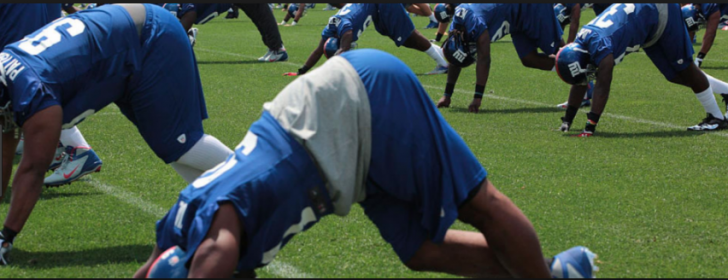
The NFL has embraced yoga to make muscles and joints supple and flexible. So should you.  Credit: Equinox

Preface: We are not medical experts, health care professionals, or physical therapists. We have, however, been practicing yoga for the past three years. Twice a week for most weeks. So, we can report what the impact has been on our body and our ability to feel athletic outdoors in winter, whether skiing down a hill or cross-country skiing across a field.

As we age, it is essential to keep our muscles and joints toned up. Basically, it’s a use-it-or-lose-it scenario. Working out with light weights on a consistent basis can keep sarcopenia—the weakening of muscles as you age—at bay. If you aren’t aware of sarcopenia’s effect on senior muscles, you aren’t alone. Click here for our discussion of what sacropenia is and what you can do about it.

But there is another important aspect of conditioning that seniors need to pay attention to: Flexibility. That’s where yoga comes in. Tense, contracted muscles, ligaments and tendons inhibit motion, cause pain, and can lead to pulls and sprains.  Those querulous hip flexors and lower back muscles can wreck your day (or week) or even cause you to give up outdoor activities.

Think of yoga as a sophisticated and comprehensive process of stretching and moving muscles and joints throughout your body.  Add a focus on breathing which helps concentration and facilitates movement as well as the discipline of sustained, varied, and regular practice, and you have a means of transforming your body. We’ve found our posture is improved, we find suppleness when we ski, we can get our boots on without gasping, and we’re more in touch with our physical being, aware of how we stand, sit, and move. 

So, we recommend our readers find a good instructor and head to yoga practice.  There are online apps like DownDog. which can get you started.  However, an instructor can give you nuanced cues on how to correctly do the different poses and provide variations that will allow you to get the best of what you can do. Positioning your body properly makes a huge difference, something that is often not specific in online instruction.  There are also different types of yoga to choose from. We think you should start with an “easy” or “basic” class. This level of yoga will not have you contorting into pretzel shapes or standing on your head. Instead, you will be systematically working throughout your physical landscape. When you feel those tight shoulders, hamstrings, or hips lose their tension, and the stress disappear from your neck, you will feel positively different.

If you currently practice yoga, let us know what your advice is for neophytes. 

This Week

Last week’s Mystery Glimpse is revealed.  We are amazed some readers actually identified a ritual snow dance performed by members of the Ute tribe at Vail’s inaugural season back in 1962. BTW, it worked. Pete Seibert had it right.

Correspondent Harriet Wallis offers two articles: A resort review of a very mellow-sounding Sundance resort and a backstage look at what goes on in a world championship competition.

And, if you live in that part of the world were snow is scarce, you can still head out to the hills on your mountain bike. Correspondent Pat McCloskey shows how to ride your bike in the winter, what it takes, and offers suggests for different required equipment.

Check out our new Ask The Expert feature, too.  This week, Steve Cohen of MasterFit offers advice to a reader on how to get a decent pair of ski boots.

Thanks for reading SeniorsSkiing.com. Please consider sending in a contribution to support our online magazine.

Tell your friends about us and remember, there are more of us every day, and we aren’t going away.

Sundance Timpanogos. Credit: Harriet Wallis

Short Swings!

Earlier this week a request to support SeniorsSkiing.com showed up in your email. We really need your donations. This is our fifth publishing year and only the second time we’ve made the request.

When we started, Mike and I decided that this labor of love should be free. What we’ve learned is that publishing weekly throughout the season requires a lot of effort and a considerable amount of money. Our editorial contributors are just that…contributors. Advertisers cover some expenses, but as our free publication grows, so do a variety of back office costs. That’s why we’re asking for your help.

To put it in context, some years ago I noticed a lot of older skiers on the hill. That was before I came to understand that one in five skiers and boarders in the U.S. are 52 and older. It was the same wherever I went, especially mid-week. Lift conversations informed me that older skiers had similar interests. As for areas, they wanted to know more than just the best places to huck cliffs. Their interests in equipment were different from those of younger skiers. Many had concerns about medical conditions and forms of recovery. They were curious about contemporaries doing interesting things.

That was the seed. Getting it planted and nourishing it into existence became a collaboration, first with my old college buddy Mike Maginn, and then with the members of our Advisory Council and with our contributors.

To our knowledge, there’s no other ongoing source of information serving the older skier/boarder/snowshoer community. SeniorsSkiing.com exists to advance your interests by publishing relevant and useful information, encouraging an engaged online community, and advocating on your behalf.

When we started our total number of subscribers could be counted on two hands. By the end of this season, SeniorsSkiing.com will have registered between 250,000 and 300,000 page views. Most of you are located in the U.S. and Canada, but there are many from the EU, the UK, Australia, and New Zealand. A few of you are located in Latin America, China, and Japan.

Wherever you are, if you enjoy reading SeniorsSkiing.com and having access to our special features such as the annual listing of North American areas and resorts where seniors ski free and the annual report on the best skis for older skiers, among others, please consider making a donation. In return, we’ll send you a gift and enter your name into a drawing for a pair of retro, bamboo, Panda Poles. To donate, click here.

New York Times Skiing Op-ED

A Feb 2 Opinion piece titled “Why Can’t Rich People Save Winter?” in The New York Times is generating buzz in the ski world. Written by Porter Fox, author and former editor at Powder Magazine, the article suggests that if wealthy skiers coordinate their money and influence, it might change climate and environmental policies. To be fair, most of the article describes industry initiaitives, including those announced last week during the annual Snow Show trade meeting in Denver. The piece states that there are 50 billionaires with homes in Aspen (a link shows who they are). Reader comments range from critical to skeptical.

R.I.P. Peter Keelty

Peter Keelty, skier extrordinaire.

Peter Keelty was one of the country’s finest skiing stylists and technicians. When SeniorsSkiing.com got underway, he called and invited me to meet him at Alta. I had no idea of who he was, but I could tell he was intelligent and passionate about the sport. We skied together three or four times. I learned that he and Jackson Hogen were the founders of Realskiers.com, that he had grown up in northern Vermont, and that, as Jackson confirmed this week, he was devoted to improving technique in others. The last time we met he brought a pair of Anton skis for my use. As I recall they were relatively short and the binding system made me feel like I was skiing on a stepladder. His goal was to get me way up on my edges; a place where I didn’t feel comfortable. Last season I noticed he had made a few comments on the site. Earlier this week, Peter Keelty joined other great skiers and contributors to the sport on the Endless Slope in the Sky. He was 76.

Utah Powder

Ski Utah just announced that the Wasatch resorts received 5’ in four days. The email said the dump resulted in a shortage of snorkels.

Pico Peak Hosts Blind and Visually Impaired Skiers

More than 35 blind or visually impaired athletes will learn to ski or learn to race this weekend with Vermont Adaptive Ski and Sports at the 12th anniversary of the United States Association of Blind Athletes (USABA) Winter Ski Festival at Pico Mountain.

Epic Adds  Two

Sun Valley (ID) and Snowbasin (UT) will be on the 2019-20 Epic Pass. The number of days at each depends on the Epic Pass purchased. Visit https://www.epicpass.com for more.

Picture Perfect Colorado

Colorado Ski Country USA took the creative approach of announcing the best place to take a scenic photograph at each of it’s member resorts. They include Arapahoe Basin, Aspen Snowmass, Aspen Highlands, Aspen Mountain, Buttermilk, Snowmass, Cooper, Copper Mountain, Echo Mountain, Eldora, Granby Ranch, Howelsen Hill, Kendall Mountain, Loveland, Monarch, Powderhorn, Purgatory, Silverton, Steamboat, Sunlight, Telluride, Winter Park, and Wolf Creek. Click here  for specifics.

Join Us in the Alps

Join us the week of March 10 when we ski in the Aosta Valley with guides from AlpskitourEach day, we’ll go to a different resort in Italy, Switzerland and France. The all-inclusive price — $4,500 to $5,500 per person– depends on where you fly to and whether you stay in a 3 or 5 star hotel. Orsden is a sponsor and giving a parka to each participant. If interested, email me: jon@seniorsskiing.com.

Ask The Expert: Ski Boot Advice

How To Buy A First Pair Of Boots At 65 Years Old.

A Question From Reader Greg Merritt:

I just found and joined your group. I was wondering if you can give me some guidance on how to buy my first pair of boots (so many choices). I am 65 years old and weigh 215 on a 5’10 frame. Have skied Lake Tahoe, Aspen, Breckenridge, Telluride, Steamboat, and headed to Big Sky in March. Ski once or twice a year and can ski mainly groomed blacks and some ungroomed. Have always rented my equipment. But thinking about taking the plunge and purchasing ski boats. Any suggestions?

Response From Steve Cohen, CEO of MasterFit, skiing’s foremost company on boot and shoe fitting.

Wow! You’ve been a lot of great places. Too bad you didn’t experience them with your own ski boots! There’s nothing like having your own boots that are fit to your feet. 

The best advice we can give is to put yourself in the hands of a professional bootfit shop. And doing it at a ski area lets you make quick revisits for modifications, if necessary. 

If you’re heading to Big Sky, we recommend Grizzly Outfitters. They’re a member of the America’s Best Bootfitters organization of top shops that specialize in bootfitting. Check them out at www.bootfitters.com

Mystery Glimpse: Tow Line

[Editor Note: As the new year begins, SeniorsSkiing.com is again asking our readers to contribute to support our online magazine. Yes, we have grown in the number of subscribers and advertisers. But our expenses have also grown. You can help us defray some of these expenses by helping us out with a donation.  This year, we have a mix of premiums for different level of donations, including stickers, sew-on patches, our new SeniorsSkiing.com ball cap. All donors will be entered into a drawing for a pair of bamboo Polar Poles to be drawn in late March.  You can donate by clicking here.]

A First But Where?

This one might be a bigger challenge than normal. Hint: New England. Where is this? What is the significance of this lift?

Last Week

Snow dance prayer ceremony at Vail’s inaugural season, 1962. Credit: Colorado Snowsports Museum

In December 1962, Vail co-founder Pete Seibert was worried about the snowfall for the resort’s inaugural ski season. Long before settlers came to the Gore Creek Valley, Southern Ute Indians inhabited the area as a summer home. Because Pete knew this, he reached out to the area’s oldest known residents for help and invited members of the tribe to perform a snow dance prayer to bring snow. Eddie Box Jr. and Sr. were present at the 1962 ceremony. Eddie Box Jr. and his wife Betty performed such ceremonies since the 1962 event, one being in 2012. Wouldn’t you know, both years saw a lot of snow.

And thanks again to the Colorado Snowsports Museum for this amazing, historic photograph.

World Championships 101

[Editor Note: As the new year begins, SeniorsSkiing.com is again asking our readers to contribute to support our online magazine. Yes, we have grown in the number of subscribers and advertisers. But our expenses have also grown. You can help us defray some of these expenses by helping us out with a donation.  This year, we have a mix of premiums for different level of donations, including stickers, sew-on patches, our new SeniorsSkiing.com ball cap. All donors will be entered into a drawing for a pair of bamboo Polar Poles to be drawn in late March.  You can donate by clicking here.]

Here’s An Inside Look At What Goes On Behind The Scenes.

This championship course is watchable from Solitude’s base area. Credit: Harriet Wallis

When I covered my first World Cup ski race many years ago, I was really naive. I thought the winner would be awarded a huge silver trophy. I was disappointed to learn that racers earn points. No trophy.

But my race stupidity gave me an idea that I’ve pursued ever since. Maybe readers would enjoy an inside look at what goes on around a major race venue. Not just the champions. Not just results. Other stuff. Here we go.

Background Facts

For 10 days in early February, 1,400 elite amateur athletes from 40 countries come to Utah to compete in the World Snowboard and Freeski World Championships at three Utah resorts: Deer Valley Resort, Park City Mountain, and Solitude Mountain Resort.

Practice Day At Solitude

Skicross and snowboardcross take place at Solitude where a special rolly-poly course was built for the competition. As explanation, four athletes start at the same time and race for the finish. It’s similar to the Kentucky Derby where all horses start at the same time. Good luck getting in front.

I was at the snowboardcross training day at Solitude. All racers could take run after run to get used to the course. There was no timing. There was no winner. It was a day for individual practice.

Walk Right Up To The Course

While the words “World Championship” sounds lofty, most courses are usually super spectator friendly. I walked right up to the course, and race spectators can also. It’s like being on the 50 yard line for the Super Bowl. 

A ski patroller watches the course just in case. Credit: Harriet Wallis

Snowboarders careened down the course, jumped the rollers, and headed for the finish. Repeat, repeat, repeat. I got bored, so I moved along to take other photos.

With her little mittens flying, #8 gives the victory sign as she heads back to the lift for another practice run. I don’t know who she is or from what country, but she’s happy. Credit: Harriet Wallis

Inside The Press Room

Off to the press room to get out of the blazing sun. The press room is the sanctuary for writers and photographers from around the world. They munch on snacks, tap away on laptops, and jabber into their phones in foreign languages.

Then there’s a press conference.

International camera people jockey for position before the press conference. Credit: Harriet Wallis
2018 Olympic champion Michaela Moioli of Italy and U.S. snowboarder Anna Miller at the press conference. Credit: Harriet Wallis

These are the faces of BoarderCross athletes — 2018 Olympic champion Michaela Moioli of Italy and U.S. snowboarder Anna Miller. They tell the press conference what it’s like out there on the course.  Moioli likes the straight stretches where she can pick up speed. And Miller says she’s “ready to get the job done.” Women to watch.

Going Back Into My Files. Meet An Athlete

Several years ago, I happened to ski at Deer Valley on a similar World Championship training day. I stopped to watch athletes launch themselves off the “kicker” to soar, flip and spin then hope to land right side up. Their athleticism was amazing. But I’m not heavy-duty into aerials, so I went for lunch.

There was a guy gobbling down a big bowl of Deer Valley’s signature turkey chili. He was wearing a race ID, so I asked if he was an athlete. He introduced himself as Jon Lillis. He was fueling up before going back onto the aerial course to flip and spin upside down. Holy cow! Right after lunch!

Now, at Solitude, I bumped into Jon Lillis (Rochester, N.Y.) again. He is the reigning aerial World Champion. He’s a force to watch.

Jon Lillis fueled up with a bowl of chili before practicing more upside down spins and flips. Credit: Harriet Wallis

Watch At Home

With 10 days of world class competition, tune-in and watch as history is made. NBC Sports will showcase more than 25 hours of 2019 FIS Snowboard, Freestyle and Freeski World Championship programming, including more than 10 hours of live coverage, on NBC and the NBC Sports networks.

Additional coverage will also be available on NBC Sports Gold – NBC Sports’ direct-to-consumer live streaming product – and the OlympicChannel.com digital platform. A full broadcast schedule will be available on both USSkiandSnowboard.org and 2019WorldChamps.com.

To read more from Harriet click here for her stories on SkiUtah.

How To Bike In Winter

[Editor Note: As the new year begins, SeniorsSkiing.com is again asking our readers to contribute to support our online magazine. Yes, we have grown in the number of subscribers and advertisers. But our expenses have also grown. You can help us defray some of these expenses by helping us out with a donation.  This year, we have a mix of premiums for different level of donations, including stickers, sew-on patches, our new SeniorsSkiing.com ball cap. All donors will be entered into a drawing for a pair of bamboo Polar Poles to be drawn in late March.  You can donate by clicking here.]

Be Prepared, Have Fun.

Night riding mountain bikes in winter can keep you busy while you wait for snow in your neighborhood. Credit: Pat McCloskey

While a lot of folks retreat to the gyms, health spas, and YMCA facilities during the winter for continued workouts, there are those of us who value being outside and continue to ride mountain bikes through the winter. The common questions we get are, “What about the snow?”  “What about the cold temperatures? “What are the trails like?”  The truth is if you are clothed properly and have the proper equipment like a fat bike or a plus bike with aggressive tread on the tire, you can enjoy your mountain bike riding all year.

Here are a few tips for maintaining your riding fitness and enjoying the winter on  a mountain bike:

  • Make sure that you utilize a fat bike or a plus bike with a tire like the Maxxis Minion DHF. These are aggressive tires for fat bikes or plus bikes.  They provide excellent traction in snow and mud. 
  • Fat bikes typically use a 4” plus diameter tire where the plus bikes utilize a 2.6-3” tire. Either bike can be used for winter riding. Fat bikes typically are hard tails without rear suspension with theory that the large diameter tires with very low tire pressure( around 6 PSI) provide plenty of suspension.  The plus bikes come in either hard tail or dual suspension design. (Personally, I like the dual suspension for comfort year round).  Plus bike tire pressure should be no more than 14 pounds to provide adequate traction. 
  • Use a good light on your helmet as well as your handlebars.  The bar mounted lights provide a wide beam on the trail while the helmet light can light up the peripheral vision allowing full visibility at night.  Securitylng light is the new company that uses Cree LED technology. and be found on Amazon. I also bring a spare battery in my pack.
  • Use a balaclava under your helmet for face protection against the elements and also warmth.  They are available in any ski shop or online. 
  • Use old ski gloves for warmth.  Chemical hand warming packs are good to use with your winter gloves.  They can be used on the bottom of your socks as well. 
  • Use ski socks with your normal riding shoes or go to your local shop to secure high topped insulated winter riding shoes.  You can search on line for these shoes as well. I find that as long as you use ski socks, you can get away with your normal riding shoes. 
  • Then, layer like you would for skiing with a nice base layer top and bottom and, depending on the temps, a fleece vest and your riding shorts over the top of the base bottom layer. 
  • Finally, I use the Frogg Toggs weather proof suit for wind protection and also to assist with heat retention.  It also keeps the mud off as do fenders which are also available for your bike from your local shop.  The $39.00 Pro-Lite suit is perfectly acceptable and provides good service without spending an arm and a leg. 
Winter boots from Sidi make a difference in keeping warm.

Make sure you are properly hydrated with your Camelbak bladder or utilize an insulated water bottle to prevent from freezing on the bike.  I personally like Hammer Nutrition Fizz Electrolyte with my hydration pack or bottle. A lot of folks don’t realize that with winter exercise, you need as much hydration as you do in the summer.  You lose a lot of fluids with perspiration and inhaling and exhaling during exertion so make sure you don’t forget to hydrate no matter what winter sport.

One word of caution is that with the freeze thaw cycles that we get in the East, black ice can develop on the trails.  There are a lot of choices for studded tires for these conditions that are available online or from your local bike shop.  Prepare to pay several hundred dollars each but if you intend to ride no matter what the trail conditions, studded tires will keep you upright. 

SeniorsSkiing Guide: Sundance

[Editor Note: As the new year begins, SeniorsSkiing.com is again asking our readers to contribute to support our online magazine. Yes, we have grown in the number of subscribers and advertisers. But our expenses have also grown. You can help us defray some of these expenses by helping us out with a donation.  This year, we have a mix of premiums for different level of donations, including stickers, sew-on patches, our new SeniorsSkiing.com ball cap. All donors will be entered into a drawing for a pair of bamboo Polar Poles to be drawn in late March.  You can donate by clicking here.]

If your Western ski vacation takes to Salt Lake City, save a day for Robert Redford’s Sundance.

SeniorsSkiing.com correspondent soaks up the beneficial rays of the sun on the Bearclaw sun deck at Sundance. Credit: Harriet Wallis

It’s about an hour from the airport, but it’s off the beaten track, and it’s laid back. It’s the only resort where you can ski—and then create jewelry, make wheel-thrown pottery, or do printmaking all in the same day.

While Robert Redford was still a young actor, he was drawn to the wilderness. He bought two acres in secluded North Fork Canyon and built a small home, doing much of the work himself.

Ski the shoulder of towering Mt. Timpanogos. Credit: Harriet Wallis

Then in 1969, he bought the entire pristine canyon to protect it from developers who might dice it into small lots, sell it off for homes, and destroy it. He saw the perpetual tug-of-war between developers and environmentalists.  Redford lives his beliefs, saying don’t squander the wilderness for short term gains.

Ski the wide open spaces. Credit: Harriet Wallis

Sundance is a 5,000 acre environmental preserve on the shoulder of towering 11,700 foot Mount Timpanogos. It  encompasses the 450 acre ski area with four chairs, 44 trails, two terrain parks and a 2,150 foot elevation drop.

The window ticket price for those 65 and over is $30.

And it’s a resort with a twist.

Creativity is good for the soul

The famous Sundance Film Festival was born here, and it celebrates the creativity of independent film makers. Redford believes that creativity and new ideas are good for the soul. Everyone’s soul.

So you can ski in the morning, create silver jewelry in the afternoon, and then wear it home. In just two hours in an Art Studio workshop you can create your own memory of Sundance even if you think you don’t have a creative bone in your body.

Workshops are especially appealing to those who want to enjoy the intimate resort but not ski all day.

Here’s where you can make your unique creation at the art studio workshop. Credit: Harriet Wallis

There are workshops in jewelry, soap making, journal binding, drawing, painting, wheel-thrown pottery, and print making. Classes are very small or it’s likely the session will be one-on-one with your instructor.

Relax and unwind

“We don’t try to compete with other resorts,” said Sundance Director of Skiing Jerry Warren. “You’re here for a different reason. There’s a greater sense of peace here.”

“Take a person from a busy city. They race to catch a plane, they fly, they land, they jump back into the fast lane. We’re going to slow them down a little bit and let them savor the mountains and the experience,” he said.

Sundance’s active senior group —it’s called the Senior Ski Group—meets and skis together weekly accompanied by a ski school instructor who skis along and gives tips.

There’s also snowshoeing, cross-country skiing, and night skiing.

From brownies to relaxed dining

The Bearclaw cabin on the summit offers 360 degree views.  It serves soups and sandwiches and brownies that are to die for. On warm days, skiers lie back in deck chairs and soak up the high mountain sunshine.

Plank floor, roaring fire, and lunch at the Foundry Grill. Credit: Harriet Wallis

In the base area, there’s Creekside for a quick bite. The  Foundry Grill has an earlier times atmosphere with farm implement decor, rough hewn wood floors and a roaring fireplace. The Tree Room is built around the live native pine tree and has a romantic atmosphere. And there’s a country store with more of those brownies.

Low key is special

But what really distinguishes Sundance is its low key ambiance and relaxed atmosphere that have disappeared from many mega resorts.

Sundance is located 56 miles south of the Salt Lake International Airport. The trip takes a little over an hour. You can reserve a luxurious, secluded Sundance cabin, or there’s ample lodging in Provo about 13 miles away.

For Sundance webcam, click here.

For Sundance trail map, click here.

Base area buildings are tucked into the trees, and…”a river runs through it.” Credit: Harriet Wallis

To read more from Harriet click here for her stories on SkiUtah.

Here’s a typical morning in the base lift area. Credit: Harriet Wallis

This Week In SeniorsSkiing.com (Feb. 1)

Ask An Expert, Mystery Incantation, Robert Frost, 70s Ski Test Reality, Glen Plake Tour.

White Mountains, Franconia Notch. Artist unknown

Last week, we pointed out that of three competitive New Hampshire ski resorts along I-93, two offered low day lift ticket prices for seniors and one didn’t. To review, both Waterville Valley and Bretton Woods offered $29 and/or $32, depending on when you buy and if online or at the window. The third resort, the venerable Loon Mountain, offered $75-$79 online for a senior (65-79), one day ticket for mid-week end of January.

We asked Loon to clarify the senior ticket pricing policy. Here’s Loon’s point of view from Greg Kwasnik, the resort’s media contact:

“We believe our resort window ticket pricing accurately reflects the quality of the product we offer. We encourage seniors – and all skiers and riders – to purchase lift tickets online (http://loonmtn.com/lift-tickets). By purchasing lift tickets online, seniors can get significant savings.

Perhaps our best deal for seniors (ages 65-79) is the Loon Midweek Senior Pass, for $369, valid Monday-Friday at Loon. (http://loonmtn.com/season-passes/midweek-senior-pass)

Another great way for seniors to save is the Fly32 Card (http://loonmtn.com/lift-tickets/fly32). For $129, cardholders get one lift ticket, and they can use the card to save up to 20% on already-discounted online lift tickets every time they purchase through our website (http://loonmtn.com/lift-tickets). The card essentially doubles the discount you would already receive by purchasing tickets online. The card also provides exclusive access to a number of bonus discount days throughout the winter for even larger discounts.”

A couple of thoughts: 1) Passes do provide discounts, but not everyone wants to buy a pass, especially if you like to ski at different resorts in a geographical area like the I-93 corridor. 2) Finding this discount information requires diligently sorting through the resort’s website. 3) Even with the discounts described above, Loon’s net day ticket price with discounts is still at least twice the competitors.

So, if you’re a vagabond senior skier who likes to try different resorts in a kind of a la carte mid-week safari, you have some choices. If you’re willing to pay the extra freight for one or two days at a classic resort, go for it. If you are being cautious about expenses, there are other just as classic resorts to accommodate you. Just be aware of the differences and choices you have.

This Week

Our Mystery Glimpse photo this week again comes from the Colorado Snowsports Museum. It looks like there is some kind of ceremony about to take place on a mountain top involving Native Americans. What’s up? When? Why? Last week’s spectacular photograph of an abstract Alpine landscape comes from Ray Atkeson’s remarkable collection of the western mountains. Find out where it was taken.

We lost Robert Front 56 years ago on January 29. To remember him, we’re publishing his poem, “An Old Man’s Winter Night,” perhaps appropriate for these very frosty times, especially for those involved in this week’s Polar Vortex.

Correspondent Marc Liebman’s 70s ski testing series wraps up this week with a description of the political fall out from ski manufacturers, marketeers, and ad sales people when data-driven ski recommendations hit the pages of SKI magazine. Pressure from advertisers was a factor that revealed a flaw in the specialty magazine business model: Dependency on ads for survival. What did SKI do?

We are reprinting an article from friend and colleague, The Ski Diva, who reports on free-styler and ski celeb Glen Plake’s tour of mid- and small-ski resorts. Glen is bringing attention to Mom and Pop resorts around the country, resorts that offer perfect places for families and seniors to have winter fun but are disappearing at a relentless rate. We salute Glen’s novel tour and his flashing a light on what we think is the archetypical resorts that seniors love.

We are starting a new feature in this week’s edition: Ask The Expert. We get lots of questions about technique, gear, location, and general advice about skiing with others. So, we’re going to try to provide a forum for those questions and have some of the experts in SeniorsSkiing.com network answer them. Ask away.

Thanks for reading SeniorsSkiing.com.  Remember there are more of us every day, and we aren’t going away.