Trailside Porcupine Becomes A Celebrity


That’s one sharp porcupine. Credit: Laurie O’Connor

Skiers nimbly dodged a porcupine as he wallowed through deep snow to cross Alta’s ski slope. Some stopped to watch the prickly fellow tumble into a tree well and then start to climb. That’s all there was to see. The show was over. He was as prickly as the evergreen so his camouflage was perfect. He virtually disappeared.

But porcupine puns spiked when someone asked: “Why did the porcupine cross the trail?”

“He was looking for love,” said one.

“There was no point to staying where he was,” said another.

And the jokes continued …

“Something was needling him.”

“Because he didn’t want anybody to get stuck waiting for him.”

“He pined for a different tree.”

Needle-less to say, to get to the other side.”

“His friends kept calling him slow-poke.”

“Where there’s a quill there’s a way.”

Most rodents don’t get such laughable attention. Do you have a porcupine pun to add?

Looking down from a chairlift, porcupine tracks are easy to identify. Tracks look like they were made by a tiny snowboard. Porcupines can weigh 12–35 pounds, and their quills detach easily if touched. They’re the third largest rodent in the world after the beaver and South America’s capybara. Porcupines crave salt, and when we lived in New England they were known to eat outhouse toilet seats for traces of salt left by human bottoms. And to get road salt they’d chew the tires off hikers’ cars parked overnight at remote trailheads.


This Week In SeniorsSkiing.com (March 5)

Looking Ahead, First Timers Tips For Europe, Personal Risk Test, Midwest Nordic Centers, DV/PCR Visits, Brunvand’s Journey, L2A Top-Bottom, Tune Up Kit, Okemo Founders, Harriet’s First Time, Emily And March.

Outdoor author Patrick McManus said: “God invented March in case eternity proved to be too brief.”

March, the elongated month, stretching from the cold of February to the sunshine of April.  March, do you know what you are doing to us?  You are driving us crazy. First, snow, then, nothing, then warm rain, then snow. March is the transition month, the signal that the year is changing, moving from one state of being to the next.

Behind is the COVID year with all its unusualness.  Ahead is the change. It appears the virus and all the aberrations it brings MAY be receding, and, like the month of March, may be transitioning, too. One can certainly hope.

And if the virus morphs to a more benign level of threat, be prepared for a really big change, an explosion of demand for all things forbidden in the last year. People are rabid to get back to whatever degree of normalcy makes sense.

Example: In Ipswich, the picturesque little town down the road, a new bakery shop announced it would be opening in an historic building near the town green. The “soft opening” would be on Friday last week, testing their equipment, procedures, recipes, etc.  The local news carried the announcement. People were lined up for coffee, bread, pastries well before the doors would open for the first time, standing out in the chilly morning, lined up way up the hill for something different. Lots and lots of people who wanted a taste not only of pain au chocolat, but “normalcy”. Call it by the familiar cliche: Pent Up Demand.

We believe that if normalcy or a facsimile comes in the fall, then now is the time to think about your plans for next season. What have you always wanted to do that you feel you must do in the upcoming year? Time is marching on, dear readers. Think big and broadly about next season’s adventures.

Season pass, sure, but no big deal.  Trip out West, yes, definitely. But, if you want to put a real exclamation point on your COVID year, consider a ski trip to Europe.

Kirchburg: €€ and just down the road from Kitzbuehel

If you’ve always wanted to ski in Europe, now is the time to think about where and how. You can go on a group trip with our advertisers—the 70+ Ski Club, AlpSkiTour, or Inspired Italy—or  or you can venture forth yourself. If you’ve never been, you are presented with a dizzying array of questions: How do all those interconnected areas work? Will I need a guide? What’s crowded and when? What resorts are expensive? Touristy? Weather?

You can start your research with Bob Trueman’s article this week.  A long time ski coach, Bob is UK-based and knows the resorts in Continental Europe quite well. He offers some tips for first timers as well as sharing some of his favorite spots.

Time to spin some plans.  Or fantasies. Regardless, March is the time to shift out of our status quo.  Let’s hope.

________________________________________

Thank you, dear readers, for your generous support of SeniorsSkiing.com.  We are humbled and gratified by your response. We plan to start mailing out premiums at the end of March or beginning of April. Please be patient.

________________________________________

This Week

Jan, Judy, Erk, 1962.

Our Question For You asks what side of the risk spectrum you would place yourself? Are you a fast-and-furious hucker? A sedate blue carver? It will be interesting to see where are readers are along the continuum between those poles. Click here.

Finally, we focus on the Midwest.  Reader have rightly criticized us for not promoting Midwestern skiing.  Here’s an attempt to correct that: a compilation of the top Nordic resorts in the Midwest, part of our ongoing Make More Tracks series. Click here.

Contributor Pat McCloskey reports on a recent trip to Deer Valley and Park City. He tells us the true skinny of what it’s like to ski at big destination resorts this crazy winter. Click here.

Jan Brunvand continues his narrative of his ski life, this time, describing what happened when he returned from his Fulbright in Norway in the mid-50s. Click here.

How are your quads? Do you think you can make a non-stop run from the top of Les Deux Alpes down to the village (about one mile vertical)? Here is a video of someone who did.  Click here.
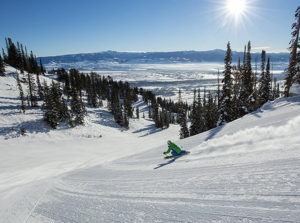
Or is this you?

Correspondent Karen Lorentz offers another profile of entrepreneurial ski resort founders, this time, the Mueller family, who bought Okemo in the early 80s and built it up, expanded, and attracted many new visitors. Click here.

The ever practical Marc Liebman shows us what is in his ski tune up kit.  He takes ski tuning very seriously. Do you? Should you? Click here.

Long time correspondent Harriet Wallis offers a memory of how she learned skiing.  Trust us, she’s just as fiesty now. Click here.

Skiing Weatherman Herb Stevens sees a storm coming to the Northeast soon. March madness, indeed.  Find out when. Click here.

Finally, our Snow In Literature series brings you a poem from Emily Dickinson about her visiting friend, you guessed it, the month of March.  Click here.

Tell your friends about SeniorsSkiing.com. Remember, there are more of us every day, and we aren’t going away.

Sunburst Six as it approaches the summit. Credit: Okemo Resort




First Timers Tips For Skiing Europe

The Straight Story On The Continental Skiing Scene For Seniors.

I have coached in pretty well all of the European skiing countries. SeniorsSkiing asked me could I recommend resorts to suit mature American skiers, especially first time visitors to the Continent. Here goes.

The range of possibilities is vast. France plasters its slopes with lifts, Italy takes a more environmental view and installs fewer but longer lifts up valleys, offering equally long descents. Gressoney St Jean in the Aosta region (about an hour from Turin) is a classic example, it also links to Champoluc and Alagna.

Other Examples

Waidring: 10 lifts, 16 trails, intermediate-beginner, gemutlichkeit.

A friend went to Waidring in Austria every year for ten years. Great people, great snow, warm welcomes. They have a tradition called gemutlichkeit – geniality or friendliness. It is tiny – 10 lifts,16 trails all told, half of them intermediate, half of them beginner.

Val Thorens: 163 lifts, 373 miles of trails, ski to Courchevel

Compare that to Val Thorens-Meribel-Courchevel – 163 lifts, 373 miles of trails, 192,000 feet of vertical descent. Start in Val Thorens, ski to Courchevel, and you may not have time to get back. Hugely popular with Brits (far too popular for me, I hate lift queues)

What’s On Offer?

Different resorts in every country target different types of skiers – though they hope to get everybody.

Take the Chamonix Valley for instance, steeped in mountaineering history. Each of its resorts offers a spread of challenge but with a bias.

The lowest resort, Les Houches: charming, easier, all trails are in wooded areas, amply supplied with atmospheric mountain restaurants.

Almost an hour’s ski bus ride from Les Houches – is Le Tour. Almost treeless, big sweeping terrain, as well as plenty of intermediate trails it offers some easily accessible off-piste.

In between you have Le Brevent – high, steep, not easy; or Argentiere, home of the “hard men”, some of the blues would classify red (black) in other places.

When conditions permit, from Chamonix centre a telecabine takes you to the 22 km Vallee Blanche in the high mountains, and you only need to be intermediate, but you’ll need a professional guide: don’t try it on your own.

So How To Choose?

The internet is full of “the three best French ski resorts”; or “the ten best Austrian ones”; it’s endless.

What we need is a selection process. How does this seem:

Kitzbuehel: €€€€€

  • How pricey is it? There are big differences. If you select Kitzbuhel (fashionable) everything is more expensive than Kirchberg which is just a few miles up the road and accesses the same trails. Some resorts are designed around high net worth folk seeking luxury.
  • What duration is the connection time between your airport and the resort. It can be up to four hours or as little as only one. Does it matter to you?
  • Many European resorts are inter-connected, ask them what standard of skiing do they mostly offer. They’ll tell you they have everything, but insist on knowing what they mostly offer.
  • Within the connected areas ask them the approximate skiing times to get from one resort to another, and back: it can seriously affect your day – and how tiring it might be.
  • Ask them if skiing guides available who can show you early in your visit the general shape of the place. Many of the chalet owners and hotels offer this service – not teaching, just showing you around.
  • When are the school holidays? In France they go on for weeks. Lift queues can be horrendous. Outside of them, you can often just walk on. And remember, in some European countries lift queue etiquette and politeness is conspicuous by its absence; France is one of them.
  • Consider less popular countries that don’t have inter-connected valleys – Slovenia (home of Elan skis) has some nice small resorts; Bulgaria has more than you might think and inexpensive.

Kirchburg: €€ and just down the road from Kitzbuehel

My personal favorite? Baqueira in the Spanish Pyrenees. Two hour connection from Toulouse airport. Nicest folk you’ll ever meet (I go to the Hotel Tuc Blanc, and I’m not paid to say so). Watch out for school holidays though, it’s just across the border from France, but the Catalans queue politely.

Baqueira, the author’s favorite.

One Last Tip.

Never do “the last run down”! Everyone wants to get one more “last run” in. They do it on the return to the valley.

Don’t. They’re all tired; they’re skiing at their worst; there are crowds of them; the trails down lower are worn out or slushy. If you want “one last run” stay higher (the areas they’ve just left!) have better snow, fewer people, quieter mountains, and go down to the valley on the lift.

Hotel Tuc Blanc, author’s fav hotel in Baqueria.


seniorski5

Skiing Weatherman: Pattern Is Relatively Quiet

Fresh Snow in Cali. Mild Temps Next Week.

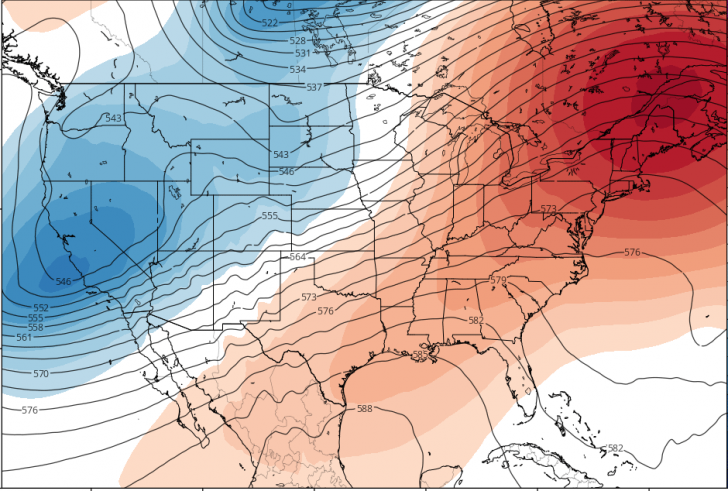
Last week’s installment touched upon the fight we usually see in March between lingering cold to the north and advancing spring warmth from the south.  The fight usually takes the form of storminess, where it only a matter of whether there is enough cold air in the mix to produce snow instead of that other stuff.  And yet here we are in the first week of March with something resembling a mini snow drought over the eastern half of the country.  There hasn’t been a significant widespread snowfall in a couple of weeks and aside from northern New York and northern New England, where there have been one or two light snowfalls across in recent days, surfaces have morphed into “machine groomed” or, when temps rise above freezing, “loose granular.”  Fear not, though.  I hoped that a storm late this week would turn the corner and hit the Northeast, but a cold northwesterly flow has suppressed that idea well to the south.  By no means has the East seen its last snowfall, but the next sizable one will come after a turn to milder weather during the week of the 8th.  Here is a forecast for the jet stream level on the 11th that illustrates the cause of the warm-up.

If you follow the lines around the burnt orange center in a clockwise fashion, you can see that the air mass that flows into locations east of the Mississippi originates over the Southwest, where temperatures are running above normal.  At the same time stamp, the following surface map shows a high pressure center off the coast of New England.

Following the lines clockwise around the blue “H” indicates a broad, low level mild southwesterly flow reaching the Great Lakes to New England.  So, look for a shift to softer, spring-like surfaces in these areas next week.

The flip side of these ridges at the surface and aloft are the upper troughs and surface low centers that will be moving through the West next week.  The air flow is around troughs is counter clockwise, and if you look at the first map and picture the western trough sliding down the coast from Washington to southern California, you can see that a broad onshore flow of moisture will immediately precede the arrival of the center of circulation, which is a great recipe for fresh snow in the Cascades and Sierra ranges.  The highest totals will come from central and southern Sierra resorts, where the core of the trough will pass overhead midweek. Farther north it will be offshore.  Later next week, the weakening trough will swing through the southern Rockies, where lighter snow will fall but refresh surfaces.

Back to the East.  The pattern is progressive, so the warming will be transient.  Here is a jet stream forecast for the 15th that shows a cold trough returning to the Midwest and East.

That setup will help preserve snow and produce fresh snow at times and there are signs that the colder pattern will dominate the second half of the month.  More on that next week.

REGIONAL HIGHLIGHTS:

Pac NW/B.C.:

After a heavy late week dump in B.C., lighter snows fall this weekend in the Cascades.  Periodic light snows during the week of the 8th.

Central and southern Sierra:

Fresh snow as well as wind this weekend for Tahoe.  Snowy much of the week of the 8th for all Cali resorts.

Rockies:

Turning colder next week with light to moderate snows across the north.  Weakening upper trough brings light midweek snows in southern Rockies.

Midwest:

Seasonably cold weekend and milder next week.  Best shot at snow later next week across far northern Minnesota and Michigan.

Northeast:

Cold weekend with temps moderating by midweek.  Transition back to colder pattern gets underway next weekend with potential messy storm.

Mid-Atlantic/Southeast:

Midwinter temps this weekend; spring skiing develops next week.  Colder air returns week of the 15th.


Question For You: Risk Rating

Are You A Hucker, Ripper, Park Rat, Or Just A “Sick” Planker?

This you?

Sorry for the jargon.  This week, we’d like to explore on which end of the risk spectrum our readers reside. We have a sense that some readers have slowed down, taken down the speed a notch or two, search for corduroy on on sunny days, and switched to Blues and Greens. On the other hand, we know for a fact that some readers regularly race, seek double Blacks, huck off jumps, go outside the ropes, and generally find fire in their skis.

Question For You: So which are you?  Use this scale to rate yourself:

       1 is risk lover, jumper, fast, ski whatever, go-go-go, chute flyer.

       5 is graceful carver of the wide, groomed Blues and Greens, nice, rhythmical arcs, slow-ish, and in control.

Since this is an unscientific and statistically insignificant survey, make up your own criteria for 2-3-4 on the rating scale.

It will be interesting to see how our readership sees itself.

Or is this you?


GiantsRidge_OldSawMedia-9369

Make More Tracks: Top Nordic Centers In The Midwest

Here Are Five At The Top Of The List.

[Editor Note: This article by Pete Wilson first appeared in The Nordic Approach, the site of the Cross Country Ski Area Association.]

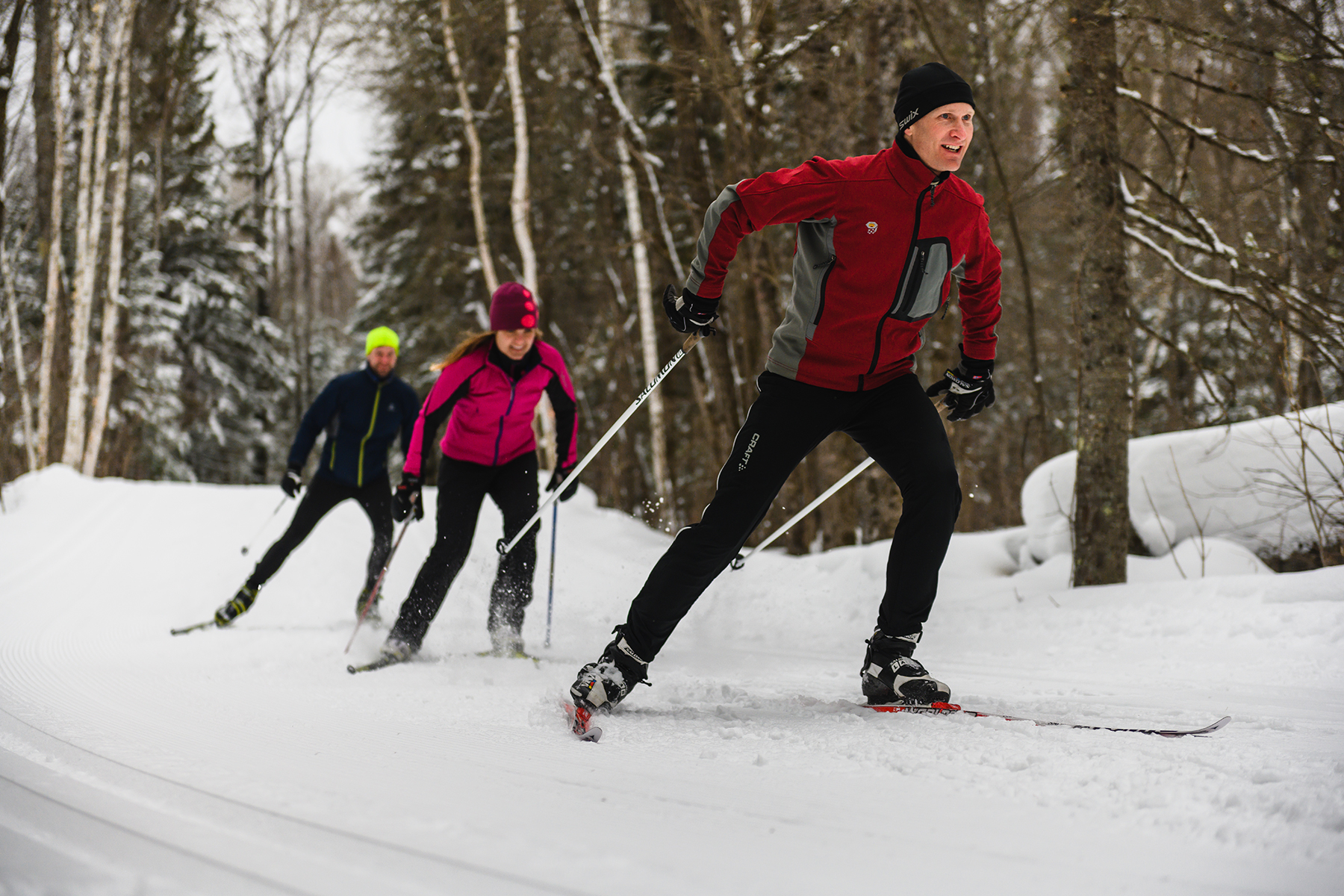
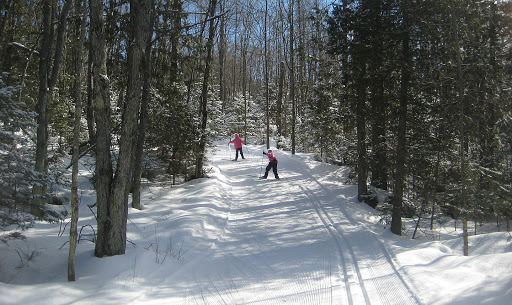
Midwest terrain is ideal for cross-country skiing.

Generally speaking, the midwestern states make up an overlooked bit of the country—literally, the fly-over states. And sadly, this wild misjudgment often extends to the world of outdoor activities. It’s easy to think of the old woods of the East and the vast mountains of the West as focal points for things like Nordic skiing; in truth, the Midwest is chock full of world-class country ski terrain and culture. Between the region’s breathtaking plains and dense rolling woods, working fields and forgotten valleys, it offers ample opportunity for amazing winter exploration. Below are some of our favorite Nordic centers in the Midwest, all of which combine a warm plains-state hospitality with unique and visit-worthy trails into your next ski destination.

ABR TRAILS

Tucked on the Western edge of Michigan’s Upper peninsula, almost in Wisconsin, the family owned and operated ABR Trails (Active Backwoods Retreat) takes full advantage of the Lake Superior Snowbelt in which it sits. Over 60 km of expertly groomed trails climb, drop and meander along the nearby Montreal river, reaching the heights of Blueberry Bluffs and the Hautanen Highlands and the lows of Coyote Canyon. In order for every skier to easily find the perfect route, trails are divided into loops that each offer a different level of difficulty. ABR’s professional staff (whose grooming skills are so honed they host clinics on Nordic trail building and grooming) stand ready to set you up with gear, advice, warm beverages, and whatever else you may need to keep exploring their nearly endless terrain.

ABR
GIANTS RIDGE

Originally designed as a training facility for Olympic skiers, it is no surprise that Giants Ridge towers today as a pillar of world class skiing. With over sixty kilometers of meticulously maintained trails expanding in broad loops over the hills that stretch out westward from Lakes Wynne and Sabin, memorable skis are guaranteed. Combine their epic terrain with the reliably snowy Northwoods winters, and it is quickly clear why Giant’s Ridge remains such a prized destination. Backed by the indulgent amenities of a large resort, Giant’s has a near endless array of activities, lodgings, and meal options ready to make create a unique ski getaway for every guest.

MAPLELAG RESORT

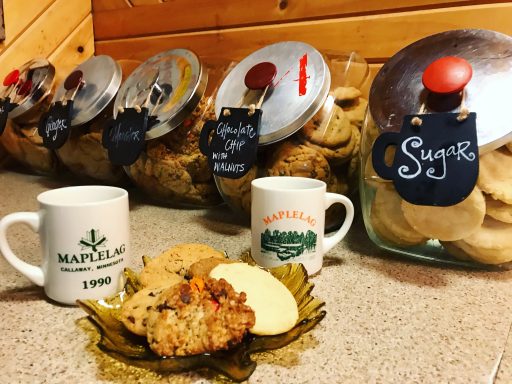
It is not often you strike upon a resort that places cross country skiing at the heart of its guest experience. Originally a maple sugaring operation, Maplelag has converted their 600 acres to pristine ski terrain, while the various buildings on the property now accommodate upwards of 200 guests. Boasting 64 km of trails flanking the frostily picturesque Little Sugarbush Lake, two onsite saunas, and a half a dozen uniquely comfortable lodging options, this erstwhile outpost updates the best Nordic traditions with Minnesotan hospitality and North American grandeur. The last chunk of forest before the Rockies, Maplelag is well worth a stop on your next trip to the Northern Midwest.

 
SOLBAKKEN RESORT

Nestled along the north shore of Lake Superior, midway between the winter sport hot spots of Lutsen and Grand Marais, Solbakken Resort’s sprawling, snowy playground awaits skiers, snowmobilers, and fat bikers alike. Consisting of 58 km of their own excellent trails, plus several hundred miles of connected trails this northerly play area promises endless adventure and a bottomless supply of what the Norwegians call Hygge—“well being.” With lodgings that run the gamut from motels to luxurious lakeside cabins, there are comfortable accommodations fit for individual skiers, fun-loving families, and couples looking for a romantic retreat alike.

GOLDEN EAGLE RESORT

Sitting both smack dab on the stunning Flour Lake and alongside the famous Gunflint Trail, Golden Eagle Resort is a well-situated gem buried deep in the wilds of Superior National Forest. The Resort’s real claim to fame, though,is its part ownership of the Central Gunflint Ski Trail System. This behemoth network of over 70 km of excellently groomed trails offers climbs to some of Minnesota’s loftiest peaks, and the spectacular views to match. Golden Eagle also maintains a small lighted loop for skiing after dark—on which, if you’re lucky, you might see the northern lights dancing in the night sky.

How Is It At Park City And Deer Valley?

Visitors To These Destination Resorts Send First Hand Report.

[Editor Note: This article first appeared in The Chronicles of McCloskey, March 1, 2021.]

How is the skiing experience in different areas around the country you might ask? We all have heard about the long lines in Colorado and Tahoe and even locally the lines have been robust. I am thinking that the Pandemic has encouraged people to get outside and also the snowy, cold winter around the Easrt has brought about a renewed enthusiasm for skiing. It has also been a good winter around the country. My friends have reported huge snows in the Pacific Northwest and some longer lines in several other western areas.

Last week my wife and I ventured to Utah at the invitation of some very good friends who live there. They have been careful with social distancing and so have we, so our only unknown was the airport and plane. We were careful but the airports were reasonable and allowed for distancing. Even the planes were sanitized, and we were fortunate to not have anyone in the middle seat. We wore our masks, sanitized the seats and tray tables and also our headrests. All was well and we made our way to ski at Deer Valley, our first stop.

The Empire Canyon Area at Deer Valley.

One of the first things we noticed was that Deer Valley was not really that crowded despite what we had heard about neighboring Park City Resort. They limit the lift tickets and since I had an IKON Pass, I was able to ski without a reservation and my wife was able to get a buddy pass at the ticket window each day without issue. In typical Deer Valley protocol, the slopes were impeccably groomed much to my wife’s delight, and the sun shone brightly every day, even though there were cold temperatures . I noticed that the indoor dining was restricted and a reservation system was in place for all the ski lodges. You could get “Grab and Go” meals either by ordering on the Deer Valley App or ordering at the window. Eating outside was encouraged. But there was very little indoor warming encouraged.

In the lift lines, signage was plentiful regarding social distancing and all Deer Valley employees were on alert to instruct anyone who had their face masks down to pull them up. Even on the exit ramps on the chairlifts, there were signs to use your mask when unloading. Instructors had masks on when teaching, and all of the employees had masks for every function in the area.

Main Street in Park City was still pretty crowded and even though there were protocols for social distancing, the amount of people made it so that we did not shop or eat on Main Street. We dined with our friends in their beautiful home and did take out one night.

Best View in Park City

So, even though there are consistent similarities in Covid protocol in all ski areas this season, the West is doing a good job with the amount of locals skiing and also visitors who now are a little more comfortable traveling. Like the McCloskeys. The atmosphere seems a bit subdued out there as the apres and dining scene are affected by restrictions. You could actually feel it when walking around. Something was definitely different. All bets were off at the No Name Saloon as it seemed to be a haven for the ” cabin fever” crowd. We stayed away for now. I will see what Mammoth Mountain is doing at the end of this month, but if I have the experience that we had in Deer Valley, I will be comfortable and again grateful to be skiing. Thanks for reading.

Moving To Indiana Then Idaho

Part Four: Jan and Judy Find Lots Of Places To Ski.

We returned from Norway in 1957 and headed to Indiana University. We skied Caberfae near Cadillac, MI, a couple of times, but otherwise, our four years at IU were devoted to my studies and having Bloomington’s New Year’s Baby in January 1960. Where and when would we ever start little Erik on skis?

When I graduated in June 1961 we had a second child on the way, and I had a job offer from the University of Florida. Then came a call from Moscow, Idaho. The chair of the Humanities Department wanted to expand offerings in American Studies, and he had contacted the well-known IU program to see whether any newly-minted folklorist was interested.

This was the only job I ever took without a site visit and a personal interview. Everything was done by telephone and letters. The offer came as a telegram. It worked out perfectly: Moscow was a pleasant small town, the university was solid, my colleagues were smart and friendly, and—best of all—there was a nice little ski area just north of town.

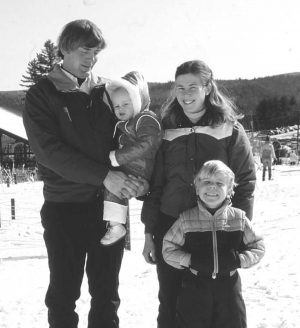
The North-South Ski Bowl had a couple of rope tows and a log warming house. Here is a photo of Judy and me with toddler Erik ready to ski. His baby sister Amy, was with a sitter. Yes, I’m still wearing that old Norwegian sweater.

Jan, Judy, Erk, 1962.

Besides our local area, we visited other ski resorts in our region. We skied Mt. Spokane a couple of times, and returning from a meeting in Seattle I skied Snoqualmie Pass. When I gave a lecture for an extension course in Boise I brought my skis and had a day at Brundage Mountain near McCall, a place Judy and I also skied together. By then we had replaced the front clip on our Norwegian skis with first-generation “safety bindings.”

In early 1962 I was surprised by orders to join the US Army and fulfill my ROTC obligation. Even this led to some  skiing.

On my way to join my class at Ft. Gordon, Georgia, I visited my parents in Lansing. My dad suggested that we go skiing. But was there time to drive up north? Not a problem. A new little area called Mt. Brighton was on I-96 down towards Detroit. In my dad’s garage I found some gear that fit, and thus I had what turned out to be my last ski day in my home state. Hard to believe that little old Mt. Brighton is now part of the Vail empire.

I was assigned to Fort Monmouth, New Jersey, for a year. Judy and the two kids joined me, and we found a local ski club that met in a neighborhood bar. Their meetings were the last time either of us were carded to buy drinks. We never took a ski trip with the club, but we did get to some eastern ski areas on our own.

Judy’s aunt lived in upstate New York, so we could leave the kids with her and go skiing. Here’s Judy in 1963 at the now-defunct Petersburg Pass. It’s not clear whether she was planning to ski an expert or a novice trail.

Judy checks trail map at Petersburg Pass, 1963

Back in Idaho a major new area opened in the mountains above Sandpoint: Schweitzer Basin, now Schweitzer Mountain. We skied it in January 1964 when Judy was pregnant with our second daughter, Dana, born in Moscow in June. The views from the mountain looking past the frosted trees to Lake Pend Oreille were stunning.

Lake Pend Oreille from Schweitzer.

In spring 1965 opportunity knocked in the form of an offer from the Edwardsville campus of  Southern Illinois University. I felt I should not pass up a chance for a promotion to Associate Professor and time off for folklore fieldwork. So back we went to the Midwest with our three little kids, hoping that eventually we would be able to teach them skiing.

To be continued . . .

Les Deux Alpes: Top-To-Bottom

One Heck Of A Long Run.

Amazing vistas on a long, long at Les Deux Alpes

We’re getting hooked on these top-to-bottom videos.  For one thing, they are showing us ski resorts we have not visited. That alone is interesting in a vicarious vacation kind of way.  For us New England-oriented skiers, this video of the French Alps resort of Les Deux Alpes opens up a whole new world of skiing. Open piste, fantastic views, webs of lifts coming and going. Truly different from the narrow, twisty, pine and hemlock lined ice tracks we have become used to. So interesting. Although, one wonders where one should go if and when the fog and clouds descend.

For another thing, we are seeing, in this case, a run that goes from an altitude of 3600 meters to 1600 meters, roughly a mile of vertical. And it takes 13 minutes without a stop.  Tell that to your quads.

We hope you enjoy these “vacations”. You can read a view of Les Deux Alpes (or L2A, as it is called) here from SeniorsSkiing.com’s collection of resort reviews.

Thanks to Alexandru Comsa for posting this video. (Note: this video is 13 minutes long. You may have an ad pop-up at the 1o-minute mark. Just click “Skip Ad” to get back to the run.”

The Skiing Tune Up Pack

DIY: Prepare And Repair  Ski Bottoms. Here’s What It Takes.

Crowded ski tool box: There must be a pony in there somewhere. Credit: Marc Liebman

Way back when I used to drive to ski resorts, I used to slide a toolbox into the back of the car with everything needed to tune a pair of skis, fix a gouge in the P-Tex and wax the bottoms. The biggest and most important item was my Toko hot waxer.

Between ski trips, each pair of skis received a coat of paraffin dripped onto the bottom, spread, scraped off and buffed. This was done three times and made the P-Tex rock hard as well as providing a base for any additional wax for the conditions or none at all. The treatment also made the bottoms much more scratch resistant.

As a back-up, or to allow someone called children to do their own skis, I had a simple travel iron. Another vital item was a 12-foot extension cord.

Also in the box was a brick of paraffin used in canning. Back before the turn of the century, each box had four, ¼ pound slabs.

In the box there were a collection of P-Tex “sticks” of varying colors to drip them into gouges. They sat in the same tray in the toolbox with a scraper and butane cigarette lighters I’d use to melt the P-Tex sticks and a soldering iron used to help clean out some of the gouges.

Several flat files were in the bottom for sharpening the bottom part of the ski’s edges. To take burrs off and to sharpen the edges to a perfect right angle, over the years, I’d acquired several different “planes” or edge sharping tools. Then once I was finished with the filing I had small whetstones to take off any microscopic burrs.

Most shops have belt sanders to grind off the bottoms and that just grates on my nerves. For one thing, the sander takes way too much bottom off. And two, the sander leaves burrs that need to be carefully filed off. Too much pressure during a careless pass down the belt sander could ruin a ski.

When finished, the edges could slice paper, which if you ski or race in New England a lot, is very helpful.

Every night after dinner, the family’s skis were waxed. My kids started helping around age eight and by the time they were teenagers, they could wax their own skis (!) And, yes, they could feel the difference between a tuned ski and one that wasn’t. The ritual also gave me a chance to check my family’s skis and bindings.

Also in the box was a box of helicoils which can be inserted in holes to enable a screw to be tightened. Having started skiing way back when metal plates were not built into the ski, they were handy to have around.

Ski tuning, or even de-tuning is an art as well as a science. Today, I can’t tell you how often a shop has given me a pair of high-performance rental skis that was desperately in need of a tune-up.

Okemo Mountain Resort: A Mom And Pop Success Story

The Muellers Saw The Potential And Took The Risk.

The young Mueller family in their first season at Okemo. Credit: Okemo Resort

When Tim and Diane Mueller purchased Okemo Mountain  in August 1982, it was a ski area with six Pomalifts and three double chairlifts. Under their mom-and-pop hands-on leadership, it became a year-round destination resort with summer activities and programs as well as a vastly expanded two-mile wide ski area with 667 acres of terrain, 46 miles of trails, 98 percent snowmaking, 121 trails and glades, a 2,200 foot vertical, and 20 lifts.

Attorney George Nostrand characterized the purchase as  “a struggle and a monumental risk. They had limited funding and if it failed, they would have lost everything they owned. I told Tim that I wouldn’t have had the stomach to take this kind of risk. He said to me, ‘Well, George, that’s the difference between an entrepreneur and a lawyer.’”

Referring to a Sno-Engineering 1981-82 Master Plan which concluded Okemo could become “a major destination resort,” with $8 million in improvements, mountain expansion and additional condominium complexes, Tim cited “the potential” as worth taking that risk.

“We assumed we would be successful because that is part of being an entrepreneur, but never in our wildest dreams did we foresee Okemo becoming what it did. Tim thought going from 90,000 skier visits to 200,000 annually would be doable, and that was our idea of being successful. We never thought we would reach 600,000 or operate three resorts — that was not a goal then,” Diane said.

Hospitality and Service Orientation

The Classic Red Poma Lift in 1956 which the Muellers replaced. Credit: Okemo Resort

With their background operating and expanding a beach resort on St. Thomas — and a Vermont home construction business prior to that — they had “a lot of energy and experience. There were good employees here with experience so it wasn’t as if we were wildly entering some field blindly,” Tim noted.

Still their first season was a struggle. With no time to research a chairlift, they focused on sprucing up with paint, new signs (saving money because Diane did them), and fixing the lifts as fast as possible when they broke down.

With natural snow not falling until mid January, the Muellers relied on snowmaking and had six trails by Christmas with two from the top, contributing to loyal skier appreciation and a “we can do it” attitude among staff.

They also focused on service. Diane cited their beach resort experience as giving them “a jump on the ski industry” in terms of offering quality service. The emphasis on Okemo and its employees providing top notch service was part of Okemo’s core values that enabled the ski area to grow to such a success, she added.

Their hands-on management style was impressive as they worked alongside their staff and management team . They listened to staff suggestions and were able to delegate responsibilities, which eventually allowed them to add Mount Sunapee (NH) in 1998 and Crested Butte (CO) in 2004.

Expansion and Success

Sunburst Six as it approaches the summit. Credit: Okemo Resort

With employee input as to where the replacement chair for the main Pomalift should go, the Northstar Triple was installed in 1983 (later a quad and then a sixpack). The development of the Clock Tower reception area and base village followed in 1984, creating excitement and a growing confidence in the mountain and the Muellers.

Hands-on resort operators Tim and Diane Mueller shown at the 2005 start of the Spring House at Jackson Gore. Credit: Karen Lorentz

The continuing addition of chairlifts, snowmaking, and new trails was impressive. The expansion to Solitude Peak in 1987 provided the Muellers’ first new lift-and-trail complex on 225 acres and was enhanced by a lodge and trailside units.

The development of convenient trailside condominium complexes — on private land the founders had purchased and on land the Muellers acquired — enabled profits to be invested into mountain improvements, including lodges, halfpipe and terrain parks, another new trail-and-lift complex at South Face (1994), a novice area at lower Solitude (1995), and the Jackson Gore complex (2004-06).

The offering of children’s daycare and ski instruction programs combined with an early welcoming of snowboarding in 1987 enhanced the area’s appeal as family friendly and an avant garde ski and snowboard school further propelled its growing popularity. By 2009, Okemo ranked in the top two in Vermont and the East and top 13 in the nation by skier visits!

When Vail Resorts acquired Okemo Mountain Resort September 27, 2018 it may have been the end of the Mueller era at Okemo, but thanks to their success, it was also the beginning of an Epic era that pays homage to their legacy of creating a great family-oriented resort.


Don’t Tell Me To Stay Home

How I Was Reinvented As An Athlete.

Riding the rope. Harriet’s daughter Alison, 5, in leather boots and wooden skis on Jiminy Peak’s rope tow. Credit: Harriet Wallis

I learned to ski on a dare. Actually, it was a threat.

When my husband announced he was going to learn to ski, I gulped. I thought skiing was something crazy people in the other side of the world did, but not here in Connecticut.

“You’re going to do what?” I asked. “How are you going to learn to ski?”

“I read a learn-to-ski book, and I’m going to do it,” he said.

I was still processing that concept when he added, “And you can babysit the kids.”

I was being told to stay home and take care of the kids while he was going off to learn some stupid sport. That was the last straw.

“Whatever this ski-thing is, we’re all going to learn to ski,” I insisted. “You, me, and the kids.”

It was the early 70s and equipment was changing rapidly. Plastic boots were making a hit, and leather boots were cheap at ski swaps. We outfitted all four of us – boots, boot carriers, wooden skis, poles, and a few jackets – for under $100. Lessons got us started, and we spent many Saturdays practicing wedge turns from Jiminy Peak’s free rope tow. The sport was beginning to stick.

As for me, I didn’t know I was athletic until I learned to ski. I was in my 30s with two children. Back in high school gym class, I was always the last one picked when they chose teams. I wasn’t even chosen. I was the last one standing there and the gym teacher would say: “Harriet, go over to that team.”  I just wasn’t very good at team sports: volleyball, basketball, or softball. But when I learned to ski, I was reinvented as an athlete.

And that has stuck too.

Snow In Literature: Dear March-Come In

By Emily Dickinson

Dear March-Come in
How Glad I am-
I hoped for you before-
Put down your hat-
You must have walked-
How out of breath you are-
Dear March, how are you, and the Rest-
Did you leave Nature well-
Oh, March, come right upstairs with me-

I got your letter, and the Birds-
The Maples never knew that you were coming-
I declare-how Red their faces grew-
But March, forgive me-
And all those Hills you left for me to hue-
There was no Purple suitable-
You took it all with you-

Who knocks? That April-
Lock the door-
I will not be pursued-
But trifles look so trivial
As soon as you have come

That blame is just as dear as Praise
And Praise as mere as Blame-