New Legends In The Making

Ski Museum Of Maine Holds First Annual Seniors Race.

Medaling were left to right: Leigh Breidenbach (Turner). Ginny Bousum (Kingfield), Paul Rogers (Camden), Jill Gray (Farmington), Michael Becker (Winthrop), Tip Kimball (Cumberland Center)
Credit: David Eden

Just when the afternoon light was at its best, the Ski Museum of Maine hosted its first Legends of Maine GS Race at Sunday River. The goal was to benefit the growing museum based in Kingfield as well as to show racing for seniors is both doable and fun.

Off and running. Credit: David Eden

Twenty skiers, 50 to 80 somethings, were assigned decade-appropriate heats. Younger competitors presumably most able to handle the ruts went last. Everyone enjoyed a well pitched course, groomed to perfection by Sunday River officials on Monday Morning off Barker Mountain.

Many racers were veterans of Sunday River’s Wednesday race group clubs, but for some it was a step up from the usual NASTAR course.

Tip Kimball, the only male to enter the 50-59 category, was fastest overall. Maybe youth does still have some advantages. Greg Sweetser, Executive Director of Ski Maine, was only 5.34 seconds behind in the 60-69 division, not bad for an older guy.

Leigh Breidenbach of Turner and a manager for Sport Thoma ski shops, took first in the 60 plus category. She says she raced because, 1) she is a board member and 2) she was the director of the Ski Industries Program at UMaine, Farmington for many years under Doc DesRoches, so she supports the industry any way she can. Her husband, Bede Wellford, 64, was gamely racing “on a new hip.”


Beth Hodgkins in the 60 plus group.
Credit: David Eden

Wende Gray of Bethel and President of the Ski Museum of Maine, also took part. The last time she entered a race was in 1988 at Lost Valley for a ski association event. Her words of triumph after this race: “I did not crash, and I finished.” She took the gates wide to stay out of the ruts, enough to earn a bronze medal.

Top woman finisher in the 70 plus category was Virginia Bousum, 77, of Kingfield, and 13th overall.

Virginia was nervous despite her freshly tuned Dynastar GS skis, her “visualization” prep of Michaela Schiffrin running GS on YouTube, and not listening to the other “guys” warning each other about the tricky gates ahead. Her pre-race training had gotten sidetracked by teaching six-year-olds over the busy school vacation week at Sugarloaf. For moral support, she brought along her granddaughter who had taken the day off from school.

Ultimately though, “It was fun, just ski down, nothing tricky. It was a nice course. They set it up really well,” she says.

For the record, her last major race was a Bonne Bell suntan lotion sponsored race back in the 70s at Sugarloaf.

Bill Hayes, 82, placed third in the 70 plus category on his G9 GS skis. He continues to train at Sunday River with the kids from Gould Academy, where he used to coach. No slouch, he was also on the UNH ski team and coached the U.S. Ski Team. A downhill specialist, he came close to the 1955 Olympics in Cortina but an injured leg kept him out.

How was the race?

“Great, but I gave it too much room. What else am I going to do, sit at home?”

An awards ceremony following at the Barker Bar, with food and drink and Gray’s presentation of medals, plus two trophies, Centrum, ski wax, and Bandaids.

Going forward, plans are to move the race around to other Maine ski areas to spread the word. With any luck the race will take place at Sugarloaf next year with more legends in the making.
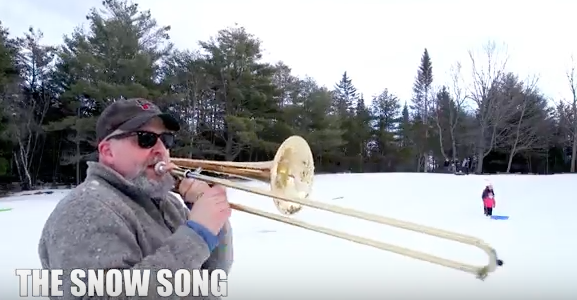
Hey, Hey, Ho, Ho, This Is Maine, It’s Gonna Snow

The Half Moon Band Delivers Truth About Living In New England.

It’s been snowing a lot around New England this March. Three Nor’easters in less than two weeks delivered plenty of snow and have basically rescued the spring skiing season for most resorts from Pennsylvania to Maine. But, there are people who think that snow is just frozen water that blocks them from getting to their flight to Aruba. Grousing brings a negative force field.  Embracing the reality of New England weather is healthy.  Proof?  Just watch this ditty by Bangor Daily News journalist Troy R. Bennett and performed by The Half Moon band. Relax, forget those power outages; it’s gonna snow.

Little Lyford Pond Camps: Companionship, Adventure and Hospitality in the Maine woods

Long-Time Friends Take To The Maine Woods On An XC Adventure.

Steve Hines (R) and his pals venture into the AMC’s wilderness camps every year.
Credit: R. Boucher

A fresh three-inch snowfall covered the winter parking lot as we arrived for our annual winter ski trip. We felt a quiet confidence as we loaded gear into the gear shed for transport to the Appalachian Mountain Club’s (AMC) Little Lyford Pond Camps (LLPC). The camp is on the outskirts of Greenville, Maine. At about 9:30 that morning, we put on skis and shouldered day packs for the 6.8 mile trip from the parking lot to the camp. The four of us—ages 63 to 70—are all experienced outdoorsmen.

Head of the Hedge Hog Gate Trail into the LLPC. Credit: R. Boucher

Trips like this were not new to my group of friends. But, what makes people our age want to continue to take adventures like this? Hadn’t we all earned our rest? Shouldn’t we be shopping for “over 55” living arrangements? Perhaps the answers would be revealed during the week.

AMC owns three camps which are on land the club purchased near the Katahdin Iron Works region in north central Maine. The camps had been fishing and hunting camps for “sports” from Portland, Boston and New York, typically wealthier men looking for a respite from their harried lives in large cities. LLPC opened in 1873 during the so-called gilded age in America. These were the days of JP Morgan, the Rockefellers and the Carnegies. Now, the three camps: LLPC, Gorman Chairback, and Medawisla are all updated and modernized for 21st century adventurers.

LLPC was our destination this time, and the only way to get there is to ride a snowmobile or ski in on either Hedgehog Gate XC ski trail or the KI Road (logging road) to Upper Valley Road to the camps. Either way, the conventional wisdom is that intermediate skiers have the best time but beginners beware. Two of us decided on the trail and two on the roads thereby observing the “never ski alone” rule.

LLPC at twilight. The AMC maintains three wilderness camps in Maine. Credit R. Boucher

A few hours later, we four were reunited at the lodge at LLPC having lunch and telling stories. The staff at the camp were all on the job less than six months but were eager to please. In a short time, they’d become veteran innkeepers. Food at LLPC ranges from good to excellent, and we all found plenty to eat. The camp staff also accommodates special needs like vegetarians and gluten free. Trail lunches are provided as part of your stay.

The trail system around LLPC is extensive also ranging from comfortable “kick and glide” trails to challenging, ungroomed trails like Gulf Hagas.

Cross Country skiing isn’t the only winter sport enjoyed in the area around LLPC. Snowshoeing is also popular too. And the Lodge has snowshoes to loan.

While we had many conversations around our wood stove over the course of our stay, there were no clear answers to the existential questions listed at the beginning of this article. We did agree, however, that we all look forward to our next winter adventure.

Snowshoeing around the pond at LLPC. Credit: R. Boucher

SeniorsSkiing Guide: Smuggs Not Just For Kids

Smuggler’s Notch Feels Like Way-Back-When But With Up-To-Date Conveniences.

There are lots of blues at Smuggler’s for cruising seniors. That’s Stowe in the distance.
Credit: Tamsin Venn

Smugglers’ Notch is the well-known kid-friendly ski area in northern Vermont. That same dedication to fun also makes it a good area for seniors.

Start with the intermediate trails winding off the two upper Mountains—Madonna, 3,640 feet, and Sterling, 3,040 feet. They urge your skis to turn as they follow the mountain’s contours in delightful turns and drops.

Smuggs has the only triple black trail in the East—Black Hole— with a 53 degree slope angle.  But there are also many ego-boost blues like Madonna’s Upper Chilcoot and Drifter, where you turn where the trail turns, and Sterling’s Thomke’s, Rumrunner, Hangman’s, Treasure, FIS, and Black Snake.

Doable glades include Red Fox, Three Mtn., and several “variations” of the trail you are on. The goal here is to always let you have access to the woods should you so desire. Bring them on!

Glade skiing is well known here. When you ride up Sterling, you see Madonna’s wooded flank dropping into the ravine below. All those glades are skiable or snowboardable, says Public Relations Director Mike Chait enthusiastically.

Furthermore, all trails are well defined from top to bottom so no worry about ending up on a black diamond trail by accident and all trails funnel to their respective base areas for pro-choice group skiing.

Meanwhile, The Village Center at Morse Mountain is served by four lifts and 99 percent beginner terrain where you can ski at a peaceful pace.

Views? From the Catwalk, you can look across the Notch to Mt. Mansfield’s trails at Stowe. Remember when these two resorts were connected?

The experiences kindle feelings of New England skiing way back when, but with all the up-to-date conveniences. By not being overdeveloped, Smuggs maintains a nostalgic feel.

Somewhat remote (although only 30 miles from Burlington), midweek is quiet, and the powder stashes linger.

Seniors are looked after. The Smugglers’ Notch 55+ Club is a 26-year-old club that meets every Wednesday for skiing and camaraderie. It has more than 100 members, and about 30 to 35 skiers show up each week. Coffee at 9 a.m., followed by Alpine or Nordic skiing and snowshoeing, then a 1 p.m. program. Membership is $30 for the season, which includes continental breakfast, 50 percent discount off lift tickets, and other discounts.

Most members are Vermonters who live within an hour radius of Smuggs with a wide range of skiing ability, including ex ski patrollers and instructors. Guests and new members are warmly welcomed, says Deborah Pomeroy, club president.

New this winter is FunZone 2.0, a 26,000 square foot indoor playground, a $4.2 million investment reflecting the area’s decades-long focus on family fun. Laser tag anyone?

The Facts

Vertical Drop: 2,620 feet.

Total Trails: 78. 300 acres of marked and patrolled terrain. Plus 700 acres of unmarked and unpatrolled terrain. 19% easier, 56% intermediate, 20% expert, and 5% extreme.

Snowmaking: 62 percent

Total lifts: 8.

Longest run: 3 miles, from the Madonna summit to the Village.

Places to eat: Village Center, Morse Mountain Grille & Pub for salads, soups and burgers. Music: The Friendly Pirate

Lift tickets: Senior 65 and older, $58 day, $64 holiday. Season Pass: (ages 70+) $70

Click here for Trail Map

Click here for Smuggler’s Notch website


SeniorsSkiing Guide: Pat’s Peak With Little Hobbits

And Grandparent Hobbitts, Too.

Hobbitts can be found at Pat’s Peak, New Hampshire
Credit: Tamsin Venn

Skiing with grandchildren is one of grandparents’ great joys and comes with perks: easier slopes, hot chocolate breaks, and slower (maybe) pace. Some ski areas are more finely tuned to multi-generational skiing than others, based not just on the amenities but the spirit of the area.

Pat’s Peak in Henniker, southern N.H., is one such place. The old-time vibe of this popular area is the first clue things are going to be fun. Tyrolean-style architecture harkens back to the days when Austria set the scene with boiled wool jackets and “bending the knees”. Greeters stand by with signs that say, “May I Help You?” which avoids the usual stumbling search for the lunch area and ticket booth. Free or low-cost tickets take the bite out of days shortened by tired or cold grandkids.

Three beginner areas sit apart from the main slopes so no one crashes into the grandchildren under your watch. One is located in a hobbit-like stand of trees with a carpet lift free to everyone. Another beginners’ slope has a handle tow, and the third features the Bluster Carpet, the longest magic carpet in New Hampshire. Older grandchildren will enjoy catching air in the three terrain parks. Grandparents, if you’re brave, try a Snowbike lesson/rental. You get to sit down while you’re skiing.

The base lodge harkens back to the early 60s, nostalgia for many seniors.
Credit: Tamsin Venn

A spirit of sustainability has guided Pat’s Peak development since the four Patenaude brothers, seeking an area closer to home, built the base lodge out of local timber and opened the area in 1963. That spirit continued this year when Pat’s Peak replaced the old Peak Double Chair with a triple bought from Vermont’s Ascutney Mountain and refurbished, doubling lift capacity from 800 to 1,600 people an hour.

Two interconnected lodges spread the crowds. Signs encourage you to share the long tables and benches. A blazing stone fireplace warms the toes. Food is homemade daily, and the grandkids like the M&M cookies the size of small Frisbees.

Sometimes it just comes down to the vibe of the place. Pat’s Peak feels like an area where you can let the kids loose to ski on their own while you attack the serious expert terrain.

More Perks:

Ski New Hampshire’s 4th and 5th Grade Passport: Children from any state in these grades ski for a day at 34 Alpine and XC ski areas across N.H.

January’s Learn to Ski and Snowboard month: $39 beginner special, including group lesson, rentals, lift ticket.

Pat’s Peak

Henniker, N.H.

Vertical: 770 feet

Skiable acres: 103

Runs: 28. Novice 50 %, Intermediate 21 %, Advanced 12 %, Expert 17 %

4 triple chairs, 2 double chairs, 1 J-bar, 1 beginner handle tow, 1 park handle tow, 2 carpet lifts

100 percent snowmaking

Children five and under ski free with a ticketed adult. Day tickets are discounted for ages 6-17 and over 65, only $49 on weekdays. The beginner lift is $26 a day. Saturday night POP (Pay One Price) of $49 includes skiing, snowboarding, snowtubing, rentals, lesson tips, and entertainment.

Click here for Pat’s Peak Trail Map

www.patspeak.com

Pat’s Peak Update Video


Baby, It’s Cold Outside. Really Cold.

Here Are 10 Tips For Seniors Dealing With Cold Cold Temps.

Ah, a balmy 0 degrees. In New England lately, 0 is the new 40.
Credit: Tamsin Venn

I posted here awhile ago about the benefits of skiing in the rain. Another unpopular time to ski is in extreme cold. The upside is you have the slopes to yourself. Unless you don’t. When skiing in Stowe over the recent holiday in frigid conditions, I was astonished by the hardy crew of skiers out on the slopes. A lot of that comes down to the increased quality of insulated layering…plus high speed quads.

Here are ten tips for seniors for skiing in cold temps.

  • Take frequent breaks inside to stay warm. Wind is the main factor to consider. Your body loses heat faster in the wind and makes it feels colder than it really is. But note that wind chill is a highly variable condition. Meteorologists revised the calculation in 2001 with much less austere conclusions. Ski area snow reports often cite the wind chill factor, but google the formula for a more precise reading. Take gusts into consideration. Ride the gondola, tram, or bubble lift for added protection.
  • Stick ’em up. When it is this cold, you got to mask up.
    Credit: Tamsin Venn

    Dress like a robber. Exposed skin loses heat first. Cover every bit of your face and neck with ski goggles and a balaclava, the best way to prevent gaps. Get one with a ventilation flap to improve breathing. Put your hood up.

  • Keep hands and feet warm. Long-lasting hand (ten hours) and toe (six hours) warmers are a cheap heat supply when bought in bulk at the hardware store. Follow the kids’ lead and put the toe warmers on top of the toes, not the bottom where they get mushed up. Ditch the gloves. Wear mittens. Some mittens have slots for heaters.
  • Invest in a boot heater. Boot heaters have come a long way with battery-operated heated insoles where you use your smartphone as the remote. For low tech, put toe warmers in your boot before you leave for the mountain.
  • Add a layer. A down or fleece vest to heat the core is a good option. Wear wicking layers next to the skin. Avoid, avoid, avoid cotton anywhere down below your outer layer
  • Drink lots of water. Cold air and intense exercise means you lose more vapor when you breathe, which leads to dehydration.

Cold strategies of old: Knitted face mask/racoon coat. From the Vermont Ski and Snowboard Museum.
Credit: Tamsin Venn

  • Take a friend or family member skiing. To sidle up to on the lift or check for frostbite. Early signs of frostbite include red or pale skin, prickling, and numbness. Discuss bailout options, so no one is waiting in the wind for the other to catch up.
  • Don’t try anything too fancy. You may stiffen up in the cold. Ski early in the day, for fresh grooming or powder. Follow the sun for visibility and warmth.
  • Save the Snuggly Snowman hot chocolate concoction for the end of the day. Alcoholic beverages swipe heat away from your core, as they send blood and warmth to the vessels near your skin. Outside, you lose heat quickly.
  • Make a leisurely day of it. You’re not going to rack up the vertical feet on your app today. Remember when we all went out into the cold no matter what as a badge of honor of being real skiers? Ditch that concept.

Spruce Camp Base Lodge at Stowe, VT, is calling. Time to head inside. Notice no one on the slopes.
Credit: Tamsin Venn

In Praise Of Urban Wilderness

Find Winter Activity Opportunities Close To Home.

Let’s define what we mean by Urban Wilderness:

  • Open space – wetland, meadow, and/or forested land.
  • Owned by a public entity
  • No parking or entrance fees
  • No visual pollution
  • Offers “peace and quiet”
  • Accessible by either car or public transportation from the nearby urban center
  • Offers a variety of activities (year-round)

Urban Wildernesses can be found in or close to many city centers. The point is that you don’t have to venture into the mountains to find winter recreation; it’s often just a short ride away. All you have to do is find them.

Here are two examples, one from the Boston Area, the other from Portland, OR.  What are your favorite Urban Wildernesses?

Around Boston

Hard to believe this view of Middlesex Fells Reservation is only a few miles from downtown Boston.
Credit: Commonwealth of Mass

Near Boston, MA is the Middlesex Fells Reservation. “The Fells” has borders in four near Boston suburbs; Medford, Winchester, Stoneham and Melrose. It’s 2,575 acres bisected by Interstate I-93. The east side of I-93 is more developed. The west side of I-93 is less developed with a border road and some homes along the road on the opposite side from the Fells. Nevertheless, the west side provides more of a wilderness feel.

Several ponds act as a water supply to the town of Winchester. The Fells have a good number of trails for mountain biking, hiking, snowshoeing, x-c skiing (ungroomed) and trail running including:

Skyline Trail

The 6.9 mile Skyline Trail follows the outer perimeter of the western Fells. There are spectacular views of Boston and the surrounding area. Most of the Skyline trail is in wooded landscape, with several steep ascents to rocky outcrops.

Reservoir Trail

The 5.2 mile Reservoir Trail encircles the north, middle and south reservoirs, and the open water can be seen from many sites (the reservoirs are for drinking water, so access to them is prohibited).

Cross Fells Trail

Beginning in the western Fells near the Medford High School, the 4.5 mile Cross Fells Trail gives a good sampling of the features of the Reservation, from wetlands at Whitmore Brook to open water at Quarter Mile Pond in the eastern Fells, to views at Cairn Hill. Use caution crossing South Border Road, Route 28, Woodland Road and the Fellsway.

For more information about Middlesex Fells Reservation, click here.

In the Boston area, there’s also Walden Pond, site of Thoreau’s cabin, in Concord, and Appleton Farms, a 900 plus acre working farm established in 1638, in Ipswich.

Here’s a brief description of a ski tour around Walden Pond.

And here’s what it’s like cross-country skiing at Appleton Farms.

Around Portland, OR

Forest Park is practically in downtown Portland, OR.
Credit: Forest Park Conservancy

At 5,157 acres, Forest Park in Portland, Oregon is one of the largest urban forests in the United States. With more than 80 miles of trails, Forest Park stretches for more than seven miles along the eastern slope of the Tualatin Mountains, at the convergence of the Columbia and Willamette Rivers. As stated in the park’s website, “Forest Park offers an unparalleled opportunity for visitors to experience a true Northwest forest without leaving the Portland city limits.” Forest Park immediately came to mind as an archetypical urban wilderness.

Activities along the 80 miles of trails include:

  • Horseback riding
  • Hiking
  • Cycling/mountain biking
  • Running – trail and road
  • X-C Skiing, Snow Shoeing (when and if it snows)*

Among the park’s trails are:

Ridge Trail

Trailhead access for the Ridge Trail, which is only open to pedestrian use. To find the trailhead, park at the obvious pullout on the way down Bridge Ave (heading toward Portland). You will then need to walk back up Bridge Ave roughly .2 mile to find the actual trailhead.

The Wildwood Trail

30.2 breathtaking miles, from the southern end of the trail at the Vietnam Veterans Memorial in Washington Park to the Northwest terminus of the trail at Newberry Road.

*The city of Portland averages only 4.3 inches of snow a year, so winter activities are the often same as activities the rest of the year. But, what a place to get you in shape for skiing on Mt. Hood only 50 miles from downtown Portland!

For more information about Forest Park, click here:

Please tell us your favorite urban wilderness. What makes it special to you?

Butternut Buys Blandford Ski Area; Rushes To Upgrade For New Season

Family-friendly Blandford in southern Massachusetts was poised for extinction or development, but Ski Butternut and its owner Jeffrey Murdock bought it Sept. 1 and saved it.

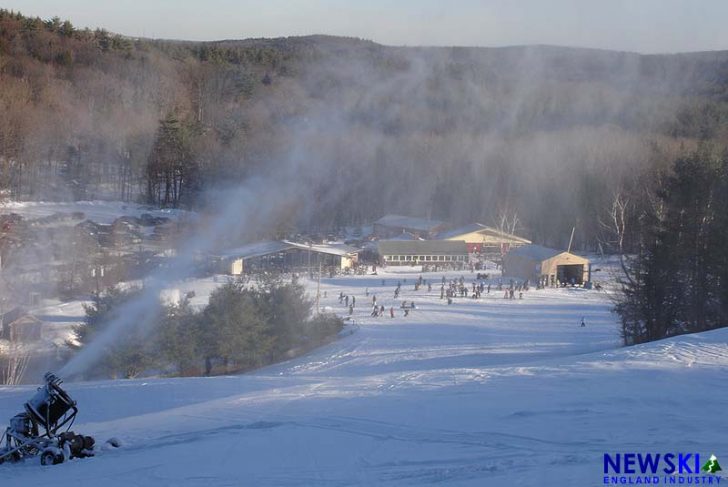
Here comes the snow making. Blandford’s lodges get facelifts and the slopes get upgrades in grooming and snow making.
It’s a rescue mission of historic proportions. Right now, crews are working furiously to renovate Blandford’s base lodges, upgrade the grooming equipment, and install new snowmaking to help smooth out fickle weather cycles that have troubled the family-style ski area in the Berkshire Mountains.

The timing is tight. Renovations couldn’t start until Sept. 1 when the purchase was finalized.

“We’re putting a lot of resources into Blandford,” said Dick McCann, general manager of Ski Butternut. “We want to build the skier base back up. And we care very much about making skiing affordable.”

“We think the ski industry is better for having these small ski areas,” McCann said.

In reality, no one needs a mega resort to learn to ski and have family fun. Yet mega resorts across the country are gobbling up smaller areas.

Historically, Blandford Ski Area was founded in 1936 by members of the Springfield Ski Club, and it was owned by the members. At that time, hardy skiers drove to the end of the road and then hiked to ski the rolling hills.

It’s surmised that Blandford might be the oldest member-owned ski area in North America. It’s located about 20 miles west of Springfield, Mass.

By the 1970s, the popular day ski area had many rope tows and one double chair lift. Families loved the area and spent many volunteer hours doing maintenance and especially picking up stones from the slopes and tossing them into the woods. That made the slopes skiable even if natural snowfall was skimpy.

That’s where I learned to ski and I loved the place. The snow was often thin, but it was groomed to perfection with no stones poking through.

Today, it has 25 trails, three double chairlifts and two base lodges. But snowfall became erratic during recent years and families drifted off to do other things in winter. Blandford was on the brink of extinction.

Ski Butternut’s owner Jeffrey Murdock now owns three ski areas in the Berkshires: Ski Butternut, Otis Ridge, and now Blandford Ski Area.

Ski area management runs in his family, and it started with Butternut. Its first trails were cut by the Civilian Conservation Corp (CCC) in the late 1930s, but that was followed by many rocky years. Finally in 1962, Channing and Jane Murdock, Jeffrey Murdock’s parents, bought the state-of-the-art chairlift and the ski area that went with it.

Ski Butternut now has one of the largest uphill capacities in Southern New England.

As to Blandford Ski Area, Murdock is breathing new life into it. Massive renovations are underway and they’ll be ready for this winter. A season pass is $199 for adults, $169 for kids 7 to 13, and $79 for kids 6 and under.

To read more from Harriet click here for her stories on SkiUtah.


Cycling Series: Designed Trails Make A Difference In PA.

Mountain Bikers: These Trails Are Worth The Trek.

Here’s the view from the Alligrippis. Nice summer ride through beautiful mountains in central PA.
Credit: Pat McCloskey

One of the smoothest, most  buttery trail systems in the east is situated in the middle of rural Pennsylvania near a beautiful body of water—Raystown Lake.  The Alligrippis Trails were IMBA( International Mountain Bike Association) designed in conjunction with the Appalachian Regional Commission, the Pennsylvania Department of Conservation and Natural Resources, the U.S. Army Corps of Engineers, and the Huntington County Visitors Bureau.

Check the smiles and the kids on the nice smooth single track.
Credit: Pat McCloskey

These trails are a must for anyone who appreciates flow on a mountain bike with berms and rollers galore.  There is some climbing but for the most part very gradual rollers with perfectly manicured conditions maintained by a robust volunteer system of local mountain bikers.  The Raystown Mountain Bike Association helps to keep these trails in tip, top condition, and if you are looking for a great day on the trails in the central mountains of Pennsylvania, this is your place.

There are 24 trails each stacked to provide loops that can be intertwined and lots of available bail out points.  Thirty miles of trails are available with hours of non-repetitive riding available.  Lots of riders make this a day trip when visiting State College to ride Rothrock State Forest trails which are another type of riding with more rocky challenging terrain.  The combo of each type of riding can provide a visitor to the central mountains of Pennsylvania enough variety to satisfy any level of rider.

Access to the trail system:

  • Seven Points Road Entrance in Raystown Lake Recreation Area
  • Bakers Hollow Road
  • Susquehanna Campground Entrance
  • Bicycle Shop Support- equipment, clothing, rentals, guide services and maps

Gear, Repairs, Supplies

Don’t miss eats:

  • Smitty’s Eats and Treats (Hesston, PA) Smitty’s pork bar-b-que is not to be missed prepared with meats from a local farm. Delicious!!!!! 

Oh, forgot to mention. Smitty’s also has ice cream.
Credit: Pat McCloskey


Historic Blandford Ski Area Poised To Bite The Dust

This Wonderful Family Area Is Simply Out Of Money.

[Editor Note: According to the Westfield News, Springfield Ski Club’s members will be meeting on July 18 to approve the sale of assets to the owners of Ski Butternut. If two thirds of the total membership do not specifically vote yes, the ski area will close.]

Volunteers kept Blandford going and gave the small area a community feel.
Credit: New England Ski Industry

The website says: “May 28, 2017 – Ski Blandford Financially Insolvent. Could Be Sold or Closed.” The Board of Directors and the skiers are on the brink of making a gut wrenching decision soon about their ski area that’s been going for 81 years.

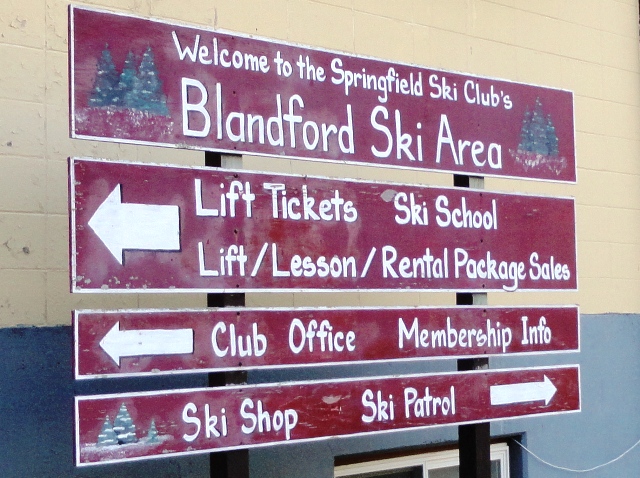
Harriet visited Blandford on a recent visit, finding a welcoming sign at the base lodge.
Credit: Harriet Wallis

As background, recreational skiing spiked after WWII when 10th Mountain Division veterans returned and inspired city folk to take up skiing.

But before that, in the 20s and 30s, hardy skiers skinned up mountains, built primitive lifts and were already into downhill skiing.

And so it was for the Springfield Ski Club. In 1936 it got permission to build a ski slope on a hilly farm in southern Massachusetts. It installed a 1,000 foot long rope tow and used a nearby schoolhouse as a warming hut. A few years later the club bought the land and named it Blandford Ski Area.

Today, about 60 ski areas that started before WWII are still in operation, according to data collected by New England Ski Museum Director Jeff Leich.

But it hasn’t been easy for this small, family-oriented ski area. Modernization from rope tows to chairlifts was costly. Updating to snowmaking was a necessity. But then, interstate highways whisked skiers past Blandford to bigger, destination resorts.

But Blandford—with its 450 feet of elevation, three chairlifts, snowmaking and night skiing—held on while other small ski areas in southern Massachusetts closed. Skiers simply love Blandford.

And they put in countless hours of volunteer work to keep the area ship shape. Work parties painted the picnic tables. And they walked up the slopes picking up stones pushed up by frost and tossed them into the woods so in winter they could ski on a minimal snow base.

During the 1960s and 70s, membership was capped at 5,000, and there was a waiting list to join. My family of four were all novice skiers, and we jumped at the opportunity to join when an opening occurred..

From that humble beginning at the small ski area, we all grew to love the sport. And we progressed to become instructors and ski patrol.

Blandford got us started in the right way. It inspired us with skiing. And it offered family values and great camaraderie with other families.

However, membership slowly dwindled over the years and dropped to just 1,426 in the 2014-15 season. Fickle weather and the economics of operation began to out weigh the camaraderie and the inspiration,

Blandford, like other small ski areas, is a grass roots feeder area that launches skiers into the sport. It’s sad that we might lose this icon of the ski industry. For a closer look, click here for the Ski Blanford site.

To read more from Harriet click here for her stories on SkiUtah.

Small areas like Blandford are where families grow up loving skiing.
Credit: Ski Blandford

Vets Take Part In VT Adaptive Bike Program

Special Bikes Available At Different VT Locations This Summer.

[Editor Note: This article first appeared in XCSkiResorts.com; we thank Roger Lohr, editor-in-chief, for sharing this with SeniorsSkiing.com readers.]

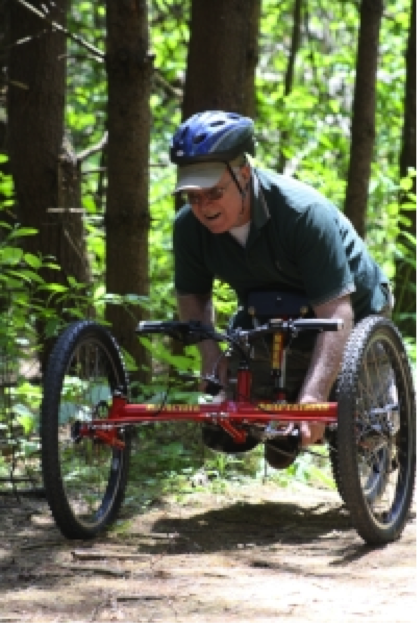
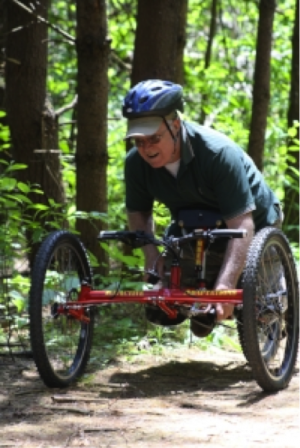
Adaptive bikes make it possible to get to the top of the trail. Each one is handmade.

The Vermont Adaptive Ski and Sports organization’s new Adaptive Mountain Bike Program, which is one of the first in New England offers special dates for outings in various location and limited adaptive mountain bikes to use. All abilities are welcome and participants may bring their own equipment as well.

The program is scheduled at multiple locations with outings and events planned for all level mountain bikers who have their own equipment. In addition, four adaptive mountain bikes are available for participants on a first-come, reservations-based system.

These highly adjustable bikes are ideal for individuals with spinal cord injuries, amputations or limb differences, or balance and motor skill disabilities. Vermont Adaptive purchased the bikes last summer with funding from the US Dept. of Veterans Affairs grant and Phil Black, owner of Lookout Tavern who donated monies for Vermont Adaptive to purchase a trailer for hauling the bikes to various locations statewide.

“Participants gain a sense of accomplishment when reaching the top of the mountain and that is great to see,” said Kelly Walsh, Vermont Adaptive program coordinator, who is responsible for Vermont Adaptive’s veterans programs.

For 2017, the US Dept of Veterans Affairs again awarded Vermont Adaptive grant monies to help purchase 10 two-wheeled mountain bikes and 10 bicycles for use on recreation paths. These bikes will be added to the existing fleet, allowing participants who don’t need to use an adaptive bike to get outside, exercise and socialize with other veterans, to enjoy Vermont alongside their peers with physical disabilities.

The custom hand cycles are crafted specifically for rocky terrain with unique hand cycles that are designed for adaptive riders to cruise down the trails smoothly.

There is open enrollment for free to the mountain bike program this summer. Although Vermont Adaptive will have a limited number of adaptive mountain bikes for use, all adaptive riders are encouraged to bring their own bikes and participate in any of the summer events. Reservations are required for programming and equipment use.

The schedule will kick off with the Summer Solstice Bike Ride on June 21 at Blueberry Lake in Warren, VT followed by the Mountain Bike “Snowshed Session” on June 24 at Killington Resort. Other events include the Green Mountain Trails Bike Ride is July 9 in Pittsfield, the Blueberry Lake Bike Ride on July 9 in Warren, the Vermont Mountain Bike Association Festival on July 21-23 in Warren, the Killington Bike Ride on July 29 and the Pine Hill Park Bike Ride on August 13 in Rutland. This program is limited to Vermont but you can look for similar programs in other regions across the country by contacting organizations that resemble Vermont Adaptive.

This year’s Killington Resort Adaptive Event for Independent Riders will also have bike demos “encouraging adaptive awareness for proper use of hand cycles,” said Olivia Joseph, Vermont Adaptive program coordinator and organizer of the adaptive mountain bike program.

The program is seeking volunteers who have an interest in mountain biking and for further info, contact Olivia Joseph at north@vermontadaptive.org.

The custom hand cycles are crafted specifically for rocky terrain with unique hand cycles that are designed for adaptive riders to cruise down the trails smoothly.

There is open enrollment for free to the mountain bike program this summer. Although Vermont Adaptive will have a limited number of adaptive mountain bikes for use, all adaptive riders are encouraged to bring their own bikes and participate in any of the summer events. Reservations are required for programming and equipment use.

Adventures In Cycling Series: Happy Valley (PA) Cycle

Serious Cycling For This Senior Who Hangs With A Younger Crowd.

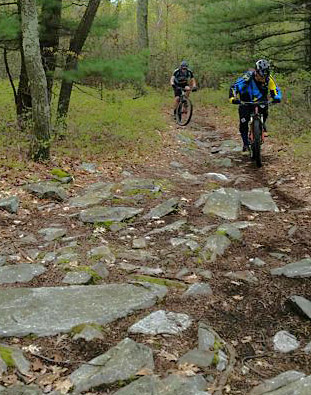
Trails at Rothrock require some technical skills.
Credit: Pat McCloskey

Nothing like a road trip with 23 of your mountain biking friends to State College, Pa. aka “Happy Valley”.  Our merry band of warriors converged on the Hilton Garden Inn and prepared for three days of riding the challenging terrain of the Rothrock State Forest.  As one of two “senior riders”, I was a little hesitant seeing that it was early spring, and my conditioning was not quite there yet.  But as the first climbs of the first day ensued, it was eat or be eaten with this group of very accomplished riders.  Rothrock has many ride options for different skill levels including gentle fire road climbs, but it also has some of the most challenging terrain in the east.

Our first day was spent near the Tussey Mountain Ski Area with a climb that led to the Tussey Mountain Trail which gave us great vistas looking over “Happy Valley” and the remote mountainsides of Central Pennsylvania.  The rocks and boulders along the trail kept the full suspension bikes busy; most of the riders have gone with the new technology of mid-fat 3-inch wide tires with loads of suspension.  Many of the riders used fat bikes to help absorb the punishing grind of the rocky terrain.

Only two seniors in this group of mountain bikers for this early season rally.
Credit: Pat McCloskey

The second day was spent with our guide Craig Matthews, at the Coopers Gap area which is directly over the mountain from where we rode on Friday.  This area is remote, but the trails are superbly maintained by the local hiking and mountain bike clubs of the State College area.  One of the highlights of Day Two was the “Beautiful Trail” which lived up to its moniker with rhododendrons in bloom lining the relatively level ridge top terrain.

Our last day was back at the Tussey Trails with a side trip to Lemont, PA to hike Mt. Nittany.  A beautiful early morning hike that was welcomed by a smaller contingent of the group with a stop at the quaint and peaceful Café Lemont. Here you can rest on a relaxing outdoor patio or beautifully appointed living room with a freshly brewed coffee of your choice accompanied by homemade pastries and granola cereals.

As the “senior guy”, I made it through and am looking forward to another trip in October where the leaves will be ablaze and the Central Mountains of Pennsylvania will be vibrant with the fall colors.  Just have to maintain the fitness level for that one over the summer.

If you go, the Hilton Garden Inn in State College is very accommodating to mountain bikers.

Ride Support is available from two very good bike shops:

Freeze Thaw Cycles: Rentals and all mountain bike related clothing and accessories available.

The Bicycle Shop: Specialized dealer with rentals and all bike related clothing, and accessories.

Buy the Purple Lizard Map of the local trails.  Available at both shops.  And ask the shop guys for a ride or rides that fit your needs.

From the top of Mt. Nittany, Penn State’s namesake.
Credit: Pat McCloskey

How Do Ski Trails Get Their Names?

Themes That Pick Up The Resort Name Can Be Catchy And Easy To Remember.

What’s in a name? A few resorts create a theme for trail names. Memorable. Cutesy. Provocative (?) Here’s a trail sign from Waterville Valley Resort.
Credit: Don Burch

Sometimes trail names are descriptive (Easy Mile at Suicide Six), sometimes they are a tribute (Thanks Walt at Mt Snow for its founder Walter Schoenknecht), sometimes they’re humorous (True Grit and No Grit at Waterville Valley), sometimes sensational (Widowmaker at Sugarloaf and Snowshoe) and at several mountains they follow themes. What follows are ski areas where some or all of the trails are themed-named. (This article sourced some of these factiods from a Boston Globe article, What’s The Most Popular Ski Trail Name In New England?)

Gore’s trails are named after Adirondack local sites. The 46er trail is named after the 46 high peaks in the Adirondacks, and the Tahawas trail is named after a ghost town in the area.

Guess where? Wildcat, of course.
Credit: Don Burch

At Wildcat, trails have feline names like Wild Kitten, Polecat and Hairball.

Pat’s Peak trails have names related to types of wind including Tornado, Backdraft, Squall Line and Vortex.

Camden Ski Bowl, within five miles of the ocean, has nautical themed trail names such as Spinnaker, Crow’s Nest, Scrimshaw, Mainsail Glade and Clipper.

Mt Abram’s trails are named after the Rocky and Bullwinkle Show. These include Dudley-Do-Right, Boris Badenov, Snidley Whiplash, Fractured Fairytales and Frostbite Falls. Wonder how that happened?

Whaleback has trails named Leviathan, Fluke, Blow Hole, Blubber and Harpoon.

Many of Saddleback’s trails are fly-fishing themed. Examples are Jitterbug, Wooly Bugger, Gnat, Nymph, Tight Line and Warden’s Worry.

King Pine’s trails are, of course, related to pine trees and their products. Pokey Pine, Pine Board and Knotty Pine are examples.

Many of Loon’s trails are terms from the logging industry; Flume, Ripsaw, Crosscut and Walking Boss.

Oz Peak at Sunday River has trails named Flying Monkey, Tin Woodsman, Emerald City and Poppy Fields.

Gunstock has trails named Trigger, Ramrod, Flintlock, Recoil and Pistol.

Magic Mountain has trails named Magician, Hocus Pocus, Wand, Up Your Sleeve and Wizard.

What’s your most notable trail name?

The Case For The Local Ski Area

So It’s Not The Rockies.  But What Makes Mom-And-Pop Special?

Ski Butternut in the Berkshires: All you need for a fun day with friends at a typical local area.
Credit: Ski Butternut

[Editor Note: As we are seeing in a month of startling industry news, the ski business is rapidly consolidating.  Big corporations are buying portfolios of resorts.  Vail has added Stowe to its collection. Aspen and its private equity investors, KLS Capital Partners are plucking up Stratton and Mt. Tremblant, among others. Other consortia have been formed or are forming. Where does this leave the mom-and-pop local area, probably closer to home, less exciting facilities, average food, but nicely discounted mid-week tickets for seniors? This is an important question in an industry that is moving away from smallness.] 

Support your local ski area. You know the place. It’s likely the place you learned to ski at and/or where you brought your children to teach them. If you have grandchildren, its the place you are bringing them to ski. It’s likely the ski area is privately owned and supports the surrounding area by employing local workers. Simply put, we go to local ski areas to ski. We don’t go to see others or to be seen. We don’t go for après ski activities or plush lodging.

Small is better? Accessible, economical, family-friendly, local ski areas have a community feeling.
Credit: Ski Sundown

We need to support our local ski areas by skiing at them. Increasingly smaller mountains are being bought by corporations or going out of business. Local ski areas are by definition closer to home, they are less crowded and have less expensive lift tickets. Midweek skiing at one of my favorite areas, Ski Butternut, in Western Massachusetts, is $25 for all skiers! Every season, I make it a point to ski at Butternut and several of my other local ski areas, and each time it’s a wonderful experience.

Aesthetically my local ski areas fit into their surroundings rather than dominate them.

When I go to my local ski area, I don’t race there. I know I’ll park close to the lodge, I won’t have to wait in line for tickets or in lines to get on the lifts. The entire day is more relaxing. I know I’ll get plenty of great skiing, and I don’t have to jockey to get a place in line or compete for a table to have lunch at. I do less racing down the mountain (though I can do that if I want) and spend more time stopping, looking at the scenery or talking to people. I feel safer skiing at my local area because there are few, if any, rude or aggressive skiers. While skiing, I don’t have to keep looking over my shoulder to make sure I’m not going to get run over.

It’s a more relaxing day, because everything feels manageable. First time visitors are not going to be confused about where to park, how to get to the lodge or what trails go where. At the end of the day, families don’t have to worry about finding their children because everyone ends up in the same place. Since local ski areas are less overwhelming and feel safer, parents are more likely to give children the freedom to ski on their own. As a child, one of my favorite memories was being allowed to ski with my friends and explore the mountain without our parents.

Because I skied these areas as a child, I get the added benefit of a wonderful sense of nostalgia. When traveling, I’ve also had great fun skiing at independently owned mountains that I’d never been to before.

Spend a day or so exploring a local ski area and experience the charm and fun they have to offer. Just take a look at a small sample of season pass senior deals for next season:

Ski Butternut, Western MA: $175 (70+)

Ski Sundown, Northwestern CT: $109 (70+)

Catamount: Eastern NY: FREE (80+), before 6/1 $150, before 9/1 $155 (70-79)

What’s your local area? How are the deals shaping up for seniors?


Haystack MT Hermitage ski area

Private Ski Area: A Warm Visit to the Hermitage Club on a Frigid Day

What’s It Like To Visit A Members-Only Resort? Find Out How You Can Do It.

Well-tended trails, bubble chair and low traffic trails are benefits of Hermitage, a private ski resort in VT.
Credit: Hermitage

On March 12 — zero degrees, wind whipping — my ski companion who had never ridden a bubble covered, heated-seats six-pack commented, “This lift is a spoiler.” Anita doesn’t do well in the cold, but thanks to the Barnstormer these two seniors skied for two hours before heading in for Mimosas and lunch in the Hermitage Clubhouse at Haystack Mountain, VT.

No, we didn’t pay the $85,000 joining fee and $8,500 annual dues to ski what she called “best conditions I’ve skied this winter.”

We were guests of Hermitage. Anyone can enjoy this delightful private ski area as a guest of a member of the Hermitage Club. You also have access by booking a room at one of the Hermitage properties in the Deerfield Valley area — White House Inn, Wilmington; Inn at Sawmill Farm or Hermitage Inn, in West Dover; Snow Goose Inn, Dover; Brook Bound Inn or Vermont House in Wilmington.

There’s a limit of one ski-guest package a year so think about snow conditions and check out these lodgings.  Consider a two-four day ski-and-stay for a unique experience — un-crowded slopes, no lift lines, and VIP treatment. (You can also be a guest by considering membership.)

Delightful Day, Warm Experience

Base lodge at Hermitage features great food, comfortable and space.
Credit: Peter Hines

As we arrived, I was directed to guest parking from whence a shuttle van ferried us up to the Clubhouse. We booted up in a carpeted guest area with cubbies for our boot bags, picked up our skis from the rack, and boarded the Barnstormer.

This Doppelmayr express lift accesses the summit in six protected-from-the-wind minutes. By the way, even though a sticker says, “open the bubble before the station”, you don’t have to lift a finger — bubble and footrest go up automatically at the unload platform! Talk about senior heaven!

We found packed powder on Upper and Flying Dutchman and side trails, Ventura Highway (a green roller coaster), and my blue favorite of the day Last Chance.

While the Witches Triple, which accesses some wide steeps, was running, I didn’t revisit my favorite trails there because we needed the warm Barnstormer lift — our experiment of not pulling down the bubble didn’t last too long — viva la difference!

Hermitage Club inhabits the Haystack Mt. as seen across the Deerfield Valley, VT.
Credit: Hermitage

We sampled a fabulous brunch spread of lunch and breakfast items — waffles, omelets, raw bar, salads, meats, potatoes, etcetera. We topped fresh berries with real whipped cream for a great dessert — yum.

After another run we skied the Tunnels Trail to the learning area below the lodge. What fun to see little kids safely learning on wide trails away from the schussboomers!

“The vast majority of our members are families with children; they love skiing, and they love skiing together. They are comfortable that their kids are safe on the mountain and appreciate the sense of community and a feeling of going to a second home,” explained Brendan McGrail, director of communications for The Hermitage Club.

With 46 trails, 194 skiable acres, 5 chairlifts, handle tow, separate beginner-area, 1,400-foot vertical, magnificent Clubhouse, valet service and more, it’s easy to see why families love this special area, and, if you have the swag, it’s worth checking out! Learn more at hermitageclub.com and bring the grandkids!

Club house, aka Base Lodge, at night. Note corduroy.
Credit: Hermitage

New England Ski Industry And Climate Change

The Facts Are Tough To Face, But The Ski Season In New England Is Getting Shorter.

Spring Skiing 2016, somewhere in New England.
Credit: Mike Maginn

This story comes via the New England News Collaborative, and was first published by Maine PublicIt aired on WBUR Boston, March 15, 2017.

Two years ago during the infamous 2014-15 season, there was enough snow, it seemed, in New England to cover Mt. Washington many times over.  The 2015-16 season was the opposite; we were lucky to get a string of decent days and many resorts closed early.  This season, it was on-again, off-again, with an on-again storm at the beginning of March that will definitely extend the season.

This up-down trend is part of a bigger picture that is reported here in a WBUR Boston NPR Radio segment that we are passing along.  Although the tone is frank and a bit foreboding, the entrepreneurial spirit of mountain business people is encouraging, especially when they talk about plans for the dealing with what’s coming.

CLICK HERE TO LISTEN TO THE SEGMENT OR TO READ THE TRANSCIPT.  It’s about five and a half minutes long, or you can read a transcript in the link.

What do you think? Will summer activities on mountains run by ski resorts be viable business alternative and money maker?

JacksonXCcoveredbridge

Art And Nordic Happenings In Jackson, NH, XC Capitol Of The East

Up To The Minute Trip Report From Roger Lohr, Publisher Of XCSkiResorts.com.

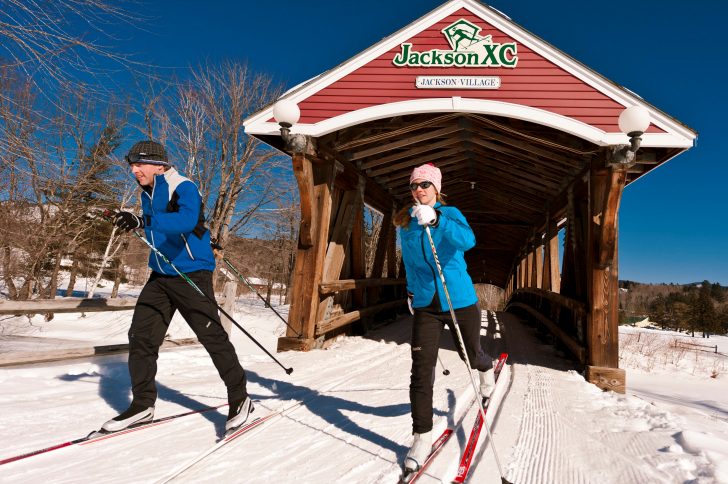
Jackson’s famous covered bridge, a symbol of this charming New England town.
Credit: Jackson Ski Touring Foundation.

[Editor Note: SeniorsSkiing.com thanks Roger Lohr for this update.  XCSkiResorts.com is the premium resource for nordic ski vacation and resort information in North America.]

We excitedly planned a weekend trip to Jackson, N.H., because it is a true Mecca for Nordic skiers. This is the quintessential New England Nordic (XC) skiing experience with a covered bridge, white steepled church, brookside trails, and the accompanying village with all of the trappings.

Many of the trails lead right to the doors of local inns, shops, and restaurants. It’s no wonder that Jackson Ski Touring Foundation has been rated the top cross country ski area in the United States by America’s Best Online and is recognized in numerous polls as a favorite destination.

Abstract art in the woods, a natural gallery creating an unusual setting for art appreciation.
Credit: Roger Lohr

The Foundation is a non-profit organization chartered to maintain XC ski trails in and about the village of Jackson. There are about 76 landowners that allow trails to cross their property. Country inns are spaced throughout the region, and the base lodge is a golf country club located on the village loop. This full service ski center has its own parking area and houses the ski school, rental equipment, and a retail shop run by Gorham Bike & Ski with XC ski equipment, clothing, and accessories. The center has a fireplace with couches and tables and seating. Snacks and drinks are available in the lodge, too.

The Cocoa Cabin is a warming hut serving hot cocoa on the weekend, located three km from the center on the gentle Ellis River Trail. This is a popular trail often with many cautious yet courteous skiers. Snowshoers can take a rustic narrow marked snowshoe trail from the center to reach the Cocoa Cabin, and this trail avoids the ski trail.

Our accommodations were at the Christmas Farm Inn & Spa, which is set on a hillside overlooking Jackson Village. It has the personal touches of a country inn with the amenities of an upscale modern resort. The inn has a full service spa, restaurant and pub, fitness room, indoor pool, family rooms, spacious suites, and handcrafted cottages. We had breakfast there during our visit and scheduled massages at the Inn’s Aveda Spa for some earned relaxation after skiing. After skiing and some massaging, we dined at the Christmas Farm Inn for a scrumptious dinner and dessert.

The next morning, we skied down to town, stopped by the Jackson Ski Touring Center and heard about the Art Along the Trails exhibit staged on trees behind the lodge near the Jackson covered bridge. The lodge was bustling, and we passed hundreds of skiers and snowshoers along the Jackson trails, who were friendly and saying hello as they passed. The art exhibit featured two local abstract painters in a their works displayed with nature. Instead of a white walled art gallery, in its place were “walls” made from snow, hemlocks, and birch, all places for paintings to hang from, and the beneficiaries were on snowshoes and cross country skis.

During the four-hour show, Art Along the Trails was enjoyed by hundreds of cross country skiers and snowshoers, who were instilled with the energy of culture experiencing the avant-garde gallery in nature that included more than two dozen paintings installed on tree trunks and limbs. Prices of the different paintings (some as big as three-by-four feet) ranged from $125 to $2,900. The exhibit had titles such as “Illuminated Icefalls” and “Cosmic Wash”.

We lunched on soup and salad at the Wildcat Inn Tavern in downtown Jackson and stayed for some live music and libations. The tavern walls display classic ski posters and some antique gear such as snowshoes and a pair of red Jarvinen XC skis. The seats in one of the rooms were built to look like double chairlifts, and there were soccer jerseys from around the world pinned to the ceiling.

We browsed at some local retail establishments in Jackson including Flossie’s General Store & Gift Emporium, which has a potpourri of gifts, candy, and local keepsakes.

The Jackson Ski Touring Foundation maintains 154 km of varied and breathtaking XC ski and snowshoe trails and is about two hours north of Boston. Foundation trails connect with A.M.C. trails in Pinkham Notch and White Mountain National Forest backcountry adventure trails.

Here’s a New England classic.  Christmas Farm Inn has a warm, welcoming old-school ambiance as well as many modern touches.  
Credit: Roger Lohr


SeniorsSkiing Guide: Burke Mtn, VT—Basic And Friendly

A Swanky New Hotel On The Mountain Is A Magnet For Those Who Love The Basics.

New hotel offers ski-out access to uncrowded trails.
Credit: Burke Mountain

“Burke is what skiing used to be. It’s back to the basics. We’re just happy here,” says Barb Mader who with husband, Don, ski 80 days a year at this laid-back mountain high in the Northeast Kingdom of Vermont. They stretch the season at Jay Peak, a 45-minute drive to the north.

Barb and Don Mader ski Burke 80 days a season. Barb came back to skiing after a 33 year hiatus.
Credit: Tamsin Venn

Burke Mountain is a place, she notes, where skier etiquette prevails, trails are uncrowded, the ski patrol is laid back, the views are inspirational, everyone is friendly and congregates après-ski at Mid Burke for live music. It’s a place where her three grandchildren learned to ski in the Explorers Program and, “All are great skiers now,” says Barb.

Groomed intermediate cruisers like Willoughby and Dipper are popular as is the winding Deer Run, and the rolling East Bowl. Power Line and The Ledges provide expert skiing, Sherburne Express beginner terrain. Plus Burke has some of the best glade skiing in Vermont—with wide spacing on Caveman and Marshland.

Unfortunately, Burke Mountain has had a rocky few years. The resort, until recently called QBurke, for owner Ariel Quiros, is now under federal receivership. An encouraging step, the managers opened the swanky, on-mountain 116-room Burke Hotel and Conference Center last September. It welcomed the first skiers this winter. It’s a real gem, with easy in and out access, nice units overlooking the slopes or the scenic Willoughby gap, an outdoor heated pool and hot tub, locker room, a ski tuning room for the young racers, and four eateries including the popular Bear Den. Burke’s loyalists hope the resort will find a new owner soon.

Barb Mader, 73, started skiing in the late 1960s, joining the racing Eastern Veterans league. She raced at different areas, lured by the $8 race fee plus a rest-of-day lift ticket. She competed in the famous Burke Mountain Stampede, with a group start of eight to ten racers taking off down Deer Run, onto Dipper, and straight down to Mid Lodge, trying to just to stay in the game, and “getting annihilated” by the Burke Mountain Academy kids. A great party followed at Mid Lodge.

Barb stopped skiing in the 1970s and started again in 2003, despite one replaced shoulder. A year later she and Don, 78, bought a condo at Burke, in one of the mountain’s financial downturns, demonstrating it is never too late to take up an old sport again.

Recently, the Maders have enjoyed the offseason on what some call the best mountain biking network in the country. Kingdom Trails has more than 100 miles of trails, through the woods and across the pastures, by the good graces of more than 50 landowners and businesses.

Burke’s Nordic Center has access to many miles of Kingdom Trails.
Credit: Tamsin Venn

The Facts:

Lift tickets:

Senior (65 plus) $47

Silver Streakers (55 plus): $35 Tuesdays & Thursdays (non-holiday) Judge Pass (70 plus), season pass at Jay Peak and Burke: $279 (if bought by July), no blackout dates.

X-C: Burke Nordic Center, $15; ask about a senior rate.

Vertical: 2,011 feet

Average snowfall: 217 inches

Snowmaking: 70 percent

6 lifts

36 trails and 14 glades

178 skiable acres

Trail Map: Click here


Rustic Elegance with Fairy Tale Flair In Stowe

It’s More Than “Just Right” Just One Mile From Stowe Resort.

Tucked in the woods, this is a cozy cabin. No bears, too!
Credit: Homeaway

In Stowe, Vermont, a stone’s throw from world class downhill and cross country skiing sits quintessentially rustic Goldilock’s Cottage, welcoming overnight guests. When Jill Evarts purchased the cabin and four acres of land about twelve years ago, she didn’t need to do a lot of work on it. She had helped the previous owner, a friend and colleague, decorate it with fine fabrics and purchases from flea markets and antique shops all over the northeast. The cottage is clean and tidy with many amenities that appeal to eye and requirement for comfort.

I found the cottage warm and inviting far beyond the “just right” of the fairy tale. The kitchen is well equipped, and I was able to easily prepare a pasta primavera for dinner. It has the right pots and pans and cooking implements for cooking lots of delicious meals. There is even a small spice rack above the stove. The kitchen/dining area was immaculate and comfortable.

The kitchen has everything you need, bring our own porridge.
Credit: Booking.com

The living area of the open concept cottage was equally welcoming with a wood burning stove in the center. Plenty of seasoned firewood makes using the wood stove quick and easy. The cottage has one bathroom which is also decorated in the theme of the rest of the cottage and I found it clean and complete with all the towels you’ll need.

The Master bedroom, complete with a sitting area and sleep sofa, also have an interior decorator’s touch. . The cottage has a spacious deck off the bedroom and a deck accessible from the dining room complete with Adirondack chairs and a gas grill. Those details make the cottage appealing year round.

A large sleeping loft lies above the kitchen/dining area is decorated in lighter colors to take advantage of the skylights. Jill’s remarks from her cottage fact sheet demonstrate the features that makes Goldilock’s so attractive;

Bears can’t climb ladders to the loft.
Credit: Steve Hines

“For those staying in the loft: open the skylight before you go to bed, and be sure to let the fire burn down so. You won’t be hot. Some guests like to turn the heat down at night and use the space heater to supplement in the bedroom to keep the temperature in the loft cool”

Everything you may want or need seems to be taken care of. Jill agrees that this attention to detail makes her place perfect for active seniors who want a winter (or any other season) getaway. The area does come alive in winter however because of the outdoor sports, great restaurants and shopping.

The cottage is close to Stowe and the location makes it easy to get to the Alpine and Nordic skiing. The rest of the year the Mount Mansfield locale has great hiking, cycling, mountain biking. The many fine restaurants in and near Stowe make dining out a pleasure as well.

While I’m not a fan of grading accommodations, you might like to know I give Goldilocks’s cottage an A+. For more details about dates, rates, and availability, visit the cottage’s web site here.   Ski season rates start at $250 per night (March) and $270 (Feb). Holidays are more.  The cabin can accommodate up to five folks in one bedroom, a sleeping loft and a pull-out couch.

Here’s the Master Bedroom, ultimate cozy.
Credit: Steve Hines


Mirror Lake Inn: A Peaceful Haven In Lake Placid

Activities, Elegance, Extraordinary Service In The Heart Of The Adirondacks.

Mirror Lake Inn has been recognized with AAA Four Diamond Award of Excellence for 32 years in  a row.
Credit: Joan Wallen

I entered the Mirror Lake Inn in Lake Placid through a back door, walked right past the front desk without noticing it, and down the wide staircase. When I ended up at the entrance to the spa, looking somewhat confused, an employee asked if he could help. When I told him I was looking for the registration desk he didn’t just point me in the right direction (which would have been easy to do), he walked me there. This “taking the extra step” set the tone for my stay and proved to be typical of all the Inn employees I encountered. Everyone from the front desk staff, to the bartenders, dining and housekeeping staff had a friendly smile, helpful attitude and genuine interest in my comfort and well-being during my stay. The Inn itself exudes ambiance with its spacious common areas, fireplaces, comfortable furniture and numerous more intimate spaces for reading, relaxing or quiet conversation, all with an Adirondack décor. Tea, coffee and homemade cookies are served daily from 3:30 to 4:30 in the living room so guests can mingle and relax after a day on the slopes, trails, lake or visiting the many Olympic venues throughout the area.

After a $4-million renovation, rooms are looking fantastic.
Credit: Joan Wallen

The Main building houses guest rooms, the spa, fitness center and indoor pool as well as two of the resort’s restaurants – Taste Bistro, casual yet upscale, and The View, Lake Placid’s only four diamond AAA rated restaurant. The Terrace and Mountainview buildings, also housing guest rooms, as well as the Adirondack Conference Center are all connected to the Main building by indoor walkways. The guest rooms are spacious and comfortable with seating areas facing the lake. Their décor reflects the Adirondack theme of the public spaces. The Colonial House and the Lake Cottage are across the road on the water and have more elaborate rooms as well as one and two bedroom suites. Though in general the clientele may be more mature, the suites are well suited for families. One of the unique features of the resort is that all guest rooms face Mirror Lake and therefore offer fantastic views through floor to ceiling windows and sliders. The Cottage Café, also on the lake, serves casual fare for lunch and supper and is a gathering spot for the apres ski crowd.

The Inn has recently completed a $1 million makeover of its renowned spa. With rooms for massage, facial and body treatments, the women’s and men’s sanctuaries include spaces for relaxing and revitalizing, a eucalyptus steam room, sauna, whirlpool, indoor pool, fitness facility and a full service salon. Its reputation as the number one spa in Lake Placid is well deserved.

Mirror Lake itself, only steps from the Inn, offers activities just outside your front door. A groomed ice skating lane follows the perimeter of the lake, a three mile smooth pathway for relaxed skating or vigorous exercise. The Inn maintains a couple of small rinks just in front of the Café while the town has cleared a much larger area across the lake for hockey tournaments and free skating. I encountered cross country skiers and other snowshoers on my trek across the lake, as well as folks just out walking their dogs. A couple of concessionaires offer dogsled rides and a toboggan chute is nearing completion and will open soon. Snowshoes are available for Inn guests use if you don’t have your own.

A short walk brings you to the main street of Lake Placid where you’ll find many shops, from jewelry to outdoor fashion to Adirondack furniture and gourmet goodies. The bar scene is lively and the restaurants in town offer a wide variety of menus. Also located downtown at the Olympic Center are the Olympic Museum and the speed skating oval where you might watch hopefuls practicing or do some skating yourself during public skating hours. And of course, there’s world class alpine and cross country skiing just minutes away at the Olympic venues of Whiteface and Mt. Van Hoevenberg.

Last June the Mirror Lake Inn Resort and Spa accepted the AAA Four Diamond Award of Excellence in lodging for the 32nd year in a row. The View received the same award for fine dining for the ninth consecutive year. The resort’s owners, Ed and Lisa Weibrecht, parents of Olympian Andrew Weibrecht, credit their exceptional staff for these honors. “We have a secret weapon. The secret weapon is all of you, our staff”, Weibrecht told the group assembled at the presentation. I certainly found this to be true. A cheery “hello”, a smiling “how are you this morning”, a helpful “do you need anything”, a warm “what can I get you” greeted me in the parking lot, in the lobby, hallways and restaurants throughout the property. In sum, the Mirror Lake Inn Resort and Spa offers casual elegance in a relaxing atmosphere with enough to do on and off the property to entertain both the most athletic guests and those looking for just a tranquil retreat.

Mirror Lake Inn has an assortment of room choices and package pricing starting at $186 (December 10-March 19) and $137 (March 20-End of Season).  Check the website for the accommodation options.

Mirror Lake Inn is a tasteful and modest spot to relax and enjoy winter sports activities.
Credit: Joan Wallen


Cross-Country At Historic, Cozy PA Lodge

The Lodge At Glendorn Named Number One Resort Hotel In US.

Now this is what a comfy lodge looks like. Winter sports, good food, excellent accommodations at Glendorn.
Credit: Glendorn Resort

When I first said to our friends that we were having my wife’s 50th birthday party several years ago in Bradford, Pa. they cringed and all remarked, “In the middle of the winter in the icebox of Pennsylvania?”  They were sure surprised when they all drove through the wrought iron gates and entered a winter wonderland from yesteryear.

The Lodge at Glendorn not only is a nationally known Relais and Chateaux property, but it was acclaimed by Travel and Leisure as the Number One Resort Hotel in the nation in their recent Best Awards of 2016.  This historic 1500 acre property which abuts the Allegheny National Forest has been lovingly and painstakingly restored by its owner ( and curator) Cliff Forrest and his lovely wife Tracy.

Cross country skiing and snowshoeing on miles of trails is a feature of Glendorn Resort.
Credit: Glendorn

The property was once a retreat created by the oil and gas financier C.G Dorn in 1927 as a place for relaxation for his family.  The original cabins were created for each family member and the spacious log lodge was the central family gathering for dinners and holidays.  In 1995, it was opened to the public and in 2009, the property was up for sale.  Due to the vision of Cliff and Tracy Forrest, they purchased Glendorn and have lovingly restored its original grandeur with 16 luxury cabin and lodge accommodations.

Cliff Forrest, a senior skier, hunter, and golfer, is an active outdoors person who founded Rosebud Mining Co. in 1979.  Rosebud is currently the third largest coal producer in the state as well as the 21st largest producer in the country.  Cliff’s success has made it possible for him to invest in this truly unique property which has many opportunities year round for seniors.

Aside from being an Orvis Endorsed Fly Fishing property, the hiking, and sporting clays opportunities exist year round.  But in our experience, there is nothing as enjoyable or scenic as taking in Glendorn in the winter.  The cozy atmosphere of the cabins and the lodge with the crackling fireplaces and first class cuisine make the winter experience one to remember.  My wife and I have enjoyed Glendorn in the fall with the beautiful leaves of the Allegheny National Forest greeting us along the way, but the snowshoeing and cross country skiing available on the well-marked trails of the resort offer an exercise opportunity that is unparalleled.  All the equipment you would require is available at the resort including cross country skis, snowshoes, and skates.

S’mores by the bonfire on a Saturday night under the stars.
Credit: Glendorn

On Saturday evenings, the resort employees provide a bonfire up at the lake with s’mores and beverages with the opportunity to ice skate.  We also take advantage of the close proximity of Holimont Ski Club which is 40 minutes to the north and is open to the public weekdays for fabulous alpine skiing with the equally famous Lake Erie fluff blowing in and covering the slopes with a light, delightfully pleasant skiing experience.  Ellicottville, New York is the quaint town adjacent to the ski areas with a fabulous brew pub, Ellicottville Brewing, and many other dining establishments and outdoor recreation shops.  Again, it’s an easy drive from Glendorn adding to the total winter experience.  My wife and I have been making it an annual affair for her birthday.  It is truly top rate.

For Reservations and Rates click here or call 1800-843-8568.

Breakfast, lunch and dinner are served in the main lodge and picnic lunches for outdoor activities are available upon request.

Access: Three hour drive from Pittsburgh, PA,  two hours from Buffalo, NY, five hours drive from Philadelphia.

Holimont lift tickets weekdays only: Adult Full Day, $56.00; Seniors( 70+) $50.00 full day.  Groups of 15 of more who register two weeks in advance are offered a $39.00 lift ticket weekdays only.  The property is closed to the public on the weekends unless a club member is a sponsor.  Alternate opportunity is Holiday Valley Resort. 

Photos courtesy of the Lodge at Glendorn


BrettonWoods

SeniorsSkiing Guide: Easy Going At Bretton Woods

Seniors (65-79) Ski For $25 Mid-Week At This Classic NH Gem.

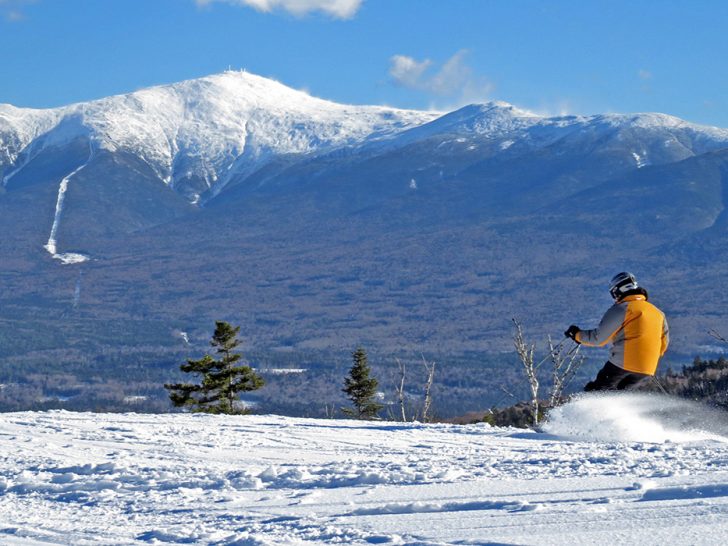
Majestic Mt. Washington is across the valley from Bretton Woods.
Credit: Bretton Woods

Down Cascade, up to Rosebrook Summit, down Upper Swoop, down Cascade, across to Diamond Ridge, down Deception Bowl, up the Bethlehem Express, down Big Ben, up Zephyr High Speed Quad, down Granny’s Grit.

The skiing at Bretton Woods, NH, was so smooth and our trips so fast, that you didn’t have time to think what joint might be aching that day. We were skiing with a group of 50-plusses and one 80-plus, all fabulous skiers with years of experience behind them. The grooming at Bretton Woods yields the best type of New England skiing with manicured slopes, wide open avenues, very hard pack with enough surface snow to grip. We blazed all over the mountain, happily racking up the vertical, on our apps or psyche. Most of the intermediate slopes were open and provided plenty of fun on Rosebrook and West Mountains.

Beautiful, broad skiing avenues make for nice cruising at Bretton Woods.
Credit: Bretton Woods

The overall experience here is a friendly mountain that’s fun to ski. There’s plenty of skiing available for an older person without putting too much pressure on hips and knees. For tree skiers, the glades are fairly open in keeping with the resort’s easy-going nature. In 2012, Bretton Woods added a T-Bar servicing Mount Stickney with 30 acres of more challenging glades. There is plenty of tough terrain on this hill once nick-named Medicare Mountain.

Four high-speed quads keep you going, and on crowded days the lift personnel keep the lines moving in a fair and congenial way.

What that allows you to do is just relax and rip. Plus all trails lead ultimately to the base lodge, minimizing separation anxiety from your ski companions.

Some say Bretton Woods, NH’s largest ski area, is more protected from the weather than other areas. You can always look across at storm clouds unfurling off Mt. Washington (the Northeast’s highest summit at 6,288 feet) and be happy that at least you’re not up there.

Across the street is the giant Omni Mt. Washington Hotel, like an ocean liner cruising across the White Mountains. Plan a visit, if only to stroll through the wide halls under 23-foot ceilings and take in the views of Mt. Washington from the Rosebrook Lounge sipping a cool Chardonnay.

To walk the hotel’s halls and verandas is to stroll through White Mountain history at its most hospitable. Built in 1902, the hotel most notably hosted the 1944 United National Monetary and Financial Conference to build the bones of a post-World War II economy. Walk into the room off the main lobby where the final treaty was signed.

Meanwhile, stretch your downhill muscles on the 62 miles of impeccably groomed X-C trails. They are also open to snowshoeing and fat tire bike riding.

Bottom Line

Seniors 80 years and up ski free any day, and those 65-79 ski for $25 midweek/non-holiday.

Hot Chocolate: $3

Wiser Woods Program

Open to skiers and riders age 50+. This is group ski program under the guidance of an instructor who will coach you down the mountain.  Includes morning refreshments at Slopeside, receive 10% off retail, 10% off demo equipment.

Runs Jan. 3-March 14, Tuesdays 9-12. Meet on Slopeside Level of Base Lodge. $125 per person for the season, $199 per couple.

Mountain Stats

Vertical Drop:  1,500 feet
Trails and Glades: 97
Skiable Acreage:  464
Snowmaking:  92% of Trails
Average Annual Snowfall:  200+ inches

Webcam click here

Trail Maps click here

Bretton Woods boasts a network of well-groomed Nordic trails.
Credit: Bretton Woods

What A Difference A Day Makes

Cross-Country Skiing In Appleton Farms, Ipswich, MA., January 10-11.

January 11, 52 degrees, 12:30 PM

January 10, 28 degrees, 11:30 AM

SeniorsSkiing Guide: Saving Laurel Mountain From Obscurity

Western PA Pioneer Area Comes Back To Full Operation.

Fun Fact: Legendary Hannes Schneider designed the trails at Laurel at around the same time he created Cranmore.
Credit: Laurel Mountain

There has been a lot written about the lost ski areas.  For one reason or another, ski areas sometimes are unable to meet the financial or operational requirements and end up closing the lifts.  They fall into disrepair and end up on a list of lost ski areas forever.  But, there is an exception whose light is burning bright this winter.  Laurel Mountain in the Laurel  Highlands of Western  Pennsylvania will once again be spinning the lifts thanks to a grant from the State of Pennsylvania and the financial and operational input of the major ski area in the region—Seven Springs Mountain Resort.

Laurel’s origins date back to 1939 when Pittsburgh financier Richard King Mellon began to plan a ski area for the enjoyment of the members of the  prestigious Rolling Rock Club.  In alliance with Harvey Gibson who was chairman of Manufacturer’s Trust Company and owner of Cranmore Mountain in New Hampshire, they began building the ski area on the western flank of the Laurel Ridge near Ligonier, Pa.  The design of the mountain was created by the world famous Hannes Schneider who was the inventor of the Arlberg method of ski teaching which is the basis of modern alpine technique.  Schneider was brought to the U.S. by Harvey Gibson and the legendary Austrian ski instructor hiked the Laurel Ridge and designed the trails and the signature Wildcat run which is the steepest run in Pennsylvania.

Soon after World War II, the private resort was opened to the public.  “Ski tow” tickets were $1.25 per day to ride the surface lifts.  Private lessons were $5.00 per hour with instructors trained by the famous mountaineer  Ralph “Doc” DesRoches, a veteran of the 10th Mountain Division and eventual major patron of the US Ski Team. Laurel grew with the post war boom and in 1947, a new lodge was built at the mountain summit. Laurel was soon the home of the Pennsylvania State Ski Championship founded by Edna and Max Dercum of Penn State University where Max was a professor of forestry.

In 1955, a new lift, perhaps the only one of its kind—a Constam T-bar— became the first top to bottom lift eliminating the need for three rope tows to get to the summit.  In 1956, Laurel was among the first ski resorts to install large scale snowmaking.  In 1963, R.K. Mellon and his sister Sarah Scaife gave the ski area to the State of Pennsylvania which began a new era with Poma lifts replacing rope tows and lights for night skiing.  The first chairlift at Laurel was installed in 1968.  After a number of years of state ownership and mounting competition from Seven Springs and Hidden Valley, Laurel fell to financial troubles and had many years of start/stop operation.  In 2004, Seven Springs entered into an agreement to run Laurel Mountain, but, with many improvements deemed necessary, the resort was once again closed.

Seven Springs eventually purchased the assets of Laurel Mountain and soon began to chart a course for operation once again with SE Group as the primary consultant.  With revitalized snowmaking by HKD, reconstruction of the lodge in 2015-2016, and official groundbreaking for a new quad chairlift, the plan for opening for the 2016-2017 ski season was finally a reality.

Laurel is a gem to the local community. The 1000+ members of the web-based group Friends of Laurel Mountain had a lot of influence in the progress of the construction. It is with great pride that the residents of Ligonier and the ski community in general in Western Pennsylvania welcome the historic Laurel Mountain back to the list of operating ski areas in the U.S

Location:

US 30 East, just outside of historic Ligonier, Pa.  Approximately a one and a half-hour drive east of Pittsburgh.

Trail Map: Click here.

Hours of Operation and Ticket Prices:

Sunday –Wednesday- 9:00 AM to 4:00 PM  Tickets $38.00

Thursday-Sunday- 9:00 AM to 9:00 PM – Tickets $53.00

Holidays- $58.00

Preferred Lodging:

Ligonier Country Inn

Call for reservations: 800-916-4339

Dining:

There are many dining establishments in the town of Ligonier including the Ligonier Tavern, my favorite,  just off the town square.

New England Ski Museum Tells 3,000 Years Of Ski History

From The Stone Age To Today.

The tiny museum in Franconia, New Hampshire is located next to Cannon Mountain’s gondola base, and it’s a wonderland. Even before you enter, you’re intrigued by what you see just outside the door and you ask yourself: “What’s that thing?”

New England Ski Museum is located at the base of Cannon Mt., NH. Credit: Harriet Wallis

New England Ski Museum is located at the base of Cannon Mt., NH. Antique gondola car guards entrance. Credit: Harriet Wallis

The big red boxy thing is one of Cannon’s original tram cars from 1938. “Eeegads,” you say. “They went up the mountain in that?”

2-alg-skisThe sled-looking thing was Cranmore Mountain’s idea of an uphill lift. Skiers sat in the sleigh, and it was hauled uphill on a trestle.

Inside the museum, “We show how skis evolved from the stone age — to a slab of wood with a leather strap — to modern skis,” said Executive Director Jeff Leich.

And exhibits show milestones: the 10th Mountain Division, the founding of the National Ski Patrol, and a display of the funky clothes we wore not so long ago.

The museum’s name is misleading. This wonderful Ski Museum happens to be located in New England, but it covers skiing across the country.

And when you’re all revved up, you come face to face with skiing Mt. Washington’s Tuckerman’s Ravine. It’s New England’s highest peak and is known for having the world’s worst weather. Actually, it’s a photo that covers an entire wall, and you feel like you’re right there. It stirs memories of hiking up the trail for hours. Lugging your skis all the way. Then clobbering up the steep slope to make a run for bragging rights.

This museum is a “must see.”

This photo of Tuckerman's Ravine on Mt Washington occupies an entire wall. Credit: NESM

This photo of Tuckerman’s Ravine on Mt Washington occupies an entire wall.
Credit: NESM

Ski Gifts and Collectibles

The NESM online catalog has something for everyone on your gift list. There are books and posters, jewelry, pottery, pillows, belts, children’s gifts and much more. Images are taken from history and will satisfy any skier’s wish list.

These beautiful pillows are

These beautiful pillows capture the spirit of the sport.  There are many other gift ideas in the NESM catalogue.  Credit: New England Ski Museum

Consider membership

Even if you can’t get to the museum, membership brings you a beefy, quarterly, 24-32 page journal full of archaic photos and stories that will keep you inspired and informed. An individual membership is $35 a year.

For more information and to shop the catalog online, check here.

To read more from Harriet click here for her stories on SkiUtah.