Tag Archive for: Appleton Farms

Question For You: Groomed Or Au Naturel?

What Is Your Preference? 

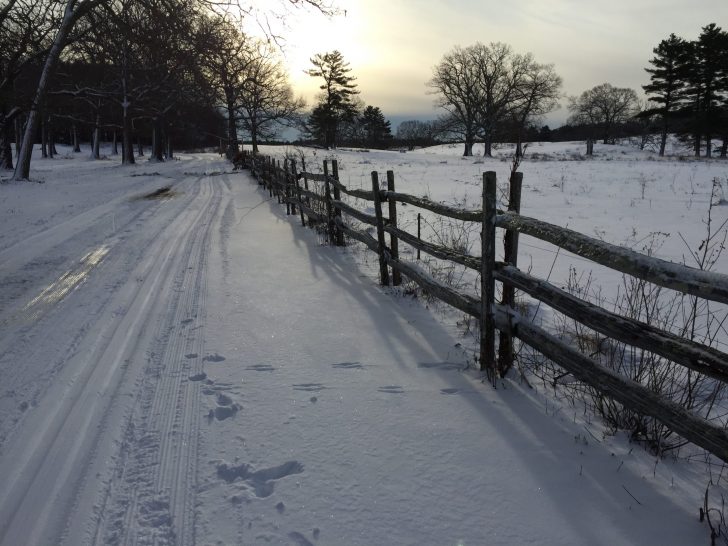
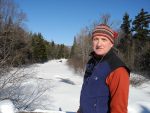
Appleton Farms, Ipswich, MA. Trails are groomed by a volunteer group. Credit: SeniorsSkiing.com

We live across a little country road from a 900-acre conservation property. For years, we’d walk across the road, stumble over the stone wall bordering the street, and plod our way about 20 feet through tree-falls and heavy brush to a trail where we’d put on our xc skis. And then we’d break trail around our favorite loop, eventually meeting up with trails already made by skiers who made it out earlier than us.  Then we’d follow those.

In recent years, North Shore Nordic, a local, volunteer-run non-profit, regularly runs a trail-maker snow mobile around the property, creating perfect, groomed grooves for classic skiing and a corduroy path for xc skaters.  Now, we have the best of both worlds.  To get to the groomed track, we break trail from a remote corner of the property to the main area. We like the groomed trails.  But then, there are the walkers who are enjoying the beautiful snow-filled fields by walking on—and disturbing—the groom. So, hmmm.

And, here’s our question for you:

Do you favor going to a cross country ski area with groomed trails or on a local trail that is not maintained? Do you have a place that is cross country skiing close to home? Is it au naturel or groomed?

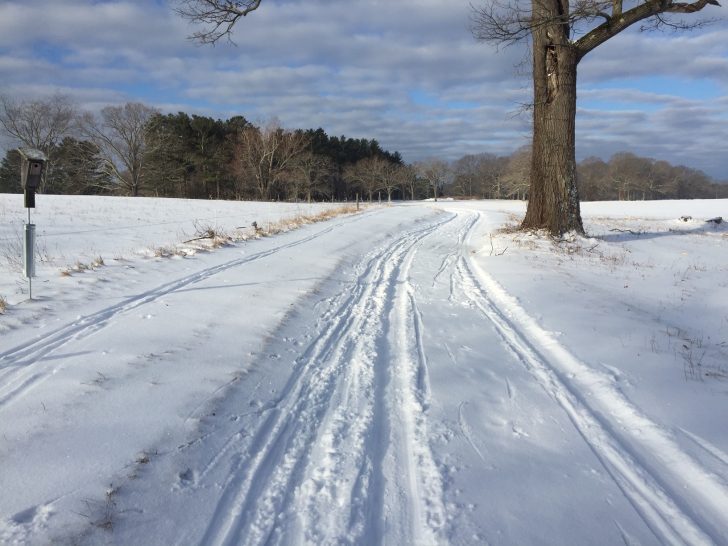
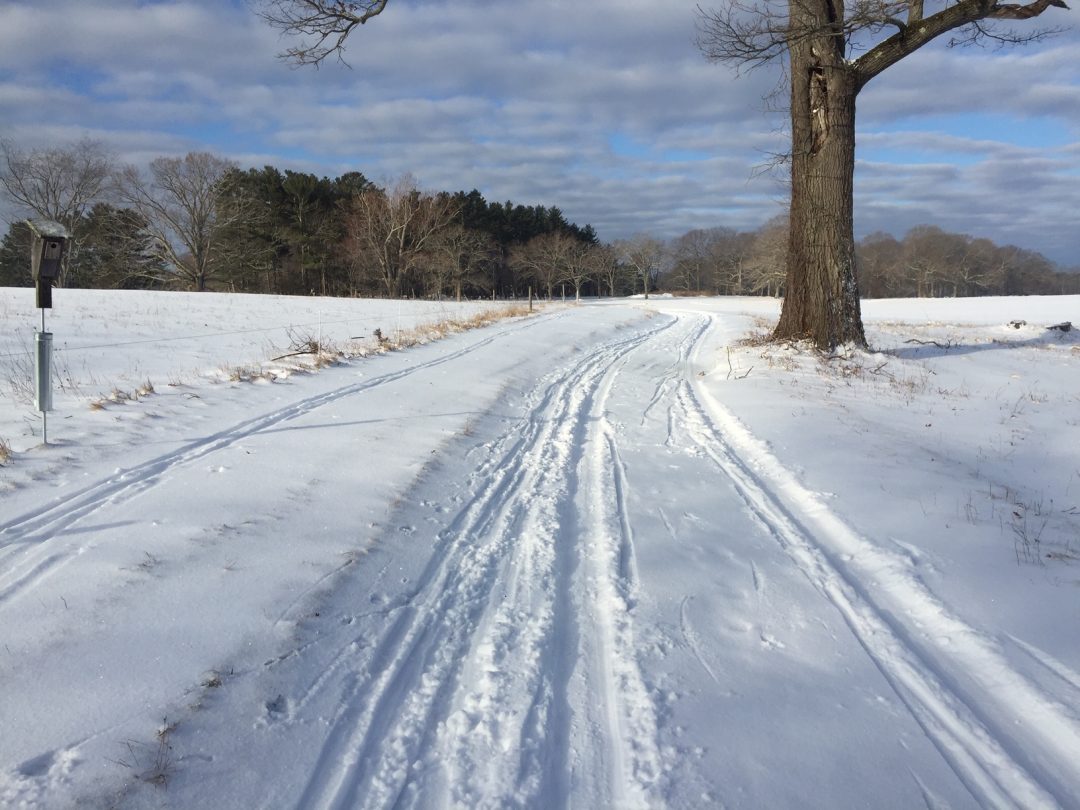
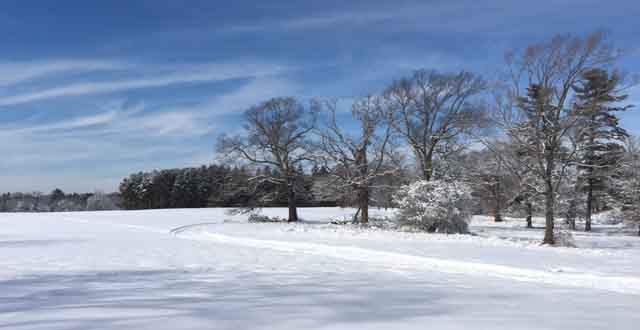
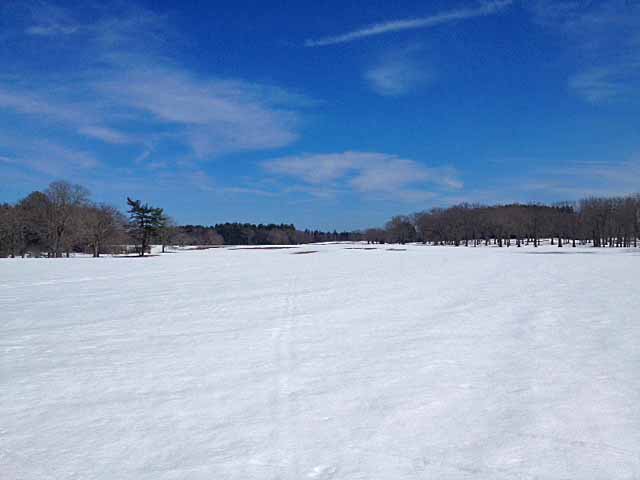
“Au naturel” trail across Appleton Farms field. Credit: SeniorsSkiing.com

Snow In Literature: The Winter’s Spring

By John Clare (1793-1864)

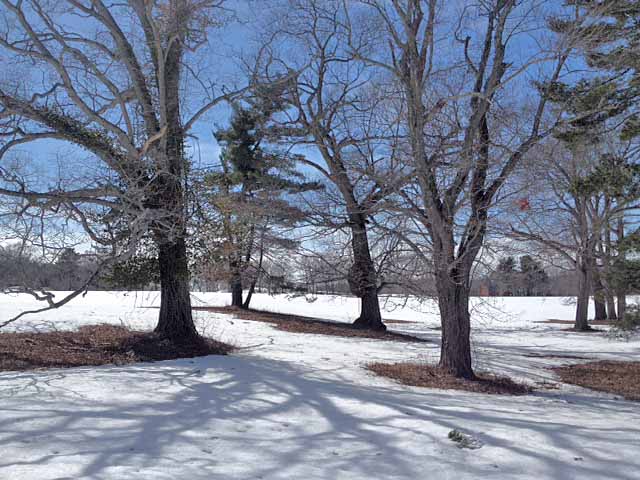
Appleton Farms, Ipswich/Hamilton, MA. Credit: Mike Maginn

The winter comes; I walk alone,

I want no bird to sing;

Tho those who keep their hearts their own

The winter is the spring.

No flowers to please—no bees to hum—

The coming spring’s already come.


I never want the Christmas rose

To come before its time;

The season, each as God bestows,

Are simple and sublime.

I love to see the snowstorm hing’

‘Tis but the winter garb of spring,


I never want the grass to bloom:

The snowstorms’ best in white.

I love to see the tempest come

And love its piercing light.

The dazzled eyes that love to cling

O’er snow-white meadows sees this spring.


I love the snow, the crumpling snow

That hands on everything,

It covers everything below

Like white dove’s drooding wind,

A landscape to the aching sight,

A vast expanse of dazzling light.


It is the foliage of the woods

That winters bring—the dress,

White Easter of the year in bud,

That makes the winter Spring.

The frost and snow his posies bring,

Nature’s white spurts of the spring.

Appleton Farms, Ipswich/Hamilton, MA. Credit: Mike Maginn

In Praise Of Urban Wilderness

Find Winter Activity Opportunities Close To Home.

Let’s define what we mean by Urban Wilderness:

  • Open space – wetland, meadow, and/or forested land.
  • Owned by a public entity
  • No parking or entrance fees
  • No visual pollution
  • Offers “peace and quiet”
  • Accessible by either car or public transportation from the nearby urban center
  • Offers a variety of activities (year-round)

Urban Wildernesses can be found in or close to many city centers. The point is that you don’t have to venture into the mountains to find winter recreation; it’s often just a short ride away. All you have to do is find them.

Here are two examples, one from the Boston Area, the other from Portland, OR.  What are your favorite Urban Wildernesses?

Around Boston

Hard to believe this view of Middlesex Fells Reservation is only a few miles from downtown Boston.
Credit: Commonwealth of Mass

Near Boston, MA is the Middlesex Fells Reservation. “The Fells” has borders in four near Boston suburbs; Medford, Winchester, Stoneham and Melrose. It’s 2,575 acres bisected by Interstate I-93. The east side of I-93 is more developed. The west side of I-93 is less developed with a border road and some homes along the road on the opposite side from the Fells. Nevertheless, the west side provides more of a wilderness feel.

Several ponds act as a water supply to the town of Winchester. The Fells have a good number of trails for mountain biking, hiking, snowshoeing, x-c skiing (ungroomed) and trail running including:

Skyline Trail

The 6.9 mile Skyline Trail follows the outer perimeter of the western Fells. There are spectacular views of Boston and the surrounding area. Most of the Skyline trail is in wooded landscape, with several steep ascents to rocky outcrops.

Reservoir Trail

The 5.2 mile Reservoir Trail encircles the north, middle and south reservoirs, and the open water can be seen from many sites (the reservoirs are for drinking water, so access to them is prohibited).

Cross Fells Trail

Beginning in the western Fells near the Medford High School, the 4.5 mile Cross Fells Trail gives a good sampling of the features of the Reservation, from wetlands at Whitmore Brook to open water at Quarter Mile Pond in the eastern Fells, to views at Cairn Hill. Use caution crossing South Border Road, Route 28, Woodland Road and the Fellsway.

For more information about Middlesex Fells Reservation, click here.

In the Boston area, there’s also Walden Pond, site of Thoreau’s cabin, in Concord, and Appleton Farms, a 900 plus acre working farm established in 1638, in Ipswich.

Here’s a brief description of a ski tour around Walden Pond.

And here’s what it’s like cross-country skiing at Appleton Farms.

Around Portland, OR

Forest Park is practically in downtown Portland, OR.
Credit: Forest Park Conservancy

At 5,157 acres, Forest Park in Portland, Oregon is one of the largest urban forests in the United States. With more than 80 miles of trails, Forest Park stretches for more than seven miles along the eastern slope of the Tualatin Mountains, at the convergence of the Columbia and Willamette Rivers. As stated in the park’s website, “Forest Park offers an unparalleled opportunity for visitors to experience a true Northwest forest without leaving the Portland city limits.” Forest Park immediately came to mind as an archetypical urban wilderness.

Activities along the 80 miles of trails include:

  • Horseback riding
  • Hiking
  • Cycling/mountain biking
  • Running – trail and road
  • X-C Skiing, Snow Shoeing (when and if it snows)*

Among the park’s trails are:

Ridge Trail

Trailhead access for the Ridge Trail, which is only open to pedestrian use. To find the trailhead, park at the obvious pullout on the way down Bridge Ave (heading toward Portland). You will then need to walk back up Bridge Ave roughly .2 mile to find the actual trailhead.

The Wildwood Trail

30.2 breathtaking miles, from the southern end of the trail at the Vietnam Veterans Memorial in Washington Park to the Northwest terminus of the trail at Newberry Road.

*The city of Portland averages only 4.3 inches of snow a year, so winter activities are the often same as activities the rest of the year. But, what a place to get you in shape for skiing on Mt. Hood only 50 miles from downtown Portland!

For more information about Forest Park, click here:

Please tell us your favorite urban wilderness. What makes it special to you?

SeniorsSkiing Guide: History All Around At Appleton Farms

Boston’s North Shore Has A Peaceful Place For Senior Nordic Skiing Or Snowshoeing.

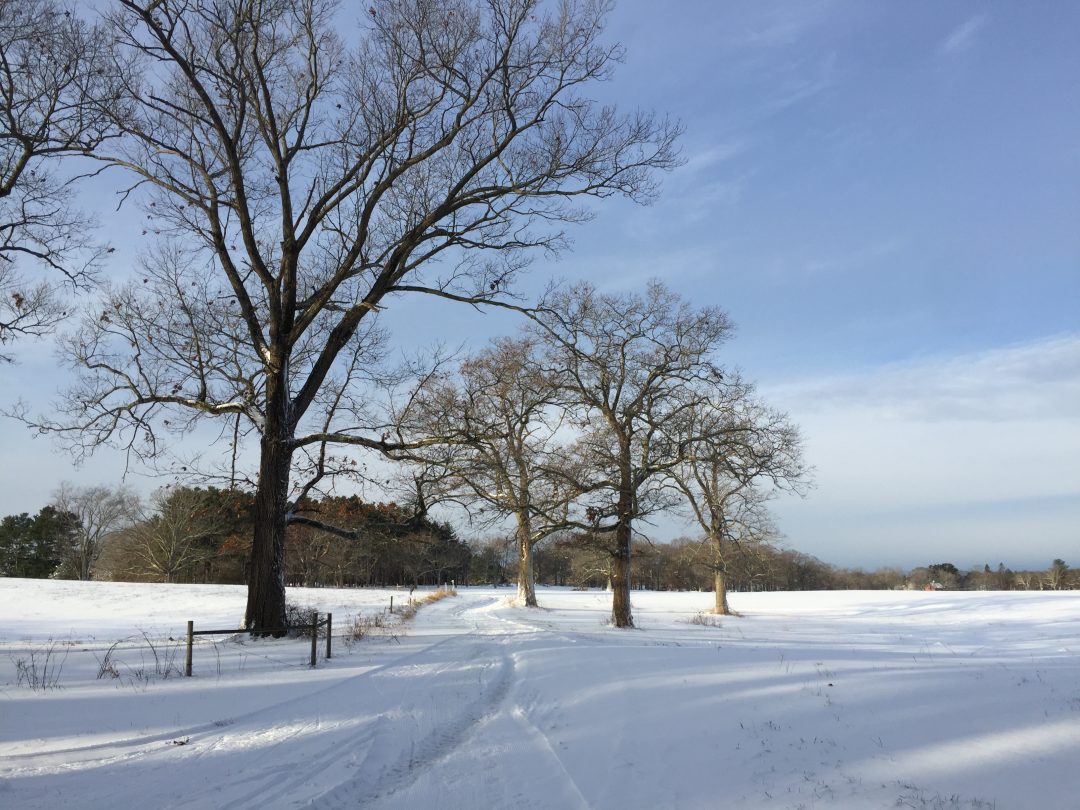
Skiing in open fields under a bluebird sky at Appleton Farms, Ipswich, MA is about as good as it gets. Credit: SeniorsSkiing

Skiing in open fields under a bluebird sky at Appleton Farms, Ipswich, MA is about as good as it gets.
Credit: SeniorsSkiing

We cross the road and climb over the stone wall into a grove of trees, walking a few yards to a trail. Stepping into our skis, we take a look around; we are in the woods, frosty air, untracked trail ahead. No one around but us. Off we go to our favorite loop around The Farms, a very special place to ski, snowshoe or walk.

History and Setting

In 1638, Charles I gave Samuel Appleton a grant of land on Boston’s North Shore. Since then, Appleton Farms has continuously been a bona fide, 1,000-acre farm, first run by the Appleton family and now under the care of the Trustees of Reservations, a land conservancy in Massachusetts. Appleton straddles the border between Ipswich and Hamilton, MA., in the heart of equestrian estate country. When it snows, the open fields and pastures and windy trails welcome snow sports enthusiasts. For cross-country skiers and snowshoers, Appleton is a trip through beautiful vistas and historical artifacts of a 377-year-old property what has remained more or less intact since colonial days.

Terrain

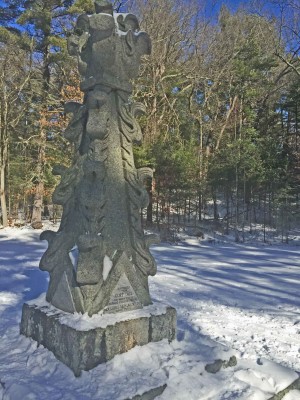
A pinnacle from Gore Hall, former library at Harvard. The Appleton family had close ties. Credit: SeniorsSkiing

A pinnacle from Gore Hall, former library at Harvard. The Appleton family had close ties.
Credit: SeniorsSkiing

There are two sections to the farms: The working farm itself with big fields and tractor roads, and the Grass Rides, a spoke-and-hub networks of trails arranged around one of the four pinnacles from Gore Hall, the former library at Harvard University.  The three others are scattered in strategic points around the property. It’s fun finding them.

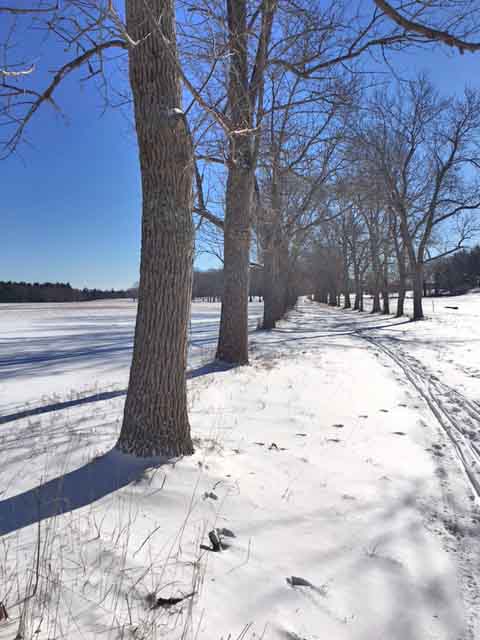
Generations of Appletons created a country estate with long allées—parallel rows of linden trees—that were used for carriage and horse riding. They make perfect ski trails. On the farm side is the Great Pasture, a 133-acre field that is reportedly the largest piece of open land left in Massachusetts, historic farm buildings and the restored main house, plus a dairy that sells milk and cheese from the farm’s herd and much more. Skiing through these big, open fields on a bluebird day is what keeps bringing people back to the sport; it’s quite a restorative experience. The Grass Rides network wanders through marsh and hillside settings where birds and wildlife abound.

This year, North Shore Nordic Association, a new community group, is using a snowmobile groomer to create trail loops around the property. A groomed track really helps with traction and glide, taking away need to break trail.

Why Seniors?

Seniors will find the relatively flat terrain at the Farms easy to ski or snowshoe. On a weekday, you will find the trails to yourself. Indulge your photography hobby or bring a lunch in your backpack and enjoy the quiet. If you’d like slightly more challenging terrain, the Grass Rides has some ups and downs, but nothing that is too aggressive. The Farms restricts visits to humans only, while the Grass Rides is a popular place for dog walking, even in the winter. Doggies tend to disrupt ski tracks, so get to the Grass Rides early if you go. Access to the trails is easy. Just park and put on your skis, no walking. Visit if you’re passing through, in town for a wedding, heading to or from ski areas in New Hampshire or Maine or just looking for something different.

Appleton's famous Allees, formerly carriage paths, make perfect ski trails. Credit: SeniorsSkiing

Appleton’s famous Allees, formerly carriage paths, make perfect ski trails.
Credit: SeniorsSkiing

Bottom Line:

If you are member of the Trustees of Reservations, access to Appleton’s is free. Non-members pay $5 per car at the solar powered kiosks in the parking areas.

If you are coming from away, you can find lodging in Ipswich and Hamilton where there are archetypical country inns. The Trustees also maintain an inn at the Crane Estate, down by the beach. Skiing on the beach in the winter is another story for another time.

Trail Map


The Last Loop: Snow Leaves The Field, Enter Spring

A final ski tour at Appleton Farms reveals winter letting go.

GWBSR

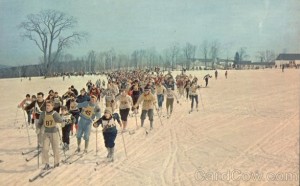
1970 Washington Birthday Race start. Everyone goes at once. Credit: Lewis R. Brown via CardCow.com

It is that special interim period here in New England between the end of winter and the start of spring.  Last week, we headed out across the corn snow at Appleton Farms in Ipswich, MA., in the bright, and, yes, warm sunlight.  We recalled the first time we skied around the edges of farm fields, way back in 1970 when we stayed at the Whetstone Inn in Marlboro, VT.  We were there for the Great Washington Birthday Race, an annual “people’s race” at the Putney School started and run by the legendary cross-country racer and coach John Caldwell.  In those days, hundreds of skiers came to Vermont for what must have been the defining event of Nordic skiing in the United States.  Modeled after the famous Vassaloppet race in Sweden, the massive starting line stretched across a hay field and, when the gun sounded, it was off you went.  We remember skiing along with the then-movie critic of the New York Post, an older chap who said he skied around the field behind his house in Westchester every morning before heading into work.  We also remember struggling in dead last in that race along with a couple of other members from the then-staff of SKIING magazine, our wax long worn off, but still laughing at our disastrous first-time-ever trying cross-country skis.

Snow is hanging on this year, melting slowly but inevitably, starting with the trees. Credit: Mike Maginn

Snow is hanging on this year, melting slowly but inevitably, starting with the trees.
Credit: Mike Maginn

These thoughts came back as we went around that big field at Appleton’s.  For a long time, we favored wooden skis, woolen sweaters and wax potions; these days, we go waxless and polypropylene.  But the pleasure of being in the sun, noticing the melt around the edges, and the rhythm of planting pole, gliding, planting was the same as ever. As the snow rolls back and the sun comes in and out, Robert Frost’s Two Tramps In Mud Time came to us. This verse hits home:

The sun was warm, but the wind was chill. You know how it is with an April day.
When the sun is out and the wind is still, you’re one month on in the middle of May.
But if you so much as dare to speak, a cloud comes over the sunlit arch,
A wind comes off a frozen peak, and you’re two months back in the middle of March.

Sunny day, springtime snow, skiing across the field at Appleton Farms, Ipswich. Credit: Mike Maginn

Sunny day, springtime snow, skiing across the field at Appleton Farms, Ipswich.
Credit: Mike Maginn

Contemplative Ski Tour Around Appleton Farms

The Road Not Taken By Robert Frost

Two roads diverged in a yellow wood,
And sorry I could not travel both
And be one traveler, long I stood
And looked down one as far as I could
To where it bent in the undergrowth;

Appleton Farms, Ipswich, MA. Credit: SeniorsSkiing

Appleton Farms, Ipswich, MA.
Credit: SeniorsSkiing

Then took the other, as just as fair,
And having perhaps the better claim,
Because it was grassy and wanted wear;
Though as for that the passing there
Had worn them really about the same,
And both that morning equally lay
In leaves no step had trodden black.
Oh, I kept the first for another day!
Yet knowing how way leads on to way,
I doubted if I should ever come back.
I shall be telling this with a sigh
Somewhere ages and ages hence:
Two roads diverged in a wood, and I—
I took the one less traveled by,
And that has made all the difference.
Appleton Farms is a 900-acre property owned by the Trustees of Reservations on Boston’s North Shore in the historic town of Ipswich.  The farm had been the Appleton family since 1636, granted to them by Charles I.  It was deeded to the TOR in 1998. Many of the buildings have been restored, and the farm is producing crops for the local community.  The cross country skiing is magnificent, parking is plentiful, and the quiet is most welcome.

Great Pasture, Appleton Farms, Ipswich, MA. Credit: SeniorsSkiing

Great Pasture, Appleton Farms, Ipswich, MA.
Credit: SeniorsSkiing