Tag Archive for: Harriet Wallis

Tribute to Harriet Wallis

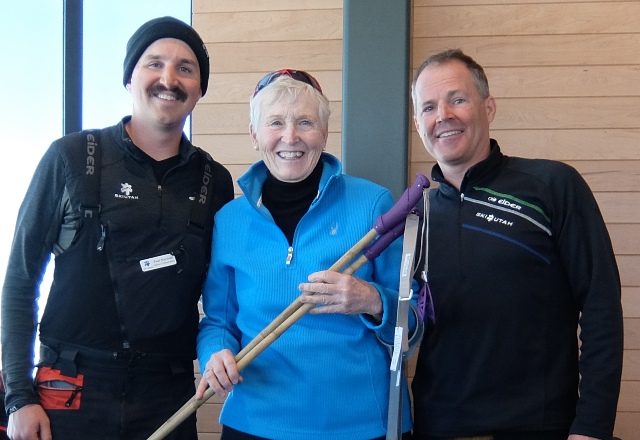
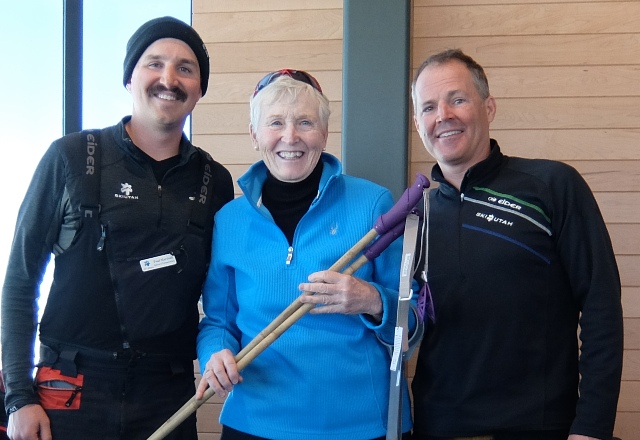
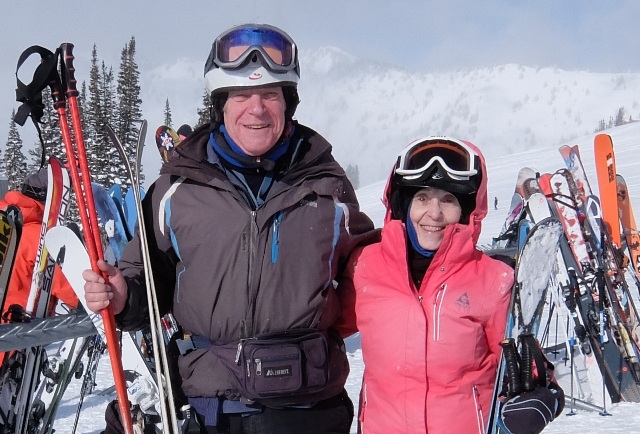
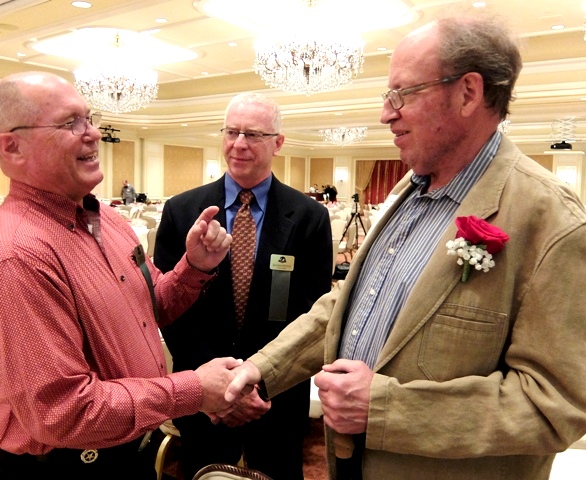
“A fighter, a writer, an avid skier and an optimist—nothing stops Harriet.” Harriet Wallis (center) was twice awarded Ski Utah Journalist Of Year. Shown with Ski Utah Communications Director Paul Marshall (left) and Ski Utah Director Nathan Rafferty. Credit: Pam Weisberg

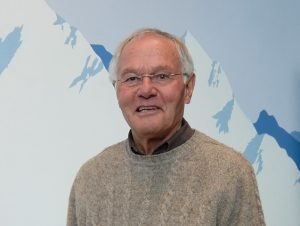
It is with great sadness that we learned of the recent passing of one of our most popular contributors, Harriet Wallis. She was a longtime ski writer, editor and photographer. In 2016, Harriet earned Ski Utah’s top award – Journalist of the Year – for outstanding and consistent ski stories and photos about skiing in Utah.  She had 64 stories and 71 photos published that year in a variety of publications, including SeniorsSkiing.com. It’s the second time she earned the award.

Earlier this year, Harriet was featured in a local newspaper article aptly titled “A fighter, a writer, an avid skier and an optimist—nothing stops Harriet.”  Her indomitable spirit was a great inspiration to family and friends. Below are 3 lessons she shared with family and friends in one of her annual Christmas letters.

Adapt
They said I’d never be the same after chemo. They were right.There are lots of things I can’t do as I did in the past. I have 2 choices: Quit – or tackle challenges. Quitters never win. So accept reality, make changes & find new ways to do things.

Be positive
The best way to go forward is to quit looking in the rear view mirror. Don’t talk about pain or difficulties.
That gives credibility to the negative – and the negative will eat you alive. Look forward – only forward.

Be super good to the machine
The body is a healing machine if you give it a chance. Eat extra healthy. Fill the tank daily with water. Lube the moving parts (exercise) & pump fresh air through the system.

Harriet always managed to convey her enthusiasm and cheer in every article. Look for her previous articles to be reposted throughout this season.  She will be missed. 

Trailside Porcupine Becomes A Celebrity


That’s one sharp porcupine. Credit: Laurie O’Connor

Skiers nimbly dodged a porcupine as he wallowed through deep snow to cross Alta’s ski slope. Some stopped to watch the prickly fellow tumble into a tree well and then start to climb. That’s all there was to see. The show was over. He was as prickly as the evergreen so his camouflage was perfect. He virtually disappeared.

But porcupine puns spiked when someone asked: “Why did the porcupine cross the trail?”

“He was looking for love,” said one.

“There was no point to staying where he was,” said another.

And the jokes continued …

“Something was needling him.”

“Because he didn’t want anybody to get stuck waiting for him.”

“He pined for a different tree.”

Needle-less to say, to get to the other side.”

“His friends kept calling him slow-poke.”

“Where there’s a quill there’s a way.”

Most rodents don’t get such laughable attention. Do you have a porcupine pun to add?

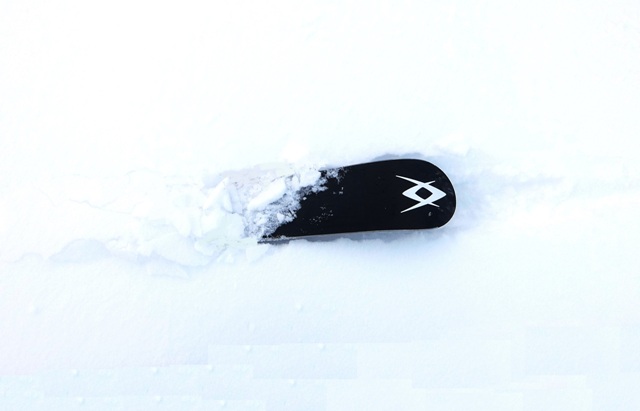
Looking down from a chairlift, porcupine tracks are easy to identify. Tracks look like they were made by a tiny snowboard. Porcupines can weigh 12–35 pounds, and their quills detach easily if touched. They’re the third largest rodent in the world after the beaver and South America’s capybara. Porcupines crave salt, and when we lived in New England they were known to eat outhouse toilet seats for traces of salt left by human bottoms. And to get road salt they’d chew the tires off hikers’ cars parked overnight at remote trailheads.


Don’t Tell Me To Stay Home

How I Was Reinvented As An Athlete.

Riding the rope. Harriet’s daughter Alison, 5, in leather boots and wooden skis on Jiminy Peak’s rope tow. Credit: Harriet Wallis

I learned to ski on a dare. Actually, it was a threat.

When my husband announced he was going to learn to ski, I gulped. I thought skiing was something crazy people in the other side of the world did, but not here in Connecticut.

“You’re going to do what?” I asked. “How are you going to learn to ski?”

“I read a learn-to-ski book, and I’m going to do it,” he said.

I was still processing that concept when he added, “And you can babysit the kids.”

I was being told to stay home and take care of the kids while he was going off to learn some stupid sport. That was the last straw.

“Whatever this ski-thing is, we’re all going to learn to ski,” I insisted. “You, me, and the kids.”

It was the early 70s and equipment was changing rapidly. Plastic boots were making a hit, and leather boots were cheap at ski swaps. We outfitted all four of us – boots, boot carriers, wooden skis, poles, and a few jackets – for under $100. Lessons got us started, and we spent many Saturdays practicing wedge turns from Jiminy Peak’s free rope tow. The sport was beginning to stick.

As for me, I didn’t know I was athletic until I learned to ski. I was in my 30s with two children. Back in high school gym class, I was always the last one picked when they chose teams. I wasn’t even chosen. I was the last one standing there and the gym teacher would say: “Harriet, go over to that team.”  I just wasn’t very good at team sports: volleyball, basketball, or softball. But when I learned to ski, I was reinvented as an athlete.

And that has stuck too.

Short Swings!

This season will favor those living close to the mountain. Older skiers who aren’t a short walk or reasonable drive away probably will avoid the hassle and risk of commercial flights to get there. They’ll spend more time on local slopes. 

Currently, we’re in our place several miles north of New York City. The closest reasonable skiing is about 2.5 hours to the north where there are several areas with vertical drops ranging from 1,100’ to 1.600’. 

Which got me thinking: how much vertical feet is needed for a satisfying day of skiing?

I posed the question to several skiing friends around the country. Their responses offer insight into what makes us happy about the sport.

Travel Writer Roger Toll, 75, lived in Park City and Santa Fe and has been skiing for 60 years. In his 60s his daily diet ranged from 20k’ to 40k’. When he moved from Park City to New Mexico, he was lured by free skiing at Ski Santa Fe, an area with about 1,200’. Enjoyable as he found some parts of the mountain, its 1,200’ vertical entertained him for about 10 runs or 12k’; “…enough to have a great day, especially when it’s free.”

At the other end of the country, Howard Vipler finds skiing Hunter Mountain’s 1,600’ satisfying but generally calls it quits by noon. He retired from Hunter’s Ski Patrol after 40 seasons there, so he knows where to find fewer people and better conditions. Even so, for him, 1600’ has it limitations.

Back to the west, where Dick Chapman,  retired pain researcher of international renown, skis Wolf Creek in Southwestern Colorado. Dick was 58 when he started. He’s now 76.  Wolf Creek has about the same vertical as Hunter Mountain, but far more snow. Its tagline: “The Most Snow in Colorado.” Dick’s measure for a satisfying day on the hill isn’t vertical. He writes, “Fun is skiing at the edge of my ability and successfully meeting little challenges.”

Now to Colorado’s I-70 corridor and Vail, where David Orlinsky books a minimum of 10 runs and/or 15,000’ to qualify for a satisfying day on the hill. Having skied with him, I know that’s an understatement. Over the past two decades, the retired businessman has averaged one million vertical feet per season!

One state over, in Utah, Jan Brunvand and Harriet Wallace have different takes on what it means to have a satisfying day. Their names often appear with their SeniorsSkiing.com articles.

Jan, professor emeritus of English at the University of Utah and widely recognized as popularizing the concept of the “urban legend,” doesn’t count daily vert. At 87, he requires skiing a minimum of five runs in order to log the day. Usually he’s in the 7-10 run range. I’ve taken a few runs with Jan and hope I’ll be as graceful and having as much fun when I’m 87.

I’ve also skied with Harriet, 80, whose optimistic outlook is infectious. As she explains it, “It’s not about vertical. It’s about being outdoors…dancing down the slope…blue skies and whiteouts. It’s all about friends, no app needed.”

There were several other responses which I’ll try to include in a future column. I’d like to hear what you think makes for a satisfying day on the hill. Please post a comment or drop me a line: jon@seniorsskiing.com.

Your Six Words About This Season

Hemingway may have started this form. Six words that express a thought. What six words express this season? Send your entries to jon@seniorsskiing.com, please. Planning to select some good ones. Author credits will appear with each. Reminder: six words about this season. I came up with the following. “Escaping Covid. Skiing in my mind.”

Covid Victim: Ski Patroller Beards

Before/After: Arapahoe Basin Patroller, Thomas Olsen, Credit…Ian Zinner/Arapahoe Basin Ski Area

It’s all about getting a proper fit for masks, and it’s changing the traditional face of male ski patrollers. As this recent New York Times article explains, patrollers’ beards are going, going, gone!

Big White Ski Resort, BC Pulling Anti-Maskers’ Passes

British Columbia’s third-largest ski resort is ending skiing privileges for pass holders refusing to wear masks. First offenders lose a week; second offenders, a month. “It’s pretty simple, if they don’t wear their mask, we pull their pass. Once we told them they lose their skiing privileges, the argument stopped pretty quick,” said  Michael Ballingall, senior vice president, Big White Ski Resort.

Crans Montana HotelPass

Here’s a Swiss lift ticket concept, US areas might consider: Crans Montana, the large, seniors and family-friendly Swiss ski resort has a new HotelPass allowing those lodging in participating hotels to purchase last minute lift passes at deep discounts. No advance reservations. Total flexibility of when to use. Click here for more info on the HotelPass. Participating Crans Montana hotels also have new, highly flexible cancellation policies.

Final Laps on the Covid Track

We’re taking the final laps before crossing the vaccine finish line. Do what you need to do to avoid getting infected. If you already have been or are, do whatever you can to get well. Above all: Think positive. Test negative.

One Of The Best Short Ski Films…

The Chairlift is one of the best short ski films to date. A little over 12 minutes, it’s an homage to the chairlift and it’s unique culture. A production of Salomon, which released it a few days ago. 

SeniorsSkiing.com Email Blasts

You’ll start receiving occasional emails from some of our advertisers. Each will be relevant to skiing and related topics. SeniorsSkiing.com will distribute the emails; we don’t sell our list or your email addresses to third parties. We hope you’ll find them of interest.


Senior Small Group Ski Week With Lodging Right On Uncrowded Powder Mountain

Plan Now For Next Winter

Seniors participating in Life Elevated Utah having fun and acting silly for the camera. Credit: Harriet Wallis

Gary and Sandy Nielsen have run Road Scholar programs in Utah for about 20 years. They’re experts at planning and organizing week-long programs including Hopi pottery, dinosaurs and rock hounding in summer—and the very popular senior ski program in winter.

But several years ago as the demand for more senior ski weeks kept growing, Gary and Sandy responded with an idea of their own. They created new, small group ski weeks especially for seniors, and they base the programs at Powder Mountain. It’s ski weeks with all the trimmings.

Gary and Sandy cookin’ up Eggs Benedict for breakfast. Credit: Harriet Wallis

Gary invited me to experience the program. As I entered the little lodge’s great room, the first thing I saw was an inviting table with every beverage a tired skier could want: refreshing lemon water, coffee, tea, cocoa, a selection of wine with nice glasses, and plenty of cold beer in the fridge. Such enormous hospitality! As the skiers came in, they chose a beverage and settled into the sofas to retell the day’s adventures. And that was just the beginning.

When it came time for dinner, we gathered around a beautifully set table and enjoyed huge portions of roast salmon, fresh asparagus, baked potatoes, and a crisp tossed salad. There are seconds! Then came dessert: steaming homemade peach cobbler topped with vanilla ice cream. Gary and Sandy love to cook. Every meal was just as spectacular.

“When Gary and Sandy run a program, I know it’s going to be good,” said Henry, a repeat skier.

About The Programs

Gary explained how the ski weeks work. “Powder Mountain is known as ‘Utah’s Best Kept Secret’ and through our nonprofit organization called Life Elevated Utah,” we have been running week-long ski programs for older skiers between the ages of 60-90+ for the past few years.

“We stay right at the base of the mountain in a comfortable 1980s style lodge. This is a true ski-in, a ski-out experience in which our older skiers simply love. We only have five hotel rooms, each with a private bathroom. The rooms have great views of the slopes looking out from each room’s patio doors.

“Our programs are six days of skiing Monday-Saturday with programs beginning and ending each Sunday. We provide transportation to/from SLC Airport, cover seven nights lodging, prepare three delicious meals a day for our small ski groups in our kitchen in the lodge. We help set up ski lessons, mountain tours, and many other ski amenities,” he said.

“I know they really care about me,” said Kathy, a repeat skier. They make sure every detail is just right. This program has just the right number of people, but not too many. I used to do all the ski trip planning when my family was young, but this is so much better. They take care of everything.”

Life’s Lessons Achieved

Gary was one of five children, and it was a family rule that when you turned eight years old you learned how to cook dinners for the family. The cooking lessons stuck, and along the way he developed a specialty catering business. “Chef” is in his soul.

Travel planning has also been in his soul since he was young, and he’s skilled at it. He has degrees in Recreation Management, specializing in travel and tours, and a degree in Business Management. It all fits together.

Looking To Next Season

This really is a best kept secret. Gary and Sandy don’t have a website. So,  to get information for next year’s Powder Mountain senior ski weeks, email gary@lifeelevatedutah.org

Seniors like to ski with seniors, but finding a program is as difficult as looking for a Yeti. Interestingly, Road Scholar has eliminated all western downhill ski programs for 2021. Just one ski eastern Road Scholar program continues.

Small group of seniors on big Powder Mountain: 8,400 acres with 154 trails. Credit: Harriet Wallis

70+ Ski Club: Ski Trips, Fun, And Camaraderie

You Are Never Too Old To Be Young.

70+ Ski Club group photo. The club ventures to US, European, and this year, New Zealand resorts. Credit: 70+ Ski Club

Ski clubs have been around ever since people strapped skis on for fun. But the 70+ Ski Club has a unique niche. It’s the only ski club for skiers – and boarders – who are at least 70 years old. 

People often give up skiing when their spouse passes away or when they simply run out of friends to ski with. The 70+ Ski Club fills the need and serves up week long ski trips and also short events so skiers can make new friends and find new ski buddies.

Red and Jim: Newfound friends become new ski buddies. Credit: Harriet Wallis

This winter, the Club’s week-long international trips included the French Alps, Vermont’s Okemo, Big Sky, Banff/Lake Louise, and Utah, where they skied a different resort every day. And the season isn’t over when the snow melts here. The Club is scheduled to go down under to ski New Zealand this summer.

There are shorter jaunts and day events especially in the Mid-West and New England. While the mountains might not be as big, the game is on with new trails to explore, ski clinics, race clinics, good natured events, and apres ski parties.

At a time when our doctors are urging us to be active, the 70+ Club members already have the message. They continue to be active skiers and they engage in living life to the fullest. Becoming 70 is just the beginning. Many members are in their 80s and 90s and even a few at 100. As the saying goes: “You’re never too old to be young.”

The Club was launched 43 years ago, in 1977, by Lloyd Lambert, an enthusiastic and accomplished skier and patroller who saw the need to keep skiers skiing as they grew older. He urged ski resorts to give discounts to older skiers. And he helped turn the tide from skiing being a sport for the adventurous young into a lifelong sport for all. The Club started with 37 members and has grown to 3,000 members.

Today, grandson Richard Lambert heads the Club and plans the trips. He gets universal praise for his thoughtful preparation and well organized trips.

I asked very modest Richard to say something about the Club for this story. Instead, he sent a note he received from skier who met some of the 70+ers.

It said: “Met several of your members and would love to be part of this amazing group. I vow not to adapt to a sedentary lifestyle and this group is an inspiration. I plan to wear out, not rust out. The enthusiasm of the group is contagious.”

Membership includes a distinctive 70+ (or 80+, 90+, or 100+) jacket patch, a helmet decal, a lapel pin, a list of ski areas that offer seniors free or discounted skiing, a twice annual newsletter, and a membership card. All for $15.

Are you old enough to be a 70+ Ski Club member?

Not quite 70? Check the website for details on becoming a 70+ Ski Club member-in-training.

70+ Ski Club members Sandra, Red, and 102 year old George Jedenoff. Credit: Harriet Wallis

Short Swings!

I was in a place I shouldn’t have been. When I entered the gate, I thought I had been on this part of the mountain years earlier. But as I descended, nothing about it seemed familiar.
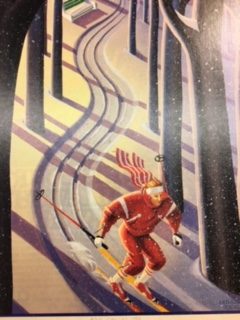
 

It was steep beyond my comfort. There were bumps and trees, and the surface was getting icy. Signs on the trees warned this was a cliff area.

At my age, this was no place to be skiing alone.

I heard scraping skis below me and saw someone near a rope line skiing to the left. 

Then I was alone. My skis were long past their useful life. My goggles kept fogging. I had a phone, but not a whistle. It was at home in a pack. No use to me now.

Before passing through the gate, someone had warned me not to go. I said not to worry, I knew what I was getting in to.

That was a mistake. Steep, Icy surface. Tight trees. 

I wasn’t scared, but I had lost confidence. Side-slipping and kick turns were all I could muster. Even when I found a stretch of softer snow, I couldn’t bring myself to make a few turns. 

It was beautiful in there. Cliffs above and below; twisted trunks rising to blue sky. Quiet.

How would someone find me? Maybe they’ll start looking when my car is the only one left in the lot?

Eventually, I saw a trail.

I must have been in there 30 or 40 minutes. It’s unlikely I’ll try it again, but if I do, it will be on better skis, I’ll have a whistle, and I won’t be in there alone.

Vail Announces Northeast Passes and Rewards Program

Vail just announced two regional passes for the Northeast (US). The Northeast Value Pass (adults, $599; college students, $419) provides unlimited, restricted access to Okemo, Mount Snow and Hunter, 10 restricted days at Stowe, plus unlimited, unrestricted access to Wildcat, Attitash, Mount Sunapee, Crotched, Liberty, Whitetail, Roundtop and more. The Northeast Midweek Pass ($449) has similar access, but restricted to Monday through Friday, and five restricted midweek days at Stowe. 

Vail also announced ‘Epic Mountain Rewards,’ which gives pass holders a discount of 20 percent off food and beverage, lodging, group ski and ride school lessons, equipment rentals and more at the Company’s North American owned and operated resorts.

For details, click here

2020-21 IKON Pass Discount

Renew your Ikon Pass and Ikon Base Pass before Wednesday, April 22, and (depending on the pass) get up to $100 on next season’s IKON Pass.

When Skiing Utah, Visit The Lift House

My first visit to a ski shop was when I was 10. It was a narrow and deep store in Albany, NY, and what I remember most is the rich smell of leather boots. Over the years I’ve been in many ski shops: some okay, some quite good, and some terrific. Spending much of the winter in Utah, I’ve been reminded that The Lift House, the venerable store near the mouth of Big Cottonwood Canyon, is an absolutely terrific place. Its location is ideal for people skiing Alta, Snowbird, Solitude or Brighton. It is consistently well-stocked with the top equipment and clothing brands. And the personnel are knowledgeable, helpful, and friendly. Years ago, when we visited with kids in tow, The Lift House is where we rented. Over the years, it’s one of the places I’ve relied on for quality tunes. It’s the kind of place with a deep inventory of useful accessories And when they have a sale, they really mean it. Many people stop on the way to the mountain to purchase discount lift tickets. For example, a weekday at Snowbird costs $130. At The Lift House, it’s $97. An Alta day pass is $125. At The Lift House it’s $105, a better deal than the $119 if purchased directly from Alta online. There are other excellent shops in the area, most with similar brands, some specializing in only the most expensive ski and casual clothing. When headed in the direction of Big and Little Cottonwood Canyons, The Lift House is highly recommended.

International Skiing History Association

The International Skiing History Association (ISHA) is the non-profit with the mission of preserving and advancing knowledge of ski history and increasing awareness of skiing’s heritage. ISHA publishes Skiing History magazine the bimonthly filled with interesting articles and great illustrations. A six-month digital subscription is free. Click here or on the adjacent ad to subscribe.

Two more things from ISHA:

  • As a member ($49 annually; $59 international members) you’ll receive hard copies of Skiing History and have access to the organization’s digital archives. Among other things, you’ll find a guide to more than 160 ski museums and collections in 22 countries.
  • If you’re attending Skiing History Week in Sun Valley, March 25-28, sign up for ISHA’s annual Awards Banquet. Click here for details.

How Snowbird Trails Got Their Names

It’s not that often that we get to know the stories behind the trail names. The Snowbird website has a wonderful short article about how many of its trails were named. Written by frequent SeniorsSkiing.com contributor, Harriet Wallis, it’s informative and amusing. Who wouldda thunk that the West Second South trail refers to Salt Lake City’s long gone red light district? It’s an easy trail named for a the street of easy women.

This Self-Massage Device is Essential for Older Skiers
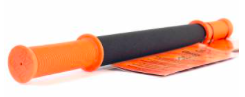
Last year, a skier friend recommended the Tiger Tail, a highly effective self-massage tool that doesn’t require getting on the floor, like you do with a foam roller. OMG!!! What a fantastic device! I get off the mountain and roll out my quads. At home, when my calves start to cramp, Tiger Tail comes to my immediate rescue. The company’s website is rich with useful text, picture and video instructions. Last month at the big industry trade show in Denver, I met Spring Faussette, who invented Tiger Tail and owns the company. She’s offering SeniorsSkiing.com readers a discount code for 30% off Tiger Tail and the company’s other products. Visit the Tiger Tail website and enter snowski50 during checkout to receive the discount.

Mont-Tremblant, Extends Season

The Quebec area will be open through April 19, and kids under accompanied by an adult will ski free.


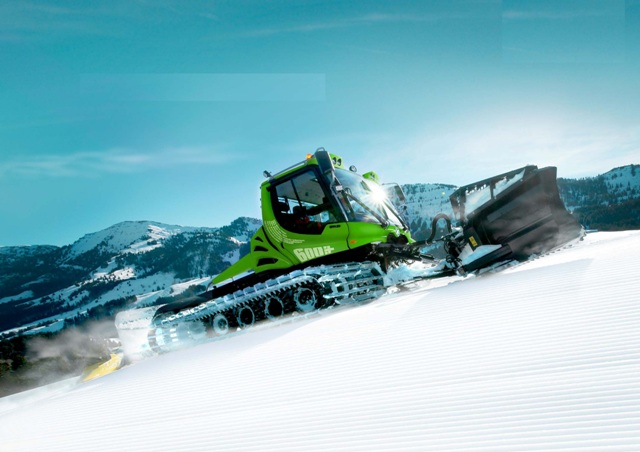
There’s A Big Green Machine At A Few U.S. Resorts

It’s More Than A Pretty Paint Job. It’s The World’s First Hybrid Snow Groomer.

Up the hill goes the PistenBully. Quietly. Credit: PistenBully

On the outside, it looks pretty much like all the others in a resort’s fleet. It has a fierce-looking blade up front, a cab in the middle, and a corduroy-making tiller behind. What’s “under the hood” makes the green groomer special.

The PistenBully 600 E+ is on the forefront of environmental kindness. It uses 20 percent less fuel, and its carbon emissions are reduced by 20 percent. In addition, there’s a major reduction in particles released. And it’s also quieter.

Those are major factors because grooming operations go on all night, every night, all season long, manicuring the snow into fresh corduroy for skiers every morning.

The green groomer is called the E+ because it makes its own electricity. That electricity powers its work-horse equipment including its tank-like tracks and its huge corduroy-making tiller. It’s a hybrid!  It’s the world’s first diesel-electric snow groomer.

Alta got one of the very first PistenBully 600 E+ in the country. “The 600 E+ is a step towards the future just as we are seeing with electric cars,” said Buck Boley, Alta’s Director of Equipment Operations. “It’s a great snowcat, and we are happy to have one.”

Other resorts that have a 600 E+ include: Bromley, Cranmore, Jiminy Peak, Park City, Heavenly, Alpine Valley, WI, and Crystal Mountain, WA.

The groomer has joystick and lots of knobs and dials. A steep learning curve. Credit: Harriet Wallis

Taking a snow groomer for a test drive and getting it delivered is more complicated than buying a new car. Alta’s came from Peterson Equipment, the regional, Utah-based PistonBully dealer that’s been in the groomer business for nearly 60 years and was named the top snow groomer dealer in North America. Alta, now in its 82nd year, has earned many awards for its environmental commitment and leadership, so its 600E+ fits right in as a strategy to reduce environmental impact.

Looking to the future, total electric groomers are being tested, but they’re not yet ready for production, said Eric Kircher, a PistenBully Trainer and Technical Advisor. Kircher is an expert who travels to resorts to teach the fine points of groomer operation.

Nitty Gritty Specs About The PistenBully 600 E+

Where Manufactured: Germany

Engine: 6-cylinder, in-line Mercedes Benz

Fuel and Tank: 73 gallons, diesel

Speed: 12 mph, continuously variable depending on the work it’s doing

Torque: Its electric motors have full torque as soon as  they start to turn at very low engine rpm.

Turning Radius: On the spot

Weight: About 10 tons

Cost: About the same as a large house.

Recipes For Toes And Nose

[Editor Note: SeniorsSkiing.com is asking our readers to contribute to support our online magazine. Yes, we have grown in the number of subscribers and advertisers. But our expenses have also grown. You can help us defray some of these expenses by helping us out with a donation.]

Support SeniorsSkiing.com by clicking here.

______________________________________________________

Nifty Tricks For Your Feet And Schnoz.

Just three ingredients for warm feet and dry boots. Credit: Harriet Wallis

I like to get to the lodge early, meet new skiers, and visit with old friends.

Recipe for your toes

One day I met John Bridgwater and Joan Kent who travel continually to ski. They invented a way to dry their boots night after night in hotel rooms and keep them toasty warm on the drive to the mountain. They find this works better than the expensive, highly marketed systems. Here’s the boot drying recipe.

List of ingredients:

  • One inexpensive boot bag that will hold your boots side by side.
  • One heating pad that will stay on continually rather than turning itself off within a short time. They found CVS carried such a heating pad.
  • One pair of ski boots that have been worn all day.

How to do it

Put the heating pad in the bottom of the boot bag and leave it there.

At the end of the day, buckle your boots and put them side by side inside the boot bag.

When you get to the hotel – or home – unzip the boot bag and leave it open. Plug in the heating pad. You only need one outlet for this.

Then go out to dinner and enjoy the evening. Your boots are drying themselves.

“It’s a chimney effect,” said John. “The boots heat from the bottom and the moisture is driven out the top.”

And tomorrow

Unplug the heating pad and put the cord into the boot bag. Zip up the bag and the boots will stay warm on the way to the mountain.

Recipe For Your Nose

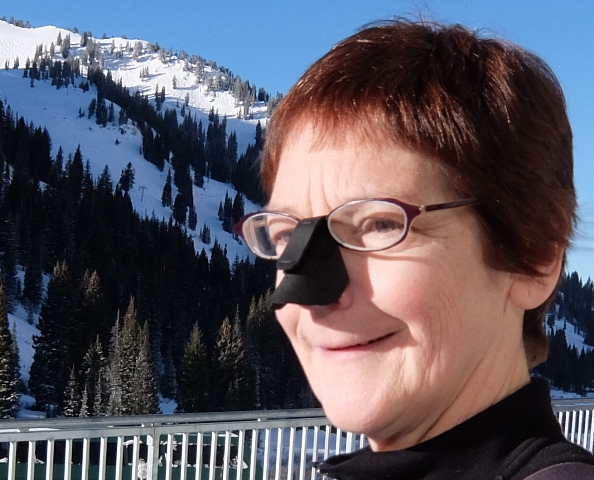
My friend Marypat Schreibman wears a nifty little nose protector. It  secures to her glasses, protects her nose from the sun, and it keeps her nose warm even on the coldest days. It’s called a “nose cone.”

So I Googled nose cone, and the internet gave me nose cones for planes and rockets. Wrong ones!

Ingredients

Marypat’s came from NozKon.  It’s made of light weight, flexible material and comes in a variety of colors and models. Some attach to goggles. As the springtime sun grows stronger, many skiers are now wearing the protector.

Or protect your beak with beko gear. Protecting noses from sun damage is an entire industry for bicycling, yard work, and water sports. How’s your nose?

Nose cone fashion statement? Credit: Harriet Wallis

A Letter To A Very Stupid Nephew

[Editor Note: SeniorsSkiing.com is asking our readers to contribute to support our online magazine. Yes, we have grown in the number of subscribers and advertisers. But our expenses have also grown. You can help us defray some of these expenses by helping us out with a donation.]

Support SeniorsSkiing.com by clicking here.

______________________________________________________

Avalanches Don’t Care Who You Are; They Kill You.

Ted, you do not want to meet this on your bluebird, outback ski day. Credit: UtahOutside.com

[Author Note: I wrote this as a letter and emailed it to a college student nephew who’s experiencing his first Utah winter with lots of snow and avalanches. He thinks he’s infallible.

If you have grandkids or others who are new to snow country, you’re invited to copy and send any part of this story to them. They probably won’t get this kick in the pants anywhere else.] 

Hi Ted,

The photos of your ski adventure into the backcountry are beautiful. The ski is blue, the snow is deep, and the mountain you climbed is extremely steep. You must be very proud of yourself.

And you are lucky to be alive. You acted stupidly.  Avalanches do not play favorites.

Craig Gordon, a forecaster with the Utah Avalanche Center says backcountry skiers who get caught in an avalanche have already made three bad decisions before they get swept away and killed. Gordon’s examples include exactly the bad decisions you made.

  1. It’s a beautiful day, let’s go.
  2. It’s fresh snow. I want to ski it.
  3. We’ll be okay because my friend is going.

Your pal has 18 minutes to find you and dig you out. That’s it. Credit: Mountain Savvy

Furthermore, if you’d checked the avalanche forecast—the very first thing you should have done—you would have learned that many backcountry areas were closed and  others were under extreme avalanche danger warning. But you went anyhow.

I know that you were dead set on getting an avalanche flotation bag that you would hope to inflate and ride out an avalanche if caught in one. But absolutely no piece of equipment can compensate for stupidity.

Perhaps you equate an avalanche with a Disney World ride. Whoopee! I’m riding down an avalanche. It’s not like that. Avalanches don’t care who you are, what your college GPA is, how much you work out in the gym, or what your life’s goals are. Avalanches kill.

An avalanche doesn’t care about Mother Nature either. Avalanches snap off trees and rip up boulders. If you’re caught in an avalanche you’re pummeled with broken tree trunks, tossed around with boulders, and thrown over cliffs and buried. The snow quickly sets like concrete. You are entombed.

If you haven’t already died from blunt force trauma, you have 18 minutes to live before you die from asphyxiation from being sealed in an airless tomb. Your buddy had better know how to use his avalanche beacon, his probe and his shovel and use them furiously fast.

There is no time for your buddy to see if his cell phone works out there in the backcountry. It won’t do any good to call 911. He has to dig you out within 18 minutes. Just 18 minutes.

Avalanche burials frequently become body recoveries.

Ski patrols work to reduce the avalanche danger in-bounds, but that does not guarantee in-bound safety. But the moment you leave the in-bounds by stepping through a gate, you are totally, completely, absolutely on your own—even if your are only 10 feet out of bounds.

You were lucky this time. You did everything wrong, but you were lucky. Pull a stupid stunt like this again, and you might be dead.

Being macho won’t save your life. Take an avalanche course. Courses include field work where you dig snow pits, learn to calculate slope angles, and learn to use your avy beacon, probe and shovel. Then practice in one of the many avy beacon “parks” at ski resorts and trailheads.

Craig Gordon also says: Time your buddy while he practices in the beacon park. If he’s slow finding the buried target beacon, he’ll be slow finding you if you’re buried—so don’t go into the backcountry with him. You need to be quick and expert with your equipment.

Practice. Practice. Practice. You can’t learn to drive a car in one lesson. You can’t be proficient with your avy equipment in one lesson. Practice. Avalanches don’t give you a second chance.

An avalanche is not an amusement park ride you can race. If you try, you will lose. Credit: KUTV

Powder Mountain

Uncrowded Powder Mountain

[Editor Note: SeniorsSkiing.com is asking our readers to contribute to support our online magazine. Yes, we have grown in the number of subscribers and advertisers. But our expenses have also grown. You can help us defray some of these expenses by helping us out with a donation.]

Support SeniorsSkiing.com by clicking here.

______________________________________________________

500 Inches Of Snow, 8,000+ Acres, And No Crowds.

Uncrowded on a holiday weekend. Powder has plenty of room. Credit: Harriet Wallis

A Mountain Host greeted us with memorable words. “The snow here is all natural. Mother Nature makes all of it,” she said. “And it’s GMO-free,” she quipped.

We skied Powder Mountain during a recent holiday weekend when other resorts near Salt Lake City were packed to the gills, “PowMow’s” trails were not only uncrowded, they were sometimes absolutely empty. It was wonderfully relaxing. I didn’t need eyes in the back of my head. Nobody was going to run over me. And there was still patches of untracked snow from a storm nearly a week earlier.

To ensure a good experience, the mountain caps adult season passes at 3,000 and daily lift tickets to 1,500. It doesn’t accept the Ikon or other multi-resort passes. Do the math. At max capacity, every skier gets about 2 acres.

Seniors 75 and older get a free lift ticket or a season pass for $20. 

Good snow, uncrowded slopes and affordable senior prices  are just part of the equation. Powder Mountain is old school. It doesn’t do glitz. That’s it’s charm. There’s even an old fashioned blackboard where the list of upcoming bands to play in the Powder Keg bar are written in colored chalk.

Powder base lodge is unpretentious. Credit: Harriet Wallis

The day lodge is modest, the bathrooms are adequate, the cafeteria tables are set in long rows so everyone eats family style and gets acquainted with whoever sits down next to them. The lodge on the summit is similar, just smaller.

Six chairlifts serve 8,464 acres that include white knuckle slopes, aspen forests, and treeless snowfields. And in old school style, there’s a Poma. It hauls skiers up a short pitch that’s a gateway to vast terrain. Riding a Poma is a skill that older skiers remember well but younger skiers struggle to learn. After a few they get to experience what the good old days of skiing were like.

We chanced to meet Bob Leaverton, a veteran ski patroller, who has skied Powder Mountain for 35+ years. His three favorite things are: “the road, the people, and the snow.”

The last several miles up to the resort are steep, and that climb often deters visitors, he said. The people are friendly, and the snow is wonderful. Take it from a local.

For adrenaline junkies, Powder Mountain offers specialty adventures: in- and out-of bounds backcountry skiing, skin & ski, snowcat, and heli-skiing.

Historically, Frederick Cobabe accumulated the vast acreage as range for his herd of sheep. His son eventually purchased the livestock company and the land and turned it into a ski resort in 1972.

It’s currently owned by private investors who are developing an upscale community of Bauhaus-style homes set in the far reaches of the resort and linked by a network of trails and lifts that sprawl across that rolling, not steep, terrain. It can take most of the day to ski a circuit all around the resort.

But if its a powder day, do what the mountain resort is named for: Ski the powder.

Yes, that’s the lift line. Where is everyone? Credit: Harriet Wallis

Hip Hip Hooray! I Turned 80 Today!

Harriet Hits The Big Eight-O.

[Editor Note: A big hug and salute to Harriet Wallis, snow sports journalist, who has written dozens of interesting and useful articles of these pages since SeniorsSkiing.com began in 2014. Happy Birthday, Harriet.  Many more and have a great year ahead!]

Harriet’s daughter bought her a cupcake helmet cover. Seriously, there are such things. Credit: Alta

I planned to celebrate my landmark 80th birthday by taking cookies to my aerobics class. Instead, I skied with a cupcake on my head and a ribboned badge with “80” in big numbers. It was a hoot. Here’s some insight in case you’ll turn 80 soon.

The pink cupcake helmet cover came with a flashing LED candle on top. My daughter gave it to me, so I couldn’t say no. I timidly stretched the cupcake over my helmet, turned on the candle, pinned on the 80 badge, and braced to look absolutely silly on the slopes.

My get-up drew attention, and everyone laughed at lot. A pack of skiers burst into singing Happy Birthday, and Alta sent a photographer to capture the event. I was skiing with my son and daughter and they enjoyed seeing their mom have a big day. It was a lot more fun than taking cookies to my aerobics class.

Skiers’ reactions were surprising.

To younger skiers, I’m a fossil, and they insisted on taking selfies with me. They had never seen anyone “that old” still skiing.

However, skiers in their 80s and 90s—skiers I’ve never met—gave me a hug and welcomed me to the vintage group. To them, I’m just a youngster.

I Want To Share The Fun.

When I went to the party store, I found their birthday badges only went up to 60 years. Dang. I decided that with some office white out and a marker I could turn 60 into 80. It worked. My doctored-up badge is unique.

Harriet will pass this badge on to someone turning 80 before April. Credit: Harriet Wallis

If you’re turning 80 before April and want to ski wearing the badge on your birthday, please post a comment to this article.

Please say where you’ll be skiing and a little bit about why you’d like to have the badge. Unfortunately, I have only one badge, so I’ll chose someone at random, contact you for your address, and mail the badge to you. Then you can pass it on.


But I’m keeping the pink cupcake to wear on my birthday next year!

Skiing Single: Five Best Words To Hear On The Slope

Life Happens. We Get Older And Our Spouses Pass Away. That’s When We Ski Alone, Often Really Alone.

“Take some runs with us,” say Howard and Naimi. Credit: Harriet Wallis

This is a true story, and a sad story. It’s just one of many similar stories. It might sound like sour grapes, but the goal is to offer a perspective on what it’s like to ski as a widow. The story has a perfect ending because of five great words.

It’s a beautiful day. The sun is shining. The road is clear and dry as I head up the canyon. The radio keeps me company until the signal fades into hissing static. I shut it off and drive the rest of the way in silence.

Whether you’re widowed or single by choice, there’s often a lot of silence. Skiing can offer camaraderie.

The mountain comes into view. It sparkles with fresh snow. What a great day to be alive and to ski.

The lodge is filling up with skiers. Sue and John tap me on my shoulder from behind, and we greet each other with hugs. As we gear up and stuff our feet into ski boots, I hear about their summer, their travels, and their projects. They’re having a great time.

But as we finish gearing up, Sue looks across the lodge and abruptly says: “Our friends are here. Bye!”

Those are not the best five words to hear.

Widows and singles are often cast off because we’re not a couple. We’re misfits. But we shouldn’t have to go two-by-two to qualify. It’s not Noah’s Ark. It’s the ski slopes!

I ski alone.

But then the day takes a turn.

It’s bitter cold on the mountain. Skiers pour into the mid-mountain lodge to thaw out. On the way to get a hot chocolate, I encounter Naomi and Howard. They’re hard core skiers with lots of enthusiasm.

Howard sees there’s no one with me and says: “Are you skiing by yourself? Take some runs with us.”

“Take some runs with us” are the five best words to hear when you’re skiing alone. They’re magic words. They reach out with camaraderie and kindness. “Take some runs with us” are five words that anyone can say to make someone’s day brighter.

Many ski areas have senior groups that ski together. But you don’t have to be part of any group to say: “Take some runs with us.” Seniors who are skiing alone will appreciate your kindness.

Camaraderie is the key. At Alta, the senior group is the Wild Old Bunch, and they can be identified by the large smiley-face patch on their jackets.

The 70+ Ski Club is a nationwide ski club that offers a variety of week long ski trips. Upcoming trips include skiing in the U.S., Canada and France. And the club is an advertiser in SeniorsSkiing.com.

[Editor Note: Some resorts sponsor and/or support senior clubs. Waterville Valley has its Silver Streaks, for example.  Other resorts, like Dodge Ridge, offer senior week specials including lessons, races, and gatherings.  Ski clubs are a sure place to ski with other seniors. These communities offer a chance to meet new friends and share the experience of snow sports.]

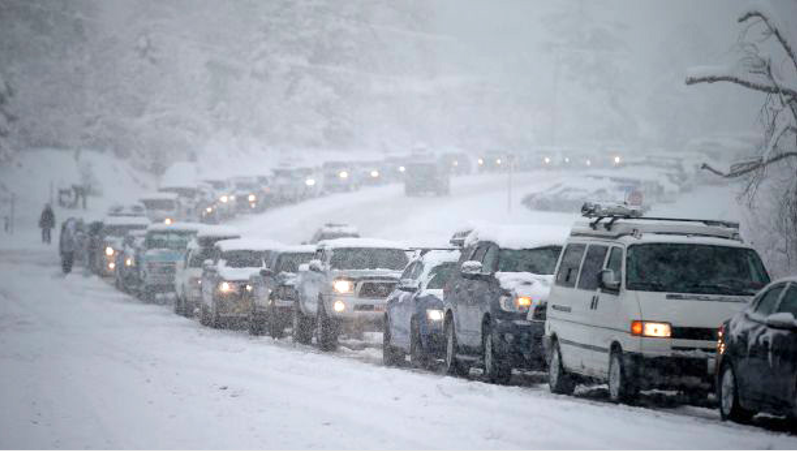
Little Cottonwood Canyon traffic

Monster Traffic Jams Overwhelm Canyon Roads At Four Salt Lake Resorts Last Winter

Big Changes Are Underway This Season. Will They Help Solve The Problem?

Little Cottonwood Canyon last winter.

Flashback To Last Winter

Bumper to bumper traffic creeps up Little and Big Cottonwood Canyons toward Alta and Snowbird, Brighton, and Solitude. But resort parking lots are already full.

It’s mid-morning on a typical weekend.

Rabid skiers ignore the parkies. And they ignore One Way signs. They drive the wrong way and create blockades. They ram their cars onto berms and they jam up fire lanes.

Every parking spot is taken. There’s no place to park. Cops turn cars around and head them back down the canyon.  

Outraged skiers then park along the 2-lane road — further and further away from their resort. They park on both sides of the narrow, twisting road.

Car doors hang wide open into the traffic lanes while skiers sit to put on boots. High snowbanks force skiers to trudge on the car-clogged road toward their resort, hauling their equipment, kids and coolers. The 2-lane road becomes a 1-lane obstacle course.

Some cars that park along the road sink into the deep snow and must call a wrecker to get pulled out. Other cars that park sloppily and threaten safety are often ticketed and are sometimes towed away.

That was last winter. It wasn’t pretty.

Why All The Mayhem?

Salt Lake City’s economy sizzles. Home and apartment construction booms, and that spikes the local skier population. 

More than 300 flights arrive daily at Salt Lake International Airport, and 10 resorts are within an hour’s drive. Skiers with a multi-resort pass, such as the Ikon pass, flow unpredictably from resort to resort.

The only way up each canyon is by two-lane road. Resorts on national forest land must comply with regulations and cannot make changes on a whim.

Last winter topped the charts with 711 inches of snow, and, like a magnet, it sucked skiers up the canyons. Just add up all those issues. The net result was humongous traffic jams.

Partners For Solutions

Canyon roads have been a concern for more than 30 years. Solutions have been proposed, and some have been tinkered with. But last winter’s traffic nightmare pushed the hot button.

This winter, it’s all hands on deck. Ski resorts plus Save Our Canyons, Wasatch Backcountry Alliance, the Central Wasatch Commission and the Utah Transit Authority (UTA) are stepping up efforts to change skier behavior and solve the traffic issue.

What’s Up For This Winter?

UTA added more ski buses in both canyons. It removed the inside ski/board bins to provide more standing room. And it eliminated some bus stops to speed up transit times, Skiers with a resort-specific season pass or an Ikon season pass can ride the UTA ski bus free.
Snowbird expanded its R.I.D.E. program—an Uber-type ride share app so skiers can carpool. (R.I.D.E. is the acronym for Reducing Individual Driving for the Environment. Download the iOS Snowbird R.I.D.E. app or the Android Snowbird R.I.D.E. app.)

In addition, Snowbird skiers who carpool or take the UTA ski bus earn R.I.D. E points toward sweet rewards. And carpools with three+ people get VIP parking.

This year, Alta, Brighton and Solitude implement the R.I.D.E. app.

At Alta, there are ride share vans for employees, and it dedicates 25 percent of the Wildcat parking lot for carpools with 3 or more.

Solitude takes a bold step and will charge for parking. Daily fees range from $5 for cars with four passengers to $20 for just one or two passengers. Those with a Solitude or Ikon season pass can buy a season parking permit for $150. The permit will cost $225 for non-season pass skiers.

More To Come

The question remains: What will it take to change skier behavior and eliminate the traffic jams? Stay tuned. The 2019-2020 ski season is arriving right now.

Archives Honors Ski Club And Life-Long Influencer

Alta Icon Alan Engen and Wasatch Mountain Club Earn Top Honors At Ski History gala

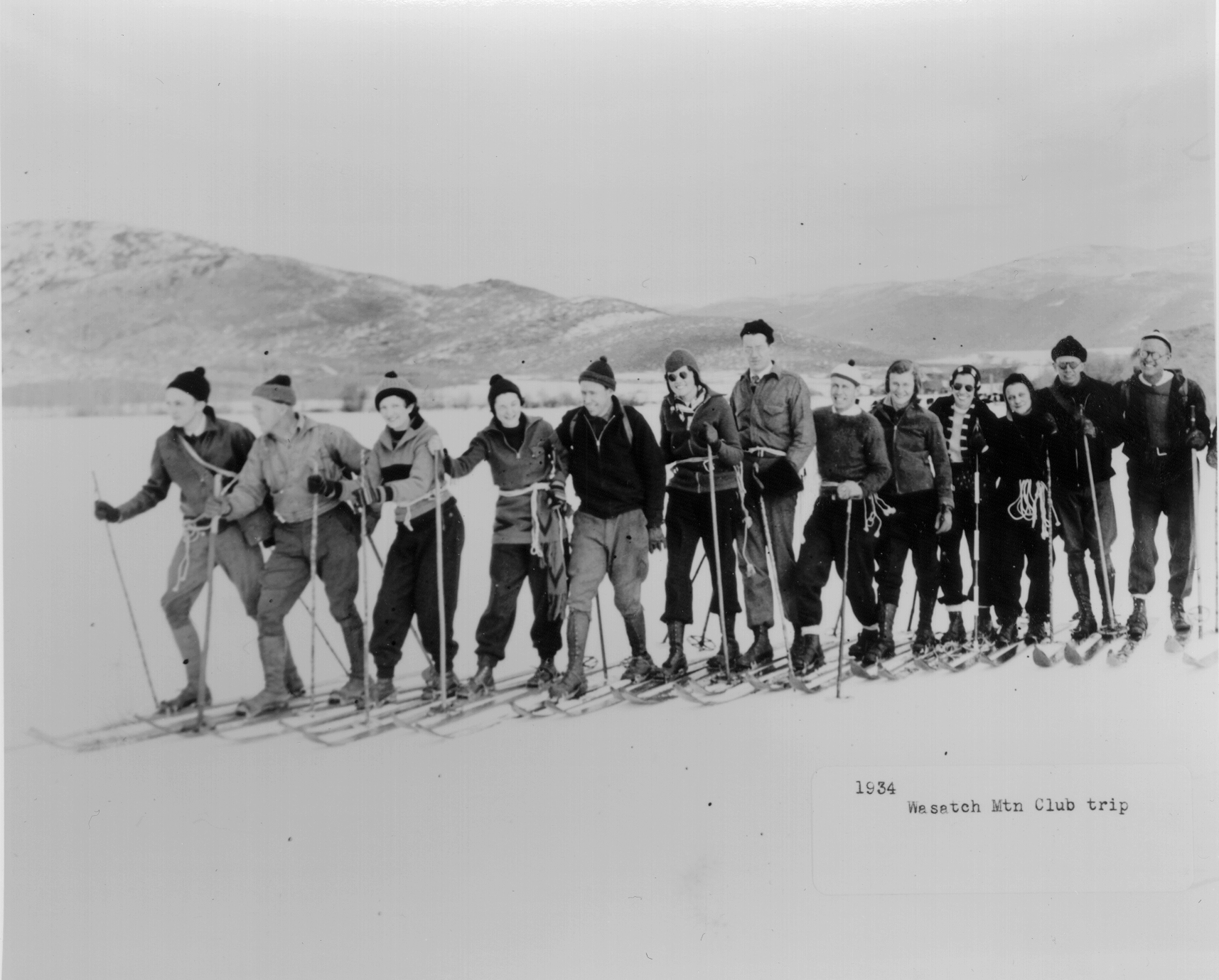
Ski fun in 1934 with the Wasatch Mountain Club. Credit: Special Collections J. Willard Marriott Library, University of Utah.

Every year, the country’s largest ski history research organization, the Utah Ski Archives, awards honors to movers and shakers in the ski industry.

This year the Wasatch Mountain Club earns the History Maker award for offering outdoor recreation for 100 years. It was founded with just 13 enthusiasts who enjoyed hiking, ski touring, and snowshoeing. A few years later it played a key role in the growth of skiing by offering “ski trains.”

Today it has about 1,000 members, and outdoor activities have changed with the times. The club’s non-competitive, muscle-powered offerings now include river running, mountain biking, back packing, and more. It also focuses on conservation and education.

The coveted S. J. Quinney award goes to Alta’s iconic Alan Engen for his life-long influence on skiing. Engen began as an award winning national and international ski champion, and his dedication to the sport continues to evolve today. He became the Director of Skiing at Alta, he’s in the U.S. Ski & Snowboard Hall of Fame, he’s a ski historian, and he’s authored several in-depth books about skiing. Then he found the Alf Engen Ski Museum in Park City, UT. It’s an interactive, must-see for everyone who visits here.

About the Utah Ski Archives

The Archives collection currently contains 500,000 images, 250 manuscripts and 6,000 audio, video and films. The collection is open to the public and is located in the University of Utah campus library in Salt Lake City. Every year, it holds a gala fundraiser to help support its mission of preserving ski history. And the gala honors individuals and organizations that are a major influence on ski industry.


Award winner Alan Engen smiles next to the photo of him at about age 2 wearing a diaper and ski boots and gleefully holding his first pair of skis. Credit: Harriet Wallis
100+ Skiier

102-Year Old Skier George Jedenoff’s Autobiography Published On Apple Books

It’s A Thriller, A History, A Love Story And More. Read It Free On Your Computer.

George Jedenoff never gives up. Credit: Harriet Wallis

George skis with enthusiasm. He cruises steep trails and shouts with glee when he jumps into powder. That’s George!

Skiers at Alta flock to him for inspiration. “Age is just a number,” he says. “Don’t let it be a barrier.” His motto is: “Never give up.” His positive outlook is a cornerstone of his life.

George’s autobiography, My Centenarian Odyssey, chronicles his life and adventures starting with his family’s flight from the Russian Revolution when he was just a toddler, coming to America, and later working as a young man in a California magnesite mine for 50 cents an hour. He graduated with honors from Stanford, served in World War II then worked his way up in the steel industry to become president of Kaiser Steel, a premier supplier of shipbuilding steel.

Along the way he learned to ski, and he’s passionate about snow and the beauty of the world around him.

Read his autobiography free on Apple Books. Or you can download it free onto your computer. Be patient as downloading takes several minutes. Click to Download

George Jedendoff is out and about. Not bad for 102. But age is just a number, right? Credit: Harriet Wallis

Short Swings!

Too Darn Hot.” Cole Porter got it right with his enduring 1948 hit. What a summer!

Weather is getting more and more extreme. Hot. Cold. Wind. Flood. I like this church sign:

But I don’t like these pictures taken within a week of each other from near the top of Mont Blanc. Going from snow to lake in such a short time is a bad sign.

Credit: @bryanthealpinist

I don’t know if there’s much we can do about this any more except attempt to take action to slow the process down and figure out how to make the best of it. 

Waiting for the flurries, I think abut that magical combination of gravity and snow and being waist-deep in light powder.

In the meanwhile, Irving Berlin also got it right with his saucy 1933 song, “Heat Wave.”

###

Vail Resorts Acquires Mount Snow, Hunter, Wildcat, Roundtop, Others

Earlier this week, Vail Resorts announced it is acquiring Peak Resorts. The areas comprise many Eastern and Mid-Western signature resorts (Mount Snow, VT; Hunter Mountain, NY; Attitash, Wildcat, and Crotched, NH; Liberty, Roundtop, Whitetail, Jack Frost and Big Boulder, PA; Alpine Valley, Boston Mills, Brandywine, and Mad River Mountain, OH; Hidden Valley and Snow Creek, MO, and Paoli Peaks, IN). The areas will be accessible on the Epic and Military Epic passes.

Alta’s Enduring Butterfly

Contributor Harriet Wallis sent in these pictures of the butterfly shaped snow patch on Alta’s Mt. Superior. The color shot was taken recently. It matches up perfectly with the shot from 1873.

Credit: Robin Roberson

Delta Eliminates $150 Ski/Board Checking Fee

The new policy follows a similar announcement in May by American. Complete checked baggage fee detail, including the new sporting equipment fees: Delta.com

Killington Breaks Ground on New Lodge

Killington Resort, the largest ski and snowboard resort in Eastern North America , broke ground last week on its 58,000 sq. ft. K-1 Base Lodge.  Slated to open for the 2020-21 winter season, it will be 21,000 sq. ft. larger than the previous structure.

Colorado Has Fewest Obese People. West Virginia Has Most.

The Centers for Disease Control (CDC) estimates that 30.1% of US adults are obese as of 2017. The US obesity rate has doubled since 1990 when 15% of the population was classified as obese. The five least obese states are Colorado, D.C., Hawaii, California, and Utah. The five with the most obese are West Virginia, Mississippi, Oklahoma, Iowa, and Alabama. Click here for complete list.

2010 Olympic Gold Medal Auctioned for $68,750

The Vancouver 2010 Olympic gold medal belonging to Belarusian freestyle skier Alexei Grishin sold at auction last week for $68,750 according to Boston-based RR Auction. The anonymous winning bidder is a collector from Belarus. The medal is among the heaviest in Olympic history. Each of the 615 medals created for the Vancouver Games features a hand-cropped section of the artwork that ensures that no two medals are the same. 

Live Weather Reports Now Available from Mt. Everest

Researchers from National Geographic Society and Kathmandu’s Tribhuvan University recently installed weather stations on Mount Everest. The two highest are at 27,257’ and 26,066’. To access these high elevation conditions click here.

Good Conditions At South Africa’s Only Resort

At the time of this writing, Tiffindell Alpine Resort, South Africa’s only ski area, has almost 12”. All five lifts are operating and more snow is predicted for this week.

Guadalajara Gets 5’ Hail Dump

Credit: CNN

A freak early-July storm left 5’ of hail in the Mexican city of Guadalajara. It happened following several days of warm, dry weather.

Surfing On Skis?

Candide Thovex is the French extreme skier who seems set on doing every imaginable thing that can be done on skis. In this short video, appropriately named The Wave, he uses snow skis on artificially-generated surf. 

A Banner Winter Through The Camera Of An Average Skier

Harriet’s Album Of Deep, Deep Snow Pics At Brighton.

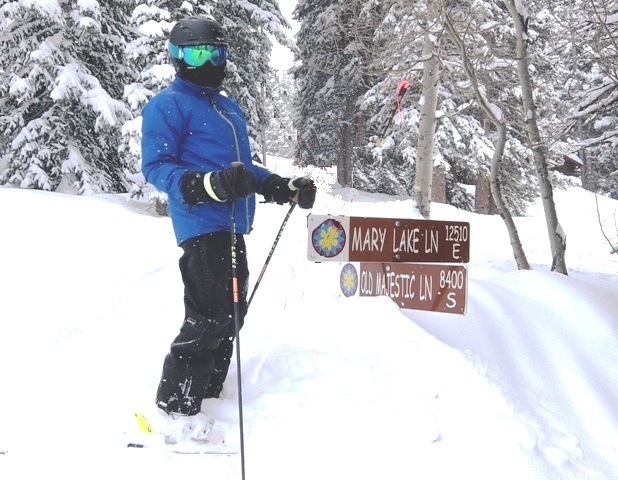
Beware of the buried street signs at the corner of Mary Lake Lane and Old Majestic Lane. The summer road became a deep snow ski trail. Credit: Harriet Wallis

At my home resort Brighton, the snowfall has topped 500 inches—about 41 feet—and the snow keeps coming. Brighton is a down home, low key resort near Salt Lake City that’s favored by families and snowboarders.

This two-story trailside cabin has an access problem. Must dig down deep to find the door. Credit: Harriet Wallis

One more snowstorm and this cabin will disappear. Bamboo poles and a rope line keep skiers off the roof. Credit: Harriet Wallis

Plentiful snow is crucial because It’s our drinking water supply, and there have been several years of low snowfall. When Spring runoff starts, every drop of melting mountain snow is captured. It takes just 24 hours from stream to faucet. Dogs are banned from the canyon watersheds to help keep the pure water free from transmittable diseases.

Just before one of those plentiful snowstorms, my friend and I booked a room at the slope-side Brighton Lodge so we could be first on the mountain in the morning.

Inside the cozy Brighton Lodge. Credit: Harriet Wallis

It snowed all night. We skied all day. Then we had to cope with the car.

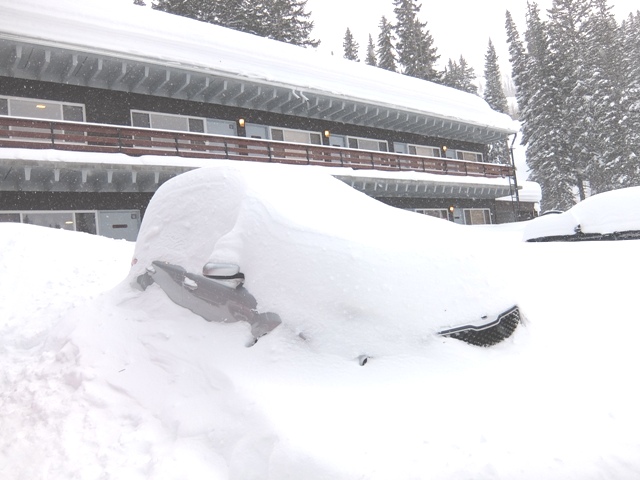
Outside the Brighton Lodge. Deep snow is fun until it buries the car. Credit: Harriet Wallis


Snowboarders dug it out. Credit: Harriet Wallis

The ample winter also creates some other quirks at Brighton.

While the snow keeps falling, these father and son skiers pitch in to help dig out the gates. Credit: Harriet Wallis


The children’s warming yurt looks more like an igloo. Credit: Harriet Wallis


The parking lot is walled by snow. Where will they put the next storm’s dump? Credit: Harriet Wallis 

Even the ride down the canyon toward home has rewards. Deep snow drives the peak-loving mountain goats down to lower elevations. It’s a treat to see them so close.

Shaggy coats and quizzical looks. Credit: Harriet Wallis

To read more from Harriet click here for her stories on SkiUtah.

George Jedenoff: 101!

[Editor Note: As the new year begins, SeniorsSkiing.com is again asking our readers to contribute to support our online magazine. Yes, we have grown in the number of subscribers and advertisers. But our expenses have also grown. You can help us defray some of these expenses by helping us out with a donation.  This year, we have a mix of premiums for different level of donations, including stickers, sew-on patches, our new SeniorsSkiing.com ball cap. All donors will be entered into a drawing for a pair of bamboo Polar Poles to be drawn in late March.  You can donate by clicking here.]

He inspires with fitness and wisdom.

George at 101. Credit: Harriet Wallis

For George Jedenoff, skiing is a way of life. He skis Alta’s slopes every day when he’s in Utah. He charges down steep groomed slopes, but he loves to tear up powder. 

He can do it at 101 years of age because he keeps himself fit. He does a 45 minute workout every day before breakfast.

“I know I’ve got to stay in shape or I won’t be able to ski,” he says. Staying fit for life is a lesson we all might learn from him.

George was 43 when he learned to ski — not exactly a spring chicken. He was athletic, so he decided to try skiing after he came to Utah to be the general manager of the Geneva Steel Plant, the largest steel plant west of the Mississippi.

He learned from the best: Alta’s legendary Alf Engen, ski pioneer Junior Bonous, and Earl Miller, the granddaddy of release bindings.

“While buying my first pair of skis in Orem, I ran into Earl Miller who offered to teach me how to ski. Of course I used Miller bindings – the only safe bindings available at that time. We used the rope tow at Alta Lodge for my first lesson,” he said.

Miller promoted his bindings with photos of himself in wild falls showing how the bindings released. “One day Earl paid me quite a compliment: ‘You know, George, you’ve made some falls I’ve never seen before!'”

But George learned quickly, and he fell in love with the sport, the scenery, the fresh mountain air, and especially the powder.

When he was transferred away, community leaders gave him a gift to lure him back — a Lifetime Season Pass to Alta. He’s still using it!

He bursts with enthusiasm for snow and for life. I recently rode the chairlift with George, and I asked for his advice.

George Jedenoff, 101 year old Patriarch Of The Powder. Credit: Harriet Walls

“You don’t have to be good, you just have to live long enough,” he quipped.

Then he offered serious wisdom. “Always be kind to others. Count your blessings, and don’t let life’s problems overshadow the good in life. And above all, never give up.”

We can learn a lot from this patriarch of the powder. He’s a role model for skiers or all ages.

Ski Utah makes a video of George every year when he returns to ski. Click here to view last year’s video of George when he was 100.

To read more from Harriet click here for her stories on SkiUtah.

World Championships 101

[Editor Note: As the new year begins, SeniorsSkiing.com is again asking our readers to contribute to support our online magazine. Yes, we have grown in the number of subscribers and advertisers. But our expenses have also grown. You can help us defray some of these expenses by helping us out with a donation.  This year, we have a mix of premiums for different level of donations, including stickers, sew-on patches, our new SeniorsSkiing.com ball cap. All donors will be entered into a drawing for a pair of bamboo Polar Poles to be drawn in late March.  You can donate by clicking here.]

Here’s An Inside Look At What Goes On Behind The Scenes.

This championship course is watchable from Solitude’s base area. Credit: Harriet Wallis

When I covered my first World Cup ski race many years ago, I was really naive. I thought the winner would be awarded a huge silver trophy. I was disappointed to learn that racers earn points. No trophy.

But my race stupidity gave me an idea that I’ve pursued ever since. Maybe readers would enjoy an inside look at what goes on around a major race venue. Not just the champions. Not just results. Other stuff. Here we go.

Background Facts

For 10 days in early February, 1,400 elite amateur athletes from 40 countries come to Utah to compete in the World Snowboard and Freeski World Championships at three Utah resorts: Deer Valley Resort, Park City Mountain, and Solitude Mountain Resort.

Practice Day At Solitude

Skicross and snowboardcross take place at Solitude where a special rolly-poly course was built for the competition. As explanation, four athletes start at the same time and race for the finish. It’s similar to the Kentucky Derby where all horses start at the same time. Good luck getting in front.

I was at the snowboardcross training day at Solitude. All racers could take run after run to get used to the course. There was no timing. There was no winner. It was a day for individual practice.

Walk Right Up To The Course

While the words “World Championship” sounds lofty, most courses are usually super spectator friendly. I walked right up to the course, and race spectators can also. It’s like being on the 50 yard line for the Super Bowl. 

A ski patroller watches the course just in case. Credit: Harriet Wallis

Snowboarders careened down the course, jumped the rollers, and headed for the finish. Repeat, repeat, repeat. I got bored, so I moved along to take other photos.

With her little mittens flying, #8 gives the victory sign as she heads back to the lift for another practice run. I don’t know who she is or from what country, but she’s happy. Credit: Harriet Wallis

Inside The Press Room

Off to the press room to get out of the blazing sun. The press room is the sanctuary for writers and photographers from around the world. They munch on snacks, tap away on laptops, and jabber into their phones in foreign languages.

Then there’s a press conference.

International camera people jockey for position before the press conference. Credit: Harriet Wallis
2018 Olympic champion Michaela Moioli of Italy and U.S. snowboarder Anna Miller at the press conference. Credit: Harriet Wallis

These are the faces of BoarderCross athletes — 2018 Olympic champion Michaela Moioli of Italy and U.S. snowboarder Anna Miller. They tell the press conference what it’s like out there on the course.  Moioli likes the straight stretches where she can pick up speed. And Miller says she’s “ready to get the job done.” Women to watch.

Going Back Into My Files. Meet An Athlete

Several years ago, I happened to ski at Deer Valley on a similar World Championship training day. I stopped to watch athletes launch themselves off the “kicker” to soar, flip and spin then hope to land right side up. Their athleticism was amazing. But I’m not heavy-duty into aerials, so I went for lunch.

There was a guy gobbling down a big bowl of Deer Valley’s signature turkey chili. He was wearing a race ID, so I asked if he was an athlete. He introduced himself as Jon Lillis. He was fueling up before going back onto the aerial course to flip and spin upside down. Holy cow! Right after lunch!

Now, at Solitude, I bumped into Jon Lillis (Rochester, N.Y.) again. He is the reigning aerial World Champion. He’s a force to watch.

Jon Lillis fueled up with a bowl of chili before practicing more upside down spins and flips. Credit: Harriet Wallis

Watch At Home

With 10 days of world class competition, tune-in and watch as history is made. NBC Sports will showcase more than 25 hours of 2019 FIS Snowboard, Freestyle and Freeski World Championship programming, including more than 10 hours of live coverage, on NBC and the NBC Sports networks.

Additional coverage will also be available on NBC Sports Gold – NBC Sports’ direct-to-consumer live streaming product – and the OlympicChannel.com digital platform. A full broadcast schedule will be available on both USSkiandSnowboard.org and 2019WorldChamps.com.

To read more from Harriet click here for her stories on SkiUtah.

Buried Alive In Deep Snow

Where’s Laurie? She’s Gone.


That’s Laurie under there. Credit: Harriet Wallis

Here’s a lesson for vacationers and anyone else who skis in the West.

Let me set the stage.

A snowstorm dumped several feet of light, fluffy snow, and we were skiing at Brighton, UT, our home resort. We know every inch of the mountain—its steeps, its trees, its gentle slopes.

Dreams are made of fresh snow like this. Fearsome steep slopes become mellow ones. Moguls disappear. It was deep, and it was bottomless. It was hero snow.

Then to get back to the lift, it was a wide open slope. Learning skiers like the slope because of its gentle pitch. It had been recently groomed, so the new snow there was only half as deep. Although it’s a basic, easy slope, it’s still fun to bounce along in the fresh snow.

Then Laurie—my skiing companion—disappeared. Where’d she go? Did she ski around the little grove of trees? Did she pass me? Where is she? She’s gone. Holy cow, she’s suddenly vanished.

Scanning the slope I saw a black dot. It was just a few inches of the bottom of a ski—her ski—sticking out of the snow. After all the steep, deep slopes, she fell on the easy slope.

But why wasn’t she wallowing to get up? Why was there no movement? Something was wrong. I struggled up slope and reached the ski, but still no Laurie.

There was no crater. There was no hollow. There was no indication that an entire human being was buried right there. The only tell tale was the tip of her ski sticking out of the snow. I began digging,

She had fallen forward, head first, into snow that was as soft as feathers. The soft snow poofed up, buried her, then settled over her as though nothing had happened. It pinned her down. She couldn’t move. Couldn’t thrash. Couldn’t call out for help.

She could have died there. It was an avalanche burial—but there was no avalanche. It was in bounds, on an easy slope, and in snow that wasn’t very deep.

It was a lesson that verifies what we all know: Mother Nature can play nasty tricks. Don’t ever ski alone.

To read more from Harriet click here for her stories on SkiUtah.

Ski Champion Jim Gaddis: When Life Got Tough, He Surged Ahead

Advice Jim Followed: When You Come To A Fork In The Road, Take It.

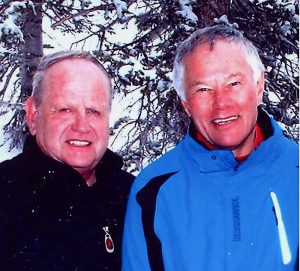
Ski buddies Alan Engen (l) and Jim Gaddis at Alta c. 2001. Credit: Alan Engen Collection

From the time Jim was a youngster, his single goal was to be an Olympic ski racer. He lived for that. He trained for that. But when he was shut out of the Olympics, it didn’t stop him. He generated ways to help others in the sport he loves.

His accomplishments include being an elite Intermountain ski racer, an inspiring coach, a great salesman, an imaginative program starter, a premier fundraiser — and he’s still moving on. Just try to keep up with him.

Yankee baseball legend Yogi Berra had a saying for it: “When you come to a fork in the road, take it.” Every time Jim came to a fork, he took action, reinvented himself, and moved forward. It’s a lesson we all can learn.

From Sears Skis To Winning National Racer

As a youngster Jim sledded on a golf course and saw someone using strange equipment: skis. He asked for skis for Christmas, and his parents bought him a complete set: skis, strap bindings and boots from the Sears catalog for $5.

He practiced at Alta and Brighton when his older brothers could give him a ride there. And he strived to ski like his good friend and acclaimed ski champion Alan Engen, son of famed Alf Engen.

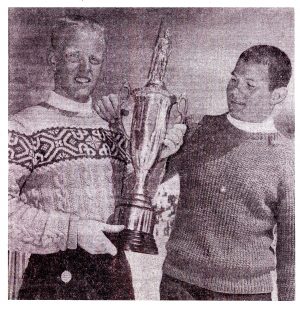
Alan Engen (l) and Jim Gaddis hold the Intermountain Ski Association Alpine Combined trophy. Each won the championship 3 times. c. 1959. Credit: Alan Engen Collection

Early on, he entered his first race on his $5 skis. It was a slalom-type course on the steep face of Collins at Alta. “I don’t know how many times I fell, but I made it down in about 4 minutes,” he said. The winning time was 40 seconds! Defeat spurred him on.

His skills and determination grew, and he entered — and won — national races. He won the National Giant Slalom Championship. And three times he won the NCAA Alpine Championship and three times the famed Snow Cup. But three was not his lucky number. His dreams were derailed when he broke his legs not once, but three times in race accidents, Still nothing stopped him.

Finally he was on target for the 1964 Olympics, and he qualified for it. But his dream was crushed. He was shut out of the elite team that included Jimmie Heuga, Buddy Warner, Billy Marolt and Billy Kidd, with Bob Beattie as the coach.

“It was very hard to deal with,” he said. “It was my whole life’s ambition to be an Olympic racer — and maybe win.” At that point, he didn’t even have a job because he was totally focused on being an Olympic racer.

It was a fork in the road. He took action, reinvented himself and surged ahead.

Metamorphosis

Using his degree in banking and finance, he became a stock broker. But his passion was skiing, so he created the Gaddis Training Organization to coach elite and youth racers. The program grew to 110 racers with seven coaches, and he ran it for 12 years. It became Park City Mountain Resort’s ski team.

His Olympic dream had a legacy. But he didn’t stop there.

Another fork

Jim discovered he had a natural ability to promote and sell. When the University of Utah had trouble raising funds to expand its stadium, Jim took the challenge and quickly sold 40 seats.

From that beginning, his fund raising expertise expanded. His accomplishments read like a Who’s Who of skiing.

Energetic and active Jim Gaddis today. Credit: Harriet Wallis

He spearheaded fundraising for many ski organizations, and founded and chaired others including: the Youth Winter Sports Alliance which gets kids involved in winter sports; the National Ability Center, teaching skiing to handicapped; the Stein Eriksen Opportunity Endowment, which raised $2 million in two years to help local athletes with equipment and travel expenses; and the U.S. Ski and Snowboard Foundation Ski Ball, raising funds for the U.S. Ski and Snowboard teams.

He also chaired the Jimmie Huega Express, which raised $1 million annually for the Huega Multiple Sclerosis center; was instrumental in fund raising for construction of the Alf Engen Ski Museum, which preserves the Intermountain history of skiing; and helped found and raise funds for the Utah Ski Archives, the country’s largest ski research repository of historic material. The Archives collection currently contains 500,000 images, 250 manuscripts and 6,000 audio,video and films, and it’s open to the public.

Just recently, Jim once again raised funds for his Alma Mater. He chaired the University of Utah’s campaign that raised $2.5 million and built a dedicated training facility for the University’s winning ski team.

His Olympic dream lives on in unique ways. He really is a gold medal champion.

Jim’s life demonstrates his philosophy: “Always do a good job. Do it right, and do it honestly. Don’t let anything stop you.”

Today, energetic and active, he takes time from initiating programs and raising funds to ski with a group of friends at Deer Valley and Park City Mountain Resort.

To read more from Harriet click here for her stories on SkiUtah.

This Week In SeniorsSkiing.com (Nov. 23)

Free (Or Almost Free) Skiing Directory, Skis For Seniors Recommendations, Chile Wrap, Trail Name Series, Ski History Gala, Skiing In Skirts.

Here’s one Tom who made it past Thursday, glad to be trotting on the snow. Credit: SnoCountry

Happy Thanksgiving On The Snow!  For the first time in recent memory, there are plenty of lifts spinning in New England areas and in Colorado and other places in the West. The recent East Coast Nor’easter brought a snow covering and this week’s persistent precipitation has raised the snow level up to the top of boots in many areas.  Fingers crossed this is a harbinger of a long, cold season.  By the way, that is counter to the official El Nino-fused forecast for warm and wet here in the North East.

Last week, we published an update to our listing of resorts where the US and Canada where seniors can ski for free or almost free. We believe this is the only listing of its kind in the ski world.  You can access this list by clicking on the third menu box from the left under the blue ribbon at the top of the page.
We also published our list of ski recommendations for seniors which we compiled with the help Realskier.com, a long-time and respected reviewer of and commentator on skis and ski design. You can find this listing on the second menu from the left, next to the free (or almost ski list) list.

You may be asked to re-enter your name and email address to access these resources. There is no charge for any of these assets. We’re presenting them to the SeniorsSkiing.com community of readers to give you more specifically tailored resources for senior.

This Week

Casey Earle reports on the ski season in Chile, sharing some good news-bad news. Despite a shortage of snow, there were some great days and he took advantage of them.  If you haven’t even seen pictures of South American skiing, his article is a good introduction.  We’ve also included a link to more comments on Casey’s Ski Chile page on Teton Gravity Research.

We continue Don Burch’s trail name series with a swing through Michigan’s many resorts. Also Harriet Wallis reports on the University of Utah’s Ski Archives Gala where awards were handed out to Olympic visionary Harold Peterson and the US Forest Service and the Utah Avalanche Center, a team which has played a major role in controlling errant snow flows in the state.

Finally, our Mystery Glimpse looks at a pair of young ladies skiing in skirts more than a hundred years ago. We report on what the significance of that big brass bell was from last week’s puzzle.

Thanks for reading SeniorsSkiing.com.  Tell your friends, and remember, there are more of us everyday and we aren’t going away.

Chile skiing. Credit: Casey Earle


Olympic Visionary And Snow Safety Team Earn Honors At Ski History Gala  

Their Behind-The-Scenes Work Makes The Winter Sports We Love Even Better.

Honoree Howard Peterson (r) is warmly congratulated by Ski Archives Advisory Board members Tom Nielson (l) and Richard Hughes. Credit: Harriet Wallis

Soft-spoken Howard Peterson grew up in a skiing family in Maine, became the ski director at New Hampshire’s Bretton Woods, and then moved west where he became the executive director of the U.S. Ski Team. He was already making an imprint on the ski industry.

Then, while the 2002 Winter Olympics plans were on the drawing board, Peterson rallied officials to build venues that would endure as training sites long after the Games were over.

Soldier Hollow, a venue of rolling hills and vast open space near Salt Lake City, became the 2002 Olympic Games venue for cross-country, biathlon, and Nordic combined. But it didn’t stop there.

Since the Games, thousands of children have been introduced to the sports there, and it’s a renowned training site for elite international athletes.

Mission accomplished!

Peterson earned the Joseph Quinney Award at the recent Ski Archives gala in Salt Lake City. The award is named for the late ski visionary and founder of Alta.

The other top award, the J. Willard Marriott Library History-Maker Award, went to the Utah Avalanche Center and U.S. Forest Service.

Part of the US Forest Service and Utah Avalanche Center team. Credit: Harriet Wallis

Here in Utah where the snow is legendary, the Utah Avalanche Center and the U.S. Forest Service work hand-in-hand to educate snow-lovers so they can “stay on top of the snow and not be buried underneath it.”

Predicting avalanche potential combines science, experience, and total dedication to help keep snow-users safe. Educating the public is crucial. Avalanches play no favorites.

In 2003 on the day after Christmas, three young snowboarders hiked into the back country to try their new gear. An avalanche swept them to their deaths.

The other part of the US Forest Service, Utah Avalanche Center team. Credit: Harriet Wallis

As a result, and with the support of the snow safety team, forecaster Craig Gordon spearheaded the “Know Before You Go” program—basic avalanche savvy 101. The program was presented to every outdoor group possible: snowmobilers, Boy Scouts. high schools. And then the program went worldwide.

What is Ski Archives?

The Utah Ski Archives is the country’s largest ski history research organization and repository of historic material. The Archives collection currently contains 500,000 images, 250 manuscripts and 6,000 audio,video and films.

Every year, it holds a gala fundraiser to help support its mission. And the gala honors individuals and organizations that set a high mark for their influence on the ski industry.

The Ski Archives collection is open to the public and is located in the University of Utah campus library in Salt Lake City.

To read more from Harriet click here for her stories on SkiUtah.


A Woman’s Guide To Sports As We Grow Older

Even Though You’re Not A Spring Chicken, You Can Still Do The Sports You Love. Don’t Let Your Past Hold You Back.

Harriet looks for and usually finds a way. Credit: Laurie O’Connor

To set the stage, I recently broke my wrist, so I’m sealed in a cast. Can’t drive. Can’t swim. Can’t this. Can’t that. Fortunately it’s temporary. Soon I’ll be back to doing the things I love.

Meanwhile, I walk loops in the park, and I’ve met some energetic women my age. But I feel sorry for them. Each is stuck in her own past.

Barb loved to bicycle, and she told great bike ride stories as we walked. But she’s afraid to put air in the tires. Her husband always did it. But he passed away five years ago. She longs to ride again.

When Beth’s kids were little, they’d pack the family and supplies into the canoe and paddle from lake to lake for a week. But the canoe was too heavy for her to handle alone. She gave it away.

Liz loved to ski all over the mountain, but she quit. She blames two things. She hates her ski boots and she’s afraid to use her artificial knee.

These women reminisce the glory days of their past. They wish they could repeat the past. But nobody can go back. So they’re stuck.

Life’s lesson

Long ago, I graduated from college, married my sweetheart, and we moved to the military base where he was stationed. The climate there was sweating hot, there were strange birds I’d never seen before, and locals talked with a slow drawl. My husband’s unit was called up at all hours of the night, and they left abruptly for extended tours. I longed for something I could count on, for something certain.

Through that experience I learned a most valuable lesson: The one thing that is certain is change. Nothing remains static for very long. I learned to how to adapt. I think that’s what keeps me going today.
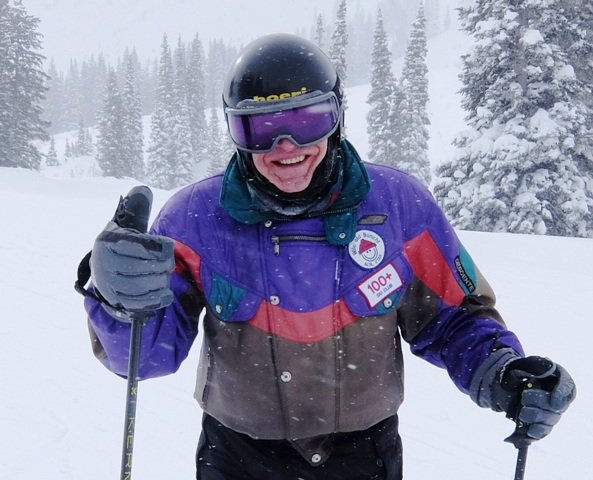
It’s okay to change

It’s okay to grow older. It’s okay to accommodate arthritis and health conditions. It’s okay to do things differently today than how you did them yesterday. Really.

I’m waving a magic wand and authorizing you to make changes.

Let me give you some examples:

After I had hips and knees replaced, I bought a carbon frame bike. I had two choices: quit riding—or get a bike that absorbs more road chatter than a steel frame bike and that would be kind to all the rigid steel inside me. It was my way of accepting new body parts, adapting, and going forward.

Recently, it became difficult to get a tire back onto the rim after fixing a flat. Too much arthritis in my hands. Again, I saw two choices: quit riding—or get tubeless tires filled with goo that seal themselves when punctured. I got tubeless tires.

When my kids were little, we had a monster-size Grumman war canoe. It weighed a ton, but we heaved it onto the car rack. Now I have a lightweight, inflatable kayak that’s fun to paddle and rolls up to the size of a sleeping bag. I catch just as many fish from it.

You might critique me saying: “Harriet is macho.” But I’m not. I just like to be outdoors and be active even though I’m slowing down. I bike slower than 50 year olds, and I ski slower too. But there’s no reason to stop having fun.

And Liz … I hope she’ll let a pro, not just a salesman, fit her for new boots. Too many skiers buy whatever boots are on sale without a clue how boots should fit. Boots are like dentures! They have to fit right to work right. Then I hope she’ll let her artificial knee show her how great it is to ski without pain.

It’s true that updating equipment has a price tag, but you’re worth it. It’s okay to invest in yourself. It’s okay to make changes so you can enjoy the sports you love. Then tell me about it. I’m cheering for you.

To read more from Harriet click here for her stories on SkiUtah.