Tag Archive for: Roger Lohr

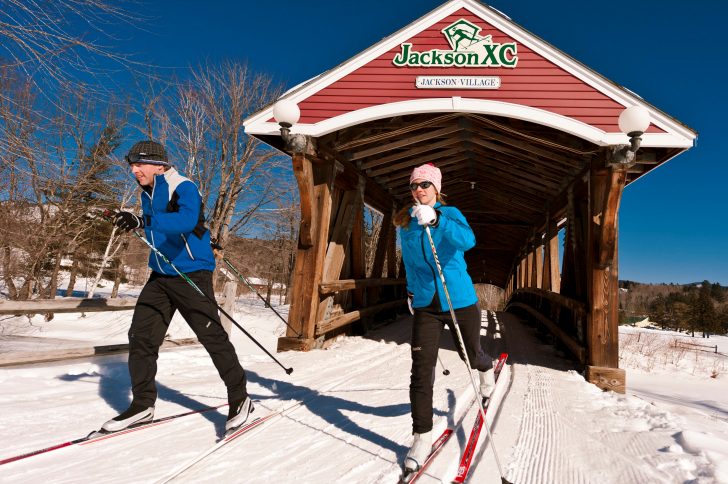
JacksonXCcoveredbridge

Art And Nordic Happenings In Jackson, NH, XC Capitol Of The East

Up To The Minute Trip Report From Roger Lohr, Publisher Of XCSkiResorts.com.

Jackson’s famous covered bridge, a symbol of this charming New England town.
Credit: Jackson Ski Touring Foundation.

[Editor Note: SeniorsSkiing.com thanks Roger Lohr for this update.  XCSkiResorts.com is the premium resource for nordic ski vacation and resort information in North America.]

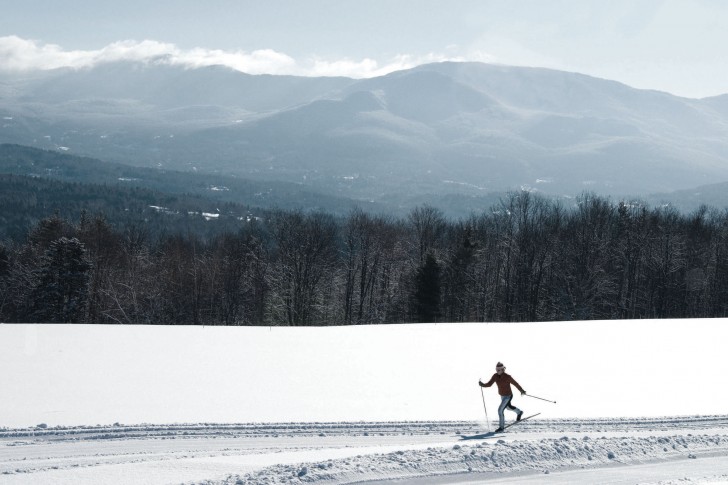
We excitedly planned a weekend trip to Jackson, N.H., because it is a true Mecca for Nordic skiers. This is the quintessential New England Nordic (XC) skiing experience with a covered bridge, white steepled church, brookside trails, and the accompanying village with all of the trappings.

Many of the trails lead right to the doors of local inns, shops, and restaurants. It’s no wonder that Jackson Ski Touring Foundation has been rated the top cross country ski area in the United States by America’s Best Online and is recognized in numerous polls as a favorite destination.

Abstract art in the woods, a natural gallery creating an unusual setting for art appreciation.
Credit: Roger Lohr

The Foundation is a non-profit organization chartered to maintain XC ski trails in and about the village of Jackson. There are about 76 landowners that allow trails to cross their property. Country inns are spaced throughout the region, and the base lodge is a golf country club located on the village loop. This full service ski center has its own parking area and houses the ski school, rental equipment, and a retail shop run by Gorham Bike & Ski with XC ski equipment, clothing, and accessories. The center has a fireplace with couches and tables and seating. Snacks and drinks are available in the lodge, too.

The Cocoa Cabin is a warming hut serving hot cocoa on the weekend, located three km from the center on the gentle Ellis River Trail. This is a popular trail often with many cautious yet courteous skiers. Snowshoers can take a rustic narrow marked snowshoe trail from the center to reach the Cocoa Cabin, and this trail avoids the ski trail.

Our accommodations were at the Christmas Farm Inn & Spa, which is set on a hillside overlooking Jackson Village. It has the personal touches of a country inn with the amenities of an upscale modern resort. The inn has a full service spa, restaurant and pub, fitness room, indoor pool, family rooms, spacious suites, and handcrafted cottages. We had breakfast there during our visit and scheduled massages at the Inn’s Aveda Spa for some earned relaxation after skiing. After skiing and some massaging, we dined at the Christmas Farm Inn for a scrumptious dinner and dessert.

The next morning, we skied down to town, stopped by the Jackson Ski Touring Center and heard about the Art Along the Trails exhibit staged on trees behind the lodge near the Jackson covered bridge. The lodge was bustling, and we passed hundreds of skiers and snowshoers along the Jackson trails, who were friendly and saying hello as they passed. The art exhibit featured two local abstract painters in a their works displayed with nature. Instead of a white walled art gallery, in its place were “walls” made from snow, hemlocks, and birch, all places for paintings to hang from, and the beneficiaries were on snowshoes and cross country skis.

During the four-hour show, Art Along the Trails was enjoyed by hundreds of cross country skiers and snowshoers, who were instilled with the energy of culture experiencing the avant-garde gallery in nature that included more than two dozen paintings installed on tree trunks and limbs. Prices of the different paintings (some as big as three-by-four feet) ranged from $125 to $2,900. The exhibit had titles such as “Illuminated Icefalls” and “Cosmic Wash”.

We lunched on soup and salad at the Wildcat Inn Tavern in downtown Jackson and stayed for some live music and libations. The tavern walls display classic ski posters and some antique gear such as snowshoes and a pair of red Jarvinen XC skis. The seats in one of the rooms were built to look like double chairlifts, and there were soccer jerseys from around the world pinned to the ceiling.

We browsed at some local retail establishments in Jackson including Flossie’s General Store & Gift Emporium, which has a potpourri of gifts, candy, and local keepsakes.

The Jackson Ski Touring Foundation maintains 154 km of varied and breathtaking XC ski and snowshoe trails and is about two hours north of Boston. Foundation trails connect with A.M.C. trails in Pinkham Notch and White Mountain National Forest backcountry adventure trails.

Here’s a New England classic.  Christmas Farm Inn has a warm, welcoming old-school ambiance as well as many modern touches.  
Credit: Roger Lohr
 

Milestones of Modern XC Skiing In the US

Remember Skiing On Wooden Skis With A Pine Tar Base And Lathered In Klistervox? Wasn’t That Long Ago.

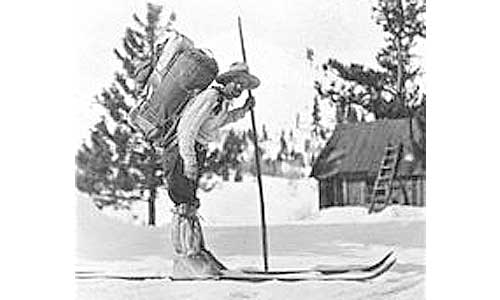
Norway-born Snowshoe Thompson learned to ski in Telemark, his home town.

Editor Note: XCSkiResort Publisher Roger Lohr has catalogued the main events that propelled XC skiing from a peculiar sport with a small following in the US to a major recreational and racing enterprise with a huge following.  Thanks, Roger, for tracing the trail.

Since wooden skis were found in a peat bog in Sweden dating to 2,000 BC, there have been many milestones that brought xc skiing to where it is today. In the US, the forefathers of xc skiing include legends like Snowshoe Thompson, who delivered the mail in the Sierra Mountains of California and Jack Rabbit Johannsen, who xc skied in northern New York.

The editors of XCSkiResorts.com researched the milestones of modern XC skiing in order of significance:

1. Development of synthetic xc skis in 1974.
2. Development of the waxless based ski in the early 1970’s, most notably the Trak ski with synthetic fish scales on the ski base to eliminate the need for ski waxes. The waxless base gave the recreational skier grip on uphill travel while also allowing gliding downhill.
3. Integrated xc ski binding systems, which provided substantial improvements in simplicity of boot/binding interface and control in the mid 70’s.

4. Bill Koch won the Olympic silver medal in 1976  at Innsbruck and at the World Cup in 1982, the first American to ever win at that level. The Nordic Track exerciser used the Koch image as a fitness icon in advertisements for years. In 2010, there were US Olympic medalists in Nordic Combined and in 2012 there was a World Cup winner in women’s sprint.
5. The onset of the commercial xc ski area concept began in 1968-69 at Trapp Family Lodge. This brought designed, groomed, and maintained trails making xc skiing easier and safer for the average person.
6. The skating technique proliferated for a faster paced and higher performance form of recreation.
7. Revolution Skis developed by Fischer led the way to shorter skis, which were easier to use and consolidated ski sizing and simplified ski selection.
8. New, lighter clothing with synthetic and breathable materials made XC skiing more comfortable; company brands such as Mother Karen led the way in the late 1970’s.
9. Other technological advances such as the 2 Wax System that offered one wax for cold temperatures and one for warm temperatures simplified ski waxing.  BackCountry binding systems provided a beefed up boot/binding system that provided substantially more support and control for backcountry recreation.

New NIS bindings link boot with ski using a plate.

10. Will the Nordic Integrated System (NIS) developed in 2005 change the ski/binding interface? This system combines the ski and binding at manufacture rather than at the retail store.


The Case For Skiing At Commercial XC Resorts

XCSkiResorts.Com Publisher Highlights The Benefits.

Groomed trails are only one advantage of skiing at a commercial XC resort or commercial center.

Groomed trails are only one advantage of skiing at a commercial XC resort or commercial center.

Is there a difference between cross country skiing at a commercial center and “in the woods?”

One of the greatest obstacles for xc skiing growth is the common image of a lone xc skier going into a narrow dark trail as if the very isolation in the woods was the goal. But designed trails at commercial xc resorts offer much more than solitude.

Often trails that are built by loggers and by the government in state and federal parks have long straight ascents and descents. Most average skiers are often afraid of the speed of a long downhill. Instead, trail designers such as John Morton of Morton Trails recommend undulating and twisting trails that spark interest on every turn and also help slow down the speed. Destinations, scenic vistas, and accomplishment upon arrival make great sense on xc ski trails, and these are characteristics of what well-designed trails should provide.

Most commercial xc ski resorts charge a fee between $15 and $29. For that fee the patron gets a business operation and trails that:

  • are designed for xc skiing or snowshoeing in harmony with the environment and are skier-friendly;
  • are regularly maintained or groomed, and include tracks and a lane for skaters;
  • can be expected to be free of debris or fallen trees and provide consistent skiable quality;
  • have clear signage with available and understandable maps;
  • have quality rental equipment that enhance the activity (easy to use and provides greater control for the average skier);
  • offer ski instruction in various forms (kids, women, group, private) in an area for learners where they are not embarrassingly on display;
  • include a food and beverage service;
  • offer special organized programs for school kids, older folks, etc;
  • has a facility where people can change clothes, get warm, or socialize;
  • includes a friendly helpful staff, who can share local information;
  • has ski patrollers to help, if necessary.

Yes, admittedly many people can xc ski out their back door in the backyard, on a local golf course, or on a trail in a nearby forest, and it is very convenient to do so. But commercial xc ski resorts offer a different skiing product. New Hampshire’s Jackson Ski Touring Center, emulated by hundreds of xc ski resorts across North America, is a perfect example. In addition to these services, Jackson also has something intangible: the “Culture of XC Skiing.”  History, Expertise, Community, Education. That’s why Jackson can be considered one of the true meccas of xc skiing.

Of course, the major issue with non-commercial cross country ski trails is the condition of the snow. The weather rules the snow and without trail grooming and trail maintenance, the snow can be hard packed, icy, sticky, too deep for non-powder skiers, or too inconsistent to offer a good experience.

The statistics have shown over many years that less than 20 percent of xc ski outings are at commercial resorts. Skiers that experience the other 80 percent of the xc skiing outings are missing out on the benefits, and many are not even aware that those services exist. If you haven’t stayed at a commercial xc resort, give it a try. It’s a great winter experience.

[Editor Note: To find out more about XC commercial resorts, check out XCResorts.com for details. You’ll also find Top 10 lists for scenery, trails, lifts, romance and more.]

Flying Solo

Making The Case For Going Alone.

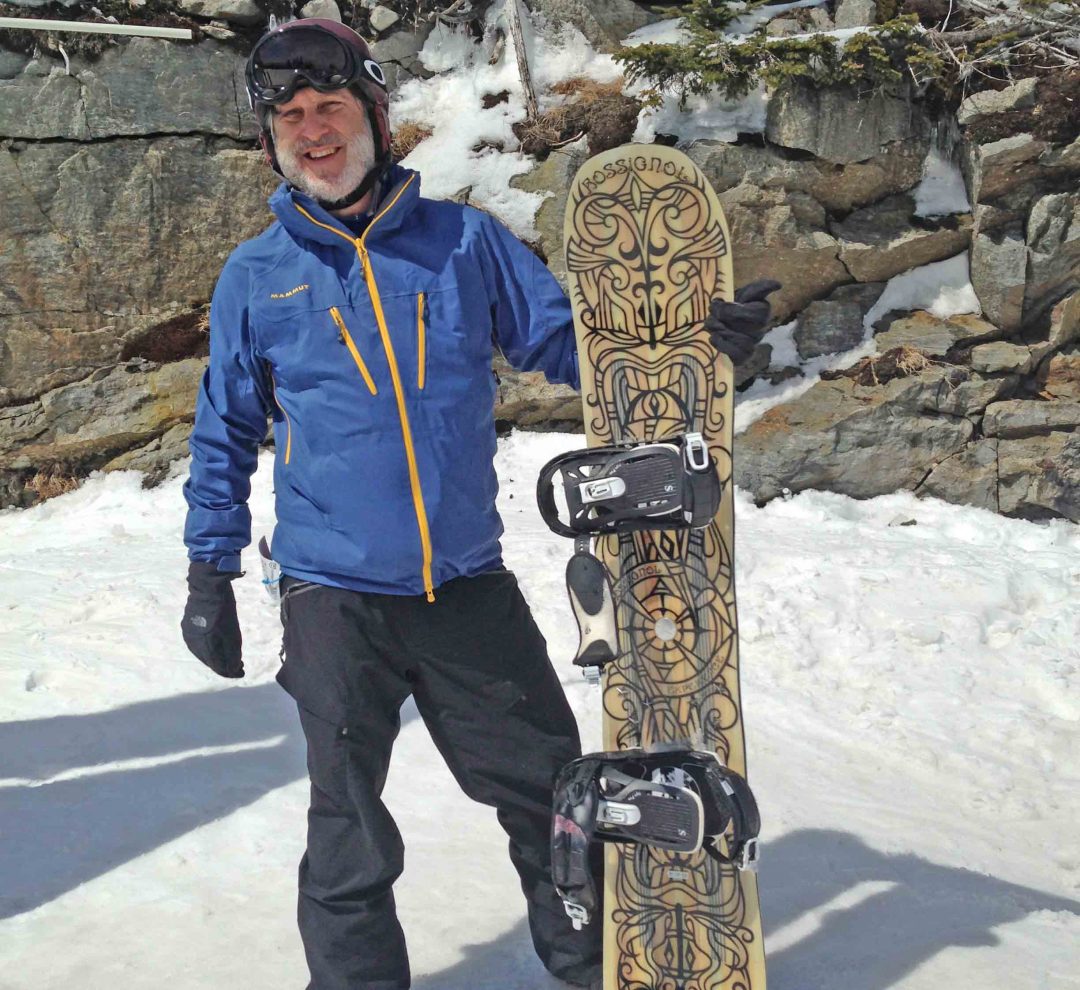
XCSkiResorts.com publisher Roger Lohr likes to go alone, sometimes on the spur of the moment. Anti-social? Expedient? Credit: Roger Lohr

XCSkiResorts.com publisher Roger Lohr likes to go alone, sometimes on the spur of the moment. Anti-social? Expedient? 
Credit: Roger Lohr

Ski areas don’t really want to hear about people snowboarding by themselves because they like the multiplier effect of groups and families. At the risk of being called a loner, anti-social, or a follower of the British punk band the Anti-NoWhere League, I can surely admit that I like going SNOWBOARDING BY MYSELF. Self centered? You betcha!

One big benefit of going alone is avoiding the negotiation about the time to leave for the slopes, meeting up, when or if to stop for some food or drink, when to go home, etc. Sometimes, I decide in the morning on a given day that it is just right to be out there snowboarding and within 20 minutes I’m in the car and off to the mountain. It just doesn’t take much time to don the base layer, put in contact lenses, grab the accessories bag, boots, board, jacket/pants and car keys.

Of course, I must disclose that going snowboarding might mean only a 10-minute drive to the closest ski area but it also could be an hour or two to a further destination that has better snow conditions. I also admit that sometimes I like my favorite mountains because they have easier runs or a better lunch selection. And being a writer, going alone allows time flexibility to go snowboarding during the week or any day for that matter. When I go snowboarding with someone else, all of these issues become a group decision.

Getting to the ski area, I get on the chair lift pretty quickly after changing in the car, getting a lift ticket, and hopping on the lift. There is no waiting for any acquaintance with their idiosyncratic snow sport rituals. I’ve streamlined my rituals and I’m happy to practice them every outing.

Always open to meeting people on the chairlift, I’m willing to put my music on pause to have a conversation about anything. Some days I don’t meet anyone willing to chat and there are some other days when I meet someone who I’ll join to do some runs. There’s also the rare occasion when I’ll befriend the person that I meet on the chairlift but, more often, I ride the lift listening to my own tunes, selecting the desired runs, and navigating the mountain as I wish.

Based on momentary whim, I do some warm-up runs, cruise some easy runs, drop in on an occasional dash into the glades, turn on the jets on the groomers, pursue powder stashes, and so on. No discussions, no joint decisions, no concerns about the partner’s prowess, boredom, or whether he/she needs to hit the head. There’s no guilt about how much I’m getting for the value of the lift ticket. There’s no worry about bailing because that day’s snow or weather conditions are not conducive to having very much fun. I like riding in a snowstorm for the freshest powder, or doing runs in the spring time mush, and there’s no concern that perhaps I drove an hour to ride only three runs and decided to leave because I wasn’t feeling it.

Yeah, I like snowboarding by myself.

Book Review: X-C Skiing Saves The World

The Winter Fortress By Neal Bascomb.

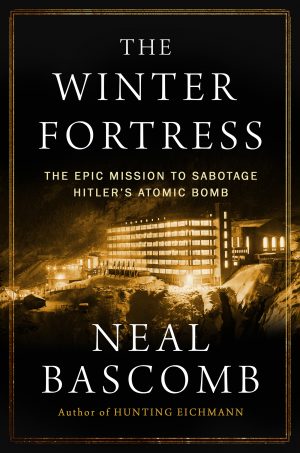
Winter Fortress

Had Nazi Germany won the competition to build the first atomic bomb in the early 1940’s, the world today could be a very different place.  The Winter Fortress: The Epic Mission to Sabotage Hitler’s Atomic Bomb by Neal Bascomb is the gripping true accounting of the race to build the atom bomb during World War II.

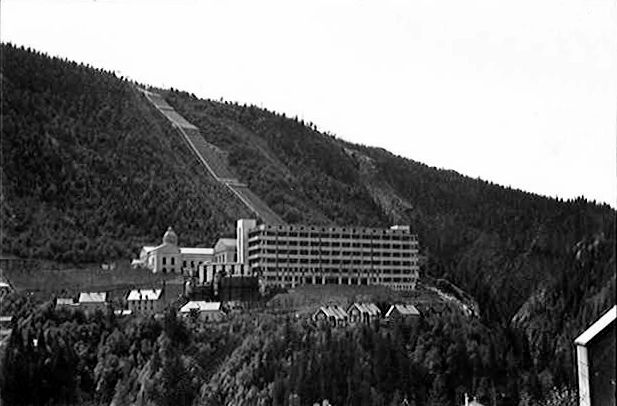
In 1942, the Nazis were working on the atom bomb and they depended on a necessary ingredient “heavy water,” which was produced in Vemork, Norway at an electricity plant run by Norsk Hydro. The Nazis invaded Norway and commandeered the facility, which was set in a castle fortress above a precipitous gorge. The production of heavy water was forcibly increased and shipped to Germany to be used in experiments needed to create the atomic bomb.

Bascomb sets the stage explaining the process of producing the bomb and the background of the story’s Norwegian participants, who planned and implemented what may have been the most significant and daring commando raid of World War II. Various plans were hatched in Britain and communicated to Norwegian spies, who on their cross country skis in the backcountry withstood hardships to avoid the German occupiers. The Winter Fortress has plenty of activity on cross country skis including a long distance chase escaping Germans on skis, which would make any Norwegian Olympic biathlete proud.

The winter-oriented hardships were dramatic such as parachuting at night, freezing temperatures, the search for food, and during the nighttime trek to the Vemork plant “trudging through snowdrifts sinking nearly to their armpits in wet snow.” During the raid the saboteurs were dressed in white camouflage suits over British Army uniforms to make it look like they were not Norwegians to spare the local population from German retaliation. They advanced on skis and on foot before climbing a 600-foot wall above the Mana River to clandestinely reach the facility, which was set on a rock ledge.

The efforts of the Norwegian underground to sabotage the plant were marred for months by miscalculations, malfunctions, and calamities as the men waited to receive orders. They braved multi-day blizzards, unsuccessful hunting for food, and cabin fever to the nth degree. These Norwegians, who refused to submit to the Nazi occupiers were mostly trained in Britain and supported by local sympathizers. They awaited the conceptualized schemes by British and Norwegian masterminds. The plans had various possible results that were outlined by the author.

The story is a roller coaster of determined undertakings to interfere with the German efforts to produce and transport heavy water. The impact on the protagonists and their families and neighbors are portrayed as well as Nazi brutality in the war.

Neal Bascomb lives in Seattle and is a former international journalist, who is a widely recognized speaker on the subject of World War II and the best-selling author of Hunting Eichmann, The Perfect Mile, and Red Mutiny. The publication date of The Winter Fortress from Houghton Mifflin Harcourt is scheduled for May 3, 2016.

The Winter Fortress: Vemork Hydro Plant where heavy water was manufactured.

The Winter Fortress: Vemork Hydro Plant where heavy water was manufactured.


SeniorsSkiing Guide: Bretton Woods—A Triple Play Resort

Roger Lohr, Publisher of XCSkiResorts.Com, Reports On Bretton Woods’ Snow Assets: Alpine, Nordic, Historic Hotels.

The magnificent Omni Mt. Washington Hotel lies at the base of Bretton Woods' Mt. Rosebrook. Credit: Bretton Woods

The magnificent Omni Mt. Washington Hotel lies at the base of Bretton Woods’ Mt. Rosebrook.
Credit: Bretton Woods

Bretton Woods is part of the Omni Mount Washington Resort at the southern base of the mighty Mt. Washington in New Hampshire on Route 302. The resort includes three significant snow resort assets: hotels/inns (the historic Omni Mount Washington Hotel, the Bretton Arms Inn), the Bretton Woods alpine ski area and the Nordic Center. Spectacular scenery and many photo opportunities abound!

Alpine Skiing at Bretton Woods

The alpine ski area has 464 acres of skiing and snowboarding on 62 trails and 35 glades and three terrain parks. There are 10 lifts including four high-speed quads, food outlets at the main lodge and, up on the slopes, there is a restaurant at the top of the Bethlehem Express lift. There’s also a cabin destination for snacks and libations accessible by T-bar near the top of Mt. Stickney, and a unique candy store (!) at the top of the Zephyr Express lift.

Snow and Terrain

Sunrise run at Bretton Woods. Notice the corduroy. Credit: Roger Lohr

Sunrise run at Bretton Woods. Notice the corduroy.
Credit: Roger Lohr

Bretton Woods is known for consistent snow conditions, and it’s rarely ever windy. They’ve got snowmaking on 92 precent of the trails. Over the years, Bretton Woods was known as an easy mountain with few steep slopes and that, in fact, is one of the best reasons for older skiers to become aficionados of the area. The runs are short and the lifts are fast, and this allows older skiers and riders to turn on the jets and avoid getting tired from runs that are too long.

The ski area has now become recognized for its grooming by earning first place mention in a skiers poll.  It also has excellent accessible glade skiing that can be enjoyed by intermediate skiers and boarders and has the longest lasting powder. Bretton Woods has an excellent layout with the four high speed chairlifts helping to spread skiers out on the mountain, which keep lift lines reasonable and often nonexistent. The West Mountain and Rosebrook areas on the mountain are separated from the main mountain, and they provide plenty to explore both on the slopes and in the glades.

Bretton Woods is host to many multigenerational families, and you rarely see out-of-control skiers who are skiing or riding too fast. I’ve always enjoyed the slope edges at Bretton because they provide terrain that is accessible and ungroomed and most Bretton skiers avoid these parts of the slopes. Untracked powder can remain on the slope edges and in glades for days following storms.

Suggested Alpine Skiing Itinerary For Seniors

My recommendation for Bretton Woods is to take the Bethlehem lift and then ski to the Rosebrook lift. Take a few runs in the Rosebrook area in some easy glades, but don’t go too far to the east, or you’ll end up back down at the base. From the top of the Rosebrook lift, go west and keep your speed up to reach the West Mountain for runs in the glades on that side of the mountain. Enjoy plenty of narrow runs in the West Mountain trees. There’s a restroom at the base of the West Mountain quad, if you need it.

The lodge has plenty of free storage bins and services in the basement, a cafeteria on the first floor, a bar, restaurant, and a climbing wall on the third floor. The food at Bretton Woods is standard ski area fare.

Special offers for seniors include a $25 midweek/non-holiday lift ticket for ages 65+, and those 80+ ski free everyday. The popular Wiser Woods weekly program (offered Tuesdays January 5-March 15, cost $125 for the season plus lift ticket) lets skiers and riders age 50+ with similar interests and ability ski with one of Bretton Woods’ instructors and enjoy the camaraderie of others during morning coffee socials and end of season get together.

Nordic Center: Lift To Mountain Trails

Nordic trails offer views of Mt. Washington at Bretton Woods. Credit: Bretton Woods

Nordic trails offer views of Mt. Washington at Bretton Woods.
Credit: Bretton Woods

The Nordic Center is adjacent to the grand hotel, and it has 100 km of XC ski and snowshoe trails. Take trails to the yurt for a popular destination about 5 km from the Nordic Center, and you’ll enjoy some thrilling downhill on the return trip. There are various locations to stop and rest along the way including a river bridge, which is a great place to take photos.

The lift-served Mountain Road trail may be the most fun to be had on XC skis in New England. I’ve taken many friends on the Mountain Road because it is much easier to take the lift up and then ski downhill on the trail, and it has incredible scenery and views. This 7 km trail is accessible from the top of the Bethlehem Express quad at the Bretton Woods alpine ski area (five minutes from the Nordic Center via complimentary resort shuttle). Along the way, take a side trip on a T-bar lift to the Stickney Cabin for snacks and libations and to ski additional trails on the way back to the Mountain Road. For senior or novice XC skiers, the Mountain Road is sure to be a lifetime highlight!

Correspondent Roger Lohr, on the Mountain Road, is publisher of XCSkiResorts.com Credit: Roger Lohr

Correspondent Roger Lohr, on the Mountain Road, is publisher of XCSkiResorts.com
Credit: Roger Lohr

While you’re at the area take the free shuttle and go check out the historic Omni Mt. Washington Hotel for some drinks or dinner. It harkens back to the time of the grand hotels (bell boys, ski concierge, etc.) and it has been renovated with a new spa, wonderful restaurants and bars, and even a dance club in the basement for late night action.

Bottom Line

A full day of alpine skiing for skiers older than 64 on weekends or holidays is $73; midweek is $63, and skiers older than 79 are complimentary for alpine or Nordic skiing. The Nordic Center is $14 for skiers aged 65-79 and only $7 if you are a lodge guest at the resort. The Nordic High Country pass is $31 (or a $10 add on to a ski ticket) for one ride on the Bethlehem Express lift with unlimited use of the T-bar at Mt. Stickney.

Bretton Woods Resort Alpine Trail Map

Bretton Woods Resort Nordic Trail Map


Senior-Friendly Cross Country Ski Resorts

X-C Resorts Offer Discounts, Amenities For Senior Skiers.

Special Thanks to Roger Lohr, Editor and Publisher of XCSkiResorts.com for pointing out these snow-country x-c resorts that are specially accommodating to seniors.

Nordic skiing director at Bretton Woods, NH, is 84 year old Ellen Chandler. Credit: Roger Lohr

Martha Chandler, 84-year old mother of Bretton’s Nordic Center director Ellen Chandler, glides along.
Credit: Ellen Chandler

About a quarter of the cross country (XC) skiing population is older than 50 years old, and, as Baby Boomers continue to age, we are remaining active—many of us are looking for softer or easier forms of recreation and cross country skiing and snowshoeing fit that prescription.

It is important for older people to exercise because it can help fight both physical and psychological maladies. Everyone understands the need to stay physically active and there is a growing body of research indicating that physical activity is beneficial for the brain, particularly the hippocampus, which is that part of the brain where working memory partially resides and is most susceptible to problems associated with aging. There is extensive evidence that outdoor exercise has positive impacts on sleep, depression, and anxiety. No matter how old you are, it just makes you feel good, too.

The SeniorsSkiing.com 2015 Subscriber Survey showed that the priorities of the older skiers include: discounts; easy access to the area facility from the parking lot; newsletter or website pages dedicated to specific activities catering to older skiers; instruction or guide tailored to older skiers; and a meeting place or set-aside areas in the lodge for seniors.

There are XC ski resorts and lodging establishments that have those senior-friendly characteristics and the incentives almost always include discounts for older people. At Canmore Nordic Center in Canada, trail fee discounts begin at age 55, while most ski resorts set a higher age for lower-priced season or daily passes. At Bear Valley Nordic Center in CA, skiers aged 60-69 get a 28% discount on trail passes and those aged 70 and older get 60% off. At Lone Mountain Ranch in Big Sky, MT there is a discount for skiers aged 60-69 while it is free for those aged 70 or older to access the ski trails. They also apply a senior discount for season passes. This is a popular way that most ski areas attract the older skier segment.

One of the age-old concepts is that many senior skiers are retired and as such, they have more flexibility in their weekly schedule. During the week, most cross country ski areas have few patrons, thus the development of group offers, activities, and programs such as at Lutsen Resort in MN where there is a Sunday-Thursday discount offer on lodging rates that includes free XC ski or snowshoe gear and a guide. The Cross Country Ski Headquarters in Roscommon, MI (and other XC ski areas in MI) has the Silver Streak Week (Monday-Friday on January 11-15, 2016) with complimentary facility access, free hot cocoa, and free demos.

Jackson Ski Touring has easy-ski programs for seniors. Credit: JSTF

Jackson Ski Touring has easy-ski programs for seniors.
Credit: JSTF

Programs such as Jackson Ski Touring’s Friday Gliders & Easy Sliders and Tuesday Trekkers provide a group experience that’s taken advantage of by mostly older folks. Such programs coordinate a scheduled weekly outing for groups such as the Easy Sliders, which is a group of skiers who cross country ski on easier trails (and they get tips from a guide) or the Tuesday Trekkers snowshoe group. For these examples, the Jackson Ski Touring Center in NH is the starting point, and, after the tour, people meet back at the lodge for an après ski spread with wine and cheese, fruit, coffee. There’s even a masseuse on hand to offer massage for tips. Garnet Hill Lodge in North River, NY, hosts a weekly snowshoe club and Cross Country Ski Headquarters reports a similar group regularly drives two and half hours from Grand Rapids to visit and ski the area.

At Lapland Lake Vacation Center in Northville, NY there’s a Silver Strider discount trail pass and the weekly “Soup-er Seniors,” which includes a free bowl of soup on non-holiday Thursdays starting in January.

Road Scholar” is a brand within the Elderhostel program intended for adults (many who are seniors) who want to travel, learn and stimulate discourse and friendship among other people for whom learning is the journey of a lifetime. The Craftsbury Outdoor Center hosts week-long Road Scholar XC ski programs during the winter months with programming inspired by the hostels and folk schools of Europe offering short term academic experiences to adults. This year, Craftsbury Outdoor combines XC skiing and snowshoeing with yoga programs, film programs, and dance programs.

The folks taking advantage of cross country ski offers are proof that you’re never too old to get out and enjoy nature in the winter. If you are an older skier or someone who would like to try cross country skiing or snowshoeing, check an XC ski resort near you for special programs.

The Art of Cross-Country Skiing: The Basics

Cross country (XC) skiing is a terrific way to enjoy the great outdoors in winter. Is it great for older people that want to stay active? You betcha!

From Roger Lohr, founder and editor at XCSkiResorts.com and prolific writer on cross country skiing

The pleasures of XC skiing can be a wonderful change of pace for winter activities.  Whether you seek the solitude of solo skiing or are spending some quality time with family and friends, it’s relatively inexpensive, accessible and aesthetically pleasing. It’s also a great rhythmic, aerobic activity, enabling you to burn up hundreds of calories per hour without straining joints such as ankles and knees. You’ll get a low-impact workout while enjoying the outdoors, and the scenery sure beats the view at your local health club. Here are some tips:

Boundary Country Trekking x-c skiers in northern MN enjoy some hot chocolate. Credit: Roger Lohr

Boundary Country Trekking x-c skiers in northern MN enjoy some hot chocolate.
Credit: Roger Lohr

Where do you plan to ski? The terrain and location helps determine your equipment choices. XC skiing allows you to choose from a variety of locations. parks, golf courses, hiking trails, or XC ski areas are all good choices. Commercial XC ski areas charge a fee for access, but they offer maintained trails and tracks, signage, and you can get help if you run into trouble out on the trails.

You can rent equipment at your local ski shop or at the ski area. This is often recommended for first-time skiers, and some ski shops will apply the price of rentals toward purchasing new equipment.

Buying used equipment at a ski swap may be a mistake. Be aware that at garage sales and some swaps, you may wind up with gear that is outdated or inappropriate for you. Buy a package deal that offers a discount when you buy skis, boots, bindings, and poles together.

In-track XC skis are used with a traditional kick-and-glide motion on maintained track systems set by special grooming machines. They have minimal sidecut so the skis will stay in the tracks. Sidecut refers to the narrowness of the middle part of the skis in relation to the wider tip and tail.

Off-track XC skis are often used to navigate ungroomed trails and terrain in parks, open fields, and on golf courses. They are wider than in-track XC skis and provide more flotation and stability in fresh snow. Wider and metal-edged backcountry skis are for the more adventurous skier, who experience variable snow conditions.

Some XC skis have waxable bases, on which you put “kick wax” for grip. Other skis have waxless bases, where a pattern in the middle third of the ski base, such as small plastic ridges or scales, provides the grip. Waxless skis have been designed to run beautifully in just about any kind of snow. Your decision will center on whether you want optimal performance by waxing or optimal convenience with waxless skis.

Have the ski bindings professionally installed on the skis. Be aware that the bindings come in different integrated systems so they must be matched to the type

Quebec's Charlevoix region is a wonderful destination for cross-country skiing.  Credit: Tourisme Quebec

Quebec’s Charlevoix region is a wonderful destination for cross-country skiing.
Credit: Tourisme Quebec

of boots that you select. Your boots should feel just like running shoes so try on the boots wearing the socks that you plan to wear when skiing. Consider foot beds or fitted insoles if you have problems with your feet. Because of these various sizing methods, it’s important to try on boots before buying them. The fit should be snug and your heel should remain in place. You should be able to wiggle your toes.

XC ski poles are used to help forward thrust. Skiers plant their poles behind on an angle. If this is your first set of XC gear, any reasonably light pole will be fine. Select poles that fit comfortably under your armpits when you stand on the ground.

Now get going – XC skiing is relatively easy to learn, but first-timers should take a lesson from a qualified instructor at a commercial XC ski area to greatly enhance the experience. As your confidence on the skinny skis grows, you’ll have a life time of nature outdoors, fitness and fun.