Tag Archive for: senior skiers

foggy chair

Short Swings!

We are entering a season of uncertainty.

Some resorts have discontinued walk-up ticket sales, some will require advance reservations, many will require masks and social distancing; for others, it will be business as usual. Some, unfortunately, will not open at all.

Many resorts are bracing for a sharp reduction in the number of vacationers arriving by air. Air traffic is down, and projections of COVID spiking as Winter advances do not bode well for ski areas.
Quarantine restrictions will impact long weekend trips to the Rockies, unless, of course, you live nearby. Same will apply to the longer ski vacation. You’ll be able to fly from New York, New Jersey, or New England to Utah and enjoy the sunshine and powder. But several of the Eastern states require either quarantine or a negative 72- hour COVID test when returning home. As of this writing, it’s virtually impossible to secure a 72-hour test in Utah unless you’re scheduled for surgery or showing symptoms. Maybe that will change for visiting skiers; a possible but unlikely prospect.
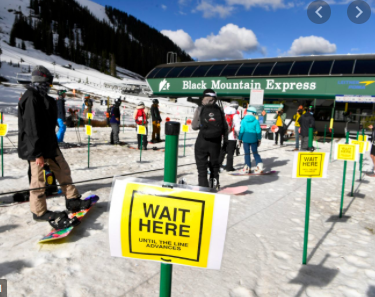
However you get to your resort of choice, expect to have a temperature check and, if you’re solo, ride the lift alone. Refuge in the lodge on a cold and/or stormy day may not be as accessible as in past seasons. Seating will be limited. Food and beverage orders may have to be called in. You may find yourself sitting outside, sheltered by temporary windbreaks.

Maybe this will change by the time snow flies, but entry restriction for Americans traveling to Canada and the EU will require most of those in the U.S. to ski in the U.S.

I decided on a workaround to reduce these and other obstacles this season. We rented what looks like a lovely house in Santa Fe with the expectation of skiing the cluster of areas relatively close by.

If you’re fortunate enough to live near an area, the complications will be much reduced.

An alternative available to many readers will be substituting or mixing cross-country, snowshoeing, fat biking and other activities with Alpine. If you are in or near snow country, these opportunities exist in local parks and golf courses, at some Alpine areas and in freestanding X-C resorts. 

In anticipation of this likely shift, we’re extending our Nordic and snowshoe coverage. The new Make More Tracks Resource Guide is an extensive collection of articles to help you get into Nordic activities. In early November, an entire issue will be dedicated to Nordic, and, throughout the season, each issue will have a Nordic-themed article.

My first priority for the season is to use Alpine boards on New Mexico’s slopes and trails. Like, most of you, I love to be outside in Winter, playing in the snow.  I haven’t been on X-C skis since the last Ice Age. But given the prospects for this season of uncertainty, it certainly will be part of my outdoor Winter mix.

Big Bargains with Indy Pass

Indy Pass holders get two days at each of 55 North American resorts. Available in two versions: Indy Pass+ has no blackouts and costs $299; Indy Pass has blackouts and costs $199. The program offers generous refunds if the pass is used only a few days. There are 20 participating resorts in the West, 17 in the Midwest, and 18 in the East.  Click here to register.

Amazon Patents Skier Drone
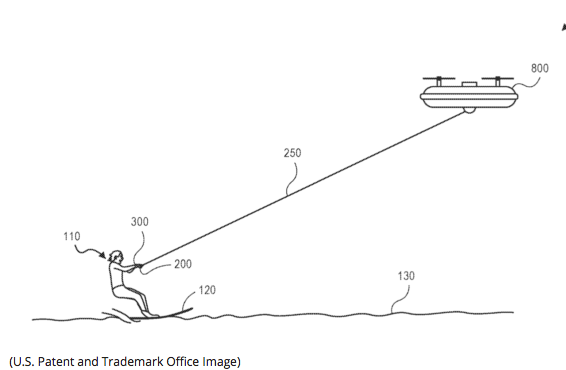
In past issues, we’ve highlighted a series of devices intended to propel or pull individual skiers up the hill. Amazon recently received a patent for a drone that would pull skiers uphill, follow them down, and repeat the process. Will it happen in our lifetimes? No answer to that question, but if it does, it may be the end of chairlift small talk.

Those Lifetime Guarantees
The zipper broke on one of my lightweight Patagonia fleeces. It was in the back of the car when I passed a Patagonia store, open but closed to customers. I called the number on the door, and an employee came out.  He took the fleece, filled out a form, and told me to expect the repaired product in three to seven weeks. It was delivered, repaired, cleaned and free of charge fewer than two weeks later. Good on you, Patagonia.

The Eddie Bauer daypack I purchased in the early 70s has been returned multiple times in the past half century. Once a seam was unraveling. Another time, a zipper was jammed. The company offered to replace it, but I have a sentimental attachment to that old, well-used pack. Each time it’s been repaired , cleaned and returned at no cost to me. Thank you, Eddie Bauer.

Ditto for Farm to Feet, DarnTough, SmartWool, IceBreaker and other reliable brands, although they sometimes require the purchaser to jump through a few hoops.

Bottom Line: When purchasing outdoor clothing and other gear, consider the extra value of brands with lifetime warranties. That way, the purchase becomes an investment.


Gaiter vs. Face Mask
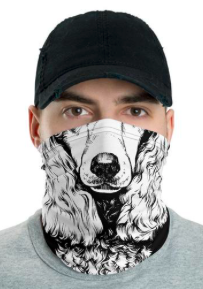
Gaiter

Face Mask

A recent Duke University study determined that breathable neck gaiters (I love my Buff) are far less effective blocking pathogens than standard surgical or cotton cloth masks. The study used a neck fleece made of polyester spandex. Lesson learned: Wear neck gaiter for warmth. Wear cloth or surgical mask for virus protection. 


Study and Ski in the Haut Savoie

The French language Alpine French School in the ski resort of Morzine has a new facility in Samoëns ski resort with direct links to the Grand Massif area that includes Flaine and Les Carroz. Many courses combine French and skiing. The school, oriented to long term residents, has strict COVID protocols. A variety of accommodations are available. Click here for more info.

A Trick To Try at Home


I’m always running out of eyeglass cleanser. The Internet has numerous DIY recipes some of which work pretty well. But recently I was in a pinch and used a few squirts of Arm & Hammer™ Simply Saline Nasal Mist to clean my glasses. Worked just fine and the slender canister seems to be bottomless after months on the job.

White Out

Thinking about past winters when you were discovering the joys of being outside in the snow? This three-minute watercolor animation is beautiful and special. Click here. or the image below.

Endnote

We’re experiencing a congruence of odd events. 

  • The global COVID problem has a disproportionate impact on older people. Simple precautions are known to reduce its impact, yet many don’t believe the virus is real and/or resist being told what to do. 
  • The environment is responding to centuries of unwise management. Punishing storms and wildfires are disrupting millions of lives. What we thought was permanent mountain and sea ice is melting at alarming rates.
  • Divisions in beliefs and thinking are dangerously polarized.

I’m not a gardener but I subscribe to the adage of tending our own gardens. Whether you take that literally or metaphorically, looking after the things that matter most to us require being attentive to nurturing and improving the things we value and protecting the things we love.  For our U.S. readers, whatever your political persuasion, this can be interpreted as a call to vote.

✪✪✪✪✪✪✪✪✪✪✪✪✪✪✪✪✪✪✪✪✪✪✪✪✪✪✪

As we start our 2020-21 weekly schedule, Mike and I look forward to providing you with meaningful and entertaining content about what every SeniorsSkiing.com subscriber has in common: the love of skiing or boarding or simply being outdoors in the snow.

This Week In SeniorsSkiing.com (Aug. 28)

We’re On Vacation!

Seniors Skiing is a video produced by correspondent Don Burch. Click the image below to bring back images of last winter.

Mask-covered, social-distanced, sanitized-hands, take-out vacations are the end of August things to do at SeniorsSkiing.com.  Jon has isolated himself in a travel trailer somewhere in the North West, and I’ve been on a sailboat in Maine, watching ospreys and sunsets.

However, we do want to send you a reminder of winter dreams.  Here’s a neat video from SeniorsSkiing.com correspondent Don Burch that shows us what it is all about. Enjoy. Just click on the image to watch.

Thanks, Don, for this wonderful gift of winter.

Remember, there are more of us every day, and we are not going away.


Short Swings!

A Fort Lauderdale resident asked, “Do you know where we Floridians go when we want to ski?” It was a joke. Her punch line: “The airport.”

From the way things appear to be shaping up, fewer and fewer older skiers will be using planes to get to their favorite resorts. There’s a reluctance to get on planes until the virus is under control.

I get it. Regardless of our individual states of health, as a group whose age averages 69.8, we are high risk. Boarding a crowded flight – even in first or with the middle seat  empty – isn’t appealing.

I think big resorts get it, too. In normal seasons, big western resorts rely on skiers flying to their destinations. Recently, some resort tourism executives told me they’re shifting attention to skiers within a 6 – 8 hour drive. 

In the June readers’ survey, 92% of you indicated you definitely or probably would ski during the coming season, and 71% said you plan to take one to more than 4 long distance ski trips. 

Of those planning long distance trips, 40% plan to drive and 41% plan to fly then drive a rental car.

That was in June. The way infections and fatalities have been accelerating, I’m guessing that now, about a month after that survey ended, fewer people would want to fly.

I know I wouldn’t. 

In a recent media briefing, the heads of National Ski Areas Association and Vail Resorts’ mountain operations explained how they’re patching together best practices from the restaurant, hotel and other industries to protect skiers from the virus (and, I expect, themselves from liability). Based on what they said, we can expect limits on numbers of skiers/boarders, temperature checks, social distancing, fewer people on lifts, and more outdoor dining.

My biggest takeaway from the briefing was that for the coming season, we’ll need to plan before we go. “No more rolling out of bed and deciding to head to the hill,” is how one of the briefers described it.

Those living close to or at an area will do well. Those of us within a few hours drive will have their fair share of the fun. But for those who are high risk and relying on airplanes, you’ll need to make the “is it worth it?”  decision.

One point of view, expressed by several of you is, why not? At this age, how many more seasons will we have? 

EPIC’S $169 Unlimited Military Pass

Marc Liebman is a gifted military novelist, public speaker, and occasional SeniorsSkiing.com contributor. A combat veteran of Vietnam and Desert Shield/Storm, he flew helicopters on combat search and rescue, special operations missions, anti-submarine warfare and logistics support missions. He retired as Navy Commander after 24 years of service. His six novels are based on his experience and are really good reads. Recently, he emailed this tidbit about what he calls “the lift ticket deal of the century.” Epic Pass is offering an unlimited pass to ski at any of their 30+ resorts (Xmas excluded) to members of the military – active, reserve and retired, dependents – for $169. Details: click here.

$75 Parka; $50 Pants Deal

Orsden Parkas: Great Colors; $75

Here’s another “deal of the century.” Orsden, the parka and ski pants manufacturer, is having a “Mystery Sale.” Visit the company website, select a men’s or women’s parka, and let the company pick the color. You really can’t go wrong. Like Orsden’s styling, every one of it’s colors is good. I’ve been wearing my Orsden parka for 3-4 seasons. It’s held up exceptionally well, and has many nice features (e.g. underarm zips, RFID pass pocket, built-in goggle/glasses wipe, detachable powder skirt). The company specializes in direct-to-customer sales. It’s parkas sell for $300 and, if sold through retailers, would be double that. My wife purchased one a few years ago on sale for $175. She loves it. Now, Orsden parkas are going for $75!!! The only catch: the company picks the color and final sale/no returns. While visiting the site, check out the men’s and women’s ski pants; normally $200; now $50. Some sizes are sold out and final sale/no returns policy applies to sale pants, as well.

Liftopia Faces Bankruptcy; Collects PPP Funds

According to a Federal database, Liftopia, the online ticket-seller, received a Paycheck Protection Program loan between $350,000 and $1 million. This, while the company may be forced into bankruptcy by a group of resorts claiming Liftopia owes them $2+ million in advance ticket sales.

Elevate Suspends Operations

Roam Robotics, which makes the innovative Elevate Ski Exoskeleton, announced that due to the uncertain context caused by COVID, it is temporarily suspending investment in its unique Elevate product. The company will not be producing pre-ordered product (all deposits have been refunded) and will not be renting/demoing Elevate during the 20/21 season. The announcement said that the company would continue to develop and improve all products in its line up.

In Person 2020 Snowbound Festival Canceled 

Organizers of the Boston and Denver Snowbound Festival (formerly the BEWI Ski and Snowboard Expos) announced cancellation of the 2020 events. The reason: COVID-19 and the safety of attendees, exhibitors, and staff. They’re working on a digital version as a possible substitute. For decades,the shows have served as  “the unofficial kickoff to Winter.” Last Fall, Snowsports Industries America (SIA), acquired the Boston and Denver expos from BEWI Productions. SIA is the winter industry’s non-profit trade association representing snow sports suppliers, retailers, sales reps and resorts. BEWI was founded in 1980 by Bernie Weichsel, a member of SeniorsSkiing.com’s Advisory Council.

Suicide Increasing Among Sledding Athletes

A feature in The New York Times last Sunday reports on the disproportionately high number of bobsled, luge and other sledding athletes who have taken their lives. Brain experts suspect the symptoms stem from years of crashes, brain-rattling vibrations and strong gravitational acceleration forces. The athletes often experience an exhausted fog, which they’ve named “sled head.”

Your Own (Miniature) Cable Car (and Skiers)

FelinaWorld bills itself as the world’s largest online store for Christmas villages. Among its many miniature trees, chalets, scenes, etc. is a selection of HO scale ski lifts. They’re miniaturized versions of the real ones at a numer of Austrian ski resorts. It looks like they’re motor-driven. They even have miniature skiers for the lifts. The site also sells gondola-shaped key chains. When I visited, many of the products were discounted. Click here to get to one of the ski lift pages.


heliskiers

Short Swings!

Over the past few weeks, we’ve received numerous emails from ski industry and other leaders supporting Black Lives Matter. Mike and I want to add our voices to this and to other expressions of social justice.

Many of you will remember Bob Dylan’s 1964 song, “The Times They Are A Changin.” His anthem to social change and the consequences of ignoring it takes on new relevance during this time of social, environmental and economic uncertainty and disease.

Each of these issues is evident in skiing, boarding and other winter sports. There should be more people of color on the hill, but for many, the effects of historic social injustice have prevented their participation. 

We are constantly reminded of the unfair treatment of those whose skin color relegates them to economic and educational disadvantage and the lifelong consequences of those disadvantages.

The ski industry has acknowledged the need for change. For years, National Ski Areas Association has reached out to minorities in an attempt to attract them and add diversity to the sport.

It appears that decades after Dylan released “The Times They Are A Changin’,” things, finally, are changing.  It’s about time.

National Brotherhood of Skiers

The National Brotherhood of Skiers the group of African American skiers founded in 1972. Its history is fascinating, and its programs introducing black youth to the sport are encouraging. Learn more about NBS by clicking on the image above an watching a first-rate video produced by REI

95-Year-Old Heli-Skier Sets Guinness Record

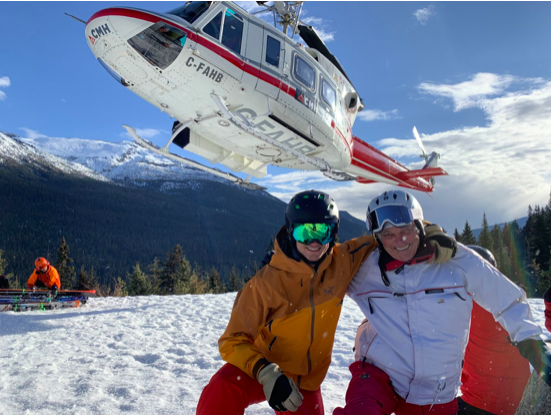
World’s oldest heliskier Gordon Precious and grandson. Credit: CMH Heli-Skiing

Gordon Precious, 95, of Hamilton, Ontario, recently set a new Guinness World Record for oldest heli-skier. A lifelong skier, he achieved the record last year and shortly before his 95th birthday. The previous record was set by a 91-year-old. 

Liftopia Stiffs Ski Resorts

Liftopia, the biggest online lift ticket seller, owes more than $3MM in ticket sales to Alterra, Mountain Collective, Aspen and other resorts. Sources report Liftopia will seek bankruptcy protection.

Mountain Collective Lowers Price; Adds Resorts

Good News: Mountain Collective is giving 2019-20 passholders $50 off their 2020-2021 passes. And it has added these resorts: Sun Peaks Resort, BC; Grand Targhee, WY; Panorama, BC; Sugarloaf, ME, and Chamonix, France. There are now 23 top-raking destinations on the pass.

Less Than Good News: “No Questions Asked” refund deadline for purchasers is October 16, 2020; slightly early to know about the health of the ski season when COVID’s second wave may be reaching shore.

Portillo Postpones Opening “Indefinitely”

Portillo

A letter this week from Ski Portillo states that the legendary Chilean resort will remain closed indefinitely because COVID-19 is at peak levels in Chile, quarantines, and travel restrictions.

Reliable Source of Reliable COVID Supplies

KN95 Mask                                                                  Type II Surgical Mask

I keep on hearing about people ordering face masks online and getting ripped off. An acquaintance thought she was purchasing COVID masks and was sent tiny, mouth-only coverings, unusable for COVID or any other protection. A recent column mentioned that Masterfit, ski boot footbed manufacturer and SeniorsSkiing.com advertiser, now sells high quality KN95 (comparable to the US’s N95) and Type II surgical face masks.

  • KN95 masks fit securely around the face and provide maximum fluid resistance and filtration efficiency. They’re good for those interacting closely and frequently with the public. 
  • FDA Certified Type II surgical masks are what many surgeons wear. They’re lightweight and provide excellent protection through the triple filtration face barrier. Type IIs comfortably wrap around nose, mouth and under the chin. While not designed to make an air-tight seal, it does provide significantly greater virus filtration protection than a simple dust, particle or homemade mask.

Masterfit also sells reusable face shields and an excellent COVID disinfectant spray. SeniorsSkiing.com subscribers enjoy a 10% discount on masks. Pre-discount prices : $35 per package of 10 KN95 masks and $39.50 per package of 50 Type II surgical masks. Click here to access Masterfit’s PPE products. For the discount, enter  FOMCOVID1910 at checkout.


Planning on Skiing Next Season? 92% of You Say YES!

Based on the just completed SeniorsSkiing.com Reader Survey, 92% of you plan to go skiing next season. This, despite growing coronavirus concerns, especially within our age cohort.

You also weighed in on the importance of preventive measures ski areas can take to control the virus:

  • 86% of you consider continuous sanitizing in all public areas (e.g. dining, lodge, restrooms) to be extremely or very important
  • 74% say social distancing in dining areas, lift lines and other public spaces is extremely or very important.
  • 59% report use of face masks on lifts and in public spaces is extremely or very important.
  • 50% indicate daily limits on numbers of skiers and boarders are extremely or very important.

Almost 3,500 of 16,500 readers responded. That’s 21% of our growing subscriber base. Past survey response rates rage from 17.5% to 27.5%.

As to where you plan to ski, 40% will stay local; 56% will take one or more long distance ski trips and ski locally, and 25% will take one or more long distance trips.

Of those taking long distance trips, 42% will ski the US Rockies, 26% will ski the US West, 14%, each, will ski the Canadian Rockies and the US East, and 10% will ski in Europe, Australia, New Zealand, Asia, or South America.

We also asked with whom you usually ski. The question listed “solo,”  “spouse,” “spouse and friends,” “friends,” “adult children,” “grandchildren,” etc. and gave you the opportunity to check “all the time,” “quite frequently,” or “somewhat frequently,” “rarely,” and “never.” Your responses, while not absolute, present a proportional picture:

  • 48% ski with friends all the time or quite frequently
  • 44% ski solo
  • 43% with spouse
  • 34% with spouse and friends
  • 25% with adult children
  • 16% with adult children and grandchildren
  • 10% with grandchildren

We’ll report on other findings in future issues, but one we thought you’d be interested in learning is the amounts you reported spending last season on all aspects of skiing (e.g. equipment, clothing, accessories, travel, lodging, food, lifts, etc.) for yourselves and others.

  • 51% less than $2500
  • 29% between $2500 and $5000
  • 19% more than $5000

The average respondent’s age is 69.8. Seventy-three percent are male; 27% female.

Thank you for taking the time to provide your points of view. We expect that your input, especially on next season’s plans, will help inform resort management decision-making.

The survey was conducted in early June using Survey Monkey. 

Short Swings!

Boris and Ivan have been skiing across the frozen steppe for many days. After too long on the front, they’re finally going home. Boris spent hours telling his colleague what he intends to do when, finally, he arrives home: hug his family, down a hearty meal, paint the dacha, tend the garden. 

“Ivan, what is your plan?,” he asks. 

“My wife will come to the door with vodka.” 

“And then?”

“We’ll embrace and make passionate love.”

“And then?”

“I’ll remove these damn skis.” 

That’s one of the few decent ski jokes I know, and, apologies, if I’ve used it before in this space.

Unfortunately, we removed our skis too early this season. And there are legitimate questions as to whether there will be a next season.

That thought, stated indirectly, appears to be on many minds. It’s why Ikon Pass is being sold with a safety net. Purchasers can decide by late November whether they want to use it for 2020-21 or 2021-22. They’ve discounted the price to encourage early sales. And Epic Pass just announced baked-in insurance coverage. Their parent companies need cash to service debt, proceed with planned projects and maintain whatever is left of their payrolls.

Some areas, pursuing similar early purchase tactics, are spinning their messages to get patrons to help them keep the lifts spinning. Their appeal: Your early buy will help keep us afloat. I don’t mind that, as long as it’s not coming from an area that joined one of the big pass programs and eliminated its own senior pass discount. There are several of them.

It’s interesting to see how the resorts are responding to COVID. My prediction is that singles will be riding doubles, triples will be occupied by two’s, etc. Areas relying on gondolas and trams will limit their occupancy and require facemasks. Lines will be longer. See below for Chamonix’s sensible response. 

I expect day lodges will have fewer seats and surfaces will be aggressively sanitized. Maybe restrooms will have full-time attendants whose job will be keeping everything clean. Resort HR departments advertise for “Lifties.” Why not “Resties?”

Expect hand sanitizer stations to be as ubiquitous as tissue dispensers.

Of course there will be rogue skiers and boarders defying the rules and placing themselves and others at risk…just like they do when playing human pinball racing down the hill. The likelihood of their getting reprimanded for sneezing in line is about as likely as their getting stopped for reckless skiing.

I haven’t missed a season since 1954 and don’t intend to miss out on 2020-21. But if things get too complicated on the hill, I might throw in my ski towel, grab my beach towel and head South.

Chamonix Fights COVID With Thermal Scans

Skiers at the French resort are now required to enter a thermal scanning device (similar to an airport security gate) to check their temperatures, use sanitizing material on their hands, and wear masks while waiting in line and riding lifts. Social distancing will be implemented in lines and on enclosed lifts. If found effective, this protocol may become the industry standard.

COVID Concerns = Season Pass Changes

IKON and others offer generous early purchase discounts for next season.

Epic now includes full and/or prorated insurance in event of job loss, stay-at-home orders, job transfers, etc. as well as resort closures due to COVID and other diseases, natural disasters, war, and terrorism.

Mountain Collective provides “incentive credits” encouraging existing pass holders to re-up for 2020-21. 

Alta will issue discounts to existing pass holders based on last season’s use. For a round-up of Utah area offerings, see Harriet Wallis’ story elsewhere in this issue.

Aspen will credit existing pass holders for its truncated season and “…have a refund policy that makes committing to the 2020-21 season risk-free.”

Indy Pass, arguably the best skiing value in North America, offers two days at each of 52 resorts for $199, including its Get America Skiing Promise providing up to 80% credit for the following season, no questions asked. Passes go on sale September 1. Pass holders at participating resorts can purchase the Indy for $129.

COVID Shutters Las Lenas 

Argentina’s premier resort, Las Lenas, announced that because of COVID, it will not open for the 2020 season.

Masterfit Establishes COVID-19 Webstore

SeniorsSkiing.com advertiser, Masterfit Enterprises,  has added protective face masks to its offerings during the pandemic. The insole and bootfit training company is selling facemasks to businesses and consumers at its Masterfit COVID19 webstore.   SeniorsSkiing.com readers get a 10% discount on their first 100 surgical mask purchase using coupon code FOMCOVID1910 at checkout. Here is a link to a story about how Masterfit landed in the PPE business. 

Val Gardena Repurposes Snowguns to Disinfect Streets

Handled by the Italian resort’s volunteer fire fighters, the snowguns are being used to spread disinfectant with hopes of reducing spread of COVID.

Higher Elevation Populations May Be Less Susceptible to COVID

A paper in the June issue Respiratory Physiology & Neurobiology concludes that, among other factors, “…the virulence of SARS-CoV-2 is reduced at high-altitude due to the physiological acclimatization of its inhabitants, and due to particular environmental characteristics.” The study looked at prevalence of COVID in high elevation populations in Tibet, Bolivia and Ecuador.

Two Dimensional Ski Films

Have you noticed how the many GoPro ski films on the Net have a flattened sameness to them? I enjoy watching ski films, despite their similarities to pornography (Same motions. Different locations. Repeat.). But helmet-mounted cameras generally record ski tops against a white surface, making even the steepest terrain look pretty flat. I just watched a GoPro video of someone skiing the Alguille du Midi in Chamonix. I’ve seen it, and it’s heart-stopping steep. His GoPro footage documents the run, but does little to convey the challenge. Give me those long, across-the-valley Warren Miller and John Jay telephoto shots or the ones from the chopper floating above. Go Pro is great for a lot of things. Showing steeps is not one of them.

High School to Use Local Chairlift for Graduation Ceremony

Graduating Kennett High School (Conway, NH) seniors will ride a Cranmore Mountain chairlift to receive their diplomas. Nice way to maintain social distancing in this small New England ski town.

Send A Photo Wearing Vintage Skiwear

Skiers from 1900. Source: The Guardian

Okay, you’ve cleaned the house, organized the family pictures, Zoom-cocktailed with family and friends. Here’s a suggestion for something different: Send us a selfie of you/spouse/friend wearing  vintage clothing and we’ll publish the most interesting ones in June. Make it a sweater, jacket, hat, pants, whatever. For inspiration, check out this gallery of ski fashion dating from 1900 to the early ‘70s. It was published by the British daily The Guardian. Send your pictures to info@seniorsskiing.com and include your name and where you live.

Thanks for reading. Please forward SeniorsSkiing.com to your skier friends. Advertising in SeniorsSkiing.com is a  great way to reach the 50+ snow sports enthusiast. Rates are very low and our 16,500 subscribers are very responsive. Contact: advertising@seniorsskiing.com.

The Future Is Here

Among the thousands of reasons the abrupt end to the season is a bummer is this: Those of you who were planning to demo the Roam Robotics Elevate will need to wait until we’re back on the hill.

Roam Elevate backpack and control device

Elevate is world’s first computer-assisted knee exoskeleton for skiers.

I had the good fortune to try the device toward the end of February. I met DJ, a company representative, at Deer Valley on a bluebird day and we spent much of the afternoon trying the Elevate on a variety of terrain.

If you missed our earlier article reporting on Rick Hovey’s experience with Elevate, click here. I think that Rick, a PSIA II instructor and a person with a serious knee condition, reports more thoroughly on the many benefits Elevate delivers.

But I wanted to go on record with my positive experience and encourage any skier with knee or other orthopaedic conditions to give Elevate a test run.

DJ helped me get the exoskeleton on my legs; a simple procedure involving a few easy-to-fasten straps. It’s a good-looking product that the company keeps refining. 

Next, I hefted the pack containing computer, battery and air compressor onto my back and attached air hoses and power connections. The initial sense of weight and bulk disappeared quickly. That said, DJ explained that next season’s version will be lighter and sleeker.

We skied to one of the lifts and took a few runs. DJ asked if I could tell the difference. Elevate is supposed to anticipate your moves and send puffs of air to the exoskeleton to relieve pressure on the knees. I told him I didn’t feel a thing.

Then he asked me to turn it off. The control is a device mounted near the shoulder. I did what he said and immediately and dramatically felt the difference. Elevate had been assisting me in such a subtle and effective way that I couldn’t tell until I turned it off. Amazing!

Then we entered a field of moguls. DJ had suggested moguls farther down the hill that weren’t quite as big. I took that as a challenge and went where I shouldn’t have gone. Not that I don’t ski moguls. I do. But that day was the first using new skis (I had the bindings mounted that morning) and I was a bit tired, and…enough with the excuses. I fumbled my way down and felt foolish.

That was me, not the Elevate. By then I was ready to call it a day and we headed back to where we began.

Bottom line is that Roam Elevate is approaching the end of its development stage and will be ready for primetime and purchase next season. If the season were still going, I’d strongly recommend that anyone trying to avoid knee surgery for a while try Elevate. I’d also recommend it to anyone wanting to add more ski days to the week and more ski hours to the day.

Roam Elevate is an entirely new approach to assistive ski devices. Unlike others that wrap around the knee or use springs or pistons, Elevate uses intelligence to inform how it functions in real time. The manufacturer has been using its demo centers at nine major resorts in California, Colorado, Idaho, Montana and Utah to educate future purchasers, to collect more data, and to further refine an already highly developed piece of equipment.

It’s the future. And as all of us realize, especially at this moment, sometimes the path to the future has some bumps. The difference is that the people at Roam know where their path is taking them and they’re using this time to refine and miniaturize an already elegant solution to a common problem for older skiers.

Knee issues? Wish you had greater stamina? The solution is here and getting better. Tune in this fall.

Short Swings!

Are skiers gamblers? I started thinking about that when COVID-19 prematurely ended the season. A lot of people purchased season passes of one form or another, never expecting early termination.

What odds would bookmakers have given last fall of that happening?

Skiing always involves some degree of considered risk and reward, not unlike many casino games, or life in general.

That patch of powder is inviting, but are there roots or rocks? 

If I take that unknown trail, will I wind up where I don’t want to be?

Buying skis without trying them is a risk. Buying boots without an expert to fit them also is a gamble.


When I used to leave the house early and drive two hours for a day of skiing, there were times I didn’t know whether it would be raining or snowing by the time I reached the hill. I remember decades ago driving through steady rain for more than an hour, gambling that by the time I reached the foothills, it would change to snow. It did, and I had a great day.

But taking a chance isn’t always rewarded. Many scheduled their annual ski holiday for mid-March or later. At the time, they didn’t know they were taking a chance. Now, we all do.

On a grander scale, we’ve been gambling with the environment for years. Many favor short-term gain over the terrifying long-term risk. As skiers, that gamble is showing a losing hand in areas closing due to lack of snow or the cold temps needed to run their guns.

Supporting that gamble is the understanding that we’ve entered a time when scientific fact is being challenged by uninformed personal opinion. When information sources were few, it was easier for the majority to know the difference between truth and falsehood. But now, with the explosion of information sources and with aggressive blurring of the borders between true and false, the idea that fictions can be perceived as facts has settled in. Those promoting our “post-truth” gestalt do it to confuse and manipulate; to conquer through confusion. 

Like the sport of skiing, accepting the new post-truth standard involves a very slippery slope. It is risky. And, except for those promoting these fictitious agendas, the rewards are nil.

Vail Reports March/April $ Loss

COVID-19 closures caused the company to announce its operating revenues for March and April will be around $200 million lower than expected.

Members Purchase Vermont’s Hermitage Club

Several former members raised $8+ million to buy southern Vermont’s Hermitage Club. The purchase includes Haystack ski area, the accompanying golf course, and numerous structures and inns.

SkiSkating with Snowfeet

The areas may be closed but many of us are living where there’s still snow on the ground. Recently I came across a new alternative to snowshoeing and X-C skiing. Snowfeet is a well built ski/skate that attaches to any winter boot. Once on, it lets you take off on flats or slopes with or without a set of poles. The company sent me a pair at the beginning of the season, and I loaned them to Brian Doubek, a friend in his early 50s who is an enthusiastic backcountry skier and an accomplished skater. He immediately determined that Snowfeet is best used on hardpack. He said the buckles were easy to use and effective. His observation was that weight needs to be centered over the product and using a skier’s stance with weight forward against the tongue of the boot won’t work. The FAQ section of Snowfeet’s website asks the question: Is it hard to learn? Their answer states: “It is as hard as learning to ski. So it takes some time and you will definitely fall now and then, but that’s the part of the fun.” I have yet to try Snowfeet, but expect that the learning curve is much, much shorter than learning to ski. Every time I passed the company’s exhibit at the SIA/OR Snow Show, it looked like retailers were showing interest. Snowfeet are very nicely designed, well manufactured and beautifully packaged. The company put together this short video of people trying Snowfeet for the first time. Their average age looks substantially younger than that of our readers. But that doesn’t mean we can’t enjoy the product, as well. They’re lightweight, fit easily in a pack, and look like they are a helluva lot of fun! They cost about $150, shipping included.

70% Off Parkas and Ski Pants!

During it’s end-of-season clearance, Vermont-based Orsden, is selling its parkas and ski pants at a 70% discount. Orsden sells exclusively on line.  Men’s and women’s jackets, normally $330, are now $99. Ski pants, normally $200, are $75. I’ve worn the parka for 3 or 4 seasons and love it. It looks great, wears well, and has nifty features like a built-in goggle cloth. The company is donating 10% of purchases made through April 1 to the Vermont Community Foundation’s COVID-19 Response Fund to support non-profits addressing the public health and economic impacts of the disease. Click orsden.com to learn more.

Cabin Fever Cures

Source: Getty Images

In the past week you’ve probably received many notifications of free online diversions. Here are a few more that you may find inspiring (or at least entertaining):

Visit Portugal produced this video providing advice and hope

Travel and Leisure offers these virtual tours of several US national parks

National Public Radio has these virtual concerts

Patagonia offers documentary films and stories.

And finally…

This video by a physician in Grand Rapids (MI) explains a logical way to shop for and sanitize groceries before putting them away. It also covers what to do with restaurant take-out.


Resort Management Made the Right Call

Resort management made the right call when they decided to close. That’s the opinion of more than 25% of the SeniorsSkiing.com readers responding last week to the question asking how you felt about the season’s early end, whether you were done, and if you had more turns to make?

It was one of three questions we posed to get a general sense of how you felt about the impact of early closures due to COVID-19

I’m reporting on your responses to Question #1, the one in italics in the first paragraph above. See Mike’s separate report on your responses to Questions #2 and #3.

None of this is scientific, but it does reveal your overall concern for the well being of resort employees and the businesses relying on skiers as customers.

Many of you also commented that your ski plans were interrupted mid-trip. 

  • Monique and her husband landed in France for a Club Med ski vacation at Les Arcs, just as the European travel ban started. They caught an early flight home. Two days later all French resorts ceased operations. 
  • Ski club trip leader Cathy Meyer had 39 people signed up for a visit to Winter Park. Nine cancelled when they learned about COVID-19. The rest flew out only to learn the resort was closing. They all flew back home.
  • Ulf in Sweden wrote, “In Sweden the ski areas are still open and we have plenty of snow in the north, but in Norway the ski areas are shut down.” I just checked to see if that’s still the situation. It is.

Putting it all in perspective is this comment from Vail skier, David Orlinsky: “First year since retirement I didn’t ski my age. Definitively didn’t get enough but ‘life is what happens when you’re busy making other plans.’ “

In summary, most respondents understand why resorts chose to close and, despite the disappointment of a truncated season, are supportive,. 

Short Swings!

What a strange time.

There are some exceptions, but most ski areas throughout Europe and North America have closed.

There is nothing happy about this scenario except the prospect that removing ski areas as a place where people gather may help slow the virus’ progress.

SeniorsSkiing.com readers range in age from 50 into the 90s. The average age is 67. We are among the most vulnerable. Those with compromised immune systems, heart and lung conditions and diabetes, even more so.

Science will find treatment or a cure, but it will take time. In the meanwhile, we’re advised to minimize close physical contact with others. Hence the premature end to the season.

We should use good hand-washing hygiene. Someone suggested spraying objects entering our living space with a weak bleach and water solution — four teaspoons of bleach per quart of water. Our household is trying that as an additional precaution. I hope it works.

Having things in common are one of the hallmarks of a community. By that standard, SeniorsSkiing.com is a virtual community. Our shared interest is descending snowy terrain, as is enjoying other passions and being with family and friends.

For those of us in self-isolation, it’s important to know that all of these things await us when we can once again meet without concern.

We’ve been through other health scares in our lifetimes. Polio. AIDS. SARS. MERS. Ebola. Each a virus. Each, eventually managed to a reasonable level.

The same will happen with COVID-19.

Science will find answers. Societies will manage though the chaos with varying degrees of success. 

Wherever you are during this time of crisis and worry, please be grateful for family and friends, and the scientists working overtime to bring us relief. 

Remember your good times on snow. This metaphorical Winter will pass. Next season will arrive.

In the meanwhile, please do what you can to care for yourselves, your families, and your communities.

And remember to wash your hands.

Keeping Your Home Virus-Free

This article from Houzz, the home-oriented website, explains how to protect your home from the virus.

List of Acceptable Cleaning Products

Here’s a list of cleaning products that are pre-approved by the U.S. Environmental Protection Agency (EPA) for use against COVID-19. It’s from the Center for Biocide Chemistries and American Chemistry Council.

Lake Tahoe: 114” in Three Days

Snow clouds must not have received the COVID-19 memo. 9.5’ of snow fell on Lake Tahoe over the past three days. Click here to see what that meant for one driver.

5 Short Films

These five films won the 2nd annual “Best Sustainable Tourism Films” competition. The longest is 3 minutes. They’re interesting and beautiful and come from Morrocco, Sweden, Costa Rica, Sri Lanka, and Newfoundland/Labrador. Click here to view.

Bored At Home? Watch This!!

This 8-second home-ski video should get a chuckle. Click: IMG_9266

Colorado Skijoring

Here’s a piece from yesterday’s New York Times about Skijoring in Leadville, CO.

And, finally…

While many of us are exercising prudent social distancing by remaining home, we’re also spending time outside walking, hiking, exercising and enjoying nature. If you think your sneakers or waking shoes could be performing better, try EZ Fit AutoAdapt® Universal drop-in insoles. They improve shoe comfort and performance. They’re made by Masterfit, one of our loyal advertisers. They support us. Their products support your feet. Please support them. Click here to learn more.

Yesterday was the vernal equinox. We need a good dose of Spring!

historic6

My Personal Skiing Safety Primer

To stay safe, all older skiers should prepare themselves for what might go wrong. I call this a “safety mindset,” and it’s kept me safe in more than 40- years of rock climbing, mountaineering and skiing.

Part of that preparation is answering these questions: 

  • What should I wear to protect myself?
  • How will I be found?
  • What are the most common dangers and how can I survive them?
  • What skills/knowledge/training do I need?

What should I wear to protect myself?

Wear a helmet and make sure it is securely fastenedIf your helmet isn’t adjusted properly and snugly attached it might not do much good. I check the helmet strap frequently. About half the time it needs adjustment. If you’re using an old helmet or one with a damaged shell, replace it with one of the modern impact distributing technologies like MIPS (Multi-directional Impact Protection System).

How will I be found?

When skiing I always carry a Fox 40 whistle. If you’re skiing inbounds, a series of three loud whistle blasts will summon help. Your phone, also is useful, assuming there’s a signal and juice. Make sure 1) it’s fully charged at the start of the day, 2) the area’s number is in your “Contacts”, and 3) you have a GPS app that will give your coordinates for when you call patrol. To keep the battery from draining, I keep my phone warm on a neck lanyard between base layer and mid-layer fleece. 

Several ski clothing companies incorporate RECCO reflectors into their products. It can help rescuers find you. If RECCO is not built in to your parka or pants, Marmot makes a RECCO belt.

I also carry a Personal Locator Beacon (PLB). Mine is a McMurdo FastFind 220. About the size of a pack of cigarettes, it cost a couple of hundred bucks, is waterproof, requires no annual fee, and has a 6-year battery life. It gets registered with NOAA and, when activated, broadcasts a signal to the same rescue network used when commercial planes crash. It’s not to be used frivolously, but when it is, rescue will be on its way.
 

What are the most common dangers and how can I survive them?

In addition to avoid being hit by others or losing control, I try to avoid tree wells and avalanches; just a few of conditions that can lead to suffocation and/or hypothermia.

When skiing powder in the trees, I wear a Black Diamond AvaLung Sling. If I were stuck in a tree well, it would help me extract air from the surrounding snowpack and divert exhaled CO2 away from my head. It costs $130 and weighs 9 ounces. 

Hypothermia occurs more frequently in seniors and twice as often in men. When it’s cold the body reduces blood flow to the extremities in order to keep sending it to the brain and key organs. I use glove warmers and boot cozies to keep hands and feet warm.

Helmets help prevent heat loss from the scalp but if there’s exposed skin on your neck, body heat will be lost there. Neck gaitors are a good preventative.

What skills/knowledge/training do I need?

The answer to that question depends on your level of on-snow engagement. If you’re a resort skier, knowing and following the responsible skier’s code and being hypersensitive at trail intersections and to the people around you may be sufficient. A step up would be basic first aid and CPR training. If you’re spending time in the backcountry, take a Wilderness First Aid course (REI offers several 2-day courses) and investigate educational offerings from the American Institute for Avalanche Research & Education

Short Swings!

I was in a place I shouldn’t have been. When I entered the gate, I thought I had been on this part of the mountain years earlier. But as I descended, nothing about it seemed familiar.


It was steep beyond my comfort. There were bumps and trees, and the surface was getting icy. Signs on the trees warned this was a cliff area.

At my age, this was no place to be skiing alone.

I heard scraping skis below me and saw someone near a rope line skiing to the left. 

Then I was alone. My skis were long past their useful life. My goggles kept fogging. I had a phone, but not a whistle. It was at home in a pack. No use to me now.

Before passing through the gate, someone had warned me not to go. I said not to worry, I knew what I was getting in to.

That was a mistake. Steep, Icy surface. Tight trees. 

I wasn’t scared, but I had lost confidence. Side-slipping and kick turns were all I could muster. Even when I found a stretch of softer snow, I couldn’t bring myself to make a few turns. 

It was beautiful in there. Cliffs above and below; twisted trunks rising to blue sky. Quiet.

How would someone find me? Maybe they’ll start looking when my car is the only one left in the lot?

Eventually, I saw a trail.

I must have been in there 30 or 40 minutes. It’s unlikely I’ll try it again, but if I do, it will be on better skis, I’ll have a whistle, and I won’t be in there alone.

Vail Announces Northeast Passes and Rewards Program

Vail just announced two regional passes for the Northeast (US). The Northeast Value Pass (adults, $599; college students, $419) provides unlimited, restricted access to Okemo, Mount Snow and Hunter, 10 restricted days at Stowe, plus unlimited, unrestricted access to Wildcat, Attitash, Mount Sunapee, Crotched, Liberty, Whitetail, Roundtop and more. The Northeast Midweek Pass ($449) has similar access, but restricted to Monday through Friday, and five restricted midweek days at Stowe. 

Vail also announced ‘Epic Mountain Rewards,’ which gives pass holders a discount of 20 percent off food and beverage, lodging, group ski and ride school lessons, equipment rentals and more at the Company’s North American owned and operated resorts.

For details, click here

2020-21 IKON Pass Discount

Renew your Ikon Pass and Ikon Base Pass before Wednesday, April 22, and (depending on the pass) get up to $100 on next season’s IKON Pass.

When Skiing Utah, Visit The Lift House

My first visit to a ski shop was when I was 10. It was a narrow and deep store in Albany, NY, and what I remember most is the rich smell of leather boots. Over the years I’ve been in many ski shops: some okay, some quite good, and some terrific. Spending much of the winter in Utah, I’ve been reminded that The Lift House, the venerable store near the mouth of Big Cottonwood Canyon, is an absolutely terrific place. Its location is ideal for people skiing Alta, Snowbird, Solitude or Brighton. It is consistently well-stocked with the top equipment and clothing brands. And the personnel are knowledgeable, helpful, and friendly. Years ago, when we visited with kids in tow, The Lift House is where we rented. Over the years, it’s one of the places I’ve relied on for quality tunes. It’s the kind of place with a deep inventory of useful accessories And when they have a sale, they really mean it. Many people stop on the way to the mountain to purchase discount lift tickets. For example, a weekday at Snowbird costs $130. At The Lift House, it’s $97. An Alta day pass is $125. At The Lift House it’s $105, a better deal than the $119 if purchased directly from Alta online. There are other excellent shops in the area, most with similar brands, some specializing in only the most expensive ski and casual clothing. When headed in the direction of Big and Little Cottonwood Canyons, The Lift House is highly recommended.

International Skiing History Association

The International Skiing History Association (ISHA) is the non-profit with the mission of preserving and advancing knowledge of ski history and increasing awareness of skiing’s heritage. ISHA publishes Skiing History magazine the bimonthly filled with interesting articles and great illustrations. A six-month digital subscription is free. Click here or on the adjacent ad to subscribe.

Two more things from ISHA:

  • As a member ($49 annually; $59 international members) you’ll receive hard copies of Skiing History and have access to the organization’s digital archives. Among other things, you’ll find a guide to more than 160 ski museums and collections in 22 countries.
  • If you’re attending Skiing History Week in Sun Valley, March 25-28, sign up for ISHA’s annual Awards Banquet. Click here for details.

How Snowbird Trails Got Their Names

It’s not that often that we get to know the stories behind the trail names. The Snowbird website has a wonderful short article about how many of its trails were named. Written by frequent SeniorsSkiing.com contributor, Harriet Wallis, it’s informative and amusing. Who wouldda thunk that the West Second South trail refers to Salt Lake City’s long gone red light district? It’s an easy trail named for a the street of easy women.

This Self-Massage Device is Essential for Older Skiers

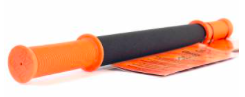
Last year, a skier friend recommended the Tiger Tail, a highly effective self-massage tool that doesn’t require getting on the floor, like you do with a foam roller. OMG!!! What a fantastic device! I get off the mountain and roll out my quads. At home, when my calves start to cramp, Tiger Tail comes to my immediate rescue. The company’s website is rich with useful text, picture and video instructions. Last month at the big industry trade show in Denver, I met Spring Faussette, who invented Tiger Tail and owns the company. She’s offering SeniorsSkiing.com readers a discount code for 30% off Tiger Tail and the company’s other products. Visit the Tiger Tail website and enter snowski50 during checkout to receive the discount.

Mont-Tremblant, Extends Season

The Quebec area will be open through April 19, and kids under accompanied by an adult will ski free.

skiing simplified

Short Swings!

We get to the mountain, put on our boots, click into our skis and…you know the rest.

But how often do we stop to think about the people we rarely see; those who get the mountain ready for us and who keep it going?

Some will read this and tell themselves, “We pay for these services.”

My response is, “Yes, but take a moment to appreciate the people whose job it is to assure that you have a good experience.”

There are electricians who keep the lifts going and the lights on, and technicians who keep the snow guns running, That’s just to name a few.

We see some who prepare and serve food. But we rarely see the men and women plowing and maintaining the parking lots.

Patrol proactively stakes poles to warn us of hazards, control avalanches, and perform other dangerous tasks, all on our behalf.

Look up the hill at night, and you’ll see headlights from the grooming crew getting slopes and trails ready for the next day. Larger areas have late afternoon and graveyard shifts. Skill is required to operate those 10-ton mechanical behemoths. They groom in the dead of night in blizzard conditions when it’s impossible to see the trail’s edge. They groom steep slopes winching their cats around stanchions and groups of trees.

Last season, I spent an hour in a highly computerized mega-cat in the Dolomites. There, the entire trail network – which, end-to-end would extend from New York City to Chicago – is groomed every night by an armada of cats. The driver exhibited a quiet, professional pride as he explained his complicated nightly chores.

I left the cab with a new appreciation of what these unseen people do to make our skiing experience more pleasant.

The next time you go skiing, take a moment and look around. All the organization, safety measures, snow making, grooming, food prep, lift operators, reservations personnel – everything that makes up and maintains the infrastructure of what you’re about to enjoy – deserves our attention and our appreciation. 

What would we do without them?

Alta Patrol Featured in New Short Video 

Apropos of my thoughts on appreciating the people behind the scenes, click here to view a wonderful and informative video about Alta’s Ski Patrol. The area’s patrol has more than 80 men and women, with 20-30 working most days.

Helicopters Deliver Snow To French Resort

That’s just one piece of discouraging news about the impact of warming on the ski industry. Among other things, this CNN article reports on a study showing that by 2050, about one-half of the past Winter Olympics venues will be too warm to host the event.

Bumps in the Road Scholar Ski Offerings?

People tell me that they loved the Road Scholar alpine skiing trips. Good prices, convenient lodging, great camaraderie. A look at their current offerings shows one trip to Steamboat (CO) and another to Sunday River (ME). That’s much reduced from the days when Road Scholar had trips to numerous other areas. When I emailed the organization’s PR person to ask why these popular programs had been eliminated, she responded saying they currently offer 18 different ski programs and advised that I consult the Road Scholar website. There, I found a total of four skiing activities: the two aforementioned alpine trips and two X-C trips (VT and NY). She also said that Road Scholar is exploring new downhill destinations for 2021. We’ll see.

Vermont Adaptive To Build New Sugarbush Facility

Vermont Adaptive Ski and Sports plans to build a new $2 million adaptive sports facility at Sugarbush Resort’s Mt. Ellen. The non-profit hopes to break ground in the spring. Friends and participants of Vermont Adaptive’s programs at Sugarbush have pledged a generous challenge to match every dollar up to $1 million for the facility. Donations may be made on Vermont Adaptive’s website.

PhotoEssay on Killington Snowmaking

Last weekend, The New York Times ran this informative photoessay about snowmaking at Killington in Vermont.

Mikaela Shiffrin Graces Cover of March Sports Illustrated

Skiing’s female rock star is dubbed “the world’s most dominant athlete” by SI. This is her third time on the cover. The first was leading up to the 2014 Olympics; the second, after she won slalom in those games. She is all of 24.

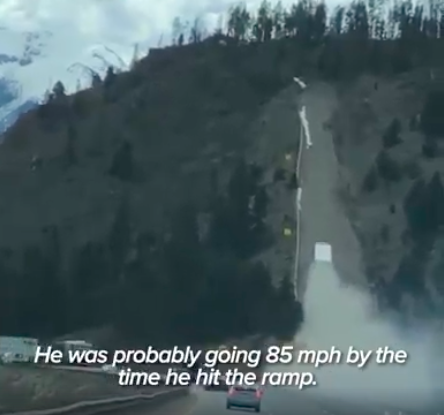
Video: Runaway Truck on Ramp

Drivers in mountainous areas are accustomed to seeing runaway truck ramps. They’re generally located on the right side of long downhill roads. Truckers and bus drivers experiencing brake failure can direct their rigs to these uphill emergency ramps that have sand or gravel beds to help slow them down. This recent video was shot on the west side of Eisenhower Tunnel on the Colorado stretch of I-70.

Ski Area Safety Survey

We know that on-snow safety is an issue for our readers. Please take a minute to weigh-in on the subject by participating in a survey from the SnowSport Safety Foundation. See the article about the survey in this issue or click here to go directly to the survey.

How To Wash Your Hands

The New York Times just issued this video about hand-washing. It shows the technique advised by the Centers For Disease Control (CDC) and the slightly more rigorous and effective technique advised by the World Health Organization (WHO). A skiers’ hotel in Kitzbuhel closed because of coronavirus. Washing your hands correctly is a first line of defense.


Historic5

Short Swings!

[Editor Note: SeniorsSkiing.com is asking our readers to contribute to support our online magazine. Yes, we have grown in the number of subscribers and advertisers. But our expenses have also grown. You can help us defray some of these expenses by helping us out with a donation.]

Support SeniorsSkiing.com by clicking here.

______________________________________________________

How many of you have taken a skiing road trip recently? Over the past few seasons, I’ve ridden lifts with numerous retired couples skiing their way across the continent; getting the best value from their Epic, IKON and Mountain Collective passes.

Using cars and RVs, they traverse from one resort to another, taking occasional non-ski breaks. It’s a return to the collective skiing fantasy promoted by ski magazines and filmmakers for as long as I can remember.

As romantic as the skiing road trip seems, moving from one place to another can be a pain. There’s packing and unpacking. Moving stuff in and out of hotel rooms and friends’ homes. Waking up in unfamiliar places, etc. etc. It gets old, especially as we get older. 

There are exceptions. Last season, we toured the Dolomites on a guided ski safari. That week skiing from mountain inn to mountain inn, enjoying great food, beautiful scenery and our small group’s camaraderie made it one of our all time best skiing experiences.

But I’ve reached a point where I no longer want the hassle of moving around. I thought that renting a place in Salt Lake City for the season would do it. But that, too, requires a drive to one of the nearby areas. Because the place has become so overpopulated, Ski Utah and Ski City USA, two of the local ski promotion entities, encourage people to use public transportation to get to the resorts. At this age, I prefer to drive.

The solution, which many of you long ago discovered, is in the form of staying on or very close to the hill. 

Our Vail friends have the good fortune of walking to the end of their driveway and stepping into a private community van for a short ride to the lift.

And our Deer Valley friend simply walks down his heated driveway and up his community’s heated road to reach the slope.

Talk about skiing luxury!

For those of us without homes on or near the hill, there are the hotels, lodges and inns that are. They can be pricey at big name resorts. But some digging can produce surprising bargains.

For example, from March 6-15, Chalets Montmorency at Mont Sainte Anne in Quebec has a five-night deal for $175 (Canadian) per person, double occupancy. 

Generally, exchange rates make skiing in Canada a good deal.

And, as I’ve explained in past columns, Europe has many great bargains. Click on the adjacent Inspired Italy or Alpskitour ads to get a few ideas.

Ski club trips also can be economical. 70+ Ski Club consistently offers well-priced trips with slopeside lodging. Click on its ad to learn more.

It turns out that for this aging couple, the season has had a few too many moves. And the way things are scheduled, there will be more. 

I’m not sure where we’ll ski next year, but wherever we go, except for when we’re on the hill, we won’t be moving around.

RIP: Mammoth Mountain Founder, Dave McCoy, 

Dave McCoy, who started and developed Mammoth Mountain in California, died February 8. He was 104. McCoy started Mammoth in 1942 and operated the resort for 68 years. When he was 22, he was the California State Skiing Champion. He skied until he was 92. Watch the video about Dave and Mammoth, produced when he was 98.

OOPS!

Last week’s appreciation of Alta neglected to make reference to the Wild Old Bunch, the group of older skiers who gather daily for lunch at the large round table in Alf’s Lodge and Wednesdays for dinner at 5:30PM at the Chuck-o-Rama in South Salt Lake’s Fashion Place Mall.


Avalanche At Alta

This week’s issue has a not-to-be-missed letter from Harriet Wallis advising her nephew to exercise more caution in the backcountry. Last week, avalanche danger and control closed Alta, Snowbird and Little Cottonwood Canyon for two days. During the shutdown, Mac Charval was able to video a slide as it tumbled across the road heading for the Alta Peruvian Lodge. My understanding is that there was no damage.

https://twitter.com/SeanDNeves/status/1226174442637672448?s=03)

Apple iWatch DOES Like Skiing, After All

Thanks for reader Steve for advising that iWatch users look under “D” for Downhill Skiing  in the device’s “Workouts” function.

Bootster Booster

Jim Cobb, who invented and manufactures The Bootster ski boot shoe horn regularly receives fan mail for this clever compact device. He sent in this comment from a senior skier: Thank YOU for creating and providing the Bootster so that all of us “old and stiff” skiers (and our old and stiff boots too!) can keep getting on the snow even as time marches on.  The Bootster is essential for any skier grappling with the ordeal of getting boots on. Click on the adjacent ad to learn more.

Prevent Cold Temp Phone Failure

Typically, even when my phone is in an inside pocket, it loses juice on cold days. Yesterday, at Alta, it was 21F, time to try a product I picked up at the Snow Show in Denver. It’s an air-activated warmer, similar to a disposable glove warmer. But this one has a peel-off layer that exposes a tacky surface to affix the warmer to the back of a cell phone. I stuck it onto the back of the phone’s protective case. I checked several hours later and the phone was warm and almost fully charged. It’s made by Ignik Outdoors.  A 10-pack costs $19.95; 30-pack, $29.99. (Use discount code WarmSenior15 for a 15% discount exclusive to SeniorsSkiing.com readers through March.) The company also makes hand warmers. All of its disposable warmers come in resealable pouches, which, when used correctly, extend the life of each warmer.

Please Help

February is when we pass the SeniorsSkiing.com collection plate. Donation messages are posted throughout the site. When we started this labor of love six years ago, we decided to make it weekly and free. Since then it has grown substantially, forming a global community of older skiers. By the end of this season, there should be 20,000 subscribers. As we grow so do our expenses. Advertising and your donations help cover some costs. Mike and I cover the rest. For those of you who have donated, we appreciate your support. If you enjoy SeniorsSkiing.com, please click here to help.

“I Felt Like I Skied One Run, Not Eight”

[Editor Note: SeniorsSkiing.com is asking our readers to contribute to support our online magazine. Yes, we have grown in the number of subscribers and advertisers. But our expenses have also grown. You can help us defray some of these expenses by helping us out with a donation.]

Support SeniorsSkiing.com by clicking here.

______________________________________________________

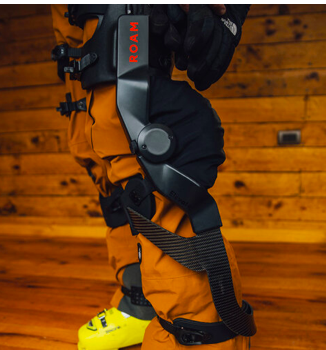
Roam Elevate is a computer-driven exoskeleton that anticipates turns and adjusts knee and quad support to aid the skier’s natural motion. It helps people ski stronger and longer by offloading up to 30% of the user’s body weight from the skier’s quads and by reducing painful knee joint compression.

Elevate can be rented at several Western ski resorts and will be available for sale next season.

To get a better understanding of how Elevate works on the hill, we asked Rick Hovey to give it a test drive.

Rick Hovey and his signature turns.

Rick is 65 and is a longtime resident of Park City. A Level II PSIA instructor, he skis 100+ days a year. Last season, despite a diagnosis of chondromaiacia patella (arthritic knees), he skied one million vertical feet. 

Rick has put off recommended partial knee surgery, opting instead for Physical Therapy. He has given up teaching and reduced his time on the hill.

He tried the Roam Elevate a few weeks ago and submitted this report.

Clay, the Roam Robotics rep, showed me how to use the straps to attach the exoskeletons to my boots and then to my lower and upper legs.  It was simple.  

The product uses a slim backpack that contains a lightweight laptop, battery and compressor. Two connectors per side come out of the pack to attach to each exoskeleton. One connection is an air hose; the other is a connection to the computer.

While walking, the apparatus felt light and unencumbering, even if the exposed carbon fiber and wires made me feel a bit like RoboCop

We clicked into our skis as Clay explained the available settings. The controller is mounted on the shoulder strap and easy to use with gloved hands.  There are levels of assist and speed adjustments to suit your style and desired terrain. The speed adjustment sets how fast the computer tells the compressor to release the assistance pressure. In general, the idea is to quicken the speed adjustment for short radius turns or where unweighting is needed quickly. 

As soon as we pushed off I lost the sense I had an exoskeleton on and that it was assisting the load on my legs. It felt completely natural and improved my sense of stability.

There is a noticeable vibration from the compressor in the pack, which Clay says to think of it as a massage for your back (bonus!). The vibration became less noticeable after one lap.

A few runs later, we played around with different settings. I really liked the high assist and slow speed setting for the easy cruisers with long radius turns. I felt stronger and forgot about protecting my arthritic knee and I experienced more complete turns with less effort. It also gave me the confidence to lay down deeper carves than I would without the device.

We then changed the settings and tried linked, short radius turns on steeper groomers. I was impressed with how well this worked with no encumbrance of the inside ski hanging-up because the pressure was released right when needed. I used this same setting on a long bump run and was equally impressed. 

Roam Elevate backpack and control device

The apparatus always seemed to agree with what I was doing, while enhancing my skiing in a controlled and predictable way. 

I should mention the “chop.” Rough snow was on the edges of the groomed runs, just enough to rattle the bones if going fast… this is where I would normally take the first exit to Smoothsville. The Roam Elevate seemed to absorb the bumpiness; no jarring of the knee joints or loss of control. It was like a good suspension on a mountain bike.

After numerous fun and various runs, Clay and I did a final, fast top-to-bottom cruiser. At the bottom, I told Clay my legs and knees felt like I just skied one run, not eight! 

I would recommend the Roam Elevate to any skier who has knee and/or leg strength issues. And, if it helps you avoid surgery and extends your skiing life, the value could be great.

The Roam website is taking first-come, first-served reservations for a slimmed down, next generation product for $3500 (includes a 30% discount). To learn more, click on the Roam Elevate ad on the home page.

Reporting From the Annual OR/SIA Snow Show

[Editor Note: SeniorsSkiing.com is asking our readers to contribute to support our online magazine. Yes, we have grown in the number of subscribers and advertisers. But our expenses have also grown. You can help us defray some of these expenses by helping us out with a donation.]

Support SeniorsSkiing.com by clicking here.

______________________________________________________

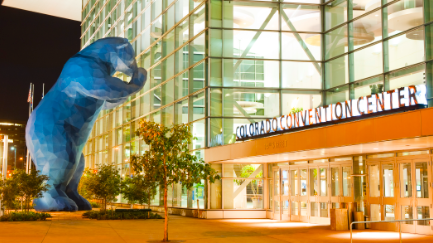
The week before last, more than a thousand manufacturers and marketers of every conceivable product related to winter outdoor sports gathered at Denver’s Colorado Convention Center for the annual OR/SIA Snow Show.  

The three-day marketplace is where orders for next season’s merchandise are written.

The big name brands generally occupy large sections of real estate. Lesser known brands and products have smaller exhibits, some limited to an 8’x10’ table. For the most part, exhibits for similar products are clustered in the same areas of the exhibition hall.

One of the more innovative exhibits

Most of the attendees were under 50. The oldest person in the room was the venerable Klaus Obermeyer who turned 100 in December. Klaus is the founder of ski clothing brand, Sport Obermeyer.

Klaus and Jon and the SeniorsSkiing.com sticker

There was an abundance of swag in the form of product samples, advertising promotional items, and other tchotchkes. A long time ago, I learned that most of it is useless, and everything adds to the weight being carried.

Two relatively new categories caught my interest. One, battery-warmed gloves and garments; the other, CBD products touted to reduce pain, help sleep, boost energy, etc., etc. 

Of the battery-warmed things, glove liners seemed to make good sense because they cost less and can be used with existing gloves. The downside is that each model I saw uses a relatively bulky battery pack. Of the lot, the ones from FIRedup seemed most interesting. They utilize Far Infrared (FIR) technology which heats only the surfaces it contacts. It uses less power than wire-heated technology and there are no wires to break.

Lightweight, battery-warmed layers also look like a practical way to stay toasty. Fieldsheer has been manufacturing electric clothing for years, primarily for garments for construction workers and motorcyclists. The company is now entering the outdoor recreation market with a variety of good-looking items with strategically placed heated panels. 

Each afternoon, exhibitors broke out beer and bands, and the show morphed from sales to party atmosphere. I wandered into the snowboard section where the feeling was rowdier and the air more infused with cannabis.

Friday afternoon, the circus packed its tents and that part of the annual spectacle came to an end.

On Monday, a smaller version popped up at the base of Winter Park Ski Resort. This annual post-show on-snow event gives attendees the opportunity to demo skis, boots, and accessories. Several miles away, at Devil’s Thumb Ranch, a similar event catered to the cross country and snow shoe markets. 

I was at Winter Park and tried several different skis. Day One started sunny and got darker and colder as it progressed. Day Two, morning temperatures hovered around -7°F. I overcame second thoughts about taking a few runs and was rewarded with a few inches of fresh snow.

The skis that left the best impression were the Head Kore 93 and the Black Crows Camox. Both have soft shovels and tails and skied beautifully on packed and in the few inches of fresh. 

As I drove away, it occurred to me that, ultimately, all of the time and effort that goes into keeping the gears of the industry turning will be for naught if governments and their leaders don’t cooperate on the planet’s environmental and climate issues. 

Short Swings!

I know that some people don’t get attached to ideas, things or each other. But it must be rare.

I was 10 when skiing entered my life, and I’ve been playing in mountains and snow ever since. At first, Mount Snow in Southern Vermont was the center of my winter universe. Then it was that state’s Stowe and Killington


In the early 70s my new bride and I visited Alta for the first time. It’s the classic ski resort at the top of Little Cottonwood Canyon, just outside of Salt Lake City. We were there for a week. There’s hardly a season since that I haven’t returned.

There are other great areas, some with bigger terrain, more sophisticated lifts, and other bells and whistles. I’ve skied many of them and hope to ski many more.

Alta keeps pulling me back.

The obvious reasons are accessibility, snow, and terrain. 

But there are more subtle things that are part of Alta’s draw. There is a unique Alta culture that understands and appreciates its rich history, its remarkable beauty, and, for those who know and love it, it’s essence.

Over the years I’ve skied most of the area, but some places were out of my reach and, at this age, will remain that way.

Utah’s license plate reads “Greatest Snow on Earth.” Of its 14 resorts, Alta consistently receives the most. The 2010-11 season delivered 724″. Last season snow depths totalled 626″.  This season, to date, Alta has more than 355″.  Click here for its annual totals.

Most people drive up Little Cottonwood Canyon for the day. Unfortunately, as the Salt Lake Valley population grows, that 8 mile drive can take a long time. It took me 90 minutes a few weeks ago. Powder days require a very early start.

In the 47 years of skiing Alta, I’ve stayed at each of its five lodges. The Alta Lodge and The Rustler are favorites. The old Snowpine Lodge was Spartan-like. I have yet to try its posh replacement. Goldminer’s Daughter and Alta Peruvian each have their own charm.

If you’re an Alta regular, you’ll understand. If you’ve never been or haven’t been in a while, it’s time to go. Like everything else, Alta is destined to change. But because it is Alta, when it does, it will only add to the magic.

Masterfit Buyers Guide

The new Masterfit Buyer’s Guide provides comprehensive guidance on the best choices in 2019-20 skis, boots, bindings, poles, insoles, and kid’s gear. The free, 105-page guide is chock full of  valuable information explaining what to buy and how to buy it. It was put together by an all-star team of reviewers and writers who, for years, worked for the nation’s top ski magazines. My strong recommendation: make the Masterfit Buyer’s Guide a “favorite” on your computer (click here for the link). It will be useful the next time you’re considering a purchase. And while you’re there, check out the SeniorsSkiing.com ad on Page 106.

Is Apple iWatch Anti-Skiing?

A few iWatch obsessives I know say the device’s “Workouts” function shows “Snowsports” and “Snowboarding,” but not “Skiing.” Can anyone out there disprove it or explain why?


New Name for Ski and Snowboard Expos

The Denver and Boston Ski and Snowboard Expos have been renamed Snowbound. This year’s Denver event is scheduled for November 6-8; Boston’s is scheduled for November 19-22.

Pico Hosts Blind Skiers

This weekend, more than 30 athletes who are blind or have visual impairments will learn to ski with Vermont Adaptive Ski and Sports during the 13th anniversary of the United States Association of Blind Athletes (USABA) Winter Ski Festival at Pico Mountain. Click here for more info.

Skiing History’s New Issue Now Available

The January-February 2020 issue of Skiing History is online. If you’re a member of the International Skiing History Association (ISHA), a hard copy is on its way to your mail box. If you’d like a free digital copy, click on the ISHA advertisement on the SeniorsSkiing.com home page.  

Mikaela Shiffrin’s Father Dies in Roof Fall

Jeff Shiffrin, father of the World Cup athlet died earlier this week when he fell from the roof of his home in Edwards, CO, near Vail. The 65-year old anesthesiologist was shoveling snow when he fell. He had raced on the Dartmouth Ski Team. 

75-Year Old Uphill Skier Profiled in New York Times

Sharon Crawford, 75, a multisport athlete from Frisco, Colorado, is an uphill skier. he Times profiled her participation in the Breckenridge Ascent Series, which, took her from Breckenridge’s 9,600′ base up 1,500′ vertical on a black diamond. The fastest racer completed the course in 32 minutes. Crawford clocked in at 1 hour 2 minutes. Click here for complete story.

Fantastic Gift For Young Mothers To Be

Mountain Marsupial 4-in-1 Jacket

Mountain Marsupial is a 4-in-1 jacket that can be worn while baby carrying in the front, on the back, and while pregnant. It caught my eye last week at the SIA/OR Snow Show. The jacket lists for $239. If you’re looking for an attractive, functional gift for a pregnant someone or a recent Mom, click here.


Short Swings!

This week’s column is devoted to asking you to donate to SeniorsSkiing.com.

When Mike and I started the publication in 2014, we had no idea that this free, weekly digital magazine would become so popular.  

Most of you are US-based, but each week, SeniorsSkiing.com gets emailed to readers in Canada, throughout the EU, Australia, and New Zealand.

It takes a lot of time and costs quite a bit to do this. We don’t pay contributors or ourselves. But we do have considerable back office and related expenses. Some of this is defrayed by our handful of advertisers.

We are asking for your help so we can continue to advance the interests of older snow sport enthusiasts. We do this by publishing relevant and useful information; encouraging an engaged, online community, and advocating on your collective behalf.

Through SeniorsSkiing.com Reader Surveys, you informed us of your deep concerns about being hit by younger, reckless skiers and boarders. As a result, we introduced the Incidents and Accidents feature and are running a series on how ski areas deal with (or don’t deal with) the problem.

We’ve also learned about the important role grandparents play in introducing their grandkids to the sport. This is an important understanding at a time when the ski industry is trying to attract newcomers. 

Please help.

Every donor will receive SeniorsSkiing.com stickers. Readers donating a minimum of $65 will receive a terrific tote bag to carry their ski accessories. They’ll also get a sew-on SeniorsSkiing patch. Donations of $35 will receive the sew-on patch, $25 will get our Mountain Man stickers. 

Click here to link to the digital donation page or send a check to: SeniorsSkiing.com, Box 416, Hamilton, MA 01936.

Thank you for your ongoing support.

It’s Primary Season in New Hampshire. Time to Go Skiing!

That’s the title of an article in last Sunday’s New York Times in which veteran political journalist, David M. Shribman, explains how his two favorite sports – politics and skiing – are easily exercised and covered in New Hampshire. Click here to link.

Downhill: New Film Starring Will Ferrell, Julia Louis-Dreyfus

Downhill is the name of a feature film starring Will Ferrell and Julia Louis-Dreyfus. The comedy will be released February 14. They and their kids are on a ski holiday in the Alps, when an avalanche strikes, forcing them to reevaluate their lives and how they feel about each other. Based on the brief description and the trailer, it looks like a Hollywood remake of Force Majeur, the Swedish comedy-drama from 2014.

New Liftless Area in Colorado

Bluebird Backcountry is the name of the nation’s first liftless ski area. The 1500 acre area is located between Kremmling and Steamboat Springs. It will open Feb 15 for a “test season.” Amenities include patrol for medical emergencies, warming huts, and backcountry gear rentals and lessons.

Half of US population Doesn’t Recreate Outdoors

Outdoor Foundation, the philanthropic arm of Outdoor Industry Association, released its latest Outdoor Participation Report. The good news is that about half the U.S. population participated in some form of outdoor recreation in 2018. The bad news?

  • Less than 20 percent recreated outside at least once a week.
  • Americans went on one billion fewer outdoor outings in 2018 than they did in 2008.
  • Kids went on 15 percent fewer annual outings in 2018 than they did in 2012.

The report also shows a continued gap between the diversity of outdoor participants and the diversity of the U.S. population; more specifically, non-Caucasian ethnic groups reported going on far fewer outings in 2018 than they did five years ago.  

Another finding: of the people who report they participate in outdoor activity, 63 percent report they go outside within 10 miles of their home. 

Essential Product for Bad Air

Vogmask is a breathing mask that, unfortunately, will become essential gear as air quality declines and we run into health isses such as the coronavirus. The Korean import carries an N-95 rating, which the US Centers for Disease Control and Prevention recommends for most cases of air contamination. These filters are designed to seal tightly around mouth and nose and are made of material certified to block 95% of particles roughly the size of a single virus. Vogmasks come in a variety of sizes and are designed to fit closely around nose and mouth. One version has a single valve to facilitate exhaling; another carries two valves. They are attractive,  washable and reusable. Older skiers living in the Salt Lake Valley or other locations where air quality often is compromised by frequent inversions would be prudent to visit the Vogmask website.

X-Games Postponed Due To Coronavirus

Chongli Ski Resort

Forbes reports that ESPN’s first-ever X Games winter event on Chinese soil, has been postponed until a later date, due to continued coronavirus concerns.

X Games Chongli was scheduled to be held February 21-23 at the Secret Garden ski resort in Chongli district within the city of Zhangjiakou.


Short Swings!

To some extent, skiing is a fashion statement. Current trends have an impact in what we wear, the equipment we purchase, and the way we ski. 

Over the past several seasons, I’ve noticed skiers taking run-after-run using the same high speed, up-on-their-edges, race turns. It reminds me of the 60s when people were wedeling straight down the hill, or the 70s when extreme bump skiing was the rage.

Good technique is the foundation upon which we develop a well-rounded repertoire of turns; one than can evolve into your own skiing style.

I know two people who raced in college and continued to use race techniques whenever and wherever they skied. I never learned to race and admire those who have. But the need to be first to the bottom, regardless of terrain, can lead to disaster. Both had serious breaks.  

Skiing is not a one-turn-fits-all sport. Endless terrain and condition changes require us to draw from a repertoire of moves. 

Age and physical limitations are changing the way I ski. But when I’m in the groove, each run becomes a form of personal expression: Mixing short and wide turns. Playing with the fall line. Slowly descending a cascade of bumps. Entering powder for a few weightless turns.

It’s not skiing to a template or keeping up or showing off. It is personal choreography, and it feels very good.

Jon in an undated photo with more hair and less waist.


It Wouldn’t Hurt to Take a Lesson

That’s the title of Jackson Hogen’s most recent Realskiers.com Revelation (click here to access). He builds a strong case for improving skiing skills in order to move beyond your comfort zone.

Vermont Boomerangs Back

Following a devastating January thaw, Vermont areas had an outstanding MLK weekend. A Ski Vermont news release reported that on Sunday, Sugarbush had the biggest day in its 61-year history and Jay Peak’s 600 room capacity was 100% sold out. Some of the mountains got about 2’ and temps dropped to form ideal snow-making conditions.

Alta’s New Website

Alta’s New Website

One of the many wonderful things about Alta is that when it makes a rare change, it does so thoughtfully. The classic Utah ski resort just introduced a new web design featuring simplified navigation, an improved mobile experience and interactive weather features. Some of the old features such as Photo of the Day remain. Click here to visit.

Mt Rose (NV): Free Lessons for 50+

Mt Rose on the Nevada side of Lake Tahoe offers Silver Ski Clinics designed for experienced skiers ages 50 and older at skill levels of lower-intermediate to advanced. The Monday and Friday clinics are free to season pass holders or $25 with lift tickets. Click here for details.

Aussie Crosses Antarctica on Skis

Dr Geoff Wilson Source: Facebook

Australian adventurer, Dr. Geoff Wilson, 49, skied 3,300 miles across Antarctica in 58 days. He used a kite and a sled in the historic trek, completing the journey with five weeks of rations remaining.

New Utah Training Facility

Utah Olympic Park at Kimball Junction in Park City opened the Mountain Expansion, a training facility for the state’s ski and snowboard teams. It features 5 alpine training lanes, a mogul lane, expanded terrain for freeski and board athletes, 11 acres of lighted terrain, high-efficiency snowmaking and a fixed grip quad. The facility is expected to expand in coming years.

A Different Hand Warmer Perspective

Last week, I advised placing hand warmers on top of the hands. That, on the advice of a ski shop sales person who told me that heating the hand’s blood supply would help warm the fingers. Nice concept but wrong anatomy lesson. The superficial veins on top of our hands carries blood back to the heart. Thanks to SeniorsSkiing.com subscriber, Roger Skugrud, for making the correction. A resident of frigid Minnesota, he advises positioning warmers in the palms where they’ll warm the blood feeding the hand and allow you to grasp the warmth when riding the lift.

New Pocket Instruction Guide

Bill Hernon’s Modern “A” Frame Ski Technique is a 45-page, small format paperback describing an approach to skiing based on a variety of “A” shapes. It is short and to the point and an interesting approach for self-learners. The book covers basic turns, skiing powder, bumps and Telemark turns. The author also recommends professional instruction. Click here to learn more and/or to purchase.


SeniorsSkiing Guide: Windham—A Gem In The Catskills

A Mid-Week Senior Program Includes Clinics, Group Lunch, Yoga, Plus.

Windham is 2 1/2 hours from NYC and has something for everyone.

Driving from New Hampshire through Vermont to Windham Mountain in the Catskills of New York on a recent weekend I felt some trepidation as to what I would find. There had been rain, lots of it, and temperatures reaching 60 degrees over the course of the weekend. Arriving at the mountain on Monday mornin,g it was not looking promising – lots of bare ground and brown spots. But everyone in our group was game to try it out so we booted up and headed for the lift.

And what a pleasant surprise was in store for us! There had been a small window of snowmaking temperatures Sunday night,, and the mountain crew made full use of it. While it didn’t allow any new trails to be opened, it did a wonderful job of patching and spot resurfacing. The groomers smoothed out the surfaces, and, though only a small percentage of the trails were open, those skied very nicely on softish, granular sugar snow.

Snowmaking is robust and widespread at Windham.

Windham is a sizable mountain with a 1600’ vertical. To me, it feels like a much bigger mountain. There are 54 trails, ranging in length from 300 to over 12,000 feet, serviced by a total of 11 lifts including a high speed six pack and two high speed quads. Snowmaking covers 97 percent of its trails and slopes.  Much of that is fully automated, making it very responsive to changing weather conditions. There were several trails open off the Westside Six, the six-pack going to the West Peak summit, and the Wonderama Express Quad.  We found enough good skiing to keep us entertained over the course of a day and a half. An Express Quad took us up to East Peak where we found a couple of good runs including Wanderer, a long, easy cruiser that sweeps along the ridge at the edge of the resort and eventually winds its way to the base. All were in agreement that the mountain ops crew did a fantastic job in recovering from the “R” event prior to our arrival.

The modern, airy base lodge houses a spacious cafeteria on the ground floor and a table service restaurant with an upscale menu upstairs. Also on the upper level is a private club with its own food service and lounge areas.

The resort has spent more than $12 million in the last two years to elevate the guest experience, and it is quite apparent from snowmaking to grooming to base area and resort amenities.

Midweek Program Just For Seniors

Windham boasts an active 50+ Midweek program which runs for eight Tuesdays from early January to early March. There’s an optional yoga program at the beginning of each day followed by on snow clinics with the instructors then a group lunch. During lunch, there are presentations on snowmaking, product reviews, what’s happening at Windham, and various other topics of general interest. The program currently has more than 70 participants who come from New York City and its environs as well as the local area. The Midweek program costs $250, pass not included.

You can ski the big race courses on the simulator. Credit: Joan Wallen

The Adaptive Sports Foundation has partnered with the mountain to bring in the Ski and Ride Simulator which provides real skiing and riding in virtual reality. Used by the race teams for training, it is also available to the public for a fee. Skiers and riders of all ages can test themselves on virtual race courses from around the globe simulating real World Cup and Olympic courses. From grandparents to grandkids, it can an enjoyable challenging to all. A portion of the proceeds help support the Adaptive Sports Foundation.

The Alpine Spa, kids snowmobiling, snow tubing and ice skating will keep everyone – kids to parents to grandparents – busy when not on the slopes.

While we didn’t get to ski all of Windham, what we experienced was great and certainly whetted the appetite making us eager to return when the mountain is fully operational to explore what is truly big mountain skiing just 2 ½ hours from New York City.

Tickets And Passes

Day tickets for 65-74 are $76; 75+ is $70. Windham also offers a four-hour Flex Ticket good for any four consecutive hours. 65-74, $52; 75+, $35.

Season Passes, 65-74, $659; 75+, $229. A Sunday-Friday mid-week pass is $549 for all ages.

Click here for Windham Mountain Web Cam.

Click here for Windham Mountain Trail Map

The base area is the hub of activity with lifts radiating out.


Short Swings!

AARGH!!!! What follows, unfortunately, is the tale of what NOT to do when renting in Salt Lake City through Airbnb or VRBO.

My wife and I decided to take a place for January through March. We know SLC from having lived there. 

The city is a terrific base with easy access to nine fantastic ski areas and more hotel, restaurant, and entertainment options than found in any individual ski resort.

Many have found decent accommodations through the aforementioned Internet-based services. Even if the places weren’t so clean or well appointed, they were there for only a few days.

What a disappointment! Cluttered closets and drawers; grimy bathroom; hooks pulling out of walls; electrical extension cords plugged into extension cords, plugged into more extension cords. And my wife, whose sniffer is more sensitive than mine, swore the master bedroom had the odor of men.

Fortunately, the landlord, a lovely and reasonable man was committed to salvaging the situation. We moved into the much smaller and more comfortable adjacent apartment at a lower rent.

But, the place feels like I’m back in college.

Seeking an alternative to this housing crisis, we found on VRBO a fantastic looking condo at Snowbird for $100 a night, minimum, 30 nights. We grabbed it. Within minutes a fee of $4,380. was posted to our credit card. Seemed like someone had a problem with arithmetic.

After HOURS trying to reach VRBO customer service, someone picked up the phone. He investigated and learned that the condo owner had added a $1000 cleaning fee. VRBO’s fee accounted for the balance. An hour later my wife’s phone rang; the condo’s owner profusely apologizing for our inconvenience and explaining that his HOA wouldn’t allow him to rent the unit.

It took several days to get a full refund.

Speaking with several senior skiers at Alta, I learned than many take three or four month apartment and condo rentals in Sandy, a suburb of Salt Lake City where rentals are about $1000 – $1500 a month, three month minimum. The places  are newer than many of Salt Lake’s options and the location is closer to the Wasatch Front ski areas (Alta, Snowbird, Brighton and Solitude). 

Remember how my wife thought she smelled men in the bedroom?  She was right. The landlord told us his previous tenants – there for several months – were a group of male oil refinery workers. He agreed its time to replace the housekeeper.

Where The Snow IS

Not this deep…yet!

Last Tuesday, Ski Utah, the marketing arm of Utah’s ski industry, announced that Alta and Snowbird got 6’ in the preceding 7 days. North America’s top ten snow magnet to date: Snowbird: 299”, Alta: 290”; Brighton (UT): 271”, Revelstoke (BC): 259.4”;  Jackson Hole (WY): 254”; Whitewater (BC): 242”; Alyeska (AK): 237”; Castle Mountain (AB): 227”; Solitude (UT): 222”, and Monarch Mountain (CO): 189”.

Snow Guns Fight Aussie Fires

Thredbo and Perisher Ski Resorts are deploying snow guns to prevent wildfires from destroying their buildings and lifts.

Sugarbush Deal Closes

Alterra closed on the purchase of Sugarbush Resort (VT).

Crystal Mountain Ends Walk-Up Ticket Sales

Crystal Mountain (WA) will no longer sell walk-up lift tickets on weekends and holidays. The area will release a limited amount of online sales and continue to honor Ikon Pass holders.

Your Own Ski Area: $1.25MM

Spout Springs, in Northeastern Oregon, is available for $1.25-million. The area has 250 skiable acres (800’ vertical), 14 runs, two double chairs, illuminated slopes, and two X-C trail systems. It is accessible from Walla Walla, La Grande and Pendleton.

Big Dump on The Big Island

Source: Honolulu Star-Advertiser 1/14/20

Hawaii’s Mauna Kea received 1-2 feet with snowdrifting to 4 feet. The snow fell above 12,000 feet.

Hand Warmer Advice

This, I never knew: When using hand warmers, place them on top of the hand where they warm the blood vessels and keep your fingers comfortable. This advice is from a helpful salesperson at the Alta Ski Shop at Albion Lodge. And all these years, I’ve positioned them against my palms! P.S. Many skiers extend hand warmer use by wrapping them tightly in food wrap for the night.

Documentary Offer Hope while Warning “Humans  Have Overrun World”   

This trailer for  the new feature-length documentary,“David Attenborough: A Life On Our Planet,” features Sir David, 93, warning “human beings have overrun the world.” In the doc, he reflects upon both the defining moments of his lifetime as a naturalist and the devastating changes he has seen. Honest, revealing and urgent, he bears witness for the current state of  the natural world.  The film will be available on Netflix this Spring.


Short Swings!

I don’t know how it happened, but between last season and this one I lost my custom foot beds. They were made about 15 years ago when I purchased my first Surefoot customized boots and, like the boots, they were pricey. Those beds stayed with me over the course of three or four subsequent boots. Then they were gone.   

Foot beds can improve ski performance by stabilizing the feet in a way that helps maximize the ski boot’s primary role: transferring energy from body to skis. That, admittedly, is a gross oversimplification. There are master boot fitters with medical-grade knowledge of foot anatomy, especially as it relates to skiing. I plan to solicit an article or two from one of these experts about the intricacies of creating an effective foot bed.

Brannock Device

But this week I needed new foot beds and visited the Dale Boot store in Salt Lake City to have them made. The whole process took about 20 minutes. The fitter started by measuring my feet with an old-fashioned Brannock, the same device that fascinated me as a kid in my grandfather’s shoe store in Schenectady, NY.  Next, I placed my feet in a Masterfit machine that took an impression of the contours of my foot soles. He then placed Masterfit foot beds in the machine where they took on the shape of the bottoms of my feet. That was followed by cooling the beds with cold packs and trimming some excess material before placing them in the boots. 

Patrick, the boot fitter, clearly knows his stuff and approaches his job with the same quiet pride I’ve noticed among other boot fitters. Boot fitting is a craft in which many of its practitioners appropriately treat it as a profession. He attends educational workshops including Masterfit University and related courses. He mentioned the pleasure he gets sharing war stories about helping all kinds of people with and without foot problems to get the most out of their boots.

Quality ski and boot shops provide boot fitting as a service built into the boot’s cost.  Getting foot beds customized (typically a $100 – $200 add-on) or purchasing boots with the help of a professional boot fitter is clearly a smart step to greater comfort and performance. A resource for well-trained boot fitters is America’s Best Bootfitters.com.

A few months ago, Jackson Hogen of RealSkiers.com, suggested rewarding the work of these pros with a gratuity. Given the critical service provided by fitters like Patrick, I could not agree more. 

Fire Claims Aussie Ski Resort; Others Threatened

Australia’s devastating fires destroyed Selwyn Snow Resort, the country’s most northerly ski area. The New South Wales resort employed 60 during the season.  Falls Creek and Mt. Hotham  in Victoria are being evacuated. 

Bait and Switch at Northstar?

Two older skiers are suing Vail Resorts for breach of contract and fraud. The essence of their complaint is that Vail, which owns, Northstar Resort (CA), sold non-refundable season passes before announcing a parking fee. According to the claimants, the cost of parking will add thousands of dollars to their cost of skiing at Northstar. Each is seeking free parking and $200,000+ in damages.

Good News For Taos Skiers

Taos Air is now servicing the Carlsbad-San Diego and Hawthorne-Los Angeles airports, starting at $125, one way. The service is available Thursdays, Saturdays, Sundays, and holiday Mondays through March 29. The airline started last season with daily direct flights to Taos from Dallas Love Field and Austin-Bergstrom International. The airstrip is 30 minutes from Taos Ski Valley.

Tree Well Safety

Courtesy Ski California

Suffocating in deep snow is a concern for many Western skiers. Evergreen branches capture snow, cusing deep pits to form around the tree’s base. Skiers falling into these “tree wells” are subject to breathing in powder snow. The problem is exacerbated by landing head-down or injury. It’s extremely difficult to get out, even with help from others. I had the experience years ago catskiing in the Canadian Selkirks. Fortunately, the well wasn’t too deep and the person I was with got me out quickly. Fifteen tree well deaths have occurred in California since 2001, the most in the nation. Tree well safety advice is available from Ski California, the state’s ski area trade group. Click here for more.

Winter PrideFest Jan 30 – Feb 2

Winter PrideFest, the multi-event weekend celebrating diversity and inclusivity of the LGBTQ+ community and its allies, will hold its third annual gathering January 30 – February 2 in Bend, OR and Mt. Bachelor. Activities include  skiing, snowboarding, snowshoeing, ice skating, panel discussions, and evening social functions. For information or to register, click here.

Senior Deals at Belleayre

Belleayre, the venerable Catskills ski area north of New York City has great deals for senior skiers during the second week of January, February and March. Skiers and boarders who are 65 or older get a lift ticket for $10, when they go with anyone with a paid lift ticket, and they can purchase coffee for $1 and breakfast sandwiches for $2.

Happy 80th Harriet!

Harriet Wallis, a prolific contributor to this publication, celebrated her 80th birthday at Alta earlier this week. What a silly helmet cover!!!

Alta Old Timer Celebrated in New Video

Lloyd Johnson moved to Utah for work in 1973, having never skied before. One Sunday, after an Alta church service, a friend convinced him to give skiing a shot. Now, at age 87 and almost five decades later, Lloyd is still making beautiful tele-turns at Alta,  His kids and grandkids follow his tracks. This short video tells his story, one that reflects the lives and loves of many dedicated skiers.


Short Swings!


This misguided soul gave up on New Year’s resolutions many years ago when I accepted that I could correct my errant ways on an as-needed basis or in response to my wife’s frequent course corrections.

But it’s the start of a New Year, and I’d like to share a few ski-related resolutions that I plan to keep.

  1. Ski more days this season than last. Last season delivered some terrific skiing experiences in Utah, Colorado and the Alps, but when totaled up, there were too few of them. This season, I want to ski at least half my age.
  2. Ski more frequently with others. Historically, much of my slope time has been solo. But I enjoy the camaraderie of skiing with others. This season, I plan to make more of an effort.
  3. Follow the snow. There are times when I find myself in a self-imposed rut, skiing the same runs in the same sequence. Several seasons ago, I decided to spend each day following the best snow and found it liberating.
  4. Spend more relaxing ski days with my wife. She likes to be out on bluebird days when we cruise and enjoy leisurely lunches. It’s both relazing and non-taxing.
  5. Try telemarking again. Years ago I took a telemark lesson at Alta and thoroughly enjoyed it. Approached correctly, it’s not a knee-stressor. Definitely want to try it again.
  6. Advocate for skier safety. Accident prevention and reporting are part of the dark underside of the ski industry. Areas pay lip service to the safety issue but resist efforts to be transparent. As so many of you have reported, patrol does little to slow or control reckless skiers and boarders. Our new Incidents and Accidents feature is a step toward greater transparency. This year, Mike and I plan to do more.

Wishing you a Healthy, Snowy, and Safe 2020!


Knee Issues? Roam’s Elevate Changes Everything!

Roam’s Elevate Ski Exoskeleton is a breakthrough product that supports knees and quads and allows older skiers to ski longer and without pain. Unlike other knee assist devices, Elevate utilizes a small computer that senses body position and other factors as it signals the soft exoskeleton around the knees. This short video explains all. The company has demo locations at resorts in California, Utah, Idaho and Montana where you can give Elevate a 2-hour try for $25. Reservations required. Click here for more info.

Remarkable Avalanche Article

Last Sunday The New York Times Magazine published “What I Learned in Avalanche School.” Authored by novelist Heidi Julavits, it explores the limitations and possibilities of how we make decisions. While the context is backcountry skiing, the ideas apply to life. Superbly written! Be sure to visit the Reader Comments, as well. Click here.

Last Season’s Ski Insurance Payouts

Generali Global Assistance sells Ski and Mountain Travel Insurance. Last season, sickness, injury or death accounted for 62% of claims and weather for 27%. The average cost of ski trips protected by the company was $2,463.

Sprinter Van Service Between Boston and Ski Areas

GoSherpa provides home-to-slope transportation from Boston to 27 New England ski resorts. The vans are spiffy, the costs are reasonable, and they pick you up from and deliver you home to home! Visit the GoSherpa website for details.

“Ski For Light” Seeking Volunteers

Ski For Light is the all-volunteer, non-profit that organizes an annual cross-country skiing week for the blind and visually-impaired. The group has openings for volunteer guides for this year’s ski week, Feb 8-16 in Casper WY. Interested in volunteering? Contact Bob Civiak at civiak@gmail.com or call 603-715-0817. Click here for details on the 2020 Ski For Light International Week.

 

Indy Pass Adds Maine Area

Mt. Abram in Greenwood, Maine has joined the national Indy Pass. The 60-year-old family-owned area has 4 lifts and 1,150’ vertical. Indy Pass offers two days at each of 47 ski areas, 40 of  which provide pass holders with unrestricted, season-long access. Current cost is $239. For details visit indyskipass.com.

New Year’s Fireworks

Since many of us didn’t celebrate at a ski resort, here’s what it looked like at a variety of places. 

ASPEN

ALTA, UT

KITZBUHEL, AUSTRIA

JACKSON HOLE, WY

THE CANYONS AT PARK CITY, UT

MOUNT SUNAPEE, NH

TAOS, NM

BIG WHITE, BC

BRISTOL MOUNTAIN, NY

MAMMOTH MOUNTAIN, CA


new yorker

Short Swings!

Will I get hit by a boarder?

For most of my skiing life, I looked forward to next season with enthusiasm. But several years ago, I began to face the season with some anxiety. Was I in good enough shape? Will the knees continue to do what they’re supposed to do? Will I get hit by a boarder? Should I listen to my wife and go south?

Inevitably, my love for playing on snow overrides those concerns. And my impression is that most of you share the point of view. If not, there wouldn’t be as many of us still skiing. Those over 52 comprise 20% of all U.S. skiers and boarders.  

A ski through the park.

But the questions linger. For many, the older we get, the less confidence we have in our ability to return to earlier performance. Unless you’re in poor health or very poor physical condition, we should consider Bernie Weichsel’s advice. Bernie is a lifelong skier, winter sports marketing entrepreneur, past chairman of the U.S. Ski and Snowboard Hall of Fame, and member of the SeniorsSkiing.com Advisory Council.

“Everyone gets in shape for the new season differently. Some people do pre-season conditioning. Others do it on the slopes with a lot of easy gliding,” he explains. Not of the “do as I say” school, Bernie tries to ski, at the very least, the same number of days as his age — a goal he encourages all to emulate.

My first time on the snow for this season will be in January, and if things go as expected, I’ll rack up at least half my age, the most days skied in several years. 

It will be good reward for working out five days a week. A few months ago I started to work with a trainer.My goal was to improve stamina and explosive energy. The trainer introduced me to several diabolically effective routines. Diabolical, because they require major effort. Effective, because hiking and walking staircases, I feel stronger.


And (sometimes) I listen to my wife and go South. That’s next week’s agenda.


If you’re a bit anxious about returning to the hill, give it a try. Most people are back in the groove after a few runs or a few days of runs, enjoying the thrill, the fresh air, and the scenery. So if you think you’re too old, think again. Go skiing!

+++++++++++++++++++++++++++++++++++++++++++++++++++++++++++

Vermont Nordic Ski Center Stores Last Season’s Snow

Craftsbury Outdoor Center in Northern Vermont was able to save about 6,000 cubic meters of snow from last season. Working with the University of Vermont, the 500 acre Nordic center preserved more than 60 percent of its original snow supply. It’s an important development for low-elevation Nordic centers as the globe warms. Click here for The Boston Globe’s full report.

Mt Norquay (AB) Carpool Incentive

Paid parking is used as an economic incentive to reduce traffic and encourage carpooling. Mt. Norquay Ski Resort in Alberta is trying a different approach. Once a month, the resort lets all car occupants split the cost of a single $89 lift ticket and get their own pass for the day. The area also encourages use of free shuttles from Banff with $20 tickets for the day.

Wise Counsel From The Pontiff of Powder

Jackson Hogen (aka, the Pontiff of Powder) is a reliable font of useful advice, which he conveys through RealSkiers.com, the go-to website for info on skis and other gear. A recent missive presents the case for tipping your bootfitter. It’s really about the value a good bootfitter delivers to your skiing comfort and pleasure and how that service deserves a cash reward. It’s a simple idea and a good one. If your fitter delivers good service, give him (or her) a few bucks. BTW, RealSkiers.com is available to SeniorsSkiing.com readers for half its $19.99 subscription fee. Enter SS20 on checkout. 

Last Minute Shopping?

Here are five sites for unusual and interesting ski and cold weather gifts.

The Buffalo Wool Company

This is the place to get the most wonderful socks, hats and gloves. The socks I use are made primarily of bison down and merino wool. They’re soft, comfortable and wear forever. Visit https://thebuffalowoolco.com.

BRR! Skincare

This company makes a variety of skincare products specifically for skiers and others spending time in the cold. They use botanicals to protect against the effects of cold and wind on the skin without any toxic ingredients.  Visit https://www.brrskincare.com.

Vermont Glove

This little company has been hand making gloves in Vermont since 1920. They’re full grain goat leather and last forever. I use the heavy duty Farmer model for splitting firewood and other outside chores. Wool liners make them cozy on very cold days. They also make a mitten. Visit https://vermontglove.com.

Bootster

This is one of my favorite skier gifts. It’s the effortless way to get foot into ski boot. The smart design makes this little shoe horn for ski boots easy to fit in parka pocket so it can be used after lunch.  Great $25 gift. Visit http://thebootster.com.

NW Sales Connection

Here’s a fantastic site to find reasonably priced women’s and men’s ski clothing in a wide range of sizes and styles. You’ll also find a full range of kid’s ski wear and women’s swimsuits. Enter discount code seniorski10 for 10% off. Visit https://www.nwsalesconnection.com.

The “Snow” Song

Irving Berlin’s White Christmas is the 1954 musical-comedy film starring Bing Crosby, Danny Kaye, Rosemary Clooney and Vera-Ellen. The Crosby and Kaye become a popular song and dance team following WW II, meet Clooney and Vera-Ellen in a nightclub in Florida and accompany them by train to Vermont. The film begins and ends with the song “White Christmas” and includes classics such as “Sisters” and “Gee, I Wish I Was Back in the Army.” On the ride from Florida to Vermont they sing “Snow,” in a delightful quartet laced with references to skiing. Click on the picture for a nice treat.

Book Review: Southern Snow Explores Skiing; Other Outdoor Winter Activities in the South

We all have preconceived notions about skiing.

There’s no ski resort in Mexico. Actually, there is one: Bosques de Monterreal and when there’s no snow, people use a dry, bristle surface.

There’s no place to ski in South Africa: There is. It’s called Tiffindell and it receives ample natural snow.

The American South doesn’t have much to offer when it comes to skiing. WRONG. WRONG. WRONG.

I’ve been reading Southern Snow: The New Guide to Winter Sports from Maryland to the Southern Appalachians, (472 pps; UNC Press) and it’s fascinating! There are 23 ski areas south of the Mason-Dixon line, most of which are in the Appalachian Mountains, the same range that provides elevation and vertical drop for skiers in Vermont, New Hampshire and Maine. But down South, the mountains are higher than their northern cousins, and because of geography and weather patterns they attract a surprising amount of natural snow, supplemented, of course, by snow-making.

The author, Randy Johnson, published the first edition in 1986 and did a thorough update for this 2019 edition by The University of North Carolina Press. His articles and photographs are widely published and, for most of two decades, he was editor of HemispheresUnited Airlines’ inflight magazine.

Johnson does a thorough exploration of his subject. He explains the geography and the weather systems that deliver cold and snow to the region. I found the history particularly interesting, especially the region’s pro-Union role during the Civil War, and how these higher elevations became summer playgrounds for residents of Washington, Roanoke, Baltimore and other flat-land cities. 

The book presents the development of the southern ski industry. The SCWDC (Ski Club of Washington D.C.) organized early winter forays into the mountains, cleared trails, and installed rope tows. More sophisticated lifts were in place by the late 1940s. Howard Head developed the first metal ski in Baltimore. 

Each of the Southern ski areas is categorized by state; the most extensive areas are in West Virginia and North Carolina where vertical drops are as high as 1,500’ (Snowshoe, WV) and 1,200’ (Sugar Mountain, NC). This section includes places to stay and dine. While that information is kept current on the Internet, it’s helpful to have the author’s preferences.

The last part of the book details places for cross-country skiing, winter hiking and winter mountaineering. These cover, among others, state parks, national forests, Blue Ridge Parkway, and Great Smoky Mountains National Park.

The book is infused with personal accounts and points of view. The author is a booster for the region he loves, often comparing conditions there to those on New England and, a few times, to those in the West.

Southern Snow immerses the reader in a general understanding and appeal of winter in the southern Appalachians. In this comprehensive and interesting read, Randy Johnson shares his love of the Southern highlands. Now I feel the need to add some of these resorts to my life list. If only there were world enough and time….