Online Ski Tickets Equal Big Discounts

Buy Before You Go And Save.

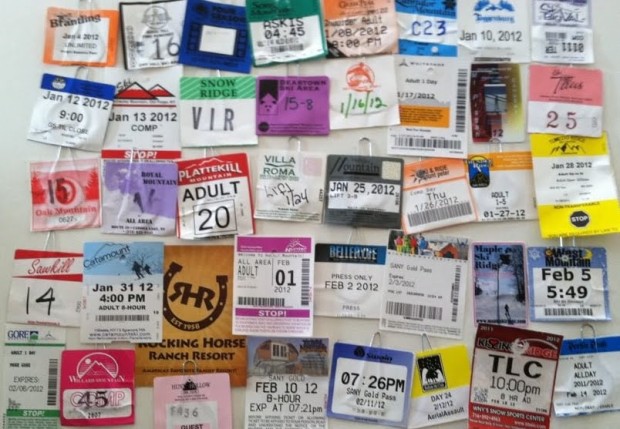
Bargains are out there if you look. Credit: SaratogaSkier

Bargains are out there if you look.
Credit: SaratogaSkier

We’ve just discovered GetSkiTickets.com, an online marketplace for advance purchases of discounted lift tickets, lessons, rentals, group lift tickets and season passes. The service is designed for people who know the specific dates they’ll be using the passes.

GetSkiTicks

Here’s a new online way to get discounted ski tickets. Credit: GetSkiTickets.com

Prices tend to be lower when purchased farthest in advance, somewhat like your airline tickets.

Purchasers receive an email confirmation, print out the voucher and present it at the ticket office with a photo ID. The ticket office exchanges ticket(s) for the voucher. Starting this season, the vouchers can be implemented via smart phone and tablet.

The group has 50 US and Canadian resorts participating for 2015-16, some with special rates for seniors.

According to Brandon Quinn, who started the business in 2008 with wife Heather, GetSkiTickets.com doubled in growth last season. While he, understandably, won’t give out sales figures, the reasons for growth are evident: discounted tickets, seeing available pricing options on a single screen, and ease of purchase.

GetSkiTickets.com is easy to navigate and understand. Select your dates, and the cost appears in an oval window with the amount to be saved shown below in red. Participating resorts are listed by state, and each resort shows snowfall for last 48 hours.

Resorts also may offer discounted advance purchase tickets on their own sites, so it’s worth checking that option, as well— similar to what many travellers do when booking air travel and hotels.

Other places to to visit:

GetSkiTickets.com’s larger rival Liftopia.com which also lets skiers buy in advance at 250 ski areas in North America as well as international destinations.  

SkiForFree.com specializes in bargains at California ski resorts.  

SlidingOnTheCheap.com has a wide range of discounts in areas from famous to obscure.

Every skier knows that simply getting to the mountain can be a hassle. Visiting an online discount aggregator can remove some of the aggravation.

Anyone know about other sites that offer discounted ski passes?

Picking Your Next Skis: The Essentials

Picking your next skis is not as simple as it used to be.

Picking your next skis is not as simple as it used to be.

When buying skis, choose a ski based on matching width and turn radius to the kind of snow you like.

Hard snow: select a ski with a narrow waist – 76mm or narrower.

Soft groomers (or general western front-of-mountain skiing): select a moderate waist – 75 to 85mm.

Resort powder (with firm surface underneath): select a mid-fat waist – 85 to 90mm.

Deep snow (with unpredictable base beneath): select a fat waist – more than 90mm. If you’re big and heavy or carry a heavy pack, go even bigger – 100mm+.

The remaining decisions are length and shape. Most men skiing at resorts can get along nicely on a 165cm ski; most women on 155cm. If you’re stronger than average, go a bit longer, but it won’t buy you a lot of additional stability. If you’re much lighter than average, go a bit shorter. It will pay off in improved agility.

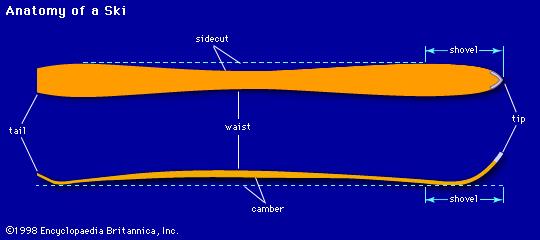
Shape means sidecut. A deeper sidecut with a shorter radius carves a shorter turn. In general, this helps best on groomers. It won’t help in bumps, where you want the tail to release to avoid hanging up at the end of the turn. A good mid-fat has a shape close to 115-80-105, which gives a theoretical radius of about 14 meters and a bearing surface — the ski’s ability to “float” on soft snow — of 1350 cm2. Furthermore, the mid-fat’s agility — its ability to bend easily into a turn — is vastly improved because it has a short turn radius.

Each dimension can be varied in different ski types. Know your preferences. Credit: Brittanica

Each dimension can be varied in different ski types. Know your preferences.
Credit: Brittanica

What shape should you buy? Start with a “generic” 115-80-105mm shape at your length, then select a wider waist if you’re going to ski a lot of soft snow, or a narrower one if you’re going to ski a lot of hard snow. If you’re an expert who loves to carve, go for a shorter radius. If you want to be able to slide the tail a bit in bumps and tight woods (or if you have to skid a bit when you teach intermediates) opt for a slightly narrower tail.

Seth Masia, former technical editor of SKI magazine, heads the Ski Younger Now program at Vail Village. Ski Younger Now is a retraining program for older skiers, and skiers returning to the sport after recovering from an injury. It teaches low-impact, low-torque techniques to enable efficient skiing in all kinds of terrain.

The workshops are scheduled for December 15-17, 2015; January 12-14, 2016; February 16-18; and March 8-10. To schedule or learn more, email sethmasia@gmail.com or call Vail Village Private Lesson Desk (800) 475-4543 and ask for Seth Masia.

Gorsuch. Too Much?

Buy Stuff If You Can.

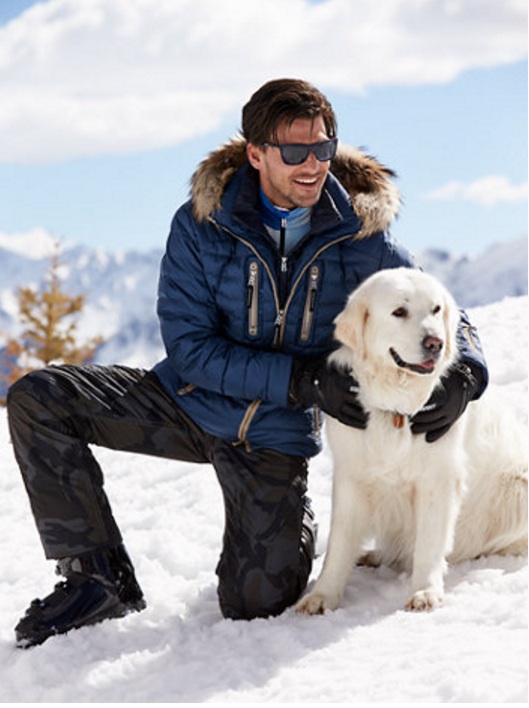
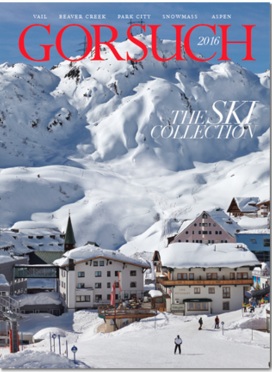
The 2016 Gorsuch catalog just landed on our desk with a cover model wearing  $4,487 worth of ski outerwear. Inside are pictures of parkas costing in the thousands and a four-way stretch insulated “ski jean” for $2,399.

Fur hood parka by Bogner: $2,108. Doggie: Priceless. Credit: Gorsuch

Fur hood parka by Bogner: $2,108. Doggie: Priceless.
Credit: Gorsuch

Choices for guys are pricey, but nothing like the trophy garments which, based on the Barbie-looking models, must be targeted at trophy wives.

It’s fun to thumb through the catalog and see how the tippy-top of the one percent is outfitting itself for the coming season. A knit neck warmer to stuff the stocking? $250. A black and grey zipper fleece? $498.

The 2016 Gorsuch has many luxury items for the carriage trade. Credit: Gorsuch.

The 2016 Gorsuch has many luxury items for the carriage trade.
Credit: Gorsuch.

Photographed in Aspen, this is the 39th Gorsuch catalog. The company was founded by Renie and David Gorsuch who were members of the 1960 US Olympic Ski Team. According to their website, they fell in love, married, settled in Colorado and had three sons. Today, they have 13 stores at all the right addresses in Aspen, Beaver Creek, Keystone, Park City and Vail (one of which, appropriately, is on Wall Street).

Like most of the lifts at these areas, Gorsuch’s offerings are over the top.

To request a hard copy of the Gorsuch catalog, visit them here.  Oh, by the way, it’s free.

Big Sky, Big Win For 3 Gens

Can Mom (74) Adapt To Big Sky Skiing?

Heather, her son, and mom have a knock-out three-gen ski vacation at Big Sky. Credit: Greg Burke www.luxuryskitrips.com

Correspondent Heather Burke, her son, and mom have a knock-out three-gen ski vacation at Big Sky.
Credit: Greg Burke www.luxuryskitrips.com


SeniorsSkiing.com welcomes Correspondent Heather Burke, Ski Journalist LuxurySkiTrips.com and FamilySkiTrips.com

Big Sky is just as massive and scenic as it sounds, with over 5,750-acres and a skiable summit soaring to 11,166’ and dropping 4,350’ vertical feet to the base village. Boom. This Montana ski resort is as intimidating as it sounds, or at least it was to my 74 year old mom. She wanted to join us on a family ski trip, but she had serious alpine anxiety. Would she be able to keep up with us, my husband and me, and our 21 year old son? Would she remember all her skiing skills? Would it be like the proverbial bike after missing a season or two of alpine skiing?

She flew from Florida, a reverse snowbird, to meet us in beautiful Montana. Our first ski day together, I could tell she was wound up, and a bit winded from the elevation (Florida’s highest point doesn’t acclimate you to Big Sky country). As we walked to the Swifty high-speed quad (I carried her skis), I assured mom she had done this thousands of times before, and taught me to ski four decades ago.

As I made those first few gentle turns in sparkling soft snow on Mr K under brilliant blue sky, she followed. I looked over my shoulder to see her skiing fluidly, in perfect form, a pretty big smile on her face. She was feeling the elation of skiing, at 74, and I was feeling pride (and relief). To think that she’d been apprehensive seemed silly now. But her Florida friends had warned her, “don’t break a leg,” and “you’d better come back in one piece.”

Many senior skiers like wide groomers. Big Sky has some beauts. Credit: Greg Burke www.luxuryskitrips.com

Many senior skiers like wide groomers and big turns. Big Sky has some beauts.
Credit: Greg Burke www.luxuryskitrips.com

We skied four fantastic days on Big Sky’s gorgeous groomers—Elk Park Ridge to Calamity Jane.  Mom had her faves—Sacajawea and Ambush. We skied with my son and husband on Big Sky’s Moonlight Basin terrain, three generations sharing comfy quads. Over lunch in the spectacular Moonlight Basin Lodge, we laughed about how our gear and technique had revolutionized during our three generations, and told crazy ski instructor stories – all of us had taught skiing at some point. Mostly we had a blast. I can’t think of another sport than can span 50 years age difference. Senior skiing sure has changed, so has age… 70 is the new 40 for skiers.

The other change, now I’m the over-protective parent, of my mother. I controlled my mom’s ski environment during our week in Montana, leading her down ego-pleasing, beautifully groomed boulevards—Big Sky has many. Our last day brought soft glittery powder and she skied it like a champ. “I have never skied such amazing powder,” she said. I’m pretty sure she had in her six decades, this woman skied on barrel stave skis with trap bindings after all. But who am I to correct my mom though.

Big Sky was the best venue for our three generations, big mountain terrain for the boys, big blues for mom and me, and a compact village at the base – so she could ski back to the slopeside condo mid-day and I could catch up with my guys for tram laps and steep chutes. At après ski, with well-earned scotch in hand at Big Sky’s Carabiner Bar, mom toasted to our skiing legacy.

We returned her rental ski equipment and returned her on a plane safely back to her cynical Florida friends (in one piece, no broken leg). Big Sky made a big impression on these three generations of skiers.


On The Threshhold of Winter 2015-16

So It Begins

WhiteMountains

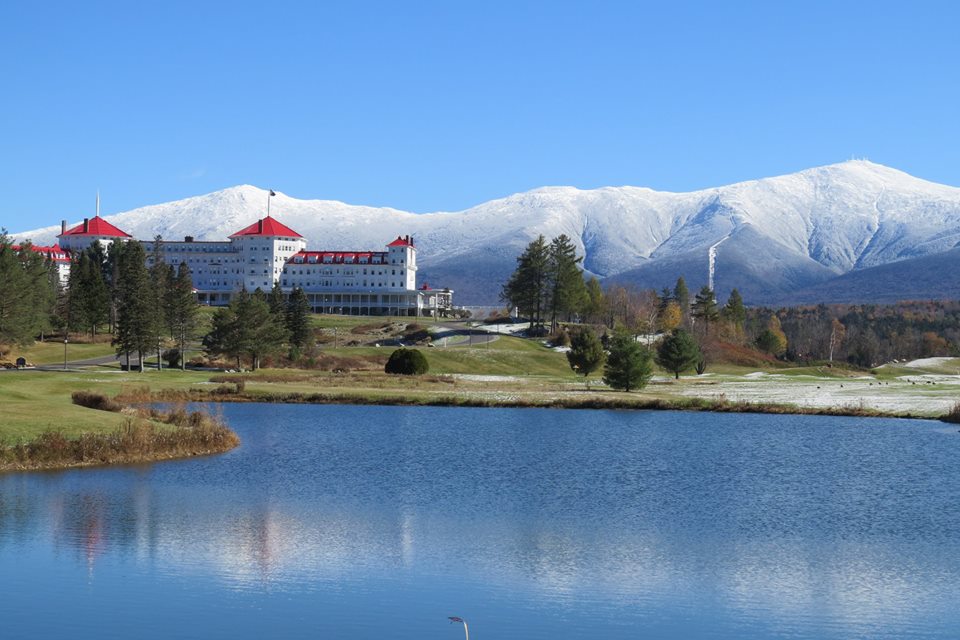
The White Mountains frame Bretton Woods resort with a first dusting in mid October. Credit: Bretton Woods

We’ve been watching reports of snow in high altitude places in the West and East which makes the coming of winter seem a bit rushed this year.  There are still leaf-peepers on the roads of Vermont and New Hampshire, and snow on Halloween decorations doesn’t seem to ring true.  For those of us in New England, the snow fall brings a reflexive response conditioned by last year’s Snowmaggedon.  Yes, bring it on, but hopefully let it regress to the mean.

By now, you’ve probably heard that Killington opened on Oct 18 with a small army of zealots skiing on manufactured snow.  (BTW, Killington was the last ski area in New England to close last spring. The last run of that elongated season was in late May.)   Sunday River followed a day later with 750 season ticket holders playing hookey from work and school to record their first of presumably many days of snow sport to follow. Our friend and colleague, The Ski Diva, puts these early days of enthusiasm in perspective.  See her astute advice on surviving what she calls the White Ribbon Of Death here.

And yet, according to NOAA, this year’s El Nino has become a stronger predictor this year.  OpenSnow, our favorite snow forecaster, explains that despite the early showing, this year might be less snowy than we’d like.

Nevertheless, now is the time to:

  • Start/continue your conditioning program,
  • Bring your gear into your local shop for a tune-up,
  • Consider a season pass while early bird specials are still available,
  • Read the ski magazine reviews of new equipment and ponder your next possible purchase,
  • Think about a destination resort where you can find senior-friendly specials,
  • Re-convene your ski club and start getting excited about the season ahead,
  • Check out deals and discounts at the Snow Shows coming to your city or town,
  • Wash/dry clean last year’s contents of your stowed away ski bag.

Meanwhile, let’s remember winter is a special time for senior snow enthusiasts.  In describing winter, Robert Frost says,

It lifts existence on a plane of snow
One level higher than the earth below,
One level nearer heaven overhead
And last year’s berries shining scarlet red.
 (A Winter Eden, Robert Frost)
Let’s get ready.

Ski Younger Now: Retraining Program At Vail

Ski Younger Now is a retraining program for older skiers, and skiers returning to the sport after recovering from an injury. Developed by veteran instructor, Seth Masia (Seth is on the SeniorsSkiing.com Advisory Board), Ski Younger Now teaches low-impact, low-torque techniques to enable efficient skiing in all kinds of terrain.

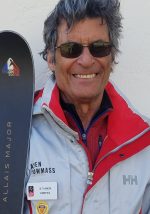
Veteran Instructor and SeniorsSkiing.com Advisory Board Member Seth Masia re-teaches seniors to ski at Vail.

Veteran Instructor and SeniorsSkiing.com Advisory Board Member Seth Masia re-teaches seniors to ski at Vail.

The approach works for anyone recovering from an injury and for those getting back on hill after a long absence.

The program is available as a three-day workshop through the Vail Village Ski School (see dates/contact info below). Seth specializes in the 60+ crowd, including grandparents seeking the skills and confidence to ski with the kids. Seth helps them with those skills, including some they can pass on to the youngsters.

His clientele often face similar physical challenges: slowed reactions, weaker muscles, fragile joints. His goal—and theirs—is that retraining will give them another ten or twenty years on the hill.

He gets people skiing smoothly, using ski shape instead of muscle to start turns, guide skis and control speed. One area of focus is reducing torque on knees, hips and lower back. He does this by emphasizing edging as facilitated by shaped skis.

He starts his “retrainees” with the “patience turn.”  It’s simply an exercise of flattening shaped skis on the snow, allowing the tip to find the fall line. The process requires a slight upper body motion in the correct direction. Some of us simply move our hands in the direction of the new pole plant. It works!

He teaches simple lateral motions that flatten and edge the ski and remove both steering torque and body unweighting from the act of skiing. It saves muscle energy and leads to a longer, more relaxed day. These skills and other useful exercises don’t produce heavy breathing, even at higher elevations.

The workshops are scheduled for December 15-17, 2015; January 12-14, 2016; February 16-18; and March 8-10.

 To schedule or learn more, email sethmasia@gmail.com or call Vail Village Private Lesson Desk (800) 475-4543 and ask for Seth Masia.

Op-Ed: SAR In The Mountains

Debit or Credit?

If you head out on the Atlantic Ocean in a canoe and run into trouble, the U.S. Coast Guard (USCG) will send a 110 foot cutter to rescue you. End of story.

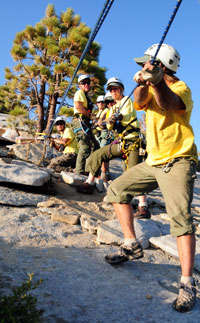
A SAR team practices at Yosemite. Credit: US Park Service

A SAR team practices at Yosemite.
Credit: US Park Service

This is not always the case here on land. The U.S. Park Service also maintains Search and Rescue (SAR) teams in each of the National Parks that have large wilderness and mountainous tracts. It costs each park visitor one and a half cents to maintain the SAR teams. These government agencies are supported by our tax dollars, and it seems well worth what we pay. The USCG has other responsibilities and is considered part of our armed forces. With the largest defense budget in the world, expectations that they conduct SAR activities seem reasonable. But, there’s more to it than that. There is a tradition of rescue at sea that dates back 200+ years. It’s part of our nation’s History and our values.

A comparison of SAR at sea and SAR in the mountains seems apt. However, several states have passed legislation to charge rescued individuals. Colorado was one of the first to pass a “hiker responsibility” law. If you require a rescue and are subsequently deemed to have acted in an “irresponsible” manner, you must pay the cost of the rescue. New Hampshire, in July 2014, changed a law which had been on the books since 1999 to lower the threshold for when to bill hikers for rescues. Under the original law, hikers had to engage in “reckless” behavior; now they need only be “negligent.”

Cost is a key consideration. Many of you senior snow enthusiasts out there have observed the ski patrol rescue injured skiers. Many of these are paid professionals but many also are volunteers.

The Knoxville Tennessee News Sentinel reported, “In Great Smokey Mountain National Park, total search-and-rescue costs for 2012 reached $253,550 with 104 incidents, two involving fatalities.” Hikers and climbers in European countries can purchase rescue insurance.

The results of these laws have seen two teenagers billed for $30,000 dollars for a rescue in New Hampshire’s White Mountains. In Arizona, a lost trail runner hid from SAR teams to avoid being billed.

I disagree with these laws and would like to see SAR in our woods and mountains take a more courageous stance like the USCG’s. There is a strong tradition of helping those in need and the nobility of such attitudes enriches us all.

New Hampshire's Hike Safe program exempts holders from repaying SAR costs, except where reckless or negligent.

New Hampshire’s Hike Safe program exempts holders from repaying SAR costs, except where reckless or negligent.

Another answer is education. “Hike Safe” programs like New Hampshire’s are great safety tools. A hiker can apply for a hike safe card which validates they have been through proper training. This card, however does NOT protect them from being billed for a needed rescue.

The goal is to insure safety in our back country locations and not to “shame” individuals who may have taken a calculated risk and lost. Many mountain communities have selfless volunteers who participate in SAR. Let’s follow their lead and act on our values to care for those who need help. We can adopt the concepts and traditions of the Coat Guard to back country and mountain rescues. Get rid of “hiker responsibility laws”.

Editor Note: These comments reflect the views of veteran mountain and hiking expert Steve Hines and are not those of SeniorsSkiing.com. Steve is a wilderness guide, Wilderness First Responder and a volunteer trip leader for the Appalachian Mountain Club.

Women-Only Snowshoes: Vive La Difference!

Special Thanks to Roger Lohr, Editor and Publisher of XCSkiResorts.com for allowing us to post this article which first appeared on that site.

About half of all snowshoers are women, who snowshoe to experience nature, to exercise with friends and family, for backcountry access, and to have outdoor fun throughout the winter. The various snowshoe companies have been catering to this market by offering a broad selection of women’s-specific snowshoe technologies recreation and fitness, but do the women’s snowshoes go beyond just a change in cosmetics?

Woodstock Inn attracts women snowshoers who can step along in women-only gear. Credit: Woodstock Inn

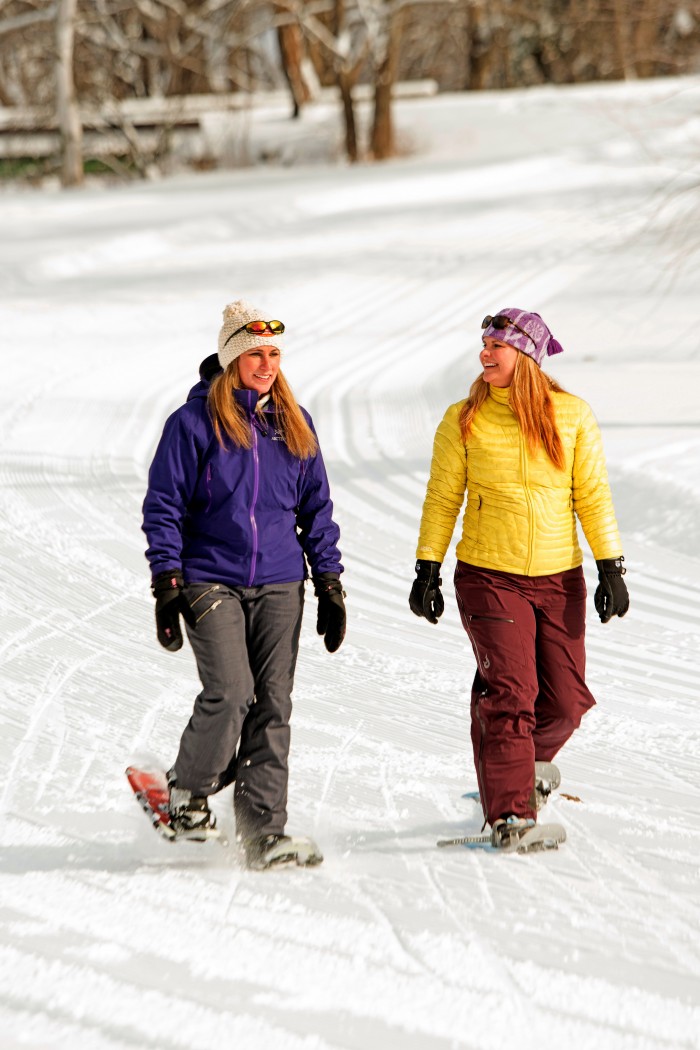
Woodstock Inn attracts women snowshoers who can step along in women-only gear.
Credit: Woodstock Inn

Tubbs Snowshoes pioneered the development of women’s-specific snowshoes by offering patented binding technologies that custom fit women’s boot sizes and by ergonomically engineering frames that are tapered at the tip and tail to accommodate women’s shorter strides. The result was lightweight, comfortable, high-performance snowshoes and many of the other brands have followed suit.

There are a few differences between Tubbs’ men’s and women’s snowshoes. On average, women have a narrower stance and shorter gait, so women’s snowshoes are narrower in width. Women’s average weight range is both more light weight and a smaller range than men’s, so they provide snowshoes in a shorter size for women, longer for men. The Tubbs men’s and women’s bindings differ, providing the optimal fit for the average women’s boot size and volume range, versus a larger average men’s boot size and volume range. Foot size also affects the optimal position for the heel lift, so the placement of the heel lift on men’s snowshoes varies from the placement on women’s snowshoes.

The Atlas Snowshoes Company conducted gait studies and biomechanics research to create snowshoes that enable women to hike and run with the most natural stride possible, while making the snowshoes both comfortable and lightweight. The research revealed that women have a greater Q-angle (at the knee where the thigh bone angles in from a woman’s wider hips) and abducted gait that create specific issues when snowshoeing. Women also tend to pronate (collapsing arches) pointing to the need for bindings to support the arch of the foot.

MSR snowshoes for women balance a naturally narrower gait and the need to “float” on the snow. Credit: MSR

According to the people at MSR, the studies conducted by Tubbs clearly showed male/female anatomical differences. However, when these differences are translated into physical products the design changes are not as noticeable. For example, women generally walk with a narrower gait than men. Therefore, a very narrow snowshoe would suit women better, but the snowshoe width has a direct impact on flotation so the final design can’t be too narrow. The ideal width snowshoe for women is a balance between very narrow to accommodate gait and wider for adequate flotation.

MSR believes that it is important to look beyond the measurements and understand how the snowshoes feel. Thousands of hours of field testing showed that subtle differences are noticeable. The major male/female differences with men’s and women’s versions of MSR are with decks and bindings. The women’s deck shape is optimized for snowshoe performance (traction & flotation) and a female gait. The bindings are sized to meet the proportions of a women’s footwear. There is also specific MSR technology such as Axis™ Gait Technology (Women’s Lightning Ascent Snowshoes), which allows women to compensate for varying degrees of toe-out or toe-in. This technology provides laterally adjusting the bindings independently of the frame, ensuring efficient, parallel-tracking snowshoes regardless of a women’s natural toe-out or toe-in stance. This means that the binding itself can swivel on the snowshoe to adjust for varying degrees of natural toe direction allowing binding alignment with your natural stance rather than forcing you to point your feet directly ahead.

Yukon Charlies Snowshoes has the YC Pro II Series women’s snowshoes, which are designed with features specific to the needs of the female snowshoe enthusiast. The rockered V shape tail enhances performance and allows for a more natural stride. These snowshoes are lighter, stronger and more reactive than any of the company’s other women’s snowshoes.

Yukon Charlies’s Advanced Series for women is a feature-packed “go anywhere” snowshoe is designed by women, for women. The rocker V tail allows for a natural stride from a walk to an aerobic sprint, while the integrated heel lift and the axle system makes Yukon Charlie tout them as their best women’s snowshoe ever.

Redfeather Snowshoes has three styles of Hike snowshoes with the SV2 pull handle binding. There’s also a choice to get the snowshoes in a kit with poles and a bag. The Redfeather Hike has sizes of 22, 25, 30 (inches) for women up to 150, 175, and 200 lbs.

Tubbs Snowshoes and Atlas Snowshoes have shown the greatest commitment to women’s snowshoe products and they are probably the largest snowshoeing product brands. Tubbs Snowshoes has 11 models for women (in seemingly every snowshoe category) including Flex ESC, Flex TRK, Flex ALP, Flex RDG, Flex Vrt, Wilderness, Mountaineer, Frontier, XPlore, and Xpedition.

Atlas Snowshoes has six options for women including the Electra 8 and 9, Endeavor, Fitness, Race, and Run.

Few of the snowshoe companies invest in marketing directly to women but the Tubbs Snowshoe event “Romp to Stomp Out Breast Cancer” Series, is very popular focused on women. This year’s event at Frisco Nordic Center in Colorado was attended by more than a thousand people! The series, which has been hosted at sites across North America has raised funds and awareness since 2003 bringing in more than $2.8 million for the fight for a cancer cure.

Whether the trail conditions are light fresh snow, crust, slush or ice, women want to trust their snowshoes for all-condition durability, excellent traction, flex for control, and comfort. Women are coming to expect that their snowshoes are specific to their needs and built to withstand frequent use offering many seasons of recreation, fitness and adventure.


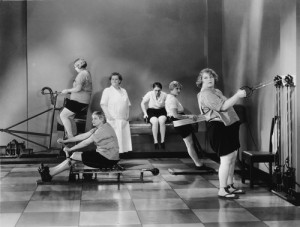
My Fitness Journey Continues: Part Six

The Battle Of The Bulge Rages On! (Thankfully, Reserve Forces Are On Their Way.)

Getting back into shape is a combination of courage, knowledge and just doing. SeniorsSkiing.com Correspondent has all three working for her.

Getting back into shape is a combination of courage, knowledge and just doing it.

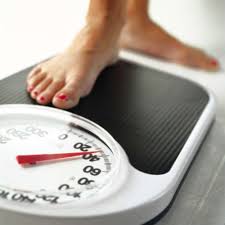
As I enter the sixth month of my personal (and public!) journey to fitness, I continue to make slow, steady progress toward my goal of being in great shape for the slopes come the first snowfall (and it IS supposed to snow in the Sierra this winter). Faithfully attending my four weekly exercise classes? Check. Doing weights three times a week? Check. Continuing to lose up to an inch in my measurements each month? Check. Drinking more water? Check. Getting more sleep? Check. Getting on the scale once a week? Check. Losing weight? Not so much. Since I started this journey, I’ve lost a total of 14 pounds, but I still have 26 pounds to go. So three pounds a month instead of two pounds a week is a bit disappointing. But the good news is that I haven’t gained anything back, and I have established a few good eating habits, such as snacking on edamame instead of salami and crackers. But I need to crank it up!

So it was quite fortuitous for me when a special issue of the highly respected University of California, Berkeley, Wellness Letter arrived in my mailbox a few weeks ago. The entire Special Fall Issue 2015 is devoted to body weight and all its attendant issues. It includes an overview article that looks at our nation’s battle with obesity, and sidebars on BMI (body mass index), why it’s so hard to keep the weight off that one’s lost, and a brief analysis of recent diet studies.

Watching what you eat is the key to weight loss. Ix-nay on the donuts.

Watching what you eat is the key to weight loss. Ix-nay on the donuts.

But the article that really caught my eye was “18 Keys to Healthy Weight Loss: Tried-and-true advice that can help tip the scales in your favor.” I did a quick check and found that I was adhering to nine of them, which was encouraging, but I plan to add a few more to accelerate my weight loss. Some of the pointers are well-known, such as eating a healthy diet that’s tilted toward vegetables, fruits, whole grains, fish, and lean meats and away from sugary foods and saturated and trans fats, and being a conscious eater (eating smaller portions, eating more slowly, and keeping a food diary). But there were several less-intuitive but scientifically proven pieces of advice that I’m going to add to my arsenal of weapons to help me win my battle of the bulge. For instance, “Key #7: Go for volume (low-energy-dense foods)” recommends

Exercise is only part of the picture. Diet plays the most important role in weight loss.

Exercise is only part of the picture. Diet plays the most important role in weight loss.

eating foods with lower calories relative to their weight and volume, in other words, foods that have high water and high fiber content such as fruits and vegetables and broth-based soups rather than low-moisture, denser, high-fat foods such as crackers, cheese, cookies, etc. Case in point: a cup of grapes is the equivalent of 1/4-cup of raisins. In short, think “watery” foods! “Key #10: Limit variety at meals” points out that “you’re likely to eat less if you have less variety, since foods similar in taste and texture dull the palate (a phenomenon called sensation-specific satiety).” It offers a good suggestion for buffets and parties, just in time for the upcoming holiday season: when facing a whole array of appetizers, choose just the two or three that most appeal to you and limit yourself to one trip to the table. It will keep your appetite from accelerating.

Accompanying the article are several useful sidebars that help you calculate your daily calorie count, outline which kind of diet will work best for you (surprisingly, genetics and individual proclivities play a major part in what will actually result in the best outcome for you), offer a critical look at diet supplements, and discuss the part exercise plays in losing weight.

The editors of the newsletter had just posted this particular article on their website, so you can read it in its fascinating entirety! Just click here.

To calculate your BMI, go to to this NIH site.

Editor Note:  SeniorsSkiing.com salutes Correspondent Rose Marie Cleese for chronicling her journey back to fitness.  She continues to be an inspiration to those of us who wonder about our conditioning as we age.  Keep going, RMC.  We’re all rooting for you!