How Many Subscribers Ski Over 30 Days A Season?

Check More Results From SubscriberSurvey 2015.
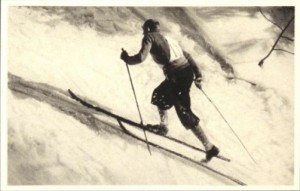
UphillMuch to our happiness and gratification, the SeniorsSkiing.com SubscriberSurvey 2015 was a tremendous source of insight and guidance. We reported the highlights in March with a promise to provide some more detail. What follows are more interesting responses to some of our questions.

We asked you to rate the importance to SeniorsSkiing subscribers of the amenities provided by ski areas and resorts. Here are the results in rank order:

Amenity Very Important or Critical
Discounted Lift Tickets and Season Passes 100%
Easy Access From Parking To Lifts 76%
Newsletters/Web Pages For Senior Activities 50%
Other Discounts (Food, Rentals, Gear) 50%
Ski Lessons Tailored For Seniors 46%
Family/Group Discounts 36%
Walkable Base Lodge With Shops, Restaurants 34%
Meeting Place For Seniors 31%
Set-Aside Areas in Lodge For Seniors 22%
Valet Parking 4%

Here’s what kind of content topics you said you’d like to see in SeniorsSkiing.com. These reflect the results for Very or Extremely Interested ratings only.Note these are just the Very Important or Critical responses. Clearly, discounts are a universal need for seniors. And, there are also some ideas here about access from parking lots, information sharing, discounts, ski lessons and other ideas that can make a Senior Skier’s time at a ski area or resort more valuable and attractive. It’s interesting that some of these ideas are really low-cost expenses for the ski area.

Topic Very or Extremely Interested
Gear For Seniors Reviews 72%
Destination Profiles For Seniors 67%
Health, Nutrition, Fitness 60%
Legends, Heroes, History 58%
SnowSport Industry News 54%
Features about People, Places, Things 54%
Restaurant Reviews 17%

Finally, we see that you report skiing with family and grandchildren about an average of 8.6 days a season. That’s an impressive amount, considering the median number of ski days per season for our subscribers is 9.7. We used median for the number of ski days because 55 percent of you skied over 30 days a season, skewing that data ‘way northward. Now that’s passion in action.We also notice your average age is 69.4 and 44% of you belong to ski clubs.

Several respondents said they’d be interested in contributing articles to our online magazine next season. Thank you! That’s a terrific endorsement. Please contact us at info@seniorsskiing.com with your ideas and we will get right back to you.

Sierra Ski Season 2014–15: A Mixed Bag

In a winter with the lowest snowfall in the Sierra Nevada since record-keeping began, some resorts fared well while others barely managed to open.

On April 1st, it was no joke when California’s Department of Water Resources snow surveyors went to Phillips Station off Highway 50 near Echo Summit to do their official April 1st measurement of the snowpack. Whereas the average

Despite snow drought, author's daughter Katie Cleese and friend Rose Cendak practice Quidditch at Heavenly Valley. Credit: Rose Marie Cleese

Despite snow drought, author’s daughter Katie Cleese and friend Rose Cendak practice Quidditch at Heavenly Mountain Resort.
Credit: Heavenly Mountain Resort

snow depth at that location is 66.5 inches on that date since record-keeping began there in 1941, the measuring crew—with Governor Jerry Brown by their side—found themselves in a meadow devoid of any snow at all. It was unprecedented. Since it’s now likely that there will be very little Sierra snowpack runoff into the state’s reservoirs this year coupled with the previous three years of statewide drought, the governor announced on the spot a mandatory 25 percent reduction in water usage for everyone—companies, institutions, and individuals alike.

Yet, despite there being grass instead of snow in the meadow at Phillips Station, one can still ski and snowboard in the Sierra—at least for a couple more weeks. A small handful of wintersports areas will remain open past the traditional Easter weekend closing date, thanks to their snowmaking efforts, their higher elevations, and/or their careful protection and manicuring of the snow they were lucky enough to have fall on their slopes.

To catch a few more runs before all the snow is gone, you can head to any of the following (closing dates as of April 2nd are in parentheses): Bear Valley (Sunday, April 12th), Boreal (Sunday, April 12th), Heavenly (Sunday, April 19th), Mt. Rose (Sunday, April 19th), Kirkwood (Sunday, April 19th), and Mammoth Mountain (Sunday, May 31st). Bay Area skiers rarely make the trek to Mammoth on the eastern slope of the Sierra off Highway 395 since the quickest route there, via Tioga Pass in Yosemite, closes every winter after the first major snowfall. This season, however, Mammoth was and remains a great option since the Tioga Pass road never closed this winter—a first! As of March 31st, Mammoth had 19 of its 28 lifts operating, with a base of 30–60”. The resort has often been open for skiing over the 4th of July weekend; don’t hold your breath this year!

Only one Sierra wintersports resort is closing this Easter Sunday, April 5th, the traditional end of ski season: Alpine Meadows.

Katie Cleese soaks up the bennies in the too-warm patio at Heavenly Mountain Resort.  Note snow melt in background. Credit: Rose Marie Cleese

Katie Cleese and Mike Allen, Director of Ski Services, soak up the bennies in the too-warm, mid-mountain patio at Heavenly.  Note snow melt in background.
Credit: David Koth

Several Sierra resorts had a tough season, especially those with no snowmaking capacity or besieged by higher temperatures that prevented snowmaking or located in the Central Sierra, which didn’t get as much snow as their neighbors farther north. Sierra-at-Tahoe managed to open on December 12th and ran its lifts for a total of 94 days before it had to close on March 16th. Badger Pass in Yosemite National Park opened on December 14th but had to close on January 19th, never to reopen. Dodge Ridge racked up similar stats to Badger Pass, opening on December 17th and closing in mid-January. Homewood on the west shore of Lake Tahoe opened on December 20th but then closed on February 23rd to wait for another significant snowfall that never came. Tahoe Donner closed on March 15th and Diamond Peak closed on March 29th. Sugar Bowl had to cut its 75th Anniversary season short, closing on March 22nd.

Hopefully, all the resorts will have a banner year next year, but with the new normal, it looks more and more like any California resort that hopes to survive the changing climate will have to take the plunge into a robust snowmaking system.

Le Massif de Charlevoix: Views, Trails, and Chic

Where else can you ski into a major river (almost) and take a ski train to a charming village?

About an hour north of Quebec City, we find Le Massif de Charlevoix, a magnificent and major North American ski area that offers several exceptional features:

Skiing into the river? Looks that way at Le Massif de Charlevoix Credit: SkiZone

Skiing into the river? Looks that way at Le Massif de Charlevoix
Credit: SkiZone

  • Most people arrive and park at the top of the mountain, making their first run down without an inaugural lift up.
  • Runs are varied and long from very pleasant groomers (which we like best) to mogul fields, glades and double diamonds. There is even an off-trail sector of 99 acres for back-country adventurers. Le Massif de Charlevoix has the highest vertical drop (2,526 ft.) in Eastern Canada and east of the Rockies, so trails basically keep going and going. (The longest one is 3.2 miles.) But stopping to take in the view is worth it because…
  • …A couple of hundred yards from the bottom is the St. Lawrence River. The impression you get as you head down the piste is that you are heading straight into the water. It’s an illusion that is quite captivating and photogenic.
  • Not only does Le Massif de Charlevoix host a piste de luge—sled run—that is 7.5 km long, it also has the only TRIPLE black diamond trail we’ve ever seen. It’s called La Charlevoix, it’s “extremely steep”, and it’s designed as a downhill course for FIS approved races. We looked at it respectfully from afar.


  • Light rail train stops at Hotel le Ferme in Baie-Ste-Paul Credit: PhotoGT

    Light rail train stops at Hotel le Ferme in Baie-Ste-Paul
    Credit: PhotoGT

    You take your last run down, and, at the very bottom of the piste, you and your skis, gear and boots can take a transit gondola to a light rail station where a train will take you about 30 minutes along the shore of the St. Lawrence to the little town of Baie-Saint-Paul, the hometown of the world famous Cirque du Soleil. The beer on the little train was most welcome, served by une serveuse très charmant. Again, the views of the river were breathtaking; we were glued to the window until we arrived at…

  • Hotel La Ferme in Baie-Saint-Paul, a new, very chic, stylish, design-winning hotel built as the first phase of a multi-phase project that will “responsibly” develop the area. With the hotel in town as a four-season destination for visitors, plans are also in process to develop ski-in, ski-out condos at the base of the Le Massif de Charlevoix within five years.
  • The quaint and historic village of Baie-Saint-Paul is an artist colony with galleries, shops and chef-owner gourmet restaurants that capitalize on fresh, local agriculture. Our discovery was Au P’tit Resto Suisse where the fondu and raclette brought us to a magical place.

    Au Ptit Resto Suisse serves gourmet racelette. Credit: Tourisme-Charlevoix

    Au Ptit Resto Suisse serves gourmet racelette.
    Credit: Tourisme-Charlevoix

So, senior snow enthusiasts, we’ve discovered something new for us in the north. The Charlevoix region is not only a winter destination for skiers, cross-country, snow-shoers and back-country explorers, but from what we’ve seen, there are many outdoor adventures for other times. A short drive from the northeast or the mid-west, this is an experience waiting to happen.

For more information on the development at Le Massif visit LeMassifVision2020.com

Silver Streaks: A Model For How Ski Areas Can Serve Seniors

You Always Have Someone to Ski With at the Waterville Valley Program.

Gold_Waterville_Valley_Resort[Editor Note:  Waterville Valley’s Silver Streak Program was a Gold Senior Friendly Award Winner, based on SeniorsSkiing.com’s First Ski Area and Resort Survey.  Silver Streaks is the oldest senior ski program in the US.  We hope that other ski areas can start “Thinking Seniors” like Waterville.]

“I’m so excited, I just turned 65,” says Anne Pelletier, booster for the Silver Streaks, a program for the 50-plus set at Waterville Valley, N.H.

Silver Streakers Mike and Anne Pelletier totally enjoy the benefits of the Waterville Valley program. Credit: Tamsin Vinn

Silver Streakers Mike and Anne Pelletier totally enjoy the benefits of the Waterville Valley program.
Credit: Tamsin Venn

Nearly 30 years old, it was one of the first senior ski programs in the country to cater those 50 and over, a demographic astutely valued by Waterville’s founder ex-Olympian Tom Corcoran.

Pelletier, a lively woman in fire-red ski pants and state-of-the-art heated jacket, has reason to be happy. At age 65, the Waterville season pass benefits kick in: $379 for non-holiday midweek skiing.

For much longer, though, she has been with the Silver Streaks.

For the $95 joining fee, senior skiers get:

  • Reserved area in Parking Lot # 1 (one 90-year-old joined for that reason alone).
  • Complimentary coffee and pastries in the Base Lodge from 8:30-10 a.m. in special meeting area.
  • Complimentary Snowsports clinics for seniors only.
  • Après-ski party every Wednesday at rotating venues.
  • Banquets and other special events throughout the season.
  • Reduced price NASTAR every Wednesday.
  • Nordic program every Wednesday for two hours of Nordic skiing with professional guides, followed by lunch at the Nordic Center.

The program runs Monday-Thursday, non-holiday, early December to mid-March.

Also every Monday night the Coyote Grill at the White Mountain Athletic Center offers a $12 dinner; après-ski two times a month. (unfortunately $5 martini night was retired for reasons easy to imagine).

Other events: a Memorial ski run from the top in single file to remember those who have died in the past year.

The Pelletiers like the friendships, but they have an ulterior motive.

Says Anne, a platinum (top) NASTAR racer, “We have a need for speed.” Husband Michael, 72, is a top-ranked marathon runner in New England.

Silver Streakers Randy and Reggie Breeckner moved full time to Waterville 15 years ago from their home in the Litchfield Hills in northwestern Connecticut where they raised seven children.

Reggie notes, “I’m going to try snowshoeing when I get old.”

“You develop strategies not to get hurt,” adds Randy, a six-decades-long New England skier. Those include not skiing when it’s icy, foggy, or on busy weekends.

What about snowboarding?

“We know only one person in the group who snowboards,” he says.

Albert and Kristina Ruehli from southern New Hampshire are also on board. Albert learned to ski at age six in his native Switzerland.

Says Albert, “the mountains, the view, it’s a beautiful sport, plus you’re expressing yourself on the hill.”

“I went to a meeting and one of members said, ‘You’re too young to join,’ so of course I joined immediately,” says Kristina, 71.

 “We figure when we can’t ski anymore, we should just let an avalanche take us,” adds Kristina philosophically

Julius Feinleib from Thornton, N.H, has grandchildren ages seven and nine who now whiz by him on the trail. His reasons for joining are simple. “Just being with people I recognize.” He also likes the cup of coffee and doughnuts.

For more on Silver Streaks, click here.


Eat Your Way To Fitness: Gourmet Ski Tours

Lots of Chocolate: Nordic Ski and Snowshoe Events Collected By XCSkiResorts.com

From Roger Lohr, XCSkiResorts.com: Want a guilt-free way to indulge yourself with food while exercising? XC Skiing is one of the best forms of aerobic exercise but if you go on a “Gourmet Ski Tour” on your xc skis or snowshoes, you may very well eat your way to fitness at a number of trailside food stops. What a grand time so go ahead, eat, ski, and be merry – appetizers, wine, champagne, fondue, entrees, desserts, and more.

Here’s a cross section of the culinary XC ski events that are planned this winter across the country with a varied menu of fun and fine cuisine.

EAST

Smugglers Notch in VT has Sweets and Snowshoes every Wednesday night 7-9 PM for adults only. Hot cocoa, coffee, and desserts await snowshoers after a 30-minute trek to a pavilion and campfire. A warming meal of hot soup, bread and beverage at a trailside cabin is a destination for the Soup and Snowshoes guided trek mid-day on Sundays, and on Tuesday nights there’s a Snowshoe Adventure Dinner at the mountain summit.

Eastman (NH) Cross Country’s Nordic Nibbles in Grantham, NH on January 18 has a Scandinavian theme with a visit to a fire pit at each stop for cheese from a local smokehouse, Lindt chocolate, gingerbread cake and pastries, local dairy milk for hot coco, soup, and the main meal from 11 AM – 1 PM.

Munching along at Eastman's outdoor ski party. Credit: Roger Lohr

Munching along at Eastman’s outdoor Nordic Nibbles ski party.
Credit: Roger Lohr

The Valentine’s Day Destination S’Mores Station at Bretton Woods Nordic on February 14 with two self-guided tour for sweets from 10 AM – 4 PM. The shorter tour will be less than 2 km on easy trails so it’s great for the kids. Purchase S’Mores Kits at the center or at the station to make your own.

The Chocolate Festival at Mount Washington Valley Ski & Snowshoe Center in Intervale, NH on February 22 is an inn-to-inn affair at 10-12 stops to experience your chocolate fantasies including moose and fondue. Go on a tour of any length and actually gain calories, even if you ski as far as 20 kilometers. A shuttle is also available for those that have overindulged at the event dubbed the “Sweetest Day on the Trails.”

CENTRAL

The Upper Peninsula of Michigan in Ironwood features cuisine from local restaurants that can be purchased at a nominal fee along a designated route along the trails at the Taste of the Trails on the ABR trails on March 7 at 11 AM – 2 PM.

MOUNTAINS

Snow Mountain Ranch in Granby, CO hosts the Grand Huts.org Progressive Dinner on Feb 28 with a multi-course meal at outposts along the trail in a fundraiser for the huts.

Just Desserts Eat & Ski in the Enchanted Forest in Red River, NM on February 28 features goodies from 20 different local restaurants at three trailside stations with up to 100 desserts within a 4 kilometer loop. Their motto is, “It’s not a race, just a gorge fest.”

The Rendezvous Trails in West Yellowstone, MT features cuisine from local restaurants that can be purchased at a nominal fee along a designated route along the trails at the Taste of the Trails on February 7.

Crested Butte Nordic Center has has the Magic Meadows Yurt Dinners reached by a 2 km ski or snowshoe tour where 10 gourmet dinners are offered during the winter including the Saturday Yurt Dinners each month, and special dinners on Winter Solstice on December 20, New Year’s on December 31 and Valentine’s Day on February 14.

Look to the Galena Lodge in Ketchum, ID for the Full Moon Dinners on nights associated with the full moon, (Jan 3 & 4, Feb 3,4, & 5, Mar 5,6, & 7, Apr 3 & 4) whereby you can go ski or snowshoe ($5 snowshoe rental offered) and then return to lodge for a four-course dinner at $40 or half price for kids under 12. There are also special Wine Dinners, Holiday Dinners, and a Valentine’s Day Dinner.

Lone Mountain Ranch in Big Sky, MT has the Glide & Gorge event on March 8 from 11:30 AM-2 PM with trail luncheon stationed with appetizers, soups, entrees, desserts from the Ranch’s four-star kitchen, local brew, wine, music and shuttles.

WEST

Royal Gorge XC Ski Resort in Soda Springs, CA has the Royal Fondo Tour on Jan 25 with skiing or snowshoeing to various huts along the trails for snacks and lunch at the resort deck.

Tahoe Donner Cross Country Center in Truckee, CA has the Taste of Truckee presenting food from local restaurants along the trails on Mar 22.

Cypress Mountain outside of Vancouver, BC has Ladies Only Chocolate Fondue Snowshoe Tours on Friday and Sunday nights starting at 6:30 PM. Warm up with a mug of steaming apple cider before enjoying appetizers then a chocolate fondue Jan 9 & 23, Feb 6 & 20, and Mar 6. These programs include rental equipment, trail access, guides/instructors, and the appetizers.

Lightweight Pakems: Flip Flops for Cold Weather

Clever new “portable” boot makes feet happy.

Pakems CEO Julie Adams shows off high and low models at the Boston Ski and Snowboard Show. Credit: SeniorsSkiing.com

Pakems CEO Julie Adams shows off high and low models at the Boston Ski and Snowboard Show.
Credit: SeniorsSkiing.com

We’ve been padding around SeniorsSkiing.com’s New England office for the past few days wear-testing our new Pakems boots that we picked up at the Boston Ski and Snowboard Show last month. The real trial will come in a couple of weeks on some ski hill in New Hampshire, Vermont, or Maine after the final run of the day. I look forward to the moment when I take off my ski boots, relieving that clamped feeling—[regardless of how comfortable you think your boots are, there is always that clamped feeling]—and slipping on these lightweight, comfortable, warm and water-resistant booties and head off for après ski activities. Ahhh.

Pakems are relaxation machine. Credit: SeniorsSkiing.com

Pakems are relaxation machines.
Credit: SeniorsSkiing.com

Julie Adams, CEO and “Cruise Director” of Pakems, calls her company’s innovative boots, “flip-flops for cold weather.” After a day of skiing, rather than put on another heavy pair of hiking boots, Merrells, Sorrels, or even Bean boots, the solution, according to Pakems, is to slip on these ultra-light comfies for “happy relaxation.” We think it’s a pretty good idea to let your feet be happy after all that hard work.

There are many kinds of Pakems, from low to high cut, in different colors and ruggedness features. You’d probably want the insulated and thicker-soled Extreme model if you were planning to regularly trudge across a slushy parking lot back to your car. For us, the Classic boot is just fine for cruising around the lodge, condo or even heading out to an informal dinner. You can also give your kids or grandkids the chance to design their own boots with a set of fabric pens that come with the Kid’s Bodie model, named after Julie Adams’ eight-year old.

Pakems come in a very clever, squishable tote bag into which you can store the boots, making carrying them around instantly easy and convenient. Put Pakems in a backpack if you’re cross-country skiing , snowshoeing or ice-skating up a frozen river. Oh, and also for non-winter activities like cycling, hiking, fishing or being a tourist in a foreign land. You’ll be glad to have them at the end of the day.

Check the Pakems website for models, dealer locations and ordering information. You can also get them on Amazon.

Who Are You? The Ski Patrol Wants To Know

Carrying Identification Can Help The Ski Patrol Help You.

HIghly trained ski patrollers will be looking for your id. Credit: Deer Valley

Highly trained ski patrollers will be looking for your id.
Credit: Deer Valley

Accidents happen. And when they do, the ski patrol will likely be your savior. But the patrol needs your help. Here’s what you should have with you every time you ski or ride–just in case.

Carry identification. If you’re injured and can’t speak for yourself, the patrol will have to figure out who you are. Chris Erkkila, assistant ski patrol manager at Deer Valley resort in Utah, said: “We’re trained to look for ID and medical necklaces and bracelets.”

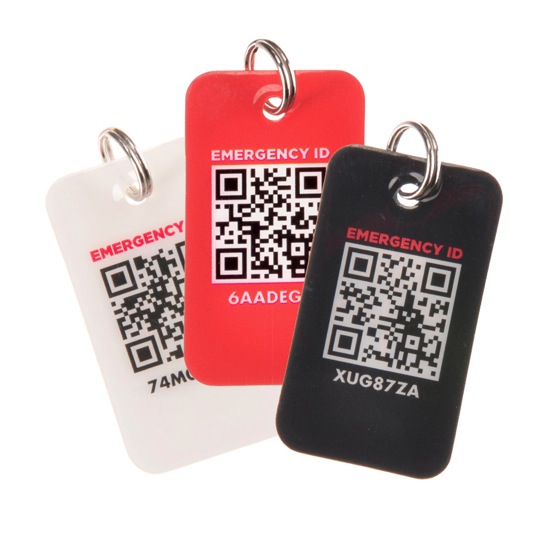
Emergency ID tags from Ecosperformance can be worn as bracelets, plastic tags or as stickers that can be applied to a helmet or even stuck on a phone.

EID Tags contain important profile information in case of emergency. Credit: Ecosperformance

EID Tags contain important profile information in case of emergency.
Credit: Ecosperformance

EIDs store identification, emergency contact and important medical information. When the QR code on the EID is scanned by a Ski Patroller’s smartphone, a skier’s Emergency Profile appears. A seven-digit EID number that can be entered into Ecosperformance website is a backup.

Other times patrollers have to be Sherlock Holmes to find even the most basic information about you—your name. They’ll look for a season pass that carries your name or look for your driver’s license. Sometimes they have to search your cell phone for information. “Often skiers don’t know each other very well, but a ski companion can tell us that the phone is in his injured friend’s right pocket,'” he said.

Carry a list of medications. “Seniors typically take more medications than others,” he said. Based on your condition, it might be vital for the patrol to know what prescriptions you’re taking. Same goes for allergies to medications

“Be sure to carry this information every time you go skiing,” Erkkila said. “Very basic things help us the most.”

And one more thing.

If you’re part of an accident, stay and identify yourself. And then there’s another aspect of accidents, he said. Sometimes there’s a collision between several skiers. Erkkila pointed out that the local city’s ordinance requires you to stay on the scene and identify yourself.  And, “We’re trying to educate the public about this,” he said. For those of us who are veteran skiers, staying on the scene after a collision seems to be common sense courtesy. But it’s also an official part of some resort areas’ regulations.

Knee Replacement Isn’t For Sissies: Part 2

Tips to Kick Start Your Research

A Brighton, Utah, ski patroller with two artificial knees assured me there’s definitely life – and skiing – after knee replacement. Her unbounded success motivated me to launch into research. I’m glad I did my homework. What I learned affected the direction I took, the outcome and ultimately my success. Here are some tips to help you get started.

Metal Knee Model: Is there one in your future? Credit:  Harriet Wallis

Metal Knee Model: Is there one in your future?
Credit: Harriet Wallis

Don’t be duped. Learn about the whole knee replacement process. Don’t be duped by a well-meaning friend who says: “I’d go to Doctor Smith. He’s such a nice man.”

That would be as stupid as buying a car because your friend says: “I’d buy a Honda. It’s such a nice car.”

Do your own research

Get on the phone. Call athletes you even vaguely know who might have some insights on artificial body parts, surgery, and rehab. I called several ski instructors, an operating room nurse, and a 75-year-old mogul skier. I picked their brains .

I also plopped down at the table with ski patrollers while they ate breakfast in the lodge. My question to all of them: What should I learn about?         

They’ll all have different angles, so write their answers down or they’ll become scrambled mush in your head.

Knees, glues and cadavers. With clues you gather from the athletes about what’s important, get on the internet. Do not start on the internet. There’s so much information you’ll get overwhelmed and quit.

Read up on bone-to-metal adhesives, quad-sparing technique, risks, new knee limitations and more. Be sure to separate information from marketing hype. If you have the stomach for it, I recommend that you watch a YouTube video of a knee replacement on a cadaver.  Warning: it’s not for the faint of heart.

Find the top docs. Use the internet to review potential surgeons. They’ll all have illustrious credentials, so do some creative screening. Call each one’s office and ask what his/her specialty is. The phone-answerer should be well informed. Listen carefully. If you get mixed vibes or uncertainty as to whether this is truly a knee replacement guru, it should be a red flag.

Get the inside track. Physical therapists work with patients after surgery. They have refined knowledge about which surgeons give the best outcomes. But they might be reluctant to blurt out a doctor’s name. You’ll probably have to phrase it subtly: “Do you think Doctor A’s outcome is better than Doctor B’s?”

Good luck with your research. Check back for the next installment: Questions for surgeons and how to interview them.

 Note: This is a five- part series in which I describe my knee replacement journey with tips to guide you if you’re anticipating knee replacement. Part 1: Inspired by a ski patroller with artificial knees. This is Part 2. Upcoming will be Part 3: Interviewing surgeons and questions to ask. Part 4: How I found the right doctor for me. Part 5: Rehab and why to love it.

Buddy Up: Senior Ski Clubs Have More Fun

Alan Engen Recounts How Alta’s Wild Old Bunch has been meeting on the mountain since 1969.

With the baby boomers now reaching retirement age, there is a growing population of senior age skiers on the slopes, some of whom are even active in competitive skiing activities.

As a result, senior ski programs are becoming a significant part of many ski area activities in the Intermountain Region.  For example, at Snowbird, Junior Bounous has his “Silver Wings” program.  I used to have an Alta seniors program called “Silver Meisters.”  In addition, various “seniors” ski clubs abound such as The Over the Hill Gang, The One Ski in the Grave Ski Club, The 70 plus Ski Club, and a special group here in Utah called the Wild Old Bunch.

WOB clowning around at Alta circa 1970. Credit: WildOldBunch.com

WOB clowning around at Alta circa 1970.
Credit: WildOldBunch.com

In 1969, several senior ski buddies started the Wild Old Bunch by getting together on a weekly basis to enjoy Alta’s famous deep snow conditions.  The founders were Art Wilder, Foley Richards, Johnny Bell, and Rush Spedden.

Shortly after, Rush Spedden made a home movie of the group skiing powder.  Spedden named the film “The Wild Old Bunch.”  This title gained immediate favor with Wilder, Richards, and Bell.  It was decided by unanimous decree to

adopt the name on a permanent basis. Foley Richards created a patch for identification purposes which, in turn, became the groups logo.  The smile face is well-known around local ski circles and quickly sends a message as to what the group is all about—namely enjoying the pleasure of winter skiing and the companionship that goes with it.

By 1973, the group had grown to about a dozen or so regulars and, by the end of the 1970s, it had about 130 active skiers from ages 50 on up.  Because most of the membership consists of men and women retirees from the hectic pace of the corporate world, they have time to ski whenever they wish throughout the week.  Rush Spedden solemnly told me the club’s rules when I was given my special membership WOB patch.  He said, “The only rule is…there are no rules.”

Throughout the winter ski season at Alta, the Wild Old Bunch can be found congregating at Alta’s ALF’S mid-

WOB is one of the many ongoing senior ski clubs that endure across the country.

WOB is one of the many ongoing senior ski clubs that endure across the country.

mountain restaurant at 11:00 a.m. several times a week.  One of the articles written about the WOB said, “There, they swap jokes, agree to disagree, boost a few toddies and welcome other skiers.”

The driving inspiration binding this group was Rush Spedden who passed away at age 97 in late 2013.  He served as the WOB primary spokesperson for many years.  He was not only an outstanding skier; he was a noted engineer/scientist, teacher and historian in Utah.  Rush Spedden’s generous donation to the Alf Engen Ski Museum Foundation made it possible to add a special pair of handmade skis from the Alaska gold rush days of the mid- 1800s to the permanent exhibit in the Alf Engen Ski Museum near Park City.

Intermountain ski history certainly includes the wonderful contributions of senior groups such as the Wild Old Bunch, and they deserve special mention as ambassadors for the joys of skiing at any age.

Alan Engen is a SeniorsSkiing Advisory Council member and recognized ski historian and author.