Cycling Series: Rolling Among The Rocks At Arches

Once Past The Crowds, Another World Opens Up.
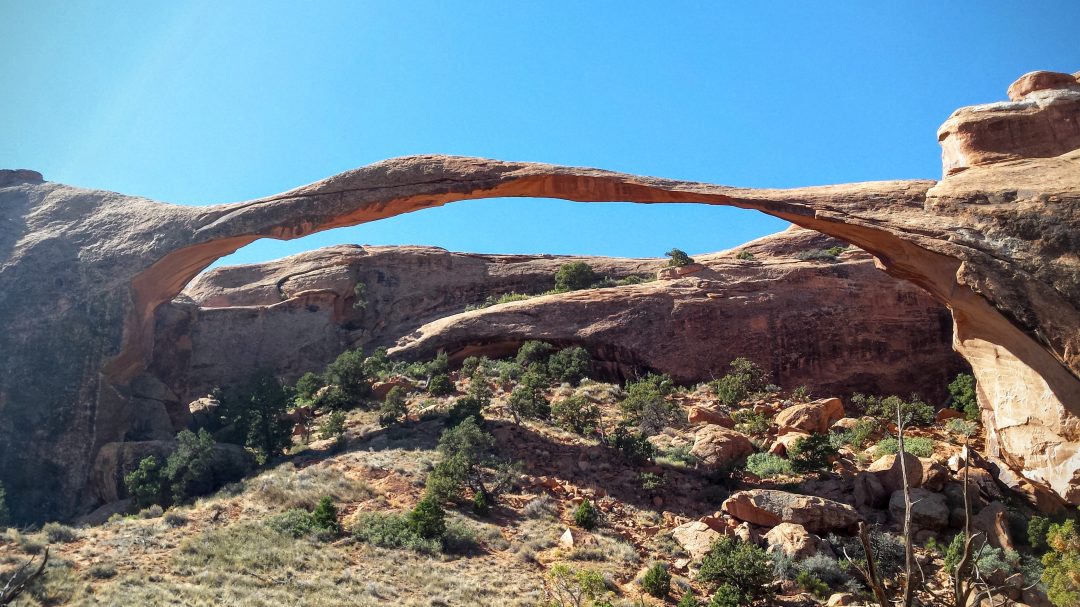
Landscape arch in the Devils Garden Trail in Arches National Park. Credit: John Nelson

Landscape arch in the Devils Garden Trail in Arches National Park.
Credit: John Nelson

Looking out the window of a car just can’t capture the otherworldly beauty of Arches National Park in Utah.

In this stark and dramatic landscape of towering spires, delicate arches and balanced rocks, I chose to bike and hike on my pathway to discovery.
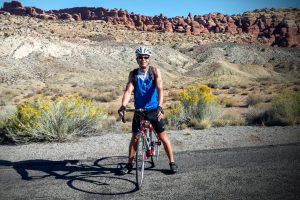
John Nelson along the Fiery Furnace Trail. Credit: John Nelson

John Nelson along the Fiery Furnace Trail.
Credit: John Nelson

I visited Arches in Fall 2015. I pulled into the nearby town of Moab in the evening and found that things were hopping among a diverse crowd of cyclists, hikers, river-runners, ORV enthusiasts and vacationers, all with plans to recreate in the rugged region.

I decided to start early the next morning to get a jump-start on the crowd.

So much for solitude. My outdoors-loving brethren had the same idea, and we all got stuck in a long backup at the Arches entrance gate. Arches National Park is a popular place with nearly 1.4 million people visiting last year.

Once through the entrance, I parked a couple of miles from the visitor center, climbed aboard my bike, and happily left my car behind. The roads were initially busy, but after a few miles, things calmed down and traffic dispersed, leaving me to pedal among the wide-open vistas.

What I saw over the next few hours was mind-blowing.

The National Park lies atop an underground salt bed. Over millions of years, the salt bed became unstable, eroded and shifted, leaving dramatic rock features carved by wind and weather that remain today.

My ride along the main road passed some of the very best sights in the park to its end at Devils Garden 18.5 miles from the entrance gate. Some side roads take visitors to other arch locations, but I wanted to go as far as I could inside the park and return later to see the other attractions.

The ride to Devils Garden takes place on rolling terrain between elevations of 4,500 and 5,500 feet. Once at Devils Garden, I slipped on hiking shoes to visit some of the park’s most famous arches along a 7.2-mile loop trail.

After a picnic lunch, I climbed back on my bike to head back. In some ways, the return ride was even better than the ride out. The light had changed, giving me a different view of these amazing formations.

Back at the car, I was exhausted from the ride and hike—and utterly satisfied. I had seen the park in way that author Edward Abbey, a former park ranger at Arches, would certainly appreciate.

“A (traveler) on foot, on horseback or on a bicycle will see more, feel more, enjoy more in one mile than the motorized tourists can in a hundred miles,” Abbey wrote in Desert Solitaire.

If you go:

Where to start the ride: Don’t park at the visitor center, which is usually swarming with tourists. Instead, drive 2.5 miles inside the park to the La Sal Mountains Viewpoint parking lot. By doing so, you’ll get out of the high-traffic area, and you’ll also avoid a 1,000 vertical foot climb.

When to visit: Spring and Fall, with more moderate temperatures, are the best times to see Arches. Summer temperatures can soar above 100 degrees.

Fitness concerns: At about 30 miles, the ride is difficult, but has only a couple of climbs. Much of the terrain is rolling and pleasant. Carry ample water, and you can refill at Devils Garden.

Safety: Even with traffic, I never felt unsafe riding at Arches. The roadways have good shoulders, and I found that drivers were mostly courteous and careful.

Food: Arches has no food concession, so pack along anything you want to eat. Moab has a wide array of restaurants and markets where you can stock up.

Highlights: Almost too many to count. The Courthouse Towers Viewpoint, The Great Wall, Balanced Rock, Panorama Point and Fiery Furnace all are along the road. If you have the energy, consider a hike around Devils Garden to see some of the park’s best sights.

Accommodations: Moab is the place. You’ll find a wide selection of condos, motels, resorts and bed and breakfasts.

Camping: The Devils Garden Campground inside the national park has 52 spaces, but these fill up very quickly. Don’t arrive thinking you’ll get lucky. Reserve a spot ahead by clicking here or by calling (877) 444-6777. Outside of Arches, there are several other options, including Willow Flat Campground in Canyonlands National Park and Dead Horse State Park, as well as primitive BLM campsites along the Colorado River. Click here for details.

Click here for maps of the area.
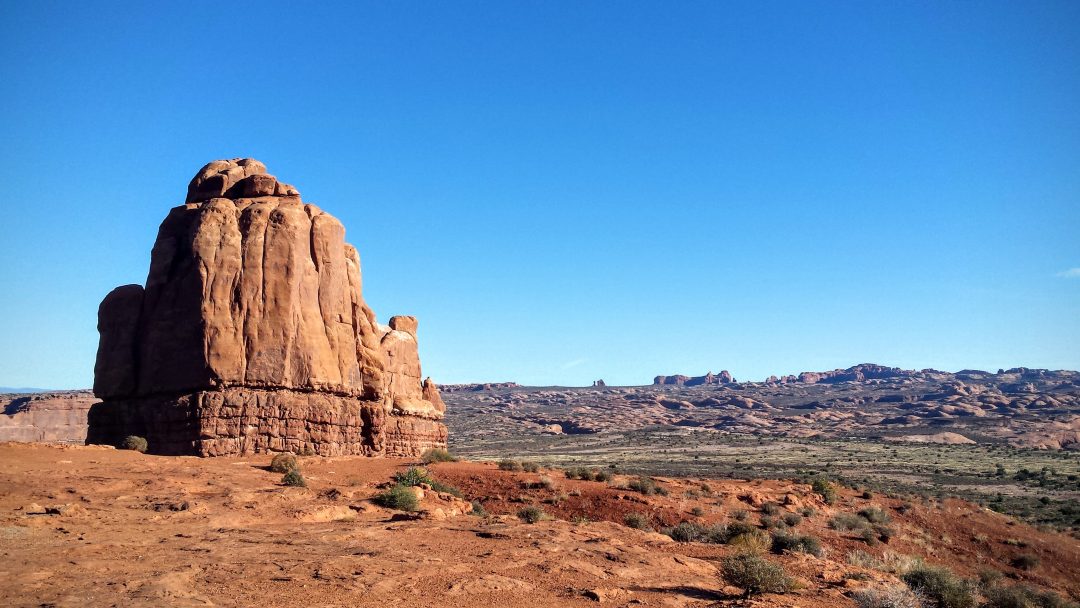
Tower of Babel watches over Arches National Park, UT. Credit: John Nelson
Tower of Babel watches over Arches National Park, UT.
Credit: John Nelson

SeniorsSkiing Guide: SilverStar—BC’s Uncrowded And “Happy” Ski Resort

Great Skiing And Social Life Makes SilverStar A Lively Scene For Seniors.

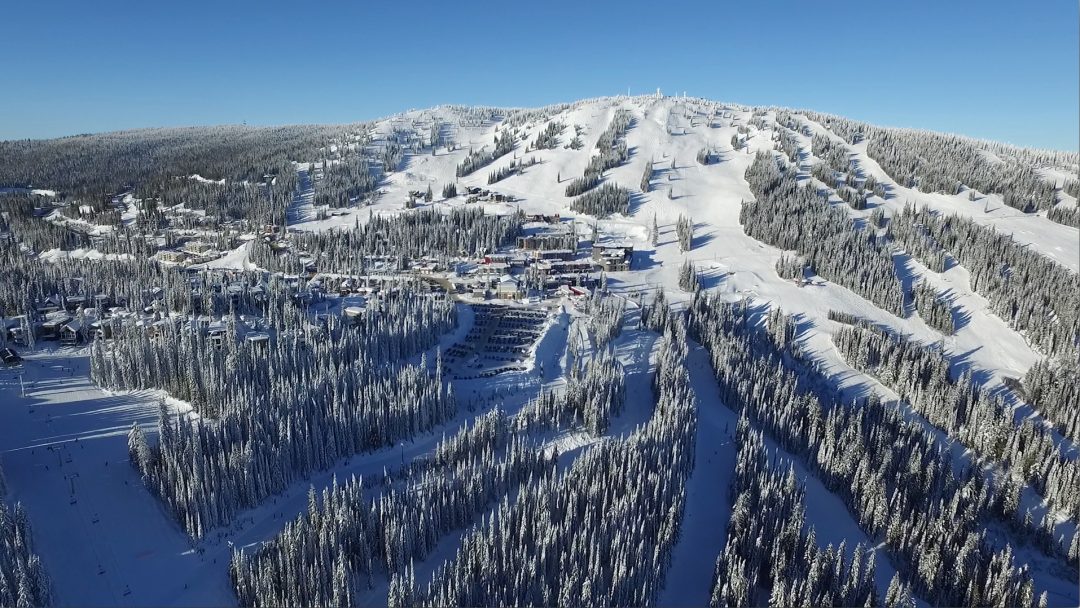
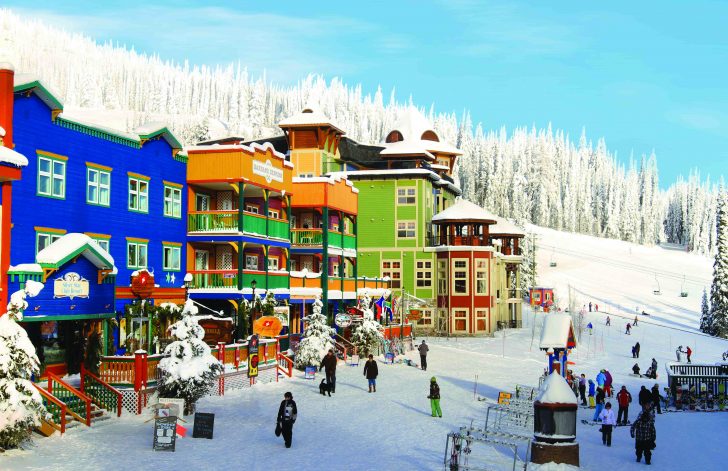
SilverStar Village is a mid-mountain, self-contained resort in itself with restaurants, shops and lodging. Credit: SilverStar

SilverStar Village is a mid-mountain, self-contained resort in itself with restaurants, shops and lodging.
Credit: SilverStar

[Editor Note:  This review was written by Melbourne, Australia-based Marg Malkin, a retired ski industry veteran who spends February and March at SilverStar.  She’s also the informal SilverStar liaison with a group of Ozzie skiers who travel to BC every winter. SeniorsSkiing.com welcomes her as our first Australian contributor.  We hope to see more news from her.]

SilverStar Mountain Resort is a hidden gem, tucked up the northern end of the Okanagan Valley, B.C.  I found this wonderful place 12 years ago and keep coming back to enjoy its magical village, breathtaking views, awesome terrain and uncrowded highways of ever reliable snow.

SilverStar is the third largest ski resort in BC with 131 runs, a 2500-foot vertical and, on average, 23 feet annually of champagne powder.  Twelve lifts service over 3500 acres of skiing as well as 60 miles of Nordic trails, heli-skiing opportunities, and night skiing on Friday and Saturday, too.

Themed after an early 1900’s mining town, the mid-mountain village Main Street with its bakeries, restaurants and shops has real old world charm.

First impression on arrival in the Main Street of this mid-mountain village is that everyone is smiling.  And little wonder; the joy and freedom of wide open, uncrowded slopes makes it a dream come true haven for safe, fast top-to-bottom skiing. It’s where you find long-time residents and local characters who give SilverStar its safe, “homey”, community feel.  Just ask and you’ll find these locals willing to share their secrets that have kept them calling SilverStar home for so long. Tour the mountain with them, and you’ll find they are only too willing to share their knowledge of the best stashes and little known areas of the terrain.

That’s what makes SilverStar so special—a big mountain, a small town feel, with all the terrain you’d expect at a larger resort, without the crowds.

It’s why I keep coming back. The fabulous snow, the welcome by locals and to meet like-minded older skiers to socialize and ski with from all over the globe. I’m in my late 60’s, enjoy excellent health and thanks to my many times at Silver Star have a large network of skier friends with whom I spend six to eight weeks with each Feb and March.  Many of these friends I have “gathered” during my times in the resort, where friendships are easily established because of its small and friendly village community. Hence, I have a real “collection” of like-minded skiers who make the most of their good health and freedom away from the everyday family obligations of home. I’d just like people—particularly single travelers and couples—to know there’s fun to be had at a ski resort without spending too much and having a great social circle.

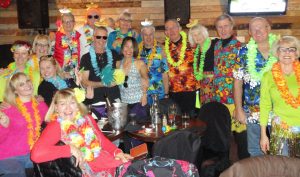
Hawaiian party in BC? Sure. Social activities are frequent and fun at SilverStar. Credit: Marg Malkin

Hawaiian party in BC? Sure. Social activities are frequent and fun at SilverStar.
Credit: Marg Malkin

We have such a great time.  There’s always someone to ski with or have a coffee or drink with. There’s a variety of ski skills, some diehards who hit the slopes at 8:15 and ski until 2:30 every day of their time there! Others ski out at 10-ish through until 2-ish depending.

We’ve developed “progressive drinks night” social life where people take a turn at hosting a drinks night at their unit—everyone comes with a bottle and a plate to share, making for fun and hilarity.  We also get to enjoy the many restaurants; Paradise Camp Dinner Tours in a Snow Cat, Horseman’s Cabin Snowshoe Dinner Tour are only a couple of night experiences. Tubing, ice skating and snow shoeing are wonderful apres activities, all included in the ski lift pass at Silver Star.  And there’s fat tube biking! Also ten pin bowling! The list goes on.

Getting There:  Fly into Kelowna International Airport, serviced by several US and Canadian air carriers.  Then shuttle north about an hour to SilverStar.

For SilverStar trail maps, click here.

Bottom Line:  Most visitors will take advantage of  a variety of lodging and ski pass packages.  To give you an idea of the value, though, a SilverStar M1Pass, good for three days of free skiing at each of 13 alliance partner ski areas, and which includes Nordic, family discounts, discounts at Whistler Blackcomb and lots of other savings opportunities is only $899 plus tax (2015-16) for seniors 65-plus. An Early Bird Senior Pass will be available after June 1 for $459 plus tax.  That’s a season pass!

SilverStar has four mountain faces for skiing. Uncrowded, friendly, big snow. Credit: SilverStar

SilverStar has four mountain faces for skiing. Uncrowded, friendly, big snow. Plus lots of other snow sports!
Credit: SilverStar

Cycling Series: Finding And Riding The Lost Coast Trail

Senior Skiers Shift To Mountain Bikes To Ride Coast Of California.

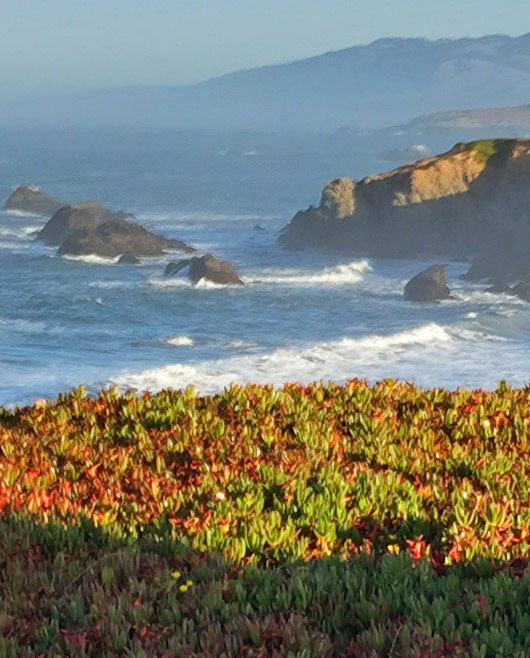
Cycling By The Sea, the Lost Coast Trail has spectacular scenery. Credit: Pat McCloskey

Cycling By The Sea, the Lost Coast Trail has spectacular scenery.
Credit: Pat McCloskey

So, my ski buddy Eric says to me, “Patrick, let’s ride the Lost Coast of California”.  The next thing I know I am winging westward to Sacramento with my mountain bike packed securely in my bike box and looking forward to a week of “van camping” with my good friend from Tahoe.  Now when I say van, the vehicle is really a Sportsmobile—a van conversion that is an amazing off road vehicle equipped with everything including a pop up compartment on the roof which was my room for the week. We have used this vehicle for skiing, but it also serves to house two old guys wandering around the Lost Coast which is about 160 miles north of San Francisco.

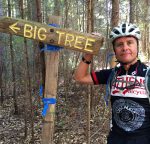
Fast forward: We have our RV spot right on the ocean in Fort Bragg, CA., and are ready to ride 150 miles of single and double track which is easily accessed from the camp site.  Most of the trails are in the Jackson Demonstration State Forest, Woodlands State Park, and Big River State Park.  We were amazed at the variety of trails which are loamy and smooth and give you a great appreciation for Redwood trees which are ever present and ancient.  You can even ride through an old Redwood which is called “The Drive Through Tree,” a fun diversion from the standard mountain bike trail.

SeniorsSkiing.com correspondent Pat McCloskey switched a mountain bike for his skis and headed out up the Lost Coast Trail. Credit: Pat McCloskey

SeniorsSkiing.com correspondent Pat McCloskey switched a mountain bike for his skis and headed out up the Lost Coast Trail.
Credit: Pat McCloskey

The amazing thing about riding in this area is the lack of riders and general feeling of remoteness.  The only riders we encountered were the original designers of the trail and are the current trail stewards.  They are all in the late 60s and 70s—amazing senior mountain bike riders.  Jack Columbe, a 74-year-old ex fireman and World Senior Games champion and Roo Harris have mapped out, carved out, and maintained this 150 mile network of trails that stretch from Mendocino to Ft. Bragg.  At 48,652 acres, Jackson State Demonstration Forest is one of California’s crown jewels and is maintained by CalFire (California Department of Forestry and Fire Protection).  In speaking with Pam Linstedt, a 24-year veteran of CalFire, we learned that although tourism is replacing some of jobs lost after the 2002 closing of the GP lumber mill in Ft. Bragg, research and logging are still first and foremost priority in the California forests.  With the efforts of the senior cycling community under the guidance of Jack and Roo, mountain biking is becoming an attraction which they hope will once again put Ft. Bragg and Mendocino on the map for riders all over the world.

The amazing advantage of riding in this area is that you have access to the coastal mountains but you can camp or stay right on the ocean in Ft. Bragg or Mendocino.  Lots of available bed and breakfast options as well as an abundance of RV parks which seems to be the preferred way for Californians to see the coast inexpensively.

As we made our way northward, we rode a trail called Paradise Royale near the Lost Cove area in Humboldt County.  The trail is filled with berms and features and one wonders who maintains this nationally known trail literally in the middle of nowhere.  After finishing our time in Lost Cove, we drove our way through the Redwood National Forest which was truly a visual cornucopia of thousand year old gigantic trees.  Camping out under those behemoths really make you understand that you are only passing through life in a very short time period.  These giants have been around for over a thousand years and still flourish today under the California sunshine and coastal mists.

Lot to Trails

From any campsite or Bed and Breakfast on the coast, the access is available by bike in only a matter of a few miles. We rode to the McDonald’s for breakfast in Ft. Bragg and were on the trails in less than 15 minutes.

Terrain

None of the trails in this area are overly technical.  I would rate them intermediate with the exception of the Paradise Royale trail which had a killer of a climb stretching over 4 miles of vertical ascent.

For More Information

Fort Bragg Cyclery (707-964-3509) can provide rentals and accessories like complete maps to the area.  Most of the rides are currently on MTBProject.com

Also, Mendocino Bike Sprite can provide tours at a nominal fee.  707-962-4602.  Ask for Amy.

Not too often can a couple of 62 year olds van camp and ride trails as pristine as these, and the only guys we ran into were older than us.  Senior riders rule!

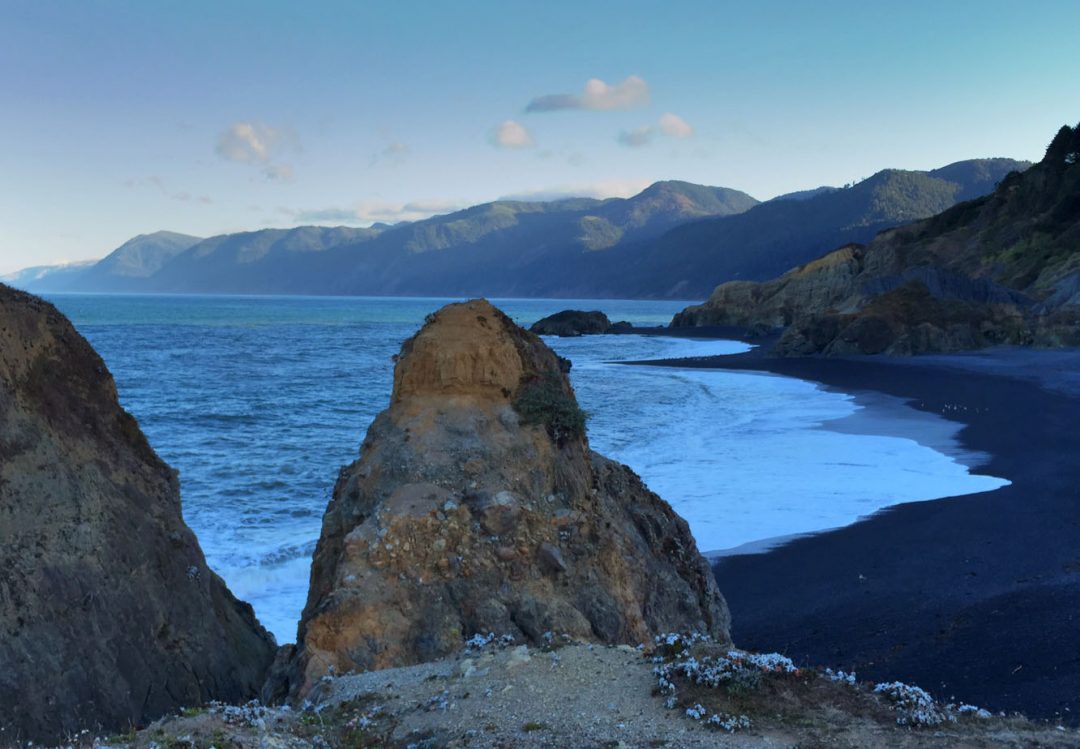
Remote and beautiful, the Lost Coast Trail had few other cyclists. Credit: Pat McCloskey

Remote and beautiful, the Lost Coast Trail had few other cyclists.
Credit: Pat McCloskey

Final Ski Run In New England

May Skiing In Maine? Who Knew?

Boston Globe's Stan Grossfeld reports on May skiing at Sunday River, ME. Credit: Stan Grossfeld/Globe Staff

Boston Globe’s Stan Grossfeld reports on May skiing at Sunday River, ME.
Credit: Stan Grossfeld/Globe Staff

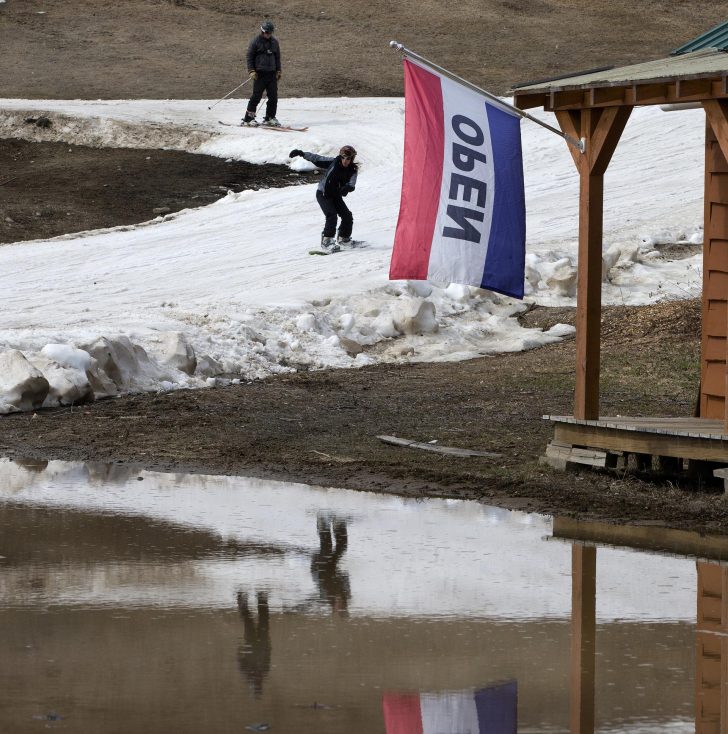
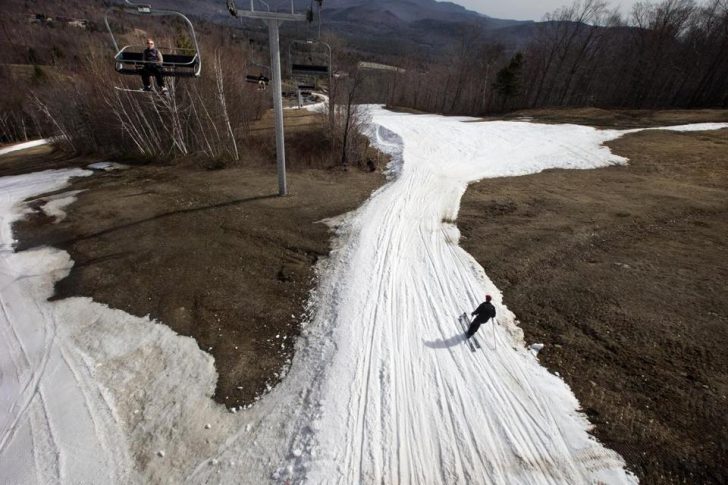
The hardcore showed up in the first weekend of May this year to take their last licks on the…ahem…snow.  As we all know, it has been a bad, bad season in the East, but the miracle snowmakers and groomers have managed to salvage a tendril of a season.

Here’s a story from the May 3 Boston Globe by Stan Grossfeld.  He describes how Sunday River, Newry, ME., managed to create a season for its skiers.  We quote:

After having its third-earliest start in history, Sunday River received just 60 inches of natural snow, compared with an average of 167.

But just because this is not Vail, it doesn’t mean that skiing has to fail. Sunday River came out with guns blazing. Snow guns, that is. Its 2,200 guns converted 400 million gallons of water into snow this winter. It even won an award for exceptional snowmaking capabilities in an online vote.

Grossfeld reported that there were spring conditions at the top and mid-sections of the mountain, but there was a “mild meltdown” down by the lifts.  He writes that 600 skiers showed up on May 1, about half of them getting a free ride for the day.  He quotes one visitor, “Considering that it’s May 1, and we didn’t get any snow this year, the snow is really good.”

Once again, kudos to the snowmakers and groomers all over New England.  Oh, and Killington will still have a trail open on weekends until the bitter end.

The Globe reports about 600 skiers showed up for a final fling before Black Fly season. Credit: Stan Grossfeld/Globe Staff

The Globe reports about 600 skiers showed up for a final fling before Black Fly season.
Credit: Stan Grossfeld/Globe Staff


Cycling Series: Around Crater Lake

Riding The Rim Was One Of The Best Rides Ever.

Crater Lake water is pure and deep blue. It's 33 miles around the rim and 4000 vertical feet of ups and downs. Credit: John Nelson

Crater Lake water is pure and deep blue. It’s 33 miles around the rim and 4000 vertical feet of ups and downs.
Credit: John Nelson
As I topped a ridge near 8,049-foot Llao Rock on the north rim of Oregon’s Crater Lake, I had that giddy moment cyclists get when everything comes together.

I felt great. I had just finished one of my biggest climbs of the day. And I was alone on a road ringing one of America’s natural wonders.

I picked up speed on the downslope and screamed for joy.

Climbing along East Rim Drive on the south side of Crater Lake National Park. Credit: John Nelson
Climbing along East Rim Drive on the south side of Crater Lake National Park.
Credit: John Nelson

It was early October. I had left my home in Seattle a week before on an extended road trip around the west. I had no real itinerary, except to camp, hike, bike and enjoy beauty.

I hadn’t planned on coming to Crater Lake National Park. But while camping on the Oregon Coast, I met a fit retiree who had just done the 33-mile ride around the rim.

“It’s incredible,” he said in a hushed tone over the campfire. I decided then and there I had to try it.

A few days later, under cool, clear skies, I clipped in and started what would be one of the best rides of my life.

When you tackle the Crater Lake ride, the first thing to understand is that almost none of it is flat. You’ll do more than 4,000 vertical feet of climbing over the next few hours, so get used to the long ups, and the lovely, all-too-quick downs.

A stop at an overlook along East Rim Drive at Crater Lake. Credit: John Nelson
A stop at an overlook along East Rim Drive at Crater Lake.
Credit: John Nelson
I started at the park headquarters and immediately had a 1,000-foot climb to the rim of the lake. Cresting the top of the rim, I was treated to views of something really special.

Crater Lake is America’s deepest lake (1,943 feet deep, to be precise) and rests in the caldera of Mount Mazama, which collapsed during an eruption 7,700 years ago. The average annual snowfall here is 44 feet, which melts in warmer months, keeping the lake filled with some of the purest water on earth. Its color is a dramatic deep blue.

The rim road sits many hundreds of feet above the lake. From a car, the view is stunning. From the seat of a bicycle, it’s much more than that—you become part of the earth, water and sky as you grind past each jaw-dropping viewpoint.

If you go

Which direction? Most people choose to go clockwise, which puts you on the lake side of the road on your journey. Starting at park headquarters gets a big climb out of the way early when you have the energy to do it.

Fitness concerns: The ride is strenuous and not to be taken lightly. Besides the many ups and downs, you’ll be pedalling at up to 8,000 feet elevation. Temperatures vary wildly from below freezing to well into the 90s.

Safety: Auto traffic can be heavy in the summer months, and rubber-necking drivers don’t always watch for cyclists while taking in the views. Wear bright clothing. If you want to avoid cars, visit on one of these dates in 2016: Sept. 17 or Sept. 24, when the East Rim Drive will be closed to automobiles for runners, walkers and bicycles. Information is here.

Water, food: The Rim Village Visitor Center is a good place to load up. Bring lots of water for the ride: There are no drinking fountains along the rim. The Visitor Center has cafeteria-style food service if you want a meal.

Stops: There are 30 overlooks that ring the lake; plan on stopping frequently to rest, take pictures and enjoy the views.

Accommodations: Inside the park, the historic Crater Lake Lodge has commanding views from its location at Rim Village. You’ll need to make reservations a year in advance to book one of these in-demand rooms. The Cabins at Mazama Village have scattered availability through summer and fall of 2016. Reservation information is here.

Camping: Two campgrounds are available. The full-service Mazama Village Campground has 214 tent and RV sites. A limited number can be reserved, the rest are available on a first-come, first-served basis. The primitive Lost Creek campground has 16 non-reservable tent sites.

National Park Bicycling Info:  Highly useful guide to the Rim Drive, including safety, camping and ride information.

Crater Lake National Park MapA beautiful map of the lake and surrounding area.

National Park Service Map of Crater Lake. Hills and altitude make the ride around challenging.

National Park Service Map of Crater Lake. Hills and altitude make the ride around challenging.


Cannon

Free Senior Skiing Under Threat In NH

State Legislature Considers Ending Decades Of Free Senior Skiing At Cannon Mountain.

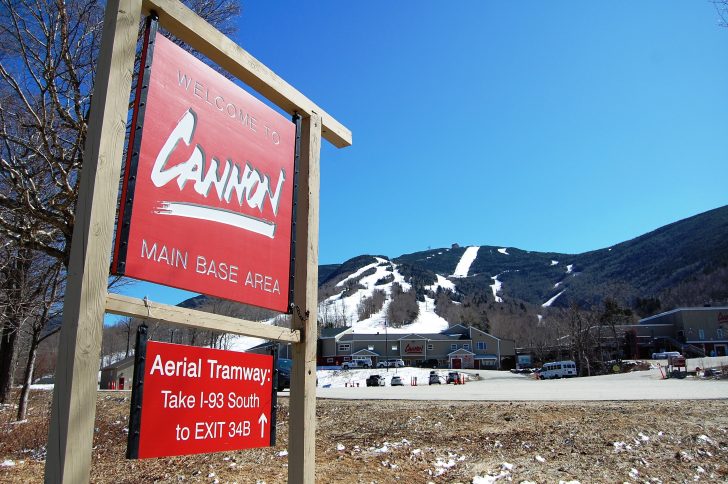
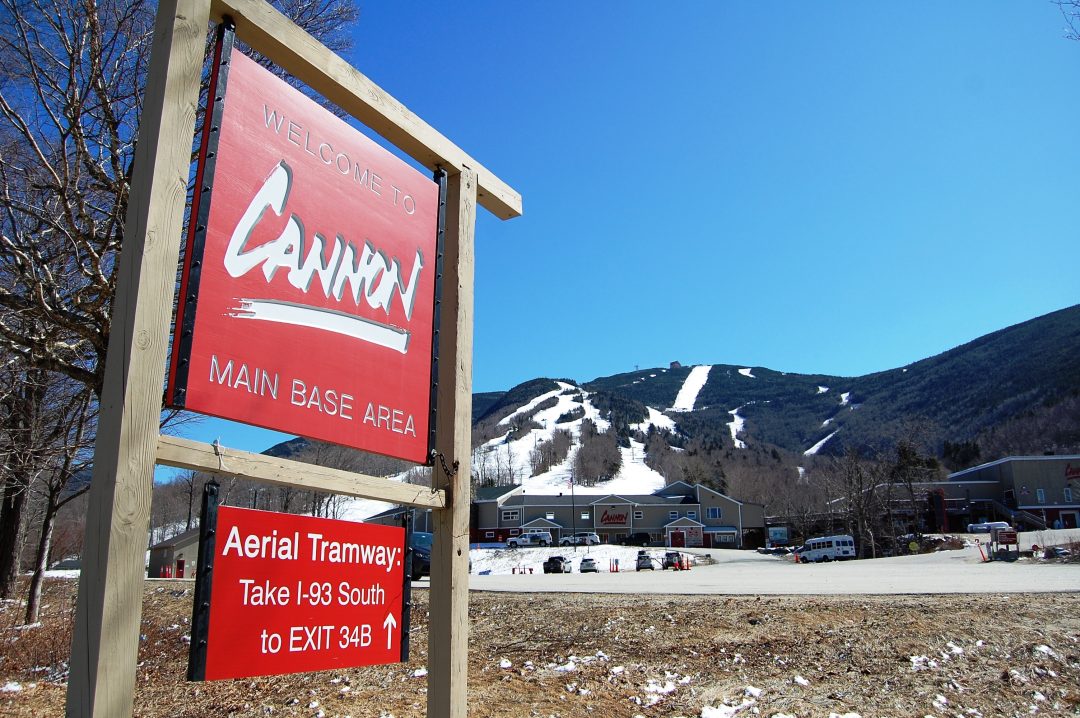
Cannon Mountain is a state-owned area, famous for its aerial tram and free skiing for 65+ seniors. Credit: Cannon Mountain

Cannon Mountain is a state-owned area, famous for its aerial tram and free skiing for 65+ seniors.
Credit: Cannon Mountain

Since 1973, state-owned Cannon Mountain has been the only ski area in New Hampshire to offer free skiing to seniors 65-plus.  This year, a second attempt to end free skiing for seniors was introduced to the legislature.  The change would mean seniors would pay a discount of two-thirds ticket price on weekends and one-third on weekdays.  Free skiing is currently only available during the week.

Supporters of the repeal of free skiing say that the additional revenue is needed to help the NH Division of Parks and Recreation become self-sufficent, a requirement of 1991 legislation.  Opponents say that many seniors in the region are far from wealthy and view the change as a “tax” on seniors who usually ski during the week when the slopes are nearly empty.

In a close vote, the bill, SB 411, was passed by the House and now goes to the House Ways and Means Committee for review before coming back to the House for a final vote.

There are currently about 97 ski areas that offer free skiing in North America, according to the National Ski Area Association.  A handful of small resorts start free skiing at 65, while the majority offer the privilege to 70+ skiers.  An adult ticket currently cost $75 at Cannon; the senior discount would mean a $50 weekend ticket and $25 for weekday.

SeniorsSkiing.com has recommended that the free skiing benchmark should be raised from 65 to 70, still providing access to skiing for the many skiers in the region while creating a reasonable discount for 65-70.  A season pass reflecting a deep discount for 65-70 is also recommended.  We hope the State Legislature of New Hampshire acts with a sense of compromise and fairness in this matter.

What are your thoughts?

Candide Thovex Hops Down The Alps

Folly Or Finesse?

Professional athlete Candide Thovex makes gravity work. Click below for video

Professional athlete Candide Thovex makes gravity work. Click below for video.

Hold my beer while a take a run, will ya?  Actually, it’s Candide Thovex, professional athlete, making a spectacular run off-piste somewhere in the Alps.  Some might say this kind of extreme skiing is irresponsible; others might say there is skill here to be admired.  Whatever your stance on this kind of dramatic skiing activity, you have to say this 30-second video clip gives you an emotional hit. Did we mention the two avalanches?

How say you? Folly? Finesse?  Other?  Let us know.

By the way, SeniorsSkiing.com has another video clip of Candide Thovex here, doing his thing at the Val Blanc.

California Wrap: Sierra Nevada Resorts Are Jubilant!

…And There May Be More Snow Coming Next Week!

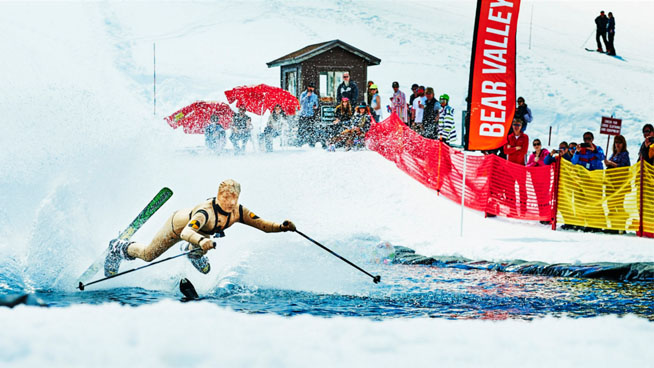
Bear Valley Pond Skimming. Silly season is in out in happy, snow-filled California. Credit: Steve Peixotta/ Bear Valley

Bear Valley Pond Skimming. Silly season is on out in happy, snow-filled California.
Credit: Steve Peixotta/ Bear Valley

As one of the best ski seasons in the Sierra Nevada in the past five years winds down, resort operators can look back and smile broadly about the steady stream of mid-size snowstorms that rolled over their resorts on a regular basis all season long, making for consistently ideal conditions and doubling the overall snow depths, operating days, and skier/boarder visits, compared to last year and the several years before that. And it’s not over! Although rain is forecast for this weekend at most locations, a few inches of snow are predicted for next Thursday, April 14th.

April—And May!—Closing Dates

Corduroy corn on Mt. Rose. It's been a good year for the Sierra Tahoe area. Credit: Mt. Rose/ Ski Tahoe

Corduroy corn on Mt. Rose. It’s been a good year for the Sierra Tahoe area.
Credit: Mt. Rose-Ski Tahoe

If you haven’t stowed away your wintersports equipment yet, you still have time in the coming weeks to get in a few more runs on some nice corn snow. Here are the closing dates as of April 7  for the following ski areas (may change, subject to snow melt and snowfalls!):

Last day of operation this coming Sunday, April 10th: Bear Valley and Bear Valley Cross-Country, Homewood, June Mountain, Soda Springs, Tahoe Donner.
Operating through Tuesday, April 12th: Donner Ski Ranch, Mt. Shasta.
Open through Sunday, April 17th: Boreal Mountain Resort, Diamond Peak, Kirkwood, Northstar.
Open until Sunday, April 24th: Heavenly Mountain Resort, Ski China Peak, Sugar Bowl.

Open through Saturday, April 30th: Sierra-at-Tahoe

Operating through Sunday, May 8th: Mt. Rose – Ski Tahoe.

Staying open through Memorial Day, Monday, May 30th: Squaw Valley/Alpine Meadows and Mammoth Mountain (the latter will operate longer if there’s still skiable and boardable terrain).

Those resorts that have already closed include all Southern California ski areas, Badger Pass in Yosemite, and Dodge Ridge.

How Much Snow Was There?

Senior XC skier Pat Van Mullem after skiing 50 km at Bear Valley XC. Credit: Paul Petersen/ Bear Valley

Senior XC skier Pat VanMullem, 62,  after skiing 50 km at Bear Valley XC.
Credit: Paul Petersen/ Bear Valley

Currently, in this first week of April, the major Northern and Central California ski areas are still swathed in snow with base depths ranging from 43 inches (Northstar) to 96 inches (Bear Valley) and top-of-the-mountain depths ranging from 94 inches (Heavenly) to 201 inches—nearly 17 feet! (Mammoth). But what’s really impressive is the total number of inches of snow that fell this winter, with many resorts getting three times the amount of snow as they did in recent past seasons. Here are some of the prodigious snowfall totals for this season to date: Sugar Bowl, 547 inches; Squaw/Alpine, 463 inches; Northstar, 446 inches; Mt. Rose, 381 inches; Heavenly, 341 inches; Kirkwood, 437 inches; Bear Valley, 325 inches; Bear Valley X-C, 348 inches; Mammoth, 342 inches. Snowmaking kept some snow depths even deeper!

End-Of-Season Deals Still To Be Had!

Hit the slopes in the coming days and weeks, and you may be able to score some savings. Several resorts will let you apply your lift ticket purchase to next season’s season pass. Buy a 2016–17 Squaw Valley/Alpine Meadows season pass and ski free at both resorts for the rest of this season (until the end of May, conditions permitting). Sugar Bowl has special reduced spring rates, and most areas have early-bird pricing in effect for season pass purchases (check individual resort websites for “early bird” deadline dates and savings info).

A Few Closing Thoughts…

Most Sierra Nevada resorts will have had a nearly five-month season this winter by the time the mountain streams start raging with snow melt. And their staffs couldn’t be happier. Says Lauren Burke, communications manager at Mammoth, “Nature has brought us a return back to a ‘normal winter’ and we’ve seen so much excitement this season… This year’s snowfall passed last season’s total in January, and the mountain has been 100 percent in operation since mid-December.” Bear Valley Cross-Country’s Paul Petersen concurs, “What a difference a year makes! We are super-excited to have had a real winter return to the High Sierra and are grateful for a spirited and enthusiastic return of our customers to this great trail system.” Across the road at Bear Valley downhill resort, its director of marketing Rosie Sundell adds, “The snow enthusiasts came out in droves to make up for the powder they missed over the past four seasons.” Says Northstar’s Cassandra Walker, “ We are thrilled with how well the season has gone and are excitedly skiing our way out of the 2015–16 season on this famed Tahoe corn snow, with bluebird skies and sunshine above.”

And with that said, the finger crossing begins that next season will be a repeat of this one!

The Palisades at Sugar Bowl are a dramatic background to a season filled with awesome skiing. There's still 82 to 165 inches at SugarBowl. Credit: Sugar Bowl Resort

The Palisades at Sugar Bowl are a dramatic background to a season filled with awesome skiing. There’s still 82 to 165 inches at Sugar Bowl.
Credit: Sugar Bowl Resort

Backwoods Ski Club: Informal Senior Group, No Rules, Just Fun

Good Times On Gore Mountain With Senior Skiers.

Gore Mountain Resort is headquarters for the Back Country Ski Club. It's not always this foggy. Credit: Pat McCloskey

Gore Mountain Resort is headquarters for the Backwoods Ski Club. That’s Whiteface in the distance. It’s not always this foggy.
Credit: Pat McCloskey

I am riding the chair at Gore this week with my good friend Mike Smith.  He said to me, “McCloskey, I have found the meaning of life—speed, horsepower and altitude.” Mike is an avid skydiver and pilot as well as a real good skier.  At 66 years old, he has more energy than most people.

He makes a home for the Backwoods Ski Club at Gore Mountain Ski Resort, NY.  There are several senior skiers who are regulars at Gore and like Mike, have more infectious energy than a lot of folks their age.  At 75, John Daly is the ringleader and is constantly herding his group of skiers who are all in their 70s and 80s.  John is a retired businessman from Amsterdam, NY and makes Gore his second home in the winter.  If you ever think that you have to slow down as a senior skier, you should spend a day like I did with Mike and the affable crew from the Backwoods Ski Club.

What kind of activities does the Backwoods Ski Club engage in?

Aside from skiing, they are very social.  No dues, no bylaws, just an invitation to join their club is all that is needed. Your membership includes a little varnished pin that is made of wood that simply states—”Backwoods Ski Club.”  They have a potluck lunch every other Wednesday and an end of the year social at the area with a catered meal.

How have they seen skiing change over the years?

One of the reasons they like Gore is that it is managed by the Olympic Regional Development Authority in conjunction with the State of New York.  There’s very little commercial development, and they like that just fine.  Gore is family and senior-oriented.  The lodge is filled with gray hairs and not crowded.  Mike says skiing in general has become very commercialized with focus on real estate development.  Gore is a throwback of sorts with focus on skiing.  That is why the folks from Backwoods love it.

What advice for a mid week club?

John Daly says that it is fairly simple. Gather the skiing friends and make a plan to meet on Wednesdays, just like them. The simpler the plan, the better they like it.

Back Country Ski Club members love the double blacks, even scary ones like this. Credit: Pat McCloskey

Back Country Ski Club members love the double blacks, even scary ones like this.
Credit: Pat McCloskey

Does Gore offer any assistance to seniors?

Aside from a casual meeting place in the lodge, they offer seniors a special season pass rate of $270.00 for anyone over 70.  They have mid-week adult clinics (not just seniors), including package meals, lift tickets, and instruction.

How large is the club?

Mike and John are not really sure.  They have lost a few folks in the past season, but the membership is pretty full and most are avid skiers who are retired or have the flexibility to ski in the morning and then manage their affairs in the afternoon.

What’s the lessons learned about ski clubs?

The key ingredients to the success of the club are flexibility, humor, infectious ski culture, and the rules are there are no rules.


Jay Peak Making Lemonade From A Lemon Ski Season

Vermont’s Jay Peak’s Video Shows How Creative Eastern Skiers Can Be When Making The Most Out Of Lemons.

The clever skiers from the Northeast Kingdom discover a lemon tree right on the ski trail.  Can you count the number of ways they make lemonade?  Nice work, Jay Peak.  Next season will be better.


Road Scholars Ski Telluride

Wonderful Value With Close-to-Lift Lodging.

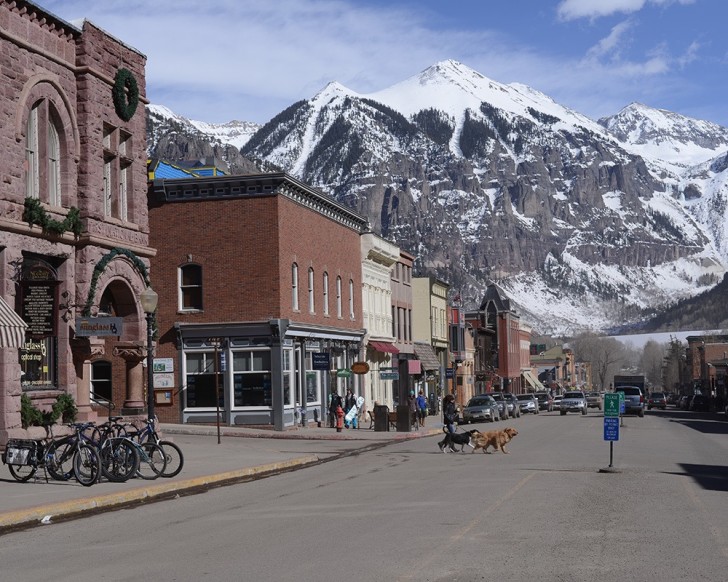
Nice town. Great mountain! It tops out at 13,320'.

Nice town. Great mountain! It tops out at 13,320′. Credit: Pauline Simmons

“You can’t find a better value than Road Scholar” is their claim. My wife Judy and I decided to test it the first week of March with the Telluride program run for Road Scholar by the Mountains and Plains Institute of Fort Collins. The price of $1495 each seemed a bit daunting.

But, when I saw the window ticket prices at Telluride—$122 for adults, $107 for seniors—I figured we were already ahead of the game. We got five night’s housing, thirteen meals and daily guide service in the package; clearly a great deal in this quaint but pricey ski town.

Road Scholars from Alaska, New York, North Carolina, Utah and Vancouver. Credit: Jan Harold Brunvand

Road Scholars from Alaska, New York, North Carolina, Utah and Vancouver. Credit: Jan Harold Brunvand

Our group had eleven skiers. Telluride is skier-friendly for anyone from low intermediate on up—way up, if you are so inclined. The others were from New York, North Carolina, Vancouver, and Fairbanks. We drove down from Salt Lake City, detouring at Moab for a hike in Arches National Park.

Our group leaders, Peter McCarville and Ashley Boling were super skiers and patient guides. They paced the four days to suit their elders and at times split the group to accommodate those who wanted more or less challenge. Since our lodge lacked meeting rooms, the planned “lectures” became on-hill chats about geology, history, and local color.

Guide Peter McCarville pointing out a geologic feature, his ski pole framing a view of the distant LaSalle Mts. of Utah. Credit: Jan Harold Brunvand

Guide Peter McCarville pointing out a geologic feature, his ski pole framing a view of the distant LaSalle Mts. of Utah. Credit: Jan Harold Brunvand

The lodge had no restaurant, but all rooms had kitchens. Peter took our breakfast shopping lists and delivered groceries the first evening. We liked this arrangement, but some said they preferred restaurant breakfasts. For on-mountain lunches we each got a Telluride gift card worth $60.  At dinner the bill—alcohol excluded—went straight to Peter.

The big advantage of the aptly-named Mountainside Inn was location. A short walk across the nearby public parking lot (free overnight for Inn guests) took us to the Coonskin Lift which conveyed us over scary-looking, partly bare, mogul-strewn runs to the good snow above.

Despite a stretch of warm weather, the upper mountain was well covered with plenty of groomers to cruise. Our favorites were “Misty Maiden,” “Stormin’ Norman,” “Peek-a-Boo,” and “Polar Queen.”

From the 12,000 foot level the choices ranged from the delightful “See Forever” to Telluride’s signature steep run, “The Plunge,” which was so well groomed that the challenge was more in hanging on for the long descent than any problem staying upright.

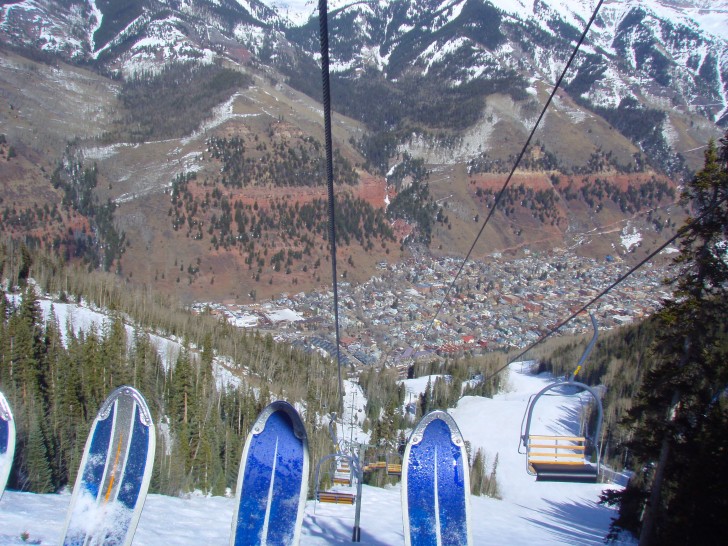
Riding Coonskin Lift down at the end of a day. Credit: Jan Harold Brunvand

Riding Coonskin Lift down at the end of a day. Credit: Jan Harold Brunvand

The first afternoon Judy and I joined the others in returning to town on the long winding run “Telluride Trail” that ended in our parking lot. But when we learned we could ride Coonskin Lift back down, we opted for that route on subsequent days. Not only was it a rest for our weary legs but it provided a fine view of town as we headed towards the hot tub.

The program was lots of fun and a true value. Next season we hope to try the Road Scholar program in Snowmass or Steamboat run by the same people.

Seniors Save Big in New England

Fabulous Deals For Senior’s Next Season Passes Are Happening Now.

Sugarbush offers a $99 mid-week pass for seniors. Act now. Price goes up on May 4. Credit: Sugarbush

Sugarbush offers a $99 mid-week pass for seniors. Act now. Price goes up on May 4.
Credit: Sugarbush

It’s never too early to think about next winter. Most ski areas have opened up season pass sales for next winter with some big savings for seniors if they plan ahead and purchase their passes now. Here are a few of the highlights.

If you’re 65 or older and planning to ski at least a couple of days at Sugarbush next winter you can’t go wrong with the Boomer All Mountain 5 Pass. This season pass is good mid-week, non-holiday at both Lincoln Peak and Mt. Ellen.

At a price of only $99 it may be one of the best deals in New England. It does require quick action as this price only holds until May 4th. After that it goes up to $199, still a very good deal.

Bolton Valley requires a little faster action. It’s Senior Pass (ages 65-74) is $199 and the Senior Plus for those 75 and up is a mere $29 if purchased by April 4th.

In New Hampshire early bird deals are available also. Gunstock offers a mid-week only Super Senior Saver pass for ages 65-80 for $149 with a May 1 purchase cut-off date.

King Pine’s Midweek Adventure Pass includes skiing and riding, XC skiing, ice skating and snowshoeing for those 65+ for $120 and if you’re 70+ you are not limited to weekdays – an Anytime Adventure Pass is $100.

Many other resorts encourage seniors to get on the slopes, especially midweek, with season passes at around the $300 mark. Senior rates usually begin at age 65 with some Super Senior values offered to those 70 and over. Check out your favorite areas. The best deals usually have a purchase deadline in the spring.

“Waste” Deep Skiing Due Soon In Copenhagen

Incinerator With Skiable Roof to Open in 2017.

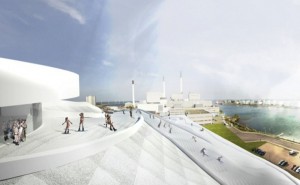
Skiable incinerator being built near Copenhagen

Skiable incinerator being built near Copenhagen. Credit: BIG Architects

For reasons I can’t fully explain, Denmark ranks at the top of the 2016 edition of the United Nations “World Happiness Report.” I’ve been to Copenhagen a few times and enjoyed the people and the food. Skiers there have painfully few options: a few tiny runs and an indoor facility.

Skiing off the roof, there will be a beautiful view of downtown Copenhagen. Credit: BIG Architects

Skiing off the roof, there will be a beautiful view of downtown Copenhagen.
Credit: BIG Architects

That’s about to change with the addition of a massive waste-to-energy incinerator under construction near Copenhagen. Designed by innovative architectural firm BIG in New York, the building has 41,000 square meters of roof which will have trees, hiking trails and a ski slope with synthetic snow. It is scheduled for completion in 2017.

BIG is headed by Bjarke Ingels, whose work includes 2 World Trade Center in Manhattan, the recently announced stadium for the Washington Redskins, and many other eye-popping projects around the globe.

In addition to its skiing feature, the incinerator will remind those in the neighborhood about their disposable consumables by sending a single smoke ring skyward every time a ton of carbon dioxide is produced.

See how the project works in the video below.

SeniorsSkiing Guide: Alpental—Accessible And Challenging

A Short Ride From Seattle, Alpental Super Seniors Ski For $12.

A skier rides the upper-elevation Edelweiss Chair at Alpental. Credit: John Nelson
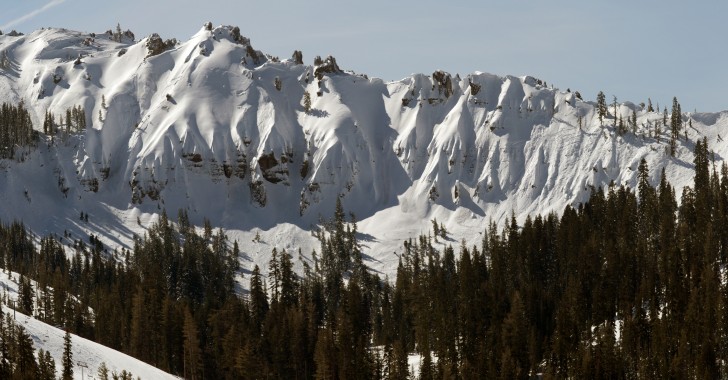
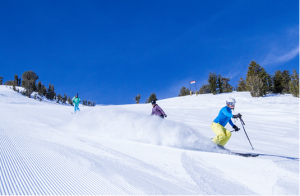
A skier rides the upper-elevation Edelweiss Chair at Alpental.
Credit: John Nelson

It was a rare sunny winter day in Seattle, and I was stuck working in my office. I kept looking out the window, thinking, “I wish I was skiing.”

Why not? Daydreaming wasn’t getting the work done, so I bolted out of the city, and an hour later, I was on the slopes of Alpental.

Sometimes, access is everything. This challenging resort offers an easy way to fill a yearning to turn. What’s more, senior skiers who seek Alpental’s steeps will get some enticing price breaks.

On the day I visited, Alpental provided a great excuse to play hooky. Recent storms had left its empty midweek terrain soft, with powder pockets just waiting to be found.

Snow, terrain and more

  • Location: Alpental (the German word for “alpine valley”) is one of four areas at Snoqualmie Pass, all owned by the same company. It is about 50 miles east of Seattle just off Interstate 90, the main east-west route in Washington state.
  • Snowfall: More than 400 inches fall annually at Snoqualmie Pass, with considerably more pounding the higher peaks at Alpental.
  • Terrain, lifts: Alpental has some of the most challenging terrain in the Pacific Northwest. The lower mountain is primarily intermediate skiing, served by a high-speed quad (Armstrong Express) and two double chairs; the cliff-strewn upper mountain is for advanced skiers only and served by a double chair (Edelweiss). The experts-only back bowls of Alpental are accessed through gates off the Edelweiss chair.
  • Vertical: 2,280 feet from base (3,140”) to top of Edelweiss (5,420”).
  • Olympics connection: 1984 giant slalom gold medalist Debbie Armstrong grew up skiing at Alpental; the lift Armstrong Express and run Debbie’s Gold are named for her.

Lot to lift access

  • Weekends are crowded during high season and are best avoided. Once you park, skiers must take a short walk across a covered wooden bridge to the base of the ski area. Weekdays are much easier; I arrived in early afternoon and parked 30 yards from the bridge.
  • Shuttle service: Seattle Ski Shuttle delivers skiers from various locations in the Seattle metro area; a free intermountain shuttle operates between the four ski areas at Snoqualmie Pass.
  • Accommodations: Plentiful along I-90; the ski area is just 50 minutes from downtown Seattle.

Culture

  • The vibe: Alpental has a big-mountain feel on a fairly small footprint. Consequently, it feels like a club for people who love its challenging terrain. Lifties are friendly and helpful.
  • Dining: The day lodge at the base area has cafeteria-style food and adult beverages.

Bottom line

  • The senior skier will find some great deals here. Regular adult passes (ages 16-61) are $66; seniors aged 62-69 pay $48. If you’re a “super senior” (70 and older) your ticket is only $12.
  • The upper-elevation Edelweiss Chairlift takes advanced skiers into dramatic, cliff-strewn terrain; the double-diamond, peak-to-base run International is one of the best drops you’ll ever ski.
  • Access is everything: You’re on the slopes an hour after leaving Seattle.

Trail Map Click Here

Webcam Click Here

Skiers negotiate the cliff area of Rollen on the Edelweiss Chair at Alpental. Credit: John Nelson
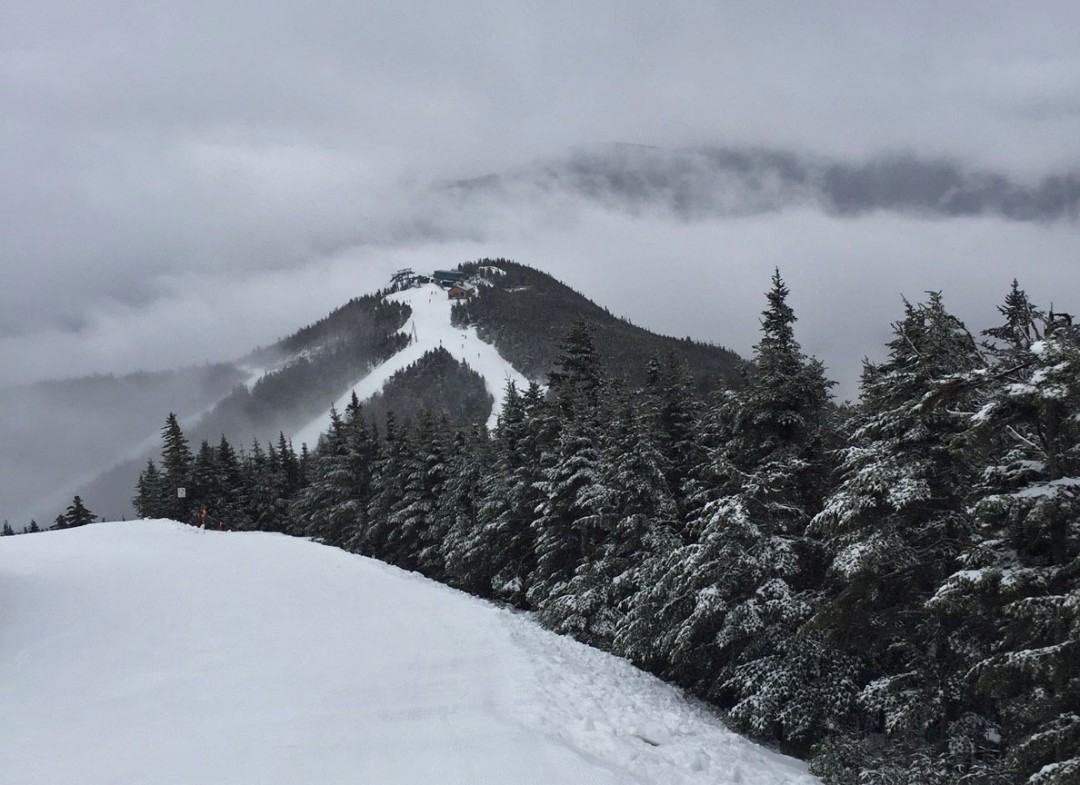
Skiers negotiate the cliff area of Rollen on the Edelweiss Chair at Alpental.
Credit: John Nelson
 

From The Tippy Top Of The Matterhorn

When You Run Out Of Challenges, There’s Always The Matterhorn.

Nicolas Falquet, a 37 year old athlete from Switzerland, starts his run from the top of the world’s most impressive mountain.  He has a GoPro camera attached to a wand device from the top of his helmet.  Bet there was no line for the lift. Thanks to Milkyway Scientists and GoPro for this one.

Nick

The Matterhorn is 14, 692 feet high.  And it certainly looks like it has a very pointy top.  That’s where Nicolas filmed this clip. Hold on, folks, it’s a long way down. Yikes!


SeniorsSkiing Guide: Stevens Pass—Low, Low Prices For Seniors

It Is Hard To Beat These Lift Ticket Prices For 70+.

Clearing skies over Cowboy Mountain at Stevens Pass. Credit: John Nelson

Clearing skies over Cowboy Mountain at Stevens Pass.
Credit: John Nelson
I learned how to ski at Stevens Pass, so whenever I return, it feels a little like a trip back in time.

The lifts are updated, of course, but I can’t help reminiscing about those days more than a half-century ago as I learned how to make a parallel turn on the rugged slopes. For many skiers of a certain age who grew up in Seattle, Stevens Pass served the same purpose.

Skiers enjoy the soft snow on Hog Heaven, an intermediate run on the frontside of Stevens Pass. Credit: John Nelson
Skiers enjoy the soft snow on Hog Heaven, an intermediate run on the frontside of Stevens Pass.
Credit: John Nelson
On this trip, I arrived to a classic late-winter storm that brought 10 inches overnight. Instead of the narrow wooden skis of my youth, it was a day for rockered powder planks. As the morning progressed, the skies cleared, revealing Stevens’ dramatic scenery.

If I can hang on for a few more years, Stevens will offer another reason to return: exceptionally low pricing for 70-and-older skiers.

Snow, Terrain and More

  • Location: The ski area is 75 miles east of Seattle on U.S. Highway 2, a major east-west route through Washington state. It takes about 1½ hours to drive to the ski area on good roads.
  • Snowfall: More than 450 inches fall annually on Stevens’ 1,200 acres. The pass is often in the stormtrack for Pacific systems that hit Washington, with major dumps a common occurrence.
  • Terrain: The “frontside” is dominated by two peaks rising from a base of 4,061 feet: Cowboy Mountain (5,845’) and Big Chief Mountain (5,600’). The “backside” is called Mill Valley and drops from the top of Big Chief Mountain into a south-facing basin that bottoms out at 3,821 feet. About 35 percent is rated advanced, with 65 percent rated beginner and intermediate. A large and popular terrain park is located on the Brooks Chair, keeping the boarding tricksters in one location.
  • Lifts, lights: Stevens is designed to handle large crowds. Three high-speed quads ferry passengers, along with four triple chairs and and three doubles. Much of the frontside terrain is lighted for Stevens’ popular night-skiing.

Lot to lift access

  • Parking is a problem on busy weekends and holidays. Arrive early. On weekdays, it’s much better, but you still may need to park some distance from the base area. A passenger and gear unloading zone is available near the lodges.
  • Bus and shuttle services bring passengers from Seattle to the sometimes-busy area.
  • Accommodations: Stevens is an easy day trip from Seattle. The best option for overnight lodging is Leavenworth, Wash., a tourist hub 37 miles to the east.

Culture

  • The vibe: Stevens is a big resort, but it’s much less tony than rival Crystal Mountain. A fun-loving party scene occurs during night-skiing.
  • Dining: The base area has three lodges with busy bars and restaurants and the best coffee (T-Bar Market) of any ski area in the Northwest.

Bottom line

  • If you’re 70 and older, your ski day is a bargain: Just $15. Regular adult passes (ages 16-69) are $69 during peak days and $64 for off-peak days.
  • Grooming is exceptional on the area’s lower slopes. Upper-elevation lifts take skiers into a challenging world of powder and steeps.
  • The south-facing Mill Valley side offers sunny-day exposure in an open bowl.

Trail Map Click Here

Stevens Pass Webcam Click Here

Sunny side of the mountain: South-facing Mill Valley. Credit: John Nelson
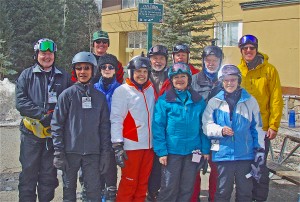
Sunny side of the mountain: South-facing Mill Valley.
Credit: John Nelson
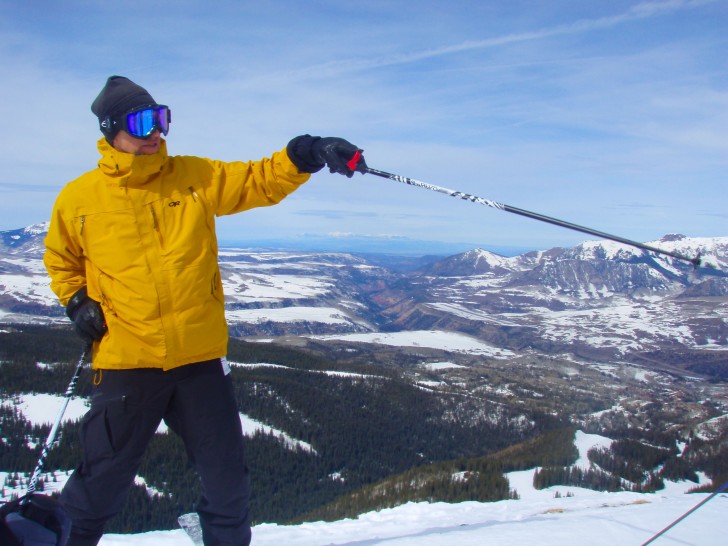
 

Jack Frost Senior Day: A Model For Other Resorts

A Get Together Of Senior Skiers Combines Fun, Learning and Friends.

A healthy lunch and presentation on fitness, diet were just a part of Jack Frost's Senior Day. Credit: Bill Runner

A healthy lunch and presentation on fitness, diet were just a part of Jack Frost’s Senior Day.
Credit: Bill Runner

Our mission at SeniorsSkiing.com is to promote the value of senior snow sport enthusiasts to the ski and snow sports industry. This year, we’ve discovered that some ski resorts are, in fact, focusing on their older demographic through “Senior Days”, a variety of no-cost, low-cost events that are seniors-only activities.

For example, Dodge Ridge, CA, has a twice-a-week Master’s Clinic in February, focusing on day-long instruction for seniors who were returning to skiing after a hiatus or injury, or who just wanted to get rid of bad habits. The idea came to Dodge Ridge’s ski school director John Mahanna when he realized seniors need some help adjusting to shaped skis.  San Francisco correspondent Rose Marie Cleese attended a Thursday clinic in February and observed, “I learned to ski with more ease and efficiency and not be exhausted after a full day of skiing.”

Senior Day at Jack Frost included instruction and demonstrations. Credit: Bill Runner

Senior Day at Jack Frost included instruction and demonstrations.
Credit: Bill Runner

Ski instruction like the Master’s Clinic is only part of what ski resorts can do for its seniors.  Waterville Valley Resort, NH, supports the Silver Streaks, the oldest senior ski club in the country.  In addition to senior instruction, Waterville also has racing, amenities like close-in parking, social events and awards ceremonies.  The result is a tight, friendly and upbeat senior community at the resort.

All season long, seniors can take a free, one-hour clinic on Wednesdays. Credit: Bill Runner

All season long, seniors can take a free, one-hour clinic on Wednesdays.
Credit: Bill Runner

Jack Frost, PA, also pays attention to its seniors.  Famous for its Jack Frost Geezers ski club, the area also supports all its seniors big-time. In addition to a weekly special free, one-hour clinics for seniors, this year Jack Frost held a Senior Day in early Feb.  A group of 40 regulars participated in demonstrations of telemark skiing and snowboarding, presentations on resort history, diet, exercise, and how to prepare for the ski season.

Held with the support of the local Area Agency on Agency, the event is a positive example of how a ski resort can take some simple steps to provide added value to its seniors.

So the question is: Why shouldn’t other ski resorts support these kinds of low-cost, no-cost activities for its loyal seniors?

SeniorsSkiing Guide: Sugar Bowl And Royal Gorge—A Winning Combination!

Do a little downhill, then a little cross-country at these history-rich neighbors near Donner Summit.

Pow-ing down to the Sugar Bowl village. Always lots of snow for playing. Credit: Sugar Bowl

Pow-ing down to the Sugar Bowl village. Always lots of snow for playing.
Credit: Sugar Bowl

Sugar Bowl, the venerable ski resort that sits majestically atop Donner Summit, is as steeped in history as it is endowed with famously steep runs. In December, 1939, the Tahoe region saw the beginnings of its first major ski area when a small village with a Tyrolean-style lodge opened its doors and the one-person Disney chair (California’s first chairlift and named after one of the area’s early investors, the Walt Disney) started carrying ski enthusiasts up the mountain. The operation was the brainchild of the Austrian ski racer, Hannes Schroll, who had been heading up the Yosemite Ski School at Badger Pass, but was drawn to this cluster of Donner Summit peaks and its location in the path of the Sierra Nevada’s most prodigious snowfalls.

In the 77 years since, the privately held Sugar Bowl has managed to retain its old-world charm, pristine mountain atmosphere, and overriding commitment to a quality ski and board experience, thanks to the members of the Sugar Bowl Corporation, some of whom are fourth- and fifth-generation descendants of the original founders. The members’ surnames are a “who’s who” of prominent San Francisco and Bay Area families, many of whom have owned cabins in and around the village for decades.

Correspondent Rose Marie Cleese practices her balance at Royal George's practice track. Credit: Dave Eastwood, director Royal Gorge x-c ski school

Correspondent Rose Marie Cleese practices her balance at Royal George’s practice track.
Credit: Dave Eastwood, director Royal Gorge x-c ski school

In 1953, Sugar Bowl launched its gondola, the West Coast’s first aerial tramway, that carried skiers from the highway to the village, touted as “America’s only snowbound village”—which today still exudes its original early-days-of-skiing ambience, and where Schroll’s Tyrolean lodge, extensively updated and enlarged, still stands as the village’s focal point. In 1983, the gondola was replaced with a faster gondola with more cars, and in 1998, Sugar Bowl opened Judah Lodge, a day lodge and parking lot half a mile east of the gondola parking area and situated at the base of Mt. Judah. In 2012, Sugar Bowl entered into an agreement with the Tahoe Donner Land Trust to lease and operate Royal Gorge, the largest nordic ski area in North America. Begun by Jon Slouber in 1971, Royal Gorge has more than 200 kilometers of set-track trails spread out over some 6,000 acres of spectacular high-mountain terrain. Although there are cross-country trails linking the two resorts, unless you’re an advanced nordic skier, some climbing and side-stepping is involved; it’s easier to drive between the two.

Senior X-C skiers gliding along with Royal Gorge behind their right shoulders. Credit: Snow Bowl/Royal Gorge

Senior X-C skiers gliding along with Royal Gorge behind their right shoulders.
Credit: Sugar Bowl/Royal Gorge

I first skied at Sugar Bowl back in the late 1960s when the gondola was called “The Magic Carpet” (wonder if Walt had a hand in giving it that name!) and triple and quad and high-speed chairs were not even dreamed of. Returning recently after an absence of many years, I was thrilled to see that Sugar Bowl is sweeter than ever, succeeding in transporting me back to the past while at the same time very carefully and thoughtfully bringing the historic resort into the 21st century.

Snow and Terrain (Sugar Bowl)

  • Snow, snow, and more snow! Sugar Bowl has the highest average annual snowfall—500”—of any Northern California ski resort. (Remember the Donner Party famously snowed in during the winter of 1846–47? They were trapped at the bottom of the summit just a few miles east of Sugar Bowl.) Powder hounds have a better chance of finding the fluffy stuff here than at most other wintersports resorts in the region. Location, location, location!
  • Vertical/Elevation: Sugar Bowl’s 1,500-foot vertical offers more skiing and boarding than that vertical rise would suggest. The resort’s runs snake down to a 6,883′ base at the village from the tops of four peaks: Crow’s Nest Peak (elev. 7,954′), Mt. Disney (7,953′), Mt. Lincoln (8,383′), and Mt. Judah (8,238′).
  • Terrain: 1,650 skiable acres; 103 trails; 17% beginner, 45% intermediate, and 38% advanced.
  • Lifts: 5 high-speed quads; fixed grip lifts: 3 quads, 1 triple, and 2 doubles; 1 surface lift.
  • A trail runs through it: The 2,650-mile-long Pacific Crest Trail that goes from Mexico to Canada passes through Sugar Bowl, crossing several runs on Mount Judah before it drops over Sugar Bowl’s ridge near a ski run at the top of Mt. Lincoln.

Snow and Terrain (Royal Gorge)

  • Snowfall: Awesome.
  • Terrain: 200-plus kilometers of groomed terrain spread across 6,000 acres.
  • Trails: 34% beginner, 42% intermediate, and 24% advanced; extensive network of “snowshoers only” trails; several “dogs allowed” cross-country trails between Sugar Bowl and Royal Gorge in the Lake Van Norden area.

Lot-to-Lift Access (Sugar Bowl)

  • If you’re heading for the lifts at the village base, go three miles up Highway 40 from the I-80 Norden/Soda Springs exit and park at Sugar Bowl’s Village Gondola parking lot. If you’re staying at the Lodge, you can park in the covered garage. Once parked, head to the gondola for the seven-minute ride to the village. If you’re heading for Judah Lodge and the Mt. Judah runs, continue one-half mile past the Gondola lot, and park at the main lot for Judah Lodge.

Lot-to-Trails Access (Royal Gorge)

  • Take the Norden/Soda Springs exit off I-80 and proceed up Highway 40 approximately 1/2 mile, turn right at the Soda Springs Station, then right on Pahatsi to reach the parking lot in front of Royal Gorge Summit Station.

Culture

  • The ambience at Sugar Bowl is unlike that of any other resort in Northern California: dripping with history (walls in the Lodge are covered with old photos going back to when Hollywood stars would bend elbows at the Lodge’s famous bar, as well as original European ski resort posters from the 1930s)…a relaxed atmosphere (no cars, no crowds, short lift lines)…and an incredibly polite and genuinely friendly staff—from the lift operators to the wait staff in the Lodge.

Amenities (Sugar Bowl)

  • Dining: The legendary Belt Room Bar in the Lodge, which was recently remodeled for the first time in decades, offers casual dining, a full bar and is open daily from 11 AM to 10 PM; the Lodge’s comfortable Dining Room serves dinner nightly, featuring French-inspired California cuisine and beautiful views of the mountain. The Nob Hill Café serves breakfast and lunch fare on weekends and holidays and the Sierra Vista Bar & Grill in Mt. Judah Lodge is open daily from 7 AM to 4 PM and serves breakfast and lunch items.
  • Lodging: The beautifully refurbished rooms in the Lodge look out onto the slopes and the Disney Express chair. Guests at the Lodge are given a locker for their equipment. From Sundays through Thursdays except holiday periods, several rooms are available for $199 a night.
  • Working out and kicking back: The new Sporthaus adjacent to the Lodge offers Lodge guests a lap pool, hot tubs, spa, sauna, yoga studio, and a roomful of cardio and weight training equipment.

Amenities (Royal Gorge)

  • The café in the Summit Lodge serves breakfast and lunch delectables and draws discerning café goers from miles around—everything is fresh, all-natural, homemade, and delicious. Trailside, Royal Gorge has one café and nine warming huts for when skinny ski skiers need to cool their heels.

Bottom Line

  • Sugar Bowl: Seniors get a little break on daily lift ticket prices: seniors 65–74, $84; super seniors 75+, $60; afternoon (12:30–4 PM) ticket prices: seniors 65–74, $72; super seniors 75+, $51. (The regular adult all-day lift ticket price is $103.) Online ticket prices: seniors 65-74, $71; super seniors, 75+ $51.
  • Royal Gorge: Senior nordic skiers fare a little better on trail passes—skiers 75 years of age and older ski free! All-day: seniors 65–74, $28; super seniors 75+, free; half day: seniors 65–74, $22; super seniors 75+, free. (The regular adult all-day trail pass is $33.) The adult rental package (skis, poles, boots) is $28. Royal Gorge has a terrific ski school with two pairs of practice tracks. When it comes to getting proficient on cross-country skis, ski school director Dave Eastwood has two words for you—timing and balance, and one image—be a tall Norwegian. He almost broke me of looking down at my skis!

Sugar Bowl trail map click here

Royal Gorge trail map click here

Sugar Bowl web cam click here

Royal Gorge web cam click here 

Yes, the West Coast and Royal Gorge have had lots of snow. Snow shoeing in fluffly snow is great exercise and outdoor adventure. Credit: Snow Bowl/Royal Gorge

Yes, the West Coast and Royal Gorge have had lots of snow. Snow shoeing in fluffly snow is great exercise and outdoor adventure.
Credit: Sugar Bowl/Royal Gorge

SeniorsSkiing Guide: Waterville Valley Resort Is Super Senior-Friendly

The Silver Streaks Make Senior Skiing Unique: What A Great Idea.

Magnificent views provide a backdrop for senior friendly skiing at Waterville Valley Resort. Credit: Waterville Valley Resort

Magnificent views provide a backdrop for senior friendly skiing at Waterville Valley Resort.
Credit: Waterville Valley Resort

When it comes to picking a spot to ski, seniors are after two things: Other seniors to ski with and a price that’s less than a bundle. That is why my husband and I have come to enjoy skiing at Waterville Valley Resort in New Hampshire.

Skiing began here in the 1930s with the building of Civilian Conservation Corps trails on Mount Tecumseh and Snow’s Mountain. Fast forward to 1966 when Olympic skier Tom Corcoran, fresh from Aspen, opened this self contained family resort in a scenic cul-de-sac along the Mad River circled by the White Mountain’s 4,000-foot peaks.

Waterville Valley has great intermediate and challenging terrain, designed by a world champion skier, Corcoran. You’ll find humdingers like True Grit and Lower Bobby’s Run mixed with fun intermediate cruisers with stunning views of the Tripyramids and Osceola. I like Upper Bobby’s to Old T (Tecumseh), or Periphery to Lower Tippy; and the popular Oblivion. High Country puts you up top with more intermediate runs and a peek at Mt. Washington to the northeast. Stop for lunch at the cozy Schwendi Hutte. All trails lead to the base area; you can always find the person you got separated from.

Lot to Lift Access

  • The parking areas can be a schlep, so best to drop off gear, then park. A shuttle picks you up from farther lots.  But, members of Silver Streaks, the Waterville Valley Resort community of senior skiers, get to park close in Lot 1.
  • Visitors staying in the valley can park the car and relax. The valley is very walkable, and a free shuttle connects you to the mountain. The village is really a small town complete with lodging, dining, shops, condos, schools and services of all kinds.
  • Freedom pass (includes White Mountain Athletic Club) comes with your hotel stay at any of five lodges. For seniors, it means more folks to meet and chat with.

Snow and Terrain

  • Waterville Valley Resort has 220 skiable acres with snowmaking ability on every trail. The ski area peaks at 4,004 feet, with a vertical drop of 2,020 feet, 50 trails, and 11 lifts.
  • Novice: 14%, Intermediate: 64%, Advanced: 22%

Senior Program Is Fantastic

Silver Streaks is the longest running senior skiing program in the country. Because of its super senior-friendliness, Waterville Valley Resort has been awarded SeniorsSkiing.com’s Super Friendly Award for two years in a row.  Silver Streaks is open to skiers 50 years and over. It meets Monday-Thursday mornings in the base lodge on non-holiday days for for coffee and pastries and a warm-up run with resort staff.  Other benefits of belonging to Silver Streaks include:

  • Reserved parking area in Lot 1
  • Complimentary Snowsports clinics for seniors only
  • Aprés ski party every Wednesday
  • Banquets and other special events
  • Reduced price NASTAR every Wednesday

Nordic Streaks meets Wednesdays, non-holiday, 10 a.m. at the Adventure Center in Town Square for two hours of Nordic skiing with professional guides. Waterville has a 70+ km trail system groomed for both skate and classic. Streakers then enjoy lunch at the Center, with complimentary coffee and pastries.   Membership rates for Silver Streaks (2016-17): Alpine , $80; Nordic Streaks, $50 (Lift passes not included)

Bottom Line

Senior Rates: Daily Lift Ticket: (65 plus) $57; (80 plus) free. Season Pass: (65-79) $499; Super Senior (80 plus): $25. You can get a season “Value Pass” for $399 (65-79), if you don’t mind a few blackout dates during school vacations. If you buy online, you can get a mid-week lift ticket for as little as $26 midweek. And, if you buy your season pass now, you get free skiing for the rest of the season. Click here for more.

Trail Map Click Here

Web Cam Click Here

Can't beat some of these blue beauties at Waterville Valley Resort. Credit: Waterville Valley Resort

Can’t beat some of these blue beauties at Waterville Valley Resort.
Credit: Waterville Valley Resort

Skiing With Life-Long Pals: Annual Trips, Memories, Friendship

Do You Have Skiing Buddies From Way-Back When?

SeniorsSkiing.com polls show that most seniors like to ski with their friends. Our ski group of seniors has banded together for decades, getting together in March each year for epic skiing in Tahoe or Utah depending on the conditions. The common denominator in our group is our fearless leader Eric Durfee, Incline Village, NV. In the group picture, Eric is seen as second from left flanked by Mark Hutchinson of Vermont and Proctor Reid formerly of Vermont and now D.C. These guys grew up together and raced together as juniors.

Pat McCloskey's gang of life-long ski buddies. This lucky bunch of seniors meets yearly for Big Skiing. Credit: Pat McCloskey

Pat McCloskey’s gang of life-long ski buddies. This lucky bunch of seniors meets yearly for Big Skiing out west.
Credit: Pat McCloskey

The balance of the group on the right is yours truly and Bart Smith, formerly of Seattle and now residing in Utah. Bart was a college racing pal of Eric’s, and Eric’s wife Helen is an old friend of mine from skiing as a kid. I met Eric at his wedding, and we have had a lifetime of adventures ever since. Missing is our friend John Ingwersen who rounds out the group as a former college racing friend of Eric’s from Cornell. That was a long time ago.

Aside from Eric being the glue to this fun loving group, what makes a group like this stick together for those many, many years? Hutch says it best when he states , “We love the fresh air, the scenery, the exercise, the chats on the lifts, and dinners together.” He goes on to say, “We are lucky to have a leader who affords us a nice place to stay in Nevada. He does the planning of where we are to go and does a

Skiing pals at the top of Northstar where you can see forever. Credit: Pat McCloskey

Skiing pals at the top of Northstar where you can see forever.
Credit: Pat McCloskey

fantastic job of organizing us. He has taken a few individual, devoted, ski loving guys and provided them with an ideal situation to enjoy what we enjoy most.” Bart provides an alternative landing spot in Utah if Tahoe conditions aren’t terrific. Finally, Hutch states, “We have a wonderful mix of his (Eric’s) friends who have become great friends to each other.”

Between hip replacements, torn rotator cuffs, bad backs, and various worn out parts, this group of old guys managed to break an iPhone app record a couple of years ago when we logged on and managed 57,000 vertical feet of skiing at Northstar in one day. The next day, we each logged 52,000 at Mt. Rose. The app developer contacted me and asked who we were since we had broken the individual day record, and I recounted to him that we were just a bunch of old guys in their 60s who love to ski together and enjoy each other’s company. He was astounded.

The saying goes, if you finish your life with a handful of friends, you are a lucky man. This is our handful.

[Editor Note: Pat McCloskey is lucky to be skiing with friends he met many, many years ago.  Do you have a group of stalwart skiing companions?  Let us know your group’s story.]

Way, Way Out West, There’s Another Jackson Hole. Know Where?

Home, home on the range? Not really. This Jackson Hole is not where you think.

Home, home on the range? Not really. This Jackson Hole is not where you think.

A few miles north of Beijing, there’s a town that is named Jackson Hole.  No skiing, but…seriously?

https://www.youtube.com/watch?v=CRSenQu2GWw&feature=youtu.be

SeniorsSkiing Guide: Italy’s Dolomiti Superski

­Winter wonderland in one of the largest ski areas in the world.

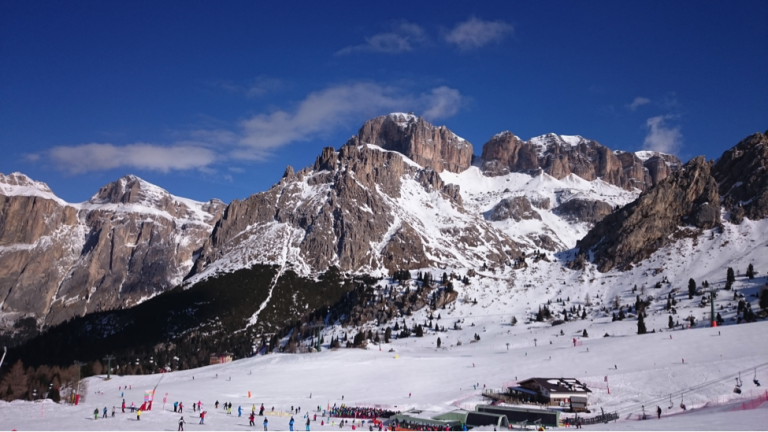
Although I was born and raised in Italy, I did not do much skiing until I moved to Colorado for college. So I jumped at the occasion to join some old friends for a week of skiing in the Dolomites—a portion of the Italian Alps characterized by their stunning rocky outcrops, sufficiently beautiful to be listed as a UNESCO World Heritage site.

A view of Sella Massif from the south. Credit: Paola Gaudiano

A view of Sella Massif from the south.
Credit: Paolo Gaudiano


Dolomiti Superski
is a resort encompassing some 12 connected ski areas totaling 1,200 Km (750 miles) of trails served by 460 lifts. While a few of the areas require a bus for the connection, you can literally ski all day without ever doing the same trail twice, while experiencing a wide variety of terrains and stunning views.

Terrain

The area is accessible to all levels, but in general is aimed toward families, and as such there is a preponderance of easy and medium slopes. I was pleasantly surprised by the large number of older skiers—for once, I did not feel like a rarity because of my gray hair.

As with most European areas, the vast majority of the terrain is groomed, and if you like moguls or off-piste this place is not ideal. On the flip side, when the snow is abundant (which this year it was not), if you find places to go off-trail safely, you will likely find lots of untouched powder even a few days after the last snow.

The main attraction of this area is Sella Ronda, a 40 Km loop around the Sella massif, spanning four valleys and offering a variety of stunning views. The loop is great for intermediate skiers, and it’s possible to head off for side detours for more advanced skiing.

Marmolada and its glaciers. Credit: Paolo Gaudiano

Marmolada and its glaciers.
Credit: Paolo Gaudiano

Getting there

I flew into Munich, which gave me the best combination of price and relative convenience. Depending on which town you choose, it is somewhere between three and four hours from Munich, about two-three hours from Innsbruck, two-three hours from Verona and three-four hours from Milan. You can also take a train and bus combination if you want to avoid driving, but travel times will be longer.

Lodging

The entire area is dotted with small towns and hundreds of hotels. Most of them offer mezza pensione, which includes breakfast and dinner. Our group was based at Hotel Alpi, a three-star hotel in Campitello Di Fassa that cost €85/night for a single, or €130/night for two. The food, service and amenities were excellent. There are many stores nearby and a Ski Bus that connects all the towns, making it really easy to get around.

Food and Culture

As with most of Italy, part of the experience is the food. One of my favorite things about skiing in Italy is that there are lots of restaurants on the slopes that serve great food and are relatively inexpensive. On the downside, most of these places do not allow bringing and eating your own food. I brought sandwiches every day, and sometimes I just had to find a bench somewhere to eat.

Bottom Line

Skiing in Italy is much cheaper than most of the US. I paid €240 for a 5-day pass giving access to all the areas. Coupled with the inexpensive food and lodging, you’ll pay the same if not less than flying to Utah from the East coast.

Discounts are offered for skiers over 65 (roughly 10 percent off).

Trail Map Click Here

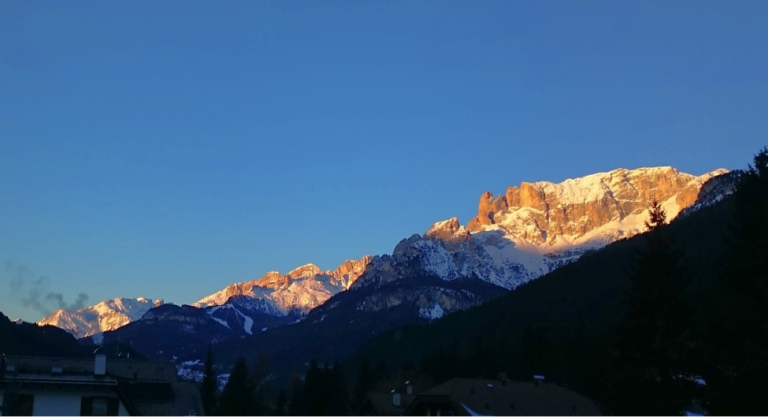
A view from Paolo's hotel room, showing the dolomite rock the region is named for. Credit: Paolo Gaudiano

A view from Paolo’s hotel room, showing the dolomite rock the region is named for.
Credit: Paolo Gaudiano

SeniorsSkiing Guide: White Pass, WA, Free For 73+!

Kudos To Senior-Friendly Ski Resort Three Hours From Seattle.

A skier heads off the top of Great White Express at White Pass. Credit: John Nelson

A skier heads off the top of Great White Express at White Pass.
Credit: John Nelson
As I got ready for a day of skiing at White Pass, I ran into a gregarious septuagenarian with a big smile on his face.

“It should be a great day,” he said to me happily as we crossed paths.

Fresh snow had fallen on the empty weekday slopes. And if you happen to be of a certain age like my lodge acquaintance (73 and older), your day at White Pass just got better: You ski for free.

West Ridge at the top of Paradise Basin leads skiers into gladed off-piste powder runs. Credit: John Nelson
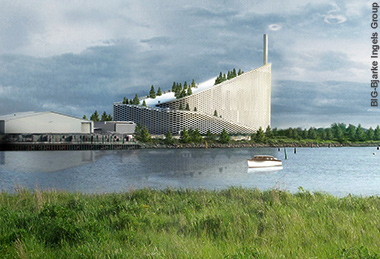
West Ridge at the top of Paradise Basin leads skiers into gladed off-piste powder runs.
Credit: John Nelson

Besides that benefit, White Pass has many other great qualities: Beautiful scenery, vast terrain, reasonable pricing and ample lodging options nearby.

During my visit, two inches new had fallen on top of meticulously groomed slopes, yielding buttery smooth turns and fresh tracks all day long.
Snow, terrain and more

  • Location: The ski area is on the White Pass Scenic Byway section of U.S. Highway 12, one of the major east-west routes in Washington state. The byway has fantastic views of 14,410-foot Mount Rainier to the north and is a jumping off point to explore the volcanoes Mount St. Helens and Mount Adams to the south. It takes about three hours to drive to White Pass from Seattle.
  • Snowfall: More than 350 inches fall annually, and snowmaking keeps the mountain covered when Mother Nature doesn’t cooperate.
  • Terrain: White Pass feels like two mountains on its 1,500 acres. The “frontside” has the area’s only steeps and also has a variety of intermediate runs. The “backside,” known as Paradise Basin, offers intermediate skiing on its higher-elevation slopes. About 20 percent is rated advanced; 80 percent is beginner and intermediate.
  • Vertical: 2,000 feet from base (4,500”) to the top of Paradise Basin (6,500”).
  • Lifts: Two high-speed quads (Great White Express on the frontside) and (Couloir Express in Paradise Basin) do most of the people-moving at White Pass; the ski area has four additional chairlifts.
  • Views: On clear days, Mount Rainier is the big dog on the skyline to the north; the Goat Rocks Wilderness and Mount Adams to the south are also visible.
  • Olympics connection: Medal-winners Phil and Steve Mahre grew up skiing at White Pass and still drop in now and again.

Lot to lift access

  • Weekends and holidays can be busy, but for the most part, parking is easy. A passenger unloading zone is available next to the day lodge and regular shuttles ferry skiers from distant parking. On weekdays, parking is a breeze; I pulled in 10 minutes before opening and parked right next to the lodge.
  • Accommodations: Options are plentiful along U.S. 12, including the on-mountain White Pass Village Inn. The tourist-friendly towns of Packwood and Naches are short drives from the ski area, and Yakima, a center for many of Washington’s wineries, is about an hour’s drive to the east.

Culture

  • The vibe: Everyone seems to know everyone at White Pass, and visitors are welcomed. I met some friendly retirees who treated me like an old friend as the day progressed.
  • Dining: The best option is the cozy High Camp Lodge in Paradise Basin, with a variety of menu options, exceptional craft brews and wine. The day lodge has cafeteria food and the Sitzmark Lounge.

Bottom line

  • If you’re 73 and older, it’s $5 for your initial ticket; after that, reloads are free. Adult tickets (ages 16-72) are $63 (reloads are $58).
  • Grooming is exceptional on the ski area’s many intermediate runs, and when it’s clear, you’ll have commanding views of Mount Rainier.
  • The upper-elevation Paradise Basin offers rolling groomers and gladed off-piste powder.

Trail Map Click Here

Webcam Click Here

The Great White Express on the frontside of White Pass accesses the area's steepest terrain. Credit: John Nelson

The Great White Express on the frontside of White Pass accesses the area’s steepest terrain.
Credit: John Nelson


SeniorsSkiing Guide: Winter Park, CO—Almost Denver

Close to Denver, This Venerable and Varied Ski Resort Can Get Crowded On Weekends.

Lots of folks lining up at Winter Park. Holiday weekend was busy. Credit: Susan Winthrop

Lots of folks lining up at Winter Park. Holiday weekend was busy.
Credit: Susan Winthrop

One of the oldest ski areas in Colorado, Winter Park is only 67 miles from Denver (about a 90 minute drive). It has excellent terrain for all levels of skiers and snowboarders. I was there with my daughter and her 12 year old twins who couldn’t wait to ski Mary Jane—one of the four mountains included in the area. We were there over a holiday week-end, and we can attest to what a popular ski area this is.

Susie and grandkids point out high points on WP trail map. Credit: Susie Winthrop

Susie and grandkids point out high points on WP trail map.
Credit: Susie Winthrop

Conditions were excellent with a few inches of new powder and a huge base. As I’d come from New England, I was looking for some ice but found none. It was Martin Luther King holiday weekend—late January—and the crowds (15,000 people) were there, but we still discovered powder stashes in the trees. Plenty of full-on moguls fields kept the kids happy and when my old knees started to protest, I found some lovely blue trails which deposited me at the same lift as my more ambitious (and far younger) family members.

In spite of the throngs milling around the base and the hour-long lift line at the bottom, once we were on the slopes we quickly found our way to mostly unoccupied lifts and never had to wait again.

Snow and Terrain

With 3,081 acres of skiable terrain and 24 lifts, Winter Park had something for everyone. The average snowfall of 320 inches is impressive. The elevation of 11,220 feet is exhausting for those who come from sea-level. It was overcast and a bit windy when we were there so I can’t comment on the views or on the Parson Bowl, an area which was closed due to poor visibility. But there’s more the WP than the front slope.  Click here for a description of the “Seven Territories”, something for everyone.

Lot to Lift Access

On a busy weekend, you would have to get to the area by 7:30 a.m. to get a good parking spot in one of the designated lots. Those who slept in had a long trek uphill after parking alongside the access road. Once in the village, you can grab a red wagon provided by the ski area to tote your gear or your kids to the ticket office, the cafeteria, the restrooms or to Starbucks. At the end of the day, you might want someone to put you in a cart and pull you back to your car.

Ski Meisters

Ski Meisters whooping it up at Winter Park provides year-round activities for active seniors. Credit: Susie Winthrop

Ski Meisters whooping it up at Winter Park provides year-round activities for active seniors.
Credit: Susie Winthrop

If I lived nearby and skied here often, I would definitely join the Ski Meisters club. It’s a friendly, fun loving, hard skiing group of 55-plus seniors who enjoy discounted tickets, lockers and gorgeous jackets. They ski together at Winter Park on Sundays, Wednesdays and Thursdays when the crowds dwindle. They enjoy eating lunch together upstairs in the Stow Asis Lounge and often get together for after ski fun. They also cycle, bike, hike and take trips together to other ski areas. Currently there are 400 members, and there’s a wait list to get in. But I’m sure it would be worth the wait.

Culture

The “Guest Services” at Winter Park are friendly hosts in yellow jackets helping everyone to navigate the base area. It wasn’t immediately clear which line was the ticket line and which one was for the lift, but there was always some nice person to set us straight. I spent time at the end of the day at the tea room which turned out to have a small but popular bar. The people there were also very friendly!

Bottom Line

Day pass for senior (65+): $114; online, seven days in advance can be as little as $83. Senior pass (70+) in 2015-16 was $509.

Trail Map Click Here

Web Cams Click Here

SeniorsSkiing Guide: Fixed Income Skiing on a Liberated Schedule at Sunday River, ME

Big, Big Four-Season Resort In Maine Has Activity-Filled Social Scene For Seniors.

Terrain for everyone at Sunday River and lots of room for blue cruising. Credit: Sunday River

Terrain for everyone at Sunday River and lots of room for blue cruising, greening or double-black diamonds.
Credit: Sunday River

For seniors on a fixed income and liberated schedule, a top place to ski in the East is Sunday River, ME. That is for three main reasons. First, it is huge. When you look up from the South Ridge base lodge, you see wide slopes slung over rolling peaks, in every direction, a three-mile span from White Cap to Jordan Bowl Peaks.

Started in 1959 with one T-bar, Sunday River had a huge growth spurt when Les Otten bought the small family area and put his vision for expansion into high gear.

Today, that translates into 135 trails and glades and 15 lifts (five high speed), slung over eight interconnected peaks. That’s a lot of opportunity for seniors to select the “just right” terrain. Each peak has an easy way down. You can knock yourself out on the double black White Heat or stroll down the Three Mile Trail with Agony and Ecstasy in between.

Second, owner Boyne Resorts has done a great job modernizing lifts and focusing on snowmaking and grooming, keeping trails in good shape, even in low-snow years.
Finally, everyone who works here is very friendly, so you have nice people looking after you.

Bethel, a short drive from the mountain, is a classic New England village. Main Street has several shops and cozy restaurants. The rambling turn-of-the-century Bethel Inn Resort has a 35-km XC groomed trail network right on the edge of town. Nearby Carter’s XC Center has 55 km.

These guys meet every morning, ski, and hang out. The Prime Time Ski Club is Credit: Scott Andrews

These guys meet every morning, ski, and hang out.
The Prime Time Ski Club is informal and provides a lot of opportunities for socializing.
Credit: Scott Andrews

One great asset here for seniors is the 100+ member Prime Time Ski Club (motto “You’ll never ski alone!”) for those over 50. Meet up any weekday morning at North Peak Lodge 10-10:30, top of the Chondola (get there early before the cinnamon buns are gone!) and have a fun group of people to ski with. Break off into groups (no larger than eight) usually based on terrain, ability, and social interactions, and then ski!

Many members also gather in the Mahoosic room at South Ridge in the morning and lunch there around noon. Après ski activities include wine tastings, game night, potlucks or special restaurant dinners, trips to local mountains, and an annual western trip, plus off-season activities. New Members: $25. Renewal (pre-season): $15.

Many members ski midweek and take advantage of discounts offered at area restaurants. Check out Terri Messer’s weekly column on the club in the Bethel Citizen for what’s happening.

Bottom Line

Senior Pricing: Daily lift ticket, 65 and older, $59; $53 online advance purchase.

Senior (65-79) season passes (includes Sunday River, Sugarloaf, and Loon): New England Gold Pass: $869 (Super Senior, 80-plus: $30); Silver Pass (13 blackout dates) $705; Bronze Pass (midweek non-holiday, all ages) $529 .

GO50 Week: Mid-January with lift ticket and lodging deals for five nights, a clinic, après-ski social events, and a Sock Hop.  Kudos to Sunday River for celebrating its 50-plus skiers with a full week of fun events including a “Retro Race” on vintage equipment.

Bethel Nordic Center at the Bethel Inn Resort: All Day Trail Pass: Seniors (63 plus): $16; half day, $13. Season Pass (63 plus): $125. Ask about the daily ski-swim-sauna package at the inn’s Health Club.

Trail Map Click Here