Sundance Seniors Rock

Camaraderie and coaching with spectacular views. You might even catch a glimpse of owner and super star Robert Redford.

Gorgeous view of Mt. Timpanogous.
Credit: Harriet Wallis

Several times a month the Sundance Seniors meet and ski the mountain together. They’re ski buddies. They’re bonded by their love of skiing and their passion for Sundance.

What’s more, Sundance Seniors get VIP care. Some ski days include a complimentary coaching session with Snowsports Director Jerry Warren or one of his top staff.

“We always want to keep everyone safe and enjoying skiing at this stage of their life, and we realize they aren’t trying out for the world cup anymore,” Warren said.

The scheduled ski days are published on the Senior Group on the Sundance website. When you’re in town, you’re invited join them for a day of ski fun and camaraderie.

Newcomers are always welcome, like avid fly fisherman Spencer Nishimoto who joined the group last winter after many seasons off from skiing. “These are really nice people to ski with. We develop friendships and rip up some runs. And the coaching makes it fun to keep learning.”

Unofficial senior leader Ralph Childs usually leads the way and sets the pace. But then he stops so the group can cluster again. All are strong skiers. Some are former ski instructors. But like most seniors, some have cranky knees and old injuries so they ski a tad slower. No problem. They ski, gather, chat, ski. Repeat.

Sundance grande dame Barbara Stewart Anderson and friends.
Credit: Harriet Wallis

And you never know who you’ll meet. Barbara Stewart Anderson skied there as a child because her father, Ray Stewart, founded the resort in 1944, built a 500 hundred foot rope tow, and named it Timp Haven. Today the main lift, Ray’s lift, memorializes his name.

A $150 senior season pass or a $20 day lift ticket gets you ski camaraderie and coaching with stunning views of Mt. Timpanogos.

In addition, it has elegant dining, a massive wooden bar where Butch Cassidy hung out, and a country store. Sundance is located in the Wasatch Mountains less than an hour south of Salt Lake City, but it’s often overlooked by destination skiers.

Antique farm implements decorate the Foundry Grill.
Credit: Harriet Wallis

To read more from Harriet click here for her stories on SkiUtah.

SeniorsSkiing Guide: Rocking And Rolling For Seniors At Park City

The Largest Ski Area In The US Has Something For Everyone.

Park City Mountain Resort connects to The Canyons, making the largest ski area in US.
Credit: Park City Mountain Resort

The choice of skiing at Park City, UT, just got more mind boggling. Last year, Vail Ski Resorts linked Park City and The Canyons via the Quicksilver gondola on Pine Cone Ridge. Voila: a ski area of 7,300 acres with 41 lifts, and 324 runs, currently the largest ski area in the U.S.—six miles across as the raven flies. That means a lot of choice for us seniors on the endless white folds of the Wasatch Range.

Plus, at only 7,000 feet at the base, the altitude is easier to adjust to than some higher Western ski resorts.

Park City is lower in altitude than other Wasatch resorts, making it easier to adapt for low-landers.
Credit: Park City Mountain Resort

Park City trends toward broad slopes while The Canyons to narrower tree-lined trails. Many trails present drops off into tree skiing at various pitches. Big bowls with double black diamond labels offer fabulous powder skiing. Gulches and gulleys lead to further adventure. Currently Park City is having the snowiest January in about nine years, eight feet and counting.

The new eight-passenger Quicksilver Gondola has changed the game here. Adventurers can start at the Orange Bubble Express at The Canyons, say, ride the Red Pine Gondola to Timberline to Iron Mountain Express to Quicksilver Gondola. By the time they’ve skied over to Park City, they may want to take the free bus back.

By contrast, Park City skiers take the Crescent Express to reach The Canyons, and so have access via one lift to entertaining steep pitches they once had to hike to.

In 2015, Vail Resorts invested $50 million in upgrades at Park City. It transformed the sluggish Motherlode Express (good on a powder day) to a high-speed quad. It turned King Con, popular for rip groomers, into a six-pack. It also created two new trails at the Quicksilver Gondola mid-station, built Miner’s Camp Restaurant there, added seating to on-mountain restaurants, and invested in snowmaking.

In Park City, the sports vibe is strong. Park City and Deer Valley hosted the 2002 Winter Olympics and the resorts have been drawing the youthful and ambitious ever since. Visit Utah Olympic Park to catch more Olympic fever, and visit the Alf Engen Ski History Museum. Admission is free.

Skiing does get crowded, and some say the best time to ski is during the Sundance Film Festival in January when everyone is indoors watching movies or on Sundays when many are in church. A new app, EpicMix Time, lets you track lift line wait times.  At key lift junctures, an LED board gives you that same traffic information.

The best way to ski Park City is to buy the Epic Pass, which lets you ski all Vail resorts. But the early season savings end in the fall. The best bet is to buy senior (65-plus) tickets online seven days in advance.

The White Pine Touring Nordic Center with 20 km of groomed XC track at the Pro Shop in the Hotel Park City is well worth the visit to stretch your limbs. On community appreciation day, many older fit speed demons constantly lapped us on skate skis. This center truly appreciates their seniors and offers free passes for those 65 and older.

The Facts

7, 300 acres

Base elevation 6,800 feet; summit 10,026 feet

330 trails, 41 lifts

Average annual snowfall: 355 inches

8 percent beginner, 48 percent intermediate, 44 percent expert

Web Cam Click Here

Trail Map Click Here

Night time is for dining, shopping, visiting and relaxing.
Credit: Park City Mountain Resort


Sierra Nevada Blowout!

Think Feet, Not Inches.

Homewood: Monumental snow, lake level.
Credit: Homewood Mountain Resort

“Nevada” (Spanish for “covered in snow”) is back with a vengeance at the end of “Sierra” (“mountain range”) and California’s skiers and ski resorts are jubilant! Since January 1st, the Sierra Nevada has been

Mt. Rose lodge buried.
Credit: Mt. Rose Ski Tahoe

clobbered with one storm after another, and except for one spate of warmer temperatures that brought rain for a couple of days earlier in the month, it’s been nothing but fluffy white stuff ever since—feet of it! This week, it’s experiencing a nice long stretch of cold days and sunny skies that isn’t predicted to end until next Wednesday when another storm rolls in. Last year, many resorts were forced to close off and on because of no snow; this season nearly every Sierra ski area has had to close a couple of days here and there because of too much snow!


January has broken snowfall records across the mountain range.

Northstar shoveler at work.
Credit: Northstar California

The remarkable record-breaking snowfall statistics that Squaw Valley Alpine Meadows has tallied up in the first 23 days of January are typical of many Sierra Nevada ski areas. According to Public Relations Coordinator Sam Kieckhefer, the combined resorts have seen 276 inches (that’s 23 feet or an average of one foot a day!) fall since the month began, easily surpassing the previous record snowfall in a single month (241 inches in March of 2011) since record-keeping began 46 years ago. Its total snowfall since the 2016–17 ski season began—381 inches—is more than double the average for this point in the season.

This jubilant tale is being repeated throughout the Sierra, from Mt. Shasta in the north to Southern California’s cluster of Big Bear Mountain ski areas. Like Squaw Valley Alpine Meadows, many ski resorts in the northern and Central Sierra are reporting record-breaking total snowfall amounts to date averaging around 380 inches. Mt. Rose over the hill from Tahoe in Nevada has a season-to-date total at 412 inches and Sugar Bowl sitting atop Donner Summit back in California may be able to claim the highest total snowfall to date of 451 inches.

At the top of Crow’s Nest lift
Credit: Sugar Bowl Resort

This latest storm that wrapped up this past Monday added tons of light, fluffy powder to an already impressive snowpack. Dodge Ridge in the Central Sierra, which has often found itself on the short end of the snow stick, had 10 feet of snow fall in just five days, bringing its total January snowfall to 19 feet! Other impressive storm totals were 97 inches at Kirkwood, 88 inches at Heavenly, 94 inches at Northstar, and up to 106 inches at Sugar Bowl. Most ski resorts in northern California currently have top-of-the-mountain snowpacks ranging from 150 to 185 inches. Mammoth Mountain in Central California has a upper base of 300 inches and even Homewood Mountain Resort, which sits near the shore of temperature-moderating Lake Tahoe, can lay claim to impressive base figures: lower and upper bases of 77 to 156 inches respectively.

Squaw Valley lift
Credit: Squaw Valley Alpine Meadows

Are the ski resorts happy that Easter—the weekend that most Sierra ski resorts traditionally close—is relatively late this year (April 15th)? You betcha. It’s likely that a good number of them will keep the lifts running well past that date. And, with the exception of 2015–16, which was the first respectable ski season in the Sierra after five years of sparsely covered slopes, thin layers of man-made snow, and some resorts not even opening, skiers and boarders are happy campers, too. Barring a barrage of warm “Pineapple Express” storms emanating from the Hawaiian Islands or the storm door slamming shut, 2016–17 is going to go down as one epic Sierra ski season!


Shovel all the day and nothing moves away. Digging out at Kirkwood resort.
Credit: Kirkwood Mountain Resort

SeniorsSkiing Guide: Sun Peaks, BC, Senior-Easy Big Mountain

When You’re No. 2, The Saying Goes, You Try Harder.

Skiers and snowboarders rise above the clouds on the Crystal Chair at Sun Peaks. Credit: John Nelson

That’s true of Sun Peaks Resort, Canada’s second largest ski area behind behemoth Whistler-Blackcomb 200-plus miles away in the coastal mountains.

This excellent resort near the British Columbia city of Kamloops offers three mountains to ski, a well-designed, bustling village and even a fair bit of off-piste, side country powder to hike. Add to that a sunnier climate, lighter snow and lower prices and Sun Peaks looks better and better compared to its rival to the west.

You’ll find bargains here as well. Seniors 65 and older receive a 20 percent discount on ticket prices at Sun Peaks, and that’s on top of the favorable exchange on the strong U.S. dollar.

A snowboarder shreds fresh snow on the Crystal Chair at Sun Peaks. Credit: John Nelson

Snow, terrain and more

  • Location: Sun Peaks is about 35 miles from Kamloops, a city of 85,000 in what’s known as “Thompson Country” of B.C.’s inland mountains. It is the closest inland resort to the Vancouver metro area (about five hours away by car), and the Kamloops airport gets several daily flights from major Canadian cities.
  • Snowfall: The mountains here receive far less snow than the coastal range, but Sun Peaks still gets more than 230 inches a year. Snowmaking helps keep some of the lower slopes covered.
  • Terrain, lifts: The three mountains at Sun Peaks serve predominantly intermediate terrain on its whopping 4,270 acres. About 68 percent of the resort is rated beginning or intermediate, and 32 percent is rated expert. The Gil’s Zone side-country area offers expert skiers the chance to find untracked lines after a short hike off the top of the Crystal and Burfield lifts.
  • Vertical: 2,893 feet from a village base at 4,117 feet. The hikable summit of Tod Mountain (7,060 feet) adds few hundred vertical for those willing to sweat for their freshies.

Lot to lift access

  • Parking: Parking is scattered in several lots near the bases of each mountain; in addition, accommodations generally offer heated parking garages.
  • Public transportation: A bus service operates on weekends from Kamloops. In addition, an airport shuttle runs from Kamloops to Sun Peaks, and an inter-resort shuttle operates between Whistler, Big White and Sun Peaks.
  • Accommodations: The village at Sun Peaks is well designed; you can ski among the shops, condos and hotels to the lifts. Several ski and stay deals are offered by the resort.

Culture

  • The vibe: This is the friendly interior of B.C., so you won’t find any of the Whistler-Blackcomb snobbery here. As with many resorts in Canada, a strong Australian presence is apparent nearly everywhere you go among workers and vacationers.
  • Dining: 22 dining spots are scattered around the resort and village. Several restaurants deliver great meals, including the excellent Voyageur Bistro and the rocking Bottoms Bar and Grill.
  • Mountain life: Winter activities abound, with Nordic skiing, snowmobiling, snowshoeing and skating. Of the interior B.C. resorts, Sun Peaks has the best four-season set-up, with a golf course and excellent mountain biking during the summer.

Bottom line

  • Sun Peaks has a robust village scene that delivers a resort experience at the fraction of the cost of skiing at Whistler-Blackcomb..
  • Canada’s second largest ski area has ample terrain to explore over the course of a ski stay.
  • With 2,000 hours a year of sunshine, your chances of getting a goggle tan are pretty good.

Trail Map click here

Webcam click here

A well-designed village offers dining, shopping and accommodations at the base of Sun Peaks. Credit: John Nelson

_____

John Nelson is a freelance outdoors writer based in Seattle. Follow his blog at skizer.org.


Cross-Country At Historic, Cozy PA Lodge

The Lodge At Glendorn Named Number One Resort Hotel In US.

Now this is what a comfy lodge looks like. Winter sports, good food, excellent accommodations at Glendorn.
Credit: Glendorn Resort

When I first said to our friends that we were having my wife’s 50th birthday party several years ago in Bradford, Pa. they cringed and all remarked, “In the middle of the winter in the icebox of Pennsylvania?”  They were sure surprised when they all drove through the wrought iron gates and entered a winter wonderland from yesteryear.

The Lodge at Glendorn not only is a nationally known Relais and Chateaux property, but it was acclaimed by Travel and Leisure as the Number One Resort Hotel in the nation in their recent Best Awards of 2016.  This historic 1500 acre property which abuts the Allegheny National Forest has been lovingly and painstakingly restored by its owner ( and curator) Cliff Forrest and his lovely wife Tracy.

Cross country skiing and snowshoeing on miles of trails is a feature of Glendorn Resort.
Credit: Glendorn

The property was once a retreat created by the oil and gas financier C.G Dorn in 1927 as a place for relaxation for his family.  The original cabins were created for each family member and the spacious log lodge was the central family gathering for dinners and holidays.  In 1995, it was opened to the public and in 2009, the property was up for sale.  Due to the vision of Cliff and Tracy Forrest, they purchased Glendorn and have lovingly restored its original grandeur with 16 luxury cabin and lodge accommodations.

Cliff Forrest, a senior skier, hunter, and golfer, is an active outdoors person who founded Rosebud Mining Co. in 1979.  Rosebud is currently the third largest coal producer in the state as well as the 21st largest producer in the country.  Cliff’s success has made it possible for him to invest in this truly unique property which has many opportunities year round for seniors.

Aside from being an Orvis Endorsed Fly Fishing property, the hiking, and sporting clays opportunities exist year round.  But in our experience, there is nothing as enjoyable or scenic as taking in Glendorn in the winter.  The cozy atmosphere of the cabins and the lodge with the crackling fireplaces and first class cuisine make the winter experience one to remember.  My wife and I have enjoyed Glendorn in the fall with the beautiful leaves of the Allegheny National Forest greeting us along the way, but the snowshoeing and cross country skiing available on the well-marked trails of the resort offer an exercise opportunity that is unparalleled.  All the equipment you would require is available at the resort including cross country skis, snowshoes, and skates.

S’mores by the bonfire on a Saturday night under the stars.
Credit: Glendorn

On Saturday evenings, the resort employees provide a bonfire up at the lake with s’mores and beverages with the opportunity to ice skate.  We also take advantage of the close proximity of Holimont Ski Club which is 40 minutes to the north and is open to the public weekdays for fabulous alpine skiing with the equally famous Lake Erie fluff blowing in and covering the slopes with a light, delightfully pleasant skiing experience.  Ellicottville, New York is the quaint town adjacent to the ski areas with a fabulous brew pub, Ellicottville Brewing, and many other dining establishments and outdoor recreation shops.  Again, it’s an easy drive from Glendorn adding to the total winter experience.  My wife and I have been making it an annual affair for her birthday.  It is truly top rate.

For Reservations and Rates click here or call 1800-843-8568.

Breakfast, lunch and dinner are served in the main lodge and picnic lunches for outdoor activities are available upon request.

Access: Three hour drive from Pittsburgh, PA,  two hours from Buffalo, NY, five hours drive from Philadelphia.

Holimont lift tickets weekdays only: Adult Full Day, $56.00; Seniors( 70+) $50.00 full day.  Groups of 15 of more who register two weeks in advance are offered a $39.00 lift ticket weekdays only.  The property is closed to the public on the weekends unless a club member is a sponsor.  Alternate opportunity is Holiday Valley Resort. 

Photos courtesy of the Lodge at Glendorn


BrettonWoods

SeniorsSkiing Guide: Easy Going At Bretton Woods

Seniors (65-79) Ski For $25 Mid-Week At This Classic NH Gem.

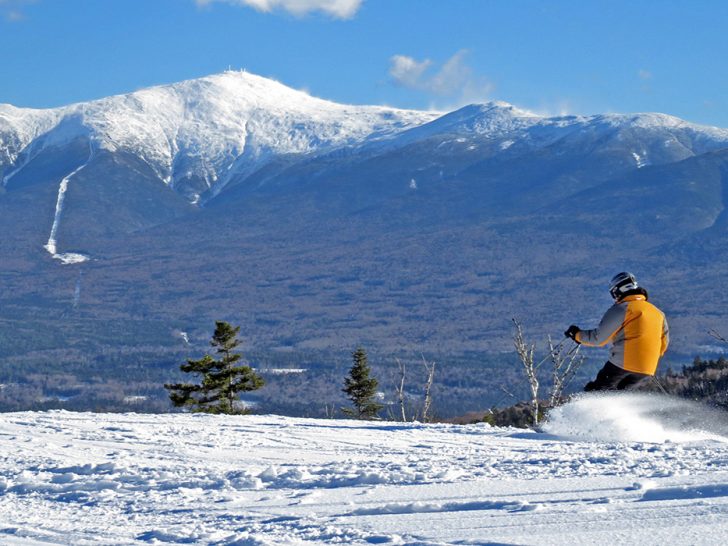
Majestic Mt. Washington is across the valley from Bretton Woods.
Credit: Bretton Woods

Down Cascade, up to Rosebrook Summit, down Upper Swoop, down Cascade, across to Diamond Ridge, down Deception Bowl, up the Bethlehem Express, down Big Ben, up Zephyr High Speed Quad, down Granny’s Grit.

The skiing at Bretton Woods, NH, was so smooth and our trips so fast, that you didn’t have time to think what joint might be aching that day. We were skiing with a group of 50-plusses and one 80-plus, all fabulous skiers with years of experience behind them. The grooming at Bretton Woods yields the best type of New England skiing with manicured slopes, wide open avenues, very hard pack with enough surface snow to grip. We blazed all over the mountain, happily racking up the vertical, on our apps or psyche. Most of the intermediate slopes were open and provided plenty of fun on Rosebrook and West Mountains.

Beautiful, broad skiing avenues make for nice cruising at Bretton Woods.
Credit: Bretton Woods

The overall experience here is a friendly mountain that’s fun to ski. There’s plenty of skiing available for an older person without putting too much pressure on hips and knees. For tree skiers, the glades are fairly open in keeping with the resort’s easy-going nature. In 2012, Bretton Woods added a T-Bar servicing Mount Stickney with 30 acres of more challenging glades. There is plenty of tough terrain on this hill once nick-named Medicare Mountain.

Four high-speed quads keep you going, and on crowded days the lift personnel keep the lines moving in a fair and congenial way.

What that allows you to do is just relax and rip. Plus all trails lead ultimately to the base lodge, minimizing separation anxiety from your ski companions.

Some say Bretton Woods, NH’s largest ski area, is more protected from the weather than other areas. You can always look across at storm clouds unfurling off Mt. Washington (the Northeast’s highest summit at 6,288 feet) and be happy that at least you’re not up there.

Across the street is the giant Omni Mt. Washington Hotel, like an ocean liner cruising across the White Mountains. Plan a visit, if only to stroll through the wide halls under 23-foot ceilings and take in the views of Mt. Washington from the Rosebrook Lounge sipping a cool Chardonnay.

To walk the hotel’s halls and verandas is to stroll through White Mountain history at its most hospitable. Built in 1902, the hotel most notably hosted the 1944 United National Monetary and Financial Conference to build the bones of a post-World War II economy. Walk into the room off the main lobby where the final treaty was signed.

Meanwhile, stretch your downhill muscles on the 62 miles of impeccably groomed X-C trails. They are also open to snowshoeing and fat tire bike riding.

Bottom Line

Seniors 80 years and up ski free any day, and those 65-79 ski for $25 midweek/non-holiday.

Hot Chocolate: $3

Wiser Woods Program

Open to skiers and riders age 50+. This is group ski program under the guidance of an instructor who will coach you down the mountain.  Includes morning refreshments at Slopeside, receive 10% off retail, 10% off demo equipment.

Runs Jan. 3-March 14, Tuesdays 9-12. Meet on Slopeside Level of Base Lodge. $125 per person for the season, $199 per couple.

Mountain Stats

Vertical Drop:  1,500 feet
Trails and Glades: 97
Skiable Acreage:  464
Snowmaking:  92% of Trails
Average Annual Snowfall:  200+ inches

Webcam click here

Trail Maps click here

Bretton Woods boasts a network of well-groomed Nordic trails.
Credit: Bretton Woods

Solitude Hosts Major FIS, NorAm Snowboardcross, Skicross Races

Jan. 19-22 Races Are A First For This Resort Located In Twisty, Winding Big Cottonwood Canyon.

Groomers finalize the steep course with its finish line right at the base of the mountain just a few steps beyond Solitude’s Village.
Credit: Harriet Wallis

It’s a test event for the FIS Freestyle, Snowboard and Freeski World Championships scheduled two years from now in 2019.

So what? Don’t yawn.

When Salt Lake City was chosen as the site of the 2002 Winter Olympics, the four resorts in Big and Little Cottonwood Canyons—Alta, Snowbird, Brighton and Solitude—were overlooked as possible venues partly because of the road. It’s one way in and one way out of each narrow canyon that was carved by glaciers eons ago.

However, professional and amateur races are frequently held in the two canyons, but this is the first time such a major event is scheduled there.

To paint the big picture, Deer Valley, located in Park City, bought the smaller Solitude Resort two years ago making Solitude part of Deer Valley’s family.

As to Deer Valley, this marks the 18th year that the resort will host international and world aerial and mogul competitions. It was a venue for the 2002 Winter Olympic Games, two World Championships and 15 World Cups. It’s had lots of practice hosting major events and the resort is an esteemed venue.

So Solitude is not just jumping into big time races. It has the expertise of its parent, Deer Valley.

The races are high adrenaline, high action events. A detailed schedule for the Toyota U.S. Grand Prix at Solitude Mountain Resort can be found here.

Boardercross is a snowboard competition in which a four to six snowboarders race down a course that’s typically narrow and includes banked turns, various jumps, rollers and drops designed to challenge each rider’s ability to stay in control while maintaining maximum speed. Mid-course collisions are common.

Skicross is a timed race event and with big-air jumps and high-banked turns. What sets skicross apart from other alpine skiing is that four skiers start simultaneously and attempt to reach the end of the course.

To read more from Harriet click here for her stories on SkiUtah.
Here’s a short video that previews the Snowboard Cross course at Solitude.

SeniorsSkiing Guide: Big White, Big Senior-Friendly

Big Choice Of Intermediate Runs, “Master” Lessons, Bring Seniors Back Each Year.

The Alpine T-Bar serves low-angle intermediate terrain near the 7,606-foot summit of Big White. Credit: John Nelson

It’s hard to find a resort better suited to older skiers than the popular British Columbia destination of Big White.

Located in Okanagan region of B.C. near the bustling, fast-growing city of Kelowna, Big White is indeed big, with a sprawling village that boasts the most ski-in, ski-out lodging in Canada.

A skier turns amid the snow ghosts near the top of the Alpine T-Bar at Big White.
Credit: John Nelson

The resort’s rolling terrain of predominantly intermediate runs is especially popular with older skiers. In its lesson programs, Big White offers discounted “Masters Mondays” classes, and two popular “Masters’ Weeks” designed to teach older skiers how to keep shredding.

“Our retention rate is over 60 percent,” says Ollie McEvoy, one of the masters instructors. “If they take a lesson from us, they’ll come back.” The many skiers who take part in the masters’ week programs return every year after making personal connections, McEvoy says.

“They end up making friends for life,” he says.

For U.S. residents, Canadian resorts are particularly attractive this year, with a favorable exchange rate of more than 30 percent. Add to that a discount on senior tickets at more than 16 percent and U.S. skiers make out very well at one of Western Canada’s favorite resorts.

Ski instructor Ollie McEvoy helps run the masters programs at Big White. Credit: Big White Ski Resort

Snow, Terrain and More

  • Location: Big White is about 33 miles southeast of Kelowna, a city of more than 100,000 in the Okanagan Valley of British Columbia. Kelowna has an international airport with daily flights from Seattle, as well as major cities in Canada.
  • Snowfall: “It’s the snow” is the marketing slogan for Big White. Located far inland from Canada’s west coast, Big White’s snow is colder and drier than rival Whistler-Blackcomb, and it receives about 300 inches a year.
  • Terrain, lifts: Intermediate skiers love the rolling terrain of Big White, where all 15 lifts have a green run down. About 72 percent of the terrain is rated easy or intermediate; 28 percent is rated expert and extreme. Five of the chairlifts are high-speed on more than 2,700 acres of skiable terrain.
  • Vertical: 2,656 feet from Big White summit (7,606 feet) to the base of the Gem Lake Express lift (4,950 feet).

Lot To Lift Access

  • Parking: Day-trippers can park at the Gem Lake base or at the Happy Valley Lodge. This is one resort where you should consider staying on mountain because of the vibrant and affordable ski-in, ski-out village scene.
  • Public transportation: Big White offers a shuttle service from the airport to the mountain village, so skiers flying into Kelowna do not need to book a rental car if they are staying on the mountain. In addition, an inter-resort shuttle operates between Whistler, Big White and Sun Peaks for skiers who want to try three of Canada’s biggest resorts.
  • Accommodations: Big White is built for skiers who want to stay on the mountain. Thousands of ski-in rooms are available in all price ranges, with many package deals that include lift tickets and meals.

Culture

  • The vibe: Friendly, with a pronounced Aussie accent. The resort, owned by an Australian family, attracts a large number of Aussie workers and vacationers, giving it a “no-worries, mate” feel.
  • Dining: The resort has 18 on-mountain restaurants in various price ranges. Among the very best is the Kettle Valley Steakhouse and Wine Bar at the Happy Valley base area, serving excellent upscale entrees with a long list of tasty, British Columbia wines.
  • Mountain life: Beyond the lift-skiing, Big White offers many other activities, including Nordic skiing, outdoor ice skating, tubing, snowshoeing and sleigh rides.

Bottom line

  • Big White is a major resort that does very well by older skiers, with vast intermediate terrain and popular masters instructional programs.
  • The strong U.S. dollar makes this Canadian resort particularly attractive for deal-hunters.
  • Excellent snow quality keeps the lifts spinning well into April.

Trail Map Click Here

http://www.bigwhite.com/explore-big-white/mountain-info/maps-brochures

Webcam Click Here

_____

John Nelson is a freelance outdoors writer based in Seattle. Follow his blog at skizer.org.

Big White’s vibrant village has the most ski-in, ski-out lodging in Canada. Credit: Big White Ski Resort


Utah’s Historic Snowfall

This Says It All About The Snowfall In Utah This January.

Credit: SkiUtah

What A Difference A Day Makes

Cross-Country Skiing In Appleton Farms, Ipswich, MA., January 10-11.

January 11, 52 degrees, 12:30 PM

January 10, 28 degrees, 11:30 AM

028 Silver Lake Area_Deer Valley

SeniorsSkiing Guide: Deer Valley—Service And Senior-Friendliness

14 Things Seniors Love About Deer Valley.  Read on.

Silver Lake Area at DV.
Credit: Deer Valley

Monday morning, 9 a.m. Deer Valley Resort, UT. Members of the Park City Mountain Sports Club are buckling their boots. Their goal? Be safe, have fun.

Typically, about 20-25 members, mostly retirees who scoff at Florida’s balmy temperatures, gather in groups of blue, double blue, or black to ski the smooth and the steep at this quintessential Utah resort tucked into the trees behind the town of Park City.

Ahhh. Fresh morning tracks.
Credit: Deer Valley

They meet at 10 a.m. at the “beach” outside Silver Lake Lodge, ski two hours, then break for lunch at the Empire Canyon Grill, “best food on the mountain,” they say. Some ski after lunch, others head home. But no worries, next day is Tipsy and Taco Tuesday at Park City. Each day, they ski a different area, alternating between Deer Valley, Park City, and the Canyons, according to a standard schedule that includes an après ski party every Sunday. It’s only $25 to join.

Most buy the Epic Pass that provides skiing to all Vail Resorts—which owns Park City. But some buy a season pass at Deer Valley for the relaxing pace.

Deer Valley is known for its service to skiers and much of what it created for coddling those with deep parka pockets serves us seniors well.

Here are 14 things for seniors to love about Deer Valley:

1) Wide intermediate slopes groomed to perfection like a prized Appaloosa. Meanwhile, for your inner college-era zeitgeist, the area has some serious deep and steep in places such as the Mayflower and Lady Morgan Bowls.

2) Fresh tracks to yourself, since most skiers stick to the tamed slopes. A forester on staff keeps the glades clear for well-spaced tree skiing.

3) A lot of variety. Plus all six peaks have a beginner or intermediate run down so you can ski as a family with varying abilities.

4) No snowboarders allowed. (Ditto drones).

5) Attentive staff. With a one to seven ratio of helpers to customers, the area treats you like royalty.

6) At drop off, ski valets rush to take your skis off the car.

7) Hosts stand at trail map boards to offer suggestions on where to go.

8) Good food! The Natural Salad Buffet, grill items, carved roasts, deli sandwiches, paninis, soups, chilies, and chocolate chip cookies nearly as big as a Frisbee, plus the new Bald Mountain Pho at the Silver Lake Lodge. That’s just for starters. Where most eat to ski, here you ski to eat.

9) Short vertical drops—average 1200 feet so you don’t lose too much steam before hopping back on a fast moving lifts (12 high speed quads) for a well-deserved rest.

10) Free mountain host tours in the morning and afternoon to ski with others.

11) An elevator.

12) Lift ticket sales limited to 7,500 daily so short waiting lines, roomy trails and mountain restaurant seating.

13) Watch the grandkids learn to ski right outside the window of the Snow Park Lodge, while you sip a latte, maybe spiked with something.

14) Free overnight ski storage, so you don’t have to schlep your boards back and forth every day. Worried about skis getting stolen? You can drop them off for storage for any length of time.

Prices 2016-17:

Full day senior pass, 65 and older: $89

Season Pass, 65 and older $1,255; midweek only $1,140; 72 and older, $1,140

The Facts:

2,026 acres

Base elevation 6,570 feet; Summit 9,570 feet

101 runs, 21 lifts

Longest vertical, 1,380 feet off Little Baldy

Average snowfall: 300 inches

27 percent beginner, 41 percent intermediate, 32 percent advanced terrain

Trail Map: Click here

Web Cam: Click here


Solitude Mountain Resort: Perfection at the Top of a Canyon

The Nearby Area for Local and Destination Skiers Who Know.

Solitude Mountain Resort

Like most great places, Utah’s Solitude Mountain Resort, combines the obvious with the subtle. Its 1200 acres are laced with a variety of groomers ranging from gentle to intense. In between are the woods and hidden openings where those who seek the untracked may find just what they’re looking for. It may require some effort to get there, but once you arrive…what a pleasure!

Overall, it is one of the most scenic areas in the state. Dense with trees and punctuated by cliffs, it sits near the top of Big Cottonwood Canyon, 15 miles of spectacular amphitheaters, steep slopes and manageable hairpin turns. It is adjacent to Brighton Ski Resort, and the two areas offer a joint pass for a slight premium.

Like other Wasatch Mountain resorts, it is comprised of several canyons, the most dramatic of which is Honeycomb, with skiable walls that provide almost endless opportunity for fun. Intermediates can enjoy moderate challenge along the floor of the canyon. On a clear day, every skier is exposed to the kind of natural beauty found in a national park.

We skied there the day after Christmas, and, for Solitude, it was crowded. That doesn’t mean Park City, Snowbird, or Deer Valley crowded. A few slopes had too many skiers and boarders, but lift lines were virtually nonexistent.

Powder at Solitude

That, unfortunately, could not be said for the cafeteria line at the Roundhouse, the lower, mid-mountain eatery renovated following a fire last Spring. There’s is no doubt that the resort, now owned by Deer Valley, will figure it out. And, I know from experience, that on less crowded days, skiers can get a tasty meal in a few minutes. Food choices include the conventional (hamburgers, sandwiches, fries), the less conventional (homemade chicken pot pie), and the exotic (dals, naans, paneers, and other Himalayan choices).

Solitude is ideal for senior skiers. There’s terrain for everyone. Those visiting with families and/or grandchildren, will find nice lodging options at the Village at Solitude and a good selection of eateries. Solitude Mountain Spa has a full range of treatments.

Day tickets for those 65+ are $25 below rack rate. I checked their website for two weeks out, and the cost dropped to $32.99. The restrooms I visited were not fancy, but they were clean. That says a lot about management’s attention to details, especially on a very busy day.

I know a number of local serious skiers whose season ticket choice is Solitude. They like committing to an easily accessible place and having it to themselves. It is a beautiful, well-run resort with an endless variety of appealing terrain. If you want nightlife, go to Park City or stay in Salt Lake City. If you want fantastic and varied skiing, good accommodations, first-rate food, and not too many people, this is your place.

SeniorsSkiing Guide: Mt Hood Meadows

Free Skiing For 75-Plus.  Nice.

A skier hits the slopes of Powder Keg at Mt. Hood Meadows.
Credit: John Nelson

This resort on the southeastern flank of a 11,249-foot volcano has a lot to recommend it: great terrain, great proximity to the hipster-haven of Portland, OR., and ample snowfall from regular winter storms.

If you’re 75 and older, you’ll have another reason to love Meadows: It’s free.

Jeanne Farwig, a ski instructor at Mt. Hood Meadows for 44 years, is honored in a ceremony last season by Chris Kastner, Meadows ski school director.
Credit: Mt. Hood Meadows

“It reminds me of the Matterhorn—it’s just so majestic,” says Jeanne Farwig, a Mt. Hood Meadows ski instructor. “There’s something for everyone here.”

Farwig, 84, is entering her 44th season of teaching on the mountain. Her passion for Meadows remains as strong as her desire to pass on her slope knowledge.

“I love working with older skiers,” she says. “I especially like working with people who have given up skiing and are taking it up again.”

And the free skiing isn’t bad either.

“Now my boyfriend has a free pass,” she says.

Snow, terrain and more

  • Location: Hood Meadows is about 60 miles from downtown Portland via U.S. Highway 26, and 35 miles from the Columbia River Gorge outdoors mecca of Hood River.
  • Snowfall: 440 inches of snow pile up every year from Pacific storms that pummel the mountain.
  • Terrain, lifts: With the pointy summit of Mount Hood looming above, Meadows feels wild, with runs that take advantage of the many ridges and canyons falling off the side of Oregon’s tallest peak. About 35 percent of the mountain’s 2,150 skiable acres is rated advanced, 65 percent is rated intermediate or beginner. Six of the resort’s 11 chairlifts are high-speed quads that do most of the people-moving on the mountain.
  • Vertical: Nearly 2,800 feet from the base at Hood River Meadows (4,528 feet) to a lift-served high point of 7,305 feet. On nice days, hikers can gain an additional 1,700 feet of vertical by climbing to the top of the double-diamond Super Bowl run.

Lot to lift access

  • The roadways from the Portland metro area can be clogged on weekends, so plan on skiing during the week if possible. Parking at Meadows requires a $5-per-day pass from the Forest Service, which you can purchase from a parking lot attendant. A large loading zone is available to dump gear near the lodge.
  • Public transportation: Several companies offer shuttles to Mt. Hood Meadows from downtown Portland.
  • Accommodations: Nearby Timberline Lodge is a national treasure if you manage to score a room. Cooper Spur ski area and the town of Government Camp have lodging, and Hood River is just 45 minutes away.

Culture

  • The vibe: A mixture of hard-cores who love the Meadows’ extreme terrain and friendly locals who enjoy cruising its many groomers.
  • Dining: You’ll find most food in the main base area’s two lodges; on slope, check out two cafes, one at the base of the Hood River Express and the other at the top of Mt. Hood Express.

Bottom line

  • You’ll ski for free if you’re 75 and older. Seniors (65-74) pay $54; regular adult passes are $79.
  • Weather can close the mountain’s upper lifts limiting skiers to lower slopes during storms.
  • A big-mountain feel to the dramatic upper slopes.

Trail Map: Click Here

Webcam: Click Here

Skiers ski the run Discovery near the top of the Shooting Star Express at Mt. Hood Meadows. Credit: John Nelson


SeniorsSkiing Guide: Saving Laurel Mountain From Obscurity

Western PA Pioneer Area Comes Back To Full Operation.

Fun Fact: Legendary Hannes Schneider designed the trails at Laurel at around the same time he created Cranmore.
Credit: Laurel Mountain

There has been a lot written about the lost ski areas.  For one reason or another, ski areas sometimes are unable to meet the financial or operational requirements and end up closing the lifts.  They fall into disrepair and end up on a list of lost ski areas forever.  But, there is an exception whose light is burning bright this winter.  Laurel Mountain in the Laurel  Highlands of Western  Pennsylvania will once again be spinning the lifts thanks to a grant from the State of Pennsylvania and the financial and operational input of the major ski area in the region—Seven Springs Mountain Resort.

Laurel’s origins date back to 1939 when Pittsburgh financier Richard King Mellon began to plan a ski area for the enjoyment of the members of the  prestigious Rolling Rock Club.  In alliance with Harvey Gibson who was chairman of Manufacturer’s Trust Company and owner of Cranmore Mountain in New Hampshire, they began building the ski area on the western flank of the Laurel Ridge near Ligonier, Pa.  The design of the mountain was created by the world famous Hannes Schneider who was the inventor of the Arlberg method of ski teaching which is the basis of modern alpine technique.  Schneider was brought to the U.S. by Harvey Gibson and the legendary Austrian ski instructor hiked the Laurel Ridge and designed the trails and the signature Wildcat run which is the steepest run in Pennsylvania.

Soon after World War II, the private resort was opened to the public.  “Ski tow” tickets were $1.25 per day to ride the surface lifts.  Private lessons were $5.00 per hour with instructors trained by the famous mountaineer  Ralph “Doc” DesRoches, a veteran of the 10th Mountain Division and eventual major patron of the US Ski Team. Laurel grew with the post war boom and in 1947, a new lodge was built at the mountain summit. Laurel was soon the home of the Pennsylvania State Ski Championship founded by Edna and Max Dercum of Penn State University where Max was a professor of forestry.

In 1955, a new lift, perhaps the only one of its kind—a Constam T-bar— became the first top to bottom lift eliminating the need for three rope tows to get to the summit.  In 1956, Laurel was among the first ski resorts to install large scale snowmaking.  In 1963, R.K. Mellon and his sister Sarah Scaife gave the ski area to the State of Pennsylvania which began a new era with Poma lifts replacing rope tows and lights for night skiing.  The first chairlift at Laurel was installed in 1968.  After a number of years of state ownership and mounting competition from Seven Springs and Hidden Valley, Laurel fell to financial troubles and had many years of start/stop operation.  In 2004, Seven Springs entered into an agreement to run Laurel Mountain, but, with many improvements deemed necessary, the resort was once again closed.

Seven Springs eventually purchased the assets of Laurel Mountain and soon began to chart a course for operation once again with SE Group as the primary consultant.  With revitalized snowmaking by HKD, reconstruction of the lodge in 2015-2016, and official groundbreaking for a new quad chairlift, the plan for opening for the 2016-2017 ski season was finally a reality.

Laurel is a gem to the local community. The 1000+ members of the web-based group Friends of Laurel Mountain had a lot of influence in the progress of the construction. It is with great pride that the residents of Ligonier and the ski community in general in Western Pennsylvania welcome the historic Laurel Mountain back to the list of operating ski areas in the U.S

Location:

US 30 East, just outside of historic Ligonier, Pa.  Approximately a one and a half-hour drive east of Pittsburgh.

Trail Map: Click here.

Hours of Operation and Ticket Prices:

Sunday –Wednesday- 9:00 AM to 4:00 PM  Tickets $38.00

Thursday-Sunday- 9:00 AM to 9:00 PM – Tickets $53.00

Holidays- $58.00

Preferred Lodging:

Ligonier Country Inn

Call for reservations: 800-916-4339

Dining:

There are many dining establishments in the town of Ligonier including the Ligonier Tavern, my favorite,  just off the town square.

Powder Mountain: The Cuba of Utah Ski Areas

Visit Soon, It’s About to Change.

Before the end of this season, Powder Mountain, Utah’s slightly out of the way ski area will become the largest in all of North America with 8464 acres, surpassing in size Park City (7300 acres), Whistler Blackcomb (8171 acres) and Big Sky (8000 acres).

School bus picks up on road on right.

Even without the 1000 new acres that will be available with the completion of two new chairs, the place is vast and under skied. One reason is limited day and season pass sales; another is because of its distance. It takes a little over an hour to get there from Salt Lake City, much less if you’re travelling from Ogden, about 30 miles north of SLC.

Powder Mountain is one of the places I head for after a classic Utah deep powder dump. Even days after a dump, fresh, untracked areas are waiting to be explored.

The new owners are planning a new village that will give the place more of a resort feel. Currently condos are available on the mountain. Other lodging and restaurant options require a short drive.

Much of Powder Mountain’s acreage is gentle, but know where to look, and you’ll find ample steeps to keep you well entertained. The area also offers a variety of guided and unguided cat and heli experiences.

Skiing trees at Utah’s Powder Mountain


I’m not sure how the new village and lifts will change the feel of the place. In many ways the current Powder Mountain reminds me of skiing as a kid in Vermont. The lodges aren’t fancy, but they serve up tasty and reasonably priced food. There’s a genuinely friendly and helpful vibe. I don’t know if its unique to Powder Mountain, but old-fashioned school busses help convey skiers from one part of the area up a canyon and back to the lifts.

Seniors (65-74) pay $60 for a day pass. Free skiing if you’re 75 or older!!!!

Powder Mountain might be like Cuba. It’s old fashioned in a highly appealing way. There’s a tremendous amount to enjoy. I recommend visiting before too much changes. It will change for the better, but for now, Powder Mountain should be high on every skier’s Utah list.

The Ski Trains Return!

Car Free Means Care Free for Seniors.

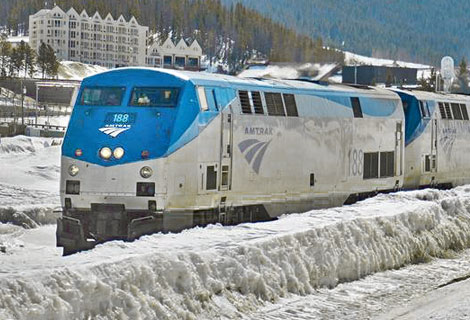
The newly Revived Winter Park Express. All Aboard! Credit: Amtrak

The newly revived Winter Park Express. All Aboard!
Credit: Amtrak

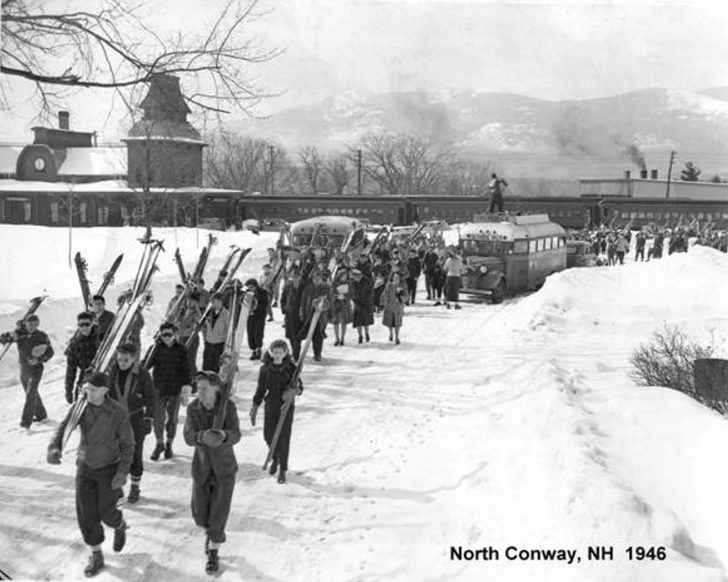
Remember ski trains? Back in the day, trains were the way to get away from the city and into the mountains.

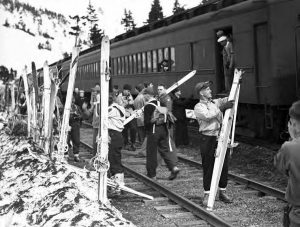
Skiers unloading in Grandview, circa 1946.

Skiers unloading in Grandview, circa 1946.

Denver skiers were thrilled last March when the ski train resumed service from Denver to Winter Park, CO, to help celebrate the ski area’s 75th birthday. Officials had ended the service in 2009 due to expense and liability. But regular weekend service resumes for the 2016-17 season Jan. 7. www.amtrak.com/winterparkexpress.

Adios to I-70 and the dreaded “red snake” down from the mountains, slick roads, zero visibility, death grip on the steering wheel, leaving you wondering whether it’s OK to use the runaway truck lane yourself.

Ski trains make a lot of sense for us seniors. Go ahead relax, get up and walk around, visit the dining car, arrive rested not rattled, and perhaps meet some fellow comrades to ski with. Then, on the way home, knock down a Mountain Stream Ale, no need to keep your wits about you. Plus, Amtrak offers seniors 62 years of age and older a 15 percent discount.

Here are some other “ski trains” to help you get right to the lifts car-free:

* Salt Lake City skiers have to be the most spoiled skiers in skidom with major resorts like Alta, Snowbird, and Park City a 45-minute drive from downtown via car or bus. But why not take the train? The UTA Front Runner rail service takes skiers from downtown Salt Lake’s North Temple Station to Ogden in less than an hour for skiing at Snowbasin or Powder Mountain. www.rideuta.com

* Lake Tahoe skiers and riders in California can ride the Polar Express that goes from Emeryville/San Francisco Amtrak station to Truckee in about five hours later to nearby Northstar. The scenic ride through the snow-swept Sierra Nevadas sure beats I-80 closures due to snow. No need to “seek an alternate route.” www.amtrak.com

* Leave your car at home and take the Downeaster to Portland, ME from Boston. From there a shuttle from the Bethel Inn Resort will meet you at the train station and whisk you off to Bethel and skiing at Sunday River.

* Wachusett Mountain in Princeton, Mass., encourages you to “Ski the T.” New this year Boston skiers and snowboarders can take the commuter rail (ski racks included) from Boston’s North Station to the new “Wachusett Station” only ten minutes from the mountain. On weekends, a ski shuttle will meet you there. www.wachusett.com.

* In the Adirondacks in upstate New York, the Gore Mountain Ski Train connects Saratoga Springs to North Creek and a free shuttle bus takes skiers from the North Creek Station to Gore Mountain’s Base Lodge Friday-Sunday. That service started a few years ago after a 50-year hiatus. Does anyone remember riding this train back then?

* Amtrak’s Vermonter hauls skiers and riders to Brattleboro where they can hop on the free local MOOver shuttles to the Mt. Snow base lodge or various local inns. It’s easy – just tell the driver where you need to go and the driver will be sure you connect with the right bus.

* Amtrak’s Ethan Allen Express takes car-free seniors from Penn Station to Rutland, VT. The Killington Express Shuttle will pick you up at the depot and take you your final half hour to Killington.

Riding the rails has a long tradition in skidom, and the appeal is still strong.

Thanks to www.liftopia.com for some of these route suggestions.

[Editor note:  Thanks to the Canadian Ski Instructor Alumni Association for passing long this “lost footage” of real ski trains from 1939. From the Governor Francis P. Murphy Estate.]

Ski train unloads in North Conway, NH, circa 1946. Credit: Dick Smith

Ski train unloads in North Conway, NH, circa 1946.
Credit: Dick Smith


The Value of Guided Skiing

Try It, You’ll Like It OR Let Me Toot My Horn.

Ski Guide Peter McCarville, who lives in western Colorado, assumes a pose at Snowmass. Credit: Peter McCarville

Ski Guide Peter McCarville, who lives in western Colorado, assumes a pose at Snowmass.
Credit: Peter McCarville

When I tell people that I am a guide for skiing and hiking I, basically, receive two different responses. The first response goes something like “cool, I want your job, ….”. The second response goes something like “why does someone need a guide for skiing, that sounds silly….?”. I definitely like the second question because it is an opportunity to make my case for hiring a guide when skiing anywhere in the world. I know it is popular and common to hire a guide for heli-skiing or for skiing off-piste in Europe, but I want to make the case for hiring a guide or going with a guided group when on a domestic (US) ski trip.

In March 2016,  I met some friends in Summit County, Colorado, to ski at Copper and Breckenridge. I have not skied at these places in years but considered them my home mountains when in my 20s. I generally am a very good route finder and have good orientation skills. Hell, I am a geologist by profession and a guide in these kinds of terrains with guests! On this trip, however, I found that I was having lots of trouble finding the best terrain and snow for my interests. I just could not remember the mountains well enough to maximize my fun. In addition to the snowstorm we were skiing in, there were some new high peaks at Breckenridge that I had never skied. Combine that with thin cover (although we just had 36” of snow in three days) and flat light, and I found myself tentative on some of the slopes. My buddy, with whom I was skiing, considered Breck his home mountain. However, he is my stockbroker, not a guide. At numerous times, we were lost and not in the bowl he thought we were in. Once he lacked the information to tell me about the thin cover on a line I was skiing, and I had a nice chat with some shallowly buried rocks at about 30 mph. Also, the lines at the lifts! Why are we at this lift, I said to myself. OK, I should have known; weekend in March, Breck, Spring break, and he is a broker, not a guide.

As a guide, I show my guests the best line to ski on a hill. I describe the fall line, the band of rocks to avoid, and where the lift lines aren’t. I also look out for their safety as well as many other small helps.

Although ski guiding in Europe is quite common, in the US we have very few listings of guides for skiing. Backcountry guides are available via companies that provide Mountain Guiding Services. The best ways to engage a ski guide at a ski area for the day or longer are: 1) word of mouth, 2) a search service like toursbylocals.com, or 3) a mountains’ concierge service. The free on-mountain guiding services, offered by larger ski mountains, may be short in duration, but just may suit your needs.  On the other hand, a personal, paid, guiding service is a completely different experience. Remember, a guide is worth his or her weight if they place YOU on the right terrain and snow conditions, in an unfamiliar area, to meet your skiing ability. And, keep you safe doing it.


Where Seniors Can Ski For FREE: Huff Post

108 Ski Resorts In North America Recognize Seniors With Free Lift Tickets.


SeniorsSkiing.com’s co-publisher Jon Weisberg has another article on Huffington Post, this time describing where seniors can ski for free or for very little money.  [NOTE: You can only download this list from SeniorsSkiing.com. There is no download link in the Huff Post article.  See instructions in BOLD below.]

We are told by ski industry veterans that free skiing for seniors used to be much more widespread. However, a decade or so ago, some resort owners decided that they would rather cash in on seniors rather than gift them a ski lift ride in recognition for years of loyalty to the sport; big discounts and free skiing were gone.

From this list of 108 North American ski resorts, it appears that some more enlightened resorts might be swinging the pendulum back to free skiing.  Sure, some of these resorts are small- or medium-sized, but they are attracting seniors, filling lifts, especially mid-week, and perhaps hosting their families.  The impact of having a loyal group of seniors gathering at the lodge, skiing together, having lunch, staying occasionally for dinner is a huge positive for a ski resort.

Part of our mission at SeniorsSkiing.com is to show the industry the value we bring to their businesses beyond passes and tickets.

If you ARE a subscriber to SeniorsSkiing.com, you can download the list of resorts that offer free skiing by going to the top menu, click on COMMUNITY, then click on SUBSCRIBER-ONLY CONTENT.  In the drop down menu, you will find the list of resorts.  Re-enter your email address, and you can download the file.

If you ARE NOT a subscriber, sign up.  It’s totally free, and we have strived to bring our readers value in the form of ski recommendations for seniors, discounts from top brands, and a collection of historic ski posters from the International Ski History Association.  All free and focused on helping seniors continue to enjoy the outdoors and snow sports of all kinds.


SeniorsSkiing Guide: Mt. Bachelor, OR

New Lift Opening On Dec 16 Makes Mt. Bachelor Sixth Largest In US.

The powdery slopes of Mt. Bachelor await skiers at the top of the new Cloudchaser Express lift. Credit: Jon Tapper

The season seems to go on forever at Central Oregon’s Mt. Bachelor, where Pacific storms dump huge annual totals, and the upper-elevation slopes hold onto the snow.

From November to late May, Mt. Bachelor keeps the lifts spinning for an ardent group of skiing faithful.

Among them are some dedicated seniors.

John Flynn, 66, of Sunriver, Ore., logged 190 ski days last season, and he’s busy skiing nearly every day this year.

“I just love it there,” says Flynn. “You pull into the parking lot, andyou’re in paradise.”

A view of Mt. Bachelor from the West Village parking lot.
Credit: John Nelson

Art Vinall, a Bend artist, is another senior keeping his slope dreams alive. At age 98, he’s still shredding at Mt. Bachelor.

“It’s a darn good mountain, and they usually have great snow. I learned to ski in the East, where it’s always so icy. This is so much better,” he says.

Mt. Bachelor is growing larger this year with the opening in mid-December of the new Cloudchaser Express lift on the mountain’s southeast side. The resort now has more than 4,300 acres of lift-served terrain, making it the sixth largest ski area in the U.S.

Snow, terrain and more

  • Location: Bachelor is about 22 miles from booming mountain town of Bend, Ore., on the Cascade Lakes Scenic Byway.
  • Snowfall: The volcanic slopes of Mt. Bachelor receive 460 inches a year, and with a base area elevation of 6,350 feet, the snow hangs around well into spring.
  • Terrain, lifts: About 50 percent of the mountain is rated intermediate or easy; 50 percent is rated most difficult or extreme. Most of Bachelor’s lower slopes are rated intermediate, making it “a great family resort,” says Stirling Cobb, marketing and communications manager. Seven of the resort’s 11 chairlifts are high-speed quads, handling large crowds easily on big days.
  • Vertical: 3,365 feet from Mt. Bachelor summit (9,065 feet) to the base of the Northwest Express lift (5,700 feet).
  • Nordic: Bachelor offers 56 kilometers of trails, with high-quality upper-elevation snow in a wilderness setting.

Lot to lift access

  • Parking: Three sprawling parking lots serve the Mt. Bachelor complex. The main lot is at the West Village and offers a gear drop-off zone. Close-up, permit parking costs $20 per day.
  • Public transportation: Bachelor Shuttle operates regular bus service between Bend and the resort.
  • Accommodations: No accommodations at the base; stay in the happening town of Bend, with an amazing selection of lodging, dining and shopping.

Culture

  • The vibe: Outdoorsy Oregon meets upscale resort. Nearby Bend is a popular tourist destination and is known as “Beer City, USA” for its love of craft brews.
  • Dining: Beyond the base day lodges, consider eating at the mid-mountain Pine Marten Lodge. It’s in a beautiful location just above treeline and houses a sit-down cafe, Scapolo’s (Italian for “Bachelor”).

Bottom line

  • You’ll pay for all that lift-capacity and vertical: Adult passes are $92. Seniors (65-69) are $76, and Senior Plus (those 70 and older) are $52.
  • Bachelor has it covered from every angle. It’s a high-end resort with lots of well-groomed, family-friendly runs, but also offers challenging steeps on the upper mountain.
  • This may be the best resort anywhere for spring skiing, where you can grab some turns in the morning and choose another activity (name it: mountain biking, kayaking, golfing, fly-fishing, beer-drinking) in the afternoon.

Trail Map Click Here

Webcam Click Here

A skate-skier glides on the trails at Dutchman Flat near Mt. Bachelor.
Credit: John Nelson

Whisper Ridge: 100 Square Miles Of Snowcat Skiing In Utah

It’s New This Year And Something To Shout About.

Helo to cat, cat to snow fields, skiing and glamorous camping, aka “glamping”.
Credit: Whisper Ridge

It’s the largest backcountry resort in the country: 3,300 feet vertical, 300+ average inches of snow, and luxury yurt “glamping.”

Check your bucket list. Better add Whisper Ridge. Peace, quiet, the hush of snow, make your own tracks, and the vastness of mountain ranges virtually to yourself.

Are you drooling?

Whisper Ridge is located about 60 miles north of Salt Lake City and close to Ogden, Utah. More specifically, this heavenly skiing is between towns appropriately named Eden and Paradise – names given by early settlers.

The area is so remote that Whisper Ridge flies its guests by helicopter to the cat base and from there it’s cat skiing from eight custom PistenBullys until your legs fall off. Then it’s overnight glamping in well appointed yurts.

Roughing it in a Whisper Ridge yurt. Yes, it’s a yurt.
Credit: Whisper Ridge

But how did 100 square miles of skiing go unnoticed until now? It began with owner Dan Lockwood’s vision. His environmental education and life-long career of land management on several continents was the spark. Locally, he was saddened that ranches that have been in families for eons were being chopped up and sold to developers. He wanted to make an impact.

Lockwood owns a portion of the land, and with the cooperation of adjoining landowners, he put together the 100 square mile tract of ridges, forests and meadows.

One day several years ago, Lockwood was skiing fresh, untracked snow with his son Cort. They stopped for a rest, and Lockwood asked: “Do you know what’s wrong with this?”

“There’s nothing wrong with this,” Cort told his dad. “This is perfect.”

But Lockwood continued. What’s wrong is that we aren’t sharing this with anyone, he said.

And thus Whisper Ridge was born from Lockwood’s passion to preserve the land and share the untouched wilderness experience with others. Last year was a test season. This is its first year of operation.

Check the video below or click here to whet your back country appetite.

For more information and reservations, click here. 

To read more from Harriet click here for her stories on SkiUtah.

Whisper Ridge Cat Skiing from Whisper Ridge Cat Skiing on Vimeo.

Find Ski Buddies Near You Through NSCF

Now Our Readers Can Pinpoint Local Ski Clubs. Check Out Their Events And Activities.

Clubs rule. Ski with friends and the fun begins. Austria circa 1920s.

In Flying Solo, a recent article by XCSkiResorts.com publisher Roger Lohr, the joys of solitary skiing, nordic or alpine, are highlighted.  From the comments, many readers agree.  There are definitely benefits to going at your own speed, especially when you ski with people whose skills are at different levels.

On the other hand, wouldn’t it be great if you could find like-level companions to ski trip with? Share costs, enjoy group discounts, even socialize and form friendships with? Well, in last spring’s Subscriber Survey, we found that 49.33% of respondents wanted to find other skiers in their region to ski with.  That’s a huge need we identified in the senior sport sport enthusiast population.

With those needs in mind, we approached the National Ski Council Federation to see if we could work together to bring its resources together with our subscribers search for ski pals.

The National Ski Council Federation is an umbrella organization that serves 29 ski council across the US, providing communications, education and benefits to member councils.  Those councils are comprised of many ski clubs with a total membership of about 300,000 folks.  These ski clubs plan trips, both locally and to distant resorts, providing serious discounts on lift tickets, instruction and other expenses. You can decide to join a club or join a club’s trips to see if membership might be for you.

If you want to check out ski club activities near you, just go to SeniorsSkiing.com’s top Navigation Menu bar, click on COMMUNITY, then pick FIND SKI BUDDIES WITH NSCF.  There you will find a map you can click on that will take you to the NSCF site where you can drill down to discover ski clubs in your region, state, and city. From there, you can identify a club officer’s email.  Connection made.

Now don’t be shy.  Ask a friend to join you.  This might open up a whole new and improved snow sport experience.

All of this is offered to SeniorsSkiing.com readers, including non-subscribers, at no cost.

Special thanks to the National Ski Council Federation executives who worked with us to create this link.

The National Ski Council Federation can connect you to a local ski club.


New England Ski Museum Tells 3,000 Years Of Ski History

From The Stone Age To Today.

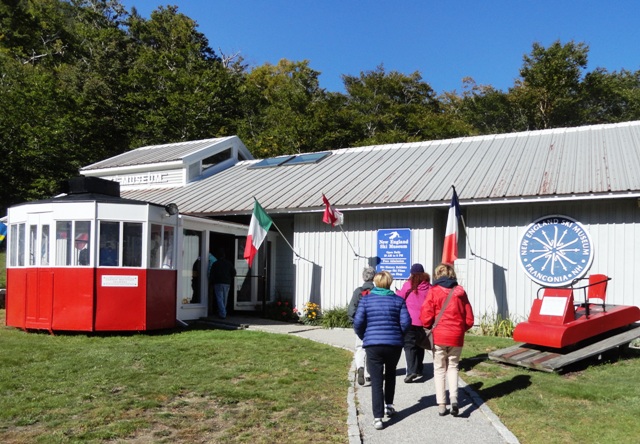
The tiny museum in Franconia, New Hampshire is located next to Cannon Mountain’s gondola base, and it’s a wonderland. Even before you enter, you’re intrigued by what you see just outside the door and you ask yourself: “What’s that thing?”

New England Ski Museum is located at the base of Cannon Mt., NH. Credit: Harriet Wallis

New England Ski Museum is located at the base of Cannon Mt., NH. Antique gondola car guards entrance. Credit: Harriet Wallis

The big red boxy thing is one of Cannon’s original tram cars from 1938. “Eeegads,” you say. “They went up the mountain in that?”

2-alg-skisThe sled-looking thing was Cranmore Mountain’s idea of an uphill lift. Skiers sat in the sleigh, and it was hauled uphill on a trestle.

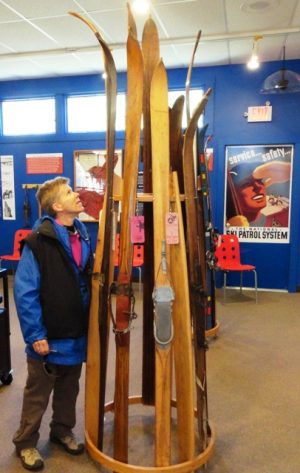
Inside the museum, “We show how skis evolved from the stone age — to a slab of wood with a leather strap — to modern skis,” said Executive Director Jeff Leich.

And exhibits show milestones: the 10th Mountain Division, the founding of the National Ski Patrol, and a display of the funky clothes we wore not so long ago.

The museum’s name is misleading. This wonderful Ski Museum happens to be located in New England, but it covers skiing across the country.

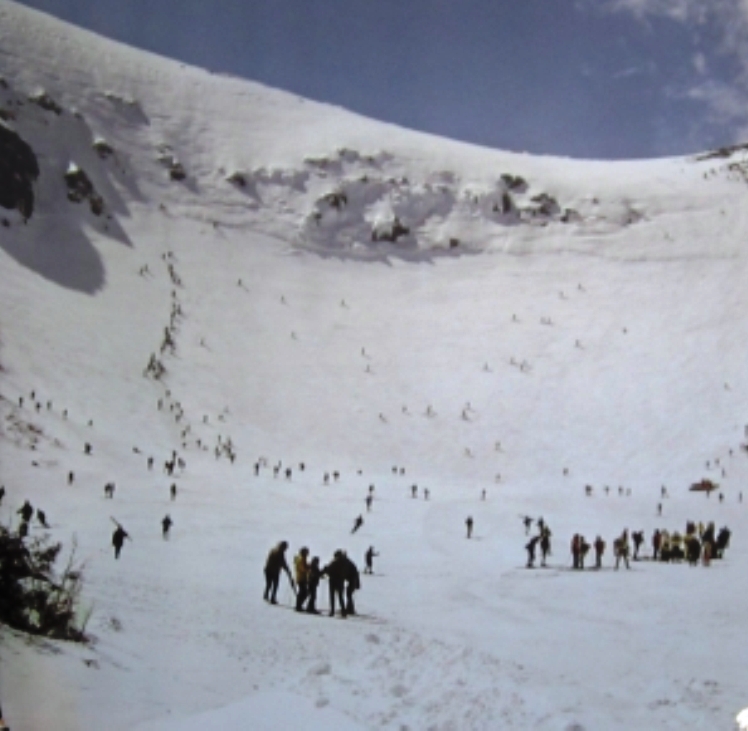
And when you’re all revved up, you come face to face with skiing Mt. Washington’s Tuckerman’s Ravine. It’s New England’s highest peak and is known for having the world’s worst weather. Actually, it’s a photo that covers an entire wall, and you feel like you’re right there. It stirs memories of hiking up the trail for hours. Lugging your skis all the way. Then clobbering up the steep slope to make a run for bragging rights.

This museum is a “must see.”

This photo of Tuckerman's Ravine on Mt Washington occupies an entire wall. Credit: NESM

This photo of Tuckerman’s Ravine on Mt Washington occupies an entire wall.
Credit: NESM

Ski Gifts and Collectibles

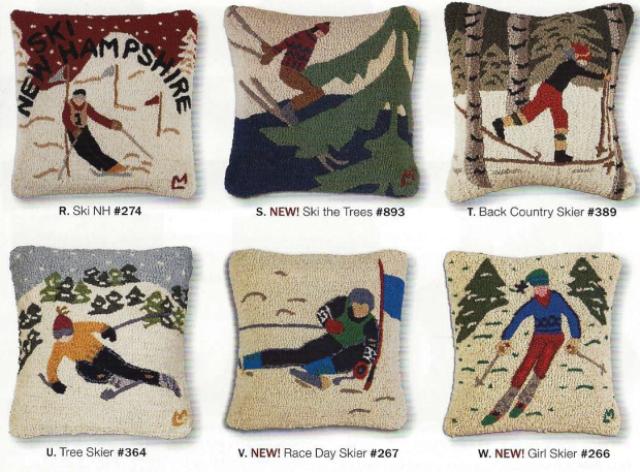
The NESM online catalog has something for everyone on your gift list. There are books and posters, jewelry, pottery, pillows, belts, children’s gifts and much more. Images are taken from history and will satisfy any skier’s wish list.

These beautiful pillows are

These beautiful pillows capture the spirit of the sport.  There are many other gift ideas in the NESM catalogue.  Credit: New England Ski Museum

Consider membership

Even if you can’t get to the museum, membership brings you a beefy, quarterly, 24-32 page journal full of archaic photos and stories that will keep you inspired and informed. An individual membership is $35 a year.

For more information and to shop the catalog online, check here.

To read more from Harriet click here for her stories on SkiUtah.


Who’s Open, Opening, And When?

How To Find Out Where The Snow Is Without A Lot Of Clicking.

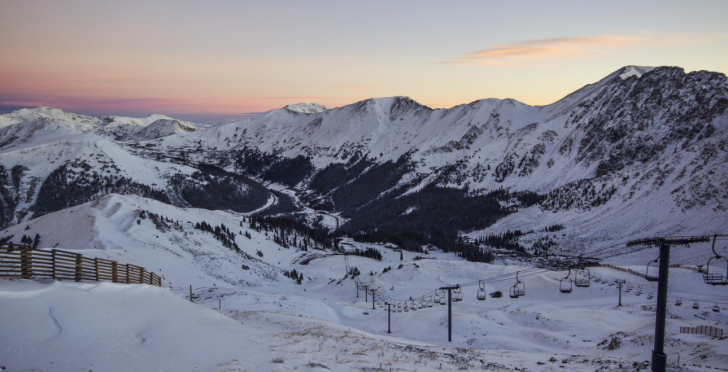
Arapahoe Basin this morning (11/23) via webcam.

Arapahoe Basin this morning (11/23) via webcam.

A reader’s question came in yesterday.  He said: “You would do us seniors a service if you listed what ski areas in New England were opening early now that we are getting snow.”

Great question, and here’s the answer. And let’s go beyond New England.

States where skiing is a major attraction have non-profit associations that promote resorts within the state.  So, the first places to look are those websites. Search for their sites for a menu item something like, “Areas and Conditions,” or “Current Conditions”.  For example, here’s a sampling of state association sites from different regions:

New England: Ski New Hampshire, Ski Vermont, Ski Maine.

Mid West: Ski Michigan, Ski Wisconsin

Rockies: Ski Utah, Colorado Ski.

Far West: Ski Washington, Ski Oregon, California’s Lake Tahoe Region.

There are many more, but you get the idea.

Even more efficient, go to the sites that aggregate snow conditions nationally and even internationally.  Here are four big ones; there may be others:

Powderhounds.com, Ski Central.com, OnTheSnow.com, Liftopia.com, and SnoCountry.com which also has cross-country resort listings.

As you are probably aware by now, if you buy online several days before you go, you will get a discount off the walk-up price for a lift ticket.  And don’t forget to check discounts at Mike “Bear Trap” Warner’s Seniorskideals.com.

Killington, VT, will host FIS World Cup on 11/26-27. Here's view this morning (11/23) via webcam. Making snow.

Killington, VT, will host FIS World Cup on 11/26-27. Here’s view this morning (11/23) via webcam.


Here Comes Winter: From Mt. Washington, NH

Home Of Big Time Extreme Weather Looks Over Dramatic Moving Clouds.

screen-shot-2016-11-16-at-1-08-30-pm

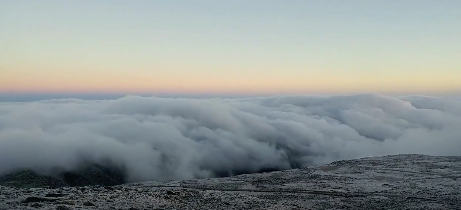
Mt. Washington is the Northeast’s highest summit.  At 6,288 feet above sea level, the mountain is a mecca for campers, hikers, and fast-changing weather conditions.  This video was taken from the Observatory on the summit in late October this year.  It reveals an “undercast”—opposite to overcast—as the dawn sun warms it up and it begins to move.

Watch while meditating. Or just watch.  We love mountains.