Little Lyford Pond Camps: Companionship, Adventure and Hospitality in the Maine woods

Long-Time Friends Take To The Maine Woods On An XC Adventure.

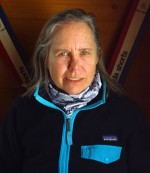
Steve Hines (R) and his pals venture into the AMC’s wilderness camps every year.
Credit: R. Boucher

A fresh three-inch snowfall covered the winter parking lot as we arrived for our annual winter ski trip. We felt a quiet confidence as we loaded gear into the gear shed for transport to the Appalachian Mountain Club’s (AMC) Little Lyford Pond Camps (LLPC). The camp is on the outskirts of Greenville, Maine. At about 9:30 that morning, we put on skis and shouldered day packs for the 6.8 mile trip from the parking lot to the camp. The four of us—ages 63 to 70—are all experienced outdoorsmen.

Head of the Hedge Hog Gate Trail into the LLPC. Credit: R. Boucher

Trips like this were not new to my group of friends. But, what makes people our age want to continue to take adventures like this? Hadn’t we all earned our rest? Shouldn’t we be shopping for “over 55” living arrangements? Perhaps the answers would be revealed during the week.

AMC owns three camps which are on land the club purchased near the Katahdin Iron Works region in north central Maine. The camps had been fishing and hunting camps for “sports” from Portland, Boston and New York, typically wealthier men looking for a respite from their harried lives in large cities. LLPC opened in 1873 during the so-called gilded age in America. These were the days of JP Morgan, the Rockefellers and the Carnegies. Now, the three camps: LLPC, Gorman Chairback, and Medawisla are all updated and modernized for 21st century adventurers.

LLPC was our destination this time, and the only way to get there is to ride a snowmobile or ski in on either Hedgehog Gate XC ski trail or the KI Road (logging road) to Upper Valley Road to the camps. Either way, the conventional wisdom is that intermediate skiers have the best time but beginners beware. Two of us decided on the trail and two on the roads thereby observing the “never ski alone” rule.

LLPC at twilight. The AMC maintains three wilderness camps in Maine. Credit R. Boucher

A few hours later, we four were reunited at the lodge at LLPC having lunch and telling stories. The staff at the camp were all on the job less than six months but were eager to please. In a short time, they’d become veteran innkeepers. Food at LLPC ranges from good to excellent, and we all found plenty to eat. The camp staff also accommodates special needs like vegetarians and gluten free. Trail lunches are provided as part of your stay.

The trail system around LLPC is extensive also ranging from comfortable “kick and glide” trails to challenging, ungroomed trails like Gulf Hagas.

Cross Country skiing isn’t the only winter sport enjoyed in the area around LLPC. Snowshoeing is also popular too. And the Lodge has snowshoes to loan.

While we had many conversations around our wood stove over the course of our stay, there were no clear answers to the existential questions listed at the beginning of this article. We did agree, however, that we all look forward to our next winter adventure.

Snowshoeing around the pond at LLPC. Credit: R. Boucher

Pomerelle Mountain Resort: Vintage Family Area Named for a Favorite Wine

I recently visited Pomerelle Mountain Resort, a smallish ski area in the Sawtooth National Forest, 75 miles east of Twin Falls, Idaho.

It’s about 25 miles from the Interstate. You get there driving through a long, flat valley and small villages (e.g. Albion, pop 300) before turning onto a road that climbs to the 8,000′ base. Lodge, lifts, and trails are easily accessible from the lot.

Pomerelle typically gets 500″ of snow! Even during this relatively meager season, it’s doing well. About a foot had fallen overnight. Two triple chairs provide access. A long magic carpet serves a dedicated beginners area. The mountain offers 1,000′ of vertical, mostly green and blue. There’s ample tree skiing.

Pomerelle Mountain Resort. Photo: OnTheSnow

There’s also an outstanding school which has taught tens of thousands of people to ski and board. “I tell my friends over at Sun Valley to be thankful for what we do here,” Barry Whiting told me. The 72 year-old has been Pomerelles’ Ski School Director for three decades. “It’s small areas like ours that introduce newcomers to the sport. They learn here and go on to explore Sun Valley and other larger resorts.”

Barry is probably correct, but I met numerous people who learned at Pomerelle and keep returning. In addition to lots of snow, the gentle terrain and lack of crowds appeal to families and older skiers. Prices are part of that appeal. If you’re 70, a day ticket is $25. Group lessons are $35 ($40 with rental) and privates are $60 an hour.

If I wanted to hone my skills with new equipment or following injury, Pomerelle would be on the list.

The lodge is sizeable with a kitchen serving really good basic food. It stays open late to feed night skiers. I didn’t visit the women’s restroom (obviously) but the men’s was clean and well maintained.

Displayed behind the cashier are three bottles of Pommerelle, a long-discontinued brand of fortified wine. The early developers liked it so much that they’d toss bottles in the snow. People who found them got to enjoy the fruity stuff. They decided to name the area after that tradition, dropping one of the ‘m’s.

Even though I didn’t find the terrain challenging, I did find it interesting. I can’t say that for most gentle slopes and trails in other places, but there was enough vertical for a good workout and enough acreage to keep my attention for the time I was there.

Drift Inn, Rupert, ID

There are places to stay in nearby Albion and in Burley, 28 miles away. I chose Drift Inn in the small town of Rupert. It’s in a turn-of-the century National Historic Register bank building across from the town square. Its six rooms and suites are tastefully done. On the ground floor is Henry’s, a full bar and restaurant. Across the square is Sophie’s Chatterbox, known in the area for breakfast.

There’s a certain magic associated with uncrowded, out of the way ski areas that get a lot of snow. Older skiers looking for interesting, gentle terrain, great value, and friendly, old-fashioned hospitality should visit Pomerelle.

Pebble Creek: A Locals Area That Deserves A Visit

Many readers have expressed interest in learning about lesser-known areas.

When I mentioned that to a representative of Visit Idaho, he suggested visiting Pebble Creek and Pomerelle, both in the southern part of the state.

First stop was Pebble Creek, 2,200′ of impressive vertical not far from Pocatello. I skied there two days and stayed nearby in Lava Hot Springs, at the Aura Soma Lava.

Pebble Creek has about 1,100 acres of green, blue, and black in the Caribou National Forest. The base sits at 6360′. It’s a wonderful place with terrific trail, bowl, and glade skiing served by three chairs. I was fortunate to visit right after a dump, because at the time, the area, like others in the region, was behind reaching its typical 250″ total.

For almost seven decades (2018-19 will be its 70th season), Pebble Creek has been the teaching and gathering place for residents of Pocatello and the surrounding area. It has a friendly vibe. I was there on a Friday and Saturday. Friday is when kids from far and wide arrive in school busses for a day of instruction. Under the guidance of Mary Reichman, longtime owner and GM, the program has introduced skiing to children of all economic backgrounds. Because of the area’s generosity, many children from challenging circumstances have learned how to ski or board.

On the road to Pebble Creek near Pocatello

A new owner recently entered the scene. Shay Carl is a 38 year old who made a bundle in an Internet venture, returned and bought his hometown area. He has the resources and plans to introduce upgrades. His brother-in-law, Mike Dixon, is the new GM.

I have a recommendation for readers who want a low key, off the beaten path experience: Fly into Pocatello (flights from Salt Lake City and elsewhere), rent a car, stay at Lava Hot Springs or Pocatello (I tried both), and ski a few days at Pebble Creek. It’s a real bargain. If you’re 66, the day pass is $32. Stay at any hotel in Lava, and you’re entitled to two passes for the price of one!

Lava Hot Springs at night


Lava has a state park with multiple odorless mineral water pools, one hotter than the other. Sit there for 20 minutes and any ache or pain you brought from home or hill disappears. If the pools don’t do it, the massage services at Aura Soma Lava or other places in town will. While there, dine at Port Neuf Restaurant or River Walk Thai. For breakfast, the Chuckwagon is outstanding. Pocatello is bigger and with more lodging and restaurant options (the new Fairfield Inn and Suites sits on a hill overlooking the city). It’s also the home of the Museum of Clean, a 75,000 square foot facility dedicated to the history of cleaning. A quirky idea, well worth the visit.

Outside its Pocatello fan base, Pebble Creek is not well-known It has terrific terrain and, except on Fridays when the kids descend, you’ll have the place to yourselves.

I’ll cover Pomerelle Mountain Resort next week.

Eating Salt Lake City

Staying in Salt Lake City (or Valley) is an excellent option to explore Alta, Snowbird, Solitude and Brighton. Ski City USA offers good value (many hotels include a Super Pass with the room), public transportation to the resorts, and a broad range of restaurants and entertainment venues.

Here are some favorites. Check websites for hours and addresses.

Breakfast

For a quickie on the way to the mountain, Tulie Bakery or Eva’s Bakery, downtown serve excellent baked goods.

Sweet Lake Biscuits and Limeade is more leisurely. Egg dishes with house made biscuits and gravy are worth the visit.

Lunch and/or Dinner

Spitz serves fresh and substantial salads and first-rate doner kebab.

Most repeat SLC visitors head for Red Iguana, the venerable and superb Mexican not far from downtown. The downside is no reservations for small parties and long waits. Go around 8:00PM to avoid crowds.

On weekends Dim Sum House serves dim sum that stands up to similar places in San Francisco and New York. It’s large, loud and delicious.

For Vietanmese pho and banh mi sandwiches try one of the Oh Mai locations. One of the better Thai places is Skewered Thai.

Scattered around the valley are numerous local counter-service fast food hamburger places with names like Hires and Astro Burger. A favorite is Crown Burgers.

No one leaves The Copper Onion unhappy, unless they had an overly long wait. Avoid the line with a reservation. The American cuisine is consistently excellent. A block away is Taqueria 27 serving gourmet Latin street food and tequilas.

Several Japanese restaurants are available. My favorite is Kyoto. It has a friendly and fresh sushi bar.

For wonderful Indian or Nepalese food in an attractive location visit Himalayan Kitchen.

Among the pizza places, Settebello is within walking distance of most downtown locations. The Pie near the University of Utah requires a car. It is underground and abuzz with students.

If you’re in the mood for a beer and burger, Lucky 13 is one of several options. It’s a dive bar where you’ll get a glimpse of a colorful segment of locals. The Garage is a set on the edge of the gasworks on the north edge of town. Interesting bar food and live music.
Entertainment

There’s a lot of it in SLC, a stop for most touring groups. When checking listings for downtown venues, don’t overlook free Thursday evening concerts at Gallivan Center. The Excellence in the Community series showcases local talent. I’ve never been disappointed.

There’s Silver In Them Thar Hills!

Park City: Visit Silver Mining Museum Sites On Skis.

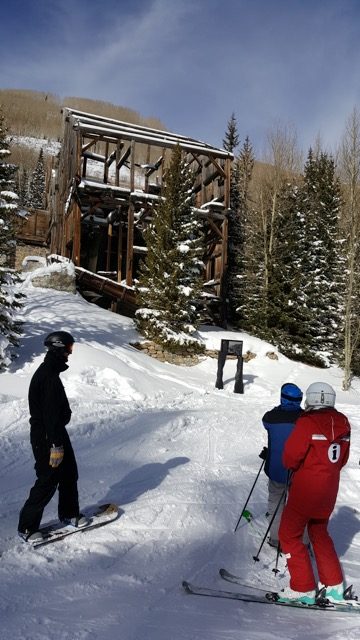
California-Comstock mine shaft entrance
is on the tour. Credit: Tamsin Venn

Led by Utah’s Park City Mountain Resort guides, the new Silver to Slopes tour skis you to various relics of the mining history scattered throughout beautiful scenery. More than 1,000 miles of tunnels lie beneath the slopes here.

We ride up the McConkey Express with our amiable guide Jim Brown. He notes the tunnels buried beneath the lift once served to drain water from mining operations. Yikes.

“There are some things that can go wrong when you are skiing Park City, Utah, but falling down a mine shaft is not one of them,” says Jim reassuringly. (They are all capped. EPA tests the tailings every summer.)

Brown, an effortless skier and keen historian, has brought along a briefcase of old photos to further illustrate the tour. He is one of those transplants (from Florida) who skied Park City on vacay and never left. Ditto our sweep, Debrinne Ferguson from Los Gatos, Calif.,

In 1963, United Park City Mines, the last active operation in Park City, opened Treasure Mountain Resort on the 3,700 acres it owned. Relying on mining engineering know-how, it put up J-bars, a gondola, and even a Skier’s Subway. The segue from silver mining to ski mecca is evident all around you.

First stop is the Silver King Mine’s Head Frame Building, at the base of the Bonanza Express, closed in only 1953. Miners started digging the 1,450-foot-deep shaft in 1890. The only female mine owner, socialite Susanna Bransford, alias the Silver Queen, made her fortune here. You can ski her nearby namesake trail.

Next stop the King Con Mine Ore Bin sitting to one side of Claimjumper. The Silver King Consolidated Mine, not to be confused with Silver King Mine, built the 1,800-foot deep Bogan Shaft here. The nearby King Con lift serves an intermediate’s paradise and is named for the mining company, not the giant gorilla, as many think.

We ride the Silverlode Express past the Quicksilver Gondola, which has linked Park City to The Canyons as part of Vail Resort’s recent $57 million upgrade. At the new Miner’s Camp restaurant here, The Pickaxe Pub displays authentic ore picks, in keeping with the general theme.

Next we ride McConkey’s Express to access the Georgeanna trail that follows the ridge past one of the best views on the mountain: Mt. Timpanogos (11,753 feet), Heber Valley, the town of Park City, the Uinta Mountains, and the top of Deer Valley’s Lady Morgan chairlift.

Mid-Mountain Lodge was once a boarding house for miners (1897) and relocated from the bottom of the mountain to save it from demolition.
Credit: Tamsin Venn

We stop at Mid Mountain Lodge, once a boarding house for Silver King miners (1897), next used by the U.S. Ski Team (1973-75), now a popular lunch spot. Scheduled for demolition, a group of locals had it hauled up the mountain to this spot in 1987. Hurray for recycling.

At the bottom of Thaynes lift is the famous California-Comstock Mine and 1,700 feet below via the Thaynes Shaft is the West End Tunnel where skiers used to ride the Skier Subway to access the Thaynes lift in the early days of Treasure Mountain. The ride took about 25 minutes. Most skiers did it once for the novelty, once for the kids, and that was it, notes Brown. Here’s a video of what has to have been the most unusual lift in ski country.

https://www.youtube.com/watch?v=K1aUSYfvehE

The two-hour tour takes place on intermediate trails and departs daily from the Eagle statue in Park City Mountain Village at 10 a.m. and from the Bonanza Summit trail map at 1 p.m. Just show up. The tour also helps you get oriented at this mega resort. Donate to preservation efforts at  Friends of Ski Mining History.

For more information, ParkCityMountain.com

The Pickaxe Pub with display of vintage tools is a good place to wrap up the tour.
Credit: Tamsin Venn


SeniorsSkiing Guide: Taos—High, Dry, And Full Of Culture

Some People Say The Best Four Letter Word About Skiing Is “Taos.”

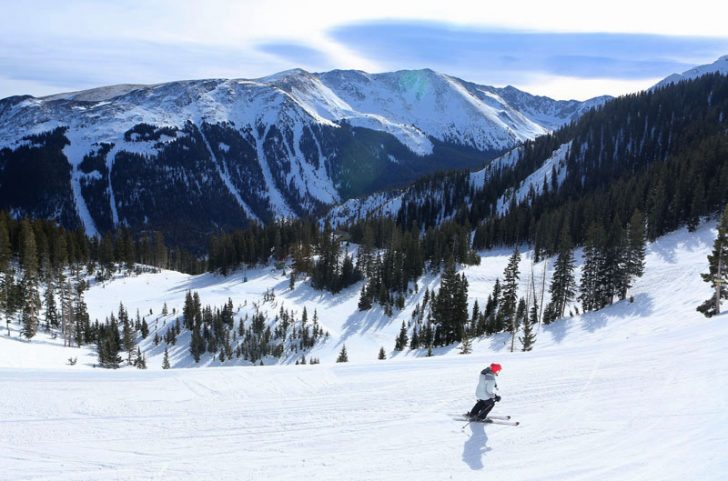
Big, high, dry, up in the sky: That’s Taos. Credit: Val E.

When I looked up at the main slope, I was speechless, then the words came—steep, moguls, trees. Wow. At 12,000 ft, Taos’ Mt. Kachina is close to the top of the World.

The resort is located in northern New Mexico, which one seasoned skier described as “a mix of a desert and mountains, unusual and beautiful.” The Blake family discovered, founded, developed, and an Taos Ski Resort since the mid fifties.

In 2013, new management built new lifts, hotels, and other facilities. The result is a cute, small, Euro-style village with an obvious French-Swiss touch and a huge mountain with well groomed slopes, moguls, cornices, glades, and trees almost up to the very top. Snow is quite dry there because of the altitude. Taos is a breathtaking resort in more ways than one; the town is the highest municipality in the US.

Secret Knowledge

Note single chair on left. Credit: Val E.

Kachina Peak is the highest peak reachable by a triple chair in the North American Continent.

Resort lodging options include hotels, condominiums, and bed and breakfasts. The new jewel of Taos is the luxury Hotel Blake, named for the resort founders. The interior is elegant, the restaurant is high-end, and the rental area looks like a high tech lab.

The Ernie Blake Snowsports School is one of the highest rated ski schools in North America. Ski instructing services for groups, especially for ski clubs, were quite reasonably priced.

One of the best parts, besides the slopes and snow, is super friendly employees. Ski lift operators and ski patrol people were waving and smiling like old friends. One ski resort host kindly ride with me just to introduce to the mountain.

Community

During my week stay at the resort, I talked to a few local skiers, some of them were from the 50+ category.

Here is what an expert skier, originally from Hollywood, said: “I moved to Taos after 16 years in Los Angeles in the film business. Taos is a ski town which has world class skiing and an ancient cultural heritage—one of the oldest in the US. It’s also an artist’s town and has dozens of galleries. Taos gives you access to a wider choice of restaurants and apres ski activities. It is great for couples where one doesn’t ski or who like cultural activities.”

A very confident female skier shared: “We came to live in Taos from NYC after years of skiing here. My husband doesn’t ski anymore. He wanted to retire in a friendly community with a synagogue. Now I ski Kachina peak almost every day.”

Another young looking retiree told me: “I am from St. Louis, flat country. I ski in winter and hike in summer. People come to Taos because you can be whoever you want to be, and nobody is asking questions here.”

Taos Ski Valley is a rugged mountain, pioneered by people who put skiing first and all else second. If Virginia is for lovers, then Taos is for skiers!

Taos By The Numbers

2.5 hours by car/bus from Albuquerque International airport

4 espresso bars, including one ski in, ski out

15 lifts

25 miles to Colorado

$105—one day adult ski ticket (18-64); $85—one day senior ski ticket (65-79); 80+ year old – ski free

$408 ski pass for 6 days (65-79); shorter day pass combinations are available

110 trails 55 for beginner/intermediate and 55 for advanced/expert skiers.

305 in—average annual snowfall

7,000 ft—Taos city altitude

9,207 ft—Taos Ski Resort

12,481 ft—Kachina Peak

Click here for Trail Map

Click here for Taos Ski Resort Website

Trees up to the top are a trademark of Taos. Credit: Val E.


SeniorsSkiing Guide: Smuggs Not Just For Kids

Smuggler’s Notch Feels Like Way-Back-When But With Up-To-Date Conveniences.

There are lots of blues at Smuggler’s for cruising seniors. That’s Stowe in the distance.
Credit: Tamsin Venn

Smugglers’ Notch is the well-known kid-friendly ski area in northern Vermont. That same dedication to fun also makes it a good area for seniors.

Start with the intermediate trails winding off the two upper Mountains—Madonna, 3,640 feet, and Sterling, 3,040 feet. They urge your skis to turn as they follow the mountain’s contours in delightful turns and drops.

Smuggs has the only triple black trail in the East—Black Hole— with a 53 degree slope angle.  But there are also many ego-boost blues like Madonna’s Upper Chilcoot and Drifter, where you turn where the trail turns, and Sterling’s Thomke’s, Rumrunner, Hangman’s, Treasure, FIS, and Black Snake.

Doable glades include Red Fox, Three Mtn., and several “variations” of the trail you are on. The goal here is to always let you have access to the woods should you so desire. Bring them on!

Glade skiing is well known here. When you ride up Sterling, you see Madonna’s wooded flank dropping into the ravine below. All those glades are skiable or snowboardable, says Public Relations Director Mike Chait enthusiastically.

Furthermore, all trails are well defined from top to bottom so no worry about ending up on a black diamond trail by accident and all trails funnel to their respective base areas for pro-choice group skiing.

Meanwhile, The Village Center at Morse Mountain is served by four lifts and 99 percent beginner terrain where you can ski at a peaceful pace.

Views? From the Catwalk, you can look across the Notch to Mt. Mansfield’s trails at Stowe. Remember when these two resorts were connected?

The experiences kindle feelings of New England skiing way back when, but with all the up-to-date conveniences. By not being overdeveloped, Smuggs maintains a nostalgic feel.

Somewhat remote (although only 30 miles from Burlington), midweek is quiet, and the powder stashes linger.

Seniors are looked after. The Smugglers’ Notch 55+ Club is a 26-year-old club that meets every Wednesday for skiing and camaraderie. It has more than 100 members, and about 30 to 35 skiers show up each week. Coffee at 9 a.m., followed by Alpine or Nordic skiing and snowshoeing, then a 1 p.m. program. Membership is $30 for the season, which includes continental breakfast, 50 percent discount off lift tickets, and other discounts.

Most members are Vermonters who live within an hour radius of Smuggs with a wide range of skiing ability, including ex ski patrollers and instructors. Guests and new members are warmly welcomed, says Deborah Pomeroy, club president.

New this winter is FunZone 2.0, a 26,000 square foot indoor playground, a $4.2 million investment reflecting the area’s decades-long focus on family fun. Laser tag anyone?

The Facts

Vertical Drop: 2,620 feet.

Total Trails: 78. 300 acres of marked and patrolled terrain. Plus 700 acres of unmarked and unpatrolled terrain. 19% easier, 56% intermediate, 20% expert, and 5% extreme.

Snowmaking: 62 percent

Total lifts: 8.

Longest run: 3 miles, from the Madonna summit to the Village.

Places to eat: Village Center, Morse Mountain Grille & Pub for salads, soups and burgers. Music: The Friendly Pirate

Lift tickets: Senior 65 and older, $58 day, $64 holiday. Season Pass: (ages 70+) $70

Click here for Trail Map

Click here for Smuggler’s Notch website


Salt Lake City

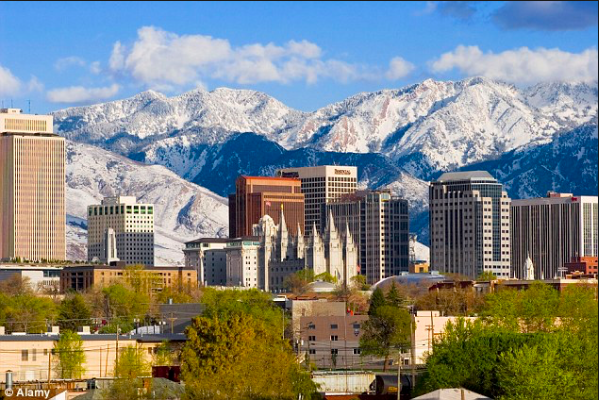
Salt Lake City: Ideal Base for Skiing the Wasatch

For many Western resorts this is the season when it’s best to stay on the groomed. There just hasn’t been enough natural snow to enter the woods with confidence.

The trail skiing I’ve done at the four resorts closest to Salt Lake City — Alta and Snowbird in Little Cottonwood Canyon and Brighton and Solitude in Big Cottonwood Canyon — have more than enough snow coverage to keep most skiers well-entertained, especially those who decide to stay downtown or somewhere in Salt Lake Valley.

Staying at a single resort when conditions confine you to the groomed and semi-groomed can get redundant. Being centrally located and visiting different resorts each day can be a more interesting option. Downtown has a lot going on. For those not wanting to deal with a car, there’s inexpensive public transportation to each of the areas.

Salt Lake City markets itself as Ski City U.S.A. Other municipalities use “ski city” when promoting themselves as Winter destinations. Salt Lake City is the real deal. A Delta hub. At the base of the mountains. Thirty, forty minutes from downtown hotels to 36 lifts serving almost 7000 highly skiable acres. Not to mention the state’s license plate slogan, “Greatest Snow on Earth.” This season being the rare exception to that P.T. Barnum knockoff.

Since I lived in Salt Lake City for the past decade and frequented the four areas, I thought that readers considering a Salt Lake City-based ski trip would benefit from some local guidance, which I’ll dole out in this and another article next week.

Super Pass and Alternatives

If you plan to stay in town or in the valley and ski Alta, Brighton, Snowbird and Solitude, consider purchasing a Super Pass or staying in a hotel participating in the Super Pass promotion. The Super Pass provides good savings on lift tickets and is flexible as far as number of days you choose to ski. The Ski City U.S.A. website shows numerous hotels that include a Super Pass in the price of lodging. Residence Inn Downtown, for example, charges $129.50 per person for a suite with kitchen and living room. The price includes two Super Passes.

You’ll need to do the math, but If you’re 80, you’ll ski free at Alta and enjoy deep discounts at each of the other areas.

What to expect if visiting at the right time. Photo: Steve Griffin

If you’re 70, you’ll pay $104 at Alta ($88-$99, if purchased in advance online) and $59 at Snowbird (mid-week). Brighton and Solitude discount their tickets starting at age 65. Brighton costs $52 – $57, and Solitude costs $61. Go online a day in advance and you may find better bargains.

Every Super Pass comes with free public transportation to the resorts. Depending on where you’re located it may be by bus alone or bus in combination with light rail. These are good options if you’re on a budget or don’t want to be hassled with a rental car.

Waterfall House in Salt Lake City

And there’s always airbnb. A search for arrival on Saturday and departure on Wednesday for two people produced results starting under $50 a night. If you have a smallish group, one of the city’s most remarkable rental homes is Waterfall House, which sleeps 7 and averages about $330 a night. It’s filled with entertaining and beautiful features.


Next article will give food and entertainment choices.

SeniorsSkiing Guide: Vail—Luxury Colorado Skiing At Its Best

[Many expenses for technicians, designers, and others are associated with delivering SeniorsSkiing.com free each week and developing and publishing Subscriber-Only content. Please help by making a modest donation by clicking here.]

Vail was magnificent the day I skied there a few weeks ago.

We had bluebird skies, and despite Winter’s temporary retreat the snow was surprisingly good. The resort is vast and if my friend David hadn’t volunteered to guide, I would not have been able to see and ski as much of the place in a single day. He’s lived there several decades and knows it well.

Vail Resorts’ Goldola One
Shot by: Jack Affleck

We started at Vail Village on Gondola One and worked our way to Two Elk Lodge on the ridge separating The Front Side from Vail’s celebrated Back Bowls. Eventually, we skied and rode our way to Vail’s highest elevation: 11,570′ at the top of Blue Sky Basin.

Because of marginal conditions we chose not to go off-piste. From a few past visits, I know that powder in those bowls is great fun. But, vast as Vail is — 5289 acres and 31 lifts — powder gets tracked out by late morning. Secret stashes remain. David pointed out his favorites from the chair.

The resort is a top choice for senior skiers because of its long expanses of blue and single black terrain, chair lifts with foot rests, comfortable gondolas, and ample on-hill day lodges serving excellent fare. The few johns I visited were comfortable and clean.

It’s also home of the Ski Younger Now, hosted by the Vail Ski and Snowboard School. It’s a retraining program for older skiers and those returning to the sport after recovering from injury (see Ski Younger Now tips in Subscriber Only Content). After this weekend, remaining dates for the three-day workshop are March 13-15 and April 3-5.

Like other large Colorado resorts, parking can be an issue. In past visits, I’ve had to park in remote locations and bus it to the lifts; one of my least favorite experiences. This time the car never left David’s driveway. A shuttle picked us up at his house and took us a few blocks to the hill.

As can be expected, Vail Village and surrounding areas have a variety of high end lodging, restaurants, and retail, but reasonably priced options are available. A few years ago we found a nice, well-priced condo with indoor parking in nearby Avon.

As long as conditions are good and the light’s not flat, I’ll ski any terrain. But I prefer to do it at my own pace. David, on the other hand, gets down the hill quickly. Throughout the day he waited patiently for my arrival.

Game Creek Club
Shot by: Kimberly Gavin

At one point we headed for Game Creek Club, a private dining facility in Game Creek Bowl. It is beautiful and accessible only via snow in winter. Game Creek is open to the public for dinner (night access via cat).

Following lunch we made a few more runs. I began to feel wobbly. Some readers are accustomed to a lot of daily vertical, but this was my fourth day of the season, and having booked 20,000 vertical, I needed to go home.

Because it has been a major destination for so long, many of you have had the pleasure of skiing Vail. If not, add it to the list. If you haven’t been there for a while, go back. Vail is luxury Colorado skiing at its best.

The Archetype Senior Skier? This Guy Sure Looks The Part

74 Year Old Long Time Ski Host Books 120 Ski Days A Year At Big White. Jealous?

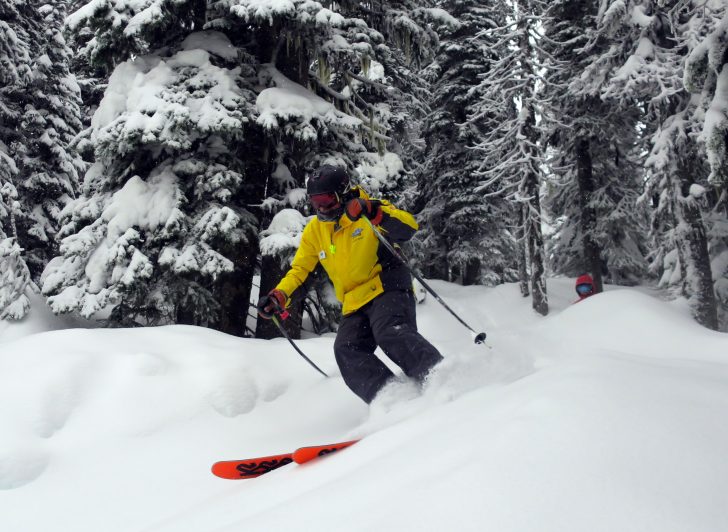
Ski Host Carlan Silha is fit and fortunate to ski so many days at 74.
Credit: John Nelson

It might seem strange that an American from the Spokane area knows this sprawling British Columbia ski resort better than just about anyone.

Carlan Silha has been serving as a snow host at Big White for 20 years, longer than anyone at the resort. The lanky 74-year-old still skis like a 24-year-old, kicking his heels when he takes a jump and issuing a frequent “Woo-hoo!” as he turns in powder.

The story of how Silha got to Big White starts in 1992, when he was a Boeing executive working in Europe. He and his wife Lin were looking for a condo at a ski resort, and a friend suggested Big White.

“We ended up buying because it was a great price,” Silha said. “Then we got here, and realized we really liked it.”

Silha eventually retired, moved from Seattle to the Spokane area, and then began spending every winter at Big White, where he became a snow host, showing visitors the ropes. Now he logs 120 ski days a year and relishes every minute.

“Let’s ski the Rat Trees,” Silha said as he showed around another visitor recently. The trees are so named because regulars have been hanging toy rats from a particular tree deep in the forest near Big White’s Powder Chair.

If you were Carlan, you’d have a big grin, too.
Credit: John Nelson

Silha then shot off, cranking precise turns through the trees in four inches of new snow. “Woo-hoo!” he shouted for perhaps the millionth time of doing this.

“Being outdoors keeps you young,” he said.

During summers, the Silhas spend their time fishing and camping, using Spokane as home base. They like to travel around the West, and Silha keeps fit by hiking and biking.

In winter, they hang out with ski friends who own condos at Big White, a large collection that includes Australians, Brits, Kiwis and, of course, Canadians. The snow host job—showing visitors around Big White’s 7,355 acres—keeps him busy and provides its own rewards.

“The main attraction is meeting people from all over the world,” he said. “And it makes you feel good to show people this mountain.”

SeniorsSkiing Guide: Beaver Mountain—Utah’s Least Known Is A Delightful Surprise

The “Beav” Has All The Goods But No Crowds And No Fanfare.

Cozy lodge is friendly and down home. Look elsewhere for fancy.
Credit: Harriet Wallis

For most vacation-seekers, Beaver Mountain falls off the radar because it’s farther than the 10 resorts that are within an hour’s drive from the Salt Lake City International Airport. Beaver is about 100 miles—less than 2 hours from the airport.

Nobody knows about Beaver Mountain. Actually, lots of people know about Beaver Mountain, but they aren’t telling. They enjoy having the 8,600 foot high mountain with its 400 inches of average snowfall. Its skiers and snowboarders come mostly from nearby Logan and the Utah State University.

I’ve lived here for 25 years, and I’m embarrassed to admit I’d never skied Beaver until last week. A day there shattered all my stereotypes about it. Now I know it’s a gem of a mountain, and it’s very uncrowded. Repeat: Beaver is uncrowded.

And it’s an easy shot to get there: Take I-15 north, turn right to Logan, turn right up Logan Canyon, and you’re at Beaver Mountain.

What’s more, it has a friendly, down-home feel. For example: The sunny base lodge has a roaring fire stove and easy chairs for the ski-weary. That’s a touch that’s disappeared from most mega-resorts.

The cafeteria cooks up very good food at very reasonable prices. I loved the Reuben. But it was hard to resist the finger-likin’ ribs.

Corduroy courtesy of veteran grooming crew.
Credit: Beaver Mountain.

The mountain has a northeast exposure and gets the warming morning sun. Grooming is superb. I learned that the grooming crew is seasoned veterans who have groomed the mountain for years. It has plenty of challenging pitch. There’s an equal dose of mogul fields and off-piste tree skiing, a terrain park, and a magic carpet. The longest runs are 2 miles long. An adult day ticket is $50, seniors (70+) are $40. Seniors can also get a half-day ticket for $35.

I chatted with a couple that I presumed were locals. They weren’t. They live in Florida and travel and ski extensively. They’ve done the big name resorts and were thoroughly enjoying Beaver for the week.

I rode up the lift with Mountain Operations Manager Travis Seeholzer. He pointed to the ridgeline and said: “That’s the Idaho border.” Beaver is high in the northern-most corner of the Wasatch Mountain Range.

Because of its location, Beaver has a marketing problem. Lodging and big city amenities are 27 miles back to Logan or 13 miles ahead in Garden City, a popular summer destination on the shore of Bear Lake.

The flatlands surrounding the mountains are known as Cache Valley because mountain men and trappers cached their furs in secret places. Beaver Mountain is also a secret. Discover the secret mountain for yourself. Do what the locals do. Go “Ski the Beav.”

Other things you should know:

  • There’s no cell phone service at Beaver. People actually talk with each other.
  • Logan has tons of restaurants, car dealers, theaters, shopping, grocery stores, two hospitals, and more.
  • Garden City is primarily a summer resort area and has very little open in winter. There are several time share facilities, and that’s where the couple I talked with was staying. They bought their groceries in Logan as they passed through, and that’s what they recommend.

Click here for Trail Map.

Click here for Webcams.

To read more from Harriet click here for her stories on SkiUtah.

This is uncrowded. Nice.
Credit: Harriet Wallis


SeniorsSkiing Guide: Pat’s Peak With Little Hobbits

And Grandparent Hobbitts, Too.

Hobbitts can be found at Pat’s Peak, New Hampshire
Credit: Tamsin Venn

Skiing with grandchildren is one of grandparents’ great joys and comes with perks: easier slopes, hot chocolate breaks, and slower (maybe) pace. Some ski areas are more finely tuned to multi-generational skiing than others, based not just on the amenities but the spirit of the area.

Pat’s Peak in Henniker, southern N.H., is one such place. The old-time vibe of this popular area is the first clue things are going to be fun. Tyrolean-style architecture harkens back to the days when Austria set the scene with boiled wool jackets and “bending the knees”. Greeters stand by with signs that say, “May I Help You?” which avoids the usual stumbling search for the lunch area and ticket booth. Free or low-cost tickets take the bite out of days shortened by tired or cold grandkids.

Three beginner areas sit apart from the main slopes so no one crashes into the grandchildren under your watch. One is located in a hobbit-like stand of trees with a carpet lift free to everyone. Another beginners’ slope has a handle tow, and the third features the Bluster Carpet, the longest magic carpet in New Hampshire. Older grandchildren will enjoy catching air in the three terrain parks. Grandparents, if you’re brave, try a Snowbike lesson/rental. You get to sit down while you’re skiing.

The base lodge harkens back to the early 60s, nostalgia for many seniors.
Credit: Tamsin Venn

A spirit of sustainability has guided Pat’s Peak development since the four Patenaude brothers, seeking an area closer to home, built the base lodge out of local timber and opened the area in 1963. That spirit continued this year when Pat’s Peak replaced the old Peak Double Chair with a triple bought from Vermont’s Ascutney Mountain and refurbished, doubling lift capacity from 800 to 1,600 people an hour.

Two interconnected lodges spread the crowds. Signs encourage you to share the long tables and benches. A blazing stone fireplace warms the toes. Food is homemade daily, and the grandkids like the M&M cookies the size of small Frisbees.

Sometimes it just comes down to the vibe of the place. Pat’s Peak feels like an area where you can let the kids loose to ski on their own while you attack the serious expert terrain.

More Perks:

Ski New Hampshire’s 4th and 5th Grade Passport: Children from any state in these grades ski for a day at 34 Alpine and XC ski areas across N.H.

January’s Learn to Ski and Snowboard month: $39 beginner special, including group lesson, rentals, lift ticket.

Pat’s Peak

Henniker, N.H.

Vertical: 770 feet

Skiable acres: 103

Runs: 28. Novice 50 %, Intermediate 21 %, Advanced 12 %, Expert 17 %

4 triple chairs, 2 double chairs, 1 J-bar, 1 beginner handle tow, 1 park handle tow, 2 carpet lifts

100 percent snowmaking

Children five and under ski free with a ticketed adult. Day tickets are discounted for ages 6-17 and over 65, only $49 on weekdays. The beginner lift is $26 a day. Saturday night POP (Pay One Price) of $49 includes skiing, snowboarding, snowtubing, rentals, lesson tips, and entertainment.

Click here for Pat’s Peak Trail Map

www.patspeak.com

Pat’s Peak Update Video


Baby, It’s Cold Outside. Really Cold.

Here Are 10 Tips For Seniors Dealing With Cold Cold Temps.

Ah, a balmy 0 degrees. In New England lately, 0 is the new 40.
Credit: Tamsin Venn

I posted here awhile ago about the benefits of skiing in the rain. Another unpopular time to ski is in extreme cold. The upside is you have the slopes to yourself. Unless you don’t. When skiing in Stowe over the recent holiday in frigid conditions, I was astonished by the hardy crew of skiers out on the slopes. A lot of that comes down to the increased quality of insulated layering…plus high speed quads.

Here are ten tips for seniors for skiing in cold temps.

  • Take frequent breaks inside to stay warm. Wind is the main factor to consider. Your body loses heat faster in the wind and makes it feels colder than it really is. But note that wind chill is a highly variable condition. Meteorologists revised the calculation in 2001 with much less austere conclusions. Ski area snow reports often cite the wind chill factor, but google the formula for a more precise reading. Take gusts into consideration. Ride the gondola, tram, or bubble lift for added protection.
  • Stick ’em up. When it is this cold, you got to mask up.
    Credit: Tamsin Venn

    Dress like a robber. Exposed skin loses heat first. Cover every bit of your face and neck with ski goggles and a balaclava, the best way to prevent gaps. Get one with a ventilation flap to improve breathing. Put your hood up.

  • Keep hands and feet warm. Long-lasting hand (ten hours) and toe (six hours) warmers are a cheap heat supply when bought in bulk at the hardware store. Follow the kids’ lead and put the toe warmers on top of the toes, not the bottom where they get mushed up. Ditch the gloves. Wear mittens. Some mittens have slots for heaters.
  • Invest in a boot heater. Boot heaters have come a long way with battery-operated heated insoles where you use your smartphone as the remote. For low tech, put toe warmers in your boot before you leave for the mountain.
  • Add a layer. A down or fleece vest to heat the core is a good option. Wear wicking layers next to the skin. Avoid, avoid, avoid cotton anywhere down below your outer layer
  • Drink lots of water. Cold air and intense exercise means you lose more vapor when you breathe, which leads to dehydration.

Cold strategies of old: Knitted face mask/racoon coat. From the Vermont Ski and Snowboard Museum.
Credit: Tamsin Venn

  • Take a friend or family member skiing. To sidle up to on the lift or check for frostbite. Early signs of frostbite include red or pale skin, prickling, and numbness. Discuss bailout options, so no one is waiting in the wind for the other to catch up.
  • Don’t try anything too fancy. You may stiffen up in the cold. Ski early in the day, for fresh grooming or powder. Follow the sun for visibility and warmth.
  • Save the Snuggly Snowman hot chocolate concoction for the end of the day. Alcoholic beverages swipe heat away from your core, as they send blood and warmth to the vessels near your skin. Outside, you lose heat quickly.
  • Make a leisurely day of it. You’re not going to rack up the vertical feet on your app today. Remember when we all went out into the cold no matter what as a badge of honor of being real skiers? Ditch that concept.

Spruce Camp Base Lodge at Stowe, VT, is calling. Time to head inside. Notice no one on the slopes.
Credit: Tamsin Venn

In Praise Of Urban Wilderness

Find Winter Activity Opportunities Close To Home.

Let’s define what we mean by Urban Wilderness:

  • Open space – wetland, meadow, and/or forested land.
  • Owned by a public entity
  • No parking or entrance fees
  • No visual pollution
  • Offers “peace and quiet”
  • Accessible by either car or public transportation from the nearby urban center
  • Offers a variety of activities (year-round)

Urban Wildernesses can be found in or close to many city centers. The point is that you don’t have to venture into the mountains to find winter recreation; it’s often just a short ride away. All you have to do is find them.

Here are two examples, one from the Boston Area, the other from Portland, OR.  What are your favorite Urban Wildernesses?

Around Boston

Hard to believe this view of Middlesex Fells Reservation is only a few miles from downtown Boston.
Credit: Commonwealth of Mass

Near Boston, MA is the Middlesex Fells Reservation. “The Fells” has borders in four near Boston suburbs; Medford, Winchester, Stoneham and Melrose. It’s 2,575 acres bisected by Interstate I-93. The east side of I-93 is more developed. The west side of I-93 is less developed with a border road and some homes along the road on the opposite side from the Fells. Nevertheless, the west side provides more of a wilderness feel.

Several ponds act as a water supply to the town of Winchester. The Fells have a good number of trails for mountain biking, hiking, snowshoeing, x-c skiing (ungroomed) and trail running including:

Skyline Trail

The 6.9 mile Skyline Trail follows the outer perimeter of the western Fells. There are spectacular views of Boston and the surrounding area. Most of the Skyline trail is in wooded landscape, with several steep ascents to rocky outcrops.

Reservoir Trail

The 5.2 mile Reservoir Trail encircles the north, middle and south reservoirs, and the open water can be seen from many sites (the reservoirs are for drinking water, so access to them is prohibited).

Cross Fells Trail

Beginning in the western Fells near the Medford High School, the 4.5 mile Cross Fells Trail gives a good sampling of the features of the Reservation, from wetlands at Whitmore Brook to open water at Quarter Mile Pond in the eastern Fells, to views at Cairn Hill. Use caution crossing South Border Road, Route 28, Woodland Road and the Fellsway.

For more information about Middlesex Fells Reservation, click here.

In the Boston area, there’s also Walden Pond, site of Thoreau’s cabin, in Concord, and Appleton Farms, a 900 plus acre working farm established in 1638, in Ipswich.

Here’s a brief description of a ski tour around Walden Pond.

And here’s what it’s like cross-country skiing at Appleton Farms.

Around Portland, OR

Forest Park is practically in downtown Portland, OR.
Credit: Forest Park Conservancy

At 5,157 acres, Forest Park in Portland, Oregon is one of the largest urban forests in the United States. With more than 80 miles of trails, Forest Park stretches for more than seven miles along the eastern slope of the Tualatin Mountains, at the convergence of the Columbia and Willamette Rivers. As stated in the park’s website, “Forest Park offers an unparalleled opportunity for visitors to experience a true Northwest forest without leaving the Portland city limits.” Forest Park immediately came to mind as an archetypical urban wilderness.

Activities along the 80 miles of trails include:

  • Horseback riding
  • Hiking
  • Cycling/mountain biking
  • Running – trail and road
  • X-C Skiing, Snow Shoeing (when and if it snows)*

Among the park’s trails are:

Ridge Trail

Trailhead access for the Ridge Trail, which is only open to pedestrian use. To find the trailhead, park at the obvious pullout on the way down Bridge Ave (heading toward Portland). You will then need to walk back up Bridge Ave roughly .2 mile to find the actual trailhead.

The Wildwood Trail

30.2 breathtaking miles, from the southern end of the trail at the Vietnam Veterans Memorial in Washington Park to the Northwest terminus of the trail at Newberry Road.

*The city of Portland averages only 4.3 inches of snow a year, so winter activities are the often same as activities the rest of the year. But, what a place to get you in shape for skiing on Mt. Hood only 50 miles from downtown Portland!

For more information about Forest Park, click here:

Please tell us your favorite urban wilderness. What makes it special to you?

Wonderful Winter Walk With Wolves

Why Wait When Wolves Want Wise Well-Wishers.

Wolves walk with visitors during a guided wolf walk in the forest and play in the snow near Golden BC. Credit: Yvette Cardozo

Okay, in the picture, it looks like she’s being licked by a dog. But trust me, that’s NO dog. It’s a real grey wolf. In the woods. Walking with my friends and me.

Woman meets Scrappy Dave, one of the wolves on a guided wolf walk through the forest with Northern Lights Wolf Centre, a wolf rescue and education center in Golden, BC.
Credit: Yvette Cardozo

It was part of our morning at Northern Lights Wolf Centre just outside Golden, BC, Canada, where we learned about wolves and definitely got close and personal.

Shelley Black and her husband Casey have been raising wolves for nearly two decades. Their aim is not only rescuing abandoned wolf cubs but educating the public.

“There’s so many misconceptions about wolves,” Casey told us.

For one, they really don’t lurk around woods just waiting to eat people. They’d rather avoid people. But thanks to a lot of fiction where hapless folk are forever being devoured or myths that are really morality tales warning women of attacks by men (Little Red Riding Hood, for one), there is an ingrained public fear of wolves.

There are many wolf rescue/education centers around North America but only a handful that let you actually walk with the wolves and interact with them.

And so, we gathered one late winter morning at Northern Lights Wildlife Wolf Centre to learn, prepare, and walk.

The wolves have been exposed to people from birth and are used to walking with visitors.
Credit: Yvette Cardozo

Scrappy Dave and Flora, our wolves that day, had come from a zoo that had too many wolves. They were brought to the center in Golden when only a few days old. So, like all the wolves here, they are totally used to people.

“They lived in the house with us for the first several months,” said Shelley. “We treated them like human babies, fed them and slept with them.”

When not out in the woods on wolf walks, the wolves live in acre enclosures, two each to an enclosure.

But these ARE wild animals. For that reason, Shelley and Casey explained, the walk is totally on the wolf’s terms.

“We don’t approach them but if they come up to you, you can touch them.” (um, more about that later).

More Wolf Walk Rules:

  • If you don’t want the wolf to jump up on you like a friendly dog, hold your hands together and down in front of you, push him down and say “Stop!”
  • Don’t spin away because they see that as a game.
  • Don’t kneel down. Kneeling is a sign of aggressive behavior in the Canidae family.
  • Keep your hat on and if you take your gloves off don’t think you can just hold them. Scrappy Dave will grab them. And they’re gone, lost in the woods. Forever. Best to just keep them on.

One of the more interesting facts is that wolves don’t need to run; they aren’t sled dogs. They’re actually quite lazy, which in the wild is a survival tactic to conserve energy.

With all this in mind, we headed for the woods.

We walked down a logging road a few hundred yards when suddenly, Flora, all 60 pounds of her, trotted up to me and raised up on her hind legs. She was almost as tall as me as she leaned in, put her huge, muddy paws on my shoulders and sniffed my face.

She was saying hello in wolf talk. She did that to one of my friends, though on her back, leaving muddy paw prints that looked like a painted design. And I’ve got the pictures to prove it.

At this point, it was time for our “wolf moment,” which involved standing next to a tree stump while Scrappy came up from behind and did his best to lick us into oblivion. All I can say is, who knew wolf tongues were soooo soft and warm.

One could point out that this whole adventure was staged and quite artificial. But the purpose, Casey and Shelley said, is to let people know the wolfs’ place in the environment and, especially, to let people know wolves don’t have to be universally feared.

Northern Lights Wildlife Wolf Centre is a 15 minute drive from Golden, BC. The programs are open year round. There’s a talk led by a guide where people walk around the edge of a fenced wolf enclosure. It is open to all ages.

The Wolf Walk age limit is 16 and above, lasts most of a morning or afternoon and costs $335 CDN for two people. The interpretive talk at the center is $12 CDN for adults, $35 CDN for a family of four.

The wolves have been socialized to people from birth and are used to walking with visitors
Credit: Yvette Cardozo

Lift Maintenance 101

The Whole Summer Was Spent Getting Ready For Winter.

Reassembling parts takes time and patience.
Credit: Harriet Wallis

It’s 80 degrees at Deer Valley. Mountain snow melted long ago. A summer breeze rustles leaves on the aspen trees and wafts through the open doors of the maintenance shop. The crew wears shorts and T-shirts. It’s mid-July.

Gears and gizmos cover the work benches, and the crew is meticulously polishing, calibrating and lubricating the parts. It’s virtually open heart surgery on the inner workings of a ski lift.

“We work eight months to be open for four months of skiing,” said Deer Valley’s Lift Maintenance Manager Jeffrey Miller. “All of us in this industry do a great job. We’re well aware of how many bottoms are in the air.”

Maintenance also deals with rubber parts that get worn, such as belts. Weather, wind and temperature can affect alignments. Even identical lifts can wear differently. Lift maintenance is complicated. It’s part science, part skill and part art.

It takes a lot of work to refurbish parts.
Credit: Harriet Wallis

Deer Valley’s talented crew keeps the resort’s 25 lifts running smoothly.

But there’s more. Just like your car gets its 60,000 mile service, lift components must be inspected, reconditioned and rebuilt at various frequencies, Miller said.

“For example, certain lift manufacturers require that sheave assemblies be rebuilt every six years. Brakes should be completely torn down, inspected and rebuilt every four years. Gearboxes and final drives get reconditioned on an hour basis, right around the 12,000 hours.”

Got that? It’s a complex schedule.

In spite of all the tedious maintenance, a breakdown can happen. The needed part — many of which are huge — might not be in storage. But a nearby resort might have that part. “We’re a tight-knit group much like a family. We reciprocate by sharing parts,” Miller said.

This is a job for four hands.
Credit: Harriet Wallis.

All this so you can enjoy your ski day.

But the work doesn’t stop when summer ends. When we ski, we’re always looking up – looking at the lift mechanisms, he said. And we periodically sample the oil to see what’s in it and we check tension adjustments.

Get ready to ski. Deer Valley’s lifts and the lifts at your favorite resort had their summer work outs.

To read more from Harriet click here for her stories on SkiUtah.


Butternut Buys Blandford Ski Area; Rushes To Upgrade For New Season

Family-friendly Blandford in southern Massachusetts was poised for extinction or development, but Ski Butternut and its owner Jeffrey Murdock bought it Sept. 1 and saved it.

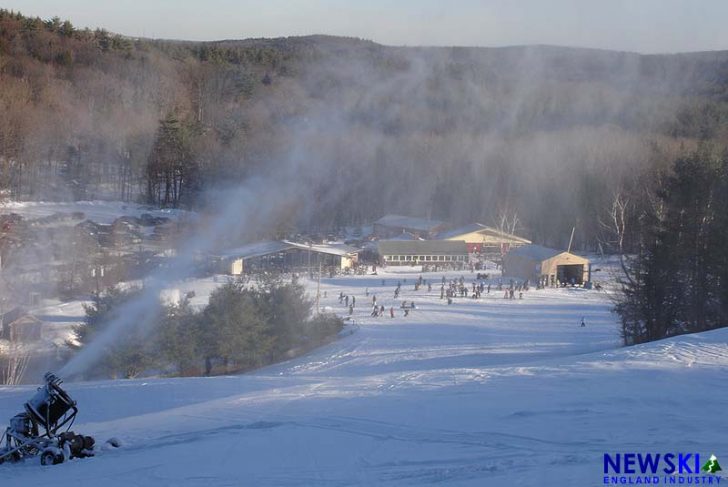
Here comes the snow making. Blandford’s lodges get facelifts and the slopes get upgrades in grooming and snow making.

It’s a rescue mission of historic proportions. Right now, crews are working furiously to renovate Blandford’s base lodges, upgrade the grooming equipment, and install new snowmaking to help smooth out fickle weather cycles that have troubled the family-style ski area in the Berkshire Mountains.

The timing is tight. Renovations couldn’t start until Sept. 1 when the purchase was finalized.

“We’re putting a lot of resources into Blandford,” said Dick McCann, general manager of Ski Butternut. “We want to build the skier base back up. And we care very much about making skiing affordable.”

“We think the ski industry is better for having these small ski areas,” McCann said.

In reality, no one needs a mega resort to learn to ski and have family fun. Yet mega resorts across the country are gobbling up smaller areas.

Historically, Blandford Ski Area was founded in 1936 by members of the Springfield Ski Club, and it was owned by the members. At that time, hardy skiers drove to the end of the road and then hiked to ski the rolling hills.

It’s surmised that Blandford might be the oldest member-owned ski area in North America. It’s located about 20 miles west of Springfield, Mass.

By the 1970s, the popular day ski area had many rope tows and one double chair lift. Families loved the area and spent many volunteer hours doing maintenance and especially picking up stones from the slopes and tossing them into the woods. That made the slopes skiable even if natural snowfall was skimpy.

That’s where I learned to ski and I loved the place. The snow was often thin, but it was groomed to perfection with no stones poking through.

Today, it has 25 trails, three double chairlifts and two base lodges. But snowfall became erratic during recent years and families drifted off to do other things in winter. Blandford was on the brink of extinction.

Ski Butternut’s owner Jeffrey Murdock now owns three ski areas in the Berkshires: Ski Butternut, Otis Ridge, and now Blandford Ski Area.

Ski area management runs in his family, and it started with Butternut. Its first trails were cut by the Civilian Conservation Corp (CCC) in the late 1930s, but that was followed by many rocky years. Finally in 1962, Channing and Jane Murdock, Jeffrey Murdock’s parents, bought the state-of-the-art chairlift and the ski area that went with it.

Ski Butternut now has one of the largest uphill capacities in Southern New England.

As to Blandford Ski Area, Murdock is breathing new life into it. Massive renovations are underway and they’ll be ready for this winter. A season pass is $199 for adults, $169 for kids 7 to 13, and $79 for kids 6 and under.

To read more from Harriet click here for her stories on SkiUtah.


Mammoth Memories: See Ya!!!

In the winter of 1993, I was in my 29th season, age 55 and still in that happy state of benign self-deception when I believed I skied better each season than the season before.

On the Gon at Mammoth.
Credit: Sarah Sherman/ MMSA

A lifelong wage slave, despite passionate longings to the contrary, I had never given myself the luxury of a ski-bum year. As a weekend-warrior, a good year would be 20-25 days.

It was late May and all of my usual Tahoe destinations closed. I decided to take a solo road trip to Mammoth to close the season. The sun was warm and the slopes covered with corn. I quickly racked up formidable verts and boarded the old Gondola at mid-station for what was to be one last run. Three 20-somethings joined me in the cab, regaling each other with boasts of what a fine day they had all had. “Good show!” I offered, “Now we can all relax and coast down on that good old last run.”

“Oh? Why last run? I can handle more,” one guy responded.

“Yeah, well, I don’t think so,” I said.

“Why not?”

“Well, it’s 2:20, now,” I began to explain. “Lifts stop running today at 2:30. We’re still at least five minutes from the top, and it’s a long way down, so… hey!”

“Yeah, well, whatever,” the guy said. “I suppose if I were your age, I’d see it that way, too.”

That smarted. Damn whippersnappers, can’t they show a little more respect… then I thought how I must look to these guys… gray hair, faded parka, scuffed-up red boots… Ah, hell, they’re just kids, who cares, anyway? Still…

At the top, we exited and quickly descended the stairs. I clicked into my skis as fast as I could, and checked my watch – exactly 2:27. No way… BUT… I glanced over my shoulder to see the three guys ready to shove off; they hollered, “See ya!” Then, rather than my usual cautious chicken-slow entry onto the slope, I launched straight out into the air, off the cornice, into the most direct route down.

What the hell am I doing? flashed through my mind. But, to my mild surprise, I nailed the landing, then hauled ass through those soft steep moguls all the way down to the wide groomed outrun. Already flying, I tucked all the way. A hundred yards ahead, the attendant had already started to pull the “CLOSED” rope across the entrance. I waved my poles and shouted, “HEY! HOLD ON!” By the time he looked up, I had scooted through the gate. “Oh, OK,” he smiled. “You’re the last one.” Grateful as hell, and breathing hard, I proceeded to the loading platform and boarded the last gondola of the season.

As the car left the station, I looked down, and saw the three youngsters from the last ride, approaching the now-closed lift entrance. Unable to do otherwise, I opened the window, stuck out my head, and hollered, “SEE YA!”

At the top, I exited slowly, took a long time drinking in that glorious view of the Minarets, Mono Lake, the whole beautiful scene, then coasted down, easy, stopping every few turns to admire all that grandeur, one last time, in all my quiet solitude.

2017-2018 will be my 54th season. I turned 80, last week. It’s been quite a few years now since I last believed I skied better every year. But that passion is still there, and I have no plans to quit, any time soon.

Mammoth’s season goes past Memorial Day in snowy years.
Credit: Peter Morning/ MMSA

Oz And EnZed: Skiing The Antipodes

Ski And Snowboard Show Impresario Bernie Weichsel Reports On The Down Under Scene.

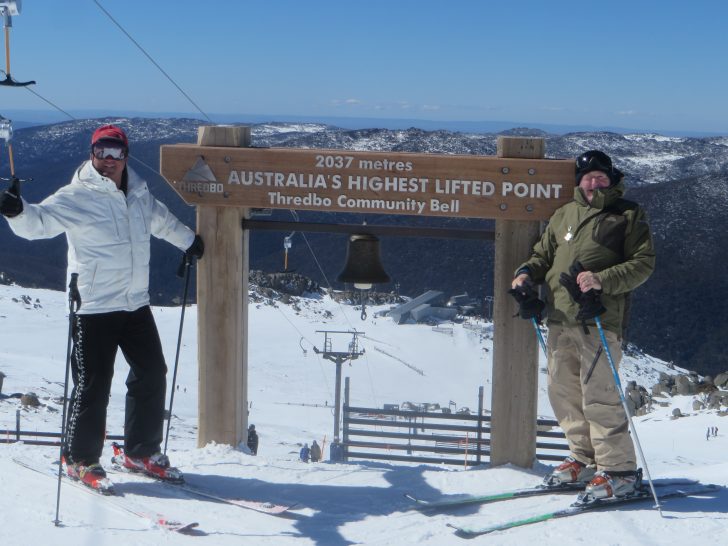
Bernie (r) at Thredbo’s highest lift.
Credit: Bernie Weichsel

For most of us in the international ski community, whether here in the US and Canada, or within the Alpine countries of Europe, there is good news to be found in Australia and, to a lesser degree, New Zealand. Over the past three weeks, I had the opportunity to visit a number of ski areas in New Zealand’s South Island and in Australia’s states of Victoria and New South Walks. I skied at the four areas around Queenstown and Wanaka (The Remarkables, Coronet Peak, Cardrona and Treble Cone and in Victoria (Mt Buller and Falls Creek) and New South Wales (Skiing at Perisher, Thredbo, and the unique Charlottes Pass. I am glad to report in both countries skiing, and, in contrast to the US at least, snowboarding, too, seemed to not only being doing well, but to be thriving.

Skiing The Remarkables, Queenstown, NZ. Anyone notice any hobbits?
Credit: Bernie Weichsel

New Zealand areas’ growth seemed to be coming from visitors from Asia. There were loads of Chinese and Koreans, plus a lot of athletes from Northern Hemisphere countries taking advantage of the snow to prepare for the upcoming Olympics, including Lyndsey Vonn among other US athletes.

But it was in Australia where the growth in the local market was most evident. All the resorts I visited were crowed with families and students, and it wasn’t even vacation time. Resort management all said that they were witnessing growing interest and participation in SnowSports which might be the only SnowSports market in the world where that can be said!

One effort that is propelling growth is a program called Inter-School, a regional wide, multi-discipline, competitive program with local races that lead to regional events and ends in a National Championship. The regional event I saw at Mt Buller—the Victorian State Championships—had 6,000 participants, in many cases, with their parents on hand for a whole week. I am not aware of a similar program in our country. I presume the best analogy is an NCAA program but for High Schools. We all know how school programs for soccer, football, etc. dominate American youths’ time and keeps them—and their families—away from the slopes. Maybe the Australians have found something for us to think about!

All the resorts had decent facilities—from lifts, snow-making and day lodges—and pretty good grooming. New Zealand, for us spoiled North Americans, is a bit of a challenge since there is virtually no on-snow lodging. Most of the lodging is in Queenstown and Wanaka, where it almost never snows;  to get to the skiing you must drive with chains always at the ready in your “boot”—or take a bus.

Weather is also a consideration in New Zealand since all the skiing is above timberline, leading  to some serious white-outs when the clouds hang low, which is often.  But the snow quality is good, the runs decently long— think Northern New England. When it is clear, you can see some of the most stunning scenery anywhere.

Australia, on the other hand, has lodging right on the mountains making it possible to ski in, ski-out. However, the mountains are not as high as New Zealands’ and are wider rather than high, that is, many runs over a number of hills.  That is, except for Thredbo which has a vertical of about 2,000 ft. What really intrigued me was how popular skiing was given that in Australia, there were many road-blocks one has to overcome to get the mountains.  You have to pay an entry fee to enter the Park; all the ski resorts are in state or national parks, you have to pay to park and again pay for a snow taxi to take you to your lodging—not in all resorts but the majority.  And lodging isn’t cheap. The resorts, though, have copied—or might have pioneered—the idea of expensive day tickets versus reasonable priced season pass.

Usually, so I was told, New Zealand gets the better snow.  But, during my visit, it was the opposite: I had basically spring skiing in New Zealand and super mid-winter conditions in Australia—packed powder and blue-bird days. And recently Australia’s resorts have had some of the biggest snow dumps in almost two decades!

One oddity worth noting. The small area near Perisher, Charlottes Pass, might be —I can’t think of any other resort that can only be accessed—in and out—by Sno-Cat . It’s a 30-minute ride each way. Nice, but small skiing, once you get there,  and it’s pretty private and worth the effort.

A unique arrangement: No lifts at Charlotte Pass, just a 30-minute Sno-Cat Ride each way to the slopes.
Credit: Bernie Weichsel

Meanwhile In Australia…

We Have Hurricanes And Wildfires.  Oz Has Big Snow.  Sound Like A Theme?

Early September 2017, Perisher Ski Resort.
Credit: Perisher

The news from Down Under is that the snows are prodigious, the depths of which haven’t been seen in 17 years.

The snowpack in Australian snow fields is up to 97 inches, eight feet, which sounds awfully similar to the monster snow this year in the North American west.

So while we contemplate extraordinary weather conditions from wild hurricanes and fires, it appears Oz and NZ are also having extraordinary weather.

Here’s a video from Threadbo, one of Australia’s most popular resorts.  Looks like they are having fun.

And thanks to Snowbrains.com for the head’s up.

Cycling Series: Designed Trails Make A Difference In PA.

Mountain Bikers: These Trails Are Worth The Trek.

Here’s the view from the Alligrippis. Nice summer ride through beautiful mountains in central PA.
Credit: Pat McCloskey

One of the smoothest, most  buttery trail systems in the east is situated in the middle of rural Pennsylvania near a beautiful body of water—Raystown Lake.  The Alligrippis Trails were IMBA( International Mountain Bike Association) designed in conjunction with the Appalachian Regional Commission, the Pennsylvania Department of Conservation and Natural Resources, the U.S. Army Corps of Engineers, and the Huntington County Visitors Bureau.

Check the smiles and the kids on the nice smooth single track.
Credit: Pat McCloskey

These trails are a must for anyone who appreciates flow on a mountain bike with berms and rollers galore.  There is some climbing but for the most part very gradual rollers with perfectly manicured conditions maintained by a robust volunteer system of local mountain bikers.  The Raystown Mountain Bike Association helps to keep these trails in tip, top condition, and if you are looking for a great day on the trails in the central mountains of Pennsylvania, this is your place.

There are 24 trails each stacked to provide loops that can be intertwined and lots of available bail out points.  Thirty miles of trails are available with hours of non-repetitive riding available.  Lots of riders make this a day trip when visiting State College to ride Rothrock State Forest trails which are another type of riding with more rocky challenging terrain.  The combo of each type of riding can provide a visitor to the central mountains of Pennsylvania enough variety to satisfy any level of rider.

Access to the trail system:

  • Seven Points Road Entrance in Raystown Lake Recreation Area
  • Bakers Hollow Road
  • Susquehanna Campground Entrance
  • Bicycle Shop Support- equipment, clothing, rentals, guide services and maps

Gear, Repairs, Supplies

Don’t miss eats:

  • Smitty’s Eats and Treats (Hesston, PA) Smitty’s pork bar-b-que is not to be missed prepared with meats from a local farm. Delicious!!!!! 

Oh, forgot to mention. Smitty’s also has ice cream.
Credit: Pat McCloskey


Historic Blandford Ski Area Poised To Bite The Dust

This Wonderful Family Area Is Simply Out Of Money.

[Editor Note: According to the Westfield News, Springfield Ski Club’s members will be meeting on July 18 to approve the sale of assets to the owners of Ski Butternut. If two thirds of the total membership do not specifically vote yes, the ski area will close.]

Volunteers kept Blandford going and gave the small area a community feel.
Credit: New England Ski Industry

The website says: “May 28, 2017 – Ski Blandford Financially Insolvent. Could Be Sold or Closed.” The Board of Directors and the skiers are on the brink of making a gut wrenching decision soon about their ski area that’s been going for 81 years.

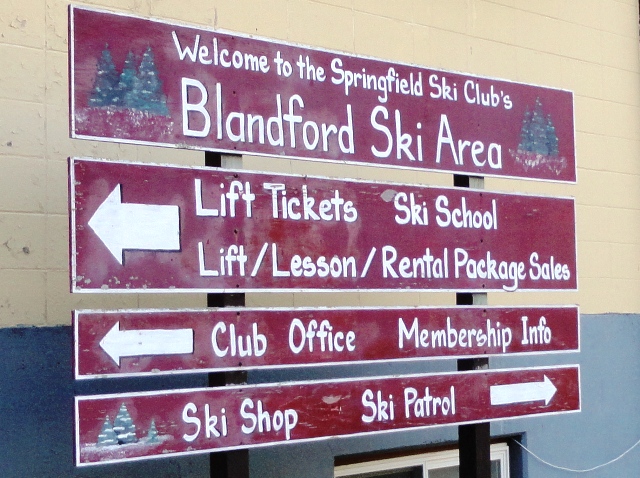
Harriet visited Blandford on a recent visit, finding a welcoming sign at the base lodge.
Credit: Harriet Wallis

As background, recreational skiing spiked after WWII when 10th Mountain Division veterans returned and inspired city folk to take up skiing.

But before that, in the 20s and 30s, hardy skiers skinned up mountains, built primitive lifts and were already into downhill skiing.

And so it was for the Springfield Ski Club. In 1936 it got permission to build a ski slope on a hilly farm in southern Massachusetts. It installed a 1,000 foot long rope tow and used a nearby schoolhouse as a warming hut. A few years later the club bought the land and named it Blandford Ski Area.

Today, about 60 ski areas that started before WWII are still in operation, according to data collected by New England Ski Museum Director Jeff Leich.

But it hasn’t been easy for this small, family-oriented ski area. Modernization from rope tows to chairlifts was costly. Updating to snowmaking was a necessity. But then, interstate highways whisked skiers past Blandford to bigger, destination resorts.

But Blandford—with its 450 feet of elevation, three chairlifts, snowmaking and night skiing—held on while other small ski areas in southern Massachusetts closed. Skiers simply love Blandford.

And they put in countless hours of volunteer work to keep the area ship shape. Work parties painted the picnic tables. And they walked up the slopes picking up stones pushed up by frost and tossed them into the woods so in winter they could ski on a minimal snow base.

During the 1960s and 70s, membership was capped at 5,000, and there was a waiting list to join. My family of four were all novice skiers, and we jumped at the opportunity to join when an opening occurred..

From that humble beginning at the small ski area, we all grew to love the sport. And we progressed to become instructors and ski patrol.

Blandford got us started in the right way. It inspired us with skiing. And it offered family values and great camaraderie with other families.

However, membership slowly dwindled over the years and dropped to just 1,426 in the 2014-15 season. Fickle weather and the economics of operation began to out weigh the camaraderie and the inspiration,

Blandford, like other small ski areas, is a grass roots feeder area that launches skiers into the sport. It’s sad that we might lose this icon of the ski industry. For a closer look, click here for the Ski Blanford site.

To read more from Harriet click here for her stories on SkiUtah.

Small areas like Blandford are where families grow up loving skiing.
Credit: Ski Blandford

Five Tips For Sierra Summer Skiing

[Editor Note: This article by Correspondent Rose Marie Cleese first appeared in Liftopia’s The Blog.  We thank Liftopia for allowing us to pass it along to the readers of SeniorsSkiing.com.]

Even though summer has officially arrived and temperatures are reaching triple-digits across the country, are you still nostalgic about winter and wish you had gotten in a couple more days of skiing or boarding?

You’re in luck. Ski season is alive and well in the Sierra, at Squaw Valley near Lake Tahoe for at least two more weekends and at Mammoth Mountain off State Route 395 east of Yosemite daily into August.

See California lift tickets.

Summertime, when the vibe is chill and the air is hot…

So how different is it to ski and board in the summer? When’s the last time you spotted a marmot basking in the sun next to a ski tower? Or had a flurry of ladybugs alight on your table while lunching on the lodge deck. Everyone on the slopes is happy and laid back because we all know we shouldn’t be able to be doing this at this point on the calendar. Below are 5 tips if you’re headed to the slopes this summer.

1. Enjoy the soft, easy-to-ski corn snow.

Corn refers to the snow during the time window when it has become soft and forgiving, but not too wet and slushy.

At Squaw Valley, after you leave the green, grassy terrain around the base of the mountain, it’s a bit of a shock to find yourself a few minutes later on the snow-covered slopes of Squaw Valley’s upper mountain, currently boasting a snow depth of up to 131 inches (that’s nearly 11 feet, folks!).

Now, over the long 4th of July weekend, July 1–4, and on Saturdays thereafter “as long as we can provide a safe skiable surface,” says Squaw Valley spokesperson Sam Kieckhefer, you can enjoy a full four hours of skiing on corn snow, from 8:30 AM to 12:30 PM.

The surfaces of most runs are easily skiable corn snow, kept nice and crisp due to the deep snowpack. The only places you’ll find full-blown heavy slush are on the wide, flat runs that feed into the Gold Coast Lodge area. Last weekend, the temperature on the upper mountain was 60 degrees and the resort had four lifts running: Gold Coast, Big Blue, Siberia and Shirley. Skiers could also traverse and hike up to ski the runs on Headwall.

2. Check out Squaw Valley’s poolside party at High Camp.

PHOTO CREDIT: Katie Cleese Photography

After you shed your skis, be sure to check out the lively scene at Squaw Valley’s pool and hot tub at its High Camp location, open from 11 AM to 4 PM. For the price of admission ($15), you get a locker, towel, and access to an 8,200-foot-elevation alpine party, complete with a poolside dj spinning house music and scantily clad 20-somethings cavorting and splashing around the big pool wearing ski goggles.

Catch the shuttle back to the Resort at Squaw Creek where you’ll have the options of sunbathing by its more mellow pool sipping a margarita, soaking in a hot tub, playing a round of golf, hiking, or playing a game of tetherball, corn hole, or giant chess. The best of summer and winter all in a single day.

See Squaw Valley lift tickets.

3. Defy winter and ski well into summer at Mammoth Mountain.

PHOTO CREDIT: Mammoth Mountain

On the eastern side of the Sierra, Mammoth Mountain, the queen of ski resorts staying open past April, is experiencing three to four times the number of skiers and boarders they usually get this time of year, according to Mammoth Mountain’s communication manager, Lauren Burke. “We’re committed to daily operations into August,” she says. “In the last 50 years, we’ve stayed open into July some 15 times. Our longest season on record was 1994–95 when we closed on August 14th.”

Hours of operation at Mammoth are 7:30 AM to 2 PM, with 6 lifts, 57 trails and 2 terrain parks available midweek, and 7 to 8 lifts and 70 trails available on weekends. Currently, Mammoth has 45 inches at its base and 180 inches, or 15 feet, at its 11,000-foot-high summit.

For Bay Area skiers, the quickest way to reach Mammoth right now by car is via I-80 through Reno and south on SR 395. The faster route via Highway 120 over Tioga Pass, which closed for the winter season last November 16th, is still closed with no projected opening date. In the last 80-plus years, the latest Tioga Pass opening was July 1st, so it looks like that record is soon to be toast!

See Mammoth Mountain lift tickets.

4. Garb up or garb down… Whatever you prefer, just don’t forget the sunscreen!

PHOTO CREDIT: Katie Cleese Photography

If you NEVER fall, wear whatever or how little you want. We saw a pair of skiers in flowing Batman and Superman capes, a boarder wearing a Speedo®, plus a plethora of cut-offs, tank tops, no tops (guys only!), and streamlined helmets. So wearing apparel is whatever strikes your fancy, but there are a few “musts” when you hit those corn-fed slopes:

Before you go out, cover every bit of exposed skin with a high-SPF waterproof sunscreen (including ears, napes of necks, hands if you’re going gloveless, etc.) and reapply as needed. The summer sun is intense at these high elevations, plus you’ll be skiing in mostly sunny weather. Also be sure to entirely cover your lips well with a good lip sunscreen.

Wear goggles or make sure that your sunglasses are completely protecting your eyeballs. Never, never, never head out to the slopes without one or the other. Snow blindness (when you burn your cornea from overexposure to the sun’s UV rays) is incredibly painful and can take a couple of days to recover from.

5. Stay hydrated.

PHOTO CREDIT: Katie Cleese Photography

Drink lots of water throughout the day or you’ll find yourself getting parched pretty quickly. Squaw Valley had water stations set up both outside and inside the Gold Coast Lodge, with plastic water cups stacked up behind the water fountains. Save the alcohol imbibing for après ski!

Provided that the winter snows come on schedule next December, it’s nice to know that all those happy campers up at Squaw’s High Camp last weekend have to wait only five months to ski and board again—but it certainly won’t be as much fun as skiing in workout pants!

Rose Marie Cleese is a correspondent for SeniorsSkiing.com, an e-magazine devoted to wintersports enthusiasts aged 50 and up.

June Skiing At Alta: The Never-Ending Season Goes On

Where Is Everyone? There’s Pow At Alta.

Thanks to Snowbrains for passing this along.  June 13, 2017 run at Alta.

Vets Take Part In VT Adaptive Bike Program

Special Bikes Available At Different VT Locations This Summer.

[Editor Note: This article first appeared in XCSkiResorts.com; we thank Roger Lohr, editor-in-chief, for sharing this with SeniorsSkiing.com readers.]

Adaptive bikes make it possible to get to the top of the trail. Each one is handmade.

The Vermont Adaptive Ski and Sports organization’s new Adaptive Mountain Bike Program, which is one of the first in New England offers special dates for outings in various location and limited adaptive mountain bikes to use. All abilities are welcome and participants may bring their own equipment as well.

The program is scheduled at multiple locations with outings and events planned for all level mountain bikers who have their own equipment. In addition, four adaptive mountain bikes are available for participants on a first-come, reservations-based system.

These highly adjustable bikes are ideal for individuals with spinal cord injuries, amputations or limb differences, or balance and motor skill disabilities. Vermont Adaptive purchased the bikes last summer with funding from the US Dept. of Veterans Affairs grant and Phil Black, owner of Lookout Tavern who donated monies for Vermont Adaptive to purchase a trailer for hauling the bikes to various locations statewide.

“Participants gain a sense of accomplishment when reaching the top of the mountain and that is great to see,” said Kelly Walsh, Vermont Adaptive program coordinator, who is responsible for Vermont Adaptive’s veterans programs.

For 2017, the US Dept of Veterans Affairs again awarded Vermont Adaptive grant monies to help purchase 10 two-wheeled mountain bikes and 10 bicycles for use on recreation paths. These bikes will be added to the existing fleet, allowing participants who don’t need to use an adaptive bike to get outside, exercise and socialize with other veterans, to enjoy Vermont alongside their peers with physical disabilities.

The custom hand cycles are crafted specifically for rocky terrain with unique hand cycles that are designed for adaptive riders to cruise down the trails smoothly.

There is open enrollment for free to the mountain bike program this summer. Although Vermont Adaptive will have a limited number of adaptive mountain bikes for use, all adaptive riders are encouraged to bring their own bikes and participate in any of the summer events. Reservations are required for programming and equipment use.

The schedule will kick off with the Summer Solstice Bike Ride on June 21 at Blueberry Lake in Warren, VT followed by the Mountain Bike “Snowshed Session” on June 24 at Killington Resort. Other events include the Green Mountain Trails Bike Ride is July 9 in Pittsfield, the Blueberry Lake Bike Ride on July 9 in Warren, the Vermont Mountain Bike Association Festival on July 21-23 in Warren, the Killington Bike Ride on July 29 and the Pine Hill Park Bike Ride on August 13 in Rutland. This program is limited to Vermont but you can look for similar programs in other regions across the country by contacting organizations that resemble Vermont Adaptive.

This year’s Killington Resort Adaptive Event for Independent Riders will also have bike demos “encouraging adaptive awareness for proper use of hand cycles,” said Olivia Joseph, Vermont Adaptive program coordinator and organizer of the adaptive mountain bike program.

The program is seeking volunteers who have an interest in mountain biking and for further info, contact Olivia Joseph at north@vermontadaptive.org.

The custom hand cycles are crafted specifically for rocky terrain with unique hand cycles that are designed for adaptive riders to cruise down the trails smoothly.

There is open enrollment for free to the mountain bike program this summer. Although Vermont Adaptive will have a limited number of adaptive mountain bikes for use, all adaptive riders are encouraged to bring their own bikes and participate in any of the summer events. Reservations are required for programming and equipment use.