SeniorsSkiing Guide: Mammoth Update

Spring Skiing Paradise
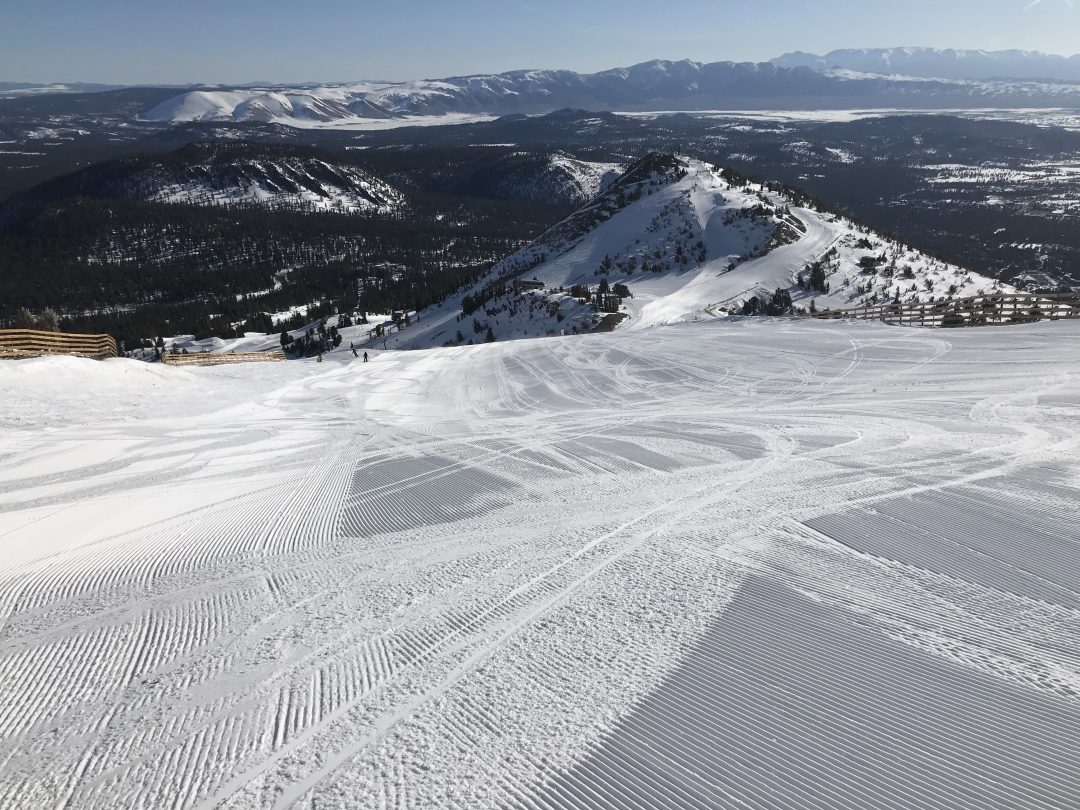
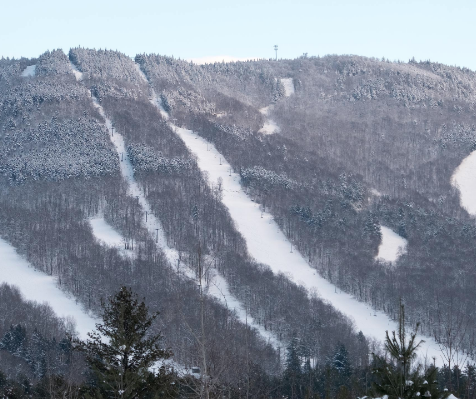
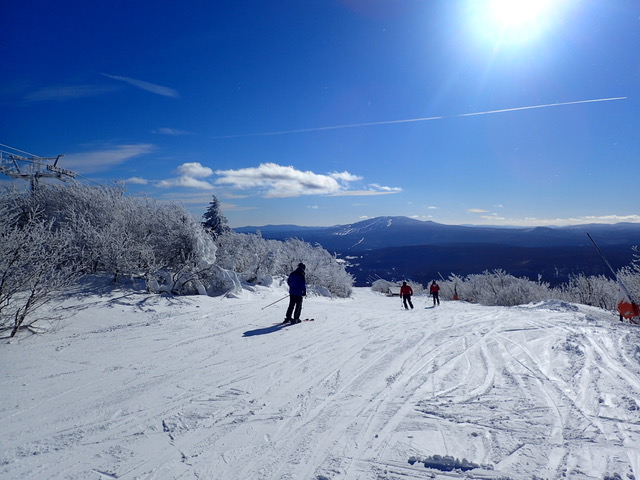
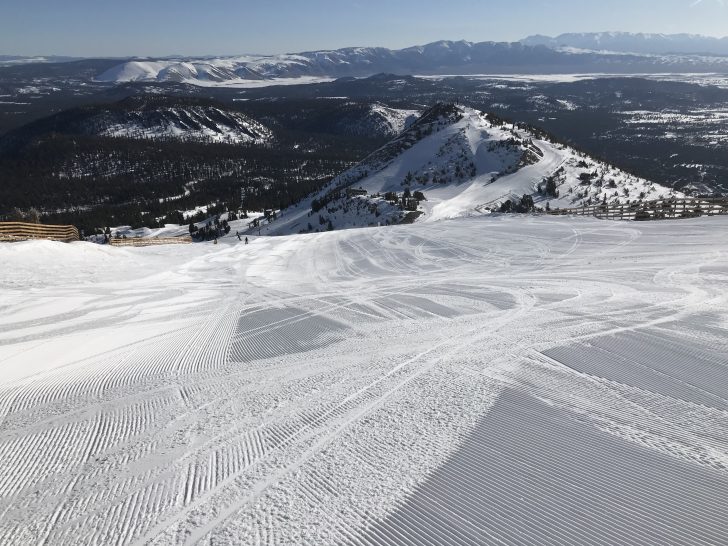
First run of the morning from top of Lift 5. Credit: Marc Liebman

Editor Note: As of April 12, even more snow has fallen on the Sierra Nevada since this report was written.

Mammoth is known for its late closings, generally after Memorial Day, but this year, closing is scheduled for July 4th!  On April 1st, the snow depth at the top of the 11,059 ft. mountain was a 230 inches, about 20 feet. At the McCoy Station, it drops to 195 ft. and at the base, it’s 160 ft.  Temperature at the top is in the high teens and at the base, in the low 20s.  It will feel warmer due to the bright sun, but the high may not reach 30 so bring your suntan lotion because you’ll need it.

Conditions vary from packed powder to packed powder.  There’s a few slightly slushy (on April 2nd) spots near the base, places where there is lots of sun, the conditions make it soft, but for 95% of the trails, the conditions are near perfect.  And, by the way, it still snows a lot in April.

Every night, trails are groomed and black diamond runs have a smooth path through the moguls.  Frozen granular exists in a few places, bare spots are non-existent, and it will be weeks before they appear.

So here’s what lots of snow does for you.  Off Lifts 9 and 25, there are glades.  In February, there’s 15 to 20 feet between the trees.  Now, with 200+ inches on the ground, there’s 50 feet between the trees because you’re skiing among the treetops.  It makes glade skiing a joy.

Mammoth is a mecca for snowboarders.  It has eight, count’em eight, terrain parks for boarders.

For seniors, 40% of the runs are listed as intermediate (all of which are groomed daily) and 35% expert.  Better yet, on every level of the Canyon, Main, Eagle Lodges, and the McCoy Station, there are bathrooms on every level so there’s no stairs to climb.  At the Canyon, Main and Eagle, there are also many banks of lockers.  When you enter Canyon Lodge, you are greeted by an escalator that takes you up a floor, walk another 20 feet to a second escalator and then its about 100 feet to where you put your skis on to pick up Canyon Express (Lift 17).

Parking is limited at all of the base areas that offer vehicle access.  My recommendation is take a hotel shuttle or local bus that drops you off at the lodge of your choice so you don’t have to walk to/from your parked car.

Mammoth was purchased by Alterra Corporation (Aspen Ski Corporation and a private equity firm called KSL Partners) in 2017 and is in the midst of a $100 million upgrade.  Buy your tickets in advance because they are really pricey if you walk up to the window.  Grandkids under 12 ski free.

Lifts open at the base at 8:30 a.m.  Two are six-seaters, 11 are high-speed quads, five are triples and three are old-fashioned doubles.  The Village Gondola takes skiers from Mammoth Village opens first and takes skiers to the Canyon Lodge complex.  Stay off Lift 25 that is high on the upgrade list.  It is a slow triple with no safety bar or footrest.

Ski during the week because on weekends, Southern Californians flock to Mammoth.  Lift lines ebb and flow and most, except for the mid-station, were less than five minutes when I was there in late March, early April.  You’ll have to ski the area to figure out what lifts you like based on the terrain you like skiing.  I gravitated to Lift 5 (High Five Express), Lift 10 (Gold Rush Express), where there’s a healthy mix of thigh burners and cruising runs and Lift 9 (Cloud Nine) for access to the glades.

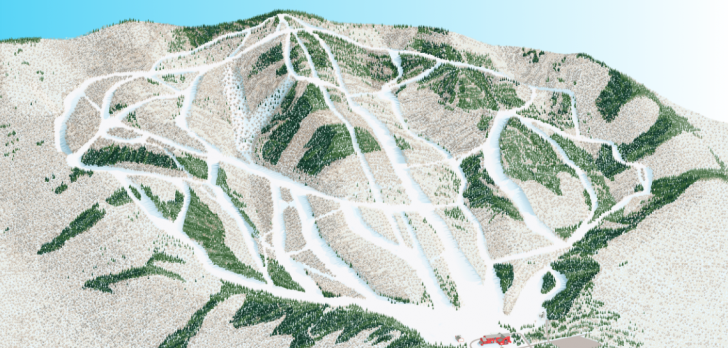
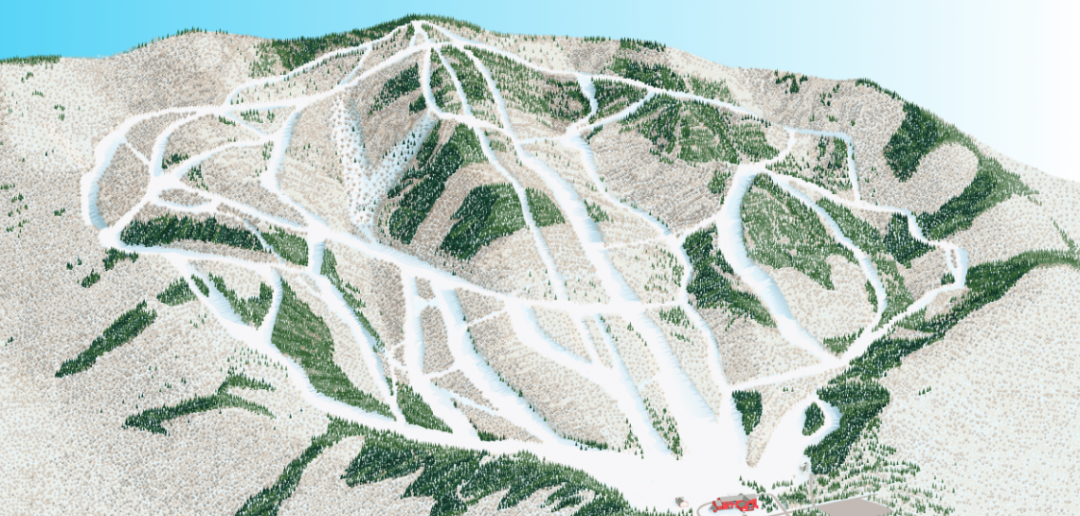
Click here for Mammoth Mountain Trail Map

Click here for Mammoth Mountain Webcam

Looking up from Lift 5. Credit: Marc Liebman

Spring Skiing And Gaping At Jackson Hole

The First Week Of April Brings “Gapers” To JH And A Different Skiing Experience

Weirdness prevails on Gaper’s Day (April 1) at Jackson Hole. Credit: Buckrail.com

Editor Note: We are quite pleased when readers submit articles for publication in SeniorsSkiing.com.  David Barnes is a long-time reader who sent us this account of a yearly ritual at the venerable Jackson Hole.  Thanks David.


Jackson Hole.  Two words that strike double-black-diamond terror in the hearts of many skiers, young and old alike.  But, it shouldn’t.  Sure, half of the runs are black diamonds, including one called Corbet’s Couloir that’s more akin to a cliff than a ski run.  But the other 50% of the mountain’s runs are blue and green, making for a welcome ski experience for any senior skier. 

I first skied Jackson Hole in the late 80’s, with my new wife whose great aunt and uncle lived at the base of Rendezvous Mountain in Teton Village.  At 72 years old, Uncle Warren took me on the old aerial tram, up 4,139 vertical feet to the 10,450’ summit.  The wind was howling, the air was thin, and the run was steep.  “Ready?” grinned Uncle Warren?  I swallowed hard, clicked into my bindings, squeezed the poles hard, and nodded like a rodeo cowboy on a wild bull, waiting for the gate to open and release the snorting, bucking beast.  I was 30 years old and quickly realized I was being out-skied by a 72 year old.  When we’d reached the bottom, I declared I wanted to be like Warren when I grew up. 

Since then, we’ve had the privilege of visiting Jackson Hole a dozen times or so, including the last week of skiing (first week of April) for the last three years.  This is thanks to my mother-in-law, who owns a fraction of the Teton Club, a beautiful and massive log structure near the base of the Tram.  Does this make me an expert on spring skiing at the Hole?  Not exactly.  But I’ve learned enough to understand that skiing the Hole in early April makes for a different experience.  Generally, the weather is warm, sometimes too warm at the lower elevations; later in the week, the snow conditions at or near the bottom can be mashed potatoes.  But the upper elevations typically provide good snow conditions. 

In addition, there’s a fun day.  April 1st is Gaper Day at the Hole.  What’s Gaper Day?  If you have to ask, you are one.  I had to ask.  Gaper Day is a chance for locals to poke fun at tourists by dressing up in kooky outfits on April Fools’ Day.  You’ll see everyone from Uncle Sam, girls in bikinis and dudes in shorts and Hawaiian shirts with old film cameras hanging around their necks.  And for some reason on this particular day, and, only this day, every chairlift spouts a prominent sign reading, “Absolutely no Alcohol on Lifts.”  The signs didn’t seem to be 100% effective…

Loose Moose. Credit: David Barnes

Finally, the moose.  Jackson Hole Mountain Resort is just south of the Grand Teton National Park, which in turn is just south of Yellowstone.  Hence, wildlife is abundant in the area, including moose.  We saw a number of them this year, some on the mountain and some right in Teton Village at the base of the mountain.  Most people are wise enough to keep their distance from the moose.  Some don’t, either deliberately or by accident. My wife, for example, took a walk around the village one morning.  As she turned a corner, she saw the back-end of a large brown animal close by.  As she approached what she assumed was a cute stuffed moose, it slowly turned its big head and looked at her.  Wide-eyed, my wife slowly backed away and then hot-footed it back around the corner, where she nearly ran into a Jackson Hole Mountain Resort employee.  “It’s REAL!” stammered my wife.  The employee gave her a dispassionate look.  “Oh no,” thought my wife as she watched the employee amble away.  “I’m a Gaper…”

Editor Note: The video below is from 2013, but it shows the “spirits” of Gaper Day, honoring April 1, a day for foolishness.

Silver Star Mountain village

SeniorsSkiing Guide: Silver Star Update

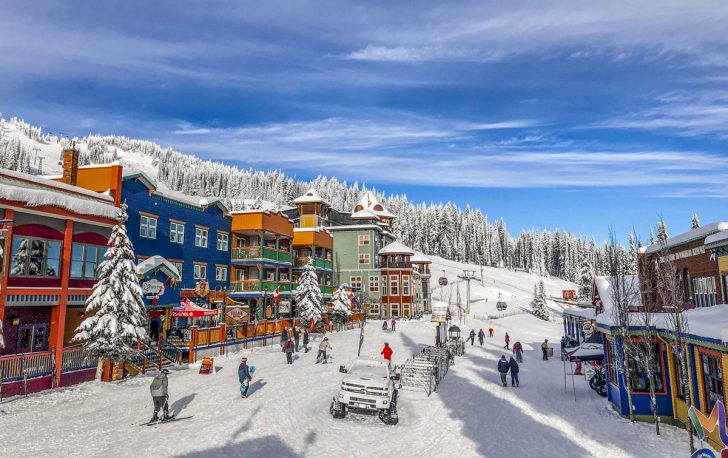
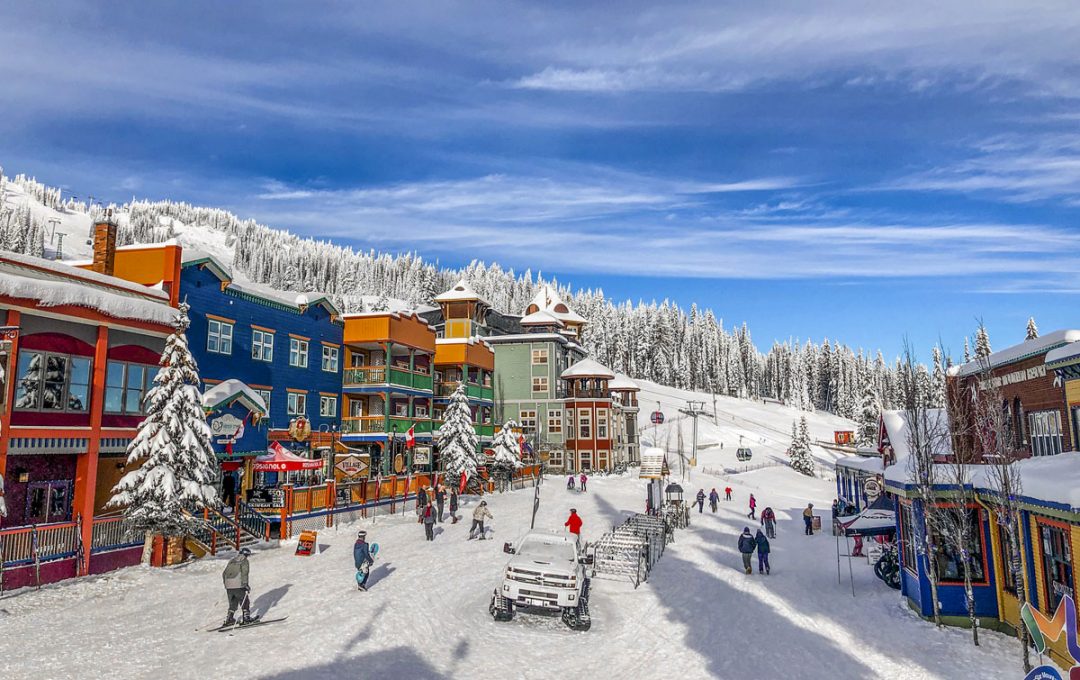
Silver Star’s village with its gondola in view. Credit: Silver Star Mountain.

I hadn’t been to Silver Star Mountain in probably two decades. I remembered a mellow, family resort with an Old West theme and very easy runs.

Boy, has Silver Star in British Columbia, Canada’s interior grown up.

Yes, the main street still has a bit of Old West, 1900s mining town vibe. But that’s where the original Silver Star ends.

There’s now a backside with decidedly expert runs. And a brand new gondola that had its first winter this season. It provides quicker access from the main village to Alpine Meadows, Vance Creek and Powder Gulch. And also gives improved access for beginners, and warm access to the upper XC Trails for nordic skiers so they don’t have to ride open lifts.

What many folks don’t realize is how large this place is. It’s BC’s third largest ski area with 3,282 skiable acres, four mountain faces and 132 runs. This includes the back side with 1,900 acres of steep and deep. Mid mountain is a mile high (5,280 feet) with plenty of ski in-ski out lodging.

As for that Nordic terrain, the 55 km of groomed trails that link to another 50 km at nearby Sovereign Lake make it the largest Nordic network in Canada. And this January, USA Today ranked the SilverStar/Sovereign Lake trail network in the Top Ten Cross-country ski destinations in North America, the only Canadian Resort to make the list. 

Nordic skiiing at Silver Star Mountain, which has the biggest Nordic network in North America. Credit: Silver Star Mountain.

For Seniors

* A two-day Masters Clinic,

* Masters’ Mondays

* A yearly Over the Hill Downhill race where folks dig out their ancient skis and old one piece ski suits.

* A run named Over The Hill.

Fast Facts:

* Silver Star’s ski season runs late November to early April.

*  Nine on-mountain hotels with 5,600 pillows and a seriously vibrant collection of building colors that can include yellow, blue, green, bronze and bright red in sections of the same building. Yes, it all stands out, positively glistening against the snow.

Fat tire biking on snow at Silver Star Mountain. Credit:Silver Star Mountain.

* Sixteen places to eat including two on-mountain and a cabin reached via sleigh, along with a grocery store in the main village. Do NOT miss the Red Antler’s world class chili which, for some inexplicable reason, is called “meat and potatoes soup.” It’s chock full of meat, not too many beans, and set in a thick, spicy base. And for a good show, there’s the Smoked Old Fashioned drink at the Den Bar & Bistro. Watching the bar guy torch wood chips and infuse the mellow whisky drink with smoke is a night’s entertainment by itself.

* Total vertical drop of 2,500 feet with 15% beginner, 40% intermediate, 35% difficult and, yes, 10% extreme. Ten lifts with total capacity of 14,000 skiers per hour.

* Annual snowfall of 275 inches, average daytime temperature of 23 degrees.

* Non-ski activities include snowshoeing, fat cycling snowy trails on bikes with super wide tires, ice skating on the local pond, Tube Town with lift access to inner tube runs and riding a fenced track on Arctic Cat FireCat F120 mini snowmobiles for the 12 and under set.         

To Get There:

Silver star is an hour’s drive north from Kelowna International Airport and the ski area runs shuttles to the resort. The nearest town is Vernon, 20 minutes down the road.

Bottom Line:

Daily pass (for 65+): $82 – $94 Canadian + 5% GST

Season Pass: Senior (65-80) $509 – $579, Young @ Heart (81+) $289.50 Canadian + 5% GST

Great cruiser runs. Great signage. Easily accessed terrain.

Many condo rooms at Snowbird Lodge include generously sized hot tubs.

YouTube: https://www.youtube.com/user/silverstarmymountain

Click Here For Silver Star Trail Map

Click Here For Silver Star Web Cam

Main village of Silver Star Mountain at night in British Columbia. Credit: Yvette Cardozo
Cranmore

Seniors Visit Cranmore, Bring Grandchildren

Historic Mountain Is Perfect For Seniors Who Like Mellow Skiing And Kid-Friendly Amenities.

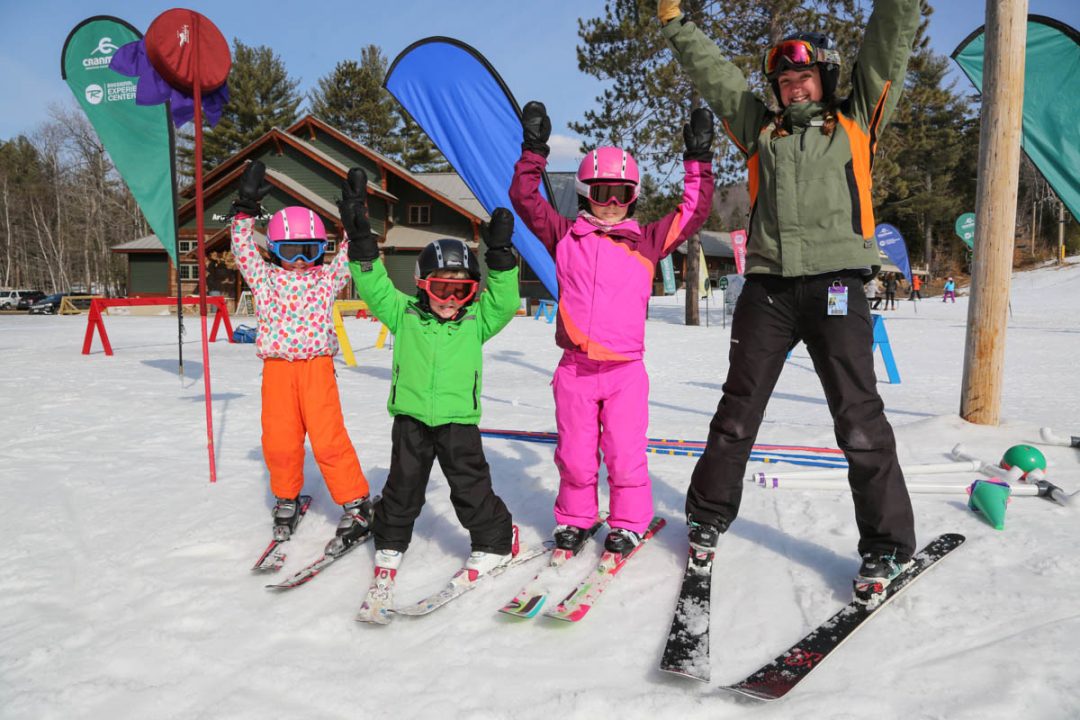
Cranmore is where Seniors and Kids both can enjoy lessons, easy skiing, fun-city. Credit: Brian Irwin

Cranmore offers a lot for seniors to like: Fun and varied terrain, manageable size, easy flat walk from parking lots and most of all, friendly vibe.

I visited Cranmore on a Saturday with a group of senior skiers. Though busy, the main chair lift to the summit, a high speed quad, kept wait times short. A friendly lift line attendant ensured the line moved orderly and efficiently. There was no wait whatsoever at the other three fixed grip chair lifts.

While the mountain has 15 black diamond trails, they are short, and we all agreed Cranmore is the perfect mountain for novices and intermediates. There are wide slopes such as North Slope, East Slope and Zip but keeping things interesting are numerous narrower winding trails such as Kandahar, Skimeister, and Rattlesnake. These classic New England narrow trails reminded us of those we skied “back in the day.”

Several in the group commented that Cranmore is the perfect place to bring the grandkids. There is an award-winning ski school program including terrain-based learning, small terrain parks suitable for younger kids and numerous non-skiing activities to keep the grandkids entertained. The family vibe at Cranmore made us feel safe and free from constantly being on the lookout for reckless boarders and skiers. 

The mountain’s 1200’ vertical drop is enough to keep everyone entertained and the fact all trails lead back to the base means no one will get lost at the end of the day.

Cranmore is located in North Conway which is a vibrant four-season vacation town hosting visitors to the scenic White Mountain region. There is no shortage of restaurants, ski shops, lodging, and shopping in North Conway.  Cranmore feels intimately integrated into the town. It’s about one mile from the main street (route 302) to the resort, and it is immediately adjacent to one of North Conway’s neighborhoods. It makes everything feel real; no fake alpine villages here.

Hannes Schneider statue at the entrance to Cranmore’s base lodge. The celebrated Austrian instructor changed how skiing was taught in the US. Credit: Don Burch

Cranmore has a rich history that I encourage you to check out. In doing so you’ll learn about Hannes Schneider who escaped Nazi-occupied Austria, later trained soldiers of the famed 10th Mountain Division, and operated the ski school at Cranmore for years. You’ll also learn about the Skimobile lift that operated at Cranmore from 1939 to 1989. One of the original skimobile cars is on display in front of Zip’s Pub and Grill (Zip was Hannes’ nickname) which is just a few steps from the lodge. In the video clip my brothers and I are riding the Skimobile in the mid-sixties.

Ticket window price for seniors (65+) is $52. Online ticket prices can be much lower, especially mid-week. Discounts are also available through area hotels and inns.

Click Here For Cranmore Trail Map

Click Here For Cranmore Web Cams


A Banner Winter Through The Camera Of An Average Skier

Harriet’s Album Of Deep, Deep Snow Pics At Brighton.

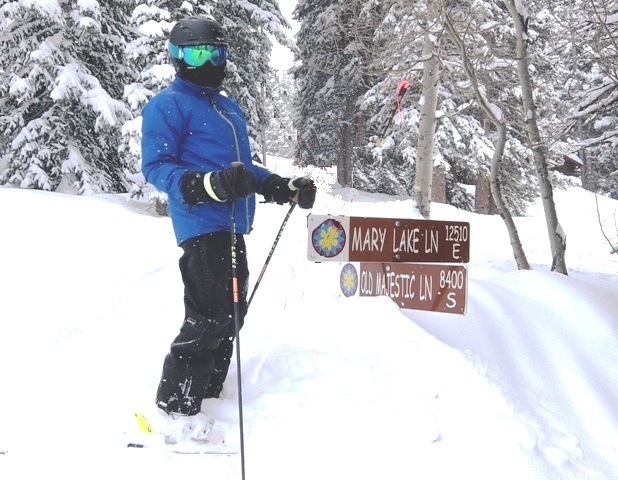
Beware of the buried street signs at the corner of Mary Lake Lane and Old Majestic Lane. The summer road became a deep snow ski trail. Credit: Harriet Wallis

At my home resort Brighton, the snowfall has topped 500 inches—about 41 feet—and the snow keeps coming. Brighton is a down home, low key resort near Salt Lake City that’s favored by families and snowboarders.

This two-story trailside cabin has an access problem. Must dig down deep to find the door. Credit: Harriet Wallis

One more snowstorm and this cabin will disappear. Bamboo poles and a rope line keep skiers off the roof. Credit: Harriet Wallis

Plentiful snow is crucial because It’s our drinking water supply, and there have been several years of low snowfall. When Spring runoff starts, every drop of melting mountain snow is captured. It takes just 24 hours from stream to faucet. Dogs are banned from the canyon watersheds to help keep the pure water free from transmittable diseases.

Just before one of those plentiful snowstorms, my friend and I booked a room at the slope-side Brighton Lodge so we could be first on the mountain in the morning.

Inside the cozy Brighton Lodge. Credit: Harriet Wallis

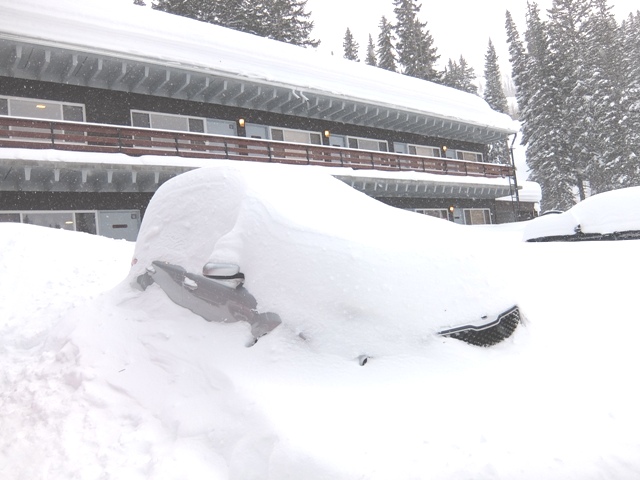
It snowed all night. We skied all day. Then we had to cope with the car.

Outside the Brighton Lodge. Deep snow is fun until it buries the car. Credit: Harriet Wallis


Snowboarders dug it out. Credit: Harriet Wallis

The ample winter also creates some other quirks at Brighton.

While the snow keeps falling, these father and son skiers pitch in to help dig out the gates. Credit: Harriet Wallis


The children’s warming yurt looks more like an igloo. Credit: Harriet Wallis


The parking lot is walled by snow. Where will they put the next storm’s dump? Credit: Harriet Wallis 

Even the ride down the canyon toward home has rewards. Deep snow drives the peak-loving mountain goats down to lower elevations. It’s a treat to see them so close.

Shaggy coats and quizzical looks. Credit: Harriet Wallis

To read more from Harriet click here for her stories on SkiUtah.

SeniorsSkiing Guide: Sunapee Goes Epic

Seniors Can Still Get A Mid-Week Pass At A Big Discount Before April 14.

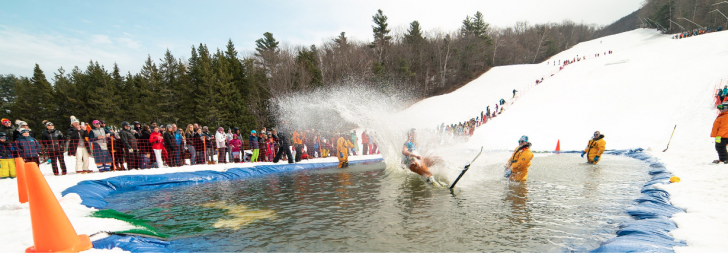
Skier falling into slush cup

It’s that time of the year. Sunapee celebrates spring with a splash. Credit: Sunapee

Sunapee in New Hampshire went Epic this past winter, joining Stowe and Okemo, Vt., as Vail Resort’s three footholds in the East.

Sunapee draws many locals from neighboring towns plus a hefty day crowd from the Boston area. Parking lots fill up early on weekends. Midweek warriors descend on discounted Wicked Wednesdays. Many get there early, lap the Sunapee Express Quad, and leave by lunch.

Skiers disperse to two base lodges—the older, funkier Spruce Lodge (no stairs to reach it) with wood cubbies stuffed with lunch coolers, and the roomier Sunapee Lodge at the Sunapee Express Quad. A shuttle truck precludes schlepping from one to the other, connected by The Beach—a popular spring picnic spot.

Sunapee got jolted out of state-strapped limbo when the Mueller family took over operations in 1998 and worked the same wonders here as they had at nearby Okemo. Robust snowmaking (97 percent) and grooming make Sunapee a reliable area even when snow in the woods is sparse.

Off the South Peak learning area is where the Muellers secured rights to build the West Bowl Expansion, and Vail may or may not follow through. Locals are happy about more trails but skeptical of condos and some dead set against disturbing the old growth forest here.

As a mid-sized area, Sunapee has 66 trails that are varied and full of character. For scenery, ski down the Skyway overlooking a snow-covered Lake Sunapee for one of the best views in New England. Follow the woods down the ungroomed Williamson Trail, or skip through the trees in Sunrise Glades. Get an adrenaline kick down Blast Off and bounce off the moguls on Upper Flying Goose. The terrain park attracts a group of kids who grew up there together. Epic or not, Sunapee will always be Sunapee.

The Muellers’ parting gift to skiers was a high-speed quad commandeered from Okemo in the Sun Bowl. Previously one had to think twice before shooting down here knowing one was facing a slow ride back up, especially in a blizzard.

Although many people ski here for the convenience, less than two hours from Boston, the area truly is a place to stay awhile. Long a summer haven with its many lakes, the Sunapee area has a happy sense of continuity. Skiing segues into swimming and sailing. The ski area has zip lining, mountain biking, adventure course, and summer camps. The satellites tend to stick around—Bob Skinner’s ski shop at the Rotary, Bubba’s Bar & Grille in Newbury, Peter Christian’s Tavern, New London Inn, Dexter’s Inn, Colby-Sawyer College, familiar spots all.

Ticket buyers this year buy an EpicDay pass, a direct-to-lift card that they can reload on line. Until mid-April closing, a day ticket cost counts in the purchase of next year’s Epic Pass.

Epic Local Pass for $699 (19 plus) accesses 30 resorts and is unrestricted at Mt. Sunapee and Okemo. Epic Pass for $939 (ages 13 up) has access to 65 resorts including Europe and Japan. Buy at the Epic Pass site.

For its loyal seniors, Sunapee still offers a midweek pass. Seniors (65-69) is $429 and Super Senior (70 plus) is $279, if bought before April 14. Those prices increased slightly but now include ten discount buddy and six ski-with-a-friend passes. Call or stop at Guest Services (603) 763-3576.

Click here for Sunapee Webcams

Click here for Sunapee Trail Map


A less-than two-hour drive from Metro Boston, Sunapee has beautiful blues, views, and lots to choose. Credit: Sunapee

History Lives At Cranmore Mountain

Celebrating Hannes Schneider, A Pioneer Of Alpine Skiing In North America.

Jubilation at the vintage fashion show at the Hannes Schneider Meister Cup. Credit: Tamsin Venn

Every year, the Hannes Schneider Meister Cup Race, sponsored by the New England Ski Museum and Cranmore Mountain, NH, celebrates the legacy of the venerable Austrian ski instructor. For 23 years, the Cup has drawn people to Cranmore from all over to race or just cruise on this low angle dual slalom course on the Alley, where the old Skimobile ran up.

Schneider and his wife arrive via train at North Conway, greeted by his new employer banker Henry Gibson, owner of Cranmore. Credit: NE Ski Museum

This year’s March event poignantly marked the 80th anniversary of Schneider’s arrival via the Eastern Slope Express 7 a.m. Feb. 11, 1939 at the railroad station that still sits in downtown North Conway.

Any major ski resort in the US would have been thrilled to hire Schneider as ski school director, but he chose to make Cranmore his home. His family followed him into the ski business and now four generations of Schneiders are part of the family narrative.

At the recent festivities, great grandson Hannes Schneider dedicated a plaque to his grandfather, Herbert Schneider (Hannes senior’s son), who served in the 10th Mountain Division and also owned Cranmore from 1963-84. His goal had been to make sure every kid in the valley had a chance to learn to ski.

Instructors from Army’s Mountain Warfare School stand to attention at beginning of festivities. Credit: David Eden

The organizers went all out. The weekend started with a reception and hearty dinner at Zip’s (Hannes’ nickname) Pub & Grill and torchlight parade. It continued Saturday morning at Cranmore’s base with dedication ceremonies, a vintage ski fashion show (one winner rifled through her mother’s closet for an award-winning outfit), silent auction, awards ceremony, bratwurst and beer, all serenaded nonstop by the oompah music of the Bavarian Brothers Band. One felt quite transferred to Austria, instead of a quaint  North Conway. All proceeds went the New England Museum, the goal being to preserve the rich ski history in this region.

Schneider’s story is an intersection of politics and skiing. Here’s the short version.

Hannes Schneider ran a ski school in St. Anton Austria, where he promoted the new Arlberg technique and helped bring important tourism business to the region. As a high-profile critic of Hitler, he drew ire from the Nazi party who threw him into prison. With the intervention of a German skier friend who was also an attorney, and Harvey Gibson, an influential American banker, Hannes eventually found refuge in the US where Gibson set him up as ski school director at the new snow-train-served resort Gibson opened in North Conway.

For competing in the Ski Meister Cup, or any ski race, here’s general advice for seniors. If it’s a fundraiser for a worthy cause, it’s easier to justify having more youthful competitors heartlessly whiz by you on a parallel GS course.

In North Conway, visit the Eastern Slope Branch of the New England Ski Museum, opened only a year ago, a companion to the one in Franconia.

Click here for more on skiing at Cranmore Mountain.

Click here for Cranmore’s website.


SeniorsSkiing Guide: June Is A Pleasant Surprise

In The Shadow Of Mammoth, June Mt. Features Dramatic Views.

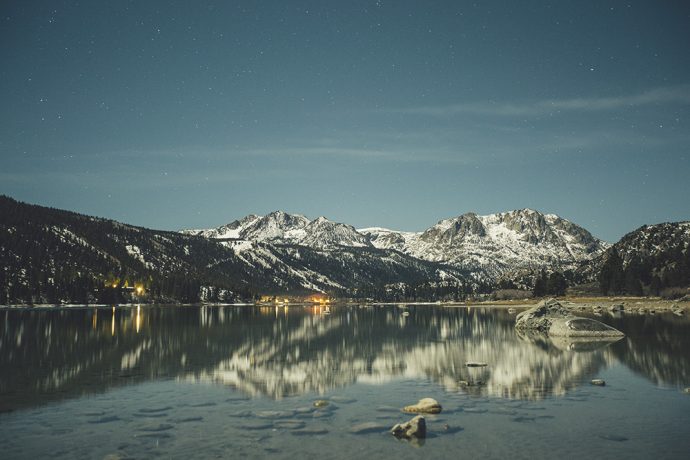
June Mt has the views, plenty of groomed blues, and lots to choose. Credit: June Mt.

One of the most beautiful drives in ski country is from Carson City, NV down Rt 395 to Mammoth Lakes, CA.  Passing Mono Lake and making your way through the passes that are open in the winter yields some of the most breathtaking views in the country. 

As we made our way down 395 this year, we called an audible to swing on to the June Lake Loop on Highway 158 through June Lake to the June Mountain Ski Resort owned by Mammoth Mountain.

We had never skied June before, and stopping there gave me my 110th different area on my list. Providing  wide open, groomed  intermediate terrain with some nice glade skiing due to ample snow fall this season in the Sierras, it was a delightful pause to our tour of Tahoe ski areas, finishing at Mammoth Mountain.  Not every day needs to be a hammer fest with maximum vertical feet quests and skiing the tough chutes and cornice drops that are typical with our hard charging senior group.  The day at June was a welcome break to ski some delightfully groomed runs with low angle glade skiing mixed in.  

June has a seven lifts, 41 trails, and about half are rated advanced, the other half blues and greens. The resort boasts 70 percent sunny days during the season. Rainbow Summit is at 10,ooo feet and views are spectacular. From there, you can run down Silverado, June’s longest run (two miles), to the mid-mountain chalet.

June has a mid-mountain “base” chalet as well as a base at the base. Credit: June Mt.

Perhaps the most visible benefit of  the visit to June was the incredible scenery.  Sitting at the enclosed deck for lunch, we were treated to vistas that reminded me of the great views of the Alps.  The sharpness of the clear day vistas were enhanced by what seemed to be a close up and personal look at the most dramatic mountain peaks  in the Sierras.  As beautiful as the Minarets are from the top of Mammoth, the vistas from the top of June rivaled their big brother.  Although there are no senior lift ticket discounts per se, the schedule of ticket rates are similar to Mammoth with a base price of 119.00 per day at June versus the 182.00 tab at Mammoth.  If you order on line, you can receive up to 20% off for one day tickets and as much as 40% off for visits and purchases of 5 days or more. June and Mammoth are also on the Ikon Pass. 

The town of June Lake is a little sleepy in the winter with the exception of the June Lake Brewing Company on main drag of Crawford Ave. Exceptional IPAs and other selections that are a staple for the outdoor set in the June Lake area. During the week, you basically have the place to yourself with no lift lines and quiet, scenic relaxing runs.  We always make the Mammoth Lakes area a staple on our visits to the Sierras and the detour to June Mountain should not be missed by any skier venturing down 395. 

Click here for June Mt. trail map.

Click here for June Mt. webcam.

June Lake provides a view as well as plenty of summer activities. Credit: June Mt.

How BC Resorts Show Love For Senior Skiers

Big White, Sun Peaks, Silver Star Create Programs For Seniors.

A few of Silver Star Mountain’s many senior skiers. All in fantastic shape, all very good skiers.
Credit: Yvette Cardozo

Ok, one thing most senior skiers—those folks in their 60s, 70s, 80s and even beyond— do a lot is ski.

They love snow, they love winter, they love all things ski.

In fact, nearly two thirds of all season passes bought at Silver Star Mountain in Canada’s British Columbia go to seniors—32 percent to “regular” seniors 65-80, and another 30 percent to the “Young @ Heart” skiers who are 81+.

The other commonality: They’re fit. They exercise regularly. They never really were couch potatoes. And most of them have been skiing since they learned to walk. 

Curious, I corralled a bunch of them at Silver Star to ask some questions.

Well, not all of  them.

“Um, where’s the guy you said is 83?” I asked.

“Oh he took off. He’s heading for the backside.”

Sure enough, Mike had decided the lure of back country powder overrode sitting to talk with somebody about senior skiers.

When you talk about senior skiers, whether it’s at Silver Star, a bit north at Sun Peaks or my regular Tuesday group outside Seattle, you’re not talking about somebody manning a bench in the lodge watching grandchildren.

The group at Silver Star that morning seemed to be all exski patrol, exinstructors, ex racers. And, well, not all of them were ex-. A couple showed up in their instructor jackets.

And, yes, this group was virtually all guys.

One of Silver Star’s veteran skiers. Credit: Ernie Sollid.

But that’s just Silver Star. Over at Sun Peaks, the senior group is more a mixed bag. In fact, the husbands of the Polar Bears (all women) got so jealous they talked about forming their own guys only group, the Grizzlies. And there’s the Antiques, a mixed group of Kamloops local men and women who also ski at Sun Peaks and socialize together regularly.

Here’s the point: The ski areas have bought into all of this and are creating events and special programs for seniors.

Silver Star has a fun race called the Annual Over The Hill Downhill and actually includes training camps, qualifiers and, of course, the actual race, usually in February.

The idea, said Chantelle Deacon of the area’s media relations, is to dress in your oldest, most archaic ski clothes and gear.

“You see people in super tight onepieces. Some unearth these old straight skis with really pointy tips.”

There’s also a run called Over The Hill.

And there’s a senior clinic called Master Academy aimed at folks 50+,  a two-day clinic with skiers split into intermediate, advanced and expert.

Plus, there’s Masters’ Monday, weekly co-ed programs January through March run by instructors but aimed more at fun skiing than lessons.

Big White, also in British Columbia, has three separate Masters Weeks that echo ski weeks of yore and combine lessons in the morning with social events in evenings.

Ok, there have been some concessions by these skiers.

John Wilson, the latest “old man” to join the group. A relative baby at 69. Crdit: Yvette Cardozo

Steve Hubbard, one of the younger Silver Star guys at 67 confessed, “I used to terrorize the bumps. Now they terrorize us.”

You think maybe a bit before you do something, you take fewer chances, someone else chipped in.

“One of the things keeping a lot of us in the game is knee and hip replacements and at least one back fusion. Knees and hips are almost routine and Art has fused ankles,” someone else added.

But that hasn’t stopped them.

Ernie Sollid, 77, sent me a picture of his back Xray, the slightly terrifying one that shows lumbar 3+4+5 bolted together. He also sent along a screen shot of his stats for this Feb. 1, showing he hit 46 mph, skied a total of 25.5 miles with 22,145 vertical feet. All this over four hours.

“I usually quit after lunch,” he added.

But not everyone is held together with bolts and pins.

Sigi White, 81, at Sun Peaks, whose idea of keeping in shape is back country touring because she says downhill skiing isn’t taxing enough, has managed to escape injury.

“I ski anything on the mountain,” she said, adding “I’m not fond of bumps. I prefer powder.

“I want to save my knees.”

For More Information

Silver Star Mountain Resort

Sun Peaks Resort

Big White’s Masters Weeks

SeniorsSkiing Guide: Solitude

New England Trails With Western Snow.

Solitude management loves seniors as reflected in ticket prices and lodge access.

I love skiing Solitude Mountain Resort for its wide range of trails for all levels and ages of skiers ranging from wide-open trails to steep, narrow trails that remind me of skiing Stowe, Mad River Glen, and Sugarbush. All the parking is right out front of the Moonbeam Lodge or Solitude Village.

Management loves senior skiers, and it starts with when you arrive. Mid-week senior lift tickets are $75 and much cheaper if you buy on-line.

Solitude opened in 1957 and is roughly 30 miles up Big Cottonwood Canyon from the heart of Salt Lake City. Like many ski areas, it has had its share of ownership changes. Deer Valley bought it in 2014 and in 2017, Deer Valley and Solitude were acquired by Alterra Mountain Company. Alterra owns 14 resorts including Aspen/Snowmass, Mammoth, Tremblant, Snowshoe, Steamboat, Stratton, and Squaw Valley.

Nice blue groomers as well as steep glades. Credit: Solitude

Mother Nature dumps 500 inches of snow on its 79 named runs on 1,200 skiable acres. The top is 10,488 feet and the base is 7,994 which give one 2,494 vertical feet accessible by 10 lifts. It is easy to find your way around the mountain, and you never have to climb or walk between lifts. Forty percent of the terrain is intermediate and 50 percent is rated for experts. There are two base areas—Solitude Village and Moonbeam—and, if you are a day skier, park at Moonbeam so you can walk up about twenty-five easy steps or take an elevator in the lodge.

From the Moonbeam lift, you can yo-yo off on beginner and intermediate trails or ski to Eagle Express. It opens up glades that take you to the Powderhorn lift. Or, you can ski Inspiration, Rumble, Grumble, Stumble, Serenity, and Challenger and enjoy the steep rolling contours that both challenge and keep you smiling all the way down. I’ve skied all of them in knee-deep powder and frozen granular. No matter the conditions, after each run down you want to hurry up for more.

If you like steep slopes through the trees, take Summit Express to the top. It gives you access to the far side of Honeycomb Canyon as well as a long, wonderful combination of intermediate runs called Dynamite and Mine. Or, you can traverse along the ridge and ski Parachute (you may think you need one, but you don’t) and Milk Run (i’ts not).

On the mountain, the Roundhouse has a restaurant and bathrooms on entry level and upstairs. accessed by elevator. No stairs! The same for the Moonbeam base area. The menu at both Roundhouse and Moonbeam is typical ski area fare, reasonably priced (for a ski area) and tasty (trust me, I’m picky). There are restaurants in the small Solitude Village along with condos to rent.

So let me repeat what I said in the beginning, I love Solitude. Every time I ski in the Salt Lake area, I spend at least two or three days there.

Click Here For Solitude Trail Map

Click Here For Solitude Webcam

Author Marc Liebman makes Solitude a regular stop when in Utah. Credit: Solitude

Reporting From the Italian Alps

Italy’s Aosta Valley: Gateway to great skiing

Italy’s Aosta Valley is rich with history; even richer with places to ski. The Romans used the valley as a route to Gaul. In the intervening centuries, more than 100 castles were built. Starting in the early 1930’s, the Italians, the Swiss and the French started building ski lifts. They haven’t stopped.

The valley provides easy access to some of the world’s greatest ski resorts. At one end is Courmayer on Mont Blanc. Drive up a side canyon and you’re in Cervinia, on your way by lift and ski to Zermatt. Another short drive, and you’re at Monterosa.

We’re in centrally located Saint Vincent, a scenic and charming walking town, where every day we journey through scenic alpine villages to a different resort. 

Centrally located Saint Vincent

It’s only the second week of March, and Saint Vincent is beginning to bloom. We’re staying in the aptly named Hotel Bijou, a gem of a hotel overlooking the town’s central plaza. The main street is lined with colorful three and four story buildings housing attractive stores and restaurants specializing in Aosta’s regional cuisine. Just a few blocks in either direction are an elaborate mineral bath complex reached by funicular and a sizeable casino.

After a full day of skiing, we don’t have energy for either.

We’re here with the owners of Alpskitour, a local guide service and SeniorsSkiing.com advertiser. Mauro Cevolo has taught and coached skiing in Italy, Austria, France, New Zealand and the US (Mammoth). Andrea Jory teaches mostly at Cervinia and Champoluc. He was on Italy’s national bobsled team and competed in the 1980 Lake Placid Olympics. Both are magnificent skiers and highly enjoyable companions. They’re intimately familiar with the many resorts in and around the Aosta Valley, including the best places to ski and where to stop for a gourmet lunch in an authentic surrounding.

The author with world speed ski champ, Simone Origone and Andrea Jory, Alpskitour

Wherever  you go with them they’re warmly greeted. At lunch the other day, they bumped into Simone Origone who for 12+ years held the record for the world’s fastest man on skis (about 157 mph!).

An important benefit of staying in Saint Vincent over one of the resorts is the ability to decide, last minute, where to ski. The other day, when high winds had forced many of the resorts to shut down, we drove to the city of Aosta, boarded a gondola and climbed the mountain into magnificent mid-winter conditions at the Pila resort. Accustomed to Rocky Mountain resorts, Pila was a big surprise…emphasis on big. But it is small, relative to where we’d be going over the coming days.

La Thuile in Aosta Valley

The next day we drove past high-perched castles, ancient stone villages, and up a series of hairpin turns to reach Espace San Bernardo. We started at La Thuile, and after a gondola and a chair entered a landscape of endless peaks and glaciers. Following several long runs and more lifts, we crossed into France and descended to La Rosiere, another sizeable resort. After a few hours of skiing, we rode two long Pomas, crossed back into Italy and skied to Maison Carrel, where we lunched on regional cuisine in a modernized 19thCentury stone barn. I had cabbage soup topped with a thick layer of Fontina cheese, one of many Aosta Valley products exported across the globe.

Combined, La Thuile and La Rosiere have 39 lifts servicing something like 7800 acres of terrain, mid-sized for the Alps. Nonetheless, it’s size is slightly less than Whistler Blackcomb, North America’s largest.

Monterosa’s Champoluc-Frachey

The story gets better. Yesterday we drove to Monterosa’s Champoluc-Frachey and skied two of its three massive valleys. We started on a super-steep, rail funicular and throughout the day used cable cars, gondolas, and a variety of open and bubble chairlifts. This place is humongous. Looking up into remote snow fields were tiny specks skiing gondola-accessed backcountry. We stayed on trail, at one point dropping down a long and steep sun-drenched trail…my kind of skiing.

The West won this season’s snow lottery. Last year, that prize went to the Alps. Coverage is adequate at the moment and skiing is a lot of fun. If it were deep powder, I’d be able to enjoy a handful of runs before calling it a day. We’re probably skiing 15,000 – 20,000 vertical.

Today is a self-imposed rest day. We’ll visit some of Saint Vincent’s treasures and drive into the city of Aosta to see its Roman ruins. Tomorrow we’ll be back on another mountain. Which one is a decision Mauro and Andrea will make in the morning. One thing I know: it will be big, beautiful, and interesting. That’s what defines skiing in and around the Aosta Valley.

More on this fantastic ski experience next week.  

At Great Glen Trails, Nordic Skiing and Activities for Everyone

New NH Cross-Country Resort Offers Winter Sports Alternatives.

Olympian Sue Long Wymess demonstrates “Gorilla Arms” technique at Great Glens Trails. Credit: Tamsin Venn

Great Glen Trails Outdoor Center just past Wildcat on Route 16 in New Hampshire, sits at the base of the towering Mt. Washington. At 1,600 feet in an area known as the Glen, the snow is plentiful, and the managers cut Nordic trails to perfection daily for both classic and skate.

Cruise around a 45-km network of groomed and backcountry trails. Most trails are double tracked, for two-way traffic.

“Great Glen has some of the finest designed trails for cross country skiing in the world. The late John Frado is famous for designing them for quality and whimsy that the Great Glen trails beautifully convey,” says Roger Lohr, SeniorsSkiing.com cross-country editor and publisher of XCSkiResorts.com. 

“The Meister program at Great Glen may be the most successful in the country with a fat bike component, too,” he adds of the weekly locals’ race series.

Learn from the best. Ski School Director Sue Long Wemyss, a U.S. Ski Team member from 1983-86, competed in all four of the XC races in the 1984 Olympics in Sarajevo. She offers a lesson package of three one-hour private lessons.

Heads up. Nordic equipment has changed radically in the past decade. You can rent or buy skis that are waxable, waxless, or skinned. A new adjustable binding system lets you move your weight forward or backward with the turn of a dial. The new skin skis are much faster than the old mohairs (“slohairs”). Music to our ears: “You can enjoy skiing more with the new gear,” says Great Glen XC shop director Nate Harvey.

A scavenger hunt for grandkids will keep them searching for forest friends. Credit: Tamsin Venn

Take the grandkids out on the green trails and let them spot all their furry friends at animal cartoon stations. Punch all the holes on the map and they earn an official Trails Tracker button.

Come and stay awhile trailside. Just opened in September, The Glen House is the fifth hotel on this site (four others burned down). It’s an airy building that manages to be both rustic and sleek. Thanks to the efforts of Great Glen Trails General Manager Howie Wemyss (Sue’s husband), the hotel uses state-of-the art green technology to harness geothermal for heating and cooling and eventually solar and hydro. Half the hotel’s 68 rooms have balconies facing the Northern Presidential mountains and the Carter Moriah range. The Notch Grille and indoor heated saltwater make après ski relaxing. In the great room, two story windows face the peaks of Mt. Washington, Jefferson, Adams, and Madison, and Architectural Digest recently named it “The Most Beautiful Bar in New Hampshire.”

Great Glen is a good spot to try a new activity or for everyone in the family to enjoy themselves. Choose fat biking, snowshoeing, tubing, or taking the SnowCoach up Mt. Washington to timberline into an Arctic winter wonderland. Ski and stay packages are reasonable. Summer brings a whole other basket of activities.

The Glen House hotel has a truly beautiful bar with dramatic artwork. Credit Tamsin Venn

Nordic Rates: Season Pass Seniors $100 (62 Plus), $75 if bought by Dec. 1. Day pass Senior (62 Plus) $12. Two for 1 Mondays and Fridays (non holidays).

Trails are groomed to perfection at Great Glen. Credit: Tamsin Venn


Mike On A Fat Bike On Snow

A Fat Bike Neophyte Takes To The Trails. Here’s What’s Different.

Correspondent Don Burch (l) and Co-Publisher Mike Maginn pose before heading out. Credit: Tamsin Venn

Exploring alternative snow sports always interests us.  We like snowshoeing around the woods when the snow is too deep for cross-country skiing. We go ice-skating on the pond behind the house when it gets cold enough and there’s no snow cover, an uncommon combination. We even tried snow camping, and we are researching ways to build an igloo or a snow tepee for our grandson in the backyard. So, when the opportunity to go fat biking in the New Hampshire winter mountains came around, we saddled up.

A group of ski journalists were given a chance to explore the Great Glen Trails Outdoor Center in Pinkham Notch, just up the road from Wildcat Mt.  The center with its base lodge, store, cafe, and rental shop is just across the road from the brand new Glen House Hotel, on the exact site of four previous hotels dating back to the mid-19th century at the entrance to the famous Mt. Washington Auto Road.  The spacious Outdoor Center has 45 km of groomed trails for xc, snowshoeing, and fat biking as well as tubing.  Another fantastic activity is riding the Snow Coach up the Auto Road to the 4,200 foot tree line on Mt. Washington. There’s a whole other slate of activities for summer, too.  Only a half hour or so from North Conway, this resort is an historic, ultra family-friendly, non-skier welcoming, Nordic-focused, relatively undeveloped area, and we predict it is going to be growing like a snowball.

Don whisking along on the flat. It helps to have a groomed trail. Credit: Mike Maginn

But we came to try fat bikes because we heard they had become a new winter thing to do. See Pat McCloskey’s recent story on biking in the winter. We’ve seen fat bikes on sandy beaches, on trails in the woods, but we’ve never been on one, let alone riding one on the snow. We’re not new to cycling, that’s for sure.  We’ve been on two Boston-New York AIDS Rides, a Pan-Mass Challenge, and numerous local charity rides. We are happy on road bikes and a rail-trail hybrid. So, not a newbie.

A fat bike has gigantic balloon tires, a triple chain ring in the front with a tiny granny gear, and a frame that looks like beach cruiser. SeniorsSkiing correspondent Don Burch and I started off from the Outdoor Center with a little downhill run to the trail. So far, so good.

To bike at Great Glens, you follow the ski trail, riding in the center of the groomed corduroy, keeping away from the classic cross-country tracks. Right away, you notice the differences.

Rolling resistance is noticeable. With a five inch tire width, you’d expect that. But wow, it is different. We decided that hammering for speed was not our game, instead going slow was good. Finally finding the right gear combination made pedaling easier  Those adjustments helped.

Soft snow acted like a brake. When we hit a soft patch, we felt the wheels sink, and we had to power out. Harder snow is much better. Look for hard snow in the woods; open field snow gets soft first on a sunny day.

Bouncy, bouncy can happen. Somewhere along the way, those big balloon tires made us feel as if we were bouncing up and down along with our pedaling. Perhaps it happened on an uphill where we tended to half-stand on our pedals. Kinda fun, but obviously not very efficient.

For a first outing, it was fun and challenging. Like all new things, now we know what to expect. Give fat bikes a try on a nice, cold, sunny day. You will have a thorough workout, learn some new cycling techniques, and have another way to enjoy the winter.

Mike riding the Fat Bike. Knickers are just for fun. Credit: Don Burch


SeniorsSkiing Guide: Powderhorn Mountain Resort

The Grand Mesa in western Colorado is the world’s largest flat-topped mountain. Six-thousand feet higher than surrounding terrain. In places, it ascends to 11,000’. You drive through high desert, ranchland, tiny villages. Then you climb to the heights of Powderhorn Mountain Resort. 

Powderhorn on Colorado’s Grand Mesa

Many of you have expressed interest in lesser-known ski areas. To those not in the neighborhood, Powderhorn qualifies as “lesser-known,” and it deserves your attention.

Powderhorn’s three chairs provide access to 1600 acres of trails and trees. The day I skied there, snow quality was outstanding, but snow depth prevented extensive exploration. At one point this winter, it should reach its average 250”.

At 1650’, the vertical is adequate. Unlike some other areas with more vert, Powderhorn’s trials offer a nice continuous pitch. Mountain stats claim 50% blue/30% black. The blacks I skied were more blue. Nonetheless, everything I was on provided an interesting skiing experience. Some mountains have that advantage over other more developed places: they’re interesting. Maybe it’s the fall line; maybe the layout. Whatever it is, Powderhorn has it. And on that particular day, through ever-changing clouds, Powderhorn offered up spectacular panoramas of distant desert landscapes.

The base lodge looks more ‘70s suburban bank building than ski lodge, but once inside, there’s a remarkably friendly and old-fashioned vibe. Not a lot of people around that Tuesday, but it seemed like everyone there came up to greet us and ask where we were from.

Instead of on-mountain lodges, Powderhorn opens its patrol shelters to the public. In addition to a few things to nibble and drink, they, too, have an uncommon feeling of gemütlichkeit. I felt like I was time warping into a kinder, gentler, less-commercial ski era.

Every Thursday, the 50+ “Young At Heart” program meets for guided skiing, lunch, and après ski. Regardless of when you visit, for those 75+, lift tickets are $38, season passes $179. The season pass includes benefits at 25 other areas. The under 75 rates  also are attractive.

Slopeside lodging is limited. We chose to stay in Palisade, a scenic 28-mile ride. Palisade, adjacent to I-70, is known for wineries and peaches, and Wine Country Inn. For several years we’ve been driving by this attractive hostelry. This time we gave it a try. Our room was modern, spacious, and well appointed. What came as a surprise was the delicious food! We dined in both restaurant and bar. Breakfast, included, was a scrumptious buffet of freshly made everything, even a creative selection of home-baked goodies.  We’ll definitely return.

Wine Country Inn

Here’s an idea for seniors seeking a varied ski adventure: Fly into Salt Lake City, ski at a few of those great areas, then head out to Colorado. Assuming the roads are in good shape, you’ll be in Palisade in 4.5 hours. Check in at Wine Country Inn, ski a few days at Powderhorn, then head east toward Aspen, Vail, Breckenridge, Loveland, or Arapahoe Basin. Drop off the car at Denver International and be on your way. Other routes will take you to Telluride and Crested Butte, or down to Las Vegas

Alternatively, if you want a hassle-free, laid back ski vacation, with good prices, uncrowded slopes, outstanding food, and uncompromising friendliness, simply fly into Grand Junction, rent a car, stay at Wine Country Inn, and enjoy the skiing and scenery at Powderhorn. It’s a winning combination. 

Click here for Powderhorn trail map

Click here for Powderhorn webcam.


SeniorsSkiing Guide: Wolf Creek—The Snowiest Surprise

This Resort Has All The Characteristics Senior Skiers Love.

Skiing off the top of Wolf Creek, with Alberta Peak in the distance. Credit: Samual Bricker courtesy of Wolf Creek Ski Area.

It was a powder day at Colorado’s snowiest resort when we pulled in.

Where were the crowds? Not here, they were in places like Aspen, Vail, and Winter Park.

“There are maybe 500 people here,” said our shuttle driver. “Have fun!”

The unassuming base area at Wolf Creek Ski Area is a throwback, with no developed village. Credit: Samual Bricker courtesy of Wolf Creek Ski Area.

Wolf Creek Ski Area is a delightful throwback situated on the Continental Divide in the southern part of the state. And if you’re shocked at the price of skiing in Colorado’s glitzy mountain enclaves, you’ll be pleasantly surprised at how they hold the affordability line at Wolf Creek.

“We’re not out to squeeze every last dime out of our customers,” said Rosanne Haidorfer-Pitcher, vice president of marketing and sales at the resort.

Walk-up ticket prices are $72 for adults, and just $43 for seniors 65-79. If you’re 80, congratulations, your ticket is free.

The skiing is phenomenal, especially if you can hit Wolf Creek on a powder day, which is often. Rocky Mountain storms drop more snow here than anywhere else in Colorado—430 inches a year.

Tree-Skiing Paradise

A skier gets ready to drop in off of Knife Ridge, a short hike into double-diamond powder terrain. Credit: John Nelson

Wolf Creek has a vast array of tree-skiing runs scattered over its 1,600 acres. Topping out at 11,900 feet, its 10 lifts serve a long ridge line that is steep at the top, but rolls into intermediate pitches for most of the area. All in all, 55 percent of the mountain is rated as beginner and intermediate.

If you’re an advanced skier, hiking along the ridge line will deliver you into double-diamond alpine drops. Some of the best are off the Alberta Lift, where a 10-minute climb puts skiers into rare territory of steep untracked lines.

You’ll find great powder elsewhere at Wolf Creek, particularly in the resort’s vast maze of tree-skiing. During my visit in February, I skied powder all day.

Transportation, Where To Stay

Wolf Creek has no on-mountain village. It’s an unassuming collection of old-school lodges, with accommodations 23 miles to the west in Pagosa Springs and 18 miles east in South Fork. If you don’t want to drive, shuttle service is offered by Wilderness Journeys in Pagosa Springs.

Pagosa Springs offers the biggest variety of lodging and restaurants, and it’s also home to several hot springs establishments where you can soak your quads after spending the day skiing powder.

After our big powder day, we spent the shuttle ride down talking about how much we loved the skiing at Wolf Creek.

“This is my new favorite resort in Colorado,” said Jan Mosman, who was visiting from Minnesota with her husband, Mark. “I love the tree skiing.”

The Mosmans had just come from Winter Park, where they had done battle with 15,000 other skiers.

“What did you like best about Wolf Creek?” I asked them.

“No lift lines,” Mark said.

Food, Travel

For a small ski area, Wolf Creek has some surprising amenities. On mountain, there are eight places to eat.

The main Wolf Creek Lodge has daily hot specials and homemade soups, along with burgers served on the sundeck. Don’t miss the Continental Espresso Bar at the top of the Treasure Stoke lift, surely one of the highest places to get a coffee buzz in the Rockies.

The closest major airports to Wolf Creek are in Denver (246 miles away) and Albuquerque (237 miles away).

Click here for Wolf Creek Web Cam

Click here for Trail Map

Skiers make the 10-minute climb off the top of the Alberta Lift to access advanced terrain at Wolf Creek Ski Area. Credit: John Nelson.


Book Review: Boarding Southern Vermont

[Editor Note: SeniorsSkiing.com is again asking our readers to contribute to support our online magazine. Yes, we have grown in the number of subscribers and advertisers. But our expenses have also grown. You can help us defray some of these expenses by helping us out with a donation.  This year, we have a mix of premiums for different level of donations, including stickers, sew-on patches, our new SeniorsSkiing.com ball cap. All donors will be entered into a drawing for a pair of bamboo Polar Poles to be drawn in late March.  You can donate by clicking here.]


How Did A Then-Revolutionary Sport Become Mainstream? Hint: Epic Parties.

[Editor Note: Roger Lohr is the publisher of XCSkiResorts.com and SeniorsSkiing.com’s cross-country editor.]

The book Snowboarding in Southern Vermont: From Burton to the U.S. Open” by Brian Knight on History Press is a snapshot of the 1980s and 1990s during the early days of snowboard lore. The book is a fine encapsulation of snowboard history with an amazing collection of photos of those early days at the region’s ski areas Stratton, Bromley, Magic Mountain, and Snow Valley.

The book traces Jake Burton Carpenter’s life through Londonderry, Manchester, and Stratton Mountain, VT, as he became the proprietor of Burton Snowboards. He shared the spotlight with Donna Carpenter,  a woman he met whom he eventually married. She is cited in the book for “heavy lifting” in the early development of Burton Snowboards which was to become a significant force in the sport. Jake’s infectious enthusiasm and the lengths he went through to get Burton Snowboard started required visionary decision-making and resulted in a very influential company in the snowsports world.

There are hundreds of names that are weaved into the Southern Vermont story such as Paul Johnston the Stratton mountain manager, who had an open mind about snowboarding in the beginning; Lyle Blaisdell, the backhoe operator with the half pipe-carving Midas touch; and other snowboard dignitaries such as Tom Sims, Chuck Barfoot, the Hayes brothers, Neil Korn, Lindsey Jacobellis, Mark Heingartner, Craig Kelly, Dave Schmidt, Terje Haakonsen, Tricia Byrnes, Ross Powers, and Shaun Palmer.

The book’s vibe of the times is also expressed with tales of epic parties and Burton home-grown spirit. The competition parties perhaps far-out shined the half pipe competition.  Spectators at the U.S. Open experience left the event site littered with beer cans and booze bottles, enjoying debauchery and mayhem at “snowboarder residences” throughout the region. The parties hosted by Burton and other purveyors of every imaginable snowboard-oriented product were often topped by the Hayes’ brother infamous gatherings.

The early days were rife with teenage posse behavior both on and off the slopes and age antagonism as skiers fought back to reject the newcomers at the ski areas. The book outlines the certification concept which was a test that snowboarders took to earn the right to get access to the slopes at Stratton. There were many nights when sneaking snowboarders walked up the ski area slopes to make some runs.

The U.S. Open was established as an institution before snowboarding got any television coverage. The time when the Olympics gobbled up snowboarding as a prime time hook for viewers was still in the distant future. During the sunrise of snowboarding, the camaraderie between participants was more important than winning the Open. But the event declined as limits were continually pushed with profanity, violence, and even death when two guys snow caving in the parking lot were crushed in a very sad mishap.

The road to the Olympics was very bumpy for snowboarders coming out of Southern Vermont. Jake Carpenter called the Nagano Olympics, which was the first of the quadrennial competitions to feature snowboarding, “kind of a disaster.” The U.S. Open grew each year and eventually mainstreamed with the elimination of alcohol, superior rider athleticism, and a send off to Stratton’s Sun Bowl so it was not in the main area.

Southern Vermont in the late 80s may have been the epicenter of snowboard culture and the U.S. Open was the crown jewel of snowboard contests. By 2012, that sub-culture had run its course, and it was the end of the era. The event was moved to Vail. The book states “The Vermont brand can launch a business but rarely can sustain it.” For years, coverage of snowboarding was invariably about the jargon, the fashion, and the rebelliousness rather than the joy of floating in powder, dodging trees after a snowstorm, or twisting in the air. “Snowboarding in Southern Vermont” is a quick read that establishes the record of snowboarding’s early days there, and we should be thankful that this record is now public for all.

SeniorsSkiing Guide: Steamboat

At first glance, Steamboat is the ideal senior skier resort. It’s big. It’s predominantly intermediate. It’s anchored by a substantial town with hot springs, shops and many good restaurants. There are lodging options, galore. But Steamboat also has its challenges. If you’re not part of the IKON Pass, a day ticket can cost $129-159 (advance online). And reaching the lift from where you’re dropped off is always a hike.

Many of you associate Steamboat with two of the great mid-century names in the sport: Buddy Werner and Billy Kidd. Werner was raised there. He competed in the 1956, ’60, and ’64 Winter Olympics and died soon after in a Swiss avalanche. Part of the area is named in his memory. Kidd won silver and bronze in the 1964 Olympics and bronze and Gold in the 1970 FIS World Chamipionships. Now 75, Billy Kidd has been Steamboat’s Director of Skiing for almost 50 years. Most days at 1PM, he’s available for a run with the guests.

The resort is expansive: 2965 skiable acres spread across two mountains and offering 3668 vertical feet. At 6900’, the base is good for breathing. The lift-serviced part of the mountain tops out at 10,384’. Storm Peak has the most steeps. Sunshine Peak has more greens and blues than blacks. Morningside Park, the backside bowl, is mostly blues and blacks.

I was there on two particularly cold days, but enjoyed the effects of the inversion that produces warmer air at higher elevations. Unlike the smoggy inversions in the Salt Lake Valley, in Steamboat cold valley air stays clear.

The resort is in the northwest corner of the state. The most efficient way to get there is by flying into nearby Hayden which receives non-stops from most major airports via Alaska Airlines, American, Delta, and United.

First day on the mountain, I was fortunate to ride up the gondola with an instructor on his day off. He volunteered to show me around. Greg Lambert knows his stuff.

We started at what locals call Wally’s World (aka Sunshine Peak). From there radiate numerous trails and glade runs. One set is named for breakfast foods (Cowboy Coffee, Hot Cakes, Biscuits, Gravy); another set for their sundial effect (High Noon, where the sun is directly overhead at noon; One O’Clock, Two O’Clock, and Three O’Clock).

We worked our way toward Storm Peak, where there’s generally steeper terrain and almost endless opportunities to duck into the trees. A bit fatigued, I left Greg and worked my way over to Thunderhead Lodge, then down a long wide run called Valley View. The panoramas of Yampa Valley and distant ranges are spectacular.

Yours truly tapping Buddy for good luck.

Day Two, I was back on Storm Peak. At the top there’s a bronze bust of Buddy Werner. Local lore says tapping his noggin with a pole brings good luck. I tapped and felt fortunate to be there.

One night we dined at Low Country, which serves authentic (and outstanding) Southern style cuisine. The morning before heading out, we had a terrific breakfast at Creekside Cafe.


Steamboat is big and beautiful. It legitimately prides itself for friendly cowboy cuture and its legendary “Champagne Powder.” The town has everything you’ll need during your stay. Free shuttles are available to take you everywhere.

But to get to a lift, you need to carry your gear through Gondola Square and numerous short sets of stairs. Yes, we saw a storage facility and wagons to pull things, but negotiating the journey was tiring.  Eight or ten years ago it wouldn’t have been an issue, but at three-quarters of a century, I felt it. At one point, I’d like to return to Steamboat. By then, maybe they’ll have a moving sidewalk or a team of sherpas to ease the burden.


World Championships 101

[Editor Note: As the new year begins, SeniorsSkiing.com is again asking our readers to contribute to support our online magazine. Yes, we have grown in the number of subscribers and advertisers. But our expenses have also grown. You can help us defray some of these expenses by helping us out with a donation.  This year, we have a mix of premiums for different level of donations, including stickers, sew-on patches, our new SeniorsSkiing.com ball cap. All donors will be entered into a drawing for a pair of bamboo Polar Poles to be drawn in late March.  You can donate by clicking here.]

Here’s An Inside Look At What Goes On Behind The Scenes.

This championship course is watchable from Solitude’s base area. Credit: Harriet Wallis

When I covered my first World Cup ski race many years ago, I was really naive. I thought the winner would be awarded a huge silver trophy. I was disappointed to learn that racers earn points. No trophy.

But my race stupidity gave me an idea that I’ve pursued ever since. Maybe readers would enjoy an inside look at what goes on around a major race venue. Not just the champions. Not just results. Other stuff. Here we go.

Background Facts

For 10 days in early February, 1,400 elite amateur athletes from 40 countries come to Utah to compete in the World Snowboard and Freeski World Championships at three Utah resorts: Deer Valley Resort, Park City Mountain, and Solitude Mountain Resort.

Practice Day At Solitude

Skicross and snowboardcross take place at Solitude where a special rolly-poly course was built for the competition. As explanation, four athletes start at the same time and race for the finish. It’s similar to the Kentucky Derby where all horses start at the same time. Good luck getting in front.

I was at the snowboardcross training day at Solitude. All racers could take run after run to get used to the course. There was no timing. There was no winner. It was a day for individual practice.

Walk Right Up To The Course

While the words “World Championship” sounds lofty, most courses are usually super spectator friendly. I walked right up to the course, and race spectators can also. It’s like being on the 50 yard line for the Super Bowl. 

A ski patroller watches the course just in case. Credit: Harriet Wallis

Snowboarders careened down the course, jumped the rollers, and headed for the finish. Repeat, repeat, repeat. I got bored, so I moved along to take other photos.

With her little mittens flying, #8 gives the victory sign as she heads back to the lift for another practice run. I don’t know who she is or from what country, but she’s happy. Credit: Harriet Wallis

Inside The Press Room

Off to the press room to get out of the blazing sun. The press room is the sanctuary for writers and photographers from around the world. They munch on snacks, tap away on laptops, and jabber into their phones in foreign languages.

Then there’s a press conference.

International camera people jockey for position before the press conference. Credit: Harriet Wallis
2018 Olympic champion Michaela Moioli of Italy and U.S. snowboarder Anna Miller at the press conference. Credit: Harriet Wallis

These are the faces of BoarderCross athletes — 2018 Olympic champion Michaela Moioli of Italy and U.S. snowboarder Anna Miller. They tell the press conference what it’s like out there on the course.  Moioli likes the straight stretches where she can pick up speed. And Miller says she’s “ready to get the job done.” Women to watch.

Going Back Into My Files. Meet An Athlete

Several years ago, I happened to ski at Deer Valley on a similar World Championship training day. I stopped to watch athletes launch themselves off the “kicker” to soar, flip and spin then hope to land right side up. Their athleticism was amazing. But I’m not heavy-duty into aerials, so I went for lunch.

There was a guy gobbling down a big bowl of Deer Valley’s signature turkey chili. He was wearing a race ID, so I asked if he was an athlete. He introduced himself as Jon Lillis. He was fueling up before going back onto the aerial course to flip and spin upside down. Holy cow! Right after lunch!

Now, at Solitude, I bumped into Jon Lillis (Rochester, N.Y.) again. He is the reigning aerial World Champion. He’s a force to watch.

Jon Lillis fueled up with a bowl of chili before practicing more upside down spins and flips. Credit: Harriet Wallis

Watch At Home

With 10 days of world class competition, tune-in and watch as history is made. NBC Sports will showcase more than 25 hours of 2019 FIS Snowboard, Freestyle and Freeski World Championship programming, including more than 10 hours of live coverage, on NBC and the NBC Sports networks.

Additional coverage will also be available on NBC Sports Gold – NBC Sports’ direct-to-consumer live streaming product – and the OlympicChannel.com digital platform. A full broadcast schedule will be available on both USSkiandSnowboard.org and 2019WorldChamps.com.

To read more from Harriet click here for her stories on SkiUtah.

SeniorsSkiing Guide: Sundance

[Editor Note: As the new year begins, SeniorsSkiing.com is again asking our readers to contribute to support our online magazine. Yes, we have grown in the number of subscribers and advertisers. But our expenses have also grown. You can help us defray some of these expenses by helping us out with a donation.  This year, we have a mix of premiums for different level of donations, including stickers, sew-on patches, our new SeniorsSkiing.com ball cap. All donors will be entered into a drawing for a pair of bamboo Polar Poles to be drawn in late March.  You can donate by clicking here.]

If your Western ski vacation takes to Salt Lake City, save a day for Robert Redford’s Sundance.

SeniorsSkiing.com correspondent soaks up the beneficial rays of the sun on the Bearclaw sun deck at Sundance. Credit: Harriet Wallis

It’s about an hour from the airport, but it’s off the beaten track, and it’s laid back. It’s the only resort where you can ski—and then create jewelry, make wheel-thrown pottery, or do printmaking all in the same day.

While Robert Redford was still a young actor, he was drawn to the wilderness. He bought two acres in secluded North Fork Canyon and built a small home, doing much of the work himself.

Ski the shoulder of towering Mt. Timpanogos. Credit: Harriet Wallis

Then in 1969, he bought the entire pristine canyon to protect it from developers who might dice it into small lots, sell it off for homes, and destroy it. He saw the perpetual tug-of-war between developers and environmentalists.  Redford lives his beliefs, saying don’t squander the wilderness for short term gains.

Ski the wide open spaces. Credit: Harriet Wallis

Sundance is a 5,000 acre environmental preserve on the shoulder of towering 11,700 foot Mount Timpanogos. It  encompasses the 450 acre ski area with four chairs, 44 trails, two terrain parks and a 2,150 foot elevation drop.

The window ticket price for those 65 and over is $30.

And it’s a resort with a twist.

Creativity is good for the soul

The famous Sundance Film Festival was born here, and it celebrates the creativity of independent film makers. Redford believes that creativity and new ideas are good for the soul. Everyone’s soul.

So you can ski in the morning, create silver jewelry in the afternoon, and then wear it home. In just two hours in an Art Studio workshop you can create your own memory of Sundance even if you think you don’t have a creative bone in your body.

Workshops are especially appealing to those who want to enjoy the intimate resort but not ski all day.

Here’s where you can make your unique creation at the art studio workshop. Credit: Harriet Wallis

There are workshops in jewelry, soap making, journal binding, drawing, painting, wheel-thrown pottery, and print making. Classes are very small or it’s likely the session will be one-on-one with your instructor.

Relax and unwind

“We don’t try to compete with other resorts,” said Sundance Director of Skiing Jerry Warren. “You’re here for a different reason. There’s a greater sense of peace here.”

“Take a person from a busy city. They race to catch a plane, they fly, they land, they jump back into the fast lane. We’re going to slow them down a little bit and let them savor the mountains and the experience,” he said.

Sundance’s active senior group —it’s called the Senior Ski Group—meets and skis together weekly accompanied by a ski school instructor who skis along and gives tips.

There’s also snowshoeing, cross-country skiing, and night skiing.

From brownies to relaxed dining

The Bearclaw cabin on the summit offers 360 degree views.  It serves soups and sandwiches and brownies that are to die for. On warm days, skiers lie back in deck chairs and soak up the high mountain sunshine.

Plank floor, roaring fire, and lunch at the Foundry Grill. Credit: Harriet Wallis

In the base area, there’s Creekside for a quick bite. The  Foundry Grill has an earlier times atmosphere with farm implement decor, rough hewn wood floors and a roaring fireplace. The Tree Room is built around the live native pine tree and has a romantic atmosphere. And there’s a country store with more of those brownies.

Low key is special

But what really distinguishes Sundance is its low key ambiance and relaxed atmosphere that have disappeared from many mega resorts.

Sundance is located 56 miles south of the Salt Lake International Airport. The trip takes a little over an hour. You can reserve a luxurious, secluded Sundance cabin, or there’s ample lodging in Provo about 13 miles away.

For Sundance webcam, click here.

For Sundance trail map, click here.

Base area buildings are tucked into the trees, and…”a river runs through it.” Credit: Harriet Wallis

To read more from Harriet click here for her stories on SkiUtah.

Here’s a typical morning in the base lift area. Credit: Harriet Wallis
Magic Mountain

SeniorsSkiing Guide: Magic–Where Skiing Has A Soul

Magic Mt. Has $29 Tickets On Thursdays!

Magic is right-sized for seniors and families.

We are zipping down Wizard, a 1.6-mile-long intermediate trail that hugs the West Side, in seven inches of new snow with lots of woohoos and yippees. At many areas, this trail would be flattened by now. Not so at Magic Mountain in South Londonderry, Vt.

Groomers will leave the snow to powder hounds until the weekend. They will, however, smooth trails out on the more easy going East Side to keep everyone happy.

Is Robert Frost hanging around Magic Mt? Credit: Tamsin Venn

Natural snow makes some of the East’s most interesting, fun, and challenging trails and glades all the more sweet. Add a trail mainly to yourself midweek, friendly locals, and reasonable prices – Throwback Thursdays lift tickets cost only $29 – and it’s like skiing back in the old days.

When Swiss instructor Hans Thorner started Magic in 1960, he picked Glebe Mountain for a reason: exciting, wooded terrain that reminded him of his home in the Alps. Back in the 60s and 70s, Magic Mountain had a huge following. Thorner sold it in 1985. After, the vagaries of skiers, investment, real estate, and weather meant customers drifted away because they could not count on it to be open,  and it has had its ups and downs since then.

President Geoff Hatheway and his band of 16 investors (Ski Magic) are changing all that. They have launched an ambitious five-year plan to make Magic appeal both to die-hard skiers, families, and the 18- 19– year-old set. The group is investing in snowmaking (now at 60 percent) and lifts. Notably they are putting in new lifts to provide mid-mountain skiing and more lift capacity to the summit.

Hatheway typifies the die-hard Magic loyalist. He skied here in 1998 and his kids went through the racing and free skiing programs. Like others he appreciated the family friendly alternative to nearby Stratton Mountain.

“Here’s what you won’t find at Magic, a high speed lift and trails groomed Soup to Nuts,” says Hatheway frankly.

Magic President Geoff Hatheway likes early runs on snowy days. Credit: Tamsin Venn

What you will most like find are other senior buddies either on the lift or in the Black Line Tavern, a popular locals’ watering hole. Throwback Thursdays extend to food and drink specials here, the bands are live, and no one is in a hurry.

Magic is open Thursday to Sunday, plus holidays, and on any day it snows 6 inches or more. It has a daily sales ticket limit of 1,500 to keep lift line wait times short and glades uncrowded.

Mountain Facts

Vertical Drop 1,500 feet

205 skiable acres

29 trails, 11 gladed runs

3 Chair Lifts, 3 Surface Lifts

Tickets

Seniors (70+) day $54; season pass $499

Buy online in advance and pay as little as $44.99

Throwback Thursdays $29 (except holidays and powder days of 6” or more) with purchase of Throwback Card ($149)

Magic Mountain Trail Map Click Here

Magic Mountain Webcam Click Here

There it is. An accessible mountain that has something for every senior. Credit: Magic Mt.

SeniorsSkiing Guide: Brian Head Resort

Brian Head is Utah’s southernmost ski resort. But its base elevation is the highest. At 9600’, the bottom of Brian Head is higher than the top of Deer Valley. It took about a day before I got acclimated.

In terms of Utah ski resorts, Brian Head is relatively small: 650 acres and a 1320’ vertical. It’s possible to add another 300’, but that would require a steep out-of-bounds climb. 

Because of its location, Brian Head can be a snow magnet, especially when southern storms are prevalent. I skied the resort after a modest but windy storm. Every now and then the clouds lifted to reveal glimpses of the dramatic red rock countryside. On a bluebird day, the views must be magnificent.

The resort got going in the mid-60s when Alta’s Alf Engen was invited down by the first of several owners to help lay out the trail system. The place has developed significantly over the years. 

Today, there here are two mountains connected by a ski bridge. Navajo Mountain is gentle; Giant Steps Mountain, a bit more challenging. Eight chairs are available. The #7 chair and the black diamond area it serves were closed during my visit. My impression is that Brian Head’s blacks would be considered blues at other resorts, 

Getting from parking lot to lifts is effortless. We only visited Giant Steps Lodge where we booted up in the lower level (coin-operated lockers available for storage) but needed to exit and walk a short slope to get to cafeteria and restrooms…a minor detail unless you have the urge.

Senior pricing is good: If you’re 65+, weekday tickets are $30; weekend tickets are $43. Holidays, the price climbs to $57. Season passes are available to 62-69 year olds for $329; 70+ for $219. Season pass holders also get three days at each of 15 other smallish areas in Arizona, California, Colorado, Idaho, Michigan, New Mexico, Utah, and Wyoming. It might be worth the purchase for that benefit alone!

Another Brian Head price advantage is the low cost of its ski school. A weekend lesson is $75. The resort has other attractive instructional offerings as well.

Lodging options are limited to two hotels and a whole lot of condos. We stayed in a pleasant one bedroom in one of the hotels, Cedar Breaks Lodge. It has underground parking and easy elevator access to all floors. The first night we ordered pizza and wings in its restaurant. All I can report is that the beer was good and the hamburgers delivered to other guests looked edible.

The other hotel is the Best Western Premier. It’s nice looking, serves a respectable sit-down breakfast, and features a basic-menu steakhouse.

Other than the day lodges there are only two non-hotel restaurants: Pizanos Pizzeria (which we didn’t try) and Sook Jai Thai Cuisine, a Thai home-kitchen with acceptable dishes and a lack of central heating. 

Contemplating a stay of more than a few days? Investigate the many condo offerings and stock up on food in Parowan (at the bottom of the 13 mile access canyon) or in the larger community of Cedar City, 32 miles away.

Brian Head is a 3-hour drive, from Las Vegas, where winter flights often cost less than flying in and out of Salt Lake City, 4½-hours north. The resort would pair well with a visit to Vegas or one to nearby Zion National Park and/or Bryce Canyon National Park

If I wanted a laid-back, inexpensive, Western ski vacation, perhaps with grandkids learning to ski or board, I’d look into the southern comfort of Brian Head. 

For Brian Head Trail Map Click Here.

For Brian Head Giant Steps Webcam Click Here.


SeniorsSkiingGuide: Big Bromley

Bromley Mountain Is Just Right For Seniors.

Bluebird day at the top of Bromley Mtn, VT. Credit: Tamsin Venn

At Bromley Mt. in southern Vermont, runs are not too long and not too short, just right for senior legs to make a top-to-bottom, 1,300 vertical-foot run without a thigh-burn break.

Although you would be remiss not to stop. Views from the top of the Sun Mountain Express stretch from the Adirondacks to the White Mountains. In the near distance, snow-dusted hills and ridges roll away. Trails curve through bright deciduous trees, and dipping into a glade is a friendly undertaking.

I found the sweet spot on a trail called Corkscrew over to Pabst Peril, smooth as Guernsey butter, after a recent seven-inch snowfall. The Pabst reference is to Bromley’s original owner, Fred Pabst, grandson of Captain Frederick Pabst, founder of Pabst Blue Ribbon Beer.

Black diamonds here are really what other areas would call blues, reducing the high alert meter. A high speed lift and groomed trails ensure sharable speed and vertical feet tallies on your Ski Tracks app. A south facing slope, flooded in sunshine on a wintry day, is enough to banish SAD for the entire winter, although some skiers’ fondest memories are sun-and-shorts spring ski days, and the world is grand.

Bromley is known as a young family-friendly mountain, which is always good news for seniors. It welcomes a lot of others as well: tele skiers (a popular annual telefest); moms (Feb. 8 is Mom’s Day Off); snowboarders  (Sochi Olympics medalist Alex Deibold is a native son); uphill skiers sunrise through dusk . (The Appalachian Trail swings around back.); and exchange students (who trade Lima, Peru for Peru, Vt., to work here in their summer). Also innkeepers, young racers guided by the Bromley Outing Club, and lines of kids in weekly afternoon school programs.

Bromley is right-sized for seniors, lots of do-able trails, even the Black Diamonds. Credit: Bromley

As an independent mountain, managed by Brian and Tyler Fairbank of the Fairbank Group, which also runs Cranmore Mt. and Jiminy Peak, Bromley still has a senior’s season pass, and senior day pass discounts as low as $39 for a midweek day ticket if bought at least a day in advance.

The Silver Griffins is “for skiers 60 plus with a sunny attitude.” For $15 annual dues, you get parking near the base lodge midweek non-holiday (the youngsters have to park on the other side of Route 11), discounts in the cafeteria, ski shop, rental and repair service area, plus a name badge, monthly after ski parties in the Stratton View alcove, other social functions, and lots of tall tales from when Bromley was a two J-Bar mountain.

Fun Facts

Marvie Campbell celebrates 50 years as a ski instructor at Bromley.

Seniors Seasons Pass: 70 plus, $549; age 65-69, $599. No blackout dates.

Advance Sale Lift Tickets: As low as $39, depending on day and month.

Bring the grandkids: Bromley put in a terrain park this year, built by the experts at Arena Snowparks.

Fat Tire Fridays: Burger and Beer Special for $10 in the Wild Boar Tavern.

Skiing History Day: March 2. Fanatics unite. https://www.bromley.com/winter/events/

Why Stay Home Lodging: Midweek $99/night, includes lodging, tickets, and breakfast for two. http://lodgeatbromley.com/vermont-vacation-packages/

50th Anniversary: Marvie Campbell celebrates her 50 years as a Bromley ski instructor this year.

Mountain Stats

  • Summit Elevation 3,284 feet
  • 47 Total Trails
  • Nine lifts
  • 86 percent Snowmaking
  • www.bromley.com

Click here for trail map


SeniorsSkiing Guide: Belleayre, A World Away…

…But Close Enough To Enjoy The Day.


The new Belleayre Gondola whisks skiers to the summit in comfort. This is part of the continuing upgrading of facilities at the mountain. Credit: Belleayre Mtn.

Folks living in and around major urban centers, with the exception of places such as Denver and Salt Lake City, often find it difficult to plan a ski day within an easy drive. And while the population is graying, more seniors are skiing that ever before. So the hunt for ski areas within easy driving distance becomes a chore.

Belleayre Mountain in Highmount, NY, off New York Throughway Exit 19 and about 40 minutes west of Kingston on a straight run along Rt. 28, neatly fills that bill. About an hour from Albany and two hours more or less from the New York City/North Jersey Metro area, the resort makes a day trip a reality for urbanites.

While there’s no danger of Belleayre ever becoming an Olympic ski venue, its trails offer enough of a challenge for expert and novice skiers alike.

The Catskills resort is owned by New York State’s Olympic Regional Development Authority, a public benefit corporation originally formed to manage the facilities at the 1980 Lake Placid games. Not too long ago in a move to cut expenses, New York dispensed with the Belleayre Gold Lifetime card that granted seniors over 70 the opportunity to ski for free. There was also a Silver Sliders Card for those with little color but silver in their hair, that also offered older skiers courtesies. But according to mountain spokesmen that program was discontinued because of a lack of participation.

Holders of the Gold Card often arrived at Belleayre on midweek days and more often than not were practically the only ones on the slope. Looking at the Gold and Silver cards, it’s difficult to understand why they would have been discontinued for lack of participation. The cost to the state of granting such privilege was microcosmic. 

In view of the fact that they did not detract from the mountain’s bottom line, they could have carried on infinitum. But powers beyond the mountain—read that to say “Albany”—decided that those over 70 years of age should pay to ski. The savings hardly filled the budget gap for Gov. Cuomo.

Onondaga trail looks ready for action. Nice blue! Credit: Belleayre Mtn.

There are discounted program that are currently offered. A septuagenarian will pay only $20 for a daily lift ticket. That’s not bad. If you fall into the 65 to 69 age category, your ski tab is $52 mid week and $60 weekend at the ticket window. If you buy online, that mid week price drops to $32. Belleayre also offers a variety of differently priced passes. A Season Ski3 combo pass good for Belleayre, Gore and Whiteface now costs $999 for those from 65 to 69. A Belleayre only pass was listed as $459 for 70 plus. Season passes would have been way cheaper if purchased in August.

All of that being said, Belleayre is one of the more attractive ski destinations in the Lower Northeast. It’s easy to get to and drive time is more than reasonable. The runs offer enough excitement for expert skiers with a variety of Black Diamonds running from the summit to the lodge. 

The blues are a terrific variety that give skiers an opportunity to condition their legs and move on to a more challenging blue before hitting the steep moguls and runs on the black diamond trails. Green trails are often used to loosen up before hitting  blues or blacks and are both easy enough for true novices and interesting enough for older skiers who simply want to put on skis and enjoy a day on the slopes.

Even on holidays and weekends when the caravans of buses head to the mountain from New York City, North Jersey, Albany and every school district in-between, the lift lines move along at a rapid pace giving you the opportunity to spend more time on the mountain and less time getting there.

The mix of skiers and snowboarders, young and not so young gives Belleayre a great panache. Respect for each other is paramount and it’s not uncommon to see a senior skier stopping to help or offer advice and suggestions to a younger skier who seems to be struggling down hill.

The mountain’s ski/snowboard school offers instructors capable of working with any age group to truly imparting the love of skiing.

For a trail map, click here.

For web cam, click here.

Two hours from New York/New Jersey is Belleayre. That’s doable for a mid-week run where you will find lots of room on the slopes. Credit: Belleayre Mtn.

Trail Name Series: Doc Dempsey’s

A Wonderful Cartoon From Mike Roth, Ski Journalist From Albany.

Mike writes and draws cartoons for the Albany Times-Union Ski Blog. This one is about Smuggler’s Notch’s Doc Dempsey’s run.

Credit: Mike Roth

Trail Name Series: Pennsylvania

Extrovert, Powder Puff, and The Elevator

Spend a little time looking at resort maps and you’re sure to find some attention-grabbing trail names. When I looked at Pennsylvania resorts I found some beauties. Powder Puff and The Elevator at Jack Frost along with Extrovert at Blue Knob topped the list.

Among the best is High Hopes also at Blue Knob. Seven Springs has three trails making it into the top of the list; Santa’s Beard Terrain Park, Lost Boy Trail and Lost Girl Trail. Also noteworthy are Vertigo Park at Liberty Mountain and White Lightning at Montage Mountain.

See if you can spot Draufganger on Big Boulder’s Trail Map.

Rounding out the list is Draufganger (German for daredevil) at Big Boulder.

Several Pennsylvania resorts stand out for having trail names that follow a theme. At Roundtop Mountain many trail names relate to the Revolutionary War. These include Recruit, Bunker Hill, Lafayette’s Leap and Fife and Drum. At Camelback trails are Egyptian themed such as Nile Mile, Pharaoh, Asp, King Tut and Cleopatra.

As you’d expect, at Eagle Rock trails (and lifts) are eagle-related. Trails include Baldy, Talons, Nestling and Screaming Eagle. Lifts include Wings and Soaring Heights. At Elk Mountain trails have Native American names such as Mohawk, Kickapoo, Seneca, Iroquois and Chippewa.

Do you have a favorite trail name that’s been overlooked? Please let us know in the comments section.