Tag Archive for: Marc Liebman

Three Bicycling Lessons Relearned

Reflection On The Past Before Starting This Year’s Biking Season.

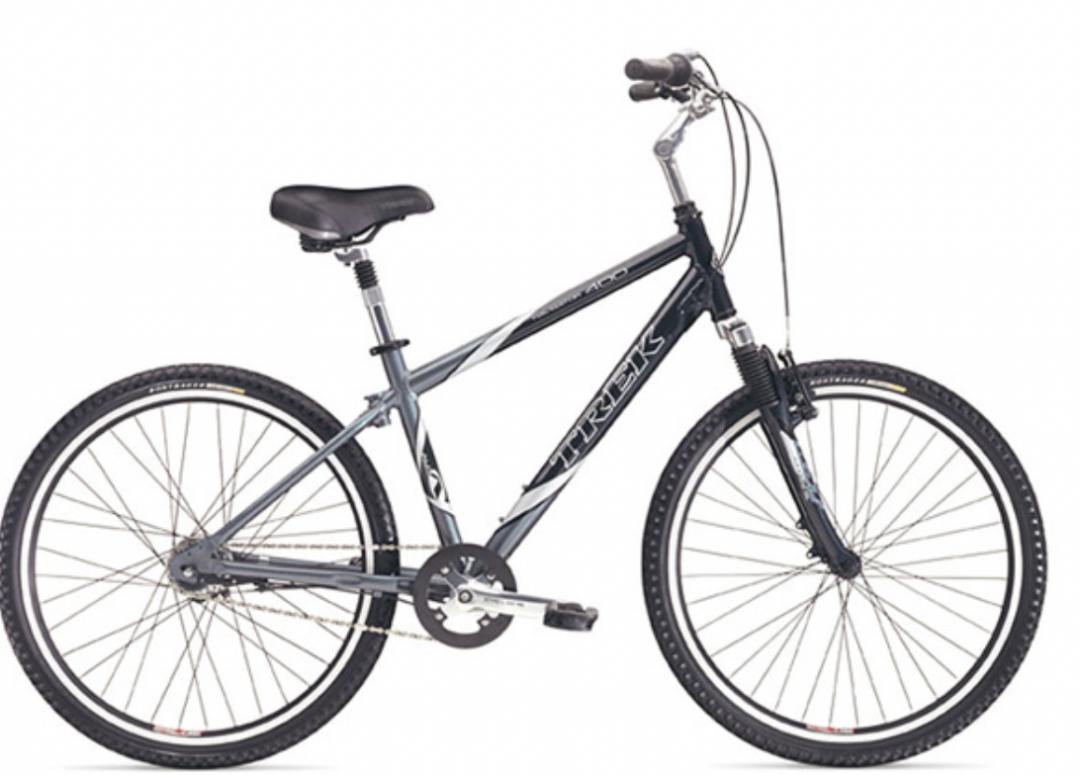
Marc’s Trek Navigator 400 allows a comfortable, upright riding position. A fat seat helps.

With gyms closed to Covid, way back in August 2020, I started riding my bicycle five days a week as a way to get ready for the ski season. I live in North Texas where the terrain is relatively flat. We don’t have hills or mountains, we have rises. I also decided to ride on neighborhood streets because there are crazy people driving while reading and sending texts and emails.

Arbitrarily, my initial goal was to ride 15-20 miles a day, four to five times a week at a steady speed of around 10 miles an hour. My Trek Navigator 400 has three ranges and eight speeds within each range.

My road cycling career began back in the fifties on a Raleigh bike with three speeds which we upgraded to six. Back then, I was a 13-year-old member of an Air Explorer troop in Germany. We-our scout masters, parents and us scouts- decided to take a long-distance bike trip during the summer.

Several conditioning/trial trips later, we took the train from Frankfurt to Calais, the ferry to Dover and another train to London. Four days later, we took the Tube to Watford and headed out to the youth hostel in Stratford-on-Avon. Six weeks later, we were back in London after having visited more castles and churches than I can remember.

There were other bike trips in the following two summers, and, from them, I learned three important facts about biking. One, the youth hostel or inn where we were staying was always upwind at the top of the highest hill in the area.

Two, one can ride farther than one thinks. Back then as an Air Explorer, we tried to do 50-75 miles a day, depending on the terrain. Where it was relatively flat, 75 miles in a day was a no brainer. Hills and rises, well, that’s different

Three, bike seats are uncomfortable.

Fast forward six plus decades and after seven months of biking, the lessons learned have not changed. My house/destination is at the highest point in the neighborhood and on the last mile or two, whatever wind is blowing, it is in my face.

When I started, I could barely ride eight miles.  I’d ride remembering some of the tougher legs on those three trips. When this post was sent, weather permitting, 12 miles per day, four to five days a week is the norm. Going father is more about time available than fatigue. At an average of roughly 10.6 mph, 12 miles takes an hour and 10 minutes. Twenty miles would take close to two hours which is more time than I want to spend pedaling since I have other things to do, like write books and magazine articles.

And guess what, even with a wider, padded seat on my bike, after 12 miles, my butt still hurts!

The latest from Marc’s bike app: Map My Ride.

Corn Snow And Mashed Potatoes: Know The Difference.

One Fun, The Other Not So Much.

Spring brings corn for a few precious hours. Credit: Jans

We’re nearing that time of year in New England and the upper Midwest where the snow melts a little during the day and freezes at night. The repetitive process creates tiny balls of ice. In the morning, they’re rock hard but as the sun comes up, they melt a little and turn into ball bearings lubricated by water. The condition is known as “corn snow.”

The skis carve when rolled on their edges, a platform builds up under the bottom making it easy to unweight, if you are old-fashioned like me, or roll your knees in the direction you want to go.

The day starts with rock-hard, frozen granular until the melting starts. Then for the next three or four hours, the skiing is divine. Depending on the temperature and the slope’s exposure to the sun, by mid-afternoon, the snow becomes sloppy. That’s when it is time to quit and start early again the next day.

Corn snow: Coarse, granular, and wet. Credit: FIS

In the Rockies, the drier snow doesn’t “corn up” as well as it does in the east. Until late in the spring, the conditions are packed powder at the top and soft and mushy as you come down in altitude.

Late spring snows in the Far West and east of the Mississippi are often full of moisture. The snow is heavy. Gloppy is an appropriate term. Way back when, we called the conditions mashed potatoes.

Venture into mashed potatoes, and you’ll find that turning requires effort and strength. Unless you have your weight equally balanced throughout the turn, the heavy wet snow grabs your skis, making turns hard to make.

Lose your balance in mashed potatoes, and you are in what we used to call a “slow, twisting fall.” If you are lucky, you get up, wetter than when you went down and keep skiing.

Mashed potatoes? Go home.

However, if you are a subscriber of SeniorsSkiing.com, danger lurks in the mashed potato fall. Even with modern bindings and shorter skis that reduce the torque on the leg, your bindings may not release immediately. Why? Because the initial torque may be below the threshold needed to free your boot. Then as you “slowly” fall, torque is slowly applied to the leg that might result in a nasty spiral fracture. The break could take weeks, even months to heal.

So how do you ski corn snow? The answer is simple. In the morning when it is hard and rutty, ski the same way one would hard, frozen granular. Then, as the snow softens, ski the same way you’d take on packed powder and enjoy the corn snow ride.

How do you ski mashed potatoes? Avoid the condition. Go home and ski another day!


The Skiing Tune Up Pack

DIY: Prepare And Repair  Ski Bottoms. Here’s What It Takes.

Crowded ski tool box: There must be a pony in there somewhere. Credit: Marc Liebman

Way back when I used to drive to ski resorts, I used to slide a toolbox into the back of the car with everything needed to tune a pair of skis, fix a gouge in the P-Tex and wax the bottoms. The biggest and most important item was my Toko hot waxer.

Between ski trips, each pair of skis received a coat of paraffin dripped onto the bottom, spread, scraped off and buffed. This was done three times and made the P-Tex rock hard as well as providing a base for any additional wax for the conditions or none at all. The treatment also made the bottoms much more scratch resistant.

As a back-up, or to allow someone called children to do their own skis, I had a simple travel iron. Another vital item was a 12-foot extension cord.

Also in the box was a brick of paraffin used in canning. Back before the turn of the century, each box had four, ¼ pound slabs.

In the box there were a collection of P-Tex “sticks” of varying colors to drip them into gouges. They sat in the same tray in the toolbox with a scraper and butane cigarette lighters I’d use to melt the P-Tex sticks and a soldering iron used to help clean out some of the gouges.

Several flat files were in the bottom for sharpening the bottom part of the ski’s edges. To take burrs off and to sharpen the edges to a perfect right angle, over the years, I’d acquired several different “planes” or edge sharping tools. Then once I was finished with the filing I had small whetstones to take off any microscopic burrs.

Most shops have belt sanders to grind off the bottoms and that just grates on my nerves. For one thing, the sander takes way too much bottom off. And two, the sander leaves burrs that need to be carefully filed off. Too much pressure during a careless pass down the belt sander could ruin a ski.

When finished, the edges could slice paper, which if you ski or race in New England a lot, is very helpful.

Every night after dinner, the family’s skis were waxed. My kids started helping around age eight and by the time they were teenagers, they could wax their own skis (!) And, yes, they could feel the difference between a tuned ski and one that wasn’t. The ritual also gave me a chance to check my family’s skis and bindings.

Also in the box was a box of helicoils which can be inserted in holes to enable a screw to be tightened. Having started skiing way back when metal plates were not built into the ski, they were handy to have around.

Ski tuning, or even de-tuning is an art as well as a science. Today, I can’t tell you how often a shop has given me a pair of high-performance rental skis that was desperately in need of a tune-up.

FreeSkier

Why I Don’t Read Ski Test Reports

[Please consider supporting SeniorsSkiing.com with a donation. We appreciate your help. Click here.]

Unlike this ski test, the author masks the ski’s identity. Credit: FreeSkier

Seven Ways To Make Ski Tests More Objective.

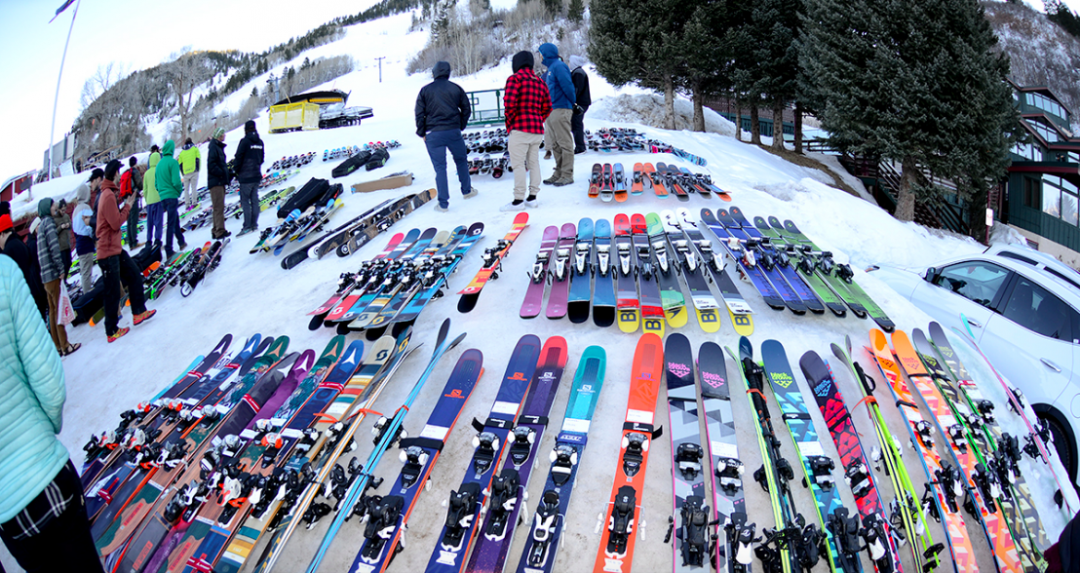
Way back in the late 20th Century, while running the SKIpp Testing program for SKI Magazine, John Perryman and I learned the most difficult problem to solve and the biggest variable was the ski tester. In conversations with almost every manufacturer, they said the same thing. So the goal of SKIpp (way back in the 1970s before engineering modeling software was available), was objectivity and processes that minimized tester bias. John created a bench test and then tested the ski on the snow so we could compare the results.

Amazingly, we were successful. We were invited as “consultants” by several manufacturers, to compare SKIpp’s results with theirs. Again, SKIpp was very accurate, more so than some manufacturers would admit.

Most ski testers are really good skiers and as such, they unconsciously adapt their technique to the ski, terrain and conditions and the brand’s design philosophy. This makes objective comparisons very difficult. In the SKipp program on-snow methodology, seven steps were incorporated to reduce the human variable.

One, we did blind testing. The tops and tip logos of each ski were covered with shelf paper before numbering each pair. The tester was not allowed to pick up the ski until he/she “tested” the ski to minimize identification.

Two, we skied the same trail every day that gave us about 1,000 feet of vertical and a chair lift that made yo-yoing possible. The ski area spread fertilizer on a long marked off segment to simulate frozen granular and give us a consistent snow surface to reduce the “snow condition variable.”

Three, each skier filled out a test card which graded a list of mandatory maneuvers/turns. At the beginning of the year’s session, we conducted a clinic on the required maneuvers and how the ski should react.

Four, each tester was allowed only two runs on the ski before grading. We wanted first impressions and found that after two runs, most testers adapted to the ski’s idiosyncrasies.

Ski tester range from racers to intermediates. Controlling tester bias is key.

Five, the testers’ skills ranged from certified ski instructors who either had been racers or coaches to intermediate skiers. Our youngest testers were in their mid-20s (we did have a few teenagers one year) to older skiers in their 50s.

Six, the “racing” models were skied down a 20 gate GS course that had been “fertilized” so the surface was rock hard.

Seven, only 10 skis were tested each day. After 10, the testers had a hard time determining the differences.

We let the testers pick which skis they wanted to ski in the afternoon. Again, the choice and why was recorded. Only then did we allow the ski to be identified. Results were tabulated each evening by hand because Excel, laptops, etc. didn’t exist in the 1970s.

Even with all these precautions, most of us could, after a few weeks of on the snow testing, tell one brand from another. To this day, I can tell a Rossignol from a Dynastar from an Atomic from a Head or K2.

So, when I read the current ski reports filled with jargon such as “edge gripping power” or “discover the amazing effect of (name of manufacturer) new Energy Management Circuit,” my reaction is %$^@*&, and I stop reading. Whatever credibility just evaporated. I’ve been there and writing facts about the ski’s performance instead of hype is, well, boring. But, experience tells me that the reports are more believable. So now you know why I don’t read ski test reports and prefer to “on snow test” them myself.


Volkl

The Personal Ski

Does The World Need A Custom Ski Just For You?

[Please consider supporting SeniorsSkiing.com with a donation. We appreciate your help. Click here.]

You can buy a computer built just for you. How about a ski?

Way back in the winter of 2018, long before Covid raised its ugly head, I asked the heads of marketing (none of whom would qualify for a SeniorsSkiing/com subscription) from three manufacturers a simple question: “Has ski material science and engineering reached the point where—with a simple, easy-to-measure parameters, and algorithms— a ski manufacturer can produce a ski tailored to the way an individual, recreational skier skis?”

The answer was yes, they have been making custom skis for World Cup and Olympic Ski racers for decades. But what about us common folks?

Again, the answer was yes. Physical dimensions of the skier and other limits such as artificial joints could be entered by the buyer.

All it takes is translating measurement to manufacturing.

The hardest part would be translating how a skier skis into data that can be used by a computer to then control the manufacturing process. For elite racers, they have zillions of gigabytes of footage “experts” can analyze coupled with on-snow testing.

Unlike ski racers where the variations in their technique are subtle, recreational skiers are all over the map. If you don’t believe me, watch a well-traveled slope. Even the “untrained” eye can see the differences in technique, some good, some, well, not-so-good bordering on awful, or where they are in learning to ski.

All three ski designers hypothesized that with two to three minutes of video of a skier on a a ski whose design parameters were known skiing down a known piece of terrain with measured condition, a custom ski could be done. The individuals all agreed that this approach would eliminate many variables.

From there, they could have internal experts go through their analysis, come up with whatever inputs a computer model needs, and, voilá, out would come the engineering/design specs for the ski.

Cost of manufacture is another story. Credit: Volkl

Now we get to the second issue: Producing the ski. Ski manufacturers make huge investments in equipment that can be used to turn out thousands of skis so they can amortize the investment over each ski produced. In this “personal ski” scenario, the molds and materials can still be used. Workers would have to be re-trained. How and why happens is beyond the scope of this piece, so just accept the fact that custom construction is possible.

Which brings us to cost. The custom ski would cost more than the $1,000 for a top-of-the-line ski. How much more, my informal panel wouldn’t or couldn’t agree on a number, but again, for the sake of dreaming, let’s say $3,000. Whether or not the ski was salable at that price is a different subject, again beyond the scope of this post.

So the obstacle was not cost, nor engineering, nor manufacturing, but identifying and then gathering the needed data that could be translated into ones and zeros. In the end, they all said,  “Why bother?”  The current designs meet the needs of 80—90 percent of recreational skiers. And therein lies the rub and why, at least not yet, everyone can’t have a custom designed ski.


The How-Do-I-Get-There Conundrum

What If Driving Is An Undesirable Or A Non-Option?

Some planes are full; others are half empty. Credit: Picture Alliance

The world’s COVID hangover is going to continue well into 2021 so obviously ongoing precautions are needed to keep from contracting the disease. For those who live within three to four hours by car of a ski area, you’ve got options. Your car becomes your transportation bubble and then while skiing, just stay away from people and wear a mask under your scarf.

However, for those of us who live a long way from a ski area, getting to a ski area is, at best, a one day trek each way. So three days of skiing turn into five, five days of skiing, needs seven, etc.

Ski Apache is the closest to my place in Texas, 560 miles straight west and an eight or nine-hour drive.

Taos is 650 miles from my front door. Plan on 10 hours. I’ve made the drive in eight, but….

Ski Durango, a.k.a. Purgatory and one of my all-time favorite places to ski, is 860 miles away. Plan on 13 hours in a car unless you want a ticket or two.

Conditions are already very good in the Rockies and Sierra Nevada. I can feel the slopes beckoning. So, how do you get to a ski area if you don’t like driving long distance?

If you own a plane or can afford to charter one you can fly in your own bubble. For the rest of us, unless you can take a train or bus, the only other practical way is sitting in an airline seat with 150 or more of ‘your closest friends.’ The airlines have done a yeoman’s job of sanitizing the planes, updating the cabin filtration systems as well as trying to convince the traveling public that sitting in one of their aluminum tubes won’t lead to becoming infected. I’m not convinced.

The risk doesn’t come from just the plane ride. There are the people in the terminals and who knows if they’ve been exposed. Throughout the trip, you touch all kinds of things so latex gloves become the order to the day. Net net, the CDC says the risk of catching COVID is increased if you travel by plane.

When you actually receive the COVID vaccine should be factored into the decision to go skiing. For example, I’m in category 1B (over 75, compromised immune system) which means early this year, I should have the first dose injected. Second dose comes, depending on which flavor you receive, about a month later. Full efficacy of the vaccine occurs about a month after the second injection.

The vaccine gives me choices. There are non-stop flights from DFW Airport to airports a short drive from almost any ski area in the country. In a COIVD-vaccinated world, flying on airlines again becomes the best option for those of us who don’t live near a ski area.

So here’s the timeline that’s rattling around in my head. Mid-January, first dose. Mid-February, second does. Mid-March, full efficacy. That’s when I am going skiing!

Personal Note: Sources Of Inspiration And Frustration

A Military Epic Pass Discount Special Became A Big Motivator To Get Back In Shape.

Marc—The Inspired Biker—Liebman

Last winter and spring, like many others, I watched the ski season melt away. For those who went before the big shut down, good on you. For, me, the only hopes I had of skiing was in late April or May or June at Mammoth.  And, poof, that was gone.

Slowly, I had been building back the stamina I had from a persistent infection I was fighting since the previous summer, but at 74 and more than a half, what was gone was gone, never to return.

Yet, I had hope.

Hope came from several sources. One was that medically I knew I was beating the bug. Another was from the emails from ski areas saying they just received X inches of new snow. Snow wasn’t going away. That was comforting.

Another inspiration came from an odd source. One morning, my inbox has an email from the people who run Epic Pass offering a steep discount for an unlimited pass assuming I could prove that I was a member—active, reserve or retired—of the U.S. military. I read the fine print, called and then had a long online chat with the online person before I plunked down my credit card data for an Epic Pass that cost about what I would spend for two days of skiing! The purchase was a no brainer.

So, with that in hand, so to speak, I was even more inspired to regain as much as I could the way of fitness for the season to come. At the end of June, I was finally off the medications and cleared to start exercising more “vigorously” than walking.  Since Covid had shut down all gyms and even when they re-opened, they were considered high-risk for a septuagenarian.

What was left? Summer in North Texas was here, and I pulled my bike down from the rack. The tires were flat and when I tried to pump them up, I popped both tubes. Since it hadn’t been ridden in a year, I took it to a bike shop which recommended that I replace the brake pads, (cracked and split and soon wouldn’t work) and the chain which was showing some signs of wear.

How long to fix? Six weeks! Egads! Everyone was rehabbing their bikes, it seems. So it was back to walking.

But, beginning in August, I was on the bike four or five times a week. The goal, get back to 20 miles a ride. Now, before you are impressed, the elevation change of the route I take is a whopping 94 feet. I’m averaging about 10.6 miles per hour so I am not riding like a bat out of hell. Eleven miles takes roughly an hour.

The most important thing is that I am riding and am, as of this writing, doing about 12 miles a ride. Still working on getting to 20. Next challenge is figuring out how to get to the slopes to make use of my Epic Pass.

Now that’s an inspiration.

Short Swings!

A Fort Lauderdale resident asked, “Do you know where we Floridians go when we want to ski?” It was a joke. Her punch line: “The airport.”

From the way things appear to be shaping up, fewer and fewer older skiers will be using planes to get to their favorite resorts. There’s a reluctance to get on planes until the virus is under control.

I get it. Regardless of our individual states of health, as a group whose age averages 69.8, we are high risk. Boarding a crowded flight – even in first or with the middle seat  empty – isn’t appealing.

I think big resorts get it, too. In normal seasons, big western resorts rely on skiers flying to their destinations. Recently, some resort tourism executives told me they’re shifting attention to skiers within a 6 – 8 hour drive. 

In the June readers’ survey, 92% of you indicated you definitely or probably would ski during the coming season, and 71% said you plan to take one to more than 4 long distance ski trips. 

Of those planning long distance trips, 40% plan to drive and 41% plan to fly then drive a rental car.

That was in June. The way infections and fatalities have been accelerating, I’m guessing that now, about a month after that survey ended, fewer people would want to fly.

I know I wouldn’t. 

In a recent media briefing, the heads of National Ski Areas Association and Vail Resorts’ mountain operations explained how they’re patching together best practices from the restaurant, hotel and other industries to protect skiers from the virus (and, I expect, themselves from liability). Based on what they said, we can expect limits on numbers of skiers/boarders, temperature checks, social distancing, fewer people on lifts, and more outdoor dining.

My biggest takeaway from the briefing was that for the coming season, we’ll need to plan before we go. “No more rolling out of bed and deciding to head to the hill,” is how one of the briefers described it.

Those living close to or at an area will do well. Those of us within a few hours drive will have their fair share of the fun. But for those who are high risk and relying on airplanes, you’ll need to make the “is it worth it?”  decision.

One point of view, expressed by several of you is, why not? At this age, how many more seasons will we have? 

EPIC’S $169 Unlimited Military Pass

Marc Liebman is a gifted military novelist, public speaker, and occasional SeniorsSkiing.com contributor. A combat veteran of Vietnam and Desert Shield/Storm, he flew helicopters on combat search and rescue, special operations missions, anti-submarine warfare and logistics support missions. He retired as Navy Commander after 24 years of service. His six novels are based on his experience and are really good reads. Recently, he emailed this tidbit about what he calls “the lift ticket deal of the century.” Epic Pass is offering an unlimited pass to ski at any of their 30+ resorts (Xmas excluded) to members of the military – active, reserve and retired, dependents – for $169. Details: click here.

$75 Parka; $50 Pants Deal

Orsden Parkas: Great Colors; $75

Here’s another “deal of the century.” Orsden, the parka and ski pants manufacturer, is having a “Mystery Sale.” Visit the company website, select a men’s or women’s parka, and let the company pick the color. You really can’t go wrong. Like Orsden’s styling, every one of it’s colors is good. I’ve been wearing my Orsden parka for 3-4 seasons. It’s held up exceptionally well, and has many nice features (e.g. underarm zips, RFID pass pocket, built-in goggle/glasses wipe, detachable powder skirt). The company specializes in direct-to-customer sales. It’s parkas sell for $300 and, if sold through retailers, would be double that. My wife purchased one a few years ago on sale for $175. She loves it. Now, Orsden parkas are going for $75!!! The only catch: the company picks the color and final sale/no returns. While visiting the site, check out the men’s and women’s ski pants; normally $200; now $50. Some sizes are sold out and final sale/no returns policy applies to sale pants, as well.

Liftopia Faces Bankruptcy; Collects PPP Funds

According to a Federal database, Liftopia, the online ticket-seller, received a Paycheck Protection Program loan between $350,000 and $1 million. This, while the company may be forced into bankruptcy by a group of resorts claiming Liftopia owes them $2+ million in advance ticket sales.

Elevate Suspends Operations

Roam Robotics, which makes the innovative Elevate Ski Exoskeleton, announced that due to the uncertain context caused by COVID, it is temporarily suspending investment in its unique Elevate product. The company will not be producing pre-ordered product (all deposits have been refunded) and will not be renting/demoing Elevate during the 20/21 season. The announcement said that the company would continue to develop and improve all products in its line up.

In Person 2020 Snowbound Festival Canceled 

Organizers of the Boston and Denver Snowbound Festival (formerly the BEWI Ski and Snowboard Expos) announced cancellation of the 2020 events. The reason: COVID-19 and the safety of attendees, exhibitors, and staff. They’re working on a digital version as a possible substitute. For decades,the shows have served as  “the unofficial kickoff to Winter.” Last Fall, Snowsports Industries America (SIA), acquired the Boston and Denver expos from BEWI Productions. SIA is the winter industry’s non-profit trade association representing snow sports suppliers, retailers, sales reps and resorts. BEWI was founded in 1980 by Bernie Weichsel, a member of SeniorsSkiing.com’s Advisory Council.

Suicide Increasing Among Sledding Athletes

A feature in The New York Times last Sunday reports on the disproportionately high number of bobsled, luge and other sledding athletes who have taken their lives. Brain experts suspect the symptoms stem from years of crashes, brain-rattling vibrations and strong gravitational acceleration forces. The athletes often experience an exhausted fog, which they’ve named “sled head.”

Your Own (Miniature) Cable Car (and Skiers)

FelinaWorld bills itself as the world’s largest online store for Christmas villages. Among its many miniature trees, chalets, scenes, etc. is a selection of HO scale ski lifts. They’re miniaturized versions of the real ones at a numer of Austrian ski resorts. It looks like they’re motor-driven. They even have miniature skiers for the lifts. The site also sells gondola-shaped key chains. When I visited, many of the products were discounted. Click here to get to one of the ski lift pages.




Ski Instruction

Gone In A Flash

What Happened To Me And WhyYou Should Treasure Your Health And Fitness.

As I get older, each ski season is more precious than the one before.  I’m pushing 60+ years of skiing, and early in my life, I learned never to take one for granted.  Except for being deployed overseas during Vietnam and Desert Shield and Storm, I haven’t missed a ski season in decades.

There is a rhythm to my ski year.  After the ski season, I change my conditioning routine and start ramping back up after Labor Day up so that by December, I’m ready to ski my usual 25,000+ vertical feet.  Yes, at my age I’m bragging!

On August 23rd, my routine changed thanks to a bacterial infection in my right elbow.  During the bursectomy, the surgeon found an infected ulna bone, tendons and muscles in my forearm.  Aaaaaaarrrrggggghhhh!

Samples were sent to a lab to grow cultures and find out what the bug was.  Over the next four weeks, the four drains were slowly removed.  Exercise was not possible because dirt in the sweat could lead to a staph or other type infection, and I had very limited use of my right arm.

Eleven weeks later, the culture and susceptibility tests told the doctors that the infection was a hard to kill avian acid fast bacilli.  It takes a combination of three powerful antibiotics taken daily over eight to 12 months to kill it. It gets worse because this is one of the bug that often develops immunity to antibiotics so sometimes in the middle of the treatment, one has to start over.

As luck would have it, I had an allergic reaction to the antibiotic that was the most effective against the avian bacilli that sent me to the emergency room having difficulty breathing, a 102 degree fever, rashes and hives all over my body.  I was off everything other than steroids and antihistamines to get my system back to normal.

The bug and the toll the antibiotics were taking on my body sapped my stamina.  I’d work on a book for four to five hours in the morning and after lunch, I was exhausted and it was nap time.  By nine at night, I was ready for bed!

Exercise, you have to be kidding!  Go skiing?  No way.

So now in early December, two MRIs and two sets of x-rays later, I’ve started walking again and am up to about four miles every day.  By the time this is published, hopefully I’d daily sessions on an elliptical or a stationary bike.

Next major checkpoint is another MRI and x-rays in early January to see if my ulna bone is continuing to heal.  Blood work every other week gives an indication the drugs are working.  My goal is to ski late in late March but its 50-50.

The point of this piece is simple.  Don’t take any ski season for granted.  Each season, each trip, each run is precious, and they could be taken away from you in a flash.  Just ask!

Season Ending: The Last Perfect Turn

Make It A Good One.

The last turn of the last run on any ski day is a bittersweet moment.  If it’s the last day of the trip, it is sad if not melancholic.  On one hand, I’ve spent the day or days enjoying my favorite sport and on the other, there’s no more skiing until the next trip that could be days, weeks, or months in the future.

As I come down the mountain on what will be my last run of the day, I go through the same routine.  Partly because I am tired, partly because the beginner runs are easy skiing and take me to the bottom, and partly because I want to be able to remember perfect turns I made to carry me over to the next trip.

Feet close together, tap the pole, unweight, and roll your knees.

It is also about muscle memory.  I want my body to remember how it felt to have the skis carve through the snow in a perfect turn.

As the skis come through the fall line, press the knees forward and into the hill to get the skis on edge.

It is also about knowing that life is short and we never know what tomorrow brings.  As a senior skier, I am closer to the end of my skiing life than the beginning.  Its depressing but true that makes the desire to carve the perfect turn even more intense.

Feel the edges bite into the snow and keep the turn coming across the fall line to control your speed.

At the end of every ski day, I want my mind and body to remember the turns, not just one, but a series of linked, perfect round ones.

Body square over the skis, or maybe angled down the fall line and hold the turn long enough to control your speed.

It has to be close to perfect so that even an instructor examiner would smile in approval.

Hands out in front held mid-chest high, feet less than shoulder width apart, ready for the turn.

The last turn was nice and round with the skis on edge that left a little tossed snow.  Now time for the next turn, hopefully as good as if not better than he last one to add to the string.

Stay in rhythm and reach out, tap the snow, unweight, and roll the knees.

The process goes on until I reach the bottom, trying to make each turn better than the one before it in an attempt to end a day on the snow with a perfect turn.  It may be a never-ending search, but the quest is a reason to head back to the slopes as soon as I can.  Why?  Because at age 73, this could be my last day on the slopes, and I want to remember that I did all I could do to make the perfect turn.

SeniorsSkiing Guide: Solitude

New England Trails With Western Snow.

Solitude management loves seniors as reflected in ticket prices and lodge access.

I love skiing Solitude Mountain Resort for its wide range of trails for all levels and ages of skiers ranging from wide-open trails to steep, narrow trails that remind me of skiing Stowe, Mad River Glen, and Sugarbush. All the parking is right out front of the Moonbeam Lodge or Solitude Village.

Management loves senior skiers, and it starts with when you arrive. Mid-week senior lift tickets are $75 and much cheaper if you buy on-line.

Solitude opened in 1957 and is roughly 30 miles up Big Cottonwood Canyon from the heart of Salt Lake City. Like many ski areas, it has had its share of ownership changes. Deer Valley bought it in 2014 and in 2017, Deer Valley and Solitude were acquired by Alterra Mountain Company. Alterra owns 14 resorts including Aspen/Snowmass, Mammoth, Tremblant, Snowshoe, Steamboat, Stratton, and Squaw Valley.

Nice blue groomers as well as steep glades. Credit: Solitude

Mother Nature dumps 500 inches of snow on its 79 named runs on 1,200 skiable acres. The top is 10,488 feet and the base is 7,994 which give one 2,494 vertical feet accessible by 10 lifts. It is easy to find your way around the mountain, and you never have to climb or walk between lifts. Forty percent of the terrain is intermediate and 50 percent is rated for experts. There are two base areas—Solitude Village and Moonbeam—and, if you are a day skier, park at Moonbeam so you can walk up about twenty-five easy steps or take an elevator in the lodge.

From the Moonbeam lift, you can yo-yo off on beginner and intermediate trails or ski to Eagle Express. It opens up glades that take you to the Powderhorn lift. Or, you can ski Inspiration, Rumble, Grumble, Stumble, Serenity, and Challenger and enjoy the steep rolling contours that both challenge and keep you smiling all the way down. I’ve skied all of them in knee-deep powder and frozen granular. No matter the conditions, after each run down you want to hurry up for more.

If you like steep slopes through the trees, take Summit Express to the top. It gives you access to the far side of Honeycomb Canyon as well as a long, wonderful combination of intermediate runs called Dynamite and Mine. Or, you can traverse along the ridge and ski Parachute (you may think you need one, but you don’t) and Milk Run (i’ts not).

On the mountain, the Roundhouse has a restaurant and bathrooms on entry level and upstairs. accessed by elevator. No stairs! The same for the Moonbeam base area. The menu at both Roundhouse and Moonbeam is typical ski area fare, reasonably priced (for a ski area) and tasty (trust me, I’m picky). There are restaurants in the small Solitude Village along with condos to rent.

So let me repeat what I said in the beginning, I love Solitude. Every time I ski in the Salt Lake area, I spend at least two or three days there.

Click Here For Solitude Trail Map

Click Here For Solitude Webcam

Author Marc Liebman makes Solitude a regular stop when in Utah. Credit: Solitude

Report From The NSAA Winter Meetings

SeniorsSkiing.com Correspondent Makes Presentations On Senior Skiers’ Needs and Wants.

NSAA is the National Ski Areas Association, publishing the NSAA Journal six times a year. The publication’s audience, along with its competitor, the independent Ski Area Management, are those who manage and market ski areas. A growing topic of interest is the senior skier and how to bring them to their area.

NSAA’s own data supports SeniorsSkiing.com’s research. Here’s why the sudden interest. Senior skiers represent about 16% of the overall market and ski approximately 21% of the skier days. We also ski off-peak—the industry buzzword for mid-week and not holiday weekends—and visit an average of three resorts a year. The number of senior skiers is growing because many of us see it as part of our healthy active life style. Put another way, age 70 is the new 50.

What leapt off the page in this year’s NSAA data was that the number of new senior beginners, i.e. people over the age of 55 who have never skied before until they showed up at the base of a ski area and bought a lesson, grew at the rate of 1% per year.

Since the 1970s, the number of skiers has been declining steadily, and it was only in the past two or three years that the number of skier visits/active skiers leveled off. From a ski area owner’s perspective, this good news but is not going to lead to lower prices.

One of the marketing themes of this year’s NSAA’s East and West Regional events was bringing back the lapsed skier who is defined as someone who skied at an early age but has dropped out of the sport for family, economic, geographic and/or professional reasons. Seniors can be lapsed skiers; areas now see us as a way to increase the number of skiers by introducing their grandchildren to the sport as well as bringing friends.

Your humble scribe held a 90-minute presentation/seminar at each event. Each was well attended and received! Space doesn’t allow me to cover everything that was discussed, but what follows are some takeaways.

Marketing strategies targeted at senior skiers differ widely. Major destination resorts tend to view us differently than those near major metro areas. Some, because of their name and branding, offer only token incentives. Others really want us.

Resorts are struggling to find ways to attract senior skiers. It is a combination cost, technology, lack of focus, and talent issue. However, next season, there will be some innovative approaches to senior skiers.

Ski areas realize their facilitates are not senior friendly. The top three areas to improve, which are not limited to seniors are 1) Need to use stairs to get to bathrooms, 2) Long walks from the parking lot or drop off point to the lifts, and 3) Need to climb from lift exit to another.
Net net, we’re now a bigger blip on ski resort’s marketing radar scope, and the interest is there.


70s Ski Testing: On The Snow

Step 2: Go Out, Do It.

One of the joys of working at Ski Magazine was that I was paid to test skis!!!  Ski manufacturers shipped skis to our lab for testing and when it was completed, the skis were covered with self-adhesive shelf-paper and numbered so the testers couldn’t identify the ski. 

Mother Nature dictated our location and we didn’t want to test at the same area Skiing used.  One year we started at Mount Hood but weather and poor snow forced a move to Mammoth before we settled on Park City the following year.

Areas were picked that could give testers access to a lift that served terrain suitable to our needs.  To create a hard, icy surface, the area allowed us to spread ammonium nitrate on the snow to create a hard frozen granular.

For racing skis, we set up a NASTAR type course with thirty gates and applied ammonium nitrate to make it rock hard.  Racing skis were tested just like the others before we pulled them aside for the days when we would ring them out on a racecourse.

Our contract testers – six men and four women – and me were all certified instructors with either coaching and/or racing experience.  John Perryman and his wife Joan were expert skiers and were part of the test team.  We wanted strong skiers who could ski consistently and could handle a ski without changing their technique. 

To get it right, it wasn’t about blasting down the mountain on one ski after another.  SKIpp demanded a disciplined methodology.  Each year, we reviewed the on-snow maneuvers designed to replicate how beginners through experts skied.

Because some brands were putting their name under clear P-Tex, testers were not allowed to pick up the ski prior to skiing on them.  To help ensure that each ski was tested the same way, the methodology was designed to minimize the tendency of a tester to adapt his/her technique to the ski.  Testers were limited to two runs per ski. 

 The tester came to the tent to score the test ski and write his or her comments before taking another ski.  Each day we tested ten skis because we learned beyond that it became hard to differentiate each ski’s performance.

The best skis didn’t generate many memorable comments although one tester wrote “On the icy snow, this ski tracks like a train on rails and in the soft stuff, it will derail you.”  Another wrote, “A two-by-four with an upturned end would be better than this ski.”

In the evening, skis were prepped for the next day and the day’s data tabulated.  Even though it was preliminary, we were pleasantly surprised at how well the on snow results compared to the lab’s prediction.

Testing ten skis took us to lunch.  For the afternoon, the testers could pick a ski from that day or prior days to enjoy.  It was tough, demanding skiing, but somebody had to do it!

70s Ski Testing: Defining How Skis Work

Step 1: Inventing The Right Metrics

[Editor Note: In this new series, former SKI editor Marc Liebman recounts how serious ski testing began as a way to provide consumers with objective information about ski performance.]

In the early seventies, ski design was in the midst of a revolution that is still going on today.  It started in 1959 when Art Molnar and Fred Langendorf marketed the first ski with a fiberglass reinforced core under the Tony Sailer brand.  When it came out, skis were made predominantly from wood with a P-Tex bottom and segmented edges screwed into the core.  One piece steel edges were coming into vogue.

Computers and programs to model flex patterns, torsion (twisting) and the impact of different materials on ski performance were in their infancy. Ski design was (and still is) a mix of sound engineering, materials science, and experience.

Ski manufacturers touted the benefits of fiberglass versus aluminum sheets or rods or u-shaped metal versus foam or wood cores and the list went on and on.  Ski Magazine’s (and Skiing’s) customer research said that their readers wanted an objective way to compare skisNet net, we – the skier – were confused.

In 1971, Ski Magazine contracted John Perryman, an aerospace engineer to come up with a methodology that would achieve four objectives:

  1. Measure the dynamic and static properties of the ski;
  2. Analyze these properties mathematically because they don’t act in isolation and are intimately related to each other;
  3. Correlate bench testing with a rigorous on-snow program that requires the skis to be put through a standard set of maneuvers by the tester on a variety of snow conditions and terrain without knowing the ski’s identity; and
  4. Present the results in an easy to understand format that enables the skier to compare ski A with ski B.

The program was called SKIpp for Ski Performance Prediction.  Each year, SKI magazine tested more than 200 skis, all roughly 200 centimeters long. I was on the initial team. Calculations were done with a slide rule and data tabulated on my Bowmar Brain, one of the first electronic calculators.  We created five metrics that we believed defined ski performance:

  1. Foreflex dynamics – complex calculation of the force needed to bend the front portion of the ski and its resistance to rapid flexing;
  2. Afterflex dynamics – same as the front for the portion of the ski behind the boot;
  3. Effective torsion – combination of resistance to a ski’s twisting and how sidecut affects ski’s ability to turn in an arc;
  4. Effective Compression – measured the camber of the ski along with the force needed to flatten the ski; and
  5. Damping – ability of the ski’s to suppress vibration.

Based on the data gathered, we could predict how:

  1. Easy a ski was to turn;
  2. It would perform in different snow conditions; and
  3. How it stable it would be at high speed.

Looking back, we didn’t realize how far ahead we were in ski performance analysis.  In the beginning, several manufacturers challenged our results, but in the end, they came around to our side of the table which was that the correlation between our lab analysis and on snow performance was amazingly accurate.

Safe Driving: Wrap Tires With Chains

How Many Readers Carry Chains And Actually Know How To Mount Them?

Back in the old days, many of us had knobby snow tires even studded ones mounted on a separate set of rims stashed in the corner of the garage, ready for mounting.  Tire designs and compounds changed over the years.  Snow tires still exist, but all season tires are the norm. If you have a car/SUV that has four-wheel drive, you are good to go for most winter conditions.

Last year, in Box in the Back, I listed what you should carry for emergencies when you headed into the mountains.  What Else Should You Have In Your Car provides suggestions on what to do/not to do if you are forced to stop for a long period, either by an accident or road closure.

The best time and place to learn how to put on tire chains is in your driveway on a nice day. Worst: roadside in a snowstorm.

What wasn’t covered was chains with which I have a love-hate relationship.  They’re clunky, a pain in the rear to install on the side of the road.  If one section comes loose, it can beat the crap out of a fender, wrap around an axle, or rip out a suspension component.

While most of us prefer not to install chains, there are parts of the country where the local gendarmes have the right to insist you use them even on a four-wheel drive vehicle equipped with mud and snow tires.  No chains, no going any farther.

Some states require chains on snow-covered roads. You have no choice, so you better know how to use them.

Point one.  If chains are required, getting told to put them on is not the time to turn around, drive back to the last town you passed, and buy a set.  They should have been bought before you left the house and kept handy, i.e. where you can get to them without having to pull everything out of the trunk.

Research chains types to pick the ones that are the best fit for your vehicle and your needs.  Click here for a really helpful link that offers instructions on selecting the right chains.

Point two.  A chain “inspection/installation” station is not the place to learn how to put your chains on because it is cold, snowy, and often dark.  Don’t rely on some helpful soul to rescue you.  Putting chains on slush, cinder, sandy wheels is a dirty job, so be prepared.  Practice putting them at home before you leave. Put them on and take them off several times so you know the drill.  One enterprising soul I know has the instructions downloaded on his iPad as a reminder.  While it is a helpful reminder, a video is not a substitute for actual experience.

Point three.  While you don’t need a separate pair of overalls and boots, carry a small rubber mat you can kneel on and a pair of heavy rubber gloves you can slide over a pair of ski glove inserts.  Leather work gloves also work. This will keep your fingers from getting cold and numb or cut.  Practice with the gloves on.

You make be like me and hate chains, but don’t leave them behind because, one day, you’ll need them or possibly lose a day or so of skiing.

70s Ski Testing: A New Series

This is the first in a series about Ski Magazine’s 1970s ski testing program called Ski Performance Prediction or SKIpp.  Its methodology combined engineering analysis as well as a structured series of on the snow maneuvers designed to bring out the best and worst of a ski under a variety of conditions.

Part one of the series Determining How Skis Worked is an overview of the engineering analysis.  The second part discusses the on-snow testing that we did and the third is about the politics of ski testing along with a lesson learned.

Ski (and boot and binding testing) programs came about because skiers were faced with a plethora of choices backed by marketing hype that was confusing at best and to some, downright misleading.  Both SKIING and Ski Magazine decided to jump into the fray and help their readers.  Ski’s approach was significantly different than Skiing.  Given several glasses of smoky, single malt scotch, I might be persuaded to cover the quicksand of boot and binding testing in the 70s.

On the Snow Testing is a very brief overview of the on the snow part of the program.  Typically, we were at a mountain for about twenty-five days and tested 200+ skis.  Not bad work if you can get it, but it wasn’t all fun.  It was work!

Ski testing unleashed a set of business issues that challenged the leadership of Ski Magazine.  Most of the discussions were well above my pay grade as a lowly associate editor.  However, on more than one occasion, I was called into a meeting with the high-mucky mucks and asked why manufacturer A’s didn’t get high marks.  In Politics of Ski Testing, there’s enough to give you an idea of what the discussions were like.

In the end, the SKIpp and the engineering teams at most of the manufacturers found common ground, and we helped each other out.  It was the marketing people that created all the problems because the cries from the ski shops were giving them migraines.

The shaped ski as we know it today wasn’t on the horizon.  The material science and engineering software that creates them was in its infancy and ski design was as much black art as it was engineering.  We got a glimpse of the future one year when we tested twenty odd short skis – 170 – 180 centimeters – and were pleasantly surprised by the results.  The market was ready and when engineering and materials science caught up, voilà, you have the shaped ski.

Guest Ski Tester

SKI Magazine Ski Testers Meet The Sundance Kid.

Gene Hackman and Robert Redford in “Downhill Racer” (1969). This heart throb really loved to ski.

Back in the early ‘70s, SKI Magazine (remember it?) developed a program called SKIpp that stood for “ski performance prediction” developed by the late John Perryman. He was a talented engineer who spent years in aerospace and worked with Howard Head at Head Ski Company. SKIpp had two parts, the laboratory analysis that predicted how the ski would perform and on-snow testing. Each year we tested 200+ skis.

John did the analysis and I ran the on-snow testing. Our testers were a mix of male and female skiers, primarily ski instructors with some racing experience. In March, 1974, we were at Park City which let us set up our testing tent near the base of the Shaft lift. Every morning, we tested ten pairs of skis. After lunch, each tester picked his favorite ski from the day or prior days and headed for the lifts.

One bright sunny morning, my lovely wife Betty was collecting test forms in the tent along with Joan, John’s wife, when one of the testers who was, at the time, the ski school director of Sundance Ski Area, walked into the tent and asked a simple question. “Would we allow Robert Redford ski on some our skis?”

We had skis that weren’t on sale yet, some that wouldn’t make it to the market, some that should never been sold to skiers, and Redford hadn’t signed the liability waiver. All of this went out the tent flap when Redford walked into the tent.

I tried to be my best cool, calm and collected Naval Aviator self, but the look on our wives’ faces was priceless – eyes and mouth wide open. Both were speechless that, if you knew them, was rare. His presence attracted the other three female testers who were nonchalantly trying to swap skis or ask Betty, John, or me a question just so they could get in the tent with Redford.

John looked at me, I looked John, and we shrugged. While our wives stared at the famous movie star, I managed to ask, “Can you ski 200 centimeter skis?”

“Yes.”

“What size boot do you wear?”

He gave me a size that I don’t remember. This was back in the days when boot sole shapes weren’t standardized, and we were using Market Rotomat rental bindings that took some fiddling to adjust. None of the easy-to-adjust bindings that we see today existed.

To this day, Betty will tell you she talked to him for a few minutes but has no idea what she said or was she coherent. What we do remember was that Redford was as good-looking in person as he was on the screen.

Oh, and one more thing. By the time he returned the skis, the word was out that Redford was around and a larger than usual crowd had gathered around the tent. None of us were smart enough to get him to autograph the test card he graciously filled out. Oh well!!!

Seriously Injured? High Fives Has A Program For You

A Community That Can Help You To Get Back To Athleticism.

What if you suffer a life altering brain, spinal or physically limiting injury and want to ski again? Where do you turn? One place is the High Fives Foundation started by Ray Tuscany who was a ski racer who broke his back.

After his injury, he founded High Fives to help create a community to get a skier (but it could be anyone or any athlete) through the recovery process. Tuscany is emphatic when he says High Fives doesn’t have clients or customers, they have athletes!

According to Tuscany, once you have clearance from your doctor and are in the best shape possible, they will help find the funding to get you back on the slopes. The foundation works with the rehab staff to create a plan and a budget for each athlete. To help achieve the athlete’s goals, it provides the financial support—typical grants average around $5,000—to help cover the expenses for adaptive equipment, training, and other bits and pieces to get you skiing again. The foundation pays the providers directly so they can accurately track and report back to their donors where and how the money was spent.

The organization is certified to operate in all fifty states and is headquartered in Truckee, CA. It has offices in Reno and Sugarbush, VT as well.

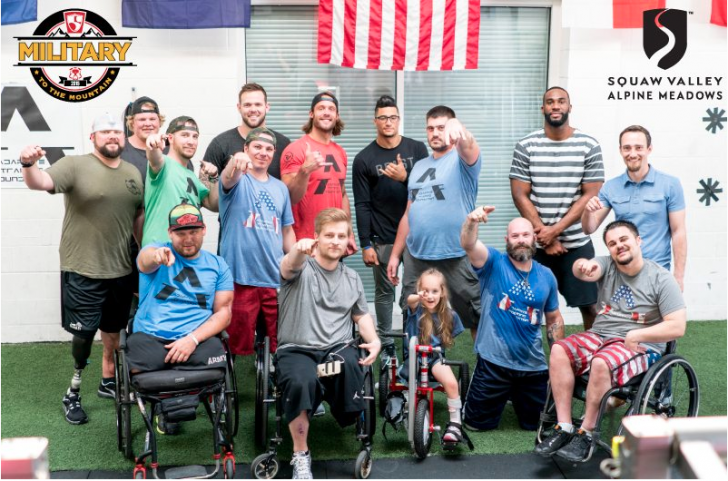
High Fives also has another program to help disabled vets learn to ski. Through its Military to the Mountains program, each year twenty-two injured veterans are selected by the Adaptive Training Foundation in Dallas and taken through a nine-week program to restore, recalibrate and re-deploy these injured warriors. Many become Paralympians.

For more information, contact Roy Tuscany at the High Fives Foundation at www.highfivesfoundation.org or at (530) 562 4270.

For vets who are interested in what the Adaptive Training Foundation has to offer, their web site is www.adaptivetrainingfoundation.org or you can call them at 214.432.1070.

Military To Mountains participants are ramped up for event at Squaw Valley.
Credit: HighFive

Five Questions To Ask Before Taking A Lesson

If You Haven’t Taken A Lesson In A While, These Questions Can Reassure You Are Getting What You Need.

Last week, we listed five scenarios when you should consider taking a lesson. The next logical question is how do I figure out whether or not the ski school and/or the instructor can help me? The bad news is that there is not really a good answer. However, any senior skier considering taking a lesson should try to find the answers to the following five questions that are listed in no particular order. And, the great thing about being a senior skier is that we have the experience to evaluate the answers and separate the truth from the B.S.

  1. Are you certified? Right answer: Yes, I’m level 2 or Level 3.
  2. Have you taken a clinic on teaching senior skiers? Right answer: Yes. Here’s the caveat. The Professional Ski Instructors Association (PSIA) and the American Association of Snowboard Instructors (AASI) has not come out with a standard nationwide framework for teaching. Some of the PSIA/AASI regions have their own certification programs but most don’t. Among those that do, the content and rigor varies a lot.
  3. Does your ski school offer special instruction for senior skiers? Right answer: Yes. The problem is that there are precious few ski areas which do. There is a greater likelihood that you’ll find instructors who are senior skiers who have experience teaching their peers than ski areas who have specialized programs for seniors.
  4. How old are you (the instructor)? Right answer: I’m 50+. You want someone who can relate to you and who may share the same physical limitations and challenges facing all senior skiers. There are many instructors who have retired from the business world and work as ski instructors to stay active in the sport. Find them!
  5. How often do you teach senior skiers? Right answer: The best possible answer is, “I teach seniors all the time” or “I only teach seniors.” This is where your instinct comes in. If you get a BS answer, then you have a decision to make.

So those are the questions I suggest you ask. What else you can do in the way of due diligence and how you evaluate your answers is up to you.


The Box In The Back

When You Need “The Box” For Survival, You Really Need It.

This can happen. If it does, you’ll be glad you have the “Box.”

Most people think driving to a ski area is a routine trip. Before they leave, they check and recheck what they think are the most important items—ski equipment. That’s not the only “equipment” you should bring.

Back in the good old days when the back seats of our all wheel drive van or SUV had two kids, ski gear and luggage went in first. Followed by what my daughter dubbed at age eight—“The Box.”

Mandated clothing for everyone was jeans, boots, long sleeve shirt or turtleneck, and, if they wanted, a sweater. In our ski jackets that were always an easy reach in case we had to leave the car in a hurry, we stuffed our gloves in one sleeve and a ski hat in the other. The boots stayed on at all times.

Why? “Because”… It’s a good parental answer because in this case, just “because” is true.

Anytime you head off to the mountains, you need to think about survival. Black ice, mechanical failure, an accident up ahead that halts traffic for hours, or worse, you get into an accident can turn a pleasure trip into a nightmare. BS, you think, I’m one of those who think the glass is always half empt

Au contraire. Enter “The Box” in the back. Actually, it wasn’t a box. It was and still is a medium size tool box. It contains a hatchet, survival knife, a multi-tool,  small bricks of fire starter, matches in a sturdy waterproof container, six thermal blankets,  a hundred feet of rope, a first aid kit complete with ace bandages to make a splint, tweezers, a scalpel with the blades still in the sterile packages,  hydrogen peroxide and isopropyl alcohol in sturdy plastic bottles. And, when they became available, eight MREs (Meals Ready To Eat).  Lashed to “The Box” by four bungee cords were two lightweight shelter halves. Also in the back were two gallons of water either in twenty ounce bottles or large jugs. All this is wedged in the back so if we got into an accident, it wouldn’t fly around. Under the luggage, I carried a snow shovel!

You’re thinking, this guy is nuts! Well, have you ever driven the road between Mojave and Lone Pine, CA? If you haven’t, you’re on the western edge of the Mojave Desert and not much of anything else. I-40 between Amarillo to Albuquerque is arid, and there isn’t a soul for miles. I-91 through Vermont or I-93 through New Hampshire can get really lonely at 11 at night with a broken car in the middle of a snowstorm. On any one of these roads (and many others), you can slide off into the gullies and not be seen from the road.

It can get lonely out there, worse if you’re not prepared.

Don’t think your car will be your lifeboat. If you’re in an accident, the engine may not run or worse. Sitting in an idling car puts you at risk of dying from carbon monoxide. The car is designed to dissipate heat, not retain it!

If you are stuck a long way from the nearest gas station, and do not know how long you are going to be stuck, stay with the car.  Don’t use it for a source of heat unless it is well vented. Heat rises so it goes out the windows very quickly.  If you are on a road, get something or someone on the road to stop whatever traffic comes by. Don’t set off for help unless the weather is clear, and then take your survival stuff with you.  In today’s world, a working fulling charged mobile phone is your best friend.  Small, solar-powered rechargers might be wise to carry in your glove box.

My point in all this is every year, people get stuck alongside the road and the news stories all involve hunger, exposure, frostbite, hospitalization, etc. Don’t be one. Create and carry your own box and be prepared. It’s insurance and you never know when you’ll need it. Not having it could ruin your day.