Tag Archive for: seniors skiers

A Day With Kathy Brennan, New CEO, PSIA-East

Kathy Brennan, new CEO, PSIA-East, at Seven Springs, PA

I recently skied with Kathy Brennan, the new CEO of PSIA -E (Professional Ski Instructors of America- Eastern Division).  Kathy has an impressive background in the snow sports industry and is currently on staff at Waterville Valley, New Hampshire. She has been touring areas in her division which extends from Maine to North Carolina.

An accomplished skier and excellent teacher, Kathy did something at the beginning of our session suggesting how she‘ll function in her new role:  She asked everyone for feedback on how to make PSIA better, any suggestions or comments on the organization and, in short, what she could do to improve the organization’s mission of being an education platform.

She received numerous comments and suggestions. I asked what PSIA was doing to retain older instructors. She said we never stop learning even after seniors are long past their certification exams.

She also explained that she’s dedicated to assuring that PSIA partners effectively with areas, suppliers, patrol, race programs, and the industry, in general. Educational programs can be utilized by any member, especially seniors who want to stay in the game and improve their skiing and teaching abilities. In her words, PSIA has changed from a “pin chasing” entity to an organization dedicated to providing programs for skiers and boarders of all ages. She’s meeting with area management to educate them on the value of the organization and how its current direction will lead to better instructor education, better lesson quality, and greater customer satisfaction. This approach also will help areas retain good quality certified instructors.

Our conversations were held on chairlifts. On the snow, she gave us – skiers, tele-skiers, and snowboarders – a clinic. Her emphasis, common to the three approaches: balance,rotary movement, edging, and pressure control.

I’m retired from ski teaching but maintain my membership in PSIA with the goal of learning something new every year.

Kathy’s goal is to unite the entities in the ski industry and to make them aware of the value of what PSIA brings to the table. From my time with her at Seven Springs, I’m confident she’ll have great success.

LUV2SKI (continued)

Ski license plates are definitely a thing. The call for additions to the gallery published in the last issue received a healthy response from readers around the country.

Margery Martin, who lives near Minneapolis, has been collecting pictures of ski-oriented license plates for years. Several of her favorites have been added to the gallery; more to follow.

Boyd Allen, Exeter, NH, frequents Mad River, Gunstock, Waterville Valley and Wildcat. Given his 3-PIN plate, we assume he’s a tele-skier.

Richard Brewer, Cohoes, NY, writes that he’s “a proud member of the Corduroy Cowboys.” He skis mostly Mt. Snow, Hunter and Gore. In the past it was Whiteface, hence the Ski Face plate.

Scott Paine, a subscriber since 2017, sent in the ALTA license.

Andrew Howe’s SAILSKI plate states his two main interests.

John Vyverberg sent SKI ONE.

Arthur Sexauer’s Wisconsin plate reads ARTSKI. He also submitted BMPSKR.

Mike Rector’s Missouri plate states, SKI BUM.

Tony McCurdy’s Pennsylvania plate is ESQUIAR,”Spanish for “to ski.”

And Nancy Wilson’s New Jersey plate reads, SGRBUSH.

Finally, Cyndy Gal Scholz’s Colorado plate (she’s a longtime Copper Mountain instructor who guides and teaches in the area’s Over the Hill Gang program) is in the form of a practical advertisement: LRN2SKI.

If you run across a skiing license plate and want to add it to the SeniorsSkiing license plate picture gallery, take a picture (preferably close up and straight on) and send it to info@seniorsskiing.com. We’ll do our best to credit each contributor.

[modula id=”33642″]

“Intermediate Breakthrough – IB” at Alta, Utah

Hello readers, super great comments and questions on my “Secrets for Your Best Ski Season Ever” piece.  Also spoke with two readers in follow up.  I can sense everyone’s excited for this ski season – me too.  Shoot me your thoughts or questions and I’ll reply.

Alta’s Intermediate Breakthrough program help people go from blues to blacks

Previously I mentioned my good friend (60+) who improved bigtime from only four group lessons at Alta, UT last March.  Result: his skiing improved from confident “blue” skier to eager “black” skier.  In just four lessons.  So let’s dig in to what Alta’s program looks like and why it works.

And it’s worth doing even if you’re NOT going to visit Alta.  Here’s why: it’s a great template for asking the right questions of any ski school or instructor.  As a ski instructor, I LOVE when any skier in a group or private lesson tells me what they want to be able to do better/different.

Source: Alta

Now, back to Alta’s “Intermediate Breakthrough” group lessons.  Curious, I reached out to both Alta’s Ski School Director, and to the instructor who led the program my friend had found so helpful.  A few key observations:

  1. They seek decent “blue run” skiers who want to improve.
  2. They want skiers who will put some thought into their skiing, actively thinking of improvements they’d like to make.
  3. And, they want skiers to go out and practice the improvements a lot, and talk about what they’re seeing and feeling in their skiing.

I spoke with both Jonathan Doty, the on-snow instructor who led the Intermediate Breakthrough (IB) program, and with Jeremy Moore, Alta Ski School Director, who helped design it.  IB consists of one half-day group lesson per week for four consecutive weeks; a total of four group lessons. Talk to your ski buddies and try to pull together 3-4 who could join the lesson; next, talk to ski school and try to schedule a half-day morning lesson for four consecutive Sundays with same instructor.Many Sundays are QUIET at ski schools, so you may have better luck creating a special deal.

Jeremy insisted “the IB program is well-suited for anyone who’s skiing at least easy blue groomed terrain comfortably, and also is willing to put some time and energy into thinking about and hopefully improving their skiing”.

Source: Alta

Best preparation?  Here’s Jeremy again, “You don’t have to prepare in any specific way. However, it would potentially help improve your overall experience if you took some time to think and feel your skiing and come up with some concepts of what you like or don’t like about your skiing so you have a baseline to start from with your coach.”

From my friend, I learned that the IB format focuses on several “themes”, specifically one per week.  I asked Jeremy to unpack this a bit for me.  Jeremy: “The Alf Engen Ski School at Alta is a skills-based ski school, and we help students understand the How/What/Why they are doing with their skis.”  He added, “There are only 3 things you can do to your skis: rotate them, pressure them, or tip them on and off their edges”.  Sounds like a little, but it’s a lot!

Jonathan expanded on the “theme” focus: “We want skiers to succeed not only with us but on their own.  Each week we focus on a specific task they can practice outside of IB lessons, and a theme creates a flow to the lesson where the skills build on each other.”

As an instructor mostly doing private lessons, I know many people are concerned about “being judged” by others, particularly their friends.  Jonathan insisted: “This is a common thought, but everyone is putting themselves out there, and are on a personal journey.  This is a judgment-free zone!”

Like I wrote last time, whenever we improve our skiing proficiency…we have more fun!  Try to create this program at your favorite ski area…or just go to Alta.

Skiing Weatherman: Ch-Ch-Ch-Changes

For the title of this piece I chose a line from David Bowie’s classic song. The jet stream pattern that ultimately determines the snowfall haves and the have-nots is undergoing change and, ultimately, it will be dramatic.

As a lifelong skier and weather nerd, my step gets a little lighter and I tend to have a song in my mind when the weather pattern is soon to become more favorable for cold and snow.  I’m an Easterner and guilty of a provincial bias. So far, the East is at the short end of the weather stick. Other regions (i.e. Southwest, Wasatch, and Tahoe) also are struggling to attract snow. But much of the East remains significantly below typical trail counts for early January, largely due to the massive Christmas rainstorm.  

In my last report, filed a week before Christmas, it looked like the holiday storm could be a major snow producer.  Alas, there wasn’t enough cold air available to make that happen, and that has been the case much of the time since.  Pacific air has been flowing across the country, leading to heavy snow in the Pacific Northwest, with lighter, but still significant amounts across the northern Rockies.  Further downstream, plenty of disturbances have tracked through the Midwest and East, but without cold air from Canada, those disturbances have produced mixed precip events. 

So, what is going to change?  It’s the jet stream, the hand that moves the pieces on the weather chess board.  Here is picture of the current set up… 

The red blob over northeastern Canada is a blocking ridge slowly migrating west.  It will end up over far northwestern Canada by mid-month, where it will tap a growing supply of cold air.  The blue area over the Southeast is a trough that is delivering a late week snowfall to the southern Appalachians.  That storm is suppressed by the ridge to the north and until it the ridge moves northwestward, it will be tough for any storm to turn the corner into the Northeast.  But I do think that will happen within the next week, and likely several times in the following weeks.  Also of note, if you look over the eastern Pacific and follow the lines from west to east, you can see that the prime source of air masses is the Pacific, not the Arctic.  

Now take a look at a jet stream forecast for the 18th, one that I agree with.


The changes are substantial.  The ridge is stretched out across the far northern latitudes, with an extension over the northeast Pacific.  The clockwise circulation around the ridge will help access cold in the Yukon.  A deep trough over eastern North America is poised to receive the cold and spawn surface storms.  

Better times are ahead for skiers and boarders east of the Mississippi.  At the same time, rather quiet weather will develop out West.  This pattern, once established, will persist into February.                  

Regional details…         

Northwest U.S./Western Canada:  Occasional Pacific systems will bring snow next week…slowing down after,  as western ridge builds.  

Sierra:  Storm track to the north for the foreseeable future.  

Rockies:  Moderate snow events across the north in the next week…weaker systems fight through the ridge after that.  Central and southern Rockies pick up occasional light snowfalls.       

Midwest:  Cold starts pushing late next week, Alberta Clippers and lake effect snows will become frequent events for the second half of the month…and beyond.

Mid Atlantic/Southeast:   Fresh snow in NC mountains late this week.  Entire region in line for mountain snows and great snowmaking as the cold air deepens after mid-month.     

Northeast/QB:  Cold, but with suppressed storm track through next week.  Extended cold, snowy pattern develops thereafter.    

Short Swings!


Older skiers have older eyes, and all skiers eventually experience decrease in snow contrast sensitivity. The most common culprit is cataracts, the cloudiness that forms on our lenses, causing the eyes to lose clarity and decreasing the quality of light focused on the retina. Cataracts can start forming when we’re in our 40s and 50s, though they’re more commonplace in our 60s and 70s.

Less common are processing issues related to diseases such as glaucoma and macular degeneration. They decrease the quality of the signal transmitted to the brain.

Many of you ski with contacts. I never figured out how to get them in and out without struggling. It was especially frustrating on powder days.

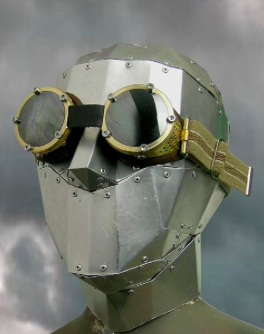
Arctic region snow goggles

Early snow goggles


For years I simply wore glasses. Then I used the OTG goggles. OTG stands for Over The Glasses. There was a lot of fogging. Next step was the battery operated fan goggle. When they worked, they worked well. When they didn’t – which was frequently – AAARGH! 

A-BOM makes a goggle that works like an electrified windshield. I used it for a few years. As I recall, it works.


My go-to solution is a prescription insert. It fits into goggles designed to accommodate inserts. Smith, Oakley, and Anon are among the companies that offer them.

Finding an optometrist that understands how to make a good insert may be a challenge. The last time I had an insert made was at a prominent optometric shop in Salt Lake City. I thought that being so close to the resorts, shops in SLC would have the know-how. I was wrong. The place I selected couldn’t get one of the lenses to stop falling out of the frame. It required multiple return visits.

I carry my specs in a hard shell case for use in the lodge or if conditions are such that I don’t want to wear goggles.

Another alternative is laser surgery. Some people I know swear by it. A few have developed complications. 

For the time being, I’m sticking with inserts.

Alterra To Invest $181 Million in Resort Improvements

Alterra Mountain Company, which owns ski resorts and the IKON pass, announced it will invest $181 million in capital improvements across its 14 North American mountain destinations. Major 2019/2020 projects include new high-speed lifts at Squaw Valley Alpine Meadows and Winter Park, RFID lift access at Deer Valley Resort, an expansive renovation of the Bobbie Burns lodge at CMH Heli-Skiing & Summer Adventures, and an upgrade of Steamboat’s gondola.

US Ski and Snowboard Hall of Fame Dinner Discounted for SeniorsSkiing.com Subscribers

The US Ski and Snowboard Hall of Fame’s annual induction ceremony is April 6 in Salt Lake City. The ceremony will culminate Snowsport History Celebration, a gathering in Park City of International Skiing History Association, US Ski and Snowboard Hall of Fame, and North American Snowsports Journalists Association. The ceremony will be at Salt Lake’s Little America Hotel. SeniorsSkiing.com subscribers may purchase tickets to the gala at a $100 discount ($239) through March 15 by entering SENIORS2019 when purchasing. If you live in the area or are visiting, this should be a terrific evening. This year’s inductees include racers Bode Miller, Kristin Ulmer, Hilary Engisch, and Andrew Weibrecht.

Tickets: https://skihall.com/induction/tickets/

Full event details: https://skihall.com/induction/schedule/

Lodging: https://skihall.com/induction/lodging/

George Jedenoff, 101 1/2 and Still Skiing

George Jedenoff, 101 1/2 and still skiing!

This video issued by Ski Utah is titled The Optimist. It shows George skiing with his son at Alta. George explains his philosophy of optimism and staying fit so he can continue to enjoy life on snow. An added bonus are some brief comments from Harriet Wallis, frequent SeniorsSkiing.com contributor. The video is 5 minutes long. It will bring you joy.

ORSDEN Parka and Pants SALE


Orsden makes good-looking, functional, ski parkas and pants. Because they sell directly to consumers online, the products cost about half of what they would in a shop. The company just announced a 50% off end of season sale for its products. Parkas are $165; pants, $100. When I looked there was a full selection of sizes and colors. This is one terrific bargain.

Short Swings! Hiatus

Over the next four weeks, Short Swings! may be really short or nonexistent, while I’m skiing  in the Aosta Valley and the Dolomites. Will report on the adventure from time to time and when I’m back in early April.

Short Swings!

Most people who love skiing take an interest in its history. Preserving and promoting that history is the mission of the International Skiing History Association (ISHA), a volunteer and membership organization that deserves our collective support.

Among other things, ISHA publishes Skiing History, a delightful bi-monthly magazine available in digital and print versions. SeniorsSkiing.com subscribers are eligible to receive a free one-year digital subscription. Click on “Community” at the top of this page.Then click on “Subscriber Only Content” in the drop down box. Scroll to”Free One Year Subscription to Skiing History Magazine” and follow the instructions.

Earlier this week, I attended ISHA’s Skiing History evening at Hickory and Tweed, the venerable ski shop in Armonk, NY. About 60 people showed up for a nice spread and an entertaining presentation about the relatively negative but highly amusing portrayal of skiing on TV sit coms. Jeff Blumenfeld, a member of ISHA’s Board put the show together. The program started with the popular 1950’s Topper program (in which two main characters and a drunken Saint Bernard are buried in an avalanche) and continued with a variety segments from the Dick Van Dyke Show, Here’s Lucy (when Lucille Ball actually had a broken leg), The Brady Bunch, Ellen DeGeneres (on a broken chairlift with two nervous friends), Cheers, and others. ISHA intends to promote use of the presentation by ski clubs, thus building awareness of the association and increasing its membership.

If your club is interested in using the presentation, emailjeff@blumenfeldPR.com.

An article on the same topic, by Jeff, appears in the September/October 2018 issue of Skiing History.

NYC Ski Gatherings

SeniorsSkiing.com Birthday Party!! — We’re ramping up for our 5th Anniversary party, 5:00 – 8:30PM, Wednesday, November 14 in The Rumpus Room of E’s Bar (Amsterdam Avenue, between 84th and 85th Streets) in Manhattan. We’re providing the place and the food. Advertisers and others are providing raffle prizes and SWAG. Prizes include a pair of Apex Boots (courtesy Apex Boot Systems); a ski trip to Okemo in Vermont (courtesy 70+ Ski Club), two Orsden parkas (courtesy Orsden); DeBooter ski boot jacks (courtesy Outdoor Logics Solutions); Bootster ski boot horns (courtesy Bootster); discounts for a variety of Masterfit ski boot products(courtesy Masterfit), GearBeast cell phone carriers (very cool product), and superbly warm socks from The Buffalo Wool Company. Except for your bar bill, it’s all on the house. You’ll meet other older skiers. You might win a prize. You’ll certainly have fun. Add it to your calendar. Your RSVP will help us plan for the event: jon@seniorsskiing.com.

Friends of Alta is the non-profit protecting Alta’s environment, preserving its unique character and heritage; and encouraging stewardship and sustainability of Alta’s environment and community. The group ishosting an event, 6:00PM – 8:30PM, Thursday, November 15, at The Explorers Club in Manhattan. For more information, click here.

Five Minutes of Deep Powder Joy 

Icelantic Skis produced this outstanding deep powder short film on the slopes of Mt. Yotei in Japan. There’s some cliff-hucking and one scene where a skier skims off a powder-topped tree branch…the stuff of younger skiers. But the shots of deep powder turns are dreamy.

An Offer No Serious Skier Should Refuse

Realskiers.com is a website that reviews skis. The reviews are more detailed and refined than what you’ll read in one of the ski magazines. And the site is rich with opinion about the sport. Realskiers.com is a written and published by Jackson Hogen, whose irreverence is reflected in his self-proclaimed moniker, the Pontiff of Powder. For youngsters, an annual subscription is $19.95. For SeniorsSkiing.com subscribers, it is $9.95. To subscribe at the reduced rate, click here and enter SS18 for the discount code.

Short Swings!

Jeeping the High Country

A few weeks ago we took the five hour drive to Ouray, Colorado, to escape our desert heat. Ouray sits at 7792′ surrounded by peaks in the San Juan Mountains in the southwest  section of the state. The scenic Victorian mining town rightfully calls itself “The Switzerland of America.”

Jeep, Jon, Pam, and April high above Ouray, Colorado. Mark is behind the lens.

It’s 47 miles from Telluride on normal roads; about 17 miles via old miner’s roads that ascend to 13,000+’, through meadows, past waterfalls and snow fields. Our friends Mark and April took us on a tour. Mark saw it as an opportunity to demonstrate the super powers of his super Jeep, a high-clearance 4WD,  tricked out to take rough high country roads like a Lexus takes the freeway. What a ride! We climbed “roads” that on foot you’d need to navigate with pitons. We descended cliffs that mountain goats avoid. Given the choice between stream and bridge, you can guess the choice we made. Eventually, we travelled a stream. Others might seek the dry route. With this vehicle, the wet way was just fine. We picnicked near a waterfall before descending back into the valley. If you go, we can recommend staying at the Hotel Ouray, a fine Victorian hotel in the center of town and dining at The Outlaw. There are other good restaurants scattered around the town. Although we’ve never used it, Ouray has a large hot springs facility. The “Million Dollar Highway” (US Route 550) from Ouray to Silverton is gorgeous, and Silverton (home of Silverton Mountain, the legendarily steep lift- and heli-served back country ski area) is filled with neat stores, restaurants, bars and art galleries.

Alterra Purchasing Solitude Mountain Resort

Alterra Mountain Company announced this week the acquisition of Solitude Mountain Resort, the gem in Utah’s Big Cottonwood Canyon. Alterra was formed last year and owns Deer Valley, Steamboat, Winter Park, Squaw Valley Alpine Meadows, Mammoth Mountain, June Mountain, Big Bear Mountain, Stratton, Snowshoe, Tremblant, Blue Mountain, and CMH Heli-Skiing & Summer Adventures in British Columbia. It also owns the IKON Pass.

Vail Acquiring Crested Butte, Okemo, Mt Sunapee

Vail Resorts is in the process of acquiring Crested Butte Mountain Resort in Colorado, Okemo Mountain in Vermont, and Mount Sunapee in New Hampshire. The sale includes Vermont’s Okemo Valley Golf Club and Tater Hill Golf Club. The three areas are being sold by Triple Peaks, LLC, owned by members of the Mueller family which purchased Okemo in 1982, Mount Sunapee in 1998, and Crested Butte in 2004. The State of New Hampshire needs to approve the Sunapee acquisition for it to proceed. Vail Resorts announced it will honor previously purchased Okemo, Mount Sunapee, and Crested Butte 2018-19 season passes.

Deer Valley Adding New Chair

Deer Valley Resort, recently acquired by Alterra, is investing $8 million in a new high speed quad, improved snowmaking, expanding its fleet of groomers, and replacing its rental equipment. The quad will replace the Homestake chair which carries skiers from Silver Lake Village to the top of Bald Eagle Mountain.

Utah Skier Visits Drop 10%

Poor and inconsistent snowfall contributed to a 10% drop in skier visits to Utah last season. The state had 60% of average snowfall according to the National Weather Service. Nationally, skier visits were down 3%.

Hedy Lamarr Doc Filled with Surprises

Bombshell: The Hedy Lamarr Story is a documentary film released last month. The exceedingly well-done film tells the story of the Austrian-born actress who helped define Hollywood beauty and informed the visual portrayals of Disney’s animated Snow White and Batman comics’ Catwoman. The surprising part of her biography is that she was an inventor who patented a communications technique contributing to Allied victory in WWII and that is used in virtually all modern telecommunications. Why do I mention this in SeniorsSkiing.com? She also started a lodge in the early days of Aspen. It’s now the Aspen Villas. The film is available on Netflix.


When Should A Senior Skier Take A Lesson?

Five Good Reasons To Join A Class.

A ski class practicing kick turns at Peckett’s-on-Sugar Hill, 1930s, where, for the first time, Americans could take lessons with skilled Austrian.
Credit: Concord Monitor

[Editor Note: In a SeniorsSkiing.com Survey, 30 percent of respondents revealed they took a lesson sometime during the season. Why? Correspondent Marc Liebman  found out five core reasons lessons might be a good idea.]

Back in the days when I was on the staff of Ski Magazine responsible for all its ski equipment and instruction articles, the most frequently asked question from readers was “When do I need to take a lesson?”

The question is a good , and the good consulting answer is “It depends….” After talking to several ski instructors and racking my brain as a former certified instructor, here’s a short list of conditions assuming you are not new to the sport and walking onto the slopes for the first time.

Keep in mind, Mother Nature didn’t have skiing 30,000 vertical feet a day down through waist high moguls when she created the aging process. As we age, despite our best efforts, we lose flexibility, muscle, and bone strength. In short, we’re more susceptible to injury. When we are hurt, it is usually more serious, and, even worse, it takes longer to heal.

So, you need to take a lesson…

  1. After you have a serious illness or a major injury or a joint replacement or it hurts when you ski. Why? You don’t know how what happened will affect your ability to turn, your balance or stamina. The lesson, assuming it is taught by a trained instructor, will help you figure this out.
  2. If you haven’t skied in awhile. Why? Two reasons. One, ski equipment has changed. The new short skis are easier to turn, generate less torque on your legs and more stable than the longer skis of yesterday. To ski them well, you have to adjust your technique. Two, while some may think skiing is like riding a bike, it is not. If you haven’t skied for awhile and your name is not Billy Kidd or Jean-Claude Killy, take a lesson!
  3. If you just bought new equipment. Why? Unless you were the first person to use a pair of demo skis, your new ones even though they are the same make and model, may ski differently than you remember for reasons beyond the scope of this article. So, to get the most out of your new skis, take a lesson!
  4. If you are planning to ski conditions with which you are not familiar. Why? If you have never skied waist deep powder, take lessons to learn how. Or, if you skied only in Utah or Colorado and suddenly find yourself living and skiing in Vermont, you need a lesson!
  5. To polish your skills. Why? Unless you are an expert and can ski any condition with aplomb and in perfect control, you need a lesson. The majority of skiers are “intermediates/advanced intermediates” so take a lesson. Even instructors go to clinics to polish their skiing (and teaching) skills.

So that’s the consensus five. I’m sure there are others. Net net, if you cannot ski any condition or trail on the mountain like an expert and without hesitation, then you need a lesson!

Ski School, Austria, circa, 1930s.

The Box In The Back

When You Need “The Box” For Survival, You Really Need It.

This can happen. If it does, you’ll be glad you have the “Box.”

Most people think driving to a ski area is a routine trip. Before they leave, they check and recheck what they think are the most important items—ski equipment. That’s not the only “equipment” you should bring.

Back in the good old days when the back seats of our all wheel drive van or SUV had two kids, ski gear and luggage went in first. Followed by what my daughter dubbed at age eight—“The Box.”

Mandated clothing for everyone was jeans, boots, long sleeve shirt or turtleneck, and, if they wanted, a sweater. In our ski jackets that were always an easy reach in case we had to leave the car in a hurry, we stuffed our gloves in one sleeve and a ski hat in the other. The boots stayed on at all times.

Why? “Because”… It’s a good parental answer because in this case, just “because” is true.

Anytime you head off to the mountains, you need to think about survival. Black ice, mechanical failure, an accident up ahead that halts traffic for hours, or worse, you get into an accident can turn a pleasure trip into a nightmare. BS, you think, I’m one of those who think the glass is always half empt

Au contraire. Enter “The Box” in the back. Actually, it wasn’t a box. It was and still is a medium size tool box. It contains a hatchet, survival knife, a multi-tool,  small bricks of fire starter, matches in a sturdy waterproof container, six thermal blankets,  a hundred feet of rope, a first aid kit complete with ace bandages to make a splint, tweezers, a scalpel with the blades still in the sterile packages,  hydrogen peroxide and isopropyl alcohol in sturdy plastic bottles. And, when they became available, eight MREs (Meals Ready To Eat).  Lashed to “The Box” by four bungee cords were two lightweight shelter halves. Also in the back were two gallons of water either in twenty ounce bottles or large jugs. All this is wedged in the back so if we got into an accident, it wouldn’t fly around. Under the luggage, I carried a snow shovel!

You’re thinking, this guy is nuts! Well, have you ever driven the road between Mojave and Lone Pine, CA? If you haven’t, you’re on the western edge of the Mojave Desert and not much of anything else. I-40 between Amarillo to Albuquerque is arid, and there isn’t a soul for miles. I-91 through Vermont or I-93 through New Hampshire can get really lonely at 11 at night with a broken car in the middle of a snowstorm. On any one of these roads (and many others), you can slide off into the gullies and not be seen from the road.

It can get lonely out there, worse if you’re not prepared.

Don’t think your car will be your lifeboat. If you’re in an accident, the engine may not run or worse. Sitting in an idling car puts you at risk of dying from carbon monoxide. The car is designed to dissipate heat, not retain it!

If you are stuck a long way from the nearest gas station, and do not know how long you are going to be stuck, stay with the car.  Don’t use it for a source of heat unless it is well vented. Heat rises so it goes out the windows very quickly.  If you are on a road, get something or someone on the road to stop whatever traffic comes by. Don’t set off for help unless the weather is clear, and then take your survival stuff with you.  In today’s world, a working fulling charged mobile phone is your best friend.  Small, solar-powered rechargers might be wise to carry in your glove box.

My point in all this is every year, people get stuck alongside the road and the news stories all involve hunger, exposure, frostbite, hospitalization, etc. Don’t be one. Create and carry your own box and be prepared. It’s insurance and you never know when you’ll need it. Not having it could ruin your day.

Ruth DeSouza

Senior Profile: WWII Survival Shaped Ruth DeSousa’s Resolve

She Applies What She Learned To Life And Skiing.

At 86 and a bona fide survivor, Ruth DeSouza offers sound advice for seniors.
Credit: Harriet Wallis

When the air raid sirens blared in Bingen, Germany, residents scrambled down into their cellars for protection. The town on the Rhine was bombed again and again by Allied forces.

After each attack, Ruth’s mother would rush to the roof of their building to pick up the burning flares that had been dropped and hurl them off the roof so the building would not catch fire.

Historically, Bingen is on a critical transportation route established in Roman times. During the war, Allied forces were not trying to destroy the town but were aiming their bombs at the major railroad hub and communication lines.

But bomb drops were not accurate. High winds carried them off target into the town destroying schools full of children and homes of those who wanted no part of the war.

At that time, Ruth was an athletic school girl in Bingen. She was a gymnast, practiced ballet, played tennis, and learned to ski on a local farm hill. The turmoil of war shaped her resolve. She learned to expect little but to keep going no matter what.

Today, she lives by the resolve she forged during the war years. Ruth is slim and active at 86. She skis three or four days a week at Alta, Brighton, or Solitude. The other days she walks for 30 minutes. “You have to keep going, and you have to stay strong,” she says.

Ruth’s attitude has always been undaunted. As the war grew worse, Ruth’s family fled from Bingen. After the war, they walked for days to get home. As Ruth walked, she decided to use the fabric of her old school uniform and make a bikini for herself. She envisioned happiness even when life was full of misery.

Today, like the bikini she made long ago, she dresses fashionably and keeps a positive attitude. She advises senior women to be positive also. “Eat right and don’t let yourself get fat,” she says.

To read more from Harriet click here for her stories on SkiUtah.


Cycling Series: “Arthritis-Proof” Bicycle Tires—Flat No More

Get 5,000 Miles On These Airless Tires And Never Have To Wrestle With A Flat.

The dealer installs tubeless Tannus tires onto my rims before the big charity ride.
Credit: Harriet Wallis

If your hands are arthritic, you know how hard it is get a tire back on its rim after fixing a flat. Arthritic hands just don’t have the strength they used to have. But it’s impossible to get a flat with solid tires, so that’s good news for arthritic hands.

I saw airless tires for the first time just a few weeks ago. It was the evening before a major all-women’s bicycle ride fund raiser for women’s cancer research. The annual event is sponsored by the Bonneville Cycling Club here in Utah and the women-only ride is called Little Red Riding Hood.

This year there were 3,900 riders who could choose to ride routes ranging from 27 to 100 miles through rolling rural countryside. Once again, my friend Laurie and I were good-will Course Ambassadors, which means we’d ride a route amongst the women reminding them how to ride safely.

Tires That Can’t Get Flats? My Hands Need Them.

Ride on. These colorful tires won’t get flats.
Credit: Harriet Wallis

On the evening before the ride, the start area becomes a shopping mall of vendors with bike-related products: bike clothing, bike jewelry, bike art—and for the first time, tubeless bike tires.

Right then, the night before the ride, we each bought a set of colorful Tannus tubeless tires and had them installed. During the long ride the next day they seemed to feel and ride like regular tires at 100 – 120 psi.

Details

The Tannus website says this design reduces drag to 1-2%, but we didn’t notice any drag on the Little Red route with rolling terrain and few hills. Apparently other brands of solid tires can produce considerable drag.

I’ll give you my follow up evaluation after I give the tires a good workout this summer on a variety of terrain.

The Tannus foam tires are lighter weight than a tube/tire combination. They also reduce weight because there’s no need to carry a pump or compressed air cartridge or tire tools.

They come in several road bike tire styles and in a dozen flashy colors. Aren’t my red ones pretty? Price: about $65 each plus installation

You can install them yourself, but I wouldn’t recommend it. It’s a very unconventional installation, and it uses a specialized tool to squeeze the tire onto the rim. If you already have arthritis in your hands, installation won’t be fun. But installation directions are available online.

To read more from Harriet click here for her stories on SkiUtah.


Fitness Focus: The Essential Down Dog

Here’s One Of The Most Important Stretches An Active Senior Can Do.

[Editor Note: Our summer series Fitness Focus is taking a distinctive turn toward several important yoga positions. We’ve highlighted the Squat, the Plank, and now the Down Dog.  We are a bit biased toward these poses because we have experienced personal progress and various muscle pain relief by practicing them.  We’re curious, too, about your experiences with these and others.  Let us know.]

Downward Facing Dog
Credit: Yoga Basics

Hamstrings are the big muscles behind your thighs.  If you stand and raise one heel towards your backside, you are using your hamstrings. When you sit down on a chair, those muscles are relaxed and become shortened and tight.  When they are tight, they pull on your hips and, in our experience, have been one source of classic lower back pain.  There are other sources, of course, i.e., bulging discs, arthritis and even infection.  But we’ve found that stretching those hamstrings goes a long way in resolving that uncomfortable lower back.

According to physical therapists, the most effective way to stretch those hamstrings and many other muscle sets is the Down Dog pose (aka Downward Facing Dog, or Adho Mukha Svanasna).

It is a rather simple pose that involves your entire body.  You start on your hands and knees, hands under shoulders, knees under hips.  With an exhale, up you go, bringing your rear end up, your head between your shoulders and your legs as straight as you can get them.  Spread your hands out like a star fish and gaze back at your shins while keeping your neck in line with your spine. The ideal is to plant your heels down on the floor while your legs are straight, your spine lengthened and your belly button drawn into your spine. Chances are, you’re not going to get your heels down if you’re just starting.  Or perhaps never. Most people feel comfortable just “pedaling” their heels up and down as a first step to getting comfortable.

Breath slowly and deeply from your belly button.  You are strengthening your shoulders, neck, back, glutes, and lots of other muscles while you are stretching your hamstrings.

One-Legged Down Dog is an easy variation.
Credit: Yoga Basics

From Down Dog, you can transition to Plank, hold that for 10-20 seconds, and then go back to Down Dog.  Back and forth between those two is a tremendous stretching and strengthening exercise. Breathe deeply and slowly. We’ve heard this combination is used in various military boot camps to get recruits into shape.

There are several variations you can use once you get into Down Dog.  Lifting one leg straight up is one.  There are others which you can check here.

As usual, if you have any carpal tunnel, shoulder, back, joint issues, or unregulated high blood pressure, please check with a health care professional before you try any of these stretches.

Here’s a demonstration and tips for correcting common problems in doing Downward Dog.

https://www.youtube.com/watch?v=4Z8rZJ6sk48


Five Tips For Sierra Summer Skiing

[Editor Note: This article by Correspondent Rose Marie Cleese first appeared in Liftopia’s The Blog.  We thank Liftopia for allowing us to pass it along to the readers of SeniorsSkiing.com.]

Even though summer has officially arrived and temperatures are reaching triple-digits across the country, are you still nostalgic about winter and wish you had gotten in a couple more days of skiing or boarding?

You’re in luck. Ski season is alive and well in the Sierra, at Squaw Valley near Lake Tahoe for at least two more weekends and at Mammoth Mountain off State Route 395 east of Yosemite daily into August.

See California lift tickets.

Summertime, when the vibe is chill and the air is hot…

So how different is it to ski and board in the summer? When’s the last time you spotted a marmot basking in the sun next to a ski tower? Or had a flurry of ladybugs alight on your table while lunching on the lodge deck. Everyone on the slopes is happy and laid back because we all know we shouldn’t be able to be doing this at this point on the calendar. Below are 5 tips if you’re headed to the slopes this summer.

1. Enjoy the soft, easy-to-ski corn snow.

Corn refers to the snow during the time window when it has become soft and forgiving, but not too wet and slushy.

At Squaw Valley, after you leave the green, grassy terrain around the base of the mountain, it’s a bit of a shock to find yourself a few minutes later on the snow-covered slopes of Squaw Valley’s upper mountain, currently boasting a snow depth of up to 131 inches (that’s nearly 11 feet, folks!).

Now, over the long 4th of July weekend, July 1–4, and on Saturdays thereafter “as long as we can provide a safe skiable surface,” says Squaw Valley spokesperson Sam Kieckhefer, you can enjoy a full four hours of skiing on corn snow, from 8:30 AM to 12:30 PM.

The surfaces of most runs are easily skiable corn snow, kept nice and crisp due to the deep snowpack. The only places you’ll find full-blown heavy slush are on the wide, flat runs that feed into the Gold Coast Lodge area. Last weekend, the temperature on the upper mountain was 60 degrees and the resort had four lifts running: Gold Coast, Big Blue, Siberia and Shirley. Skiers could also traverse and hike up to ski the runs on Headwall.

2. Check out Squaw Valley’s poolside party at High Camp.

PHOTO CREDIT: Katie Cleese Photography

After you shed your skis, be sure to check out the lively scene at Squaw Valley’s pool and hot tub at its High Camp location, open from 11 AM to 4 PM. For the price of admission ($15), you get a locker, towel, and access to an 8,200-foot-elevation alpine party, complete with a poolside dj spinning house music and scantily clad 20-somethings cavorting and splashing around the big pool wearing ski goggles.

Catch the shuttle back to the Resort at Squaw Creek where you’ll have the options of sunbathing by its more mellow pool sipping a margarita, soaking in a hot tub, playing a round of golf, hiking, or playing a game of tetherball, corn hole, or giant chess. The best of summer and winter all in a single day.

See Squaw Valley lift tickets.

3. Defy winter and ski well into summer at Mammoth Mountain.

PHOTO CREDIT: Mammoth Mountain

On the eastern side of the Sierra, Mammoth Mountain, the queen of ski resorts staying open past April, is experiencing three to four times the number of skiers and boarders they usually get this time of year, according to Mammoth Mountain’s communication manager, Lauren Burke. “We’re committed to daily operations into August,” she says. “In the last 50 years, we’ve stayed open into July some 15 times. Our longest season on record was 1994–95 when we closed on August 14th.”

Hours of operation at Mammoth are 7:30 AM to 2 PM, with 6 lifts, 57 trails and 2 terrain parks available midweek, and 7 to 8 lifts and 70 trails available on weekends. Currently, Mammoth has 45 inches at its base and 180 inches, or 15 feet, at its 11,000-foot-high summit.

For Bay Area skiers, the quickest way to reach Mammoth right now by car is via I-80 through Reno and south on SR 395. The faster route via Highway 120 over Tioga Pass, which closed for the winter season last November 16th, is still closed with no projected opening date. In the last 80-plus years, the latest Tioga Pass opening was July 1st, so it looks like that record is soon to be toast!

See Mammoth Mountain lift tickets.

4. Garb up or garb down… Whatever you prefer, just don’t forget the sunscreen!

PHOTO CREDIT: Katie Cleese Photography

If you NEVER fall, wear whatever or how little you want. We saw a pair of skiers in flowing Batman and Superman capes, a boarder wearing a Speedo®, plus a plethora of cut-offs, tank tops, no tops (guys only!), and streamlined helmets. So wearing apparel is whatever strikes your fancy, but there are a few “musts” when you hit those corn-fed slopes:

Before you go out, cover every bit of exposed skin with a high-SPF waterproof sunscreen (including ears, napes of necks, hands if you’re going gloveless, etc.) and reapply as needed. The summer sun is intense at these high elevations, plus you’ll be skiing in mostly sunny weather. Also be sure to entirely cover your lips well with a good lip sunscreen.

Wear goggles or make sure that your sunglasses are completely protecting your eyeballs. Never, never, never head out to the slopes without one or the other. Snow blindness (when you burn your cornea from overexposure to the sun’s UV rays) is incredibly painful and can take a couple of days to recover from.

5. Stay hydrated.

PHOTO CREDIT: Katie Cleese Photography

Drink lots of water throughout the day or you’ll find yourself getting parched pretty quickly. Squaw Valley had water stations set up both outside and inside the Gold Coast Lodge, with plastic water cups stacked up behind the water fountains. Save the alcohol imbibing for après ski!

Provided that the winter snows come on schedule next December, it’s nice to know that all those happy campers up at Squaw’s High Camp last weekend have to wait only five months to ski and board again—but it certainly won’t be as much fun as skiing in workout pants!

Rose Marie Cleese is a correspondent for SeniorsSkiing.com, an e-magazine devoted to wintersports enthusiasts aged 50 and up.


Why Do I Have To Re-Enter My Name And Password?

We Explain Why This Annoyance Happens And What You Can Do About It.

Editor Note: We get emails from time to time about how frustrated some of our readers are in having to re-enter their name and password when they visit our online magazine.  Sometimes those emails are in ALL CAPS, sometimes they use naughty words. Trust us, there is an explanation, and not everyone who subscribes has this problem. We’ve published this before and will continue to do so. It’s an easy fix.

If you are being asked to re-enter your email to confirm your subscription to SeniorsSkiing.com, you might be a bit annoyed.  We don’t blame you, but there is an explanation.

  • You are accessing SeniorsSkiing.com through a device that is different from the one you originally signed up on. Subscribing to SeniorsSkiing.com puts a “cookie” on your device.  If you use a different device, no cookie, so you are viewed as a non-subscriber. If you re-enter name and password, you’ll be okay with the new device.
  • You have disabled cookies or cleared browser history on your device. Turn cookies back on, and you’ll not have to re-enter again, or leave it disabled and realize you have to re-enter each time.  Your call.
  • You are trying to access our Subscriber-Only Content.  Instead of building a firewall that requires usernames and passwords, we elected a much simpler way of getting to our exclusive content: Just confirm your name and email.  You will have to do that each time you want to get to that information, which, by the way, is under the Community tab at the top.
Ski Patroller Nancy Pitstick

Is There Life After Knee Replacement? Part I

Inspiration Is The First Step.

There’s a saying: If you can’t run with the big dogs, stay on the porch. I had to stay on the porch. My knees had quit, and I spent ski days mostly on the deck of the ski lodge while everybody else went skiing. I slathered on the sunscreen, drank hot chocolate and chatted with visitors. But I was bored. I wasn’t skiing.

Skiing wasn’t fun any more. I’d tried physical therapy, injections and finally an expensive custom made brace with pads, straps and a happy butterfly design all over it. Nothing helped. My knees balked at skiing. Even though I could bicycle, walk through the grocery store and climb stairs, my knees refused to ski. They reduced me to doing out of control wedge turns on easy slopes. I believed that my ski life was over. I was caught between non-skiing knees and the panicked feeling that I’d have learn to knit.

Ski Patroller Nancy Pitstick's comment started Harriet's journey Credit: Harriet Wallis

Ski Patroller Nancy Pitstick’s comment started Harriet’s journey
Credit: Harriet Wallis

Then Brighton Ski Patroller Nancy Pitstick entered my life. It was New Year’s Day. The sun was shining. The snow was perfect. But 20 minutes after the lifts opened, I was done for the day. One careening snowplow run was all I could do. I hung up my skis and headed for the deck.

“Happy New Year,” a voice said. “How’s your day going?”

I ignored the cheerful patroller.

“Guess you didn’t hear me,” she said. “How’s your day?”

She wouldn’t let me off the hook, so I poured out my knee frustration to her.

She listened carefully. Then she told me that she’d had both knees replaced. Right there in front of me was a healthy, active, vivacious patroller who was skiing and patrolling with two artificial knees. She assured me there can be life after knee replacement.

In true patroller style, she rescued me—not from a crash on the slopes but from my fear. And she inspired me to find a solution so I could return to the sport I love. It was New Year’s Day, and it began a fresh start on life.

Ed. Note:  In upcoming issues, Harriet will describe what she learned on her knee replacement journey, offering helpful advice and insights.  Look for articles on how to do your research homework, unusual tips to help you choose a doctor, questions to ask when interviewing doctors and more.