This Week in SeniorsSkiing.com (June 9)
New Survey. Two Skiing Octogenarians. Simple Planks Strengthen Core. Cycling Into Seattle’s Past.
Gatehouse Web Design asked us to ask you to complete a survey. The company built the SeniorsSkiing.com website. It has also created a number of private online calendars to help property sharers view availability, and schedule and track use. User interest in features such as expense sharing and departure checklists led Gatehouse to develop a web app designed to help anyone sharing a recreational property reduce the stress and time property sharing issues can cause.
Examples of people who might use the app are:
- Owners who let family and friends use their ski house and who would be interested a private scheduling calendar and maybe asking users to contribute a below market rent or or simply cover that week’s cleaning bill.
- Co-owners such as siblings or cousins who have inherited a place and need any easier way to fairly schedule use and share expenses.
- Co-renters who pool resources to rent a ski house and who need a central location to organize the calendar and communication.
- Ski clubs or associations interested in an easier way for members to pay dues and schedule their visits.
Survey results will help guide development of the app by identifying the most critical issues faced by vacation property sharers: https://goo.gl/forms/q0CBg5c695mtUJyA2
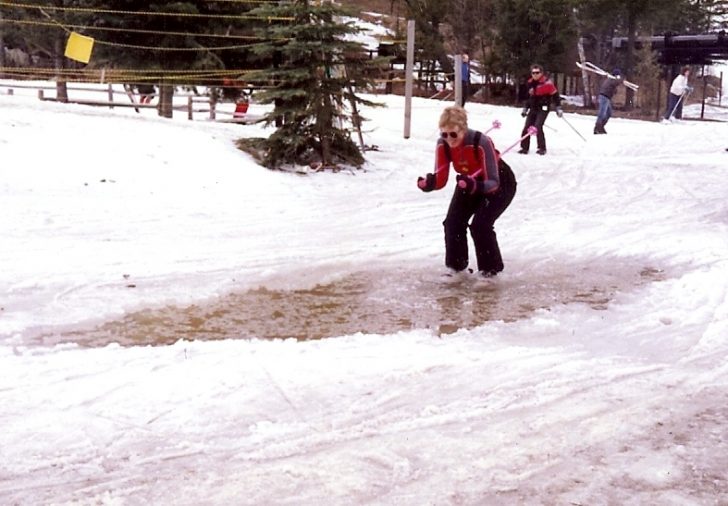
Paul in his tutu. He skis every day, but not always in a tutu. Sometimes he tows a kite from his helmet.
Credit: Harriet Wallis
This week Harriet Wallis profiles two octogenarian skiers based in Utah. The older of the two, 89 year old Paul Jacobsen, likes to show off his springtime stuff skiing in a tutu. He hasn’t missed a day at Brighton for 25 seasons!
Mike tells us about planks and how this simple exercise is so effective at strengthening the core — essential for tightening your middle and getting more out of your ski day.
Finally, John Nelson takes us on a bike tour of Old Seattle. He states, “Using a bike and a little imagination, it’s fun to explore your city in different way.” It’s a terrific idea, and a particularly good read.
We’re publishing bi-weekly this summer. Our next issue will be available June 22. In the meanwhile, if you have ideas, comments, etc., drop us an email.
 SeniorsSkiing.com 3″ x 3″ stickers are in limited supply. Send a stamped, self-addressed envelope to SeniorsSkiing.com, Box 416, Hamilton, MA. 01936, and they’ll be heading your way.
Quick note to World: Readers keep signing up — even with snow melted and bull wheels no longer turning. There are more of us every day. We are not going away.


 Mt Hutt (6800′ altitude) in Canterbury, opens Friday, marking the start of the South Island ski season. Located about 90 minutes from Christchurch, Mt Hutt is the first South Island ski field to open this season. It just received 12″ and extended cold has allowed snow making operations to create a base of 12″-20″. Mt Hutt typically gets about 13′ during season.


 We are also starting a summer series this week we’re calling Fitness Focus. Respondents to our survey suggested we have more articles on fitness, so here you go. With each edition over the summer, we plan to focus on one exercise, stretch, pose, activity that can benefit seniors’ conditioning.


 As with earlier reader surveys, this one had a 27% response, unusually high in the world of print and digital magazines. It shows that the SeniorsSkiing.com community is enthusiastic and engaged! We plan to use this information to help change perceptions about older snow sports enthusiasts within the ski industry.





 CALIFORNIA
 Epic Pass doesn’t offer senior discounts, but season passes for some of its affiliated ski areas do. For example, the Tahoe Value Pass gives those 65+ access to Heavenly, Northstar and Kirkwood for $389. Holidays, peak periods and Saturdays are excluded. For $439, seniors can ski Kirkwood only, with no restrictions. The threshold age for Minnesota’s Afton Alps is 62 and unrestricted skiing is $309 for the season. At Michigan’s Mt. Brighton, skiers 62+ ski unrestricted for the season for $369. Purchase before May 29, and you get two Buddy Tickets, each providing a fixed ticket price for a day at one of the Vail Resorts. A ticket at Vail/Beaver Creek would cost $116 with a Buddy Ticket; one at Park City would be $85. Stowe, Vail’s most recent acquisition, currently is not shown as part of the Epic Pass program. According to a Vail spokesperson, once the deal closes Stowe will be included.





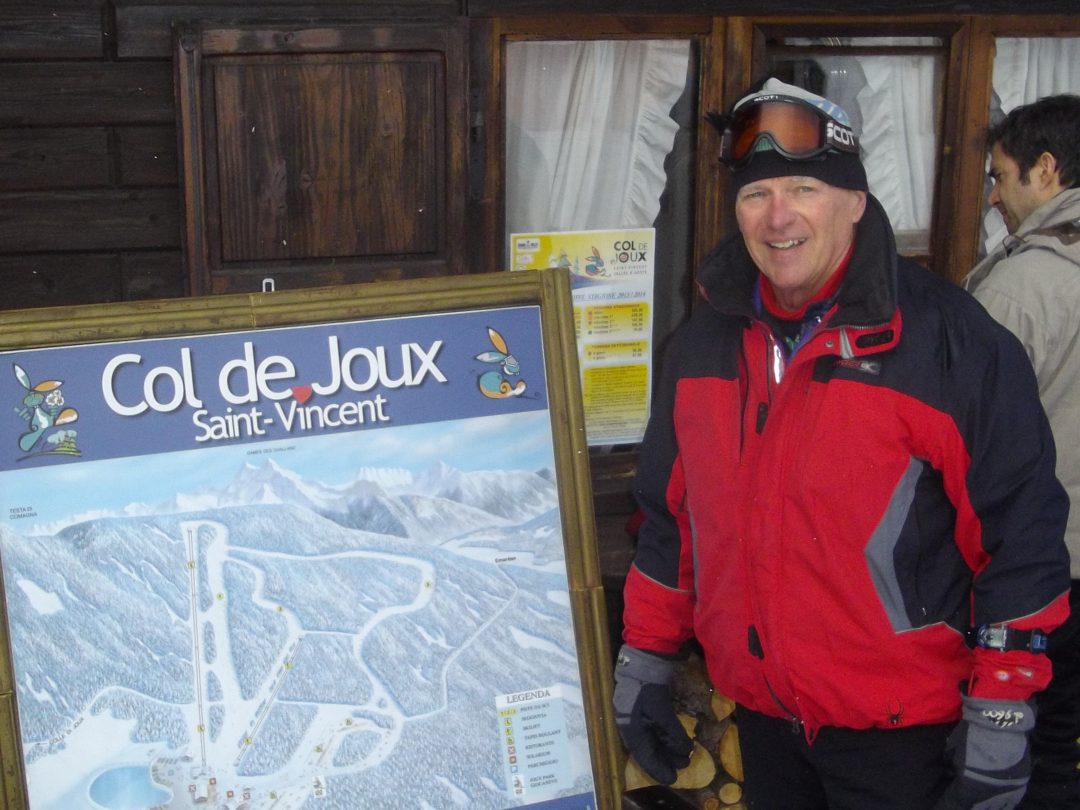











 The good news is that the ubiquitous pass idea—Epic, Mountain Collective and others—gives the skier lots of opportunities for variation and actually brings the price of skiing down if you ski a lot. These passes give you, for example, two days skiing at designation resorts and half-price tickets if you want to ski more. Passes are on sale now for next season and, if you’re interested, now is the time to buy.