Tag Archive for: seniors skiing

Three Holiday Gifts Senior Skiers Wish For

Publishers Note: It is with great sadness that we learned of the recent passing of one of our most popular contributors, Harriet Wallis. This is one of her many wonderful articles we are republishing this season.

When It Comes To Holiday Gifts, Sometimes Our Adult Children Don’t Have A Clue What We Would Like To Have. Here Are Some Hints To Pass Along. Or, Just Send A Link To This Story!

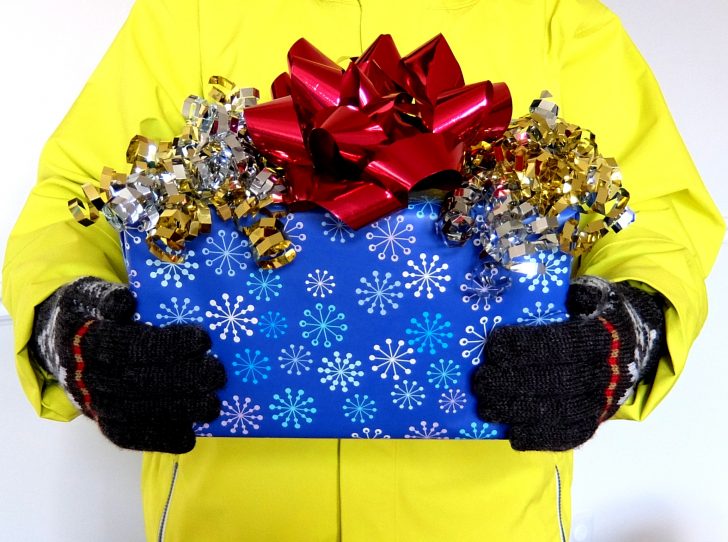
A surprise awaits and it’s not fruitcake. Credit: Harriet Wallis

Idea #1. A private lesson: A gift of confidence and fun.

You know you’d love to have the undivided, one-on-one attention of a skilled instructor to refresh your skills or move the needle a little bit further on your skiing. Ask for a private coaching session.

“Private lessons help build confidence,” said Leslie Blank, snowsports school director at Brighton. “Private lessons will let you move at your own pace. Or, you can get a little out of the comfort zone and try something new.”

Even good skiers get stuck in ruts, said Tim Wolfgram, director of Snowsports Services at Solitude. A private lesson can help you try new movements so you can have more fun.

Idea #2. A professional photo: Ski action or family portrait.

Ask your adult kids to put down their selfie sticks. Instead, ask for a professional photo of you skiing. Or, get the whole clan together for an on-slope family portrait.

Let a pro capture the photo memory.
Credit: Dobber Price, Peak Photo at Alta

Many resorts have on-mountain photographers who will take great photos of you with no fee and no obligation. But it’s a good idea to call ahead and coordinate the location and time with the photographer.

Here’s a tip. “Wear bright colors. It’s better than dark colors,” said Dobber Price, owner of Peak Photo at Alta, which is now in its 28th year of ski photography. And ski action photos, whether on a gentle slope or steep terrain, will capture your inner pro.

Idea #3. Ski tuning: So you can slide and turn more easily.

Ask to have your skis tuned. Many shops will inspect your skis and give a no-cost assessment of what needs to be done. Often, they just need to be waxed. Sometimes, if they haven’t been tuned or waxed for a long time, they might need more work. “It’s all about safety and the quality of turns,” said Brett Pergrossi, rental manager at Snowbird.

Tuned and waxed skis will slide and turn more easily. “You might slide right past your buddies on the flats,” said Brayden Morgan, head of rentals at Alta Ski Shop. “And, you won’t be as tired because you won’t use as much energy,” he said.

Many resorts offer gift certificates. But tell your kids to be sure the certificate can be used for the service they choose for you. They can buy it, wrap it, and give it. The holiday is solved. And you’ll have a treat coming.

P.S. Now aren’t these gifts better than fruitcake?
Tribute to Harriet Wallis

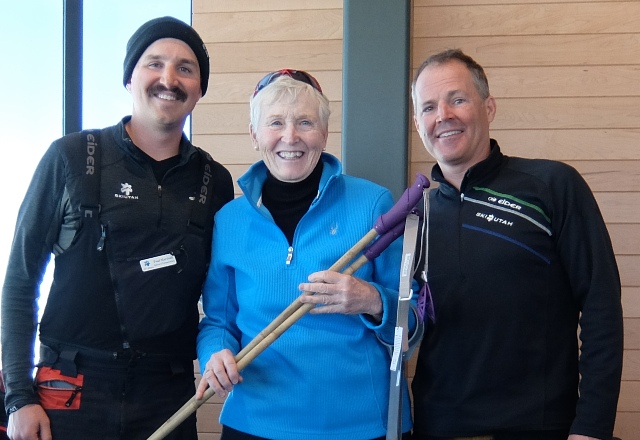
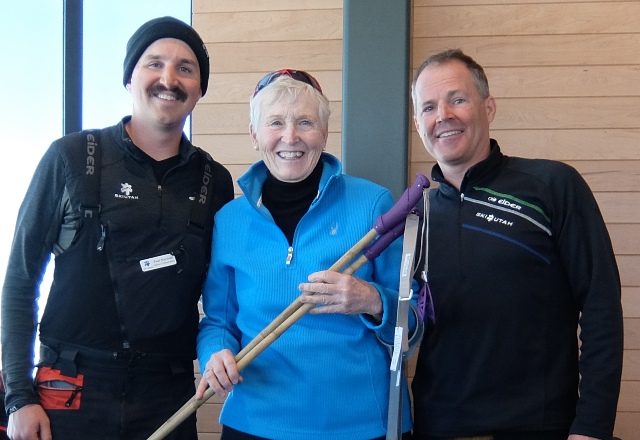
“A fighter, a writer, an avid skier and an optimist—nothing stops Harriet.” Harriet Wallis (center) was twice awarded Ski Utah Journalist Of Year. Shown with Ski Utah Communications Director Paul Marshall (left) and Ski Utah Director Nathan Rafferty. Credit: Pam Weisberg

It is with great sadness that we learned of the recent passing of one of our most popular contributors, Harriet Wallis. She was a longtime ski writer, editor and photographer. In 2016, Harriet earned Ski Utah’s top award – Journalist of the Year – for outstanding and consistent ski stories and photos about skiing in Utah.  She had 64 stories and 71 photos published that year in a variety of publications, including SeniorsSkiing.com. It’s the second time she earned the award.

Earlier this year, Harriet was featured in a local newspaper article aptly titled “A fighter, a writer, an avid skier and an optimist—nothing stops Harriet.”  Her indomitable spirit was a great inspiration to family and friends. Below are 3 lessons she shared with family and friends in one of her annual Christmas letters.

Adapt
They said I’d never be the same after chemo. They were right.There are lots of things I can’t do as I did in the past. I have 2 choices: Quit – or tackle challenges. Quitters never win. So accept reality, make changes & find new ways to do things.

Be positive
The best way to go forward is to quit looking in the rear view mirror. Don’t talk about pain or difficulties.
That gives credibility to the negative – and the negative will eat you alive. Look forward – only forward.

Be super good to the machine
The body is a healing machine if you give it a chance. Eat extra healthy. Fill the tank daily with water. Lube the moving parts (exercise) & pump fresh air through the system.

Harriet always managed to convey her enthusiasm and cheer in every article. Look for her previous articles to be reposted throughout this season.  She will be missed. 

Stored Skis

Putting Away Your Skis And Stuff

It Pays To Spend A Little Extra Effort On Your Gear. Here’s How.

[Editor Note: Don Burch’s article on storing your gear is published each year around this time.  We are reprising it to help remind you that a little care for your stuff goes a long way.]

Hopefully your ski equipment has taken good care of you all winter, now it’s time for you to return the favor. Some simple steps now can save you the frustration of rusty edges, musty clothing and mouse invaded boots.

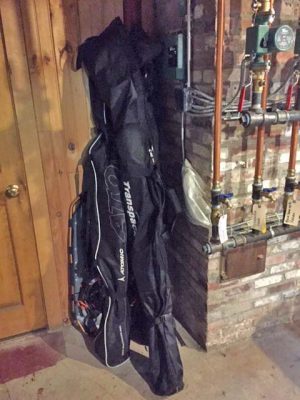
Are your skis still in the bag by the furnace where you left them after your last ski day? Hmmmm.
Credit: Mike Maginn

Skis: At the end of ski season, the bottom of your skis will be dirty. This will especially be the case if you did a lot of spring skiing. With today’s black bases it may not be that noticeable. Back in the day when a lot of bases were white the grime was obvious. Before having your skis waxed and sharpened, you want to clean the bases with a gentle cleaner. If you wax dirty skis, you’re just going to embed dirt into the wax.

I wet my skis bases with a garden hose, spray on Simple Green, wipe them down with a rag and then thoroughly rinse everything off. While you’re at it, thoroughly rinse off the top of your skis and bindings. I don’t recommend using cleansers on the top of your skis as these can interfere with the lubricants in your bindings.

Some people use commercially available ski base cleaners or Dawn dishwashing soap. Cleaning ski bases will dry them out so it’s imperative that you have them waxed afterwards and don’t let them sit all summer without a wax cover.

Racers and others who are demanding about their equipment will clean their bases using the hot scrape method. This involves hot waxing the skis and scraping the wax off before it cools. This process literally pulls the dirt off the ski. The process is repeated until the warm wax scrapes off clean. I have done this method, and it works, but it is time consuming.

A good edge sharpening and hot wax will not only have your skis ready for next season and will prevent the edges from rusting.

Boots: It’s essential that your boots and liners be totally dry before storing them. I use a boot dryer after every day skiing and before storage. If you don’t have one, I highly recommend that you take the boot liners out in order to get the boots thoroughly dry. I know it’s a pain to get the liners in and out. Warming your boots and thereby making the plastic softer will make it much easier to deal with the liners.

Store your boots in a place where mice cannot get at them. A friend of mine stored his in a shed and in the fall found them chewed on and full of things you’d wouldn’t want put your foot into.

Poles: These get the same attention as they did all winter, none.

Parkas and Ski Pants: At the end of the season, I wash my parka and ski pants in the washing machine with Nikwax TX.Direct® Wash-In. This is a product that cleans and restores water repellency and breathability, and I’ve been happy with the results. I’m not an expert on clothes washing so please go online to learn more and read the washing instructions listed on the label inside your garment.

Anyone else have any equipment maintenance tips for the off-season?

Book Review: Staying With It

An Aging Athlete Becomes Enlightened

[Editor Note: We are reprising this article from Nov. 2015 because it contains important themes of persistence and adaptability. And the book Staying With It was written by one of our favorite authors, the venerable John Jerome, a former editor of SKIING magazine.]

StayingWIth__501

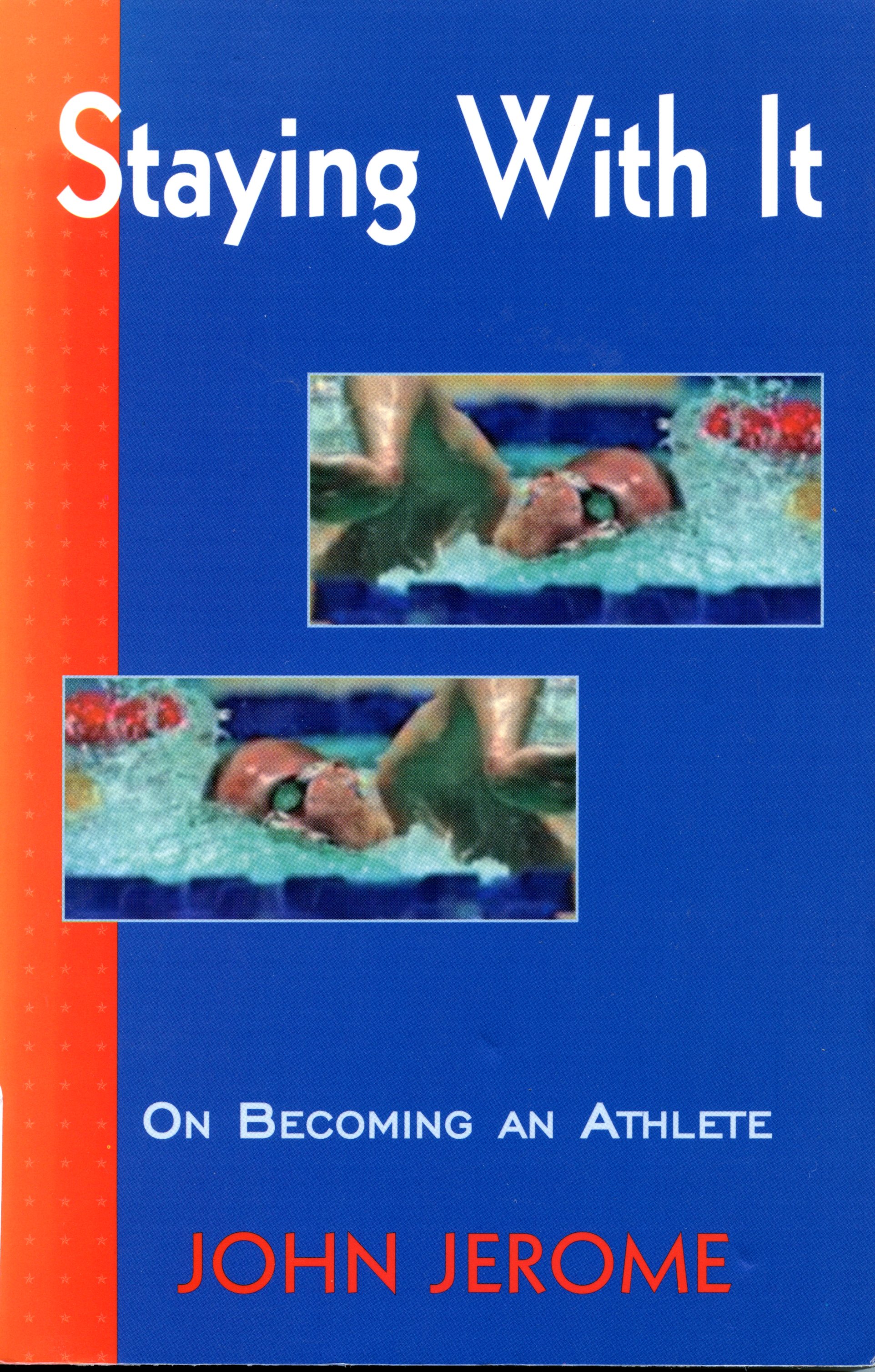
What happens when a 50-year-old writer decides to fight aging by becoming an athlete? Will physical awakening, sharpening, perfecting hold off the loss of function, range, performance? When former SKIING Magazine editor John Jerome found himself at the doorway to old age, he decided to do something about it. That something was his four-year voyage into athleticism to see if he could counter the effects of aging with muscle power, insight, and, as it turns out, mindfulness.
He tells his story in Staying With It, (Breakaway Books, 1992), a journey of trial, error and learning told in his usual reflective—and discursive— style. We recently re-discovered Jerome’s writing while paging through old, bound copies of SKIING magazine. When we learned he decided to become a competitive, masters-level swimmer at age 50, we wanted to explore his journey for our own edification as well as for our readers’.

At the beginning, he says, “Aging is very rude, making no attempt at diplomacy, at softening its message. It just starts slamming doors in your face, yanking things out of reach.” Jerome said he “was interested in giving up any capacity as slowly as possible…understanding and acknowledging the process.” His goal was “the maintenance of full function beyond the years of youthful vigor.”

To do that, he starts an experiment, swimming first as a fitness replacement for running and then training hard as a competitor. He discovers the Training Effect, body’s response to increased physical demands that gets cells to respond and do more. “To age,” he says, “is to begin asking the cells to do less.” The only antidote he says he could find was “movement—exercise and stretching.”

Jerome tells us about his training regimen, his lessons in exercise physiology, his trips to swim camps where he meets fellow enthusiasts, his many swim meets and consults with scientists. When he talks of perfecting his swimming stroke, he finds that simple physical task opens the door to complex mental aspects. He discovers “pre-verbal” tempo, right-brain control of the action, what we now call “flow”. “Learning to operate in your right brain is another part of the athlete’s job I had never considered before.” You know it, of course, when you ski cross-country “in the groove”, or swing through giant slalom turns without, well, without thinking. One way to induce that, he says, is to relax. “The athlete has to maintain a small amount of relaxation…The right brain knows this. Sometimes you have to wait, to ease up, to feel around in your capacities for just the right touch to make the motion work.”

Because his training program was largely self-directed and John was a self-admitted type-A personality, he eventually drove himself too hard, over-training and catching “Olympic Flu”, the syndrome that leads finely tuned athletes into exhaustion and even depression. After resting, he turned to a sport physiologist who used software and underwater video to analyze his stroke. Result: return to racing more enlightened. But, he says, “I wish I hadn’t started so late. I wish there were more time. I keep hurrying, and I’d really rather not do that.”

Of his experiment, he says, “I may not have stopped aging in its track…but I have certainly stopped the loss of intensity.” And, “the more I trained, the better the rest of my work goes, the sharper, and clearer and more efficient.”

John Jerome has written several books on fitness as well as other topics. Staying With It is available from Amazon.com.

Growing Up Norwegian-American on Skis

A classic ski poster shows a blonde baby in a quaint wooden cradle, one outstretched hand holding ski poles, with a pair of skis protruding from the other side. The caption is “Norway. The Cradle of  Ski-ing.” This poster reminds me of my roots.

Jan Brunvand, age 3

I was on skis from before I can remember. An undated snapshot in the family album proves this. I appear to be about three years old.

I suspect that my parents posed me on adult skis, as those boards are super long, even for the late ‘30s. ( I was born in 1933.) My mother surely knit that hat, while those fancy mittens were from Norway. I’m holding one long ski pole, but I don’t seem to be going anywhere.

In a second childhood photo I’m posing with my brother Tor in what could be about my seventh year. Tor was born in 1935, and we had matching ski jackets. The snow sticking to my pants hints that I must have fallen on the run before the shutter clicked.

Jan and brother, Tor

My parents came from Kristiansand, Norway. They were married in 1929 in Windsor, Canada, then moved to Northern Michigan. I was born in Cadillac. By the time Tor arrived we had moved to Lansing.

I have one slightly damaged photo of my dad on a ski trip in the old country, captioned “Easter 1925.” He’s on the right with his hand on the railing. Check out those vintage skis!

Jan’s father

As Tor and I grew up Dad would take us to parks or golf courses to climb up and slide down on skis. Before we gained some proficiency with “snow plow” and “stem” turns he would hold his poles out horizontally for us to cling to for balance as we schussed the gentle slopes. 

We climbed either by traversing and kick-turning, or using the herringbone method. When our skis got sticky, we rubbed on a mix of graphite and paraffin.

In 1948 realtor Rollie Stebbins convened a group of skiers to form the Lansing Ski Club with my dad as a charter member. A portable rope tow in Stebbins’ backyard was my first experience with motorized uphill ski travel. After the club bought rural property and installed a real rope tow we enjoyed many days there working on our turns. We also made occasional trips north to ski Caberfae near Cadillac.

In photos of me in those days I am usually wearing  a dark blue or red V-neck ski-jumper’s sweater sent to me by my maternal grandfather in Norway.

My Dad carved a graceful Telemark turn, and Tor soon got the hang of it. I never mastered Telemarking, but instead worked on my stem-Christies and eventually achieved a more-or-less full Christiania turn. It was gratifying to learn that both these turns were named from places in Norway. Never mind that the Christie was part of the Austrian-inspired Arlberg system.

Starting college at in 1951 I joined the Michigan State Ski Club and entered a new world of skiing with friends who had actually taken lessons and learned from pros. This led to further trips to Caberfae, and eventually to skiing in the Rockies..

At college I met my non-Norwegian non-skiing future wife and converted her to the sport after a disastrous first experience.

To be continued . . .  

Make More Tracks: Milestones In XC Skiing

From Wooden Skis, Wax, And Pine Tar Bases To High Tech Equipment in 50 years.

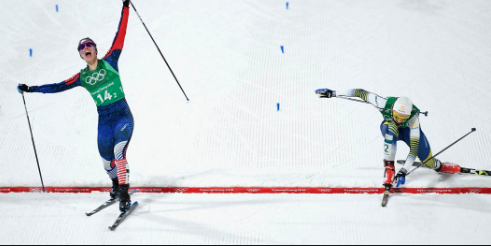
Jessica Diggins with  Kikkan Randall win first Gold Medal for US XC in 2018, making Americans serious competitors on the international racing scene.

Since the time that wooden skis were found in a peat bog in Sweden dating to 2,000 BC, there have been many milestones that brought XC skiing to where it is today. In the USA, the forefathers of cross-country skiing include people like Snowshoe Thompson, who delivered the mail in the Sierra Mountains of California and Jack Rabbit Johannsen, who XC skied in northern New York.

Before around 1970 or so, XC skis were wooden, required the right wax combination to work on the snow, and bases had to be prepared with pine tar “melted” in. Since then, the XC world has experienced enormous growth and change.  The editors of XCSkiResorts.com, using various sources, considered this recent history and development of the sport and created this list of the Milestones of Modern XC Skiing in the USA in rank order of significance:

Waxless skis with fish
scale bottoms made skiing simpler. (Credit: Tahoe Trail Guide)

1. Development of synthetic XC skis in 1974.

2. Development of the waxless based ski in the early 1970’s, most notably the Trak ski with synthetic fish scales on the ski base to eliminate the need for ski waxes. The waxless base gave the recreational skier grip on uphill travel while also allowing gliding downhill.

3. Integrated XC ski binding systems, which provided substantial improvements in simplicity of boot/binding interface and control in the mid 70’s.


Bill Koch started skating on XC skis in the Olympics and changed the sport. Credit: ISHA

4. Olympic and World Cup successes, like Bill Koch who won the Olympic silver medal in 1976 and World Cup in 1982, the first American to ever win at that level. The Nordic Trak exerciser used the Koch image as a fitness icon in advertisements for years. In 2010, there was US Olympic medalists in Nordic Combined, and in 2012 there was a World Cup winner in women’s sprint.

5. The onset of the commercial XC ski area concept began in 1968-69 at Trapp Family Lodge. This brought designed, groomed, and maintained trails making XC skiing easier and safer for the average person.

6. The skating technique proliferated, creating a faster paced and higher performance form of recreation.

7. Revolution Skis developed by Fischer led the way to shorter skis which were easier to use and consolidated ski sizing and simplified ski selection.

Vintage Mother Karen XC jacket made of synthetics came out in the 80s.

8. New lighter clothing with synthetic and breathable materials was more conducive to XC skiing comfortably; company brands such as Mother Karen led the way in the late 1970’s.

9. Other technological advances such as the 2 Wax System that offered one wax for cold temperatures and one for warm temperatures simplified ski waxing, while the BackCountry binding systems provided a beefed up boot/binding system that provided substantially more support and control for backcountry recreation.

10. The Nordic Integrated System (NIS) developed in 2005 has changed the ski/binding interface.  This system combines the ski and binding at manufacture rather than at the retail store. NIS plates were affixed to the ski by the manufacturer and the binding was slid onto the plate rather than screwed directly into the ski.

The changes in XC skiing in the last 50 years has been explosive and exponential, compared to the 4000 prior years. What’s next? Better binding-ski-boot systems, warmer-adaptable clothing, improved grooming, and more resorts catering to the sport.


Finding A Ski House With Rentable Space: Part 1

A Rental Apartment Can Pay For Your Ski House.

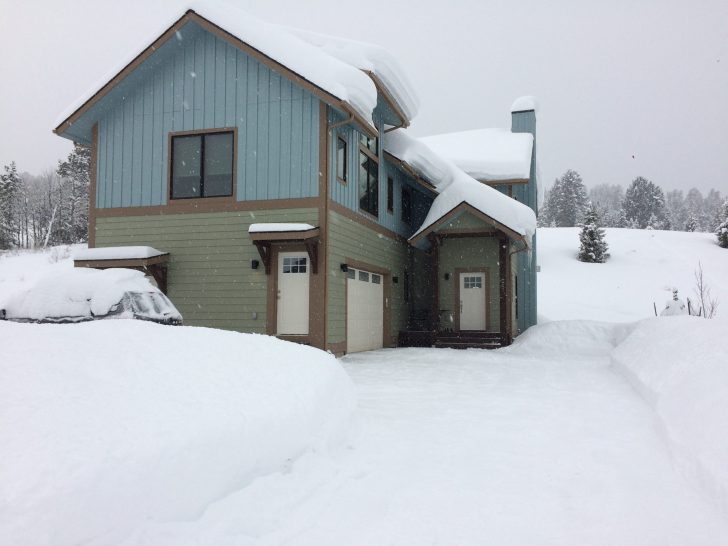
The author’s ski house has a rental apartment over the garage.

Perhaps you have daydreamed about buying your own ski house in a great resort, but dismissed it as out of your reach financially.  But don’t give up your dream!  In July 2018, my wife and I took the leap and we landed happily with a ski house in beautiful mountain country.  The central notion that works of us and for you to consider is to buy a property that doubles as an easily managed business, in the form of a home plus a rental unit. 

In this article, I’ll discuss finding a property.  In the coming weeks, you’ll be reading about marketing a rental property as well as other ideas for making this idea work.

The Right Property For An Owner-Rental Business.

Most resort houses do not have a rental unit, detached or attached, as a part of the layout.  But if you can find a house that does have a rental unit, or a house that you can easily alter to create one, you have the opportunity for income that subsidizes your mortgage payments.  You have to shop with caution.  Not all municipalities or HOAs (Homeowner’s Association) permit rentals, or they permit rentals only under certain conditions, so you have to do your due diligence. 

Easier said than done, you say, that kind of property can’t be so easy to find.  They exist.  Before you leave on a ski vacation, search for a real estate agent and call ahead.  Use realtor.com or trulia.com, or any of the many real estate websites to look for houses yourself.  Look for a property that suits you best and that is most likely to include an apartment that an owner is permitted to rent, then connect with the listing agent. 

Tell the agent you are looking for a property that includes an apartment which the owner is permitted to rent.  Add that you are willing to look at properties that are similar to the one that you identified.  Don’t be disheartened by list prices, because you will be eventually be generating rental and other revenue to subsidize your mortgage payments.

Won’t a house with a potential rental apartment have a higher price?   As a homeowner in Big Sky and a long-time house shopper before that, I can tell you that houses with apartments are not usually more expensive.  How can that be?  Most resort house buyers are not looking for a rental apartment.  They have neither the time nor the desire to manage a small business.  So if they see an attached rental apartment, they regard it as just another bedroom/bath suite and are usually not willing to pay a premium for the fact that it is a separate apartment.  To look at it another way, we are famously told that adding a swimming pool to the average house will not get a good return on investment.  Why not? Because most people do not want to own a swimming pool (the possible headaches and maintenance costs) and will not pay more for a house that has one.

What To Look For?

A basic studio furnished with simple but stylish furniture from Ikea or Wayfair.

I’ll start by describing the rental apartment in our house, a well-insulated studio tucked over our attached two-car garage.  It has an off-road parking space,  a separate thermostat, a fully equipped kitchen, a full bath, a queen size bed, a television, vaulted ceilings, many windows providing views of the surrounding mountains, and a separate entrance.  (To see a listing for our apartment, simply type “airbnb 36134350“ or “vrbo 1695325 “ into your browser.)

Having rented to guests during both winter and summer, what do we find is good about our apartment, and what is not ideal?  We have found that a studio is plenty big enough for a single or couple which is a good percentage of potential guests.  Of course, if you have a larger space, your revenue will be greater. In Big Sky, off road parking is vital because parking on the street is not permitted, so off street parking is essential.  A separate thermostat?  My wife and I agree that separate thermostats are indispensable.  We would never want to be awakened by a guest request to turn up the heat, and we want our guests to feel snug and cozy.

The kitchen includes a range (cooktop with stove), but no dishwasher.  Is a dishwasher necessary?  We have found that most guests, when they do not dine at restaurants, keep their meals simple.  A dishwasher for cleanup might be overkill. An oven?  We regret having an oven, because it is rarely used.  A cooktop or dual hot plate would be adequate, particularly if you provide a microwave

Isn’t furniture expensive?   We did not pay a fortune for furniture.  We installed inexpensive (but stylish!) items from Wayside and Ikea.  For the bed, since people crave a good night sleep, we did pay a premium for a very comfortable mattress.  We have received a number of compliments on the quality. 

And you have to have a separate entrance.  A separate entrance is very, very important.  I will explain why in next in this series.

Snow In Literature: Hemingway In The Voralberg, 1920-30s

[Editor Note: SeniorsSkiing.com is asking our readers to contribute to support our online magazine. Yes, we have grown in the number of subscribers and advertisers. But our expenses have also grown. You can help us defray some of these expenses by helping us out with a donation.]

Support SeniorsSkiing.com by clicking here.

______________________________________________________

Esquire Magazine Published “The Snows Of Kilimanjaro” 84 Years Ago. We Celebrate With An Excerpt.

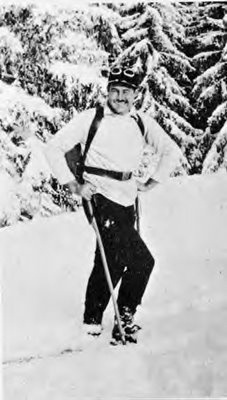
In Ernest Hemingway’s story, “The Snows Of Kilimanjaro”, the main character, Harry, a writer on safari with his rich wife, lies dying on a cot, his leg gangrenous from a thorn cut he neglected to treat. He reflects on his writing and his wasted talent, dissolute lifestyle and the few incidents in his life that could have redeemed him from failure.  Several times he drifts into an internal monologue where he writes in his mind what he could have written, but never did.  Here is Harry’s remembrance of skiing in Austria after the war. These scenes are considered autobiographical, reflecting Hemingway’s own excursions and experience of skiing in the 20s and 30s in the Voralberg region. You can read the whole story by clicking here.

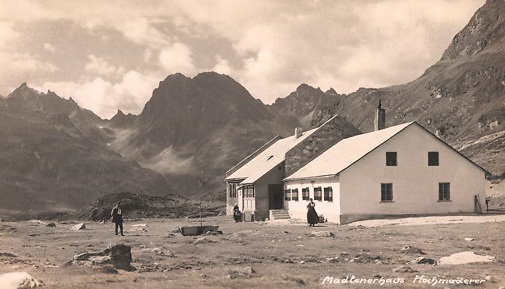
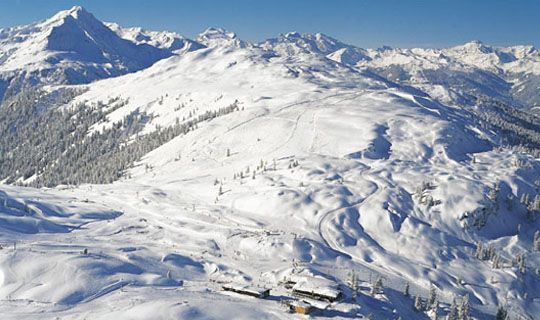
Madlern Haus in the Austrian Alps, circa 1930s

Madlern Haus in the Austrian Alps, circa 1930s

From “The Snows Of Kilimanjaro”

iHemi

Ernest Hemingway skiing in the 1920s.

In Schrunz, on Christmas day, the snow was so bright it hurt your eyes when you looked out from the Weinstube and saw every one coming home from church. That was where they walked up the sleigh-smoothed urine-yellowed road along the river with the steep pine hills, skis heavy on the shoulder, and where they ran down the glacier above the Madlenerhaus, the snow as smooth to see as cake frosting and as light as powder and he remembered the noiseless rush the speed made as you dropped down like a bird.

They were snow-bound a week in the Madlenerhaus that time in the blizzard playing cards in the smoke by the lantern light and the stakes were higher all the time as Herr Lent lost more. Finally he lost it all. Everything, the Skischule money and all the season’s profit and then his capital. He could see him with his long nose, picking up the cards and then opening, “Sans Voir.” There was always gambling then. When there was no snow you gambled and when there was too much you gambled. He thought of all the time in his life he had spent gambling.

But he had never written a line of that, nor of that cold, bright Christmas day with the mountains showing across the plain that Barker had flown across the lines to bomb the Austrian officers’ leave train, machine-gunning them as they scattered and ran. He remembered Barker afterwards coming into the mess and starting to tell about it. And how quiet it got and then somebody saying, ”You bloody murderous bastard.”

Those were the same Austrians they killed then that he skied with later. No not the same. Hans, that he skied with all that year, had been in the Kaiser Jagers and when they went hunting hares together up the little valley above the saw-mill they had talked of the fighting on Pasubio and of the attack on Perticara and Asalone and he had never written a word of that. Nor of Monte Corona, nor the Sette Communi, nor of Arsiero.

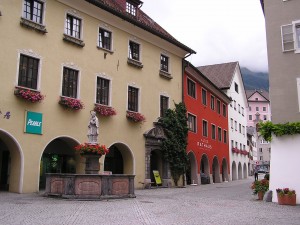
Alpine town Bludenz, long a skiing and hiking center in the Voralberg.

Alpine town Bludenz, long a skiing and hiking center in the Voralberg.

How many winters had he lived in the Voralberg and the Arlberg? It was four and then he remembered the man who had the fox to sell when they had walked into Bludenz, that time to buy presents, and the cherry-pit taste of good kirsch, the fast-slipping rush of running powder-snow on crust, singing ”Hi! Ho! said Rolly!’ ‘ as you ran down the last stretch to the steep drop, taking it straight, then running the orchard in three turns and out across the ditch and onto the icy road behind the inn. Knocking your bindings loose, kicking the skis free and leaning them up against the wooden wall of the inn, the lamplight coming from the window, where inside, in the smoky, new-wine smelling warmth, they were playing the accordion.


Voralberg region, Austrian Alps, was visited by Hemingway and friends.

Voralberg region, Austrian Alps, was visited by Hemingway and friends.

Have You Been Drinking? It’s Time To Start!

Hydration and Stretching: Two Things You Must NEVER forget to do before you hit the slopes.

If you’ve taken to heart the advice in a previous seniorssking.com article of Paul Petersen, president of Bear Valley Cross-Country in California, on the best way for seniors to get in shape for skiing, you’ve developed and faithfully followed a fitness regimen focusing on balance, strength, flexibility, and cardio. But the 56-year-old certified alpine and cross-

Bear Valley Cross Country's Paul Petersen swigs water, something we should all remember to do. Credit: Paul Petersen

Bear Valley Cross Country’s Paul Petersen swigs water, something we should all remember to do.
Credit: Paul Petersen

country ski instructor will quickly tell you that this is not enough. What you do in the days before and right up to the minute that you put ski or board to snow is just as important as all the pre-season conditioning you’ve done.

One of the most overlooked factors in preparing for a day on the slopes is hydration. When your body is well-hydrated, your body temperature and heart rate are more stable, your joints and muscles function better, and you have more stamina. Conversely, if you’re dehydrated, which can happen more quickly at elevations above 5,000 feet—especially to flatlanders, you won’t be able to perform well for any length of time, you’ll tire more easily, and you may experience dizziness, headaches, or shortness of breath. Says Petersen, “When it comes to hydration, you have to think ahead. You can’t properly hydrate for athletic activities the day before; you need to begin several days beforehand. Remember, you’re not trying to hydrate your stomach, but rather your joints and muscles and that takes a while.”

If you’re a typical skier, before you head out for the slopes, you probably have a cup of piping hot coffee or tea in the lodge (this may be in addition to the glass or two of wine you had at dinner the night before). This is a total recipe for dehydration! “Any liquids with caffeine or sugar, including sodas,” says Petersen, “are NOT a net positive in the hydration department!” For every cup of coffee or other caffeinated beverage you drink in the morning or while on the mountain, Petersen insists that you drink an equivalent amount of water.

Noting that senior wintersports participants schedule longer trips and thus ski more consecutive days than the average skier, Petersen emphasizes the importance of recovery for seniors after a day on the slats and boards. “Right after you’re done on the slopes and before you hit the bar, hit the protein bar,” he strongly advises. “For me, the magic bullet is protein powder in water. Either helps you recover from that day and helps your body get ready for the next day.”

An equally important factor in ensuring a safe, fun day on the slopes is adequately stretching your muscles right before you start out. We’ve all done those cursory arms over our heads while stretching our waists and quick calf stretches, right? Not good enough per Petersen! “You can’t just touch your toes, grab your ankles, stretch your thighs, and then walk out the door,” he warns. “The night before, put aside a few minutes to stretch your hips, calves, and thighs, and again the next morning before you put your boots on, either in the parking lot or at your locker.”

In sum, make “water, stretch, go” your wintersports mantra if a perfect day “doin’ it” is what you’re after!

This Old Moriarty Hat

Who owns a hat for 50 years?  Well, if it’s a Moriarty hat, perhaps you understand why.

Getting ready to shovel the driveway one cold morning last winter, I reached to the top shelf of the hall closet for a hat.  My fingers felt the double-thick headband of my old Moriarty hat tucked up out of sight.  I pulled it over my ears and went a-shoveling.  Working the shovel in knee-deep in snow, a thought occurred to me.  Wait a minute.  I bought that hat from Mrs. Moriarty’s shop on the Stowe Mountain Road in 1964.  That made it fifty years old.  My hat was fifty.  It has been with me in trunks, suitcases, boxes and dresser drawers in moves from New York to California to Japan back to California and then to Massachusetts.  Been with me at Mammoth Mountain, cross-country in Appleton Farms, MA, going to class in Syracuse, sailing the Gulf of Maine, walking to work from North Station in downtown Boston.  Fifty years is a long time to own a hat.  Of course, I had other hats, but my Moriarty kept popping into my hand from time to time from the top shelf.  How did this happen?

It's quite the hat. Back in the 60s and 70s, Moriarty hats were iconic.  The Preppy Handbook lampooned them as an essential part of the spoiled college kid outfit.  Almost everyone I skied with at Song Mountain, Tully, NY, had one.  The three points on the top were like a rooster’s cockscomb, distinctive and bold.  You wore your hat down tight over your ears with your goggles wrapped around your head.  No helmets in those days.  It was a “look” that even the most tentative skiers could exhibit.

Mrs. Moriarty founded a cottage industry around weaving those hats.  Soon outpaced by the volume of orders, Mrs. M. enlisted an army of fifty weavers in Stowe village, producing as many as 40,000 in 1965.  At its height, the Moriarty hat was as ubiquitous a symbol of skiing as Head skis and Marker turntable bindings.  An ad in SKI was bold enough to say, “The people of Vermont make great maple syrup, great cheddar cheese and the best ski hats in the world.”  As I said, icon status.

You can buy a vintage Moriarty hat on eBay or from the Vermont Ski and Snowboard Museum that somehow has a stock of left over inventory from the later days of the company.  The Moriarty family got out of the business in the 80s.

Mrs. Moriarty was told by skiers that "they skied better" with her hat on. Credit: SKI January, 1965

Mrs. Moriarty was told by skiers that “they skied better” with her hat on.
Credit: SKI January, 1965

Don’t ask why I never sent my hat off to the Salvation Army.  Despite the odd moth hole, it has simply always been part of my kit along with a handful of books, a banjo, a lighter from my Navy destroyer, and other small remainders of the past.  Things that travel through life with you have value.  When you pick them up again after many years, memories start to emerge in layers.  Even after many years.  Even a ski hat.  That’s why I love my Moriarty hat.

Do you still have one?

For more information, check out Retro-Skiing.com as well as Ivy-Style.com.

Should You Teach Your Munchkins To Ski?

[Editor Note: From time to time, SeniorsSkiing.com re-publishes an article from its archive.  Here’s one from Harriet Wallis about teaching your grandkids to ski from way back in 2014. Comments welcome.]

Five Non-Obvious Tips For Making Learning Fun For All.

Because you love to ski or ride, you probably hope that your grandkids will also share your passion for the snow.  Here are some ideas to get things off to a good start if you plan to teach them yourself.

How about those smiles? Credit: Harriet Wallis

How about those smiles?
Credit: Harriet Wallis

Look for deals. Some resorts offer free or low cost tickets for youngsters. A cheapo ticket can take the financial pressure off you, especially if the day’s weather is iffy, or if your grandkids are in town only for a short, gotta-teach-them-to-ski-right-now visit.

Start on flat ground. “A child will not miraculously assume a balanced stance on the beginner hill,” says Jo Garuccio, a Snowbird, UT, instructor and PSIA trainer and examiner. “Children should have some prerequisite sliding time at the bottom of the slope.

“It’s imperative that the child stand and slide independently on a flat surface before giving the child a downhill experience,” she says. “Initially, the terrain should be flat enough so that the child can go straight, lose momentum and stop.”

My friend Larry Green did just that with his granddaughter. He gave little Yoella her first sliding experience on virtually flat snow. “She loved it, and she egged me to pull her up that slight slope again—and again— and again—so that she could slide down. I even used my old snow skates to make it easy for me to maneuver with her. But I’m exhausted,” he said. “That three-year-old totally wore me out!”

Cool kids. Pediatric journals say that children heat and cool differently than adults.  Their bodies cool off faster than adults because they have proportionately more outer skin surface in relation to their body size.  So even though you have them bundled up—and you might be comfy—when kids say they’re cold, it’s time for a hot cocoa in the lodge.

Edgie-Wedgie keeps ski tips from wandering Credit: Amazon

Edgie-Wedgie keeps ski tips from wandering
Credit: Amazon

Gizmos. The snow sports industry offers a variety of devices such as harnesses, leashes and Edgie Wedgie tip clamps. “But aids are not a substitute for skill,” says Garrucio. “Don’t take your child on to high level terrain with tip clamps or leashes. Stay on easy green or very light blue slopes.”

Stifle your own expectations. Be sure to make it fun for the kids, says Mary Whittke, retired ski school director of Brighton Resort, UT. Even if your grandchild is super coordinated and athletic, put your own expectations aside. Kids don’t instantly morph into Olympic champions just because you love the sport. Give them little tips, but back off from the overkill of teaching, teaching, teaching. Help them have fun on the snow.

There’s a warning that comes with teaching your grandkids to ski or ride. Kids catch on and progress so rapidly that they’ll ski and ride compatibly with you for only 15 minutes of their lives. After that, they leave you behind. But maybe that’s okay.

Would you teach your grandkids to ski or ride?  What’s your advice?

Have A Banana: A Senior Skier’s Friendly Fruit

A banana a day goes a long way in keeping you fit.

[This article was originally published in October, 2014. The message is still relevant and worth reprising. Put a banana in your boot bag!]

We have recently discovered the magnificence of bananas which we long regarded as a kid food and something to by-pass on breakfast buffets. Wrong attitude.  Turns out, bananas have multiple benefits for those who are active, especially senior snow enthusiasts.

Fun Fact: Bananas skins can help mollify mosquito bites. Credit: Mike Maginn

Fun Fact: Bananas skins can help mollify mosquito bites.
Credit: Mike Maginn

For starters, have a banana before you ski to give you a natural  and fast energy boost.  And they are high in potassium which makes your internal electrical system—heart, muscle cells—working very nicely, reducing chances of muscle cramping.  Sour stomach, acid reflux?  Have a banana to coat your stomach lining; bananas are a natural antacid. Not feeling regular?  Have a banana which contains soluble fiber to keep you moving.  Working on low cholesterol numbers?  Have a banana; zero cholesterol.  Saving your pennies?  Have a banana; they are remarkably inexpensive, given the number of great things that come from them.

We’ve barely scratched the surface on how wonderful bananas can be.  For more, check out this list of 25 banana’s powerful benefits.  We never expected to see shoe shining on the list, but there it is.  Also, for more about health benefits, see this article.

Regardless, bananas, you are still a funny fruit.

Shape Up 3: Challenge Yourself

Five Basic Exercises Ramped Up To High Intensity Levels.

[Editor note: This is the third and final in our series of preparation exercises for senior skiers from Rick Silverman, physical therapist and certified strength and conditioning specialist. We started with basic hip and leg exercises (Oct 25), raised the intensity of those (Nov. 7) and now present a more challenging level of those same exercises.  As you can see, these are clearly a step up in intensity. Use these to extend your exercise program.  If you haven’t been limbering up so far this season, don’t start here.  Seriously.  These are challenging.  As always, if you have any issues, complications or questions, consult your medical advisor before beginning.]

 Quad Squat Jump

Last time, we introduced the Static Quad Wall Sit.  In this one, we get dynamic. Use a small exercise ball or a light weight. Squat down, jump up.  Repeat.  Try doing this for 20 seconds on, 10 seconds off for two minutes.

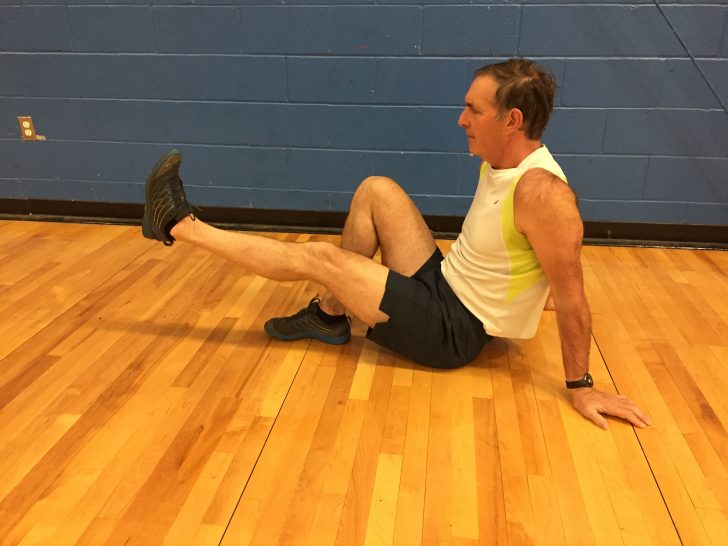
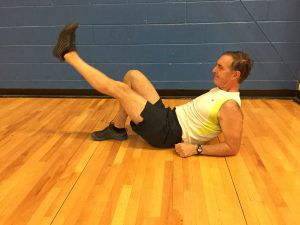
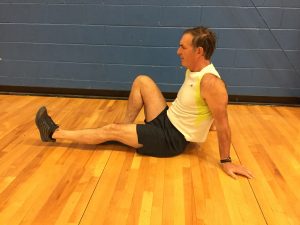
Leg Raise Sitting Up

The key is straight leg and toe pointing up.  Support yourself on your hands.  A variation is to point your toe inward on the way up and outward on the way down.  And vice versa.  Don’t let your heel touch.

legraise_situp_1legraise_situp_2


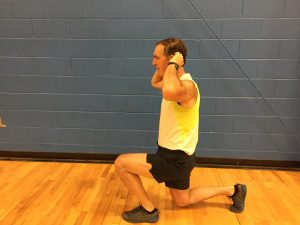
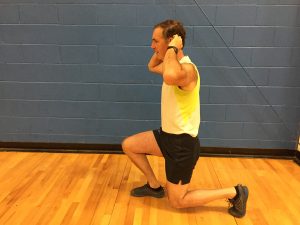
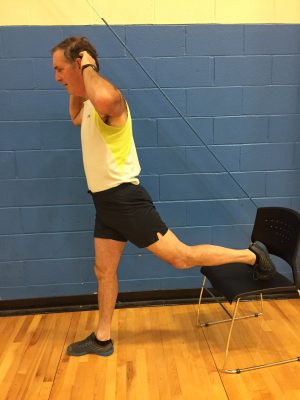
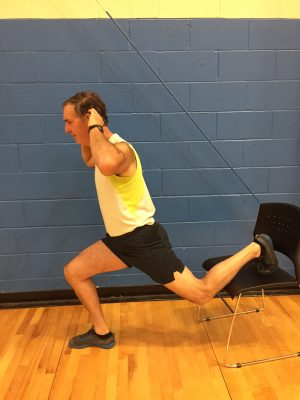
Dynamic Lunges

Rick has been a Telemark skier for 25 years.  He said this move imitates the same leg motion used in making Tele turns.

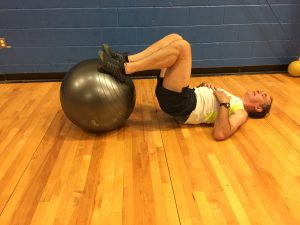
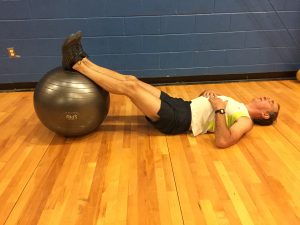
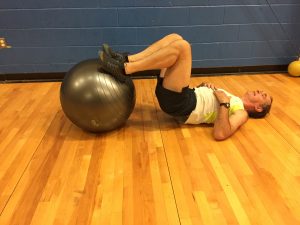
Hamstring Bridge

Keep the ball rolling in and out.  Use a chair with rollers.  Watch your lower back on this one.

Inner Thigh Lift

In previous articles, we showed you how to work your glutes and outer hip flexors.  Here’s one to use for the inner thigh.  You might want to rotate through all three exercises in your work out.

hipflexor_inner


A huge thanks to Rick Silverman for showing us how to ramp up for the snow sports season.  If you don’t have a regular exercise work out habit, consider starting with our first series of exercises here.  But, please, don’t start the season without some physical preparation.


Shape Up 2: Up A Notch

Revving Up Intensity For Our Five Basic Exercises.

[Editor Note: Last month, we reprised a set of baseline exercises focusing on legs and hips as part of a get-ready strategy for this season’s snow sports activities that was originally published in 2016.  This week, our exercise guide, physical therapist, certified strength and conditioning specialist and teleskier Rick Silverman, shows us how to up these exercises to the next level. As with any exercise plan, make sure you don’t overdo it; recognize your limits. If you have any issues or complications, please check with your medical advisor. In a couple of weeks, we will show you the highest intensity level for these activities.]

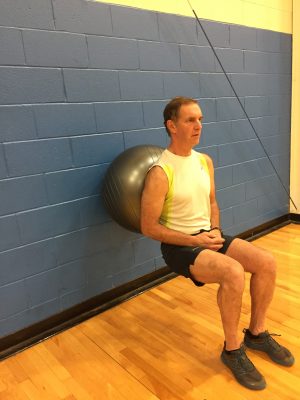
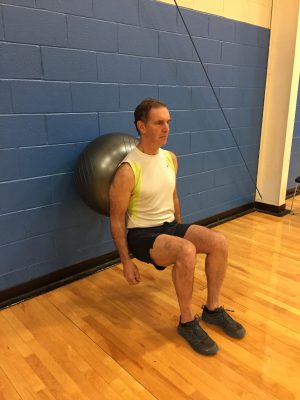
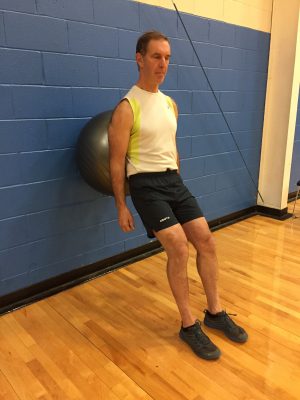
Static Quad Wall Sit

We used to do this in our college freshman dorm as a macho challenge. Sit against the wall, legs at 90 degrees.  You can use a ball, as Rick does here, or just lean against the wall.  Start with a relatively comfortable time, say, 20 seconds. Work your way up to 60 seconds. And don’t overdo this one!

quadwall_static_1


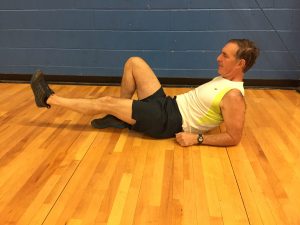
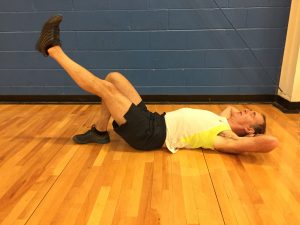
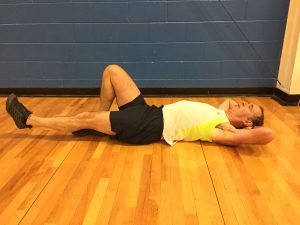
Sit Up Leg Raises

Bring your upper body up, support yourself on your elbows.  The key here is keeping your leg straight and toes up.  Don’t rest your heel on the ground on the downbeat. A variation is to point your toes to the right on the up and to the left on the down and vice versa.

legraise_sit_1

legraise_sit_2


Alternating Lunges

Bend knee to 90 degrees and no more. Alternate right and left if you want or do eight reps on the right, eight on the left and repeat.

lunge_alt1

lunge_alt2


Hamstring Bridge

You can use an exercise ball for this or a chair with rollers.

hamstring_bridge_1


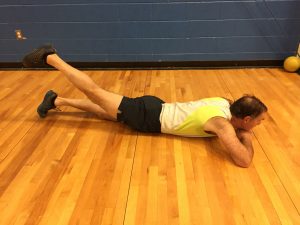
Glute Leg Raise

Add this hip area exercise to the Outer Hip Abductors we showed you last time.  Remember, hip strength plays a big role in all snow sports moves. You will feel this in your butt, for sure.  Don’t raise your leg too high. Again, work your way up to 16 reps x 2 sets.

hipflexor_glute


The most important take-away from all this is to do something to get into shape for the snow sports season.  Cycling, hiking and all those other summer sports are terrific conditioners.  If you’ve been active all summer, try some of these as a test of sorts to see where you stand, conditioning-wise.  If you’ve not been as active, please take time to run through some of exercises. If you do these every other day, you will start seeing results in a couple of weeks.

Shape Up 1: Easy Starters for Seniors

Ease Into Shaping Up For Snow Sports With Five Basic Exercises.

This is an archive article reprised from Oct, 2016.

[Editor Note: It’s time to focus on strengthening legs and hips for snow sports.  This year, we are going to offer three “flights” of exercise with increasing challenge and intensity for the same group of muscles. We’ll publish these about two weeks apart, so get started now. We asked Rick Silverman, a physical therapist and ultra marathon athlete from Ipswich, MA, to suggest which exercises to focus on and to demonstrate them for you. Rick is a Certified Strength and Conditioning Specialist with an MS in Physical Therapy.  He’s also a 25-year telemark skier, climber and kayaker.  As with all activities like this, you may want to check in with your physician if you have any questions or complications.]

Please don’t start the snow sports season without toning up your muscles.  If you don’t get into shape, you’re inviting strains and sprains at the the very least.  You’ll tire more easily and, at the end of the day, you’ll be risking more serious injury.

Here are five basic, get-started exercises that you can do with minimal time, equipment and space. This exercise series will just focus on hips and legs. There are other resources online for core, lower and mid-back and shoulders and arms. We will add intensity and variation to these basic exercises in a couple of weeks.

Do at least two sets of eight reps of each for starters.

Quad Wall Squats

Either use an exercise ball or just slide up and down a smooth wall.  Squat down so your thighs are 90 degrees to your lower leg, and no further.

quadwall_ball_2quadwall_ball_1


Leg Straight Raises

The key with this one is keeping the leg you are raising straight and your lower back flat on the floor. Feel that hamstring! Raise to 45 degrees and down, not letting your heel touch the floor.

legraise_1 legraise_2


Static Lunge

Here’s one that focuses on hips and quads. You can put your back leg on a chair or on the floor.  Great one for balance, too.

staticlunge2staticlunge_1


Hamstring

Keep your butt off the floor. If you don’t have an exercise ball, use a desk chair with rollers.

hamstring_1 hamstring_2a


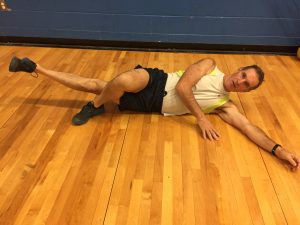
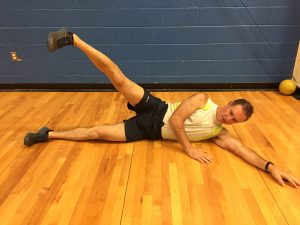
Outer Hip Abductors

Tight hips can cause mischief if they are not strong and supple.  These muscles run up to the central back and down to your knees.  If you have back problems, strengthening hips and core might help. This exercise is for the outer hip abductors. We’ll work the other hip muscles in a few weeks. Try to keep your toes pointing straight ahead.  A variation is to lift your leg with toe pointing down and lowering with toe pointing up.  Then reverse the pattern.

hipflexor_outer_


In a couple of weeks, Rick will show you how to notch up these exercises to the next level.  Right now, get some of these started.  And Just Do It!


This Week In SeniorsSkiing.com (July 26)

“Not Our Job”: A Play In One Very Short Act

Scene: Curtain rises on an evening outdoor dinner party under a tent. Several guests are gathered around a table with a variety of appetizers: shrimp, cheese and crackers, fruit. Bottles of wine, beer, and booze are at another table. A couple of dozen guests are mingling and getting to know one another. Two characters, an Online Magazine Publisher (OMP) and A Volunteer Ski Patrolman (VSP), continue their discussion.

How many speeders can you spot? Credit: Jean-Yves Bruel

OMP: We’ve just completed our Spring Survey a couple of weeks ago. We asked an unusual question of our readers, What Pisses You Off The Most About Ski Resorts? Can you guess what the number one winner was?

VSP: Easy, speeding skiers.

OMP: Give that man a kewpie doll! Out-of-control, wild, dangerous skiers who ski with abandon and no sense of safety. How’d you guess?

VSP: We hear it all the time. People are always asking us to nail these air-heads, pull their tickets, and banish them from the mountain. (Note: This ski patrolman volunteers at a Very Big Vermont Resort.)

OMP: And?

VSP: We have to explain it’s not our job. We’re there to provide aid to injured skiers, keep the fences up, sweep the trails. You know, safety.

OMP: Really?

VSP: We’re not cops, and we are not trained to be enforcers. Besides, we’re understaffed. We need two guys at the top, a guy on the phone, and a spare on patrol. That’s all we’ve got.

OMP: So who’s supposed to…

VSP: The resorts Ambassadors. They are the people on the hill who can pull tickets, if they do. But often even they don’t. The management doesn’t want to alienate customers by pulling tickets.

OMP: Alienate customers? But what about the senior who goes out five times a year and who just spent $140 on a lift ticket and gets terrorized by schuss boomers, and no one does anything about it?

VSP: Yeah, that’s a problem. The day lift ticket guy probably isn’t coming back, especially if he’s new to the resort or the sport.

OMP: So, speeding, out of control skiers, the number one thing that seniors in our survey find that pisses them off about ski resorts, is an intractable problem?

VSP: I guess so.

OMP: (Walking away): I think I’ll have another couple of shrimp.

[Curtain]

[Editor Note: We know a lot of our readers are either active or former ski patrollers. Please let us know what you think of our play. We want to take it to Broadway, but before we do, we need to hear your opinion. Is VSP correct? What can a resort do to chill the hotshots? A complete report of Spring Survey results will be coming out in the Fall.]

______________________________________________________________________________

This Week

Looking for shells, early morning on the beach at the Hilton Barbados. Credit: Yvette Cardozo

In our ongoing Non-Snow activities series, Yvette Cardozo shows us that scuba diving in Barbados can be as refreshing as a run down a wide blue trail. Well, at least it’s cool. If you haven’t snorkled on a reef or scuba-dived in the Caribbean, you might want to revise your bucket list.

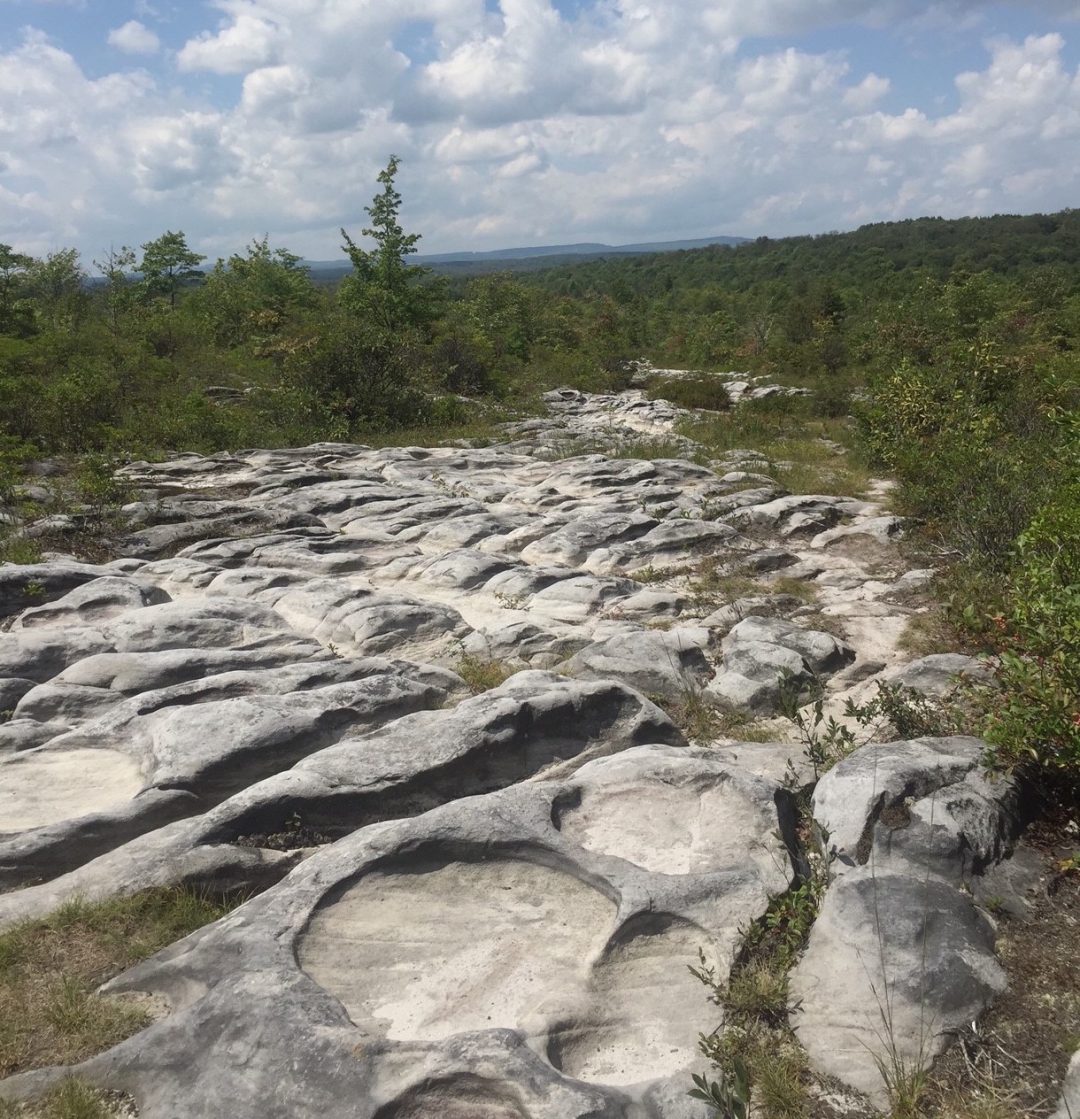
Moon Rocks, Davis, WV. Credit: Pat McCloskey

Pat McCloskey continues our Summer Cycling Series with a visit to Davis, WV, which is becoming the Moab of the East for mountain biking. Ride with him over the famous Moon Rocks, an apt adventure considering we’re celebrating the 50th of Apollo 11.

Finally, Murray Sandman, a new SeniorsSkiing.com correspondent from New Zealand, explains how he created a DIY, three-week tour of the Dolomiti Superski in Northern Italy. 

On to August, and summer sailing for us. Thanks so much for reading SeniorsSkiing.com. Tell your friends, and remember, there are more of us every day and we aren’t going away.

Short Swings!

Too Darn Hot.” Cole Porter got it right with his enduring 1948 hit. What a summer!

Weather is getting more and more extreme. Hot. Cold. Wind. Flood. I like this church sign:

But I don’t like these pictures taken within a week of each other from near the top of Mont Blanc. Going from snow to lake in such a short time is a bad sign.

Credit: @bryanthealpinist

I don’t know if there’s much we can do about this any more except attempt to take action to slow the process down and figure out how to make the best of it. 

Waiting for the flurries, I think abut that magical combination of gravity and snow and being waist-deep in light powder.

In the meanwhile, Irving Berlin also got it right with his saucy 1933 song, “Heat Wave.”

###

Vail Resorts Acquires Mount Snow, Hunter, Wildcat, Roundtop, Others

Earlier this week, Vail Resorts announced it is acquiring Peak Resorts. The areas comprise many Eastern and Mid-Western signature resorts (Mount Snow, VT; Hunter Mountain, NY; Attitash, Wildcat, and Crotched, NH; Liberty, Roundtop, Whitetail, Jack Frost and Big Boulder, PA; Alpine Valley, Boston Mills, Brandywine, and Mad River Mountain, OH; Hidden Valley and Snow Creek, MO, and Paoli Peaks, IN). The areas will be accessible on the Epic and Military Epic passes.

Alta’s Enduring Butterfly

Contributor Harriet Wallis sent in these pictures of the butterfly shaped snow patch on Alta’s Mt. Superior. The color shot was taken recently. It matches up perfectly with the shot from 1873.

Credit: Robin Roberson

Delta Eliminates $150 Ski/Board Checking Fee

The new policy follows a similar announcement in May by American. Complete checked baggage fee detail, including the new sporting equipment fees: Delta.com

Killington Breaks Ground on New Lodge

Killington Resort, the largest ski and snowboard resort in Eastern North America , broke ground last week on its 58,000 sq. ft. K-1 Base Lodge.  Slated to open for the 2020-21 winter season, it will be 21,000 sq. ft. larger than the previous structure.

Colorado Has Fewest Obese People. West Virginia Has Most.

The Centers for Disease Control (CDC) estimates that 30.1% of US adults are obese as of 2017. The US obesity rate has doubled since 1990 when 15% of the population was classified as obese. The five least obese states are Colorado, D.C., Hawaii, California, and Utah. The five with the most obese are West Virginia, Mississippi, Oklahoma, Iowa, and Alabama. Click here for complete list.

2010 Olympic Gold Medal Auctioned for $68,750

The Vancouver 2010 Olympic gold medal belonging to Belarusian freestyle skier Alexei Grishin sold at auction last week for $68,750 according to Boston-based RR Auction. The anonymous winning bidder is a collector from Belarus. The medal is among the heaviest in Olympic history. Each of the 615 medals created for the Vancouver Games features a hand-cropped section of the artwork that ensures that no two medals are the same. 

Live Weather Reports Now Available from Mt. Everest

Researchers from National Geographic Society and Kathmandu’s Tribhuvan University recently installed weather stations on Mount Everest. The two highest are at 27,257’ and 26,066’. To access these high elevation conditions click here.

Good Conditions At South Africa’s Only Resort

At the time of this writing, Tiffindell Alpine Resort, South Africa’s only ski area, has almost 12”. All five lifts are operating and more snow is predicted for this week.

Guadalajara Gets 5’ Hail Dump

Credit: CNN

A freak early-July storm left 5’ of hail in the Mexican city of Guadalajara. It happened following several days of warm, dry weather.

Surfing On Skis?

Candide Thovex is the French extreme skier who seems set on doing every imaginable thing that can be done on skis. In this short video, appropriately named The Wave, he uses snow skis on artificially-generated surf. 

Slopeside Syrup: Ski Racing And “Golden Delicate”

The Cochran Family Makes Maple Syrup And Ski Racers.

Slopeside Sugar House run by ski racing’s famous Cochran family. Credit: Cochran Family

There are a lot of Vermonters and others in the ski racing world who could tell you a lot more about the famous Cochran Family of Richmond, VT.  I have friends who know them personally and tell the tales of the first rope tow that Mickey Cochran built in his back yard with the vision of a community ski facility.  He and his wife Ginny ultimately had four children who all made the U.S. Ski Team and had outstanding success including a  gold Olympic medal for Barbara Ann and a World Cup GS Title for Marilyn.

World Cup GS Champ Marilyn Cochran helps out at Slopeside. Credit: Vermont Sports Hall Of Fame

My friend Mark Hutchinson remembers the time that Mickey’s jacket caught on fire because of all the oil and engine grease embedded in the fabric as a result of countless hours maintaining the tows at Cochran’s.  Today, Cochran’s is a legendary ski training center for young ski racers all over Vermont with coaching and operational duties falling to the Cochran family, relatives, and grandchildren.  They are currently a non-profit ski area with training and races held each winter.  Donations are gratefully accepted at www.cochranskiarea.com/donate But that is not what the subject of this article is.  I am talking pure Vermont Maple Syrup of which I am a true connoisseur or as my friends say, a “common sewer”.

I have this habit of taking pure Vermont Maple Syrup, heated, in a jar when my wife and son and I  go to breakfast.  They look at me with disdain, but I will not use anything else on my hot cakes, waffles, or oatmeal.  I am always on the hunt for the recently re-named “Golden Delicate” syrup that is elusive.

With the re-naming of the descriptions of different grades of syrup by the Vermont Maple Sugar Makers Association  (www.vermontmaple.org) ,  there has been some confusion as to what is actually the top syrup for consumption.  Personally, I like the lightest syrup currently described as “Golden Delicate”.

Recently, four of the grandchildren—all cousins—of Cochran decent, decided to enter the maple syrup space in Vermont by constructing a timber frame sugar house close to the ski area.  This has expanded since 2010 to an operation of 22,000 taps and PVC collection lines that all feed the operation in the sugar shack.

Maple syrup from Vermont. Hmmmm. Credit: Slopeside

Slopeside Syrup has become the standard bearer for all Vermont syrup, and I am so happy that I found them.  One day, while perusing the Durfee family refrigerator in Lake Tahoe, I came across a bottle of this delectable treat.  I asked Eric Durfee about it as he is a native Vermonter and friend of Marilyn Cochran.  He told me about the operation and how he and Marilyn converse about the old days of ski racing and training to this day.  Turns out that Marilyn helps out occasionally with the syrup operation.  When I ordered several bottles online and told her I was a friend of Eric’s, she wrote me a nice personalized note that she packed in with my order.  That little bit of customer service and kindness will always make me a Slopeside Syrup fan for life.  You should be as well.

Go to www.slopesidesyrup.com, and you will see ordering information as well as some history of the family.  Not often that a World Cup GS Champion will oversee your order.  Take it from me, the “Golden Delicate” is nothing like you have ever tasted before.  Most times when I have ordered the formerly labeled “Grade A Delicate”, I got something less with more of an amber color and traditional taste.  However, the Slopeside Syrup product is truly that elusive grade which I know and love and bring with me to every breakfast.

So treat yourself, buy Slopeside Syrup and support Cochran’s Ski Area for the kids in Vermont.  Not all of them can go to the elite ski academies because of cost. But they can come to Cochran’s, get world class coaching, and immerse themselves in a culture of champions.  Ski racing, and maple syrup.  What a combination.

This Week In SeniorsSkiing.com (April 5)

Maple Syrup Time, Dolomite Ski Safari Update, Resort Reviews, Miss Tweedie, XC Lessons

Into the sugarbush we go at the end of winter. Boil and boil and boil.

There is clearly a disparity between snow conditions in the East and the West.  New England areas are starting to wind down, with some closing this weekend and others hanging on a week more. Exception: Killington will strive on until May, as usual. Out West, the snow is still coming down with multiple storms per week. Nevertheless, we’ve heard that some resorts (see Park City) are closing down despite the surfeit; local pass holders are not amused. Other mountains are planning to keep spinning until July Fourth (see Mammoth). Think about that for a second.  The Fourth of July on skis. You going?

Cold night, warm days make the sap run. Time to get the buckets out.

Meanwhile,in  the East, it looks like it really is spring. Maple sugaring has been going on for a month or so with maybe a week left to harvest sap and boil, boil, boil. Here’s a verse from Pete Seeger’s Maple Syrup Time, a classic song about this time of year. If you want to hear Pete sing the whole piece, just click here.

Maple Syrup Time by Pete Seeger

First you get the buckets ready, clean the pans and gather firewood,
Late in the winter, it’s maple syrup time.
You need warm and sunny days but still a cold and freezing nighttime
For just a few weeks, maple syrup time.
We boil and boil and boil and boil it all day long,
Till ninety sev’n percent of water evaporates just like this song
And when what is left is syrupy don’t leave it too long –
Watch out for burning! Maple syrup time. 

This Week

The Dolomites is a UNESCO Wolrd Heritage site and the world’s largest ski area

Co-Publisher Jon Weisberg reports on an amazing, five-day long ski safari across the Dolomites, under the guidance of Tim Hudson of Inspired Italy, a SeniorsSkiing.com advertiser. The transit of the vast mountain range included staying on the mountain in “refugios”, on-mountain hotels with gourmet restaurants. This is the skiing experience of a lifetime and really worth considering if you think you’ve done it all.

Our Mystery Glimpse includes a device from the war years in Colorado. Last week’s photo was revealed to be Betty Welch Whitney, who, with her husband Bill founded the Whitney Inn in Jackson, NH, back in 1928. What makes the inn notable is that it was the first to combine lodging, dining, and lift operations in one location. The venerable Whitney Inn is still around after all these years.

We have three Resort Reviews to share: Silver Star, BC, Cranmore, NH, and Sunapee, NH.  We have found this type of medium-sized resort is often the most accessible to seniors, especially mid-week.  Even though Sunapee has joined the Epic Pass, by the way, the resort still has a special mid-week season pass for its loyal senior following. This is the kind of resort we like, and we hope you do, too.

Outside the Brighton Lodge. Credit: Harriet Wallis

Correspondent Harriet Wallis offers an “average skier’s” perspective of what the really big snows really look like.

No, it’s not a collection of dramatic pictures of skiers plunging through clouds of powder with dramatic blue skies. Instead, her photo album shows conditions literally on the ground and what she had to contend with on her outing at Brighton, UT, her local area.


Jan Brunvand shares an interesting accounting of a one Miss Tweedie, a young English woman from Victorian times, who ventures to Norway to try some skiing in the 1880s. Have times really changed that much?

And finally, XC expert Jonathan Wiesel tells us the merits of group versus private cross-country lessons. There are different reasons for each, as you will see.

Thanks again for reading SeniorsSkiing.com.  We really do depend on your telling your friends about us. And remember, there are more of us every day, and we aren’t going away.


Mike On A Fat Bike On Snow

A Fat Bike Neophyte Takes To The Trails. Here’s What’s Different.

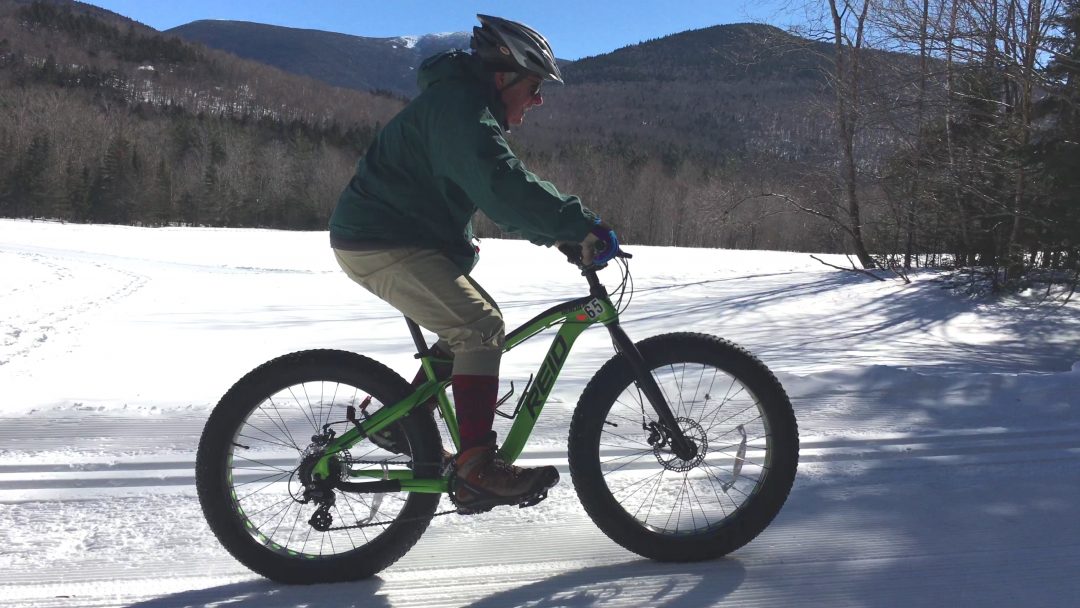
Correspondent Don Burch (l) and Co-Publisher Mike Maginn pose before heading out. Credit: Tamsin Venn

Exploring alternative snow sports always interests us.  We like snowshoeing around the woods when the snow is too deep for cross-country skiing. We go ice-skating on the pond behind the house when it gets cold enough and there’s no snow cover, an uncommon combination. We even tried snow camping, and we are researching ways to build an igloo or a snow tepee for our grandson in the backyard. So, when the opportunity to go fat biking in the New Hampshire winter mountains came around, we saddled up.

A group of ski journalists were given a chance to explore the Great Glen Trails Outdoor Center in Pinkham Notch, just up the road from Wildcat Mt.  The center with its base lodge, store, cafe, and rental shop is just across the road from the brand new Glen House Hotel, on the exact site of four previous hotels dating back to the mid-19th century at the entrance to the famous Mt. Washington Auto Road.  The spacious Outdoor Center has 45 km of groomed trails for xc, snowshoeing, and fat biking as well as tubing.  Another fantastic activity is riding the Snow Coach up the Auto Road to the 4,200 foot tree line on Mt. Washington. There’s a whole other slate of activities for summer, too.  Only a half hour or so from North Conway, this resort is an historic, ultra family-friendly, non-skier welcoming, Nordic-focused, relatively undeveloped area, and we predict it is going to be growing like a snowball.

Don whisking along on the flat. It helps to have a groomed trail. Credit: Mike Maginn

But we came to try fat bikes because we heard they had become a new winter thing to do. See Pat McCloskey’s recent story on biking in the winter. We’ve seen fat bikes on sandy beaches, on trails in the woods, but we’ve never been on one, let alone riding one on the snow. We’re not new to cycling, that’s for sure.  We’ve been on two Boston-New York AIDS Rides, a Pan-Mass Challenge, and numerous local charity rides. We are happy on road bikes and a rail-trail hybrid. So, not a newbie.

A fat bike has gigantic balloon tires, a triple chain ring in the front with a tiny granny gear, and a frame that looks like beach cruiser. SeniorsSkiing correspondent Don Burch and I started off from the Outdoor Center with a little downhill run to the trail. So far, so good.

To bike at Great Glens, you follow the ski trail, riding in the center of the groomed corduroy, keeping away from the classic cross-country tracks. Right away, you notice the differences.

Rolling resistance is noticeable. With a five inch tire width, you’d expect that. But wow, it is different. We decided that hammering for speed was not our game, instead going slow was good. Finally finding the right gear combination made pedaling easier  Those adjustments helped.

Soft snow acted like a brake. When we hit a soft patch, we felt the wheels sink, and we had to power out. Harder snow is much better. Look for hard snow in the woods; open field snow gets soft first on a sunny day.

Bouncy, bouncy can happen. Somewhere along the way, those big balloon tires made us feel as if we were bouncing up and down along with our pedaling. Perhaps it happened on an uphill where we tended to half-stand on our pedals. Kinda fun, but obviously not very efficient.

For a first outing, it was fun and challenging. Like all new things, now we know what to expect. Give fat bikes a try on a nice, cold, sunny day. You will have a thorough workout, learn some new cycling techniques, and have another way to enjoy the winter.

Mike riding the Fat Bike. Knickers are just for fun. Credit: Don Burch


Ski Champion Jim Gaddis: When Life Got Tough, He Surged Ahead

Advice Jim Followed: When You Come To A Fork In The Road, Take It.

Ski buddies Alan Engen (l) and Jim Gaddis at Alta c. 2001. Credit: Alan Engen Collection

From the time Jim was a youngster, his single goal was to be an Olympic ski racer. He lived for that. He trained for that. But when he was shut out of the Olympics, it didn’t stop him. He generated ways to help others in the sport he loves.

His accomplishments include being an elite Intermountain ski racer, an inspiring coach, a great salesman, an imaginative program starter, a premier fundraiser — and he’s still moving on. Just try to keep up with him.

Yankee baseball legend Yogi Berra had a saying for it: “When you come to a fork in the road, take it.” Every time Jim came to a fork, he took action, reinvented himself, and moved forward. It’s a lesson we all can learn.

From Sears Skis To Winning National Racer

As a youngster Jim sledded on a golf course and saw someone using strange equipment: skis. He asked for skis for Christmas, and his parents bought him a complete set: skis, strap bindings and boots from the Sears catalog for $5.

He practiced at Alta and Brighton when his older brothers could give him a ride there. And he strived to ski like his good friend and acclaimed ski champion Alan Engen, son of famed Alf Engen.

Alan Engen (l) and Jim Gaddis hold the Intermountain Ski Association Alpine Combined trophy. Each won the championship 3 times. c. 1959. Credit: Alan Engen Collection

Early on, he entered his first race on his $5 skis. It was a slalom-type course on the steep face of Collins at Alta. “I don’t know how many times I fell, but I made it down in about 4 minutes,” he said. The winning time was 40 seconds! Defeat spurred him on.

His skills and determination grew, and he entered — and won — national races. He won the National Giant Slalom Championship. And three times he won the NCAA Alpine Championship and three times the famed Snow Cup. But three was not his lucky number. His dreams were derailed when he broke his legs not once, but three times in race accidents, Still nothing stopped him.

Finally he was on target for the 1964 Olympics, and he qualified for it. But his dream was crushed. He was shut out of the elite team that included Jimmie Heuga, Buddy Warner, Billy Marolt and Billy Kidd, with Bob Beattie as the coach.

“It was very hard to deal with,” he said. “It was my whole life’s ambition to be an Olympic racer — and maybe win.” At that point, he didn’t even have a job because he was totally focused on being an Olympic racer.

It was a fork in the road. He took action, reinvented himself and surged ahead.

Metamorphosis

Using his degree in banking and finance, he became a stock broker. But his passion was skiing, so he created the Gaddis Training Organization to coach elite and youth racers. The program grew to 110 racers with seven coaches, and he ran it for 12 years. It became Park City Mountain Resort’s ski team.

His Olympic dream had a legacy. But he didn’t stop there.

Another fork

Jim discovered he had a natural ability to promote and sell. When the University of Utah had trouble raising funds to expand its stadium, Jim took the challenge and quickly sold 40 seats.

From that beginning, his fund raising expertise expanded. His accomplishments read like a Who’s Who of skiing.

Energetic and active Jim Gaddis today. Credit: Harriet Wallis

He spearheaded fundraising for many ski organizations, and founded and chaired others including: the Youth Winter Sports Alliance which gets kids involved in winter sports; the National Ability Center, teaching skiing to handicapped; the Stein Eriksen Opportunity Endowment, which raised $2 million in two years to help local athletes with equipment and travel expenses; and the U.S. Ski and Snowboard Foundation Ski Ball, raising funds for the U.S. Ski and Snowboard teams.

He also chaired the Jimmie Huega Express, which raised $1 million annually for the Huega Multiple Sclerosis center; was instrumental in fund raising for construction of the Alf Engen Ski Museum, which preserves the Intermountain history of skiing; and helped found and raise funds for the Utah Ski Archives, the country’s largest ski research repository of historic material. The Archives collection currently contains 500,000 images, 250 manuscripts and 6,000 audio,video and films, and it’s open to the public.

Just recently, Jim once again raised funds for his Alma Mater. He chaired the University of Utah’s campaign that raised $2.5 million and built a dedicated training facility for the University’s winning ski team.

His Olympic dream lives on in unique ways. He really is a gold medal champion.

Jim’s life demonstrates his philosophy: “Always do a good job. Do it right, and do it honestly. Don’t let anything stop you.”

Today, energetic and active, he takes time from initiating programs and raising funds to ski with a group of friends at Deer Valley and Park City Mountain Resort.

To read more from Harriet click here for her stories on SkiUtah.

Skiing With Confidence: Advice From The Ski Diva

Practical Advice On How To Regain And  Maintain Your Confidence On Snow.

[Editor Note: The Ski Diva (Wendy Clinch, our friend and colleague) has given us permission to re-print a transcript of advice on confidence in skiing. The Ski Diva site is a community of women who love winter sports and the outdoors. The site has been honored by the North American Snowsports Journalist Association for excellence. We think this is an important article and are happy to present it here in edited form for our readers.  To read her expanded article, click here.  Many of the references to women characteristics and tendencies can be applied to older skiers, too.]  

In skiing, lack of confidence can be a real game changer. It can hold us back and make it difficult for us to tackle harder terrain or even keep up with our family and friends. And when we don’t feel like we’re good enough, we let that take over. We have negative thoughts, which leads to poor skiing, which leads to more negative thoughts, which leads to more negative thoughts, which leads to more poor skiing, until your confidence is so shot you may not even want to ski anymore. 

What we want is to develop a deep, lasting, and resilient belief in our abilities as skiers. We want to stay positive, motivated, and emotionally in control when we need to be. We don’t want to let lack of confidence or fear take over and drag us down.

There are a number of things we can do to help if we don’t have the inborn confidence we need.

First, confidence is something that has to start way before we get to the hill. And you can’t overlook the effect of how you feel, physically, in all this. Because if we’re not physically fit, if we don’t feel like we’re in good shape, we’re going to have a rougher time when we get out there, and that’s going to affect our confidence when we ski.

Second, you have to pay attention to your equipment, because poorly functioning equipment can be real confidence shaker, too. Which means have your skis waxed and tuned and your binding checked. But your biggest priority has to be your boots. Too many of us don’t have boots that fit properly. Boots are the one piece of ski equipment that comes in close contact with your body. So you don’t want to feel your feet move or your heel lift up. If your feet are moving and your ski boots aren’t, your skis aren’t doing what you want them to do. You’ll ski less well, and definitely less confidently.

You know what’s a real confidence crusher? Peer pressure. When friends push you to do something you’re not ready for. Do yourself a favor and give it a pass. I know that skiing with people who are at a higher level can be frustrating and even embarrassing, but don’t let it get to you. Remember, skiing is supposed to be fun — not stressful. One solution is to look for easy runs that parallel steeper terrain. Ride the same lift as your friends, and then take a different way down.

Ski School, Austria, circa, 1930s.

Another alternative: Break away and take a lesson. Personally, I think lessons are the best way to build your confidence. Because it’s easy to lack confidence when you don’t have the skills.

Whatever you do, though, don’t take a lesson from a spouse or a significant other. There’s way too much emotional baggage tied up in that. You want an objective third party, and you want a professional ski instructor. 

So let’s talk about fear for a minute. Because what is fear, but a lack of confidence? And I think every skier has been afraid, at one point or another.

One of the best is to just breathe. When you’re nervous or scared, your body tends to tense up and your heart rate increases and you hold your breath. Deep breathing sends a signal to your brain that everything’s ok and you can relax.

Along these lines, I’ve found mindful meditation extremely helpful.  Mindfulness is simply being aware of the present and paying attention to our thoughts and feelings at any moment, without passing any judgement. It’s not about rehashing the past or worrying about the future or things you can’t control. Instead, you focus on what’s here and now: On the feel of snow beneath your feet. On the feeling of the cold air on your skin. And while you’re doing that, you breathe positive energy in, negative energy out.

So some other tips for building your confidence. Another good tool is positive self talk. Talk to yourself the way you’d like a good friend to talk to you. You want to focus on your strengths – we all have them — and instead of tearing yourself down, build yourself up. Studies show that maintaining a positive attitude can do wonders for your confidence. If you keep telling yourself you can do this, amazingly enough, you will. 

And there’s one more thing that I think really helps with confidence: a good support system, like TheSkiDiva.com. One of the things that make it such a great community is the way we work to build each other up. Let me give you an example: I was on a trip with TheSkiDivas where a number of us went down some pretty difficult terrain. The ones who went down first stopped at the bottom and waited for the others. And as each one came down, we all cheered. You can’t beat that.


Short Swings!

I keep a list of the places I’ve skied since I was 10. In a few weeks, I’ll be 75. The list totals 85 areas, mostly the US and Canada. The others are in the French and Swiss Alps. One, an indoor area that no longer exists, was in Japan.

Photo: Rylo

That, and the recent addition of Canada to our annual list of paces where seniors can ski free, got me thinking about just how many areas there are. Note that I used the term “areas,” not “resorts.” Some of the places I found are indoor ski centers. Others are quite small and have few amenities. I don’t want to give the term, “resort” a bad name.

According to one Google reference, as of last season, Europe had 3,478 ski areas. That’s a lot more than the 472 in the US. When you add Canada’s 219 areas, and Mexico’s one little ski resort, North America totals 692.

By comparison, Australia and New Zealand, combined, have 62. And all of South America has 30.

Africa has seven areas: two in Algeria, one in Lesotho (I once travelled there on non-ski-related business and met the king), three in Morocco, and one in South Africa.

I counted a total of 728 areas across Asia; most of them in Japan. The list of Japanese areas I used was a bit confusing, so my count may be off. There certainly are more than 500 Japanese areas. Currently China has 7 areas, but as reported here last year, there are plans to build 500 more by 2022, when China hosts the Winter Olympics.

India has 11 areas; Pakistan 9. A few years ago, I wrote a piece about North Korea’s newest resort. The country has two. South Korea has 20. And, in case you didn’t already know this, there are areas in Azerbaijan, Kazakhstan, Kyrgyzstan, Tajikistan, Turkmenistan, and Uzbekistan. Even Mongolia has a ski area. And in the Middle East, there’s skiing in Lebanon, Iran, Israel, Syria, Turkey, and United Arab Emirates (indoor, of course).

Add them up and they total 4997 ski areas. I’ve only been to 85! If any of you have skied unusual or out of the way places, tell us about them in “Comments,” or drop me a line at jon@seniorsskiing.com.

Pass the Bucks

Last season Vail sold 750,000 Epic Pases. This season, Alterra expects it will sell 250,000 Ikon Passes in this, the first full season for the Ikon Pass. These passes come with a cost for senior skiers – the elimination of local area passes and the senior discounts they offered. While on the subject, Valle Nevado in Chile, just became part of the Ikon Pass.

LGBTQ Skiing

ELEVATION is a series of annual gay ski and snowboard weeks. It started 16 years ago at Mammoth and has been a presence in Park City for the past eight years. This season, the event will also be held at Mont Tremblant.

Colorado Has the Goods

Breckenridge and Keystone received 5’ since mid October. Both open this week.

Skiing With Grandkids

This article from the Ski Utah website gives practical advice for parents of young skiers. If you’re a grandparent, taking young ones out on the hill for the first time, it will helpful.

Maine Ski Hall of Fame Inducts Seven

The Maine Ski Hall of Fame recognizes Maine skiers who have brought distinction to Maine skiing or made significant contributions to the sport. This year’s inductees are US Freestyle Champions, Karen Colburn and Anne Dowling; Leon Akers, cross country coach and ski shop owner; David Stonebraker, prep school ski coach; Warren Cook, Sugarloaf ski executive; Kristina Sabasteanski, biathlete; and (posthumously) Norman Libby, Bridgton winter adventurer who was the first to ski Pleasant Mountain (Shawnee Peak) in the 1890’s.

The Hall of Fame is a program of Ski Museum of Maine.

SeniorsSkiing.com Readers Get Free Subscriptions to SKI Magazine and Skiing History Magazine

Go to the top of the page. Click “Community.” Scroll down to the two offers.

Short Swings!

World War II produced many heroes. One of Norway’s best known died earlier this week. Joachim Ronneberg led the ski-assisted raid that destroyed the facility where Nazis were producing “heavy water,” a component they would have used to produce an atomic bomb.

He was 23 when, according to his obituary in the The New York Times, he and eight other “…Norwegian saboteurs skied across the Telemark pine forest in winter whites, phantom apparitions gliding across moonlit snow. . They halted at a steep river gorge and gazed down at a humming hydroelectric power plant where Nazi scientists had developed a mysterious, top-secret project… Hours later, in one of the most celebrated commando raids of World War II, Lieutenant Ronneberg and his demolition team sneaked past guards and a barracks full of German troops, stole into the plant, set explosive charges and blew up Hitler’s hopes for a critical ingredient to create the first atomic bomb.” Ronneberg was 99. The complete Times obituary provides a brief history lesson on the epic event.

Kirk Douglas and Richard Harris starred in “The Heroes of Telemark,” a 1965 British film based on the raid. The most definitive book on the raid, “The Winter Fortress: The Epic Mission to Sabotage Hitler’s Atomic Bomb” (2016) was written by Neal Bascomb. Click here for “X-C Skiing Saves the World,” SeniorsSkiing.com’s 2016 book review.

RSVP for SeniorsSkiing.com’s 5th Birthday Party!

Help celebrate our Fifth Anniversary, 5:30 – 8:00 PM, Wednesday, November 14, on the Upper West Side of Manhattan. Meet other metro area senior skiers. Win Apex Ski Boots, a trip to Okemo in Vermont, Orsden ski parkas, a season of ski insurance from Safe Descents, The Bootster device to help get boots on, the DeBooter device to get them off, discounts on Masterfit boot products, etc.  Lots of SWAG from areas all over the country. Meet a representative of Alpskitours based in Italy’s Aosta Valley. All free except for cash bar. RSVP, jon@seniorsskiing.com.

Buying Boots? Use a Professional Bootfitter.

If you’re considering buying boots, PLEASE, use a professional bootfitter. It is one way to assure the positive outcome of your purchase. We highly recommend using the services of bootfitters who have gone through training with Masterfit’s America’s Best Bootfitter (ABB) program. To find one near you visit: https://www.bootfitters.com/find-shop.

New England Areas Get a Head Start

Sunday River, Maine, opened last weekend. Mt Snow will open this weekend, the resort’s earliest opening in its 64- year history.

Mind-Boggling Ski Videos

These feats are not to practiced on your home hill.

Skiing East Face of Matterhorn: The six-minute video starts with the climb up Mt Cervin (aka Matterhorn). The skiers unrope themselves from bolts in a rock face and ski — ever so cautiously — a steep, rocky face, until they let loose on saner terrain.

Line of Winter: This three-minute selfie from GoPro shows Nicholas Falquet skiing what appear to be high elevation vertical walls covered in deep powder. Can’t tell if he has a cable attached to his back. I’ve never seen anything quite like it.


Caught in a Crevasse: This one is 17 minutes and shows a skier falling into and being rescued from a deep crevasse. Lesson here is to avoid crevasses and if you’re in those conditions, to ski with others with rescue skills and equipment.


Park City’s BIG SHOT!

Sunrise Rotary Club in Park City (I was a member during my Park City years) set a world record on Saturday, October 13 with its 3rd annual Shot Ski Event. If you’re not familiar with shot skis, they’re skis affixed with shot glasses. For competitions — or just for fun — the glasses are filled with booze (in this case from Park City’s High West Distillery).  The entire ski is hoisted and the contents guzzled by the participants. To reclaim the record from Breckenridge, 1275 Parkites showed up to lift 508 skis (2570 feet long) off Main Street. Congratulations, Sunrise Rotary for raising almost $30,000 from the event!

Axe Throwing and New Pod Hotel at Whistler

Among other new developments at Whistler this year are the Pangea Pod Hotel and apres ski axe-throwing. Two more reasons to visit Whistler Blackcomb, one of North America’s largest and most fascinating resorts. It has an added benefit for seniors — its relatively low elevation (long vertical, nonetheless) makes it easier on the lungs.
My Search For Stein’s Studebaker

Having A Studebaker In Common With A Legend Prompts A Sherlockian Pursuit.

The Kircher Studebaker dealership in Detroit in the early 1950s. The car on the left is clearly a ’50 or ’51 bullet nose model, even though only the back of the car shows here. Those are the only years this model was made.

Stein Eriksen bought a new Studebaker in April 1953. That much is certain. I’d like to know which model Stein bought, what happened to it, and if there is a photo of Stein with the car.

Why? Because my father-in-law bought a Studebaker that same spring, and my wife Judy and I have had it restored. Is it possible that we own a close match to Stein’s Studebaker?

Stein bought his in Detroit from the dealership owned by Everett Kircher, founder of Michigan’s Boyne Mountain ski resort. Judy’s dad bought his from a dealer in Benton Harbor on the other side of the state. Studebakers, seniors may recall, were manufactured in South Bend, Indiana. The company folded in 1966.

Car salesman Don Thomas, also a weekend ski patroller at Boyne, met Stein through mutual Norwegian friends when he attended the 1952 Oslo Winter Olympics. When Stein came through Detroit en route from Sun Valley where he had been training. Thomas invited him to dinner and introduced him to his boss.

Everett Kircher offered Stein a job at Boyne, but Stein wanted to compete in the 1954 FIS World Championships before turning pro. He took the job the next year and spent two seasons at Boyne before moving on, ending up at Deer Valley. But he did buy that Studebaker in 1953.

Various sources describe the car as a “sports car,” a “sports coupe“ and a “graceful 1953 Studebaker coupe.” These ’53’s were a sleek breakthrough concept by the Raymond Loewy design team at Studebaker, coming between the “bullet nose” models and the later Hawk series.

A 1953 model might be the hardtop “Starliner” version or the “Starlight” coupe (our car) which has a pillar supporting the roof. Either version came as either a 6-cylinder “Champion” or a V8 “Commander.”

In an interview, Don Thomas described the car as a “five-passenger coupe,” which could fit either model, although it seems likely a salesman would refer to a hardtop by its proper term.

Once at Deer Valley, I was able to ask Stein about his Studebaker. I was in the singles line at the Northside quad when Stein approached the lift with a couple of celebrity guests. He gestured for me to join them.

I had met Stein a couple of times before, so I used the typical Norwegian greeting for acquaintances, “Goddag, og takk for sist.” Then I asked him about his Studebaker. “Ja,” said Stein, “that was the one that looked like an Italian sports car. I took it with me to Oslo and sold it.”

That’s all I learned straight from the source. But Stein remarked as we got off the lift, “Brunvand, you should speak better Norwegian!”

Since then. I have queried Stein’s son Bjorn, Kircher’s daughter-in-law Molly Clark Kircher, and a Norwegian Studebaker club member, hoping to unearth more information.

The closest I’ve come is finding a 1950’s-era photo of Kircher Motors in the Boyne archive at the Bentley Historical Library in Ann Arbor. Oh, how I wish someone had posed Stein there with his new car for another picture.

Likely Stein’s Studebaker was eventually junked, but it’s barely possible that someone somewhere has the car, perhaps unaware of its past connection with skiing royalty. I plan to keep on searching.

Correspondent Jan Brunvand with his 1953 Studebaker Starlight coupe. In the background, early snow on the Wasatch mountains. Credit: Jan Brunvand