Tag Archive for: SeniorsSkiing.com

Sierra Nevada Blowout!

Think Feet, Not Inches.

Homewood: Monumental snow, lake level.
Credit: Homewood Mountain Resort

“Nevada” (Spanish for “covered in snow”) is back with a vengeance at the end of “Sierra” (“mountain range”) and California’s skiers and ski resorts are jubilant! Since January 1st, the Sierra Nevada has been

Mt. Rose lodge buried.
Credit: Mt. Rose Ski Tahoe

clobbered with one storm after another, and except for one spate of warmer temperatures that brought rain for a couple of days earlier in the month, it’s been nothing but fluffy white stuff ever since—feet of it! This week, it’s experiencing a nice long stretch of cold days and sunny skies that isn’t predicted to end until next Wednesday when another storm rolls in. Last year, many resorts were forced to close off and on because of no snow; this season nearly every Sierra ski area has had to close a couple of days here and there because of too much snow!


January has broken snowfall records across the mountain range.

Northstar shoveler at work.
Credit: Northstar California

The remarkable record-breaking snowfall statistics that Squaw Valley Alpine Meadows has tallied up in the first 23 days of January are typical of many Sierra Nevada ski areas. According to Public Relations Coordinator Sam Kieckhefer, the combined resorts have seen 276 inches (that’s 23 feet or an average of one foot a day!) fall since the month began, easily surpassing the previous record snowfall in a single month (241 inches in March of 2011) since record-keeping began 46 years ago. Its total snowfall since the 2016–17 ski season began—381 inches—is more than double the average for this point in the season.

This jubilant tale is being repeated throughout the Sierra, from Mt. Shasta in the north to Southern California’s cluster of Big Bear Mountain ski areas. Like Squaw Valley Alpine Meadows, many ski resorts in the northern and Central Sierra are reporting record-breaking total snowfall amounts to date averaging around 380 inches. Mt. Rose over the hill from Tahoe in Nevada has a season-to-date total at 412 inches and Sugar Bowl sitting atop Donner Summit back in California may be able to claim the highest total snowfall to date of 451 inches.

At the top of Crow’s Nest lift
Credit: Sugar Bowl Resort

This latest storm that wrapped up this past Monday added tons of light, fluffy powder to an already impressive snowpack. Dodge Ridge in the Central Sierra, which has often found itself on the short end of the snow stick, had 10 feet of snow fall in just five days, bringing its total January snowfall to 19 feet! Other impressive storm totals were 97 inches at Kirkwood, 88 inches at Heavenly, 94 inches at Northstar, and up to 106 inches at Sugar Bowl. Most ski resorts in northern California currently have top-of-the-mountain snowpacks ranging from 150 to 185 inches. Mammoth Mountain in Central California has a upper base of 300 inches and even Homewood Mountain Resort, which sits near the shore of temperature-moderating Lake Tahoe, can lay claim to impressive base figures: lower and upper bases of 77 to 156 inches respectively.

Squaw Valley lift
Credit: Squaw Valley Alpine Meadows

Are the ski resorts happy that Easter—the weekend that most Sierra ski resorts traditionally close—is relatively late this year (April 15th)? You betcha. It’s likely that a good number of them will keep the lifts running well past that date. And, with the exception of 2015–16, which was the first respectable ski season in the Sierra after five years of sparsely covered slopes, thin layers of man-made snow, and some resorts not even opening, skiers and boarders are happy campers, too. Barring a barrage of warm “Pineapple Express” storms emanating from the Hawaiian Islands or the storm door slamming shut, 2016–17 is going to go down as one epic Sierra ski season!


Shovel all the day and nothing moves away. Digging out at Kirkwood resort.
Credit: Kirkwood Mountain Resort

Snow Sports Leaders: Klaus Obermeyer

“It’s Easier To Ski Than To Walk.”

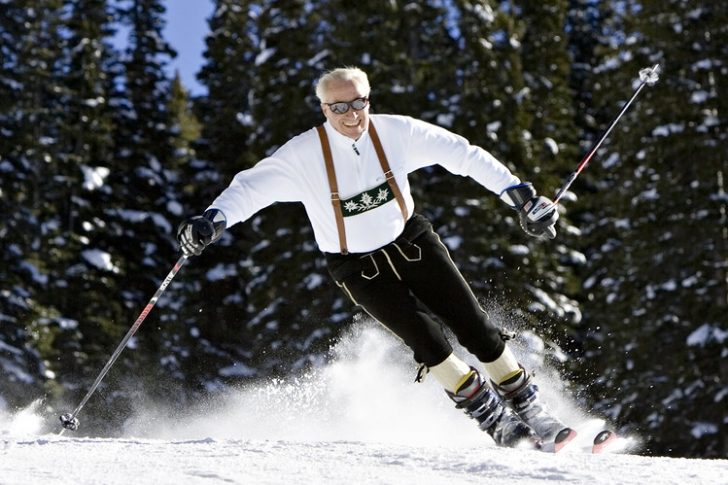
Klaus Obermeyer is a skiing legend and innovator. The 97 year old founded Sport Obermeyer Ltd based on insights about ski wear while working in the late 40’s as an instructor in Aspen. One of his many innovations was the down ski parka, stitched together from a goose down comforter. Other product innovations include high-altitude suntan lotion, turtlenecks, nylon wind-shirts, and mirrored sunglasses. In 1961, the first Sport Obermeyer factory warehouse opened in Aspen, and innovations continued with “soft-shell” jackets, double lens goggles, pre-shaped gloves, the first waterproof, breathable fabrics, a built-in ski boot canting system and fashion-conscious, technically responsible skiwear.

Klaus Obermeyer

What are the most significant changes you have observed in the world of skiing?

Skis have gotten shorter and wider. Their advantage is that you can float at lower speeds in deep snow. They make it easier for everyone to ski deep snow. They also allow those who climb mountains to use a lot more of the mountain with or without the lifts.

 During your time, which well-known skiers have had the most impact on ski fashion?

Maria Bogner probably.

Please comment on the role of form and function in ski apparel?
For ski apparel to function well, for example, ski parkas, they need:

  • – To be waterproof and breathable;
  • – To have stretch material in places where stretch is needed;
  • – Be lightweight;
  • – Look terrific

For many years, you have been a role model for older skiers. Do you think equipment and apparel manufacturers would benefit from using older models and showing older people in their advertising and marketing?

The older models are slowly dying out and the young ones are tomorrow’s old ones. I think age makes no difference as far as technical performance of clothing.

What advice would you give older skiers who are still healthy but thinking about hanging up their boards in favor of other activities?

I think one should never give up skiing as it keeps the legs in good shape and even improves your walking after you’re over 80.

What advice would you give ski area operators to encourage older skiers to remain in the sport? 

Have parking places for older skiers so you don’t have to walk so far in those awful ski boots.

Of all people past and present with whom would you like to ride the lift?

With the best looking girl!

Please add any comments not covered above.

Skiing and boarding are sports that are absolutely unique and wonderful. The make you appreciate the incredible beauty of being outdoors in the mountains and give you tremendous choices of how fast to go, where to put your turns, and where to jump to get a zero G feeling. In the end it’s easier to ski than to walk.

Klaus in his earlier days

SeniorsSkiing Guide: Sun Peaks, BC, Senior-Easy Big Mountain

When You’re No. 2, The Saying Goes, You Try Harder.

Skiers and snowboarders rise above the clouds on the Crystal Chair at Sun Peaks. Credit: John Nelson

That’s true of Sun Peaks Resort, Canada’s second largest ski area behind behemoth Whistler-Blackcomb 200-plus miles away in the coastal mountains.

This excellent resort near the British Columbia city of Kamloops offers three mountains to ski, a well-designed, bustling village and even a fair bit of off-piste, side country powder to hike. Add to that a sunnier climate, lighter snow and lower prices and Sun Peaks looks better and better compared to its rival to the west.

You’ll find bargains here as well. Seniors 65 and older receive a 20 percent discount on ticket prices at Sun Peaks, and that’s on top of the favorable exchange on the strong U.S. dollar.

A snowboarder shreds fresh snow on the Crystal Chair at Sun Peaks. Credit: John Nelson

Snow, terrain and more

  • Location: Sun Peaks is about 35 miles from Kamloops, a city of 85,000 in what’s known as “Thompson Country” of B.C.’s inland mountains. It is the closest inland resort to the Vancouver metro area (about five hours away by car), and the Kamloops airport gets several daily flights from major Canadian cities.
  • Snowfall: The mountains here receive far less snow than the coastal range, but Sun Peaks still gets more than 230 inches a year. Snowmaking helps keep some of the lower slopes covered.
  • Terrain, lifts: The three mountains at Sun Peaks serve predominantly intermediate terrain on its whopping 4,270 acres. About 68 percent of the resort is rated beginning or intermediate, and 32 percent is rated expert. The Gil’s Zone side-country area offers expert skiers the chance to find untracked lines after a short hike off the top of the Crystal and Burfield lifts.
  • Vertical: 2,893 feet from a village base at 4,117 feet. The hikable summit of Tod Mountain (7,060 feet) adds few hundred vertical for those willing to sweat for their freshies.

Lot to lift access

  • Parking: Parking is scattered in several lots near the bases of each mountain; in addition, accommodations generally offer heated parking garages.
  • Public transportation: A bus service operates on weekends from Kamloops. In addition, an airport shuttle runs from Kamloops to Sun Peaks, and an inter-resort shuttle operates between Whistler, Big White and Sun Peaks.
  • Accommodations: The village at Sun Peaks is well designed; you can ski among the shops, condos and hotels to the lifts. Several ski and stay deals are offered by the resort.

Culture

  • The vibe: This is the friendly interior of B.C., so you won’t find any of the Whistler-Blackcomb snobbery here. As with many resorts in Canada, a strong Australian presence is apparent nearly everywhere you go among workers and vacationers.
  • Dining: 22 dining spots are scattered around the resort and village. Several restaurants deliver great meals, including the excellent Voyageur Bistro and the rocking Bottoms Bar and Grill.
  • Mountain life: Winter activities abound, with Nordic skiing, snowmobiling, snowshoeing and skating. Of the interior B.C. resorts, Sun Peaks has the best four-season set-up, with a golf course and excellent mountain biking during the summer.

Bottom line

  • Sun Peaks has a robust village scene that delivers a resort experience at the fraction of the cost of skiing at Whistler-Blackcomb..
  • Canada’s second largest ski area has ample terrain to explore over the course of a ski stay.
  • With 2,000 hours a year of sunshine, your chances of getting a goggle tan are pretty good.

Trail Map click here

Webcam click here

A well-designed village offers dining, shopping and accommodations at the base of Sun Peaks. Credit: John Nelson

_____

John Nelson is a freelance outdoors writer based in Seattle. Follow his blog at skizer.org.


Cross-Country At Historic, Cozy PA Lodge

The Lodge At Glendorn Named Number One Resort Hotel In US.

Now this is what a comfy lodge looks like. Winter sports, good food, excellent accommodations at Glendorn.
Credit: Glendorn Resort

When I first said to our friends that we were having my wife’s 50th birthday party several years ago in Bradford, Pa. they cringed and all remarked, “In the middle of the winter in the icebox of Pennsylvania?”  They were sure surprised when they all drove through the wrought iron gates and entered a winter wonderland from yesteryear.

The Lodge at Glendorn not only is a nationally known Relais and Chateaux property, but it was acclaimed by Travel and Leisure as the Number One Resort Hotel in the nation in their recent Best Awards of 2016.  This historic 1500 acre property which abuts the Allegheny National Forest has been lovingly and painstakingly restored by its owner ( and curator) Cliff Forrest and his lovely wife Tracy.

Cross country skiing and snowshoeing on miles of trails is a feature of Glendorn Resort.
Credit: Glendorn

The property was once a retreat created by the oil and gas financier C.G Dorn in 1927 as a place for relaxation for his family.  The original cabins were created for each family member and the spacious log lodge was the central family gathering for dinners and holidays.  In 1995, it was opened to the public and in 2009, the property was up for sale.  Due to the vision of Cliff and Tracy Forrest, they purchased Glendorn and have lovingly restored its original grandeur with 16 luxury cabin and lodge accommodations.

Cliff Forrest, a senior skier, hunter, and golfer, is an active outdoors person who founded Rosebud Mining Co. in 1979.  Rosebud is currently the third largest coal producer in the state as well as the 21st largest producer in the country.  Cliff’s success has made it possible for him to invest in this truly unique property which has many opportunities year round for seniors.

Aside from being an Orvis Endorsed Fly Fishing property, the hiking, and sporting clays opportunities exist year round.  But in our experience, there is nothing as enjoyable or scenic as taking in Glendorn in the winter.  The cozy atmosphere of the cabins and the lodge with the crackling fireplaces and first class cuisine make the winter experience one to remember.  My wife and I have enjoyed Glendorn in the fall with the beautiful leaves of the Allegheny National Forest greeting us along the way, but the snowshoeing and cross country skiing available on the well-marked trails of the resort offer an exercise opportunity that is unparalleled.  All the equipment you would require is available at the resort including cross country skis, snowshoes, and skates.

S’mores by the bonfire on a Saturday night under the stars.
Credit: Glendorn

On Saturday evenings, the resort employees provide a bonfire up at the lake with s’mores and beverages with the opportunity to ice skate.  We also take advantage of the close proximity of Holimont Ski Club which is 40 minutes to the north and is open to the public weekdays for fabulous alpine skiing with the equally famous Lake Erie fluff blowing in and covering the slopes with a light, delightfully pleasant skiing experience.  Ellicottville, New York is the quaint town adjacent to the ski areas with a fabulous brew pub, Ellicottville Brewing, and many other dining establishments and outdoor recreation shops.  Again, it’s an easy drive from Glendorn adding to the total winter experience.  My wife and I have been making it an annual affair for her birthday.  It is truly top rate.

For Reservations and Rates click here or call 1800-843-8568.

Breakfast, lunch and dinner are served in the main lodge and picnic lunches for outdoor activities are available upon request.

Access: Three hour drive from Pittsburgh, PA,  two hours from Buffalo, NY, five hours drive from Philadelphia.

Holimont lift tickets weekdays only: Adult Full Day, $56.00; Seniors( 70+) $50.00 full day.  Groups of 15 of more who register two weeks in advance are offered a $39.00 lift ticket weekdays only.  The property is closed to the public on the weekends unless a club member is a sponsor.  Alternate opportunity is Holiday Valley Resort. 

Photos courtesy of the Lodge at Glendorn


BrettonWoods

SeniorsSkiing Guide: Easy Going At Bretton Woods

Seniors (65-79) Ski For $25 Mid-Week At This Classic NH Gem.

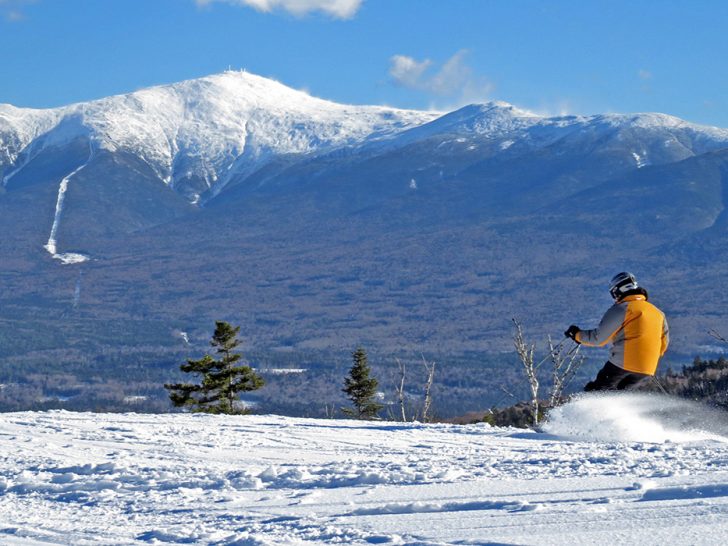
Majestic Mt. Washington is across the valley from Bretton Woods.
Credit: Bretton Woods

Down Cascade, up to Rosebrook Summit, down Upper Swoop, down Cascade, across to Diamond Ridge, down Deception Bowl, up the Bethlehem Express, down Big Ben, up Zephyr High Speed Quad, down Granny’s Grit.

The skiing at Bretton Woods, NH, was so smooth and our trips so fast, that you didn’t have time to think what joint might be aching that day. We were skiing with a group of 50-plusses and one 80-plus, all fabulous skiers with years of experience behind them. The grooming at Bretton Woods yields the best type of New England skiing with manicured slopes, wide open avenues, very hard pack with enough surface snow to grip. We blazed all over the mountain, happily racking up the vertical, on our apps or psyche. Most of the intermediate slopes were open and provided plenty of fun on Rosebrook and West Mountains.

Beautiful, broad skiing avenues make for nice cruising at Bretton Woods.
Credit: Bretton Woods

The overall experience here is a friendly mountain that’s fun to ski. There’s plenty of skiing available for an older person without putting too much pressure on hips and knees. For tree skiers, the glades are fairly open in keeping with the resort’s easy-going nature. In 2012, Bretton Woods added a T-Bar servicing Mount Stickney with 30 acres of more challenging glades. There is plenty of tough terrain on this hill once nick-named Medicare Mountain.

Four high-speed quads keep you going, and on crowded days the lift personnel keep the lines moving in a fair and congenial way.

What that allows you to do is just relax and rip. Plus all trails lead ultimately to the base lodge, minimizing separation anxiety from your ski companions.

Some say Bretton Woods, NH’s largest ski area, is more protected from the weather than other areas. You can always look across at storm clouds unfurling off Mt. Washington (the Northeast’s highest summit at 6,288 feet) and be happy that at least you’re not up there.

Across the street is the giant Omni Mt. Washington Hotel, like an ocean liner cruising across the White Mountains. Plan a visit, if only to stroll through the wide halls under 23-foot ceilings and take in the views of Mt. Washington from the Rosebrook Lounge sipping a cool Chardonnay.

To walk the hotel’s halls and verandas is to stroll through White Mountain history at its most hospitable. Built in 1902, the hotel most notably hosted the 1944 United National Monetary and Financial Conference to build the bones of a post-World War II economy. Walk into the room off the main lobby where the final treaty was signed.

Meanwhile, stretch your downhill muscles on the 62 miles of impeccably groomed X-C trails. They are also open to snowshoeing and fat tire bike riding.

Bottom Line

Seniors 80 years and up ski free any day, and those 65-79 ski for $25 midweek/non-holiday.

Hot Chocolate: $3

Wiser Woods Program

Open to skiers and riders age 50+. This is group ski program under the guidance of an instructor who will coach you down the mountain.  Includes morning refreshments at Slopeside, receive 10% off retail, 10% off demo equipment.

Runs Jan. 3-March 14, Tuesdays 9-12. Meet on Slopeside Level of Base Lodge. $125 per person for the season, $199 per couple.

Mountain Stats

Vertical Drop:  1,500 feet
Trails and Glades: 97
Skiable Acreage:  464
Snowmaking:  92% of Trails
Average Annual Snowfall:  200+ inches

Webcam click here

Trail Maps click here

Bretton Woods boasts a network of well-groomed Nordic trails.
Credit: Bretton Woods

This Week In SeniorsSkiing.com (Jan. 20)

New Senior Ski Tips eBook, Solitude Races, Big White Resort Review, “Snowbound” Excerpt, Lift Tickets From Speeders?, OR Show Finds.

Oh, and the skiing ostriches.  Don’t ask, just watch.

It’s been a busy week at SeniorsSkiing.com. We are seeing ongoing, monumental snow falls in the West that are relieving drought conditions in California and creating avalanche hazards all over the mountains. The Northeast is depending on snowmaking and grooming.

We have received and posted our first ever reader-submitted video. Thanks to Emilio Trampuz for being number one. Look under Community in the top navigation menu. WE WELCOME MORE.  If you have a video you want fellow readers to see, post it on Youtube and send us a link.  This should be fun.

We also have a new, subscriber-only eBook we developed with Vail instructor Seth Masia called “9 Ski Tips Every Senior Skier Should Know.”  If you are a subscriber, just go to Community and select Subscriber-Only Content, confirm your email address and download the file.  If you’re not a subscriber, consider subscribing, it’s free.

Correspondent Harriet Wallis contributed two articles this week, one promoting Snowboardcross and Skicross Races at Solitude and another highlighting some really cool, senior-friendly products she found at the OR show.

John Nelson is churning out resort reviews, this week focusing on Big White in BC.  It’s low key area with skiing just right for seniors.  Check out his report.

With all the snow flying out West, we thought is would be symbolic to publish an excerpt from “Snowbound” John Greenleaf Whittier’s masterpiece about snow and life. Bottom line: Snow changes everything.

Finally, we have an important article from John Brown, a veteran ski patroller, who talks about lifting tickets from speeders and reckless skiers.  Turns out, it’s not as easy as it sounds.  We know our readers don’t like or are intimidated by speedsters and want the Ski Patrol to lift more tickets. What do you think?

Thanks for subscribing to SeniorsSkiing.com. Remember, there are more of us every day and we aren’t going away.

Alpine Meadows


Nine Ski Tips Every Senior Skier Needs To Know

Subscribers Can Download A New eBook For Free.

For Baby Boomer skiers, low impact and low torque are the keys to more runs per day and more pleasurable skiing in general.

With the exception of the occasional kamikaze, older skiers want to remain in control on all types of terrain. And they want have a good time and look good when skiing with spouses, kids, and grandkids.

Boomers learned the sport when teaching techniques and equipment required considerable athleticism. They learned to react quickly with joint jarring rotational and up and down movements and excessive exertion when correcting for changes in balance and preventing falls.

Recognizing that old techniques can damage older bodies, even those in good shape, Seth Masia, longtime PSIA instructor in the Vail Ski School (and a member of the SeniorsSkiing.com Advisory Counsel), developed an instructional approach to help aging skiers change their ways. He teaches the technique in the three-day Ski Younger Now workshops offered throughout the season.

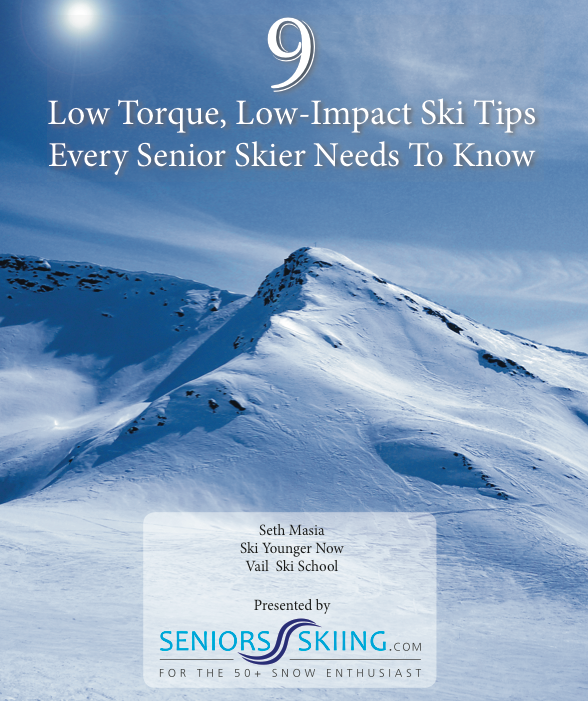
The technique is presented in a new, free, illustrated eBook developed with SeniorsSkiing.com. “9 Low Torque, Low Impact Ski Tips Every Senior Skier Needs to Know,” is available for subscribers.  To download the book, go to Community in the top navigation bar, click on Subscriber-Only Content, confirm your email address, then find the eBook, click on it. You will be downloading a PDF file.

Masia studied how older bodies, without risk of injury, could navigate a variety of terrains gracefully and more slowly. His new instructional approach takes into account skiers with artificial hip and knees.

He uses a straightforward retraining progression that reduces rotational stress on the knees and lower back. The approach shows skiers how to utilize gravity, terrain, and ski shape to do the work when initiating turns. Similar principles work for controlling speed.

When successfully implemented, each turn is a continuous and predictable arc, requiring less effort and minimizing stress and potential sprains.

The first day of each Ski Younger Now workshop focuses on the nine simple steps explained in the eBook. They start with the “Patience Turn,” which allows the ski’s shape to start each turn with virtually no muscular input. Other steps include a) changing the timing and location of planting a pole to have greater control on steeps and in bumps, b) carving, buttering, or smearing skis to produce a variety of turns, c) an explanation of how to apply pressure on different parts of the inside of the boot to produce different types of turns, and d) the influence of terrain on rhythm and turn shape.

This brief and well-illustrated instructional gem will give senior skiers a new way to enjoy runs with slower, gentler, and more stylish turns. Most important, the tips should result in fewer strains and sprains.

SeniorsSkiing Guide: Big White, Big Senior-Friendly

Big Choice Of Intermediate Runs, “Master” Lessons, Bring Seniors Back Each Year.

The Alpine T-Bar serves low-angle intermediate terrain near the 7,606-foot summit of Big White. Credit: John Nelson

It’s hard to find a resort better suited to older skiers than the popular British Columbia destination of Big White.

Located in Okanagan region of B.C. near the bustling, fast-growing city of Kelowna, Big White is indeed big, with a sprawling village that boasts the most ski-in, ski-out lodging in Canada.

A skier turns amid the snow ghosts near the top of the Alpine T-Bar at Big White.
Credit: John Nelson

The resort’s rolling terrain of predominantly intermediate runs is especially popular with older skiers. In its lesson programs, Big White offers discounted “Masters Mondays” classes, and two popular “Masters’ Weeks” designed to teach older skiers how to keep shredding.

“Our retention rate is over 60 percent,” says Ollie McEvoy, one of the masters instructors. “If they take a lesson from us, they’ll come back.” The many skiers who take part in the masters’ week programs return every year after making personal connections, McEvoy says.

“They end up making friends for life,” he says.

For U.S. residents, Canadian resorts are particularly attractive this year, with a favorable exchange rate of more than 30 percent. Add to that a discount on senior tickets at more than 16 percent and U.S. skiers make out very well at one of Western Canada’s favorite resorts.

Ski instructor Ollie McEvoy helps run the masters programs at Big White. Credit: Big White Ski Resort

Snow, Terrain and More

  • Location: Big White is about 33 miles southeast of Kelowna, a city of more than 100,000 in the Okanagan Valley of British Columbia. Kelowna has an international airport with daily flights from Seattle, as well as major cities in Canada.
  • Snowfall: “It’s the snow” is the marketing slogan for Big White. Located far inland from Canada’s west coast, Big White’s snow is colder and drier than rival Whistler-Blackcomb, and it receives about 300 inches a year.
  • Terrain, lifts: Intermediate skiers love the rolling terrain of Big White, where all 15 lifts have a green run down. About 72 percent of the terrain is rated easy or intermediate; 28 percent is rated expert and extreme. Five of the chairlifts are high-speed on more than 2,700 acres of skiable terrain.
  • Vertical: 2,656 feet from Big White summit (7,606 feet) to the base of the Gem Lake Express lift (4,950 feet).

Lot To Lift Access

  • Parking: Day-trippers can park at the Gem Lake base or at the Happy Valley Lodge. This is one resort where you should consider staying on mountain because of the vibrant and affordable ski-in, ski-out village scene.
  • Public transportation: Big White offers a shuttle service from the airport to the mountain village, so skiers flying into Kelowna do not need to book a rental car if they are staying on the mountain. In addition, an inter-resort shuttle operates between Whistler, Big White and Sun Peaks for skiers who want to try three of Canada’s biggest resorts.
  • Accommodations: Big White is built for skiers who want to stay on the mountain. Thousands of ski-in rooms are available in all price ranges, with many package deals that include lift tickets and meals.

Culture

  • The vibe: Friendly, with a pronounced Aussie accent. The resort, owned by an Australian family, attracts a large number of Aussie workers and vacationers, giving it a “no-worries, mate” feel.
  • Dining: The resort has 18 on-mountain restaurants in various price ranges. Among the very best is the Kettle Valley Steakhouse and Wine Bar at the Happy Valley base area, serving excellent upscale entrees with a long list of tasty, British Columbia wines.
  • Mountain life: Beyond the lift-skiing, Big White offers many other activities, including Nordic skiing, outdoor ice skating, tubing, snowshoeing and sleigh rides.

Bottom line

  • Big White is a major resort that does very well by older skiers, with vast intermediate terrain and popular masters instructional programs.
  • The strong U.S. dollar makes this Canadian resort particularly attractive for deal-hunters.
  • Excellent snow quality keeps the lifts spinning well into April.

Trail Map Click Here

http://www.bigwhite.com/explore-big-white/mountain-info/maps-brochures

Webcam Click Here

_____

John Nelson is a freelance outdoors writer based in Seattle. Follow his blog at skizer.org.

Big White’s vibrant village has the most ski-in, ski-out lodging in Canada. Credit: Big White Ski Resort


Snow In Literature: Snowbound by John Greenleaf Whittier

[An excerpt from Snowbound by John Greenleaf Whitter (1807-1892) to reflect on the tremendous snowfalls in the US and Canadian West.]

Alpine Meadows

So all night long the storm roared on:
The morning broke without a sun;
In tiny spherule traced with lines
Of Nature’s geometric signs,
In starry flake, and pellicle,
All day the hoary meteor fell;
And, when the second morning shone,
We looked upon a world unknown,
On nothing we could call our own.
Around the glistening wonder bent
The blue walls of the firmament,

Squaw Valley

No cloud above, no earth below,—

A universe of sky and snow!
The old familiar sights of ours
Took marvellous shapes; strange domes and towers
Rose up where sty or corn-crib stood,
Or garden-wall, or belt of wood;
A smooth white mound the brush-pile showed,
A fenceless drift what once was road;
The bridle-post an old man sat
With loose-flung coat and high cocked hat;
The well-curb had a Chinese roof;
And even the long sweep, high aloof,
In its slant splendor, seemed to tell
Of Pisa’s leaning miracle.

Sugarbowl

Lift A Ticket? A Ski Patrolman Speaks

There Are No Easy Answers.  It Might Hinge On Ski Resort Policy.

Editor Note: Last spring, we received a note from Frank Dolman, a 43-year member of the National Ski Patrol and a long time guide for the Over The Hill Gang at Steamboat. His comment: “Problem—Some owners of ski areas are cutting costs by lowering headcount and hours of the ski patrol. Consequently, reckless behavior can be out of control. Solution—A ‘license’ to ski, based on passing a test on the Skier’s Responsibility Code. License earns discounts, etc., as incentive.”  

Our Spring Survey 2016 revealed a lot of comments about controlling speeders. We’re still searching for an answer. This article by John Brown, a 38-year NSP veteran and patrolman at Ragged Mountain, NH, suggests lifting tickets really depends on the policies of the resorts. 

Know it, practice it, tell your friends.

Responsible behavior on the snow at times doesn’t seem to be a habit of a lot of skiers/riders today, and many people wonder who is responsible for the development of this go fast and take chances attitude. Is it the ski patrol? Is it area management? Is it equipment that may be too easy to use? Perhaps it’s the “point ‘em downhill and go” approach. And maybe it is a general apathy.

My answer is: “All of the above”.

So what can we do? Bring back and/or bring forward the skier responsibility code! Remember when it was posted everywhere, printed on napkins, the back of your ticket, on brochures and even a billboard or two? Look for it when you get a chance, and let me know where it pops up. Simply adhering to these common sense rules will make the slopes safe.

What should the ski patrol do? Well, first we would have to visit the individual ski area’s policy. Does the area encourage the patrol to be visible? Are there enough patrollers to actually patrol? Or does the patrol have to standby on top and wait to be dispatched?

Should the patrol take tickets away and under what circumstances? First offense? Based on a report? Before we build a long list of offenses, let’s first remember the patrol is not the police, and their primary mission is to keep the area safe and render aid when necessary.

There are various ski area policies that range from marking a ticket/pass to recording the name of a pass holder who has hit someone or otherwise skied/rode recklessly. An informative admonishment can be a valuable tool as well. A ski patrol that is visible can deter the potential speeder or reckless skier.

The ski area has a responsibility to take some sort of action when a report of reckless skiing is made. Whether it is customer service, the ticket counter, ski patrol or ski school, there must be a positive response to each visitor’s concern. You can’t ignore a ski area patron who takes the time to report what they feel is errant behavior which invariably could result in injury or worse, resulting in an unpleasant experience of a customer.

Of course, many people believe the easiest thing to do is to take away the ticket, and most certainly there are occurrences that warrant such action. Consider this though. After driving two hours and paying $80 for a ticket not to mention a $3 bottle of water, should we take away the ticket of someone who may or may not have skied too close to someone? Of course, if there is reason to believe recklessness resulted in injury or complete disregard for safety, then maybe the ticket should be taken. But what about gray-areas? Second-hand reports?  Not easy.

Just like the myriad of resorts in North America, the solutions will vary as well. There is one very proactive element that begins with all of us, and it is communication. No one will know there is a problem if it is not reported whether in person, by email, snail mail or by phone, once an area is aware of a concern there is a responsibility to act to make skiing and rider safe for everyone.

Hot Finds For Seniors At The Winter Outdoor Show

The Innovations Are Amazing. Here Are Three Top Picks For Seniors.

Vibram’s Arctic Grip soles won’t slip on ice no matter how hard you try.
Credit: Harriet Wallis

Vibram – the company known for its hiking boot soles – has a new sole material it calls “Arctic Grip.” You can walk on solid ice and not slip. Really! To prove it, Vibram demonstrated on blocks of ice at its show booth.

Arctic Grip is used by six shoe companies on dress shoes to work boots: CAT, Hush Puppies, Saucony, Merrell, Sperry and Wolverine.

Stay toasty with heated ComfortWear in many styles.
Credit: Harriet Wallis

ComfortWear hooked up with Heat Factory which is known for its hand warmer packets. Now you can keep your entire body warm with clothing that’s designed with heat coils that are battery operated. Stay toasty as you ski, hunt or sit through a game in an outdoor stadium.

The most popular item is the heated neck scarf, said ComfortWear President Charles Hollcroft who owns the technology.

High tech Finbulvetr snowshoes have a funky egg-crate look, but they are made from a thermoplastic with flex underfoot and in the right places for steep uphill climbs or tough downhill descents. They’re designed and made in Norway where they really know their snow. They flex and move like no other snowshoe.

They were originally designed for the Norwegian military to carry heavy loads in the backcountry, said Christian Brunsvig, chief executive officer. Then the company created an additional model to suit a professional snowboarder who needed light weight but extreme performance for his uphill climbs. The long model is for long haul expeditions.

Norwegian snowshoes are lightweight and efficient.
Credit: Harriet Wallis


The Outdoor Retailers show is the largest product show of its kind in the US, and it’s staged in Salt Lake City. It brings product manufacturers from all over the world together with retail buyers who can see, touch and try new products and then place orders for the coming season. A few passes are issued to media writers and photographers – such as SeniorSkiing.com. That’s how I got in.

To read more from Harriet click here for her stories on SkiUtah.


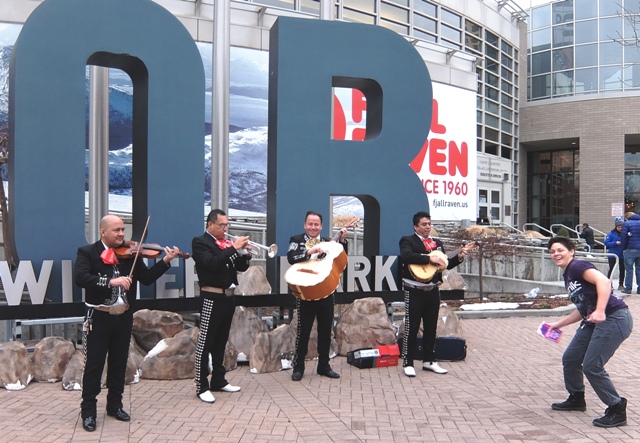
A mariachi band gets people dancing before the Outdoor Retailers show opens.
Credit: Harriet Wallis

Utah’s Historic Snowfall

This Says It All About The Snowfall In Utah This January.

Credit: SkiUtah

This Week In SeniorsSkiing.com (Jan. 13)

Deer Valley Senior Friendliness, Online Lesson Review Series Starting, Using Old Stuff, Part 2, Fun and Fotos; Black Diamond’s Founder Urges Outdoor Retailers to Leave Utah.

Squaw Valley Alpine Meadows this week and more snow coming.

The snow has been piling up and up in the West while the snow from last weekend’s moderate storm in New England has melted in 55 degree temps. Crested Butte was closed down for a while because roads were impassable and completely clogged with snow. Same in the Tahoe area; 10 feet of snow in the Sierra, I-80 closed. Too much snow. Meanwhile, the Northeast teeters on the edge between cold nights for snowmaking and warm and rainy days.  Very up and down season so far.

Sugar Bowl base lodge on a snow day.

What is most disconcerting though is news from various Western resorts where skiers are caught in backcountry avalanches.  Some lucky escapes have been caught on GoPro videos; others didn’t make it.  Too many deaths this season so far.  So, be careful out there.  Big, big snow has big downsides.

Peter Metcalf, founder and former CEO of outdoor equipment maker Black Diamond, urged the big Outdoor Retailer show to get out of Utah. His reasoning? The outdoor industry relies on access to beautiful public lands, but Utah’s political leadership is hellbent on selling it all to the highest bidder.

We have an interesting report from correspondent Tamsin Venn on Deer Valley describing how senior-friendly the resort can be.  Comfortable skiing, excellent dining, service staff standing by to help carry, direct, teach, or serve guests in many ways.  We hope to visit DV one of these days; a true stand-out resort.

Yes, neon jumpsuits were the rage…35 years ago.
Credit: Shinesty

Val E. continues his two-part series by talking about using, well, old clothes and accessories.  Did you know neon jumpsuits are coming back?  Have you seen anyone wearing an 80s fuschia onesie?

Reminder: Last week we asked for you to submit a video of your skiing experiences.  We had a terrific submission from one of you guys, and we are putting it on the magazine next week! Please send more.  

Next week, expect to read about a new content asset for subscribers-only, more resort reviews, an op-ed about the Ski Patrol (you will find this very interesting), and a review of an online instructional video.  Please keep telling your friends about us, visit our advertisers, and remember: There are more of us every day, and we are not going away.  AND DON’T FORGET YOU CAN FIND A LOCAL SKI CLUB BY LOOKING HERE.

Ahhh. Fresh morning tracks.
Credit: Deer Valley

peter metcalf

OpEd—Black Diamond’s Peter Metcalf to Outdoor Retailer Show: Leave Utah!

Time For The Industry To Speak Truth To Utah’s Anti-Public Lands Political Agenda.

This was the week of the Outdoor Retailers big show and non-stop party in Salt Lake City. It happens in both Winter and Summer editions, each with products focused on that season.

But this one was different because Peter Metcalf, the founder and former CEO of outdoor gear company Black Diamond, spoke out directly to the anti-public lands initiatives being promoted by Utah’s governor and the state’s Congressional delegation.

Twenty years ago, Metcalf successfully led the effort to relocate the show to Utah.

To fully appreciate his rationale, one needs to understand the economic impact the outdoor industry has on both the national and the state economies. It generates nearly $650 billion in gross national product (GNP) activity. At the state level, it generates nearly $12 billion and is responsible for about 120,000 jobs. The OR show, itself, delivers nearly $50 million of direct spending to Utah.

Metcalf authored an OP-ED in the Salt Lake Tribune, advocating for the Outdoor Retailer to leave Utah.

“… The state has some of the country’s most beautiful, varied, wild and iconic public lands that personified our industry’s values,” he wrote. “Utah’s public lands also formed the underpinnings of the state’s great competitive advantage — an unmatched quality of life unique to much of America that has attracted some of the best and brightest companies and their employees to the state.”

In explaining why he is urging the OR show to leave, he wrote, “Utah’s political leadership has birthed an anti-public lands political agenda that is the driving force of an existential threat to the vibrancy of Utah and America’s outdoor industry, as well as Utah’s high quality of life.

“Specifically, Utah’s top elected officials’ stated strategy is to take down our newest national monument, Bears Ears, gut the Antiquities Act, starve funding from federal land management agencies, and transfer our country’s public lands to state ownership, where the state will sell and prioritize extractive use over all others.

“This agenda is antithetical to our industry, let alone the majority of our citizens regardless of party affiliation. By our industry’s twice-annual trade show remaining in Utah, we are actually complicit collaborators in our own demise.

“It’s time for the industry to again find its voice, speak truth and power to power while making it clear to the governor and the state’s political leadership that this trade show will depart with the expiration of the current contract in 2018 unless the leadership ceases its assault on America’s best idea.”

SeniorsSkiing.com stands with Peter Metcalf on this issue.

What A Difference A Day Makes

Cross-Country Skiing In Appleton Farms, Ipswich, MA., January 10-11.

January 11, 52 degrees, 12:30 PM

January 10, 28 degrees, 11:30 AM

Using Old Clothing And Accessories: Part 2

But Do You Really Want To Be Seen In A Neon Jumpsuit From The 80s?

[Editor Note: Correspondent Val E. rummages through his closet to assess what old stuff is still useful and what isn’t.  Here’s the second part of his report. The first part dealt with skis, boots and bindings.]

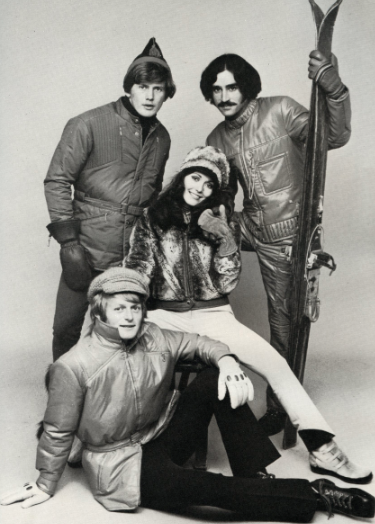
Still wearing 35 year old ski clothing? It looks it.

Clothing

Base layers— cotton is NOT for skiing, silk could be OK for hot conditions, synthetic (polypropylene, acrylic) and merino wool and combinations of them will work. Some items can be used for 20+ years with no problem.

Mid layers—the same situation as with base layers, major brands make mid-layer jackets combining down with wool and synthetic materials. They are light and practical, if you do not use them as outer layers.

Outer layers—you love your neon overall from 1987? If it still works well and looks well, distinctive, use it! Check the zippers for leaks, especially if you ski where you may experience rain or wet snow. Sometimes people think their membrane jacket or pants are leaking. It could be delamination of the waterproof breathable layer. Spray DWR (Durable Water Repellant) coating on your jacket, and water will bead off.

Goggles and Sunglasses

The foam layer around your face and on the top of the goggles may start crumbling, and, in case of wet snow or rain, your vents will leak. Light sensitive lenses may lose their properties (will not be as dark as before). If you like your old school sunglasses, and they protect you well from all sides—use them. Beware—in case of collision, mineral glass may shatter into small sharp pieces.

Bags

You will be surprised to find new, more ergonomic and lighter bags for your ski boots, skis and other goodies. New ski boot bags have room for a helmet, goggles, and other critical things. Plastic ski bags will protect your skis, bindings, and poles better than padded ones. Some companies started making light ski bags with wheels which you can roll up when not in use. Bags on wheels will help you to save your back while traveling so you have more energy for skiing.

Old boots might be worth keeping.

Apres Ski Boots

Old school rubber-leather wool lined boots made by Sorel and Kamik are hard to beat, if staying warm for the entire cold season is your priority. Moon boots are cute… Boots with membrane fabric and soft and grippy soles are light and very comfortable for longer walks, they often look elegant, and they keep you comfortable both in warm and cold conditions.

Heaters

Chemical heaters have shelf life two-four years, but they may work outside of this time frame. Don’t throw them away, try them first. Electric heaters—if you ski less than 30 days a season, then your rechargeable batteries should be good for 10 years or more.

Your thoughts on old equipment?

Yes, neon jumpsuits were the rage…a zillion years ago. But you can get a new one by clicking here. Thanks to Shinesty for the pic.
Credit: Shinesty

This Week In SeniorsSkiing.com (Jan. 6)

More Resort Reviews, Stein Honored In Deer Valley, Using Old Equipment, XC History Lesson, Boot Wisdom from the Master of MasterFit.

Snowfall forecast for the Rockies from a Denver TV station.
Credit: Joe Durzo

This week has seen some extraordinary snowfalls in the west, from the Canadian Rockies and Cascades to the Wasatch, measured in feet and meters these days. Wow.  Clearly, the snow dances have worked there. In the East, we had a perfect storm in the middle of the holiday vacation week which laid down a base that should last for the rest of the season.  And cold will continue for snowmaking.  So we’re having a better start than last year.  But, from what we hear, European Alps are still snow-starved.

SeniorsSkiing Readers:  Do you have a video of some extraordinary runs you’ve made? Some graceful runs? Some funny events?  Please send them along, or contact us and we’ll figure out how to share them. We’d like to create a readers’ video section with clips you provide. Okay?

Powder at Solitude

Co-Publisher Jon Weisberg and correspondent John Nelson visit two really extraordinary areas:  Solitude in Utah and Mt. Hood Meadows in OR.  Both are high, with magnificent views and varied terrain where seniors can ski comfortably.  And both are the recipients of mucho snow this season, so worth a look if you are planning vacations or visits.

Stein thrilled visitors to Park City with his aerial flips. He was a gymnast in school and his graceful moves influenced several generations of free stylers.
Credit: Park City

Correspondent Tamsin Venn visited Deer Valley over the holidays and was an eyewitness to the Stein Eriksen Memorial ceremony.  Stein’s son and grandson were there to unveil a plaque to one of skiing’s greatest innovators.  Did you know Stein was a gymnast by training growing up in Norway? We’ll be posting Tamsin’s resort review of Deer Valley next week.

MasterFit’s CEO, Steve Cohen, talks about boots and what to do to make them fit and perform correctly.

Should you continue to use your old skis?  Occasionally, we see an old pair of 360s and such on the lift line and wonder why. Some folks just like retro-skiing, we guess.  Correspondent Val E. suggest some caveats re: using old stuff.  Be careful, but it could be okay. Read Part 1 of his article here.

Finally, XCSkiResorts.com publisher Roger Lohr offers an inventory of the big milestones in the evolution of XC skiing.  We remember the days when XC was a niche sport practiced by only a few athletes and outdoor types.  Wooden skis, leather boots, four-pin bindings, exotic ski waxes (skivox), pine tar, and bamboo poles were the style.  Then came fish-scales and plastic skis. Today, XC equipment is high-tech and much more user friendly.

So off we go to the heart of the season.  Let us know how it’s going out there.  Reminders to our subscribers about our FREE content:

You have access to Skis For Seniors recommendations developed with realskiers.com, a guide to 108 areas in North America where seniors can ski for free, access to Experticity’s Snow Influencers Group where you can get discounts on top gear and clothing from major manufacturers, and you can download a 16-page booklet of historic ski posters developed with the International Ski History Association.

GO TO THE TOP NAVIGATION BAR, CLICK ON COMMUNITY, THEN CLICK ON SUBSCRIBER-ONLY CONTENT.  

See you next week.  There are more of us every day, and we aren’t going away.

Famous Lange boot ad from the early 70s


Short Swings!

Jean Vuarnet, whose use of metal skis and unique tuck position won gold in the Men’s Downhill in the 1960 Squaw Valley Winter Olympics, died, January 2 in Salanches, France.

Jean Vuarnet in the l’Oeuf tuck

Many generations know his name from the sunglasses that carry it. But for skiers across the world, his use of the egg-shaped “l’oeuf” tuck, was a game changer. It’s aerodynamic shape reduced drag and helped propel him and other racers to the finish line more quickly. He was 83.


CALIFORNIA

If all goes as forecast, Squaw Valley Alpine Meadows will have been hammered with 6.5 feet of fresh this past week. Great way for the Tahoe resorts to start the New Year!

COLORADO

The Vail Valley Foundation will announce the newest inductee into the International Ski Hall of Fame this afternoon. The event also will unveil “The Edge,” a sculpture by artist Gail Folwell. The event is one component of the worldwide celebration of 50 years of FIS World Cup ski racing occurring this month.

NEW HAMPSHIRE

Waterville Valley Resort hosts The U.S. Ski and Snowboard Association’s Toyota Revolution Tour, January 8-13, 2017. After a five-year hiatus, the Rev Tour will return to the East Coast for Slopestyle competitions for freeskiing and snowboarding will be held at the resort’s Exhibition Park. The event features athletes from the US, Canada, Mexico, New Zealand, Australia, Japan, and Great Britain.

UTAH

Ever innovative in its promotion of Utah powder, Ski Utah has arranged for skiers to have free one-day rentals of Rossignol powder skis following “Monster Dumps.”. Ski Utah defines a “Monster Dump” as 12″ or more in a 24-hour period (This season, it’s happening frequently). When that occurs, skiers have 48 hours to visit one of the 14 Ski’N See ski shop locations where they’ll get the free pow ski rental after purchasing two Monster Energy drinks on site.

The inaugural 12.4 mile Sweaty Yeti Fat Bike Race will happen February 4 at Wolf Creek Resort Golf Course in Eden, a few miles from Snowbasin. The race is for amateurs and pro/open riders. Fat bikes use super wide tires to navigate snowy trails.

OTHER

The Mountain Collective pass is still on sale. $499 delivers 28 days at 14 legendary destinations, plus 50% off any additional days, no blackouts. For the peripatetic among us, it is one helluva deal!

Patagonia catalogs have interesting articles and terrific pictures of skiers wearing the brand’s clothing. The one that just arrived is a winner. If you’re not on the list, visit patagonia.com.

Snow Sports Leaders: Steve Cohen, CEO, MasterFit Enterprises

[Editor Note: Steve Cohen, CEO and co-founder of Masterfit Enterprises, oversees the Masterfit University Training Centers, the America’s Best Bootfitters organization of top ski bootfitting shops, and Masterfit’s insole and bootfitting products lines. He created the annual national on-hill boot testing program in 1988 while serving as executive editor of Ski Magazine. He is a senior contributor and co-authors all the boot content for Ski and Skiing magazines and their websites, and for the America’s Best Bootfitters website (www.bootfitters.com).]

Steve Cohen, CEO, MasterFit

Experienced skiers advise that ski boots rank most important. Why is that?

Boots are both the suspension and steering link between the body and the ski. If your boots don’t fit comfortably and efficiently transmit power between foot and ski, you’ll never ski to the best of your ability.

What’s more important for comfort and performance: boot liners or boot insoles?

Both are important. But the liners that come with most quality ski boots are pretty good and bootfitters are great at making comfort and fit modifications to them.

The insole is a critical fit, stance and performance component. But the dirty little secret of the ski boot world is that the insoles that come in most ski boots, even the most expensive ones, aren’t very durable or supportive. In fact, boot companies expect skiers to upgrade their insoles so they see it as a place to shave cost.

Think of your boot insole as the foundation for the entire boot. If you aren’t standing on a stable, well-balanced platform, all the joints above that are so crucial to executing a ski turn—ankles, knees and hips—will be out of kilter. That can lead to pain and make it difficult to execute turns.

Explain the importance of Masterfit University and seeking out a shop with an “America’s Best Bootfitter” designation when getting boots fitted.

Would you rather go to an auto mechanic with professional training or one who figured stuff out by trial and error? Masterfit University is where ski retailers send their personnel to be trained in the science and art of bootfitting by the world’s elite bootfitters.

The shops that earn the America’s Best Bootfitters mark of distinction are the best of the best. They have elite skills, knowledge and a complement of specialized tools to provide the best in boot sales and service.

Do you recommend custom insoles for ski boots, or are off-the-shelf models sufficient?

Depends on how often you ski and your aspirations. What we call drop-ins or cut-to-fit models definitely provide better fit, stability and comfort than stock insoles. They’re great for skiers on a budget and those who ski infrequently or at a casual pace. But if you have a complex foot problem, stance issue, ski frequently, or aspire to ski at an advanced level, custom insoles should be inside your boots.

How frequently should skiers replace their boots?

That’s a function of how often they ski. Full-time instructors and others who ski daily will replace their boots every year or two.

For recreational skiers, figure 150-175 days of use or 7-8 years. Whichever comes first. The boot’s shell is subject to incredible stresses in every turn. The plastic eventually loses resiliency and strength and can even crack or explode. The padding in the liner also compacts and loses its resiliency. Components like buckles start breaking. I like to have a transition season where I phase out a boot and break in a new one.

If you frequently walk on hard surfaces with boots, all the guidelines above can be tossed out. Once your soles start wearing thin or losing their shape, it can affect how your binding releases. That’s serious stuff. Your binding may not hold you in when it should or it might not release when it should. Both are dangerous situations. Your boot/binding interface should be inspected and tested periodically by a certified shop.

What should older skiers be looking for when they’re shopping for a pair of boots?

A good bootfitter to guide them. Older feet have more problems and need someone with experience and skills to help in the selection and make modifications and accommodations. Older skiers might also want to consider a softer boot than they used in the past as well as one designed for easy entry/exit and easy to close and open buckles.

Masterfit organizes the annual event where the coming season’s boots are evaluated. The results appear in Ski, Skiing, and at the America’s Best Bootfitters website and inform ski shop sales personnel around the country. How is this information relevant for older skiers?

We have a lot of exceptionally-experienced skiers who are 50+ testing boots for us. Their experiences and feedback gives older skiers a reference point from which to start a boot search.


Solitude Mountain Resort: Perfection at the Top of a Canyon

The Nearby Area for Local and Destination Skiers Who Know.

Solitude Mountain Resort

Like most great places, Utah’s Solitude Mountain Resort, combines the obvious with the subtle. Its 1200 acres are laced with a variety of groomers ranging from gentle to intense. In between are the woods and hidden openings where those who seek the untracked may find just what they’re looking for. It may require some effort to get there, but once you arrive…what a pleasure!

Overall, it is one of the most scenic areas in the state. Dense with trees and punctuated by cliffs, it sits near the top of Big Cottonwood Canyon, 15 miles of spectacular amphitheaters, steep slopes and manageable hairpin turns. It is adjacent to Brighton Ski Resort, and the two areas offer a joint pass for a slight premium.

Like other Wasatch Mountain resorts, it is comprised of several canyons, the most dramatic of which is Honeycomb, with skiable walls that provide almost endless opportunity for fun. Intermediates can enjoy moderate challenge along the floor of the canyon. On a clear day, every skier is exposed to the kind of natural beauty found in a national park.

We skied there the day after Christmas, and, for Solitude, it was crowded. That doesn’t mean Park City, Snowbird, or Deer Valley crowded. A few slopes had too many skiers and boarders, but lift lines were virtually nonexistent.

Powder at Solitude

That, unfortunately, could not be said for the cafeteria line at the Roundhouse, the lower, mid-mountain eatery renovated following a fire last Spring. There’s is no doubt that the resort, now owned by Deer Valley, will figure it out. And, I know from experience, that on less crowded days, skiers can get a tasty meal in a few minutes. Food choices include the conventional (hamburgers, sandwiches, fries), the less conventional (homemade chicken pot pie), and the exotic (dals, naans, paneers, and other Himalayan choices).

Solitude is ideal for senior skiers. There’s terrain for everyone. Those visiting with families and/or grandchildren, will find nice lodging options at the Village at Solitude and a good selection of eateries. Solitude Mountain Spa has a full range of treatments.

Day tickets for those 65+ are $25 below rack rate. I checked their website for two weeks out, and the cost dropped to $32.99. The restrooms I visited were not fancy, but they were clean. That says a lot about management’s attention to details, especially on a very busy day.

I know a number of local serious skiers whose season ticket choice is Solitude. They like committing to an easily accessible place and having it to themselves. It is a beautiful, well-run resort with an endless variety of appealing terrain. If you want nightlife, go to Park City or stay in Salt Lake City. If you want fantastic and varied skiing, good accommodations, first-rate food, and not too many people, this is your place.

SeniorsSkiing Guide: Mt Hood Meadows

Free Skiing For 75-Plus.  Nice.

A skier hits the slopes of Powder Keg at Mt. Hood Meadows.
Credit: John Nelson

This resort on the southeastern flank of a 11,249-foot volcano has a lot to recommend it: great terrain, great proximity to the hipster-haven of Portland, OR., and ample snowfall from regular winter storms.

If you’re 75 and older, you’ll have another reason to love Meadows: It’s free.

Jeanne Farwig, a ski instructor at Mt. Hood Meadows for 44 years, is honored in a ceremony last season by Chris Kastner, Meadows ski school director.
Credit: Mt. Hood Meadows

“It reminds me of the Matterhorn—it’s just so majestic,” says Jeanne Farwig, a Mt. Hood Meadows ski instructor. “There’s something for everyone here.”

Farwig, 84, is entering her 44th season of teaching on the mountain. Her passion for Meadows remains as strong as her desire to pass on her slope knowledge.

“I love working with older skiers,” she says. “I especially like working with people who have given up skiing and are taking it up again.”

And the free skiing isn’t bad either.

“Now my boyfriend has a free pass,” she says.

Snow, terrain and more

  • Location: Hood Meadows is about 60 miles from downtown Portland via U.S. Highway 26, and 35 miles from the Columbia River Gorge outdoors mecca of Hood River.
  • Snowfall: 440 inches of snow pile up every year from Pacific storms that pummel the mountain.
  • Terrain, lifts: With the pointy summit of Mount Hood looming above, Meadows feels wild, with runs that take advantage of the many ridges and canyons falling off the side of Oregon’s tallest peak. About 35 percent of the mountain’s 2,150 skiable acres is rated advanced, 65 percent is rated intermediate or beginner. Six of the resort’s 11 chairlifts are high-speed quads that do most of the people-moving on the mountain.
  • Vertical: Nearly 2,800 feet from the base at Hood River Meadows (4,528 feet) to a lift-served high point of 7,305 feet. On nice days, hikers can gain an additional 1,700 feet of vertical by climbing to the top of the double-diamond Super Bowl run.

Lot to lift access

  • The roadways from the Portland metro area can be clogged on weekends, so plan on skiing during the week if possible. Parking at Meadows requires a $5-per-day pass from the Forest Service, which you can purchase from a parking lot attendant. A large loading zone is available to dump gear near the lodge.
  • Public transportation: Several companies offer shuttles to Mt. Hood Meadows from downtown Portland.
  • Accommodations: Nearby Timberline Lodge is a national treasure if you manage to score a room. Cooper Spur ski area and the town of Government Camp have lodging, and Hood River is just 45 minutes away.

Culture

  • The vibe: A mixture of hard-cores who love the Meadows’ extreme terrain and friendly locals who enjoy cruising its many groomers.
  • Dining: You’ll find most food in the main base area’s two lodges; on slope, check out two cafes, one at the base of the Hood River Express and the other at the top of Mt. Hood Express.

Bottom line

  • You’ll ski for free if you’re 75 and older. Seniors (65-74) pay $54; regular adult passes are $79.
  • Weather can close the mountain’s upper lifts limiting skiers to lower slopes during storms.
  • A big-mountain feel to the dramatic upper slopes.

Trail Map: Click Here

Webcam: Click Here

Skiers ski the run Discovery near the top of the Shooting Star Express at Mt. Hood Meadows. Credit: John Nelson


Stein Eriksen Honored

Pioneer of Modern Skiing and Beloved Park City Community Member Remembered.

Stein thrilled visitors to Park City with his aerial flips. He was a gymnast by training, and his graceful moves influenced several generations of free stylers.
Credit: Park City

Stein Eriksen’s kind demeanor and passion for alpine skiing defined him in equal measure. An accomplished gymnast, Stein transformed skiing by integrating aerials and other acrobatics into the sport. Stein proudly represented his home country of Norway in the 1952 Oslo Olympic Winter Games, winning gold in giant slalom and silver in slalom. In 1954 Stein became the first alpine skier to win “Triple Gold” in the World Championships in Åre, Sweden. As admired as he was for his grace on the slopes, those who knew him personally will attest just as much to his thoughtfulness, generosity and sense of humor.

Stein’s son Bjorn (right) and Cameron Berard at the dedication ceremony.
Credit: David Eden

Stein arrived in Utah in 1969 and resided in Park City until his death in 2015. He proudly served as director of skiing for Deer Valley from the resort’s inception in 1981, working closely with founders Edgar and Polly Stern to fulfill their vision of providing a resort experience unlike any other in the industry. Stein’s desire to develop an internationally-renowned luxury hotel was fulfilled in 1982 with the opening of the now world-famous Stein Eriksen Lodge. His influence in the ski industry and at both Deer Valley and the lodge that bears his name was infinite and his legacy will always be a fundamental aspect of their success.

This plaque was dedicated by Park City’s City Council on December 11, 2016 to honor Stein’s enduring memory and his outstanding contribution to the sport of skiing and the town of Park City. It also officially commemorates December 11 (Stein’s birthday) as Stein Eriksen Day.

Stein Eriksen is remembered for his charm, his infectious passion for skiing, and his enduring love of family. A favorite saying of Stein’s was, “Na har vi det godt igjen.” “Now we have it good again.”

Use Your Old Ski Equipment? Maybe: Part 1

Frugality Or Familiarity Might Be Reasons To Hang On. Should You? It Depends.

Editor Note: This is the first of a two-part article where ski industry veteran Val E. discusses whether using old equipment is safe and/or worth it.  We’ve seen people on the lift line with really old equipment; ours not to reason why. But you should know what the risks are.

Skis

Well, maybe not 360s.

Imagine you have 20+ year old skis, you used them 7-10 days a year, so the total work days would be 200-300 days. Can you still use them? If they have no major delamination, cracked edges, broken sidewalls, then yes. Do you want to use them? Maybe not. Test a few pairs of skis made in recent 10 years. You may notice that they are easier to maneuver, easier to carry, and have different graphics. If you still want to ski on your old skis, then sharpen the edges, clean and wax the base, make sure you bindings are safe (see below).

Bindings

Bindings are for safety and comfort. Manufacturers do not allow ski service people to service bindings older than 10 years, and they send a list of “serviceable” models every fall. Bindings stored 360 days a year in a dusty room or wet garage may not release when you need it or can false release. Dust on lubrication, corrosion, and other factors may change the planned schedule. Major problems could be cracks in plastic parts that are hard to identify. A binding can still be OK for many, many years. Manufacturers just don’t want to be responsible for risk anymore, and they also want us to buy new and better bindings. You can install new binding on your old skis (if you love them unconditionally); a technician will plug the old holes.

Boots

Famous Lange boot ad from the early 70s

Most people don’t like to change ski boots often, though there is always a limit. We are talking about boots that are 15-20+ year old. Shell: if you see cracks in plastic, your soles are worn out and won’t have good contact with the binding. If buckles are broken and non repairable, go to a ski shop. Liner: you should feel comfortable without two pairs of thick home made wool socks, your heel shouldn’t ever move up from the insole. If your shell is in a good shape, but you are not happy about the liner (too loose or destroyed) keep in mind that you can purchase a pair of liners. Canadian company Intuition Liners makes different types.

Helmets

Almost all ski helmets use foam (Polystyrene or Polypropylene) in their construction to crush, thus absorbing energy when contacting something hard. Researchers say this foam doesn’t change much for 20-30 years under normal conditions. But hard hits, long exposure to UV and heat sources may change the properties of these materials. Manufacturers recommend replacing a helmet after a significant collision. Once foam is compressed at some spot, it would not protect you anymore.

Helmets have come a long way since Jean Vuarent wore this variant from the cycling world.

Milestones of Modern XC Skiing In the US

Remember Skiing On Wooden Skis With A Pine Tar Base And Lathered In Klistervox? Wasn’t That Long Ago.

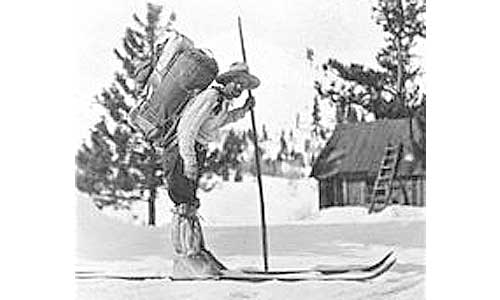
Norway-born Snowshoe Thompson learned to ski in Telemark, his home town.

Editor Note: XCSkiResort Publisher Roger Lohr has catalogued the main events that propelled XC skiing from a peculiar sport with a small following in the US to a major recreational and racing enterprise with a huge following.  Thanks, Roger, for tracing the trail.

Since wooden skis were found in a peat bog in Sweden dating to 2,000 BC, there have been many milestones that brought xc skiing to where it is today. In the US, the forefathers of xc skiing include legends like Snowshoe Thompson, who delivered the mail in the Sierra Mountains of California and Jack Rabbit Johannsen, who xc skied in northern New York.

The editors of XCSkiResorts.com researched the milestones of modern XC skiing in order of significance:

1. Development of synthetic xc skis in 1974.
2. Development of the waxless based ski in the early 1970’s, most notably the Trak ski with synthetic fish scales on the ski base to eliminate the need for ski waxes. The waxless base gave the recreational skier grip on uphill travel while also allowing gliding downhill.
3. Integrated xc ski binding systems, which provided substantial improvements in simplicity of boot/binding interface and control in the mid 70’s.

4. Bill Koch won the Olympic silver medal in 1976  at Innsbruck and at the World Cup in 1982, the first American to ever win at that level. The Nordic Track exerciser used the Koch image as a fitness icon in advertisements for years. In 2010, there were US Olympic medalists in Nordic Combined and in 2012 there was a World Cup winner in women’s sprint.
5. The onset of the commercial xc ski area concept began in 1968-69 at Trapp Family Lodge. This brought designed, groomed, and maintained trails making xc skiing easier and safer for the average person.
6. The skating technique proliferated for a faster paced and higher performance form of recreation.
7. Revolution Skis developed by Fischer led the way to shorter skis, which were easier to use and consolidated ski sizing and simplified ski selection.
8. New, lighter clothing with synthetic and breathable materials made XC skiing more comfortable; company brands such as Mother Karen led the way in the late 1970’s.
9. Other technological advances such as the 2 Wax System that offered one wax for cold temperatures and one for warm temperatures simplified ski waxing.  BackCountry binding systems provided a beefed up boot/binding system that provided substantially more support and control for backcountry recreation.

New NIS bindings link boot with ski using a plate.

10. Will the Nordic Integrated System (NIS) developed in 2005 change the ski/binding interface? This system combines the ski and binding at manufacture rather than at the retail store.