SeniorsSkiing Guide: Schweitzer Mountain Resort

Northern Idaho’s “Little Secret” Steps Up Dining Amenities.

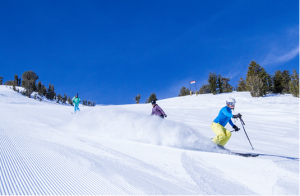
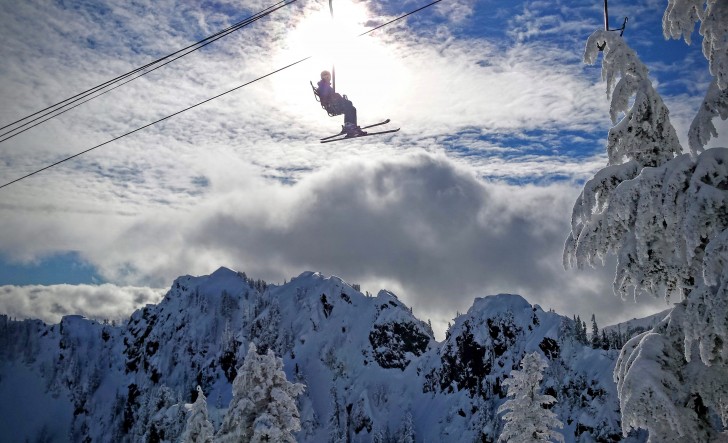
Much of the skiing at Schweitzer Mountain has great views of Lake Pend Oreille and the surrounding mountains.
Credit: John Nelson

Pat Rotchford, 76, sat in The Nest, the new top-of-the-mountain restaurant at Schweitzer Mountain Resort, looking very happy.

He was drinking red wine by the fireplace with his friend, Debbie Stanley, eating prime rib sliders and Vietnamese spring rolls—not your typical mountain fare.

Pat Rotchford and Debbie Stanley enjoy a glass of wine in The Nest inside the new Sky House lodge at Schweitzer.
Credit: John Nelson

“Everything we’ve had here has been excellent,” said Rotchford, who has been skiing for 70 years, many of those at Schweitzer.

Sufficiently refreshed, Rotchford and Stanley geared up and hit the slopes for more afternoon skiing at this exceptional mountain in North Idaho.

Schweitzer has always been a mountain with great terrain and few skiers (“It’s our little secret,” Stanley says). Now, with the just-opened Sky House lodge on Schweitzer’s summit, the resort has taken a step up to match the amenities of great resorts around the country.

The beautiful $3.8 million, 9,000-square-foot facility houses two restaurants with 360 degree views of the Selkirk and Cabinet Mountains and Lake Pend Oreille. Besides the upscale bar-restaurant Nest, the Red Hawk Cafe offers hearty, cafeteria-style mountain fare.

Executive chef Pete Tobin designed the menu at the Sky House lodge at Schweitzer Mountain.
Credit: John Nelson

The Nest has a creative menu of small plates, none more expensive than $13, designed by executive chef Pete Tobin.

“It gives people a chance to have a quick bite and then head back to the slopes,” Tobin said.

Snow, terrain and more

  • Location: Schweitzer is about 15 miles from the resort town of Sandpoint on the shores of Lake Pend Oreille. Coeur d’Alene, Idaho, is about 45 minutes away, and Spokane, Wash., with its international airport, is about 90 minutes drive. For those traveling by train, Amtrak stops in Sandpoint.
  • Snowfall: 300 inches fall annually, keeping the slopes covered from December to April most years.
  • Terrain, lifts: With 2,900 acres of terrain on its front and back sides, Schweitzer is the biggest resort in North Idaho and the state of Washington next door. One high-speed six-pack and two high-speed quads do most of the people-moving, along with one triple and three double chairlifts. About 50 percent of the terrain is rated beginning or intermediate; 50 percent is advanced or expert. Outside the resort’s boundaries, advanced side-country skiing abounds.
  • Vertical: 2,400 feet from a summit (6,400 feet) to the back-side base. The main village is at 4,700 feet.

Lot to lift access

  • Parking: Schweitzer has two large parking lots on the mountain with unloading zones and also has a large parking lot on the valley floor served by a shuttle bus.
  • Public transportation: Several companies offer service from Sandpoint to the resort.
  • Accommodations: The Selkirk Lodge and White Pine Lodge are excellent choices at the village base; on-mountain condominiums also are available, as well as lodging in all price-ranges in nearby Sandpoint.

Culture

  • The vibe: With its empty slopes on the weekdays, Schweitzer feels like a well-kept secret; friendly locals from Sandpoint, Coeur d’Alene and Spokane are happy to show you the ropes.
  • Dining: Besides the Sky House restaurants, the resort offers a back-side lodge called The Outback Inn and a large base lodge restaurant. In the village, there are several restaurants, including Pucci’s Pub, the place to go for a post-shred beer.
  • Mountain life: Beyond the lift-skiing, Schweitzer has cat skiing, snowmobiling, tubing and excellent Nordic trails.

Bottom line

  • The new Sky House summit lodge, which will remain open this summer for weddings and special events, helps elevate Schweitzer to a top-tier resort.
  • Affordable package deals, ample snowfall and empty midweek skiing make Schweitzer an enticing destination for a multiday vacation. Single day senior tickets are $69.30 online.
  • Vast terrain gives skiers a lot to explore at one of the Northwest’s best resorts.

Webcam Click Here

Trail Maps Click Here

The upper-mountain Lakeview Triple delivers skiers to mostly advanced terrain.
Credit: John Nelson


Sundance Seniors Rock

Camaraderie and coaching with spectacular views. You might even catch a glimpse of owner and super star Robert Redford.

Gorgeous view of Mt. Timpanogous.
Credit: Harriet Wallis

Several times a month the Sundance Seniors meet and ski the mountain together. They’re ski buddies. They’re bonded by their love of skiing and their passion for Sundance.

What’s more, Sundance Seniors get VIP care. Some ski days include a complimentary coaching session with Snowsports Director Jerry Warren or one of his top staff.

“We always want to keep everyone safe and enjoying skiing at this stage of their life, and we realize they aren’t trying out for the world cup anymore,” Warren said.

The scheduled ski days are published on the Senior Group on the Sundance website. When you’re in town, you’re invited join them for a day of ski fun and camaraderie.

Newcomers are always welcome, like avid fly fisherman Spencer Nishimoto who joined the group last winter after many seasons off from skiing. “These are really nice people to ski with. We develop friendships and rip up some runs. And the coaching makes it fun to keep learning.”

Unofficial senior leader Ralph Childs usually leads the way and sets the pace. But then he stops so the group can cluster again. All are strong skiers. Some are former ski instructors. But like most seniors, some have cranky knees and old injuries so they ski a tad slower. No problem. They ski, gather, chat, ski. Repeat.

Sundance grande dame Barbara Stewart Anderson and friends.
Credit: Harriet Wallis

And you never know who you’ll meet. Barbara Stewart Anderson skied there as a child because her father, Ray Stewart, founded the resort in 1944, built a 500 hundred foot rope tow, and named it Timp Haven. Today the main lift, Ray’s lift, memorializes his name.

A $150 senior season pass or a $20 day lift ticket gets you ski camaraderie and coaching with stunning views of Mt. Timpanogos.

In addition, it has elegant dining, a massive wooden bar where Butch Cassidy hung out, and a country store. Sundance is located in the Wasatch Mountains less than an hour south of Salt Lake City, but it’s often overlooked by destination skiers.

Antique farm implements decorate the Foundry Grill.
Credit: Harriet Wallis

To read more from Harriet click here for her stories on SkiUtah.

Sierra Nevada Blowout!

Think Feet, Not Inches.

Homewood: Monumental snow, lake level.
Credit: Homewood Mountain Resort

“Nevada” (Spanish for “covered in snow”) is back with a vengeance at the end of “Sierra” (“mountain range”) and California’s skiers and ski resorts are jubilant! Since January 1st, the Sierra Nevada has been

Mt. Rose lodge buried.
Credit: Mt. Rose Ski Tahoe

clobbered with one storm after another, and except for one spate of warmer temperatures that brought rain for a couple of days earlier in the month, it’s been nothing but fluffy white stuff ever since—feet of it! This week, it’s experiencing a nice long stretch of cold days and sunny skies that isn’t predicted to end until next Wednesday when another storm rolls in. Last year, many resorts were forced to close off and on because of no snow; this season nearly every Sierra ski area has had to close a couple of days here and there because of too much snow!


January has broken snowfall records across the mountain range.

Northstar shoveler at work.
Credit: Northstar California

The remarkable record-breaking snowfall statistics that Squaw Valley Alpine Meadows has tallied up in the first 23 days of January are typical of many Sierra Nevada ski areas. According to Public Relations Coordinator Sam Kieckhefer, the combined resorts have seen 276 inches (that’s 23 feet or an average of one foot a day!) fall since the month began, easily surpassing the previous record snowfall in a single month (241 inches in March of 2011) since record-keeping began 46 years ago. Its total snowfall since the 2016–17 ski season began—381 inches—is more than double the average for this point in the season.

This jubilant tale is being repeated throughout the Sierra, from Mt. Shasta in the north to Southern California’s cluster of Big Bear Mountain ski areas. Like Squaw Valley Alpine Meadows, many ski resorts in the northern and Central Sierra are reporting record-breaking total snowfall amounts to date averaging around 380 inches. Mt. Rose over the hill from Tahoe in Nevada has a season-to-date total at 412 inches and Sugar Bowl sitting atop Donner Summit back in California may be able to claim the highest total snowfall to date of 451 inches.

At the top of Crow’s Nest lift
Credit: Sugar Bowl Resort

This latest storm that wrapped up this past Monday added tons of light, fluffy powder to an already impressive snowpack. Dodge Ridge in the Central Sierra, which has often found itself on the short end of the snow stick, had 10 feet of snow fall in just five days, bringing its total January snowfall to 19 feet! Other impressive storm totals were 97 inches at Kirkwood, 88 inches at Heavenly, 94 inches at Northstar, and up to 106 inches at Sugar Bowl. Most ski resorts in northern California currently have top-of-the-mountain snowpacks ranging from 150 to 185 inches. Mammoth Mountain in Central California has a upper base of 300 inches and even Homewood Mountain Resort, which sits near the shore of temperature-moderating Lake Tahoe, can lay claim to impressive base figures: lower and upper bases of 77 to 156 inches respectively.

Squaw Valley lift
Credit: Squaw Valley Alpine Meadows

Are the ski resorts happy that Easter—the weekend that most Sierra ski resorts traditionally close—is relatively late this year (April 15th)? You betcha. It’s likely that a good number of them will keep the lifts running well past that date. And, with the exception of 2015–16, which was the first respectable ski season in the Sierra after five years of sparsely covered slopes, thin layers of man-made snow, and some resorts not even opening, skiers and boarders are happy campers, too. Barring a barrage of warm “Pineapple Express” storms emanating from the Hawaiian Islands or the storm door slamming shut, 2016–17 is going to go down as one epic Sierra ski season!


Shovel all the day and nothing moves away. Digging out at Kirkwood resort.
Credit: Kirkwood Mountain Resort

SeniorsSkiing Guide: Sun Peaks, BC, Senior-Easy Big Mountain

When You’re No. 2, The Saying Goes, You Try Harder.

Skiers and snowboarders rise above the clouds on the Crystal Chair at Sun Peaks. Credit: John Nelson

That’s true of Sun Peaks Resort, Canada’s second largest ski area behind behemoth Whistler-Blackcomb 200-plus miles away in the coastal mountains.

This excellent resort near the British Columbia city of Kamloops offers three mountains to ski, a well-designed, bustling village and even a fair bit of off-piste, side country powder to hike. Add to that a sunnier climate, lighter snow and lower prices and Sun Peaks looks better and better compared to its rival to the west.

You’ll find bargains here as well. Seniors 65 and older receive a 20 percent discount on ticket prices at Sun Peaks, and that’s on top of the favorable exchange on the strong U.S. dollar.

A snowboarder shreds fresh snow on the Crystal Chair at Sun Peaks. Credit: John Nelson

Snow, terrain and more

  • Location: Sun Peaks is about 35 miles from Kamloops, a city of 85,000 in what’s known as “Thompson Country” of B.C.’s inland mountains. It is the closest inland resort to the Vancouver metro area (about five hours away by car), and the Kamloops airport gets several daily flights from major Canadian cities.
  • Snowfall: The mountains here receive far less snow than the coastal range, but Sun Peaks still gets more than 230 inches a year. Snowmaking helps keep some of the lower slopes covered.
  • Terrain, lifts: The three mountains at Sun Peaks serve predominantly intermediate terrain on its whopping 4,270 acres. About 68 percent of the resort is rated beginning or intermediate, and 32 percent is rated expert. The Gil’s Zone side-country area offers expert skiers the chance to find untracked lines after a short hike off the top of the Crystal and Burfield lifts.
  • Vertical: 2,893 feet from a village base at 4,117 feet. The hikable summit of Tod Mountain (7,060 feet) adds few hundred vertical for those willing to sweat for their freshies.

Lot to lift access

  • Parking: Parking is scattered in several lots near the bases of each mountain; in addition, accommodations generally offer heated parking garages.
  • Public transportation: A bus service operates on weekends from Kamloops. In addition, an airport shuttle runs from Kamloops to Sun Peaks, and an inter-resort shuttle operates between Whistler, Big White and Sun Peaks.
  • Accommodations: The village at Sun Peaks is well designed; you can ski among the shops, condos and hotels to the lifts. Several ski and stay deals are offered by the resort.

Culture

  • The vibe: This is the friendly interior of B.C., so you won’t find any of the Whistler-Blackcomb snobbery here. As with many resorts in Canada, a strong Australian presence is apparent nearly everywhere you go among workers and vacationers.
  • Dining: 22 dining spots are scattered around the resort and village. Several restaurants deliver great meals, including the excellent Voyageur Bistro and the rocking Bottoms Bar and Grill.
  • Mountain life: Winter activities abound, with Nordic skiing, snowmobiling, snowshoeing and skating. Of the interior B.C. resorts, Sun Peaks has the best four-season set-up, with a golf course and excellent mountain biking during the summer.

Bottom line

  • Sun Peaks has a robust village scene that delivers a resort experience at the fraction of the cost of skiing at Whistler-Blackcomb..
  • Canada’s second largest ski area has ample terrain to explore over the course of a ski stay.
  • With 2,000 hours a year of sunshine, your chances of getting a goggle tan are pretty good.

Trail Map click here

Webcam click here

A well-designed village offers dining, shopping and accommodations at the base of Sun Peaks. Credit: John Nelson

_____

John Nelson is a freelance outdoors writer based in Seattle. Follow his blog at skizer.org.


Solitude Hosts Major FIS, NorAm Snowboardcross, Skicross Races

Jan. 19-22 Races Are A First For This Resort Located In Twisty, Winding Big Cottonwood Canyon.

Groomers finalize the steep course with its finish line right at the base of the mountain just a few steps beyond Solitude’s Village.
Credit: Harriet Wallis

It’s a test event for the FIS Freestyle, Snowboard and Freeski World Championships scheduled two years from now in 2019.

So what? Don’t yawn.

When Salt Lake City was chosen as the site of the 2002 Winter Olympics, the four resorts in Big and Little Cottonwood Canyons—Alta, Snowbird, Brighton and Solitude—were overlooked as possible venues partly because of the road. It’s one way in and one way out of each narrow canyon that was carved by glaciers eons ago.

However, professional and amateur races are frequently held in the two canyons, but this is the first time such a major event is scheduled there.

To paint the big picture, Deer Valley, located in Park City, bought the smaller Solitude Resort two years ago making Solitude part of Deer Valley’s family.

As to Deer Valley, this marks the 18th year that the resort will host international and world aerial and mogul competitions. It was a venue for the 2002 Winter Olympic Games, two World Championships and 15 World Cups. It’s had lots of practice hosting major events and the resort is an esteemed venue.

So Solitude is not just jumping into big time races. It has the expertise of its parent, Deer Valley.

The races are high adrenaline, high action events. A detailed schedule for the Toyota U.S. Grand Prix at Solitude Mountain Resort can be found here.

Boardercross is a snowboard competition in which a four to six snowboarders race down a course that’s typically narrow and includes banked turns, various jumps, rollers and drops designed to challenge each rider’s ability to stay in control while maintaining maximum speed. Mid-course collisions are common.

Skicross is a timed race event and with big-air jumps and high-banked turns. What sets skicross apart from other alpine skiing is that four skiers start simultaneously and attempt to reach the end of the course.

To read more from Harriet click here for her stories on SkiUtah.

Here’s a short video that previews the Snowboard Cross course at Solitude.

SeniorsSkiing Guide: Big White, Big Senior-Friendly

Big Choice Of Intermediate Runs, “Master” Lessons, Bring Seniors Back Each Year.

The Alpine T-Bar serves low-angle intermediate terrain near the 7,606-foot summit of Big White. Credit: John Nelson

It’s hard to find a resort better suited to older skiers than the popular British Columbia destination of Big White.

Located in Okanagan region of B.C. near the bustling, fast-growing city of Kelowna, Big White is indeed big, with a sprawling village that boasts the most ski-in, ski-out lodging in Canada.

A skier turns amid the snow ghosts near the top of the Alpine T-Bar at Big White.
Credit: John Nelson

The resort’s rolling terrain of predominantly intermediate runs is especially popular with older skiers. In its lesson programs, Big White offers discounted “Masters Mondays” classes, and two popular “Masters’ Weeks” designed to teach older skiers how to keep shredding.

“Our retention rate is over 60 percent,” says Ollie McEvoy, one of the masters instructors. “If they take a lesson from us, they’ll come back.” The many skiers who take part in the masters’ week programs return every year after making personal connections, McEvoy says.

“They end up making friends for life,” he says.

For U.S. residents, Canadian resorts are particularly attractive this year, with a favorable exchange rate of more than 30 percent. Add to that a discount on senior tickets at more than 16 percent and U.S. skiers make out very well at one of Western Canada’s favorite resorts.

Ski instructor Ollie McEvoy helps run the masters programs at Big White. Credit: Big White Ski Resort

Snow, Terrain and More

  • Location: Big White is about 33 miles southeast of Kelowna, a city of more than 100,000 in the Okanagan Valley of British Columbia. Kelowna has an international airport with daily flights from Seattle, as well as major cities in Canada.
  • Snowfall: “It’s the snow” is the marketing slogan for Big White. Located far inland from Canada’s west coast, Big White’s snow is colder and drier than rival Whistler-Blackcomb, and it receives about 300 inches a year.
  • Terrain, lifts: Intermediate skiers love the rolling terrain of Big White, where all 15 lifts have a green run down. About 72 percent of the terrain is rated easy or intermediate; 28 percent is rated expert and extreme. Five of the chairlifts are high-speed on more than 2,700 acres of skiable terrain.
  • Vertical: 2,656 feet from Big White summit (7,606 feet) to the base of the Gem Lake Express lift (4,950 feet).

Lot To Lift Access

  • Parking: Day-trippers can park at the Gem Lake base or at the Happy Valley Lodge. This is one resort where you should consider staying on mountain because of the vibrant and affordable ski-in, ski-out village scene.
  • Public transportation: Big White offers a shuttle service from the airport to the mountain village, so skiers flying into Kelowna do not need to book a rental car if they are staying on the mountain. In addition, an inter-resort shuttle operates between Whistler, Big White and Sun Peaks for skiers who want to try three of Canada’s biggest resorts.
  • Accommodations: Big White is built for skiers who want to stay on the mountain. Thousands of ski-in rooms are available in all price ranges, with many package deals that include lift tickets and meals.

Culture

  • The vibe: Friendly, with a pronounced Aussie accent. The resort, owned by an Australian family, attracts a large number of Aussie workers and vacationers, giving it a “no-worries, mate” feel.
  • Dining: The resort has 18 on-mountain restaurants in various price ranges. Among the very best is the Kettle Valley Steakhouse and Wine Bar at the Happy Valley base area, serving excellent upscale entrees with a long list of tasty, British Columbia wines.
  • Mountain life: Beyond the lift-skiing, Big White offers many other activities, including Nordic skiing, outdoor ice skating, tubing, snowshoeing and sleigh rides.

Bottom line

  • Big White is a major resort that does very well by older skiers, with vast intermediate terrain and popular masters instructional programs.
  • The strong U.S. dollar makes this Canadian resort particularly attractive for deal-hunters.
  • Excellent snow quality keeps the lifts spinning well into April.

Trail Map Click Here

http://www.bigwhite.com/explore-big-white/mountain-info/maps-brochures

Webcam Click Here

_____

John Nelson is a freelance outdoors writer based in Seattle. Follow his blog at skizer.org.

Big White’s vibrant village has the most ski-in, ski-out lodging in Canada. Credit: Big White Ski Resort


Utah’s Historic Snowfall

This Says It All About The Snowfall In Utah This January.

Credit: SkiUtah

Powder Mountain: The Cuba of Utah Ski Areas

Visit Soon, It’s About to Change.

Before the end of this season, Powder Mountain, Utah’s slightly out of the way ski area will become the largest in all of North America with 8464 acres, surpassing in size Park City (7300 acres), Whistler Blackcomb (8171 acres) and Big Sky (8000 acres).

School bus picks up on road on right.

Even without the 1000 new acres that will be available with the completion of two new chairs, the place is vast and under skied. One reason is limited day and season pass sales; another is because of its distance. It takes a little over an hour to get there from Salt Lake City, much less if you’re travelling from Ogden, about 30 miles north of SLC.

Powder Mountain is one of the places I head for after a classic Utah deep powder dump. Even days after a dump, fresh, untracked areas are waiting to be explored.

The new owners are planning a new village that will give the place more of a resort feel. Currently condos are available on the mountain. Other lodging and restaurant options require a short drive.

Much of Powder Mountain’s acreage is gentle, but know where to look, and you’ll find ample steeps to keep you well entertained. The area also offers a variety of guided and unguided cat and heli experiences.

Skiing trees at Utah’s Powder Mountain


I’m not sure how the new village and lifts will change the feel of the place. In many ways the current Powder Mountain reminds me of skiing as a kid in Vermont. The lodges aren’t fancy, but they serve up tasty and reasonably priced food. There’s a genuinely friendly and helpful vibe. I don’t know if its unique to Powder Mountain, but old-fashioned school busses help convey skiers from one part of the area up a canyon and back to the lifts.

Seniors (65-74) pay $60 for a day pass. Free skiing if you’re 75 or older!!!!

Powder Mountain might be like Cuba. It’s old fashioned in a highly appealing way. There’s a tremendous amount to enjoy. I recommend visiting before too much changes. It will change for the better, but for now, Powder Mountain should be high on every skier’s Utah list.

SeniorsSkiing Guide: Mt. Bachelor, OR

New Lift Opening On Dec 16 Makes Mt. Bachelor Sixth Largest In US.

The powdery slopes of Mt. Bachelor await skiers at the top of the new Cloudchaser Express lift. Credit: Jon Tapper

The season seems to go on forever at Central Oregon’s Mt. Bachelor, where Pacific storms dump huge annual totals, and the upper-elevation slopes hold onto the snow.

From November to late May, Mt. Bachelor keeps the lifts spinning for an ardent group of skiing faithful.

Among them are some dedicated seniors.

John Flynn, 66, of Sunriver, Ore., logged 190 ski days last season, and he’s busy skiing nearly every day this year.

“I just love it there,” says Flynn. “You pull into the parking lot, andyou’re in paradise.”

A view of Mt. Bachelor from the West Village parking lot.
Credit: John Nelson
Art Vinall, a Bend artist, is another senior keeping his slope dreams alive. At age 98, he’s still shredding at Mt. Bachelor.

“It’s a darn good mountain, and they usually have great snow. I learned to ski in the East, where it’s always so icy. This is so much better,” he says.

Mt. Bachelor is growing larger this year with the opening in mid-December of the new Cloudchaser Express lift on the mountain’s southeast side. The resort now has more than 4,300 acres of lift-served terrain, making it the sixth largest ski area in the U.S.

Snow, terrain and more

  • Location: Bachelor is about 22 miles from booming mountain town of Bend, Ore., on the Cascade Lakes Scenic Byway.
  • Snowfall: The volcanic slopes of Mt. Bachelor receive 460 inches a year, and with a base area elevation of 6,350 feet, the snow hangs around well into spring.
  • Terrain, lifts: About 50 percent of the mountain is rated intermediate or easy; 50 percent is rated most difficult or extreme. Most of Bachelor’s lower slopes are rated intermediate, making it “a great family resort,” says Stirling Cobb, marketing and communications manager. Seven of the resort’s 11 chairlifts are high-speed quads, handling large crowds easily on big days.
  • Vertical: 3,365 feet from Mt. Bachelor summit (9,065 feet) to the base of the Northwest Express lift (5,700 feet).
  • Nordic: Bachelor offers 56 kilometers of trails, with high-quality upper-elevation snow in a wilderness setting.

Lot to lift access

  • Parking: Three sprawling parking lots serve the Mt. Bachelor complex. The main lot is at the West Village and offers a gear drop-off zone. Close-up, permit parking costs $20 per day.
  • Public transportation: Bachelor Shuttle operates regular bus service between Bend and the resort.
  • Accommodations: No accommodations at the base; stay in the happening town of Bend, with an amazing selection of lodging, dining and shopping.

Culture

  • The vibe: Outdoorsy Oregon meets upscale resort. Nearby Bend is a popular tourist destination and is known as “Beer City, USA” for its love of craft brews.
  • Dining: Beyond the base day lodges, consider eating at the mid-mountain Pine Marten Lodge. It’s in a beautiful location just above treeline and houses a sit-down cafe, Scapolo’s (Italian for “Bachelor”).

Bottom line

  • You’ll pay for all that lift-capacity and vertical: Adult passes are $92. Seniors (65-69) are $76, and Senior Plus (those 70 and older) are $52.
  • Bachelor has it covered from every angle. It’s a high-end resort with lots of well-groomed, family-friendly runs, but also offers challenging steeps on the upper mountain.
  • This may be the best resort anywhere for spring skiing, where you can grab some turns in the morning and choose another activity (name it: mountain biking, kayaking, golfing, fly-fishing, beer-drinking) in the afternoon.

Trail Map Click Here

Webcam Click Here

A skate-skier glides on the trails at Dutchman Flat near Mt. Bachelor.
Credit: John Nelson

Whisper Ridge: 100 Square Miles Of Snowcat Skiing In Utah

It’s New This Year And Something To Shout About.

Helo to cat, cat to snow fields, skiing and glamorous camping, aka “glamping”.
Credit: Whisper Ridge

It’s the largest backcountry resort in the country: 3,300 feet vertical, 300+ average inches of snow, and luxury yurt “glamping.”

Check your bucket list. Better add Whisper Ridge. Peace, quiet, the hush of snow, make your own tracks, and the vastness of mountain ranges virtually to yourself.

Are you drooling?

Whisper Ridge is located about 60 miles north of Salt Lake City and close to Ogden, Utah. More specifically, this heavenly skiing is between towns appropriately named Eden and Paradise – names given by early settlers.

The area is so remote that Whisper Ridge flies its guests by helicopter to the cat base and from there it’s cat skiing from eight custom PistenBullys until your legs fall off. Then it’s overnight glamping in well appointed yurts.

Roughing it in a Whisper Ridge yurt. Yes, it’s a yurt.
Credit: Whisper Ridge

But how did 100 square miles of skiing go unnoticed until now? It began with owner Dan Lockwood’s vision. His environmental education and life-long career of land management on several continents was the spark. Locally, he was saddened that ranches that have been in families for eons were being chopped up and sold to developers. He wanted to make an impact.

Lockwood owns a portion of the land, and with the cooperation of adjoining landowners, he put together the 100 square mile tract of ridges, forests and meadows.

One day several years ago, Lockwood was skiing fresh, untracked snow with his son Cort. They stopped for a rest, and Lockwood asked: “Do you know what’s wrong with this?”

“There’s nothing wrong with this,” Cort told his dad. “This is perfect.”

But Lockwood continued. What’s wrong is that we aren’t sharing this with anyone, he said.

And thus Whisper Ridge was born from Lockwood’s passion to preserve the land and share the untouched wilderness experience with others. Last year was a test season. This is its first year of operation.

Check the video below or click here to whet your back country appetite.

For more information and reservations, click here. 

To read more from Harriet click here for her stories on SkiUtah.

Whisper Ridge Cat Skiing from Whisper Ridge Cat Skiing on Vimeo.

SeniorsSkiing Guide: Revelstoke, BC, Big Boy Mountain

Seniors Can Find Big Bargains At This Big Boy Resort.

View of Revelstoke town, the valley, Columbia River and Monashees Mountains from the top of Revelstoke ski slope.

View of Revelstoke town, the valley, Columbia River and Monashees Mountains from the top of Revelstoke ski slope.

It’s hard to realize that today’s Revelstoke Mountain Resort only dates back to late 2007 and now has the greatest vertical drop in North America (at 5,620 feet, 400 feet more than Whistler, locals like to point out). And while it has only a third the skiable acres of Whistler, there are dreams of eventually having 10,000 acres, which would be more than twice Whistler.

Yes, this is a Big Boy mountain.

People come here for the powder, for the cliffs, for the STEEP. Ski run categories (beginner, intermediate, expert) are relative to each mountain. The greens (beginner) here would be blues (intermediate) most anywhere else. And the blacks, well, you do need to be able to ski. But it’s not like there’s NO milder terrain. You just have to look for it. And the cruising is fabulous.

Snow, Terrain And More

Location: Revelstoke Mountain Resort is in Revelstoke, British Columbia, Canada, just off the Trans Canada Highway (Canada Hwy. 1). If you fly into Kelowna, BC, you can grab a seat on one of the four daily Revelstoke shuttles. The drive is 2.5 hours.

Snowfall: On a usual year, the mountain gets 40 feet of dry, powder snow.

Terrain, lifts: 65 runs and named areas, 3 skier lifts, 3,100 acres of skiable terrain. Much of this mountain is serious expert terrain though there are easier runs lower down on the mountain and the Burn Down run on the backside is a true intermediate cruiser.

Vertical: Revelstoke has a vertical drop of 5,620 feet, base 1,680 feet, top 7,300 feet (about 400 more than Whistler)

Lot To Lift Access

There is a large parking lot in front of the hotel, a minute’s walk from the snow. However, people staying at the hotel have only to take the elevator down to the slope exit. Town shuttles—Revelstoke Resort Express—run under the care of an independent local operator. It’s $3 one way, $5 RT.

Culture

The Vibe: Revelstoke Mountain Resort has one large hotel at the base of the slope, somewhat like Alyeska in Alaska. The vibe here is electric…it’s locals on skis (on slope) launching glider wings to fly downhill and the sound of helicopters out your window, landing next to the hotel parking lot late each afternoon with heliskiers. It’s noisy crowds cramming into Rockfort Wok Bar and Grill for 35 cent Monday wing night. It’s hot tubs filled with 30 and 40-something Aussies there for a boys’ powder week. And it’s also the old ski town down the road with its quirky apres-ski bars, its restaurants, its old ski town feel.  Click here for dining and shopping options.

Bottom Line

Thanks to a weak Canadian dollar, which has hovered around .75 of the US dollar for several years, you almost can’t afford not to ski Canada. Ordering tickets online, one day senior rates mid season (month of February) run about $36 to $45 US. A five day pass runs about $167 – $182 US. Hover over the Canadian rates, and US rates show up.

Meanwhile, in town, rates become outrageous. For instance, at Powder Springs Inn the rooms (per room, double occupancy), start at what works out to about $165 US and include lift tickets for each person, free passes to the town aquatic center and free shuttle to the ski area .

Trail Map Click Here
Webcams Click Here

Base village at Revelstoke ski resort. Credit: Ian Houghton/ Revelstoke

Base village at Revelstoke ski resort.
Credit: Ian Houghton/ Revelstoke

Blackcomb Mountain

Vail Purchases Whistler Blackcomb

Chinese Skiers Expected to Fuel Growth.

Aerial view of Glacier Creek, Glacier and Jersey Chairs

Aerial view of Glacier Creek, Glacier and Jersey Chairs

Vail Resorts Inc. has reached an agreement to buy Whistler Blackcomb Holdings, owner of Whistler Blackcomb ski resort. The C$1.4 billion deal is expected to result in Vail’s marketing machine to attract greater numbers of international visitors to Whistler Blackcomb.

“We have felt for a long time that Whistler (Blackcomb) is really the best positioned North American resort to benefit from the growth that we expect in outbound Chinese ski visitation, especially as China starts to ramp up towards the 2022 Beijing Winter Olympics,” explained Vail CEO Rob Katz.

News of the sale had a positive impact on Whistler Blackcomb shares, which jumped to C $36.63 per share in Toronto, up by C$11.49 following Monday’s announcement.

Earlier this year, Whistler Blackcomb announced a C$345-million infrastructure and real estate expansion.

David Brownlie, Whistler Blackcomb CEO, will remain chief operating officer.

Whistler opened in 1966, with a four-person gondola, a double chairlift and a day lodge. It merged with Blackcomb in 1997. The combined areas comprise the largest and most visited ski resort in North America

Resort Review: Mt. Baldy BC Has A $19 Senior Season Pass! Seriously.

A Small Area Enchants Seniors, Offering Bargain Skiing In Big Powder.

Mt. Baldy is small but powdery and friendly. Credit: Mt. Baldy

Mt. Baldy is small but powdery, friendly and inexpensive.
Credit: Mt. Baldy

Editor Note: This review was written by Jim Barber, a long time skier and ski business veteran.  He lives near Mt. Baldy and loves his retirement home in BC.  Here’s his story:  “My wife and I started our life together in the ski shop business at Hunter Mountain N.Y. in the seventies. We helped Lloyd Lambert set up the Hunter Mt Ski museum and the first 70 plus ski club.  We have no kids by choice so we have had plenty of time and money to ski all over North America. We moved to Washington state and got married in the late seventies. I worked for Weyerhaeuser in forestry research and my wife Marian taught Special Ed in a juvenile  institution. We knew we wanted to semi retire to a ski hill and the rest is history. Today our two homes are 40 miles apart in two different countries.”

Mt. Baldy Ski Resort is in British Columbia’s southern Okanagan, just over forty miles from Washington State and the Canadian border. We found it fifteen years ago while on a skifari to find out were wanted to spend our senior skiing years. We found it at Mt. Baldy, the last ski area we thought we would end up at after skiing at many ski mountains across North America.  We moved here from upstate New York’s Hunter Mountain.

 Mt. Baldy started in late 60s as a Cat skiing site. Soon, a t-bar was added and Mt. Baldy started to grow. It has the highest base elevation—5,800 feet—with all natural BC powder.  No snow making is needed here! Cat skiing without the cat!  One thing that sold us on Baldy was the number of seniors that own cabins and ski here. When we first started skiing here, there was a 90-year-old snow boarder. Need I say more?

We have two near by towns—Oliver and Osoyoos—with ample lodging and restaurants. There are countless vineyards in this region boasting BC wines. Oliver’s motto is “Wine Capital of BC.” If you love golf, you can ski in the morning and golf in the afternoon. On the mountain, there are cabins to rent and the Honky Tonk Hotel. There’s a ski rental shop and a great ski school. The lodge has a full cafeteria and upstairs is the infamous Baldy Bar and restaurant, staffed by top chefs from the wineries.  Baldy is a little out of the way, but if you are on a ski trip through the great Northwest, stop by a ski resort were everyone will show you their secret powder stashes, and you are valued and respected for being a senior skier/snowboarder.

 There is no rush at Baldy and no lift lines. No high speed lifts, because you need the time on the lift to rest and meet the locals. Eventually, everyone at Baldy becomes a local. Baldy is what skiing used to be and still should be.  That’s why workers from other resorts ski at Baldy on their days off.

Snow and Terrain:  This small area—there are only two major lifts—boasts of boundless powder, a meteorological fact of life in southern BC. There were 13 meters of natural snow on Mt. Baldy in the 2015-16 season. The mountain has 500 acres of skiable terrain with a total of 22 runs with something for every skill level. The Eagle Chair base is at 5,650-ft. above ski level, the highest base altitude of any resort in Canada. There’s also a terrain park.

Culture: Super friendly, lots of seniors, instant friendships and acceptance.  Less glitzy areas like Mt. Baldy breed great skiing relationships. Lots of slope-side accommodations make easy access. New owners have big plans for the helping Mt. Baldy achieve its potential.

Bottom Line:  We saved the best for last. Seniors ski for $19 a day, and guess what?  You can by a Season Pass for the same price.  Yup.  $19. That’s. A. Bargain. The season starts on Dec 1, 2016 and goes until mid-late April.

Trail Map: Click here for Mt. Baldy trail map.

Here’s a 2010 video of First Tracks on Mt. Baldy on a powder day.  Check the music and the skier whooping it up.

Wildflowers Galore! A Hike in Alta’s Albion Basin

Perfect Day’s Outing For Fit Seniors.

Alta's Vail Ridge. Credit: Maura Olivos

Alta’s Vail Ridge.
Credit: Maura Olivos

[Editor Note:  This article was contributed to SeniorsSkiing.com by Sue Z.  Sue Z., born in Brooklyn, is now a senior skier who likes to spend her time at Alta. When she is not skiing or hiking with her husband, David, she paints in acrylics, plays the piano, and plays the drums. She and David have two sons, one in technology, living in Austin, the other a stand-up comic, living in Brooklyn.]

Alta’s Albion Basin area has terrific skiing for families in winter. In the summer, it becomes a beautiful high altitude destination for seniors who like to hike through meadows covered in wildflowers. They (flowers, not seniors) start blooming in mid-June and reach their peak at the end of July, when the Wasatch Wildflower Festival offers guided tours.

For dedicated Alta skiers like my husband and me, summer hiking reveals what’s has been hidden by snow during the season. This past season Alta accumulated 438.5 inches before closing on April 24. All the slopes and trails we enjoy during winter are now a riot of yellows, purples, reds, and whites.

Wildflower Festival hike at Alta Credit: Maura Olivos

Wildflower Festival hike at Alta
Credit: Maura Olivos

What was hidden? We could see big boulders, entire trees, and lots of logs. At the beginning of the hike, starting at the Albion Lodge and Grill, we saw the parked fleet of groomers. We then realized that the popular location for the resort’s photographer on the novice run is actually atop a large rock. A nearby outcropping is a young skiers’ jump. Further up the trail, around a corner, you might see a moose. Most wildlife are ground squirrels which scurry across your path. We discovered that Sugarloaf mountain, with so many trails, slopes and bowls, is mostly rock.

Although the Upper Albion Meadows trail is labeled moderate, we think it’s an easy hike for seniors. We bring our trekking poles, hats, long pants, suntan lotion, water, and sliced oranges. We chuckle when we encounter families with young children, hiking in sneakers, t-shirts, shorts, and the occasional flip-flops. It begins at the Albion Grill and leads to the Albion Basin campground and Cecret Lake Trailhead. The total distance is 1.5 miles one way, with an elevation gain of 1,100 ft. We traveled about a mile on the trail to Alf’s Restaurant and returned from there. There are several shaded areas at the beginning of the trail, and the surface is mostly dirt and small rocks. My husband and I have a favorite shaded rock to enjoy our oranges.

Campground Trail's wild flowers. Credit: Maura Olivos

Campground Trail’s wild flowers.
Credit: Maura Olivos

Paul Paris, our ski friend, leads wildflower tours. He comments: “It is truly hard to describe the awe-inspiring beauty standing waist deep in flowers in the Albion Basin. No matter one’s age, a visit to the Basin during the peak of wildflower season is close to a spiritual experience.”


Ah, the colors! Alta in summer. Credit: Maura Olivos

Ah, the colors! Alta in summer.
Credit: Maura Olivos

Alta's Supreme Top in summer dress. Credit: Maura Olivos

Alta’s Supreme Top in summer dress.
Credit: Maura Olivos

Cycling Series: The Laguna Wilderness

Miles Of Mountain Trails On The OC Coast.

Ride down to the ocean after you ride up from the beach. Credit: Pat McCloskey

Ride down to the ocean after you ride up from the beach.
Credit: Pat McCloskey

My wife Janet was a flight attendant for US Air for many years, and she always referred to some crew members as “slam clickers.”  They go to their hotel, slam the door and click the lock and don’t go out to visit any of the local sights. Too bad, especially since there is so much to see in this country; especially when you have an opportunity to get out there on company business.  Every time I travel out West, I am taking my skis or my mountain bike and getting some enjoyment while I am there for business.  I am not a slam clicker by any stretch of the imagination, even now in my “senior” years.

And, oh, there are mountain lions. Keep your eyes open. Credit: Pat McCloskey

And, oh, there are mountain lions. Keep your eyes open.
Credit: Pat McCloskey

One of my favorite places to go is Laguna Beach, California.  Not many people realize that Laguna is a fantastic place to ride a mountain bike up in the Laguna Wilderness trails above the town.  There are several options, but the easiest access is via Crystal Cove State Park right on the Pacific Coast Highway.  Parking there is spacious and for $13—basically a donation to the upkeep of the park—you can have access to wonderful trails with extensive and breathtaking views of the Pacific Ocean.  Be prepared for climbing right out of the gate because the coastal mountains rise sharply from sea level.  But once you are at the top, there are many options for trails that traverse the Laguna Wilderness and also downhill back to the State Park or Laguna Beach proper.  A couple of things to note: if there has been significant rain, the State Park system will shut down the trails because of the fragile ecosystem.  Once you ride there, you will see why—the sandy soil which is subject to major erosion.

If you need assistance with bike rental or accessories, trail maps, etc. there is one stop you must make The Laguna Beach Cyclery on Thalia Street. This shop is not only a high-end bike shop with every bit of eye candy you could ever imagine in road and mountain bikes, but the shop owner and personnel are knowledgeable and willing to help with all requests.  You can access the trails from their shop by climbing Thalia Street to Temple Hills Drive and on to Park Avenue to the “Top of the World” entrance to the park system.  Because the Laguna Wilderness is so extensive, there are many options for riding that are available and easily viewed on the park map available at the State Park office or at the bike shop.  One good thing for senior riders is that there are many bail out points to return to town via neighborhood roads.

Once your ride is over, do not miss the Stand Natural Food restaurant right next to the bike shop. This place is amazing with fresh guacamole, fresh vegan sandwiches and homemade breads, with huge smoothies and other natural delights.  A great way to refuel after a beautiful ride on the California coast.

Trail Access: Pacific Coast Highway entrance to Crystal Cove State Park.   Camping available via www.ocparks.com or many bed and breakfast options in Laguna Beach.

Rentals and Service: Check Laguna Beach Cyclery and ask for Christian who will set you up with whatever you need.  The Laguna Wilderness Map is a must purchase or www.mtbproject.com

Apres-CycleStand Natural Food and many other boutique restaurants and bars all along the PCH running through the middle of Laguna Beach.

Here's the trail head and entrance into the Laguna Wilderness.

Here’s the trail head and entrance into the Laguna Wilderness.

Editor Note: As of July, 2016, the Laguna Wilderness is closed for fire recovery.  Check before you go.

wikipedia

The Perfect Southwest Road Trip for Fit Seniors

Ten Days of Ancient Cliff Dwellings and Thousand Year Rock Art.

IMG_7474

It’s the 100th Anniversary of the National Parks Service, so my wife and I invited a friend to join us on a ten-day road trip to the Four Corners where Utah, Colorado, Arizona, and New Mexico meet. We spent two nights each in Mesa Verde National Park, Canyon de Chelly, Bluff, Utah, and then headed north to Capitol Reef National Park. Each place is rich in ancient cliff dwellings and thousand year old rock art.

The trip combined scenery, culture, nice lodging, and, at times, unusual shopping experiences. It’s an ideal journey for seniors who are fit and who don’t expect super luxe or expensive hotels. The longest leg was the six hour drive from Salt Lake City to Mesa Verde, but the views and a few interesting stops along the way made it go by quickly.

Read the entire account in The Huffington Post

Snowbird Video Brings Back Winter Memories

How To Learn Cliff Jumping At Snowbird In The Pow.

On the first day of summer, we celebrate winter with a very cool video from pro skier Giray Dadali who is showing us how to jump the cliffs at Snowbird.

Pro skier Giray Dadli works it at Snowbird. Credit: Teton Gravity Research

Pro skier Giray Dadli works it at Snowbird.
Credit: Teton Gravity Research

So, if you are thinking that summer is too long, here’s a way to get back to those cool days of winter.  Hang in there.

Click for video and chill.

Screen Shot 2016-06-22 at 8.46.07 AM

http://www.tetongravity.com/video/ski/prosbro-and-a-gopro-snowbird-2016-pov


Coming to You Soon? Skiable, Outdoor, Summer Snow.

Finally, Outdoor Summer Snow.

It’s the invention of TechnoAlpin, an Italian manufacturer of snow making equipment. Its Snow Factory addresses warming trends challenging the future of skiing, allowing skiable snow to be made when air temps are warm. It will help areas extend their seasons or operate when nature won’t cooperate.

The first application in North America is at Boreal Mountain Resort  at Donner Pass, not far from Lake Tahoe.

The container-shaped unit is delivered by tractor-trailer. It freezes water using a heat exchanger. No chemicals are added. TechnoAlpin’s site states: “The snow is not snow in its natural form but rather in small dry ice flakes which are completely frozen.” The ice crystals then get sprayed onto the slope where the frozen surface gets groomed or tenderized by the sun. It functions best in temperatures between 28 and 75 degrees.

None of this is inexpensive. The unit costs around $500,000 and uses a lot of power, much higher than the $38,000 cost of a typical snow making machine. But it’s not a water hog. Snow Factory uses less than 20 percent of a typical snow maker’s 100 gallons per minute.

The website describes the technology as “… ideal for making snow to cover relatively small sections in ski resorts or for all kinds of events, such as snowboard events or ski races in big towns, or the lower sections in ski resorts.” The company also identifies low-elevation Nordic centers as a suitable application for its Snow Factory.

This is a far cry from the beginnings of delivering ice in summer. That started around 500 BC in Persia (Iran) where winter harvested ice was stored in large, underground spaces, (perhaps similar to those used by Iran for its nuclear development program).

More than two millennia later, an enterprising New Englander named Frederick Tudor (1783-1864) was harvesting, storing and shipping ice from Walden Pond in Concord, MA, and the surrounding area to as far away as India. Queen Victoria said her favorite ice came from Wenham Lake, near Hamilton, MA, one of SeniorsSkiing.com’s headquarter sites.

Boreal will rely on its Snow Factory to provide surfaces needed for its Woodward Tahoe Action Sports Camps, eight weeks of co-ed residential summer camp for kids (7-19) and a week for adults.

As for the rest of us, look forward to warm weather runs without hiking to a glacier or getting on a plane.

Cycling Series: Rolling Among The Rocks At Arches

Once Past The Crowds, Another World Opens Up.

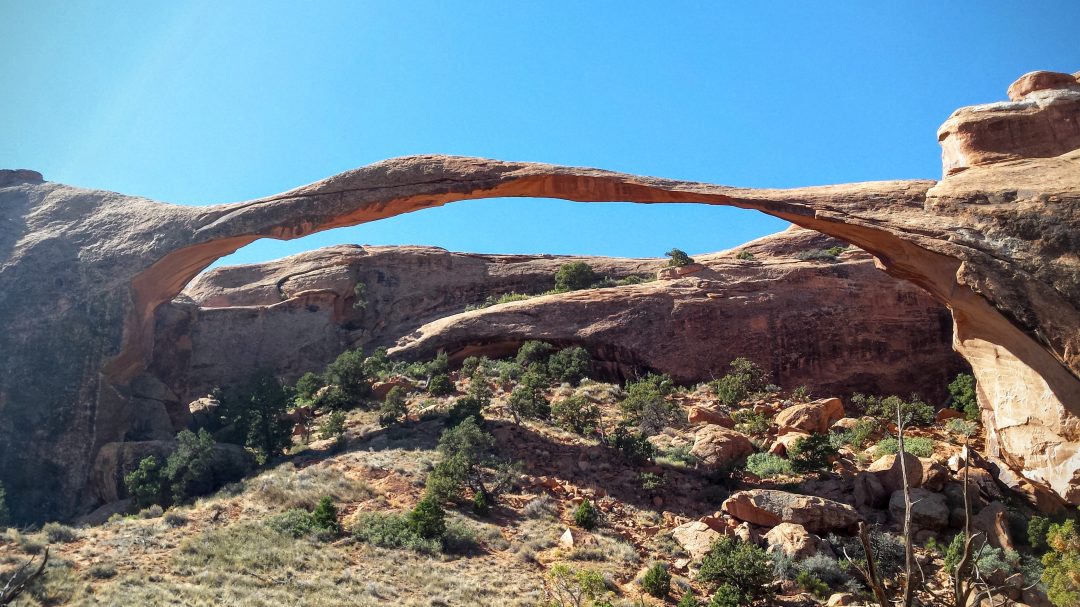
Landscape arch in the Devils Garden Trail in Arches National Park. Credit: John Nelson

Landscape arch in the Devils Garden Trail in Arches National Park.
Credit: John Nelson

Looking out the window of a car just can’t capture the otherworldly beauty of Arches National Park in Utah.

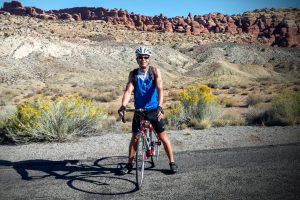
In this stark and dramatic landscape of towering spires, delicate arches and balanced rocks, I chose to bike and hike on my pathway to discovery.

John Nelson along the Fiery Furnace Trail. Credit: John Nelson

John Nelson along the Fiery Furnace Trail.
Credit: John Nelson
I visited Arches in Fall 2015. I pulled into the nearby town of Moab in the evening and found that things were hopping among a diverse crowd of cyclists, hikers, river-runners, ORV enthusiasts and vacationers, all with plans to recreate in the rugged region.

I decided to start early the next morning to get a jump-start on the crowd.

So much for solitude. My outdoors-loving brethren had the same idea, and we all got stuck in a long backup at the Arches entrance gate. Arches National Park is a popular place with nearly 1.4 million people visiting last year.

Once through the entrance, I parked a couple of miles from the visitor center, climbed aboard my bike, and happily left my car behind. The roads were initially busy, but after a few miles, things calmed down and traffic dispersed, leaving me to pedal among the wide-open vistas.

What I saw over the next few hours was mind-blowing.

The National Park lies atop an underground salt bed. Over millions of years, the salt bed became unstable, eroded and shifted, leaving dramatic rock features carved by wind and weather that remain today.

My ride along the main road passed some of the very best sights in the park to its end at Devils Garden 18.5 miles from the entrance gate. Some side roads take visitors to other arch locations, but I wanted to go as far as I could inside the park and return later to see the other attractions.

The ride to Devils Garden takes place on rolling terrain between elevations of 4,500 and 5,500 feet. Once at Devils Garden, I slipped on hiking shoes to visit some of the park’s most famous arches along a 7.2-mile loop trail.

After a picnic lunch, I climbed back on my bike to head back. In some ways, the return ride was even better than the ride out. The light had changed, giving me a different view of these amazing formations.

Back at the car, I was exhausted from the ride and hike—and utterly satisfied. I had seen the park in way that author Edward Abbey, a former park ranger at Arches, would certainly appreciate.

“A (traveler) on foot, on horseback or on a bicycle will see more, feel more, enjoy more in one mile than the motorized tourists can in a hundred miles,” Abbey wrote in Desert Solitaire.

If you go:

Where to start the ride: Don’t park at the visitor center, which is usually swarming with tourists. Instead, drive 2.5 miles inside the park to the La Sal Mountains Viewpoint parking lot. By doing so, you’ll get out of the high-traffic area, and you’ll also avoid a 1,000 vertical foot climb.

When to visit: Spring and Fall, with more moderate temperatures, are the best times to see Arches. Summer temperatures can soar above 100 degrees.

Fitness concerns: At about 30 miles, the ride is difficult, but has only a couple of climbs. Much of the terrain is rolling and pleasant. Carry ample water, and you can refill at Devils Garden.

Safety: Even with traffic, I never felt unsafe riding at Arches. The roadways have good shoulders, and I found that drivers were mostly courteous and careful.

Food: Arches has no food concession, so pack along anything you want to eat. Moab has a wide array of restaurants and markets where you can stock up.

Highlights: Almost too many to count. The Courthouse Towers Viewpoint, The Great Wall, Balanced Rock, Panorama Point and Fiery Furnace all are along the road. If you have the energy, consider a hike around Devils Garden to see some of the park’s best sights.

Accommodations: Moab is the place. You’ll find a wide selection of condos, motels, resorts and bed and breakfasts.

Camping: The Devils Garden Campground inside the national park has 52 spaces, but these fill up very quickly. Don’t arrive thinking you’ll get lucky. Reserve a spot ahead by clicking here or by calling (877) 444-6777. Outside of Arches, there are several other options, including Willow Flat Campground in Canyonlands National Park and Dead Horse State Park, as well as primitive BLM campsites along the Colorado River. Click here for details.

Click here for maps of the area.

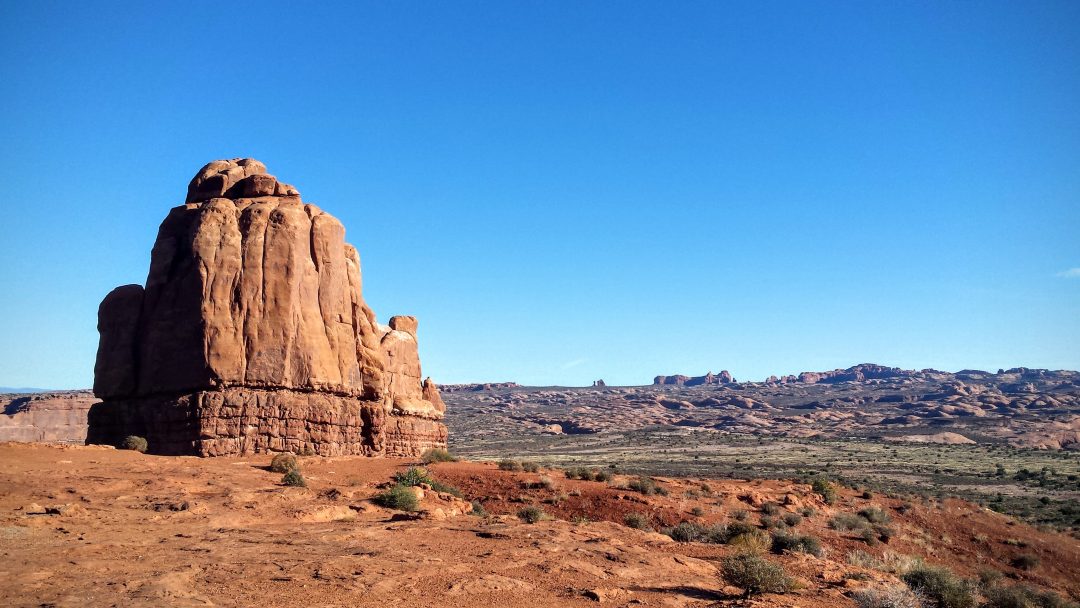
Tower of Babel watches over Arches National Park, UT. Credit: John Nelson
Tower of Babel watches over Arches National Park, UT.
Credit: John Nelson
SeniorsSkiing Guide: SilverStar—BC’s Uncrowded And “Happy” Ski Resort

Great Skiing And Social Life Makes SilverStar A Lively Scene For Seniors.

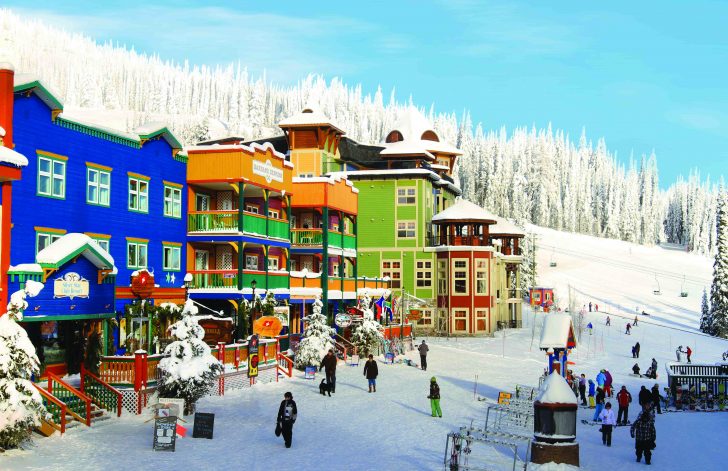
SilverStar Village is a mid-mountain, self-contained resort in itself with restaurants, shops and lodging. Credit: SilverStar

SilverStar Village is a mid-mountain, self-contained resort in itself with restaurants, shops and lodging.
Credit: SilverStar

[Editor Note:  This review was written by Melbourne, Australia-based Marg Malkin, a retired ski industry veteran who spends February and March at SilverStar.  She’s also the informal SilverStar liaison with a group of Ozzie skiers who travel to BC every winter. SeniorsSkiing.com welcomes her as our first Australian contributor.  We hope to see more news from her.]

SilverStar Mountain Resort is a hidden gem, tucked up the northern end of the Okanagan Valley, B.C.  I found this wonderful place 12 years ago and keep coming back to enjoy its magical village, breathtaking views, awesome terrain and uncrowded highways of ever reliable snow.

SilverStar is the third largest ski resort in BC with 131 runs, a 2500-foot vertical and, on average, 23 feet annually of champagne powder.  Twelve lifts service over 3500 acres of skiing as well as 60 miles of Nordic trails, heli-skiing opportunities, and night skiing on Friday and Saturday, too.

Themed after an early 1900’s mining town, the mid-mountain village Main Street with its bakeries, restaurants and shops has real old world charm.

First impression on arrival in the Main Street of this mid-mountain village is that everyone is smiling.  And little wonder; the joy and freedom of wide open, uncrowded slopes makes it a dream come true haven for safe, fast top-to-bottom skiing. It’s where you find long-time residents and local characters who give SilverStar its safe, “homey”, community feel.  Just ask and you’ll find these locals willing to share their secrets that have kept them calling SilverStar home for so long. Tour the mountain with them, and you’ll find they are only too willing to share their knowledge of the best stashes and little known areas of the terrain.

That’s what makes SilverStar so special—a big mountain, a small town feel, with all the terrain you’d expect at a larger resort, without the crowds.

It’s why I keep coming back. The fabulous snow, the welcome by locals and to meet like-minded older skiers to socialize and ski with from all over the globe. I’m in my late 60’s, enjoy excellent health and thanks to my many times at Silver Star have a large network of skier friends with whom I spend six to eight weeks with each Feb and March.  Many of these friends I have “gathered” during my times in the resort, where friendships are easily established because of its small and friendly village community. Hence, I have a real “collection” of like-minded skiers who make the most of their good health and freedom away from the everyday family obligations of home. I’d just like people—particularly single travelers and couples—to know there’s fun to be had at a ski resort without spending too much and having a great social circle.

Hawaiian party in BC? Sure. Social activities are frequent and fun at SilverStar. Credit: Marg Malkin

Hawaiian party in BC? Sure. Social activities are frequent and fun at SilverStar.
Credit: Marg Malkin

We have such a great time.  There’s always someone to ski with or have a coffee or drink with. There’s a variety of ski skills, some diehards who hit the slopes at 8:15 and ski until 2:30 every day of their time there! Others ski out at 10-ish through until 2-ish depending.

We’ve developed “progressive drinks night” social life where people take a turn at hosting a drinks night at their unit—everyone comes with a bottle and a plate to share, making for fun and hilarity.  We also get to enjoy the many restaurants; Paradise Camp Dinner Tours in a Snow Cat, Horseman’s Cabin Snowshoe Dinner Tour are only a couple of night experiences. Tubing, ice skating and snow shoeing are wonderful apres activities, all included in the ski lift pass at Silver Star.  And there’s fat tube biking! Also ten pin bowling! The list goes on.

Getting There:  Fly into Kelowna International Airport, serviced by several US and Canadian air carriers.  Then shuttle north about an hour to SilverStar.

For SilverStar trail maps, click here.

Bottom Line:  Most visitors will take advantage of  a variety of lodging and ski pass packages.  To give you an idea of the value, though, a SilverStar M1Pass, good for three days of free skiing at each of 13 alliance partner ski areas, and which includes Nordic, family discounts, discounts at Whistler Blackcomb and lots of other savings opportunities is only $899 plus tax (2015-16) for seniors 65-plus. An Early Bird Senior Pass will be available after June 1 for $459 plus tax.  That’s a season pass!

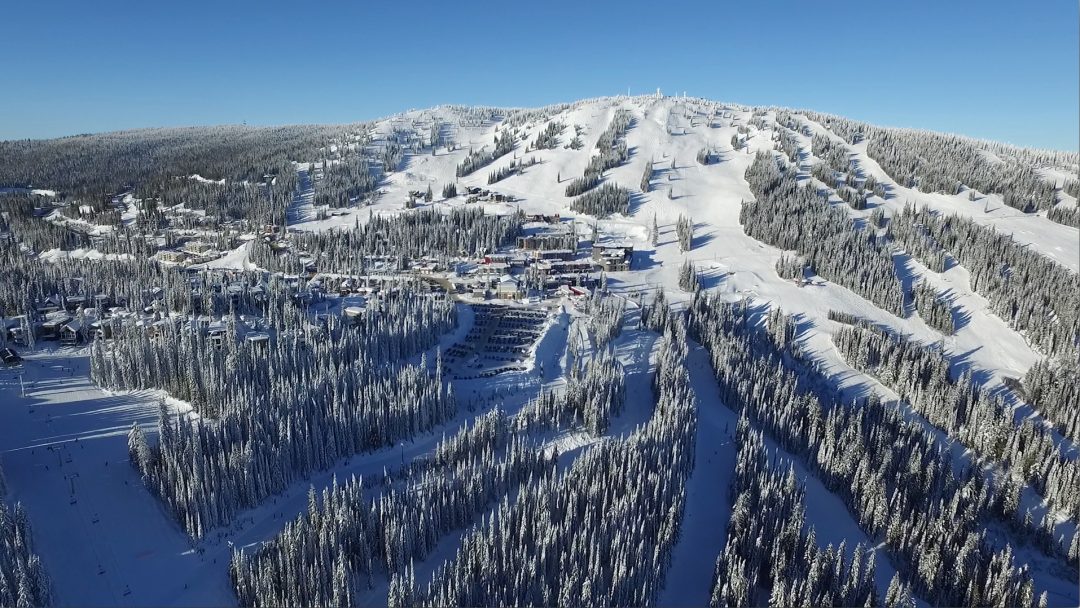
SilverStar has four mountain faces for skiing. Uncrowded, friendly, big snow. Credit: SilverStar

SilverStar has four mountain faces for skiing. Uncrowded, friendly, big snow. Plus lots of other snow sports!
Credit: SilverStar

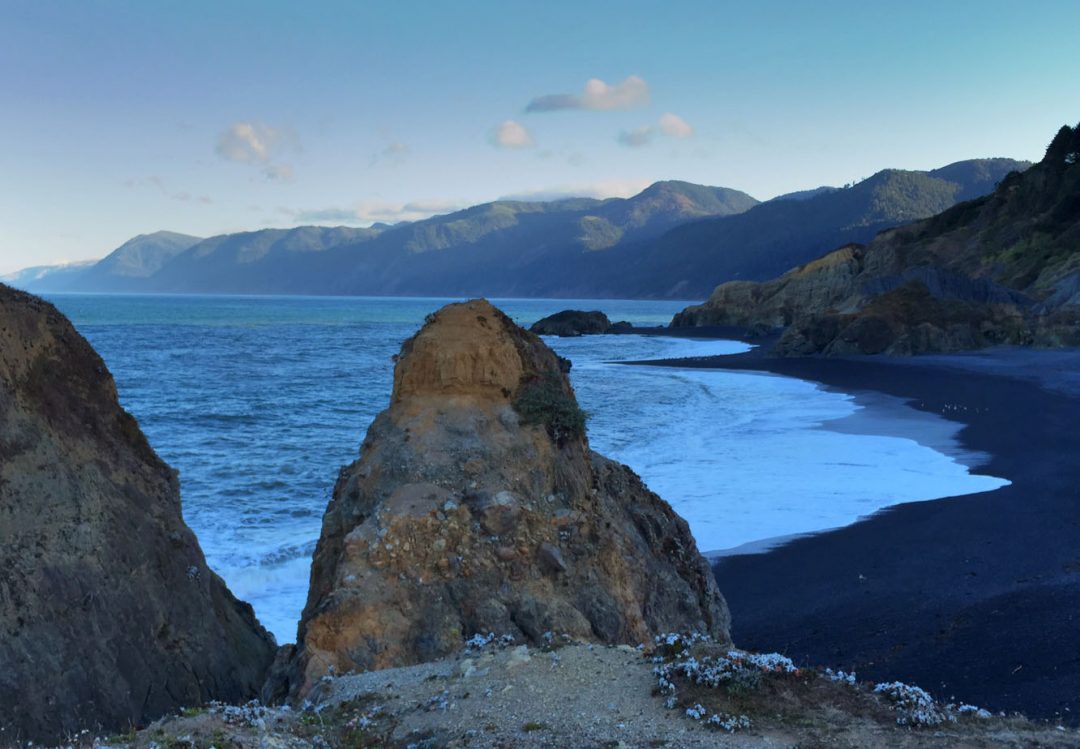
Cycling Series: Finding And Riding The Lost Coast Trail

Senior Skiers Shift To Mountain Bikes To Ride Coast Of California.

Cycling By The Sea, the Lost Coast Trail has spectacular scenery. Credit: Pat McCloskey

Cycling By The Sea, the Lost Coast Trail has spectacular scenery.
Credit: Pat McCloskey

So, my ski buddy Eric says to me, “Patrick, let’s ride the Lost Coast of California”.  The next thing I know I am winging westward to Sacramento with my mountain bike packed securely in my bike box and looking forward to a week of “van camping” with my good friend from Tahoe.  Now when I say van, the vehicle is really a Sportsmobile—a van conversion that is an amazing off road vehicle equipped with everything including a pop up compartment on the roof which was my room for the week. We have used this vehicle for skiing, but it also serves to house two old guys wandering around the Lost Coast which is about 160 miles north of San Francisco.

Fast forward: We have our RV spot right on the ocean in Fort Bragg, CA., and are ready to ride 150 miles of single and double track which is easily accessed from the camp site.  Most of the trails are in the Jackson Demonstration State Forest, Woodlands State Park, and Big River State Park.  We were amazed at the variety of trails which are loamy and smooth and give you a great appreciation for Redwood trees which are ever present and ancient.  You can even ride through an old Redwood which is called “The Drive Through Tree,” a fun diversion from the standard mountain bike trail.

SeniorsSkiing.com correspondent Pat McCloskey switched a mountain bike for his skis and headed out up the Lost Coast Trail. Credit: Pat McCloskey

SeniorsSkiing.com correspondent Pat McCloskey switched a mountain bike for his skis and headed out up the Lost Coast Trail.
Credit: Pat McCloskey

The amazing thing about riding in this area is the lack of riders and general feeling of remoteness.  The only riders we encountered were the original designers of the trail and are the current trail stewards.  They are all in the late 60s and 70s—amazing senior mountain bike riders.  Jack Columbe, a 74-year-old ex fireman and World Senior Games champion and Roo Harris have mapped out, carved out, and maintained this 150 mile network of trails that stretch from Mendocino to Ft. Bragg.  At 48,652 acres, Jackson State Demonstration Forest is one of California’s crown jewels and is maintained by CalFire (California Department of Forestry and Fire Protection).  In speaking with Pam Linstedt, a 24-year veteran of CalFire, we learned that although tourism is replacing some of jobs lost after the 2002 closing of the GP lumber mill in Ft. Bragg, research and logging are still first and foremost priority in the California forests.  With the efforts of the senior cycling community under the guidance of Jack and Roo, mountain biking is becoming an attraction which they hope will once again put Ft. Bragg and Mendocino on the map for riders all over the world.

The amazing advantage of riding in this area is that you have access to the coastal mountains but you can camp or stay right on the ocean in Ft. Bragg or Mendocino.  Lots of available bed and breakfast options as well as an abundance of RV parks which seems to be the preferred way for Californians to see the coast inexpensively.

As we made our way northward, we rode a trail called Paradise Royale near the Lost Cove area in Humboldt County.  The trail is filled with berms and features and one wonders who maintains this nationally known trail literally in the middle of nowhere.  After finishing our time in Lost Cove, we drove our way through the Redwood National Forest which was truly a visual cornucopia of thousand year old gigantic trees.  Camping out under those behemoths really make you understand that you are only passing through life in a very short time period.  These giants have been around for over a thousand years and still flourish today under the California sunshine and coastal mists.

Lot to Trails

From any campsite or Bed and Breakfast on the coast, the access is available by bike in only a matter of a few miles. We rode to the McDonald’s for breakfast in Ft. Bragg and were on the trails in less than 15 minutes.

Terrain

None of the trails in this area are overly technical.  I would rate them intermediate with the exception of the Paradise Royale trail which had a killer of a climb stretching over 4 miles of vertical ascent.

For More Information

Fort Bragg Cyclery (707-964-3509) can provide rentals and accessories like complete maps to the area.  Most of the rides are currently on MTBProject.com

Also, Mendocino Bike Sprite can provide tours at a nominal fee.  707-962-4602.  Ask for Amy.

Not too often can a couple of 62 year olds van camp and ride trails as pristine as these, and the only guys we ran into were older than us.  Senior riders rule!

Remote and beautiful, the Lost Coast Trail had few other cyclists. Credit: Pat McCloskey

Remote and beautiful, the Lost Coast Trail had few other cyclists.
Credit: Pat McCloskey

Cycling Series: Around Crater Lake

Riding The Rim Was One Of The Best Rides Ever.

Crater Lake water is pure and deep blue. It's 33 miles around the rim and 4000 vertical feet of ups and downs. Credit: John Nelson
Crater Lake water is pure and deep blue. It’s 33 miles around the rim and 4000 vertical feet of ups and downs.
Credit: John Nelson

As I topped a ridge near 8,049-foot Llao Rock on the north rim of Oregon’s Crater Lake, I had that giddy moment cyclists get when everything comes together.

I felt great. I had just finished one of my biggest climbs of the day. And I was alone on a road ringing one of America’s natural wonders.

I picked up speed on the downslope and screamed for joy.

Climbing along East Rim Drive on the south side of Crater Lake National Park. Credit: John Nelson
Climbing along East Rim Drive on the south side of Crater Lake National Park.
Credit: John Nelson

It was early October. I had left my home in Seattle a week before on an extended road trip around the west. I had no real itinerary, except to camp, hike, bike and enjoy beauty.
I hadn’t planned on coming to Crater Lake National Park. But while camping on the Oregon Coast, I met a fit retiree who had just done the 33-mile ride around the rim.

“It’s incredible,” he said in a hushed tone over the campfire. I decided then and there I had to try it.

A few days later, under cool, clear skies, I clipped in and started what would be one of the best rides of my life.

When you tackle the Crater Lake ride, the first thing to understand is that almost none of it is flat. You’ll do more than 4,000 vertical feet of climbing over the next few hours, so get used to the long ups, and the lovely, all-too-quick downs.

A stop at an overlook along East Rim Drive at Crater Lake. Credit: John Nelson

A stop at an overlook along East Rim Drive at Crater Lake.
Credit: John Nelson

I started at the park headquarters and immediately had a 1,000-foot climb to the rim of the lake. Cresting the top of the rim, I was treated to views of something really special.

Crater Lake is America’s deepest lake (1,943 feet deep, to be precise) and rests in the caldera of Mount Mazama, which collapsed during an eruption 7,700 years ago. The average annual snowfall here is 44 feet, which melts in warmer months, keeping the lake filled with some of the purest water on earth. Its color is a dramatic deep blue.

The rim road sits many hundreds of feet above the lake. From a car, the view is stunning. From the seat of a bicycle, it’s much more than that—you become part of the earth, water and sky as you grind past each jaw-dropping viewpoint.

If you go

Which direction? Most people choose to go clockwise, which puts you on the lake side of the road on your journey. Starting at park headquarters gets a big climb out of the way early when you have the energy to do it.

Fitness concerns: The ride is strenuous and not to be taken lightly. Besides the many ups and downs, you’ll be pedalling at up to 8,000 feet elevation. Temperatures vary wildly from below freezing to well into the 90s.

Safety: Auto traffic can be heavy in the summer months, and rubber-necking drivers don’t always watch for cyclists while taking in the views. Wear bright clothing. If you want to avoid cars, visit on one of these dates in 2016: Sept. 17 or Sept. 24, when the East Rim Drive will be closed to automobiles for runners, walkers and bicycles. Information is here.

Water, food: The Rim Village Visitor Center is a good place to load up. Bring lots of water for the ride: There are no drinking fountains along the rim. The Visitor Center has cafeteria-style food service if you want a meal.

Stops: There are 30 overlooks that ring the lake; plan on stopping frequently to rest, take pictures and enjoy the views.

Accommodations: Inside the park, the historic Crater Lake Lodge has commanding views from its location at Rim Village. You’ll need to make reservations a year in advance to book one of these in-demand rooms. The Cabins at Mazama Village have scattered availability through summer and fall of 2016. Reservation information is here.

Camping: Two campgrounds are available. The full-service Mazama Village Campground has 214 tent and RV sites. A limited number can be reserved, the rest are available on a first-come, first-served basis. The primitive Lost Creek campground has 16 non-reservable tent sites.

National Park Bicycling Info:  Highly useful guide to the Rim Drive, including safety, camping and ride information.

Crater Lake National Park MapA beautiful map of the lake and surrounding area.

National Park Service Map of Crater Lake. Hills and altitude make the ride around challenging.

National Park Service Map of Crater Lake. Hills and altitude make the ride around challenging.


California Wrap: Sierra Nevada Resorts Are Jubilant!

…And There May Be More Snow Coming Next Week!

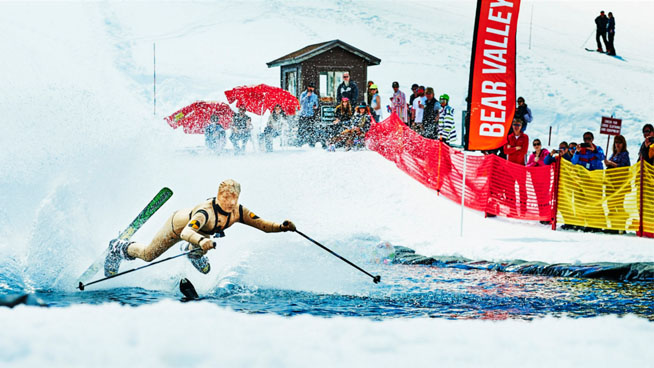
Bear Valley Pond Skimming. Silly season is in out in happy, snow-filled California. Credit: Steve Peixotta/ Bear Valley

Bear Valley Pond Skimming. Silly season is on out in happy, snow-filled California.
Credit: Steve Peixotta/ Bear Valley

As one of the best ski seasons in the Sierra Nevada in the past five years winds down, resort operators can look back and smile broadly about the steady stream of mid-size snowstorms that rolled over their resorts on a regular basis all season long, making for consistently ideal conditions and doubling the overall snow depths, operating days, and skier/boarder visits, compared to last year and the several years before that. And it’s not over! Although rain is forecast for this weekend at most locations, a few inches of snow are predicted for next Thursday, April 14th.

April—And May!—Closing Dates

Corduroy corn on Mt. Rose. It's been a good year for the Sierra Tahoe area. Credit: Mt. Rose/ Ski Tahoe

Corduroy corn on Mt. Rose. It’s been a good year for the Sierra Tahoe area.
Credit: Mt. Rose-Ski Tahoe

If you haven’t stowed away your wintersports equipment yet, you still have time in the coming weeks to get in a few more runs on some nice corn snow. Here are the closing dates as of April 7  for the following ski areas (may change, subject to snow melt and snowfalls!):

Last day of operation this coming Sunday, April 10th: Bear Valley and Bear Valley Cross-Country, Homewood, June Mountain, Soda Springs, Tahoe Donner.
Operating through Tuesday, April 12th: Donner Ski Ranch, Mt. Shasta.
Open through Sunday, April 17th: Boreal Mountain Resort, Diamond Peak, Kirkwood, Northstar.
Open until Sunday, April 24th: Heavenly Mountain Resort, Ski China Peak, Sugar Bowl.

Open through Saturday, April 30th: Sierra-at-Tahoe

Operating through Sunday, May 8th: Mt. Rose – Ski Tahoe.

Staying open through Memorial Day, Monday, May 30th: Squaw Valley/Alpine Meadows and Mammoth Mountain (the latter will operate longer if there’s still skiable and boardable terrain).

Those resorts that have already closed include all Southern California ski areas, Badger Pass in Yosemite, and Dodge Ridge.

How Much Snow Was There?

Senior XC skier Pat Van Mullem after skiing 50 km at Bear Valley XC. Credit: Paul Petersen/ Bear Valley

Senior XC skier Pat VanMullem, 62,  after skiing 50 km at Bear Valley XC.
Credit: Paul Petersen/ Bear Valley

Currently, in this first week of April, the major Northern and Central California ski areas are still swathed in snow with base depths ranging from 43 inches (Northstar) to 96 inches (Bear Valley) and top-of-the-mountain depths ranging from 94 inches (Heavenly) to 201 inches—nearly 17 feet! (Mammoth). But what’s really impressive is the total number of inches of snow that fell this winter, with many resorts getting three times the amount of snow as they did in recent past seasons. Here are some of the prodigious snowfall totals for this season to date: Sugar Bowl, 547 inches; Squaw/Alpine, 463 inches; Northstar, 446 inches; Mt. Rose, 381 inches; Heavenly, 341 inches; Kirkwood, 437 inches; Bear Valley, 325 inches; Bear Valley X-C, 348 inches; Mammoth, 342 inches. Snowmaking kept some snow depths even deeper!

End-Of-Season Deals Still To Be Had!

Hit the slopes in the coming days and weeks, and you may be able to score some savings. Several resorts will let you apply your lift ticket purchase to next season’s season pass. Buy a 2016–17 Squaw Valley/Alpine Meadows season pass and ski free at both resorts for the rest of this season (until the end of May, conditions permitting). Sugar Bowl has special reduced spring rates, and most areas have early-bird pricing in effect for season pass purchases (check individual resort websites for “early bird” deadline dates and savings info).

A Few Closing Thoughts…

Most Sierra Nevada resorts will have had a nearly five-month season this winter by the time the mountain streams start raging with snow melt. And their staffs couldn’t be happier. Says Lauren Burke, communications manager at Mammoth, “Nature has brought us a return back to a ‘normal winter’ and we’ve seen so much excitement this season… This year’s snowfall passed last season’s total in January, and the mountain has been 100 percent in operation since mid-December.” Bear Valley Cross-Country’s Paul Petersen concurs, “What a difference a year makes! We are super-excited to have had a real winter return to the High Sierra and are grateful for a spirited and enthusiastic return of our customers to this great trail system.” Across the road at Bear Valley downhill resort, its director of marketing Rosie Sundell adds, “The snow enthusiasts came out in droves to make up for the powder they missed over the past four seasons.” Says Northstar’s Cassandra Walker, “ We are thrilled with how well the season has gone and are excitedly skiing our way out of the 2015–16 season on this famed Tahoe corn snow, with bluebird skies and sunshine above.”

And with that said, the finger crossing begins that next season will be a repeat of this one!

The Palisades at Sugar Bowl are a dramatic background to a season filled with awesome skiing. There's still 82 to 165 inches at SugarBowl. Credit: Sugar Bowl Resort

The Palisades at Sugar Bowl are a dramatic background to a season filled with awesome skiing. There’s still 82 to 165 inches at Sugar Bowl.
Credit: Sugar Bowl Resort

Road Scholars Ski Telluride

Wonderful Value With Close-to-Lift Lodging.

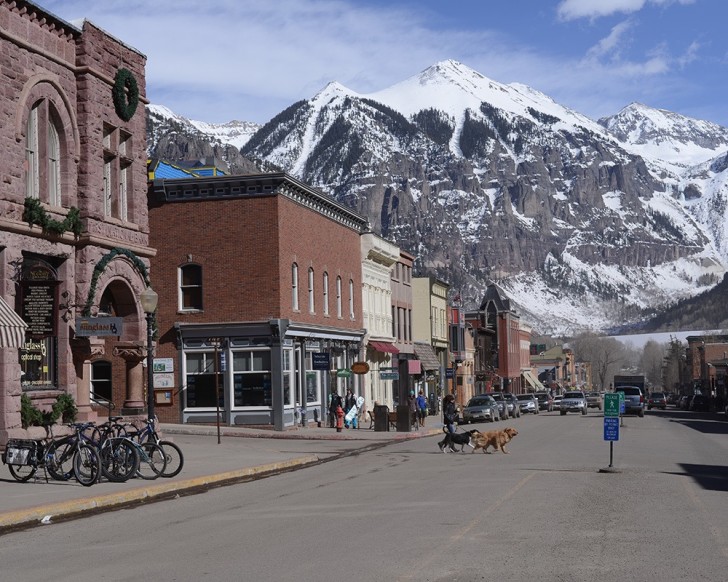
Nice town. Great mountain! It tops out at 13,320'.

Nice town. Great mountain! It tops out at 13,320′. Credit: Pauline Simmons

“You can’t find a better value than Road Scholar” is their claim. My wife Judy and I decided to test it the first week of March with the Telluride program run for Road Scholar by the Mountains and Plains Institute of Fort Collins. The price of $1495 each seemed a bit daunting.

But, when I saw the window ticket prices at Telluride—$122 for adults, $107 for seniors—I figured we were already ahead of the game. We got five night’s housing, thirteen meals and daily guide service in the package; clearly a great deal in this quaint but pricey ski town.

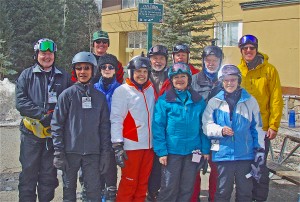
Road Scholars from Alaska, New York, North Carolina, Utah and Vancouver. Credit: Jan Harold Brunvand

Road Scholars from Alaska, New York, North Carolina, Utah and Vancouver. Credit: Jan Harold Brunvand

Our group had eleven skiers. Telluride is skier-friendly for anyone from low intermediate on up—way up, if you are so inclined. The others were from New York, North Carolina, Vancouver, and Fairbanks. We drove down from Salt Lake City, detouring at Moab for a hike in Arches National Park.

Our group leaders, Peter McCarville and Ashley Boling were super skiers and patient guides. They paced the four days to suit their elders and at times split the group to accommodate those who wanted more or less challenge. Since our lodge lacked meeting rooms, the planned “lectures” became on-hill chats about geology, history, and local color.

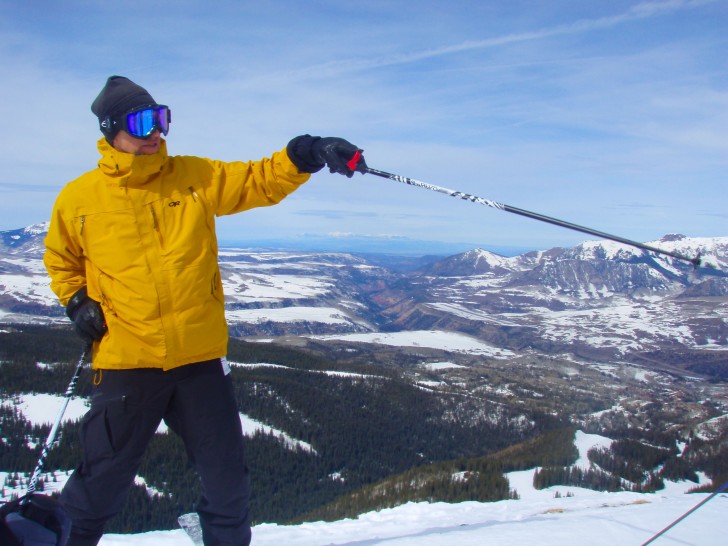
Guide Peter McCarville pointing out a geologic feature, his ski pole framing a view of the distant LaSalle Mts. of Utah. Credit: Jan Harold Brunvand

Guide Peter McCarville pointing out a geologic feature, his ski pole framing a view of the distant LaSalle Mts. of Utah. Credit: Jan Harold Brunvand

The lodge had no restaurant, but all rooms had kitchens. Peter took our breakfast shopping lists and delivered groceries the first evening. We liked this arrangement, but some said they preferred restaurant breakfasts. For on-mountain lunches we each got a Telluride gift card worth $60.  At dinner the bill—alcohol excluded—went straight to Peter.

The big advantage of the aptly-named Mountainside Inn was location. A short walk across the nearby public parking lot (free overnight for Inn guests) took us to the Coonskin Lift which conveyed us over scary-looking, partly bare, mogul-strewn runs to the good snow above.

Despite a stretch of warm weather, the upper mountain was well covered with plenty of groomers to cruise. Our favorites were “Misty Maiden,” “Stormin’ Norman,” “Peek-a-Boo,” and “Polar Queen.”

From the 12,000 foot level the choices ranged from the delightful “See Forever” to Telluride’s signature steep run, “The Plunge,” which was so well groomed that the challenge was more in hanging on for the long descent than any problem staying upright.

Riding Coonskin Lift down at the end of a day. Credit: Jan Harold Brunvand

Riding Coonskin Lift down at the end of a day. Credit: Jan Harold Brunvand

The first afternoon Judy and I joined the others in returning to town on the long winding run “Telluride Trail” that ended in our parking lot. But when we learned we could ride Coonskin Lift back down, we opted for that route on subsequent days. Not only was it a rest for our weary legs but it provided a fine view of town as we headed towards the hot tub.

The program was lots of fun and a true value. Next season we hope to try the Road Scholar program in Snowmass or Steamboat run by the same people.

SeniorsSkiing Guide: Alpental—Accessible And Challenging

A Short Ride From Seattle, Alpental Super Seniors Ski For $12.

A skier rides the upper-elevation Edelweiss Chair at Alpental. Credit: John Nelson

A skier rides the upper-elevation Edelweiss Chair at Alpental.
Credit: John Nelson

It was a rare sunny winter day in Seattle, and I was stuck working in my office. I kept looking out the window, thinking, “I wish I was skiing.”

Why not? Daydreaming wasn’t getting the work done, so I bolted out of the city, and an hour later, I was on the slopes of Alpental.

Sometimes, access is everything. This challenging resort offers an easy way to fill a yearning to turn. What’s more, senior skiers who seek Alpental’s steeps will get some enticing price breaks.

On the day I visited, Alpental provided a great excuse to play hooky. Recent storms had left its empty midweek terrain soft, with powder pockets just waiting to be found.

Snow, terrain and more

  • Location: Alpental (the German word for “alpine valley”) is one of four areas at Snoqualmie Pass, all owned by the same company. It is about 50 miles east of Seattle just off Interstate 90, the main east-west route in Washington state.
  • Snowfall: More than 400 inches fall annually at Snoqualmie Pass, with considerably more pounding the higher peaks at Alpental.
  • Terrain, lifts: Alpental has some of the most challenging terrain in the Pacific Northwest. The lower mountain is primarily intermediate skiing, served by a high-speed quad (Armstrong Express) and two double chairs; the cliff-strewn upper mountain is for advanced skiers only and served by a double chair (Edelweiss). The experts-only back bowls of Alpental are accessed through gates off the Edelweiss chair.
  • Vertical: 2,280 feet from base (3,140”) to top of Edelweiss (5,420”).
  • Olympics connection: 1984 giant slalom gold medalist Debbie Armstrong grew up skiing at Alpental; the lift Armstrong Express and run Debbie’s Gold are named for her.

Lot to lift access

  • Weekends are crowded during high season and are best avoided. Once you park, skiers must take a short walk across a covered wooden bridge to the base of the ski area. Weekdays are much easier; I arrived in early afternoon and parked 30 yards from the bridge.
  • Shuttle service: Seattle Ski Shuttle delivers skiers from various locations in the Seattle metro area; a free intermountain shuttle operates between the four ski areas at Snoqualmie Pass.
  • Accommodations: Plentiful along I-90; the ski area is just 50 minutes from downtown Seattle.

Culture

  • The vibe: Alpental has a big-mountain feel on a fairly small footprint. Consequently, it feels like a club for people who love its challenging terrain. Lifties are friendly and helpful.
  • Dining: The day lodge at the base area has cafeteria-style food and adult beverages.

Bottom line

  • The senior skier will find some great deals here. Regular adult passes (ages 16-61) are $66; seniors aged 62-69 pay $48. If you’re a “super senior” (70 and older) your ticket is only $12.
  • The upper-elevation Edelweiss Chairlift takes advanced skiers into dramatic, cliff-strewn terrain; the double-diamond, peak-to-base run International is one of the best drops you’ll ever ski.
  • Access is everything: You’re on the slopes an hour after leaving Seattle.

Trail Map Click Here

Webcam Click Here

Skiers negotiate the cliff area of Rollen on the Edelweiss Chair at Alpental. Credit: John Nelson

Skiers negotiate the cliff area of Rollen on the Edelweiss Chair at Alpental.
Credit: John Nelson