senior ski1

Skiing Weatherman: Mid-Winter Preview

Herb Is Bullish On The Second Half Of This Season.

The past week has been another relatively quiet one over the eastern half of the country in terms of fresh snowfall while the Pacific Northwest and British Columbia have again been targeted with substantial new inches. The lack of snow over the Midwest and East has surprised me to a degree because even though deep cold air has been lacking at times, the jet stream pattern of a ridge over Canada with a trough cutting underneath it in the U.S. that set up shop about ten days ago is one that typically produces storms and snow. As the old weather adage goes “the weather doesn’t happen at the 500 millibar (jet stream) level. Sometimes you can get the pattern right but get the weather wrong”. Last week this first weekend in February looked very promising for snow along the length of the Appalachians, but the northern and southern branches of the jet will remain separate and not phase, which would be necessary for a substantial snowfall. The northern branch feature will slide from the Lakes into the Northeast, producing light snows, but it looks like another case of the big one getting away.

In the Northwest, the onslaught of storms will continue into at least the middle of next week. Initially, snow levels will bounce up to 7-8 thousand feet this weekend before crashing for the second half of the weekend to as low as 1,000 feet in places. The changes in snow level will not be as dramatic next week as colder air from western Canada gets involved in the pattern with time. In the northern Rockies, some light to perhaps moderate snow will fall this weekend as the Pacific system moves further inland.  Elsewhere in the West, the central and southern Rockies and Sierra will be dry for the next several days before some early week lighter snow moves in.

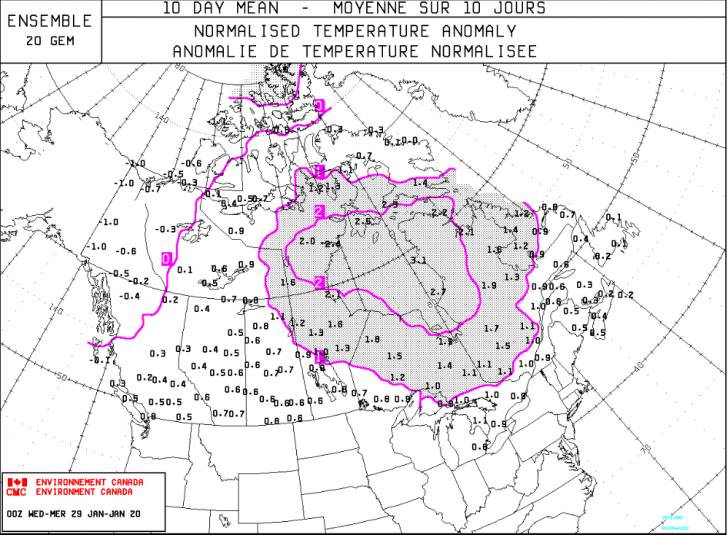
The cold air that will flow into the Northwest is an indication that the refrigerator in northwestern North America has been working.  If we look at the expected standard deviations of temperatures over Canada for the next ten days, the positive values have dropped quite a bit recently and negative anomalies are building in the Yukon. Here is a look at that map:

Last week I talked about an expected change in the jet stream set up that could deliver some of that cold air, and it looks like it is going to happen. Here is a jet stream forecast for 2/8 that I agree with:
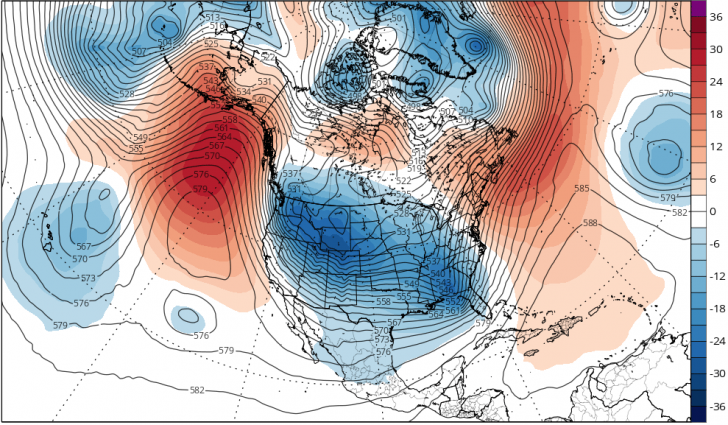
A ridge is forecast to extend northward to Alaska, where a trough sat a week ago. The trough spread mild Pacific air into the pattern but having a ridge in that spot will help deliver air from the newly-minted cold in NW Canada. The multitude of troughs over the lower 48 at this time suggests a snowy pattern for many areas, much of the West, the upper Midwest, and the length of the Appalachians. That might be asking a lot, but once that cold air gets tapped, the pattern is going to get busy, and I believe snowy. I am sticking with my analog years, and I remain bullish on the second half of this season, even in areas where snow clouds have been rather stingy thus far.

Here Are The Regional Details.    

Northwest U.S./Western Canada: Highest elevations, above 8,000 feet or so, get tagged every few days until further notice. Snow levels will jump up then crash this weekend in WA and OR Cascades, then stay rather low next week.

Sierra: Light snow far north. Tahoe gets light snow Sunday while southern Sierra watch storms go by to the north for a while as ridge offshore plays defense and deflects Alaskan storms.

Northern Rockies: Light to locally moderate snows Sunday as “leftovers” move inland from WA and OR. Arctic air leads to colder weather on the slopes next week. Another light to moderate snow later in the week.

Central and Southern Rockies: Light snow early next week as weakening Pacific storm limps into the region. Another round at the end of the week.

Midwest: Light snow Saturday northern Lakes. Clipper system produces light to moderate snow Thursday of next week. Arctic invasion on the horizon should produce good snowfall Week Two.

Northeast/QB: Weekend ocean storm misses but northern disturbance brings light snow to upstate NY and northern New England/southern QB. Milder early next week with fresh snow by midweek as cold returns. Pattern change bullish for February and beyond.
This Week In SeniorsSkiing.com (Jan. 24)

Talking To Yourself, Skis Delivered, Robert Frost, New Mystery And A Correction, Weather Coming Up, Windham Mt MidWeek Seniors.

Our day trip to Attitash included at this free view of the White Mountains. Credit: Attitash.

As reported in this space, the snow weather here in New England has been sketchy once a burst of fluff in early December disappeared or turned to ice. We had a miserable melt the second weekend of January with temps in the 70s, preceded by several weeks of mediocre snow making weather. That has all changed.  Winter is in. Temps are the teens, and a Nor’easter has delivered the goods.  The MLK weekend was a huge success around here stemming from that big snow fall and snow making for most resorts, setting attendance records across the region.

White Mts in background, we conquer Attitash.

So we set out for our very first day of Alpine skiing with one of our famous day trips to New Hampshire from the Boston area. The target was Attitash, a venerable, family-friendly, classic area with very decent snowmaking, beautiful, wide trails that we like, and magnificent views of the White Mountains on a blue-bird day. Taking advantage of those post-MLK conditions, we lucked out with a low, online ticket price, an empty lodge, no lift lines, and almost “private” trails.

With new boots and new gloves, we made our first run on the beginner’s slope. We immediately started talking to ourself. “Bend zee knees.” “Inside edge.” “Toe pressure.” “Forward, forward.” “Athletic stance.” After Run One, we made another adjustment, focusing on just one self-instruction: “Edge, edge, edge”.  The psychologists call this self-instruction, providing ourselves cues that help us perform. For children who have learning difficulties, self-instruction or, more formally, cognitive mediation, provides a built in tutor who can add a helping reminder. Anyone learning a new skill can benefit from this technique.

Some models of learning call this phase “conscious competence”. We are aware we are doing something new and processing our self-instructions and actively watch the result, aka feedback.

Eventually, after many repetitions of successful performance, the need for self-instructions fades away, and we have “unconscious competence”.

We are curious if other senior skiers use this kind of self-instruction, especially when starting out the season or approaching new situations. Do you talk to yourself? What do you say? How did you learn to do that? Does it work for you? What works? What doesn’t? Have you ever had an instructor tell you to talk to yourself? Share your insights with other senior skiers. Note Comments Below.

This Week

Snowmaking is robust and widespread at Windham.

A day trip area near NYC?  Correspondent Joan Wallen describes her experience at Windham Mt, in the heart of the Catskills and just two and a half hours from the Big Apple. The resort has a special 50+ Midweek program that offers lessons, lunches, presentations, and yoga. Sounds like a nice package.

Correspondent John Nelson reports on his experience with Ski Butler, the ski delivery service that brings rental equipment to you. For those traveling to far-away resorts, the savings in airline baggage fees alone makes Ski Butler worthy of a look.

We have a nostalgic look at Moriarty hats, 60s and 70s icons of the “skier-look”.  Yes, we still have two left over from college days, and, yes, they are both over 50 years old.  And we still wear them, tiny moth holes and all.  The cognoscenti at ski places nod knowingly at us, sometimes commenting. Imagine a hat as a conversation starter. This article is a reprise from the earliest days of SeniorsSkiing.com.

We bring you another in our Snow In Literature series, again a poem by Robert Frost: “The Wood-pile”.  Speaking of wood piles, how much of yours is left?  Better be a little more than half this time of the year, say the old farmers.

Not Barb Ferries.

We add a correction to last week’s Mystery Glimpse.  The two racers were not Beth Ferries and Buddy Werner. Thanks Chuck Ferries and others for the tip.  See the correction in this week’s article and our new mystery.

As predicted, winter time weather is finally settling in. The Skiing Weatherman Herb Stevens give us the Big Picture for the next two weeks, as well as regional forecasts.

Thanks for reading SeniorsSkiing.com.  Tell your friends, and remember there are more of us every day and we aren’t going away.


Skiing Weatherman: Winter Is Delivering

Looks Like A Promising Couple Of Weeks.

It has been a terrific week of skiing and riding in most of the U.S. and Canada and I have been lucky enough to squeeze in a couple of days. Loon Mountain on Tuesday was wonderful; miles and miles of packed powder and views of the White Mountains that are hard to beat. Packed powder, sunshine, and light winds at Stratton on Thursday added up to another awesome day.

The pattern looks very promising for the next couple of weeks, but it is not without its challenges. The primary challenge arises from a jet stream development over the northeastern Pacific that quite honestly, I had not anticipated. With a sizable pool of warmer than normal water over that part of the Pacific, I expected an upper level ridge to be a persistent feature that would extend northward to Alaska. Instead, a trough is parked over Alaska and the counter clockwise circulation around it cuts off cold air from the high latitudes and pumps milder Pacific air into the southern Canada/U.S. pattern instead. Temps will be above normal over Canada for the next ten days or so as flat ridging dominates there. Does that mean that it can’t snow over the northern tier of states? Not at all, because we are at the climatologically coldest time of year. However, each storm will be a nail-biter for snow vs. rain in the Midwest, northern mid-Atlantic, and Northeast. Here is a forecast map for the jet stream across the continent for later Saturday, Jan 25, that illustrates the issues.

The trough off the west coast that stretches northward to Alaska is tapping relatively mild air and sending it into the Northwest and mountains of B.C. There is a ton of moisture available, but snow levels will be an issue in WA and OR this weekend…not so further north in B.C. The moisture will flow east and the northern and central Rockies will benefit with moderate amounts of new snow later this weekend.


The red shades that you see across Canada indicate the extent of the ridge that will play a major role in this weekend’s event in the Northeast. Although it is mild relative to normal over the eastern half of Canada, that air is still cold enough to support snow. Also, upper ridges support surface high pressure centers that can deliver low level cold air into the path of a storm. Just such a high will be present over Quebec this weekend and it will help produce snow in the Adirondacks, Greens, Whites, and into the mountains of Maine. Further south it will turn into more of an elevation-dependent tossup. The upper ridge will help suppress the trough you see over eastern Ohio and it will track east…favorable for the snow to the north. The upper ridge will also keep the surface low from racing out to sea, so the snow will be a 48-60 hour event. Here is a snowfall forecast map through Monday night…it is great to see that significant snow will reach southward to West Virginia resorts…they are running a little lean right now.

Longer term it looks like the same general pattern will remain in place for the next 10-14 days, with another eastern storm in the cards late next week. After that, the western ridge should poke north far enough to deliver a fresh shot of cold to the lower 48.

Here Are The Regional Details

Northwest U.S./Western Canada: B.C. will see very heavy snow this weekend. WA and OR Cascades pick up heavy “cement” as snow levels start high and slowly drop. Same general setup holds through next week.

Sierra: Snow—perhaps a foot—Saturday night/Sunday Tahoe regio. Snow levels dropping through the event. Lighter snows southern Sierra. Some light snow next week; main storm track to north.

Northern Rockies: Moderate snow will develop later this weekend from Pacific trough. Wasatch, Tetons and points north looking snowy next week.

Central and southern Rockies: Dry weekend. Light snow early next week central, just snow showers south.

Midwest: Light snow north this weekend, mixed precip WI and lower MI. Another shot at snow later next week.

Northeast/QB: Long duration light to moderate snow event this weekend, north of I-90. Elevation snow between I-80 and I-90. Snow south to WV along Appalachian spine. Another storm late next week.

Snow In Literature: The Wood-pile

By Robert Frost

Out walking in the frozen swamp one gray day,
I paused and said, ‘I will turn back from here.
No, I will go on farther—and we shall see.’
The hard snow held me, save where now and then
One foot went through. The view was all in lines
Straight up and down of tall slim trees
Too much alike to mark or name a place by
So as to say for certain I was here
Or somewhere else: I was just far from home.
A small bird flew before me. He was careful
To put a tree between us when he lighted,
And say no word to tell me who he was
Who was so foolish as to think what he thought.
He thought that I was after him for a feather—
The white one in his tail; like one who takes
Everything said as personal to himself.
One flight out sideways would have undeceived him.
And then there was a pile of wood for which
I forgot him and let his little fear
Carry him off the way I might have gone,
Without so much as wishing him good-night.
He went behind it to make his last stand.
It was a cord of maple, cut and split
And piled—and measured, four by four by eight.
And not another like it could I see.
No runner tracks in this year’s snow looped near it.
And it was older sure than this year’s cutting,
Or even last year’s or the year’s before.
The wood was gray and the bark warping off it
And the pile somewhat sunken. Clematis
Had wound strings round and round it like a bundle.
What held it though on one side was a tree
Still growing, and on one a stake and prop,
These latter about to fall. I thought that only
Someone who lived in turning to fresh tasks
Could so forget his handiwork on which
He spent himself, the labor of his ax,
And leave it there far from a useful fireplace
To warm the frozen swamp as best it could
With the slow smokeless burning of decay.

This Week In SeniorsSkiing.com (Jan. 17)

East Coast: Start Us Up.  Roll Away Stiff Muscles, Harriet Wears A Cup Cake, New Bindings Old Skis, Mystery Top Hatted Skier, Nordic Gourmet Ski Tours, Good Weather News.

Last weekend, the temperature was 70+ degrees in Boston, a record high for January 4-5.  That was not a good thing for resorts, especially lower altitude areas, that are gearing up for the busy MLK weekend and trying to preserve whatever base they have. But, change is coming for the better. Real winter is finally coming to the East and Northeast.

How do we know? Statistics tell us so.  There is a metric devised by the National Weather Service called the North East Snowfall Impact Scale (NESIS) which rates snowfalls based on how much has fallen and the area of coverage. It is a similar rating scale to the Fujita tornado rating scale and the Saffir-Simpson hurricane scale many of us are familiar with. 

Using the NESIS scale, snowfalls are rated, again based on amount and area,  from 1 to 5 with an appropriate descriptor for each category:

    • Category 1 Notable
    • Category 2 Significant
    • Category 3 Major
    • Category 4 Crippling
    • Category 5 Extreme

Over time, you can look at the pattern of when these different categories of snowfalls occur over the winter. What you find when you plot Category 3-6 storms over time is the following: 

NESIS Cat 3+ storm frequency distribution by month, 1956-2019. Credit: Weather Channel

This graph shows that Category 3 to 6 storms usually show up at the end of January and the beginning of February. Which is now.

So, if you’ve been waiting for snow in the East, Northeast, Middle Atlantic, you may be able to finally get out on decent snow cover.  Place your bets because this looks like the snow train is a’-coming.

This Week

Nordic Nibbles are happening across the country. Eat and lost weight.

Our Incidents & Accidents this week is by Dave Irons, a noted ski journalist and patroller from Maine. His point: Safety is our everyone’s job. What can you do to avoid problems? Check it out here.

In Ask The Expert, Reader James Davis asks about using new bindings with old skis, the opposite question asked a couple of weeks ago. Those old skis might look fine, but inside…is another story. Here’s advice for James.

By now, you’ve probably been out for a day or two, or even several days of exercise on the slopes. If you are like many seniors, you are discovering some muscle soreness, knots, and stiffness. The way to smooth these normal aches and pains out is by foam rolling.  If you haven’t tried this form of self-therapy, you are missing a quick, simple, and effective method for relief. Click here for more.

Our Mystery Glimpse photo this week comes from Peak Resorts. He should be a familiar character that skiers who’ve been around for a while will recognize. We also reveal who the two racers from last week’s mystery picture. For the first time in a while, we had no guesses for those two, so we stumped the readership. Click here to see the Flippin’ Clown.

XCSkiResorts.com publisher and SeniorsSkiing.com cross-country editor Roger Lohr brings us a round up of where you can enjoy cross-country skiing and gourmet food on the same tour. Yes, there are xc resorts across the country that offer delicious food in plein air along beautiful ski trails.  Interesting concept: eat and burn calories.

Harriet will pass this badge on to someone turning 80 before April. Credit: Harriet Wallis

Herb Stevens, the Skiing Weatherman, brings good news about the change coming to the snowfields. The winter pattern is settling in on schedule, signaling a comeback for the East and New England.

The best for last.  Harriet Wallis, our esteemed and venerable correspondent from Utah, has her 80th birthday party at Alta.  Check out her pink, cup cake helmet cover.  You have to see it to understand.  And she is offering to pass along her “80” badge to a SeniorsSkiing.com reader who will turn 80 before April. Help her celebrate.

Thanks for reading SeniorsSkiing.com.  Please tell your friends and remember, there are more of us every day, and we aren’t going away.

Hope this guy has a foam roller.

https://www.facebook.com/Vagueetvent/videos/753540895153044/?v=753540895153044


Incidents & Accidents: 7

Safety Is Up To All Of Us.

[Editor Note: Dave Irons contributed this article on skiing safety which first appeared in the Lewiston Sun Journal. Dave is a veteran ski journalist and ski patroller.  SeniorsSkiing.com is collecting stories from readers about incidents and accidents that they have experienced. We intend to review these for patterns and themes and use that data to influence the safety policies of resorts and other stakeholders. ]

Each ski season the issue of safety comes up. Some years it’s a fatality at one of our ski areas. It might be a famous person, like Sonny Bono who died while tree skiing at Heavenly Valley on the California/Nevada line.  One year it was a couple of teenagers who left the trail at Sunday River and had to be rescued at night.  Whatever the trigger we all need to be reminded at times of the need for safety while skiing.  I remember years ago when I walked into Tom Reynolds classroom at UMF.  On the board was the saying, “If it is to be, it’s up to me”.
That pretty much describes safety on the ski slopes.  How often have we heard someone say about a particular situation, “There oughta be a law!”?   You might be surprised to know that there are some laws when it comes to skier safety.  Mostly we are not restricted in our skiing, but there are certain activities that are limited, most not by law but by ski area policy. One example is skiing too fast in an area posted, “SLOW SKIING”.  Skiing fast in an area set aside for beginners or approaching lifts can bring about a warning from the ski patrol. It will usually be nothing but a warning. Some ski patrols will mark the lift ticket either with a marker or by punching a hole in the ticket.  Stopped by a second patroller who spots the mark will result in loss of ticket.

But that’s not law.  When are skiers likely to be subject to law?  Unlike on the highway, there are no radar guns on the ski slopes, but if there is a collision and injury, the law can be involved.  The Colorado Skier Safety Law states clearly, “The person higher on the hill has the responsibility to avoid people below and if something happens that skier or boarder is at fault”.  Notice that there is no mention of the ski area being responsible.  As a ski patrolman, I used to sum it up this way, “If you are good enough to overtake another skier, you should be good enough to avoid them.”

We often hear, “He cut me off” from skiers who hit someone while passing them.  I would make the point that the skier downhill from us cannot be expected to look up the hill before making a turn, especially if that downhill skier is a lower level skier.  The better skier has to be aware that he is sharing the slopes with skiers of all ability levels. And we should all know the Colorado law.  It may not be the law in Maine, but we can be sure it will cited by an attorney representing a skier who has been hit from above.    

This should be all we need to know about avoiding collisions on the hill. Add the common sense parts of the Skiers’ Code Of Responsibility such as slowing down and looking up hill when entering a trail intersection, looking uphill before entering a trail and always stopping on the edge of the trail.

The next area is skiing closed trails and out of bounds. I can tell from years of experience that no ski patroller wants to close a trail.  If it’s closed it’s because the ski patrol judged it to be unsafe.  Also, no ski patroller wants to have to explain to management why they closed a trail if it was skiable.  I would also point out that if any of those skiers who patrolled for me felt uncomfortable on a run, you probably don’t want to ski it, and the average skier certainly doesn’t belong on it. Trails are closed for our safety. Stick to the runs that are open. And to those that are within your ability. 

Out of bounds is another issue.  This is not to be confused with skiing in glades within the area, but this skiing also calls for special precautions.  Sonny Bono lost his life within bounds, but he was skiing alone in the trees. We don’t know if he died instantly or if he might have lived had rescuers reached him quickly. His body was found the next morning. Never ski in the trees alone. It should be a group of three or more, one to stay with the injured skier while another goes for help.  Cellphones help, but if you don’t know where you are on the mountain it can still be a long time before rescue. 

Leaving the ski area boundaries is taking an extreme risk, not only to the skier, but to those who will be involved in the rescue.  If you survive a problem even if it’s no more than getting lost and having to be led out, this can involve the law. In these cases it’s not uncommon for a number of services to be involved such as warden services and police. For this you could receive a bill, and it could be quite large. Just figure the hourly pay for dozens of searchers for a full night, along with the equipment. Do you know what it costs an hour to keep a helicopter in the air? The next time you consider skiing out of bounds remember this sign at the top of Killington, “The mountains will be just as cold and lonely tonight as they were 200 years ago”. 

Skiing Weatherman: For The East, Enter Winter

A Comeback For The East And Midwest, More Pow For The West.

I spent the first two days of this week with fellow members of the North American Snowsports Journalists Association at Windham Mountain,  NY, where the crew did an outstanding job of providing a fun surface in the wake of a mid-season meltdown last Sunday. One of the presentations was by Masterfit University, an outfit that boasts having the best boot fitters in the world. It was a fascinating seminar, and after spending a couple of hours one on one with Windham’s Masterfit representative, I came away convinced that if you want to maximize your skiing, you absolutely should find a Masterfit shop in your area.

While this week started on an unseasonably mild note in the East, the skies kept unloading in parts of the West. A persistent series of low pressure centers loaded with Pacific moisture has utterly buried resorts in Washington, Oregon, northern Idaho, the Tetons, and northern Wasatch in the past week with anywhere from three to six feet of new snow. Lookout Pass in Idaho checked in with a 101 inch storm total! Lighter snows fell elsewhere in the West, and if you are heading in that direction, you can’t make a bad choice right now.

In the Midwest and East, a major pattern change is getting underway, one that delivered some fresh snow in the mountains of the Northeast late this week, with another round coming this weekend. For the first time in weeks, once the low pressure center moves through the Great Lakes and East, a bonafide cold air mass will follow in its wake, leading to great snowmaking conditions and productive lake effect snow in favored snowbelt areas, especially the upper peninsula of Michigan.

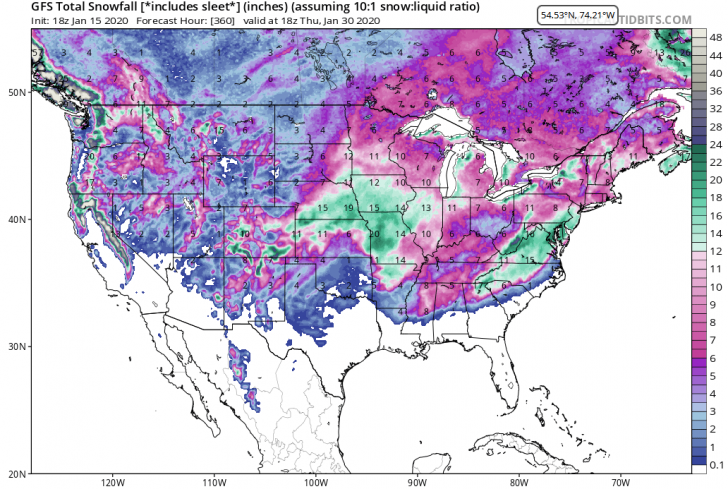
Over the next 10 to 14 days, temperatures will be stepping down over the eastern half of the country as an upper level trough becomes the dominant jet stream feature. At the same time, an upper level ridge will be found more of the time in the Northwest, so the “snow hose” that has been pointed at that region lately will back off quite a bit. The southern Sierra and southern Rockies could see periodic snows as disturbances in the southern branch of the jet move through that part of the country. If a southern branch disturbance manages to phase with energy in the eastern trough, we could see a major storm in the East before too long. The pieces will all be there soon and hopefully they will come together. For your viewing pleasure, here is a forecast map of snowfall for the next 15 days. Don’t focus on one specific spot as much as take note of the breadth of the area, particularly over the eastern half of the country, where significant snow is forecast. The pattern is rounding into shape for meaningful snow events, but the devil will be in the details.

There is reason to believe that once the colder pattern gets established in the Midwest and East, it will remain in control much of the time going forward. My analog years suggest it, as does this jet stream map for two weeks from now:


The broad trough that you see for late this month looks cold and stormy to me.

Here AreThe Regional Details

Northwest U.S./Western Canada: Another rather snowy week coming up, but the recent amazing rate of snowfall will start to back down as an upper ridge takes up residence.

Cascades and Sierra:  Snowy (Cascades) into the middle of next week, although snow levels will be a little high late this weekend before settling back down. Lighter snows Tahoe area. Snowfalls back off late this month as ridging develops.

Rockies: Dry weekend into midweek when a new trough will bring some light snow. Longer term, central and southern Rockies favored for snow thanks to disturbances in the southern branch of the jet stream

Midwest: Arctic air dominates for the foreseeable future. Each frontal passage sets off lake effect snow. Great spell of snowmaking temps underway and conditionS.  Trail counts will be improving.

Northeast/QB: Moderate snow event this weekend (north of I-80) starts the comeback. Great snowmaking temps for several days in the wake of the storm. Another sizeable snow threat next weekend. Conditions and trail counts will be getting better each day until further notice.


Two Skiers

Ask The Expert: New Bindings, Old Skis

The Opposite Question From A Couple Of Weeks Ago.

A Question From Reader James Davis:

Ok I fully understand the mechanical aspect of old bindings, but what about the skis underneath? I have several pair of older skis in excellent visual condition that I like to use occasionally. How many times is it safe to put on new bindings?

Response from Dave Irons, long-time Ski Journalist, Ski Patrolman, And Venerable 

This is an interesting question.  There are so many variables there can be no definite answer.  In my pro patrol days, (120 days or more each season) my skis usually looked fine at the end of the season, but I got rid of them bindings and all.  They had been tuned so many times, there was little left of the edges and when skis are flexing, the fiberglass is actually breaking. By spring, these skis were noodles. Fortunately, I always had a ski company or shop to furnish new skis each year.  My concern with mounting new bindings would be how many times new holes would need to be drilled. This would be a question for the ski shop mechanic as each situation would have to be evaluated separately. James, take the skis to the shop. They will also know what binding would work best with the fewest new holes

This Week In SeniorsSkiing.com (Jan.10)

Where The Snow Is In The East, A Ski Learning Tool, Grandparents Teach Munchkins, Weather Coming, Apres Fire-ish Cocktail.

Lots of snow in view from Peak Lodge, Killington (4,236 feet). Credit: Roger Lohr

Sounds as if the West is off to an incredible season. Snow packs in Colorado and Utah are already over normal amounts, the Northwest and Western Canada is getting more new snow.  So there’s lots of visitor activity.  A quick scan shows most Colorado resorts have 100 percent of their lifts spinning.  A number of our skier friends here in New England are leaving for the West this week or next.

Meanwhile, in the East, the season is emerging.  The higher altitude resorts in New Hampshire, Maine, and Vermont are making or collecting snow very nicely; lower level areas are, as of this writing, making the most of machine grooming.  Obviously, tall mountain resorts have an advantage in quixotic winters like the one we experiencing here. How much advantage?

Temperature cools with elevation. In fact, for every 1,000 feet in altitude, the temperature drops 5.4 degrees F (9.8 degrees C for 1,000 meters). For example, the top of Mt. Mansfield in Vermont is 4, 395 feet (1,340 meters), and Mt. Sunapee in mid New Hampshire is 2,726 feet (831 meters). That’s a difference of 1,669 feet (508 meters), for a more than nine degree difference in temperature between the two at the top.  The base can be another 1,500 or more feet under that. As of this writing, Stowe has 80 percent of its trails open, Mt. Sunapee has 56 percent.  Ideal snow-making temperature is 28 degrees F (-2-2 C). Clearly, marginally cold days like those we’ve been experiencing in New England are going to favor high resorts.

Last August, we surveyed the usual forecasters for their views of the 2019-2020 winter.  For the most part, the consensus was a frosty and snowy West and a “mixed, wet and wild” East. The Boston Globe published NOAA’s winter outlook in October which seems to be squaring with what we are seeing. These predictions point to warmer than average temps in the East. It appears that prediction is coming to pass. So far, lower altitude resorts are impacted more than the higher ones.

The point: The resorts at lower elevations have to, no, must do a fantastic job at snowmaking whenever it gets cold enough. If it gets cold enough.  It is a key survival objective, and the path to a successful season and future.  No wonder we’ve been seeing major investments in snowmaking in New England in the past few years.

This Week

How do you learn to improve? We’ve had our own experiences in physical skill learning, from taking horse riding lessons to playing music (more physical than most non-musicians realize). What we have found is that two factors make a huge difference in efficiency of learning.  The first is clear intellectual understanding of the concepts involved.  What do we mean by edging, for example? Boot pressure? A clear mental model of what has to happen and how comes first.  Then, we need to practice and get feedback, the second major factor.  Feedback from both others and our own senses.  In his story on the Intention/Attention Feedback Loop, ski coach Bob Trueman explains how these concepts are included in a simple model for improvement.

We reprise Harriet Wallis’ story on advice for grandparents who want to teach their grandchildren. Check out her “non-obvious” tips for getting your munchkins on the snow.

This week’s Mystery Glimpse shows two racers, one a junior, the other a senior veteran. Guess who’s who. Thanks to the Thread of Pioneers Museum, Steamboat Springs, for the pic.  We reveal the story behind last week’s picture of the bronze sculpture from the Colorado Snowsports Museum and why it is a significant embodiment of ski history.

Yes, apres-ski can be interesting, too. Here’s a story from Yvette Cardozo about a fiery, smokey cocktail from a clever bartender, hanging out in Den Bar and Bistro in Silver Star, BC. Creative, artisanal libations might be perfect for the end of a perfect day.

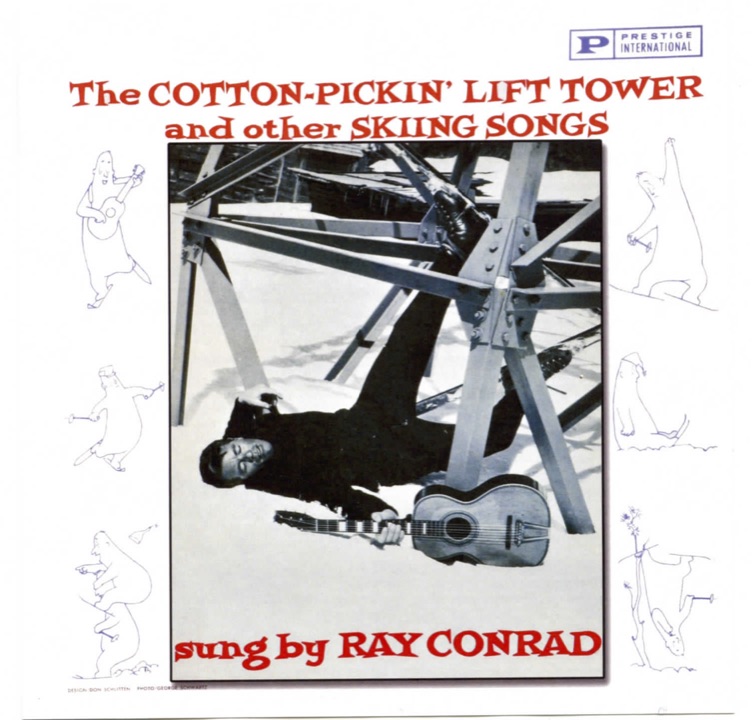
Along those lines, below you can find “Two Cubes And A Slug of VO” from Ray Conrad’s album The Cotton-Pickin’ Lift Tower, a 60s collection of skiing songs available through SeniorsSkiing.com.  Click here to purchase and download the whole album.

Finally, Herb Stevens, the Skiing Weatherman, sums up the next week’s weather across North America.

Thanks again for reading SeniorsSkiing.com. Please tell your friends.  Remember, there are more of us every day and we aren’t going away.


The Skiing Weatherman: Changeable East, Snowy West and Mid-West

The West Continues To Luck Out, Cold Coming East By Month End.

Despite a wildly changeable run of weather in the East recently, I managed to get two days of wonderful winter turns in early this week. It snowed on Monday at Sugarbush as I skied packed powder with my son. Wednesday at Killington surfaces were just about perfect packed powder early on and then an arctic cold front arrived. It brought fresh snow: three inches in 30 minutes! An absolute whiteout that gave me a chance to focus on my toes with each turn, a method I was taught decades ago to deal with low visibility. It still works!

Changeable weather will continue to rule short term in the East while much of the West continues snowy, but that imbalance will be changing in the near future. The past couple of weeks, the jet stream maps across the continent have featured a trough centered over the West and a ridge over the East. The trough has produced tons of snow, particularly in the Northwest and coastal ranges of British Columbia.

As this week comes to a close, another storm will cut southeast from the Gulf of Alaska and dump on B.C. as well as the WA and OR Cascades. Lighter snows will reach down to Tahoe as well as the northern and central Rockies. Over the eastern half of the country, a low will cut northeastward through the Great Lakes and into Ontario and Quebec.  That’s great news for the resorts of Michigan, where significant snow will result. Further east, the northern track forced by the strength of the southeast ridge means another mild, wet event this weekend before colder air returns Monday. The “cutter” track is consistent with the current warm state of the MJO, as discussed last week.

Changes are coming, though, and by the final week of the month, the changes will be dramatic across the country. A pool of very cold air has been building in central and western Canada and due to the density of that air mass, it will start to spread southward and eastward. Here is a look at a forecast for the 5,000 foot temperature anomalies for ten days from now that I agree with.

The 5,000 foot level is a forecasting proxy for surface temps, and you can see that a large mass of colder than normal air will cover much of the eastern half of the country by 19th or so. Meanwhile, the West will turn a little warmer than normal, but not until after some of the arctic air descends through the Rockies later next week. At the jet stream level, the setup will flip, and we will find a trough in the East and a flat ridge out west.  Here is a reasonable jet stream forecast for the same time.

Now, any change in air masses and jet stream features of this magnitude will come with a stormy transition, so there is reason for optimism for eastern snow, at least north of the Mason Dixon line, from late next week onward. Once the new pattern settles in, I expect it to dominate through the bulk of rest of the winter, due to the anticipated influence of the warm water pool in the northeast Pacific Ocean.

Here are the regional details.

Northwest U.S./Western Canada: Another heavy snowfall is coming this weekend, light snow in AB.

Periodic lighter snows will continue next week as arctic air presses southward.

Cascades and Sierra: Snowy weekend with heavy amounts in OR, tapering down further south in CA.

Lighter snow continues next week as it turns windy and colder.

Rockies: Northern Rockies catch light snow this weekend but as several upper level short wavelength disturbances move through the first half of next week, persistent light to moderate snow will provide daily “refills”. Each successive trough will draw arctic air further south, reaching the Tetons by mid-week. Light snow in central Rockies first half of next week.

Midwest: Messy weekend storm lower Lakes, snowy in northern Lakes, narrow ice storm in the middle.

Some light snow northern Lakes from a Clipper or two next week.

Northeast/QB: Another cutter brings wet and icy weather to the northern mountains of NY/New England this weekend, snow up in Quebec. Renewed snowmaking and light Clipper snow next week, with bigger storm threat late. Pattern will look much better a week from now.


Out Of Control

Int/Att Loop: A Technique Improvement Tool

After So Many Years, Can You Improve? Here’s A Way.

Time to improve? You can do it with the Int/Att Feedback Loop. Read on.

First, do you want to improve your skiing?  If you don’t care that much, read no further.  If instead you still have a hankering for greater skill and more satisfaction, then the good news is “Yes, you can”.

The “Int/Att Loop”© gives you the tools to do it.

But improvement doesn’t come by doing what you’ve already been doing for years.  If you always do what you’ve always done, you’ll always get what you always got.  If your choice is to become more skillful, then your choice is to change.  To change, you need to:

  • Know what to change—should you do something different, or something differently?
  • How to change it
  • Have a set of tools to do it with.

You will also need one other commodity—persistence.  The great joy that comes from going on such a journey is that it’s an adventure that delivers huge satisfaction.

What is the Int/Att Loop©?

Back in the 70’s and 80’s two of Britain’s top coaches uncovered how humans learn to do physical things.   Through considerable research, they identified a process that is simple to understand and use. 

This process is not how to ski, nor how to have a skiing vacation, it is how to effect the kind of performance changes you desire.  It has to to do with two completely separate nervous systems we have:

  • the Efferent system
  • the Afferent system.

Let’s say, you make a decision to do something.  This is your INTENTION.  The message from your brain to your muscles is carried by the Efferent system.  But your brain needs to gather information from your senses to know that the instruction was carried out and what the effect was.

That information sent back to the brain via the Afferent nerves. Now, you are paying ATTENTION to those sensors.  With that information, your brain can modify the next actionable decision to slowly bring your performance to where you want it to be.

Intention/Attention forms a feedback loop.

It is explained much more fully in many of the instructional videos you can find via www.bobski.com.

Your Action Plan For Better Skiing.

So, how do you use this dual nervous system concept?

Say you’re on a gentle bit of piste.  You intend to work on some aspect of technique.  You will only ski in very short sections—no more than 100 yards at a time.  Here’s how it goes  

  1. Choose a task – something simple such as “link two arcs together seamlessly”.
  2. Decide on one very small element of behavior—something simple such as “flex my ankle ALL the time”.  That message will be sent by your Efferent system.
  3. This is important: You must then decide beforehand which of your senses you will pay heed to that will constitute a message back to your brain via the Afferent nerves.  Most likely, in this case, it will be a feeling of constant pressure between your shin and the front of your boot.  But for some other task it might be what you hear or see.
  4. If you were working with a coach, you would stop after the very short distance and report to her what you felt.  Not how you felt.  Not what you “thought”.  This is not about thinking.

What you are attempting to do is to develop within yourself the ability at all times to be aware of what you sense, within the context of a simple and very powerful, plan.

This works.  Watching someone else ski doesn’t work.   “Getting the miles in” doesn’t either.   If you find this interesting and have specific questions, don’t hesitate to send me them at bobski@bobski.com 

Should You Teach Your Munchkins To Ski?

[Editor Note: From time to time, SeniorsSkiing.com re-publishes an article from its archive.  Here’s one from Harriet Wallis about teaching your grandkids to ski from way back in 2014. Comments welcome.]

Five Non-Obvious Tips For Making Learning Fun For All.

Because you love to ski or ride, you probably hope that your grandkids will also share your passion for the snow.  Here are some ideas to get things off to a good start if you plan to teach them yourself.

How about those smiles? Credit: Harriet Wallis

How about those smiles?
Credit: Harriet Wallis

Look for deals. Some resorts offer free or low cost tickets for youngsters. A cheapo ticket can take the financial pressure off you, especially if the day’s weather is iffy, or if your grandkids are in town only for a short, gotta-teach-them-to-ski-right-now visit.

Start on flat ground. “A child will not miraculously assume a balanced stance on the beginner hill,” says Jo Garuccio, a Snowbird, UT, instructor and PSIA trainer and examiner. “Children should have some prerequisite sliding time at the bottom of the slope.

“It’s imperative that the child stand and slide independently on a flat surface before giving the child a downhill experience,” she says. “Initially, the terrain should be flat enough so that the child can go straight, lose momentum and stop.”

My friend Larry Green did just that with his granddaughter. He gave little Yoella her first sliding experience on virtually flat snow. “She loved it, and she egged me to pull her up that slight slope again—and again— and again—so that she could slide down. I even used my old snow skates to make it easy for me to maneuver with her. But I’m exhausted,” he said. “That three-year-old totally wore me out!”

Cool kids. Pediatric journals say that children heat and cool differently than adults.  Their bodies cool off faster than adults because they have proportionately more outer skin surface in relation to their body size.  So even though you have them bundled up—and you might be comfy—when kids say they’re cold, it’s time for a hot cocoa in the lodge.

Edgie-Wedgie keeps ski tips from wandering Credit: Amazon

Edgie-Wedgie keeps ski tips from wandering
Credit: Amazon

Gizmos. The snow sports industry offers a variety of devices such as harnesses, leashes and Edgie Wedgie tip clamps. “But aids are not a substitute for skill,” says Garrucio. “Don’t take your child on to high level terrain with tip clamps or leashes. Stay on easy green or very light blue slopes.”

Stifle your own expectations. Be sure to make it fun for the kids, says Mary Whittke, retired ski school director of Brighton Resort, UT. Even if your grandchild is super coordinated and athletic, put your own expectations aside. Kids don’t instantly morph into Olympic champions just because you love the sport. Give them little tips, but back off from the overkill of teaching, teaching, teaching. Help them have fun on the snow.

There’s a warning that comes with teaching your grandkids to ski or ride. Kids catch on and progress so rapidly that they’ll ski and ride compatibly with you for only 15 minutes of their lives. After that, they leave you behind. But maybe that’s okay.

Would you teach your grandkids to ski or ride?  What’s your advice?

This Week In SeniorsSkiing.com (Jan. 3)

The Top 10 SeniorsSkiing.com Articles Of 2019.

Here are our readers favorite articles from the past year, deducted by looking at the number of comments, clicks, and the help of Google Analytics. It is certainly a diverse collection of pieces, ranging from our very popular Mystery Glimpse feature fueled by historic photographs from ski museums around the country, to a variety of advice stories, our directory of senior-friendly ski resorts, and, emerging this year, a series of articles about on-slope collisions, a major source of concern to readers.

All links will bring you to the original article.  These are listed in reverse rank order.

Enjoy all of them. Share with friends.  Thanks for all your support in 2019.

10. Mystery Glimpse: Who’s This Unhappy Fella? This popular feature asks readers to guess the person, place, or thing in a photo, usually submitted by a ski museum. This one features a candid shot of a very famous racer.

9. First Ever List of 145 US/Canadian Resorts Where Seniors Ski Free. Or almost free.  SeniorsSkiing.com has an exclusive listing of these resorts. Very popular and located in Subscriber-Only content.

8. Coping With Flat Light. Advice on dealing with bad visibility, so vexing that it can ruin a day’s outing.

7. Season Ending: The Last Perfect Turn. A lyrical view of the end of what was a record-breaking season in many places. From last spring.

6. Ask The Expert: Ski Boot Advice. Basic advice from MasterFit’s Steve Cohen on how a 65 year old can buy his/her first ski boot.

5. Incidents & Accidents 1. As our Spring Survey revealed, out of control skiers is the number one aspect of skiing that upsets our readers. This is the first of our ongoing series of reader reports about collisions and accidents on ski slopes.  We are collecting this portfolio of these to see if we can identify a common thread to use in influencing

4. Putting Away Your Skis And Stuff. Practical advice for caring for your gear at the end of the season.

3. My Knee Replacement Story. A full recounting of the process, from initial onset of painful symptoms to rehab.

2. Gone In a Flash.   Advice on not taking any season for granted, especially poignant when you are physically barred from participating.

1. Blind-Sided & Body-Slammed. A personal account of a bad collision and its consequences started our reader-written series of Incidents & Accidents. This was the inaugural story from SeniorsSkiing.com correspondent Roger Lohr that created a huge amount of attention.  This issue is serious and important to continue to understand.  We hope that eventually the data we collect will be useful in influencing ski patrol and area management safety practices.

This Week.

Our Mystery Glimpse looks at a statute that has meaning for a special museum.  The location and back story of the Fountain Mountain is revealed.

Harriet Wallis reminds us that five simple words can mean a world of difference to people skiing alone.

Start at the top at Snowshoe Mountain Resort, WV, Credit: Snowshoe Mountain

As we learned last month, the mid-Atlantic states have high mountains, higher, in fact, than New England.  So, here’s a resort review from Snowshoe Mountain Resort in West Virginia. It’s an “upside down” resort with lodge and parking at the top.

Herb Stevens, the Skiing Weatherman, explains how a weather pattern that evolves over the Indian Ocean and gradually moves east can impact temperatures in North America. Regional forecasts for the week also included.  Fascinating stuff.

We are happy to answer our reader’s technical questions.  This week, a reader asks about whether old bindings can be used on new skis. Find out what realskier’s Jackson Hogen says.

Our Incidents & Accidents feature this week is by an individual who was severely injured in a collision at Steamboat Springs, but was never able to successfully track down the person who hit him. Lots of lessons learned here.

Thanks again for reading SeniorsSkiing.com. We are looking forward to a wonderful 2020. Please tell your friends about us, and, remember, there are more of us every day, and we aren’t going away.


Skiing Weatherman: Global Pattern Bringing Warmth Then Cold Mid-Month

Happy New Year To All Of My Fellow Senior Sliders!

In the two weeks since my last post, the western slopes of the U.S. and Canada have been the unquestioned winners in terms of fresh snow. Just prior to Christmas, the trail counts from British Columbia south to the Sangre de Cristos of New Mexico were on the lean side, but a persistent parade of moist troughs started marching ashore from the Pacific. Those systems produced an overall snowy pattern that jacked up those trail counts dramatically. There are a few resorts here and there that got slighted by Mother Nature, but by and large, it is hard to make a bad choice out west.

While troughs produced the goods on one side of the country, flat ridging at the jet stream level have made fresh snow rather scarce in the Midwest and East. Fresh shots of cold air have been more of a glancing blow, but resorts in the northern Great Lakes eastward through the mountains of northern New York and New England have maintained their trail counts for the most part through the holiday period.

So, where are we headed from here? Well, a pattern that can best be described as changeable will unfold during the first half of January. As such, I think that there will be opportunities for resorts all across the country to enjoy some fresh snow. I still believe that we will eventually see a western ridge/eastern trough couplet become more favored, but there are too many conflicting signals coming from the Pacific for the jet stream to settle into that set up just yet.

The factor that seems to have the most impact on our weather right now is the MJO, or Madden Julian Oscillation. The MJO is all about convection that forms in the Indian Ocean and tracks eastward into the southwest Pacific. Madden and Julian divided the track into eight sectors and noticed that there were significant correlations with weather over North America, with a lag of 7-10 days, depending on where the thunderstorms were clustered.   Right now, the convection is fired up north/northwest of Australia, as you can see in this infrared satellite picture.

If you follow the green line in the chart below—each black dot is one day—you will see the MJO making a move into octants 4 and 5 in about a week. [Editor Note: octants 4 and 5 represent continental North and South America.]

Using the temperature correlation maps below, you can clearly see that octants 4 and 5 are warm over much of the country, and I believe a warmup will occur mid-month before the pattern turns colder again.

Before any warmth reaches the East, though, Midwest and Eastern resorts—north of the Mason Dixon line—will pick up fresh snow at least a couple of times. The first event will be this weekend as a storm cuts southeastward to the mid-Atlantic coast before turning up toward New England, with an Alberta Clipper sliding through the East a couple of days later. Big winners in the snow derby the next week or so in the West will be the Cascades, northern Rockies, and the resorts of B.C.

Here are the regional details.

Northwest U.S./Western Canada: Healthy storm nails B.C. this weekend, with another system arriving later next week.

Cascades and Sierra:  Light to moderate snow in the Cascades this weekend. Northern system late next week looks productive in WA/OR, but the Sierra will only receive lighter amounts.

Rockies: Late this weekend/early next week the Rockies will pick up light to moderate snow (north) and generally light amounts south of I-70. The Tetons and Wasatch are in line for moderate to heavy snow late next week.

Midwest: Early week Clipper system will deliver light to locally moderate snow, with the best snowmaking temps in a while following. That cold air will also support lake effect snow in northern parts of the lower peninsula of MI.

Northeast/QB: A system this weekend will turn into a moderate to locally heavy snow producer from WV northeast into New England and southern QB. A Clipper system will follow in the middle of next week with the potential for additional light to moderate snow.


Two Skiers

Ask The Expert: Old Bindings, New Skis?

Repurposing Bindings Not A Good Idea.

A Question From Reader Mike Goldman:

I have the Marker IPT Wideride bindings mounted on a pair of Vokyl RTM 80. Can these bindings be re-mounted and used on something like a Nordica Soul Rider 97?  Thanks.

Response From Jackson Hogan, ski industry veteran and publisher of realskiers.com.

My answer to Mike is no. System skis usually have a unique hole pattern on the binding interface and may have other compatibility issues with a ski that is not its mate. It’s generally not possible to transfer a system binding to a non-system ski. Also, I would not devalue a new ski by mounting it with an old binding if I could avoid it. 


historic6

Incidents & Accidents: 6

Tracking Down The Reckless Party: YOU Must Capture Data At The Scene.

Mark Stangl, Steamboat, CO

What Happened: Snowboarder collided with me from behind, causing a spiral leg fracture.  Both fibula and tibia were broken and required internal hardware treatments.  Major life changes and financial impacts resulted. (The snowboarder was from Panama and although at fault resisted all contact from my attorney and was shielded by the corrupt legal system there.)

Role of Ski Patrol: Transported me from the slopes to the local hospital.  Patrol did not conduct an accident investigation, nor help identify nor locate the snowboarder.  My friends snapped a cellphone image of the on-the-spot ‘incident report’, but name and contact information were wrong, or “wildly incomplete”.  Later inquiry to Steamboat about identity and location yielded a response of “Too bad. Here is the policy indicating it is not our job to authenticate information given to us by patrons”. 

Subsequently, a Denver TV station conducted an investigation and aired the results.  The ski area stonewalled their questions, but undercover work revealed the high number of injuries at that ski area every year.  Over 3,000!  Link to that TV aired report is here

Followup investigation to 12 other ski areas and industry trade groups were further stonewalled, or responded to with the common façade of “…myth out there…our numbers are so low…”.

Lessons Learned:  A systemic concealment and conspiracy is in existence regarding skier safety by the industry.  An image of “wonderful family experience” is shadowed by the truth of high non-fatal injury rates, and exculpatory laws/waivers releasing the operators from virtually all responsibility. 

Advice:  Upon being the victim of an”at fault accident”, call police and report an assault.  Have others snap a photo of the offenders ski pass or ticket.  Tracking data is available from that.  Detain the offender if possible, and call patrol.

For Prevention:  Wear a flashing red bicycle light on your helmet facing back.  These are being used by seniors to alert followers and seem to inspire attention.

Skiing Single: Five Best Words To Hear On The Slope

Life Happens. We Get Older And Our Spouses Pass Away. That’s When We Ski Alone, Often Really Alone.

“Take some runs with us,” say Howard and Naimi. Credit: Harriet Wallis

This is a true story, and a sad story. It’s just one of many similar stories. It might sound like sour grapes, but the goal is to offer a perspective on what it’s like to ski as a widow. The story has a perfect ending because of five great words.

It’s a beautiful day. The sun is shining. The road is clear and dry as I head up the canyon. The radio keeps me company until the signal fades into hissing static. I shut it off and drive the rest of the way in silence.

Whether you’re widowed or single by choice, there’s often a lot of silence. Skiing can offer camaraderie.

The mountain comes into view. It sparkles with fresh snow. What a great day to be alive and to ski.

The lodge is filling up with skiers. Sue and John tap me on my shoulder from behind, and we greet each other with hugs. As we gear up and stuff our feet into ski boots, I hear about their summer, their travels, and their projects. They’re having a great time.

But as we finish gearing up, Sue looks across the lodge and abruptly says: “Our friends are here. Bye!”

Those are not the best five words to hear.

Widows and singles are often cast off because we’re not a couple. We’re misfits. But we shouldn’t have to go two-by-two to qualify. It’s not Noah’s Ark. It’s the ski slopes!

I ski alone.

But then the day takes a turn.

It’s bitter cold on the mountain. Skiers pour into the mid-mountain lodge to thaw out. On the way to get a hot chocolate, I encounter Naomi and Howard. They’re hard core skiers with lots of enthusiasm.

Howard sees there’s no one with me and says: “Are you skiing by yourself? Take some runs with us.”

“Take some runs with us” are the five best words to hear when you’re skiing alone. They’re magic words. They reach out with camaraderie and kindness. “Take some runs with us” are five words that anyone can say to make someone’s day brighter.

Many ski areas have senior groups that ski together. But you don’t have to be part of any group to say: “Take some runs with us.” Seniors who are skiing alone will appreciate your kindness.

Camaraderie is the key. At Alta, the senior group is the Wild Old Bunch, and they can be identified by the large smiley-face patch on their jackets.

The 70+ Ski Club is a nationwide ski club that offers a variety of week long ski trips. Upcoming trips include skiing in the U.S., Canada and France. And the club is an advertiser in SeniorsSkiing.com.

[Editor Note: Some resorts sponsor and/or support senior clubs. Waterville Valley has its Silver Streaks, for example.  Other resorts, like Dodge Ridge, offer senior week specials including lessons, races, and gatherings.  Ski clubs are a sure place to ski with other seniors. These communities offer a chance to meet new friends and share the experience of snow sports.]

This Week In SeniorsSkiing.com (Dec. 20)

Happy Holidays, Injury Brings Insight, Gifts, Ski The Cone, Ski Forecasts.

As a holiday gift from SeniorsSkiing.com to you, here’s a poem celebrating the Winter Solstice and this special celebratory time of year welcoming Yuletide. The Shortest Day was written by Susan Cooper for the Christmas Revels, a wonderful show with music, dance, and poetry reflecting different cultures and styles of art.

The narration and video is by our friend and colleague Barry O’Brien, a videographer who has captured some special images to accompany the verse.

The Shortest Day By Susan Cooper

So the shortest day came, and the year died,

And everywhere down the centuries of the snow-white world

Came people singing, dancing,

To drive the dark away.

They lighted candles in the winter trees;

They hung their homes with evergreen,

They burned beseeching fires all night long

To keep the year alive.

And when the new year’s sunshine blazed awake

They shouted, revelling.

Through all the frosty ages you can hear them

Echoing, behind us — listen!

All the long echoes sing the same delight

This shortest day

As promise wakens in the sleeping land.

They carol, feast, give thanks,

And dearly love their friends, and hope for peace.

And so do we, here, now,

This year, and every year.

Welcome Yule!

___________________________________________________________

This Week

Correspondent Marc Liebman recounts a chronic, stubborn condition that threatens his ski season. He has a lesson for all of us about not being able to make it this year.

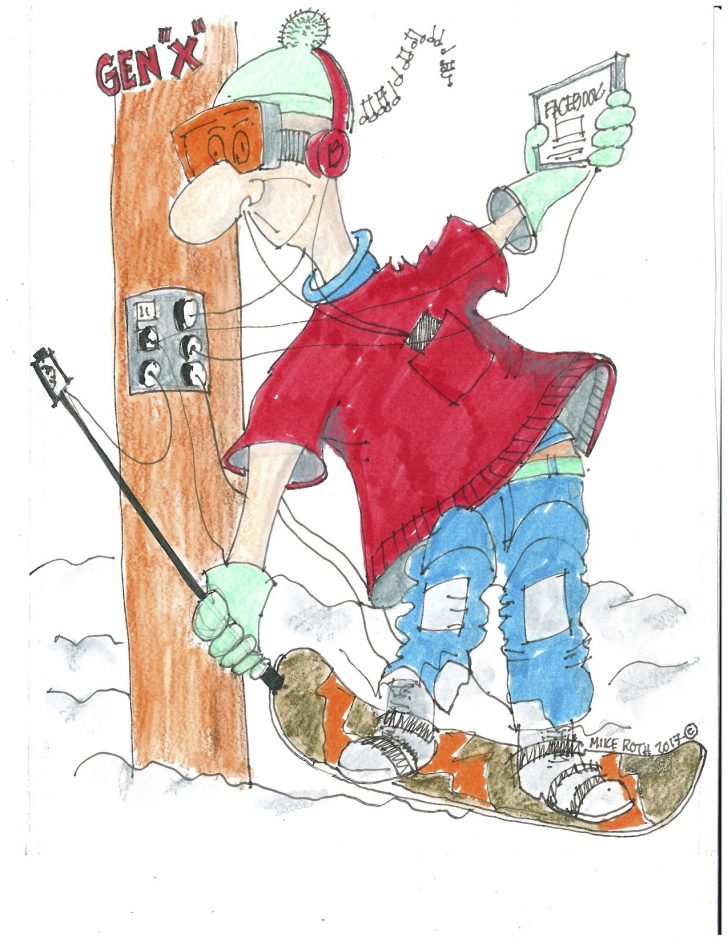
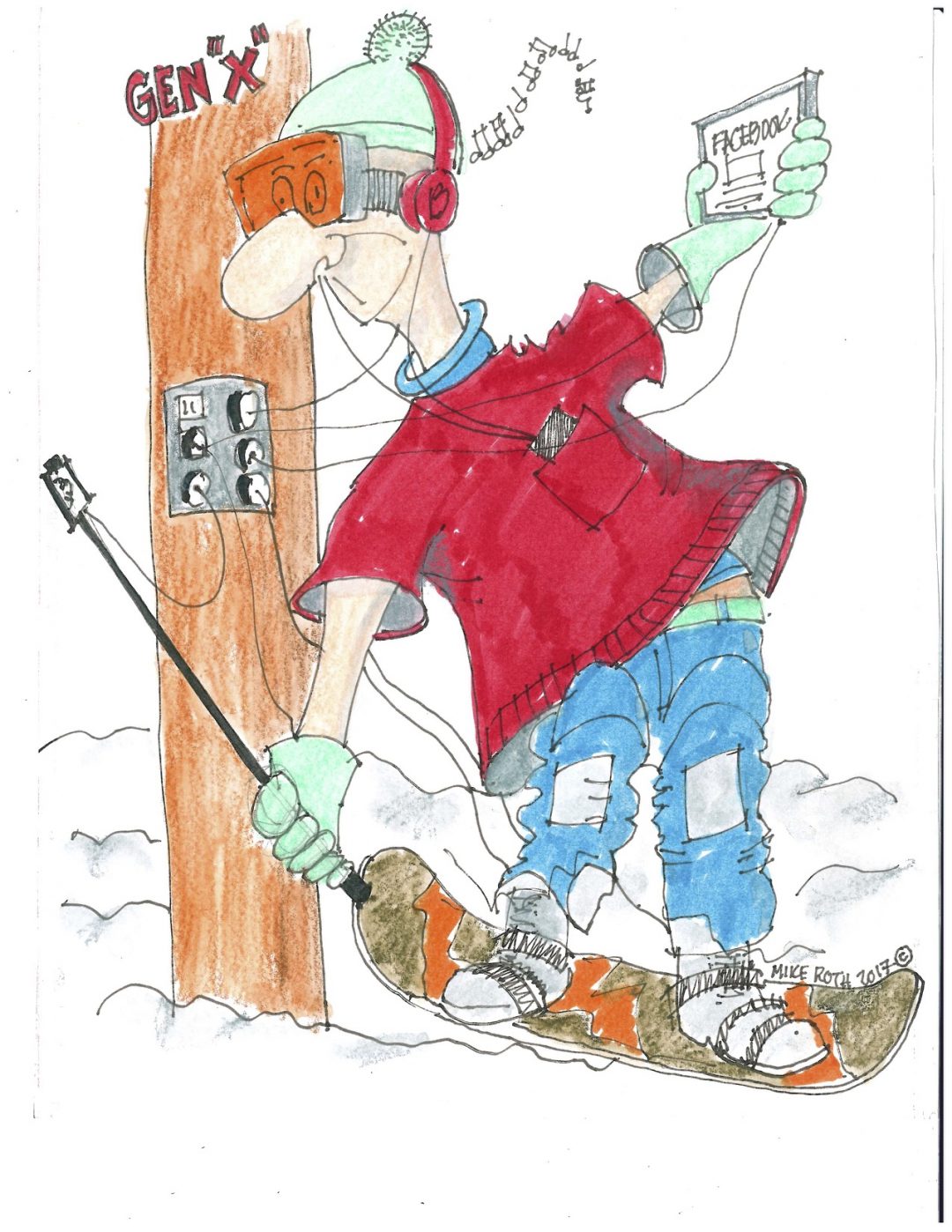
Cartoonist and ski journalist Mike Roth offers a fun view of the Millennial snow sport enthusiast to accompany our Incidents and Accidents series.

We have a new Mystery Glimpse photo to guess.  This should be easy.  Also we reveal the identities of the seven Hall of Fame ski jumpers who appeared last week.

If you’re stuck for a gift, check our Very Last Minute gift suggestions. Do not delay!

Finally, Herb Stevens, the Skiing Weatherman, offers his view of what will be happening next week.  By the way, his forecast for last week was spot on.  This week coming up? All is calm, except for the West.

Next week, SeniorsSkiing.com will be taking a break. Have a wonderful holiday season, be safe, and we’ll see you next year.

And remember, there are more of us every day, and we aren’t going away.


Incidents & Accidents: 5

Here’s A Less Serious Report, But Is There Some Truth In This Cartoon?

We’re lightening up this week for our ongoing series of Incidents & Accidents. Instead of recounting a collision, here’s a cartoon from veteran journalist Mike Roth, depicting the Gen X-er on the snow.  What think? Truth?

Skiing Weatherman: All Is Calm

Except The West Coast.

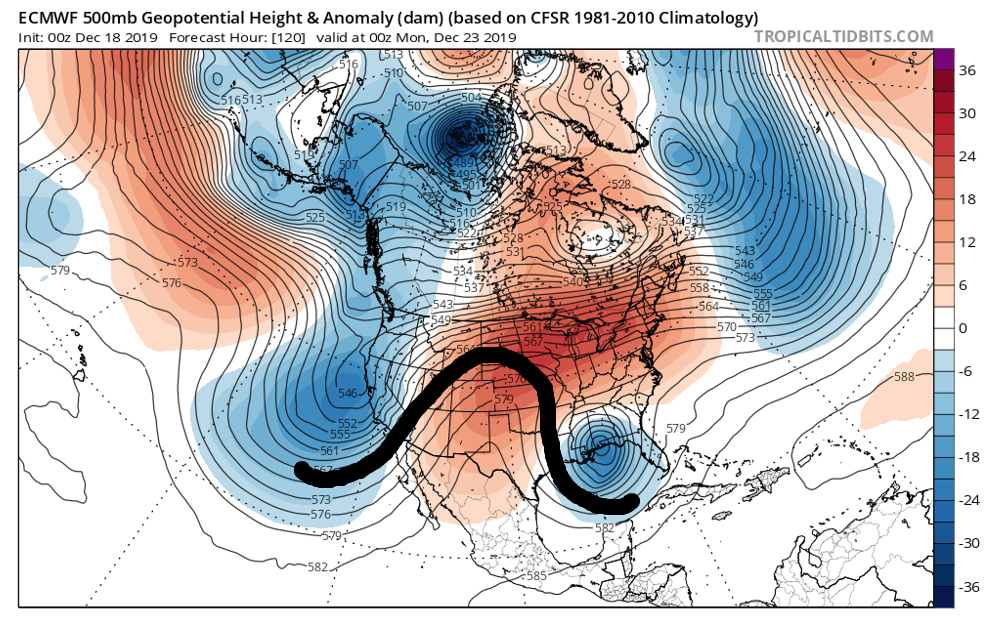
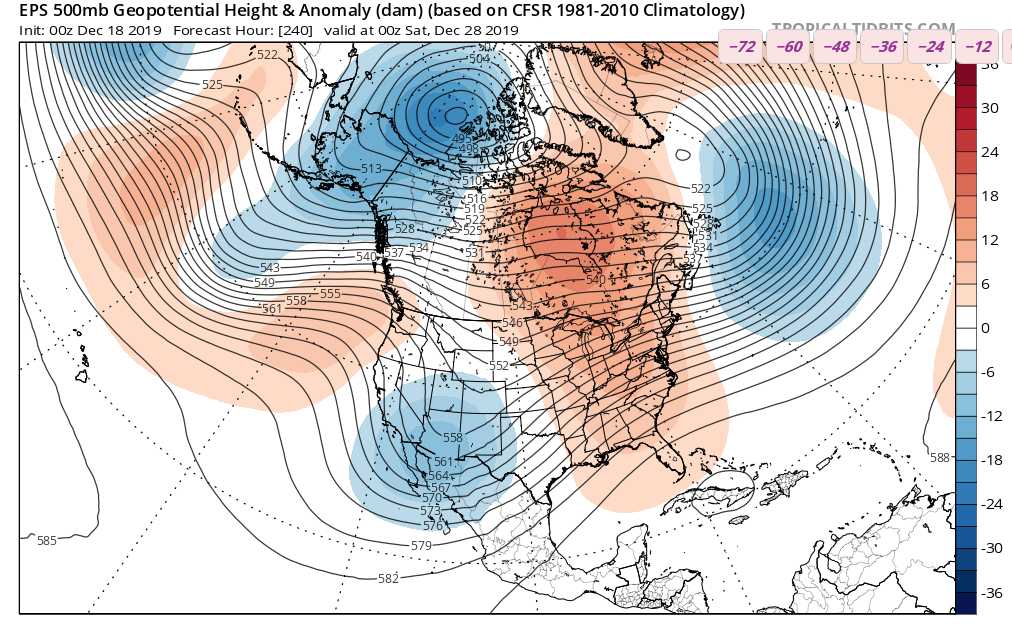
Last week I discussed the role of upper level troughs as they relate to our insatiable appetite for fresh snow, both natural and machine made. Most of the time, troughs are indeed our friends but that doesn’t necessarily mean that upper level ridges are the enemy. The influence of ridge is just like the old cliche about real estate: location, location, location. Troughs often look like the letter “U” on a map while ridges tend to take on the shape of the Greek letter Omega. I have used a jet stream forecast map for Sunday the 22nd to illustrate this common configuration.

Now, in order to take on the Omega shape, you can see that the two ends of the line are wrapped around adjacent troughs, and that is where the location piece comes into the equation. You see, ridges are areas where overall, the air is sinking. Sinking air limits cloud cover and precip, and it also warms up as it sinks, consistent with the laws of physics. So, if you find your favorite resort under a ridge, your odds of seeing snow are greatly reduced. But, if that same ridge is off to the west of the resort by several hundred miles or more, the clockwise flow around the ridge will work together with the counterclockwise flow around a downstream trough to the east to tap cold air from the north. At that point, the ridge becomes your ally. As I have expressed in earlier posts, I am confident that a western ridge/eastern trough couplet is going to be the favored setup as we head through this winter, but in the shorter run, the ridge is going to spread out and cover much of the eastern two thirds of the country as we head through the holidays. Overall, Pacific systems will bring seasonable cold and some snow to the west while it is milder than normal east of the Mississippi.

Here Are The Regional Details.      

Northwest U.S./Western Canada: A very juicy storm will be in progress into this weekend. Whistler finally gets tagged. Cascades get healthier trail counts. Pattern more benign next week.

Cascades and Sierra:  The same storm will nail the Cascades. Snow levels will be rising through the storm, so only count on “all snow” above 6K feet. Amounts will be 2-3 feet WA and OR. CA Sierra pick up moderate snow Sunday. The pattern will turn quieter through most of Christmas Week.  

Rockies: The coastal storm will slow coming inland due to the spreading of the upper ridge further east, so any snow that makes it out of the Cascades will be spotty and light late this weekend/early next week. No big storms next week by the looks.

Midwest: Late week lake effect will help set up this weekend. Milder temps develop into next week, which limits snowmaking windows. The good news is, it looks rather dry, under the ridge, Christmas week.   Colder air returns after the 29th or so.

Northeast: Late week shot of Arctic air will allow snowmakers to get busy 24/7 in most spots. It will turn milder next week and snowmaking will be feasible in the mountains. The lower elevation areas should have some windows, too. With the ridge axis fairly far to the west next week, some colder air will filter into the region at times. No significant snow events appear to be in the cards through the end of next week.  

Overall, after a major “Cascade Cement” storm in the NW at the outset, the holiday period looks rather dull from a forecaster’s perspective. Some lighter snow will fall in the west…the milder temps will keep it comfortable on the slopes for skiers and riders in the Midwest and East.       

Ray Conrad Cover

Very Last Minute Gifts

60s Ski Songs, Powder Addicts, New England Ski Museum Shop.

Stuck for a present for a senior snow sports partner, friend, spouse, colleague? Here are three sources that can fill in the blank.

Download 60s Ski Songs.

Ray Conrad wrote and performed skiing songs in the early 60s in a folk music style that was gaining popularity in cafes, clubs and college campuses. His songs are satirical, silly, clever, and funny, spoofing the people who ski or want to look like skiers.  SeniorsSkiing.com re-produced and is distributing the download-only CD on CD Baby.  Click here for immediate download.

Powder Addicts

Powder Addicts has a complete line of ski and snowboarding t-shirts, skiing gifts, snowboarding gifts and other snow sports accessories. They also have an exclusive range of ski jewelry and snowboarding jewelry.  Check out the collection here.

New England Ski Museum Shop

Many ski museums have excellent gift shops.  We are highlighting the NESM’s gift shop because SeniorsSkiing.com’ correspondent Harriet Wallis visited and was wow-ed by the interesting, high-quality merchandise.  Hurry, though; start by clicking here.


This Week In SeniorsSkiing.com (Dec. 13)

Nordic Volunteers, Poutine For Calories, Exoskeleton Helps Legs, More Incidents & Accidents, Southern Skiing, Mystery Team, Weather Report.

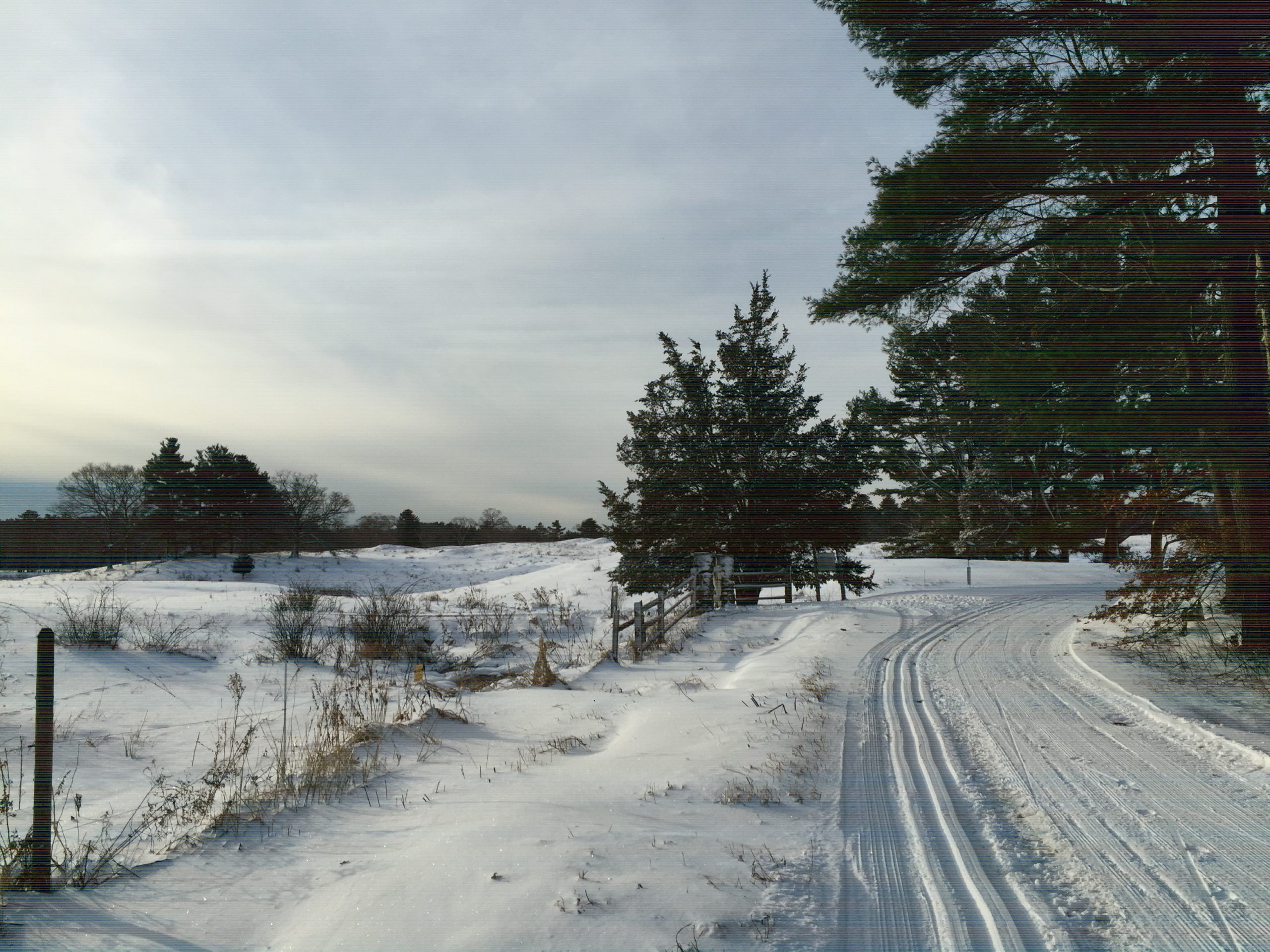
Early morning finds a groomed trail ready to go. Credit: MDM

This co-publisher of SeniorsSkiing.com loves to cross-country ski. Since we live directly across the street from a 900-acre tract of conservation land, owned and managed by the Trustees of Reservations, we head over the stone wall whenever there is decent coverage.

In former days, we bushwhacked our own trail through the woods until we connected with the network of tracks made by the early birds. (There are always earlier early bird tracks.) And we followed the early bird trail loops until we decided to bushwhack again back to home base.  Fun, but kind of tough for a seventy-five year old, especially at the beginning of the season and deep-ish snow.

NSNA Crew grooms all night for a wonderful trail in the morning. Credit: NSNA

Enter the North Shore Nordic Association. This is an all-volunteer, non-profit, community-based group which forms alliances with large landowners, most of whom are also non-profit organizations or municipalities, to maintain and groom existing hiking and biking trails for cross-country skiing, snowshoeing, and snow skating. For the past four years, NSNA has bought and maintained a collection of equipment through donations from local people and businesses.  Every time it snows, the groomers are out there, usually right after the snow stops falling, often in the middle of the night or early morning.

Your retro-attired co-publisher at the Farms. Credit: AAM

The grooming machines create two ski tracks, one a broad corduroy for skating and two pairs of grooved classic tracks on each side. There are many benefits to having these ready and waiting for a senior skier. It is obviously easier to ski, for both beginners and, well, everyone. The packed snow also lasts longer. The machines also loosen up hard pack to extend whatever snow is down.

The NSNA uses social media to alert folks about conditions every day. The group also maintains trail maps on a Smartphone app.  When we encountered a grooming crew on the trail one morning, the young man took our picture and immediately posted it on the group’s Facebook page.

All this is free for the skier. Enthusiasts and occasional visitors can donate to the NSNA to keep the machines turning. The group is well-run, organized, and community-focused. In the long term, they hope to create a racing league, offer lessons, and run a rental program.

The Point: If you don’t live near a cross-country ski area or resort where trails are groomed and maintained and rental equipment is available, consider forming a group like NSNA. All it takes are people who love to cross-country ski or snowshoe, some willing land organizations or town governments, and some energy to get all this organized.

Trail Masters Update

We have mailed out over 150 Trail Master patches to readers who responded to our Spring Survey as having skied more days than their age.  Most were sent to US and Canadian readers, but there were also numerous addresses in Sweden, Finland, England, and Australia.  Please note because some addresses were not completely filled out in our survey form, we were not able to send patches to all qualified readers.

This Week

Poutine, a Frency Canadian comfort food dish. Credit:Yvette Cardoao

SeniorsSkiing.com Northwest correspondent Yvette Cardozo  reports on a Canadian cuisine specialty at Silver Star Resort in BC. Ever have Poutaine? It’s a hearty meal designed to replace calories lost to a heavy day of skiing.  There’s more.  Ever had a Caesar? Not a salad.  Find out here.

We have a contributor review of the skiing assist aid Againer Exoskeleton.  This device can actually extend your skiing career by supporting your legs and back. Consider our reviewer’s experience here.

What’s the highest mountain on the East coast of the US? If you said Mt. Washington, you’d be wrong.  Mt. Washington tops off at 6,288 feet, but Mt. Mitchell reaches up 6,684. Where is Mt. Mitchell? North Carolina. Surprise.  Co-publisher Jon Weisberg reveals more secrets about Southern geography and skiing in his book review of Southern Snow: The New Guide To Winter Sports From Maryland To The Southern Appalachians. Read more here.

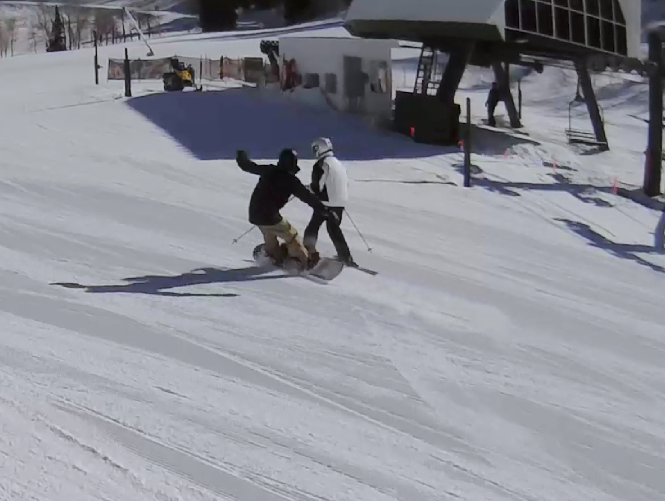
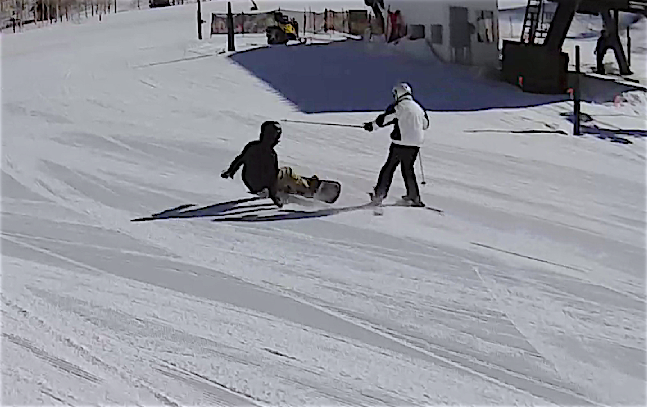
Correspondent Jan Brunvand reports an Incident & Accident that he actually filmed taking place.  His on-scene photos and report are astonishing.  As readers know, we are collecting a portfolio of collisions to see if there are comment threads.  With that information, we hope to influence ski industry practices and policies on managing unruly and dangerous skiers.

Correspondent Jan Brunvand captured an incident in action.

Last week’s Mystery Glimpse photo was Rip McManus in action. We provide a capsule profile of Rip and his impactful but all too short career in the skiing world.  This week’s Mystery presents a jumping team from long ago from Alan Engen’s collection of historic ski photos.

Finally,  Herb Stevens, the Skiing Weatherman, gives us a round up of regional forecasts as well as a tutorial on what a “trough” is. Here’s his story.

Thanks for reading SeniorsSkiing.com.  Tell your friends and remember, there are more of us every day and we aren’t going away.

Feb 1941. Ski Jumper. Can you name them? Credit: Alan Engen Collection


Skiing Weatherman: How A Trough Works

And Regional Forecasts From West To East.

Had my first day on snow last Thursday at Jiminy Peak in the Berkshires. It was a wonderful day on nearly perfect snow: chalky packed powder with some windblown pillows of powder along the edge of several trails.

Today, I thought I would tell you about the jet stream feature to look for when you are hungry for snow or cold weather.

For the most part, troughs are your friends. On a map they look like the letter “U” and act as receptacles for cold air delivered from Canada. They also provide the upper level support for surface low pressure centers to form and deliver fresh snow. There are two “branches” of the jet stream that flow across the continent in the winter, northern and southern. Northern troughs tap into the cold from Canada, and southern troughs enhance the injection of moisture into surface lows. When the two branches combine, or “phase”, we often see our strongest storms. In the West, single branch systems can be pre-loaded with moisture as they roll ashore from the Pacific, so phasing isn’t as necessary to generate a major snowfall. The next opportunity for a significant snowfall in the East will come next Tuesday, when some phasing looks possible. This jet stream map for Tuesday night illustrates the attempt at phasing:


Notice that the southern branch feature is lagging behind the northern one. If it catches up to the longitude of the northern branch system, the storm will be more intense.

Here is the surface map that goes along with that trough at that time:

The High to the north, in Quebec, will feed the system with cold air and should suppress the track to the south far enough to keep most of the NE in moderate snow.

Next week I will discuss the role of upper level ridges in winter weather.

Here is the outlook for the next 1-2 weeks, by region.

Northwest U.S./Western Canada: Light to moderate snow has fallen in BC in the past week with heavier snow in Alberta helping to boost skiable acreage. With the eastern Pacific ridge temporarily replaced by a trough for much of the next couple of weeks, new snow should be significant.

Cascades and Sierra:  A much needed juicy storm hit the Sierra last weekend and open terrain percentages took a major jump. Late this week, the Cascades are cashing in, and totals will be two-four feet when the storm winds down over the weekend. Tahoe will pick up five-10 inches. Cascades will also be hit by a moderate storm early next week. Additional troughs will arrive every few days up until the holiday.

Rockies: The northern branch storm that nails the NW will bring heavy snow to ID, MT, WY, northern UT and northern CO over the weekend. One-two foot totals look likely. Like the coastal ranges, the northern half of the Rockies can expect additional helpful systems in the next 10-14 days. The southern Rockies will see lighter snow this weekend, but will have to wait for a southern system for help…later next week at the earliest.

Midwest: Lake effect snow has helped this week, especially in northern Lower Michigan, but it looks as though the air that flows over the Lakes in the next week will not be as cold, so amounts will be modest. An Alberta Clipper or two next week could help the northern Lakes, in addition to pretty solid snowmaking temps.

Northeast: Early week rain was followed by outstanding snowmaking temps this week but another wet storm will move through Saturday, due to a track that hugs the coast too closely…some backside snow will occur across northern New York and New England on Sunday. Prospects are better for a meaningful snow event on Tuesday/Wednesday of next week. Cold air will not be abundant, so there will be an elevation component to the storm. The snow should provide a shot in the arm to resorts roughly north of I-80. Longer term will be a high wire act leading up to Christmas, as the progressive pattern will make it difficult for cold air to get locked in enough to ensure snow vs. rain. There will be enough cold intervals for helpful snowmaking, however.

Overall, the weather in the Western half of the country looks good while the pattern will be rather chaotic with an enhanced degree of variability over the Eastern half for the next 10-14 days.  


Incidents And Accidents: 4

Things Get Rocky On Bullwinkle

[Editor note: SeniorsSkiing.com is collecting stories from readers about incidents and accidents that they have experienced. We intend to review these for patterns and themes and use that data to influence the safety policies of resorts and other stakeholders. The following is the fourth article submitted by a reader in our new feature “Incidents and Accidents”. If you have a story to tell, please follow the format used below and send to INFO@seniorsskiing.com]

Jan Brunvand, Snowbasin, UT

What Happened

My wife Judy and I, both octogenarians, were skiing a blue run called Bullwinkle at Snowbasin, UT, on a nice clear midweek day with smooth groomed snow and few other skiers or riders. I had my helmet cam turned on, and I skied down first in order to get a video of Judy’s run. Looking back up the slope I noticed a skier and two snowboarders entering the run at the top, but Judy was on skier’s right, and they were on the left. What could possibly go wrong?

Skier veers toward Judy. Credit: Jan Brunvand

When Judy was about three quarters of the way down, suddenly the skier veered towards her and barely missed cutting her off. Then, just as she reached the run-out at the bottom, one of the boarder dudes cut straight across the hill towards her and ran over the back of her skis. The kid toppled, but Judy managed to stay upright by waving her poles to offset the collision.

Boarder crosses Judy’s skis. Credit: Jan Brunvand

The boarder, probably noting Judy’s white hair sticking out from under her helmet, apologized profusely. Judy checked her skis, and they had remained solidly attached. We proceeded to the base, keeping careful eyes on the others around us.

Boards goes down, Judy is waving her pole for balance, not repelling boarders. Credit Jan Brunvand

Back home I checked the video and saw again what close calls these had been. I took screen shots of three frames showing the two near misses plus the aftermath. In the last one it looks like Judy is poking the boarder dude with her ski pole—fighting him off. Not true, but it all happened too fast for us to realize how it might have appeared to a bystander.

Role of the Ski Patrol

No patrollers in sight

Lessons Learned

Danger can come from anywhere, no matter how much you try to stay in your lane and watch out for others on the hill. Not all skiers and riders are out of control or aggressive, but neither are they necessarily aware of their surroundings, so YOU have to be the aware one.

Advice

As in photo 3 above: Don’t Mess With Grandma!

This Week In SeniorsSkiing.com (Dec. 6)

There Is A LOT Of Snow Out There. Have You Made Your First Run?

Snow Across North America this week. Time to get out there.

It has started. It’s official. It’s on. Go. 2019-2020 is happening. Now.

We are watching the post-Thanksgiving double-whammy snow storm fall here in New England and contemplating getting out on our xc skis this morning. We know our local ski shop has been jammed this whole past week with people collecting new or newly-tuned skis. There’s a lot of snow up country, and resorts are opening or have been open.

Open for skiing since Nov. 3 this year, the Killington snow making crew pulled off a minor miracle when the resort got ready to hold the Women’s World Cup over the Thanksgiving weekend. Mikaela Shiffrin handily won the slalom and Italy’s Federica Brignone received first place in giant slalom in front of 39,000 spectators, a record breaking crowd. Enthusiasm, much?

This week, we hear from SeniorsSkiing.com correspondent Marc Liebman on his routine for making the first runs of the season. Marc is an analytical guy, and his account of the initial moves are interesting in their focus on his tracks as an assessment of his early-season technique.

PSIA Instructor Pat McCloskey also offers his advice on making those first turns on scraped off, icy conditions.

Some of us are about to make our first turns of this new season very soon, perhaps this weekend. Many probably already have been out and about. What was special about your first outing? What was new? Different? Better?

Seriously folks, the very first turns. What do you do? Do you have a mental picture of yourself or your skis carving through a turn? Do you talk to yourself, give yourself instructions or reminders? (We do. We think, “Athletic Stance” which has meaning for us.) Are you self-conscious? Uncomfortable? Cautious?

We’re curious how you approach the first of thousands and thousands of turns extending far into the spring. Let us know. Add a comment to the Leave A Reply box below.

This Week

Fun at the Boston Ski and Snowboard Expo. Credit: Don Burch

Correspondent Don Burch has produced a short video on the recent Boston Ski and Snowboard Expo. Check out the enthusiastic faces and the energy of the crowd in what might be dubbed the official kick-off of the season around New England. FYI, this is the last year the Expo will be held at Boston’s World Trade Center and produced by Bernie Weichsel’s BEWI Productions. Next year, the show will be at the Hynes Auditorium and SIA will manage the whole show. Thanks to Bernie for decades of hosting what has become a national tradition.

Parking Lots Closed!

Salt Lake City correspondent Harriet Wallis reports on last season’s monster traffic jams in Little Cottonwood Canyon, a two-lane road leading to four prominent resorts. This season, the problem has been recognized and solutions are being implemented. The jams seem to correlate with the flood of multi-resort passes that everyone seems to be using. Cause and effect?

Our Mystery Glimpse this week is a racer who became an emerging ski industry notable. We reveal the location of the “first T-bar” in a New England state.

Finally, Herb Stevens, the Skiing Weatherman, brings us regional forecasts, based on his analysis of this week’s weather picture.

Occasionally, we publish a “Snow In Literature” piece to remind our readers there is more to winter than snow sports. This week, we offer Robert Frost’s classic “Stopping By Woods On A Snow Evening”. So, why does the person in the sleigh have miles to go before he sleeps?

Thanks for reading SeniorsSkiing.com, the only online magazine for senior snow sports enthusiasts. Please tell your friends. Remember, there are more of us every day, and we aren’t going away.

Appleton Farm, Ipswich, MA, trails are groomed by North Shore Nordic, a volunteer organization. Credit: MDM