Hot Finds For Seniors At The Winter Outdoor Show

The Innovations Are Amazing. Here Are Three Top Picks For Seniors.

Vibram’s Arctic Grip soles won’t slip on ice no matter how hard you try.
Credit: Harriet Wallis

Vibram – the company known for its hiking boot soles – has a new sole material it calls “Arctic Grip.” You can walk on solid ice and not slip. Really! To prove it, Vibram demonstrated on blocks of ice at its show booth.

Arctic Grip is used by six shoe companies on dress shoes to work boots: CAT, Hush Puppies, Saucony, Merrell, Sperry and Wolverine.

Stay toasty with heated ComfortWear in many styles.
Credit: Harriet Wallis

ComfortWear hooked up with Heat Factory which is known for its hand warmer packets. Now you can keep your entire body warm with clothing that’s designed with heat coils that are battery operated. Stay toasty as you ski, hunt or sit through a game in an outdoor stadium.

The most popular item is the heated neck scarf, said ComfortWear President Charles Hollcroft who owns the technology.

High tech Finbulvetr snowshoes have a funky egg-crate look, but they are made from a thermoplastic with flex underfoot and in the right places for steep uphill climbs or tough downhill descents. They’re designed and made in Norway where they really know their snow. They flex and move like no other snowshoe.

They were originally designed for the Norwegian military to carry heavy loads in the backcountry, said Christian Brunsvig, chief executive officer. Then the company created an additional model to suit a professional snowboarder who needed light weight but extreme performance for his uphill climbs. The long model is for long haul expeditions.

Norwegian snowshoes are lightweight and efficient.
Credit: Harriet Wallis


The Outdoor Retailers show is the largest product show of its kind in the US, and it’s staged in Salt Lake City. It brings product manufacturers from all over the world together with retail buyers who can see, touch and try new products and then place orders for the coming season. A few passes are issued to media writers and photographers – such as SeniorSkiing.com. That’s how I got in.

To read more from Harriet click here for her stories on SkiUtah.


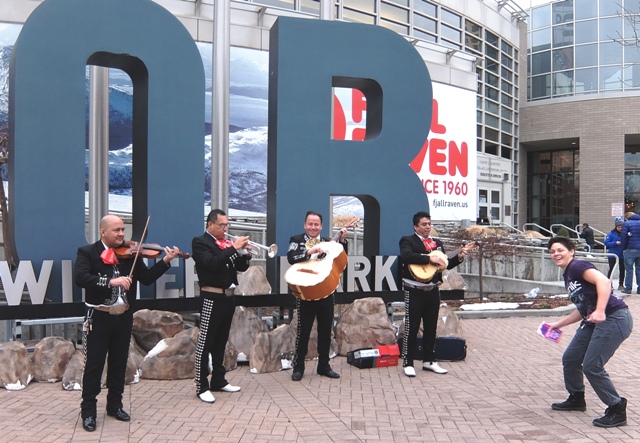
A mariachi band gets people dancing before the Outdoor Retailers show opens.
Credit: Harriet Wallis

Using Old Clothing And Accessories: Part 2

But Do You Really Want To Be Seen In A Neon Jumpsuit From The 80s?

[Editor Note: Correspondent Val E. rummages through his closet to assess what old stuff is still useful and what isn’t.  Here’s the second part of his report. The first part dealt with skis, boots and bindings.]

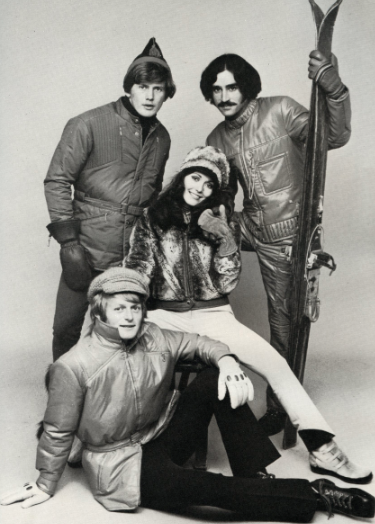
Still wearing 35 year old ski clothing? It looks it.

Clothing

Base layers— cotton is NOT for skiing, silk could be OK for hot conditions, synthetic (polypropylene, acrylic) and merino wool and combinations of them will work. Some items can be used for 20+ years with no problem.

Mid layers—the same situation as with base layers, major brands make mid-layer jackets combining down with wool and synthetic materials. They are light and practical, if you do not use them as outer layers.

Outer layers—you love your neon overall from 1987? If it still works well and looks well, distinctive, use it! Check the zippers for leaks, especially if you ski where you may experience rain or wet snow. Sometimes people think their membrane jacket or pants are leaking. It could be delamination of the waterproof breathable layer. Spray DWR (Durable Water Repellant) coating on your jacket, and water will bead off.

Goggles and Sunglasses

The foam layer around your face and on the top of the goggles may start crumbling, and, in case of wet snow or rain, your vents will leak. Light sensitive lenses may lose their properties (will not be as dark as before). If you like your old school sunglasses, and they protect you well from all sides—use them. Beware—in case of collision, mineral glass may shatter into small sharp pieces.

Bags

You will be surprised to find new, more ergonomic and lighter bags for your ski boots, skis and other goodies. New ski boot bags have room for a helmet, goggles, and other critical things. Plastic ski bags will protect your skis, bindings, and poles better than padded ones. Some companies started making light ski bags with wheels which you can roll up when not in use. Bags on wheels will help you to save your back while traveling so you have more energy for skiing.

Old boots might be worth keeping.

Apres Ski Boots

Old school rubber-leather wool lined boots made by Sorel and Kamik are hard to beat, if staying warm for the entire cold season is your priority. Moon boots are cute… Boots with membrane fabric and soft and grippy soles are light and very comfortable for longer walks, they often look elegant, and they keep you comfortable both in warm and cold conditions.

Heaters

Chemical heaters have shelf life two-four years, but they may work outside of this time frame. Don’t throw them away, try them first. Electric heaters—if you ski less than 30 days a season, then your rechargeable batteries should be good for 10 years or more.

Your thoughts on old equipment?

Yes, neon jumpsuits were the rage…a zillion years ago. But you can get a new one by clicking here. Thanks to Shinesty for the pic.
Credit: Shinesty

Use Your Old Ski Equipment? Maybe: Part 1

Frugality Or Familiarity Might Be Reasons To Hang On. Should You? It Depends.

Editor Note: This is the first of a two-part article where ski industry veteran Val E. discusses whether using old equipment is safe and/or worth it.  We’ve seen people on the lift line with really old equipment; ours not to reason why. But you should know what the risks are.

Skis

Well, maybe not 360s.

Imagine you have 20+ year old skis, you used them 7-10 days a year, so the total work days would be 200-300 days. Can you still use them? If they have no major delamination, cracked edges, broken sidewalls, then yes. Do you want to use them? Maybe not. Test a few pairs of skis made in recent 10 years. You may notice that they are easier to maneuver, easier to carry, and have different graphics. If you still want to ski on your old skis, then sharpen the edges, clean and wax the base, make sure you bindings are safe (see below).

Bindings

Bindings are for safety and comfort. Manufacturers do not allow ski service people to service bindings older than 10 years, and they send a list of “serviceable” models every fall. Bindings stored 360 days a year in a dusty room or wet garage may not release when you need it or can false release. Dust on lubrication, corrosion, and other factors may change the planned schedule. Major problems could be cracks in plastic parts that are hard to identify. A binding can still be OK for many, many years. Manufacturers just don’t want to be responsible for risk anymore, and they also want us to buy new and better bindings. You can install new binding on your old skis (if you love them unconditionally); a technician will plug the old holes.

Boots

Famous Lange boot ad from the early 70s

Most people don’t like to change ski boots often, though there is always a limit. We are talking about boots that are 15-20+ year old. Shell: if you see cracks in plastic, your soles are worn out and won’t have good contact with the binding. If buckles are broken and non repairable, go to a ski shop. Liner: you should feel comfortable without two pairs of thick home made wool socks, your heel shouldn’t ever move up from the insole. If your shell is in a good shape, but you are not happy about the liner (too loose or destroyed) keep in mind that you can purchase a pair of liners. Canadian company Intuition Liners makes different types.

Helmets

Almost all ski helmets use foam (Polystyrene or Polypropylene) in their construction to crush, thus absorbing energy when contacting something hard. Researchers say this foam doesn’t change much for 20-30 years under normal conditions. But hard hits, long exposure to UV and heat sources may change the properties of these materials. Manufacturers recommend replacing a helmet after a significant collision. Once foam is compressed at some spot, it would not protect you anymore.

Helmets have come a long way since Jean Vuarent wore this variant from the cycling world.

Milestones of Modern XC Skiing In the US

Remember Skiing On Wooden Skis With A Pine Tar Base And Lathered In Klistervox? Wasn’t That Long Ago.

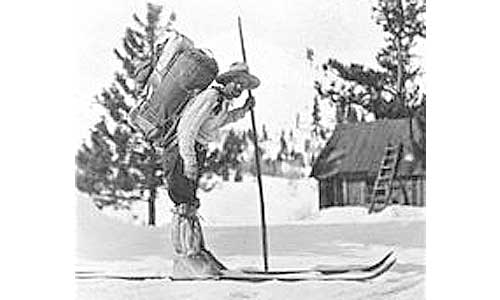
Norway-born Snowshoe Thompson learned to ski in Telemark, his home town.

Editor Note: XCSkiResort Publisher Roger Lohr has catalogued the main events that propelled XC skiing from a peculiar sport with a small following in the US to a major recreational and racing enterprise with a huge following.  Thanks, Roger, for tracing the trail.

Since wooden skis were found in a peat bog in Sweden dating to 2,000 BC, there have been many milestones that brought xc skiing to where it is today. In the US, the forefathers of xc skiing include legends like Snowshoe Thompson, who delivered the mail in the Sierra Mountains of California and Jack Rabbit Johannsen, who xc skied in northern New York.

The editors of XCSkiResorts.com researched the milestones of modern XC skiing in order of significance:

1. Development of synthetic xc skis in 1974.
2. Development of the waxless based ski in the early 1970’s, most notably the Trak ski with synthetic fish scales on the ski base to eliminate the need for ski waxes. The waxless base gave the recreational skier grip on uphill travel while also allowing gliding downhill.
3. Integrated xc ski binding systems, which provided substantial improvements in simplicity of boot/binding interface and control in the mid 70’s.

4. Bill Koch won the Olympic silver medal in 1976  at Innsbruck and at the World Cup in 1982, the first American to ever win at that level. The Nordic Track exerciser used the Koch image as a fitness icon in advertisements for years. In 2010, there were US Olympic medalists in Nordic Combined and in 2012 there was a World Cup winner in women’s sprint.
5. The onset of the commercial xc ski area concept began in 1968-69 at Trapp Family Lodge. This brought designed, groomed, and maintained trails making xc skiing easier and safer for the average person.
6. The skating technique proliferated for a faster paced and higher performance form of recreation.
7. Revolution Skis developed by Fischer led the way to shorter skis, which were easier to use and consolidated ski sizing and simplified ski selection.
8. New, lighter clothing with synthetic and breathable materials made XC skiing more comfortable; company brands such as Mother Karen led the way in the late 1970’s.
9. Other technological advances such as the 2 Wax System that offered one wax for cold temperatures and one for warm temperatures simplified ski waxing.  BackCountry binding systems provided a beefed up boot/binding system that provided substantially more support and control for backcountry recreation.

New NIS bindings link boot with ski using a plate.

10. Will the Nordic Integrated System (NIS) developed in 2005 change the ski/binding interface? This system combines the ski and binding at manufacture rather than at the retail store.


midland

Electronic Gizmo Gift Ideas Keep You Connected

Wander, But Don’t Get Lost.


“Why am I here? What happened?”

I was lying on my back in a narrow 20-ft deep snow hole. My concerned buddy was looking at me from above. I took a few photos and started thinking how to get out of my snow jail without ropes or means of communication with ski patrol. The conditions were tricky, but I was lucky to quickly struggle up and out and still managed to enjoy the rest of the day on Whistler’s magic slopes.

But what if I were alone or out of sight of my ski group? Bad things do happen: medical emergencies, collisions, getting lost. Staying connected could be crucial. We know that some areas, especially in the mountains, have limited or no cell coverage. So, what are the options?

Radios

Two-way radios still rock in situations when you need to contact other people (who also have radios), including ski patrol, EMS, and police. The coverage depends on the power of a device and terrain conditions. In the mountains covered with trees, the coverage could be 1-3 miles.

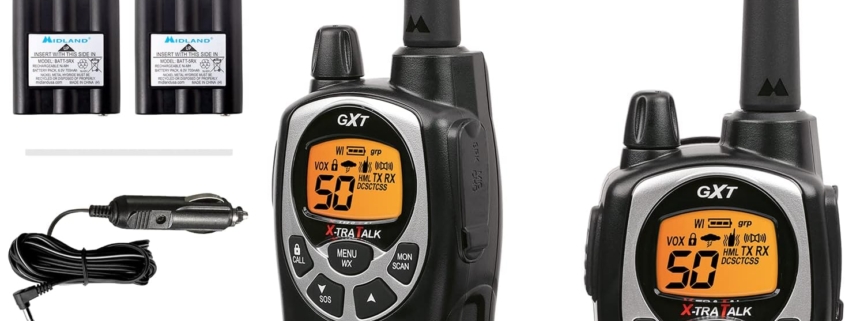
  • Midland GTX1000VP4Very affordable, reliable classic radio with NOAA Weather Alert and a range of up to 36 miles in a “line-of-sight”. About $59.00 from Amazon.
  • Backcountry Access BC Link Group Communication System Specially designed for harsh conditions of skiing, not very cheap, but simple, waterproof, and reliable. REI lists for $149.00
  • goTenna Text and Location Communicator.  A very compact and light device (0.11 ounce) lets your SmartPhone text and send your location info to other people even in the zones with no cell coverage. Technically the range is 2-5 miles, depending on conditions. Sold in pairs.  $149.95 from REI.

Satellite GPS 

GPS devices rely on satellite connections. Some devices provide only geolocation info, others let you send and/or receive text messages practically anywhere in the world on cell phones or computers.

  • SPOT Gen3 Satellite GPS Messenger.  Standalone device which can automatically send messages with your coordinates to your family or emergency responders.  Should work anywhere in USA. Requires subscription. Usually about $149 but might get a Holiday deal with subscription sign up.
  • DeLorme AG-008727-201 InReach Explorer Two Way Satellite Communicator with Navigation.  Send and receive text messages via Iridium satellites. Built in GPS and compass help to navigate around. In case of emergency, you can trigger an SOS message. Working together with your cell phone, DeLorme gives you an access to the maps. Requires subscription. About $390 online.
  •  Suunto Ambit3 Peak Sapphire GPS Multifunction Heart Rate Monitor.  GPS locator and a heart rate monitor in a shape of a wristwatch from a seasoned Finnish manufacturer. Your device will provide navigation info, heart rate, altitude, speed, and more data, which you can download and analyze later. Prices vary online from about $300 up.  Shop around.

No matter what device you use, keep it dry and as warm as possible. Put it in a pocket next to your skin, unless you pull it out very often. Regularly charge or replace the batteries, otherwise it is a useless piece of equipment.

A few companies are making gloves and even insulated gloves and mittens which are touch screen compatible. Now if you need to answer your phone, you don’t need to take off your gloves!  Click here for some examples.

More Gift Idea Discounts For SeniorsSkiing.com Subscribers Only

Check Out Serious Pro Discounts For Gear and Clothing From Experticity Our Online Partner.

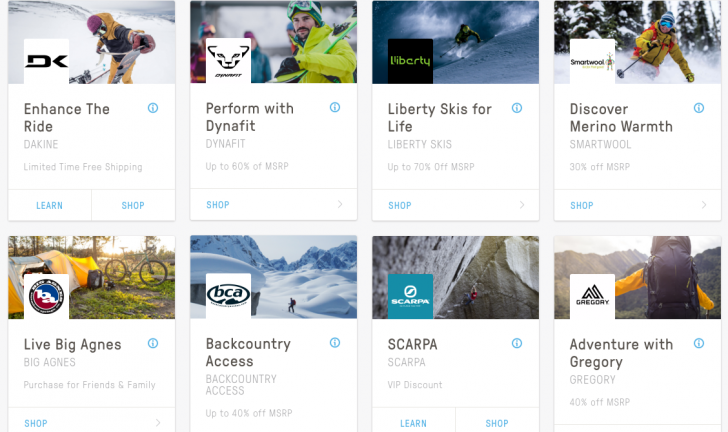
Just a sample of the brands on Ski Influencers available to SeniorsSkiing.com subscribers.

Here’s just a sample of the brands on Ski Influencers available to SeniorsSkiing.com subscribers.

SeniorsSkiing.com subscribers enjoy access to discounts on gear and clothing from the Experticity.com website which hosts links to many top brands.

To get these discounts, you have to be a subscriber.

If you are NOT yet a subscriber, just sign up using the pop-up or click here to subscribe. You will get a confirmation email, followed by a welcome email with instructions for accessing our Subscriber-Only content. Subscription is free, and you can also download our list of ski recommended for seniors compiled with another valued partner, realskiers.com.

If you ARE a subscriber and you missed sign up instructions from earlier emails, or you have not yet signed up with Experticity for discounts, please go to the top Navigation Bar>Community>Subscriber-Only Content. You will can download instructions for registering with Experticity.  It’s pretty simple; you just enter your email and access code.

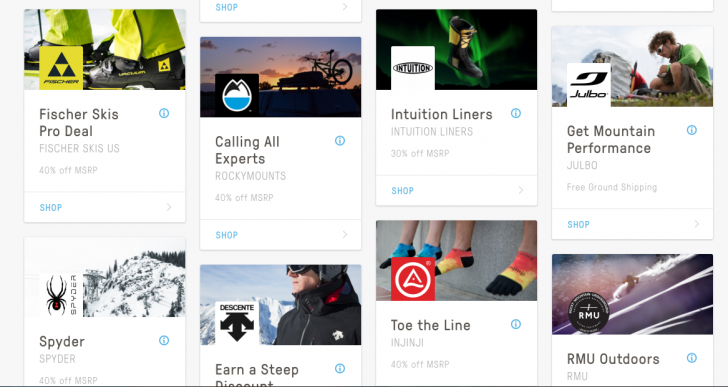
Here are some more brands in the Ski Influencer group.  This is just a sample; there are lots more.

screen-shot-2016-12-05-at-8-13-59-am


Retail Drop In: Three Shops Make Recommendations For Seniors

[Editor Note: It’s buying season, and we know from our reader surveys that many senior snow enthusiasts are looking for new gear and clothing.  We decided to do an experiment and drop into three different ski shops in three different parts of the country to ask, “What’s hot for seniors?”  That means, what stands out this year for seniors that’s comfortable, safe, and convenient?  Here’s what we found shop owners recommending. Thanks to our participating shops for talking with our correspondents Harriet Wallis, Yvette Cardozo, and Mike Maginn.]

FROM THE ROCKIES: Two Innovative Boots Rock The Scene With Features Seniors Want.

Correspondent Harriet Wallis visited Lift House Ski Shop near Big Cottonwood Canyon in Salt Lake City.
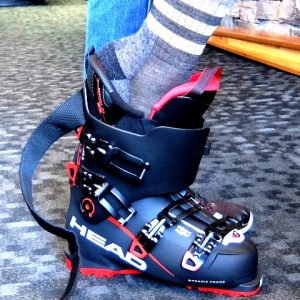
Head's Easy On boot. Credit: Harriet Wallis

Head’s Easy On Boot. Credit: Harriet Wallis

Look ma, no hands!

Head made a slight change in the inner cuff of the Head Vector 110. Skiers can easily slip into the boot—no contortions or yanking needed. You can even push your foot in while standing.

“I skied the boot and had good control even though it’s softer than a race boot,” said Luke Larsen, a ski racer and owner of SLC’s Lift House. Price: about $499.
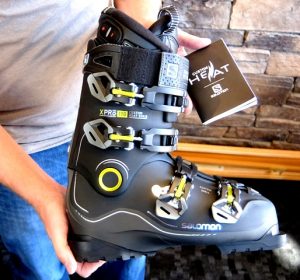


Salomon Boot With Heat. Credit: Harriet Wallis

Salomon Boot With Heat. Credit: Harriet Wallis

Toast your tootsies.

At last, integrated boot heaters make their debut in Salomon Custom Heat. Until now, boot heaters had to be retrofitted into boots, and the bulky battery packs clipped onto the shell.

“This makes the heated boot less expensive than buying boot and buying heaters separately,” said Larsen.

Price: Boot with integrated heat about $749.


FROM NEW ENGLAND: Bindings, Heaters And Snowshoe Bindings

Correspondent and co-publisher Mike Maginn spoke with shop owner Matt Thibeault and manager Chris Woods at Sports Stop Wenham on Boston’s North Shore.
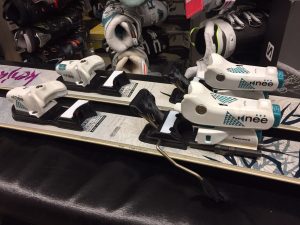
The Knee binding releases at the heel as well as the toe. Credit: Mike Maginn

The Knee binding releases at the heel as well as the toe. Credit: Mike Maginn

“Seniors Are Searching Out This Binding.”

Matt said the Knee binding is being sought by seniors. “It is designed to release laterally at the toe and the heel,” an important safety feature for many seniors. “The binding doesn’t sacrifice performance either,” said Matt, “but you do have to designate a right and left ski.” The Knee binding retails for about $379.
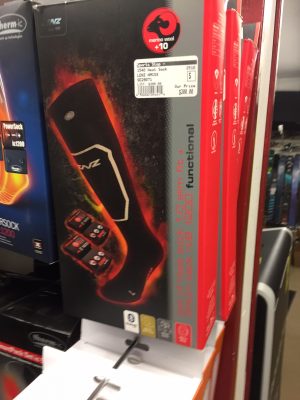


The world needs a Bluetooth-controlled heated ski sock. No? Credit: Mike Maginn

The world needs a Bluetooth-controlled heated ski sock. No? Credit: Mike Maginn

Heated Socks Are Getting Smart.

We know that heated socks are, mmm, cool, but when Matt and Chris showed us two different approaches to keeping toesies warm, we were impressed.  Lenz has a battery-powered, heated sock that, get this, is Bluetooth-controlled by a Smartphone app.  Turn the temp up or down by flicking the screen. Knee high, these socks are $300.

Therm-Ic Supermax Set has a different approach with an thin insert that slips into your boot sole and a connection to a battery pack with three heat settings.  It’s a real plus for seniors with circulation issues.  Retail price is about $220.
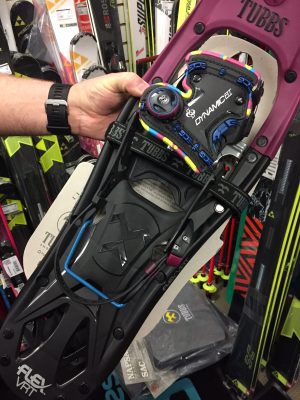


Boa closure system: Turn the dial, tighten up. Credit: Mike Maginn

Boa closure system: Turn the dial, tighten up. Credit: Mike Maginn

Finally, An Easy On-Off Snowshoe Binding.

We are so happy that snowshoe binding designers have come up with this one.  The new Boa system binding is much easier to use than the old tug-the-ties models.  You just put your foot in the toe and turn the Boa binding knob. To get out, you twist it the other way.  This example is on a Tubbs snowshoe model.  At last. Various models, starting at $189.


FROM THE PACIFIC NORTHWEST: Pin Tail Skis For Seniors And More Heat

Correspondent Yvette Cardozo talked to Kevin Dreher, ski shop manager at Gerk’s, a ski chain in western Washington.
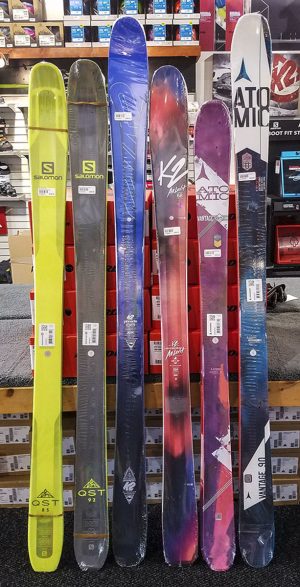
Examples of tapered tail skis. Wide shovels, slightly narrow waists but tails that don't flare out as much as classic shaped skis do. Credit: Yvette Cardozo

Examples of tapered tail skis. Wide shovels, slightly narrow waists but tails that don’t flare out as much as classic shaped skis do. Credit: Yvette Cardozo

Compromise Ski Shape

A lot of older skiers grew up skiing on skinny skis with their feet close together (picture Stein Erickson), Dreher said.

For some, learning to break that habit has been hard.  Still, modern tech in the form of shaped skis has made the sport so much easier.

So enter the compromise, the pin tail shape ski.

It still has a wide shovel and a more narrow waist but the tail tapers, so it’s not quite so wide, not so much an hourglass shape.

This, said Dreher, does two things: allows a skier to keep his/her feet closer together and also, if they are tired, to slightly skid the turn. But it also has all the easy skiing benefits of shaped ski tech.

It’s not brand new technology but seems to be getting more popular lately, perhaps as a segment of the ski population has gotten older.

Dreher mentioned two brands in his shop that have tapered tails, Salomon and Atomic. Salomon’s QST 85 and 92 run $400 and $500 respectively. The more expensive ski is aimed at a more aggressive skier.

Atomic’s Vantage also has two models, the 85 and 95, again $400 and $500 retail.

[Editor Note: These skis are on SeniorsSkiing.com /realskiers.com’s list of ski recommended for seniors.]
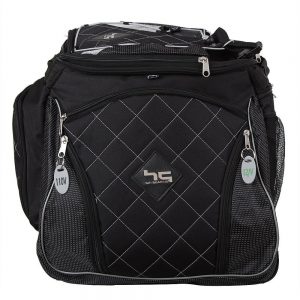
 

Better shop now for this. They sell out pretty quickly.

Better shop now for this. They sell out pretty quickly.

And More Heaters

Then, we get to my favorite: the heated (yes, heated) boot bag.

Don’t you just love driving hours to the hill and then trying to wrench stone cold boots on?  Now, there’s a boot bag with a cord that works on either AC (house) current or DC (your car).

One version of this bag is made by “Hot Gear,” but appears to be sold as Zip Fit through Amazon.com for about $200. Another version, Transpack, is sold for about $180 through Amazon and REI.

But honestly, you can also get those disposable foot warmer packs and do as the patrollers do, put them ON TOP of your toes instead of under them. Take it from one with chronically cold toes, that works.


schusser_2_skier_491

The Best Skis For Senior Skiers

 Soft Flex. Minimal Exertion. Skis for Six Different Scenarios.

Update Dec 27, 2016:  Subscribers can now download the list of recommended skis by going to the top navigation bar, click on Community, select Subscriber-Only-Content, choose the download and reconfirm your email address.  If you are not a subscriber, consider subscribing. It’s free, lots of interesting articles for seniors who love winter sports.

Ski manufacturers have never designed a ski for senior skiers. With about one million on the slopes, there’s enough of us to justify the investment.

But don’t hold your breath.

schusser_2_skier_491There is a breakthrough this season. For the first time, an in-depth evaluation of the best skis for older skiers is available. This is good news since choosing a new pair of skis, regardless of age and ability, has never been easy, and the abundance of brands and models is always confusing.

The evaluation is the result of collaboration between SeniorsSkiing.com and realskiers.com, the go-to site for in-depth ski equipment evaluations. The free list is available to all SeniorsSkiing.com subscribers. 

Of the many 2017 skis tested, 38 were identified as suitable for senior skiers. Most have relatively soft flex, allowing the sidecut to engage with minimal exertion. The result is ease of turning and forgiveness, which, regardless of physical condition, reduces stamina loss.

In other words, using these skis, it’s easier to ski more runs and have more fun!

Working with testers from around the country, realskiers.com has been reviewing ski equipment for many years. The results are gathered each spring and published in September, where abbreviated reviews are available free and in-depth information comes with a modest, paid annual subscription.

The recommended skis are grouped into six categories, each based on skiing preference, location, and snow conditions. They are:

Frontside (aka “Carving” skis)

  • These skis encompass the broadest range of skier abilities from entry-level to experienced and are for general use on groomed terrain. Wider models are usable off-trail.

 All-Mountain East

  • Skis that are extremely versatile and for general use on groomed terrain. They also work off-trail.
  • This category is suitable for those who have not skied in a few years.

 All-Mountain West

  • These are good for use in the West by high performance skiers and are good both for groomed trails and for powder.

 Big Mountain

  • Skis for use on big mountains with selections for strong and for less strong skiers.

 Powder

  • Specialty skis for use in deep powder.

Technical

  • These have high performance race ski characteristics and are suitable for carving turns on hard-snow.

While many consider skis to be unisex, some women prefer skis with weight and flex more suitable to their size and physique. The list identifies women’s skis, as well.

When selecting skis…

  1. Identify the most suitable category.
  2. Work with a quality ski shop.
  3. If possible, demo selections to compare before purchasing.

To Access the List

SeniorsSkiing.com subscribers were emailed a link to the list. The email was sent on October 14, 2016. Check your inbox or spam folder.

If you have not yet subscribed, click on this link and sign up using the subscription form in the right column or the pop-up which will appear on the page. After confirming your subscription, you will receive and email with a link to the list of senior ski recommendations. And, as a new subscriber, you will have access to discounts and deals on gear and clothing from top brands, and a lot of info relevant to the older snow sports enthusiast!


Back to the Future With Full Tilt Boots

Rear Entry Boots For Comfort And Convenience.

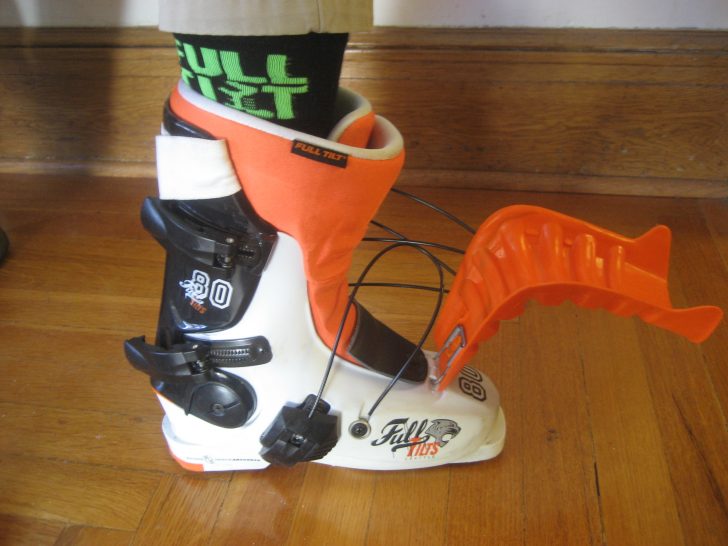
Full Tilt boots: comfort, warmth, convenience.

Full Tilt boots: comfort, warmth, convenience.

If you bring up the subject of ski boots among senior skiers, you’re bound to hear someone lament the demise of rear-entry boots or praise the old Raichle Full Flex boots (AKA Flexon Comps). Today when some oldsters need boot horns to get into their ski boots and boot jacks to remove them, these defunct models have a nostalgic appeal.

Rear-entry boots pivoted open from a center point to provide a wide space to insert the foot, while Flexon Comps had a tongue that hinged forward, with wires and clamps to secure them. Neither style won much appeal from ski racers, and instructors talked recreational skiers out of using them, presumably because they were not judged sufficiently stable.

True, Bill Johnson won his downhill gold medal in the 1984 Winter Olympics wearing Flexon Comps, but that wasn’t enough to save the pattern. By 1999 both models were gone.

Some devotees stockpiled the boots. Others turned to thrift shops and Ebay for boots or parts to keep them going. For most skiers these old comfort boots seemed to be gone forever.

Enter Full Tilt boots! Someone had the good sense to buy the original Raichle molds, improve the dynamics of the older models, and re-launch them in the mid 2000s. I never see Full Tilts reviewed or advertised in ski magazines, but you can find all their current boots online at www.FullTiltBoots.com and locate a dealer.

My wife and I own two pair of Full Tilts each and find them comfortable, warm and convenient. My older pair are the original black-and-yellow “Bumble Bee” style, and they even have “Flexon Comp” molded into the back side of the tongue. Nowadays they come in a variety of attractive colors and designs and are popular with freestyle skiers and other hotshots.

Once we met a group of young ladies from a college in Vermont training for freestyle at Brighton, Utah who all wore Full Tilts, so we posed with them for a picture—Grandpa and Grandma flanking the kids, all in colorful boots.

Full Tilt boots have heat moldable liners that wrap around and conform to the shape of your foot. A dealer will heat and fit the boots properly, or you can just warm them with a hair dryer and wear them around the house to get a good fit.

The boots come with a user manual detailing adjustments for liners, cables, buckles and tongues (all replaceable) for setting the forward lean or canting. We’ve never had to make such micro-adjustments; the only changes I’ve made are replacing the exterior heel pads secured by two screws about once a season.

Prices for Full Tilts are comparable to other modern ski boots, but—as with most ski gear—if you look online or check local shops off-season you can usually find some on sale.

I was on a gondola once at Sun Valley with a couple wearing Flexon Comps. I stuck out my Full Tilts for a comparison photo—comfort ski boots, old and new. You gotta love it, seniors!

Layering Redux: More Tips For Senior Skiers

What A Modern Senior Skier Needs To Know About Layers.

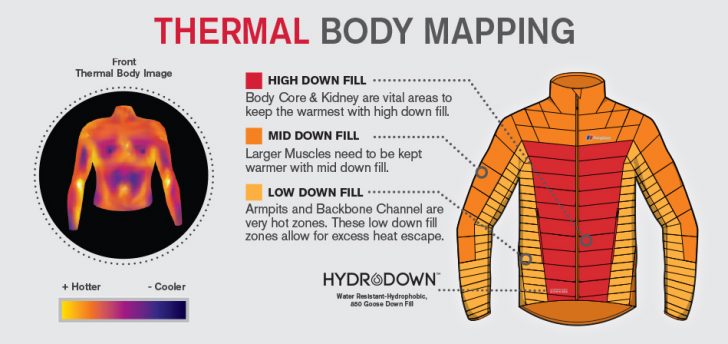
Body mapping clothing--allocating insulation in different zones--is an innovative idea being used by clothing manufacturers. Credit: Berghaus

Body mapping clothing–allocating insulation in different zones–is an innovative idea being used by clothing manufacturers.
Credit: Berghaus

[Editor Note: Last September, SeniorsSkiing.com published an article about layering prompted by an unfortunate experience in extremely cold weather when we over-layered and paid the price for it. This year, here’s a list of tips from Val E., our new correspondent who has deep background in the ski industry. He’s bringing us up to date on the new technology view of layering. Here’s his advice.]

Thoughts On Hats, Gloves, Socks:

  • A thin skull cap (1/32 inch thick) doesn’t add much warmth to a helmet (which has about an inch of foam). However, a balaclava protects your face, neck areas exposed to cold air.
  • Let’s be real, glove liners (very thin gloves made out of silk, wool or synthetic fabric) add very little warmth to a decent pair of gloves. They also separate your fingers if you’re wearing outer mittens. But liners do keep your hands drier by taking moisture off your skin, and, most importantly, they protect your skin from exposure when you take your outer gloves off.
  • Socks must be skiing-specific,(i.e., not hunting socks, etc.) made of a synthetic or wool/synthetic combination. And, a ski sock must be knee high, no exceptions. All real ski socks are, anyway. Thicker is not always better, because comfort, staying dry and avoiding blisters are critical. Avoid old school equally thick tube shape socks. And, only one sock per boot! Never use sock liner, no matter what the propaganda says. Feel cold? Get the boot fitting right, install heaters, take a break inside.

 Base Layer Thoughts:

  • Lightweight (thick as a nylon sock) –For warm weather or people who “run hot”
  • Midweight (thick as a cotton t-shirt) –For most conditions or most people
  • Heavyweight (thick as a warm flannel) –For cold conditions or people who “run cold”
  • Three-quarter base layer pants are relatively new and very practical, because a skier doesn’t need to have pants extend into the boots which can get bunched up and cause comfort and  circulation problems.
  •  Compression base layers (shirts, pants, socks) are becoming more popular. Manufacturers claim they support muscles, improve recovery time, and more. There are skiers who love them and skiers who don’t. Try a pair of compression socks to see what you think. [Editor Note: See our article on Injinji compression toe socks here.]
  • These days, some base and mid layers have extended sleeves with so called thumb loops to keep the sleeves in place. Majority of outer jackets on the market have sleeves cut longer than we are accustomed to. You can adjust them with Velcro closures. The idea is to keep the wrist area well covered for people of different height.

Outer Layer Thoughts:

If you ski most of the time in:

  • Wet conditions (high humidity, wet snow, rain, wind), then stick to pants and jackets made of the best waterproof/breathable fabric (Gore-tex, Dermizax).
  • Dry climate and not very cold conditions with moderate snowfall, you can select clothing made of any breathable membrane fabric.
  • Warm conditions with no or limited precipitation,  then try a soft shell jacket. These are highly breathable, windproof and water resistant (but not waterproof!).
  • Many companies use the idea of mapping insulation or “body-mapped clothing” in mid and outer layers, putting more insulation in the zones, where the skiers need them most. Mapping for women and men is different.

For an in-depth discussion of technical clothing of all kinds, check out this article from the European Outdoor Conservation Association.

And here’s a short video produced by Berghaus on its experiments with body mapped outer layers in Greenland. Worth a look.

10 Tips For Buying Goggles

10 Things A Senior Buyer Has To Know About Goggles.

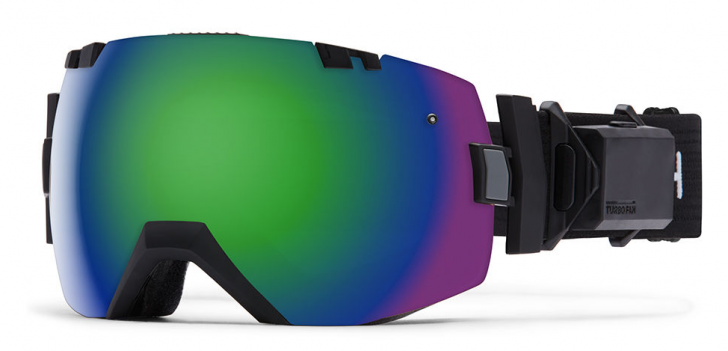
Googles, once an after-thought, have embraced high technology as well high style. Credit: Smith Goggles

Googles, once an after-thought, have embraced high technology as well high style.
Credit: Smith Goggles

  • While goggles shopping, take your helmet with you; both should happily marry. It is good to have no gaps between goggles and your nose.
  • Don’t touch the inner side of the lens with your fingers, gloves or paper napkins. You may scratch off the special coating, then the goggles will start fogging up in this area. Shake off snow or water droplets.
  • It is more practical, comfortable and even safe to have two lenses—one for a sunny day and another for a low light day. These days, some goggles have lenses which are VERY easy to swap; they have super magnets or easy locks.
  • Use a microfiber bag to protect your goggles (or glasses) from scratches and also to clean the leans. Microfiber in contrast with cotton, wool, leather and many other materials doesn’t scratch the coating of the lens.
  •  You can ski in goggles with dark lenses and keep your sunglasses with yellow, rose or light gray lenses in your pocket or around your neck in case of low light conditions.  You can see how different tints affect what you see by clicking here on the Anonoptics “Lens Visualizer.” Pretty interesting.
  • People with smaller faces should check so-called “Asian fit”, “Women” or “Junior” models.
  • Uvex Variotonic can change VLT with a touch. Pretty fancy. Credit: Uvex

    Uvex Variotonic can change VLT with a touch. Pretty fancy.
    Credit: Uvex

    Visual Light Transmission (VLT) is an important metric. VLT is the percent of visible light that passes through a glazing unit, like a goggle lens.  Lens color is a question of taste and sometimes may help to see better in fog or flat light conditions.  Years ago, we were told the yellow one was the best, later rose/pink became popular, now Smith has red, blue, yellow lenses with VLT (55, 60, 65).  It’s hard to tell which one is best. Uvex has a goggle that can change VLT in a fraction of a second.  (7 -17 %, very bright conditions; 20-50%, universal, 50-84%, low light/night)

  • Concerned about protecting your goggles while traveling? Put them in a metal cookie container.
  • OTG (Over The Glasses) goggles are good option for those skiers who want to combine their prescription glasses with goggles. It is an easy and cheap solution. But make sure the prescription frame is made of impact resistant materials (plastic lenses and flexible frame).
  • Some brands (Smith, Bolle, Oakley, Uvex) make prescription inserts for goggles. Some of them cost as low as $20-30. Technically, the inserts are designed to fit certain goggles, but in reality they may fit other goggles.  Just try. Your optician will install your Rx lenses. You can save money if you ask for the cheapest plastic lenses with minimal coatings. Your sunglasses will already have UV protection and other features.
  • High tech goggles with GPS and small computers are not cheap, but they could be helpful. You can find your way out or find your friends even when your cell phone doesn’t work.
Are we subliminally trying to look like F15 pilots? Credit: Wallpaperup.com

Are we subliminally trying to look like F15 pilots?
Credit: Wallpaperup.com

Ski Instructor Advice On New Alpine Gear

If You’re Buying, Know Before You Go.

Study up if you're buying new gear this year. There is a lot of nuanced knowledge to learn. Credit: SkiSaltLakeCity

Study up if you’re buying new gear this year. There is a lot of nuanced knowledge to learn.
Credit: SkiSaltLakeCity

This is the time of year when a lot of people buy ski equipment for the upcoming season.  Ski swaps, retail sales, online blowouts, etc. are all in full swing once the weather starts to turn cooler.  But aside from the great deals, caution should definitely be applied when purchasing equipment.

As a ski instructor, I have seen the most ill-fitting and inappropriate equipment on students in a ski lesson.  The classic answer is, “I got it on sale.”  So, here are some suggestions that might help folks in this season of “great deals” especially our senior skiers:

•  Ski Boots are the single most important piece of equipment a person can buy.  Two critical features are fit and flex.  I have seen  too many seniors buy boots at a sale and try to fit them post-purchase.  My suggestion is find a good boot fitter at a reputable shop and take the time to have them fit you properly.  There are a lot of aftermarket liners available today like Intuition Liners, that are an excellent custom accessory to any good boot fitting procedure.  The second feature to think about is flex.  Many of us senior skiers still think of the past when we skied more and had the strength to properly flex a race boot.  There are so many options today that it you don’t have to purchase a “fire hydrant “ of a boot with a stiff flex.  Not only does it affect your performance, but an ill-fitting race boot can ruin your day.  The ankle is the most crucial joint in skiing and to properly flex your ankle is essential in executing a good carved turn on a pair of skis.  The flex should be even and allow for that micro-adjustment of pressure applied to a ski in the critical phases of turn shape.  So, senior skiers, take it down a notch and take the time to be fitted properly and allow time to see how the boot fits and flexes in the shop.  You will be much happier on snow.  Here’s some advice from REI on selecting ski boots. [Editor note:  Also check out our advertiser MasterFit here.]

Bindings have a DIN setting available on bindings that allows for the weight and expertise of the skier.  Race bindings can start at 12 and end at 18 DIN or higher.  Even if you back the bindings down to the lower settings, chances are that type of DIN setting will not release for most skiers.  It is better to have a binding that has a single digit DIN setting on the lower end and ending around 14 or so.  If properly set, the DIN should be somewhere in the middle to make the binding the most functional.  I have been skiing for 55 years and am in pretty good shape but my setting is around 11.  Look at the DIN and see if there is an option that would give you a better choice, especially as a senior skier.  Here’s a DIN setting calculator.  Go to a pro to get this right.

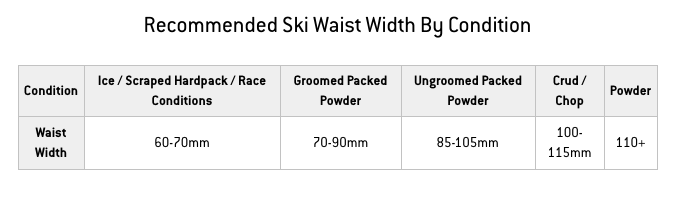
• Skis have become condition-specific.  Don’t buy wide underfoot skis if you are mostly skiing the groomers in the East.  On the flip side, race skis like GS boards or slaloms with ample sidecut and more narrow underfoot, will submarine in powder conditions.  Consider the conditions you will ski and purchase accordingly.  Also, like boots, race equipment may have been the choice a number of years ago, but as senior skiers, a more forgiving flex pattern will make the ski day more enjoyable and longer.  Executing the turns is the key not how cool the skis look in the rack.  Guidelines for picking skis are here from Backcountry.

Recommendations from Backcountry. See link for more information. Credit: Back Country.

Recommendations from Backcountry.  Click here for more information.
Credit: Backcountry.

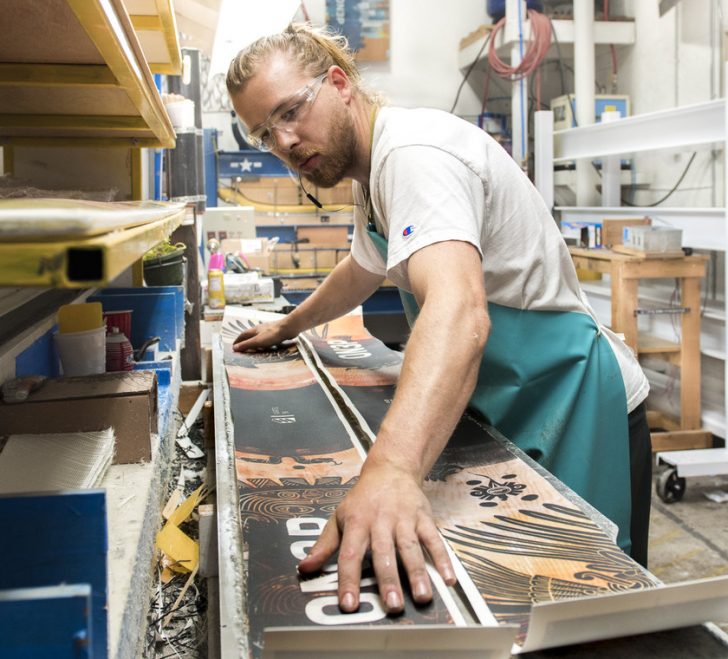
•  Tuning is often skipped, but easy to get done. Get your skis tuned at least once a year on a Wintersteiger machine found in many good ski shops.  There are other machine options also that can provide a flat base and a beveled tune to your liking.  A properly tuned ski makes all the difference in the world.

All in all, the message is “Don’t be a hero.”  Recognize your ability as an older skier and if you can still “arc em”, get the high performance stuff.  If you don’t ski as much, back it down a bit and enjoy equipment that fits properly.

Think Snow.

Here’s a demo of the Wintersteiger tuning machine.

Finding Plus-Size Clothing A Problem For Skiing Senior Women

SeniorsSkiing.com’s Correspondent Yvette Cardozo Tells Where To Get Decent Clothing For Plus-Size Women.

Correspondent Yvette Cardozo decked out in Obermeyer plus size ski wear at the top of Mammoth Mountain's expert runs, ready to put the technical skiwear through its paces. Credit: Yvette Cardozo

Correspondent Yvette Cardozo decked out in Obermeyer plus-size ski wear at the top of Mammoth Mountain’s expert runs, ready to put the technical skiwear through its paces.
Credit: Yvette Cardozo

This is a story of success and failure. And progress. Sort of.

I am not svelte by anyone’s measure. But I ski. I cycle. I scuba dive.  And I once rode my bike across the state of Florida … 174 miles in one day. The average temperature was 95, by the way.

 Many, many years ago when I got into serious cycling and wanted shorts, I was laughed out of the shop and resorted to cutting off polyester pants. Those of you of a certain age will remember those pants. They had a hideous seam down the front and stretched horribly when wet.

 Sadly, it rains a lot in South Florida, where I was living at the time.

 My ski wear consisted of men’s very large sizes tailored to fit. Eventually, someone came out with skiwear for “fat ladies.” The coat was neon pink. Be real guys. Nobody that size is gonna wear something that makes them look like Lake Superior. And it had hardly any pockets.

Women’s sportswear back then was notorious for not being technical. Fat women’s sportswear? You can imagine.

Enter Obermeyer. Go to the company website, click on women, then plus size and you actually get a choice. Mine that season boiled down to a pant called the Birmingham with all sorts of nice techie add-ons…fleece lining, storm flaps, high back, scuff guards, sturdy zippers, pockets. POCKETS!

By the time I decided to get them, the only color left in a size 20, yes, I am a size 20, was white. That is not a color someone my size EVER wants to wear in public. Sigh.

But they arrived, and they were four inches too large. I put them on, held them at the waist, let go and they fell to the floor by themselves.

Which is when I discovered another thing about clothing. The more expensive the clothes, the smaller the claimed size at a particular measurement. In other words, two pants that measure the same might be a 20 in something less expensive, an 18 in a mid-range and maybe even a 16 if it’s REALLY spendy.

Being rich, I guess, means you never have to admit to one of those embarrassing fat sizes.

There were none of my first choice left, but in my next choice, I was a size 18. Yay.

These things have style. They have pockets … lots of pockets. They fit. I could actually bend and squat in them while still managing to breathe.

Then, off I went to Mammoth Mountain in California to put the pants through their paces.  And yes, they did the job. Our first day, despite the April date, it was still full on winter with enough wind to close the top of the mountain. I wondered if it was possible to get frostbite on your tongue (you pant a lot at 11,000 feet).  But the pants survived and kept me toasty.

Then the next day, spring arrived, with 50 degree temps. I expected to sweat my knees off. But, oddly, I did not. Somehow, I stayed cool while diving into Mammoth’s famous Cornice Bowl.

I finally have a smart, technical pair of ski pants.

Now all I need is a jacket.

With lots of pockets.

Editor’s Note: Sourcing athletic, technical clothing for plus-size women is a real problem.  A recent Washington Post article describes the frustration and discouragement women feel when they can’t get decent, well-made technical clothing for sports or business wear.  What is available is not stylish, ill-fitting or wildly expensive.  We thank our new correspondent Yvette Cardozo for telling us, with humor, about what must have been a exasperating search for competent clothing. Have you ever experienced this? What is your solution? Are you a retailer or manufacturer? What’s going on?

ON3P Ski Review From A Reader

A Reader Has Discovered A Perfect Ski For Seniors.  Here’s His Story.

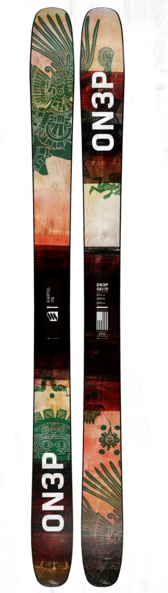
Portland-based ON3P are hand made. And you can customize. Credit: ON3P

Portland-based ON3P are hand made. And you can customize.
Credit: ON3P

Editor’s Note:  We received this ski review from Seniorsskiing.com subscriber Tom Levak, an enthusiastic skier who skis in the Portland, OR, area and also hits Mt. Hood every summer.  As far as we know, Tom is not associated with ON3P; this is an example of how our readers can contribute to our editorial content.  This is not an ad or sponsored content. Just an attempt to expose our readers to other readers’ favorites. We love the idea of a “reader-reviewer”.  If you have something to review, let us know at info@seniorsskiing.com, and we’ll get back to you.

Screen Shot 2016-08-30 at 1.04.25 PM

First, my qualifications: I’m a 77-year old Level III+ male skier and Level II snowboarder. Before I moved to ON3P Kartels, most recently, I was on Volant Chubbs, then Salomon Pocket Rockets, then Atomic Bentchetlers. I was on the snow 50-plus days last season and, in the summer, I go up to the Mt. Hood’s Timberline Palmer lift every two weeks or so.

Now then, here’s my opinion about the ON3Ps: it’s the best ski on the market for anyone, but, in particular, senior skiers.

In 2006, Scott Andrus, the ON3P founder, who started skiing at age three in Vail/Beavercreek, was a college sophomore, majoring in biology. That was when he decided that he could build a ski that was better than any on the market, even though he knew nothing about building skis. So, in 2008, he graduated and set up a 220 square foot factory in his garage and got several of his ski friends to help him put it together. He had no money, so he and most of those who helped him spent hundreds of hours sleeping on couches in the garage. Don’t laugh, but it took him ten months just to figure out how to build a ski press. Ultimately, by the end on his first year, he had built 53 different skis, all with their own characteristics and graphics, and by the 2008-09 ski season, he had talked amateur and professional friends to test them all on Mt. Hood. They loved most of them (some of them not so much).

By 2009, he was marketing several skis, and of course he had some problems, such as when Scott USA sued him for naming one of his skis “The Great Scott.” He just changed the name to “Cease and Desist.”

Over the years, Scott’s Portland factory has grown into a super facility, located in a manufacturing strip mall. A couple of months ago, Scott took me for a tour, which was pretty darn impressive, and a hell of a lot of fun (Do you like bidets? One of the bathrooms has one). Each room of his operation is a separate part of the process. And every ski is hand-built by employee friends who love their work—there’s no contracting out.

All of their skis are fiberglass/carbon with FCS certified bamboo cores. Of course, they manufacture all types of skis, but the shop’s all-weather favorite is mine too: The Kartel. ($799.00 with free shipping on domestic orders.) They also custom manufacture to your personal specifications. Because Mt. Hood has every kind of weather and snow, I’ve skied the Kartel on everything, and I can say, unreservedly, that it does everything: It holds tight on the hard stuff, floats in the powder, and turns like a dream. With its twin tips and center balance, I was even able to easily ride them switch (backwards).

I could load up a bunch of photos with this review, but there’s really no point, you can just go to shop.on3pskis.com and take an on-line factory tour. Or you can take a demo tour on the slopes. Check for demo dates for 2016-17 season here. Facebook is ON3P Skis. The factory itself is open 8a.m. to 5p.m., Monday through Friday. If you’d like to take a personal tour, Scott would appreciate it if you would call ahead at 503-206-5909. When you arrive, he’ll be the first person you see, sitting at his desk, working on the design of his next ski.

Top Picks From The Outdoor Retailers Show

Improve Your Balance, Wear The Newest Fabric And Protect From The Sun.

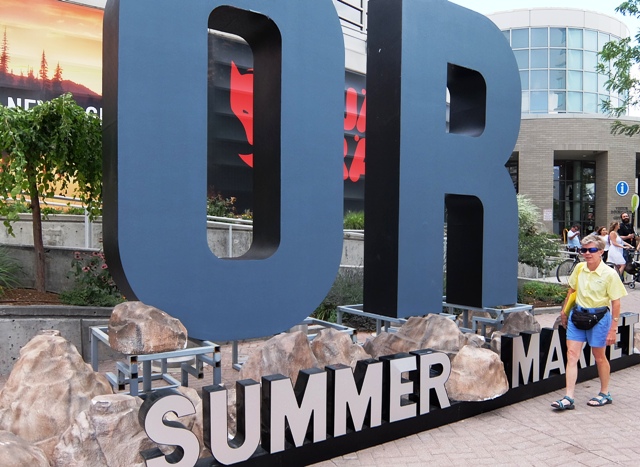
Outdoor Retailers Summer Market is a huge trade show in SLC. Credit: Harriet Wallis

Outdoor Retailers Summer Market is a huge trade show in SLC.
Credit: Harriet Wallis

Outdoor Retailers Summer Market Tradeshow is the largest show of its kind in the U.S. where manufacturers strut their products and retailers place orders for next year. The massive show has over 1,500 exhibitors, and it covers acres within Salt Lake City’s convention center.

A few passes are issued to media writers and photographers—such as SeniorSkiing.com. That’s how I got in.  Here are some of the most interesting senior-oriented products I discovered.

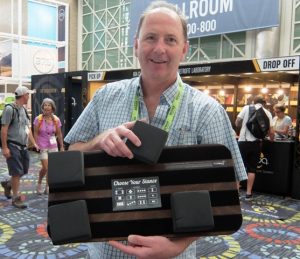
Get balanced. Take it from Louis Stack, you can age gracefully if you keep your body’s balance. This former Canadian speed

Stack with his stand up desk trainer. Credit: Harriet Wallis

Stack with his stand up desk trainer.
Credit: Harriet Wallis

ski champion—clocked at 127.33 mph—crashed at a pinnacle of his career, and it destroyed his knee and both feet. In the pits of his adversity, he was determined to restore his health, his balance and his race career.

And so he invented the first ski cross trainer which he lugged from race to race around the world, using it to fine tune his balance and stay fit. Athletes loved it. Physical therapists loved it. So this racer-turned-inventor went on to create the “wobble disc” trainers and other balance boards for all levels of athletes. He now has gentle balance trainers for those who stand at workplace desks. Check Stack’s website Fitter1.com here.

“Maintain your balance and you’ll age gracefully,” he says. “It’s like brushing your teeth. You have to do it to prevent problems.”

My chiropractor has Stack’s “wobble disc” and I love using it. I teeter on it and sharpen my skiing balance. But until the recent Outdoor Retailers show I had no clue who invented the disc or why. Now we know.

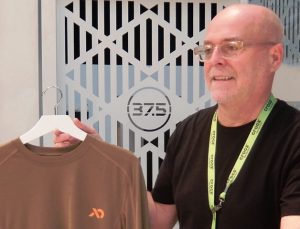
37.5 VP Tim Rogers describes the new high-tech yarn. Credit: Harriet Wallis

37.5 VP Tim Rogers describes the new high-tech yarn.
Credit: Harriet Wallis

Newest fabric technology. Another top find at the show is a thermo-regulating high tech yarn/thread called 37.5. Instead of wicking away moisture after you sweat, it carries away vapor before you sweat. By regulating the body’s temperature, elite athletes’ performance increases as much as 26 percent.

“It’s in the DNA of the yarn,” says Tim Rogers, a company VP. 37.5 is being woven into high end athletic wear as well as Kenneth Cole men’s business suits. Nobody wants to sweat during an important business meeting.  Click here for more on the 37.5 technology.

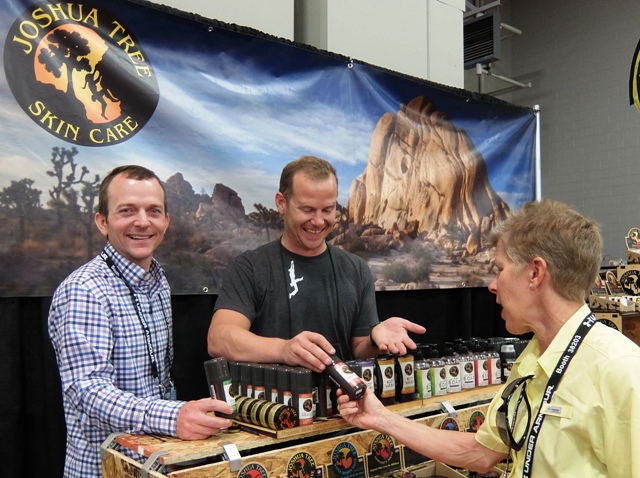
Sun protection. Joshua Tree sunscreen isn’t new, but its zinc content makes it work really well, and it doesn’t feel gooey. It doesn’t advertise and it’s not sold in mass market retailers, so you’ll find it in specialty shops such as Christy

Joshua Tree products now include sun and "after-sun", and arthritis creams. Credit: Harriet Wallis

Joshua Tree products now include sun and “after-sun”, and arthritis creams.
Credit: Harriet Wallis

Sports. In addition, it has branched out into after-sun care and also arthritis cream.  Click here for a store locator.

Nifty Back Stories:

Heat Factory founder Chris Treplow at the show. Credit: Harriet Wallis

Heat Factory founder Chris Treplow at the show.
Credit: Harriet Wallis

Stay warm. Chris Treptow grew up in Wisconsin and knew what cold weather was. When she attended Badger football games, she and other fans would stuff newspaper into large trash bags, step into them and pull them up around their waists to fend off the brutal cold. She went on to found Heat Factory, the air activated hand and body warmers company.

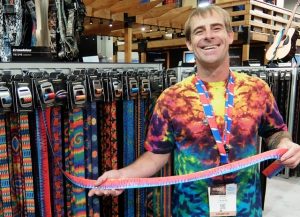
Belts, dogs, guitars. Croakies woven belts include hundreds of designs for all

Tie-dye artist Jeremy Strebel displays a Croakie belt. Credit: Harriet Wallis

Tie-dye artist Jeremy Strebel displays a Croakie belt.
Credit: Harriet Wallis

sports. As a fisherman, I love the trout designs. It also has dog collars and guitar straps. The company hired tie-dye artist Jeremy Strebel to design that line of colorful belts.

Boot Fitting Tips As Hiking Season Heats Up

An Expert Provides Advice On Right Fit for Hiking Boots.

As hiking season gets in full swing you may be considering new boots for your upcoming adventures. In the thirteen years I’ve been helping people choose hiking footwear, I’ve gathered four critical tips to share:

  1. Length
  2. Width
  3. Volume
  4. Shape

Length – Two lengths are important. A) the heel to toe measurement that we think of as our “size”. Manufacturers size their products according to that length. And B) the heel to ball length also referred to as the arch length.

S-sizesConsider the size of the foot in Figure 1. This illustration shows two feet which are the same length, but each require different size boots. There are different fittings for short-arched and long-arched feet. Proper boot fitting incorporates not only overall length (heel-to-toe measurement) but also arch length (heel-to-ball measurement). Boots are designed to flex at the ball of the foot. Correct fitting properly positions the ball joint in the boot and provides room for the toes so they are not confined.


S-checkingOnce you’ve chosen a boot, check the length by untying the boot, shove or kick your toe into the toe of the boot and slide your finger down behind your heel as shown in Fig.2.  You need a finger’s width between the heel of the boot and the heel of your foot for the boot to be long enough.


S_widthWidth – The measure of the boot across the forefoot is indicated by letters A through E. Very wide widths are indicated by multiple “E’s”, as in double E or triple E. Fig 3 shows where width is measured. Medium width for a man is a “D” and for a woman it’s a “B”.


S-volumeVolume – The measure of the boot around the forefoot has no alpha-numeric indicator (and neither does your foot). Fig. 4 shows the location of the volume and it is important because too much volume could cause your heel to be continually lifting up causing a heel blister. Too little volume and you’d have problems with your toes.


S-shapeShape – Some boots have a slight curve inward from the heel to the toe and some are very straight. Like volume, there is no alpha-numeric indicator of shape. Shape is important to prevent pinching or sliding. If the boot pinches in any area as shown in Fig. 5, then the boot may be the wrong shape for you.
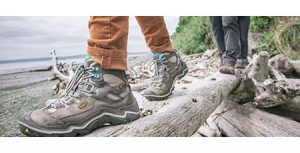
Some Additional Tips

  • Terms such as narrow, wide, regular, extra wide (and others) may be used by manufacturers to indicate a width size. These terms are not standardized. Ask the footwear retailer or manufacturer to get a specific recommendation on their width sizing.
  • Shop at stores that provide service to their customers and have knowledgeable sales people.
  • Be sure to have both feet measured. Many people have feet of different sizes. Fit to the larger of the two. Your foot size changes with age, weight changes, and other factors.
  • Have boots fitted in the evening if possible, when your feet have expanded.
  • If your boots don’t feel right at the time of purchase, they probably will never feel right.
  • Take time to fully lace and tie the boot properly and walk around in the boot at the time of try on.

The Right Hiking Boot For The Senior You

Balancing The Scales: Hiking Footwear—Comfort vs. Support.

HikingBoot

Picking the right kind of hiking boot can make a big difference. It pays to learn the trade-offs between types. Credit: REI

At the shop where I work, questions customers often ask include:

  • “I’ve been wearing the same boots for over twenty-five years, is there anything new?”
  • “How comfortable should my hiking shoes/boots be?”
  • “What’s the boot that gives me the most support?”
  • “Which type of hiking footwear protects my ankles best?”

While hiking footwear is no longer restricted to the heavy leather boots we all wore in our younger days, the variety of hiking boots on the market today and the technology in them can help get you back out on the trails quickly and safely.

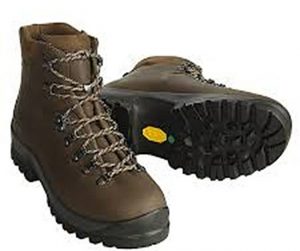
A leather hiking boot is the most supportive, but potentially has some comfort issues. Credit: Steve Hines

A leather hiking boot is the most supportive, but potentially has some comfort issues.
Credit: Steve Hines

I usually suggest either a lightweight and supportive boot or one of the new “mids”. A mid is a lower boot that instead of lacing above the ankle, laces at the ankle. For those who haven’t hiked in a while or are new to hiking and want to “gear up” a balance of features is best.

In a one sense, the choice between Comfort versus Support isn’t binary. Just because a boot is supportive (rigid across the sole from toe to heel) doesn’t necessarily mean the boot must be uncomfortable. Cushioned mid-soles, improved in-soles, softer grippy outsoles and proper break-in all help a boot balance the scale.

SUPPORT

A supportive boot usually needs more break-in time to become that boot you can wear all day. The best supportive boots are usually made of all leather.

Leather boots come in one of three types or “grades” of leather:

  1. Top grain – The lightest and most durable, but they must be cared for.
  2. Suede (split grain) – Resists scratches. However, thicker than top grain can make the boots heavier.
  3. Nubuck (split grain) –Ages nicely. Again, thicker than top grain can make the boots heavier.

COMFORT

Fabric and leather boots are tipped to comfort. Credit: Steve Hines

Fabric and leather boots are tipped to comfort.
Credit: Steve Hines

Common belief is that boots which combine fabric with leather pieces are more comfortable right away. It is true that combination boots break in quicker. It’s also true that a poor fitting fabric and leather boot can hurt your feet as easily as a non-broken in leather boot.

When people ask me how comfortable a boot should be I use this scenario: Imagine you are involved in some emergency situation in which you are required to have your boots on for 24 hours. Your boots should be comfortable enough that at the end of the 24 hour emergency you would not be dying to get those boots off your feet.

Seems like the hiking world is leaving heavy leather boots behind, instead opting for light weight, low boots and shoes. When I’m asked which is best I usually try to determine the kind of hiking being done and the level of hiking experience. For instance:

  • Terrain – mountain trails, dense woods, higher altitudes
  • Climate, season, weather
  • Duration of the hike or trip
  • Pack weight

In summary, find the right boot for you that will combine the right amount of support and is as comfortable as possible. Remember, a lighter weight boot can have good support and an all-leather boot can be comfortable.


The Ski Diva: How To Put Your Skis To Bed

If You Take Care Now, You Save Time And Hassles Next Season.  Here’s How.

TheSkiDiva


It’s that time.  Despite the teasing snow in Vermont and New Hampshire this week, the season is fini, over, done.  And our friend and colleague, The Ski Diva, is offering advice about how to put your gear to rest for the summer.  If you heed her advice, you can get going a lot easier next time the snowflakes fly.  Thanks, Ski Diva, for letting us use your story.

Test Animal In The Annual Ski Boot Lab

How the Magazines Get Their Boot Evaluations.

Boots waiting to be evaluated. Credit: MasterFit

Boots waiting to be evaluated.
Credit: MasterFit

Since the mid-80’s a group of serious skiers has convened at Mt Bachelor, in Bend, Oregon, to evaluate the boots store buyers have purchased for the coming season.

This year the show, which is organized by MasterFit Enterprises, moved to Solitude in Utah. I was invited to participate. The collective impressions of the boot testers inform the rankings to be published in, among others, Ski, Skiing, and their respective .com media outlets. The most comprehensive report will appear in www.bootfitters.com.

Yes, the evaluators—some of whom have been doing this from the beginning—are serious about the task at hand. But they also understand a good party. It’s a fun group of people from around the country; many are professional boot fitters who know their stuff from years of experience, including training at the annual MasterFit University boot fitting school.

The more experienced among them understand the foot’s anatomy and how choosing the right boot can make all the difference in how people enjoy their skiing experience. They’re the people you can trust when selecting boots.

Like other lab animals, I had a Pavlovian experience: skiing an uncomfortable boot, I couldn’t wait to get off the hill. Skiing a boot I liked, I was scratching for more.

Here’s how it works. All the boots to be tested are listed, categorically, on paper. The Men’s sheet had 58 boots from 20 brands organized into four general categories, two of which were subdivided by width. The Women’s sheet was similarly organized.

Advised to focus on one category, I set out to test those in “Men’s All Mountain Medium.”

Each boot evaluation is recorded on a test card. One side is completed in the lodge and evaluates look, ease of entry/exit, buckles, and fit and stance. The other side is completed after skiing a few runs on Solitude’s outstanding terrain.

There had been a series of good dumps the week before. But warmer weather made off-piste an effort. Best to ski early and stay on Solitude’s groomed, some of which are steep and interesting.

There are five on-snow categories for observations to be recorded and scored. For “Stance” I evaluated how the boot positioned me. For “Dynamic Balance” I focused on the boot’s positioning and flex while skiing. For “Edge Power and Fore-Aft Support” I determined transfer of energy from body to edges, as well as how the boot performed when weight was on the front of foot vs heel. For “Quickness, Steering, and Feel” I took note of the boot’s performance skiing pitches, bumps, and at different speeds. For “Convenience, Warmth, and Features” I was able to observe, for example, that Head’s buckle with built-in lever made for easy adjustment by a senior skier and that Apex’s infinite adjustments assured comfort for older feet.

After all these years on the hill, a few days in the lab gave me a new insight into how to find a boot that really does the job.

Blistering Review of Farm to Feet Socks

How Do You Like Your Socks?  Farm Fresh, Says Tamsin.

Here's where the raw material for Farm To Feet socks originate: Merino sheep who live in Wyoming. Credit: Farm To Feet

Here’s where the raw material for Farm To Feet socks originate: Merino sheep who live in Wyoming.
Credit: Farm To Feet

Do you have those mornings when your lower back is a bit stiff from yesterday’s skiing, and you try to pull on your ski socks standing up and almost fall over? I have. A pair of ski socks just stretchy enough to slip on easily is a key happiness factor. I found those in Farm to Feet socks.

My Lange boots are fairly snug, so I wear lighter socks than I used to. Farm to Feet socks, made of merino wool, some nylon, and a touch of LYCRA® Spandex (for the stretch noted above), use a plaiting construction that puts cushioning in just the right pressure points, despite their overall thinness.

Here's a pair of women's socks: over the calf, compression, lightweight. Credit: Farm To Feet

Here’s a pair of women’s socks: over the calf, compression, lightweight.
Credit: Farm To Feet

Not everyone agrees that a thinner sock is a warmer sock. Instead, they grab for the thickest pair in the drawer on those ten-below days. Also, skiers tend to need thicker socks when your boots become packed out after several seasons of wear. But others argue that a thinner sock allows better circulation, so your toes don’t freeze. I have yet to test this theory, but another plus worth noting is that with less bulk, your foot conveys more finely tuned signals to your boots and skis. My feet are like control central when I wear the Waitsfield lightweight socks.

Also, using Lycra fiber creates a firm fit that helps support the foot. Seamless toes mean no bulking up of material. Despite multiple wears/washes, they’re not pilling, thinning, or stretching. And they come in colorful patterns that are fun to wear!

Like the farm to table movement, Farm to Feet caters to those who like to know the product’s origins. This ski sock maker uses merino wool from sheep in the western United States. The wool is then sent back east, spun, and made into socks in Mt. Airy, N.C.

One supplier is Fred Roberts, a third-generation rancher, who raises 7,000 sheep at Roberts Ranch, in Cokeville, Wyo.

Wyoming sheep rancher Fred Woods like to ski and cycle when he's off-duty. Credit: Tamsin Venn

Wyoming sheep rancher Fred Woods like to ski and cycle when he’s off-duty.
Credit: Tamsin Venn

“I like the animals, I like the lifestyle and being outdoors,” says Fred, who mountain bikes and skis in his spare time.

The Adventure Snow Line for men and women skiers consists of six over-the-calf models ($20-$26)  in different weights. Each sock is designed with a specific ski area in mind.

The Park City midweight is the heaviest and most cushioned; Alpine Meadows and Waitsfield are lightweight versions; Sugar Mountain is a light Nordic sock; the Jackson is an ultra light racer.

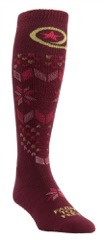
The Franconia lightweight ski sock, with classic diamond-knit styling, honors the Turtle Ridge Foundation of Franconia, N.H., the non-profit founded by Olympic champion Bode Miller and his family, which supports youth and adaptive ski programs. Your purchase helps support the foundation.

So you can wear ski socks that not only make your feet feel great but also support a good cause.

DeBooter: DeLovely Way For Easy (And Painless) Boot Removal

A Smart Ski Boot Jack That Really Works.

DeBooter: Easy-to-use ski boot jack. Credit: OutDoor Logic Solutions

DeBooter: Easy-to-use ski boot jack. Click on image for demo. Credit: OutDoor Logic Solutions

They are the collective sounds of people removing their ski boots: the moans of agony and the sighs of joy heard in lots and lodges around the globe.

I’m simply relieved to get the damn things off, but getting the top of my foot past those two nasty tabs of plastic are akin to ripping a bandage off an old wound. I HATE IT!

No more. I recently had occasion to remove my boots with the DeBooter, an easy-to-use ski boot jack. It takes the pain and discomfort out of the process of taking off ski boots. You’ll still need to bend over to loosen your buckles and your booster straps (if you use them), but the struggle is over!

Place your boot heel in the designated area, step on the back of the device, and lift your foot out of the boot. It happens so quickly and so easily that you need to keep shoes close by so you’re not hopping around on one foot.

Wanting to verify my experience, I took the product around the Alta parking lot one afternoon as people were approaching their cars still wearing their boots. About a half dozen tried it. Using it is intuitive. The first few questioned why it was necessary. As soon as they tried it, they wanted to know where they get one for themselves. Another person who was wearing telemark boots had a little difficulty at first but quickly figured out how to make it work. Each and every one of the others appreciated the ease with which their boots popped off in full comfort.

The day had warmed up and the melting snow required shaking the product to get rid of dirty water. When faced with those conditions, keeping a towel in the car or using the DeBooter bag which can be purchased separately makes sense.

A great idea whose time has come. Get those boots off easily! Credit: Debooter

A great idea whose time has come. Get those boots off easily!
Credit: Outdoor Logical Solutions

The product is constructed of rugged plastic. It’s one of those things you purchase once and will to your favorite skier. It looks like it will last forever.

DeBooter is available in two versions: portable and commercial. I used the portable model, which sells online for $49.50. The commercial model gets screwed into a solid surface and is intended for use in condos, homes, and ski shops. It’s listed for $42.00. The company is a SeniorsSkiing.com advertiser and is offering readers a 20% discount. For more details, click here.

Helpful Handy Hand Warmer Hints

From Newborn Mittens to YOUR Mittens.

Editor Note: Sue Z. is a senior skier and craftsperson who hangs out at Alta.  She wrote a recent gift idea that showed how to transform worn out ski socks into a cool scarf.  

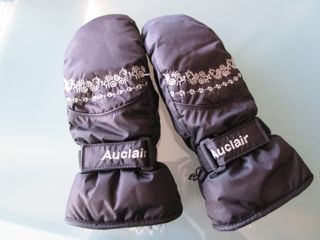
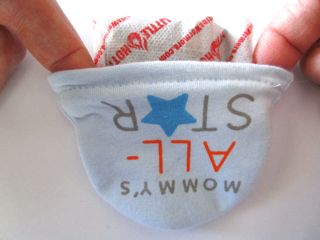
Like many older skiers, I rely on disposable glove warmers to keep my hands comfortable. I open the package at home and let them toast my gloves on the 30-minute drive to Alta, my home resort. Manufacturers of disposable hand warmers advise that they not be placed directly against the skin. Since my gloves and mittens don’t have pockets, I came up with the following idea which allows me to use disposable hand warmers without them touching my skin.


My ski mittens.

My ski mittens.

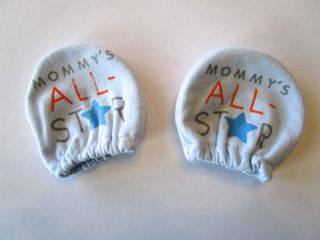
Mittens for newborn children, which can be bought at any store that carries infant clothing.

Mittens for newborn children, which can be bought at any store that carries infant clothing.


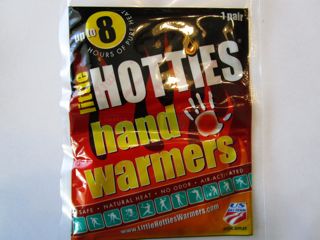
Little Hotties® hand warmers. Remove pair from package and shake.

Little Hotties® hand warmers. Remove pair from package and shake.


Insert Hotties into newborn mittens. Now, the Hotties will not be against your skin.

Insert Hotties into newborn mittens. Now, the Hotties will not be against your skin.

I put them in my mittens about a half hour before I’m ready to hit the slopes. That way, my mittens are warm by the time I’m ready to put them on. An added benefit: if the mittens are near my socks in my ski bag, I have warm socks as well!

®Little Hotties is a registered trademark.

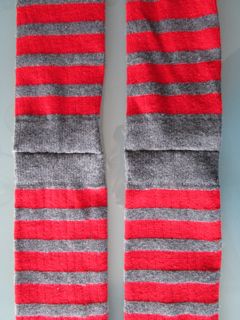
SueZ*Sue Z., born in Brooklyn, is now a senior skier who likes to spend her time at Alta. When she is not skiing, she likes to paint in acrylics, plays the piano, and has taken several years of drum lessons. The “sock to scarf” idea came about while she was looking for a scarf for her new ski jacket; she came across knee socks in fun colors, and thought she could sew them together to create just what she was looking for.
Product Review: NuDown Parkas and Vests Use Pumped Air to Stay Warm

Reduces Layering. Improves On-Hill Comfort.

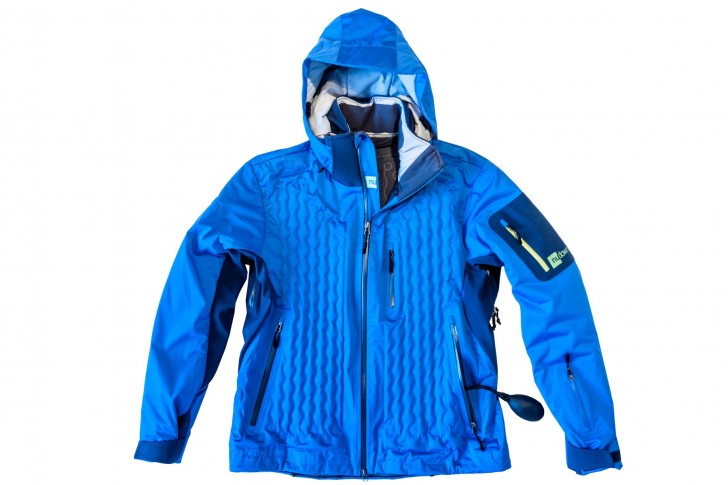
For the past several weeks, I’ve been skiing in a NuDown parka designed to keep you comfortable regardless of outside temperature and without dressing in multiple layers. It utilizes a hand-operated air pump system to create an adjustable layer of air, which, warmed by the body, serves as an effective insulator against the elements.

Here's the Nudown parka I tested. Removes the hassle of layering. Credit: Nudown

Here’s the NuDown parka I tested. Removes the hassle of layering.
Credit: NuDown

It works. My problem is that, given the relatively warm temperatures since using the parka, I’ve been unable to test it in extreme cold conditions.

Between the outer and inner shells is a bladder with a zigzag pattern of air chambers. A small and easy to use hand pump in the left pocket inflates the chambers. On brisk mornings, I’ve found that 15 pumps is sufficient to be comfortable. Later, when it warms, I press the release valve, which deflates the parka.

Typically, the more cold I expect, the more layers I wear, a technique that can get a bit bulky and result in in overheating as the day warms.

This parka, new to the market, and going by the name NuDown, eliminates the layering hassle. Having used it in not overly cold conditions, my positive experience and common sense tells me that it should perform effectively when it gets truly frigid.

The NuDown parka also is good-looking, even when fully inflated. And it sports a neat little zipper pocket near the left wrist for an RFID lift pass—the increasingly popular lift-pass technology used to open gate to the lift. Simply wave your arm to enter and save the chest pocket for your cell phone. A very nice detail.

The zip-off hood is sized to cover a helmet.

There’s been a lot written about improvements in down and being sensitive to the animal rights issues associated with down production. Some downs are processed not to clump when wet. Some are advertised as being humane. NuDown substitutes air for feathers. It lets you leave the layers at home, and it lets you adjust the air insulation so you can be comfortable in a variety of conditions. In the lodge, it’s a conversation starter when people ask about the zigzag air chambers, especially when inflated.

It’s not as light as down, but, in my experience, that’s not an issue.

NuDown technology currently is available in men’s and women’s parkas and vests. It will be available at retail in the fall and, like most everything else in the world, is available on line. Currently the NuDown site is offering a 30 percent discount.

socks-1

From Socks to Scarves in Sixty Minutes

A Terrific DIY Gift Idea!

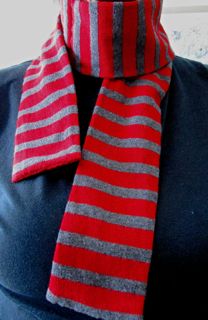
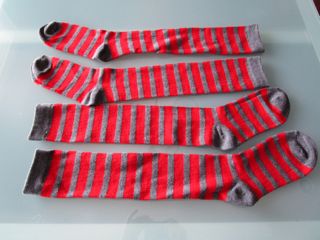
Ski season is winding down, and some of us may be returning to other activities. Suzy Z.* will be doing needlework. Suzy, a seniorsskiing.com subscriber, had this terrific idea for sock-scarves while shopping last fall for ski hose. It uses ski or knee socks to create a scarf for your winter jacket or turtleneck.

Relatives, grandkids, and friends will be receiving a different gift this Holiday Season.

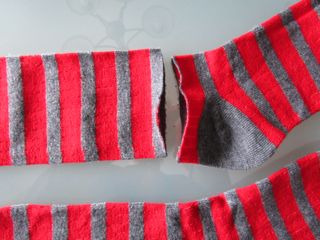
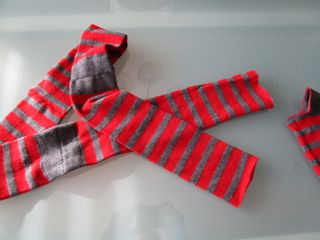
Photo 1. You’ll need two pairs of socks, matching, if possible, or with compatible colors and prints.

socks 1

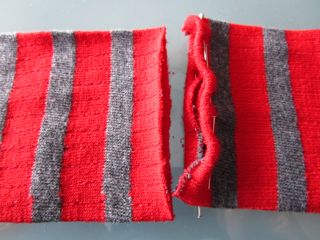
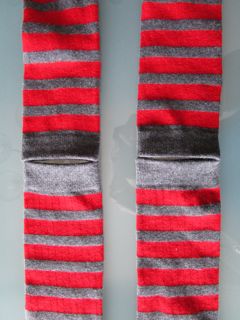
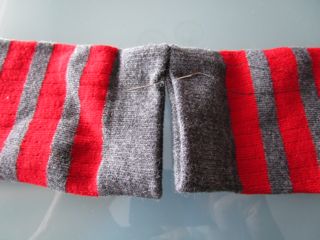
Photos 2, 3 and 4. Join each pair of socks by sewing the tops of the socks to each other.

socks 2 socks 3

socks 4

Photo 5. Cut the foot off one sock in each pair.

socks 5

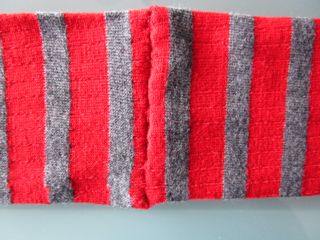
Photos 6 and 7. Turn the just-cut ends under, and sew them to each other.

socks 6 socks 7

Photo 8. Now you should have four socks, end to end, with a foot on each end. (If you want to be really funky, you could stop here.)

socks 8

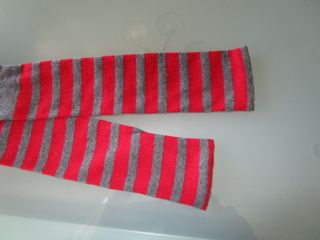
Photo 9. Cut the foot off each end of the scarf.

socks 9

Photo 10. Turn the just-cut ends under, and sew them shut.

socks 10

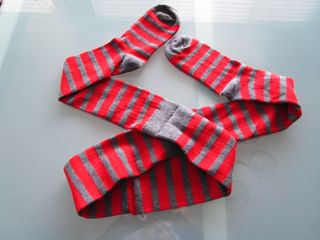
Photo 11. Here’s your scarf!

socks 11


SueZ

Suzy Z., the Alta sock stitcher.

*Sue Z., born in Brooklyn, is now a senior skier who likes to spend her time at Alta. When she is not skiing, she likes to paint in acrylics, plays the piano, and has taken several years of drum lessons. The “sock to scarf” idea came about while she was looking for a scarf for her new ski jacket; she came across knee socks in fun colors, and thought she could sew them together to create just what she was looking for.
Product Review: Socks That Rock From Injinji

New Performance Toe Socks Are Super Comfortable and Supportive.

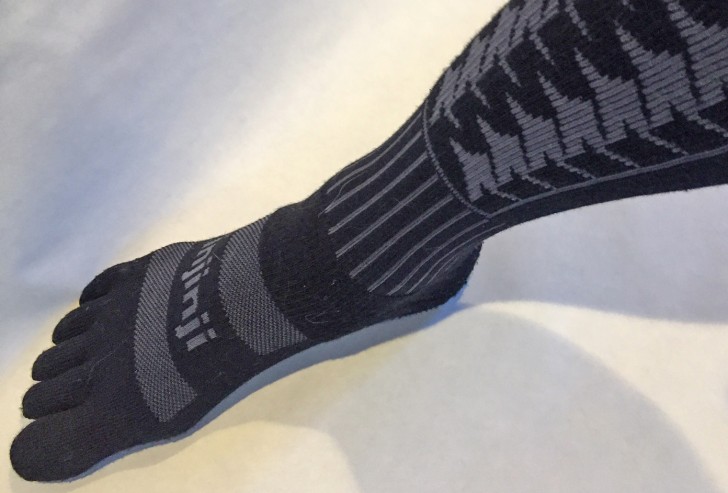
Injinji's Performance 2.0 Snow toe socks are fun to wear and feel terrific. Credit: SeniorsSkiing

Injinji’s Performance 2.0 Snow toe socks are fun to wear and feel terrific.
Credit: SeniorsSkiing

It’s March, and close to the end of the season for a lot of folks. If you think your gear is starting to look a little tattered, now is the time to contemplate a new way of thinking about your socks.

Injinji, the toe sock company, has introduced a new line of performance wear for snow sports. Toe socks, you say? Yes, we were quizzical, too, until we tried them on. The Performance 2.0 Snow socks are designed with graduated compression that does a fantastic job of supporting your muscles in your whole lower leg. These over-the-calf socks are also padded in strategic places for extra cushion. And they are made of NuWool, a combination of Merino wool, nylon and lyrca. And of course, there are the little toe “sleeping bags” that we found to be surprisingly comfortable.

Toe socks have been around for a while, and they are very popular with distance runners. The basic idea is to align your little piggies properly for better balance and blister prevention. When we tried a test pair, we were amazed at how different these socks felt from the usual. The toe feature was just—how to describe it—fun and remarkably different. Injini claims that proper “toe splay” distributes your weight evenly and allows better engagement for your feet. We can testify that the compression feature also gives you the feeling of significantly more support than regular socks.

We have two quibbles about the model we tested. Putting them on takes a bit of technique. Each toe has to be guided into its sleeve, so it does take a bit of concentration and a bit more time. No big deal. If you’re used to wearing an inner sock for extra warmth, you will need to get liners from Injinji that provide a base layer. You won’t be able to use your standard liners with these.

We continue to wear our Injinjis around the office as well as the gym and plan to take them to our next ski trip.

Injinji Performance 2.0 Snow medium weight socks come small, medium and large and in different colors. Suggested retail price is $30; shop around online.

Toe socks feel gooooodd! Credit: SeniorsSkiing

Toe socks feel gooooodd!
Credit: SeniorsSkiing