
Tag Archive for: senior skier

Snowshoes: From Wood To Metal To…Foam?

There’s Always A Better Way. Foam Is Light, Strong, And Long-Lasting.

Crescent Moon Eva snowshoe.

As a long-time, single-minded Nordic fanatic, snowshoeing used to seem pretty tame – kind of a melding of on-snow recreation and utility, with not much maneuverability and no glide.

Aging knees and mature perspective (or an approximation!) have changed this some, along with vast improvements in snowshoe materials and design, from wood-and-animal hides to aluminum-and-synthetics. Newer products aren’t as pretty as the natural materials, but they’re tougher, lighter, longer-lasting, have easily adjustable bindings, and come with metal crampons that can grip in crust and up (as well as down) hills. Also, rodents don’t chow down on them in summertime.

It’s always interesting to see how technology evolves. In the Nordic world, we’ve seen the introduction of groomed trails, synthetics in skis, skate skis, manmade clothing, waxless bases, boot/binding systems… All that’s led to more fun, faster skiing, better support, easier turns, warmer toes and tushies – virtually a different world.

And in snowshoeing, we may be seeing an equivalent revolution with the introduction of foam snowshoes: the Evas. (Thus far, the only foam manufacturer seems to be Crescent Moon Snowshoes in Colorado: www.crescentmoonsnowshoes.com.)     

Got to be kidding, right? Foam? It’s gonna fall apart in the cold, crumble into small pieces under your weight.

Nope.

I’m a 195 pound guy who’s waded around wearing Evas in a foot of fresh Montana powder as well as heavier crud; managed a 180 degree jump (no good reason, I was just curiousJ); even backed up for a couple of yards without damaging self, ego, or equipment.

Among the things I like about these ‘shoes is the weight (3.5 pounds per pair); ease of movement (you can walk, you can run… and they feel like an elongated extension of your foot, due partly to a “rocker” design, plus they’re only 24 inches long); self-explanatory bindings; flotation (the entire base is in snow contact); good insulation from the snow below; and a lot more. Even sidestepping is easy; and the price is right at $159.

I’m also delighted by the Crescent Moon sense of humor, which describes the Evas as looking like “the love child of a running shoe and a burly snow tire.”

The Evas became available in 2018, so there’s been a chance to test their longevity – has to depend on amount of use and abuse, I suppose; but figure for most of us, several years. The one weakness I found initially was that the multiple plastic cleats and lugs didn’t grab as well as metal on crust, especially on sidehill. (On the other hand, I’ve slid sideways downhill on the old wood ‘shoes, and slipped on crust with modern metal/synthetic snowshoes too.) Happily, the company now gives you the option of inserting metal cleats, which takes just a couple of minutes.

I haven’t used the Evas in more than about 14 inches of fresh snow, but Crescent Moon suggests using them on trails rather than in deep snow. My guess is that it’s not good for the foam ‘shoes to step around on abrasive surfaces like sidewalks or road crossings (yep, done that with my aluminum snowshoes – not smart then either).

And if you have any questions or concerns, call owner Tanner Dunn at 303-494-550 and ask about… yes, plans for biodegradable snowshoes! I’ve suggested to Crescent Moon making them edible as well, so if you’re stuck in the woods you’d at least have a ready food source; but so far that hasn’t been incorporated into design. But ya never know!

Lightness and improbable strength are features of the Eva.

Fat Biking At Nordic Ski Areas

Fat Biking Is A Combo Of XC and Cycling: What A Workout!

Fat biking at Kingdom Trails, VT

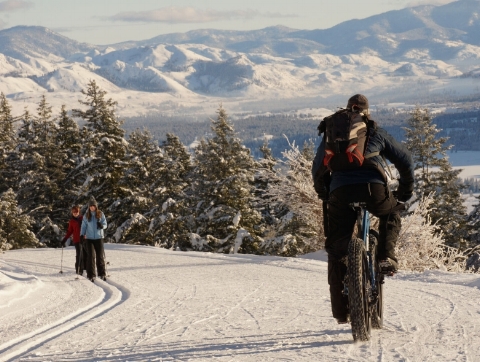
Fat bikes, dubbed the “Hummers of the two-wheelers’ world” in the Wall Street Journal are proliferating where there are more than 150 cross country (XC) ski areas that have fat bikes available to use on snow covered trails. These specially-made bicycles that accommodate ultra-wide tires that can be run at very low pressure 4-8 pounds of pressure allow fat bikes to roll over soft, slippery surfaces like snow. XC ski areas and regional pockets across the nation in Vermont, Michigan, Wisconsin, Minnesota, Alaska and Washington now have fat bike trails with groomed single track and signed trails, rental bikes, and special events.

An industry source (at QBP, the manufacturers of fat bike brands Surleybikes, Salsacycles, tires, boots, gloves, and apparel) recently reported that 150,000-200,000 fat bikes have been sold since 2010 while there are about 7 million mountain bikes sold. Fat bikes provide a great way for avid cyclists to stay in shape during the winter season and they provide different recreational fun for people who are active or love the outdoors. Fat bikers are mostly male and are aged 35-65, with 80% at high education levels Bachelors degree or higher) and professional/managerial vocations.

Kingdom Trails

A small group of North American Snowsports Journalist Association members were recently introduced to fat biking by the welcoming folks at Kingdom Trails in Lyndonville, VT. The group found the bikes easy to balance and maneuver. Similar to XC skiing, the fat bikes provide exercise when going on flat terrain with more effort required up hills earning thrills on the downhills.

The Kingdom Trails in northeastern Vermont is the foremost mountain bike destination in the east with more than 40,000 day passes sold in 2017 (20% increase from the previous year) and they’ve quickly parlayed this notoriety into becoming a mecca for fat bikers in the winter. Kingdom Trails has 100 miles of bike trails (30 of which are used in winter for XC skiing, snowshoeing and fat biking) and works with 80 different land owners. They also host Winterbike, which is the biggest fat bike festival in the east.

At Darling Hill Road in Lyndonville, the Village Sport Shop has a trailside facility adjacent to the Kingdom Trails Nordic Adventure Center renting fat bikes for $55 a day and sells the bikes ranging from $1,800 to $2,800. Fat bike products include softgoods, accessories and bikes available from companies such as Liv Bikes and Pivot among others.

Another option for those who would like an introduction to fat biking is to have a guide at Kingdom Experiences take care of all the details. They’ve got certified instructors and want to help cyclists have an experience catered specifically to rider skill and ability levels offering kids camps, women’s clinics and getaways and more.

Kingdom Trails has three paid groomers who maintain about 30 miles of trails. Day membership prices (day pass for trail access) are $15 a day for those aged 16-69 and $7 for youth aged 8-15. There are also year-round memberships available with an annual family membership priced at $150. The Kingdom Trails Welcome Center is in East Burke and the Kingdom Trails Nordic Adventure Center is on Darling Hill Road in Lyndonville.

Other Fat Bike Locations

At the Nordic Village outside of Flagstaff, AZ there are 25 km of snowshoe trails that accommodate fat bikes. The bikes ride much better on packed trails compared to riding on soft snow. Fat bikes can be rented at Flagstaff Nordic for $35 on weekends plus a $10 trail fee, and they offer a 40% discount on weekdays ($20) while charging a lower trail fee on weekdays ($7), too.

In eastern Washington’s Methow Trails the winter season can be longer than all other seasons combined and it was one of the first trail networks to embrace fat biking. They saw it as a new, exciting way to get outside and recreate and for the passionate XC skier interested in fitness, it provides another way to cross-train. Some guys from Methow Cycle & Sport groom some of the local trails and the shop rents 16 fat bikes.

One avid snow biker describes the thrill of riding his fat bike in the winter as, “Riding on snow has been a great alternative to my other winter love…Nordic skiing. Hopping on the snow bike has been a great way to mix up the winter activities. There’s an amazing sensation when you climb aboard a snow bike and find that you “can” ride where only skiers or snowmobilers had once been able to go!” Surveys show that 71% of fat bikes were introduced to the sport at a demo, borrow, or rent the bike that they are riding and 64% of the fat bikers said they would pay to ride on groomed trails.

Fat bike trail offerings are assessed on a day-by-day, snow conditions, user compatibility basis. Information on the trails that are open to fat bikes is available daily on the Methow Trails grooming report. Just like a skier, a valid Methow Trails day pass will be required for snow bikes.

Views in Methow Valley, Washington

Views in Methow Valley, Washington

Fat bikes are available for rent ranging from $15 per hour at Rikert Nordic Center in Ripton, VT to $55 for a full day reaching $75 a day at New World Sport, a Fort Collins, CO, shop that sends riders to local packed snowshoe and XC ski trails. Methow Cycle and Sport in Winthrop, WA has a $35 half day rate or $55 for a full day. Reservations are recommended for weekends and holidays. Methow Cycle and Sport will also provide rack adapters for customers who wish to transport rental fat bikes to the riding area of their choice. Other XC ski areas that have fat bikes on location to rent include Woodstock Inn & Resort in VT, Great Glen Trails in Gorham, NH, Cross Country Ski Headquarters in Roscommon, MI, Crosscut Mountain Sports Center in Bozeman, MT, in California at Bear Valley Cross Country & Adventure and Mont-Sainte-Anne, QE.

As one might imagine the price for purchasing a fat bike ranges greatly from a low-end of $200 (at Walmart) to $1,800-6,000. Like any other equipment the low end is probably less reliable and the high-end includes bells and whistles or are built with carbon fiber construction.

Currently, the issues for fat bikers include skier/biker relations and conflicts, variable and changing snow conditions, impact on trails, and building fat bike-specific trails. Fat bike riders are looking for packed snow trails, moderate climbs no more than 8% grade, and narrow single tracks to ride. They are asked to follow a code of etiquette because they can damage trails groomed for classic and skate XC skiers. A typical list of XC ski area “conditions of use” include:

  • Riders need to purchase a trail pass to use the area’s trails and tell the ticket vendor that they are planning on fat biking.
  • Trail access is dependent on conditions and they should check the daily grooming report for detailed trail access information.
  • Bikes should yield to all other users. Stay to right side of trail at all times, stay out of the classic ski tracks, and give skate skiers a wide berth. * Stay off trails with more than 3″ of new snow.
  • If you are leaving a rut deeper than an inch, having a hard time riding in a straight line, or pushing your bike, the snow is too soft and you absolutely should not be biking on the trails.
  • Be an ambassador for the sport – stay polite, educate other bikers, discourage bad behavior, follow the rules, and we’ll all have a good time this winter.
  • Stay on trails designated for Fat Biking.

Editor Note: This article was originally published in XCSkiResorts.com

Resort Review: Woodstock Inn, VT

The Venerable Inn Has Historic Roots In Ski History.

The Woodstock Inn & Resort is one of Vermont’s true gems for travelers. It offers warm New England hospitality amidst an atmosphere of country elegance and year round recreation. Resort facilities include the new 10,000 square-foot Spa, the Resort’s Nordic Center, Suicide Six alpine ski area, the Resort’s Golf Club, and a 41,000 square foot Racquet & Fitness Club. However, it’s the lavish details of the wood-burning fireplaces in guest rooms, luxurious terrycloth bathrobes, and locally-made furnishings, that defines the country sophistication and completes the picture of charm and comfort at the Woodstock Inn & Resort, which rises above expectations.

The Woodstock Inn & Resort is a 142-room, AAA Four Diamond Resort and a member of Preferred Hotels & Resorts. The village of Woodstock is located in Vermont’s Green Mountains with antique shops, art galleries, boutiques, restaurants, and specialty food markets in the downtown area…but if you also want recreation the Woodstock Inn & Resort delivers.

In the winter months, the inn’s Racquet & Fitness Club is situated close to the inn hosting the Woodstock Nordic Center. There are partnerships between the inn and both Fischer Nordic Skis and Tubbs Snowshoes. The Nordic Center maintains some 60 kilometers of trails in the area – half of which are part of the nearby Marsh-Billings-Rockefeller National Historical Park. Professional instruction, ski storage, equipment sales and rental equipment are available at the ski shop, as well as a full line of clothing and accessories for cross country skiing and snowshoeing.

The Tubbs Snowshoes Adventure Center features guided tours, group teambuilding exercises, and family-friendly scavenger hunts. Beginners and experts alike will find the 30 kilometers of trails against the backdrop of the Resort’s expansive grounds, with flat tracks along the babbling Kedron Brook on the golf course and more challenging uphills and downhills on the adjacent Mt. Peg property. Winter adventure-themed vacation packages are built around the Tubbs Snowshoes Adventure Center. From romantic to adventurous, there are value-packed getaways with the adventure centers designed for guests to enjoy an exhilarating way to experience the peace and tranquility of Woodstock in winter.

My wife and I enjoyed part of the Romance Excursion Package including accommodations for two nights, welcome gift basket, breakfast and a four-course dinner for two at the Red Rooster Restaurant, and a guided snowshoe trek to a four-course chef’s dinner at the Mt. Tom Cabin in the national park. We also went cross country skiing on groomed ski tracks accessed from the Racquet & Fitness Club on a sunny morning followed by wonderful massages in the Spa. On the second morning, I went snowboarding at the nearby Suicide Six ski area while my wife took a yoga class at the club. Overall, we were impressed with the inn and its staff, each and every one of them. In all of our interactions, the Woodstock Inn & Resort staff was especially attentive to us, often without the need of having to ask.

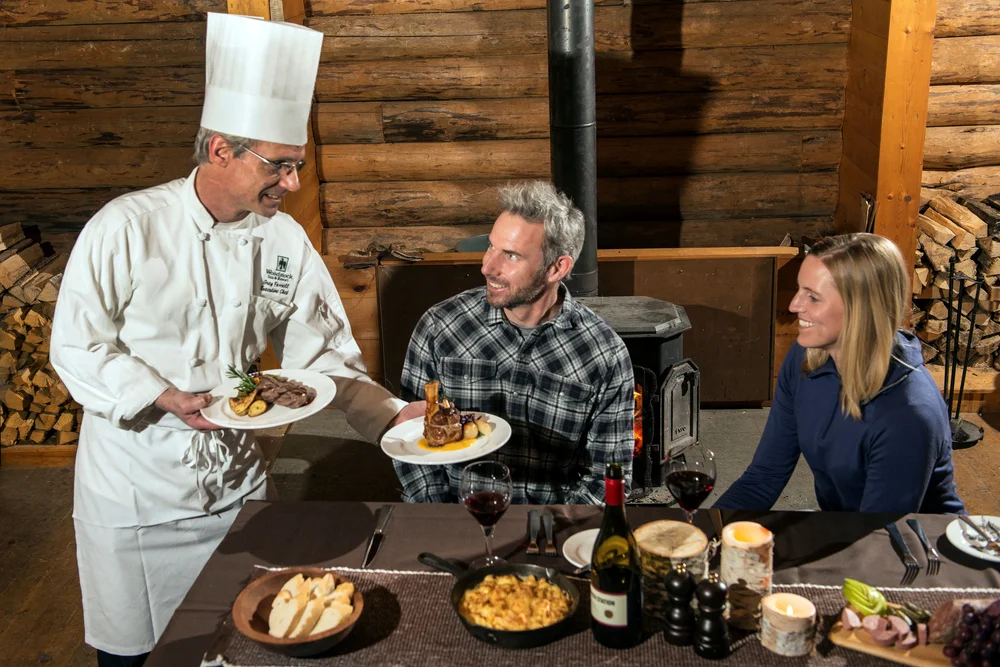
On Saturday evening, we reached the Mt. Tom Cabin after crunching up about one and a half miles on snowshoes up a hardpacked snowy trail under a clear and cold starry night. The meal was prepared on a wood-burning cookstove by the Woodstock Inn’s chef in a candlelight cozy setting. The evening’s guide associated with the national park was a naturalist that imparted some of his knowledge about winter nature and history of the park, which is the only national park dedicated to conservation stewardship. The park’s 550-acre forest is one of the oldest professionally managed forests in the USA with 400-year old hemlocks and Norway Spruce.

The inn’s Main Lobby is comfortably furnished and features a 10-foot fieldstone fireplace at its center. Don’t miss the newly opened Game Room, which is a hoot for the kid in all of us. It has a mix of games including a 4-foot scrabble board on the wall played with magnetic tiles, three real pinball machines, billiards, foosball, six TVs, video games, and more.

The new 10,000 square-foot spa has 10 treatment rooms, luxurious suite, tranquil men’s and women’s lounges, a light-filled Great Room, enclosed outdoor courtyard featuring a meditation tree and a wood sauna and a hot soaking pool. Guests can choose from a wide selection of treatments performed by licensed therapists.

The Woodstock Inn & Resort’s own Suicide Six Ski Area opened in 1937, just a few years after the first ski tow in the United States was rigged up just over the ridge at Gilbert’s Hill. Suicide Six has since evolved into a friendly and personal ski area that caters to families and local skiers. On Sunday morning when I visited, the slopes were covered with young local ski racers learning the ins and outs of skiing gates.

The Woodstock area offers other activities including day trips to nearby points of interest such as Simon Pearce Glass, Shackleton Furniture, or the Quechee Gorge. The Marsh-Billings-Rockefeller National Historical Park, is Vermont’s first national park and it operates in partnership with the Woodstock Foundation, Inc, and the Billings Farm & Museum – a working dairy farm and agricultural museum that mirrors rural life in Vermont in the late 1800s.

Editor Note: This article was originally published in XCSkiResorts.com.

Who Needs XC Lessons?

You Do. Take A Lesson From A Pro.

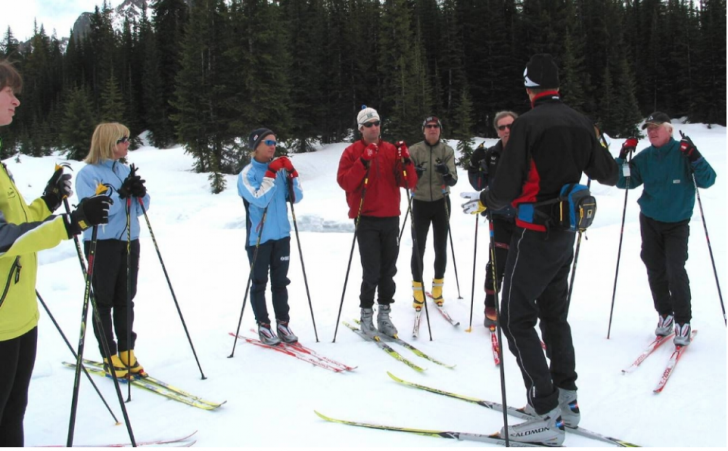
The vast majority of cross country (XC) skiers do not take XC ski lessons, but rather they start with friends or family, who are usually not trained to teach XC skiing. So, who needs XC ski lessons? Most of us do!

Starting with the basics, a XC ski instructor can help a skier choose clothing and equipment that is appropriate for weather and his or her skiing goals and abilities. Equipment selection including the ski flex, length of poles, ski boot type and fit can make a huge difference in a skier’s experience.

A ski instructor can gently guide any XC skier to better skills and match a skier’s pace to his or her level of fitness and interest, keeping the skier from working too hard…and let’s face it, most people who do not XC ski perceive the sport as too much work. The idea of sliding on snow can be a challenge for some people. An instructor can show the proper way to balance, transfer weight from one ski to another, and how to use the poles. Learning to keep the body forward with appropriate ankle and knee bend can start a new skier with confidence. Maintaining control down hills is also key to enjoying XC skiing.

The first time a new skier approaches a hill, whether going up or down, can be a make-or-break experience. A lesson can help one learn simple techniques to travel up a hill with confidence. Going down a hill on XC ski equipment can be frightful to new and experienced skiers alike. Narrow trails, difficult snow conditions, rocks and trees are challenging to even an experienced XC skier. An instructor can make sure the initial down hill experience is a safe and comfortable one by starting on the right terrain and practicing skills and techniques. Such a lesson will prepare a new skier and build their confidence.

Can a Lesson Help Seasoned Alpine Skiers?

Alpine (downhill) skiers who are trying XC skiing for the first time will also greatly benefit by getting some XC ski instruction because the equipment and techniques varies between the two sports. Skiing uphill is a totally new experience for the alpine skier and going down hills on XC ski equipment, which is lightweight and has a free heel…and no big plastic ski boot, can be more than thrilling.

An experienced XC skier, who may need to improve on some aspects of their technique can also benefit from a ski lesson. Most XC ski control and efficiency problems involve incorrect body movements or timing issues and these problems will waste energy. Even constantly looking down at the skis will distort good body position while XC skiing.

Years of incorrect technique can instill the wrong muscle memory and this really requires a certified and experienced instructor to rectify. Video analysis can be a great benefit to seasoned XC skiers. A good ski instructor will not be critical but will direct the lesson to the skier’s goals such as improve glide, control, and feeling more confident on skis.

So many XC skiers use outdated equipment and instructors can be helpful to discuss newer or more appropriate products with them. There are so many derivations of XC skiing, that it is imperative to get informed advice to match what someone wants to get out of XC skiing, be it gliding on a groomed trail or mastering the glades in untracked powder or other ski conditions.

Finding a Qualified XC Ski Instructor

To find a qualified XC ski instructor visit or call a XC ski area. Discuss skiing goals with the instructor and find out if they have been certified by the Professional Ski Instructors organization. Certification involves training and passing a test to teach XC skiing. The instructor should be a “people person” easy to talk to, and offer positive feedback on a skier’s strong points and encouragement on how they can get even better skills. With enhanced skills and techniques, XC skiers can experience the fun aspect as well as enjoy the outdoors and fitness associated with the sport.

Thank you to Brad Noren, of www.NordicFusion.ski who is a PSIA certified level 3 Alpine and Level 2 Nordic ski instructor for information in this article based on his experience teaching since 1972 in northern Michigan.

Editor Note: This article was originally published in XCSkiResorts.com.

Taking The Grandkids Snowshoeing

A Little Planning Goes A Long Way To Ensure A Positive Experience.

Fun on snowshoes. Credit: Laura Rose/SnowshoeMag.com

On a winter trail outing near my home, I ran into a neighbor and her granddaughter on snowshoes – and it was not going well for them. The kid was whining and uncomfortable and she headed back home (nearby) by herself. Grandma kept going and since she is a neighbor, I went along with her for a while and chatted. She was not aware of how to help her granddaughter have a good time snowshoeing on a cold winter day. Here’s a primer about going snowshoeing with the grandkids.

 Snowshoes

You can get the kids snowshoes that are used or new but it’s best to get equipment that is appropriate for their size. For the youngest kids 4-8 years old get colorful snowshoes but most importantly ones that are secure and easy to put on. The Tubbs SnoGlow has LED lights, and also from Tubbs is a model called the “Snowflake.” Ideal has the SnoStompers for under $20, but expect to pay more than that for name brand snowshoes. Most of the companies have a snowshoe for kids.

Keep in mind that the older the kid the more important they’ll want “cool” looking snowshoes rather than a pair intended for babies. As kids get older, they’ll need a snowshoe that is intended for lighter people and has regular snowshoe and binding characteristics (looks and performs like an adult snowshoe).

Again, the key issue is that the snowshoes are easy to put on and easy to walk in. I’ve also found that it is easy to sell used kids snowshoes after your kid gets too big for them.

Snowshoers at any age - SnowshoeMag.com
Snowshoers at any age. Credit: SnowshoeMag.com

 Clothing

Light layers of clothing are comfortable and you can add or remove clothing as needed (i.e., if it gets too hot). A lightweight synthetic base layer of long underwear helps to keep you dry and transport perspiration away. A middle layer provides insulation such as a shirt or sweater and then a jacket shell on the outer layer works great. Don’t forget a headband or light hat and a pair of appropriate gloves. Alpine ski gloves may be too warm for snowshoeing unless it is very cold outside (or you have poor circulation issues).

The goal is for the kids to recognize when it is too cold or too hot and to encourage them to change to feel comfortable with the temperature. Wearing a backpack will allow kids to stash or pull out the extra clothes, and feel self sufficient.

Fun on Snowshoes

If you want it to be a good time for them (and you) you have to make the snowshoeing outing less “boring” and more exciting. Additionally, the first few outings should be short and easy so that the kids don’t feel that snowshoeing is “too much work.” Maybe they can use a camera or cell phone. Plan ahead and discuss what to look for – perhaps there are different kinds of scenic views, trees, animals, tracks, and silly poses that you can do. You can not stop too many times to take photos. Pose for them, take selfies, get some photos of them without you, send them out on social media, etc. You’re making and saving memories!

Perhaps you can print the pictures and create photo books of the adventures. Maybe the kids will discover that they love photography. It will give you an indoor activity to arrange the photos that you can do together with the kids.

Set up a scavenger hunt on the way out on the trail (hang or hide treats or something) and use the destination as a goal to be eligible to play the game. On the way back, the kids can look for and accumulate the hidden treasures.

Kids love candy and perhaps they’ll love to go snowshoeing to look for candy that is cached (hidden in specific locations in bags). Take them on a “Quest for the Candy” by following hints that you write in advance as a poetic treasure map to follow. This is a new type of orienteering for children.

“Orienteering” can be fun for older kids, whereby they snowshoe to find markers by using a compass. Set up five numbered markers in advance and figure out different ways to go to them by taking a compass reading. Give each snowshoer (or team of snowshoers) a compass and show them how to use it. Then see if they can go to the markers in a different but specific order. The first one to record all of the marker numbers wins.

“Snowshoe Biathlon” incorporates other backyard games such as ring toss or ball toss into a container. Set up a course and stations along the trails. If you want to have a competition, keep time as snowshoers race through all the stations to a finish line. Add time for each toss that is missed. If you do not have backyard games or are unable to easily create them, snowshoers can walk backwards or hop through a natural obstacle course at the stations. If you prefer not to have a competition, do the biathlon just for fun.

Choose the Trail

Don’t look down at your feet - look out at nature!
Don’t look down at your feet – look out at nature!

Make sure to take the kids on interesting trails and accept that “interesting” may be very different than it is for you. They may not like historic bridges or flat trails that lead to nothing. Have a destination such as waterfalls or a hilltop, or a site for wildlife spotting. Discuss this issue prior to planning the trek so you are aware of what they might enjoy. It may be like pulling teeth to get them to decide but it will give you a goal as to where to go. Make snow angels and slide down the hills and they’ll keep going. Be aware about whether the child is over his or her head – the trail may be too steep, too long, or you are not getting to the destination soon enough.

If you want to avoid all of this decision-making, go to a cross country ski area that can accommodate kids on snowshoes like Great Glen Trails Outdoor Center in Gorham, NH. They have a scavenger hunt called “Trail Tracker” which is a big hit for kids to track down signs of cartoon animals out on the trails. When they find the animated creature signs, they stamp a card and upon return to the lodge, they get a treat.

Hydrate and Snacks

Plenty of snacks and drinks are a must for a successful outing. If you are going out more than a half hour pack enough water or drinks. The kids get thirsty fast and they may like to play the “I’m thirsty” card when they want a break. Granola bars, sandwiches, energy drinks, fresh fruit and crackers can provide ample energy boosts but also consider some snacks that you know they enjoy like chocolate or candy bars.

A Great Time with the Grandkids

Try to teach them to have fun with snowshoeing. Take snack breaks or play I-spy in the middle of the woods to keep them interested in continuing to walk. Go for a snowshoe adventure rather than just a snowshoe hike.

Take the opportunity to get outside and enjoy nature and exercise, while at the same time get some bonding time with your family; you’ll be glad you did.

Editor Note: This article was originally published in XCSkiResorts.com

Resort Review: Crested Butte, CO

Skis, Dogs, Bikes. It Must Be Crested Butte.

Crested Butte Nordic has rentals for $20 a day. Credit: CB Nordic

It sometimes feels like not much of the American West remains unspoiled, but the town of Crested Butte, CO, comes mighty close. It’s a ski town that used to be a mining community (gold and silver, then coal). Somehow it’s kept the serenity (population is pretty steady at around 1,700) and retained its Victorian architectural integrity.

Meanwhile, the mountains around town haven’t changed at all. They’re beautiful; inspiring; stunning! So is the Nordic skiing, from groomed trails all around town to famous telemarking at nearby Crested Butte Mountain Resort. (Now there you’ll see a lot of change—it’s morphed from a mid-sized area to a significant alpine ski destination. Still, it’s a great complement to XC for folks who like to split their time downhilling or snowboarding.)

Where?

Crested Butte is located in southwestern Colorado, about 30 miles north of the jet airport at Gunnison. It’s a genuine contender for the “Best Kept XC Secret and Remote from Everywhere” award. (Denver is about a four-hour drive, including a sometimes character-building trip over 11,312’ Monarch Pass, especially interesting in snow and wind.)

It’s a place you visit because you want to be there, not because you’re wandering the neighborhood. And you should want to visit, because it’s gorgeous (the Elk Mountains are spectacular), friendly, and kinda charmingly quirky.

The Skiing

The Crested Butte Nordic Council (https://cbnordic.org/) grooms 50 km of trail, usually starting in mid-November and running into early April. Winters can see up to 25 feet of genuine powder.

Trails are rated about 40% Easier, 40% More Difficult, and the rest Most Difficult. That beginner-intermediate emphasis is especially welcome to visitors, since elevation (up to 9,500’) is literally breathtaking. Give yourself a couple of days to get used to the altitude, and then stay a week (or two).

The skiing is very convenient, since you can hop on the trails at several points on the edge of town, plus there’s a free shuttle. Along with skiing, there’s snowshoeing and 10 km of groomed fat bike trails.

First place to visit is the Nordic Center. It’s your primary source for rentals, instruction, and information, with a pleasant lounge upstairs and ice skating next door. You can ski from the Center to The Bench (there’s some uphill) and tootle around on mostly intermediate trails, with good forest protection.

My favorite trails are around Magic Meadows, combining wonderful terrain and mind-boggling views. There’s also a ski-in yurt where you can book dinner or Sunday brunch.

For variety, the Nordic Center also offers guided trips. Another intriguing option is touring up to the old mining town of Gothic and overnighting (heat, electricity, and running water – BYOB, food, and bedding).

XC Idiosyncrasies

CB’s Alley Loop marathon starts in the middle of time. Credit: Xavier Fane/CB Nordic

Did I mention quirky? There’s the 42 km Alley Loop marathon (“best costume party of the year”) each February, which winds its way through town (a bunch of streets are closed to traffic during the event) – lots of fun, but serious enough to be an American Birkebeiner qualifying race.

A Taste of Town

One of the things I like best about Crested Butte is that everything is walking distance from everywhere else, and virtually any place you go is architecturally and historically captivating. Along the way, you’re going to see dogs and fat-tire bikes, whatever the weather.

There are a lot of dining options, but a local favorite is Sherpa’s Café (https://www.sherpascafe.com/), with Nepalese, Indian, and Tibetan cuisine, also serving beer and wine. Prices are surprisingly low for a resort town.

I’d recommend staying at Elk Mountain Lodge (www.elkmountainlodge.net). An easy walk from the Nordic Center, it’s run by skiers for skiers and has pleasant rooms, fine breakfasts, and great staff. Rooms for two run from around $170/night.

Elk Mountain Lodge in Winter.


Dressing For Nordic

What To Wear: Ditch The Parka.

Often on the cross country (XC) ski trails the clothes that many of the uninitiated wear are malfunctioning…that is, they are dressed for downhill skiing wearing insulated ski jackets and pants, alpine ski gloves or mittens, and ski goggles. XC skiing is a form of recreation that involves moving and thus lighter clothing is appropriate. Recreational XC ski garb is versatile, functional, and fashionable, which is different than either the outfits for downhill skiing or the suction suits worn by the XC ski racers seen at the Olympics.

New parkas from Daehlie. More athletic, breathable.

Currently, the most popular cross country ski apparel is from companies such as Craft, Daehlie, Sporthill, Swix, and others, but what is important is that the products fill a function that includes comfortably allowing movement, protection from the outdoor elements, and transporting perspiration out to keep skiers dry. Of course, skiers need to heed the weather by wearing layers (base layer underwear, pants and tops, and outerwear) and when its colder, more layers or thicker layers are necessary.

XC Ski Jacket and Pants

A jacket for XC skiing provides a layer to keep warm and also a way to cool off and transport perspiration away. These jackets have a mesh liner and material that is comfortable when you have to zip up the collar on a very cold day. The hood on the jacket is useful if it suddenly gets cold out on the trail. The high-hip fit keeps you warm and the zippered side pockets can be closed to avoid losing pocketed items. In some jackets the pockets have a mesh liner that allows for the skier’s heat to escape when working hard. The jacket arms might have extended cuffs, which are a nice touch to keep snow out of your gloves. The inside chest pocket has a zipper and a hole for a phone and earbuds for the times that you may want musical accompaniment on solo trail outings.The pants for XC skiing may be light overpants with zippers along the entire length of the legs and at the ankle there is an elastic area that may be closed with a zipper. This pant ankle set-up is a most significant aspect of the pants because it tightly fits around the boot and keeps snow out of the shoe top to avoid getting wet socks while skiing. To prevent losing a set of keys, zippered side pockets (on pants or jackets) allow a way to lock away your valuables. The base layer also known as long underwear is intended to provide a dry layer next to the skin, but if there is lined material in the pants it may be enough to stay warm with or without a base layer underneath.

Other Aspects of the XC Ski Outfit

Base layers in various thicknesses can correlate to warm and cold days. Moving perspiration away from the body is very important and lightweight underwear on those nice winter or spring days are the way to stay dry, but on the coldest days use a heavier or thicker base layer pants and a top that may have a turtleneck. For your head, a light hat or headband is the way to go. Light Lycra neckies are good for your face but when it is very cold (below 15 degrees Fahrenheit) try a heavier neck gaiter like you’d wear when alpine skiing.Socks and gloves are an entirely other matter that could be covered in a separate article. In short, parameters for selecting socks include the sock material for perspiration, thickness, spacious comfort for your toes, and height of the sock on your leg. Socks for downhill skiers are intended to accommodate the higher alpine ski boots and this may be too high on the leg. Expect to pay as much as $25 for a pair of quality socks these days.Different pairs of gloves will allow adjusting to the temperature ranging from heavier insulated mittens or two-fingered gloves for the really cold days to lightweight gloves needed for the springtime. One of the glove features to consider is the patch of soft material found on the outside part of the thumb, which is useful for nose wiping.For eyewear opt for sunglasses rather than goggles. Sunglasses allow the air to flow while goggles tend to fog up when you get hot. Oversized glasses that have interchangeable lenses for sun or flat light are great for XC skiing.  

Editor Note: This article was originally published in XCSkiResorts.com.


Take Advantage Of An XC Demo Day

Try Before You Buy.

Many XC ski areas conduct demo days to give skiers an opportunity to test drive the newest XC ski equipment. It’s a day when product suppliers’ branded tents and flags are flapping in the wind and company reps stand guard armed with knowledge of their wares.

 You might participate in a demo because you have outdated gear (national statistics say that XC skis are 17 years old on average) and want to test new and different equipment to replace your old clunkers. Or you might just want to experience the advantages of the new gear. There are many reasonably priced skis but a pair of XC skis can be as high as $500 for premium models, so it makes great sense to try some different skis, ski categories, and brands to find something that best fits you.

 Depending on how organized the demo is, you might need a credit card and/or identification for security but remember to also bring an open mind. The rep will ask you about your skiing ability and interests. If you’re an intermediate skier who gets out on the trails four times a winter it is very different from a skier who hits the trails every weekend and can fly on skate skis. Give the rep an accurate description of your skiing prowess and interests so he or she can make a recommendation for you.

 If you need a new set up and want to use a product demo to help make the decision about what to buy, do some homework before going to the demo. Talk with a knowledgeable ski shop employee who XC skis. Be wary of the alpine ski shop that limits its XC ski products to a dark or dusty back corner of the store. Find a reputable XC ski shop that sells multiple models among a few different brands of XC skis. Check out some company brand websites or other general XC ski-oriented websites.

When at the demo, get the right size skis for your weight and ski on them for about 15 minutes. Find some uphill and downhill trails to see how the skis perform. Do the skis hold going uphill or do you have to fight to prevent backsliding? Are some skis easier to turn than others? Does the glide seem to extend or do the skis slow down quickly? If you don’t know what to look for while testing, ask the rep for some tips.

 It is recommended to stay in the same category of skis when testing, so if you’re trying a recreational waxless ski from one brand, test a similar ski and price point from a different brand before switching to a different kind of skis. Skis perform differently depending on flex, width, and construction – some skis glide better and some are more stable, turn easier, and are slower.

 Of course, there are two different XC ski boot/bindings available and if you don’t use the same system on the different skis that you’re testing, you’ll have to change boots to ski the other boot/binding system.

 Rossignol rep Will Masson commented about the advantage of demoing with the NIS binding, “The NIS system allows you to move the binding on the ski to 7 different positions so you can fine tune your grip and glide position on the skis. The binding starts out at the balance point position and moves forward 1.5 cm and back 1.5 cm to customize your weight distribution on a particular ski. This can only be achieved when using the NIS system.

 There is a graph that shows the benefits of moving the binding forward and back on the plate for skating and classic. A customer might be right between a 176 cm and a 186 cm ski on the recommended weight chart. That customer can be put on the longer ski to enhance the glide, and then the binding would be moved forward to maximize their grip on that longer ski. Advantages are like fine tuning a driver in golf, or a handlebar stem height on a bike, or strings in a tennis racquet. With other Nordic binding systems once you mount the binding you are stuck in that position!”

XC ski boots are a very important aspect of XC skiing comfort and it makes great sense to ski on some different brands. Do you want your boots to feel like a comfortable sneaker or do you desire the substantial support of a stiff sole? Is the toe box area of the boot creasing in a comfortable spot when you’re skiing? Do your heels rise when you lift your foot? Is the boot too tight or too loose? Should you get custom insoles for your boots to make your feet feel more comfortable?

 Have you tried XC ski poles recently? Ski poles have different grip straps that are easier to use and you may find that they are more comfortable and effective than traditional ski pole straps. Sunglasses are a great item to test. Do they fog up when you get sweaty? Do they feel so tight that you might get a headache? Are interchangeable lenses available for times of low light or bright sun?

 Dedicate part of your ski day to the demo and try more than a few skis, poles, and boots. It should be fun and then you can make informed decisions when you purchase your next set of XC ski equipment and you’ll feel great that you bought the perfect gear. To find a demo day contact a XC ski area or Nordic ski retailer near you to see when they will conduct their next demo day. SIA Photo of SIA Nordic Demo at Devil’s Thumb Ranch Resort & Spa.

Editor Note: This article was originally published in XCSkiResorts.com.

Keeping Your Ski (And Other) Pants On

OK, That Sounds Salacious But It’s Not.

Who knew a belt could be so important? Credit: Jeltbelt.com

I kind of collect belts, from the 50-year-old hand-stitched inches-wide leather style with ornate Mexican silver buckle; to a contemporary pseudo-leather critter with multiple off-set holes; to a futuristic version (my favorite!) that grips, flatters, goes through airport security without setting off alarms, comes in colors – and keeps my pants up in all circumstances thus-far encountered. Now, that’s versatile!

Back in July, 2017, after moving to Montana (still gotta get the dog, battered pickup, and rifle rack to feel like a native), I started exercising and leafing through local magazines, simultaneously. The exercise dropped my shorts a size; the editorial introduced me to the Jelt Belt (https://jeltbelt.com/), an ingenious product that’s fun, socially and environmentally responsible, yet totally practical – so many positive qualities that it gives renewed faith in the entrepreneurial mindset. And it fits my new almost-size-34s as well as the previous 36s.

I’ve always liked leather belts. They’re handsome, can slide reasonably easily through loops, even smell rich when they’re new – and you can commission designer buckles. But it can be tough to punch extra holes as time goes by and waistlines expand or contract; and if you don’t have belt loops, they’re slick enough to slide up and down, with consequent droopy pants.

With fabric belts, you can often pierce the material with the buckle prong, but again they’re often on the thick and wide side. Like leather, they generally have metal buckles, so you may need to remove the belt (and put it on again) while going through airport security – not fun if you’re literally running to make a flight.

Enter the all-synthetic Jelt Belt: tough, adjustable, stretchy, with a grippy inner-surface gel. Endearing from an environmental perspective, they’re made of yarn from recycled plastic water bottles; while part of sales goes to organizations supporting veterans wounded in combat, environmental causes, and kids. New belt lines are being manufactured in Montana rather than China.

Jelt Belts are slender rather than thick or wide (4 sizes plus an adjustable version), but they hold very snugly. You can order for adult jean sizes 22-40. They come in different colors (I’m partial to the River Turquoise and Denim Navy Blue; kids get fun shades too).

Maybe more importantly than aesthetics, buckles in four sizes are quick-release. I’ve even learned to release and re-buckle one-handed (let your imagination run wild, but so far they’ve been very mundane uses). Buckles are low profile – flat, actually – so there’s no bulge under your shirt or sweater. Skiing, golf, running, walking, climbing, socializing, they seem right for every occasion.

Okay, you want to know about the name. The belt was founded by Jennifer Perry, thus it’s Jen’s Belt, which evolved into “Jelt Belt.”

Why a belt for skiing? Whether you take a fall or are skiing in a storm, the Jelt keeps snow out of your pants. (I once entirely lost my pants sliding downhill after a fall, face first, on my belly – wouldn’t have happened with a Jelt Belt.)

I plan to become a collector of the Jelt Belt subset of belts, perhaps display them in chronological order of acquisition. And the price? Figure from $32 for adult belts, less for kids’.

The Skinny On Recreational Nordic Ski Gear

Move Up To New High Tech Equipment.

As a part of the cross country ski industry for more than three decades, I had to qualify my response when SeniorsSkiing asked me about new cross country (XC) ski equipment. There was an unknown research source in the 1990’s that proclaimed, in general, owners of XC ski equipment had their gear for about 17 years. With a view of the meager statistics of annual XC ski sales, the age of the average XC skier’s equipment is now probably a couple of decades older than 17 years.

The key element is to know how you intend to use your equipment – classic or skate skiing on groomed trails; skiing on ungroomed park trails; backcountry in deep snow; serious mountain excursions; or if you are hoping to find equipment to deliver some type of hybrid performance in a variety of uses. XC skis provide varied width, flex, waxless base designs, and edges, all designed to perform optimally in different XC skiing situations and conditions. The recreational skier may be one that wants to get out in nature a few times per winter or a serious fitness-oriented person who is into skate skiing after work three times per week.

Ski magazines and websites deliver gear reviews with a focus on what’s new for the XC ski expert or racer. It is thought that the technology used in these products geared to advanced skiers will “trickle down” to be incorporated and become beneficial to recreational skiers in the future…well, the challenge is to provide a view specifically for recreational interests and to look at select products that offer a great experience XC skiing.

At the outset, it is uncertain why a recreational skier would want to wax their skis these days. If you possess an encyclopedia of knowledge on the matter of snow texture, humidity and temperature, there could still be changing conditions that will make your decision on the proper wax a big mistake. They’ve simplified waxing and at the same time have also have increased the options – but, recreational skiers are mostly on waxless skis. Of course there are many different types of bases that provide the grip when needed to go up the hill but also allow the best glide on the flats and down hills. Enough said to acknowledge that the most significant aspect of ski fitting has to do with the weight of the skier, and the length and stiffness of the ski and the different waxless bases are subservient to these qualifications. The other issue is the width of the ski where a narrower ski is faster and usually does not control as well as a wider ski, but again the stiffness of the ski is relevant. If you are skiing in groomed tracks, the narrow lightweight waxless ski can provide excellent glides and it can still grip when needed, if the match is done well for skier weight, and ski stiffness and length. On another matter, many people glide and may provide better stopping capability, but depending on the skier, even edges may be of no consequence when in an emergency situation.

XC Skin Skis

Author Roger Lohr on Fischer Twin Skin Skis

The cross country ski waxless “skin” bases, use inserted mohair strips on the ski bottom, which are extremely effective for all temperatures and snow conditions. It is high performance waxless base technology for the classic skier, who prefers to use a waxless ski. The ski strips are like small climbing skins which are embedded in the base and they are resistant to icing because they have a Teflon-like coating. I’ve found that there are certain conditions where the performance of the skin skis are less than desirable such as when there are dirt and leaves on the trail.

XC Ski Bindings

Today people want the convenience of stepping down and snapping into the ski binding. One new concept is the adjustable binding. Technique, temperature and snow composition all have an influence on ski performance but the TURNAMIC® binding models provide tool-free adjustment for skiers to match their individual needs. Sliding the system forward provides more grip, while sliding it back will noticeably improve glide. With the optimized setup of the boot-binding-plate-ski components, TURNAMIC® gives you dynamic skiing performance like never before.

A suggestion is to find a cross country ski area or ski retailer that has a demo fleet of skin type skis from any product company and give them a try. Play with the binding settings on the ski binding to see the effect from adjustments on grip and glide. Expect the ski to perform better than you have ever experienced.

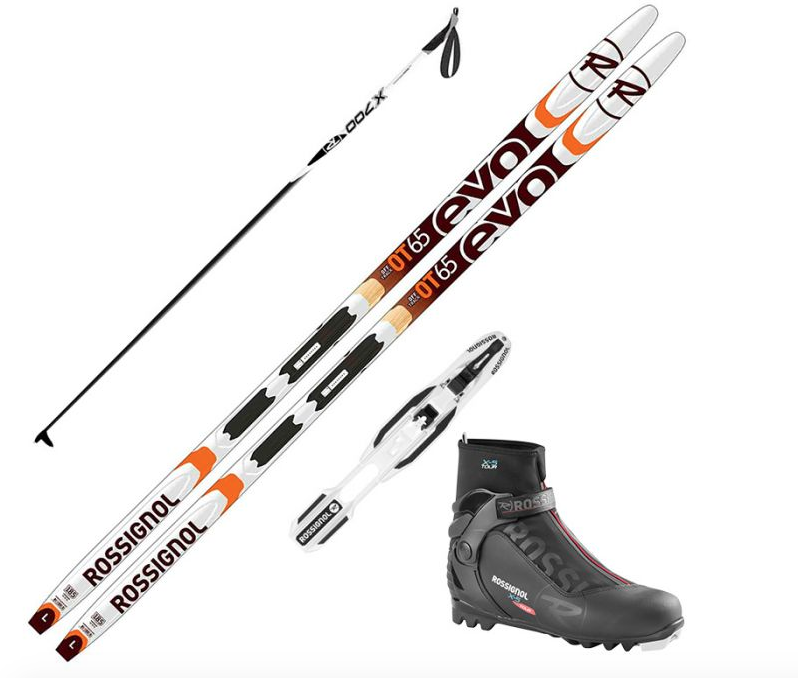
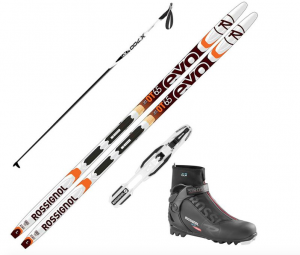
Of course you want some brand information and that is mostly beyond the scope of this content but with the Rossignol EVO skis, it’s easy for skiers to choose their model from the line of skis determined by the level of use or performance to suit the skier’s needs. The ski width would be based on where they’ll be skied and how much floatation is desired

The Spider 62 Crown is Fischer Nordic’s popular versatile ski for a variety of uses including machine-groomed tracks at the ski area, in man-made tracks, or on unmaintained terrain. This ski will not glide well compared to the lighter, narrower, stiffer line of XC skis. The Spider is available in three sizes, has a steel edge for control, and a base pattern that holds going uphill.

XC Ski Boots

Modern XC boots from the big brands.

The biggest change in XC skiing is that the ski boots are built for support, comfort, and warmth. XC boots should be easy to get on, well insulated, lightweight, stiff soled, keep you dry and most of all, feel like bedroom slippers. The plastic cuffs and straps around the shin will provide more support, but some higher-cut boots just keep the snow out and do not provide support. Molded footbeds are recommended (acquire them separately) and make sure that the fitting occurs with the socks that will be worn when skiing. Be aware of whether the XC ski boot is specifically for skating, backcountry, or general use. Make sure that the boot matches the binding. Salomon and Rottefella bindings need boots that go complement them; BC models have wider connections to a wider boot, etc.

It is recommended that XC ski equipment is tried prior to purchase and you can do that at an XC ski area or a demo held at an XC ski area. Again, it is likely that most of the demo gear is set up for advanced skiers rather than recreational. The XC ski area rental operations may very well have different recreational rental products for you to try. When in the retail store be mindful that retail salespeople should be cognizant of your needs (where you’ll mostly ski, how much performance you desire from glide or control, etc.) and that the products that you purchase fit your specific needs.

The issue of price is basic – you get what you pay for. If you save substantial money, you’ll likely be foregoing quality, performance, or fit. Expect a discount if you purchase a package of XC skis, bindings, boots and poles.

Happy hunting for the right gear.

This article first appeared in XCSkiResorts.com

This Week In SeniorsSkiing.com (June 26)

Is Fitness On Your Mind These Days?, Harriet’s Hip Advice, Exercise Hacks Book Review, Questions For You.

Ski Tuck in June? Sure, say three Vermonters. See below for link to story in Powder Magazine. Credit: Connor Nash from Powder Magazine

The summer solstice has come and gone.  On solstice day, a northeastern Siberian town located above the Arctic Circle, recorded 100.4 degrees, the highest temperature ever recorded in the Arctic since records have been kept.

In the East, an early summer heat wave continues, putting a damper on vigorous outdoor activities for seniors.

Or not.

Around our rural neighborhood, we’ve noticed several senior road cyclists riding solo in the heat of the day, temperature in the mid-90s, humidity up there, their gray hairs sticking out of their helmets giving them away.  Senior runners are out there, too. Wise to keep pumping? Witless for pushing the limit?

At our age, most readers engage as best they can in vigorous physical activity, snow sports in winter, other activities in non-snow months. The virus, however, is cramping our habits. Gyms are closed or opening under major constrictions; team sports are out, bike clubs are social-distancing and mask-wearing, and pools are off limits.

As a result, we know for a fact that some seniors are exercising with new behaviors perhaps unwisely, too much, in the heat, perhaps with existing injuries. We know because we are one. Too much aggressive yoga led to pulled muscles, shutting down our physical activities for weeks now.

It’s hard to ignore that our lives have changed in these times of the virus. What we need to understand is that new fitness habits have to be thought through so that our enthusiasm for that endorphin rush doesn’t compromise our bodies.

This Week.

In this week’s edition, we have a series of articles on fitness.  SeniorsSkiing.com correspondent Harriet Wallis offers her advice on critical decisions prior to having a hip replacement.  Harriet should know; she has two new hips and two new knees.
We have also been sent a cool book on fitness for seniors.  K. Aleisha Fetters’ Fitness Hacks For Over 50 offers 300 ways to build easy fitness moves into everyday activities. It’s a very clever idea to get us to think of different ways to keep our bodies in motion.

The results of our Next Season Survey are in. Click here to review the highlights. Thanks so much for your participation. We had a 21% response rate which is very high for a publication like ours and evidence of the engagement of our readers.

We have some additional Questions For You this month, focusing on cross-country skiing and how frequently SeniorsSkiing.com should publish next season.  Please offer your thoughts.

And despite the oncoming of summer, three Vermonters found a way to ski left-over snow at Tuckerman Ravine in the White Mountains.  Click here for a link to this story from Powder Magazine about three lucky skiers who saw an opportunity ski the Ravine in late June.

Be safe, stay well. Remember there are more of us every day and we aren’t going away.


Question For You 8: The XC Option

What About Cross-Country?

Let’s imagine that the recovery from the Corona virus doesn’t go as we all hope it will.  And that by the time snow flies again in the mountains, the second wave has landed.  Ski resorts are either closed or postponing opening dates until later in the winter. Or ski resorts are limiting access through a lottery or other ways of restricting access. In other words, no or limited opportunities for Alpine skiing.
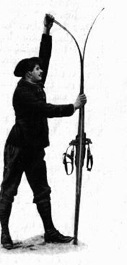
And backcountry may be discouraged for senior skiers because of the potential for deploying essential search and rescue personnel when they are needed elsewhere.

Got it?  So here’s the question:

Please write your response in the Reply Box below.

Given your attraction to snow sports and physical activity, if Alpine skiing is cancelled, delayed, or restricted, will you find opportunities to go cross-country skiing in parks, golf courses, open farm fields, even XC resorts?

old fashioned skier

Question For You 9: SeniorsSkiing’s Publishing Schedule

Is Once A Week Too Much?

The co-publishers are curious about how our readership feels about our publishing schedule.  Currently, SeniorsSkiing.com publishes a weekly edition from around the beginning of October to the end of April. We’ve heard from some readers that might be overkill. Others say, keep on keeping on. We have been struggling with the decisions.  Perhaps you can help.

How say you?

Please write your response in the Reply Box below.

Should SeniorsSkiing.com consider shifting its publishing schedule to twice a month versus once a week during the snow season?

This Week In SeniorsSkiing.com (May 22)

Green Shoots On The Horizon (?), Yellowstone Opens, Season Ticket Puzzle, Bike Fit, Questions For You.

Superstar Killington, VT,  May 19, 2020 Credit: Killington/NewEnglandSkiIndustry.com

According to New England Ski Industry, early-open, late-close Killington resort has decided to pivot to golf on May 19th despite skiable conditions on one popular trail.  Indeed, as the photo shows, Superstar looks ready to go, top to bottom.  The resort closed on March 14, holding open a tendril of possibility of re-opening for some late season skiing. That’s not going to happen. Killington president Mike Solimano said that even if the resort opened with just one trail, a thousand visitors would show up, confounding any attempts at social-distancing.  For the first time in a long time, Killington has lost its “last-to-close” honor because four New Hampshire resorts closed four days later on March 18.

And so the chapter officially closes on the 2019-2020 season, one which currently finds snow falling in the Sierra and the White Mountains in May. It “coulda been a contenda” for a great season, but…

On the other hand, there are green shoots signaling a turning towards the direction of normal. For example, Yellowstone National Park is opening up this week in a series of cautious phases. Come to think of it, what a perfect place to be outdoors and stay isolated. Pitch your pup tent in one of the National Parks’ halycon camp sites, and you’re in lock-down in paradise. If you can get on the road, why not travel to a National Park near you?

Active Travel For Seniors

Which brings up a new feature series for SeniorsSkiing.com.  We’ve realized for a while that our readers are interested in active vacation travel.  Snow sports is just one part of the wide interests of our audience. So are many non-snow destinations and activities.  We’re going to be publishing stories about interesting places to go where you can be active, engage with nature, learn something new, and stay fit. We’re calling the series, “Active Travel For Seniors”.

Coincidentally, our first article is about Yellowstone opening up. Thanks to our new correspondent, Chicago-based Mira Temkin, you can read about its astonishing features and perhaps contemplate a camping/holiday trip into one of its isolated corners. That is, when you’re comfortable with traveling away from your confinement.

Our Looking Ahead Survey

One of our trademark practices at SeniorsSkiing.com is to keep in touch with our readers through online surveys. This spring, we’re going to ask you about how you see your snow sports activity unfolding in the fall. Realizing full-well that everything changes in one news cycle, we’d like to capture a snapshot of how you view the upcoming season as of late May, early June.  So look for the survey coming soon to your email box. And please respond. We will share that information with you when we sift through the data.

This Week

Harriet gets fit in a bike shop studio with an Oriental rug on the floor. Credit: Harriet Wallis

In addition to our inaugural Active Senior Travel story about Yellowstone, you can learn how to get your bike fit to your own peculiar metrics. Correspondent Harriet Wallis visits a pro bike fitter who explains the process.

We are also asking two Questions For You this week.  Questions For You is a new feature which provides you with an opportunity to sound off on a topic. From these collected comments come some themes and and ideas that we can use for future editorials as well as interesting connections between readers.  The Questions For You this week involve what you’re doing for fitness in these virus times and what ski resorts need to do to make you feel comfortable returning to the lifts.

We have also included a nostalgic tribute video story from Outdoor TV about the incomparably stylish Stein Eriksen. Check out his moves and those sweaters right here. 

Thanks for reading SeniorsSkiing.com.  We will get through these difficult times together. We plan to publish monthly through the summer until the snow starts to fly, as we know it will.  It always does.  And remember there are more of us every day, and we aren’t going away.

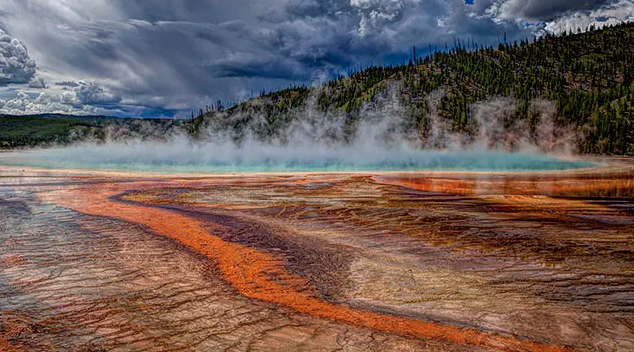
Yellowstone sits on top a thin part of the earth’s mantel, so hot springs are everywhere, heated by the planet’s core.

Buying A Season Pass In The Covid Year

[Editor Note: This article first appeared in the Cottonwood Heights Journal on May 18, 2020. The situation unfolding in Utah is similar to what is happening in other regions of North America.]


Wish the rules for buying a season pass were as clear as the skies over Alta. Credit: Harriet Wallis

A Season Pass Is A Complicated Decision.

Gone are the days of one deadline, one price. This year, season passes are a jigsaw puzzle.

It’s complicated by multi-mountain season passes, narrow canyon road congestion, and the now the virus. Each resort has its own spin on passes. You almost need a PhD and a crystal ball to figure out what’s right for you.

A Roundup Of What To Look For.

Deadlines for the best price. Deadlines are all over the place. Some deadlines are as early as this month (May) while others have been extended. And some resorts haven’t specified a deadline.

Discounts because of virus-shortened season. Some resorts are offering discounts on their 2020-21 passes. But the formula for discount varies from resort to resort. Some resorts have other options, too.

Budget plans. Some resorts let you buy your pass now and pay for it in installments.

Change-your-mind assurance. Some resorts let you buy a pass now and change your mind later if you decide you don’t want to ski next season. Options include pushing your pass forward into the 2021-22 season. Those change-your-mind deadlines vary all over the place.

Blackout dates / no blackouts. Yep, that varies too.

One resort, adult season pass. The plain vanilla, “adult pass at one resort, ski any day you want” has gone into tailspin. Some resorts have replaced it with family deals, midweek only deals, and pack of ticket deals.

Highlights Of Resorts In The Region.

Powder Mountain. A season pass includes supplemental injury insurance should you crash and break a bone. A season pass for seniors 75+ is $40.

Snowbasin. If you had a pass last year, you can choose a 20% discount or partial refund on a 2020-21 pass. Or you can donate the amount to one of several charities.

Brighton. It has the clearest explanation of how the Assurance “what-if-I decide-not-to-ski” plan works. While details vary from resort to resort, Brighton’s Q ad A page gives the best point-by-point explanation so you can absorb it.

Deer Valley. It has the best side-by-side comparison chart for comparing a Deer Valley season pass with an  Ikon pass. It eliminates the mumbo-jumbo. A Deer Valley pass comes with multiple benefits.

Snowbird. Snowbird prices passes for 9 different age ranges and occupations. It also offers valet and preferred parking passes.

Solitude. If you had a pass last year, you’re eligible for discounted season pass for car parking this year. And this year you can register two cars on your parking pass — but you can use the pass for only one car at a time. Solitude also offers a mid-week only adult pass.

Park City Mountain. The Epic pass lets you ski Park City plus a gazillion other mountains around the world. But to take advantage of all that, you can’t possibly be working full time. For some, not working might be a reality this winter.

IMPORTANT: Two resorts haven’t posted prices yet.

Alta is taking a wait-and-see approach. Rather than rushing to grab skiers’ money, it’s being cautious because of the virus. Alta told skiers it will let them know about passes when it has a better look down the road.

Sundance has not posted prices.

Stein Shows The Way

Remember Classic Skiing?

Those sweaters, that hair, those baggy pants. Stein was a one-of-a-kind.

Here’s a really great tribute video from Outside TV on Stein Eriksen’s role in creating the world of modern skiing. From extreme skiing to blue cruising, Stein has had a deep and lasting impact on the sport.  Who hasn’t tried to ski with knees locked together in a comma position just like him?

Click below to watch real wedlen and gelandesprungen in action. He sure makes it look easy.


Spring Is Time To Bike Fit

Ride More, Enjoy More With Properly Fit Bike.

Harriet gets fit in a bike shop studio with an Oriental rug on the floor. Credit: Harriet Wallis

If you think your bike hates you, it’s time to schedule a bike fitting. If you hurt when you ride, there’s probably a mismatch between your body’s geometry and the geometry of your bike.

Sure, all bikes look pretty much alike. They have wheels, pedals, handlebars and seats. And they come in sizes – essentially small, medium and large. But your body’s measurements are more complex than that.

Unfortunately, many dedicated bike shops will say: “Find the bike you like and we’ll fit it to you.” That usually means they’ll jiggle the seat up and down.

A real bike fitting includes taking body measurements: shoulder width, arm length, leg length, sit-bone width, and more. You’ll have to ask around to find who’s the real bike fitter in your area.

Some physical therapists are qualified bike fitters, while others are bicycle fitting gurus. A skilled fitter can solve arthritis-related and other structure-related aging problems so it will be fun to ride your bike.

This is what the computer sees. Credit: Harriet Wallis

A fitting  can take about an hour, and the fitter is likely to suggest a different seat or stem or some other component to make it compatible with your body’s unique geometry. They can’t change your body, but they change the bike to suit your body! All this comes with a price tag, but it’s worth it if you want to have fun riding after the snow melts.

Here are some ways to figure out what’s wrong, but if you change one thing then something else will probably feel wrong. A real bike fitting should help you be “one with your bike.”

1. If your knees hurt, you’re seat’s probably too low, too far back, or both.

2. Ask a friend to watch you from behind. If your hips rock back and forth even a little bit, your seat’s probably too high.

3 If your hands, arms, shoulders or neck hurt, you’re probably too far away from the handlebars.

4. If your neck hurts, your handle bars might be too low, too far away, or both.

5. If you feel you’re just not getting enough power for your push, lots of things are probably out of whack.

Friend Laurie is fit by a physical therapist. He placed markers on key areas to analyze her alignments on the computer. Credit: Harriet Wallis

Question For You 6: Next Season

How Is This Going To Work?

Everyone in the ski business has been puzzling about next season and how it will unfold. Uncertainty brings with it lots of speculation about if, when, and how the ski industry will re-open. Even if it does re-open, whatever that means, will people show up? So our first Question For You this month is asking for specifics from your point of view.
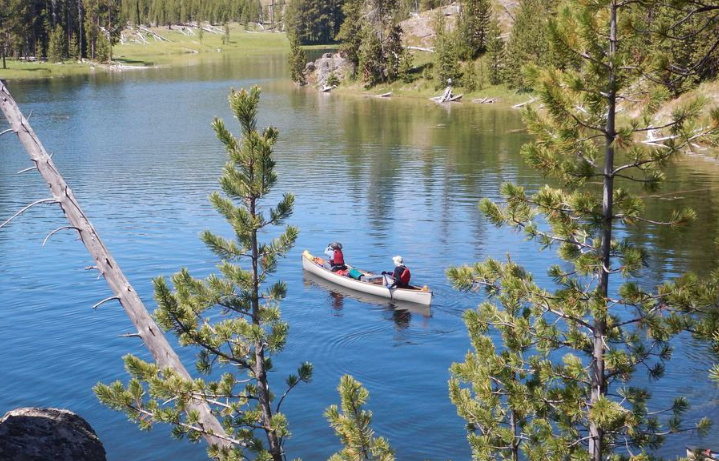

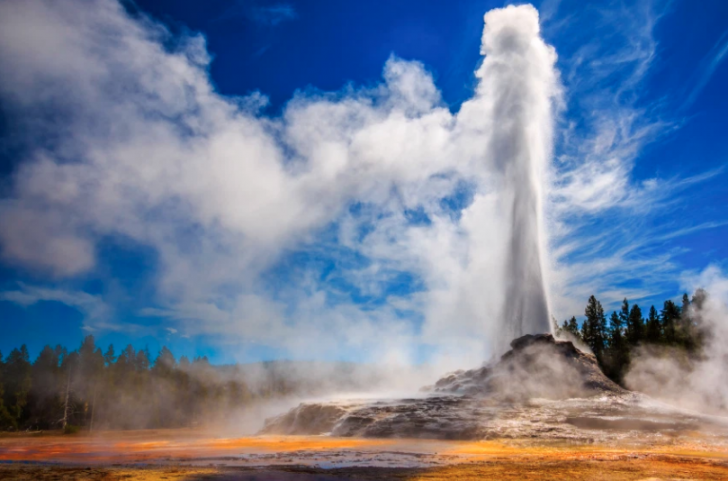
Please write your response in the Reply Box below.

What will you need to see ski resorts do to make you feel comfortable about coming back next season?


SeniorTravel: Yellowstone For Remote Active Adventures

The Oldest National Park Starts Phased Re-Opening This Week. 

Yellowstone’s vast 2.2 million acres holds many opportunities for an active vacation, and there’s plenty of space for isolation.

Located in Wyoming, Montana, and Idaho, Yellowstone National Park is the first national park, named in 1872, and ideal for active seniors who want to explore the great outdoors. The park is about to be gradually opened up this month. Here’s more information on the re-opening plan.

There’s something surreal about being in Yellowstone. Maybe it’s the millions of years of formation that seem to hold tight to its secrets. When you’re in the park at 8,000 feet of elevation, it evokes a serene sense of calm with lush valleys, jagged buttes, and free-flowing waterfalls.

For seniors who love adventure, the park offers a range of recreational opportunities from hiking, biking and horseback riding to kayaking, white water rafting and fishing. One of the most popular sports is wildlife spotting. When you see a line-up of cars along the highway pulled over to the side, you know there’s something to see. Maybe it’s a herd of bison with their babies, an elk, antelope, or mountain goat. Get your camera out and take some pictures. 

See Old Faithful in All its Glory

When Old Faithful will erupt is predicted on the NPS webcam. Place your bets.

The star of Yellowstone is Old Faithful, erupting on schedule every 35 – 120 minutes and shooting as high as 140 feet in the air. This magnificent geyser in all its splendor lasts between 1 minute, 30 seconds, and five minutes. For those fascinated with statistics, there’s even a clock in the lodge to predict the next eruption. For now, check out the webcam at yellowstone.net/webcams/old-faithful.

With more than 1,000 miles of trails, there’s a hike to challenge you and take you out of your comfort zone. There’s a range of activity for all. Check out the 500-plus geysers in the park with their own schedules, paint pots, calderas, and hydrothermal wonders. Fish enthusiasts will discover the largest population of wild cutthroat trout in North America. Don’t miss the Grand Canyon of the Yellowstone River with its gorgeous waterfalls that will simply take your breath away.

Lake Yellowstone Hotel: Classic Accommodations with Spectacular Views

Hugging the shores of Yellowstone Lake, the “Lady of the Lake” is a magnificent hotel featuring 158 deluxe rooms, recreating a time of grandeur and elegance. Built in 1891, this historic hotel provides guests with fine dining, a string quartet, and an Inspired by Artist series. The narrow halls, back porch, and Sunroom make you feel like you’re on a cruise ship.

A Range of Accommodations and Dining

Yellowstone offers nine types of lodging from the elegant Lake Yellowstone Hotel to cabins and more rustic lodging for those who prefer something other than a hotel. as a part of the premier Xanterra Travel Collection. Check their website for lodging openings. The Lodges also offer tours and activities guided by Certified Interpretive Guides.

Consider visiting in the shoulder season when crowds are a little thinner. Spring (May – June) welcomes bison and antelope newborns, while bears are out of hibernation. In winter, wolf-watching is popular and the geysers even more spectacular.

Yellowstone will be back this summer.  If you decide to travel, you can get “lost” in its vastness. Talk about getting away from it all.

For group travel and recommendations, check out roadscholar.org, yellowstone vacations.com and www.nps.gov

Yellowstone sits on top a thin part of the earth’s mantel, so hot springs are everywhere, heated by the planet’s core.

Open: South and East entrances in Wyoming, the lower loop of the Grand Loop Road, restrooms, self-service gas stations, trails, and boardwalks in open areas

Closed: Montana entrances, overnight accommodation, full-service dining, commercial tour buses, and ranger programs.

For the most current information, visit www.nps.gov/yell/index.htm.


This Week In SeniorsSkiing.com (April 10)

Season Wrap: It Was A Very Good Season Until It Wasn’t.

[Editor note: We’re including a few notable pics from the year to accompany this article.]

Credit: Taos

And so ends the sixth publishing year of SeniorsSkiing.com.  A little earlier than planned.  We had some spring skiing in mind around mid-March; we bet you did, too. Nothing is constant but change.

As we move into the blooming part of Spring 2020—the weather breaking, nature waking up—we have to be grateful for what we did have this year. So, in this last This Week of the publishing year, we are going to look back.

The Women’s World Cup on Thanksgiving Weekend at Killington was, luckily, an act of kindness from the snow gods. Thanks to an early snowstorm, there was snow for racing. And the East was poised to have another fantastic year. California also had a early snow. Hopes were up.  Little did we know the season would be U-shaped, snow-wise, when all was said and done. Rockies, BC, Northwest, mostly great to fantastic. The report card for 2019-20: All good West (not California), Meh, East. Maybe next year.

SeniorsSkiing.com continued to publish its directory of 157 ski resorts where seniors could ski for free or almost free. We defined almost free as deeply discounted lift tickets and season passes.  We keep uncovering more of these bargain spots, thanks, in part, to referrals from our readers. We can still download that directory. Note: You will have to re-enter your name and email to access subscriber-only content.

We also published our yearly list of skis for seniors, thanks to our partnership with Realskiers.com. That is still available, too, as a download. Note: You will have to re-enter your name and email to access subscriber-only content.

This season, we had technique tips from Bob Trueman, Pat McCloskey, and Marc Liebman, as well as a new Ask The Expert series, where reader questions were fielded by industry savants. We published personal memoirs about last turns of the season and Moriarty hats, profiles and obits of ski personalities, and fitness routines, personal stories of knee replacements, and health tips especially for seniors. We had a series of pre-season puzzles to keep readers’ interests engaged while we waited for the weather to turn colder.

We also published resort reviews, based on visits by our correspondents, and a collection of cross-country skiing articles, about places, technique, and news.

Correspondent Jan Brunvand captured an incident in action.

We were happy to publish the Skiing Weatherman’s weekly predictions all season long.  Thanks to Herb Stevens for delivering interesting analyses of how the weather works.  We actually learned a lot about troughs and ridges in the process.

We published over 20 Mystery Glimpse pictures contributed by the many fabulous ski museums around North America. In looking at your guesses, we realized there are many astute observers of ski history out there.  Thanks for playing the game.

This February, we had our second fundraiser. We were humbled and grateful for the wonderful contributions from our readers that will keep this enterprise going. 

Finally, this year’s Incidents And Accidents series has led to important recommendations, shaped by our readers, to make the on-slope experience safer for everyone.  We are currently bringing our findings to the ski industry for their reaction and action. We will report how that project is processing over the next few months.  Bear in mind, the ski business is pre-occupied with virus management, so we are treading carefully and patiently.

Our Magnificent Correspondents

SeniorsSkiing.com could not exist without the contributions of our correspondents, most of whom are professional journalists. Most of these writers have been with SeniorsSkiing.com since we started six years ago. We hope you appreciate their work; we can’t thank them enough.
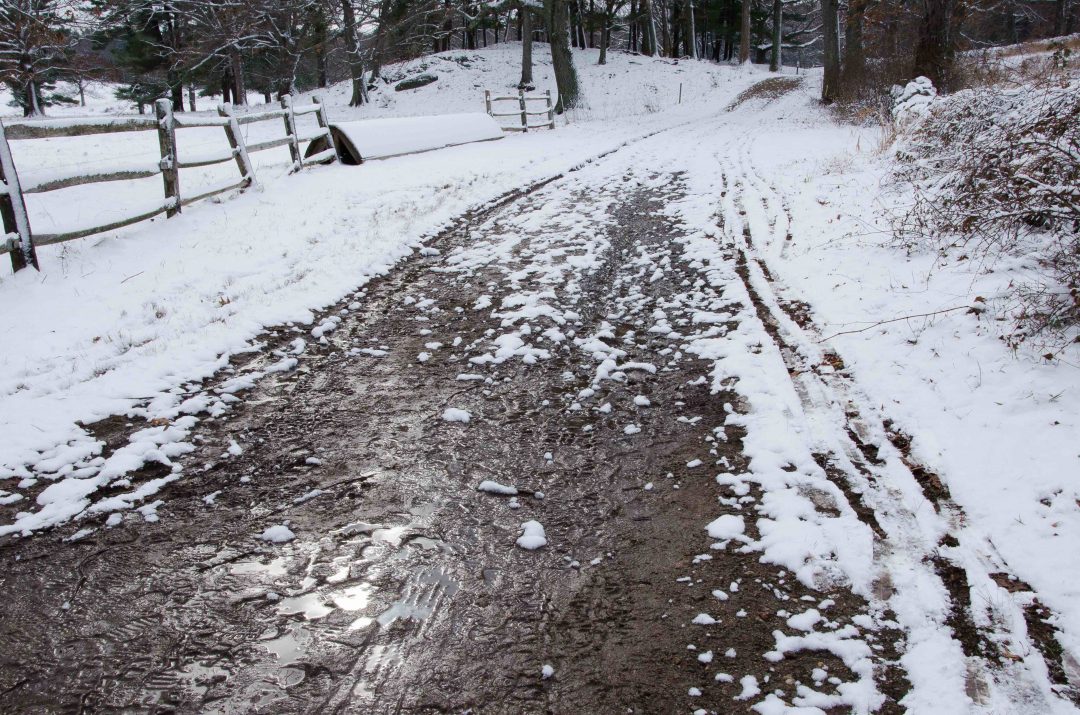
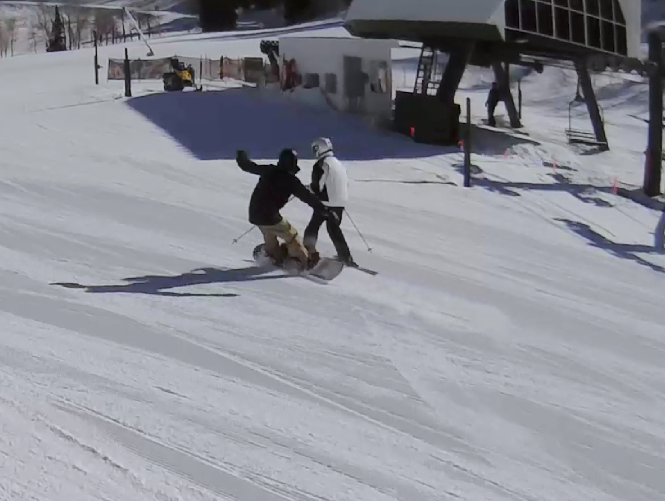
This year’s regular contributors are:

  • Harriet Wallis, Salt Lake City, UT
  • Roger Lohr, Lebanon, NH
  • Tamsin Venn, Ipswich, MA
  • Pat McCloskey, Sewickley, PA
  • Marc Liebman, Savannah, TX
  • Don Burch, South Windsor, CT
  • Joan Wallen, Andover, NH
  • Bob Trueman, Welshpool, Wales
  • Herb “Skiing Weatherman” Stevens, Wakefield, RI
  • Mike Roth, Albany, NY
  • Rose Marie Cleese, San Francisco, CA
  • Yvette Cardozo, Issaquah, WA
  • Mary Jo Tarallo, Rehoboth Beach, DE

And thanks to the one-time contributors who made it to our pages.

This Week

Co-Publisher Jon Weisberg reviews Roam Robotics Elevate, a computer-assisted exo skeleton, that supplies subtle support and a completely different approach to assistive ski devices.

We reveal last week’s Mystery Glimpse picture from the Tread Of Pioneers Museum, Steamboat Springs, CO.  One reader did a Sherlock-like job connecting the dots, deducting the right answer by reading the clues in the article and pic. Nice work.

We reprise a verse from Two Tramps In Mud Timeby Robert Frost, which fits the temperament of April. We have also included a link to Frost reading the poem himself. The Snow In Literature series has been fun for us to curate, and we’re glad we’ve reached a number of readers. Just shows you there’s another part of winter besides resorts, skis, gear, etc.

Thanks for reading SeniorsSkiing.com.  Take good care in these disruptive days. We will publish monthly over the non-snow months. 

Remember, there are more of us every day, and we aren’t going away.

Sunday River, ME


Snow In Literature: Two Tramps In Mud Time (Excerpt)

[Editor Note: This time of the year, we like to re-publish this verse from Frost’s Two Tramps In Mud Time. We also note that we’ve published a number of Frost’s poems in our Snow In Literature this publishing year. Unintended.  But his words reflect the world of people who know winter and all it brings. You can listen to Frost himself reading the whole poem by clicking on the YouTube link at the bottom.]

By Robert Frost

The sun was warm but the wind was chill.
You know how it is with an April day
When the sun is out and the wind is still,
You’re one month on in the middle of May.
But if you so much as dare to speak,
A cloud comes over the sunlit arch,
A wind comes off a frozen peak,
And you’re two months back in the middle of March.


Question For You: 5

We Need Your Ideas.

Correspondent Jan Brunvand captured an incident in action.

Our editorial this week calls for the ski industry to re-consider the Responsibility Code with the goal of reducing on-slope collisions, near misses, and even hit-and-runs. This is a serious problem that we’ve explored all season in our Incidents And Accidents series. While a comprehensive solution requires leadership, commitment, and investment by resort management, SeniorsSkiing.com believes a simple, realistic, feasible, and achievable first step is for the industry to update the Responsibility Code.

What do you think? How would you update or amend the Responsibility Code to reflect today’s reality?

Please respond in the Reply Box below.


Mystery Glimpse: Movie Star

Who’s This?

This is a still from a movie this celebrity ski racer was in. Many thanks to the Tread Of Pioneers Museum in Steamboat Springs, CO, for this photo.

Last Week

Credit: Journal New England Ski Museum

From the Journal Of The New England Ski Museum:

“Pete Seibert worked as a ski patroller in Aspen just after the war, then in 1950 attended L’Ecole Hoteliere de Lausanne in Switzerland, learning the art of hotel management on the G.I. Bill. Returning to Colorado, he became manager of Loveland Pass ski area, then moved to Aspen Highlands in 1957.  By then, Earl Eaton had taken Seibert on a March climb up the mountain just west of Vail Pass that Seibert decided he would spend his life developing.”

The video below tells the story of that seminal hike into the hinterlands which would become the Vail resort.


https://www.youtube.com/watch?v=zP4vzekpwjg

Nordic Walking Burns More Calories

If You’re Going For A Walk, Bring Those Poles. Easy, Accessible Efficient.

Add Nordic walking to your virus-beating activities to stay in shape.

Staying active outdoors during the COVID-19 virus crisis is easy and very accessible with Nordic walking, which is a fitness activity that combines walking with specially designed poles to engage the upper body muscles. Like cross country skiing, the poles are used to match each step a person takes. It’s an easy, inexpensive workout with remarkable benefits, according to a study by the Cooper Institute, Nordic walking burns up to 40 percent more calories compared to just plain walking.

It’s better than walking because it provides an easier cardio workout by increasing the heart rate 5-17 beats per minute more than normal walking without increasing the perceived rate of exertion. It also provides an upper body workout that includes shoulders, arms, chest, and back muscles. And it’s a low impact exercise, so it’s easy on knees and joints.

A good pair of walking or running shoes, comfortable clothing, and Nordic walking poles will get anyone started. People of ALL ages and ALL fitness levels can receive the calorie burning and aerobic benefits of Nordic Walking. The winning combination of improved posture and the shock absorbing benefits of the poles help many individuals to walk comfortably – even those with balance issues, knee issues or new knees, hip issues or new hips, back issues (including those with rods in their back), weight issues, multiple sclerosis (MS), Parkinson’s, neuropathy, arthritis, bursitis, scoliosis, lumbar stenosis, fibromyalgia, post polio, osteoporosis, stroke recovery and other limitations to walking.

For those who are unfamiliar, trekking (hiking with poles) and Nordic walking are two different activities that use very different poles and techniques. It may sound silly, but perhaps “walking is not just walking.” The pole angle, weight, grip, and straps are different between those modes of walking. The Nordic walking pole is designed to allow your hands to relax in order to target the larger wrapping muscles of the back. But using poles of any kind automatically stimulates your spine and all of the muscles around it, even with inefficient technique. When walking, the key postural muscles of the core and upper body are engaged.

I’ve been a Nordic Walker for a few years and found many of the claims for the activity regarding posture and exercise to be true. I’ve always been in search of a way to decrease the amount of time spent exercising, so I was sold when I heard that using the poles increases caloric burning by 40 percent. Cross country skiers will find it easy to quickly master Nordic walking. As a bonus, after a summer of Nordic walking, I noticed a marked improvement in my cross country ski poling in terms of strength and timing. It seemed that I increased the amount of forward momentum that was attributable to poling and I was able to pole stronger and longer when skiing.

Nordic Walking provides an exercise foundation for anyone, ranging from those just looking for an activity to lose weight to health aficionados interested in taking it to higher levels of fitness

Transition To Cycling

“Start Slow And Taper Off.”

Keep your distance and take it easy, especially at one your first rides. Credit: Pat McCloskey

The ski season came to a screeching halt as most of us are now staying inside with some socially distanced outings.  As I look back on this shortened season, I can take heart in the fact that I made the most of it before cancelling my last trip.  Skied a lot in the rain locally, dropped some of the Daly Chutes in Deer Valley, and had a great time skiing with my wife and our dear friends out there in Utah.  Skied some great conditions again  locally and was looking forward to another trip with the guys this time and —voila!  Covid -19.  So, for me, I  sharpened and waxed the skis and put them away for another year and look forward to some dry trail time on the mountain bike. 

The good thing about transition time for us seniors is that we can go about it slowly.  We have paid our dues, and those of us who rode over the winter have a good base already on which to build. I have a friend who has a great saying when asked about how he will start his rides.  He smiles and says, “Start slow and taper off”.  We all laugh at this and have made it our motto, but, really, there is some truth to this especially in the spring.  There is no reason to be a world beater when it is still early. Like anything—running, gym work, or any other springtime resolution—if you start too fast or go too hard, you will most likely quit.  Especially if you are new to the sport or perhaps have not done your homework over the winter.  If you approach Spring with the idea that you will start slowly, each day becomes more and more enjoyable as you build your fitness. 

This social distance deal is a bit confining, so it is important to safely get outside and get some fresh air.  You can still build your fitness for the summer in a socially responsible way. For me, I look for trails that I know will not be crowded.  I went out yesterday, for instance, and saw two ladies on horseback—(seniors actually), and a family of hikers.  That was it. 

It was a warm and sunny day, and I felt good getting out under the socially correct protocol.  Eventually, we will be able to regroup with our friends and life will move on. 

For the moment, if you do venture out of your home, avoid the parks, and crowded trails and seek some solace in the more remote places.  A mountain bike is good for that, and, if you take it easy, you will find that you feel good getting out and not killing yourself.  I always say to my friends, “Nobody here is going to the Olympics so slow down.” We will all get through this.  Better times ahead but now is the time to be responsible and “Start slow and taper off.”