Publishers Note: It is with great sadness that we learned of the recent passing of one of our most popular contributors, Harriet Wallis. This is one of her many articles we are republishing this season.
The Breakfast of Champions Kept Champion Ski Jumper Alf Engen From Competing.
Wheaties Ad 1936, Courtesy of Alan Engen
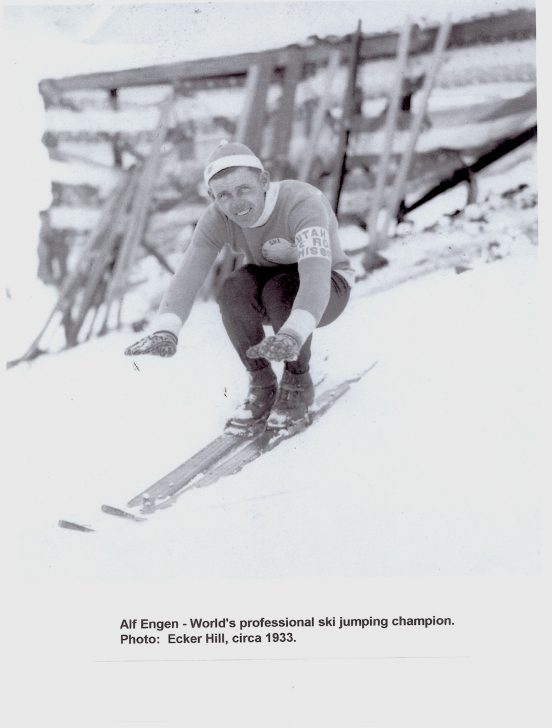
Legendary extreme athlete Alf Engen, known as the greatest all-around skier ever, was a champion soccer player, skier and ski jumper. During the 1930s, he set ski jumping world records. He helped design and establish more than 30 ski areas in the western United States. And he’s fondly remembered for pioneering deep powder skiing techniques and for his ski school at Alta.
But world champion Alf Engen was banned from competing in the 1936 Olympics because of a Wheaties breakfast cereal box.
It was just the fourth time that countries faced off against each other in wintertime Olympics. Competition included just four sports: bobsleigh, ice hockey, skating, and skiing. Twenty eight countries sent their best athletes to the IV Olympic Winter Games.
As background, Engen came from Norway to the United States in the 1920s, and he played professional soccer. By the 1930s, he was acclaimed for his ski jumping feats, he joined a ski jumping team, and he soon won 16 national ski jumping titles. And his jumps set world records. He also won national titles in all four ski disciplines: ski jumping, cross country, downhill, and slalom skiing.
Alf circa 1933, Courtesy of Alan Engen
Also in the 1930s, radio was the mass media communication method of the era. There was no television. People used their imaginations to create pictures from the words they heard.
But another form of mass media was taking hold: cereal boxes. Until then, breakfast cereal had to be cooked, but when food manufacturers invented cereal that could be eaten right from the box, they faced a marketing dilemma. How could they convince families to switch from cooked cereal to this newfangled ready-to-eat cereal? A cereal box sitting on the breakfast table with pictures of all-star athletes would be the marketing device. And unlike radio, the images were right there on the box.
Four athletes appeared on the Wheaties box—Bob Kessler, basketball star; Mike Karakas, champion hockey player with the Chicago Blackhawks; women’s speed skating champion Kit Klein; and famed skier Alf Engen.
Meanwhile, Engen became an American citizen. In 1935, at the U. S. Olympic Ski Jumping Finals held at classic Ecker Hill, he out-jumped everyone. He was immediately named as a member of the U.S. Winter Olympic Ski Jumping Team which would compete in the 1936 Winter Games in Garmisch-Partenkirchen, Germany.
But just before he was scheduled to leave, Avery Brundage, president of the International Olympic Committee and a zealous supporter of amateurism, ousted Engen from the team because his picture had appeared on the Wheaties box. He declared that Engen’s image on the cereal box made him a professional, not an amateur athlete.
“Engen said he didn’t remember getting any money from the cereal company, ‘Just a lot of Wheaties. I think I gave everyone in Salt Lake City free Wheaties.'”
Alf with trophies, courtesy of Alan Engen
Ironically, shortly after the Olympics, Engen jumped against—and he beat—both the gold and silver medalists from the Olympic Games, Norwegian gold medalist Birger Ruud and Swedish silver medalist Sven Eriksson.
The remarkable skiing Engen family is the only family to have four family member in the U.S. Ski and Snowboard Hall of Fame: Alf, his two brothers Sverre and Corey, and his son Alan.
Alan lives on in his father’s tradition. He’s a champion skier and athlete as well as an accomplished scholar, author, and historian. He carries on the Engen tradition of serving the skiing community.
Alan dreamed of displaying hundreds of Alf’s ski trophies and memorabilia for the public. The dream grew into the $10.5 million Alf Engen Ski Museum at the Olympic Park in Park City, Utah. Visitors can also learn about avalanches, sit in a real bobsled, try their knack at interactive ski jumping, and more. The museum was funded entirely by private donations, including donations from Utah’s famed and philanthropic Quinney and Eccles families. Visit and enjoy the museum when you’re in Utah.
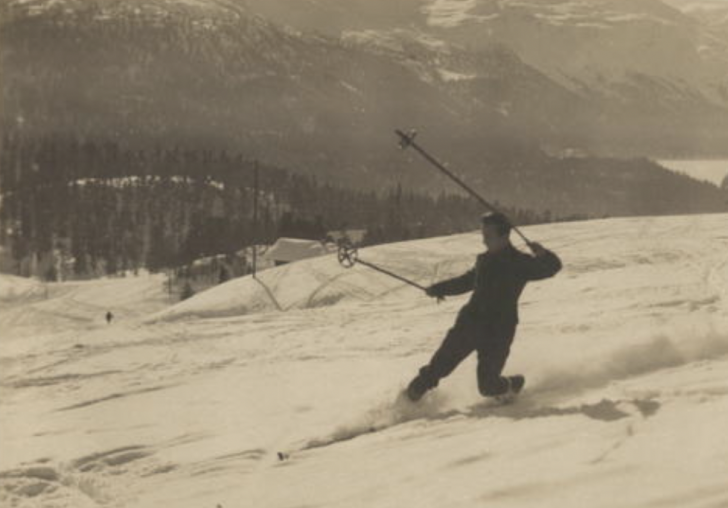
Alf in flight, circa 1936, courtesy Alan Engen
https://seniorsskiing.com/wp-content/uploads/2018/01/5-Alf-circa-1933-e1515684616833.jpg728552Harriet Wallis/wp-content/uploads/2014/04/Seniors-Skiing-since2013-Logo@2x-300x68.pngHarriet Wallis2026-03-19 12:20:362026-03-17 12:35:26How Wheaties Affected The 1936 Olympics
This is the first issue of SeniorsSkiing.com of 2022. I wish all readers good health, happiness, and peace for the New Year. But Covid’s omicron variant is challenging that wish for good health. It’s spreading fast, even among those who have been triple vaxxed. For most of the infected, it appears to be less taxing than Delta or earlier iterations. One side effect reported by several people I know, is hearing loss.
Ultimately, omicron’s virulence may cause such widespread infection that we’ll achieve herd or crowd immunity. That remains to be seen.
We’re older skiers and, by definition, more vulnerable to serious illness from the virus. For simplicity’s sake, I’ll divide our cohort into two categories: those who stay at lodges when they go skiing and those who ski and return home. Each is subjected to infection on lifts and in day lodges. Those overnighting in lodges have the additional risk of exposure from employees and other guests.
I don’t know if Utah is typical, but in terms of looking at the intersection of skiing and Covid, it is relevant.
Alta has no mask or vaccination-proof requirements. That, according to several friends who have skied there multiple times this season. The area recently closed its Watson Shelter because some staff tested positive. Alf’s remains open but with no mask or vaccination-proof requirements. The midmountain day lodge does keep windows open, according to a source working there.
Alta’s Smiling Rock Photo: Harriet Wallis
By comparison, day lodges at Park City Mountain Resort (indeed, all Vail Resorts ski properties) require proof of vaccination and masks to access food-service and tables.
On the day I’m writing this, a front-page article in The Salt Lake Tribune reports that Covid swept through several of Alta’s overnight lodges, causing some guests to leave early, rather than risk getting ill. Of the five lodges, the only one requiring proof of vaccination is The Rustler. Snowpine, totally rebuilt a few years ago, follows Utah’s libertarian spirit and requires neither vaccination nor masks. The lodge’s website is devoid of any reference to Covid.
The Tribune quoted a 74-year-old guest who beat it back to her California home: “I’m not going back to Utah. It’s a COVID [nightmare]. Nowhere has better powder than Alta. Too bad it’s in Utah.”
The Christmas feast at our friends’ home was a lot of fun. Three guest couples, all contemporaries; all skiers; all known to the host and hostess but not to each other. Following festive fare, our ever-creative hostess, asked each of us to talk about the first time we skied and about a time we got into trouble while skiing.
The answers to Question #1 revealed surprising similarities among the men: none had been particularly “athletic” in youth. But then they were introduced to skiing. Each of the wives became interested through their husbands.
Getting into trouble on skis produced stories of literal, cliff-hangers; skis lost in deep powder, etc. Listening to these tales of woe, reminded me of the time I inadvertently became the end-of-the-day Pied Piper to a bunch of kids whose anxious parents awaited their return.
It was in the mid 70s and Pam and I were skiing Plattekill, an 1100’ ski hill with a variety of interesting terrain in the Northwestern Catskills, a few hours north of New York City.
Pam returned to the day lodge as I took one last run. At the top, I entered a trail I hadn’t noticed before. It was more of a road than an actual trail, one of those endless runs looping back and forth through the forest. A few minutes in I heard laughter behind me. I looked back and counted 12 little ones following.
Back to Pam waiting in the lodge; wondering, Where’s Jon? Around her, clutches of agitated parents wondering, Where are our children? Several minutes later, I walk in, followed by the kids. Emotional parents embraced their missing ones.
The angry area owner yelled at me from across the large room, accusing me of taking the kids on a closed trail. I called back: “The trail wasn’t roped off, and I didn’t know the kids were following.” His response: “Do you know how much it costs for rope?”
I was banned from returning to Plattekill; a punishment promptly ignored. Those kids must now be in their 50s!
Have you gotten into trouble while skiing? Send in your stories. We’ll publish the most interesting.
Stevens Pass Petition: 20k Signatures
In a mere five days, more than 20,000 Epic Pass holders at Stevens Pass ski area in Washington, signed a petition demanding that Vail Resorts refund 60% of the cost of their passes. Why 60%? They claim that VR sold passes while knowingly planning to keep 60% of Stevens Pass terrain and a majority of lifts closed for the season. The petition gives VR a deadline to act by January 15 before filing a complaint with the Consumer Protection Division and the Attorney General of Washington State. Click here to read the petition.
Incivility at Beaver Creek
According to a posting by the victim’s wife, her husband was struck by someone skiing in a group. When he confronted the person, another man in the group removed his skis and gave her husband a severe beating, leaving him with a broken rib and other injuries. The group, thought to be in their 30s, skied off and were not found. The incident was reported to patrol and the Sherriff’s office. It occurred December 31 at Beaver Creek.
Park City Patrollers Seek Raise
The Park City Professional Ski Patrol Association (PCPSPA) rejected Vail Resorts’s offer of a starting wage of $15 per hour. The patrollers want $17. Current wage is $13.25. More than 200 patrollers are working without a contract. Other Park City Mountain Resort employees receive $15 per hour minimum. Patrolling requires extensive training and patrollers generally are responsible for supplying their own equipment. If VR blinks, minimum wages for patrol throughout its many holdings will climb.
Timberline and Ski Bowl Discontinue Free Skiing for Seniors
Subscriber, Thomas Levak, informs us that Timberline and Ski Bowl (OR) have discontinued free skiing for super seniors (73+). Lift tickets for 65+ skiers are $65 (days) and $45 (nights), and skiers are required to make advance reservations for the days and times they want to ski (perhaps not a bad idea given that limited numbers of skiers are allowed for different time slots). Thanks for the info, Thomas!
New Advertisers: Booster and Slide On
The Booster Dynamic Power Strap is an elastic power strap that replaces the power straps found on most boots and helps you ski better, regardless of skill level. It is used by 80% of all Olympic skiers. Slide On is a dry lubricant spray that helps your feet slip in and out of your ski boots. One application lasts for a month of frequent boot use. One 2 oz. can is good for the entire season. Click on the Booster/Slide On ad for more information.
Snowbird’s Golden Anniversary
Believe it or not, The Bird opened 50 years ago. Those of you who have been there, know its magic. If it’s still on your “to do” list, take steps to get it done. Its 2500 skiable acres are accessed by tram and 10 chairs. It connects to Alta, for a combined 5000+ acres terrain. I have many memorable days skiing thigh-deep (sometimes waist-deep) Snowbird powder with friends. The resort produced a 3-minute video telling its history. Click on the image, above.
Patagonia Walks the Talk
Patagonia makes superb, durable outerwear and redirects a portion of its profits to support environmental and other worthy causes. Another example of the company’s progressive policies is its closing all its stores from Christmas through New Year’s while paying employees.
Austria Tightens Covid Rules for Brits
Austria has classified the UK as a “virus variant” region. Effective December 25, visitors from the UK are required to quarantine 10 days upon arrival, even if fully vaccinated. Given that Austria is a major destination for UK skiers, this is a big deal. Exceptions: Those fully vaccinated and boosted who have a negative PCR test. Children under 12 are exempt. Teens meeting certain conditions also may enter the country.
Record Snow Records
More than 200″ (almost 17′) fell in the Sierra’s in December. Utah is getting hammered with one pulse after another. Revelstoke (BC) has received 21’+ so far this season. All that snow prompted me to look into snow accumulation records. An amazing 1,140″ (95′) was recorded at Mount Baker Ski Area (WA) (4,200 feet elevation) during the July 1, 1998 to June 30, 1999 snow season. Mt. Ibuki (Japan’s Honshu Island) measured 465.4″ (38.8′) February 14, 1927. The most snowfall in 24 hours (6.3′) was measured in Silver Lake, CO, April 14-15, 1921. Mount Shasta Ski Bowl (CA) recorded the most snow from a single storm: 189″ (15.75′), February 13-19, 1959.
Brrrrrrr: New Ice Hotel on Italian Glacier
A bedroom is the ice hotel next to Capanna Presena Refugio
A new ice hotel is now booking reservations. The luxury facility is on Italy’s Presena Glacier at Passo Tonale in Trentino and features intricate ice carving on both interior and exterior surfaces. The three-igloo-room facility is next to the Capanna Presena Refugio.
Vintage Cars in Snow
Here, from Weather.com, are 53 photos of cars in snow…most of them stuck in the snow. They’re from both sides of the pond and fun to see. Click here to view.
Another Weather.com entry: 91 vintage images of people playing in the snow. Notice that virtually every person pictured is smiling. Of course, they are! They’re in the snow. Click here to view.
Do you have information you want to share with other members of the growing SeniorsSkiing.com community? Send it to jon@seniorsskiing.com. Use the same address if interested in contributing articles. Please forward SeniorsSkiing.com to other older skiers who may enjoy receiving it. Or simply tell them about the site.
If you haven’t already done so, it’s close to the time when the skis and snowboards get tucked away for summer hibernation. Between Covid-19 restrictions, National Forest leases, and Old Man Winter calling it quits prematurely in much of North America, forces have conspired to end the season for the majority of winter sports enthusiasts. This is my final posting of the season, so I thought I might take a look back at the season that was.
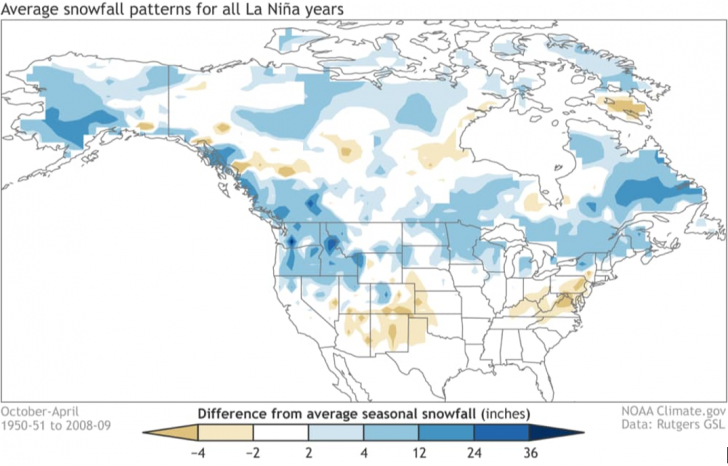
Just as is the case when putting together a winter forecast, a review of the season has to be framed by the state of the Pacific Ocean. That is, were we in the midst of an El Nino, a La Nina, or neutral conditions with respect to the water temperatures in the equatorial regions of the Pacific? The answer is La Nina, because those waters were colder than the long term normal throughout the season. In the summer and fall, I am often asked by friends where the best skiing will be in the coming season. When an El Nino is present, I always tell them to favor the central and southern resorts if they are headed west. Conversely, if it is going to be a La Nina winter, I advise that they stay north of I-70. Why? Well, here is a map of the average winter snowfall for all La Nina years.
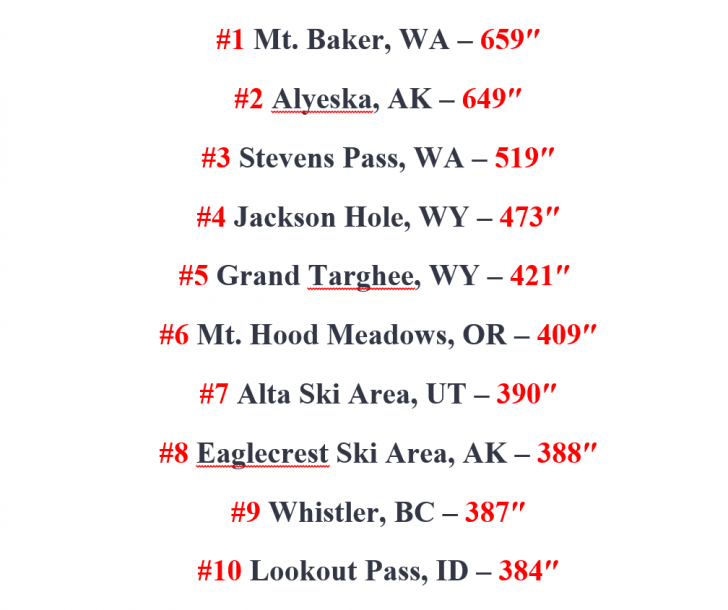
It is clear to see that when La Nina conditions are present, the jackpot for snow is typically found in the northern Rockies and Pacific Northwest, including far western Canada. Although the correlation is weaker the farther east you go, due to the extra distance from the warm/cold pools in the Pacific, you can see that generally speaking the Upper Midwest and the northern resorts of New York and New England do pretty well. How did this season work out? Here’s the Top 10 resorts in terms of snowfall, through March 15th (the latest I could find).
No surprise that all ten are in the West. Only occasionally does a Jay Peak or Sugarloaf push their way onto this list and after a paltry amount of snow in March, there will be no New England “contendahs” this year. Now, notice where 9 of the Top 10 are located…north of Interstate 70! Alta is the only exception, and they are only slightly south of that line of demarcation. Also, Alta’s normal snowfall is close to 550 inches, and I doubt that they will get that extra 200 inches to reach normal snowfall between mid-March and when the lifts stop turning at the top of Cottonwood Canyon. Moral of the story – if it’s a La Nina, stay north of I-70. If it’s El Nino, head to the central and southern resorts.
Elsewhere, the Upper Midwest bucked the La Nina trend with a below normal snowfall season at most resorts. In a more typical La Nina fashion when a southeastern upper ridge brings spells of warmth, the season was more of a struggle at times in the mid-Atlantic and Southeast but these regions had several runs of stellar conditions if your timing was right. The Northeast enjoyed a solid season, with a “Fabulous February,” and then the flakes stopped flying in March.
For those of you who might think on a broader scale, I leave you another way to measure how this season worked out with respect to snowfall. It’s a graph of seasonal snow extent (in square kilometers) from December 1st through February 28th, which constitutes “meteorological winter.”
This winter was better than 5 of the last 6 and 7 of the past 10 and the data trend over the past 50-plus years is positive, contrary to what some folks want you to believe. The models that focus on El Nino/La Nina are hinting that we may be in La Nina again next winter, something to consider as you start to put together your travel plans. Thank you very much for reading my column the past several months. Right now, though, “That’s a wrap!”
https://seniorsskiing.com/wp-content/uploads/2021/04/seniorski1-e1618441879894.png466728Herb Stevens/wp-content/uploads/2014/04/Seniors-Skiing-since2013-Logo@2x-300x68.pngHerb Stevens2021-04-14 19:25:412024-08-21 09:52:05The Year in Review
Here’s a note from Shelley Canalia, a reader, who has come into possession of this old hat with numerous pins from resorts and events.
My brother is Anthony Isham West. Great guy, comes from a Nordic ski family on his Father’s side. In 1985-86 he was working at Beaver Creek in Vail. He found this hat. Fast forward to 2021. He gives it to me. I want to find the owner or the owner’s family. Most of the pins are fromEuropean ski areas and a lot are from different Olympic events. There is a Lake Placid 1980 Olympics ABC pin. Also American Express Olympic pin. The person was definitely a skier. The hat is classic 60’s Moriarty Hat from Stowe, Vermont. So, if everyone would share this post maybe we can find the person or family this hat belongs to.
Anyone have a clue who this might belong to? Or, what can you infer about the owner from what you see, knowing it was lost at Beaver Creek in the mid-1980s?
If you have any information or what to comment, please LEAVE A REPLY below. Shelley will be monitoring responses for leads and clues.
https://seniorsskiing.com/wp-content/uploads/2021/04/MoHat.jpeg509477seniorsskiing/wp-content/uploads/2014/04/Seniors-Skiing-since2013-Logo@2x-300x68.pngseniorsskiing2021-04-12 13:06:492021-04-13 17:35:06Anyone Lose A Moriarity Hat 35 Years Ago At Beaver Creek?
Areas’ Marketing Campaigns Are In Full Swing, But Will The Weather Cooperate?
La Parva, Chile, sunset through the icicles. Credit: Casey Earle
For 2020, the ski season revolved around the multiple ills Chile has been suffering, including the ongoing drought that affected the skiing. This year would seem to be a continuation of those ills, including social and political unrest, economic suffering, and plague. In spite of all that, last year a few ski areas opened late in August, and the skiing was quite good. These were La Parva, El Colorado, and Corralco. Backcountry access was difficult due to covid restrictions.
Up until a few weeks ago, some optimism was brewing. Chile’s vaccination program had taken off strongly, Santiago had avoided a second wave, the elections for the constituents of the constitutional assembly were on for April 11, and rain had come to the central zone in January. Now, it would seem the Brazilian variant is ravaging the country, 90 percent of the inhabitants are in quarantine, hospitals are overflowing, and the elections are being postponed for a month. Riots flare up periodically, and the slow burn insurgency in Araucanía continues. Hard to be optimistic in this environment, but I will try.
Marketing announcing discounts for this season at La Parva. Credit: Casey Earle
The ski areas are certainly running their marketing campaigns like this season will actually happen with a semblance of normalcy.
La Parva touts their continuing commitment to opening the ski area, as they have done with their bike park during the summer.
Other areas are chomping at the bit to get the season going too, like Antillanca.
The dark spot is Valle Nevado, which is in arrears on a wide variety of debts, and recently initiated a chapter 11-type restructure of their obligations through to 2026, with large additional short term injections to keep the lifts turning. They cite the drought and covid as contributing factors to their woes.
In the weather department, the Chilean weather service just published their predictions for the fall (April, May, June). Click here for details.
In summary, with rising subsurface temps in the central Pacific, the Niña has ended, and a neutral period begun (“La Nada”), but rainfall deficits are still expected. These will be most intense in the central zone, with the far south receiving excess rainfall. A El Niño event could occur late in 2021, if the warmer waters surge through to the southeastern Pacific, but that is highly unpredictable.
What really matters though is what sort of rainfall will happen from June on when most of the snow falls. I would not dare a prediction as drought has been the norm and is most likely to continue, but one (or god permitting, two) atmospheric rivers could change everything, as happened in late June 2020 under lockdown.
If you are thinking about a trip down this winter, it is probably unwise to plan just yet. That said, if the vaccination effort goes well, and those pesky variants calm down, possibilities for August are not out of the question.
Crossing our fingers!
Riding the Roca Jack “Va et Vient” with the US Ski Team. several seasons ago. Credit: Casey Earle
A Wide Lens View Of How Large And Small Resorts Managed To Deal With Restrictions And Constraints.
[Editor Note: Pat McCloskey is a regular contributor to SeniorsSkiing.com. This article first appeared in Chronicles of McCloskey.]
Ski resorts took COVID compliance seriously, allowing the season to happen. Credit: Pat McCloskey
First, let me say I was glad that we HAD a ski season. From changing my boots in the lot at Laurel Mountain to the Covid 19 security seen above at June Mountain, CA, the theme was always the same: Please comply with the mask and social distance rules so that we can stay open. Wearing a mask is a small price to pay for the knowledge that the areas were doing the best that they can to stay open during the pandemic. The gentleman on the left in the orange jacket said to me that he appreciates all the public was doing this season to help them stay open. He was concerned not only about the skiing but for the welfare of the many employees that operate a ski area. Their livelihoods depended on compliance from the public.
No matter where I went this year, the theme was the same: Please comply for us to stay open. It was interesting to see how things transpired as the season went on. The mask laws were always enforced everywhere. When Jan and I went to Deer Valley in February, they had staff monitoring the lift lines to make sure that people had their masks on and up and over the nose. Signs were everywhere in ski areas this year instructing people to social distance in the lift lines and everywhere on the premises.
The only thing that was hard for lifties to monitor was riding the chair lift. In the beginning of the season, there seemed to be more of a concern for only riding two people per chair—whether it was a triple or a six pack. That seemed to expand the lines significantly. Then there was the polite request from the lift line monitors for people to ride together if comfortable. More and more people rode together which reduced the lines, but face masks were still enforced no matter how many people loaded
Pat and Jan McCloskey at Deer Valley for mid-winter vacation.
the lifts together. Everyone had the option to ride alone. We were at Mt. Rose in Tahoe last Monday, and a guy beside me requested to ride alone. I told him I completely understood, and he was very gracious. I also told him that we were all fully vaccinated, and he said he was too but didn’t trust anybody. He was nice about it but stood firm that he wanted to ride alone and that was fine with us. Generally the line monitors everywhere gave people a chance to ride as they felt comfortable.
All in all, I had the opportunity to get a good read on how the ski areas were doing with initially skiing in the East and then two western ski trips to see how it was being handled in Utah, California, and Nevada. One of the other comments from the ski area personnel was that they knew they were being monitored by the state. And their fear was that if the state saw non-compliance or lack of enforcement on the part of the ski areas, they would shut them down. This was the fear from last summer when there was a lot of speculation about whether the ski areas would open for 2020-2021 and if they would stay open. So far so good. My intel from friends in Colorado and Vermont also confirmed that initially there were issues with chair lift lines but as the season progressed, that seemed to wane a bit. The larger areas had lift line issues but the smaller areas or more remote areas had no issues at all.
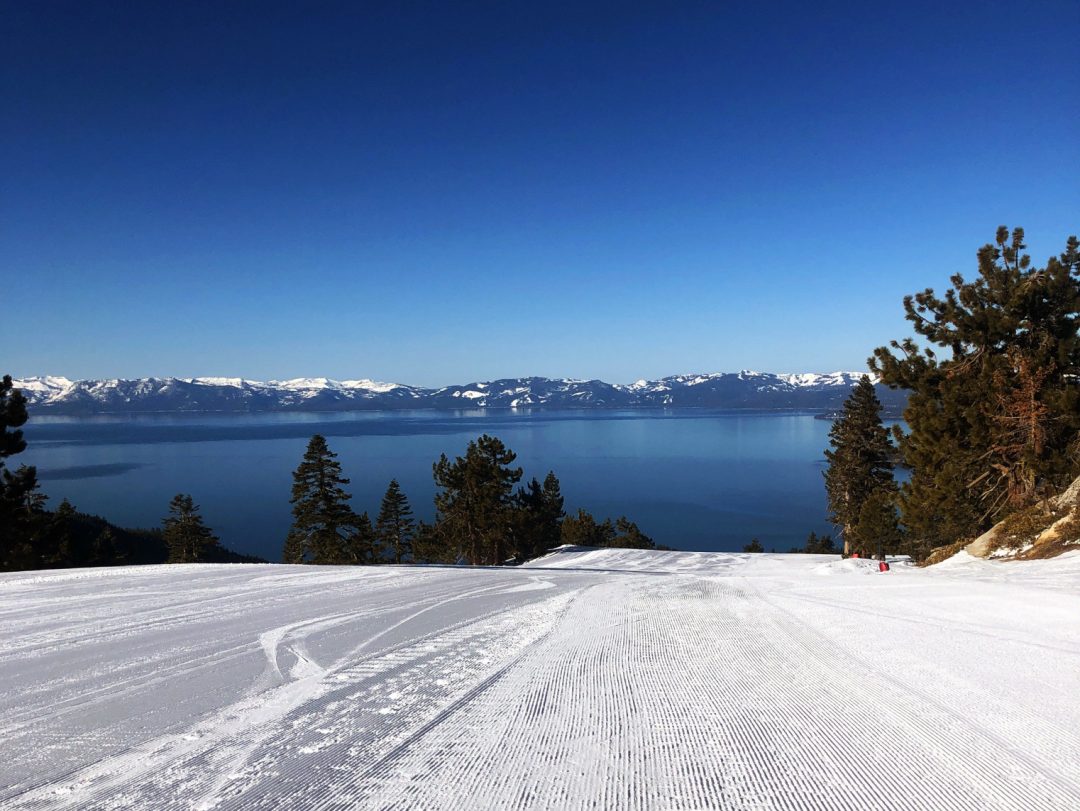
Arcing beautiful groomers at Mt Rose with Tahoe in the background: A memory to carry thru the summer. Credit: Pat McCloskey
So as we wrap up another ski season and as areas slowly start to close, I am again grateful that we had a season in these very trying times. It will be interesting to see how the areas did financially seeing that there was a different scene this year. No big apres ski scenes, restaurants at 5o percent capacity at best with the “Grab and Go” food options being the norm. Most areas got their money up front with the sale of IKON and Epic Passes which is the only way to go considering the price of daily lift tickets. But the food and beverage sales had to take a hit.
I always get a little melancholy with the knowledge that I won’t be on the slopes for another eight months. I thought about that when I was making some nice giant arcs on some great groomers at the end of the day at Mt. Rose. I thought to myself, “Pat, this is what you need to think about this summer when you are getting that ski itch.” I love the feeling of making the skis carve on some great groomers. It brings a smile to your face for sure. Even though the western snow pack was down 50 percent this year, and the really cool stuff was not accessible, it was still fun to rip the groomers and that feeling of making a nice rounded arc turn never gets old. So bring on the spring and summer. They are fun seasons too, but I will be looking forward to another ski season as the leaves start to turn in the fall.
https://seniorsskiing.com/wp-content/uploads/2021/04/Compliance-e1618233946307.jpg971728Pat McCloskey/wp-content/uploads/2014/04/Seniors-Skiing-since2013-Logo@2x-300x68.pngPat McCloskey2021-04-12 09:42:172021-04-13 17:35:26Look Back: US Season Wrap
Spot-That-Resort, Top To Bottom Telluride, Skiing Weatherman, Question: Buy Now?, Cycling Lessons, XCSkiResorts, Focus Mindset, Killington In Spring, Ski Club Prep In Oz.
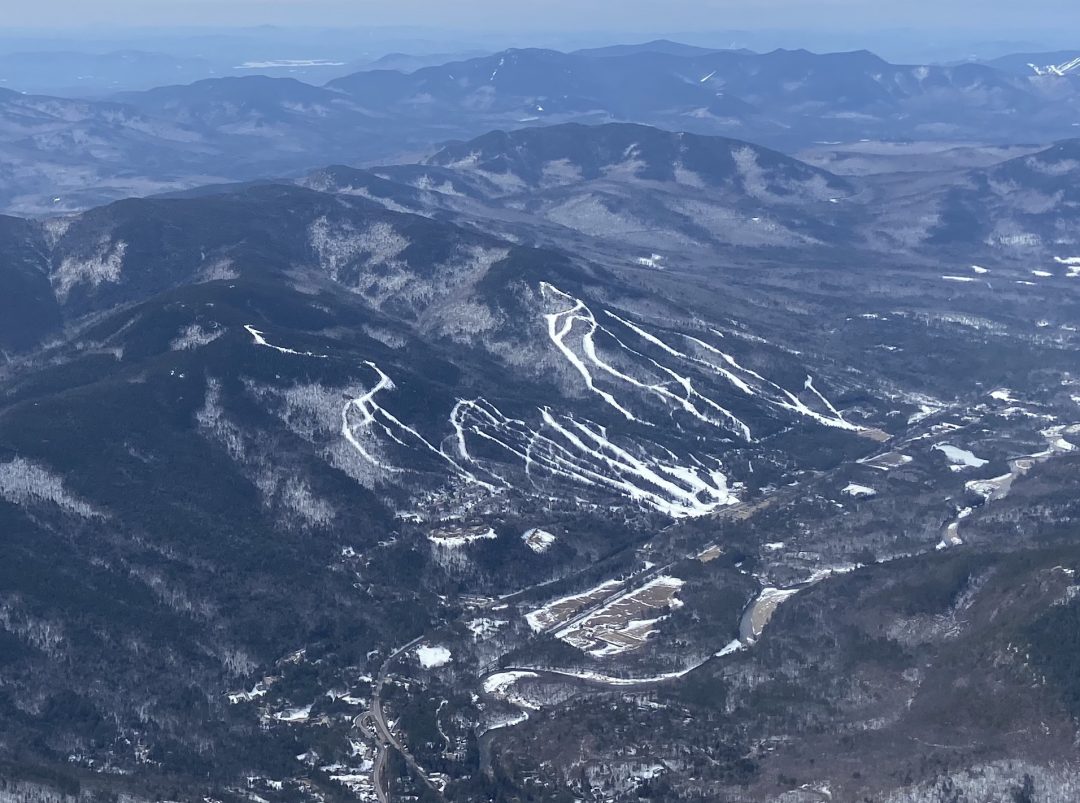
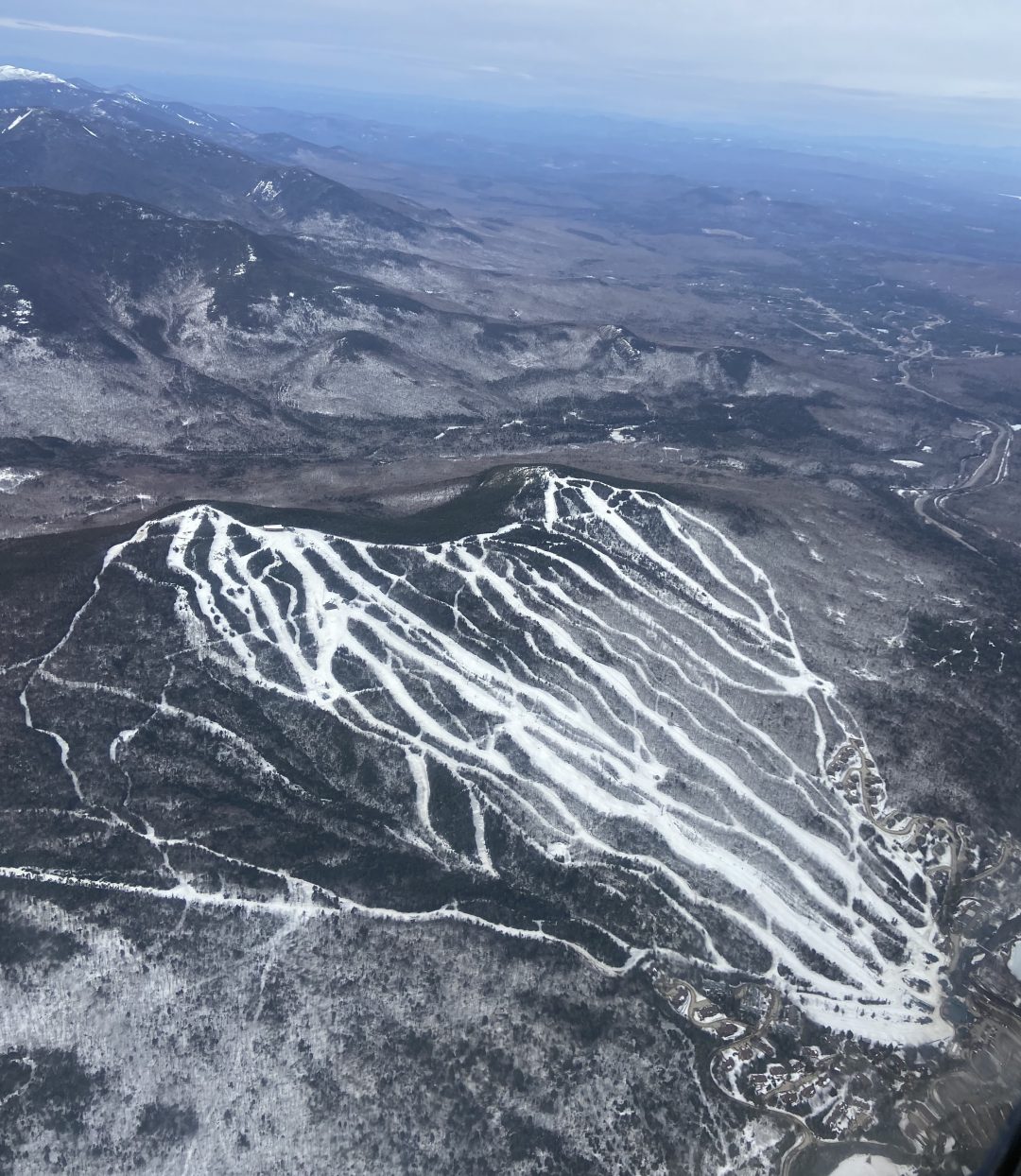
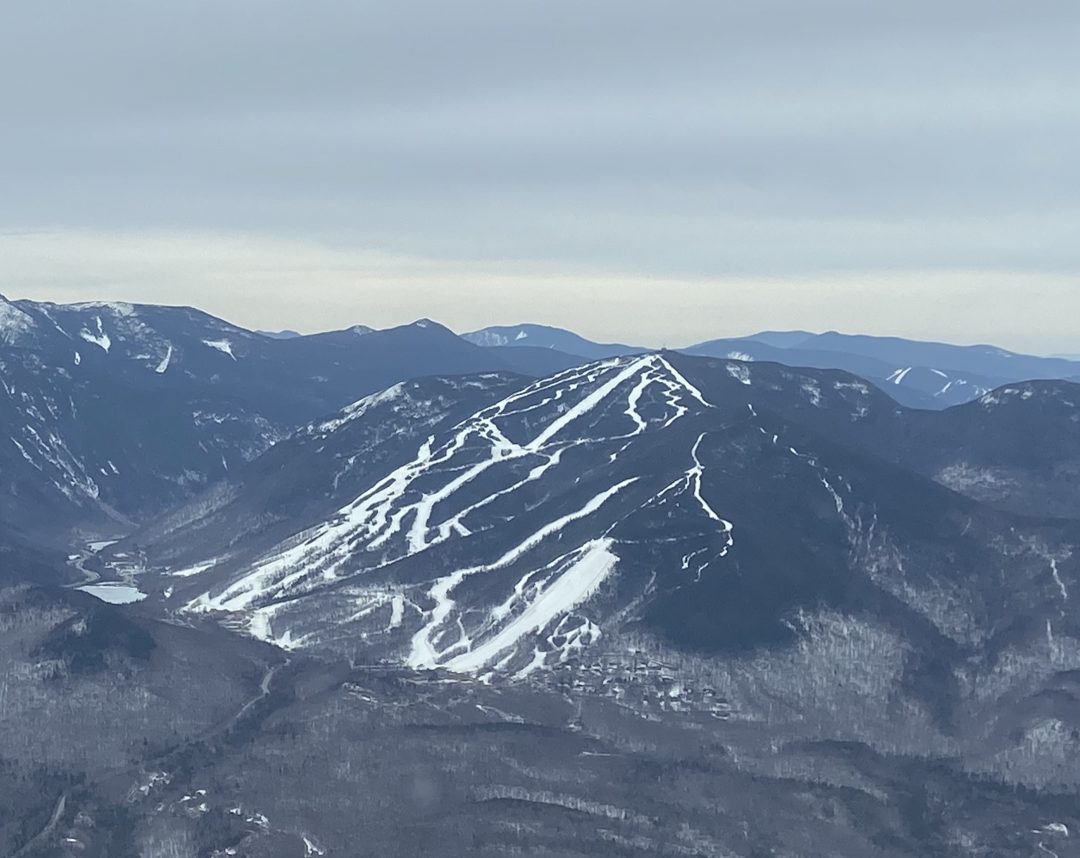
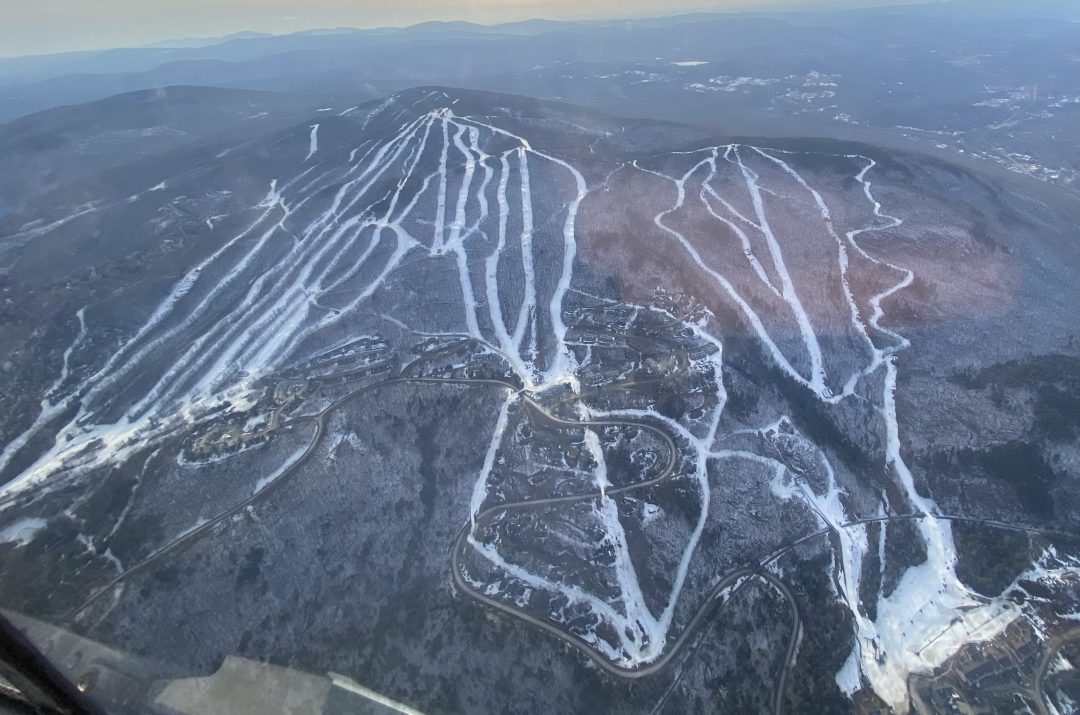
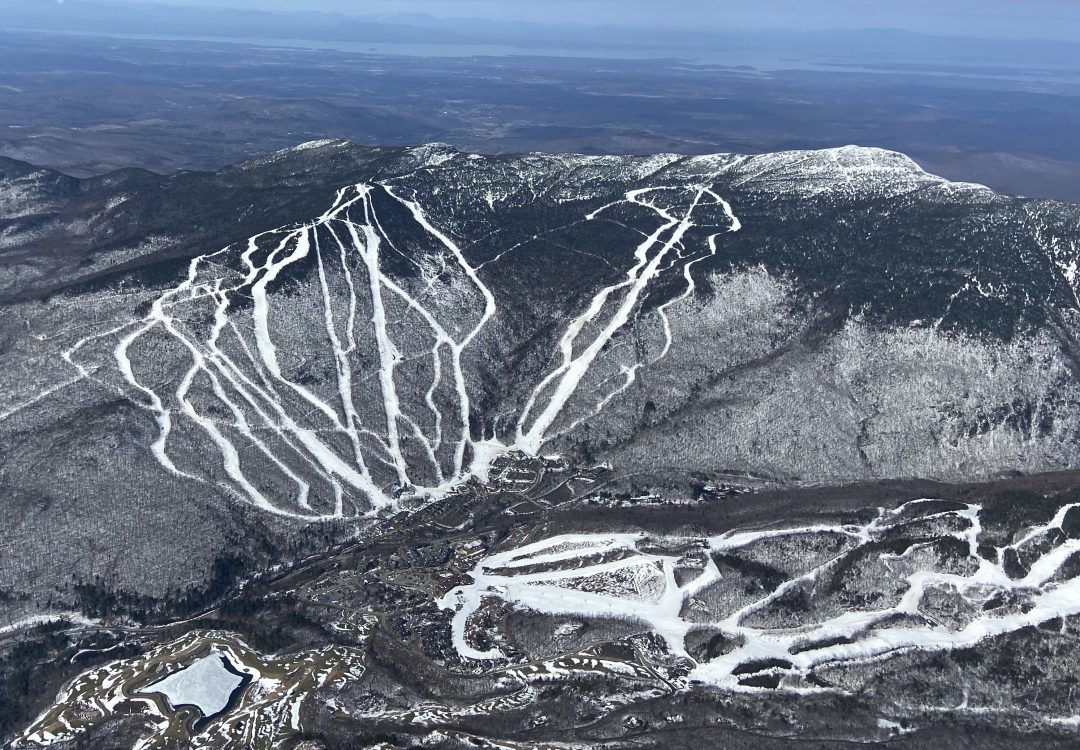
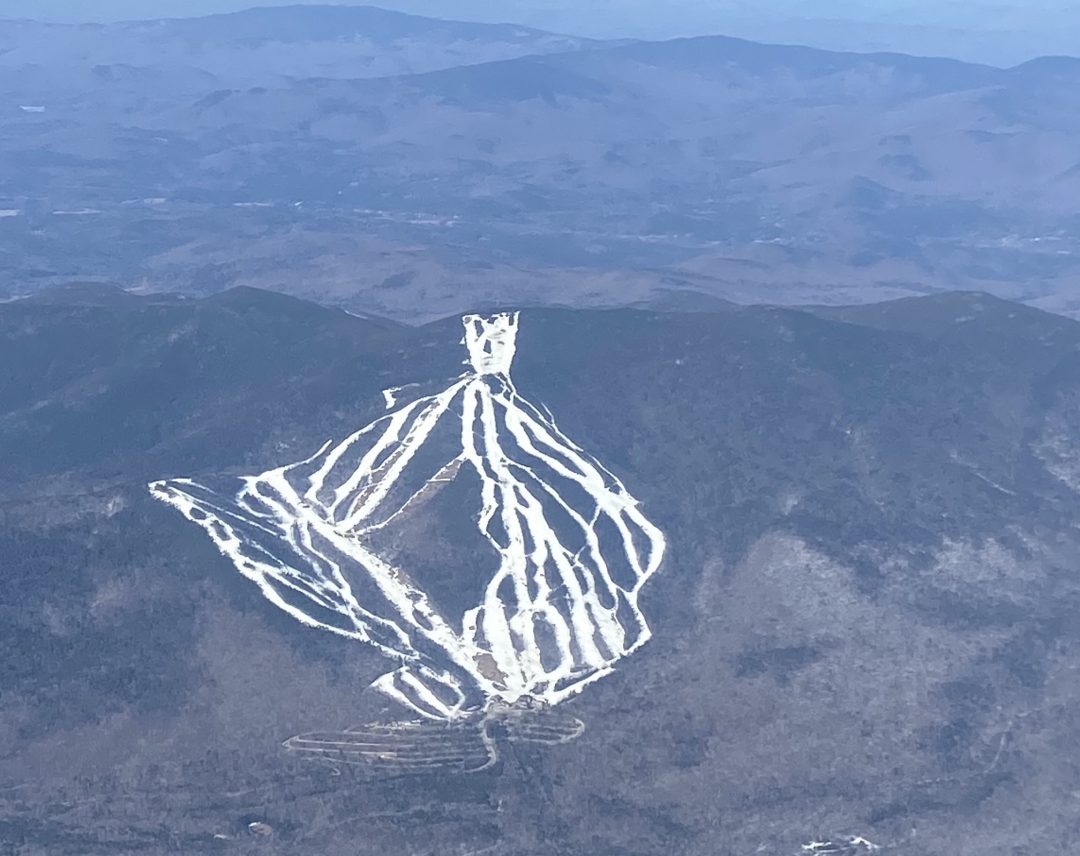
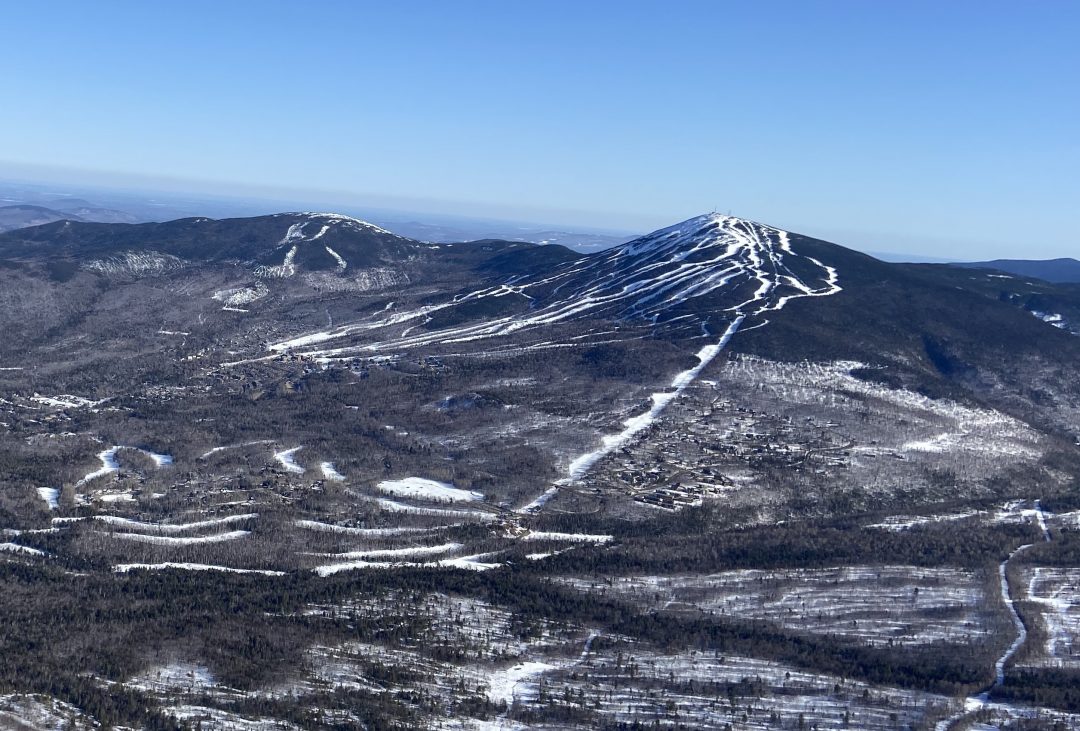
Emily Dickinson said: “A little Madness in the Spring / Is wholesome even for the King.” So here’s a little quiz that might drive you a little nuts. See how you do in this exercise in pattern recognition.
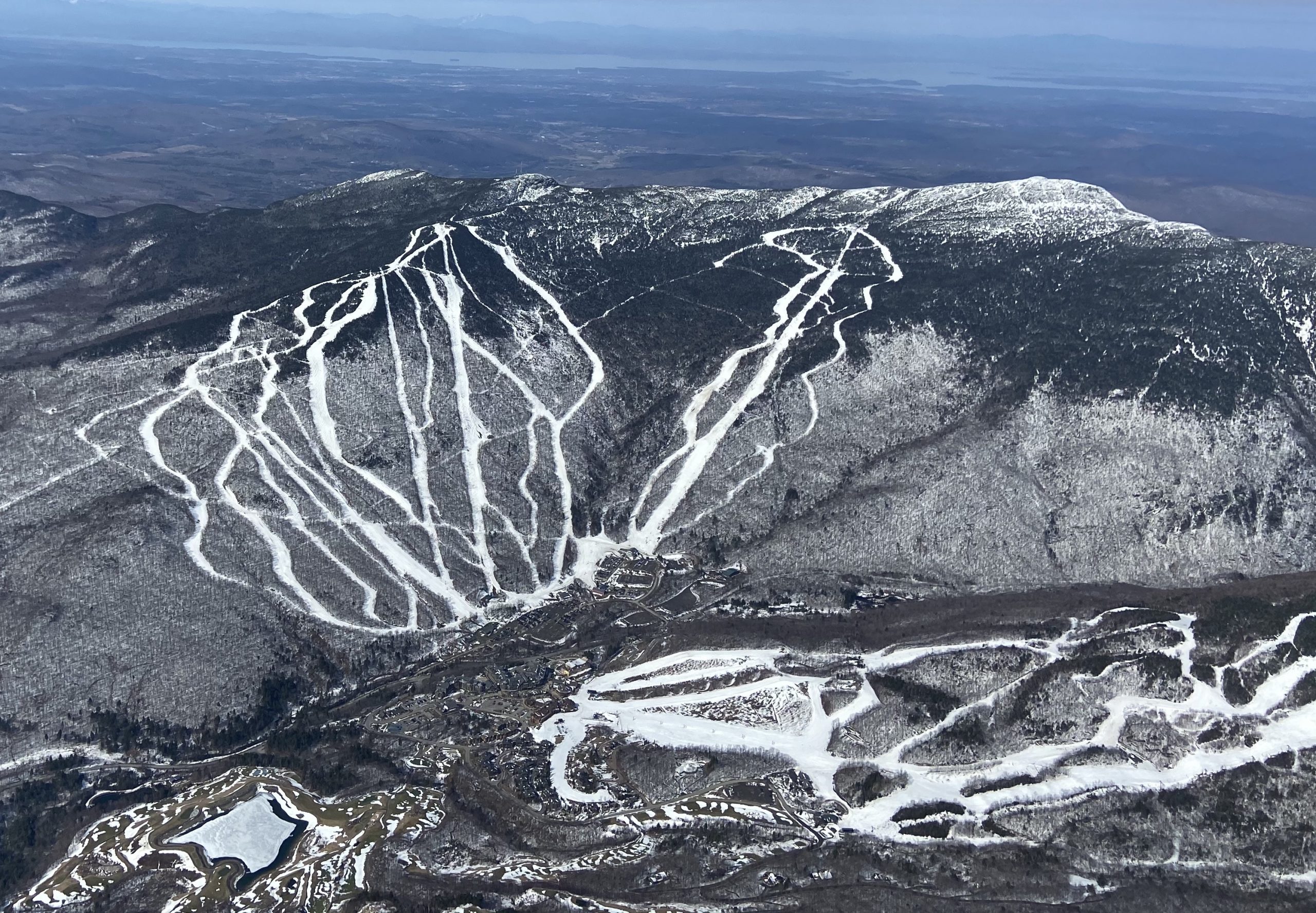
Below are seven aerial shots of New England ski resorts taken a week or so ago by an aviator friend. Can you identify them? Hint: there are three in New Hampshire, two in Maine, two in Vermont. All photos credit: C. Michael.
Mountain 1
Mountain 2
Mountain 3
Mountain 4
Mountain 5
Mountain 6
Mountain 7
Answers:
This Week:
Telluride has trails for everyone from beginners to expert. And it is certainly less crowded than the resort that starts with V.
Our Vicarious Vacation series moves west to Telluride for a top-to-bottom ride. What’s notable about Telluride is that it is a high-altitude, long-run resort. Our skier deserves some kudos for making it down non-stop. Click here.
Herb Stevens, the Skiing Weatherman, reports that the spring skiing for the near future is West. Western and Northwestern resorts have “money in the bank” for a longer lasting season. Click here.
Vail Resorts has dropped the price of its Epic pass 20 percent. It is certainly a strategic play to get more customers. The forecast is: cheaper passes and no reservations (also part of VR’s package) equals lots of people lining up. And we add the uncertainty of COVID, and we have some complications in deciding to buy a pass now or not or perhaps not ever. This week’s Question For You asks for your opinion. Click here.
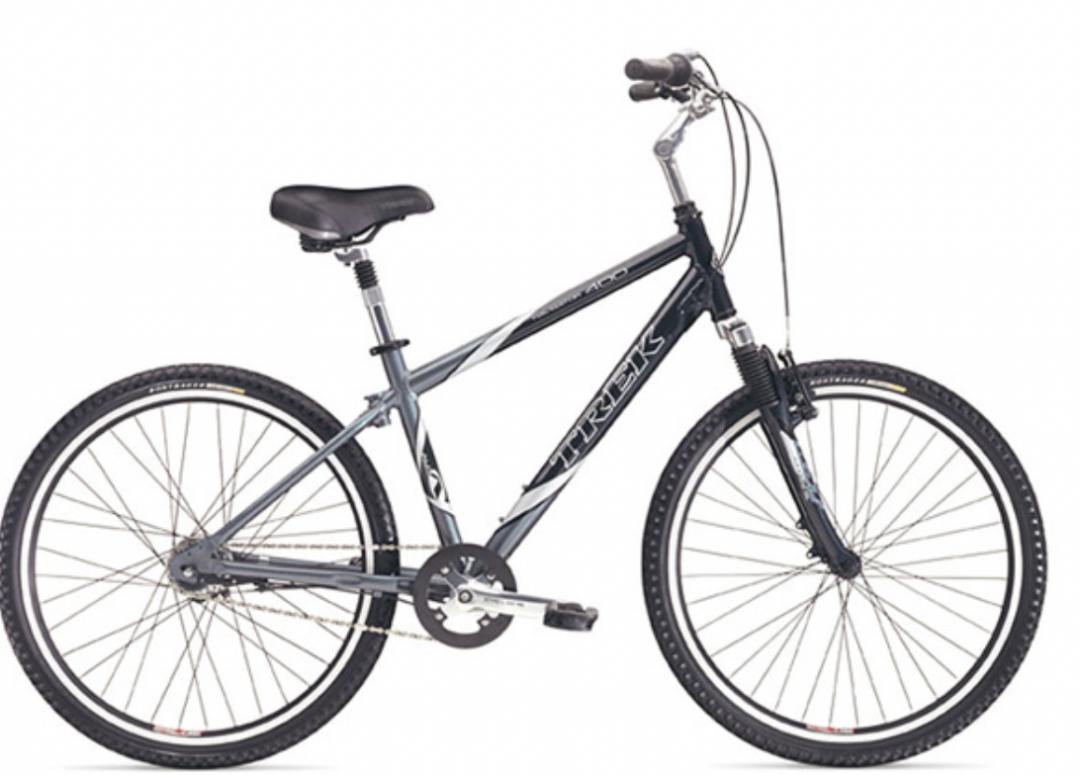
Trek Navigator allows a comfortable, upright riding position. A fat seat helps.
We are transitioning to coverage of bicycling topics, a pasttime that many of our SeniorsSkiing.com readers pursue in a serious way. Here’s correspondent Marc Liebman’s take on some lessons he learned long ago and have been reinforced by his recent training program. Click here.
In this most unusual year, we have published a series of articles and a Resource Guide on alternative snow sports called Make More Tracks. And, as we have seen, interest in those alternatives—XC, fat biking, snowshoeing, winter hiking—has spiked. A major contributor to that series has been Roger Lohr, publisher of XCSkiResorts.com, a directory and source of information about where to stay, equipment, and technique. His article summarizes the value that XCSkiResorts.com brings to readers. Click here.
Ski Coach Bob Trueman (r) puts emphasis on the mental aspects of skiing.
Ski coach and contributor Bob Trueman offers some advice about how to set your mind on your ski practice. His advice is simple and direct: form a specific goal for a specific action and do it. The actions will lead to results. His is an interesting perspective that has aided many skiers to leverage and improve their skills. Click here.
Killington and the blue bird day.
Videographer and contributor Don Burch offers a visual gift for us. It’s a snapshot of Killington on a beautiful, blue bird day. What more could you ask for? Click here.
Finally, we hear from our correspondent in Australia, Dave Chambers, who reports on his ski club’s work party weekend, prepping for the ski season coming soon down under. Oz’s ski season doesn’t get rolling until late June-early July so this club gathering is a great way to build camaraderie before the snow flies. Click here.
Thanks for reading SeniorsSkiing.com. Remember there are more of us every day, and we aren’t going away.
Early snow at Gravbot Ski Club welcomes work party in Mt. Hotham. Credit: Dave Chambers
https://seniorsskiing.com/wp-content/uploads/2021/04/5-scaled.jpeg17772560mikemaginn/wp-content/uploads/2014/04/Seniors-Skiing-since2013-Logo@2x-300x68.pngmikemaginn2021-04-09 00:30:252021-04-08 20:08:13This Week In SeniorsSkiing.com (April 9)
The weather pattern that dominated the month of March in the eastern half of the country has continued right into April…unfortunately. I communicated with a resort manager in Vermont last week and found out that the mountain, which has a high base elevation…had received exactly one inch of snow last month. One %#$$@*& inch! A good number of areas pulled the plug after offering skiing during the Easter weekend as the lack of snow and late month rain beat down the base depths to the point where skiing and riding couldn’t be extended any further.
Going forward, I wish I could tell you that some late snow was on the way to sustain the sliding for several more weeks, but that is simply not the case. The strong ridge at the jet stream level that took shape a couple of weeks ago over northeastern Canada is still there, and a piece of that ridge has extended into the northeastern U.S. the past week, leading to temperatures that continued the shrinking of the snow supply. While it will be turning cooler in the East relative to normal for the last two weeks of this month, it looks like “too little, too late.” Lastly, base depths never got overly deep during the heart of winter, then the snow drought hit in March, and right now, we are left with a dwindling supply on the slopes. So, in the East, get it while you can. Grab the rock skis, bring the sunscreen and the tailgate gear and have a go at it. This weekend there will be about 20 resorts to choose from in the East and trail counts are still pretty healthy.
In the West, the spring skiing season is also underway with the resorts sitting on much more in the way of “money in the bank.” That is, ample snowfall through the season has built up the base depths to an extent that skiing and riding can easily continue for several more weeks. Keep in mind that a good number of resorts will be closing, or have already closed, because their deals with the National Forest Service say they must, regardless of how much snow is still on the hill. But overall, the season still has plenty of legs throughout the West. In this region, there is actually hope for a little more in the way of snow. Here’s a map of the snowfall for the next couple of weeks.
It’s not a ton of snow, but if you time it right you might be able to squeeze in a few more powder turns before calling it quits for the season. British Columbia has been the big winner in terms of snowfall this season, which is to be expected during a La Nina winter, and they are in line for a dump or two, or more, in the coming weeks. Unfortunately, a Covid resurgence has caused many of the resorts in that province to close for the season.
The turns are out there if you really want them, but you might have to work a little harder to make them.
REGIONAL HIGHLIGHTS:
Pac NW/B.C.:
Late week snow will set up one more weekend of winter surfaces.
Central and southern Sierra:
Perfect spring skiing weather coming up for the next week. Sunny, mild days and overnight lows below freezing to preserve and set up the snow.
Rockies:
Mild days, chilly nights, and any precip in the next week will be light.
Midwest:
Lutsen, Minnesota appears to be the only resort still operating. Light rain and snow most days next week.
Northeast:
Warm pattern turns cooler late next week and beyond. Better hustle to get those turns in.
Mid-Atlantic/Southeast:
The party is over.
https://seniorsskiing.com/wp-content/uploads/2021/04/senior-ski1-e1617891262649.png477728Herb Stevens/wp-content/uploads/2014/04/Seniors-Skiing-since2013-Logo@2x-300x68.pngHerb Stevens2021-04-08 17:29:342021-04-08 17:53:03Skiing Weatherman: West Still Strong, East Hanging In
Here’s A View Of A Quad-Busting Run At A High-Altitude Colorado Classic.
Telluride has trails for everyone from beginners to expert. And it is certainly less crowded than the resort that starts with V.
Our Vicarious Vacation series heads west to the major destination resort with a Victorian mining town heritage and lots of mountain to ski. At 8,750, the town sits at the base of mountains that range to 11,000 feet, making some of the highest, longest ski runs in North America.
This video was produced in 2019 with some helpful annotations pointing out lift names, mountain ranges, and…Jerry, whoever he is. In any case, the twinky music ends in a couple of minutes, thankfully, and you can just listen to skis hissing through the snow all the way to the bottom. Credit goes to RealEstateTelluride. Click image below. Have fun.
https://seniorsskiing.com/wp-content/uploads/2021/04/Screen-Shot-2021-04-08-at-9.17.28-AM-e1617888733652.png326728seniorsskiing/wp-content/uploads/2014/04/Seniors-Skiing-since2013-Logo@2x-300x68.pngseniorsskiing2021-04-08 09:42:182021-04-08 10:56:07Top To Bottom: Telluride
It should be clear by now that if you intend to ski more than two or three times a season at mid-large resort, a season pass is required. Basically, walk-up tickets are major resorts are in the $15o to $200+ range which is fine if you have limited interest, time, or abundant resources.
Now we learn that Vail’s Epic pass will be sold at a 20 percent discount from last year’s. Vails chief executive Rob Katz clearly states that the strategy is to “move ticket buyers to a pass.” Dropping the price is certainly one way to do that. It’s also a way to add to the revenue line after a year of increased expenses for COVID. So the push is on to buy a pass. For example, the Epic Northeast Midweek Pass for seniors 65-plus has dropped to $271. In the west, the Tahoe Value Pass is $359 for seniors. Pretty tempting.
Predictable consequences: More people showing up, crowding parking lots, longer lift lines? Or, more darkly, not being able or wanting to ski at a resort because of ongoing virus restrictions which still may be a factor in 2021-22? Unpredictable consequences? Who knows?
Question For You: Given the bargain prices for season passes, do you plan to purchase one as soon as you can (i.e., now), wait and see, or skip it because of…what? Will you be looking forward to heading to bigger resorts with your new pass? Will you continue to be content with “mom and pop” hills where you can ski mid-week for cheap?
Please comment in Leave A Reply below.
https://seniorsskiing.com/wp-content/uploads/2021/04/Screen-Shot-2021-04-08-at-10.53.01-AM-e1617893610816.png164728seniorsskiing/wp-content/uploads/2014/04/Seniors-Skiing-since2013-Logo@2x-300x68.pngseniorsskiing2021-04-06 11:48:542021-04-08 10:55:40Question For You: Buy Now Or Wait?
Reflection On The Past Before Starting This Year’s Biking Season.
Marc’s Trek Navigator 400 allows a comfortable, upright riding position. A fat seat helps.
With gyms closed to Covid, way back in August 2020, I started riding my bicycle five days a week as a way to get ready for the ski season. I live in North Texas where the terrain is relatively flat. We don’t have hills or mountains, we have rises. I also decided to ride on neighborhood streets because there are crazy people driving while reading and sending texts and emails.
Arbitrarily, my initial goal was to ride 15-20 miles a day, four to five times a week at a steady speed of around 10 miles an hour. My Trek Navigator 400 has three ranges and eight speeds within each range.
My road cycling career began back in the fifties on a Raleigh bike with three speeds which we upgraded to six. Back then, I was a 13-year-old member of an Air Explorer troop in Germany. We-our scout masters, parents and us scouts- decided to take a long-distance bike trip during the summer.
Several conditioning/trial trips later, we took the train from Frankfurt to Calais, the ferry to Dover and another train to London. Four days later, we took the Tube to Watford and headed out to the youth hostel in Stratford-on-Avon. Six weeks later, we were back in London after having visited more castles and churches than I can remember.
There were other bike trips in the following two summers, and, from them, I learned three important facts about biking. One, the youth hostel or inn where we were staying was always upwind at the top of the highest hill in the area.
Two, one can ride farther than one thinks. Back then as an Air Explorer, we tried to do 50-75 miles a day, depending on the terrain. Where it was relatively flat, 75 miles in a day was a no brainer. Hills and rises, well, that’s different
Three, bike seats are uncomfortable.
Fast forward six plus decades and after seven months of biking, the lessons learned have not changed. My house/destination is at the highest point in the neighborhood and on the last mile or two, whatever wind is blowing, it is in my face.
When I started, I could barely ride eight miles. I’d ride remembering some of the tougher legs on those three trips. When this post was sent, weather permitting, 12 miles per day, four to five days a week is the norm. Going father is more about time available than fatigue. At an average of roughly 10.6 mph, 12 miles takes an hour and 10 minutes. Twenty miles would take close to two hours which is more time than I want to spend pedaling since I have other things to do, like write books and magazine articles.
And guess what, even with a wider, padded seat on my bike, after 12 miles, my butt still hurts!
“Your Problem Is, You Don’t Know What You’re Doing”.
Ski Coach Bob Trueman (r) puts emphasis on the mental aspects of skiing.
In modern times this sentence wouldn’t score well on the “how to make friends” scale. And yet it is in reality very informative. You just have to look at the real meanings of the words used, and not the colloquial inference.
In fact, from the view point of performance enhancement it is a critically important observation. Whether that performance is in something physical, like skiing, cerebral, like academic endeavor, or practical, such as business.
The most fundamental tenet of Neuro Linguistic Programming, and other performance enhancement psychologies, is that if you want to change your outcomes you must change your behaviors. “If it isn’t working, do something different”.
The instructional approach to this is either to tell you what you are doing wrong, or just to tell you what to do. It sounds reassuringly practical, but doesn’t work well in practice.
The reason for its limited efficacy is that in order to do something else, it is best to know what you aredoingjustnow. And that is the hard part. And here, dear reader, we come to the import of the insulting first sentence above.
Frustration
More often than not, indeed I’d say pretty well on every occasion, when I first begin coaching someone (in anything at all, not just skiing), they do not have a mechanism to help them to know what they are doing. It is what they are doing, that is creating the outcomes they don’t want. And it is not having current awareness of what that behavior is that is getting them so frustrated and making it so difficult to change.
When I ask a skier after a short section of skiing, “What were you doing as you skied down there?”, it is incredibly common to get the answer , “I don’t know. What do you mean?”
Well, what might I mean?
What are you doing? You must have been doing something, or nothing would have happened. If what happened was what you wanted in all respects, then what you were doing was, for you, at that time, 100 percent appropriate.
If what happened was not what you wanted, then whatever it was you were doing, was not 100 percent appropriate to the achievement of your desired outcome.
The first, and most important job to be done, then, is to find out what it was you really were doing. To do that we’ll need to work together to discover ways that will work for you in letting you become aware of what you are actually doing as you ski.
Six Senses
We’ve got six senses: Smell, Taste, Hearing, Sight, Touch, and Proprioception
The best for skiing are the last three. You could look to see what you’re doing. You could feel for something tangible. And you could feel in a generalized “feely” kind of way.
You could also listen, say, to your skis on the snow. The remaining two require a degree of proximity to the snow which, even were they to work, you might not want to try too often!
Give this some thought. It could help you enormously.
Can you come up with some ways that would suit you for enhancing what is known as your “present moment awareness”? It is this awareness that will enable you to make the changes you are looking for.
Controlled Skiing.
Awareness example:
Here is the kind of thing I’m getting at. You will already know that leaning back in your boots is a tendency to which we are all subject. You will also have discovered through doing this, what James Thurber characterized in his “Fables of Our Time”, when he wrote that “you might as well fall flat on your face, as lean over too far backward.”
You need to be not leaning, or sitting, back. Rather, you need to be forward “in your boots”.
But how to do this? More importantly, how to ensure you are always doing this? There is often so much going on inside your head when you are skiing that you haven’t got the attentional focus required to know if you are or are not
So, we need a simple mechanism to employ that will tell us in real time whether or not we are “forward”, and if so, to what degree. Next time you ski, choose an easy—nay—very easy slope. Set yourself the challenge of skiing pleasantly, down the next 200 meters. No more.
Set yourself the additional goal of being aware of your shins. Your goal is to know, at all times, how much pressure between your shin and the front of your boot, you can feel.
Nothing more! Absolutely no other goal on this 200 meters.
At the end of the 200 meters, it does not matter at all how good bad or indifferent your skiing was. DO NOT GIVE YOURSELF FEEDBACK ON THAT ASPECT.
You must, if you wish to learn how to improve, ONLY review your original goal. Did you feel your shins against your boots? Yes/No? Were you able to do so at all times? Yes/No?
There is NO answer to these questions which will not help you. If you answer your own question with “I don’t know”, you’ve learned something useful. If your answer is “yes, and no”, you’ve learned something useful. If your answer is “yes, and yes”, you’ve learned something useful.
It’s one of the few real win-win scenarios that exists.
Whatever your answer, you can reset your goal, refocus your attention, and learn something extra on the next200 meters.
The key to success with this process is to be very strict in your goal setting. It must be simple, singular, and susceptible to review.
[Editor Note: Check out Bob’s website for more articles and videos on how to ski in control. Click here.]
Before The Snow Flies, Members Gather For Work Party And Find A Reason To Talk Skiing.
Heiner’s Bakery’s curry pies are in demand in Myrtleford on the road to Mt. Hotham, Victoria, Australia.
My road trip from Melbourne in my Skoda AWD has been a pleasant morning drive. With two and half hours peeling away quickly, the freeways were unusually devoid of cars today on this Friday in March. My mate Terry phones to ask me, “Is it Heiner’s Bakery, just off the main street, where they sell those fantastic curry pies?” “Yes. Remember you always get the last one available,”
We meet at Heiner’s Bakery, where the stars have aligned; they have baked more curry pies, maybe sensing our visit. Arriving in Myrtleford, the large alpine service town on the edge of the two main Victorian snowfields, is an occasion. The large trees in the wide streets are yet untouched by autumn’s cold fingers. Summer is only a week or two passed. La Nina in the Pacific has blown moisture laden winds across our state; the rain makes for benign and balmy heat levels. The previous year, devastating wildfires lit up the whole state. Every paddock and forest seemed to be on fire. It’s a stark memory still, but not this year. It’s been a year of growth and recovery in the forest and the mountains. The fields in these alpine valleys are green and nearby mountains creep up with eucalyptus trees to their summits. Summits that in a few short months will be snow covered.
Our ski club requires us to work a weekend each year. My friend Terry, an electrician, offers his services to the work party. He has missed the easy banter and mateship above the snow line since retirement. Retirement is an itch that is uncomfortable at times for him, he is someone used to being busy. He is offered work credits towards accommodation at the ski lodge. He is happy to work for no reward; it is his nature to help out.
Early snow at Gravbot Ski Club welcomes work party in Mt. Hotham. Credit: Dave Chambers
We arrive at GravbrotSkiLodge, Mt. Hotham, and bump in to Dave, a fellow member, here for the work party. he is somewhat surprisingly dressed in lycra and bike shoes.
“Dave, that is interesting dress for a work weekend.” I say. “Don’t you own work boots.”
Dave replies, “I have just ridden down and back from Omeo, this afternoon.”
Now to be kind to Dave, his best days and youth are well behind him. I am very impressed. These are what we call mountains in Australia, and, while they aren’t as lofty as Aspen, they are mountains that rise to over 6,000 ft. Dave has not only ridden down but has returned back up to the top in the thin mountain air. This fitness becomes more useful when we have to remove forty bags of cement that someone stored under the lodge five years ago. Advice to anyone contemplating this, don’t. The cool moist mountain air and cement are easy bedfellows. And the product of this union is a very large heavy brick.
We light the fire to warm the frigid air. A warming glow will greet the next couple of work party participants. Our gum trees are the scourge of summer when the temperature rises above 100F. Wild fires are all too common place now in Australia. The sap in eucalyptus trees explodes at extreme heat levels fueling the wild fire fronts. But now more benign the dry branches gathered from the base of Snowgums around the ski lodge make great fire starters. A warm glow fills the lodge quickly as we remove the corks from some very fine Cabernet Sauvignon. A cheese platter offers some aged gouda and vintage cheddar to accompany the fine red wine from Black Cat Winery, in the Yarra Valley, Victoria. Others amble in over the following two hours. A busy weekend is planned, says the Works Leader, and we need volunteers to remove forty bags of cement to the truck for disposal.
“Hey, Dave did you bring work gloves,” I call out.
Terry and I contemplate and recall stories about life above the snow line and experiences over a couple of decades of skiing Australia and the world. We make some new friends. We chat into the night, all of us hoping that 2021, this year, we will get a start to the ski season now just a few months away.
March brings autumn in Australia and an early snow in the mountains. Credit: Dave Chambers
https://seniorsskiing.com/wp-content/uploads/2021/04/gravbot-e1617631466989.png487728Dave Chambers/wp-content/uploads/2014/04/Seniors-Skiing-since2013-Logo@2x-300x68.pngDave Chambers2021-04-05 10:13:022021-04-08 10:48:34Ski Club Work Weekend In Oz
Spring Is Here, Quitting Time? Corn or Mashed? Beech Top-to-Bottom, Diggins World Cup, Ski Art III, Skiing Weatherman.
Spring: Time for renewal. Time for change. New directions.
“It was such a spring day as breathes into a [person] an ineffable yearning, a painful sweetness, a longing that makes [them] stand motionless, looking at the leaves or grass, and fling out [their] arms to embrace [they] know not what.” John Galsworthy, The Forsyte Saga.
The slightly updated quote [pronouns] brings us to where we are on the calendar: Spring has descended and the “ineffable yearning” is happening as we speak. The sap is running in the sugar bush, maple syrup is boiling (and boiling), and it becomes impossible to ignore the change in the air.
Sign of spring: Tuckerman Ravine, 1938. Credit: Mt. Washington
Especially, this year. We made it through in one way or another, and we “fling out [our] arms to embrace [we] know not what.” We are in that special place called the interim, between the way things were and the way things will be. We know how it was this year—creative adaptations to restrictions and constraints for those who were determined to book time on the snow—but we can only hope the future season will approach normalcy. We can hope, but we don’t know; no one does. Such is the nature of the interim.
However, we know that Vail is doing some bet hedging. The ski resort empire has dropped the price of its Epic pass by 20 percent for 2021-22. That’s $200 off the Epic and about $150 off the local Epic, both sharply undercutting the rival Ikon pass. Season pass sales last summer helped Vail buffer the losses to revenue from the epidemic, and cutting prices dramatically will help ensure more of the same for the upcoming season. Presumably, people who buy passes intend to use them, unless they can’t because of virus restrictions. We don’t know for sure but we can bet a number of last season’s pass buyers—Epic and Ikon—regretted buying a pass when the industry shut down and/or tried to get credit or their money back. Will those who grumbled and who didn’t get the value they expected last season step up to buy a discounted pass when the future is still behind a veil of uncertainty?
Regardless, the season pass is the future. Clearly, Vail has strategically pushed the market in that direction. Forget about buying a walk-up lift ticket, unless you intend to ski just one or two times in a season. Let’s hope this upcoming season finds all those tricky dependent variables clicking into place: people buying, restrictions removed, and snow piling up. At least that’s what we ineffably yearn for.
By the way, the Epic Northeast Midweek Pass for seniors 65-plus has dropped to $271. In the west, the Tahoe Value Pass is $359 for seniors. Pretty tempting.
Good luck, Vail.
——————————————————————————————
Attention Donors: We will start sending premiums from our recent fundraiser this week and next. Please be on the lookout for our mailing to you. And please be patient as the mails aren’t what they used to be.
Holiday Break: SeniorsSkiing.com is taking a break for the Easter/Passover holiday. We wish everyone a peaceful and restoring holiday, hopefully with friends and family. Be safe.
Update on Co-Publisher Jon Weisberg: Jon had been hospitalized since mid-February and is finally in rehab. He is on the mend and is looking forward to getting back in shape. Thanks for all your concern.
——————————————————————————————
This Week
Our Question For You this week asks if when you will call it a season. What’s your criteria? How has this decision been affected by the restrictions/constraints imposed by resorts to keep employees and visitors safe? Click here.
Correspondent Marc Liebman opines on corn snow—when it’s good and not so good—and mashed potatoes. He asks if you know the difference and what to do when faced with both conditions. Click here.
Diggins says experience is teaching her about her capabilities and how to win. Credit: Cross Country Skier
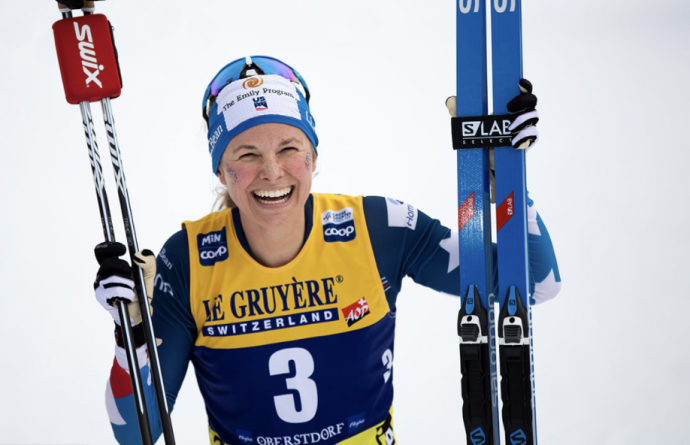
Cross-country editor and XCSkiResorts.com publisher Roger Lohr reports on Jesse Diggins World Cup victory in this year’s XC FIS competition. She’s the first American woman to win a World Cup title in history, and the first American to win gold since Bill Koch’s victory in 1982. International competition at the World Cup level is intense, and her victory is a huge achievement for the US team and for women in sports. Click here.
An almost unworldy mood at the start of a run.
Once again, correspondent/videographer Don Burch has produced a wonderful, expressive video in his Ski Art series. Some of these images would be great prints to mount in your den. Click here.
Our Vicarious Vacation series continues with a run down Beech Mountain, NC, top to bottom. You’ve seen the Alps and the Rockies in this series. Now, it’s time for a more prosaic example of Southern Skiing at a mecca for skiers in the mid-Atlantic. Click here.
Dawn at Round Vally from the grooming team. Credit: Mountain Trails
Correspondent Pat McCloskey takes us to Round Valley, UT, where he fat bikes around a network of trails maintained by a community foundation. Pat took a break from his ski-week vacation at Park City to visit the nearby center for all kinds of winter and summer outdoor sports. Round Valley has trails for fat biking, xc, snowshoeing, and winter hiking/running, with enough space for everyone to stretch out. Pat notes the locals and local seniors are fit and take advantage of the snow, 300 days of sunshine, and the beautiful surroundings. Click here.
Finally, the Skiing Weatherman Herb Stevens reports the pattern that continues to dominate the weather this time of year: The West is wild, the East is winding down, although there might be a chance for another dose of snow in the Northeast this week. This pattern of wild West, wimpy East seems to have hung in over the past several seasons. Click here.
Thanks for reading SeniorsSkiing.com. Tell your friends, and, remember, there are more of us every day. and we aren’t going away.
https://seniorsskiing.com/wp-content/uploads/2021/03/Tuckerman_1938_-e1616680091236.jpeg862690mikemaginn/wp-content/uploads/2014/04/Seniors-Skiing-since2013-Logo@2x-300x68.pngmikemaginn2021-03-26 00:44:322021-03-25 13:20:25This Week In SeniorsSkiing.com (March 26)
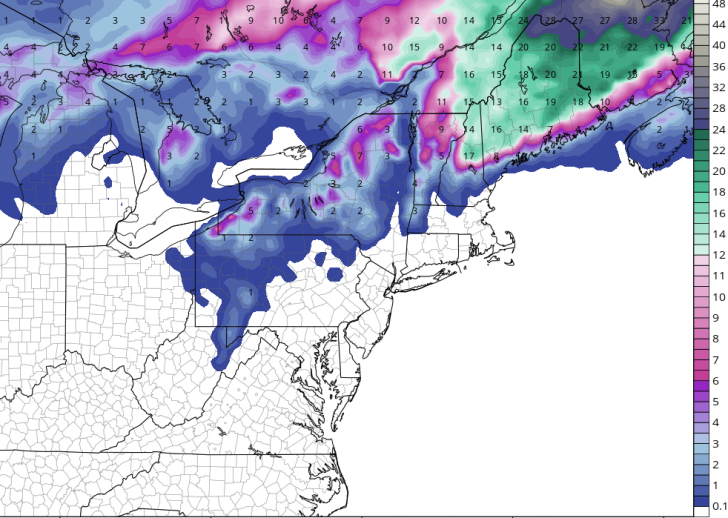
The weather pattern hasn’t changed much in the past week as the jet stream set-up has continued to feature a cold trough over the western half of the country and a milder to warm ridge over the eastern half. It has been another snowy week in the West, although amounts of fresh snow have been a little less than the prior week. In the Midwest, Southeast, and Northeast it has been a warm week, and both base snow and trail counts have taken a hit. Changes in the pattern are underway, however, as low pressure centers that get ejected out of the western trough head northeast and mount an attack on the ridge. The ridge is formidable though, and it won’t back down without a fight. It will take three surface storms to knock down the ridge enough to cool the atmosphere sufficiently for snow to fall instead of rain. That third storm will impact the Northeast later this weekend and into next week and could possible represent the final opportunity for significant snowfall, as the pattern will shift to a warmer regime right after Easter. Here is a look at a snowfall forecast through Tuesday morning.
You’ll notice that New Hampshire and Maine look like the big winners. That is because one low pressure center will move through Ontario as it weakens with a secondary low center taking shape over Cape Cod before it moves through the Gulf of Maine, strengthening as it does. That track will most benefit the White Mountains and the resorts of Maine. After picking up very little snow in the past three weeks, and with Easter weekend on the horizon, a healthy shot of snow would help sustain quality skiing and riding through the holiday. Some light snow will accompany the passage of another trough and cold front on Good Friday and that will help refresh the surfaces, as well.
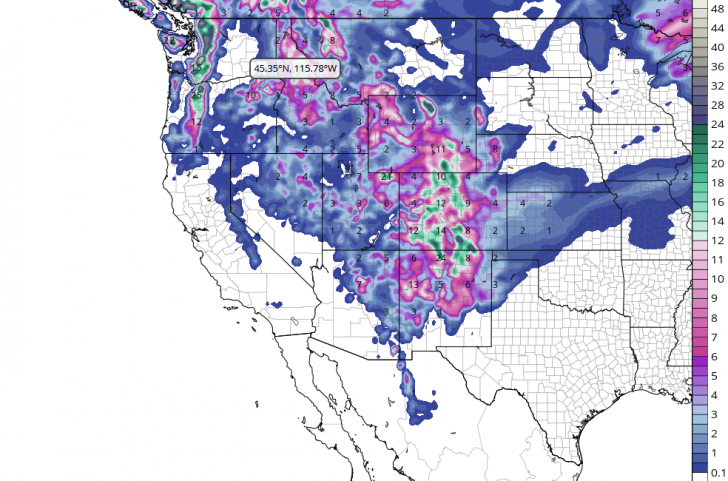
In the West, the persistent trough will produce its final shot of snow late this week (especially in CO and WY) setting the stage for a wonderful weekend with bluebird skies dominating as the trough swings out of the region and into the center of the country. A new trough will arrive next week, however, bringing early week snow to the Northwest and midweek powder to the full length of the Rockies. Here is a snowfall forecast through Friday for the West.
The amounts you see are pretty much split between the end of this week and the week of the 29th.
Many of the resorts in the Midwest have closed, but the larger areas are still open. Some light snow amounts will fall across the northern Great Lakes later this weekend. In the Southeast, about a half dozen resorts are still operating, thanks to high base elevations and aggressive snowmaking through the season. That snow can’t hold on much longer against the strength of Old Sol, though.
REGIONAL HIGHLIGHTS:
Pac NW/B.C.:
Beautiful weekend on the slopes. Light to moderate fresh snow early next week keeps the powder party going.
Central and Southern Sierra:
Great spring skiing this weekend. Back door cold front turns it a little colder next week, but no significant snow in sight.
Rockies:
Sunny weekend on the slopes. New trough delivers light to moderate snow from MT to NM first half of next week. Light snow next weekend in northern resorts.
Midwest:
Light snow across the far north this weekend. Mild start/colder finish next week with another round of light snow.
Northeast:
Spring conditions rule after mild, damp week. Opportunity for meaningful snow late this weekend/early next week in northern NY and northern New England. Another round of light snow late week.
Mid-Atlantic/Southeast:
Great spring skiing Saturday (3/27). Colder air mass arrives later Sunday. Spring skiing continues next week. Call resort before you drive, though.
https://seniorsskiing.com/wp-content/uploads/2021/03/senior_ski1.PNG-e1616686031459.png518728Herb Stevens/wp-content/uploads/2014/04/Seniors-Skiing-since2013-Logo@2x-300x68.pngHerb Stevens2021-03-25 11:41:152021-03-25 13:26:36Skiing Weatherman: West Strong, Last Call East
Spring brings corn for a few precious hours. Credit: Jans
We’re nearing that time of year in New England and the upper Midwest where the snow melts a little during the day and freezes at night. The repetitive process creates tiny balls of ice. In the morning, they’re rock hard but as the sun comes up, they melt a little and turn into ball bearings lubricated by water. The condition is known as “corn snow.”
The skis carve when rolled on their edges, a platform builds up under the bottom making it easy to unweight, if you are old-fashioned like me, or roll your knees in the direction you want to go.
The day starts with rock-hard, frozen granular until the melting starts. Then for the next three or four hours, the skiing is divine. Depending on the temperature and the slope’s exposure to the sun, by mid-afternoon, the snow becomes sloppy. That’s when it is time to quit and start early again the next day.
Corn snow: Coarse, granular, and wet. Credit: FIS
In the Rockies, the drier snow doesn’t “corn up” as well as it does in the east. Until late in the spring, the conditions are packed powder at the top and soft and mushy as you come down in altitude.
Late spring snows in the Far West and east of the Mississippi are often full of moisture. The snow is heavy. Gloppy is an appropriate term. Way back when, we called the conditions mashed potatoes.
Venture into mashed potatoes, and you’ll find that turning requires effort and strength. Unless you have your weight equally balanced throughout the turn, the heavy wet snow grabs your skis, making turns hard to make.
Lose your balance in mashed potatoes, and you are in what we used to call a “slow, twisting fall.” If you are lucky, you get up, wetter than when you went down and keep skiing.
Mashed potatoes? Go home.
However, if you are a subscriber of SeniorsSkiing.com, danger lurks in the mashed potato fall. Even with modern bindings and shorter skis that reduce the torque on the leg, your bindings may not release immediately. Why? Because the initial torque may be below the threshold needed to free your boot. Then as you “slowly” fall, torque is slowly applied to the leg that might result in a nasty spiral fracture. The break could take weeks, even months to heal.
So how do you ski corn snow? The answer is simple. In the morning when it is hard and rutty, ski the same way one would hard, frozen granular. Then, as the snow softens, ski the same way you’d take on packed powder and enjoy the corn snow ride.
How do you ski mashed potatoes? Avoid the condition. Go home and ski another day!
https://seniorsskiing.com/wp-content/uploads/2021/03/Screen-Shot-2021-03-23-at-9.58.40-AM-e1616507952159.png328690Marc Liebman/wp-content/uploads/2014/04/Seniors-Skiing-since2013-Logo@2x-300x68.pngMarc Liebman2021-03-23 10:09:352021-03-26 10:38:32Corn Snow And Mashed Potatoes: Know The Difference.
Fresh Snow in the Wasatch. Spring Conditions Reign East.
This week’s message is quite simple: If you want fresh snow, head west. If you enjoy spring skiing, the upper Midwest and East will sport those conditions much of the time through the end of the month. That said, I do expect the East to turn a little colder early in April, but the jet stream may remain benign enough to make it tough to support a storm with fresh snow for the Easter weekend.
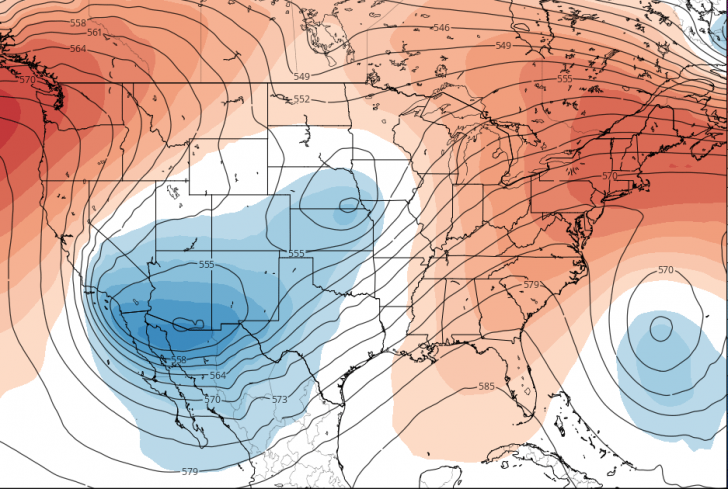
As usual, I will point to jet stream features to explain my forecast. The jet stream is the hand that moves the high and low pressure systems at the surface around like chess pieces. Here is a look at the jet stream for Wednesday of next week.
The orange humps that you see in the Pacific Northwest and over the eastern third of the country are ridges, where milder than normal air is located at roughly 15,000 feet above sea level. Ridges produce warming at the surface, as well as a lack of storminess. The blue features that look a bit like buckets are troughs, where colder than normal air pools and supports low pressure surface storms that produce snow. The two lobes of the western troughs will produce snow this weekend into next week from the Sierra into the southern Rockies, and it looks the resorts of the Southwest and Colorado will enjoy another solid dose of powder after the dumping of last weekend. The Pac Northwest has been the bullseye for much of the heavy hitters this season, but that ridge you see in that region will lead to a relatively quiet week. No worries – base depths in this part of the country, as well in adjacent Canada, are VERY healthy and can withstand a mild spell with ease.
Now, I do think that the trough will consolidate and attempt to move into the East in about 10 days, but any time a trough runs into the back end of a ridge, the trough tends to weaken in terms of circulation and cold air, and be deflected by the ridge. Here is a look at the jet stream for Monday morning of the 29th with the ridge moving offshore and the trough trying to force its way into the East.
The trough will tend to lift out to the northeast from where it will be on the 29th, rather than bodily move toward the coast, so although we could see a late snow event around the 29th/30th, I don’t believe that it will be a major snowfall. The upper Midwest will stand a better shot at meaningful snow from this system. As we head through that week and toward Easter weekend, I do think that it will turn cooler in the East, but at this point, I would have to rate a fresh snowfall of significance leading into the holiday a long shot.
If you want fresh snow? Go west. Sliding in the Midwest or East? Grab some sunscreen.
REGIONAL HIGHLIGHTS:
Pac NW/B.C.:
Snow falls this weekend into early next week. Upper ridge develops and leads to dry spell after that.
Central and southern Sierra:
Cold air keeps snow dry this weekend; some light snow early next week with slow warming later in the week as ridge expands down the coast.
Rockies:
Light snow this weekend and again early next week central and north. Moderate to heavy snow Wasatch and southern resorts from a multi-day storm starting this weekend.
Midwest:
A mild spell settles in this weekend, turning cooler later next week. Turning colder late next week with improving prospects for snow.
Northeast:
New snow prior to the weekend in the Catskills and Berkshires. Seasonable temps and dry this weekend. Spring snow conditions rule region-wide next week.
Mid-Atlantic/Southeast:
Nice spring skiing this weekend then mild next week as ridge calls the shots. Days limited for skiing this season.
/wp-content/uploads/2014/04/Seniors-Skiing-since2013-Logo@2x-300x68.png00Herb Stevens/wp-content/uploads/2014/04/Seniors-Skiing-since2013-Logo@2x-300x68.pngHerb Stevens2021-03-18 10:06:072024-08-21 09:56:56Skiing Weatherman: Season Rolls On in West, New Snow Scarce in East
Breckenridge lift line in Dec 2020 when the resort had “significantly reduced capacity.”
This year of sudden shut down when everything about lives has changed has thrown a lot of plans out the window. While many readers have found a way to get out in the snow, others have given this season a bye, and still others have taken up alternative snow sports, like cross-country, snow shoeing, and even fat biking.
Whatever path readers have taken, this entire year has been a significantly different experience, so different that many folks think it is the most distinctive experience of their entire lives, except perhaps war, injury, or spiritual enlightenment.
While we have all grumbled about what has been taken away, we might have also noticed that some changes and adjustments brought about by this virus have been a gift. Perhaps that gift had to do with how we enjoy the outdoors in winter, or what we’ve learned about your local ski area or fellow skiers or your skill level and pursuit of improvement. Or how you’ve managed to maintain fitness cooped up and socially isolated.
Question For You: On this COVID close down anniversary week, what’s the gift you have been given this year? Were you surprised? Can you keep this gift going into the future?
Please make a comment in Leave A Reply below.
https://seniorsskiing.com/wp-content/uploads/2021/03/Screen-Shot-2021-03-15-at-11.55.52-AM-e1615823794385.png409728seniorsskiing/wp-content/uploads/2014/04/Seniors-Skiing-since2013-Logo@2x-300x68.pngseniorsskiing2021-03-18 09:40:592021-03-18 09:44:57Question For You: The Best Of The Virus Year?
(This is an excerpt from the short story which appeared in the collection In Our Time (1927). To read the complete story, click here.)
The funicular car bucked once more and then stopped. It could not go farther, the snow drifted solidly across the track. The gale scouring the exposed surface of the mountain had swept the snow surface into a wind-board crust. Nick, waxing his skis in the baggage car, pushed his boots into the toe irons and shut the clamp tight. He jumped from the car sideways onto the hard wind-board, made a jump turn and crouching and trailing his sticks slipped in a rush down the slope.
On the white below George dipped and rose and dipped out of sight. The rush and sudden swoop as he dropped down a steep undulation in the mountain side plucked Nick’s mind out and lift him only with the wonderful flying, dropping sensation in his body. He rose to a slight up-run and then the down, faster and faster in a rush down the last, long steep slope. Crouching so he was almost sitting back on his skis, trying to keep the center of gravity low, the snow driving like a sand-storm, he knew the pace was too much. But he held it. He would not let go and spill. Then a patch of soft snow, left in a hollow by the wind, spilled him and he went over and over in a clashing of skis, feeling like a shot rabbit, then stuck, his legs crossed, his skis sticking straight up and his nose and ears jammed with snow.
George stood a little farther down the slope, knocking the snow from his wind jacket with big slaps.
“You took a beauty, Mike,” he called to Nick. “That’s lousy soft snow. It bagged me the same way.”
“What’s it like over the khud?” Nick kicked his skis around as he lay on his back and stood up.
“You’ve got to keep to your left. It’s a good fast drop with a Christy at the bottom on account of a fence.”
“Wait a sec and we’ll take it together.”
“No, you come on and go first. I like to see you take the khuds.”
Nick Adams came up past George, big back and blond head still faintly snowy, then his skis started slipping at the end and he swooped down, hissing in the crystalline powder snow and seeming to float up and drop down as he went up and down the billowing khuds. He held to his left and at the end, as he rushed toward the fence, keeping his knees locked tight together and turning his body like tightening a screw brought his skis sharply around to the right in a smother of snow and slowed into a loss of speed parallel to the hillside and the wire fence.
https://seniorsskiing.com/wp-content/uploads/2021/03/Screen-Shot-2021-03-15-at-9.24.07-AM-e1615814681434.png508728seniorsskiing/wp-content/uploads/2014/04/Seniors-Skiing-since2013-Logo@2x-300x68.pngseniorsskiing2021-03-18 09:36:252021-03-18 09:38:20Snow In Literature: Cross Country Snow
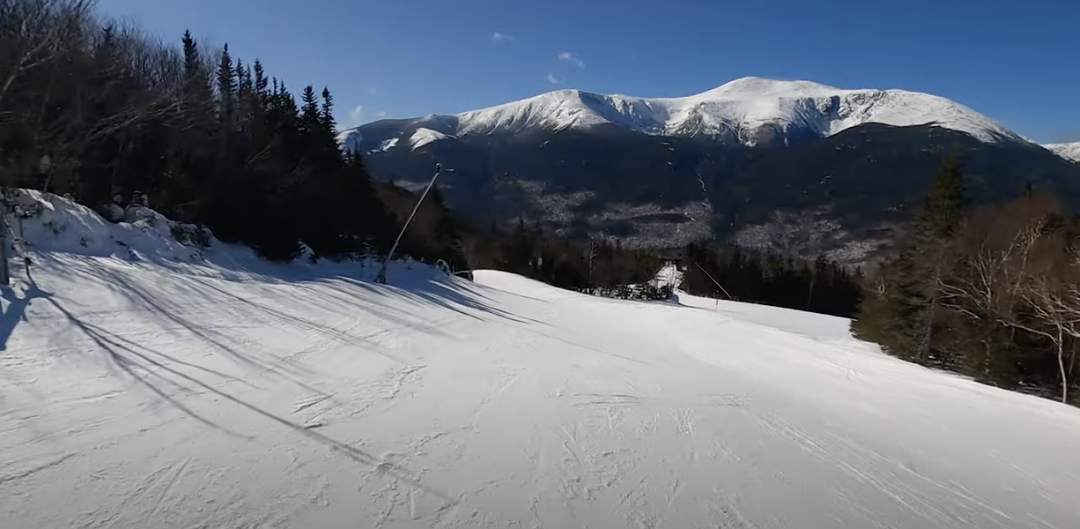
Here’s the next in our Vicarious Vacation series: here’s a nice, calm run on the longest green trail in New Hampshire. Polecat runs from the top of Wildcat to the base, nice wide trails, mostly, taken at a leisurely pace.
That’s Mount Washington on the horizon on the Tuckerman Ravine side. Spectacular bluebird day makes it all a great ride. The producer is Beyond The Lodge. Enjoy.
We moved to Utah in 1966 when we were in our early thirties. We retired in 1996 in our early sixties, and now we are in our eighties, still skiing what is hyped as “The Greatest Snow on Earth.” It’s a catchy slogan and mostly true.
Many of our best skiing memories are of powder days, bluebird days, and especially Bluebird powder days, but there are also memories of less-ideal days.
Like the time Judy and I were evacuated from a quad at Solitude on a cold blustery morning. Some essential part failed, leaving us along with about one hundred other skiers stuck half say up. It’s an interesting experience to be lowered from a dangling chair by rope and pulley.
Or the time I lost our granddaughter Rosalie at Deer Valley when she was eight years old. I was half way down a trail before I realized that she had not followed me. I headed to the nearest lift, while Rosalie appealed to a host for help. When I returned to the summit I found her in the ski patrol cabin petting the rescue dogs and having a snack.
From the same year here is Rosalie leading Grandpa and Grandma down a run at Brighton. She’s wearing her trademark panda helmet cover.
Then there was the time when I got lost in thick fog at Snowbasin guiding a visiting friend. After twice failing to find the fog poles to lead us back to the main base area, ending up at Strawberry base instead, we appealed to the patrol. The sent over two snowmobiles, and the hair-raising ride to safety at top speed was almost as scary as skiing in the fog.
I got to ski with my brother Tor again in the Rockies when he came out for visits.
Not all of our skiing has been in Utah. From 1999 through 2016 Judy and I did a dozen downhill skiing Elderhostel trips (aka Road Scholar), including SchweitzerMountain, SunValley, Big Sky, Smugglers’ Notch, Steamboat, Grand Targhee, Crested Butte, and Telluride. We drove to all the western sites except for Lake Tahoe North and Winter Park which we reached via Amtrak.
After joining the International Skiing History Association we attended several of their annual gatherings, including Sun Valley, Aspen, and Vail. At the ISHS event at Park City in 2014 I met Jon Weisberg and learned about SeniorsSkiing.com.
Our ISHA connection led to a couple of group ski trips to Europe led by Penny Pitou, 1960 Squaw Valley Olympian. We went with her to Chamonix (2007) and to Zermatt (2009). Here is the obligatory tourist photo from the second trip.
In August 2008 Judy and I fulfilled a lifelong dream by skiing at Portillo. And then, finally, in 2015, we qualified for free skiing at Alta when we had both passed 80 years old. Here we are celebrating the occasion, now on modern fat skis but still using bamboo poles, retro creations by Soul Poles in Park City.
Becoming Alta senior skiers also required joining the notorious Wild Old Bunch. I’m posing here with two fellow WOB members, all in our Salt Lake City 2002 Olympic volunteer jackets. That’s George Ramjoue in blue and Larry Weir in yellow. We never did find anyone in the fourth color, red, to pose with us.
That brings us up to the curtailed season of 2019-20 and the COVID-diminished present season. Last season I managed 55 days, closing out at PowderMountain on March 16, 2019, after which all local areas shut down. This season I had a bout with gout, so have skied only sixteen days before seeking treatment and laying off sports. Meanwhile, Judy has knee issues and is not skiing this season. But we did get to Alta one sunny day to picnic in the parking lot and talk to other skiers, and we hope to ski into our 90s. I’ve already renewed one of our season passes, and more will follow.
No more reports, though. Thanks for reading.
https://seniorsskiing.com/wp-content/uploads/2021/03/SwissDog-2009-e1615829416295.jpeg515728Jan Brunvand/wp-content/uploads/2014/04/Seniors-Skiing-since2013-Logo@2x-300x68.pngJan Brunvand2021-03-15 13:36:312021-03-18 09:38:45Fifty-Five Years (So Far) of “The Greatest Snow on Earth”
Small Ranch Resorts And Large Scale Nordic Centers Span The State.
[Editor Note: This article by Pete Wilson first appeared in The Nordic Approach.]
In this state of mile-high life, opportunities to elevate your outdoor activities abound. Taking a page from the book of their Alpine resort neighbors, these cross-country ski areas center their offerings around the spectacular peaks of the southern Rockies—though in a slightly different way than downhill does it. Rolling and widely varied terrain lets Nordic skiers, fat-bikers and snowshoers work their way up and around some of the countries most magnificent slopes, giving them access to exclusive vistas, and breathtaking drops on the way back down. A combination of small ranch-resorts and larger scale Nordic Centers, the ski venues surveyed here span the breadth of Colorado’s natural bounty and the various adventures it has in store. For explorers of every age and inclination, if you’re Colo-ready, Colorado awaits!
Recognizing that Nordic skiing is something so incredible that everyone should have access to it, the volunteer board which oversees Aspen Snowmass works hard to maintain it as one of the largest free trail networks in the country. This awesome array of routes connects three towns—Aspen, Snowmass, and Basalt—and their respective trail networks into one massive adventure waiting to be had. Start from any of the towns, or from either of the two Nordic centers (yes, two!), and perhaps go check out the view from Buttermilk Ski Area, or continue on the trail for lunch in Aspen village, or simply cruise to your heart’s content. Plan your outing here!
As its name suggests, this Breckenridge destination really is a gold mine for fun-seeking families. The skiing is excellent—30 km of beautifully groomed trails for both skate and classic skiing. Beyond that though, this nugget of a Nordic center boasts 15 km of dedicated snowshoe trails, a full fleet of fat bikes for rental, sleigh rides and more! Learn more about all of Gold Run’s golden opportunities, along with its punch pass system and ticket deals here!
Just outside of Frisco, this humble Nordic Center promises memorable experiences for the whole family. For the seasoned skier, Keystone’s nine miles of trails combined with the adjoining White River State Park’s 35 miles offer thrillingly hilly fun. For dedicated snowshoers, the Perimeter Snowshoe Trail gives a wholly different perspective of area, taking you deep into the Keystone backcountry. And for the littler ones, a safe-yet-stimulating tubing hill is just a short walk from the lodge, where kids can do loops sledding down and hiking up for days. For the grown-ups, be sure to wind up back at the Nordic Center bar for some après-ski sips after your outing. Read about all of Keystone’s excellent amenities here!
A smaller trail system of predominantly meadowy and gently hilly terrain, Vista Verde is geared towards getting their guests out on snow for their first times. And for this purpose, the place is perfect. A dedicated staff of Nordic pros will outfit Ranch guests with well-fitting, complementary equipment, and then give careful instruction, gentle advice or guided ski tours as you require. Trails loop across sprawling fields, over babbling brooks, through the aspen stands, and all the way back to the Ranch—where, it might go without saying, excellent lodging and fine-dining fare are to be readily found. Learn more, and book your trip, here!
Owned and operated by the city of Steamboat Springs, Howelsen Hill is renowned as America’s oldest operating ski area—and though its most famous for its Alpine creds, this little mountain has some serious Nordic terrain. With 21 km of widely varying trails, ranging from flats to fairly intense climbs and drops, Howelsen’s adds a bevy of possible activities to your next Steamboat trip. Learn more here!
Just a few minutes’ drive from downtown Breckenridge, this family-oriented Nordic center has been granting visitors access to thousands of acres of the area’s most picturesque terrain for almost half a century. Not only do 30 km of well-cared-for trails wind their way up to above 10,000 feet elevation, stopping at two hand-hewn “destination huts,” but the Center offers group tours of the same terrain from the warm comfort of glass-enclosed snowcats. After you’ve made it up to the continental divide and had a little break in one of the warming huts, be sure to circle back to the Lodge for happy hour and a hearty bowl of soup! Learn more about this unique Breckenridge destination here.
Conveniently located just outside downtown Frisco, this high-altitude Nordic Center has something for every skier. Work your way up to the summit’s panoramic views of the Breckenridge region, or tootle around with the kids on the flatter, but no less fun, beginner’s loop. Plus, for even more kid-friendly activities, just down the road is the Frisco tubing hill and beginner’s ski hill. With 27 km of crisply groomed trails though, there’s more than enough adventure on the Center’s spacious land. Learn more here!
A gem of Colorado Nordic skiing, the Crested Butte Nordic Center’s super-convenient downtown location lets users hop on the trails without any driving—just walk from your home, hotel, or VRBO! In minutes you can be geared up and out on over 50 km of world class terrain. While skiing in Crested Butte, be sure to stop in at the trailside Magic Mountain Yurt for a chef-chosen dinner menu. The mile route to the yurt is lit by solar lights, so you can easily ski or snowshoe out for an exquisite and absolutely memorable meal. See why some call Crested Butte the Nordic Capital of Colorado here!
Ranked the #1 Cross-Country Ski Resort in the country for two years running by USA Today, this luxury Ranch’s Nordic terrain is a sight to behold. With 120 km of expertly maintained trails winding their way through the foothills of the continental divide, there is something to wow skiers of every skill level. The resort’s in-house outfitter, Zach’s Mercantile, offers a full range of skate and classic Nordic equipment for rental or purchase. Plus, a team of world-class Nordic instructors stand ready to give visitors and guests all the instruction you need to have the best possible ski experience. Check out this wondrous Colorado destination here!
Tucked well up in the Rockies, a ways West of Denver, Snow Mountain Ranch cares for over 5,000 acres of pristine Colorado ski terrain. At 9,000 feet in elevation, it’s not called Snow Mountain for nothing—averaging around 200 inches per winter, which bring dependably fantastic conditions to all of the Ranch’s 120 km of trails. If you’re not too busy exploring the endless ski adventures, be sure to check out the tubing hill and the ice rink—and to grab a yummy bite at the Skinny Ski Café! Whatever you decide to do, you can’t go wrong in this unique winter wonderland. Learn morehere.
Continuing the proud Colorado tradition of guest Ranches with excellent cross-country ski terrain, Latigo Ranch has centered their winter programming on their stellar backcountry and Nordic terrain. And with 50 km of beautiful trails, meticulously groomed for both skate and classic, plus another 200 square miles of deep powder perfectly suited for backcountry skiing, its easy to see why. Luckily for us, these wonderful trails are open to the public. If you do go for a day trip, consider booking a lunch or dinner reservation at Latigo’s elegant-Western restaurant. You can find more information about this secluded ski destination here!
Bringing together the impeccable ski terrain of six different areas, the Telluride Nordic Association (TNA) maintains and gives users free (though donations are encouraged) access miles upon miles of gorgeous cross country trails. Ranging from the dog-friendly hills of Priest Lake to the classic-skiing-only River Trail, perfect for the Nordic tourer, TNA has something for everyone. Their Nordic Center in downtown Telluride also offers top of the line rental equipment, tuning services, and lessons. You can even ask about multiday rentals, to keep you going during your whole stay in Telluride! Learn more here.
Branching off to the left of Eldora Mountain’s alpine trails, the Nordic Center’s 40 km of wide, well-groomed thoroughfares show off all that the mountain has to offer, albeit from a different perspective than the chairlift-accessed terrain. Winding through old-growth forests, alpine meadows and alongside big-mountain viewpoints, these trails are sure to get your blood pumping and your senses stimulated. With the added amenities of Eldora’s on-mountain restaurant, bar and smoke shack, you can easily make any outing on these excellent trails extra memorable. Plan your adventure here!
A dedicated Nordic ski hub, Tennessee Pass takes a classic Alpine ski lodge approach to cross country. 30 km of trails extend out from a central building furnished with all the Nordic and Nordic-related equipment you could want available for rental and purchase, a bar and restaurant, and a spacious sunny deck on which to relax. The trails themselves are excellently maintained and vary in difficulty from beginner flats to expert climbs. Just to add to the magic of this place, Tennessee Pass has a collection of off-the-grid sleeping yurts available for group or individual rental.
A bit of an oddity in the ski world, Ashcroft Ski Touring is a ski center that doubles as the Pine Creek Cookhouse restaurant. At Ashcroft, you can peruse the 35 kilometers of stunning Aspen wilderness by day, and by night peruse the mouthwatering entrees that the locally-sourced, chef-driven restaurant has to offer. In addition to the Cookhouse, this wondrous trail network also makes stops at three different warming huts along its gorgeous loops. Be sure to check out their especially awesome all-inclusive tours—which cover trail fees, rentals and a delicious meal. Learn more about this wonderful aberration here!
https://seniorsskiing.com/wp-content/uploads/2021/03/Screen-Shot-2021-03-15-at-10.12.27-AM-e1615817588565.png548728seniorsskiing/wp-content/uploads/2014/04/Seniors-Skiing-since2013-Logo@2x-300x68.pngseniorsskiing2021-03-15 10:13:502021-03-18 09:44:33Make More Tracks: Favorite Nordic Centers In Colorado
Ambassadors Help Create A Congenial Climate At Killington.
Here are the 2019-20 Killington Ambassadors saying hello. Volunteers commit to 21 days of service during the season. Credit: Killington Mountain Resort
As a huge ski area with several base areas and mountain peaks, finding one’s way around Killington can be a challenge. That’s where the green-jacketed Ambassadors come in, often saving the day by showing guests how to get where they want to go—or in some cases—avoid a too difficult or too flat a trail.
This year the COVID-19 pandemic has made the Ambassadors duties extra special as so much has changed—from getting a lift ticket to the necessity of wearing masks.
Ambassadors are dedicated volunteers who enjoy skiing or snowboarding so much that they commit to 21 days wearing the green to help guests have fun. Ambassador Program Manager Pete Duffy notes, “They are passionate about the mountain, the sport, and they want to help people.”
Hard to miss the Ambassadors in the green jackets. Credit: Karen Lorentz
To do that, Ambassadors attend morning briefings before the lifts open so they are up to date on conditions, lifts operating, and anything else pertinent to that day. They answer questions as they greet people mornings at the base areas and later help them find their way back to starting points at the end of the day.
Throughout the day, they ski around assigned mountain areas and answer questions just as their bright green jackets invite.
They also help reunite parties that get separated. Seeing a small boy reunited with his parents was “priceless,” Roger Halye said of a best memory.
Another joy Ambassadors cite is assisting with marriage proposals—whether it’s writing a “will you marry me” on the snow under a lift or taking a photo of a proposal at the peak.
They also assist other departments as needed. The sweet perk is skiing until it’s time to help the ski patrol with the end-of-the-day sweep or man various end-of-day stations. Duffy notes, they do all these tasks in all kinds of weather, including extreme cold, wind, snow, and rain.
In a normal season, Ambassadors also give free Meet the Mountains Tours, offer tips on events, take photos of people, greet bus groups, and staff the hotel and events, all of which went by the boards due to state COVID-19 related guidelines this year.
They ARE smiling. Green jacket Ambassadors Mike Cahill, Pete Duffy, Susan Cummins, Keith Murphy guard new ticket booth. Credit: Karen Lorentz
Recently I had the great fun of being shown around by Ambassadors Susan Cummins and Mike “Mickey” Cahill. Cummins prides herself on being “a friendly face willing to help and guide.” Like others, she also praises the social aspects of being an Ambassador, noting, “Through the program, I have generated some wonderful friendships; some so close they have come to my family events like weddings and holidays.”
Retired State Trooper Mike Cahill briefly dips his mask at the new automated ticket kiosk. Credit: Karen Lorentz
Noting he loves skiing Killington and helping people enjoy the mountain. Cahill said becoming an Ambassador helped him fill a void in his life after he retired from being a New York state trooper at the mandatory age of 60. “I enjoy the camaraderie within the group of outstanding people who share the same goals,” he added.
Bobby G has given tours for 20-plus years and counts many special moments, including people who return year after year for another tour, which leads to great friendships. One friendship has taken him to England several times. Another repeat guest is a clinical psychologist, causing Giordano to “sometimes wonder if it’s just the friendship or if I’m a ‘research subject’ that needs to be carefully watched.”
When fierce winds were buffeting a petite beginner who kept falling, Noreen McGill used her own body to shield her from the gusts, and together they managed to slip and side step to the shelter of trees. There McGill applauded the woman’s tenacity and thanked her for “sharing her struggle and strength” with her.
Riding a lift, Ambassador Louise Young met a guest from Toms River, NJ. “I mentioned Toms River made the news years ago (1998) by winning the Little League World Series. Turns out he was one of the coaches!!”
Joe Schorle had a guest ask him “what he could do about boots causing his feet to hurt. I started to recommend a shop for adjustment but then looked down and realized his boots were on the wrong feet!”
Marc Pileggi recalled a “most unusual thing that happened was having to call a transport for a group of 12 who decided to go to the top of Ramshead at 3:45 with no ability to ski down.”
Questions People Ask
“How do you get to the main lodge? They usually mean the lodge where they started from,” notes Louise Young.
“What’s the easiest black diamond trail?”
When he’s stationed at the top of Killington Peak on a cloud-free day, people ask Robert Ide to identify the other visible ski areas. The mountain they wish to have identified most is Mt. Washington, he said.
Questions Anthony Russo hears include: “Can you take our photo (asked prior to COVID)?” “Where’s the restrooms?” “What time does the lift close (usually asked at 4 p.m.)? Where are the beginner slopes? Where is a good place to eat? Can you recommend other things to do besides skiing? Is there an easier way down from here?”
In late March and April, Phil Lipari is often asked, “Why does the mountain close at 4:00 when there is still a lot of day light? In January and February, why there is no night skiing?”
“What do you do with all the man-made snow in the summer?” Noreen McGill overheard a woman ask an Ambassador. “We store it in all the silos on the farms,” elicited an “Oh” as she contentedly walked away.
Pete Duffy said he was greeting people when a woman holding a glass bowl asked where she could leave her pet turtle while she skied. Since pets were not allowed inside a lodge, he never did find out what she did with it.
https://seniorsskiing.com/wp-content/uploads/2021/03/Ambassadors-e1615816061459.jpg410728Karen Lorentz/wp-content/uploads/2014/04/Seniors-Skiing-since2013-Logo@2x-300x68.pngKaren Lorentz2021-03-15 09:47:552021-03-18 16:22:54The Big K’s Ambassador Program
Setting Expectations And Providing Reminders Are Key For Sharing.
Keep relationships positive by clarifying processes, procedures, and rules up front.
When sharing a property with a club or friends and family, it’s important to establish a sustainable system for access, expenses, safety and maintenance.
Time and effort invested in setting expectations will pay off in the long run.
Here are seven ways to share without stress:
1. Commit to an arrangement (in writing).
This could be anything from an informal email to family members, or a letter attached to a rental agreement, to a lawyer-drafted LLC operating agreement. The point is to make sure that everyone is on the same page so that misunderstandings are avoided.
2. Include a plan for expenses.
Do people replace the supplies and help with maintenance work, or does your group divide expenses according to use or ownership percentage? Figure it out ahead of time so that there are no surprises.
3. Set expectations for using the property.
Do you allocate use, reserve time slots, require permission or allow for first-come-first served? Are guests or pets allowed? Make sure that everyone knows the procedure. Depending on your situation it may be most convenient to call or email one person to request a stay, or you could use a shared online calendar.
4. Separate and simplify House Rules and make them easily accessible.
Few people will read a dense page of complex rules. It’s more effective to keep the house rules short and focused on safety, liability and other key issues.
5. Designate a place to store other information.
An on-site binder with appliance manuals and restaurant menus, local attractions, and directions to the nearest ER is helpful. Contact information for the preferred plumber, heating engineer, cleaner, and babysitters should be easy to find at the property. Make a version available online as well for easy access and updates.
6. Have a Departure Checklist
A list of tasks to check off before you leave can save the property and your peace of mind. Items might include turning down thermostats, making sure the oven is off, checking for laundry, emptying the trash. This is also a good place to make a note of any breakages or supplies that need replacing.
7. Be transparent and over-communicate if necessary.
Better to send an extra text or email than to make assumptions. Family and friend groups are vulnerable to relationship damage from seemingly small miscommunications (see Shakespeare for examples). Transparency builds trust.
What else? If you have suggestions on how to make things run smoothly, or what to avoid please let us know in the comments.
https://seniorsskiing.com/wp-content/uploads/2021/03/headway-nZNgmgWHj7Y-unsplash-e1615815757437.jpg7281092Alice Winthrop/wp-content/uploads/2014/04/Seniors-Skiing-since2013-Logo@2x-300x68.pngAlice Winthrop2021-03-15 09:36:112021-03-15 11:14:20Sharing A Ski House: Seven Ways To Share Without Stress