Tag Archive for: SeniorsSkiing.com

Make More Tracks: No Snow? No Problem

Training Tools Are Worthy Substitutes.

“… In winter in the woods alone

Against the trees I go.

I mark a maple for my own

And lay the maple low. …

…I link a line of shadowy tracks

Across the tinted snow …”

Robert Frost

Those of us in the Northern Tier of the U.S. always hope for a snowy winter but as we all know our winters aren’t as wintery as they once were. So cross-country skiing can be often hard to find here in the Northeast. But we can still ski. You can have it two ways, indoors or outdoors.

Indoors

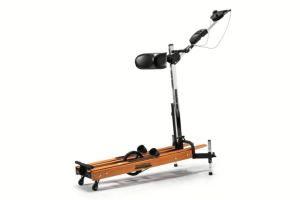
THE Ski Machine

The best ski machine, bar none, is the NordicTrack Classic (NT). The NordicTrack is a stationary machine that recreates the motion of skiing in the classic stride/style. I’ve used a number of competitors and none compare to the NT. The Classic model is a completely manual machine—no electronics. When starting out on the NT set the platform level with the floor it sits on. Then, as you gain familiarity and confidence raise the front legs for increased intensity. Resistance is increased using a strap system the creates drag on the fly wheel. The cushion at the top of the stem supports and works the abdominals (and makes the machine more comfortable).

Newer models have an electronic monitor. The monitor is not related to how the machine works but with this gauge you can track pulse, time, speed, calories and distance. Using the NT requires at least beginner’s skier skill. If you get out of position or your fore foot is too far forward the NT basically stops.

For overall fitness, a ski machine like the NordicTrack Classic offers a year-round option. So, No snow, no problem.

Outdoors

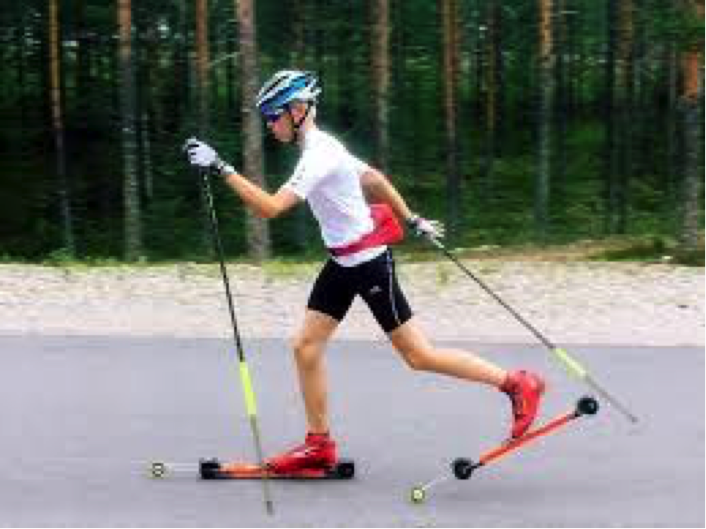
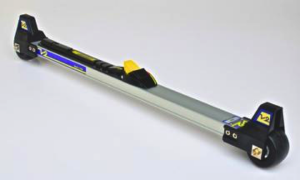
Roller Skis

Roller skis are interesting contraptions that allow you to ski year-round outdoors. Brands won’t be reviewed here because the market has exploded with brands and styles. According to Xcskiworld.com the differences between the brands primarily have to do with wheel speed, smooth ride, cost, weight, ability to handle rough pavement or dirt roads, tire wear and skate v. classic stride.

For beginners, aluminum frame roller skis are the best choice. They provide a less expensive first experiences. Also, a wider “roller” or caster provides easier balance .

Advanced skiers might like carbon frames with wheels for greater speed and agility for skate skiing and ski racers who use the roller ski for summer training should use carbon frames.

Many roller ski sets are sold a la cart. Once you choose your ski you will need:

  • Boots
  • Bindings
  • Poles

Buying the same bindings you have on your snow skis has some savings and buying rubber tips for your existing poles saves purchasing additional poles.

Some safety equipment is needed for roller skiing including:

  • Helmet (a cycling helmet will work)
  • Knee and elbow pads
  • Wrist/palm pads

As Mark Vosburgh of Fasterskier.com quipped, “I’ve found roller skis to be a great ski training tool, which I expected.   There’s really no better way to train up all those balance stabilizers, arm, back, core and leg muscles you use when Nordic skiing.

What I didn’t expect, was that my roller skis are so enjoyable to ski on that I love to do it on its own merits.  Cruising along on a quiet country road on a crisp fall day is a blast. I highly recommend them for people who love to ski.”

So, just because there’s no snow on the ground or on the trails, cross-country skiing can still be a part of your active life style.

Skiing Weatherman: Winter Weigh-In Time

What Does A La Nina Winter Mean For Snow Sports?

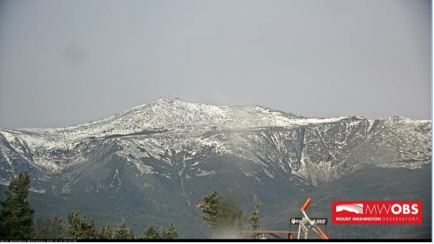
View of Mt Washington from Wildcat, Oct 18

After seeing a web cam shot of snow-covered Mt. Washington, NH this past weekend, I quickly contracted a case of “calendar shock”, realizing that it was time to submit some ideas on where I think this winter is headed, weatherwise.  Co-Publisher Mike Maginn wrote a nice piece on La Nina earlier this month and indeed, this will be a La Nina winter.  La Nina is the cold water cousin of El Nino, with the waters of the equatorial Pacific Ocean running below normal now and likely to remain that way through much of the upcoming winter.  What does that mean in terms of sensible weather downstream over the U.S. and Canada?  Well, there are different flavors of La Nina, based largely on how cool, relative to normal, those tropical waters are.  This looks to be a weak to moderate La Nina, and in general, the storm tracks during a La Nina winter look like this:

You will notice that most of the storm tracks are over the northern half of the country, closer to the source of cold air that makes those systems productive in terms of snow.  La Ninas are not as friendly as El Ninos to skiers and riders over the southwestern quadrant of the country, thus, the lack of an established tendency.   Well before the first turns of any season, friends and clients often ask me for guidance on where to head in the West for a winter trip.  During a La Nina, I steer them north of I-70, where the busier storm tracks lead to more snow and more consistent conditions.  There are exceptions, but the resort snowfall data that Mike included in his article supports that idea. 

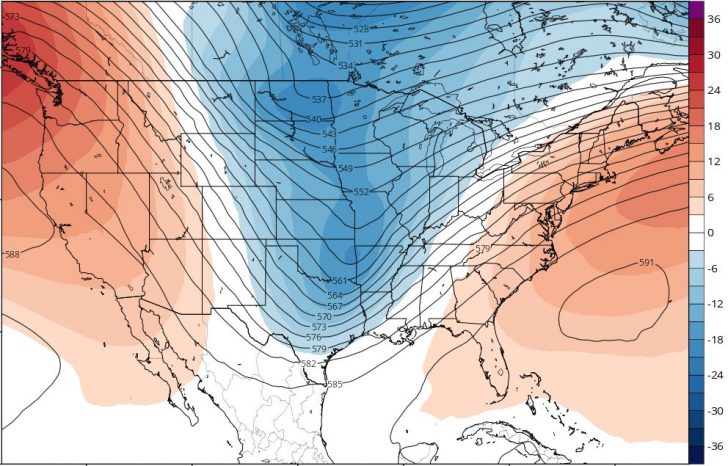
As far as La Nina winters over the Midwest and East are concerned, we often see a battle between a cold jet stream level trough over the center of the continent and a warm southeastern ridge.  A preview of that set up will develop during the last week of this month.  Take a look at this forecast for the jet stream valid on 10/28.

During winter, large dips in the middle of the country will act as a receptacle for cold air moving southward out of Canada.  As troughs interact with warmer air along the Gulf and in the Southeast, storms often take shape and then move northeastward along the western slopes of the Appalachians, as you can see on the storm track map above.  These storms bring snow to resorts in the Great Lakes, both from the low pressure center, and from backlash lake effect snow once the low move up into Canada.  The storm track that you see east of the Appalachians comes from systems that redevelop east of the mountains as the upper trough moves toward the coast.  These are known as “secondary” low pressure centers, formed as the upper level support translates over the mountains and taps into energy from the waters of the Atlantic.  These secondary storms represent the best opportunities for meaningful snowfall at the resorts of the mid-Atlantic and Northeast during a La Nina.

There are other factors that are correlated with subtle but potentially significant changes in these storm tracks, one of which is the solar cycle, and I will discuss those factors in the coming weeks.  For now, though, I am most bullish on the prospects for the West, north of I-7o and the upper Midwest.  I am guardedly optimistic about the Northeast, where temperatures should work out slightly milder than normal but with above normal snowfall via some sizable storms.  The anticipated southeastern ridge will likely pose some problems for the Mid-Atlantic and especially for the Southeast.           

This Week In SeniorsSkiing.com (Oct. 23)

Classified Launch, Response, and Advice,  Chile Season Review, Serious Question For You, Mystery, Maine Guide Advice, How To Ski With COVID.

Last week, we launched our new Classified Ad feature with a special introductory $1 for 30 days offer.  We are happy that there are readers who are posting their ads and hopefully getting some responses. 

Here’s what Bill Cohen, San Jose, CA, had to say about his ad posting experience.  Boy, did that make us smile.

Hey, just wanted to thank you guys for setting up a classified listing program.  I just posted my first ad (CHRISTIE LODGE ROOM AVAILABLE) and wanted to let you know it was EASY, FAST, covered all the bases, and hopefully will get my extra room filled!  So thanks for providing this and I hope others will take advantage of both POSTING and READING the classifieds – GREAT EXTRA SERVICE to the Senior Skiing community.  Bill Cohen in San Jose, CA

Based on what we’ve seen so far, here is some advice:

  1. Post a picture with your ad.  It is easy to upload a .jpeg or .png photo. In fact, you can post more than one, a gallery if you wish.
  2. Be sure to include any details re: shipments or transactions.  Many readers are using PayPal as a payment method. It is simple and easy to setup.
  3. Think about your headline.  Make it short and get to the point. 

If you want to view classified ads already posted, click on the blue menu bar, second box from the left.

As more hikers explore the White Mountains, calls for help climb, too.

 
As a result, SeniorsSkiing.com is asking readers to think about their day hiking plans and review what to bring along.  A great source is expert advice provided by REI, the outdoor equipment company.  You may think some of these recommendations of what to bring are a bit over the top, but if you need, say, a compass, and you’re stuck in the woods without one, you’ll quickly find out how valuable it is.
 

REI’s checklist of equipment to bring for day hikes is definitely worth bookmarking.

Finally, we’re reprising an fantastic resource for those heading to the woods. It’s a valuable document you can download and print out,  published by the State of Maine, by Maine guides. Alone In The Woods is a homespun collection of advice for surviving in the woods if you get lost. With more hikers headed out leaf peeping and conditioning-walking, this is an important source of information. The illustrations may be a bit cartoon-ish, but the information is valuable and might save your life. Click here to read and download.

This Week

Our Question For You this week takes a personal bend as our editor asks readers who have experienced a joint replacement how they returned to the sport.  Why personal?  He’s facing a hip replacement in January.  Gulp.

Correspondent Don Burch offers some basic advice for getting ready for the season of skiing with COVID. As Henry V said in Shakespeare’s play, “All things be ready of our minds be so.”

Correspondent Casey Earle provides a summary of the ski season in Chile in the times of COVID. As we have seen from reports from Australia, the virus has had a heavy hand in how the resorts operated this past season. Those constraints and a lousy snow season made for a fair to middling snow season. What can we learn from both these south of the Ecuador experiences?

Mystery Glimpse is trying something different this week.  Correspondent Don Burch has curated a video of some vintage home movies taken in the 50s and 60s.  Can you spot the locations? 

Thanks for reading SeniorsSkiing.com. Tell your friends and remember there are more of us every day and we aren’t going away.


Short Swings!

Cassandra

Cassandra came to mind last week as we took our first flight since the craziness began.

In case you missed that part of Greek Mythology, after Apollo gave Cassandra the gift of prophecy, he turned it to a curse, causing her prophecies not to be believed.

Stay with me on this one. 

The flight was one familiar to many Eastern skiers: SLC to JFK.

We geared up with face masks, face shields, and wipes. 

Pam had changed flights so many times, even Delta was confused. At one point, she upgraded us to First, a luxury generally reserved for Frequent Flier miles and overseas travel. The logic: last on/first off.

This was our first encounter with Salt Lake’s new airport, which is still under construction. Our terminal was big, beautiful and empty. 

Granted, the paucity of travelers contributed to the speed and efficiency of the place, but I had the feeling that, even when busy, this airport will be on top of its game. 

Next stop was the Delta Sky Club. More big and beautiful and filled with signs and notices reminding people to wear masks. Even the WIFI password carried the message: wearmask.

If you choose to continue reading, it’s only fair to disclose that I believe in and respect science. I understand that we live in what some have identified as a post-truth society and have been exposed to its supporting arguments. There may be some truth to post-truth, but I still weigh-in on the side of science. 

Back to the Delta Sky Club, which, as we waited for our flight, became more populated.

At any given time, about two-thirds of the travelers were masked and sitting far apart. The rest were not.

On a trip to the restroom, I counted 19 maskless travelers. A few had an empty glass in front of them – which, in their minds, must have qualified them to slip under Delta’s rule of not requiring a mask “while actively eating of drinking.”

I spoke with a Delta supervisor who explained that in the month since the new Club opened, it had become increasingly difficult to get passengers to wear masks.

Not so on the plane, where people were mask-compliant.

What does this experience have to do with skiing? 

Many of you rely on planes to get to mountains. Indeed, most Western resorts rely on airlines to get skiers to their lifts and lodges.

If people, out of selfishness, petulance or a sense of not wanting to follow what is good for themselves and for their communities, choose not to follow scientific advice, our return to the “new normal” will be delayed even more.

Which brings me back to Cassandra. She spoke the truth about what would happen. But she was afflicted with the curse that others wouldn’t believe her. 

I write this knowing it conflicts with other points of view. Most SeniorsSkiing.com readers have more ski days behind them than they do ahead. Speaking for myself, I want to enjoy as many of them as I can, as healthily as I can.

It’s time to believe Cassandra.


Flurries (Almost) Everywhere

Tuckerman’s Ravine in Spring.

The season is about to start. Over the past week (even earlier) snow fell at higher elevations throughout the West and elsewhere, even Tuckerman’s Ravine on Mt Washington (NH). Snow guns are operational. Lifts are running across the Alps. One Scandinavian area unpacked snow saved from last year and spread it on a slope for early race training.

First North American Ski Area Now Open

Wild MountainTaylors Falls, Minnesota, is the first North American area to open for the 20-21 season. Four chairs and multiple rope tows service a variety of terrain with a short vertical. Mt Norquay Banff, Alberta, will open Saturday.

Fire Destroys Large Fischer Ski Factory

The factory, in Mukachevo, Ukraine, manufactured 25% of all Alpine and Nordic skis sold internationally. In addition to Fischer, brands made there include Rossignol, Scott, Alpina, Splitkein and Tecno. About 1,500 were employed. The fire occurred Tuesday, October 13.

The Skiing Gypsy

Murray Sandman (aka The Skiing Gypsy) is a 70+ Aussie blogging about his multi-continental ski adventures. He first contacted us following the  series a few seasons ago about skiing the Dolomites. Our trip was organized by Inspired Italy, the superb and reasonably priced local outfitter. Murray emailed his DIY approach, which you can find – along with other experiences and advice – at https://gypsyskitravels.wordpress.com.

Great New Winter Clothing Site

Orsden, which made excellent parkas and pants, has pivoted to a curated e-commerce site with wonderful-looking women’s and men’s casual winter clothing. Some of the brands will be familiar; others less so. If you’re seeking something to relieve your Covid-confined existence or to brighten someone else’s special day, click here.

Special Occasion Gondolas

The Gondola Shop’s Sauna: only $25,7000.

The Gondola Shop in Fruita, Colorado, buys and repurposes gondola cars. They design and rent them out for weddings, transform them into saunas, and are in process of preparing 20 or so as individual dining rooms that will sit in Telluride’s Town of Mountain Village.

End Is Near

Living in the US? You may be on the receiving end of an endless stream of fund-raising appeals from candidates for office. A Washington, D.C. friend refers to it as “silly season.” Election Day is upon us. We cast our mail ballots before leaving Utah last week. Most people our age fully appreciate the importance of participating in the system by voting. Skiing can wait. It’s time to cast your vote.

Report From Chile: The COVID Season

What We Can Learn From The Ski Season In Chile During The Pandemic

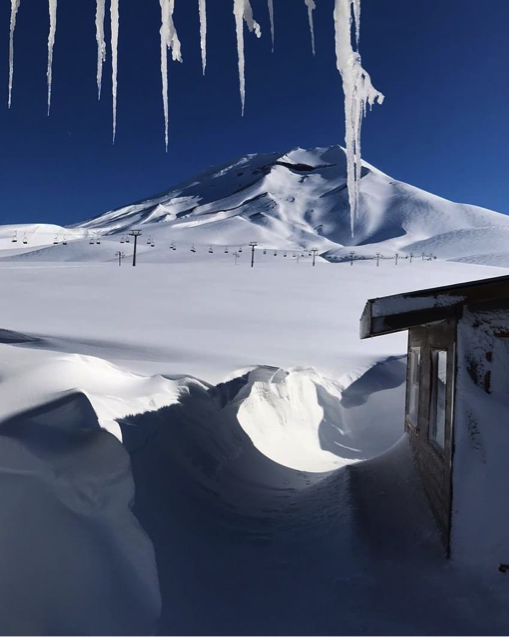
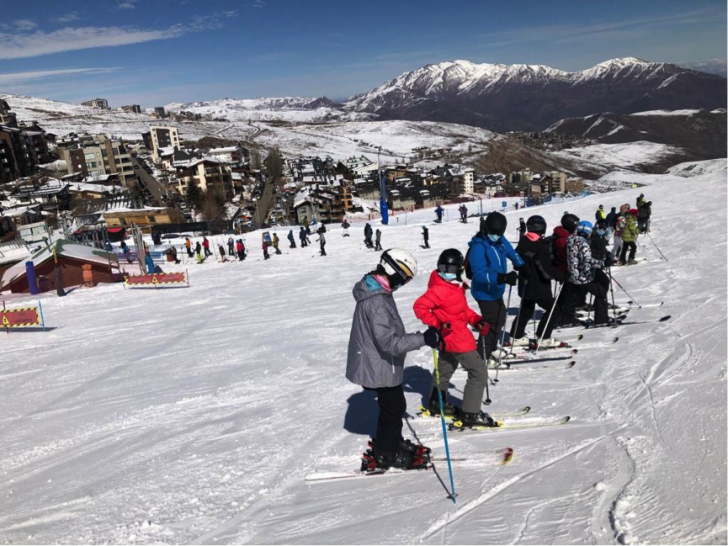
Only four ski areas opened in Chile this year, due to the pandemic, all in the last third of the normal season (late August). The country was in the midst of a severe drought when the entire metropolitan region of Santiago shut down in May. An “atmospheric river” arrived late June, and over a period of 10 days it snowed more than it had in a decade. All one could do was look longingly at the webcams and pray the snow would last until restrictions were lifted. In June, the ski area association presented a protocol for opening to the government. At the same time, Chile had one of the worlds highest infection and death rates from the virus, so nobody really believed there would even be a ski season.

La Parva on July 5.  Looking via webcam, not skiing. Credit: Casey Earle

Corralco mid-July. Snow but not open to skiing. Credit: Casey Earle

The quarantine lasted to late July in some of the districts of Santiago and the first ski areas were opened on August 18, specifically El Colorado and La Parva. At the end of August Corralco and Las Araucarias, in southern Chile, opened. Rules were strict and at times confusing. Masks, properly worn, were required, as were gloves, online sales only, two skiers per quad, and no restaurants. The number of tickets sold was limited to the equivalent of an uncrowded day. At times a lift attendant would berate skiers for not spacing enough in the few line-ups that occurred and take your temperature on your wrist.

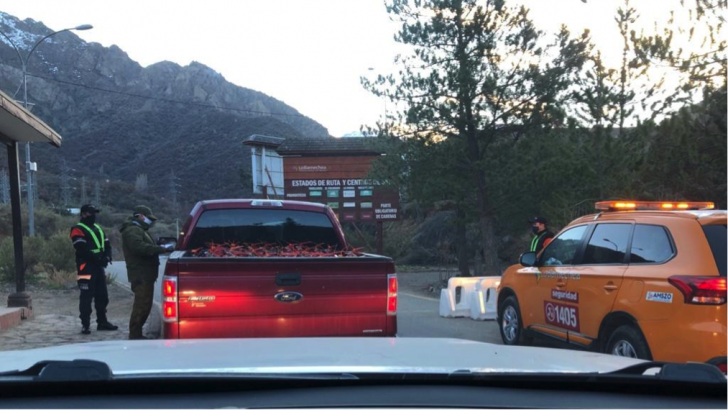
The police were controlling access to the mountain road and were strict about not letting anyone by that was not from a district that had advanced to the correct stage. This produced line-ups and long waits, which I avoided by going up at 6:30am. Use of second residences was not allowed, weekends were quarantined (closed ski areas), and a curfew was (and still is) in effect.

In order to ski, one had to fill out a fill out a health declaration online, and sometimes show it at the bottom.

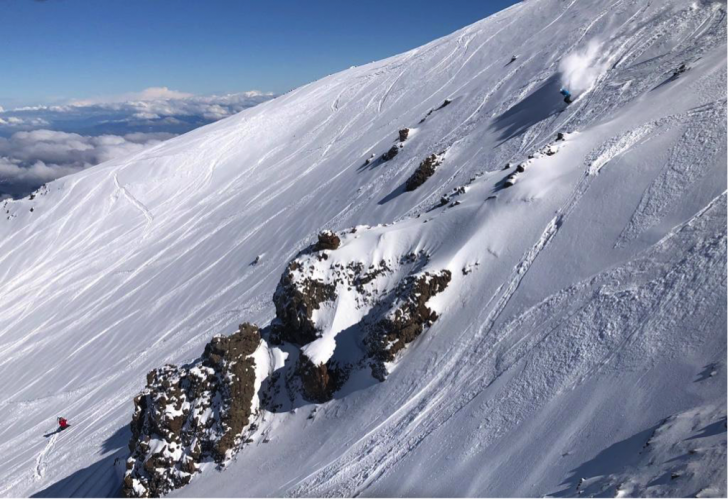
With only 20cm having fallen since early July, the conditions for the August 18 opening was a bit disappointing. But a final 20 cm fell on August 26, and what a day it was.

Fortunately, the run maintenance was superb, and we skied the groomers through to mid September, when the lack of new snow was taking its toll and the heat was turned up. La Parva closed on September 25.

Lift line trying not to block the run.Credit: Casey Earle

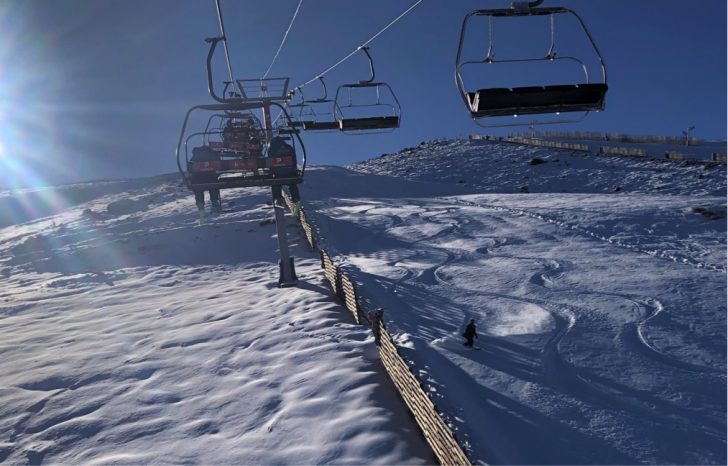
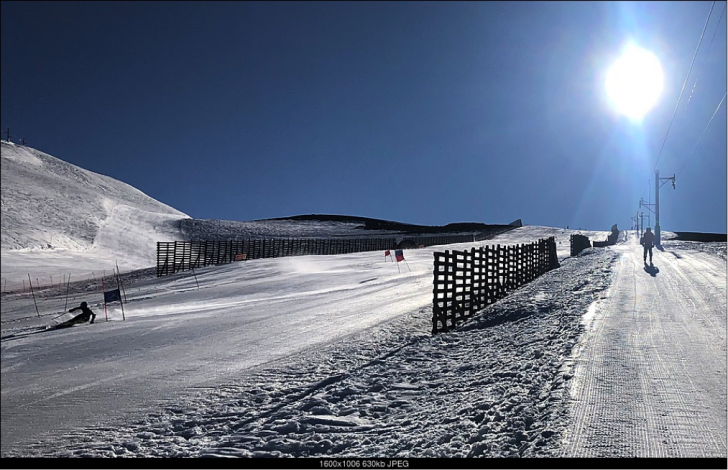
Most days there were so few people that one could ride and empty lift and ski an empty run.

Few people. Credit: Casey Earle

In early October we set out to Villarrica to ski the volcanos of the south, but promptly went into quarantine and had to sit out the remainder of the season. Corralco was open until October 18.

That we could ski at all was a miracle. I must say, however, that skiing, properly regulated, is probably one of the most socially distanced sports around, but much depends on the individuals respect for the rules.

Question For You 15: Returning With New Joints

What Does It Take To Come Back With Artificial Parts?

Here’s a question for a subset of our readership. This question is being posed by your faithful editor because he is facing the prospect of a hip replacement.  Assured by our capable and competent orthopedic surgeon that skiing and other athletic activities (not running or impact sports) are in the offing, we wonder how others have fared after getting a new shoulder, knee, or hip.

If you’ve had a joint replacement, please share what it was like to come back to your sports regimen? What was that first ski run like? How did you muster the gumption to give it a try? What did you do to prep? What helped? What hindered? What advice do you have for those facing replacements?

From what we’ve heard, joint replacements have become the most common surgery in North America. Since osteoarthritis seems to be the reason for that surgery and since OA is most likely found in older folks, we have a suspicion that a good proportion of our readers have been down that path.

Please share your thoughts in the Leave A Reply box below.


Mystery Glimpse: Home Movies

Vintage Scenes Of Skiing.

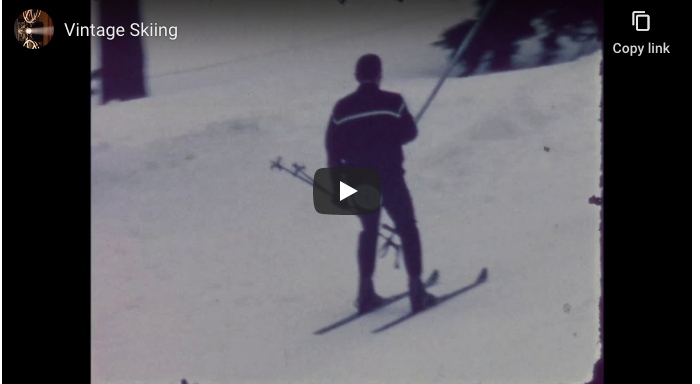
Here’s a different Mystery Glimpse challenge.  Correspondent Don Burch has uncovered some old home movies from an online video archive.  Can you spot where this footage might have been taken? Are there clues in these different videos that might reveal when these were taken? Even if you can’t identify the locations, check out that equipment and the bota bag. Just click on the image below. Does anyone use a bota bag these days? Anyway, have fun with these memories. 

Last Week

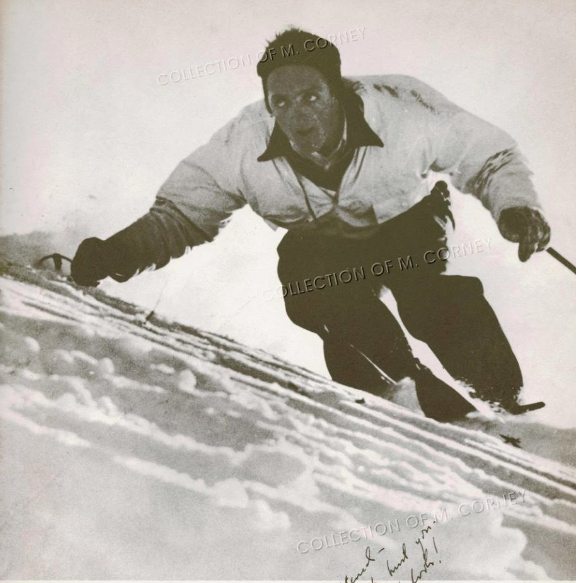
Here’s the photo with Durrance’s autograph. Credit: Ski History

This photo of Dartmouth’s Dick Durrance with an intense “look” comes from a book published by Friedl Pfeiffer in 1939.  The Sun Valley Ski Book was a pictorial ski instruction book, containing action shots of celebrity skiers of the day.  We discovered this photo in an article in Ski History Magazine, the publication of the International Ski History Association. The specific book this was taken from was discovered in bookstore by long-time skier Marc Corney. Not only does it contain a collection of spectacular photos, each photo has an autograph of the subject.  There’s also four pages of autographs from various people who apparently were invited to sign the book which most like belonged to none other than the author Friedl Pfieffer.  You can read the whole fascinating story by clicking here. There are lots more pictures, too. And please consider supporting the International Ski History Association while you are at it.

Autograph: “Don’t be frightened. He’s too small to hurt you even with that look!” Credit: Ski History


2020-21 Survival Guide

Buckle Up, Bundle Up And Buck It Up.

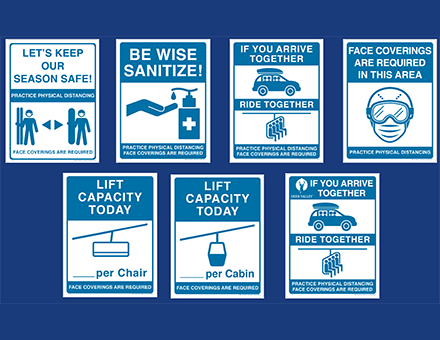
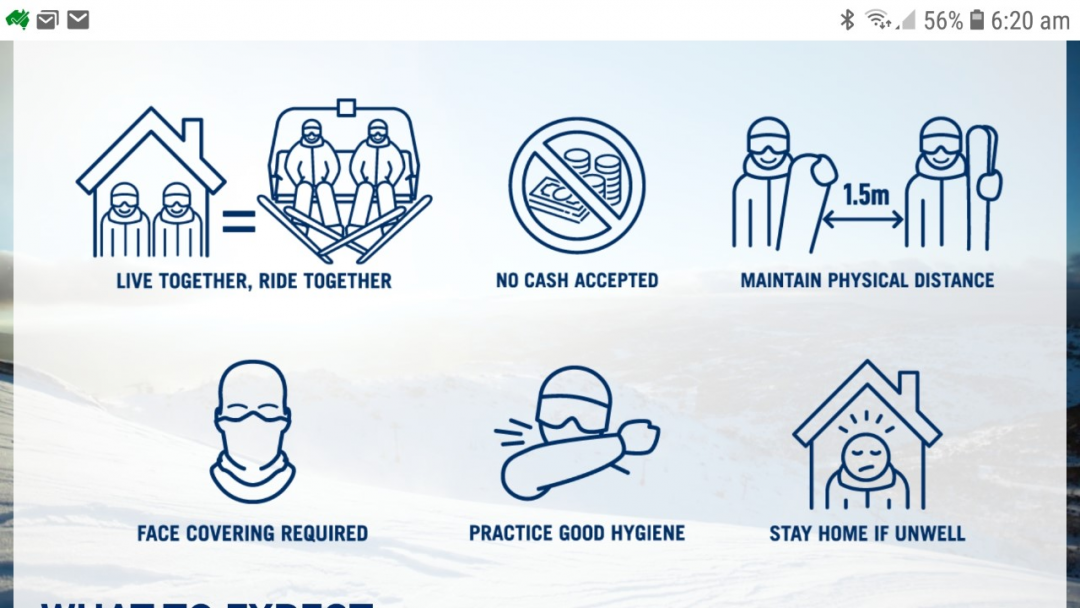
NSAA recommended signage for this season. Credit: NSAA

Never before has there been as much trepidation about a ski season as for this one.  Given all the tumult that occurred during this year, it’s no surprise we’re anxious.  What follows are some insights that will help us get the most out of what will be a most unique season.

Above all, we need to go into this season with realistic expectations.  Things are not going to be the same as ski resorts strive to provide us the best possible experience in the midst of the pandemic.  Be prepared for limits on the number of skiers allowed at resorts each day and in many instances we’ll have to reserve these days in advance online.  The result is that we will likely not get to ski each and every day that we would want to, and we will likely not get to ski as many total days as we’d like. 

As resorts work to ensure social distancing across all phases of our visits, we can expect changes to how day tickets are purchased, how food and beverages are purchased and where they are consumed.  There will be changes to how lift lines are organized, rules about who can ride lifts together and how many people unfamiliar with one another can ride together.  Because resorts will be limiting the number of people allowed in lodges, we need to be prepared to boot up, warm up, and eat in our cars.

It will behoove each and every one of us to be as self-reliant as possible.

There are a number of stakeholders in skiing, and it helps to understand that we all share the same goal: to make skiing as fun as possible for as many people as possible and to keep everyone safe. We are all in this together and the 2020 ski season will be th ebest possible if we recognize our interdependence. If people choose not to follow the rules, it could lead to further restrictions.

In addition to the demanding tasks involved in reopening each year, resort operators are facing a daunting array of challenges including redesigning how services are delivered, complying with federal, state and local mandates, financial challenges, acquiring an adequate work force and doing all this amidst tremendous uncertainty.

As a result, resorts are not going to get everything righ,t and we should expect things will not always run smoothly. In essence, we need to be understanding and patient.

Because the impact of the pandemic is so fluid, resorts will likely change policies throughout the season. So, know before you go. Staying up to date on information regarding a resort’s policies will help us avoid unwanted events.

Now the lemonade: The thing we love most about ski trips is the actual skiing, and this season time on the slopes will be just as much fun as ever. Additionally, we may come to like some of the changes.  Strategies for more “low-touch” interaction with guests may lead to smoother and more efficient ticket sales, use of passes and quicker access to food and beverages. Resorts are considering some very creative options for dining such as food trucks, other satellite food stations and take-out.

So, buckle up, bundle up and buck it up.

Alone In The Woods Maine Guide Survival Manual

Whether You Day Hike Or Trek, There Is Some Woodsy Wisdom You Need To Know.

[Editor Note: We are reprising this article from July 2014 to remind our readers that there are definite skills and knowledge needed when heading into the woods. As noted elsewhere this week, people are going into state and national parks without proper preparation, some getting into trouble. This guide, as eccentric as it appears, has worthy information to take on board.]

Folksy but wise advice from Maine Guides.

Several years ago, we stumbled on a unique resource to surviving in the woods if you become lost.  Now you might think that is probably something that won’t happen to you because you are either experienced, well-equipped, cautious about where you wander, or just lucky.

Well, getting lost out there happens all too often in the woods, even with prepared, expert hikers and campers. Unexpected stuff comes down: GPS batteries die, injuries happen, weather changes, equipment fails, that luck of yours runs out, and knowing how to make it out is a critical set of skills.

The State of Maine has published a truly valuable guide for surviving in the woods if you are lost.  It’s called, “You Alone In The Maine Woods,” and it is billed as a practical guide to woods comfort, safety, and survival.  It’s been updated frequently since the original 1972 edition by various authors from the Maine Warden Service and Search and Rescue from the Department of Inland Fisheries and Wildlife.

We offer it here as a PDF download for you and your friends and family for all readers who visit SeniorsSkiing.com. Notice its whimsical but clear illustrations and straight-forward advice.  Typical Maine.

Click the image below to download the 72-page guide.

CLICK HERE TO DOWNLOAD Alone-in-the-Maine-Woods


Short Swings!

Maybe I’m becoming that grumpy old man, but the steady stream of videos about backcountry skiers being avalanched away, the drone videos of sharks swimming perilously close to surfers, and the reports of elk and buffalo attacking people with no common sense are getting to me.

Who in their right mind would try to pet a large wild animal and not expect some consequence? I once knew a woman whose passion was hiking in grizzly territory. She thought of herself as a bear-whisperer, probably influenced by a popular movie at the time. She encountered lots of big bears. Fortunately, she was never attacked. Looking back on that and other decisions she made, I think she had congenitally bad judgment.

We see this type of poor judgment when people drink and drive. Or when they back up and over a cliff taking a selfie.

Authorities recently retrieved the body of a Lake Tahoe drowning victim. It was the deepest water body recovery in US history. The poor fellow had jumped out of the rental boat to take a selfie. He neglected to put the engine in neutral. Hardly good judgment.

We camp with a cautious couple. They’ve guided us to remote and risky locations, but consistently exercise good judgment.  Driving back from a lakeside gathering with several vehicles, he made it clear he would go first, stop at the first intersection for the others to meet and continue doing that until we reached pavement. Nobody got lost taking a wrong turn.

A few years ago my wife asked that I no longer hike alone into remote areas, something I had done for years in the wilderness around our home in south central Utah. At first I resisted, but then agreed. What would happen if I took a fall or twisted an ankle? 

That’s a lesson for solo skiers. It may not apply to skiing smaller areas or if you stay on trail. But at large resorts where some of us like to go into the woods, it’s always best to buddy-up. If that’s not an option, be sure to enter the area’s phone number or that of its ski patrol into your cell phone. You never know when it might come in handy.

And since cell reception can be spotty, always, ALWAYS, carry a very loud whistle in your parka. Three loud blasts, repeated every 15-20 seconds should attract attention. I googled “loudest hiking whistles.” Some are metal; some plastic; some have compass and other doodads Not one was more than $25, and most were much cheaper.

The greatest form of protection for any outdoors enthusiast, young or old, is that behavior known as common sense. SeniorsSkiing.com readers are older. That means we should be wiser. Use your noggin and minimize risk.

SeniorsSkiing Classifieds

More detail on our new Classified Advertising section elsewhere in this issue. It evolved mainly from reader input. Many of you expressed interest in meeting contemporaries with whom you could ski. Classifieds also give you the opportunity to sell things, offer services, etc. Among other things, we hope that ski clubs offering trips to non-members will use the service. Introductory cost of advertising is as low as it goes: $1 for four weeks of advertising, as long as the ad is placed before November 13. After that the rates increase, but they’re reasonable. It’s all self-service. Click on “Classified Advertising” on the Menu Bar, then click Place Your Ad. You’ll need to agree to the Terms. Then pay by credit card. We’re using a secure third party service for transactions. Have some vintage ski-related item you’d like to sell? Give it a try.

British Medical Journal: More Exercise = Lower Risk of Early Death

Higher levels of physical activity — regardless of intensity — are associated with lower risk of early death in middle aged and older people, according to a study of 36,383 adults aged at least 40 years. The observational  study, conducted at the Norwegian School of Sport Sciences in Oslo was published recently in the British Medical Journal. Average age of participants: 62. Resulting guidelines recommend at least 150 minutes of moderate intensity exercise weekly or 75 minutes of vigorous exercise. Findings also show that being sedentary (e.g. sitting still, for 9.5 hours or more a day) is associated with increased risk of death.

New Warren Miller Virtual Film Tour


Future Retro (watch trailer by clicking above) will stream on East Coast Saturday, November 7; Central and Mountain regions Saturday, November 14, and West Coast,Saturday, November 21. Each showing is being supported by regional sponsors and will have offers, prizes and giveaways. Price is $30 for up to 4 people per ticket. Visit the Warren Miller website for details and to purchase tickets.

Vote for Your Favorite X-C Area

USA Today, Cross Country Ski Areas Association and Nordic Group International are inviting votes to determine USA Today’s 2020 Best Cross Country Ski Resorts. Click here to cast yours

Department of Over-the-Top Skis 

Source: Foil Skis

Foil is an Italian custom ski maker. Its website states: Foil Skis are the truest expression of our lifelong desire to create authentic “High Performance Art…” Like a Master Chef, the team at Foil has learned not only how to select the finest ingredients but also how to combine them in a way that has produced a ski which is every bit as breathtakingly beautiful as it is a sheer joy to ride. The company’s special edition Oro-Nero model has a top-sheet of 8000 year-old bog oak and is equipped with 14 karat gold bindings. Each purchase is accompanied by gold-plated poles, a flask, and a hand-stitched leather carry bag. My inquiry about cost has gone unanswered.

US Traffic Deaths Declining

Click here to visit an interesting, interactive “heat map” ranking states by the number of traffic fatalities per 100 million vehicle miles. The data, presented by Reviews.com, was compiled in 2018 by the National Highway Traffic Safety Administration & Insurance Institute for Highway Safety.

Princeton Ski Club

Looking forward to speaking next Tuesday with the Princeton (NJ) Ski and Sail Club about SeniorsSkiing.com and the coming season. It will be the club’s first meeting of the season and its first via Zoom.


Mystery Glimpse: Those Eyes

The Face Of Intensity.

Here’s the first of our Mystery Glimpse feature for this new season. We post a picture from snowsport’s past and you guess who the person, place, or thing is. Write your response in the Leave A Reply box below.  If you know any details about the photo or the situation, let us know.

Here’s a racer whose name you should be familiar.

Credit: Ski History Magazine


Question For You 14: How Do You Decide What To Buy?

Shopping For New Stuff?

Now is the time of the year when thoughts of pulling out the plastic and splurging on gear and clothing permeate our waking hours. After all, those old bindings are past their sell-buy date, and those cracked boots don’t quite fit the way they did seven years ago. And that dirty parka is simply falling apart.

And retailers are hanging out the discount signs.  Although there won’t be ski shows this year, there might be some online versions thereof to entice those with a hole in their pockets.

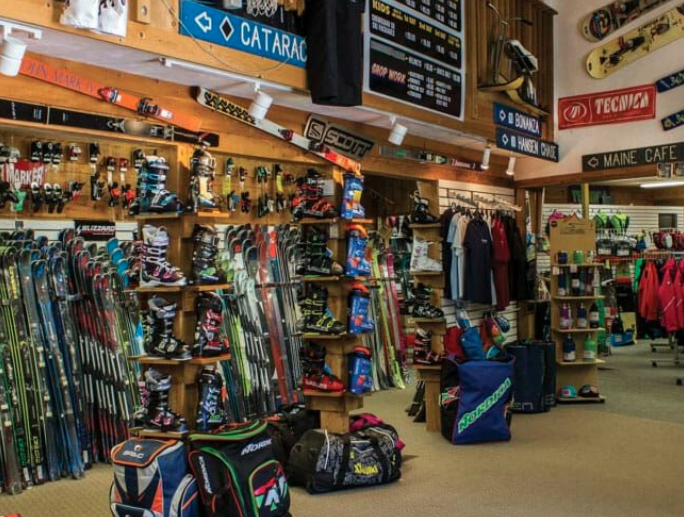
Bob Skinner’s Ski And Sports, Newbury, NH.

We’ve often wondered how you, dear reader, makes decisions about what to buy. Do you look for articles in the magazines and blogs to guide you? Are they helpful? Do skiing friends tell you about what works for them? Do retail sales specialists guide you through choices? How do you judge? Do you know what you’re looking for at the start of your search? Or, are you working from some impressions gathered on last year’s lift lines? Share your thoughts.  We’d really like to know.

As you know, we’ve been publishing ski and boot recommendations for since we started SeniorsSkiing. Has that made a difference in your buying decisions?


If  you are considering buying new gear for the new season, how do you decide what to buy?

Please respond in the Leave A Reply box below.


Make More Tracks: Rendezvous Ski Trails

Catch Early Snow in West Yellowstone.

West Yellowstone Rendezvous Trails might be the center of XC in North America.

If you head to West Yellowstone, MT, in late November, you can visit the early winter cross-country ski epicenter of North America: the Rendezvous Ski Trails.

There are a bunch of fall camps in the Rockies – including Silver Star, BC, Crested Butte and Steamboat Springs, CO, plus Mt. Bachelor in Oregon – but the Yellowstone version is the oldest, largest, and incredibly convenient: literally right beside town (http://www.skirunbikemt.com/yellowstone-ski-festival.html). You can fly into Bozeman, MT, and stop to downhill at Big Sky Resort on the way to or from the Rendezvous Trails.

For decades, West Yellowstone was known as Snowmobile Capital of the World, partly because Yellowstone National Park is right next door (geysers! wolves! bison!). These days, the winter economy is also driven by cross-country skiing. (The Park isn’t open to over-snow traffic until December 15th this year, but you can ski from town before that onto snow-packed roads inside Yellowstone.) XC has changed from a handful of locals who thought XC was cool to a community where skiing is a life-style for a lot of residents.

A Lovely Trail System.

“West” has as lovely and lilting a trail system as anywhere in North America. What’s remarkable is that the roughly 35 km are loved by racers (like the Norwegian, Latvian, and German national teams, who trained there for the 2002 Salt Lake City Olympics) and recreational skiers. Perhaps the favorite recreational trail is the Rendezvous Loop, which passes by the biathlon course. A lot of competitors like a good long workout on Dead Dog and Windy Loop, on the far end of the network.

The Rendezvous Trails routes can hone your technique but aren’t a survival challenge (there’s only about 200’ of vertical change). And while they’re full of free-skiers and Fall Training Camp participants around Thanksgiving, the rest of the winter (especially non-holiday weekdays) they can be so peaceful that you can be out for an hour and see only a dozen people.

The trail system is a cooperative venture on U.S. Forest Service land, managed by the Forest Service, the West Yellowstone Chamber of Commerce, and the non-profit West Yellowstone Ski Education Foundation. A WYSEF Director once told me, “I would personally love to see West Yellowstone known as the Cross-country Ski Capital of the World. Our proximity to the trails inside Yellowstone National Park, our lengthy ski season, and competition-worthy grooming lend themselves to this possibility.” 

Several thousand skiers, from beginners to families to elite athletes, flock to “West” in November for the marvelous skiing, moderate altitude (around 6,700’), superb grooming, and reliable snow. In rare years when the white stuff arrives a little late in town, groomed skiing begins on a higher plateau, accessible by four wheel drive vehicles.

Yellowstone Ski Festival.

YSF has racing, but there’s a lot more including Pilates, kids activities, clinics, classes, demos. YSF is modified for this year but may be back full strength again in 2021

Before the upcoming “interesting” winter, the Fall Training Camp was known as the Yellowstone Ski Festival. It included natural science programs for kids, Pilates, backcountry films, indoor equipment expo and clinics, beer tasting, on-snow ski demo, and an end-of-week party. While the indoor component has been reined back – thanks, COVID-19! – there’s still a wide-ranging array of XC clinics with outstanding coaches, biathlon, and an FIS race (Ma Nature cooperating). Winter 2021-‘22 may be back to full-scale festivities.

Post-Festival, there’s still plenty of activity, with the winter schedule getting nailed down as I write this in early October. There are plans for ski races, biathlon (ski-and-shoot) competitions, and fun events, perhaps including the annual “Taste of the Trails.”

West Yellowstone has a daily trail fee (probably $12). Amenities along the trail are pretty limited (there’s a trailhead building with bathrooms and a communal room), but you can rent skis at several locations in town. Freeheel and Wheel (www.freeheelandwheel.com) has instructors, clothing for sale, and equipment rental and retail – plus they’ve got great coffee and a sense of humor!

There’s a mix of hotels and motels in “West”—check http://www.skirunbikemt.com/sleep.html for recommended lodging.

Rendezvous Trail System. Something for everyone.

Prepping Your Mind

Adjusting Your Attitude Is Important, Too,

As I think about preparations for the upcoming Nordic ski season, lots of details come to mind. Fitness of course tops the list. Stepping up my walking and cycling regimen is a must.  Making small incremental increases in intensity and duration and taking appropriate rest days are essential to the senior cross-country skier.

I once read that perfecting one’s XC stride is a lifetime’s pursuit. Now seventy, I still call myself the eternal intermediate skier, and equip and prepare myself accordingly.  

I also try to prepare mentally. These readings help me prepare intellectually and emotionally for a long and lustrous winter. Here’s three:

Cross-Country Cat by Mary Calhoun (1979) with Illustrations by Erick Ingraham.

This charming story follows the adventures of Henry, the lovable, mischievous Siamese cat. He is accidentally left behind at a ski lodge by his human family. Now, he must figure out how to get back to them through deep snow and raging blizzards.  This funny, cute tale which has tickled every child I have ever read it to should be read by every senior skier to their grandchildren.

About Erick Ingraham’s illustrations, Publisher’s Weekly wrote, “Competing with the author’s tale in verve and artistry are Ingraham’s snowy scenes in exactly the right shades of blue, sepia and gray, set off by glaring white.”

Henry’s message of persistence in the face of difficulties and challenges spoke to both me and my children but in a quaint and amusing way.  His “stupid cat” chant as he kicked and glided toward his home and human family continues to inspire me when I’m on a long ski trek in the Maine woods, for example. It also inspired our children at the end of a long ski day to stow gear, take showers and finish their dinners before collapsing for the night.  Memories I cherish.

Some of Calhoun’s other titles about the intrepid Henry include:

  • Hot Air Henry
  • High Wire Henry
  • Henry the Sailor Cat
  • Blue Ribbon Henry
  • Henry the Christmas Cat

I strongly recommend as many “Henry” stories on your grandchild book shelf as possible

Cross-Country Skiing: A Complete Guide by Brian Cazeneuve (1995).

The range of topics in this book dazzles.  Through Brian’s work, I first became interested in back-country skiing. He covers basics, gear, weather, technique and more in this thorough work. 

Cazeneuve intersperses his sage advice with lyrical, humorous bits about the sport itself. “Cross-Country skiing, unlike hang gliding, cattle rustling and iambic Swahili, is disproportionately more difficult to perfect than it is to learn.” (p.10).  This tongue-in-cheek advice has helped me laugh at myself when I take a fall and helped me get back up.

Chapter 11, “Going Farther”, promotes taking the kids (and grandkids) on Nordic adventures as well as teaching seniors who may be considering getting back into xc skiing or trying it for the first time.  This book is a must.

Self Renewal by John W. Gardner (1964). 

A psychologist and head of the department of Health, Education and Welfare in the Johnson administration is a personal hero of mine. In this insightful work, Gardner asserts a society’s ability to renew itself hinges upon its individuals. It is the waning of the heart and spirit—not a lack of material might—that threatens American society. He states that “all humans have several key commonalities: They are flexible, eager, open, curious, unafraid, and willing to take risks.” 

With age comes some wisdom. We seniors who continue hit the trails and slopes each winter probably agree with Gardner, “…even the self-renewing person has fixed habits and attitudes, but they are not the sort that interferes with continuous renewal. If the scientist changed his (sic) pipe weekly but never his theories, he would be in serious difficulty. The moral is clear. If we must have continuity in our lives—and we must—let it be of the sort that does not prevent renewal.” (p.130). I know my cross-country ski goals and ambitions must change as I age but the continuity is each winter to renew and go skiing again.

Renewing the heart, mind and spirit are critical to me as the seasons change and we transition to and hope for a snowy winter for kicking and gliding during these incredibly difficult times.

Short Swings!

How often do you think about skiing?

To my wife’s dismay, it’s always top of mind.

A few months ago, camping in a remote, high mountain location with some fellow skiers, we realized we were simultaneously having the same thought: What would be the best line down those North-facing slopes? Chuckles and beers followed.

Harder evidence trickled in throughout summer in the form of hundreds of new subscribers. Curious about that phenomenon (it happens every summer), I did a fast check of where these new subscribers live. The majority were in locations experiencing hotter than usual conditions.

Thoughts of skiing are a pleasant, if temporary, escape from the heat.

A corollary would be sitting in front of a blazing fire on a cold winter day thinking of  the beach.

So here we are, early October and, depending on where you live and what the temperature is, you may be thinking ski hill or balmy beach.

Mike and I discussed this recently in one of our planning calls. Did we publish the Best Boots for Older Skiers Guide too early? Should our Best Skis for Older Skiers Guide be published now or in a few weeks when temps are a bit colder and flurries are in the air?

You’ll find an article on Masterfit’s impressive new Buyer’s Guide in this week’s issue and a link to the Guide. If slopes and trails are on your mind, the Guide is a good place to go for a quick fix. If you’re still opting for the beach, the Guide can wait a week or two.

Ditto for our annual listing of North American areas where older skiers get great bargains on passes.  We expect to post that in early November.

No Blame if you’re not thinking mountain or beach. There’s an abundance of distraction at the moment. 

Wherever you live, Covid and its consequences are issues. I’m not alone in wanting to have those East Coast grandkids back in my arms.

And whatever your position on climate change, the planet is sending increasingly urgent messages about the need to take action.

If you’re a US citizen, the Presidential election is probably occupying a bit of your attention. I mentioned this last week and will continue to do so through Election Day. Whomever you support, be sure to vote.

While we’re working our way through these issues and distractions, we still have slopes and trails to think about. 

Now is the time to dust off skis and boots. Have your shop check the bindings. Make your winter plans. Snow is on the way.

Powder Magazine: RIP

Powder Magazine, the publication so many of us enjoyed during its 49-year run, will close down in November. It’s final Annual Photo Issue hits the stands November 16. It should be a collector’s item. For years, I looked forward to and relished each issue of this visually impactful magazine. Like other print ski magazines that have shuttered over the past few years, I’m sorry to see Powder go. R.I.P.

Are Yurts in Our (Skiing) Future?

Snowbasin, the superb ski area about 45-minutes north of Salt Lake City, announced it will be adding several mid-mountain yurts this season. Their stated purpose is to give skiers an alternative place to rest and warm-up. One hopes that seating will be well spaced and masks required. Using these temporary structures as a way to relieve crowding in lodges is a good idea, as long as appropriate Covid protections are in place. It wouldn’t surprise me if yurts start popping at areas in general.

Cancelled: Winter Park Ski Train

The Winter Park Ski Train connecting Denver with the ski resort has become another victim of Covid. With the exception of a multi-year hiatus, Ski Train operated every season since 1941. While social distancing concerns lowered the boom, Denverites can expect the service to resume sometime in the future.

Buy a Tee Shirt. Help a National Park

Wild Tribute makes tee and sweat shirts with graphics representing most U.S. national parks. The company donates 4% of its proceeds (not profits) to non-profits supporting the parks (e.g. National Parks Conservation Association, Grand Canyon Association, Grand Teton Association). The products make good birthday or holiday gifts for anyone who loves our parks. Click here to visit Wild Tribute’s website.

private group scheduling app for sharing a ski house or other co-owned or jointly-owned property

Using a Scheduling App for Co-ordinating Ski House or Club Stays

The Challenges of Shared Vacation Property.

I’m connected to a group that has access to a special piece of real estate. It’s not grand or luxurious, but it’s in an epic location and holds years of memories of celebrations, vacations and good times with family and friends. It’s a privilege to be able to go there, and the co-owners work hard to maintain it, to enable fair use, and to share expenses evenly.

The upsides of sharing a vacation property are obvious, but there are challenges. Some of these can be made easier by judicious use of technology. Software can’t repair damaged relationships or solve every problem, but it can go some way to reducing friction and making a shared property easier to manage. 

Scheduling Use

transitioning from a paper calendar to an online reservation system for shared propertyThe first issue that typically arises in group sharing is how to plan use. In our case situation, there was just one person who managed a paper calendar, and you had ask her about availability by phone 9-5 Monday-Friday. 

This was difficult for a number of reasons:

  1. On a particularly good weather weekend, people would be unsure if the place was in use or not and sometimes they would just show up in case no one was there. This didn’t always go over well with people who had called in advance and were already in residence.

  2. Some people found it awkward and uncomfortable to call and potentially disturb the calendar manager. 

  3. It often took more than one call to make a reservation. Playing telephone tennis to establish whether the place was available on a particular date felt like work.

  4. People don’t always make plans 9-5 M-F. Waiting till the next business day to check availability dragged the process out.

Making It Fair

lady justice's scales showing that sharing should be fairThe second issue that we commonly see, and that was the case in our group too, is making use feel fair.

Some members of the group live out of state and might only visit once per season. Others live a short drive away and visit often, when conditions are good.

If everyone is sharing expenses, this lopsided usage is clearly unfair and can prompt bad feelings. We planned to tally up everyone’s use and charge an additional use fee, so infrequent visitors would feel fairly treated.

Building A Website

I’ve been building websites since 2005 (including SeniorsSkiing.com) so it seemed obvious to me that these problems could be solved by a shared online calendar with multiple users.

Rather than build one from scratch, I researched off-the-shelf options. My criteria were:

  1. Group members should be able to see the live calendar.

  2. Group members should be able to make reservations.

  3. The calendar should be private because no-one wants to broadcast when a property is empty.

  4. The available time slots should be customizable so that it’s simple to book a day or overnight, or multi-night stay.

  5. There should be a way to specify use types for example: member, guest or rental. This so different use rates can be calculated.

It seemed simple but I struggled to find something I could adjust to meet our needs. Google Calendar was an obvious option but there was no way to share a calendar without making the link public even if it was unlikely anyone would find it.

There was also too much flexibility—group members could book 10 mins, overlapping stays, and edit the past. We had no way to standardize use and simplify the options.

I must have demoed at least 30 promising apps over the years, systems designed for inns, campsites, rentals management, hair salons, gyms, yoga studios, and even shared workspaces, but all of them had some blocking feature. 

In the end, I became resigned to building a website from scratch. Each owner had a login, you could check the live month-view calendar, see who was going and what days or weeks were available. Reservations were made by clicking on a date and picking from a few simple options and you didn’t need to re-enter your details each time.

The effect was liberating. Everyone had access to the calendar 24/7. There was no need to call a third party. Options and time slots were standardized, it was easy to understand. Members paid extra according to use. We had more money to cover capital expenditures. A big chunk of stressful communication was removed. Sharing felt easier.

Turning It Into A Web App

A few years later the group had a wish list of additions for the site, and there was interest from others wanting a website for their ski house, boat or beach house. It seemed that this was a tool that could potentially do good and maybe generate some income.

I realized that if I created an app that could help groups share with less stress that would feel good, and if special places were kept intact rather than split up and developed there would be a land conservation benefit, too.

Fast forward to 2020 and I contracted with a developer to turn the website I had built into a web application. A web app is essentially one codebase that can be used by multiple separate accounts instead of many separately coded websites. For web apps think Gmail, AirBnB, Shopify etc. I called the app Resercal because it was the most simple and descriptive short .com name I could find.

private group scheduling app for sharing a ski house or other co-owned or jointly-owned property

The new features added by popular demand were:

  1. Annual report of use. Our group’s manager had been tasked with manually tallying visits each year by referring to the original website. It was a time consuming task that had to be correct. Now that’s automated by the app.
  2. Editable Rules page. We had a rules page on the original site but any changes had to made by me as the code had to be edited. Now a manager can easily add to or edit text on the account’s rules page without worrying about code.
  3. Cancellation window. Managers (an admin role) can edit the cancellation window and members (regular users) cannot change their reservation once it’s within X hours of the start date. They also can’t edit dates in the past. We had no bad behavior in our group but it was trust-building to know that no one could edit their past use to reduce their contribution; or block off a date and then cancel on the day to avoid being charged the use fee.
  4. Temporary member suspension. There haven’t been any transgressions in our group but one common issue is that there is no consequence for egregious behavior like not paying your share or constantly breaking agreed upon rules. Now managers can temporarily suspend a member so they can’t see the calendar or book use until they are re-instated. This feature can be used or not according to a group’s bylaws, rules or customs.
  5. Waitlisting. We found that out-of-towners sometimes got blocked out by local members who reserved a date and didn’t know it was the only weekend the member from Florida was able to visit. Now, with waitlisting, you can signal your eagerness to jump in if the original reserver is less invested in that date, or if they are going to cancel anyway. In our group the locals would quickly stand aside for a less frequent visitor if they saw them appear on the waitlist.

shared calendar for groups with waitlisting feature

Launched In 2020

Now Resercal, the scheduling web application for sharing groups, is available for an annual subscription

For the original group that I am connected to, the annual subscription cost is a line item in the budget along with accounting fees and utilities. When we calculate the hours of “busy work” saved at an hourly rate it easily makes sense.

2020 has been a strange year so far. We hope that Resercal can make it easier to manage shared use. We’ve already used it for a summer pool club that needed to separate visitors by “pod”. In that case, use was reserved hourly.

As winter approaches we are gearing up for the ski season, helping clients manage scheduling when dealing with multiple pods, high risk users, work-from-home skiers, and kids who are remote-learning.

Features In Development

We also have some new features in the pipeline:

  1. To-do list where members can easily write notes or post photos communicating repairs needed or low supplies and mark issues as resolved.

  2. “Multiple reservables” so you can have several cabins or main house/guest house etc. in one account and show/hide them in the calendar.

  3. Manager moderation turns member-initiated reservations into requests that are received by the group’s designated scheduling manager. The manager can then edit/confirm or deny the request based on the rules and customs of the group.

  4. Invoicing so managers can bill members for use and/or for their share of expenses.

  5. Payments so members can pay invoices online via ACH or credit card.

How To Get Resercal

If you would like to learn more about how Resercal could work for your ski house, cabin or club please contact us. We’d be glad to schedule a call and learn about your needs, we can also send you a demo link.

If you have features you would like to see developed please let us know. We are keen to hear what ski cabin sharers or ski club members need.

The Resercal shared property scheduling and management app is available on an annual subscription basis from Resercal.com.

2021 Masterfit Buyer’s Guide Sets New Standard

Remember the old Sears and Montgomery Ward catalogs? For many readers, those thick bibles of material culture were a fixture of my youth.

The comprehensive, new Masterfit Buyer’s Guide is close to being their skiing equivalent. In addition to it’s gear reviews, the guide has numerous helpful articles about how skis and boots are reviewed, kids gear, packing for a day trip to the hill, keeping gear in good condition, picking the right pole, pre-season fitness exercises, etc. 

The Guide is intelligently organized and attractively laid out.

Whether a sophisticated ski gear consumer or someone who dials in when the snow falls, the 2021 Masterfoot Buyer’s Guide demystifies gear and gear choices in a series of well written, well illustrated articles.

The Guide, accessible on line, only, sets a high bar for the genre.

While checking it out at  https://masterfitinc.com/seniorsskiing, don’t miss SeniorsSkiing.com’s full page ad.

Question For You 13: CBD?

Fad Or Fabulous? Does The Cannibis Derivative Work For You?

Getting high is not the point of CBD.

We are curious about the emergence of CBD as a medicinal potion for a variety of ailments. Surely, we bet most of you remember the furtive days with Mary Jane back in college. Actually, let’s not go there.

CBD is different.  Cannabidiol or CBD has rapidly become the celebrity ointment or additive for everything from sore joints to anxiety. Although CBD has been around for over 70 years, it’s only in the past three or four years that it has a become ubiquitous on the retail market.

Our question for you. Have you tried CBD? What condition were you using it for? How has it worked out? Would you recommend it?


This Week In SeniorsSkiing.com (10/2)

And So Begins The 2020-21 SeniorsSkiing.com Publishing Season.

Fasten your face masks firmly in place; this winter is going to be like no other.  

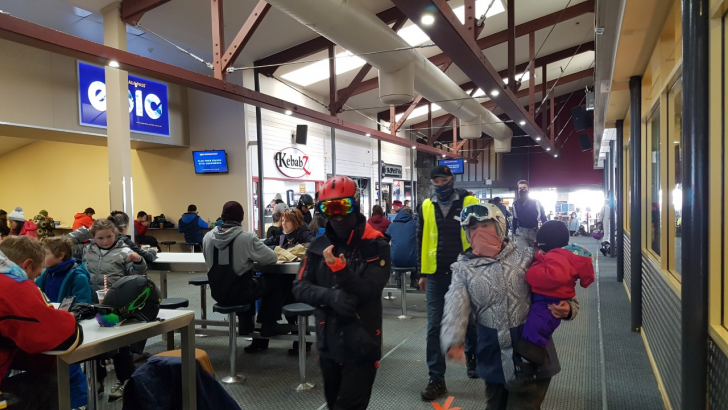
Masks were everywhere in the Perisher lodge. Credit: John Harris

The entire snow sports industry has spent the summer planning how to open up when the snow flies.  Uncertainty about the future makes people anxious, however, the semblance of a cohesive, cogent plan with precautions goes a long way to calming customer nerves. The industry has done a terrific job trying to figure out how to manage this unprecedented public health threat.  Changes in business as usual are keys to managing the “Covid Season.”

We’ve created some changes, too, that might help you as this strange winter starts to evolve.

Classifieds Are Coming!

For one thing, we’re going to launch our brand new Classified Ad section next week.  Starting 10/16, you will be able to place a classified ad on SeniorsSkiing.com.  We’ve developed a number of categories where you can offer  everything from gear or collectibles to ride shares and meet-to-ski to condo rentals.  As a introductory promotion, you’ll be able to post an ad for 30 days in any category for $1.  Regular rates will be quite reasonable and based on how long you want your ad to be accessible to our readers. As with all dealings online, readers are encouraged to use caution and common sense in contacting others through this service.

Alternatives to Alpine: Make More Tracks

Over the summer, we’ve been watching industry news releases and have scrutinized some of the plans for re-opening ski resorts. All of these plans are thoughtful and respectful of both the virus and customers. All contain a degree of restrictions on customer behavior which may or may not wear well as the season goes on. In fact, the Cross-Country Ski Area Association has extrapolated that the rise in walking and bike riding this spring and summer might correlate with increased interest in Nordic skiing, snowshoeing and other ways to get outside in the winter and “make more tracks”. 

As a result, SeniorsSkiing.com is introducing a new section, “Make More Tracks”,  initially devoted to articles about XC skiing, snowshoeing, fat biking, and other snow activities.

Nordic or XC skiing and snowshoeing are ideal for the Covid Season.  Outdoors, of course, socially distanced, reasonably priced, uncrowded, the sports lends themselves as a perfect alternative to Alpine skiing. Snowshoeing, by the way, is also ideal for seniors who have given up skiing due to health, fitness ,or lack of interest reasons.

If you haven’t tried XC skiing as a senior skier, you are missing a completely different way to enjoy winter outdoors. If you’ve been away from the sport for a while, you have a plethora of new types of equipment and gear to learn about.  And, if you haven’t noticed, there are many XC-oriented resorts that have grown in the past decade that offer unique winter vacation experiences. 

Our Make More Tracks initiative includes a Resource Guide with tips and advice from Roger Lohr, editor of XCSkiResort.com, and Jonathan Wiesel, international XC trip planner and guide, trail designer, and resort owner, both experts in all aspects of XC skiing.  We will include at least one Make More Tracks article per weekly issue of SeniorsSkiing.com and devote an entire issue in November to these sports.

This Week 

We’re publishing our new boot recommendations for seniors, developed in cooperation with America’s Best Bootfitters (ABB) and the 2021 Masterfit Buyer’s Guide. This is an industry exclusive, Subscriber-Only offering that can be accessed after confirming your name and email address.  Click on the third box in the top menu to get to the story.  Boot recommendations are graded by traditional or walking, including specific boots for men and women. 

The ski season has just concluded Down Under. We can learn a lot from the experience of Australian skiers and how resorts managed the virus. John Harris, our new correspondent in Australia reports on the recent season, noting what worked and what didn’t. Despite a dearth of snow, the season went on, and “car parks were full.” Click here for the story.

One aspect of the Covid Season that hasn’t been discussed is what happens to shared ski houses.  The problems of distancing, scheduling, cleaning and the like are important consideration.  Correspondent Alice Winthrop discusses these issues and proposes some approaches.  Alice is the designer of Resercal, a new app for scheduling and managing shared vacation properties.  Ski clubs, this is for you. Click here for her story.

Crested Butte Nordic has rentals for $20 a day. Credit: CB Nordic

XCSkiResorts.com publisher and SeniorsSkiing.com Nordic editor Roger Lohr discusses the impact of the Covid Season on Nordic skiing.  This is the first of an ongoing series of Make More Tracks articles.

As a regular early-season feature, we’ve been watching winter weather forecast conditions every year.  This year, La Nina is in. Find out how warmer waters in the eastern Pacific are going to impact snow levels in North America.  We also share the Farmer’s Almanac’s prediction for 2020-21. Compare and contrast.

And to celebrate the last gasp of summer, here’s an article from correspondent Josh Foss on lessons learned from surfing with dolphins. 

Finally, here’s touching video below from Alta, praising the work and dedication of the ski patrol. These guys keep us safe, and they deserve this impressive shout out.

Thank you for reading SeniorsSkiing.com.  Please tell your friends and remember, there are more of us every day, and we aren’t going away.


foggy chair

Short Swings!

We are entering a season of uncertainty.

Some resorts have discontinued walk-up ticket sales, some will require advance reservations, many will require masks and social distancing; for others, it will be business as usual. Some, unfortunately, will not open at all.

Many resorts are bracing for a sharp reduction in the number of vacationers arriving by air. Air traffic is down, and projections of COVID spiking as Winter advances do not bode well for ski areas.
Quarantine restrictions will impact long weekend trips to the Rockies, unless, of course, you live nearby. Same will apply to the longer ski vacation. You’ll be able to fly from New York, New Jersey, or New England to Utah and enjoy the sunshine and powder. But several of the Eastern states require either quarantine or a negative 72- hour COVID test when returning home. As of this writing, it’s virtually impossible to secure a 72-hour test in Utah unless you’re scheduled for surgery or showing symptoms. Maybe that will change for visiting skiers; a possible but unlikely prospect.
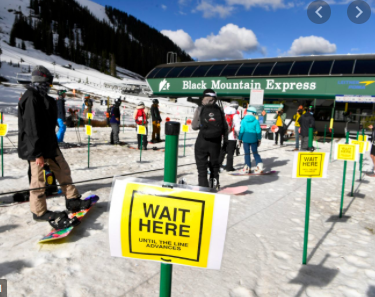
However you get to your resort of choice, expect to have a temperature check and, if you’re solo, ride the lift alone. Refuge in the lodge on a cold and/or stormy day may not be as accessible as in past seasons. Seating will be limited. Food and beverage orders may have to be called in. You may find yourself sitting outside, sheltered by temporary windbreaks.

Maybe this will change by the time snow flies, but entry restriction for Americans traveling to Canada and the EU will require most of those in the U.S. to ski in the U.S.

I decided on a workaround to reduce these and other obstacles this season. We rented what looks like a lovely house in Santa Fe with the expectation of skiing the cluster of areas relatively close by.

If you’re fortunate enough to live near an area, the complications will be much reduced.

An alternative available to many readers will be substituting or mixing cross-country, snowshoeing, fat biking and other activities with Alpine. If you are in or near snow country, these opportunities exist in local parks and golf courses, at some Alpine areas and in freestanding X-C resorts. 

In anticipation of this likely shift, we’re extending our Nordic and snowshoe coverage. The new Make More Tracks Resource Guide is an extensive collection of articles to help you get into Nordic activities. In early November, an entire issue will be dedicated to Nordic, and, throughout the season, each issue will have a Nordic-themed article.

My first priority for the season is to use Alpine boards on New Mexico’s slopes and trails. Like, most of you, I love to be outside in Winter, playing in the snow.  I haven’t been on X-C skis since the last Ice Age. But given the prospects for this season of uncertainty, it certainly will be part of my outdoor Winter mix.

Big Bargains with Indy Pass

Indy Pass holders get two days at each of 55 North American resorts. Available in two versions: Indy Pass+ has no blackouts and costs $299; Indy Pass has blackouts and costs $199. The program offers generous refunds if the pass is used only a few days. There are 20 participating resorts in the West, 17 in the Midwest, and 18 in the East.  Click here to register.

Amazon Patents Skier Drone
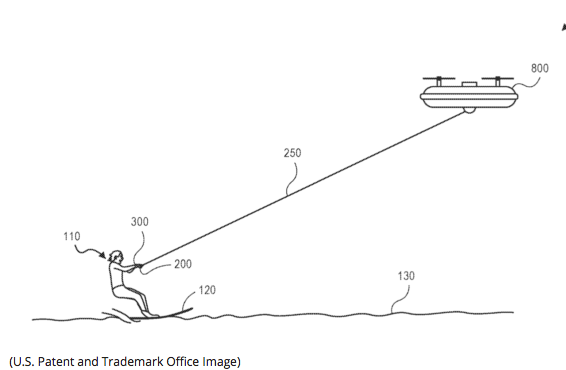
In past issues, we’ve highlighted a series of devices intended to propel or pull individual skiers up the hill. Amazon recently received a patent for a drone that would pull skiers uphill, follow them down, and repeat the process. Will it happen in our lifetimes? No answer to that question, but if it does, it may be the end of chairlift small talk.

Those Lifetime Guarantees

The zipper broke on one of my lightweight Patagonia fleeces. It was in the back of the car when I passed a Patagonia store, open but closed to customers. I called the number on the door, and an employee came out.  He took the fleece, filled out a form, and told me to expect the repaired product in three to seven weeks. It was delivered, repaired, cleaned and free of charge fewer than two weeks later. Good on you, Patagonia.

The Eddie Bauer daypack I purchased in the early 70s has been returned multiple times in the past half century. Once a seam was unraveling. Another time, a zipper was jammed. The company offered to replace it, but I have a sentimental attachment to that old, well-used pack. Each time it’s been repaired , cleaned and returned at no cost to me. Thank you, Eddie Bauer.

Ditto for Farm to Feet, DarnTough, SmartWool, IceBreaker and other reliable brands, although they sometimes require the purchaser to jump through a few hoops.

Bottom Line: When purchasing outdoor clothing and other gear, consider the extra value of brands with lifetime warranties. That way, the purchase becomes an investment.


Gaiter vs. Face Mask
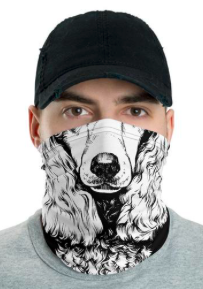
Gaiter
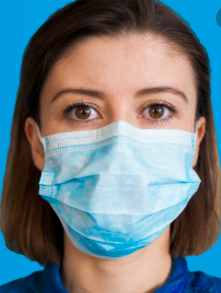
Face Mask

A recent Duke University study determined that breathable neck gaiters (I love my Buff) are far less effective blocking pathogens than standard surgical or cotton cloth masks. The study used a neck fleece made of polyester spandex. Lesson learned: Wear neck gaiter for warmth. Wear cloth or surgical mask for virus protection. 


Study and Ski in the Haut Savoie

The French language Alpine French School in the ski resort of Morzine has a new facility in Samoëns ski resort with direct links to the Grand Massif area that includes Flaine and Les Carroz. Many courses combine French and skiing. The school, oriented to long term residents, has strict COVID protocols. A variety of accommodations are available. Click here for more info.

A Trick To Try at Home


I’m always running out of eyeglass cleanser. The Internet has numerous DIY recipes some of which work pretty well. But recently I was in a pinch and used a few squirts of Arm & Hammer™ Simply Saline Nasal Mist to clean my glasses. Worked just fine and the slender canister seems to be bottomless after months on the job.

White Out

Thinking about past winters when you were discovering the joys of being outside in the snow? This three-minute watercolor animation is beautiful and special. Click here. or the image below.

Endnote

We’re experiencing a congruence of odd events. 

  • The global COVID problem has a disproportionate impact on older people. Simple precautions are known to reduce its impact, yet many don’t believe the virus is real and/or resist being told what to do. 
  • The environment is responding to centuries of unwise management. Punishing storms and wildfires are disrupting millions of lives. What we thought was permanent mountain and sea ice is melting at alarming rates.
  • Divisions in beliefs and thinking are dangerously polarized.

I’m not a gardener but I subscribe to the adage of tending our own gardens. Whether you take that literally or metaphorically, looking after the things that matter most to us require being attentive to nurturing and improving the things we value and protecting the things we love.  For our U.S. readers, whatever your political persuasion, this can be interpreted as a call to vote.

✪✪✪✪✪✪✪✪✪✪✪✪✪✪✪✪✪✪✪✪✪✪✪✪✪✪✪

As we start our 2020-21 weekly schedule, Mike and I look forward to providing you with meaningful and entertaining content about what every SeniorsSkiing.com subscriber has in common: the love of skiing or boarding or simply being outdoors in the snow.


Pandemic Skiing In Australia

Impossible Or Just Tricky?

Resort skiing in Australia is in the Australian Alps straddling the border between our most populous states, New South Wales and Victoria, with capitals in Sydney and Melbourne.

The season officially opens in early June and closes early October.

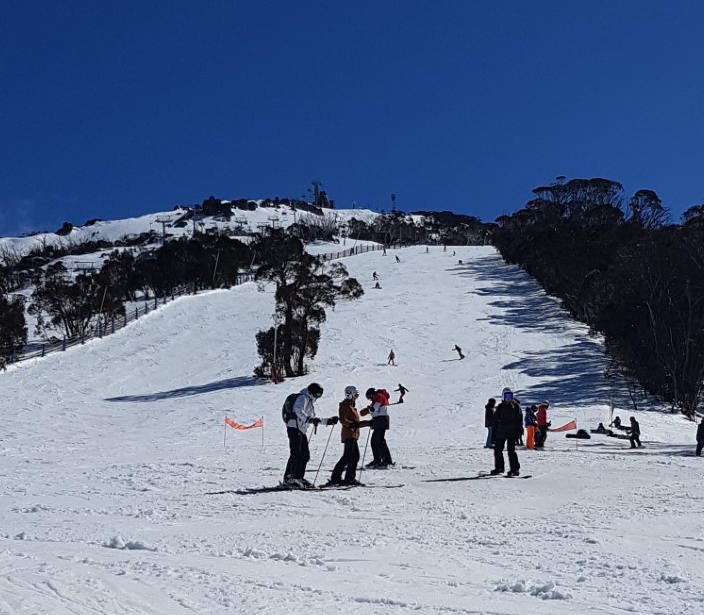
Thredbo Supertrail mid-August. Credit: John Harris

NSW’s biggest resorts—Perisher (acquired by Vail Resorts in 2015) and Thredbo (Mountain Collective and Ikon links)—lie in Kosciuszko National Park in the Snowy Mountains. They cater mainly to Sydney’s five million people a six hour drive away.

Victoria has three resorts. Mt Hotham and Falls Creek were also recently acquired by Vail Resorts. Mt Buller is the other. They cater to 5.6 million folk, most of whom live in Melbourne.

This year’s opening was delayed for several weeks in NSW. The National Park closed for the long opening weekend amid all the concerns and regulations surrounding the pandemic back then. Tricky!

June saw a rush on sales of backcountry equipment amid fears the resorts wouldn’t open at all. Gear was in short supply with importation restrictions. Tricky!

Perisher’s restrictions. Credit: John Harris

In early July, just when seasoned skiers expect skiing conditions to be okay, a second wave of coronavirus hit Melbourne, and Victoria went to lockdown. Victoria’s ski resorts closed and remained  closed for the season. State borders shut then so snow sports became limited to NSW and Canberra and impossible for residents from all other states. Nearly 17 million Australians had no access to the resorts this year. Impossible for them!

Perisher and Thredbo in New South Wales opened later in June.

Perisher offered Epic Australia season passes but for the first few weeks everyone including pass holders had to prebook days online to ski . One staffie I spoke to only managed to find three days available during this time due to the limited tickets. The website crashed often with the traffic. He checked every morning, hoping more tickets would come online. Thredbo was similar. Tricky!

My favourite lunch spot at Perisher only available to hotel guests in 2020. Credit: John Harris

Skiers who had booked resort accommodation had no guarantee of getting lift tickets. Communication with Perisher was only possible online. Emailed inquiries yielded an automatic reply promising a reply within days. Tricky!

There were no group ski lessons and no assistance by staff getting on chairlifts. Some restaurants were restricted to hotel guests. It was suggested that skiers bring food and drink in case venues were full. Tricky!

Despite the restrictions, the skiers came. Sydney had a few covid cases and locals were worried they’d bring it down. A trace of virus was detected in Perisher’s sewage and face masks became mandatory in the resort, inside and out. They still are. Tricky!

Thredbo is linked to Mountain Collective and Ikon groups and is an all year resort. Its restrictions were similar to Perisher. This year the resort did not offer season passes, saying they usually had a large proportion of skiers with season passes, and it wouldn’t have been workable. 70 years plus day passes were just $A25 but available days hard to find. Masks were not worn outside. Tricky!

Thredbo closed a week after this picture was taken. Credit: John Harris

Thredbo’s Supertrail closed a week after I took the photo above due to snow melt. As runs became fewer, Thredbo credited the accounts of people who had pre-purchased tickets with a proportion of the cost. The resort closed prematurely two weeks ago.(Editor Note: mid-September). Commendable!

Perisher plans to stay open till the end of the school holidays on October 9. Its rules are unchanged. I have been very impressed with how professionally both resorts have handled difficult and changing circumstances and how co-operative the public has been. Hopefully, your North American winter will run smoothly with fewer changes needed and good powder.

 I visited Perisher on Sunday to see how things were going. Here’s what I found.

Demand remains high at Perisher with a full car park. Credit: John Harris

Most patrons were wearing face covering and happy laughter was everywhere.

Masks were everywhere in the Perisher lodge. Credit: John Harris

Okay, this senior’s tally wasn’t too impressive in the pandemic, one day at Perisher so far, one at Thredbo. But what a wonderful sport. Age hardly matters. You get pulled up the hill, and gravity takes you down. People of widely different ages can relate to each other and be friends. And so much laughter.

2020 skiing down under was tricky but for many of us not impossible.

La Nina Is Here

She Is Bringing Snow For Some. Find Out Who.

La Nina is has been lurking around the west coast of South America since August. That frosty little senorita brings cooler temperatures to the mid- and eastern Pacific waters which in turn impacts atmospheric circulation, which affects the shape of the Jet Stream across North America.  And that determines precipitation and temperatures across the entire continent, essentially shaping the severity of winter storms.

The Jet Stream is impacted by La Nina. Credit: Climate Prediction Center

The National Weather Service’s Climate Prediction Center foresees that the La Nina will hang around for the entire ski season into Spring 2021.

La Nina raises the potential for more hurricanes, which we are currently experiencing. As of this writing, we’re up to 28 named storms since the start of the hurricane season.

Classic La Nina weather patterns feature a wave-like jet stream flow across North America, which causes colder and stormier than average conditions across the northern tier and warmer and less stormier conditions across the south.  

That’s good snow news for Alaska, western Canada and the northern Rockies, northern California, Wyoming, and the Northwest. It’s probably drier and warmer for New Mexico, Arizona, and Southern California.  Utah and Colorado, and the Northeast as well as parts of the Midwest are in the uncertain zone. 

For an interesting discussion of the different impacts of El Nino and La Nina conditions, click here for seasonal correlations for resorts from Australia to South and North America.

Secret formula at The Farmer’s Almanac has different outcomes. Credit: Farmer’s Almanac

Compare the Climate Predication Center’s forecast with the 2020-21 prediction from the Farmer’s Almanac.  The venerable publication uses its own formula and data for weather prediction, and, as you can see, this year’s future picture is different than what we are hearing from NOAA.

Take your pick.

Sharing a Ski House During a Pandemic

How Does Everyone Stay Safe In Close Quarters?

Has your ski club thought about managing a shared ski house? Credit: Camilla Stahlschmidt

In the Internet era, we keep hearing about the “new sharing economy” with tech companies like AirBnB, Uber, Zipcar all capitalizing on otherwise under-used assets like spare bedrooms and cars. But in the ski community we’ve been ahead of the curve for years with ski clubs maximizing occupancy of ski houses, families sharing use of second homes, and even college buddies teaming up to buy a ski house together. The sharing economy is not a new concept to skiers and snowboarders who were the original couch surfers!

Despite all this experience in sharing places to stay near the mountains, the pandemic adds a new dimension. Ski resorts, hotels and inns are fretting over plans for opening, but what does it mean for all the private sharers? Do we pile in together as usual or stay in smaller “pods” to limit exposure even though that might mean fewer ski days and less social interaction?

Health experts are still learning about the Novel Coronavirus and how it is transmitted but for now it seems safe to say that you don’t want to be inside sharing air with people who may be spreading the virus. It’s much, much safer to be outside and at least six feet apart. The data also shows that older people and people with pre-existing conditions are more likely to suffer a severe case of COVID-19 if they are infected so our 50+ demographic has to be extra careful.

With that in mind it may be worth doing some additional thinking about your accommodation plans before the snow flies. If you are sharing a house with others, are they all already in your “pod” or are you potentially exposing yourself to a new group—and all the people they may have interacted with in recent weeks?

Some houses have separate apartments or cabins which would be ideal for spreading groups out while still allowing for outside social time while skiing, snowboarding, or trying other winter sports, and of course for après.

Ski clubs may want to consider spacing people out, reducing use of communal gathering spaces or even following the school model and splitting members up into smaller cohorts with each cohort going at a different time. Maybe even sorting by age and giving older members the option to visit at child-free times?

One option to help with organization, minimize risk, and avoid confusion in shared spaces is Google Calendar. Another, specifically targeted at ski clubs and private houses is Resercal.com (disclosure: the author of this article created this product). There are many other online booking systems that can help you organize your season depending on what you need. Many are aimed solely at hotel/inn managers or for rentals-only so look carefully for the features that best fit your situation.

Consider leaving a buffer in the schedule between uses for cleaning. That should reduce the chance of virus being transmitted by air or on surfaces.

You might also want to think about making your shared ski house work-from-home compatible. With many people working remotely, it may be possible to spread family, friend, or club member use over more dates than in past seasons. For example a family with kids could visit for a whole week, remote-working, and “distance-learning” from the ski house, instead of just staying on weekends. Spread out over the season, a few longer visits in smaller pods might add up to a similar number of ski days for all involved.

What are your thoughts and plans? How are you or your group preparing for this unusual season?


Question For You 11: How Will You Share a Ski House In COVID Time?

How Will Your Ski Club/Family/Partner Ski House Shares Be Different This Year?

Will you hail, hail the gang’s all here this year?

We wondered how many of our readers are involved in sharing private accommodations near ski areas. And, if you do, are you making special arrangements for 2020-21 due to COVID-19 like scheduling use? 

This question came up because our website designer recently created Resercal.com, an online scheduling service to make it easier to share a ski house or other vacation home. 

If you had a shared house during the summer, what issues came up? What will be the most difficult aspects of sharing a ski house in the upcoming season? And what any changes are you making this season to your sharing plans due to the pandemic?

Make More Tracks: What Has Covid Wrought For Nordic Skiing?

XC Skiing And Snowshoeing Are Perfect Forms Of Recreation For The Pandemic.

Based on activity with walking and bicycling last spring, many people in the snowsports business are anticipating a surge in XC skiing and snowshoeing this winter. If alpine ski areas are restricted in ways that lead to excessive waiting such as the amount of time waiting to acquire lift access reservations via the Internet, waiting to get on the lift, waiting to get lunch in the lodge, waiting to go to the restroom, etc., we predict there may be a resulting influx of alpine skiers to XC skiing and snowshoeing. And, perhaps we’ll see:

  • People who have tried XC skiing in the past but not continued (lapsed skiers) may be motivated to try it again.
  • People who have never gone XC skiing or snowshoeing may be encouraged to try it for the first time—because of associated wellness benefits.
  • And people who already enjoy XC skiing or snowshoeing will go more often this winter.

We do not know if there will be similar restrictions at XC ski areas, but it is expected that people will go XC skiing and snowshoeing with or without restrictions at commercial XC ski areas, which charge a fee for groomed trail access.

A Forbes Magazine article cited that “the younger generation doesn’t ski and some of them think skiing is ecologically destructive and too bourgeois; under forties people feel that it is all artificial snow that requires paying a fortune for gear, clothes, and lessons.” I’m not sure what statistics the Forbes article is drawing on, but COVID surveys conducted by Spot seen in content posted on SeekingAlpha.com revealed “33% of skiers said there is a reduced likelihood of skiing in the upcoming season; 30% fewer season passes have been sold, 24% said they’ll be skiing less frequently, and less travel is expected due to limited resort amenities and services.”

We’ve become accustomed to all the protocols that will be in place at XC ski areas (distancing, contact-less transactions, masks in crowded areas, etc.). All the ski areas both alpine and XC are taking a wait-and-see attitude, hoping that availability of a COVID therapeutic or vaccination will change everything. The predictions are that many of the mitigation efforts will be necessary with or without vaccinations across the population as it will take months for the vaccination to bring on normalcy. Most ski area operators have already set their operational plans to open despite the pandemic and skiers will hear about them as the season approaches.

Product suppliers and dealers are salivating about hoped-for increases in product sales, but some of them are certainly somewhat apprehensive (considering that about 27 million jobs have been lost) about the level of consumer enthusiasm to purchase new gear this year.

Touring is Nordic is XC. Credit: Dynafit

With all of this anticipation, one thing is clear: the reality is that XC skiing and snowshoeing are perfect forms of recreation for the pandemic. Both XC skiing and snowshoeing are exactly what the doctor ordered, that is, healthy benefits such as physical fitness, psychological wellness, and a door to a deep emotional connection with nature. The feeling of passing through the snow covered forest at a slow pace provides a wellness indoctrination that is unavailable from other activities.

It would be beneficial for the people who are newcomers or returning lapsed skiers to get exposed to the advancements in XC skiing such as equipment that makes the sport easier and better. I’ve heard from people who are talking about finding the good in all of the challenges that we have faced since March 2020. More seniors who love the outdoors and winters will be discovering XC skiing and snowshoeing because it will be a great boost and alternative for all those folks. Let’s Make More Tracks!

Click Here For SeniorsSkiing.com’s Make More Tracks: A Resource Guide To XC, Snowshoeing, Fatbiking.