Tag Archive for: SeniorsSkiing.com

Familiarity Breeds Confidence

You Can Do It If You’ve Done It Before.

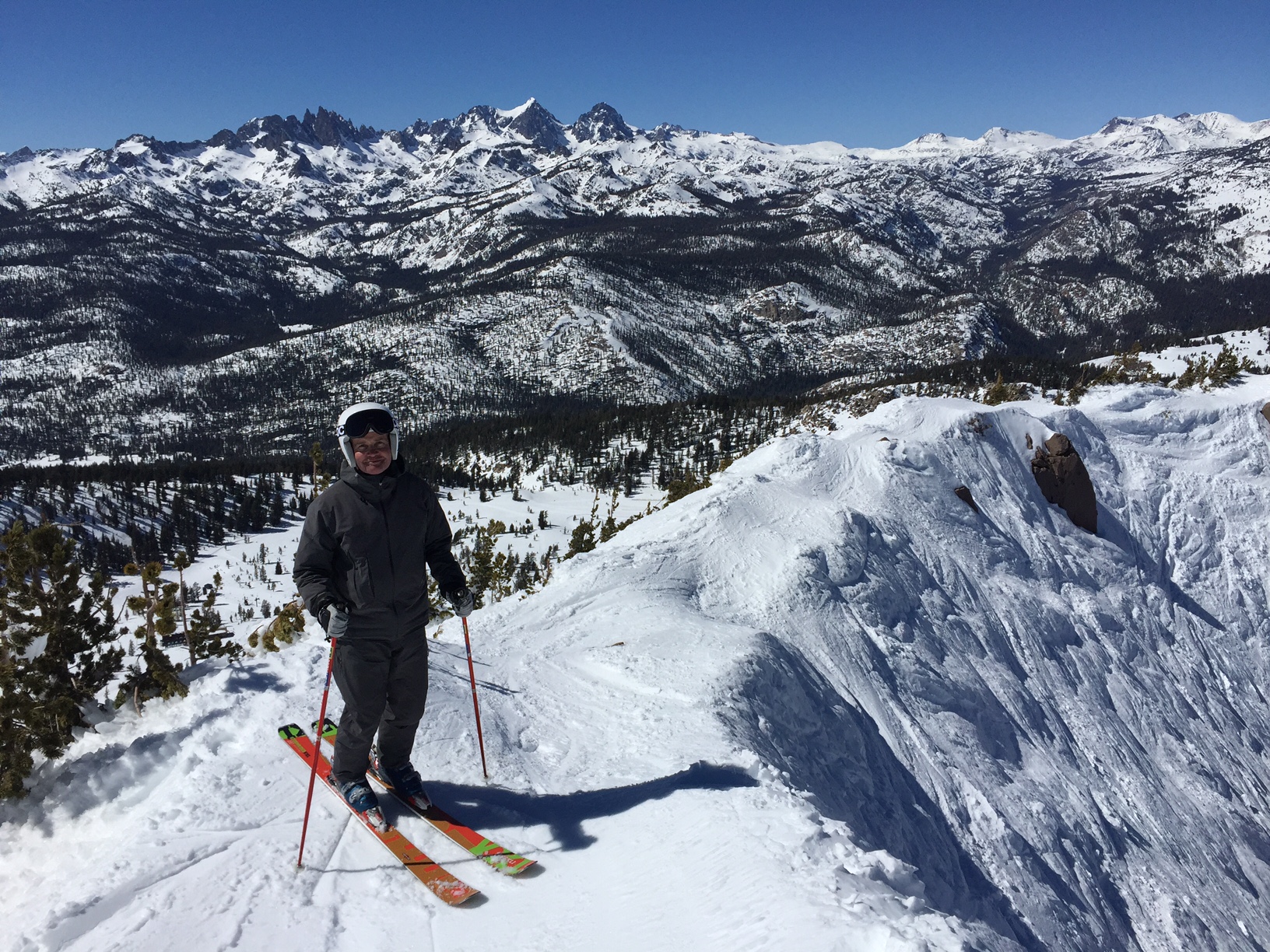
Pat Standing On The Cornice. Not A Problemo.

You know, as you age, little things creep into your mind like, “Can I still ski that?”  “Am I too old to keep trying this pitch?”  But, one of the things that keeps our minds in check is the familiarity with the terrain after years of experience. 

For instance, every year, I travel to Mammoth Mountain, CA. with my posse of friends  All of us have skied that mountain for years.  After exiting the gondola at the top , we ski off the famous pitches and faces up there with confidence.  Why?  Because we know the terrain. 

This last year was no exception. I made several runs down the cat track off the tram relaxed and tucking to the top of Paranoid Flats and skied right off the top with no trepidation.  I have become very familiar with that terrain and know that I can ski it.  Now there are pitches and couloirs there that I have not skied and for me, the consequence factor is too high with the surrounding rock walls that will suck in unsuspecting skiers who have made the error of skiing above their ability. 

I take Coumadin and my doc always says, “Pat, you are the only patient I have who skis and mountain bikes on Coumadin.”  But I have done those sports for years and know my limitations.  And, I know how to ski safely over a familiar cornice, even though I am now 65 years old.

We all do this one way or another.  Confidence occurs because of repetition over certain terrain.  I have a friend who I ski with, who not only skis the same runs all the time at our local area, but he skis the same lines.  He becomes so familiar with the lines that he is confident and tries to make the perfect turn over and over.  I ride my local trails a lot on my mountain bike and am so familiar with the layout of our trail system that I can confidently ride them with speed. 

The flip side of the coin is that if you keep yourself in shape and have the confidence that you can ski or ride most anything within reason, you are not adverse to challenging yourself on new terrain. The more familiar you become, the more confident you are.  This is especially important as a senior skier. 

There is nothing wrong with using a little caution, but for the most part, years of experience on the slopes will give you confidence.  You know how to ski ice, you know how to ski powder and have that centered position and not sit back.  You have seen rain soaked snow before and know that it is consistent.  Why?  Because you have been there before.  When the young dudes see an older guy confidently ski a sketchy line, they are amazed.  But really, we know that confidence and experience rule the day. 

One day, a few years ago, my friend Eric and I saw a guy rocketing GS turns down Strawberry Express at Snowbasin, UT.  His effortless turns goaded us on to stay with him and when we got to the Strawberry Gondola, he took off his helmet and exposed a gray beard with a grizzled, leathery face, and a full shock of gray hair.  I politely asked him how old he was and he said he was 75 years old.  We asked his secret and he stated that he skied or hiked every day, and he is confident in his turns because he keeps himself in shape.  He knows every trail intimately. 

So, the lesson for all of us is stay in shape, keep skiing, and there is nothing wrong with picking lines and sticking to them.  The more confident you are, the more fun you will have. 

You can do it. Remember when you did it? Try.

Mystery Glimpse: October Snow

This Week

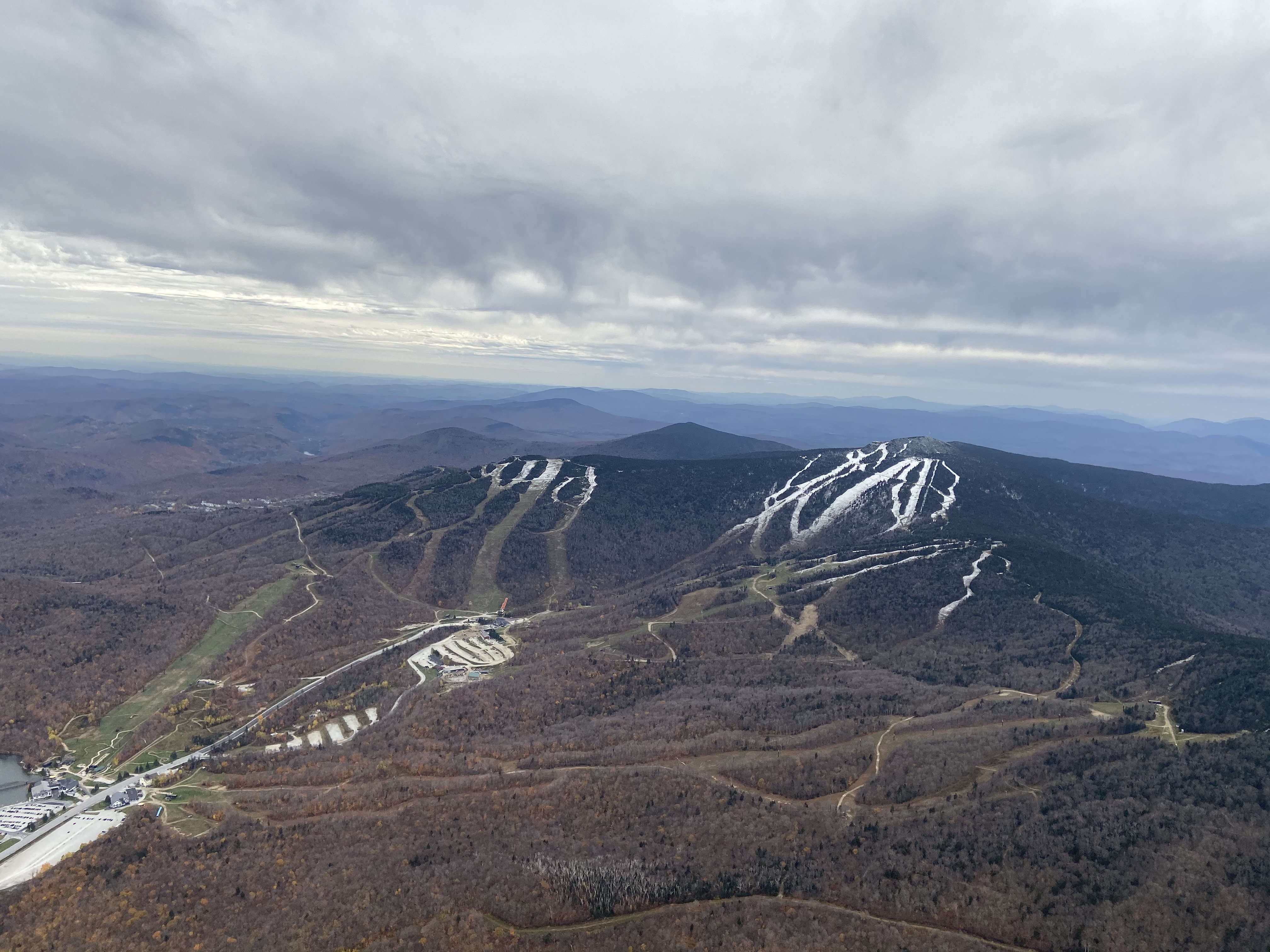
Here’s a photo taken on Oct. 20th this year, right after a wicked Nor’Easter hit the East Coast. Obviously, the top of this resort got a dose of white. But, where is it? What resort? Why is this especially good news for the operators?

This one should be easy for lots of SeniorsSkiing.com readers. Thanks to a friendly pilot for passing this along.

Last Week: Dancing, Where?

Some excellent guesses. There’s probably a good story behind each one, harkening back to the days of disco lights, beer, and bands. Ah yes, memories.

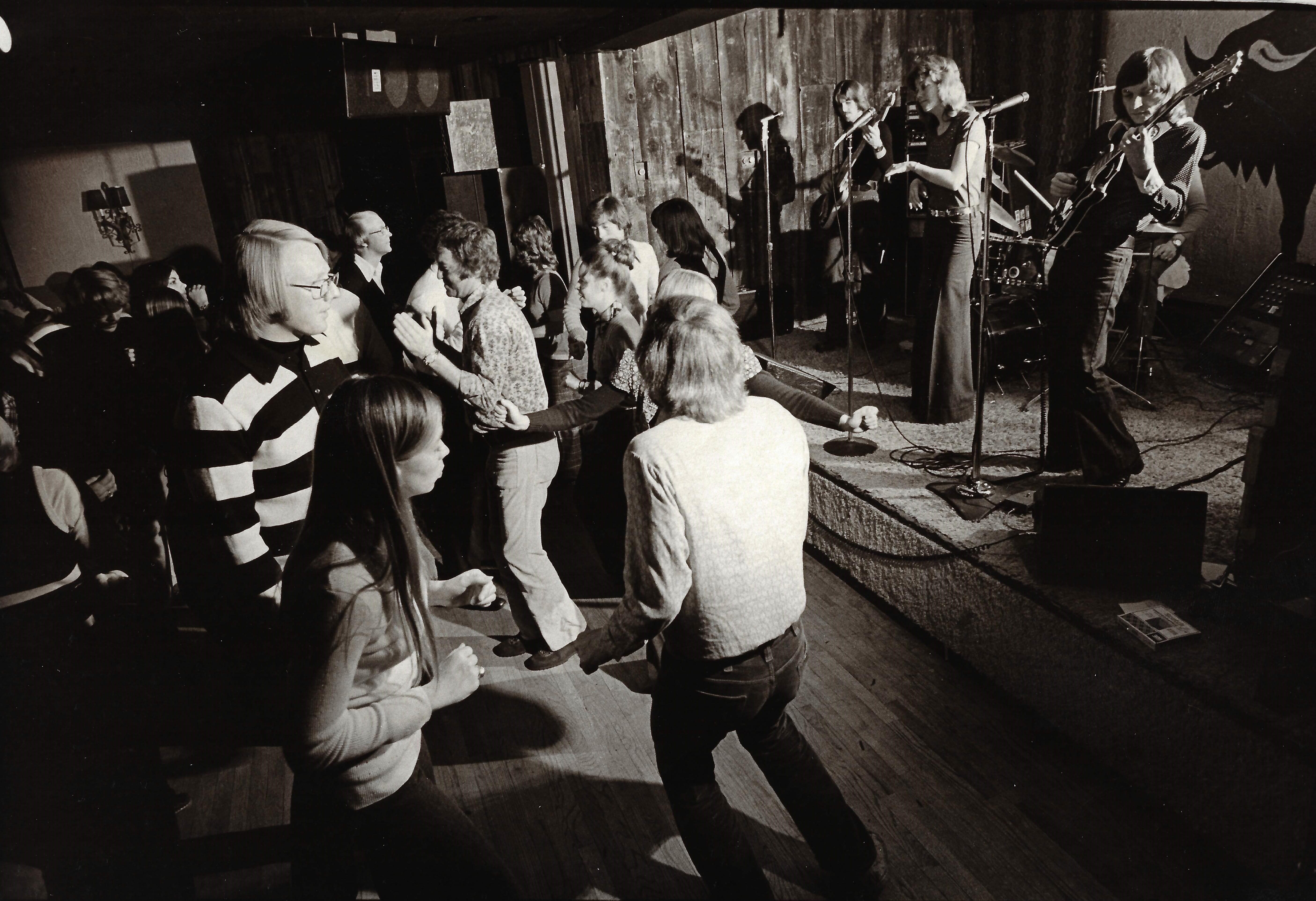
You might say one ski resort bar/dance floor looks like all other ski resort bar/dance floors. This one, however, is unique.

Nu Gnu, Vail, CO, circa late 1960s/

This is the Nu Gnu which opened during the late 1960s as one of Vail Village’s first rock ‘n’ roll bars and one of Vail’s original iconic libation locations. In 1967, Paul Ross Johnston moved to Vail and founded the Nu Gnu. Paul, former mayor of Vail and owner of the Christiania Lodge, manned the door every night with a handlebar mustache and a fishnet shirt or a feather boa and a painted head, explains the Vail Daily. The Nu Gnu was a perfect apres-ski night spot.

Thanks to the Colorado Snowsports Museum for the picture and Dana Mathios, Curator and Director of Collections, for the description. Consider supporting our precious ski and snow sports museums as they are the only stewards of the winter sports history.

Rock and roll is here to stay!

Short Swings!

A subscriber recently brought to my attention the SnowSport Safety Foundation, a non-profit, with the mission to encourage and enable ski area safety improvement through research, education and public access to reliable safety information.

Dan Gregorie, MD, MsM, Trustee, Founder, President, SnowSport Safety Foundation

It was conceived by Dan Gregorie, after losing his adult daughter in a terrible snowboard accident at Alpine Meadows. Dan, a Physician Executive, Board Certified in Internal  Medicine, set up the foundation to research the issue and to encourage greater transparency regarding safety procedures, accident reporting, etc. 

When we spoke, he explained that the resort industry has no requirements to disclose information about accidents. In fact, other than the mechanical operation of lifts, the ski resort industry has virtually no safety regulation, government oversight, or accident/injury reporting requirements.

He and his team have made impressive progress identifying safety issues and developing a protocol for evaluating the safety profile of individual areas. The foundation’s website lists safety scores for the California and Nevada resorts. It also lists a decade of Colorado resort fatality stats.

The website encourages concerned skiers to become advocates with area management and local and state authorities.

We’ll have more about the work of the SnowSports Safety Foundation in future issues.

On a related note, a reader alerted us that last season he noticed that Vail posted “…the number of lift passes they voided for reckless and dangerous skiing.” I emailed Vail to learn more and to see if this is something they are doing or plan to do at their other resorts. Will report when I hear back.

If you’re aware of what areas are doing to improve on-snow safety, please email me (jon@SeniorsSkiing.com) or post them in Comments.

Prediction: Snow to Favor Eastern Canada

Accuweather, which is said to make highly accurate weather forecasts, predicts that Quebec and Ontario will experience a snowy winter.

A-Basin is First to Open

Arapaho Basin opened last Friday. Keystone was running on Saturday.

Wolf Creek’s 80th

Wolf Creek will be celebrating it’s 80th season. You’ll see in our list of North American resorts with big bargains for seniors (look for it next week), that Wolf Creek has good day ticket prices if you’re 65; once you hit 80, its free.

Lotsa Flights to Big Sky 

Bozeman Yellowstone International Airport (BZN), gateway to Big Sky, has 13 daily non-stops to Atlanta, Chicago, Dallas/Fort Worth, Denver, Detroit, Houston, Los Angeles, Minneapolis, New York, Portland, Seattle, Salt Lake City, and San Francisco. 

Artificial Skiing on Copenhagen Power Plant Roof


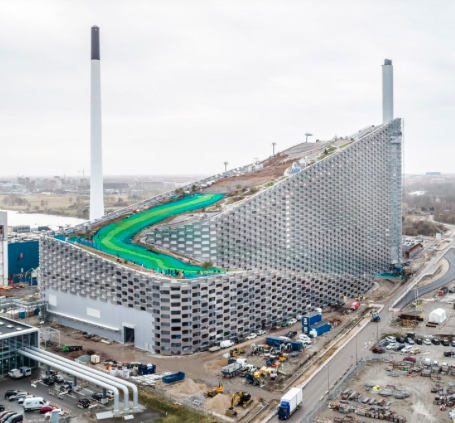
Copenhill is the artificial ski run on the roof of a new trash-to-energy facility in Copenhagen. It uses a magic carpet lift. The same architectural firm has designed a hotel in Western Switzerland with a zigzag skiable roof.

Alan Engen to be Recognized at University of Utah’s Annual Ski Affair

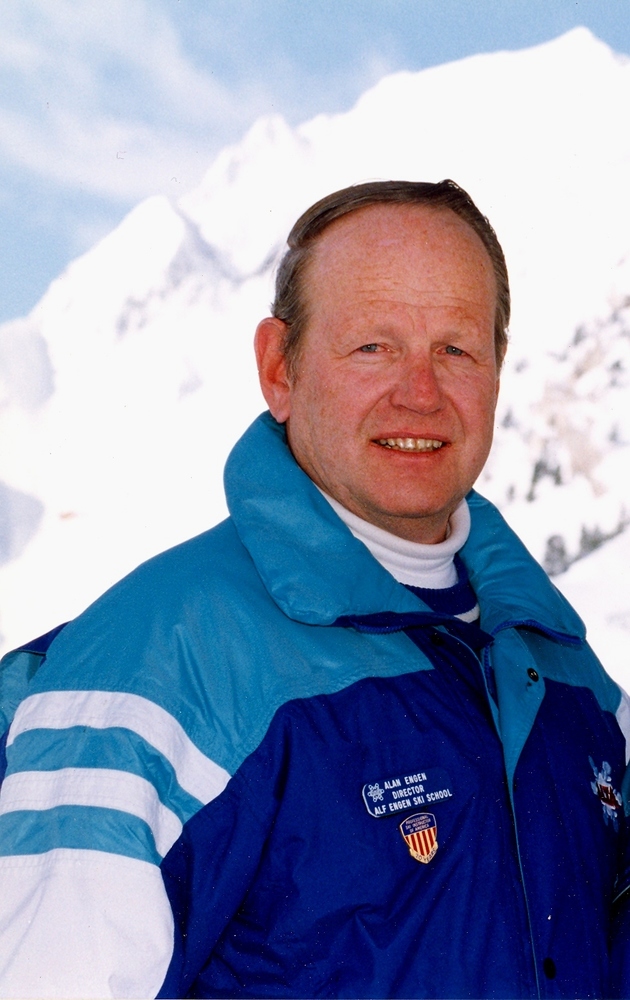
Alan K. Engen, retired Director of Skiing Services at Alta, will be honored at the 29th Annual Ski Affair, November 5 in Salt Lake City. Alan, a member of the SeniorsSkiing.com Advisory Council, is a highly celebrated skier. Among many other accomplishments, he was an All-American skier in college for the University of Utah and has been inducted to several Halls of Fame, including the U.S. National Ski Hall of Fame (2004).  As a ski ski historian he authored  the award-winning book, For the Love of Skiing – A Visual History (1998) and co-authored First Tracks – A Century of Skiing in Utah (2001). He is Chairman Emeritus of the Alf Engen Ski Museum Foundation; Chairman of the Alta Historical Society, and a former member of the board of directors for the U.S. Ski and Snowboard Hall of Fame and Museum. More on Alan and his many contributions to the world of skiing in the coming weeks.
Comic John Pinette on Skiing

I got a kick watching this 2 minute video of comic John Pinette talking about his adventure on skis.

Mystery Glimpse: Dancing, Where?

It Was A Famous Apres Ski Hangout Back In The Day.

Hint: Think Colorado. What place? What year? Thanks to the Colorado Snowsports Museum for this blast from the past.

Last Week: Bang, Bang

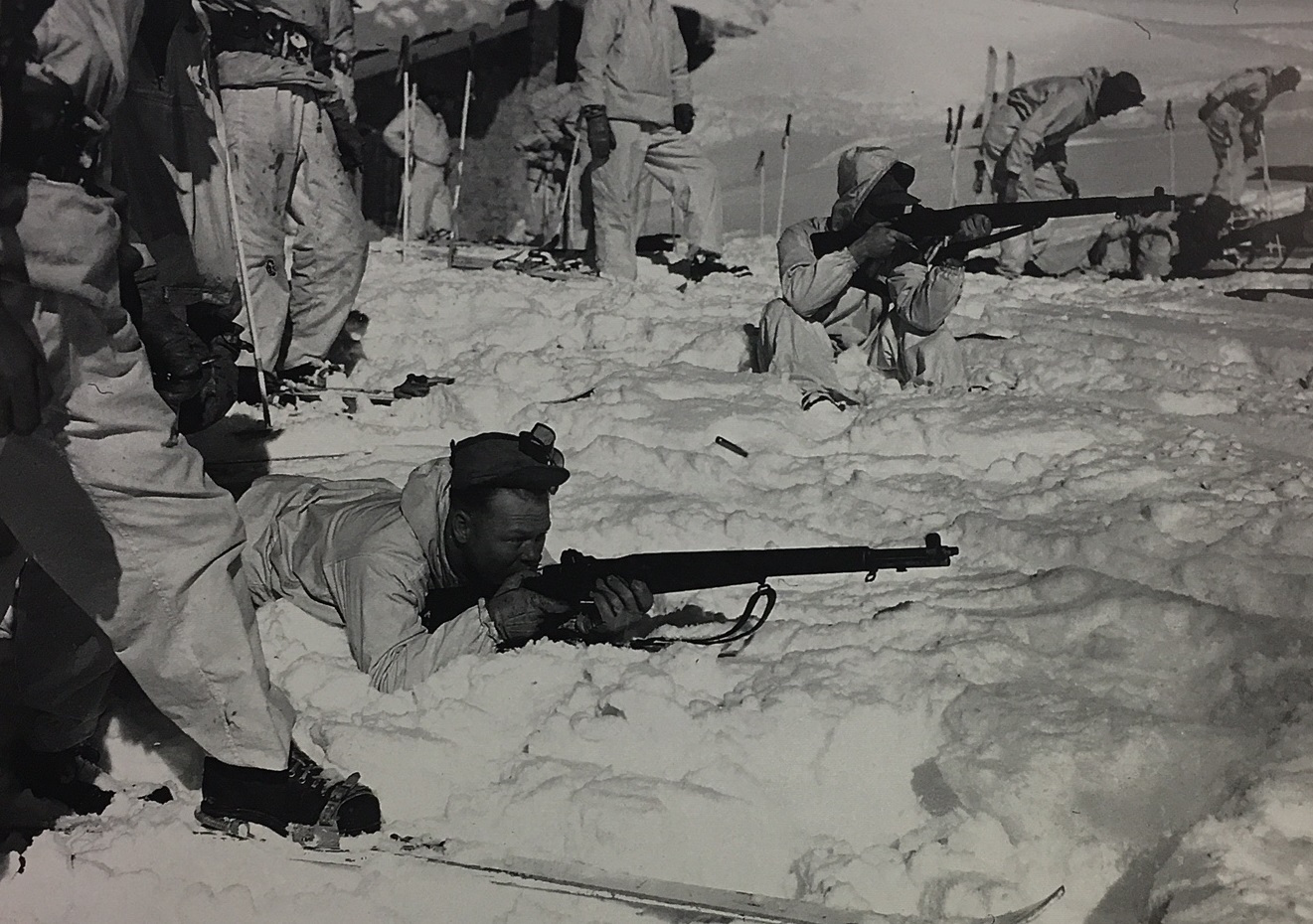
As we said last week, it’s not what you think. It sure looks like the 10th Mountain in training at Camp Hale, as several readers have guessed.

Here’s the story of the photo, taken from the library archives of the Alf Engen Museum, Park City, as explained by Jon Green, the museum’s operations manager.

Taken around 1942, this image shows paratroopers from Fort Benning, GA, who were sent to Alta to learn how to ski and fight in the snow.

From the book, Dick Durrance: The Man On The Medal, The Life And Times Of America’s First Great Ski Racer, as told by the inimitable John Jerome:

“In the fall of 1941, a few months before the Japanese bombed Pearl Harbor, [the 17-time national championship ski racer] Dick Durrance got a call from a Jack Tappan, an army colonel, who asked if he was interested in training paratroopers for ski warfare. Washington had determined that the U.S. would probably soon be involved in a war in Europe, and part of it might be fought in the Alps in the winter.” At the end of that winter, Dick and his fellow instructors determined that “maybe a third of the troopers would become pretty good skiers, the middle third could get by, but the other third had better stay in the paratroopers and forget it.”

Just after Pearl Harbor, early elements of what became the 10th Mountain were activated. The planners decided to recruit active skiers and outdoorsmen who actually knew mountain sports, rather than convert standing regiments of troops, even highly trained paratroopers. Perhaps the lessons learned by Dick Durrance at Alta led to that wise decision.

APEX Boots: Simplicity. Comfort. Performance.


If there’s a skiers’ Hell, its boot room will be full.

Many of you have written to complain that your boots don’t provide good support; they’re too cold; you have to tighten them until your feet go numb. They have you thinking about ending your skiing careers. 

There’s no other piece of equipment that stimulates as much discomfort and emotion.

For those of you who suffer, I have these words of advice: either seek out a professional bootfitter or try Apex. 

Really good boot fitters can be found in some ski shops, not all. Some are more skilled than others, and finding a good one can be hit or miss. America’s Best Bootfitters.com lists those who have gone through an important training certification program.

Fantastic Experience!

But many of you have problem feet that even the most skilled bootfitter won’t be able to help. Fortunately, I’m not among your ranks. But I am curious. So, last season I spent time skiing the Apex boot. A fantastic experience!

Apex Boots

The Apex system is a hybrid of a soft and comfortable walkable boot and a stiff open chassis. You slip the soft boot on with ease – even on cold days – and turn a knob that controls a thin cable snugging the boot to the contours of your foot. Walk from the lot or around the lodge with these super-comfortable boots. When it’s time to ski, step into the chassis, close the three buckles, and step into your bindings. It’s as simple and as comfortable as that.

I skied them in the Rockies and in the Alps, and they did what any well-fitting boot should do. They transferred my movements to my skis, provided proper and comfortable support, and kept my feet comfy, even on some brutally cold mornings.  I used the Anterro model  ($899), which is Apex’s top of the line Big Mountain edition.  It’s available in a women’s model (Antero-S; $799), as well. The other two choices are the Crestone (All Mountain; $749) and the Blanca (Ladies All Mountain; $649).

Different Look

Since they’re different looking, they serve as an ice-breaker, which got me into a variety of conversations. I ran into people who were aware of Apex but skeptical about them. Understandable, but not fair. The boot skis very nicely (and COMFORTABLY). A few fellow riders knew some Apex converts and reported they were pleased. After I wrote a brief article about the boots (That was before I skied them), several Apex owners wrote in to report how much they love them. A few outliers emailed admonishments that I should know better. I’d refer them as well as anyone interested in how other skiers respond to Apex to the user reviews on the Apex website. People with all kinds of foot conditions explain how Apex resolved them.

My only criticism is that it took a while to get accustomed to managing the two components. But, really, not that long.

Bottom Line

Here’s the bottom line: If you want a solution for uncomfortable or underperforming conventional ski boots, invest in a pair of Apex boots. You can get them fitted in ski shops stocking the boot. Or you can purchase them directly through the manufacturer’s website. I spoke to one of the Apex executives while preparing this article. Readers ordering the boot directly (Discount code SENIOR3000) will get free shipping in the lower 48, a ski boot bag from Kulkea (value: $149.95), and free demos for friends and family through 2020 at Apex’s demo center in Golden, Colorado. The offer is good through November 30.

This Week In SeniorsSkiing.com (Oct. 11)

Free Skiing For Seniors: Early Observations.

One of the most popular features on SeniorsSkiing.com is our annual listing of resorts that offer free or almost free skiing for seniors. “Almost” free means a lift ticket or a season pass that can be had for a token amount, usually a processing fee or relatively small cost.

For the past several weeks, the lights have been burning late at SeniorsSkiing.com Headquarters. We’ve been waiting for resorts to post their 2019-20 rates, and many started appearing in September and late August. In a couple of weeks, after we’ve verified the final outliers and settled on a new format, we’ll publish our 2019-20 listing of free or almost free skiing in the US and Canada as Subscriber-Only Content. [Subscriptions to SeniorsSkiing.com are free, by the way.)

The process of finding and verifying senior rates is time-consuming. We have to go to each resort’s website, find the lift ticket and season pass rates, search for the senior eligibility age, and note it all on our spreadsheet. Some resorts have clear and easy to navigate sites, others have sites that are clearly amateurish. Others have one website for combined winter and summer activities, adding another layer or two of clicking.

But in going through the process of finding each resort’s pricing plan, we’ve noticed something of a trend. Call these observations rather than findings.

Many of the destination or big, brand name resorts offer free or almost free skiing for seniors beginning at 80 years of age. Those same resorts may or may not offer a discount for 65-79, varying from 10 percent off a regular adult pass to 40 percent, mid-week being the most cost-effective offering.

And many of those big resorts do not make it easy to find the offer of free skiing for 80+ on their websites. In fact, when we saw a separate price for, say, 65-79 year olds, that was a tip that there was something going on for 80+. We had to confirm many of those with an email to the resort. In other words, the free skiing for seniors 80+ option is not clearly obvious on many big resorts’ websites.

On the other hand, when we went to small and mid-sized resorts, the rates for seniors was more likely to be upfront and clearly displayed. These rates were usually found on a table where prices for kids, adults, military, college students, and seniors were immediately accessible. And there are great deals,

For example, Michigan’s Mt. Holiday has free skiing starting at 65. Monarch Mountain in Colorado has free lift tickets for 69 year olds and a $20 fee for a season pass. McIntyre Ski Area in New Hampshire offers a free lift ticket for 65 + and a $30 season pass. For many small or mid-sized resorts, the discounts or free skiing start to kick in at 70.

A couple of observations to share;

  1. You have to ask about discounts at big resorts, regardless of what you find on the website. Call and talk to a person.
  2. Generally, small and medium-sized resorts are the ones that have big discounts and free skiing for seniors. While not necessarily glamorous destination resorts, they are the first line of affordability for seniors. For those who are complaining they are being priced out of the sport, look for those kinds of resorts.

Update: Unsafe Skiers

Last week, we published an article by SeniorsSkiing.com correspondent and XCSkiResorts publisher Roger Lohr, recounting his hit-and-run collision with another skier. That story plus our survey question about “What Pisses You Off?” got a lot of comments from readers. So, we are pursuing some of the questions raised about whose responsibility it is to monitor and control on-slope speeding. We have some inquiries being made to the National Ski Patrol, and we’ll let you know what we hear.

This Week

George Is Da Man. Credit: Harriet Wallis

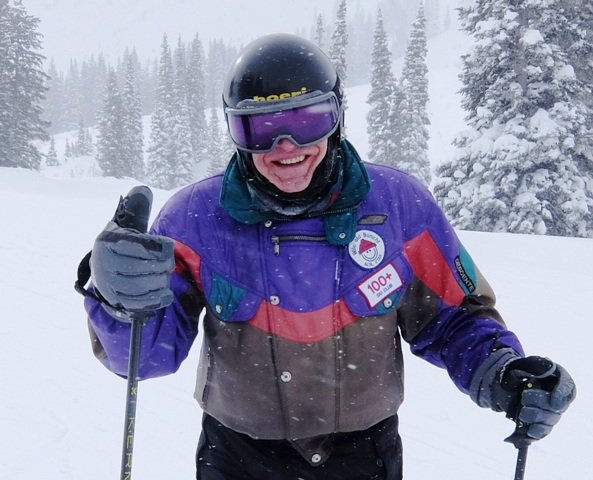
An inspiration to us all, George Jedenoff is the senior-most senior skier. At 102, he still enjoys the outdoor winter at Alta. Harriet Wallis has alerted us to his autobiography which is available and accessible by download for free. Check out his story here.

We are launching our first Mystery Glimpse of the season.

Thanks to the many wonderful ski museums around the US and Canada, each week, we publish an historic photo of a person, place, or thing that they contribute, and you have to guess what it represents. As for this week’s pictures, it’s really not what you think.

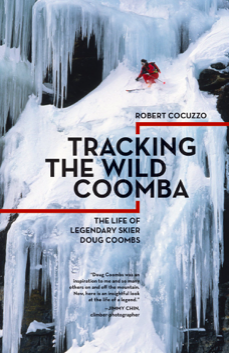
Also, co-publisher Jon Weisberg adds an appreciation of Doug Coombs, daredevil, risk-taker, celebrated skier of the steep and deep. Jon found Tracking The Wild Coomba, a biography of an extraordinary outdoors man and adventurer, in a book store on Cape Cod this summer. Click here to read his tribute.

SeniorsSkiing.com correspondent Don Burch offers another fun puzzle about skiing, this time a word puzzle. Give it a try.

Ben White skied the NH 48 as a teen.

Finally, we are posting an interesting article by Ben White, who, as a teenager, managed to ski New Hampshire’s famous 48 peaks over 4,000 feet in one season. He is sharing what he learned about skiing off-piste, lessons he learned the hard way. If you’re a backcountry skier, see what you can learn from his experience.

Thanks for reading SeniorsSkiing.com. Please tell your friends. Remember, folks, there are more of us every day, and we aren’t going away.

Short Swings!

Based on the overwhelming number of reader responses about on slope hits and near misses, it’s probably safe to say that skiing has become a contact sport.  Body armor products aren’t far behind.

Most of us got our first taste of protective gear when we donned helmets. I resisted a few years. Then word of head injuries started circulating, and I decided to give helmets a try. They’re comfortable, warm, and handy when skiing the trees. I never went back.

Europeans and ski racers have been using protective gear for years. Punch covers, forearm guards, and shin guards protect racers negotiating gates. The All Sport

Back protector by POC

Protection website lists a variety of protective products for skier bodies, including entire suits of armor, not dissimialr to those used by motorcyclists. The site is oriented to big air youngsters who subject themselves to big falls.

European skiers are well accustomed to using spine protectors. These padded devices are said to reduce spinal impact during hard falls. My understanding is that kids racing in the EU are required to use them.

Coming Soon to Your Back?

Based on the content of promotional emails and my participation on a ski product panel, it appears that spine protectors (aka back protectors) are the next big thing in safety gear for the North American ski market.

Slowing Down

I gave up speed a long time ago and for the past few decades have preferred to ski slowly and gracefully, regardless of terrain. 

Because that may make me more of a target for unwitting, unskilled, and irresponsible boarders and skiers, I practice defensive skiing. Busy days, I ski, literally, on the edge of slopes and trails, figuring that I’m minimizing exposure to others. And, I’m always glancing uphill to see what might be barreling my way.  

Importantly, if some jerk gets dangerously close, I do my best to catch up and explain that what he/she/they did is unacceptable.

As for patrol, I respect them for everything they do to protect us from avalanche and obstacles and for helping the injured get the help they need. But I rarely see patrol stop a reckless rider.

As we older skiers enter a new season, on-snow safety is a big concern. We can put on the body armor. We can voice our concerns to area and patrol management . Or, we can ski defensively; glancing around us as we work our way down the hill and avoiding overly crowded terrain.

If you have your own techniques for avoiding skiing injuries, we’d be happy to share them with other readers.

New Take on Cable Delivery?

Credit: AP

A pilot in Italy tangled his plane in the chairlift cables of Prato Valentino last Sunday in the Italian Alps. The pilot was thrown to the ground and taken to the local hospital. His passenger, trapped inside, was rescued, unharmed, by emergency workers.

Scottish Cancer Survivor Skis 120 Consecutive Months

Credit: CTVNews

Helen Rennie, 65, an Inverness school teacher, has been skiing monthly in the Scottish Highlands since 2009. She started in 2006 but was stopped several months later when diagnosed with esophogeal cancer. There are times when she hikes miles to reach a patch of snow where she takes a few turns. Talk out grit and determination!

New Documentary on First US Amputee Skier

Paul Leimkuehler lost his leg during the Battle of the Bulge. He returned home and designed the first ski outriggers in the US. His innovation launched the adoptive skiing movement which liberated many from their wheelchairs, allowing them to expeience the freedom and joy and skiing.  Now his granddaughter, Katie Leimkuehler, has produced a fascinating documentary on her grandfather’s life and accomplishments. It’s called Fresh Tracks and premiers December 12 in Breckenridge at the Hartford Ski Spectacular sponsored by Disabled Sports USA. More info on future showings will appear as they become known. Watch a short based on the film here.

Versatile and Super-Bright Compact Flashlight

Just started using the Fenix LD 30 flashlight. It comes with a rechargeable Li-ion battery. A small button transfers between five light settings, the brightest of which is an impressive 1600 lumens. The light also has a strobe setting. It’s about 4.25” long and 1” wide, comes with a carrying case and a USB cable for recharging. This is ideal for pack, car, boat, basement or garage. MSRP: $79.95. Available at https://www.fenix-store.com/fenix-ld30-flashlight-1600-lumens/.

Tracking The Wild Cooba: An Appreciation

Doug Coombs was one of the most celebrated steep and deep skiers of the ‘80s, 90s, and 00s. Many of you will remember his film exploits and his steep skiing camps at Jackson Hole and in Tinges and elsewhere in Europe. He died in La Grave France in 2006, when he slipped off a cliff on skis trying to find and help a fellow skier. 

I found “Tracking the Wild Coomba” in a used bookstore on Cape Cod. Authored by Robert Cocuzzo, it was published in 2016. Handwritten on the title page is this note from the author: Sebastian, The inspiration to write this book came when I first read The Perfect Storm. Your words drove me to become a writer. Thank you.”  An unexpected find.

Coombs grew up in a skiing family in Bedford, Masachusetts. From the beginning he was a risk-taker, performing crazy stunts and showing off for friends. When he was 17 at Waterville Valley, New Hampshire, he crash-landed. Dazed, he went to the clinic at the base of the hill. No one was there. He went back up the hill and continued to ski. When he got home, his mother took him to the hospital where he was diagnosed with several broken neck vertebrae. His muscular neck had saved his life. He was wheelchair-confined for months, with a stabilization device screwed into his head. Doctors informed him that he would die if he fell again.

Over the ensuing years Coombs established himself as one of the world’s preeminent steep skiers. In telling his story, the author also tells us about the evolution of steep skiing and introduces us to many of the sport’s more prominent personalities. He takes us to numerous places where Doug hung out. These include Valdez, Alaska, where he and his wife, Emily, lived in a trailer, purchased cheap helicopter rides, and specialized in skiing first descents of previously unnamed steeps in the Chugach Range. Before long he was attracting a robust clientele to his heli-ski guide service. 

We learn how he and Emily started the Steep Skiing Camps at Jackson Hole and how he became the area’s public face. But trouble was brewing. As a key member of the underground Jackson Hole Air Force – a cadre of highly skilled, hard core rope-duckers – he is pursued by the Jackson Ski Patrol. It is Les Miserables on skis. He’s caught and banned from Jackson. Soon after, he and his wife set up shop in the French Alps.

Once there, he integrates well with top-ranked skier/climber/guides, eventually earning their respect and becoming a fully credentialed guide. 

Throughout the book, the author paints Coombs as a remarkably caring and congenial person, always there to help others.

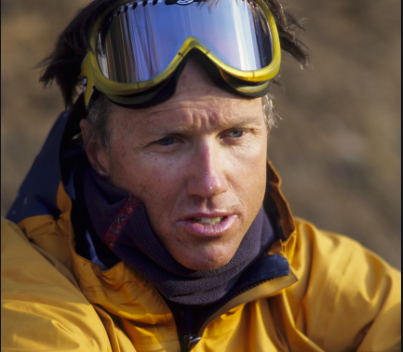
Doug Coombs

On April 6, 2006 in La Graves, he was skiing with three friends, including Chad VanderHam, a young American who had attended multiple Steep Skiing Camps and worked with Coombs in France. The last run was through some couloirs they had skied before. VanderHam skied down and went out of sight. Coombs skied to the edge of a cliff and called down to him. The other two heard Coombs call for a rope. One skied part way down  but before reaching him, Coombs, on skis, had slipped off the cliff. 

Chad VanderHam was declared dead by the time his copter reached the hospital. Doug Coombs, warned at 17 that his next fall would be his last, died from a broken neck. He was 48.

The book weaves Coombs’ story with Cocuzzo’s travels to document it. He follows Coombs’ path, interviewing and skiing with the people who knew him.

The author finds his stride not too far into the book. It becomes an absorbing read.
Tracking The Wild Coomba: The Life of Legendary Skier Doug Coombs. Copyright 2016 by Robert Cocuzzo. Mountaineer’s Books. Available online from $3.44.

Mystery Glimpse: Bang, Bang

The First Glimpse Challenge This Season Is Not What You Think.

When, Where, What, How, Who?

This Mystery Glimpse photo comes from the archives of the Alf Engen Ski Museum in Park City, UT. Take a virtual tour of the museum’s collection by clicking here.
The Mystery Glimpse feature posts a photo from one of the ski industry’s wonderful museums. Often these museums are located at or near ski resorts. They preserve and maintain unique assortments of ski history memorabilia, artifacts, documents, publications, and photographs. We are very grateful that so many ski museums are sharing photographs with our readers.

Do you know what’s going on in the picture? Take a guess in the Comment Box below. We’ll reveal the story behind the photo next week.

100+ Skiier

102-Year Old Skier George Jedenoff’s Autobiography Published On Apple Books

It’s A Thriller, A History, A Love Story And More. Read It Free On Your Computer.

George Jedenoff never gives up. Credit: Harriet Wallis

George skis with enthusiasm. He cruises steep trails and shouts with glee when he jumps into powder. That’s George!

Skiers at Alta flock to him for inspiration. “Age is just a number,” he says. “Don’t let it be a barrier.” His motto is: “Never give up.” His positive outlook is a cornerstone of his life.

George’s autobiography, My Centenarian Odyssey, chronicles his life and adventures starting with his family’s flight from the Russian Revolution when he was just a toddler, coming to America, and later working as a young man in a California magnesite mine for 50 cents an hour. He graduated with honors from Stanford, served in World War II then worked his way up in the steel industry to become president of Kaiser Steel, a premier supplier of shipbuilding steel.

Along the way he learned to ski, and he’s passionate about snow and the beauty of the world around him.

Read his autobiography free on Apple Books. Or you can download it free onto your computer. Be patient as downloading takes several minutes. Click to Download

George Jedendoff is out and about. Not bad for 102. But age is just a number, right? Credit: Harriet Wallis

Skiing Off Piste: Lessons Learned The Hard Way

He’s Skied New Hampshire’s 48; He’s Pick Up Insightful Tips About The Backcountry.

Editor Note: Ben White skied the 48 4000 feet plus mountains in New Hampshire in a single year as a teenager. We thought the readers of SeniorsSkiing.com would benefit from some of his hard core lessons.

Ben White currently runs White Cloud Adventures in Utah.

As a young whipper-snapper, I had the incredible privilege and opportunity to ski each one of the New Hampshire 48 in a single ski season before I graduated high school. Like any seventeen year old, I had plenty of my own ideas about how the world worked and how to ski in the backcountry, only to learn the hard way that there were better options.

Bring A Really Good Headlamp

Standing in a light drizzle on top of Bondcliff with Alan and Cathy getting ready to ski and hike out nine miles to Lincoln Woods while the sun set was a great learning moment. Instead of complaining about the rain, I knew that I simply had to do the next thing: Toss on a layer to stay dry and get a head lamp out. Being in high school, I brought along whatever means of light I had. In this case, a mountain biking head lamp my aunt gave me for my birthday a year prior. It was a small, lightweight bulb and housing with a long power cord to a robust battery back, and the special clip to attach it to a helmet that was left at home. Holding the light steady in one hand would make using ski poles and blocking branches funny. So, since it would not attach to my helmet, I held light with my teeth the entire time. After skating out the last four miles of the Lincoln Woods trail, I was soaked, tired, and had a really sore jaw. I have since considered it critical to have a well-functioning headlamp with me at all times when skiing in the backcountry, even for an hour at lunch.

It Is Not All Powder

The main motivation to skiing in the backcountry were visions of untouched powder for miles. Without people or groomers, the snow would have to be untouched, except by animals, and therefore soft everywhere. I can distinctly remember that 46 out of The 48 were not powder skiing. Part of the joy of skiing in the backcountry has been the challenge of putting all of the puzzle pieces together, especially the weather and snow conditions forecasting. My goal was to ski The 48, though, not ski powder every day. When Alan and I skied Middle and North Tripyramid, in the White Mountains, we made turns, but they were on some of the most bulletproof snow I can ever remember skiing. Count on it.

Skiing In The Backcountry Is A Team Sport, Especially In New England

The idea that the backcountry is a place to find solace and fresh tracks away from people is in the right direction, but not on the right track. The backcountry is largely free of unknown skiers clogging up lift lines and skiing recklessly, but learning to ski in the backcountry is very much a team sport. At any point in time, team members can contribute to the success of the group as a whole. This teamwork starts with pre-trip planning, encompasses breaking trail and pulling water bottles out of backpacks, and ends with a short discussion about how the day went when the ski boots are off at the car. Everybody brings a different perspective to the table, and somebody just starting to venture out into the backcountry can ask some very thought-provoking questions of a more seasoned backcountry skier. It pays to listen.

Layering: Every Body is Different

Winter is cold and the threat of frost-bite and hypothermia is very real. Just like any other day of skiing, I would put on a certain amount of fleece before I buckled my boots, then head off for some smiles. Hiking uphill with skis on generates a lot more heat than taking a chairlift and, in turn, sweat. After figuring out that I was so slow moving due to heat management problems, a single 39 year old woman I met on the trail, who was way out of my league, told me that I needed to wear less clothing. After some trial and error, I have found that nothing but a polyester t-shirt, shorts, and shell ski pants is all that I ever want to wear while on the skin track. My friends all wear something else, because they run at different temperatures than I do. Gloves are important to layer as well.

There are more lessons, too. Stay tuned for advice and tips in coming months.

If you have a question about getting started in backcountry skiing or if you want to share your experience, just comment in the box below.

This Week In SeniorsSkiing.com (Oct. 4)

What Pisses You Off.

Last spring, we asked a provocative question in our annual SeniorsSkiing.com Subscriber Survey. We asked, “Thinking back on the 2018-19 season, tell us what pissed you off the most about the following…” Then we listed “On the slopes”, “In the lodge”, “Tickets and passes,” “Restaurant”, “Other skiers”. We also asked what delighted skiers the most, but let’s look at the opposite first. Based on the language in the responses, it is certainly where the passion lies.

We were surprised that so many respondents made comments like the following sample of many more:

Rude and dangerous skiers and boarders
Inconsiderate skiers and snowboarders
Lack of ski etiquette
Out of control skiers
Dangerous skiers
Beginners on advanced trails
Careless riding and skiing
Skiing too fast and too close to other skiers
Not skiing in control
Some are dangerously fast and reckless
Skiing and riding too fast
A few jerks skiing dangerously
Not following safe skiing rules
Risk takers who don’t turn on groomers
Straight-lining on easy slopes
Complete disregard for slower skiers

Respondents also mentioned high lift and pass prices, lousy cafeteria food, long walks from parking lots, and other grievances. However, the out-of-control skier situation is the most disturbing. Why? Because you probably thought that the Ski Patrol would be enforcing the Skier’s Code of Responsibility. Or that the resort’s Ski Ambassadors would be chiding characters acting dangerously. As we have learned from your comments, that apparently isn’t happening much.

Let’s be clear. There is a difference between skiing fast in control and skiing fast out of control. We know many of our readers like the former, but, as we have seen, many are intimidated by the latter.

As a result, SeniorsSkiing.com believes we have shone a light on a key area of ski resort management that needs improvement. The chain of consequences that dangerous, out-of-control skiers brings is significant: the risk of injury from collisions, turning off beginners, seniors returning to skiing, or the occasional skier who spends several hundred dollars for a once-a-season ski weekend, and creating anxiety in grandparents who fear for their grandchildren.

This week, we hear from SeniorsSkiing.com correspondent Roger Lohr about his own close encounter with an out-of-control skier and his thoughts about what to do about the situation.

Let’s hear from you. What can be done to slow down the jerks who can potentially ruin a senior skier’s season? What can we do to influence the industry?

Also This Week

SeniorsSkiing.com correspondent Don Burch offers a clever “Analogy Test”, that challenges your skiing knowledge and your ability to figure out analogies. Be advised, this is not a creme puff test; pay attention.

Herb “The Skiing Weatherman” Stevens follows up last week’s debut article as a SeniorsSkiing.com correspondent with a clear explanation of how the Northwest got whammed with a mega storm at the end of September.

Finally, we are reprising the third in a series of articles on shaping up for the season. This final set of exercises raises the challenge level. Remember, the key to fitness is a consistent routine. Dashing around the gym once a week, pumping as much iron as you can ain’t gonna do it.

Next week look for our first Mystery Glimpse feature of the new season. If you have story ideas or would like to comment, please scroll to the bottom of the page and enter your thoughts in the comment box.

We hope you’re getting ready to go to the ski shows. We know we are. See the discount for SeniorsSkiing.com subscribers at the top banner ad or click below.

Remember to please tell your friends about SeniorsSkiing.com. As usual, there are more of us every day, and we aren’t going away.

Short Swings!

What about that Big Dump last week in the West!!!!!!

If you’re like me — waiting for the first signs of Winter — the season is now on its way.

These areas plan to open in October:

  • Wolf Creek, CO – 13th October
  • Killington, VT – 19th October
  • Sunday River, ME – 19th October
  • Arapahoe Basin, CO – 20th October
  • Loveland, CO – 20th October
  • Wild Mountain Ski and Snowboard Area, MN – 20th October
  • Mt. Rose Ski Tahoe, NV – 20th October
  • Mount Snow, VT – 20th October
  • Wildcat Mountain, NH – 27th October

SeniorsSkiing.com is now publishing every Friday.

Two big issues for senior skiers surfaced in recent reader surveys. 

  • One is your interest in finding contemporaries with whom you can ski. 

  • The other is being hit by reckless and out-of-control skiers and boarders.

To address finding skiing buddies, I’ve asked a digital-cartographer friend and avid skier to help us identify a meeting place that could apply to all ski areas. The idea is to set a time (e.g. 10AM) when members of the SeniorsSkiing.com community could show up at a specific location and, displaying a SeniorsSkiing.com sticker, meet other readers with whom to take some runs. 

Courtesy: University of Utah J. Willard Marriott Library Ski Archive

What are the unresolved issues? 1) Identifying a location that would apply to all areas. If in the lodge, should it be a table closest to the end of the cafeteria line? Near the main entrance? Etc. If you have any ideas of how to do this – without involving area management – please send an email or post in Comments.  2) Supplying readers with the identifying SeniorsSkiing.com sticker. That’s the easy part: Email me your name and address, and we’ll send you a supply. My email address is jon@SeniorsSkiing.com.

As for the reckless/out-of-control skier problem, take a look at the reader comments in Mike’s This Week message. It’s not a trivial matter. Many readers report on slope hit-and-runs. Many more report near misses. Getting hit when you’re in your 60s, 70s, or 80s has more life-altering consequences than when you’re younger.

Something needs to be done. We’ve approached National Ski Patrol to inquire about their policies and to see if they would be open to exploring a collaborative effort to improve the situation. We’ll report what we learn. In the meanwhile, if you have suggestions to remedy this dangerous epidemic of unsafe skiing, please email them to the same address as above.

Finally, if you like SeniorsSkiing.com, please help spread the word by introducing your skiing friends to the site.  

Despite Serious Neurological Disorder, He Continues to Ski

Nick Manely in France

Nick Manely, a SeniorsSkiing.com reader and avid skier has been managing a Functional Neurological Disorder for several years. He’s based in Colorado where he coaches at Eldora Mountain and works at Larson’s Ski Shop in Denver. In September, Nick presented about his condition and skiing to a group if physicians and researchers at The International Congress of Parkinson’s Disease and Movement Disorders in Nice, France.

Vermont Adaptive Ski and Sports Seeks Volunteer Instructors

Vermont Adaptive Ski and Sports is the state’s largest year-round disabled sports nonprofit. The group looking for energetic winter volunteer-instructors. Volunteers will be trained to help teach and lead the organization’s winter programs that include Alpine and Nordic skiing, snowboarding, snowshoeing, indoor rock climbing, veterans retreats, and wellness programs. For more information or to sign up to volunteer, complete the application at www.vermontadaptive.org/get-involved.
 

Economical Resource for Small to Plus Size Parkas and Pants

Many Senior Skiers have difficulty finding properly fitting ski clothing. One old friend, quite petite, is always checking ski shops for good-looking things. Sometimes she has to settle for children’s items. Another friend is at the other end of the size spectrum. She, too, has difficulty finding quality skiwear in her size. I know they’re not alone. That’s why I’m delighted that NW Sales Connection has become a SeniorsSkiing.com advertiser. The company offers a wide range of skiwear in a wide range of sizes. Their initial ad focuses on women, but the site covers women, men, and children. The cost of ski clothing on the site tops out at $139.99, and everything is marked down. There is a 30-day return policy (longer over the Holidays). Please click on the NW Sales Connection ad and welcome this valuable resource to the SeniorsSkiing.com community. As an additional incentive to SeniorsSkiing.com readers, NW Sales Connection is giving a 10% discount for purchases made between now and October 15. Enter “welcome seniors” in the discount code box during check out.

The Easier Way To Get Your Boots On

This is the surefire solution to getting feet into boots, even when your boots are cold. It’s the compact, never-fail, Bootster, a clever little device utilizing a slippery material that helps feet slide effortlessly into ski boots. Several things make this a particularly nice product: Bootster reduces the effort of getting boots on. And, it fits into your parka pocket, so you can take it with you and use it to get your boots back on after lunch. At $25, it’s highly affordable and makes for a thoughtful gift for the older skiers on your list. To learn more click here or on the Bootster ad on the home page.

Solar Powered Task Light

We receive lots of offers to review products and to try things that companies would like brought to the attention of our readers. Most are irrelevant or unworthy. But this one got my attention. It’s a light weight utility light powered by choice of solar or by your computer’s USB port. The flexible, yellow silicone arm wraps around almost anything to position the light where you want it. It has four settings, three to adjust the light intensity and one to make it flash. I envision this as a nifty addition to camping gear or just to keep in the car or at home. Mpowerd, the company that makes this and other similar products, works with non-profits to send lights to people living without access to electricity. Luci®  Core, MSRP $14.95. Available from most outdoor retailers or directly from https://mpowerd.com

Remember Ski Ballet?

Skis of Glory is a brief video recapping that highly visual and entertaining era.

Subscribers Only: The Best 2020 Skis for Senior Skiers


Each year, SeniorsSkiing.com collaborates with Realskiers.com to inform its readers about skis that allow older skiers to turn more easily and to ski longer without tiring. Women’s skis – sometimes engineered for female size and physique – are included. 

To find the list on the site, a) click “Community” on the menu bar, b) click “Subscriber Only Content” in the dropdown box, and c) click on “Ski Recomendations for Seniors 2020.”

The skis were identified during Realskiers.com’s annual national ski evaluation process.

Most of the selected skis have relatively soft flex, which helps them engage the snow with minimal exertion. Regardless of one’s physical condition, using skis with these characteristics allows older skiers to turn more easily and to ski longer without tiring. 

The recommended skis are grouped into five categories, each based on the ski’s width, which helps determine the terrain where its performance is optimized. 

SeniorsSkiing.com recommends that when purchasing new skis, older skiers should start by choosing the most suitable category and work with a quality ski shop where they can demo before purchasing.

The characteristics of each of the five categories follow:

Frontside (“Carving” skis) 

  • Encompasses broadest range of skier abilities from entry-level to experienced
  • For use on groomed terrain. Wider models are usable off-trail 
  • Ski width: 75MM-84MM

All-Mountain East 

  • Works equally well on- and off-trail 
  • Good “re-entry” ski for those who haven’t skied in a few years 
  • Ski width: 85MM-94MM

All-Mountain West 

  • For use in the West by high performance skiers
  • Adapted for off-trail use but can be skied on-trail by skilled skiers
  • Ski width: 95MM-100MM      

Big Mountain 

  • A more maneuverable powder ski
  • Inadvisable for regular on-trail use
  • Ski width: 101MM-113MM

Powder 

  • Specialty ski for use in Deep Powder only 
  • Ski width: >113MM

Detailed reviews are available at Realskiers.com. The site provides free access to equipment reviews and other information. In depth information and personal guidance from the publisher is available to SeniorsSkiing.com subscribers at a discounted annual rate of $9.95. To sign up, visit Realskiers.com. Scroll down to/click on “Subscribe Today!” Then click “Sign Up” in the “Annual Membership” box. Complete the form and enter SS20 in the field under “Coupon Code.” 

Blind-Sided And Body-Slammed

Is It Time To Address Ski Slope Collisions? How?

[Editor Note: This summer, we published a little play about the speeding, out of control skier and what the ski patrol can do about it. You can read it here. Bottom line: It’s not their job, at least, that’s the party line. They are there to maintain the lines, help injured people, sweep the slopes. They are not trained nor prepared to confront unruly or out of line customers who are not complying with the Skier’s Code of Responsibility. What to do? Here’s SeniorsSkiing.com XC editor and publisher of XCSkiResorts.com publisher Roger Lohr’s story about his collision and consequences.]

This year, I was one of the many skiers and riders who got blind-sided and body-slammed by someone on the slopes. After seeing me bounce into the snow a couple of times and violently twist my lower body, the “guy in orange” who plowed into me said nothing and skied away. No apology, no asking if I needed help.

I got up slowly after the collision and immediately thought about how effective my new MIPS helmet worked. Just afterward, I felt shooting pain in my lower back.

Out of the corner of my eye I saw the guy in orange about 40 yards away. He had stopped and was looking across the terrain at me while I was taking stock of my bruises and sprains associated with the collision. Then he took off.

I stopped in at the patrollers’ cabin and saw six guys sitting at a table. I requested some kind of heat compress or rub for my pain and was told that they are not allowed to distribute anything like that.

This incident was in fact, the third collision that I’ve had in recent years. What can the industry do to deal with the increasing number of slope collisions?

Can we blame lack of skill in the kind of collision I experienced? It might have been a miscalculation of his line, his ability to change course, his maintenance of too much speed, inattention, an obstruction, etc.

The collision occurred near the bottom of the slope, so was there a chance that I cut him off? Would more patrollers on the slopes talking to people about control, speed, where they stop, and so on, make a difference?

I often ride the chair with patrollers but I don’t remember the last time I heard from a patroller out on the slopes. I can’t say that I’ve seen many of them speaking with skiers and riders about unsafe situations. Would a broad skier/rider education campaign about speed and skiing in control make a difference for safety purposes and curtail the collisions?

As I’ve aged I’ve become much more cautious keeping an eye on the slopes around me. In my collision situation, I was heading to the lift line and did not look up the slope for five seconds on a day when there were very few people skiing. I paid for those seconds with medical bills and three weeks of pain.

The statistics on ski area collisions are mounting and this past spring’s SeniorsSkiing.com reader survey showed a serious concern among site visitors about these incidents. And we all know parents who have freaked out watching their child get steamrolled and mangled on the slopes.  It is not only older skiers who have cause to worry about collisions.

What happened after I was hit was significant. The speedster took off, offering no help and no curiosity as to whether I was injured.

There are seven points in the Skier’s Responsibility Code about staying in control, avoiding others, stopping in places that do not obstruct, and the like. There is no suggestion in the code that there is any responsibility to help a victim or check that the subject who’s been hit is able to ski away after the incident. Yeah, you’d think it was common courtesy for the slammer to apologize and see if aid is required but in my experience and other incidents that I’ve heard about, this is not the case; this is not standard protocol.

I understand the ski area operators’ perspective: no one wants a “patroller policeman” yelling at guests, but can we develop a more robust educational campaign to curtail slope collisions and incorporate a new tenet for courtesy when such incidents occur? Can we amend the Skier’s Responsibility Code to include helping people who are hit?

Analogy Test

SeniorsSkiing.com Analogy Test

[Editor Note: Thanks to SeniorsSkiing.com Correspondent Don Burch for this challenging test. Good luck, you’ll need it. Answers at the end.]


Shape Up 3: Challenge Yourself

Five Basic Exercises Ramped Up To High Intensity Levels.

[Editor note: This is the third and final in our series of preparation exercises for senior skiers from Rick Silverman, physical therapist and certified strength and conditioning specialist. We started with basic hip and leg exercises (Oct 25), raised the intensity of those (Nov. 7) and now present a more challenging level of those same exercises.  As you can see, these are clearly a step up in intensity. Use these to extend your exercise program.  If you haven’t been limbering up so far this season, don’t start here.  Seriously.  These are challenging.  As always, if you have any issues, complications or questions, consult your medical advisor before beginning.]

 Quad Squat Jump

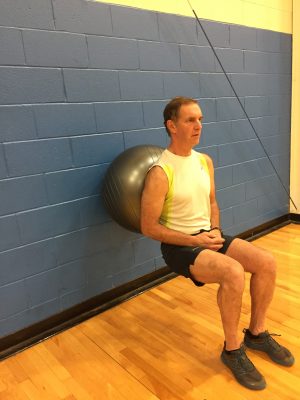
Last time, we introduced the Static Quad Wall Sit.  In this one, we get dynamic. Use a small exercise ball or a light weight. Squat down, jump up.  Repeat.  Try doing this for 20 seconds on, 10 seconds off for two minutes.

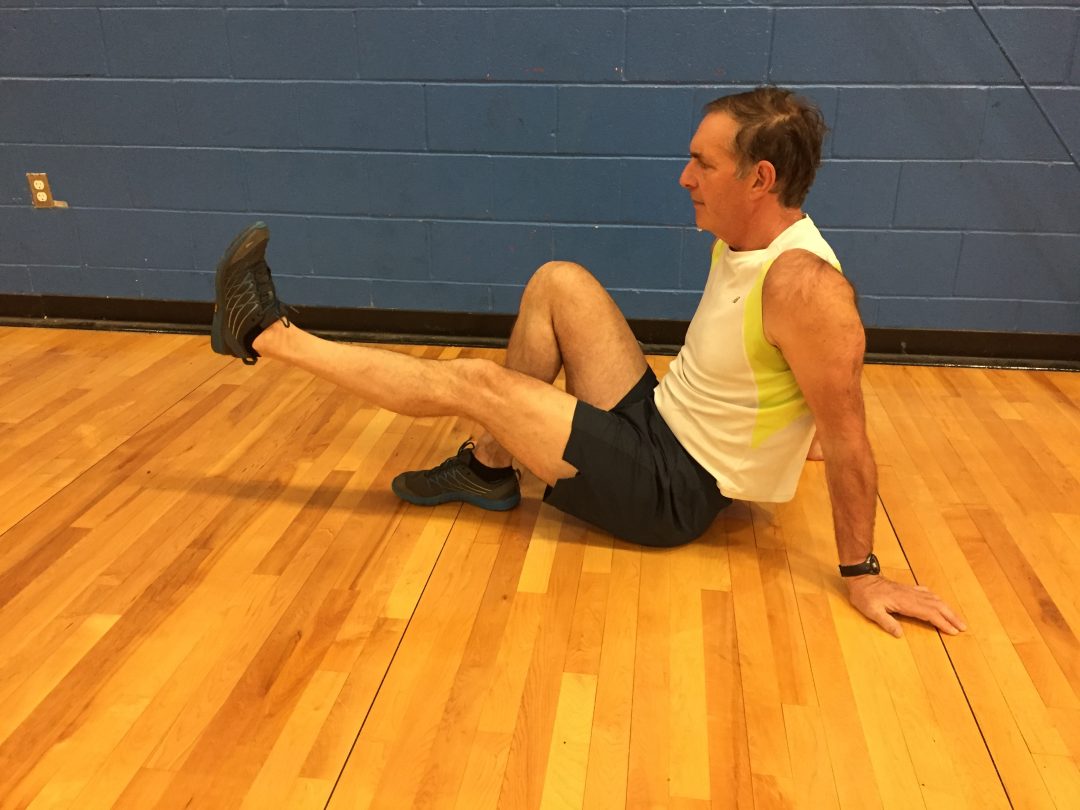
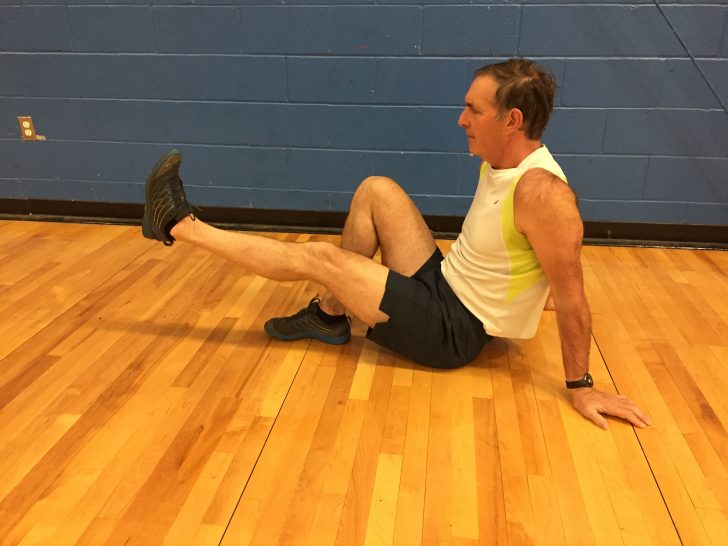
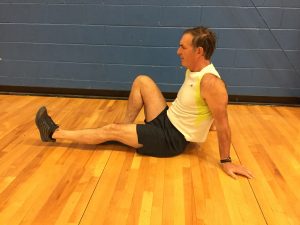
Leg Raise Sitting Up

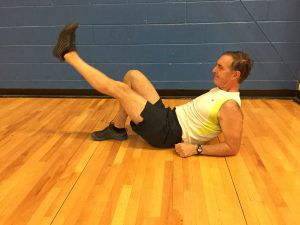
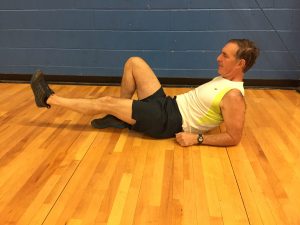
The key is straight leg and toe pointing up.  Support yourself on your hands.  A variation is to point your toe inward on the way up and outward on the way down.  And vice versa.  Don’t let your heel touch.

legraise_situp_1legraise_situp_2


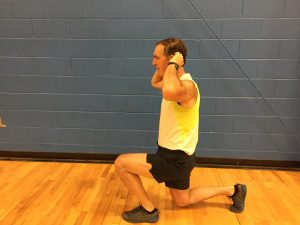
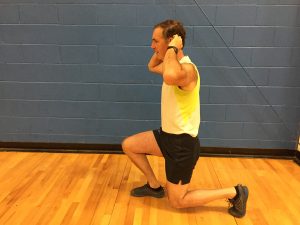
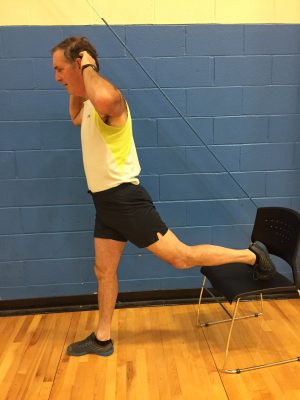
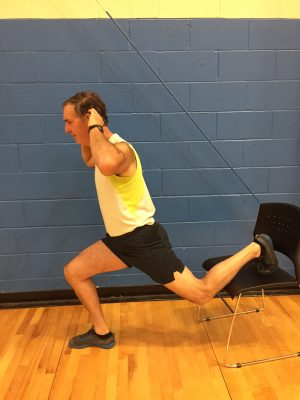
Dynamic Lunges

Rick has been a Telemark skier for 25 years.  He said this move imitates the same leg motion used in making Tele turns.

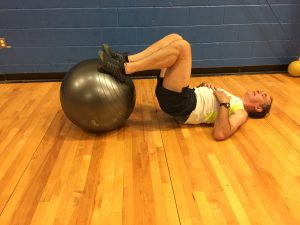
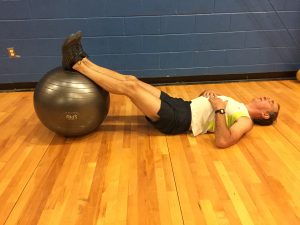
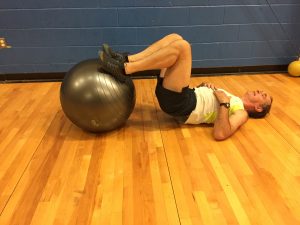
Hamstring Bridge

Keep the ball rolling in and out.  Use a chair with rollers.  Watch your lower back on this one.

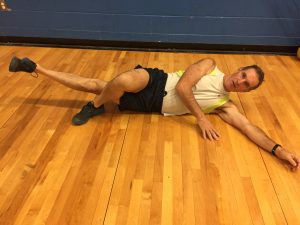
Inner Thigh Lift

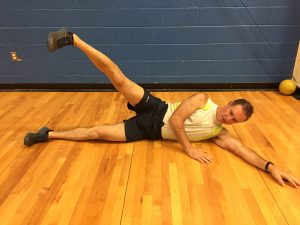
In previous articles, we showed you how to work your glutes and outer hip flexors.  Here’s one to use for the inner thigh.  You might want to rotate through all three exercises in your work out.

hipflexor_inner


A huge thanks to Rick Silverman for showing us how to ramp up for the snow sports season.  If you don’t have a regular exercise work out habit, consider starting with our first series of exercises here.  But, please, don’t start the season without some physical preparation.


2018-19 Trail Masters Now Online

A total of 195 readers qualified as Trail Masters, reporting that the number of days they skied, boarded or snow shoed last season equaled or surpassed their number of years. 

Their ages average 67.6, and their number of days skied average 89.9. One-hundred-fifty-five respondents provided their names and contact details. Of those, 37 are women. Six are octagenarians.

At the end of each season, SeniorsSkiing.com asks readers if their number of skiing days equals or surpasses their number of years. Respondents fitting that requirement are named Trail Masters and receive an embroidered patch. 

The oldest Trail Master for the 2018-19 season is Fredi Jakob, 85. He lives in Carmichael, California and skied 87 days. Gerald Rehkugler, 84, Cortland, NY, skied 90 days. Gary Clarkson, 81, Pittsfield, Massachusetts skied 100 days. Bill Belk, 81, Driggs, Idaho skied 130 days. Roger Bourke, 80, Alta, Utah, skied 91 days. Michael Sharkey, 80, Waitsfield, Vermont, skied 84 days.

Sixty skiers in their 70s were named Trail Masters, as were 118 in their 60s, and 21 in their 50s. 

Reflecting SeniorsSkiing.com’s reader demographics, the majority of respondents are from the US, followed by Canada, Australia, and several European countries.

While SeniorsSkiing.com is oriented to the 50+ skier, boarder and snow shoer, the average reader age is 67. 

All Trail Masters since 2015-16 can be found by clicking “Features” on the menu bar.

Trail Master patches are expected to be mailed in October.

Technique Tips For The Senior Skier

Sharpen Your Skills To Get The Most Out Of Your Skiing.

[Editor Note: UK-based Bob Trueman is a long-time ski coach and instructor who will contribute occasional articles on technique for the older skier. He is the author of Ski In Control where he describes the skills needed to master “any piste”. He will soon be publishing a series of YouTube videos to demonstrate control skills.  SeniorsSkiing.com welcomes him to our pages.]

What’s the best way to keep getting the most fun out of skiing as we get older? As a coach, I suggest that it’s the exercise of skill. This doesn’t preclude the great company, good food, and all the rest. Nor does it demand big, physical challenges. It’s a mind-set change.

Look around any piste, and everyone finds some way of negotiating it, but very often not nicely. Some folk don’t care how they ski, only what or where they ski. My clients do care, and it’s exercising precision skill that my pupils get the most out of.

Let’s define skill:

Skill is the learned ability to bring about pre-determined goals with maximal certainty, often with minimal effort. This has implications – “learned” = not instinctive: “pre-determined” = goal oriented; “maximal certainty” = demonstrated skill. It never fails to satisfy and is little related to physical strength or capacity.

Here are some ideas.

Unloaded tips, weight back = bad.

Look at the slope with a keener eye. Does the slope go exactly where the piste goes? Often it

Weight forward, tips loaded = good.

doesn’t; often it is canted. If you were to pour a bucket of red ink onto the slope, it may well go somewhat across the piste. You may see this and recognize that left and right arcs will not be symmetrical; they’ll be quick one way and slow and drawn-out the other. The skillful skier will be ready for this, and change rhythm. There’s satisfaction in that.

View the slope and decide if you will control your speed by applying some skid by pivoting your ski. If you do, be aware that the line you take down the slope will be nearer to a straight line—it won’t be straight, but it’ll be straighter. Take satisfaction out of knowing that and ski the line you predicted. How close did you get? That’s an exercise of skill.

Or choose to descend by having the ski carve. You still want to control your speed of descent but with a higher linear speed. So you can choose before you set off what radius of arcs you’ll do and how many arcs you’ll do. You will control your path down the mountain by the line you draw down it.   That’s another exercise of skill, and very satisfying.

Anyone can ski a gentle slope fast, only skillful skiers can descend a steep one slowly. What do you need to do to achieve that? You can do it by drawing a straight line diagonally across it until you have no room left and then do an “Oh-s**t” turn.   Or you can execute more arcs, tighter arcs, taking a more direct line of descent.   This requires greater skill as well as pre-planning and determination.

So what would you need to DO to achieve these skills? Here’s a tip – THE TIPS! Concentrate your mind on the inside edge of your outer ski’s tip. Think of it as a wood carver would think of his chisel/gouge – you’re going to carve it into the snow, have it cut in. Mother Earth will then see to it that it gets pushed round ‘sharpish’.

You’ll need to load that edge more. So you’ll need to flex your ankle more, and probably faster. If you tuck your tummy in and lean forward, you’ll load it. You’ll unload if you do the opposite. It helps to keep your hands low and wide. That helps. And keep looking down the slope to where you intend to go, not where you’re going.

Just doing one of these elements, and especially if you know you pre-planned it, is an exercise of skill that you can take pride in and enjoy the memory of on that next visit to the restaurant. Do a bit of boasting!


Shape Up 2: Up A Notch

Revving Up Intensity For Our Five Basic Exercises.

[Editor Note: Last month, we reprised a set of baseline exercises focusing on legs and hips as part of a get-ready strategy for this season’s snow sports activities that was originally published in 2016.  This week, our exercise guide, physical therapist, certified strength and conditioning specialist and teleskier Rick Silverman, shows us how to up these exercises to the next level. As with any exercise plan, make sure you don’t overdo it; recognize your limits. If you have any issues or complications, please check with your medical advisor. In a couple of weeks, we will show you the highest intensity level for these activities.]

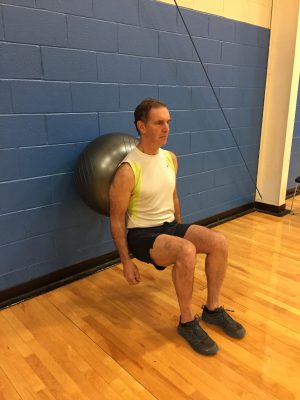
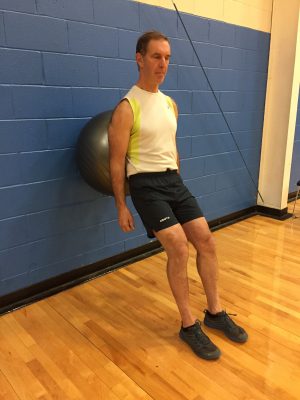
Static Quad Wall Sit

We used to do this in our college freshman dorm as a macho challenge. Sit against the wall, legs at 90 degrees.  You can use a ball, as Rick does here, or just lean against the wall.  Start with a relatively comfortable time, say, 20 seconds. Work your way up to 60 seconds. And don’t overdo this one!

quadwall_static_1


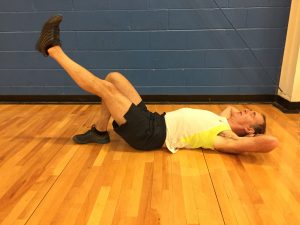
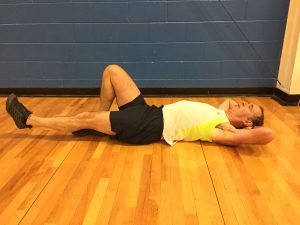
Sit Up Leg Raises

Bring your upper body up, support yourself on your elbows.  The key here is keeping your leg straight and toes up.  Don’t rest your heel on the ground on the downbeat. A variation is to point your toes to the right on the up and to the left on the down and vice versa.

legraise_sit_1

legraise_sit_2


Alternating Lunges

Bend knee to 90 degrees and no more. Alternate right and left if you want or do eight reps on the right, eight on the left and repeat.

lunge_alt1

lunge_alt2


Hamstring Bridge

You can use an exercise ball for this or a chair with rollers.

hamstring_bridge_1


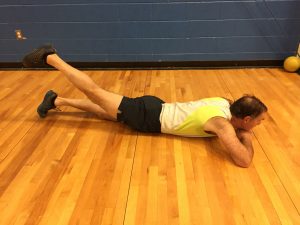
Glute Leg Raise

Add this hip area exercise to the Outer Hip Abductors we showed you last time.  Remember, hip strength plays a big role in all snow sports moves. You will feel this in your butt, for sure.  Don’t raise your leg too high. Again, work your way up to 16 reps x 2 sets.

hipflexor_glute


The most important take-away from all this is to do something to get into shape for the snow sports season.  Cycling, hiking and all those other summer sports are terrific conditioners.  If you’ve been active all summer, try some of these as a test of sorts to see where you stand, conditioning-wise.  If you’ve not been as active, please take time to run through some of exercises. If you do these every other day, you will start seeing results in a couple of weeks.

big old tree

Short Swings!

In case you haven’t noticed, ageism hasn’t gone away. The only difference is that over the years we’ve become the object of this form of cultural disdain.

That’s why I thought it would be good to pay respect to some really old timers.

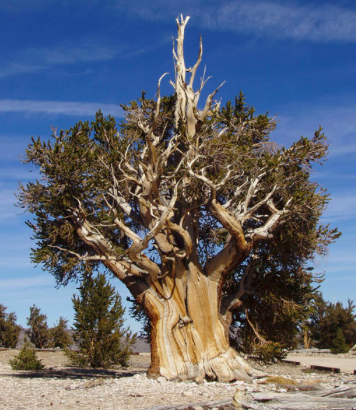
Last month, we hiked to a grove of Bristlecone Pines, the oldest trees on the planet. The ones we visited have been around for about 3,500 years. They’re in Great Basin National Park, at the eastern edge of Nevada. One bristlecone, in California’s White Mountains, is almost 5,000+ years old!

The hike required some effort on rocky but well-marked 10,000’+ terrain. 

Gnarled. Tortured. Grotesque. They’re good words to describe Bristlecones. Many look dead except for the greenery coming from some twisted branches. These trees are ancient and thrive in the harshest and rockiest conditions. They deserve respect.

Pando at Fish Lake, Utah

Not far from where I spend summers near Capitol Reef National Park, is the Pando, a massive Aspen tree clone reported to be one of the largest organisms on Earth. Aspen trunks spring up from underground runners. An entire grove has the same genetic markers. In the Spring, when one develops leaves, they all develop leaves. In the Fall, the entire grove turns color simultaneously. Observe an aspen forest when the leaves are changing and you’ll witness one entire section changing its leaf color one day; another section changing a few days later. I mention the Pando near Fish Lake, Utah, because researchers have identified its root system as 80,000 years old! Unfortunately, they also tell us human activity is leading to its demise.

What does this have to do with senior skiers?

Many of you, responding to the Spring survey question asking what pissed you off most during last season, indicated two major irritants: 1) loss of discounts and high ticket and food prices and 2) rude, out-of-control skiers and boarders. (We’ll have more on the survey in upcoming issues.)

Your responses reflect a shift in the US ski industry’s business model which is systematically eliminating discount benefits many came to expect. That could be viewed as disregarding the interests of Boomer skiers. They also reflect a general lack of regard from other skiers/boarders. It’s surprising how many of you wrote that you or someone you know was hit by a young, out-of-control person.

We older skiers and boarders have been around a while. Maybe not as long as Bristlecones and the Pando, but we, as they, deserve respect.

Ski Pass Developments

  • $60 Squaw Valley Alpine Meadows  Season Pass for Military Vets : The resort will issue up to 6000 passes to active duty, reserve, veteran, and retired members of the military. Click here for details. Congratulations, Squaw Valley Alpine Meadows!!!!!
  • $99  Angel Fire Season Pass for all US K-12 teachers: Price increases to $199 when the season starts. Bravo Angel Fire!!!!!

  • New $199 INDY Pass: 68 Days at 34 Resorts: A new, multi-resort ski pass, called Indy Pass, is now on sale for the 2019-2020 season. It provides two lift tickets each – 68 total days – at 34 independently owned resorts for just $199.
  • A-Basin Joins IKON and Mountain Collective: Arapahoe Basin, which last season decided to drop out of the Epic Pass, has joined both the IKON and Mountain Collective passes. It’s a terrific area and these are terrific decisions.
  • IKON Adds Zermatt: IKON also added Zermatt in Switzerland with either seven or five days (no blackouts) depending on the IKON product owned. It is IKON’s first Euro resort.

China is World’s Largest Beginner Ski Market

A new report shows that as of 2018 there were 742 ski areas in China. The number includes indoor areas. Last season China had 21.1million skier visits. Between 2017 and 2018, thirty-nine new facilities were built. Three percent of the total are identified as destination resorts with a vertical of 1000’ or more. The longest vertical is slightly more than 2900’. The report concludes that China is the world’s largest beginner ski market.

12-Story Indoor Area To Open in Meadowlands (NJ)

Big SNOW America at American Dream is the Meadowlands (NJ) indoor ski and snowboard park. It is scheduled to open October 25. The 12-story, 180,000 square foot structure will be operated by Mountain Creek, also in New Jersey.

102 Year Old Skier Publishes Autobiography

George Jedenoff, 101 1/2 and still skiing!

George Jedenoff, now 102, has just published his autobiography. George celebrated his 100 birthday skiing at Snowbird. He returns annually to Little Cottonwood Canyon to ski Alta. The book, titled My Centenarian Odyssey, recounts fleeing the Russian Revolution as an infant with his parents, graduating Stanford University with honors, serving in WW II, entering the steel industry, and eventually becoming president of Kaiser Steel. It can be accessed through Apple Books (and through Windows systems) at no charge.


Videos Worth Watching

For a quick hot day chuckle, watch this vintage short about rollerskating, amusingly narrated by Warren Miller.

Or try this trailer for the Timeless, the new Warren Miller feature.


Shape Up 1: Easy Starters for Seniors

Ease Into Shaping Up For Snow Sports With Five Basic Exercises.

This is an archive article reprised from Oct, 2016.

[Editor Note: It’s time to focus on strengthening legs and hips for snow sports.  This year, we are going to offer three “flights” of exercise with increasing challenge and intensity for the same group of muscles. We’ll publish these about two weeks apart, so get started now. We asked Rick Silverman, a physical therapist and ultra marathon athlete from Ipswich, MA, to suggest which exercises to focus on and to demonstrate them for you. Rick is a Certified Strength and Conditioning Specialist with an MS in Physical Therapy.  He’s also a 25-year telemark skier, climber and kayaker.  As with all activities like this, you may want to check in with your physician if you have any questions or complications.]

Please don’t start the snow sports season without toning up your muscles.  If you don’t get into shape, you’re inviting strains and sprains at the the very least.  You’ll tire more easily and, at the end of the day, you’ll be risking more serious injury.

Here are five basic, get-started exercises that you can do with minimal time, equipment and space. This exercise series will just focus on hips and legs. There are other resources online for core, lower and mid-back and shoulders and arms. We will add intensity and variation to these basic exercises in a couple of weeks.

Do at least two sets of eight reps of each for starters.

Quad Wall Squats

Either use an exercise ball or just slide up and down a smooth wall.  Squat down so your thighs are 90 degrees to your lower leg, and no further.

quadwall_ball_2quadwall_ball_1


Leg Straight Raises

The key with this one is keeping the leg you are raising straight and your lower back flat on the floor. Feel that hamstring! Raise to 45 degrees and down, not letting your heel touch the floor.

legraise_1 legraise_2


Static Lunge

Here’s one that focuses on hips and quads. You can put your back leg on a chair or on the floor.  Great one for balance, too.

staticlunge2staticlunge_1


Hamstring

Keep your butt off the floor. If you don’t have an exercise ball, use a desk chair with rollers.

hamstring_1 hamstring_2a


Outer Hip Abductors

Tight hips can cause mischief if they are not strong and supple.  These muscles run up to the central back and down to your knees.  If you have back problems, strengthening hips and core might help. This exercise is for the outer hip abductors. We’ll work the other hip muscles in a few weeks. Try to keep your toes pointing straight ahead.  A variation is to lift your leg with toe pointing down and lowering with toe pointing up.  Then reverse the pattern.

hipflexor_outer_


In a couple of weeks, Rick will show you how to notch up these exercises to the next level.  Right now, get some of these started.  And Just Do It!


Alta’s Wild Flowers in Full Bloom


Alta’s slopes are blooming! Credit: Judy Calhoun

Any one living in or visiting Salt Lake City can escape the heat and enjoy the remarkable wildflowers at Alta. Contributor Harriet Wllis reports that the Alta’s wildflowers are blooming like crazy right now. The meadows and slopes are like Persian carpets — covered with color!

This Week In SeniorsSkiing.com (July 26)

“Not Our Job”: A Play In One Very Short Act

Scene: Curtain rises on an evening outdoor dinner party under a tent. Several guests are gathered around a table with a variety of appetizers: shrimp, cheese and crackers, fruit. Bottles of wine, beer, and booze are at another table. A couple of dozen guests are mingling and getting to know one another. Two characters, an Online Magazine Publisher (OMP) and A Volunteer Ski Patrolman (VSP), continue their discussion.

How many speeders can you spot? Credit: Jean-Yves Bruel

OMP: We’ve just completed our Spring Survey a couple of weeks ago. We asked an unusual question of our readers, What Pisses You Off The Most About Ski Resorts? Can you guess what the number one winner was?

VSP: Easy, speeding skiers.

OMP: Give that man a kewpie doll! Out-of-control, wild, dangerous skiers who ski with abandon and no sense of safety. How’d you guess?

VSP: We hear it all the time. People are always asking us to nail these air-heads, pull their tickets, and banish them from the mountain. (Note: This ski patrolman volunteers at a Very Big Vermont Resort.)

OMP: And?

VSP: We have to explain it’s not our job. We’re there to provide aid to injured skiers, keep the fences up, sweep the trails. You know, safety.

OMP: Really?

VSP: We’re not cops, and we are not trained to be enforcers. Besides, we’re understaffed. We need two guys at the top, a guy on the phone, and a spare on patrol. That’s all we’ve got.

OMP: So who’s supposed to…

VSP: The resorts Ambassadors. They are the people on the hill who can pull tickets, if they do. But often even they don’t. The management doesn’t want to alienate customers by pulling tickets.

OMP: Alienate customers? But what about the senior who goes out five times a year and who just spent $140 on a lift ticket and gets terrorized by schuss boomers, and no one does anything about it?

VSP: Yeah, that’s a problem. The day lift ticket guy probably isn’t coming back, especially if he’s new to the resort or the sport.

OMP: So, speeding, out of control skiers, the number one thing that seniors in our survey find that pisses them off about ski resorts, is an intractable problem?

VSP: I guess so.

OMP: (Walking away): I think I’ll have another couple of shrimp.

[Curtain]

[Editor Note: We know a lot of our readers are either active or former ski patrollers. Please let us know what you think of our play. We want to take it to Broadway, but before we do, we need to hear your opinion. Is VSP correct? What can a resort do to chill the hotshots? A complete report of Spring Survey results will be coming out in the Fall.]

______________________________________________________________________________

This Week

Looking for shells, early morning on the beach at the Hilton Barbados. Credit: Yvette Cardozo

In our ongoing Non-Snow activities series, Yvette Cardozo shows us that scuba diving in Barbados can be as refreshing as a run down a wide blue trail. Well, at least it’s cool. If you haven’t snorkled on a reef or scuba-dived in the Caribbean, you might want to revise your bucket list.

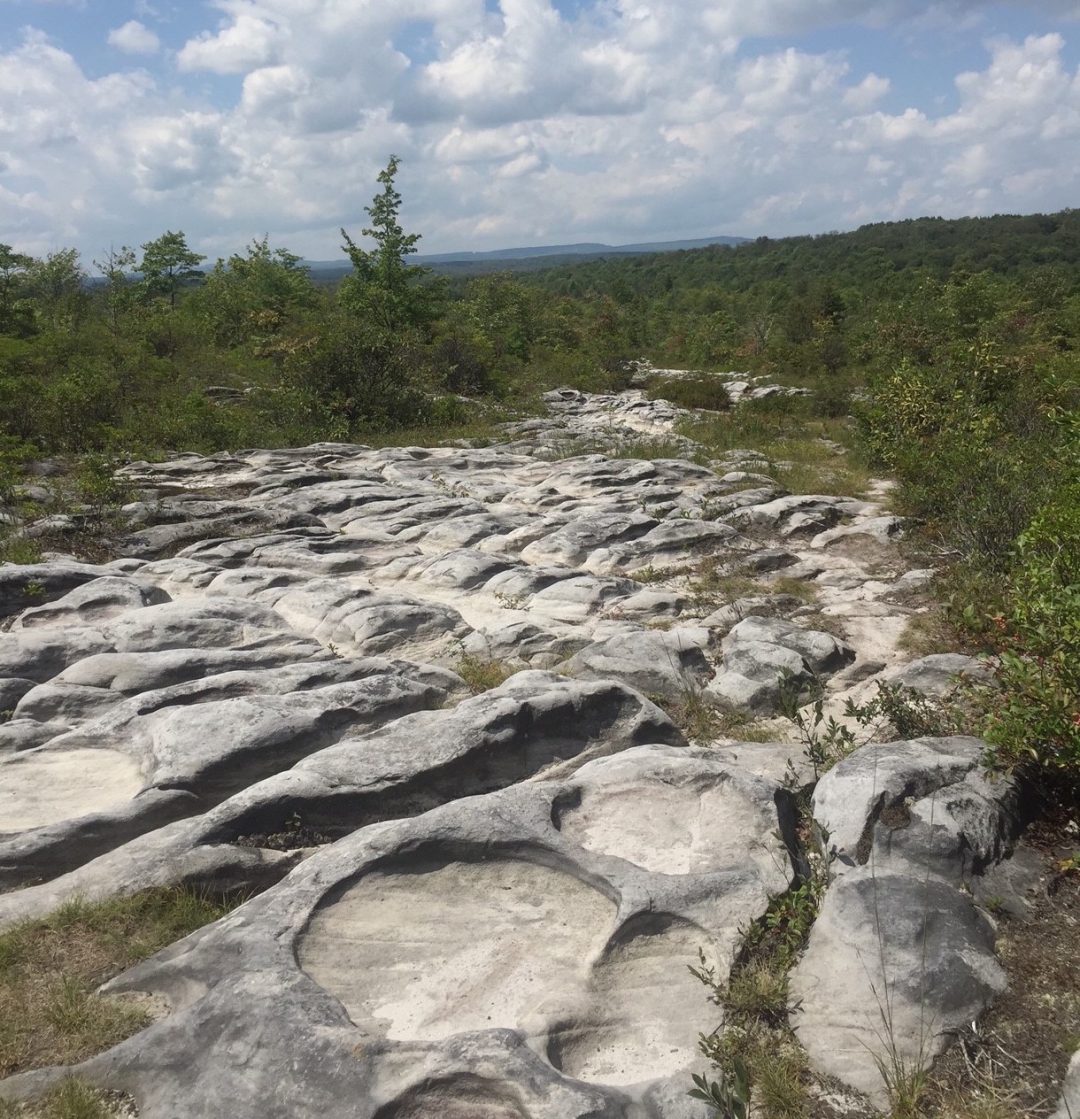
Moon Rocks, Davis, WV. Credit: Pat McCloskey

Pat McCloskey continues our Summer Cycling Series with a visit to Davis, WV, which is becoming the Moab of the East for mountain biking. Ride with him over the famous Moon Rocks, an apt adventure considering we’re celebrating the 50th of Apollo 11.

Finally, Murray Sandman, a new SeniorsSkiing.com correspondent from New Zealand, explains how he created a DIY, three-week tour of the Dolomiti Superski in Northern Italy. 

On to August, and summer sailing for us. Thanks so much for reading SeniorsSkiing.com. Tell your friends, and remember, there are more of us every day and we aren’t going away.

Short Swings!

Too Darn Hot.” Cole Porter got it right with his enduring 1948 hit. What a summer!

Weather is getting more and more extreme. Hot. Cold. Wind. Flood. I like this church sign:

But I don’t like these pictures taken within a week of each other from near the top of Mont Blanc. Going from snow to lake in such a short time is a bad sign.

Credit: @bryanthealpinist

I don’t know if there’s much we can do about this any more except attempt to take action to slow the process down and figure out how to make the best of it. 

Waiting for the flurries, I think abut that magical combination of gravity and snow and being waist-deep in light powder.

In the meanwhile, Irving Berlin also got it right with his saucy 1933 song, “Heat Wave.”

###

Vail Resorts Acquires Mount Snow, Hunter, Wildcat, Roundtop, Others

Earlier this week, Vail Resorts announced it is acquiring Peak Resorts. The areas comprise many Eastern and Mid-Western signature resorts (Mount Snow, VT; Hunter Mountain, NY; Attitash, Wildcat, and Crotched, NH; Liberty, Roundtop, Whitetail, Jack Frost and Big Boulder, PA; Alpine Valley, Boston Mills, Brandywine, and Mad River Mountain, OH; Hidden Valley and Snow Creek, MO, and Paoli Peaks, IN). The areas will be accessible on the Epic and Military Epic passes.

Alta’s Enduring Butterfly

Contributor Harriet Wallis sent in these pictures of the butterfly shaped snow patch on Alta’s Mt. Superior. The color shot was taken recently. It matches up perfectly with the shot from 1873.

Credit: Robin Roberson

Delta Eliminates $150 Ski/Board Checking Fee

The new policy follows a similar announcement in May by American. Complete checked baggage fee detail, including the new sporting equipment fees: Delta.com

Killington Breaks Ground on New Lodge

Killington Resort, the largest ski and snowboard resort in Eastern North America , broke ground last week on its 58,000 sq. ft. K-1 Base Lodge.  Slated to open for the 2020-21 winter season, it will be 21,000 sq. ft. larger than the previous structure.

Colorado Has Fewest Obese People. West Virginia Has Most.

The Centers for Disease Control (CDC) estimates that 30.1% of US adults are obese as of 2017. The US obesity rate has doubled since 1990 when 15% of the population was classified as obese. The five least obese states are Colorado, D.C., Hawaii, California, and Utah. The five with the most obese are West Virginia, Mississippi, Oklahoma, Iowa, and Alabama. Click here for complete list.

2010 Olympic Gold Medal Auctioned for $68,750

The Vancouver 2010 Olympic gold medal belonging to Belarusian freestyle skier Alexei Grishin sold at auction last week for $68,750 according to Boston-based RR Auction. The anonymous winning bidder is a collector from Belarus. The medal is among the heaviest in Olympic history. Each of the 615 medals created for the Vancouver Games features a hand-cropped section of the artwork that ensures that no two medals are the same. 

Live Weather Reports Now Available from Mt. Everest

Researchers from National Geographic Society and Kathmandu’s Tribhuvan University recently installed weather stations on Mount Everest. The two highest are at 27,257’ and 26,066’. To access these high elevation conditions click here.

Good Conditions At South Africa’s Only Resort

At the time of this writing, Tiffindell Alpine Resort, South Africa’s only ski area, has almost 12”. All five lifts are operating and more snow is predicted for this week.

Guadalajara Gets 5’ Hail Dump

Credit: CNN

A freak early-July storm left 5’ of hail in the Mexican city of Guadalajara. It happened following several days of warm, dry weather.

Surfing On Skis?

Candide Thovex is the French extreme skier who seems set on doing every imaginable thing that can be done on skis. In this short video, appropriately named The Wave, he uses snow skis on artificially-generated surf.