My DIY Dolomite Ski Adventure
With 450+ lifts, the Dolomiti in northern Italy is the largest ski region on the planet. This UNESCO World Heritage site is beautiful, historically and culturally interesting and overall, outstanding.
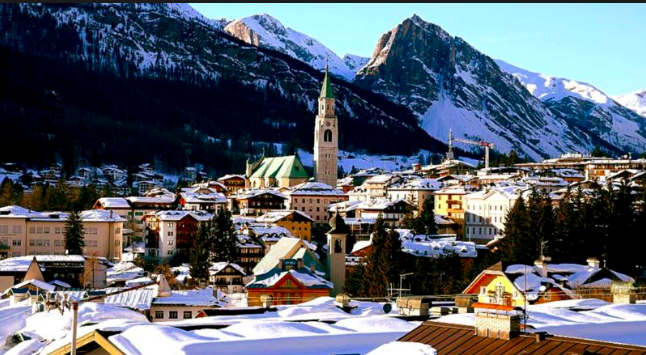
DOLOMITI SUPERSKI represents the area’s twelve regions, some quite famous (A portion of the 2026 Winter Olympics will be held in Cortina d’Ampezzo), others individually unique. Best of all they can be accessed using a single RFID pass, which includes use of an expansive network of regional buses. Seniors (those born before November 30, 1954) get discounts on already low ticket prices. Click here for 2019-2020 ticket prices.
Climate Change now requires illogical and calculated guesses when planning long ski trips from ‘down-under’. Mine began mid-February with 2 flights, a bus, a train, another train, and finally the local bus from Bolzano to the Val Gardena region – a tiring 27-hour journey.
My goal was to ski the famed Sellaronda ski circuit covering four Dolomite passes around the Sella massif. I would be there for three weeks, and during that time, I chose to change lodging only three times. It was a good plan created with the help of the local tourist office and one that easily can be followed by others.
I started in the northern Dolomites. St. Cristina and Selva are ideal base locations offering plenty of lodging and dining options and providing easy access to skiing throughout Val Gardena. My first lodging was Garni Cir, a small BnB in St. Cristina. The next morning I caught a bus to the base area where I purchased my Dolomiti Superski Pass and took the Saslong gondola. The majority of slopes in the St. Cristina–Selva area are steepish and perfectly groomed; more relaxing intermediate slopes are on the Alpe Di Siusi slopes above Ortisei.
My ski week in Val Gardena included first tracks on the World Cup slopes above St. Cristina and Selva, plunging down the steep skiers’ left off the Plan De Gralba cable car, and non-stop skiing the Saslong’s slick and bumpy pitch late one afternoon.
After 6 perfect days it was time to move from Val Gardena to the Val Di Fassa region.
I took a local bus back to Bolzano, where I checked my luggage at the train station and visited the museum housing Oetzi, the world’s oldest “wet” mummy. This is a must-see for anyone visiting the region.

Reconstruction: Alfons & Adrie Kennis © South Tyrol Museum Archaeology/Ochsenreiter
After a stroll through this lovely small city, I caught the regional bus to Campitello, where I checked into the Tobia Hotel-Restaurant-Bar on the village piazza. Campitello is a rustic village with easy access to the slopes above Canazei-Alba and the off-piste steeps around Arabba. On route, I met two university students coincidentally staying at the same place. Both, I soon discovered, were excellent skiers and fun companions.
The next several days, we skied Canazei, Alba, Arabba, Marmolada and the Pozza di Fassa region. It was exhilarating and exhausting!
My next stop, a bus ride from Campitello, was San Martino Di Castrozza. On the way we crossed the beautiful Passo Rolle Pass before descending steep switchbacks into the town. I honestly think San Marino Di Castrozza is one of the world’s most beautiful mountain resorts. Surrounded by seriously steep peaks, it is a gateway to several ski areas. On this, the last leg of my Dolomiti journey, I stayed at Albergo BnB, a pretty place within walking distance of the new Ces gondola.

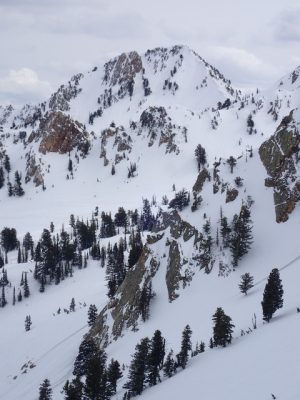
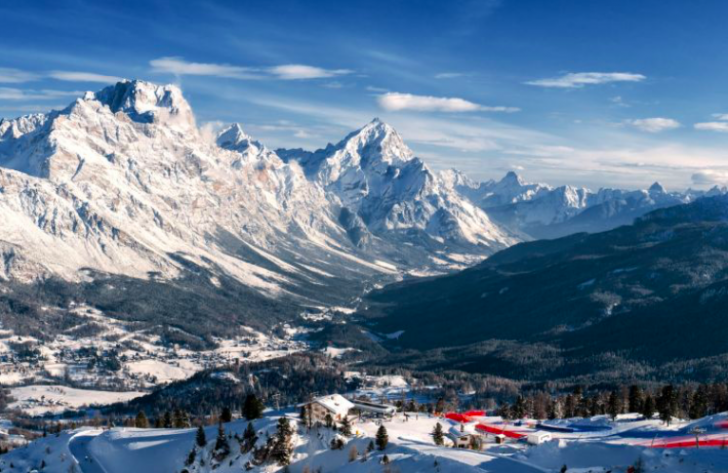
The mountains above San Martino Di Castrozza. Credit Murray Sandman
When I was there the snow was hard and fast, especially off the Tognola peaks and the Coston and Direttissima chairs. Many off-piste slopes are tree-covered and look like they’d be fantastic on a powder day.
It was the end of my three-week do-it-yourself Dolomite ski experience. Accessing my online DOLOMITI SUPERSKI Performance Check, I saw that in 15 days I skied 65,143 downhill meters over 357 kilometres of trials using 130 different lifts. On top of this let me say that the food was fantastic and the skies bright, bright blue. Another great ski trip!























 Yes, indeed. This is the venerable Cannon Mountain Aerial Tramway. The following was adapted from the Journal of the New England Ski Museum (Winter, 2019).:




 Co-publisher Jon Weisberg continues his reporting on the






 Jan Brunvand shares an interesting accounting of a one