
Coasting Most Of The Way
Senior Cyclists Love Gravity And Vice Versa.

Franconia Falls offer a cooling off spot. Bring your bathing suit! Credit: Tamsin Venn
Pedaling up and down hills on a mountain bike has its rewards, but we prefer trails that have an emphasis on the downhill. We suggest three great places in the White Mountains of New Hampshire at or near ski areas to do just that. Important: We use suspension mountain bikes that absorb the bouncing over roots and rocks.
The Lincoln Woods Trail off the Kancamagus Highway (Route 112) just west of Lincoln, N.H., is one good trip. You cross the suspension bridge over the East Branch of the Pemigewasset River and follow it on a gradual climb 2.8-mile bed of an old logging railroad (https://www.fs.usda.gov/recarea/whitemountain/recarea/?recid=74669). At the next bridge, you turn left up the trail to Franconia Falls, which is spectacular with a natural water slide. Go ahead, jump in and cool off. The return trip is a screaming downhill all the way back to the parking lot. You dodge some of the old ties and rails still visible. Total trip 6.5 miles up and back.
Another good coaster is The Franconia Notch Recreation Path (https://www.traillink.com/trail/franconia-notch-recreation-path/). The asphalt path runs the length of the Franconia Notch State Park, following the Pemigewasset River for nine miles, ending at the Flume Gorge, then merging onto Route 3 for the last five miles back into Lincoln. The first leg is a bit of a climb up to Cannon Mountain, then the path drops, tempting you to whiz down the hills after you’ve crawled your way up, but there is a 20 mph speed limit (!)
The path passes Echo Lake, the Cannon Mountain Aerial Tram, The Old Man of the Mountain Historic Site, where you can use a brilliant visual gizmo to recreate the old stone face above you (the Old Man tumbled down in 2003). You also pass Lafayette campground (ice cream anyone?), The Basin (icy water cool down?), and finally the Flume Gorge. Bring a lock for your bikes. This trip is eminently doable thanks to Rodgers Ski & Sport (http://rodgersskiandsport.com/) which will shuttle you from its store in Lincoln to the path’s start for $10 a person.

Remember the Old Man? Here’s a unique tool to bring him back, sort of. Credit: Tamsin Venn
Next day, we zipped south to Waterville Valley Resort via I-93. The extensive well-maintained cross-country ski trail system is a blast for biking. You cut through the woods and explore a variety of trails for all abilities through the National Forest. Everything from meandering dirt fire roads to gnarly single-track is available, plus lift access to biking trails on Snow’s Mountain, the first ski trails in Waterville Valley. (http://www.waterville.com/adventure-center/).
Our favorite run is to take the Snow’s Mountain Chair ($9 single ride and $21 all day pass) and zoom down the wide Livermore Road back into town, crossing babbling brooks and wood bridges, in an Eden-like setting. We branch off onto Swan’s Way, a single track, which leads you back to the Town Center. More scenic is to follow the Connector past the Mad River. Then relax outside with live music and cold drinks, even if you didn’t necessarily break a sweat.
Trail junctures post YOU ARE HERE maps (a good printed map is also available), graded beginner, intermediate, expert in XC ratings, so you always know where you’re going.
Do you have a coasting trip you could recommend? We’re open to suggestions.
At the top of Snow Mountain Chair at Waterville Valley. Credit: Tamsin Venn.





 I’ve read several books over the past few months. One of them is Beneath A Scarlet Sky by Mark Sullivan. Set in Milan and the Dolomites during the Nazi occupation of Italy, it’s based on the true story of Pino Lella, a teen-ager who uses his climbing and skiing skills to help Italian Jews escape to Switzerland. Pino becomes the driver/interpreter for a Nazi general, has a love affair, and experiences numerous nail-biting adventures. Following the war he moves to America and teaches skiing at Mammoth. Dave McCoy, Mammoth’s founder, is quoted saying seeing Pino in deep powder was “like watching a dream.” I found the book so absorbing that its 500+ pages went by in a weekend.






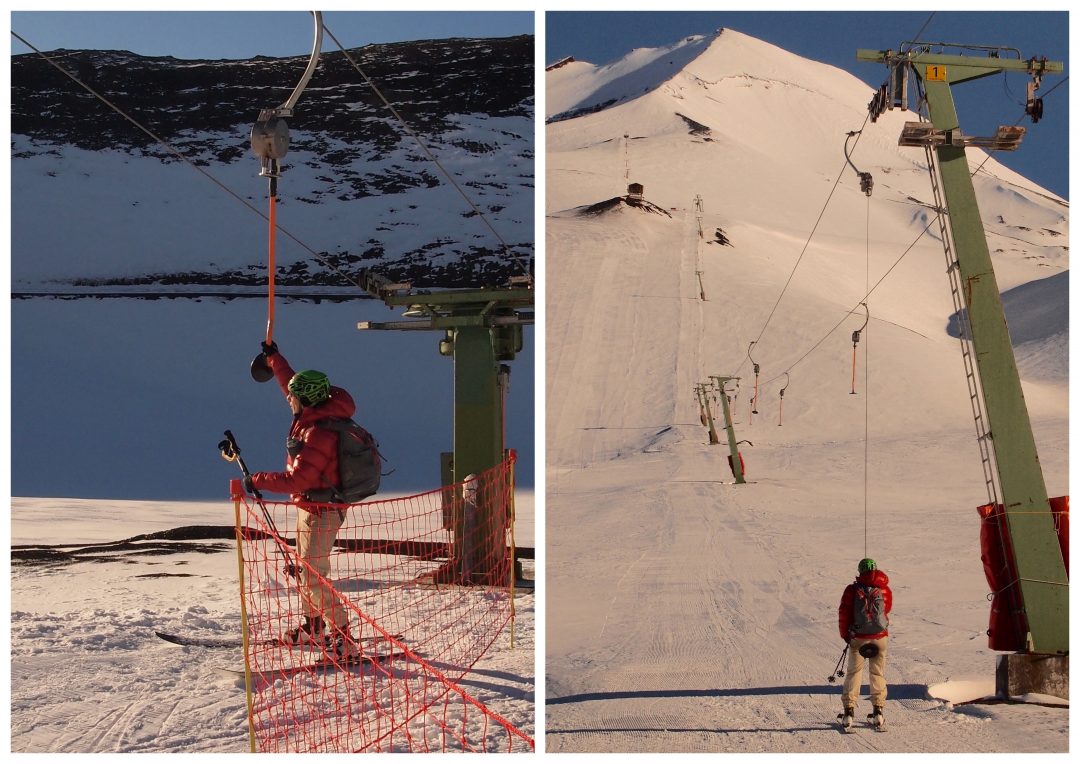

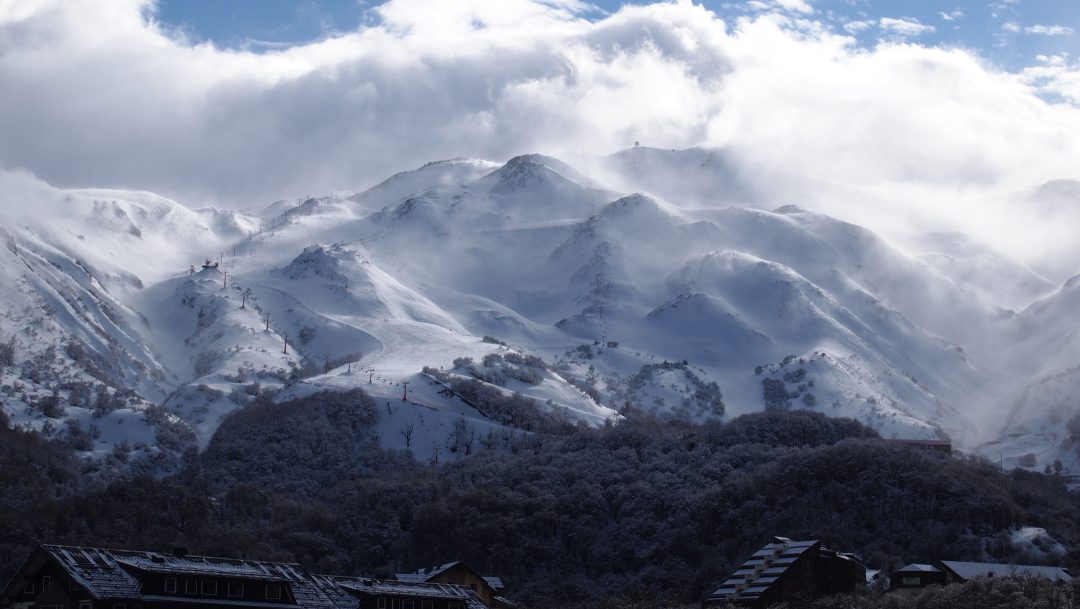

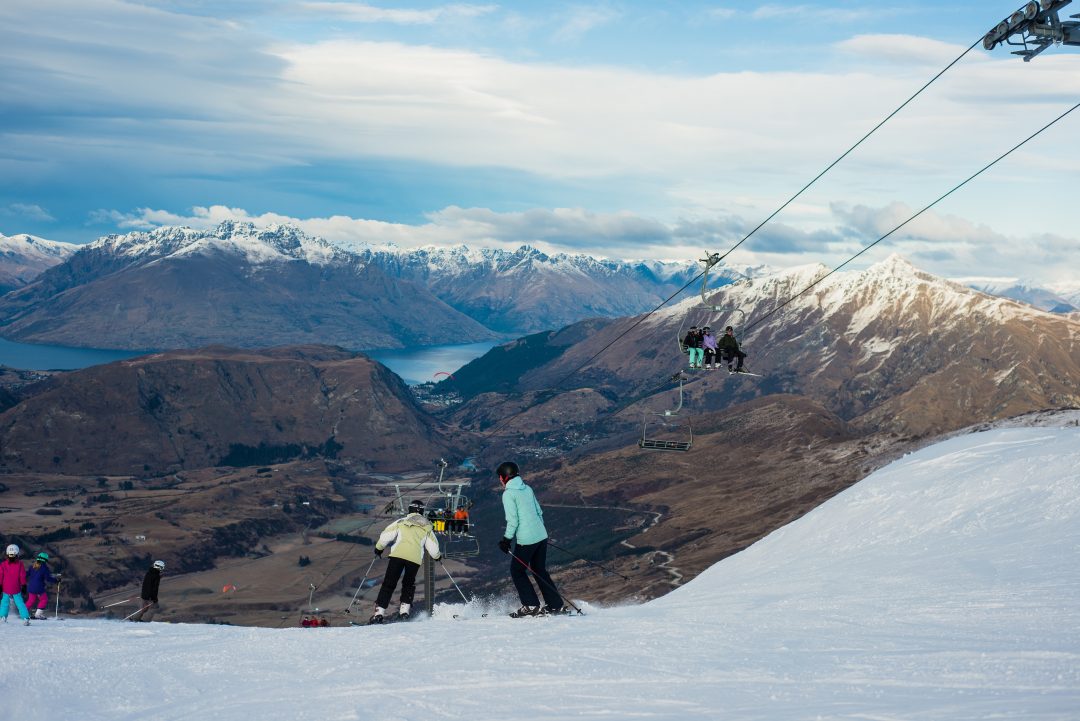




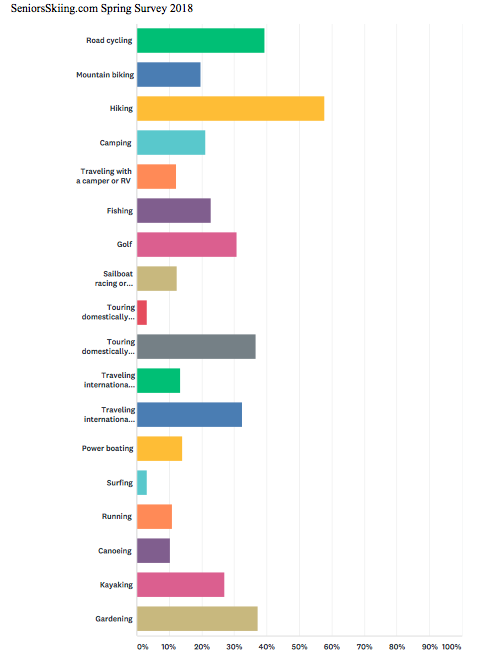
 A subtler and possibly more significant reason is the older skier’s role in introducing young people to a sport whose US base hasn’t grown in 35 years. The most recent SeniorsSkiing.com reader survey shows that grandparents are a major factor introducing grandkids to skiing and boarding. Fifty-eight percent of the respondents were grandparents. They introduced more than 68% of their grandkids to the sport. Of those, 94.5% continue to participate. Considering that each grandparent or grandparent set has an average of 3.7 grandkids, the influence of older skiers on new skier/boarder recruitment — one of the biggest issues facing the ski resort industry — is profound. Why yank discounts when we’re helping to add new skiers and boarders?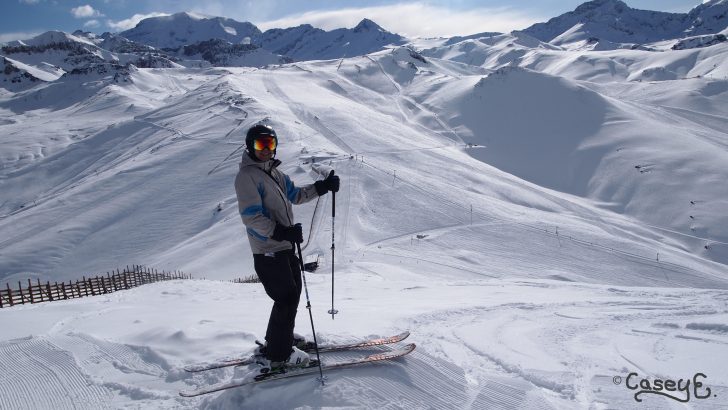




 Valemount Glacier Destination is being developed in the Cariboo Mountain Range in British Columbia. When completed, it will have the longest vertical drop in North America (6726′) and the third longest in the world. Developers expect it to become a year-round skiing and sightseeing destination. Near Jasper National Park, the area already has substantial infrastructure. When completed, there will be skiing on several mountains, the largest of which is Mt XXXX, which summits at XXXXX ‘. The resort is a 75 minute drive from Jasper. It is located on the trans-Canada rail line and has a local airport within walking distance of the resort base. Larger airports are several hours away.
 Doris Spencer is 72; Kent Willoughby, 79. They have been skinning up A-basin for nearly 18 years. This
  The Bird just issued

 “As this survey shows, grandparents play a major role introducing younger people to skiing and boarding,” observes Mary Jo Tarallo, Executive Director of Learn To Ski and Snowboard, the national initiative dedicated to spreading the joy of skiing, snowboarding and winter sports.”At a time, when the ski industry is seeking ways to attract more participants, the SeniorsSkiing.com survey results shed light on grandparents as a reliable but overlooked source of new skiers and boarders.”
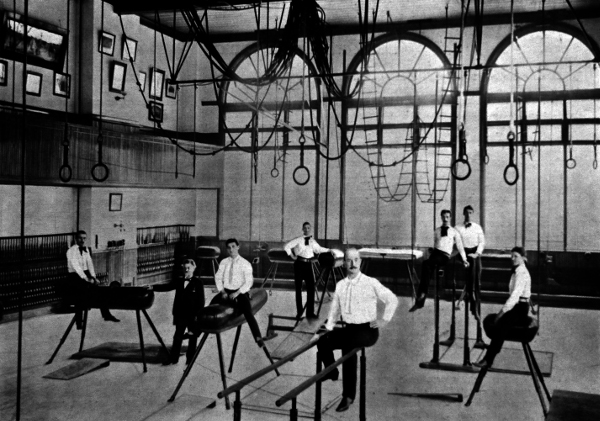




 Apparently, our last Mystery Glimpse of the season was fairly esoteric. We salute reader Patricia Gottshalk for identifying Anders Olsen Haugen, the US Ski Team member who was the first American to win a Winter Olympics medal. He won medals in the 1924 Olympics in Chamonix and the 1928 games in St. Moritz. In fact, he remains the only American to ever win an Olympic medal in ski jumping. But there is much more to Anders’s story.