

1964: Was It Really So Simple Back Then?

From a 1964 SKI magazine, a skier poses with his attitude.
Illustrator: Jerome Snyder


From a 1964 SKI magazine, a skier poses with his attitude.
Illustrator: Jerome Snyder


The Ritz-Carlton, Lake Tahoe is nestled in the forest halfway up Northstar’s Mount Pluto.
Credit: The Ritz-Carlton, Lake Tahoe
To all you senior winter sports aficionados out there who still have your summer escape ahead of you: Is fitness a part of your plans? It should be, and it should be easy to pull off. Those days of lazing about day after day, taking afternoon naps on an Adirondack chair on the lawn of a summer resort or reading a pile of paperback novels on a deck chair aboard a big ocean liner are long gone. Although relaxation is still a major part of summer getaways, the operative words today are “go, go, go!” That bodes well for us skiers, skaters, snowshoers and boarders who want to be ready to fly when the snow does. Staying in shape during the off-season has never been easier because resorts and cruise companies have geared up handsomely for today’s active senior vacationers.
With my very public fitness journey in the forefront of my mind, I decided to test out this fitness vacation thing and spent three days sampling the fitness options offered by The Ritz-Carlton, Lake Tahoe, a luxury resort situated in the forest halfway up the mountain at Northstar ski area. In addition to all the activities one can do right at the resort, the staff can also arrange any number of active adventures available in the Tahoe area for its hotel guests.

Kayaking is a great upper-body workout for skiers in the off-season and especially relaxing on the calm waters of Lake Tahoe, one of the clearest lakes in the world with water clarity of more than 70 feet. Credit: The Ritz-Carlton, Lake Tahoe
Before we had even checked in, we stopped off at Tahoe Vista on the shores of Lake Tahoe and took the Tahoe Adventure Company’s “Discover Kayaking” tour with a guide, learning how to get into and maneuver a kayak (we were both first-timers), and paddling over to King’s Beach and back, learning about the geology and natural wonders of the lake along the way. One of the beauties of kayaking is that it can be as laid back or as rigorous as you want to make it. And for first-timers, you can’t beat a placid lake!
Our fitness vacation was now officially launched, and after checking in at the hotel, we plotted out the rest of our activities for our short stay. Our main venue would be the hotel’s fitness center, which offers an array of one-hour classes free to hotel guests on selected days, classes such as Active Stretch, Core Focus, and Healthy Back. There’s also a full complement of cardio equipment—treadmills, elliptical machines, recumbent and upright stationary bikes—as well as free weights, etc., available for use 24 hours a day. (It’s amazing how much more enjoyable exercising is when you’re looking out onto a forest.)
Ritz-Carlton guests can also enjoy a lap pool (in addition to the regular hotel pool), and staffers can help guests plan rounds of golf, hikes, mountain biking, white water rafting (when there isn’t a drought!), tennis, or fly fishing. There’s enough active outdoor stuff to do here that you don’t even have to feel guilty when you overindulge in the resort’s superb Manzanita dining room.
Of course, when staying at a five-star establishment, one must spend a certain amount of time luxuriating, which we did: Sunning and swimming at the main pool in between sips of daiquiris served poolside, chilling in the hot tub, and wrapping up our stay with a soothing massage at the resort’s beautiful spa.
Whether you’re headed for a luxury resort or Uncle Joe’s log cabin in the woods, with a little research ahead of time and a little planning,

Ritz-Carlton fitness instructor Nancy Brest demonstrates “dynamic stability” during her Active Stretch class, one of several fitness classes offered by the resort hotel on selected days.
Credit: Katie Cleese Photography
it’s easy to make sure that your vacation has a robust fitness component. Make a list of all the things you can partake in within a 20-mile radius of where you’re staying, then prioritize the items on the list and commit to the top however many. And every time you overindulge at mealtime, make sure you’re out there the next day, hiking or biking or swimming or running. You’re most likely in a very scenic place, so get out there and enjoy the view!
For more information on The Ritz-Carlton, Lake Tahoe, go to www.ritzcarlton.com/en/Properties/LakeTahoe/Default.htm
To contact Tahoe Adventure Company, go to www.tahoeadventurecompany.com or call (530) 913-9212.



Climbers hang rugs on 11-story Atrium wall.
Credit: Harriet Wallis
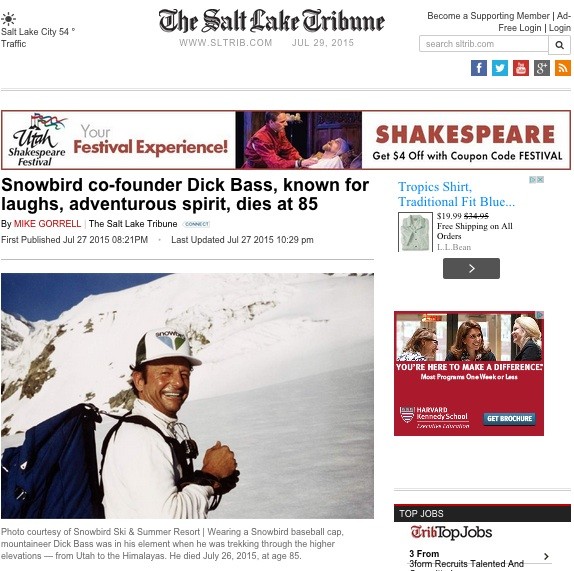
Dick Bass was always enthusiastic about everything. He was witty and lively, and he always seemed to be in a jovial

Snowbird founder Dick Bass inspects some of his fabulous collection of Oriental rugs
Credit: Snowbird
mood. He often spent time at his loved Snowbird Ski and Summer Resort, and you could always tell when he was there because he’d be in the center of a group and he’d keep them laughing. He loved to indulge anyone who would listen to his tales and insights. Because of his talkative nature he called himself “the big mouth Bass.”
He loved art and literature, and he had an incredible Oriental rug collection that he displayed at Snowbird. The huge, colorful rugs carpeted many floors in the Cliff Lodge. Skiers probably had no idea they were walking on a fabulous collection. For other rugs, he hired rock climbers to scale the massive 11-story tall concrete walls in the lodge’s Atrium and hang them there for display.
Dick Bass seemed to function on only one speed: full speed ahead. We’ll miss him.



Verbier, Switzerland: ParaSailing on Skis
Credit: Mark Subi
They’re in the skies, but you may not see them. Professional and amateur operated photo drones are capturing striking bird’s eye views of snow-covered mountains, crashing waterfalls, ancient architecture, daredevil feats, even the inside of an erupting volcano.
So this senior skier learned one late July afternoon following a long hike in the high desert of south central Utah. Prone on couch, he wanders to “drones” on the web and a collection of exceptional videos and stills shot with camera-mounted drones awaited. Click here for the site; home page reads: Bird’s Eye View. Explore. Share.
Postings are from every part of the globe. Videos tend to be a few minutes in length, and while some are of borderline interest, others are well worth the clicks.. Here are a few that may whet your appetites for winter or for an exotic place that takes on new meaning when viewed from a higher place:
Switzerland: Wintery ravine/ Ski
http://www.dronestagr.am/hauptstrasse-bergun-graubunden-switzerland/
http://www.dronestagr.am/verbier/
Mexico: Tamu Waterfall/ Whales near Puerto Vallarta
http://www.dronestagr.am/tamul-waterfall-2/
http://www.dronestagr.am/puerto-vallarta/
Niagara Falls/New York City
http://www.dronestagr.am/niagara-falls-3/
http://www.dronestagr.am/new-york-usa-8/
Vanuatu: Inside an exploding volcano
http://www.dronestagr.am/yasur-volcano-tanna-island/
Bulgaria: Soccer
http://www.dronestagr.am/sofia-bulgaria-5/
Iceland: Park Tour
http://www.dronestagr.am/reykjavik-iceland/
France: Versailles/High Wire Skyliners
http://www.dronestagr.am/versailles-france/
http://www.dronestagr.am/skyliners/
Have you been droning lately?
We all remember “With a Little Help from My Friends” by The Beatles.
My, how things have changed in the 48 years since its release, especially for those boomers who want to come back to the slopes after major surgery on hips and knees and rotator cuffs, among other parts.
Well, here’s some good news:
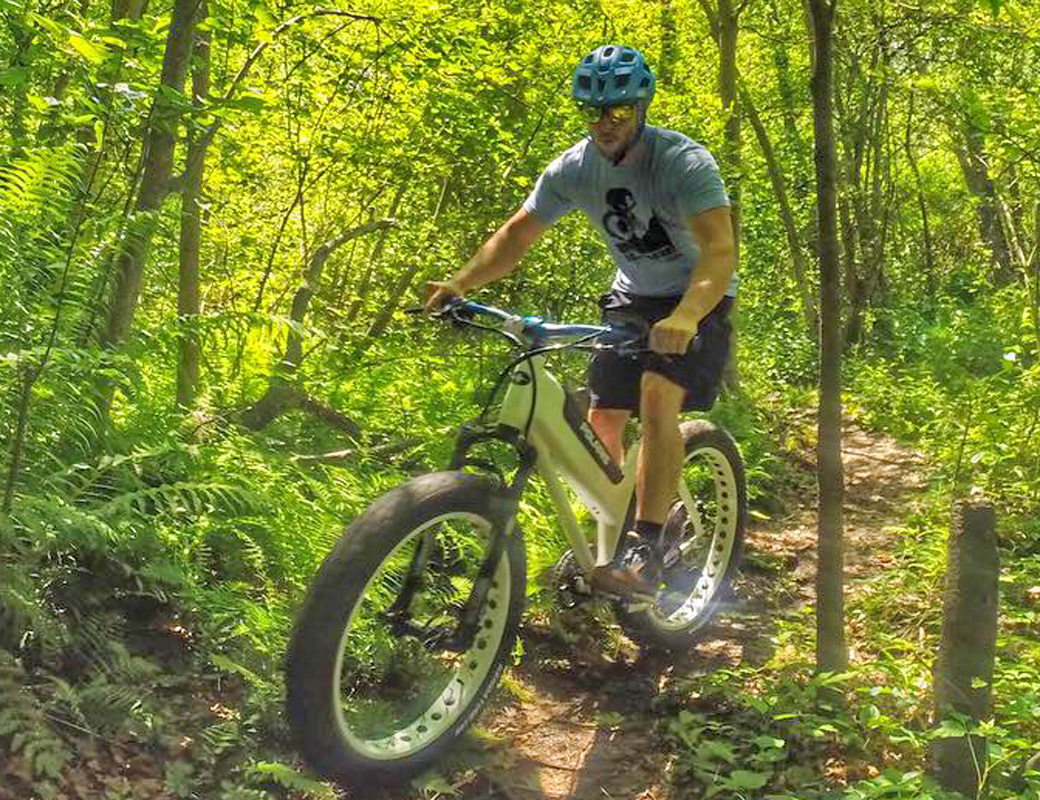
One of my friends is recovering from hip replacement surgery. His surgeon prescribed riding a bike for exercise, muscle rehabilitation and re- building confidence. How about skiing? Why not!
That’s where an electric bicycle is giving him the confidence to get back on the boards after major surgery. And go uphill at 20+ mph, or faster than your average quad lift!
At the New Hampshire ski area where my friend has spent many a winter, the electric bike with fat tires is ideal for going up the main road from the village to the lodge and beyond. Fat-tire bikes are now common for off-roading. One of the challenges of an electric bicycle design is to configure the entire frame, power and control system and accessories to be as light as possible. Lightness and controllability are among the advantages of the Polaris®eBike.
On unimproved trails and dirt roads, the fat-tire configuration gives my pal stability that helps build his confidence as he builds strength.
Advanced technology now available in electric bicycles is a major factor in getting my pal back on skis. In his case, the Polaris Gear Speed Technology features 8 gear speeds.
As the terrain rises, power kicks in—controllable with paddle shifters like a sports car— and “… a little help. . .” from the electric assist turns into up to fifty miles of riding.
How does he get a fifty mile ride? Polaris technology allows regeneration of the battery by braking and reverse pedaling. Active Trail Mode™ regenerates the bike’s battery during pedaling with automatic incline sensors to deliver power for uphill riding. Operation of this mode extends battery life. A four-hour charge can deliver fifty miles of performance. Regeneration gives the rider unlimited power—my friend said his bum gave out before the bike needed to be re-charged.
As senior skiers, we’re all adopting new equipment, better outdoor clothing, improved diets and exercise routine. With a little help from an eBike, we can take advantage of bike riding for fun and exercise.


The latest (July 15th) word from NOAA (National Oceanic and Atmospheric Administration) and other weather watchers is that the El Nino currently growing off the west coast of South America is gaining intensity. El Nino is the weather phenomenon that occurs when Eastern Pacific waters are warmed through a combination of factors, starting with increased cyclones in the Indonesian archipelago, the reversal of the trade winds from easterly to westerly off South America, and the resulting flood of warm Western Pacific waters eastward. This has an direct impact on our weather and, in fact, weather around the global.
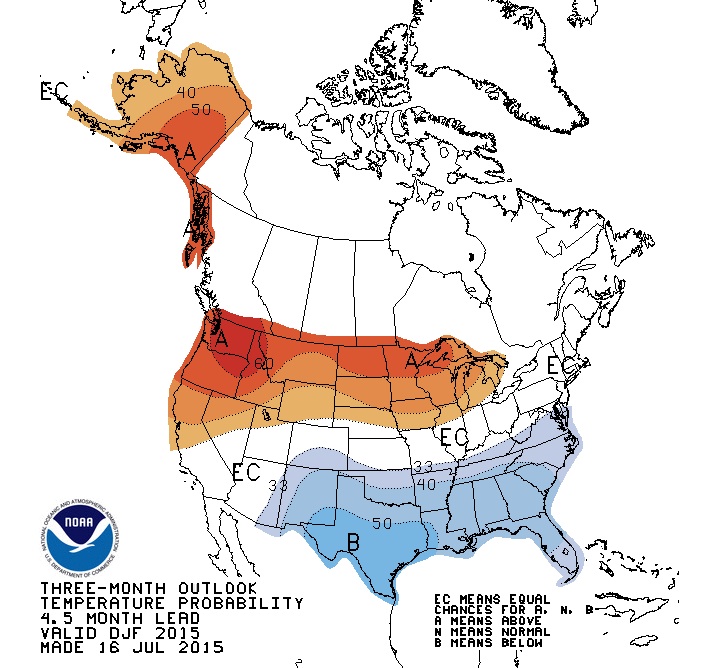
Dec-Jan-Feb Prediction Charts for Precipitation and Temperature reflect impact of El Nino.
Credit: NOAA
 When an El Nino comes in, intensity clearly matters. As of July, this year’s El Nino has a running start, driving the Sea Surface Temperatures (SST) off South America up +1.5 degrees above normal. Some models have that going up even further later in the year.
According to NOAA, this year’s El Nino has a 90% chance of lasting through February 2016 and an 80% chance of lasting through April next year. The last strong El Nino in 1997-98 brought major flooding to the West, especially California where storms caused half a billion dollars in damage and loss of life. This winter, this El Nino’s level of intensity is predicted to have the following effects on our weather:
Forecasting weather six months out is obviously an exercise in probability. What’s interesting this year is that the variables are not wishy-washy; the SST is demonstrable, leading one to think that the chance for coming close to prediction is better than not.
SeniorsSkiing.com will keep you posted as the weather predictors weigh in.


Tip and roll the Ski Dolly away with some help from physics and gravity.
Credit: Ski Dolly
You might say, it’s about time someone came up with the Ski Dolly (TM). After schlepping backpacks, boot bags, skis (bagged or loosely tied) from car to base lodge too, too many times, we celebrate the arrival of this good-idea product. Imagine: Your favorite ski area has a reserved area for senior skiers (yes, many areas do have these and many more are thinking about it). At that reserved parking area, you unload, pick up a Ski Dolly (TM) from a super-market-like shopping cart collection point, pile on your kit and roll away. Arrive at base lodge, drop off Ski-Dolly (TM), don your equipage and go. End of day, reverse process, drop off Ski-Dolly in parking lot. Pretty simple. Especially helpful when you are hosting your ski club or a cluster of grandchildren.

Ski Dolly is made of welded steel.
Credit: Ski Dolly
Ski-Dolly (TM) is the patent-pending invention of two single parents whose struggles carrying a family-load of gear from car to lodge was the stimulus for this bright idea. According to the company, the Ski-Dolly(TM) itself can tote up to eight pairs of skis or four or five snowboards, plus helmets. From the photos, it looks as if you can latch on gear and boot bags, too.
Action Item: Ask your ski area’s guest services people to look into providing Ski-Dollys (TM) for the seniors-only parking area. Or for everyone. If you are in a ski club, order some for the bus and put your private-label logo on them. Why not?

Harriet Wallis conquers the trail to the top of Emigration Canyon. Check.
Credit: Harriet Wallis
It’s summer and half my friends are traveling the planet. They’re checking off places on their bucket list. I get emails from exotic locations. They send photos of elephants and penguins, mountain peaks and crystal clear lakes.
So I ask: “What’s wrong with me? Why don’t I have a big bucket list? Is it okay to have a pail list instead?” Have those questions ever occurred to you?
I’m lucky. Throughout my life I’ve been able to see penguins, hike mountain peaks and paddle clear lakes. My bucket is pretty full. Now I’m working with a pail instead. Maybe a pail is right for you too.
For me, the things I want to accomplish — to fill my pail — are mostly close to home and are personal challenges. This summer, my pail list includes bicycling as many days as I skied during the winter (80 days), to swim three miles a week, and to tie a fly that’s so good the fish will fight over it. So far my pail is filling up. But I’m still struggling with the fish-thing.
Bucket lists are very trendy. But not everyone has the time, finances or inclination to travel to far away places. Consider a pail list instead. Consider setting challenges for yourself close to home. I’d love to hear what’s on your pail list and how you’re doing with filling it up.


There’s no better way to enjoy the outdoors than hiking on a trail alone or with your friends or family. Whether you are a first time hiker or a walking aficionado, hiking with the family provides quality time together, allows the family to grow closer, develops life-long memories, and introduces the next generation to the outdoors. It’s no wonder that statistics show that nationally more than 34 million people went hiking in the year 2013 and that has remained somewhat consistent in the last few years.

Family hiking in Smuggler’s Notch is a perfect summer vacation.
Credit: X-CSkiResorts.com
You don’t need to walk very far to experience the joys of being outdoors with your kids or grandkids. It’s about discovery and having fun. For parents taking their kids on a hike, it is recommended that the child’s early experiences be positive, so avoid plans to reach that favorite spot or the top of the mountain. Keep it simple by being flexible and adaptive to make sure the younger ones have a good time.
Perhaps short hikes at first near home or a local park will provide a positive experience. Bring a snack, water, and invite your kid’s playmate. They can find joy in clouds, flowers, tadpoles, splashing water, getting dirty, colorful bugs, etc. but you don’t want them to get sunburned, hungry, thirsty, or exhausted.
Safety and Other Considerations on a Hike
Be careful of rocks, rubble, brush piles, or fallen logs where kids might lose their footing, sprain an ankle, or take a fall. Tell kids not to drink the stream water or eat berries or mushrooms, and the rule with poison ivy, oak, and sumac is “leaves of three, let it be.” Be wary of places where bees and wasps might nest.
Wearing bright clothing is a good idea so you are easy to see and find if lost. Layer clothing, and be prepared for weather changes. Synthetic clothing (such as a capilene shirt or a pile jacket) is lighter, a good insulator, and dries faster. Socks and supportive boots are important. Traditionally hiking socks were made of heavy wool but more recently socks that are made of a variety of materials that provide warmth, durability and keep your foot dry. Hiking boots are not required but they can help kids feel like explorers.
A list of items that could be useful on the trail includes: signal device (whistle, mirror), water bottle, emergency blanket, map, compass, flashlight (with spare battery and bulb), extra food, extra clothing, sunglasses, sunblock, insect repellent, knife, waterproof matches, firestarter or candle and a first aid kit.
If you think that you are lost, try to retrace your course rather than continuing on in an effort to reach some destination. An emergency call consists of three short audible or visible calls repeated at regular intervals. Use a whistle for making noise and a mirror or smoke puffs during the day. At night, use a flashlight or small bright fires to signal.
You may consider leaving your dog at home if he or she cannot be kept under control. Respect the privacy of residents that live along the trail unless there is an emergency and you desperately need help.
Leave No Trace
Some basic concepts for outdoor and trail etiquette include: Plan ahead and be prepared; Travel on durable surfaces to minimize trail erosion; Pack out what you bring in to the outdoors (don’t bury trash or diapers); Leave the outdoors as you found it, don’t feed the wildlife, and take only memories away with you; Minimize the use of fire and take extra care if you do use it.
Here are some hiking destinations in Vermont and for more locations, check the XCSkiResorts.com Resorts Page:
Bolton Valley: There are 100km of Nordic and backcountry ski trails at Bolton Valley Resort and in the summer these same trails provide paths for outdoor adventure in over 1,000 acres of wilderness. Some trails lead up the valley to the ridge-line where hikers can connect with Vermont’s Long Trail.
Killington Resort: With 15 miles of hiking trails at Killington Resort, you can summit Vermont’s second tallest peak to be treated to 360 degree views of Vermont’s Green Mountains, New York’s Adirondacks, and New Hampshire’s White Mountains. Additionally, near the top of the mountain provides access to the Peak Lodge, Killington’s state of the art facility, which offers fresh food and cool drinks to hikers and mountain bikers all summer. The K1 gondola lift is open for rides to reach the summit.
Smugglers’ Notch Resort: The Green Mountain setting at Smugglers’ Notch Resort creates many opportunities for guided and self-guided hiking for all ages. The resort hosts guided outings designed for families with young children, with a gentle pace and fun learning opportunities. Other guided outings entice new hikers and experienced hikers with the opportunities to learn more about the history of the surrounding area and the local flora and fauna, and to summit some of the area’s most challenging peaks. Guided hiking is included in the resort’s vacation packages. The resort provides informational sheets on self-guided outings nearby.
Trapp Family Lodge: There are over 60 kilometers of wooded hiking trails for all levels of ability at Trapp Family Lodge in Stowe. There is a short, peaceful hike to the Chapel, built by the Trapp family sons on their return home after World War II. A more challenging hike takes you to the Slayton Pasture Cabin, a favorite resting spot for cross country skiers or snowshoers in the winter. Guided nature walks are available to guests to learn about native plants, wildlife, and the evolving landscape.
Woodstock Inn & Resort: Step outside the Woodstock Inn & Resort and choose from more than 60 miles of interconnected trails and pathways that wind through the Woodstock Village, nearby meadows and woodlands, scenic vistas, and rural countrysides. Pedestrian pathways skirt local landmarks, while off-road trails yield to magnificent vistas from the summits of Mount Peg and Mount Tom. For a historic walking tour of Woodstock’s past, stroll the 20+ miles of colonial carriage roads as they wander through the Marsh-Billings-Rockefeller National Historical Park and intersect with the Appalachian Trail.


Even though you are a subscriber, you will have to register separately for the FORUM.
The FORUM is SeniorsSkiing’s online community exchange. Add your thoughts, comments, insights, advice, critiques, recommendations, favorites, disses, and whatever. Just be nice.
If you are a subscriber to SeniorsSkiing.com, you will have to register separately for the FORUM. Just click on FORUM, click Register, pick a username (that will appear on your postings) and enter your email address. You will get an email with a password. When you enter those back on the FORUM log in page, you will be in.
Remember, the FORUM requires a separate registration even if you’re a regular SeniorsSkiing.com subscriber. Please join us.
There’s plenty of room in SeniorsSkiing.com’s FORUM
Credit: James Cridland Flickr Creative Commons


Summer hiking season is in full swing. The temperatures are warming and trails are dry. After covering the ten essentials in Grow A Hiking Habit: Part 1, some other items will help you more enjoy your hiking.
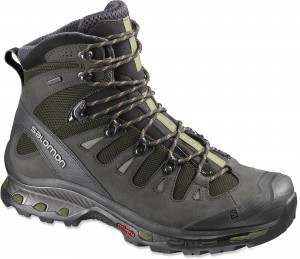
Real hiking boots are lightweight and support your ankle. Sneakers don’t cut it on the trail.
Credit: REI
Boots: Stout boots with good support are a must. Look for boots with waterproof liners. Boots should come to the ankle or above to keep trail debris out and protect the ankles. You should be able to wiggle and spread your toes and walk down hill without “jamming” your toes. Your boots should be wide enough in the forefoot that there is no pinching of any of the toes. Your heel should be held in place without constricting them. If your heel moves around side-to-side with the boot untied try another style/brand. Get fitted at outdoor shop by a qualified boot fitter. If you use orthotics, be sure your boots accommodate them.
Trekking Poles: These are telescoping poles that look like ski poles. When not in use, they can be strapped to the outside of your pack. When in use, they support the legs and lower back. They help with balance and help burn 25 percent more calories.
Comfort Items Now that I’m a little older, several items in my pack make the hike more comfortable.

The classic bandana is an invaluable partner on the trail.
Credit: REI
Bandana: The ubiquitous hiking buddy: Towel, handkerchief, sun protection, signal caller, sling, and bandage just to name a few uses.
Watch: I like to know how long it takes me to get from Point A to Point B on a hike. If I know the length of the trail I’m on and how long it took me to get there, I can judge my fitness level better. During these last few years, I’ve been aiming for a 1 mile/hour pace on mountain hikes and treks.
Cell Phone: Many people believe cell phones on the trail ruin the wilderness experience. But a phone can be a lifesaver. For many years I left my phone home but now, especially on solo trips, I take it along. Just be aware that in many remote places reception can be spotty or non-existent.
Camera: Helps with memory if you have a time/date stamp option.
Binoculars: Helps with both navigation (identify landmarks for triangulating your position) and spot/identify wildlife.
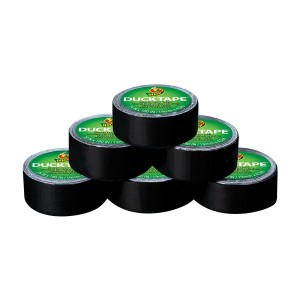
Is it Duct Tape or Duck Tape? Regardless, it comes in small-sized rolls, perfect for a backpack.
Credit: Amazon
Small Notebook And Pen: Record hiking times and observations, list hiking companions for later memory making.
Duct Tape: Blister treatment, gear repair, unknown problems. A small roll of duct tape can do miracles.
Please feel free to make comments and provide feedback and additional wisdom. I also welcome questions and clarifications. This can be a wonderful forum for getting your hiking habit started and sharing experiences with others.

Well, they never said it would be easy. Although the exercise part of my journey to fitness is going well (I’ve lost another inch in my upper body measurements), the changing of my diet is going a bit more slowly (I’ve lost only two pounds this month). The good news is that I’m going in the right direction, weight-wise, and I’ve also read that you gain heavier muscle mass as you get into better shape, which means my body composition is better than the scale would indicate.

In this Zesty Lime, Shrimp and Avocado Salad recipe, healthy avocados play a starring role! (Credit: skinnytaste.com)
Regarding food management, we’ve probably all followed some popular diet (or several) over the course of our lifetime, with varying degrees of success. We’ve likely lost some or a lot of weight in a matter of weeks or a few months. But as we all know, within a year or two, we’ve put the weight back on. The problem is that diets with extreme components are not sustainable (or even healthy) over the long term. The key is to instill lifelong healthy eating habits that we can live with (both literally and figuratively!).
Long-popular diet plans (such as the South Beach Diet, the Atkins Diet, Weight Watchers, etc.) and even the more extreme ones (e.g., the Cabbage Soup Diet, the Fast Food Diet) can be good “jump-starters” but over the long haul, the only way to keep the weight off is to develop good eating habits. I’m finding out changing decades-old habits is not something you can do overnight. I’ve made a few changes, such as eliminating a roll or piece of bread with dinner and saying “no” to myself a few times a day when I feel compelled to grab a nibble of something, but I plan on doing a better job of practicing what I preach in the coming months, so hopefully I’ll have great news to report in this area by fall.
And what do I preach? My jump-starter, as mentioned in an earlier article, is Weight Watchers, which I plan to continue for another three months. What’s been good about the program this first three months is that it’s gotten me in the habit of recording everything I eat and drink every day. Over the next three months I plan to do a better job of staying within my allotted daily points.
When it comes to lifelong habits, I’m working on developing the following behaviors:
One final surprising diet tip: the feature article in the latest issue of UC-Berkeley’s Wellness Letter is packed with incredible facts on the health benefits of avocados. Don’t be put off by the calories. There are so many other health benefits packed into the little fruits that outweigh the calorie count. The story won’t be available online for a couple of months, but in the meantime, here are a few avocado facts you can check out on the website now, just click this link.
Bon appetit!