Wheelie__510

Time To Get Moving: Now

Five Ways To Start Your Fitness Program.
Motion helps muscles, joints, ligaments limber up for snow season.

Motion helps muscles, joints, ligaments limber up for snow season.

No more procastination.  You have from six weeks to three months, depending on where you live, to get ready for snow season.  If you are a year-round sports activist, then good on you.  If you are a part-timer, weekend warrior, you probably have to start getting more diverse muscles toned up.  If you are as not as active as you could be, reflect on your habits.  You will be safer and feel better when you head out to slopes or trails if you are physically toned.  It is a huge mistake to go from zero to a ski run or cross-country trail without being physically prepared, especially if you are one of those people who distinctly remember the Beatles on their first Ed Sullivan Show appearance.

Here are five ways to begin, especially if you’ve been off your program for whatever reason this summer.

1. Walk.  Simple.  Morning, lunchtime, or evening.  Walk fast, swing your arms, work up a sweat, carry light weights (2 pounds) or walk with ski poles (Nordic walking burns more calories), use a pedometer, keep a record of how far and how many steps.  After a week or so of daily walking,  the “training effect” will kick in, and you will feel looser, more steady and, guess what, you’ll be outside in the beautiful Autumn weather.  Here are some guidelines for getting started.

2. Stretch. Loss of elasticity of connective tissue, an effect of the aging process, can be nasty.  Muscles tighten up, and back and joint problems ensue.  Stretching makes a difference. Learn to stretch your hamstrings, quads, hip flexors, and lower back.  There are many resources you can access for how-to.  Here is a good starter from the NIH. There’s always yoga. This is really, really important: If you aren’t using it, you’re losing it.

3. Gym Class. Going to a class led by a trainer provides structure, discipline and challenge.  An hour-long class will probably keep you in more motion than the same time spent alone in your basement.  In a good gym class, you will also learn about the muscles you are exercising, how to stretch them and gradually build up strength and flexibility all over your body, not just your favorite parts.  Probably most important, you will learn proper form so you get the most out of your efforts and help prevent injuries.  SeniorsSkiing.com’s Harriet Wallis wrote about Silver Sneakers, a national program sponsored by insurance company targeting seniors. There’s probably one near you.

4. Focus on four essentials.  No gym nearby? If you do head down to your basement or studio for exercises, here are four to get you going:  Lunges for legs, lower back, hips, Plank for core and probably one of the two top exercises of all, Pushups for core, upper body and arms, and the other top exercise, and Squats, a fundamental leg and back strengthener.  You must learn to do these correctly; form counts for everything.  Doing a zillion reps without proper form is not that effective and could get you hurt.

5. Get an app or two. There are many apps you can get for your smartphone that can be your training buddy.  This link has a few of many. Point is you will able to get feedback on how you are doing and see progress using a cool app. And in a strange way, the app builds an expectation. Just like the GPS voice in your car, you can have a relationship with your app.

As usual, see your doctor before trying any of this, or if you start a program, and it doesn’t feel good.  Remember this is meant to be a starter kit.  Stay tuned for more advanced fitness activities.

Now, don’t hesitate, get going. What’s your advice?
Lift Tickets: An Area That Charges By The Hour?

And Other Ticket Pricing Ideas.

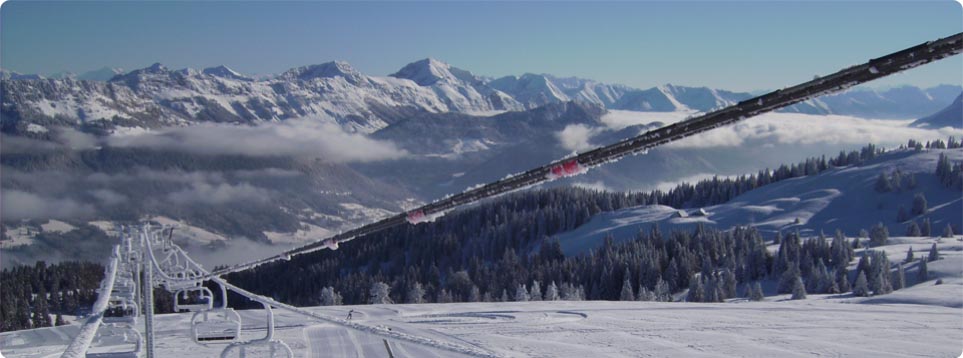
Station de ski du Semnoz offers hourly ski tickets. Huh?

Station de ski du Semnoz with a  view of Mont Blanc offers by-the-hour lift tickets. That’s different.

Pre-season cocktail hour among veteran skiers often leads to talk of the new season’s pass prices. In 2001 or 2002, when Park City Mountain Resort changed its senior pass from free to $300, a flurry of letters to the editor registered collective outrage. Not to mention that even at $300, it was a great deal for a season’s pass. Now, under Vail’s ownership, it doesn’t matter if you’re 19 or 89, the cost is $599 for locals and $789 for everyone else. To be fair, they throw in the rest of the Vail-owned resorts with the purchase, but not The Canyons, the area next door under Vail’s management.

A short drive away is smaller, more intimate Sundance. Vertical and skiable acreage are smaller, but on weekdays it is less inhabited. On powder days, it is vacant, providing one untracked run after another, some on steep, continuously pitched terrain. Sundance’s food is equivalent to that of a well-reviewed restaurant. And maybe because he’s an older dude, Robert Redford cuts a great deal for seniors (65+). This year, a day pass is $21, up from $15 last season and $12 a few years before that. The season pass is $125.

We’ll be publishing an updated list of where and when the mature set can ski free. Last year, those privileges started at 63 (McCauley Mountain Ski Center, Old Forge, NY) and clustered around 70.

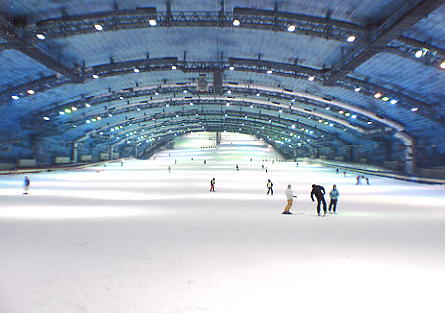
SSAWS (Spring, Summer, Autumn, Winter Skiing) Indoor Ski Dome outside Tokyo.

SSAWS (Spring, Summer, Autumn, Winter Skiing) Indoor Ski Dome outside Tokyo had three-hour day passes.

Throughout the industry, ticket-pricing models tend to follow the same ideas: Age, full day, half day, night, multi-day passes, 10 packs, etc. When it was in business, Lalaporte Ski Dome SSAWS, the indoor ski center outside of Tokyo, sold three-hour tickets. The monotony of the place made three-hours seem especially long.

We’ve just learned of an area not far from Chamonix that offers tickets based on the number of hours you choose to ski. Semnoz, is a short drive from Annecy, with a direct view of Mont Blanc. It is 5575′ above sea level, a midget compared to Mont Blanc’s 15,778′. Semnoz is a local’s place, which like Sundance, is reported to deliver endless untracked following big powder dumps.

We mention Semnoz because paying to ski by the hour is an idea that might deserve some attention here in the States.


Black Diamond Introduces New Online Film Series

Exploring The Call Of Mountains

BD TV will show you how the back country looks and the people who go there. Credit: BDTV

BD TV will show you how the back country looks and the people who go there.
Credit: BDTV

Black Diamond, the climbing, skiing, mountain sports equipment and apparel manufacturer, is introducing BD TV, a new online film series. According to the company, the series is “dedicated to sharing stories from the soul of climbing and backcountry skiing.” The first season covers ski mountaineers, avalanche forecasters and hometown heroes discussing lifelong goals, alpine starts, family traditions and building a life around the unending love for sliding on snow.

To preview the series and watch some amazing mountain scenes, click here.

Warren Miller Does It Again: Chasing Shadows

66th Ski Film Is Designed To Inspire For The Upcoming Season.

The view from the top of the world is pretty impressive in Warren Miller's new flick: Chasing Shadows Credit: Warren Miller Entertainment

The view from the top of the world is pretty impressive in Warren Miller’s new flick: Chasing Shadows
Credit: Warren Miller Entertainment

Warren Miller created the ski movie genre.  We remember the days when Warren’s movies included surfer music, sight gags and a narrator (was that Warren himself?) wise-cracking about how skiers would do almost anything to get on the mountain, including forgetting to mow their lawns (think Southern California).

Now, Warren Miller Entertainment produces a knock-out ski documentary/art/thrill film around this time every year; it has become the most predictable harbinger of the upcoming winter season.  “Chasing Shadows” is this year’s offering.  It will be playing around the country starting in late Sept.  The cast features athletes from basically corner of the sport. And the scenes of mountains around the world are stunning.

For information about where to view “Chasing Shadows”, click here.  Go and get inspired.  Check out the trailer below. Pretty impressive.

Athletes
Rob Kingwill – Seth Wescott – Chris Anthony – Rachael Burks – Sho Kashima – Hannah Kearney Jonny Moseley – K.C. Oakley – Dylan Walczyk – Caroline Gleich – Jeremy Jensen – Steven Nyman – Matt Philippi – Ian Provo – Neil Provo – Lexi duPont – Amie Engerbretson – McKenna Peterson – Øystein Aasheim – Marcus Caston – Kaylin Richardson – Espen Fadnes – JT Holmes – Ian McIntosh – Ingrid Backstrom – Sage Cattabriga-Alosa – Mark Abma – Rory Bushfield – Chris Benchetler – Pep Fujas – Eric Pollard

Destinations
Nepal – Colorado – Wyoming – Utah – Alaska – France – Chile – Italy – Japan – Switzerland


A Better Wine Bottle: Growlers

A Good Idea For Apres-Ski Tailgating.


750mL-fiftyfifty-vacuum-insulated-wine-growler

fifty-fifty wine growlers are perfect for picnics and parties. Be the one with the shiny Chardonnay. Credit: fifty-fifty

When we picnic or party, we usually carry glass wine bottles like most people do. Well, the people at fiftyfifty have come up with a better way to transport wine. It’s a double-wall, vacuum-insulated stainless steel bottle that keeps wine at the perfect temperature—all day long. What’s unusual about the container is its terrific style and its 750 mL capacity. You read that correctly. It’s the same volume as a bottle of wine, hence its name, Wine Growler. Available in tasty wine colors (Chardonnay Silver, Shiraz Red, Champaign Gold, etc.), Wine Growler starts the conversation going as soon as it makes an appearance. Ours has worked out more the past several months than I have. It will be part of the après ski kit this season when we tailgate at Alta and Snowbird. Come January, it will carry something warm. But as soon as those comfortable, sunny days enter the scene, it will be filled with something to be passed around in style. We won’t be the only ones carrying: at about $25 each (less online), they’ll be this year’s Holiday gift to family and friends. The company makes other high quality insulated stainless steel bottles, as well. fiftyfifty Wine Growlers.

Editor’s Note: This is not a paid ad nor a sponsored post.  It’s just Jon’s enthusiastic discovery of a cool product. Enjoy.

Skiing On Pluto?: Never Say Never

Perhaps One Of These Days.

Pluto: Just a rocket ship ride away. Credit: NASA

Pluto: Just a rocket ship ride away.
Credit: NASA

NASA spaceship New Horizon’s zoomed past Pluto in June. It’s the closest we’ve gotten to the dwarf planet. At 3,670,050,000 miles, Pluto is almost 40 times the distance from the Sun as Earth. This spectacular image shows a range of 11,000′ icy mountains. We don’t know if they might require very sharp edges to maneuver, but astronomers report that gravity on Pluto is about 1/12th that on of Earth. In skier terms, that means the slightest effort to jump a mogul and a very long distance before landing. If you were to figure out a way to get to our very distant neighbor, be sure to wear an extra base layer. Pluto’s surface is among the coldest in the solar system: about -375 degrees F (-225 degrees C). Be sure to pack a big lunch and don’t forget the oxygen.


Learn About Layering: It Will Be Cold

Some Lessons About How To Dress For Frigid.

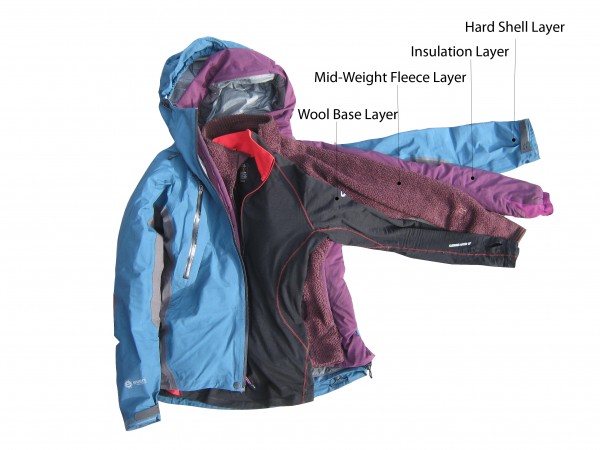
Four layer system for cold weather. Of course, there are pants. Credit: Outdoor Gear Lab

Four layer system for cold weather. Of course, there are pants.
Credit: Outdoor Gear Lab

Last February, we spent a wonderful long weekend in Quebec, visiting the lovely city’s Winter Carnavale and skiing at some fabulous ski resorts (Mte. Ste. Anne, Le Massif de Charlevoix) and dining in a little village of Baie-Saint-Paul.  Delightful.  If you  ever want a Euro-type ski experience close to home, Quebec is the place.  The only cloud was that on those days, it was thrillingly cold, ranging from around at least -20 F up to 0 F.  So we layered up.  We noticed that while we initially kept more or less warm, we soon found ourselves working up a mighty sweat under all those layers.  We had clearly over-dressed, and we paid for it by becoming uncomfortably chilly after a few runs.

So, we decided to learn about layering.  Sure, we know about “cotton kills” and “wet wool is warm” (thank you, Navy basic training), but we weren’t up on the newest thinking.  We consulted the following sources, and, after reviewing the advice from experts, realized we had made some mistakes in our enthusiasm for warmth.

How layering is supposed to work. Credit: BassMegeve

How layering is supposed to work.
Credit: BassMegeve

As you are well aware, it’s all about layers.  Consider this:

Base Layer–This is what used to be called long underwear.  The new performance materials are designed to manage your sweat level, wicking it away from your skin. Thin wool underwear is still a classic.  We all understand that the days of waffle weave are gone.  Check.

Mid Layer–Over your underwear, you will place a classic fleece, a thin wool sweater or one of those puffy, lightweight, squishable puffy jackets, depending on how cold it is and your activity.  The point here is insulation, that is, creating an air space that will create a barrier to cold air.

Insulating Layer–You thought the Mid Layer was insulating, you say?  Yes, if it is moderately cold.  When you get to cold, cold, you are going to need some more.  This could be a light-weight jacket (the squishy kind mentioned above), a fleece jacket or a perhaps a thin vest, depending.

Outer Shell–A “hard” Outer Shell is your wet protection.  A water-resistant top, like Gore-Tex, sheds moisture and keeps you dry while allowing the moisture inside to escape.  A “soft” Outer Shell is basically a wind jacket that can also serve as a rain/snow buffer in more moderate temperatures.

Head Gear and Accessories–You have to let your head breath. Most of your body temperature will exit through your head, so you have to let some of it out.  We all seem to get by with just wearing a helmet in moderate condictions,  When it goes really cold, a thin nylon skull cap underneath your helmet might make a lot of sense. You will need a neck-up gaiter, face mask or a Balacalva to protect your throat and face.

That said, where did we go wrong in our frosty day in Quebec?

  1. We had on too any layers.  Base, double insulating layers, vest, “hard” outer shell with down liner, which was yet another layer.
  2. We had too much head gear on.  Helmet, fleece skull cap, Balaclava, neck-up gaiter, scarf.
  3. We didn’t take the time to change or have dry replacement clothes to unlayer.

All lessons learned.  Ever happen to you?

Here are some links to expert advice about layering.

REI Expert Advice On Layering

Outdoor Gear Lab Layering How-Tos

EVO Dressing For Backcountry

Sierra Trading Post Layering Guide

Here’s a video from Sierra Trading Post you might find interesting.

Women Only Skis and Boards? Yes, Says Coalition Snow

Coalition Snow Fills Women’s Needs For Quality Equipment.

Coalition Snow has skis and boards for women only. Credit: Coalition Snow

Coalition Snow has skis and boards for women only.
Credit: Coalition Snow

Last spring, we’ve were impressed by Coalition Snow’s CEO Jen Gurecki when she talked with our friend The Ski Diva about her line of ski and boards for women only.  She recognized a niche market, defined a set of unique needs, and she put together products that are based on research. Now her challenge was getting the word out.

Last week, Jen won an entrepreneurial competition at the Nevada Governor’s Business Conference.  Her message was strong and simple:  There are a lot of women out there  (eight million) who spend a lot of money ($1-billion) on snow sports.  But their needs are not being met.  Instead of watered-down versions of men’s equipment, Jen has designed skis and boards “that don’t suck”.  She’s made a lot of progress in promoting her company since last spring; her Kick Starter campaign raised $31,000 in 31 days.

Check out her company’s elevator pitch.  Pretty sharp.  Makes us wonder:  We know there are senior-friendly ski boots and bindings.  Is there a need for senior-only skis and boards?  Your thoughts?

Let There Be Snow: Early Signs Of White

There Is Indeed Snow In Those Hills, And It Is Still Summer!

OpenSnow is forecasting snow in the Northwest. Credit: OpenSnow

OpenSnow is forecasting snow in the Northwest.
Credit: OpenSnow

Our very favorite meteorological, snow forecast website is OpenSnow.  If you haven’t visited them, please do: It provides clear explanations about what is happening in the atmosphere and provides snow depth information for most ski hills in North America.  Definitely worth a bookmark in your browser.

A recent posting was a round-up of snow falls in the Northwest.  It’s a dusting but, yes, snow in the summer.  Follow the link and you can peek at web cam images from a dozen or so resorts.  So far, so good.  Let’s see what happens as El Nino continues to heat up.

Lake Louise webcam reveals a dusting. More webcams can be found on OpenSnow.com Credit: OpenSnow

Lake Louise webcam reveals a dusting. More webcams can be found on OpenSnow.com
Credit: OpenSnow

Ted Ligety Flying Down Ohau In En-Zed

Here’s A Dose of Inspiration For The Coming Season.

This summer, the US Ski Team worked out in New Zealand where the skiing was great and the views were magnificent.  Here’s a short video of Ted making his famous elbow turns down Ohau, one of the mountains the visited.  If you’ve never been to New Zealand, consider it as a definite bucket list destination, summer or winter.  For outdoor-minded people, it is paradise.

My Fitness Journey Continues: Part Five

From High-Tech to Low-Tech, Great Gear For Getting Fit

The best fitness gear you can get requires no expense! It’s at the end of your legs: your own two feet. Walking (or jogging or running) as much as you can in any given week will burn calories and keep you cardiovascularly fit. Being on the move is considered one of the key factors in staying healthy and living longer (as well as enhancing one’s stability, litheness, and mind function).

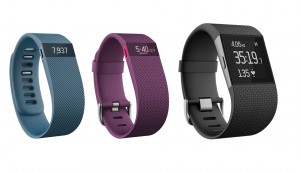
The pioneering body device is Fitbit. Other devices have grown up around it. Credit: Fitbit

The pioneering body device is Fitbit. Other devices have grown up around it.
Credit: Fitbit

But in the digital, tech-centric world we all live in today, even our simple walking regimens can be enhanced by a bit of 21st-century gear, the most popular being Fitbit. The dandy little waterproof device straps on your wrist and keeps track of exactly how much you’re actually walking any given day. The basic device ($80 on Amazon) monitors the number of steps you take and lets you set personal goals you can track. It also monitors your sleep so you know how long and even how peacefully you’ve slept. For a bit more moolah, there are more sophisticated trackers available, like the Apple Watch,  that do such amazing things as alert you when you’ve been idle for a certain length of time, and track your heart rate, skin temperature, and blood oxygenation.


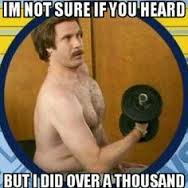
Can you do that? Weights are critical to seniors' fitness. Credit: GymRat

Can you do that? Weights are critical to seniors’ fitness.
Credit: GymRat

The most essential low-tech fitness gear for seniors? Without question, weights. Every official health organization recommends that seniors, whatever their age, incorporate regular strength training into their weekly regimen. In Part Two of this series, the UCSF medical director I was interviewing recommended I get a bone scan since I hadn’t had one since my 50s. The new scan showed that I had osteopenia, meaning lower-than-normal bone mass, now widely considered to be a natural aging process, and one that, in many instances, can be dealt with naturally without drugs. I was told to make sure I was getting enough calcium and to do regular weight-bearing activities. In addition to my weekly half-hour weight class, I now do a half-hour of weights two more times a week. Start out with a weight that’s comfortable (but not too!), then once your round of reps becomes too comfortable, go up a weight. I’m currently using three-pound weights, but I’m about to switch to my five-pound weights. You can find many different weight exercises for seniors online, so it’s easy to create your own program; just be sure you’re getting all the muscle groups.

An update on my own personal fitness journey: I continue to make slow yet steady progress to decrease my weight and measurements and increase my core strength, balance, cardiovascular capability, and stamina. I rarely miss any of my four weekly exercise classes (aerobics, stretching, and weights), which I’ve become a little addicted to. I see a marked improvement in my balance (I can grab an ankle and bring it up behind me for a quad stretch without teetering at all, but I still can’t do burpees, which the 78-year-old woman next to me does without batting an eyelash!). I’ve quit Weight Watcher’s, but I continue to keep a food diary and I’ve cut out some bad eating habits that I miss not at all (such as potato chips with sandwiches). I make it a point to say no to myself dietarily several times a day. When I started this fitness series on May 1st, I weighed 166 pounds; today I weighed in at 156 pounds. At this rate, it would take me another year to reach my target weight of 130 pounds, so I plan on making some major changes in my diet regimen in the coming three months. Stay tuned!

A Dietary P.S.—

How sweet it isn’t! I religiously check the nutrition facts on labels for the daily value percentages, but I didn’t even notice all these years that there is NO percentage listed for sugar until my daughter watched the excellent documentary, Fed Up, and informed me of this fact (thanks, sugar lobby!). I discovered that one Margarita accounts for my entire daily allowance! So if you’re interested in keeping track yourself, know that the American Heart Association recommends 37.5 grams of sugar per day for men and 25 grams per day for women (keep in mind that many unprocessed foods contain sugar naturally); also, before you sugar up, consider the harm sugar can do to aging teeth.

Check out this site if you’d like to know more about sugar and how much is good for you.

Editor Note:  We congratulate Rose Marie for her perseverance.  She has made progress and shared her lessons along the way.  Thank you, Rose Marie, we are all impressed by your commitment to self-improvement. Also note that mention of products was not paid for or supported in any way.

Sugarbush

Early Season Pass Special: Sugarbush

Some Ski Resorts Are Really Trying To Be Senior-Friendly.

One of the mantras of SeniorsSkiing.com is that it is a good thing for ski areas and resorts to be kind to seniors.  Not only do discounts, special activities and amenities bring more frequent senior visits, it also encourages them (us) to bring our families who are the next generation.

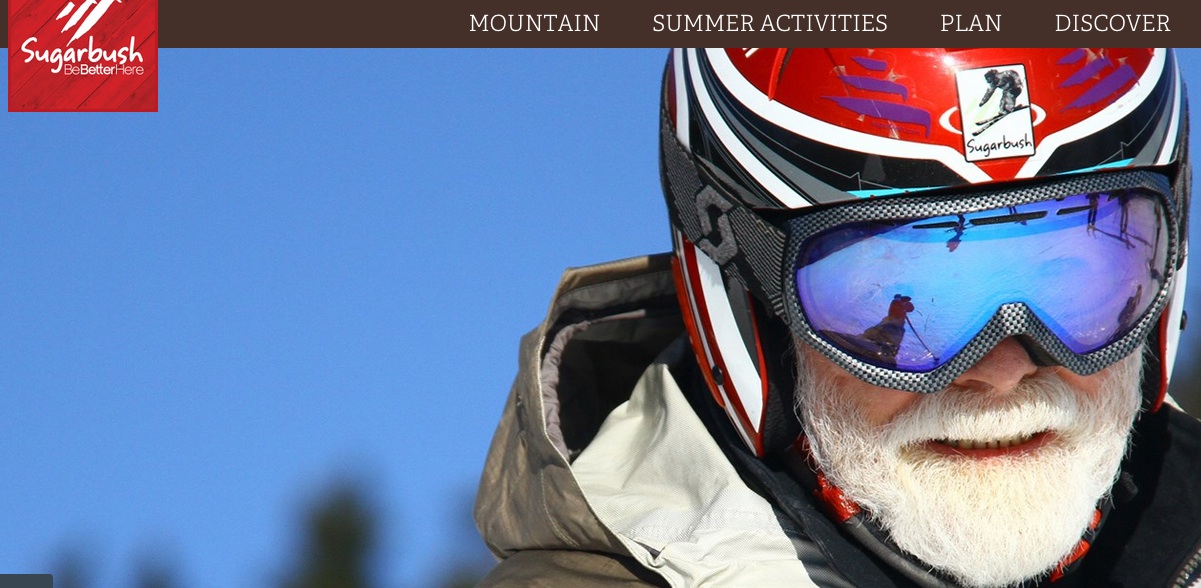
Sugarbush has lowered its senior age from 70 to 65. Thanks, guys.

Sugarbush has lowered its senior age from 70 to 65. Thanks, guys.

So, it is with great pleasure and satisfaction that we notice a ski area stepping out nicely in early-season efforts to be senior-friendly.  Sugarbush Resort, Warren, VT., has announced a mid-week, all-mountain, non-holiday pass for 65+ for $109 (until 9/16, then it’s $199, but still…).

In doing so, Sugarbush has LOWERED its senior age for discounted season tickets from 70 to 65.  Now that’s senior-friendly.  Thanks Sugarbush.

Incidentally, this is not an ad or a sponsored post.  We just like the way these people think.  What early-season senior discounts have you discovered?

Lunge Toward Ski Season: Start Now

You don’t need a gym. You can lunge around the neighborhood.

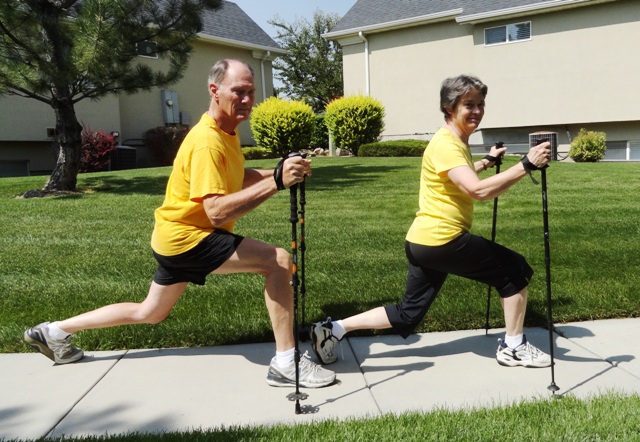
Nick and Carol Bowling are enthusiastic senior-age Alta skiers who enjoy staying fit year round. They just added lunges to their pre-season fitness routine, and they’ve become lunge junkies. But there’s a learning curve to doing lunges correctly, and they’re still working on it.

Carol and Nick Bowling of Washougal, Washington, tune up now for ski season. Credit: Harriet Wallis

Carol and Nick Bowling of Washougal, Washington, tune up now for ski season.
Credit: Harriet Wallis

“Lunges use your own body weight to strengthen your lower body. They’re excellent for your quads and hamstrings – for the big muscles,” says Jo Garuccio, Professional Ski Instructors of America Trainer and Examiner who also teaches at Snowbird. “But be sure your knee is over your shoestrings – not further forward.”

Equipment needed: Your body and a large mirror. Watch yourself. Critique yourself.

Position: Back erect, thigh parallel to the ground, knee over shoestrings.

Incentive: See how many you can do each day while keeping good form. When you’re good at the basic lunge, move on to one of the many variations.

What a lunge should look like:

So here’s a challenge for you. Watch the video, then study Carol and Nick’s position. Pretend you’re a coach. Is there something you’d tell them to improve as they lunge toward ski season?

When will you start to lunge?