This Week In SeniorsSkiing.com (May 6)

Season Finales, Cycle Series Continues, Poll Results, and BC Resort Review.

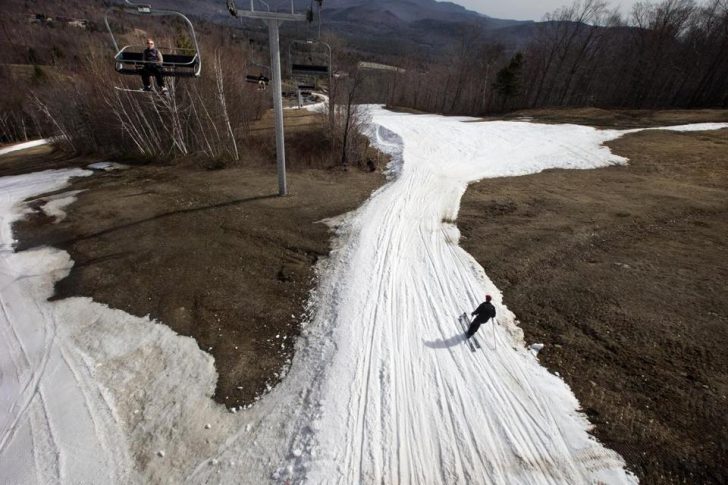
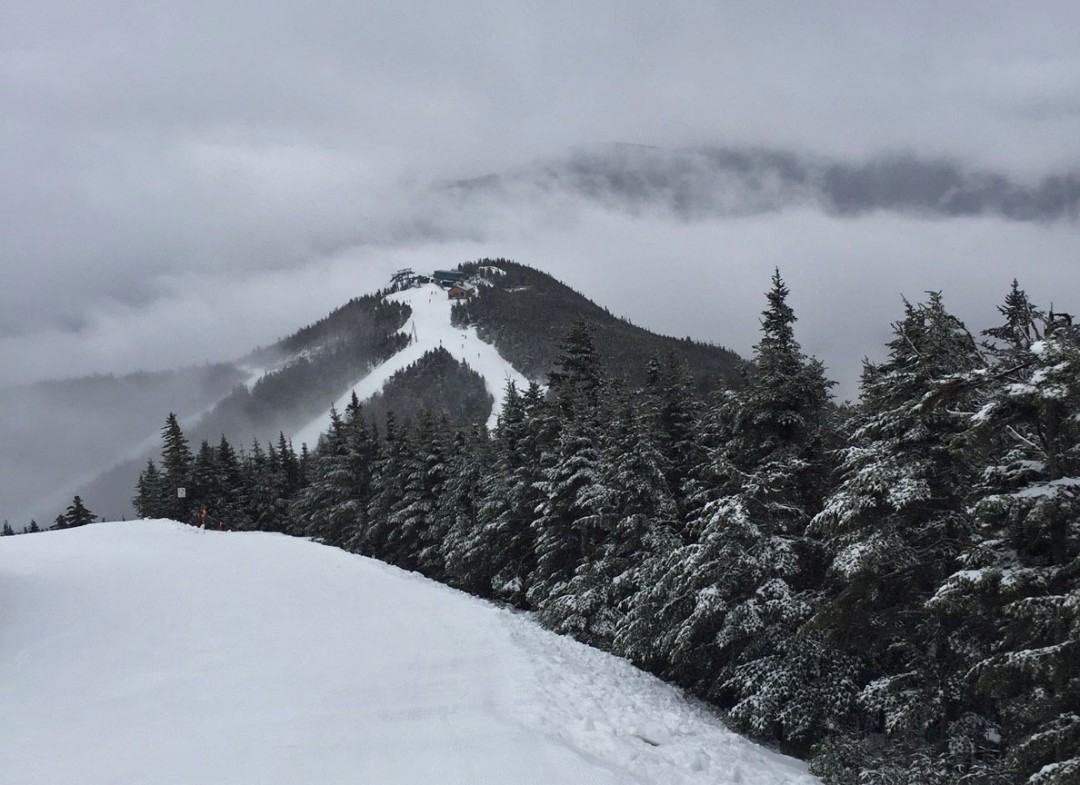
Boston Globe's Stan Grossfeld reports on May skiing at Sunday River, ME. Credit: Stan Grossfeld/Globe Staff

Boston Globe’s Stan Grossfeld reports on May skiing at Sunday River, ME.
Credit: Stan Grossfeld/Globe Staff

It’s mud time in New England, and we’ve yet to see one of those beautiful, warm, aromatic May spring days around here. It’s been more like November: chilly, raw, drizzly. Yet spring skiing season still carries on in the West. Our poll results re: who is still out there reflect that. To say it has been an odd snow season is an understatement; El Nino did it to us, didn’t he?  Perhaps his sister, La Nina, who could be coming in this summer, will be different. We will keep you informed about what the weather prediction story is as it emerges.

Nevertheless, we are gearing up for non-snow time.  We will be bringing our readers an array of articles on different kinds of warm weather sports, fitness tips,  product reviews, and curiosities from the world of seniors and snow sports.

Before the season ends, though, we wanted to bring you one last resort review.  Our new Melbourne-based correspondent Marg Malkin tells us about SilverStar, a jewel of a resort in BC, and right-sized for senior skiers.  Thanks to Marg, we will be hearing more about the ski season down under which is getting going right about now.

Regular correspondent Pat McCloskey writes about the Lost Coast Trail in Northern California as another installment of our cycling series.  As our regular readers know, Pat and a group of his senior skiing pals make a Tahoe area ski trip every year.  This year, he went back to ride his bike along the coast.  Since most of our readers view cycling as a prime non-snow sport, we thought you’d be interested.  If you have a cycling story, please let us know.

Finally, we refer you to a Boston Globe report on the final runs at Sunday River, ME, one of the two or three ski resorts still spinning.  It’s interesting to see what conditions die-hards will find skiable.

Our Spring Survey Is Coming

SeniorsSkiing.com has learned so much from our reader survey, information that helps us direct our editorial content and show potential advertisers who our readers are.  Soon, you will be seeing our Spring Survey 2016 coming your way.  We ask you to please take a moment to respond to this.  We promise it will be short and to the point.

Thank you for reading SeniorsSkiing.com.  Remember, there are more of us every day, and we’re not going away.


Poll Results: People Are Still Out There

The Odd Snow Season Lingers On.

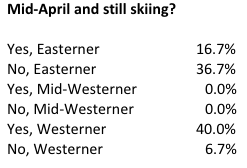
Screen Shot 2016-05-04 at 4.38.14 PMWe hear from lots of SeniorsSkiing.com readers about places they are currently skiing and intend to ski all the way into Memorial Day. Most are from the West, but, as we have seen in this week’s Boston Globe article, there is a persistent and hardy group of folks in the East as well.  Our mid-April poll results confirm what you’d expect: The West is Best, at least for this year. And there are big deals for seniors right now.

Reader Tom Levak writes, “Timberline (OR) is open through May 31 with free skiing for 71-plus. The three best runs are open: Stormin’ Norman, the Magic Mile and the Palmer Snowfield.  Loads of groomed terrain and lots of parks. I was up there Wednesday, and I’m going back right now. Mt Hood Meadows opens tomorrow for Sat-Sunday only through May 15; free for 75-plus.”

This Week in SeniorsSkiing.com (Apr. 29)

Tai Chi for Aches and Pains. Storing Your Skis. Cycling Crater Lake NP. Ski History Week in Aspen. Abstract Art on Skis. New Sticker.

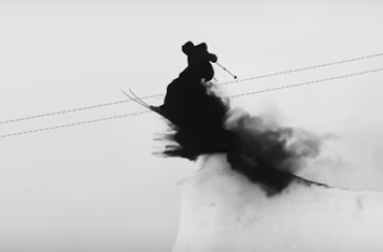
Ready for something different? Ethereal visual images from Nicole Vuignier.

Ready for something different? Ethereal visual images from Nicole Vuignier.

How about those wet dumps this past week? Hope you got out to play. The season is definitely winding down. Time to transition into non-snow activities. Be sure to use your ProMotive site privilege to gain deep discounts on all kinds of outdoors clothing and gear. It’s one of the many benefits of subscribing to SeniorsSkiing.com.

Long before hot tubs and saunas, people of all ages were overcoming soreness and pain by practicing Tai Chi. As explained by longtime racer and Tai Chi practitioner Tommy Kirchhoff, this ancient Chinese procedure stretches the body, promotes self-healing, and is easy to do. Check out the short instructional video.

Be sure to read SkiDiva‘s account of putting your skis to bed until next season. If you want them to wake from their beauty sleep and ready to perform, follow the advice.

Oregon’s Crater Lake is a thing of beauty. So is John Nelson’s account of cycling its perimeter last fall. He’ll get you thinking about booking your own trip to this National Park classic, and he provides all the details to get it organized.

Like many readers, Jan Brunvand is a fan of skiing history. He reports on the recent annual gathering of the International Skiing History Association in Aspen.

Finally, art takes on many forms. Click on the video of skiers painting the slopes in abstraction. It’s a treat.

Our new SeniorsSkiing.com stickers just arrived. Send us a self-addressed, postage paid envelope, and we’ll send you a few. The address: SeniorsSkiing, Box 416, Hamilton, MA 01936.

Continue to visit SeniorsSkiing.com during the off-season. You’ll be rewarded with more great content about the active outdoor lifestyle. Next week we’ll feature a report on beautiful (but unknown) SilverStar in British Columbia, a new installment in the Cycling series, and a piece on the basics of fly fishing.

Stay healthy and stay active. There are more seniors everyday, and we aren’t going away.

Cycling Series: Around Crater Lake

Riding The Rim Was One Of The Best Rides Ever.

Crater Lake water is pure and deep blue. It's 33 miles around the rim and 4000 vertical feet of ups and downs. Credit: John Nelson

Crater Lake water is pure and deep blue. It’s 33 miles around the rim and 4000 vertical feet of ups and downs.
Credit: John Nelson

As I topped a ridge near 8,049-foot Llao Rock on the north rim of Oregon’s Crater Lake, I had that giddy moment cyclists get when everything comes together.

I felt great. I had just finished one of my biggest climbs of the day. And I was alone on a road ringing one of America’s natural wonders.

I picked up speed on the downslope and screamed for joy.

Climbing along East Rim Drive on the south side of Crater Lake National Park. Credit: John Nelson

Climbing along East Rim Drive on the south side of Crater Lake National Park.
Credit: John Nelson

It was early October. I had left my home in Seattle a week before on an extended road trip around the west. I had no real itinerary, except to camp, hike, bike and enjoy beauty.

I hadn’t planned on coming to Crater Lake National Park. But while camping on the Oregon Coast, I met a fit retiree who had just done the 33-mile ride around the rim.

“It’s incredible,” he said in a hushed tone over the campfire. I decided then and there I had to try it.

A few days later, under cool, clear skies, I clipped in and started what would be one of the best rides of my life.

When you tackle the Crater Lake ride, the first thing to understand is that almost none of it is flat. You’ll do more than 4,000 vertical feet of climbing over the next few hours, so get used to the long ups, and the lovely, all-too-quick downs.

A stop at an overlook along East Rim Drive at Crater Lake. Credit: John Nelson

A stop at an overlook along East Rim Drive at Crater Lake.
Credit: John Nelson

I started at the park headquarters and immediately had a 1,000-foot climb to the rim of the lake. Cresting the top of the rim, I was treated to views of something really special.

Crater Lake is America’s deepest lake (1,943 feet deep, to be precise) and rests in the caldera of Mount Mazama, which collapsed during an eruption 7,700 years ago. The average annual snowfall here is 44 feet, which melts in warmer months, keeping the lake filled with some of the purest water on earth. Its color is a dramatic deep blue.

The rim road sits many hundreds of feet above the lake. From a car, the view is stunning. From the seat of a bicycle, it’s much more than that—you become part of the earth, water and sky as you grind past each jaw-dropping viewpoint.

If you go

Which direction? Most people choose to go clockwise, which puts you on the lake side of the road on your journey. Starting at park headquarters gets a big climb out of the way early when you have the energy to do it.

Fitness concerns: The ride is strenuous and not to be taken lightly. Besides the many ups and downs, you’ll be pedalling at up to 8,000 feet elevation. Temperatures vary wildly from below freezing to well into the 90s.

Safety: Auto traffic can be heavy in the summer months, and rubber-necking drivers don’t always watch for cyclists while taking in the views. Wear bright clothing. If you want to avoid cars, visit on one of these dates in 2016: Sept. 17 or Sept. 24, when the East Rim Drive will be closed to automobiles for runners, walkers and bicycles. Information is here.

Water, food: The Rim Village Visitor Center is a good place to load up. Bring lots of water for the ride: There are no drinking fountains along the rim. The Visitor Center has cafeteria-style food service if you want a meal.

Stops: There are 30 overlooks that ring the lake; plan on stopping frequently to rest, take pictures and enjoy the views.

Accommodations: Inside the park, the historic Crater Lake Lodge has commanding views from its location at Rim Village. You’ll need to make reservations a year in advance to book one of these in-demand rooms. The Cabins at Mazama Village have scattered availability through summer and fall of 2016. Reservation information is here.

Camping: Two campgrounds are available. The full-service Mazama Village Campground has 214 tent and RV sites. A limited number can be reserved, the rest are available on a first-come, first-served basis. The primitive Lost Creek campground has 16 non-reservable tent sites.

National Park Bicycling Info:  Highly useful guide to the Rim Drive, including safety, camping and ride information.

Crater Lake National Park MapA beautiful map of the lake and surrounding area.

National Park Service Map of Crater Lake. Hills and altitude make the ride around challenging.

National Park Service Map of Crater Lake. Hills and altitude make the ride around challenging.


Painted Black Ski Art From Nicolas Vuignier

Abstract Art On The Ski Slopes A Bold Experiment.

Ready for something different? Ethereal visual images from Nicole Vuignier.

Ready for something different? Ethereal visual images from Nicole Vuignier.

Swiss freestyler and film maker Nicolas Vuigner in collaboration with Jules Guarneri has produced an abstract visual treatment in black and white using skiers and (environmentally-friendly) pigment.  Take a look at this short clip.  There is something haunting and definitely different about these images.  Your thoughts?

To subscribe to Vuignier’s YouTube channel, click here:
https://goo.gl/CkHIyu

This Week In SeniorSkiing.com (Apr. 22)

Adventure Expeditions, WWII Spies On Skis, Retro Look At Ski Fashion, And Free Senior Skiing Under Threat.

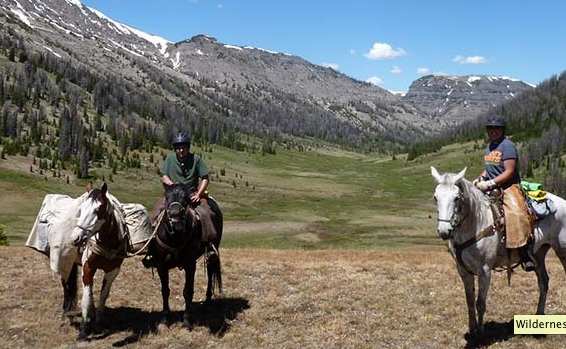
NOLS Horsepacking Course teaches you horsemanship, packing and camping skiis. Credit: Kelsey Week/NOLS

NOLS Horsepacking Course
Credit: Kelsey Week/NOLS

If you’re looking for your next challenge, a course from the National Outdoor Leadership School (NOLS) might be what you’ve been waiting for. There are several 14-day backcountry adventures that would work for fit and able seniors. These courses combine rigorous outdoor experiences with learning and living in remote backcountry.

This week, Roger Lohr, publisher of XCSkiResorts.com, reviews The Winter Fortress, a new historic account of Norwegian commandos enduring hardship and Nazis to save the world from what could have been a nuclear weapon in the hands of the bad guys. This one will prove to be a page-turner for sure.

We also report on goings-on in New Hampshire where the State Legislature is taking aim at ending free skiing for seniors at venerable Cannon Mountain, a state-owned ski area. Plenty of controversy here. Weigh in with your thoughts.

Finally, here’s some fun from the Colorado Ski and Snowboard Museum and Hall of Fame. They’ve produced a video fashion show, tracing how ski clothing has changed over the past 100 years. Clever production and, for some, it will evoke some memories and might even inspire a trip to the attic to retrieve some of these togs. Wouldn’t it be fun to have an Old Ski Fashion movement?

Looking Ahead

Next week, we’re going to look at the first of a series of cycling adventures for seniors. Since cycling is a popular non-snow season sport, we thought you’d be interest. We’re also going to be looking at an alternative to golf that will definitely cause country club members to re-think their game.

Thanks for reading SeniorsSkiing.com. Remember, “there are more of us every day, and we are not going away.”

Book Review: X-C Skiing Saves The World

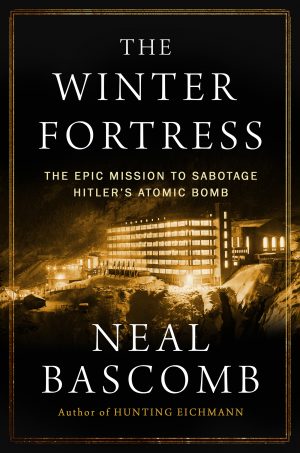
The Winter Fortress By Neal Bascomb.

Winter Fortress

Had Nazi Germany won the competition to build the first atomic bomb in the early 1940’s, the world today could be a very different place.  The Winter Fortress: The Epic Mission to Sabotage Hitler’s Atomic Bomb by Neal Bascomb is the gripping true accounting of the race to build the atom bomb during World War II.

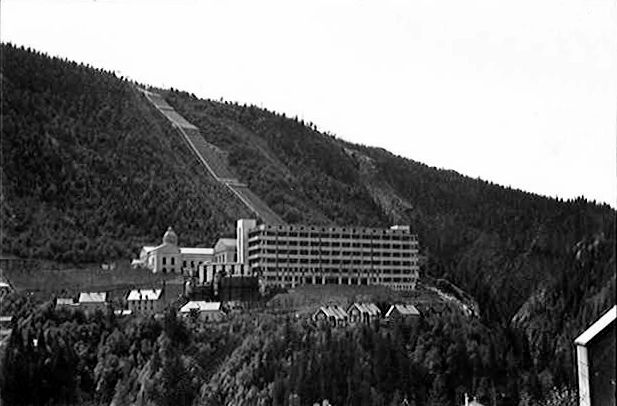
In 1942, the Nazis were working on the atom bomb and they depended on a necessary ingredient “heavy water,” which was produced in Vemork, Norway at an electricity plant run by Norsk Hydro. The Nazis invaded Norway and commandeered the facility, which was set in a castle fortress above a precipitous gorge. The production of heavy water was forcibly increased and shipped to Germany to be used in experiments needed to create the atomic bomb.

Bascomb sets the stage explaining the process of producing the bomb and the background of the story’s Norwegian participants, who planned and implemented what may have been the most significant and daring commando raid of World War II. Various plans were hatched in Britain and communicated to Norwegian spies, who on their cross country skis in the backcountry withstood hardships to avoid the German occupiers. The Winter Fortress has plenty of activity on cross country skis including a long distance chase escaping Germans on skis, which would make any Norwegian Olympic biathlete proud.

The winter-oriented hardships were dramatic such as parachuting at night, freezing temperatures, the search for food, and during the nighttime trek to the Vemork plant “trudging through snowdrifts sinking nearly to their armpits in wet snow.” During the raid the saboteurs were dressed in white camouflage suits over British Army uniforms to make it look like they were not Norwegians to spare the local population from German retaliation. They advanced on skis and on foot before climbing a 600-foot wall above the Mana River to clandestinely reach the facility, which was set on a rock ledge.

The efforts of the Norwegian underground to sabotage the plant were marred for months by miscalculations, malfunctions, and calamities as the men waited to receive orders. They braved multi-day blizzards, unsuccessful hunting for food, and cabin fever to the nth degree. These Norwegians, who refused to submit to the Nazi occupiers were mostly trained in Britain and supported by local sympathizers. They awaited the conceptualized schemes by British and Norwegian masterminds. The plans had various possible results that were outlined by the author.

The story is a roller coaster of determined undertakings to interfere with the German efforts to produce and transport heavy water. The impact on the protagonists and their families and neighbors are portrayed as well as Nazi brutality in the war.

Neal Bascomb lives in Seattle and is a former international journalist, who is a widely recognized speaker on the subject of World War II and the best-selling author of Hunting Eichmann, The Perfect Mile, and Red Mutiny. The publication date of The Winter Fortress from Houghton Mifflin Harcourt is scheduled for May 3, 2016.

The Winter Fortress: Vemork Hydro Plant where heavy water was manufactured.

The Winter Fortress: Vemork Hydro Plant where heavy water was manufactured.


Cannon

Free Senior Skiing Under Threat In NH

State Legislature Considers Ending Decades Of Free Senior Skiing At Cannon Mountain.

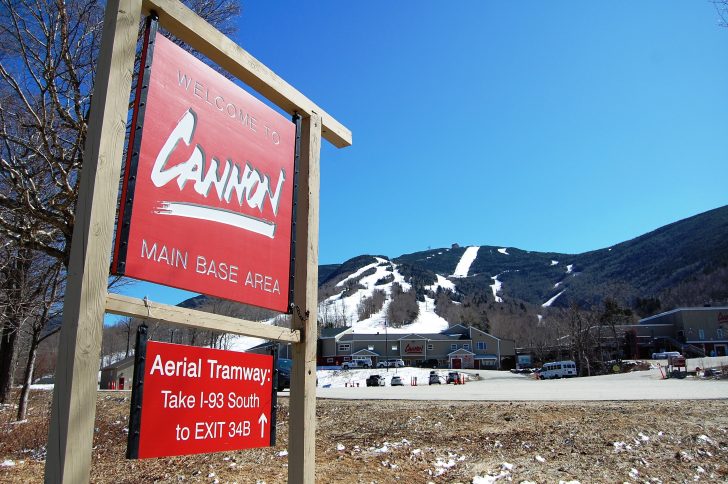
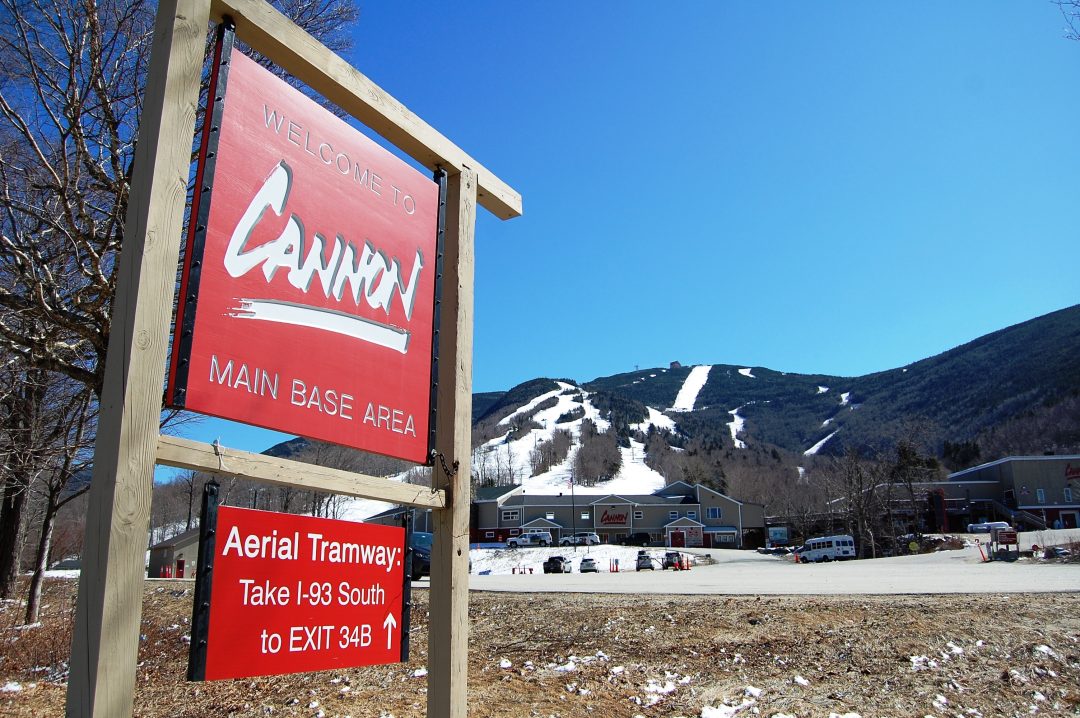
Cannon Mountain is a state-owned area, famous for its aerial tram and free skiing for 65+ seniors. Credit: Cannon Mountain

Cannon Mountain is a state-owned area, famous for its aerial tram and free skiing for 65+ seniors.
Credit: Cannon Mountain

Since 1973, state-owned Cannon Mountain has been the only ski area in New Hampshire to offer free skiing to seniors 65-plus.  This year, a second attempt to end free skiing for seniors was introduced to the legislature.  The change would mean seniors would pay a discount of two-thirds ticket price on weekends and one-third on weekdays.  Free skiing is currently only available during the week.

Supporters of the repeal of free skiing say that the additional revenue is needed to help the NH Division of Parks and Recreation become self-sufficent, a requirement of 1991 legislation.  Opponents say that many seniors in the region are far from wealthy and view the change as a “tax” on seniors who usually ski during the week when the slopes are nearly empty.

In a close vote, the bill, SB 411, was passed by the House and now goes to the House Ways and Means Committee for review before coming back to the House for a final vote.

There are currently about 97 ski areas that offer free skiing in North America, according to the National Ski Area Association.  A handful of small resorts start free skiing at 65, while the majority offer the privilege to 70+ skiers.  An adult ticket currently cost $75 at Cannon; the senior discount would mean a $50 weekend ticket and $25 for weekday.

SeniorsSkiing.com has recommended that the free skiing benchmark should be raised from 65 to 70, still providing access to skiing for the many skiers in the region while creating a reasonable discount for 65-70.  A season pass reflecting a deep discount for 65-70 is also recommended.  We hope the State Legislature of New Hampshire acts with a sense of compromise and fairness in this matter.

What are your thoughts?

Take A Course From NOLS: True Adventure Awaits

These High Activity Courses Are Challenges For Active Seniors.

NOLS Horsepacking Course teaches you horsemanship, packing and camping skiis. Credit: Kelsey Week/NOLS

NOLS Horsepacking Course teaches you horsemanship, packing and camping skills.
Credit: Kelsey Week/NOLS

When it comes to a non-snow vacation get-away, as a senior snow-enthusiast, you’re probably not the type to get on and off a tour bus at museums and churches in Europe or who are going to be happy shuffling from one tourista tchotchke shop to another. If you want adventure, then consider these high action options from NOLS, the National Outdoor Leadership School.

NOLS is actually a leadership school founded in 1965 that focuses on using the backcountry as a classroom. Students also learn competencies in outdoor skills, so this is an opportunity to challenge yourself. NOLS Prime Courses are designed for adults. According the NOLS, they usually see a wide range of ages in students including many who are in their 50s and 60s.

Be advised, these are not your typical book club vacation trip to see where the Brontes lived; these are demanding, rugged learning and doing experiences where you can come face-to-face with the Big Outdoors.

Wilderness Horsepacking: You can learn the fundamentals of horsemanship while packing through the Rockies for 14 days. You’ll learn to care for your horse, ride, and camp and travel through magnificent backcountry near Jackson Hole, WO.

Wind River Wilderness Hiking and Fishing: This is an outdoor backpacking expedition through the Wyoming’s Wind River Mountains, renowned for its pristine lakes and rugged beauty. This is another 14-day adventure where you can learn fly fishing and practice camping skills.

Alaska Mountaineering: This one takes place in south central Alaska where there is hiking above the snow line over huge snowfields and glaciers. The emphasis is on learning how to care for yourself and your equipment, fellow expedition members and the environment. And you will learn real mountaineering skills like belaying, avalanche rescue, navigation and more.

Being fit and prepared for these demanding expeditions is a clear prerequisite. If you’re an active senior, you might want to consider contacting NOLS to find out more.

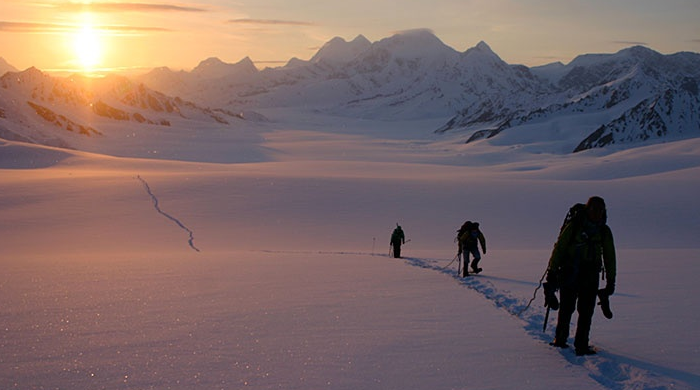
Alaska Mountaineering takes you into the high country where you learn climbing skills. Credit: Alexis Alloway/NOLS

Alaska Mountaineering takes you into the high country where you learn climbing skills.
Credit: Alexis Alloway/NOLS

This Week In SeniorsSkiing.com (Apr 15)

Jon At Ski Boot Lab, Returning to X-C, More Super Socks, Candide Thovex Daredevil Video, Poll Results

Professional athlete Candide Thovex makes gravity work. Click below for video

Professional athlete Candide Thovex makes gravity work.

SeniorsSkiing.com’s co-publisher Jon Weisberg was invited to the annual Ski Boot Evaluation held this year at Solitude, UT. This is where evaluators from different corners of the ski business come together to test and compare notes about the new boots for next season. He reports on how the testing works and who was there.

We welcome a terrific memoir from ski industry veteran John Christie, a founder and former general manager of Sugarloaf and other New England ski resorts. He remembers his less-than-enjoyable experiences cross-country skiing as a member of the Bowdoin College ski team and compares that with his re-discovery of the sport in his senior years. Big difference as you will see.

We share the results of our latest poll that reveals the most popular non-snow sports of our readers. The top three all reflect a high level of physical activity, but so does one voted the lowest. Check it out, and help interpret the results.

Socks are important to snow sports for comfort and warmth. Bad socks, bad day almost guaranteed. Tamsin Venn reports on a really super sock product from Farm to Feet. We are learning how important it is to pay attention to what used to be an after-thought part of your equipment kit.

Finally, there’s a truly incroyable video clip of professional skier Candide Thovex skiing down a…well…a cliff somewhere in the Alps. Part of us wants to diss his run as irresponsible, but part of us also wants to salute his skill. Watch the clip and decide where you come down.

Apparently, there’s more snow coming up in the west. This weird season is far from done done.

Thanks for reading SeniorsSkiing.com and remember as Bernie Weichsel, impresario of BEWI Productions’ Ski and Snowboard Expos and SeniorsSkiing.com Advisory Board member says: “There are more of us every day, and we are not going away.”

Here's where the raw material for Farm To Feet socks originate: Merino sheep who live in Wyoming. Credit: Farm To Feet

Here’s where the raw material for Farm To Feet socks originate: Merino sheep who live in Wyoming.
Credit: Farm To Feet

Poll Results: Non-Snow Activity

Amazingly, More Snow Has Fallen And Has Been Made Since Last We Checked In.

Screen Shot 2016-04-13 at 10.37.26 AMSeveral weeks ago, we asked our Eastern readers whether they were done or not.  You can see the results here.  Since then, cold has persisted in northern New England, and there is a forecast of three-feet of snow this week in the west! See the latest post from our favorite weather/snow site, Open Snow here.   So, our new poll (see Sidebar) asks who is doing what.

Meanwhile, here are the results of our Non-Snow Sport poll.  As you can see, Golf, Cycling, and Hiking make the top three, representing 62 percent of respondents.

Perhaps it’s no surprise that a tiny percentage of respondents are runners. We bet that most of our readers were runners earlier in their athletic careers but have backed off to preserve knees and hips. Runners, how say you? Any surprises in this data?


Returning To X-C: New Technology, New Found Serenity

John Christie, Ski Industry Veteran, Re-Discovers His Love For Cross-Country Skiing.
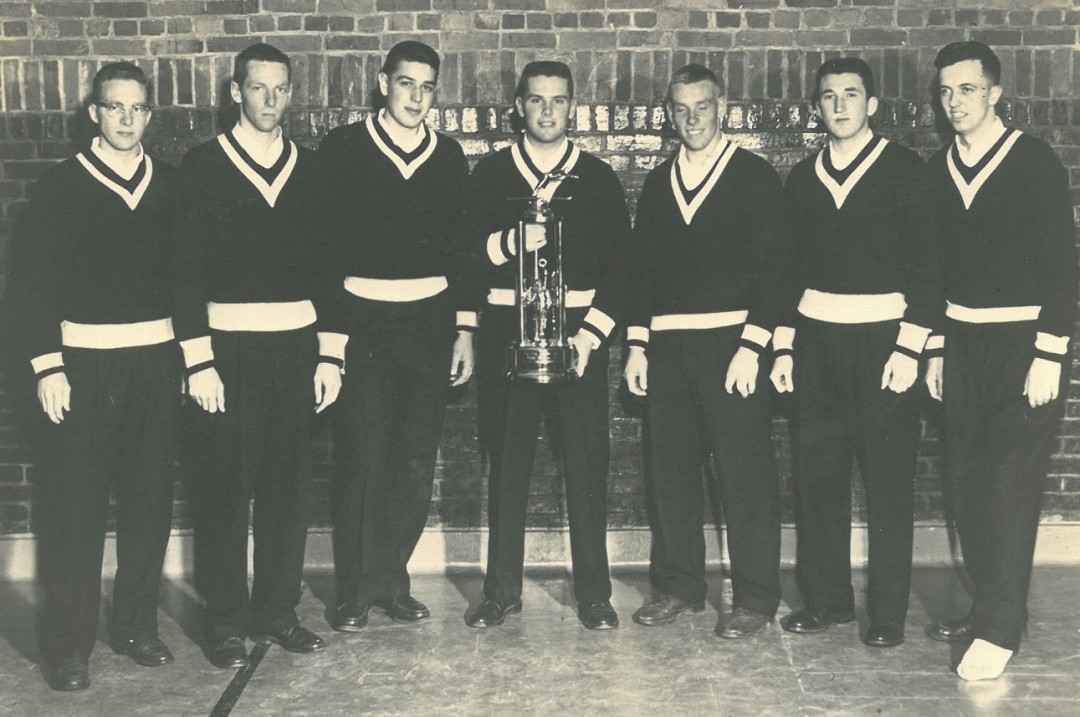
Bowdoin College ski team circa 1958 with state championship trophy. John Christie is third from right. He was originally a reluctant competitor. Credit: John Christie

Bowdoin College ski team circa 1958 with state championship trophy. John Christie is third from right. He was originally a reluctant competitor.
Credit: John Christie

Editor’s Note: SeniorsSkiing.com is proud to have this contribution from John Christie. John is a legend in the ski business. Founder, owner and/or manager of several New England ski resorts (Sugarloaf, Mt. Snow, Saddleback),  John has served as president of Vermont and Maine Ski Areas Associations, was a board member of the National Ski Areas Association and other charitable non-profits as well as author of books (The Story of Sugarloaf, Maine Outdoor Adventure Guide, Skiing Maine) as well as numerous and regular features in a variety of publications.  At 78, he is still discovering and re-discovering that “it’s never too late”.  Our kind of guy.

As someone who bought his first sea kayak just before he reached the age of 70, and now spends hours on end in the summer exploring Maine’s coastline, I guess I’m authorized to say that it’s never too late to discover a new way to enjoy the outdoors.

Similarly, I’m amazed as I travel from ski area to ski area in the winter and see the number of retirees who continue to ski regularly, many who’ve rediscovered the sport after a long absence, and, most impressively, seniors who’ve taken up alpine skiing for the very first time.
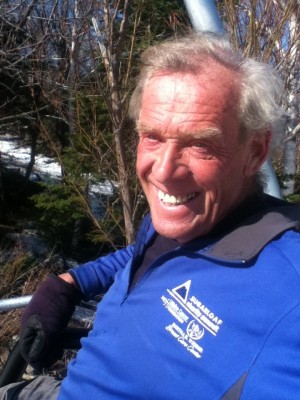
Former x-c racer in college, John Christie re-discovered cross-country skiing as a senior. Now he skis to enjoy the outdoors and keeps fit. Credit: John Christie

Former x-c racer in college, John Christie re-discovered cross-country skiing as a senior. Now he skis to enjoy the outdoors and keep fit.
Credit: John Christie

It’s those newcomers to the sport who are discovering how much fun, and how easy it is to make the most of Maine’s long winters. Thanks to improvements in ski equipment technology, along with senior-friendly professional instructors at virtually every ski area in the state, learning to ski at an advanced age is not only a piece of cake, but it’s an opportunity to enjoy the winter to its fullest.

But enough about alpine skiing. Many seniors have learned that a few hours out on cross-country skis is a magical way to spend a winter day.

I was introduced to cross-country skis during my freshman year in college, in 1956. Not because I had harbored a yearning to do so, but because I had little choice. You see, this was the now by-gone era of the four-event intercollegiate competitor that required those of us who wanted to claim our berth on the team to compete in all four disciplines: downhill, slalom, jumping and cross-country.

As an alpine skier, I begrudgingly became a Nordic competitor as a reasonably accomplished jumper and a slightly more than passable cross-country racer. Any success I had in achieving decent results related in no way to my having mastered the technique or much of any technique at all. I did it through exhausting exertion, determination, youthful fortitude and strength, a nagging feeling that I had a responsibility to my team and my beloved Bowdoin, and sheer stupidity.

The result was that every race, a symphony of intermittent stumbling, cursing and frequent vomiting was, I’m sure, great entertainment for the throngs of co-eds along the racecourse. I remember one race in particular in Farmington where I not only artfully combined all of the above, but added an especially amusing touch by sticking a ski pole directly into the top of my right foot, finishing the race in great pain and with a bloody sock. An act to be replicated decades later by a certain Red Sox pitcher during a crucial World Series game.

So that was my context for cross-country skiing. An activity to be undertaken when absolutely required and avoided whenever possible. This less-than-enthusiastic attitude for the sport was further encouraged by the quality of the equipment during my racing hey-days: loose-fitting boots, easily-breakable wood skis and bamboo poles, and bindings that deluded the skier into thinking that he could actually control his skis on icy downhill runs. And skis without any edges, of course.

It’s not too much of a stretch to say that when I stepped up on the stage to accept my hard-earned Bowdoin degree in June of 1959, my first thought was, “Thank God, now I’ll never have to cross-country ski again!”

Although my antipathy toward the sport was clearly more exaggerated than the average skier, it’s apparent that very few people were eagerly embracing the activity during the 1960’s . It was during this period of time that I was cutting my teeth in the ski business, and alpine skiing was my life. When I left the business in the late 1970’s to embark on more mature, and fiscally-reliable pursuits, I was surprised…no, shocked…to hear that people were being lured to, and actually embarking on cross-country skiing for FUN!

So was born the renaissance of the sport, and the next act in the evolution of cross-country skiing from hunting to warfare to exploration to competition to recreation. I begrudgingly reintroduced myself to it, as I was taking a self-imposed hiatus from alpine skiing, and was pleasantly surprised with two things. First, the technology had evolved from wood to composite skis, from imitation to actual bindings that allowed you to actually control the skis, and from waxable wood bottoms (that never adequately and simultaneously accommodated the proper waxes for both uphill and downhill skiing) to fish scales that provided for both uphill traction and downhill gliding. Second, I was struck that without the need to better your competitors, you could actually ski along at a leisurely pace and even enjoy the serenity and the scenery and the exhilarating fun of being out in nature on a crisp winter day.

The popularity came about for a variety of reasons, including the increasingly prohibitive cost of alpine skiing for some folks. Additionally, there was a growing national awareness of the importance of physical fitness, so many people were becoming more active, and when the summer hiking season was over they were looking for a winter counterpart.

So that was my reintroduction, thankfully, to an activity I’ve grown to love. I will say that when the weather’s right, and I have the time, I’ll head for the hills with my alpine skis, but increasingly I’ll opt for the fun of a few hours out on the trail on my skinny ones.




Test Animal In The Annual Ski Boot Lab

How the Magazines Get Their Boot Evaluations.

Boots waiting to be evaluated. Credit: MasterFit

Boots waiting to be evaluated.
Credit: MasterFit

Since the mid-80’s a group of serious skiers has convened at Mt Bachelor, in Bend, Oregon, to evaluate the boots store buyers have purchased for the coming season.

This year the show, which is organized by MasterFit Enterprises, moved to Solitude in Utah. I was invited to participate. The collective impressions of the boot testers inform the rankings to be published in, among others, Ski, Skiing, and their respective .com media outlets. The most comprehensive report will appear in www.bootfitters.com.

Yes, the evaluators—some of whom have been doing this from the beginning—are serious about the task at hand. But they also understand a good party. It’s a fun group of people from around the country; many are professional boot fitters who know their stuff from years of experience, including training at the annual MasterFit University boot fitting school.

The more experienced among them understand the foot’s anatomy and how choosing the right boot can make all the difference in how people enjoy their skiing experience. They’re the people you can trust when selecting boots.

Like other lab animals, I had a Pavlovian experience: skiing an uncomfortable boot, I couldn’t wait to get off the hill. Skiing a boot I liked, I was scratching for more.

Here’s how it works. All the boots to be tested are listed, categorically, on paper. The Men’s sheet had 58 boots from 20 brands organized into four general categories, two of which were subdivided by width. The Women’s sheet was similarly organized.

Advised to focus on one category, I set out to test those in “Men’s All Mountain Medium.”

Each boot evaluation is recorded on a test card. One side is completed in the lodge and evaluates look, ease of entry/exit, buckles, and fit and stance. The other side is completed after skiing a few runs on Solitude’s outstanding terrain.

There had been a series of good dumps the week before. But warmer weather made off-piste an effort. Best to ski early and stay on Solitude’s groomed, some of which are steep and interesting.

There are five on-snow categories for observations to be recorded and scored. For “Stance” I evaluated how the boot positioned me. For “Dynamic Balance” I focused on the boot’s positioning and flex while skiing. For “Edge Power and Fore-Aft Support” I determined transfer of energy from body to edges, as well as how the boot performed when weight was on the front of foot vs heel. For “Quickness, Steering, and Feel” I took note of the boot’s performance skiing pitches, bumps, and at different speeds. For “Convenience, Warmth, and Features” I was able to observe, for example, that Head’s buckle with built-in lever made for easy adjustment by a senior skier and that Apex’s infinite adjustments assured comfort for older feet.

After all these years on the hill, a few days in the lab gave me a new insight into how to find a boot that really does the job.

Candide Thovex Hops Down The Alps

Folly Or Finesse?

Professional athlete Candide Thovex makes gravity work. Click below for video

Professional athlete Candide Thovex makes gravity work. Click below for video.

Hold my beer while a take a run, will ya?  Actually, it’s Candide Thovex, professional athlete, making a spectacular run off-piste somewhere in the Alps.  Some might say this kind of extreme skiing is irresponsible; others might say there is skill here to be admired.  Whatever your stance on this kind of dramatic skiing activity, you have to say this 30-second video clip gives you an emotional hit. Did we mention the two avalanches?

How say you? Folly? Finesse?  Other?  Let us know.

By the way, SeniorsSkiing.com has another video clip of Candide Thovex here, doing his thing at the Val Blanc.

This Week In SeniorsSkiing.com (Apr 8)

Wrapping The Sierra, Harriet In The News, Wave Skiing, Another Master Clinic And More.

Harriet Wallis is a veteran journalist who regularly skis the resorts around Salt Lake City. She is a long-time corresponent for SeniorsSkiing.com.

SeeniorsSkiing.com correspondent Harriet Wallis is a veteran journalist who just won Journalist of the Year from Ski Utah for the second time.

The snow season moves along, evaporating in some places and persisting in others. More recent snow in the West and Rockies, odd-ball weather in the East has outdoor enthusiasts in a confused mood. Many folks are still doing their snow sports thing while others are waiting out mud season to start cycling and golfing in earnest. Seventy-degree days followed by slushy snowfalls in New England. Thirty-three inches in the Rockies in three days. What?

This week we salute SeniorsSkiing.com’s Salt Lake City correspondent Harriet Wallis, who was awarded Journalist of the Year by Ski Utah for the second time. We also hear about how Harriet is faring after her double hip replacement. Join us in giving her a shout out. Go Harriet!

California correspondent Rose Marie Cleese wraps up the season with a report on the deep snow in the Sierra Tahoe area. Which resorts are going the distance to Memorial Day? Great story and pictures.

Kirkwood Mountain Resort is one of those Sierra resorts enjoying a bumper season. It is also hosting a Masters Clinic this week, following a trend we are seeing in a number of senior-friendly areas. Find out what will be on the agenda.

Eastern correspondent Pat McCloskey shows us what it takes to get a ski club going. He reports on the Backwoods Ski Club that has one rule for running its affairs. Pat tells all and reports on Gore Mountain, NY, too.

There is a really cute video from the folks at Jay Peak on how to make lemonade from the lemon of a snowless season in New England’s Northeast Kingdom. Nice job, Jay Peak.

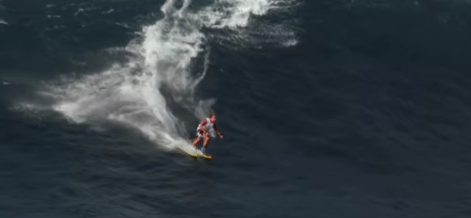
Finally, we look into Wave Skiing, a new sport emerging from the surf in Maui. Check out the short video of Chuck Patterson, a famous Freeskier, skiing down monster waves. With ski poles. And ski boots. Go figure.

Advertising Request: We Want Advertisers Who Want You

As you can probably tell, SeniorsSkiing.com is growing and attracting some new, senior-appropriate ads. That is a huge positive steps for us as it means our focus and mission on senior snow sport enthusiasts is getting traction in the snow sports industry. Co-Publisher Jon Weisberg asks you to help us find some more advertisers and gives you some information that can be helpful.

Thanks to all our readers for your support. Remember The Forum is the best way to communicate with other seniors.

As Bernie sez: There are more of us every day, and we aren’t going away.

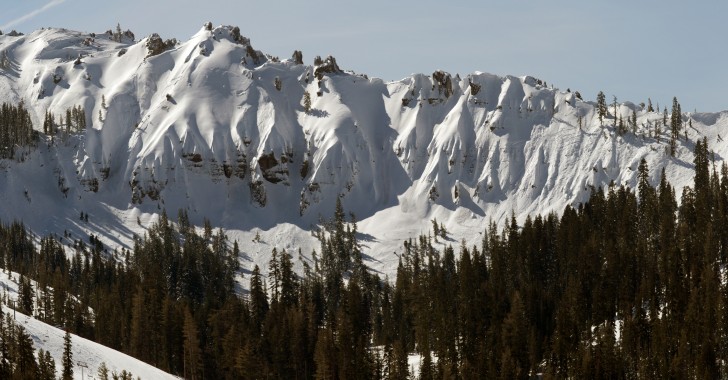
The Palisades at Sugar Bowl are a dramatic background to a season filled with awesome skiing. There's still 82 to 165 inches at SugarBowl. Credit: Sugar Bowl Resort

The Palisades at Sugar Bowl are a dramatic background to a season filled with awesome skiing. There’s still 82 to 165 inches at Sugar Bowl.
Credit: Sugar Bowl Resort

California Wrap: Sierra Nevada Resorts Are Jubilant!

…And There May Be More Snow Coming Next Week!

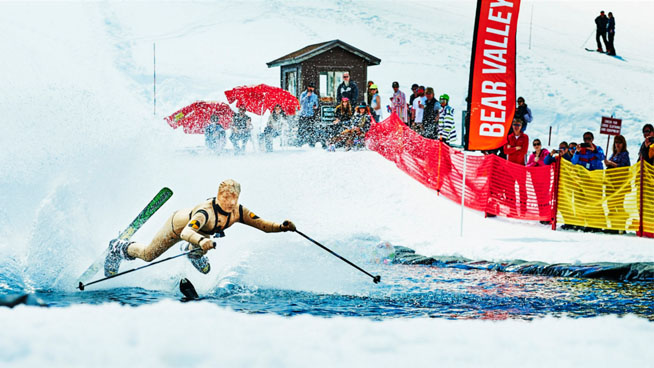
Bear Valley Pond Skimming. Silly season is in out in happy, snow-filled California. Credit: Steve Peixotta/ Bear Valley

Bear Valley Pond Skimming. Silly season is on out in happy, snow-filled California.
Credit: Steve Peixotta/ Bear Valley

As one of the best ski seasons in the Sierra Nevada in the past five years winds down, resort operators can look back and smile broadly about the steady stream of mid-size snowstorms that rolled over their resorts on a regular basis all season long, making for consistently ideal conditions and doubling the overall snow depths, operating days, and skier/boarder visits, compared to last year and the several years before that. And it’s not over! Although rain is forecast for this weekend at most locations, a few inches of snow are predicted for next Thursday, April 14th.

April—And May!—Closing Dates

Corduroy corn on Mt. Rose. It's been a good year for the Sierra Tahoe area. Credit: Mt. Rose/ Ski Tahoe

Corduroy corn on Mt. Rose. It’s been a good year for the Sierra Tahoe area.
Credit: Mt. Rose-Ski Tahoe

If you haven’t stowed away your wintersports equipment yet, you still have time in the coming weeks to get in a few more runs on some nice corn snow. Here are the closing dates as of April 7  for the following ski areas (may change, subject to snow melt and snowfalls!):

Last day of operation this coming Sunday, April 10th: Bear Valley and Bear Valley Cross-Country, Homewood, June Mountain, Soda Springs, Tahoe Donner.
Operating through Tuesday, April 12th: Donner Ski Ranch, Mt. Shasta.
Open through Sunday, April 17th: Boreal Mountain Resort, Diamond Peak, Kirkwood, Northstar.
Open until Sunday, April 24th: Heavenly Mountain Resort, Ski China Peak, Sugar Bowl.

Open through Saturday, April 30th: Sierra-at-Tahoe

Operating through Sunday, May 8th: Mt. Rose – Ski Tahoe.

Staying open through Memorial Day, Monday, May 30th: Squaw Valley/Alpine Meadows and Mammoth Mountain (the latter will operate longer if there’s still skiable and boardable terrain).

Those resorts that have already closed include all Southern California ski areas, Badger Pass in Yosemite, and Dodge Ridge.

How Much Snow Was There?

Senior XC skier Pat Van Mullem after skiing 50 km at Bear Valley XC. Credit: Paul Petersen/ Bear Valley

Senior XC skier Pat VanMullem, 62,  after skiing 50 km at Bear Valley XC.
Credit: Paul Petersen/ Bear Valley

Currently, in this first week of April, the major Northern and Central California ski areas are still swathed in snow with base depths ranging from 43 inches (Northstar) to 96 inches (Bear Valley) and top-of-the-mountain depths ranging from 94 inches (Heavenly) to 201 inches—nearly 17 feet! (Mammoth). But what’s really impressive is the total number of inches of snow that fell this winter, with many resorts getting three times the amount of snow as they did in recent past seasons. Here are some of the prodigious snowfall totals for this season to date: Sugar Bowl, 547 inches; Squaw/Alpine, 463 inches; Northstar, 446 inches; Mt. Rose, 381 inches; Heavenly, 341 inches; Kirkwood, 437 inches; Bear Valley, 325 inches; Bear Valley X-C, 348 inches; Mammoth, 342 inches. Snowmaking kept some snow depths even deeper!

End-Of-Season Deals Still To Be Had!

Hit the slopes in the coming days and weeks, and you may be able to score some savings. Several resorts will let you apply your lift ticket purchase to next season’s season pass. Buy a 2016–17 Squaw Valley/Alpine Meadows season pass and ski free at both resorts for the rest of this season (until the end of May, conditions permitting). Sugar Bowl has special reduced spring rates, and most areas have early-bird pricing in effect for season pass purchases (check individual resort websites for “early bird” deadline dates and savings info).

A Few Closing Thoughts…

Most Sierra Nevada resorts will have had a nearly five-month season this winter by the time the mountain streams start raging with snow melt. And their staffs couldn’t be happier. Says Lauren Burke, communications manager at Mammoth, “Nature has brought us a return back to a ‘normal winter’ and we’ve seen so much excitement this season… This year’s snowfall passed last season’s total in January, and the mountain has been 100 percent in operation since mid-December.” Bear Valley Cross-Country’s Paul Petersen concurs, “What a difference a year makes! We are super-excited to have had a real winter return to the High Sierra and are grateful for a spirited and enthusiastic return of our customers to this great trail system.” Across the road at Bear Valley downhill resort, its director of marketing Rosie Sundell adds, “The snow enthusiasts came out in droves to make up for the powder they missed over the past four seasons.” Says Northstar’s Cassandra Walker, “ We are thrilled with how well the season has gone and are excitedly skiing our way out of the 2015–16 season on this famed Tahoe corn snow, with bluebird skies and sunshine above.”

And with that said, the finger crossing begins that next season will be a repeat of this one!

The Palisades at Sugar Bowl are a dramatic background to a season filled with awesome skiing. There's still 82 to 165 inches at SugarBowl. Credit: Sugar Bowl Resort

The Palisades at Sugar Bowl are a dramatic background to a season filled with awesome skiing. There’s still 82 to 165 inches at Sugar Bowl.
Credit: Sugar Bowl Resort

We Want Advertisers Who Want You

SeniorsSkiing.com has a GREAT End-of-Season Ad Special!

Sticker2016SeniorsSkiing.com is seeking advertisers and sponsors wanting to position their products and services to our audience of active, older snow sports participants. And we’re asking you, our readers, to help.
At the height of the 2015-16 season we received almost 18,000 visitors and almost 59,000 pageviews.* Readers stayed an average of three minutes, spending over one minute per visited page.

“Our experience with SeniorsSkiing.com readers is that they’re deeply engaged,” says Brian Frias, Brand and Technology Manager, Masterfit Enterprises, Inc., a  charter advertiser specializing in products, training, and education to improve boot fit and the boot fitting experience.

“SeniorsSkiing.com readers stayed on Masterfit.com more than twice as long as Masterfit’s average visitor. They visited more than twice the pages than our average visitor. And their bounce rate was far lower than our average.”

Our Readers

Another indication of engagement is the unusually high 27 percent response to a recent reader survey. The survey polled demographic and behavioral information from SeniorsSkiing.com subscribers, individuals who registered to receive weekly updates. Their average age is 67. They are evenly divided by gender. The majority are alpine skiers (91%), almost half expected to ski 20 or more days in the 2015-16 season. Twenty percent indicated they would ski 50+ days. On average, they take day trips to six resorts per season. For weekend and vacation trips they visit an average of two resorts per season.

The majority (57%) expect to purchase underwear and other forms of layering. About one-third expect to purchase skis; 25% expect to purchase boots and gloves, and 29% expect to purchase new goggles. Purchases of parkas and pants are anticipated by almost one-quarter of respondents.

Asked about the things they take to the mountain, they indicated:

  • Goggles: 94%
  • Cell Phone: 91%
  • Helmet: 85%
  • Balaclava/Neck Warmer: 77%
  • Sun Glasses: 73%
  • Sunscreen: 70%
  • Boot Bag: 58%
  • Pain Reliever: 45%
  • Water Bottle/Hydration System: 43%
  • Hand Warmers: 40%
  • Reading Glasses: 40%
  • Ski Bag: 37%
  • Camera: 35%
  • Ski Wax: 34%
  • Energy Bar/Gel/Drink: 32%
  • Glove Liners: 31%

End-of-Season Special

The End-of-Season Special gives 12 months of Home Page advertising and 12 months of Sponsored Content pages for $1500. This offer expires at the end of May.

Additionally, advertisements and/or Sponsored Content pages can be purchased weekly, monthly, and seasonally.

For additional information see the SeniorsSkiing.com advertising rate card or contact jon@seniorsskiing.com.

*Google Analytics:  January – March

Wave Skiing In Maui: The Future Of Freeski?

When The Need To Ski Takes You To The Ocean.

Chuck Patterson slaloms down "Jaws" in Maui. Credit: Salomon Freeski

Chuck Patterson slaloms down “Jaws” in Maui.
Credit: Salomon Freeski

Here is former Freeskier Chuck Patterson handling several big ones off Maui in 2011 on skis.  He’s experimenting with the idea of skiing down monster waves like Pe’ahi or “Jaws”, shown here. We do wonder, however, what he is doing with those poles. We guess that’s part of the experiment.

Holy Cow! Harriet’s Got Two New Hips!

How To Be A Good Friend While Your Friend Heals.

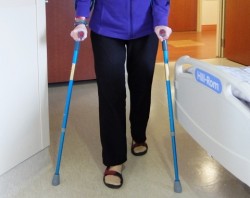
Harriet is getting back in shape after hip surgery

Harriet is getting back in shape after hip surgery. Harriet Wallis

Like many seniors, I’m rebuilt with mechanical parts. For me it was two knees and now it’s two new hips. I’m a heap of stainless steel.

While my hips learn what they’re supposed to do, I’m mostly stranded at home with a lot of pain, inability to do what I usually do, and boredom.

People good-naturedly say: “If you need something, call me.” But you can go one step further in being a good friend to someone who just had a joint replaced.

Give help.

I grew up as a New England Yankee – self sufficient and self reliant. I just won’t call somebody for help. Your friend might have a similar outlook.

Call your new-joint friend and announce.

Don’t ask – just announce that you’re coming on Wednesday to do a useful task such as: run the sweeper, move a chair onto the patio, or clean a bathroom. New joints don’t bend, stoop or swivel very well. And they’re quick to swell up. Some tasks are really hard for us to do.

Create an outing.

Another option is to call your new-joint friend and announce that on Wednesday you’ll drive him/her out for coffee, go to the park for some sunshine, or go to the grocery store.

For me, just because people see that I can walk, talk and smile does not mean that I’m back to normal. Not by a long shot. We who have new joints can use some acts of kindness and help even though we don’t ask for them.

Editor’s Note: SeniorsSkiing.com’s long time correspondent, Harriet Wallis has written about many topics since this online magazine started. She’s just won the SkiUtah Journalist of the Year Award for the second time. She wrote about her decision to replace her knees and documented her recovery in a series of articles that are a “must read” for anyone contemplating this operation. Now with two new hips, we know she will be working back to top shape with the same courageous vigor she demonstrated before so she she can enjoy the outdoors again

Backwoods Ski Club: Informal Senior Group, No Rules, Just Fun

Good Times On Gore Mountain With Senior Skiers.

Gore Mountain Resort is headquarters for the Back Country Ski Club. It's not always this foggy. Credit: Pat McCloskey

Gore Mountain Resort is headquarters for the Backwoods Ski Club. That’s Whiteface in the distance. It’s not always this foggy.
Credit: Pat McCloskey

I am riding the chair at Gore this week with my good friend Mike Smith.  He said to me, “McCloskey, I have found the meaning of life—speed, horsepower and altitude.” Mike is an avid skydiver and pilot as well as a real good skier.  At 66 years old, he has more energy than most people.

He makes a home for the Backwoods Ski Club at Gore Mountain Ski Resort, NY.  There are several senior skiers who are regulars at Gore and like Mike, have more infectious energy than a lot of folks their age.  At 75, John Daly is the ringleader and is constantly herding his group of skiers who are all in their 70s and 80s.  John is a retired businessman from Amsterdam, NY and makes Gore his second home in the winter.  If you ever think that you have to slow down as a senior skier, you should spend a day like I did with Mike and the affable crew from the Backwoods Ski Club.

What kind of activities does the Backwoods Ski Club engage in?

Aside from skiing, they are very social.  No dues, no bylaws, just an invitation to join their club is all that is needed. Your membership includes a little varnished pin that is made of wood that simply states—”Backwoods Ski Club.”  They have a potluck lunch every other Wednesday and an end of the year social at the area with a catered meal.

How have they seen skiing change over the years?

One of the reasons they like Gore is that it is managed by the Olympic Regional Development Authority in conjunction with the State of New York.  There’s very little commercial development, and they like that just fine.  Gore is family and senior-oriented.  The lodge is filled with gray hairs and not crowded.  Mike says skiing in general has become very commercialized with focus on real estate development.  Gore is a throwback of sorts with focus on skiing.  That is why the folks from Backwoods love it.

What advice for a mid week club?

John Daly says that it is fairly simple. Gather the skiing friends and make a plan to meet on Wednesdays, just like them. The simpler the plan, the better they like it.

Back Country Ski Club members love the double blacks, even scary ones like this. Credit: Pat McCloskey

Back Country Ski Club members love the double blacks, even scary ones like this.
Credit: Pat McCloskey

Does Gore offer any assistance to seniors?

Aside from a casual meeting place in the lodge, they offer seniors a special season pass rate of $270.00 for anyone over 70.  They have mid-week adult clinics (not just seniors), including package meals, lift tickets, and instruction.

How large is the club?

Mike and John are not really sure.  They have lost a few folks in the past season, but the membership is pretty full and most are avid skiers who are retired or have the flexibility to ski in the morning and then manage their affairs in the afternoon.

What’s the lessons learned about ski clubs?

The key ingredients to the success of the club are flexibility, humor, infectious ski culture, and the rules are there are no rules.


Masters Program At Kirkwood: The Trend Continues

Sierra-Tahoe Resort Hosts Seniors “Ski For Life” Special—Clinics, Education, Socializing.

Kirkwood Mountain Resort in the sunset. A free test Masters Program will run on April 14 for all seniors. Credit: Kirkwood

Kirkwood Mountain Resort in the sunset. A free test Masters Program will run on April 14 for all seniors.
Credit: Kirkwood

Kirkwood Mountain Resort in the Sierra Tahoe region is joining a number of ski areas that are conducting programs focused on their senior skiers.  Kirkwood says they have found their senior skiers and riders want to socialize with others, get the best value for their dollars, and ski confidently on uncrowded, safe slopes, similar findings to SeniorsSkiing.com’s reader surveys.

So, Kirkwood is starting a “Ski For Life” program where 50-plus season ticket holders can learn about the latest equipment, learn to ski or ride “smarter, not harder” and conserve energy, and get guidance on fitness and nutrition.

The program features a day with coaches and staff starting with a continental breakfast, stretching and small group ski clinics organized by skill level.  And, apres-ski social time.  The resort is starting with a free test program for all seniors on April 14.

SeniorsSkiing.com salutes Kirkwood for considering this program.  Actually, Kirkwood is joining Jack Frost Ski Area, PA, Dodge Ridge, CA, Waterville Valley Resort, NH, and a few others who are specifically focusing on making the outdoor winter experience more rewarding and interesting for its seniors.  Thanks, Kirkwood.  Other ski areas, are you listening?

Jay Peak Making Lemonade From A Lemon Ski Season

Vermont’s Jay Peak’s Video Shows How Creative Eastern Skiers Can Be When Making The Most Out Of Lemons.

The clever skiers from the Northeast Kingdom discover a lemon tree right on the ski trail.  Can you count the number of ways they make lemonade?  Nice work, Jay Peak.  Next season will be better.


Harriet Wallis Hailed As Ski Utah’s Journalist Of Year

It’s The Second Time Harriet Has Won This Award!

Harriet Wallis is a veteran journalist who regularly skis the resorts around Salt Lake City. She is a long-time corresponent for SeniorsSkiing.com.

Ski Utah Communications Director Paul Marshall (left), Harriet Wallis, Ski Utah Director Nathan Rafferty. Harriet is a veteran journalist who regularly skis the resorts around Salt Lake City. She is a long-time correspondent for SeniorsSkiing.com, and we are so proud of her accomplishment. Credit: Pam Weisberg

Harriet Wallis earned Ski Utah’s top award – Journalist of the Year – for outstanding and consistent ski stories and photos about skiing in Utah.  She’s had 64 stories and 71 photos published this year in a variety of publications, including SeniorsSkiing.com.

It’s the second time she’s earned the award. The first time was for the 2010-11 ski season. This award is for the current 2015-16 season.

Journalists from magazines, newspapers and TV were also nominated. Harriet is a freelance writer and photographer. The award was announced at Snowbird on Friday.

This Week In SeniorsSkiing.com (Apr 1)

Skiing In Literature Series Launched, Fun Products, Snowshoeing At Ski Resorts, Plus A Report On Roads Scholars Trip to Telluride, CO.

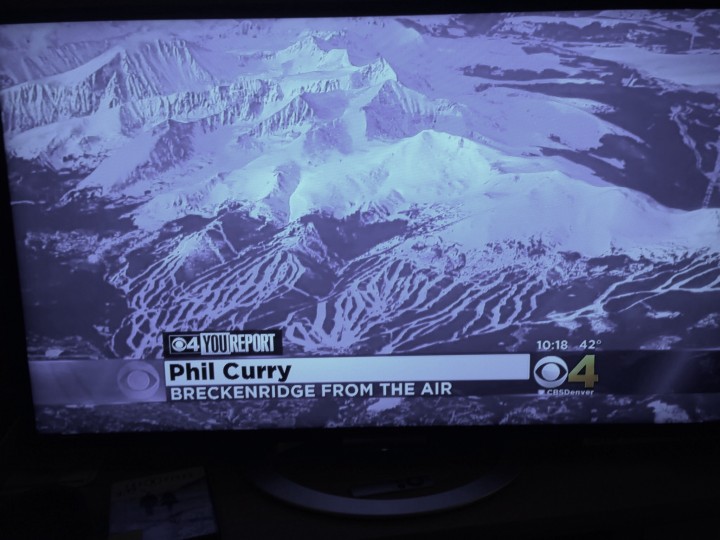
This isn’t an April Fool joke. There is a forecast of snow for this weekend in the Boston area. Come on, Old Man Winter, make up your mind. Our friends in the West are celebrating even more powder as this photo from TV news of Breckenridge shows.

Western states got ka-powed last week. Here's Breckenridge. Credit: Joe Durzo.

Western states got ka-powed last week. Here’s Breckenridge.
Credit: Joe Durzo.

This week, we are publishing the first in a series of Skiing In Literature with an excerpt from Hemingway’s The iHemiSnows of Kilimanjaro. It’s our way of celebrating the 80th anniversary of the story, first published in Esquire in 1936. We will have more Skiing In Literature articles coming up. If you have any sources of stories, poems, novels, please let us know.
Our recent Subscriber Survey has revealed what many senior skiers view snowshoeing as a second snow sport. Roger Lohr, publisher of XCSkiResorts.com, presents a number of Alpine ski areas that run snowshoeing programs, from strenuous to casual. Snowshoeing, by the way, is a great way to spend time on the snow with grandkids.

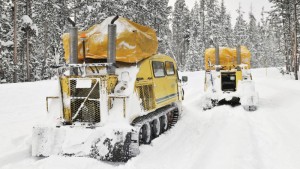
There’s a clever way to “hack” using hand warmers from our resident craftsperson, Sue Z, as reported by co-publisher Jon Weisberg. Jon also reports on the auctioning of Yellowstone National Park’s monster snow coaches. Imagine one of those in your driveway.

Bombadier snowcoaches have operated in Yellowstone since 1954. Photo: brytta/iStock

Bombadier snowcoaches have operated in Yellowstone since 1954. Photo: brytta/iStock

Correspondent Jan Brunvand describes his experience with Road Scholars in Telluride. Formerly known as Elder Hostel, Roads Scholars has many different adventure travel programs, skiing only one.  There are cross-country adventures, too.

DeBooter: Easy-to-use ski boot jack. Credit: OutDoor Logic Solutions

DeBooter: Easy-to-use ski boot jack. Credit: OutDoor Logic Solutions

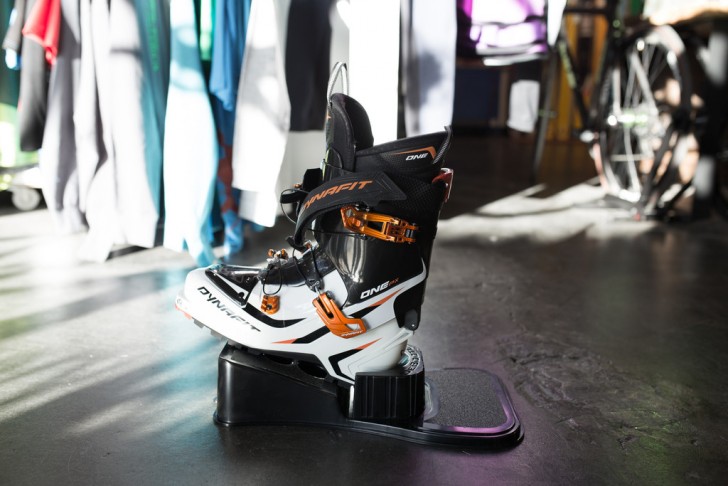
Finally, we highlight a product we feel is a long time coming and greatly needed by senior skiers. It’s the DeBooter. a fast and easy way to take your ski boots off. DeBooter is also a SeniorsSkiing.com advertiser, and we believe the product is a perfect match for our readers.

Speaking of advertising, as we begin our third season of publishing SeniorsSkiing.com, we have grown to the point where advertisers who have products and services targeted to active seniors would definitely benefit by advertising with us. If you know of potential advertisers, please let us know.  Contact jon@seniorsskiing.com

Awesome track at Breckenridge. If you know who took this picture, please tell us. Meanwhile... Credit: Breckenridge Ski Resort

Awesome track at Breckenridge. If you know who took this picture, please tell us. Meanwhile…
Credit: Breckenridge Ski Resort

DeBooter: DeLovely Way For Easy (And Painless) Boot Removal

A Smart Ski Boot Jack That Really Works.

DeBooter: Easy-to-use ski boot jack. Credit: OutDoor Logic Solutions

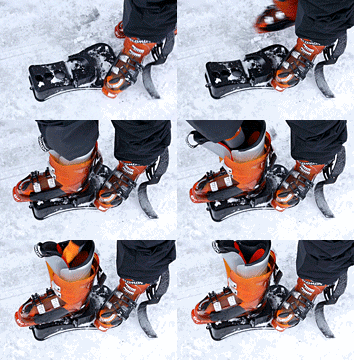
DeBooter: Easy-to-use ski boot jack. Click on image for demo. Credit: OutDoor Logic Solutions

They are the collective sounds of people removing their ski boots: the moans of agony and the sighs of joy heard in lots and lodges around the globe.

I’m simply relieved to get the damn things off, but getting the top of my foot past those two nasty tabs of plastic are akin to ripping a bandage off an old wound. I HATE IT!

No more. I recently had occasion to remove my boots with the DeBooter, an easy-to-use ski boot jack. It takes the pain and discomfort out of the process of taking off ski boots. You’ll still need to bend over to loosen your buckles and your booster straps (if you use them), but the struggle is over!

Place your boot heel in the designated area, step on the back of the device, and lift your foot out of the boot. It happens so quickly and so easily that you need to keep shoes close by so you’re not hopping around on one foot.

Wanting to verify my experience, I took the product around the Alta parking lot one afternoon as people were approaching their cars still wearing their boots. About a half dozen tried it. Using it is intuitive. The first few questioned why it was necessary. As soon as they tried it, they wanted to know where they get one for themselves. Another person who was wearing telemark boots had a little difficulty at first but quickly figured out how to make it work. Each and every one of the others appreciated the ease with which their boots popped off in full comfort.

The day had warmed up and the melting snow required shaking the product to get rid of dirty water. When faced with those conditions, keeping a towel in the car or using the DeBooter bag which can be purchased separately makes sense.

A great idea whose time has come. Get those boots off easily! Credit: Debooter

A great idea whose time has come. Get those boots off easily!
Credit: Outdoor Logical Solutions

The product is constructed of rugged plastic. It’s one of those things you purchase once and will to your favorite skier. It looks like it will last forever.

DeBooter is available in two versions: portable and commercial. I used the portable model, which sells online for $49.50. The commercial model gets screwed into a solid surface and is intended for use in condos, homes, and ski shops. It’s listed for $42.00. The company is a SeniorsSkiing.com advertiser and is offering readers a 20% discount. For more details, click here.