Ski Show Retro Video Brings Back Memories

If You’ve Been Around The Ski Biz, You Will See Some Familiar Faces.

Flipping out at a 60s ski show.

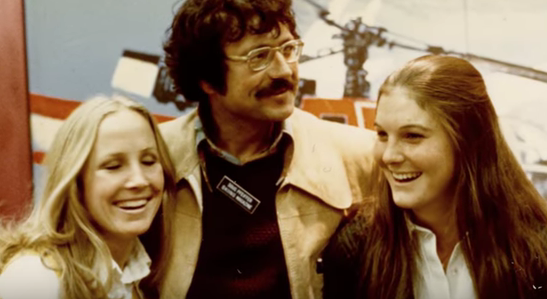
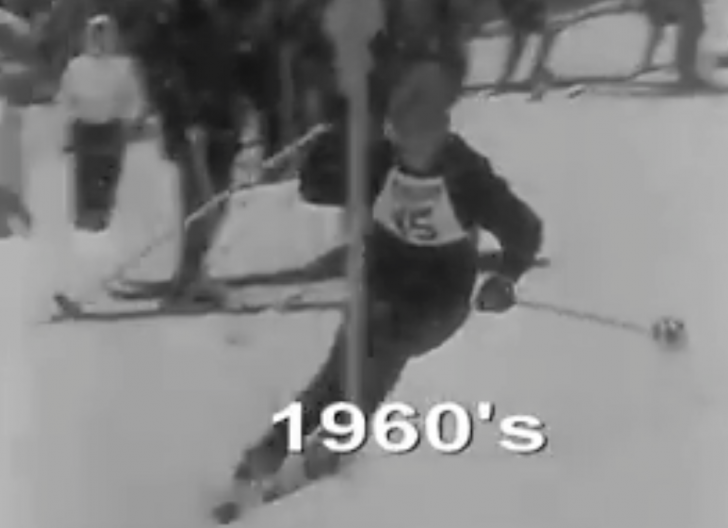
Thanks to Cathie Judge for sending us this video commemorating the famous Harry Leonard Ski Shows, starting in the late 60s with lots of clips of several giants of the ski industry back in the day.

Ski and Snow Board Show impresario and SeniorsSkiing.com advisory board member Bernie Weichsel, who contributed archival photographs to this video, said that Harry Leonard’s son, Adam Leonard, produced this for Harry’s 90th birthday.

SKIING magazine editor and ski legend Doug Pfeiffer at the show sometime in the early 70s.

So many familiar faces: Barbara Alley, Stein Ericksen, Doug Pfeiffer, Bob Beattie, and many other industry personalities.


SeniorsSkiing Guide: Saving Laurel Mountain From Obscurity

Western PA Pioneer Area Comes Back To Full Operation.

Fun Fact: Legendary Hannes Schneider designed the trails at Laurel at around the same time he created Cranmore.
Credit: Laurel Mountain

There has been a lot written about the lost ski areas.  For one reason or another, ski areas sometimes are unable to meet the financial or operational requirements and end up closing the lifts.  They fall into disrepair and end up on a list of lost ski areas forever.  But, there is an exception whose light is burning bright this winter.  Laurel Mountain in the Laurel  Highlands of Western  Pennsylvania will once again be spinning the lifts thanks to a grant from the State of Pennsylvania and the financial and operational input of the major ski area in the region—Seven Springs Mountain Resort.

Laurel’s origins date back to 1939 when Pittsburgh financier Richard King Mellon began to plan a ski area for the enjoyment of the members of the  prestigious Rolling Rock Club.  In alliance with Harvey Gibson who was chairman of Manufacturer’s Trust Company and owner of Cranmore Mountain in New Hampshire, they began building the ski area on the western flank of the Laurel Ridge near Ligonier, Pa.  The design of the mountain was created by the world famous Hannes Schneider who was the inventor of the Arlberg method of ski teaching which is the basis of modern alpine technique.  Schneider was brought to the U.S. by Harvey Gibson and the legendary Austrian ski instructor hiked the Laurel Ridge and designed the trails and the signature Wildcat run which is the steepest run in Pennsylvania.

Soon after World War II, the private resort was opened to the public.  “Ski tow” tickets were $1.25 per day to ride the surface lifts.  Private lessons were $5.00 per hour with instructors trained by the famous mountaineer  Ralph “Doc” DesRoches, a veteran of the 10th Mountain Division and eventual major patron of the US Ski Team. Laurel grew with the post war boom and in 1947, a new lodge was built at the mountain summit. Laurel was soon the home of the Pennsylvania State Ski Championship founded by Edna and Max Dercum of Penn State University where Max was a professor of forestry.

In 1955, a new lift, perhaps the only one of its kind—a Constam T-bar— became the first top to bottom lift eliminating the need for three rope tows to get to the summit.  In 1956, Laurel was among the first ski resorts to install large scale snowmaking.  In 1963, R.K. Mellon and his sister Sarah Scaife gave the ski area to the State of Pennsylvania which began a new era with Poma lifts replacing rope tows and lights for night skiing.  The first chairlift at Laurel was installed in 1968.  After a number of years of state ownership and mounting competition from Seven Springs and Hidden Valley, Laurel fell to financial troubles and had many years of start/stop operation.  In 2004, Seven Springs entered into an agreement to run Laurel Mountain, but, with many improvements deemed necessary, the resort was once again closed.

Seven Springs eventually purchased the assets of Laurel Mountain and soon began to chart a course for operation once again with SE Group as the primary consultant.  With revitalized snowmaking by HKD, reconstruction of the lodge in 2015-2016, and official groundbreaking for a new quad chairlift, the plan for opening for the 2016-2017 ski season was finally a reality.

Laurel is a gem to the local community. The 1000+ members of the web-based group Friends of Laurel Mountain had a lot of influence in the progress of the construction. It is with great pride that the residents of Ligonier and the ski community in general in Western Pennsylvania welcome the historic Laurel Mountain back to the list of operating ski areas in the U.S

Location:

US 30 East, just outside of historic Ligonier, Pa.  Approximately a one and a half-hour drive east of Pittsburgh.

Trail Map: Click here.

Hours of Operation and Ticket Prices:

Sunday –Wednesday- 9:00 AM to 4:00 PM  Tickets $38.00

Thursday-Sunday- 9:00 AM to 9:00 PM – Tickets $53.00

Holidays- $58.00

Preferred Lodging:

Ligonier Country Inn

Call for reservations: 800-916-4339

Dining:

There are many dining establishments in the town of Ligonier including the Ligonier Tavern, my favorite,  just off the town square.

Goofy And Mickey On The Art Of Skiing

This Throw-Back Cartoon Reveals The Stereotypes Of Skiing In The 70s.

Credit: Walt Disney Productions (Of Course!)

10 Reasons To Go Skiing This Winter: John Christie’s Last Article

[Editor Note: We are honored to publish one of John Christie’s last articles about skiing, snow, and the outdoors.  John was one of snow sports most ardent supporters, from his days as a college racer to the development and management of major ski resorts in Maine and Vermont. He passed away in the spring, and to us, he was an original ski hero. This article first appeared in Maine Seniors Magazine and re-publish here in its entirety with permission.]

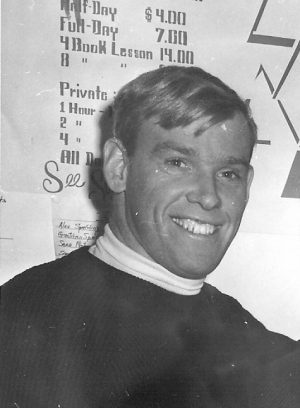
John Christie as a young ski instructor.

John Christie as a young ski instructor.

With apologies to late night comedians (or, more precisely, to their stable of imaginative writers) I’ve been ruminating recently about all the reasons I love to get out on the slopes, and in the hopes that some of mine might resonate with you, here are my Top Ten, in random sequence:

#10 It’s good for you. Damn good, I’d suggest because it’s one of the handful of ways that you can actually get out and genuinely enjoy cold winter days. Your heart’ll pump a little harder, your skin’ll tingle, and you’ll come in after a chilly day on the slopes and really feel rejuvenated. At least that’s what happens to me. Good for both the body and the soul.

#9 It’s fun. Not to mention, although of course I will, exciting, exhilarating…even mood-altering. I see a lot more smiles than frowns on the lift and even in the line than I see virtually anywhere else in a crowd of a thousand people or more.

#8 It opens up a world of choices and opportunities, pretty close to home for most of us, for a variety of terrain, alpine and Nordic options, big mountain or community area. And the choices include not just the recreational ones. Some of the best brew pubs and dining spots are located at or in close proximity to Maine’s ski facilities, so the variety of ski and apres- ski options are practically limitless.

#7 It’s a great way to spend time, and even reconnect with, your spouse, kids, grandkids and loved ones. Some of the biggest smiles I see behind winter face masks are proud parents and grandparents watching their Bubble Cuffers progress, and kids realizing just how much fun this sport of ours can be. Family ski trips are the stuff of which life-long memories are made, and for good reason.

#6 Conversely, there are times in our stressful and hectic lives that it’s good to just get out in nature alone, on fresh corduroy on the side of a mountain or on a quiet cross country trail through evergreens bowed down by a recent snow. Leave the cell at home and just listen to the sounds of silence.

#5 It’s the perfect way to reconnect with old, like-minded friends with whom you don’t even have to exchange a word as you stop at the bottom of an epic run together. You all know what you’re thinking: “It doesn’t get any better than this!” Somehow, it seems to me, the bond between friends strengthens on a ski slope. I haven’t figured out why… and I don’t need to.

#4 And there’s no better place in Maine in the winter, I’d submit, to make new friends. To begin with, anyone you meet is a kindred spirit, binding the two of you together instantaneously because you share a very important secret: We’re the lucky ones who’ve figured out how to make winter not just tolerable but the best season of the year. The closest, most enduring friendships I enjoy either originated or were strengthened on a ski slope.

#3 It’s a chance to explore a new place, or even a new sport (snowboarding, for example) and broaden your experiential horizon. Maybe this is the year to head north to Quebec for the first time, or try out the new trails and lifts at the Camden Snow Bowl, or trek on skis or snowshoes for an overnight at one of the luxurious huts in the Maine Huts and Trails system.

#2 If you’ve never skied before, this could well be the year that you give it a shot. Trust me, you’re never too old to start. Recent dumps of snow have created some darn fine skiing, with even better to follow in February and March, and modern grooming machinery and techniques have given us surfaces unlike anything we’ve seen in recent memory. Improvements in snowmaking equipment have enabled operators to make more of the white stuff more quickly, and the snow that for years seemed somewhat unnatural, now feels exactly like God intended it.

#1 You’ll be helping Maine’s recreation-based economy. In a state where summer recreation was the elephant in the room, contributing the vast majority of tourism revenues during just a few short summer months, and much of it in the coastal counties, expenditures by skiers like us have helped even out the heretofore seasonal and geographic disparity. Many rural economies depend on us and deserve our support.

Credit: Jamie Walter

John Christie, 1937-2016. Credit: Jamie Walter

New England Ski Museum Tells 3,000 Years Of Ski History

From The Stone Age To Today.

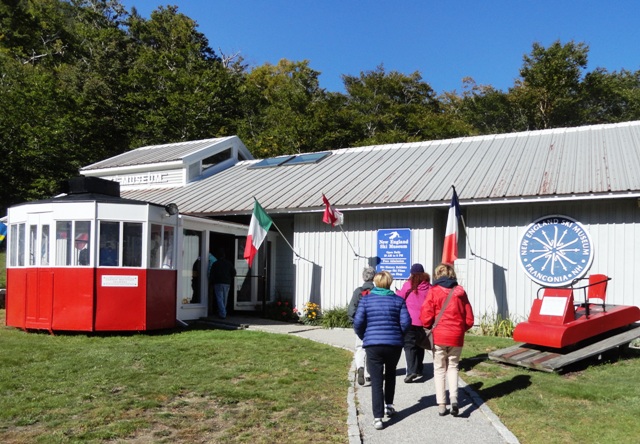
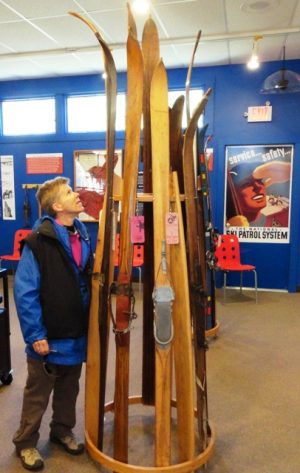
The tiny museum in Franconia, New Hampshire is located next to Cannon Mountain’s gondola base, and it’s a wonderland. Even before you enter, you’re intrigued by what you see just outside the door and you ask yourself: “What’s that thing?”

New England Ski Museum is located at the base of Cannon Mt., NH. Credit: Harriet Wallis

New England Ski Museum is located at the base of Cannon Mt., NH. Antique gondola car guards entrance. Credit: Harriet Wallis

The big red boxy thing is one of Cannon’s original tram cars from 1938. “Eeegads,” you say. “They went up the mountain in that?”

2-alg-skisThe sled-looking thing was Cranmore Mountain’s idea of an uphill lift. Skiers sat in the sleigh, and it was hauled uphill on a trestle.

Inside the museum, “We show how skis evolved from the stone age — to a slab of wood with a leather strap — to modern skis,” said Executive Director Jeff Leich.

And exhibits show milestones: the 10th Mountain Division, the founding of the National Ski Patrol, and a display of the funky clothes we wore not so long ago.

The museum’s name is misleading. This wonderful Ski Museum happens to be located in New England, but it covers skiing across the country.

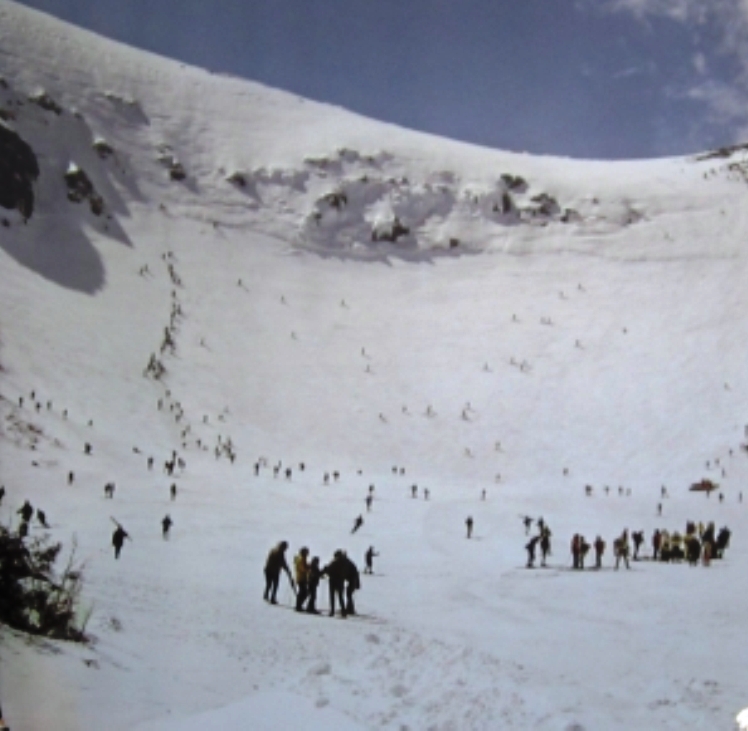
And when you’re all revved up, you come face to face with skiing Mt. Washington’s Tuckerman’s Ravine. It’s New England’s highest peak and is known for having the world’s worst weather. Actually, it’s a photo that covers an entire wall, and you feel like you’re right there. It stirs memories of hiking up the trail for hours. Lugging your skis all the way. Then clobbering up the steep slope to make a run for bragging rights.

This museum is a “must see.”

This photo of Tuckerman's Ravine on Mt Washington occupies an entire wall. Credit: NESM

This photo of Tuckerman’s Ravine on Mt Washington occupies an entire wall.
Credit: NESM

Ski Gifts and Collectibles

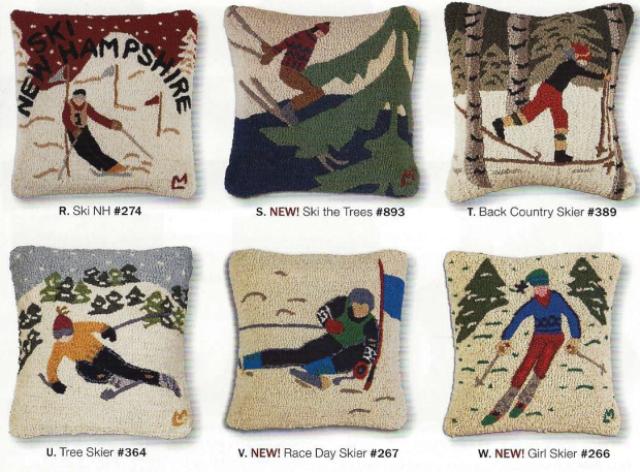
The NESM online catalog has something for everyone on your gift list. There are books and posters, jewelry, pottery, pillows, belts, children’s gifts and much more. Images are taken from history and will satisfy any skier’s wish list.

These beautiful pillows are

These beautiful pillows capture the spirit of the sport.  There are many other gift ideas in the NESM catalogue.  Credit: New England Ski Museum

Consider membership

Even if you can’t get to the museum, membership brings you a beefy, quarterly, 24-32 page journal full of archaic photos and stories that will keep you inspired and informed. An individual membership is $35 a year.

For more information and to shop the catalog online, check here.

To read more from Harriet click here for her stories on SkiUtah.


Skiing In Literature: Pete Seeger’s “Snow, Snow”

Haunting Song Evokes Winter Night Snow Fall.

Everybody knows Pete Seeger and his folk songs from archival ballads to anthems of struggle, the peace and labor movement, and the rest.  What is not widely known is that Pete was a lyrical poet, and some of his lesser known works are rich with images and emotion.  One of those is “Snow, Snow,” appropriate for listening to by a fireside on a cold night with a gentle snow fall outside.  It’s a bit minimalist, perhaps somber in its simple description of snow falling on a town.  We offer it here as a chance for our readers to reflect on what else snow can be.  Click on the Youtube video below to hear a rendition.

Credit: Shot Photos

Credit: Shot Photos

Snow, Snow By Pete Seeger

(Chorus after each verse)

Snow, snow, falling down

Covering up my dirty old town


Covers the garbage dump, covers the holes

Covers the rich homes, and the poor souls.

Covers the station, covers the tracks,

Covers the footsteps of those who’ll not be back


Under the street lamp, there stands a girl,

Looks like she’s not got a friend in this world.

Look at the big flakes come drifting down,

Twisting and turning, round and round.


Covers the mailbox, the farm and the plow.

Even barbed wire seems beautiful now.

Covers the station, covers the tracks.

Covers the footsteps of those who’ll not be back.


“Snow, Snow” was released on the 1973 Rainbow Race album.


Fifty Years Of Ski Racing In Two Minutes

Check Out The Change In Equipment, Styles, Spectators Through The Years.

Leather, buckle boots. No helmet, skidding turns. Snow was still snow, though. Credit: Pathe

Leather, buckle boots. No helmet, skidding turns. Snow was still snow, though.
Credit: Pathe

Many thanks to the Canadian Ski Instructors Alliance for posting this really interesting clip.  The CSIA got it from Skitourowe Zakopane.pl., a Polish ski travel group enticing visits to the Tatra Mountains, the highest mountains in Poland and part of the Carpathian chain in Eastern Europe.  In any case, it’s an interesting perspective on how ski racing has changed.

Skiing North America: Every Resort, Everywhere

An 85-Year Old Believes Someone Has To Do It; It Might As Well Be Him.

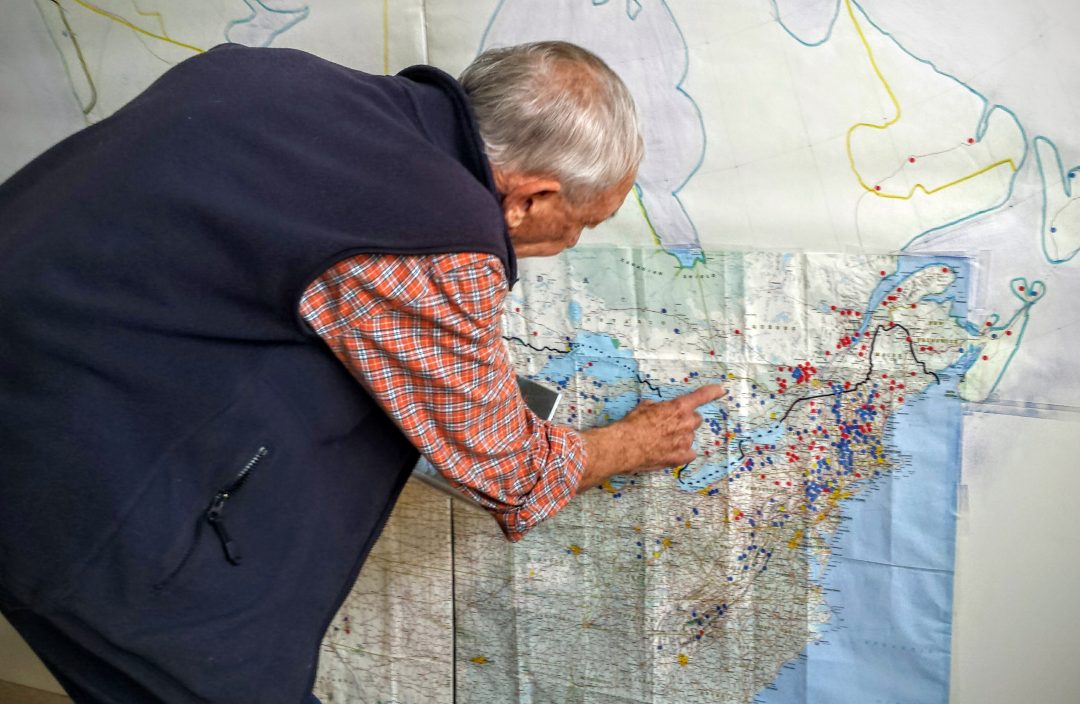
John Andrew points out ski areas he's skiied on a the wall-sized map in his Renton, Wash., home. Credit: John Nelson

John Andrew points out ski areas he’s skiied on a the wall-sized map in his Renton, Wash., home.
Credit: John Nelson

So many ski areas, so little time.

Yet at age 85, John Andrew is still busily crossing them off his list. Over the past 20 years, Andrew has been on a mission to ski all 700 alpine resorts in North America. He’s currently at 528, and he has several new targets in sight for this winter.

“I’m going to die trying to finish my quest,” says Andrew, a retired Boeing executive from Renton, Wash. “I won’t get it done, but I’m going to keep trying.”

It’s a big project, one that has consumed Andrew’s life since he retired at age 65.

It began innocently enough with a book. Andrew and his wife Jewel were shopping for a vacation home in the mountains using a guidebook of every ski resort in North America. Instead of narrowing the choices, the book opened up possibilities in Andrew’s mind.

“If we were going to buy a ski condo, I didn’t know where I wanted to buy it,” he remembers. Then, leafing through the resort guide, he wondered, “Why don’t we ski them all and find out?”

John Andrew and his wife Jewel on the slopes of Pine Creek Ski Area in Wyoming last February. Photo courtesy of the Andrews

John Andrew and his wife Jewel on the slopes of Pine Creek Ski Area in Wyoming last February. Photo courtesy of the Andrews

Over the following years, the Andrews embarked on their quest with gusto, sometimes with friends, sometimes with family, always keeping detailed records, grabbing trail maps, souvenirs and taking pictures. Jewel skied with John until 2007, when she quit the slopes after a knee replacement surgery. She still comes along on most trips.

“We are still skiing North America as a team,” he says.

“I think it’s fun,” Jewel says. “It gets you to all these places that you’d never go to—in the dead of winter.”

Their longest road trip covered 13,000 miles across the northern U.S. and Canada, when they hit 45 resorts in 16 states and provinces, including White Hills, the easternmost ski area in North America near St. John’s, Newfoundland.

Other trips took them to California, to New Mexico, to the mid-Atlantic, to the Deep South. They skied Cloudmont in Alabama, Ober Gatlinburg in Tennessee, Hidden Valley in Missouri. It’s all there, detailed on the spreadsheet and on the wall-sized map where Andrew places blue dots for the completed ski areas, red dots for those he has left to do.

Andrew gets the biggest thrill out of skiing places like Sawkill Family Ski Center, N.Y., with its 70 vertical feet, the smallest hill in North America.

When he stopped in at Sawkill, the lifts were closed. Andrew asked at the resort office if he could hike up and ski down, but the friendly general manager offered to drive him to the top in a pickup truck instead.

They roared up, Andrew hopped out, clicked into his skis and another resort bit the dust.

As he ages, Andrew has slowed down a little. Expert runs are a thing of the past—now it’s mostly greens and blues.

“It’s easy to get hurt and I don’t take foolish chances,” he says. “I look at the slope and if I don’t think I can do it, I won’t do it.”

“There’s a lot more to do,” he says as he gazes at his ski map on his living room wall . “But I like a job that’s tough. Even if I don’t get there, it’s something to do.”

John Andrew, 85, skis at Crystal Mountain, Wash., last March, checking another resort off his list. Credit: Emilio Trampuz

John Andrew, 85, skis at Crystal Mountain, Wash., last March, checking another resort off his list.
Credit: Emilio Trampuz

Review: Warren Miller’s Latest Is A Winner!

“Here, There, & Every Where” Brings Out Pre-Season Inner Child.

As he did with so many things, Warren finds his own way to wax. Credit: Warren Miller Personal Archive

As he did with so many things, Warren finds his own way to wax. Credit: Warren Miller Personal Archive

Warren Miller has been bringing out my pre-season Inner Child since I was a kid in Troy, NY. Every Fall he presented and narrated his latest film to a full house. For me he conveyed an impossibly aspirational message: Make a life choice that will allow you to ski, whenever and where ever you choose.

Like others, my choices were different, and it wasn’t until later in life that I was able to follow his advice. Over the years I’ve met many people who decided early to spend their lives in the mountains. They chose to work where they lived. Until 57, I chose to live where I worked.

Which brings me to the latest edition in the annual procession of Miller films.

Here, There, & Every Where,” coincides with the release of Miller’s autobiography, Freedom Found, My Life Story (reviewed a few weeks ago on SeniorsSkiing.com). The book provides a loose plot line for the film, with two young guys reliving Warren and Ward Baker’s very early experience bumming around in a small teardrop trailer and enjoying the mountains.

The film starts with Warren, now 92, reminiscing on camera and over footage of his early days. He explains how, in 1946, after leaving the Navy, he and Ward met surfing in California. That summer he shot surfers with a wind-up 8mm camera. That winter they parked in Sun Valley’s lot and shot people on skis.

It “jump-started what I wanted to do with my life,” he explains. “It’s crazy how the whole thing happened. I couldn’t have orchestrated it.” These lines have typical Warren Miller delivery: after all these years, he seems genuinely surprised with his own life story.

For me and the 2000-plus people at the film’s premier in Salt Lake City, it all rang true. We sang Happy Birthday to this 92 year old ski film pioneer, which was streamed live.

We then entered a world of stunning beauty and of great ski and boarding scenes across the globe. Like all Miller films, this one presents a host of amusing mishaps and crazy stunts by those too young to drive.

Freestyler Jonny Moseley is the superb narrator with a style surprisingly similar to Warren’s classic delivery.

The enthusiastic Salt Lake audience was not as young as I anticipated. A company representative said audiences generally are in the 25-50 range. That said, I saw teenagers, entire families, and very generous representation of those in their 60s and 70s.

Here, There, & Every Where is touring the country and should not be missed. Link here for trailer and schedule.

This is a Warren Miller production at its best. If you ski or board, see it. If you’ve retired from snow, it may be enough to get you out there again.

Warren Miller and

Warren Miller and Ward Baker living the ski bum life. They went from surfing in the summer to Sun Valley’s parking lot in the winter, shooting movies along the way.  Credit: Warren Miller Personal Archive

Warren Miller’s Story: You May Be A Skier Because Of Him

New Autobiography Shows How Miller Created Skiing’s Visual Brand.

Ski Pioneer Film-Maker Warren Miller lacing up at the Matterhorn. His beautiful and fun-filled films brought new people to skiing in the 60s and 70s. The WME company continues to produce over the top visual feasts.

Ski Pioneer Film-Maker Warren Miller lacing up at the Matterhorn. His beautiful and fun-filled films brought new people to skiing in the 60s and 70s. The WME company continues to produce over the top visual feasts.

For any senior who’s ever attended a Warren Miller film, Freedom Found, My Life Story will provide an intriguing look at skiing history as well as Miller’s success story. The autobiography is a must-read for anyone with a mindset to dig into the ups-and-downs of skiing—and real life.

Freedom Found is also a candid, moving, and adventurous story of how Miller became America’s most famous and prolific maker of ski and sports films.

As Miller details his journey from childhood deprivation to filmmaker success, he delves into the effects of being an “invisible” child during the Depression. In sharing his dysfunctional family life—alcoholic father doesn’t work, mother incarcerated, embezzlements—he shows how parental neglect led to his own drive to work hard.

He also acknowledges the saving grace of grandparents who provided attention at just the right times—an inventor grandfather who teaches him skills in his workshop and pays him for work; a grandmother whose gifts (bicycle, roller skates, Scout uniform) provide the attention and help needed. Living with them for two years while his mother was “away,” Miller finds the support that “changed my life” and gets to join the Boy Scouts in 1936 at age 12, another life-changing event.

Loving the outdoors, he enjoys hiking and learning to ski with his troop. By taking Scout trip photos with his 39-cent Univex camera and selling a print, he discovers the profit motive, commenting, “This was the kernel of the idea that taking pictures of great places would be a good way to make a living.”

It was skiing and surfing—he lived in Hollywood near the ocean and a teacher helped him make his first surfboard—that provided an escape to a world of delight and freedom. Miller graduated to even more freedom with his driver’s license, and soon his filmmaking turns into a career, starting with Surfing Daze in 1949 and Deep and Light in 1950.

An “original ski bum,” Miller lived out of a trailer and cooked over a camp stove to afford his ski habit and to make films. Marketing his ski features as fundraisers—for ski shops, clubs, organizations—he built his touring business into a huge success by personally narrating the showings (narration tracks came later). He entertained us with wry humor and comedic ski scenes—frustrating rope tow struggles, awkward situations (splitting stretch pants, etc.), crazy crashes—and inspired us to ski with his thrilling action shots and gorgeous scenery.

Warren’s success helped build skier participation and was a major contributor to the 1960s and 1970s ski boom. I saw that firsthand after showing The Sound of Winter (1970) to two high school assemblies and at an evening fundraiser: several non-skiing students joined our ski club and parents came forth to chaperone! The proceeds paid for the bus to Whiteface and made possible a $70 six-day trip (skiing, lessons, lodging, meals). To say thousands took up skiing because they enjoyed his films is an understatement.

Warren sold his film company in 2004, but the Warren Miller Entertainment (WME) film tour lives on. This year’s feature Here, There, and Everywhere (reviewed here by Seniorsskiing.com co-publisher Jon Weisberg) weaves the Warren story into several segments.

The just-published, 444-page biography, written with collaborator Andy Bigford whose 35 years in publishing include SKI Magazine and WME, is available at bookstores, warrenmiller.net, and via online outlets. Suggested retail price is $29.95.

Order Freedom Found by Warren Miller from Amazon, WME or at your bookstore.

Order Freedom Found by Warren Miller from Amazon, WME or at your bookstore.


From One Ski Pole to Two

A Personal Experience As Told To Alan K. Engen.

Early One Pole Skiers

Early One Pole Skiers

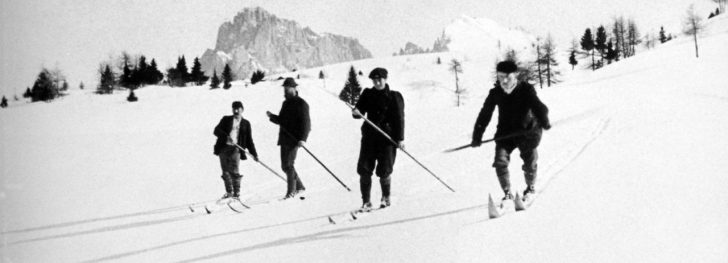
The late Ruth Rogers Altmann, a good friend and longtime Alta skier, was born in Vienna in 1917. She learned to ski in the Austrian Alps. Ruth’s earliest ski lessons involved the transition from Mathias Zdarsky’s (1874-1946) turning technique using one ski pole and leaning into the mountain to Hannes Schneider’s (1890-1955) turning technique using two ski poles and leaning away from the mountain.

Zdarsky transformed cross-country skiing to downhill skiing during the late 1800s and the early 1900s. He is recognized as the father of alpine (downhill) ski technique.

Young Ruth Altman in Austria

In the early ’20s, Ruth learned to ski in Zdarsky’s Ski School using a single, 5′ to 6′ metal-tipped bamboo pole for balance, turns, and to stop. With this technique, Zdarsky could teach people to ski in about five days.

The following excerpts are from Ruth’s recollections, which I recorded in 1988:

“The one long pole generally was made of bamboo and had a sharp metal point at the bottom. It was light and slightly flexible. Its purpose was to balance and support the skier. It was supporting when climbing up hill. One leaned on it with each step. When trails were too narrow for stemming or wedeln turns, we placed the pole between our legs and sat on it lightly, using it as a brake.”

“As skiing became more popular and developed from a means of transportation to a sport, games and racing competitions came into being. The popular game was a fox hunt on skis. A group of people had to find and catch the human fox’s red zipfel mūtze [long red night cap with a pom-pom]. The fox had an earlier start than the hunters so he could hide and flee from the hunters. ”

“As speed control became a factor in this new sport, the Zdarsky technique was challenged by Hannes Schneider’s speedier technique, which developed according to the law of physics and gravity. The weight had to be changed to lean downhill in turns, and two shorter poles, with baskets, replaced the one pole.

“We, the younger generation, and our older teenage brothers and sisters went with the new. A new division (of the ski school) was formed for two-pole skiing. Even some of the elders would use two poles, which when needed could be batted together to form one pole.”

Ruth Rogers Altmann skied every year at Alta well into her 90s and was a member of the “Wild Old Bunch,” Alta’s ski ambassadors. She passed away in the fall of 2015 at age 98 in New York City, where she lived most of her adult life.

From the permanent collection of the Joe Quinney Winter Sports Center/Alf Engen Ski Museum,

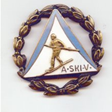
Several years ago, she presented me with the instructor pin she received in the 1920’s by the Austrian Ski School. That pin on permanent display in the Joe Quinney Winter Sports Center/Alf Engen Ski Museum, at Utah Olympic Park, shows a skier with a single pole.


Long Pole Skiing

What Is Old Is New Again.

This Hok from China skis what we see as the old way, but for him, it's a way of life.

This Hok from China skis what we see as the old way, but for him, it’s a way of life.

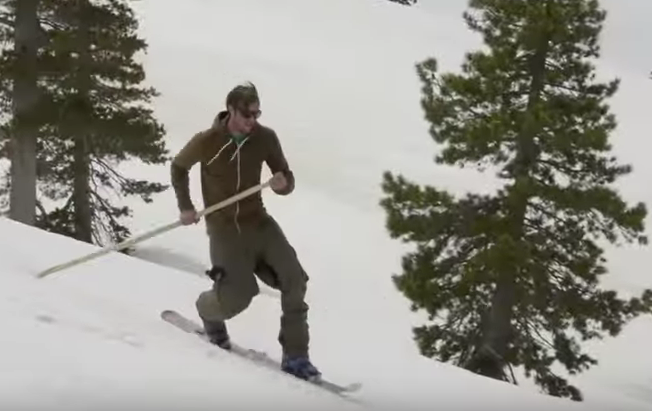
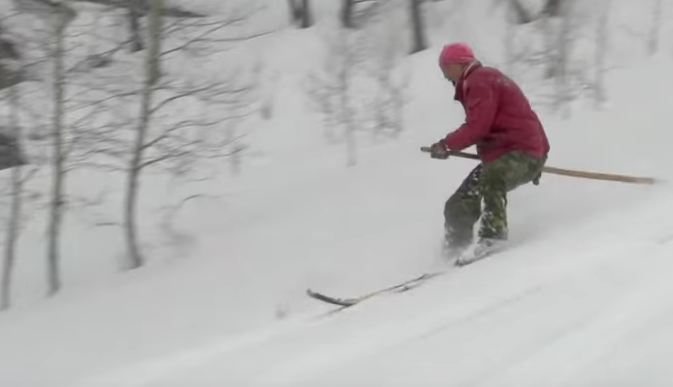
Last season, 38-year-old Ma Liqin visited Norway to demonstrate an ancient skiing style still used in the Altai Mountains, a range located at the intersection of China, Kazakhstan, Russia, and Mongolia. People in that region ski daily for hunting and transportation. Their equipment is fashioned from wood and has animal fur tied to the base. As part of the technique, they use a single long pole.

“The skiing technique is very attached to the traditional life of hunting, trapping, and reindeer herding. We do not know how long this activity will be kept alive,” said archaeologist Espen Finstad, archaeologist for Norway’s Oppland county.

Readers interested in long pole skiing  might consider the personal experience of 67-year old Dennis Murphy, from Chester Springs, PA.

“I was first introduced to long pole skiing approximately three years ago by my son, who experienced the use of a single long pole while investigating techniques used in telemark skiing. I found that the use of a single long pole provides a novel and enjoyable adventure. The technique enhanced my turning, provided a new rhythm and, perhaps most importantly, as a senior skier, provided a more stable and secure ride. In fact, last season I skied a double diamond that I would never have tried with two poles.

“The technique for long pole skiing is easy to learn. It is a natural movement that involves holding the pole horizontally in front of you and, as you turn, placing the pole tip on the surface at the rear end of your up-hill ski. When turning right, for example, the tip of the pole would be placed near the end of the right ski. It is similar to a kayak paddle to maneuver when moving down stream.

“The enhanced turning and rhythm resulting from using a long pole results from the natural tendency to lean back (uphill) during turns. Placed behind, the pole adds support and helps the skier go back even further. I find myself skiing higher on my edges, making more secure and rounded turns. I have found that putting significant pressure on the pole tip significantly improves the ability to control speed and balance. It has provided me with the confidence to ski trails with steeper inclines. “ 

Dennis now manufactures two-piece long poles under the name ThirdEdge. The product is explained and demonstrated at www.longpoleskiing.com.

screen-shot-2016-09-15-at-10-34-27-am


Alaska Spine Skiing: A Virtual, Visceral, Vicarious Experience

While We All Await The Snow To Fly, This Might Give You A Rush.

Now this is hard skiing. Alaska spine with jumps. Credit: Richard Permin

Now this is hard skiing. Alaska spine with jumps.
Credit: Richard Permin

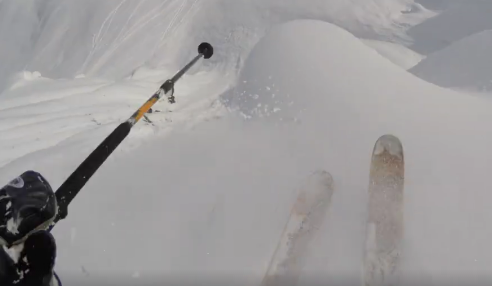
Pro skier and extreme athlete Richard Permin rips down a spine ridge in Alaska somewhere.  While we aren’t advocating this kind of skiing, we do appreciate the skill and courage it takes to even try it.  Note Richard’s heavy breathing as he negotiates some knarly steepness and major, major jumps.

A special thanks to Snowbrains for originally posting this.  Here’s a link to the original, complete with narrative about Richard.  It appears he did this…stunt…only months after recovering from a really bad broken ankle.  Richard, you da man.  Almost as gutsy as the great classic daredevil Dick Buek or Toni “Straight Down” Matt.  Click here for another story of gutsy skiing from SeniorsSkiing.com.


Remembering Portillo’s FIS World Championships 1966

Fifty Years Ago, Portillo Changed Everyone’s Idea About Skiing Below The Equator.

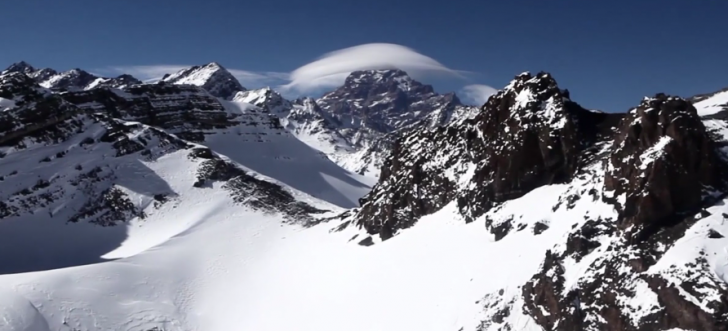
Fifty years ago, Portillo hosted the first FIS World Championship below the equator. It changed a lot of minds.

Portillo improbably hosted the first FIS World Championship below the equator in 1966. It changed a lot of minds.

At the time, it was a wild idea.  Hold the FIS World Championships in Chile, at Portillo, at 3,300 meters, in the Northern hemisphere’s summer. Somehow, resort owner Henry Purcell convinced the FIS to award the 1966 event to the nascent resort.  Despite a 1965 hurricane that destroyed lifts and created monstrous snow falls and avalanches, the FIS held fast and the World Championships were (heroically) held in the Andes with skiers gathering from all over the world.  You can read about Portillo’s history here.

In the commemorative documentary video below, you’ll see Henry Purcell, the owner, describing how the event changed the world’s view of South American skiing.  Nancy Green, Canadian super star, Austrian ski race legends Egon Zimmerman, Hermann Maier, and Erik Schinegger, Carlos Senorer, Italian gold medal winner, and even modern day whiz Ted Ligety offer their thoughts and memories about that most pivotal event.

Portillo continues to attract summer skiers and racers preparing for the season.  As we have seen, this season has had its moments of really, really big snowfalls.  Click here for a report of a nine-foot snowfall this June. Have you skied ‘way down south?

Stein Eriksen: Secret Tales Of His Life

The Ski Industry Remembers His Humor And Tenderness.

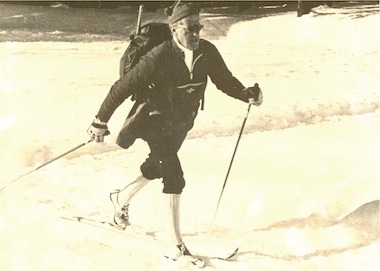
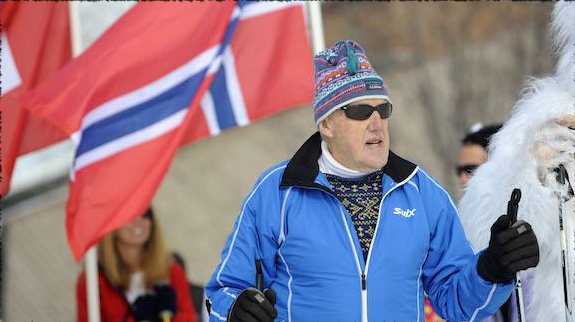
Iconic Stein Eriksen was famous for his stylish and graceful ski turns. Generation of skiers tried to mimic him. “Stein made the turns we all wish we could make,” said Tom Kelly, vice president of communications for the United States Ski and Snowboard Association. “Everyone who met him came away with a life-long experience.” He passed away in December, 2015.

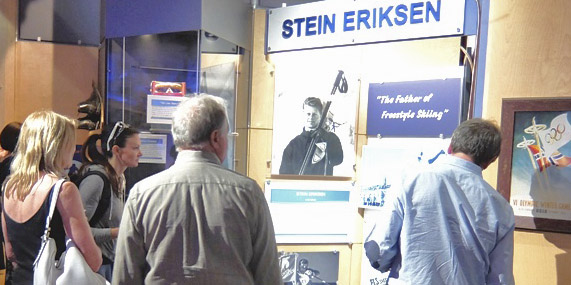
The Alf Engen Ski Museum in Park City opened the Stein Eriksen exhibit this month. Credit: Harriet Wallis

The Alf Engen Ski Museum in Park City opened the Stein Eriksen exhibit this month.
Credit: Harriet Wallis

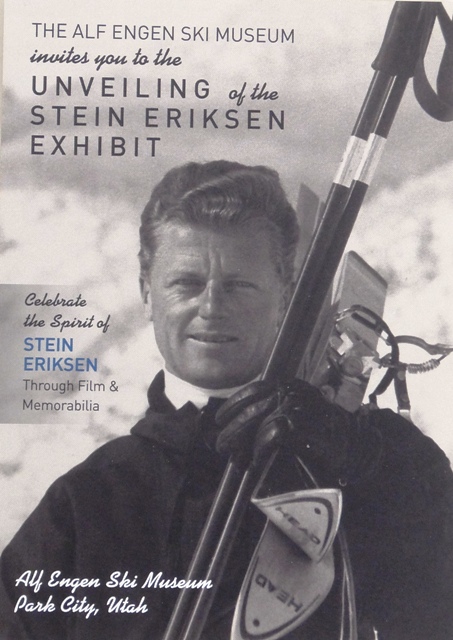
Stein was honored by ski industry leaders on Wednesday at the unveiling of the Stein Eriksen exhibit at the Alf Engen Ski Museum in Park City, Utah. And they told secret tales of his life.

Stein was dedicated to his family and to the community, said Bob Wheaton, president and CEO of Deer Valley Resort. “If you needed a hand, Stein was right there.” And he had a whacky sense of humor.

We were at a party that was a bit stale, Wheaton said. Stein went to the food table, scooped up a dollop of whipped cream and put it on his nose. Then he went around the room meeting people – with the glop of white on his nose.

Wheaton recalls more of Stein’s humor. He would often introduce himself saying, “Hi. I’m Stein. It’s so nice for You to meet Me!”

Russ Olsen, CEO of the five-star Stein Eriksen Lodge, recalled Stein. “I skied with Stein once. Actually, I rode up the lift with him.” We got off the lift, he took off, and I never saw him again the whole day. He could ski anything at 90 miles per hour, without a hat, and when it was 40 below.

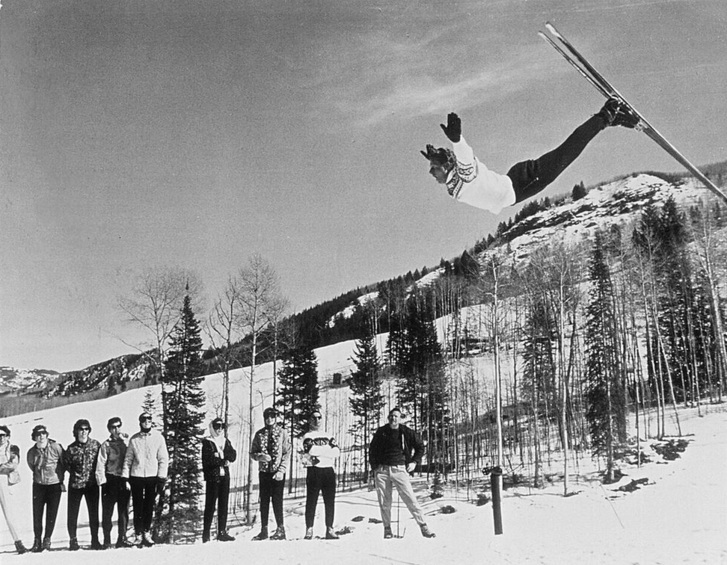
And he really could ski anything. With his athleticism to spun and flip, he became a father of freestyle skiing.

Stein's skis and and racing bibs from the 1954 Olympics are on exhibit. Credit: Harriet Wallis

Stein’s skis and and racing bibs from the 1954 Olympics are on exhibit.
Credit: Harriet Wallis

Stein enjoyed the meeting the guests at the Stein Eriksen Lodge, which was also his home. He would go from table to table in the dining room and personally welcome the guests. He loved doing that. Solemnly, near the end of his life, Stein had hopes of returning to the Lodge and told Olsen to let guests know he would be back.

The exhibit includes a video of Stein skiing and his skis and bibs from the 1954 Winter Olympics where he earned three medals. His trophies and medals are on exhibit in the lobby of the Stein Eriksen Lodge.

………………………………..

About the Alf Engen Ski Museum. It’s an interactive museum where you can take a selfie in a bobsled, try your luck in a slalom race game, learn about snow and avalanches, see ancient skis and glimpse ski pioneers. The museum is free, and there are free self guided tours of the Olympic Park.

The Olympic Park was the 2002 Winter Olympics venue for ski jumping and it continues as a premier training facility. During the summer there are youth camps and you can watch kids learn the sport. They soar off the actual Olympic jumps and land in a pool of bubbling water to soften the impact.

In addition, for a fee, there are freestyle shows, bobsled rides, extreme summer tubing, an alpine slide, a zip line, and a ropes and adventure course and so much more.

The Olympic Park and the Alf Engen Ski Museum are “must sees” when you’re in Park City.

Stein was a graceful athlete throughout his life and the father of Freestyle Skiing. Credit: Harriet Wallis

Stein was a graceful athlete throughout his life and the father of Freestyle Skiing.
Credit: Harriet Wallis

Cross-Country Legend Sven Wiik, 95

Olympic Ski Coach, X-C Pioneer, Hotel Owner Was A Major Contributor To Growth Of The Sport.

Screen Shot 2016-07-07 at 8.42.42 AM

Sven Wiik, a Swedish native who helped promote cross-country skiing in North America through coaching and promoting the sport, has died at 95 in Steamboat Springs, CO.  Wiik is known as a pioneer in the sport, creating the design for the American Birkebeiner trail in 1973, boosting a tremendous growth spurt for Nordic skiing.  The American Birkebeiner Race attracts over 10,000 racers every year.

For more in Wiik’s life and achievements, please click here. 

Svenwiik


History, Memories, Books, And More

ISHA’s 2016 Skiing History Week at Aspen.

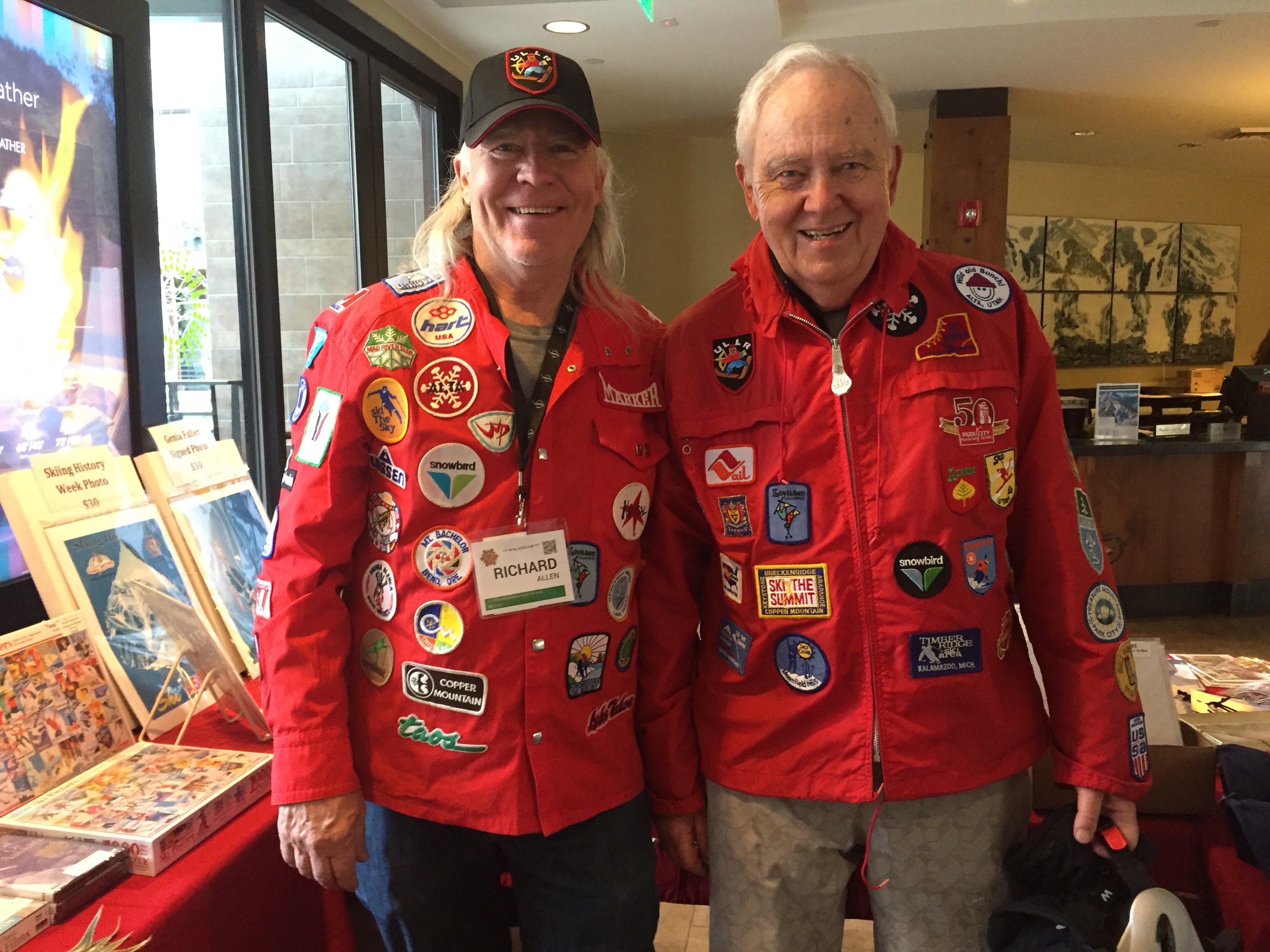
Author compares patches with Richard Allen of Vintage Ski World . Credit: Jan Brunvand

Author compares patches with Richard Allen of Vintage Ski World . Credit: Jan Brunvand

The International Skiing History Association (ISHA) and the US Ski and Snowboard Hall of Fame held their annual Skiing History Week at Aspen on April 5 – 10. My wife Judy and I attended, partly for the presentations, but also for the $32 day passes.

How avid are people about skiing history? Very! Folks lined up to buy a 240-page book on the history of ski poles written in Norwegian. Most bought it as a collector’s item, signed by the author, Karin Berg, director of the Holmenkollen Ski Museum. Berg received a Lifetime Achievement Award.

Maybe a few others, like me, hoped they could read some of the book by drawing on dim childhood memories of our Norwegian parents speaking the language at home and making liberal use of a dictionary. If not, well the illustrations are lavish.

The welcome on Wednesday evening included a tribute to Aspen, which happens to be my first Western ski resort. In 1954 as an undergrad at Michigan State I came with ski club pals during spring break. Passes were $21 per week, and rooms were $5.00 a night. We ate cheap dinners at the Red Onion, still an Aspen fixture.

In those days I didn’t even consider entering the ritzy Hotel Jerome. How things have changed.

At Thursday night’s banquet in the Jerome, ISHA presented annual awards “For Outstanding Creative Works of Ski History.” These included eight other books, one more in Norwegian and two in German. We came away with a couple more: License to Jump! about women’s ski jumping, and Freedom Found, the autobiography of filmmaker Warren Miller.

On Friday a buffet dinner was followed by two lectures. One was a presentation by sons of skiing legend Dick Durrance with film clips and photos including his time at Alta. The second was on the Warren Miller book by his collaborator Andy Bigford.

The highlight of the Hall of Fame program was the induction ceremony Saturday for seven new members at a banquet at the St. Regis. Two inductees had Utah connections: Bob Salerno, pioneer freestyler and a native of Ogden learned to ski at Snowbasin; and the late Edgar Stern, founder of Deer Valley. There were also memorial presentations on Olympic champions who died in the past year, Stein Eriksen and Bill Johnson.

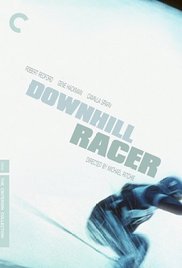
MV5BNTc3MjU5ODc0M15BMl5BanBnXkFtZTcwMDMyMTk3Mg@@._V1_UY268_CR4,0,182,268_AL_Five ski films received awards. Since these were screened in the daytime when we would rather be skiing, we skipped them, but, at least, we had seen the 1969 classic Downhill Racer honored as “one of the best sports films ever made.”

Among skiing greats we met this year were racers Klaus Obermeyer and Billy Kidd; the writers or editors Doug Pfeiffer, John Fry, and Harry Kaiser; and early freestylers Genia Fuller Crews and Barbara Alley.

How was the skiing? Very good spring conditions all week, meaning a bit crunchy on the groomers in the morning and softer snow as the days warmed. Definitely worth the trip and the lift prices.

100 Years Of Ski Fashion

Clever Video Shows The Evolution of Dressing For The Snow.

A touch of nostalgia for antique ski clothing. Perhaps it's time to fetch a retro-look in ski fashion. Wool hats anyone? Credit: Colorado Ski and Snowboard Museum.

A touch of nostalgia for antique ski clothing. Perhaps it’s time to fetch a retro-look in ski fashion. Wool hats anyone?
Credit: Colorado Ski and Snowboard Museum.

Thanks to the Colorado Ski and Snowboard Museum and Hall of Fame for producing this trip through ski history. Click below for a six-minute video clip. Perhaps you might remember wearing some of these outfits?

https://vimeo.com/162455377

Returning To X-C: New Technology, New Found Serenity

John Christie, Ski Industry Veteran, Re-Discovers His Love For Cross-Country Skiing.
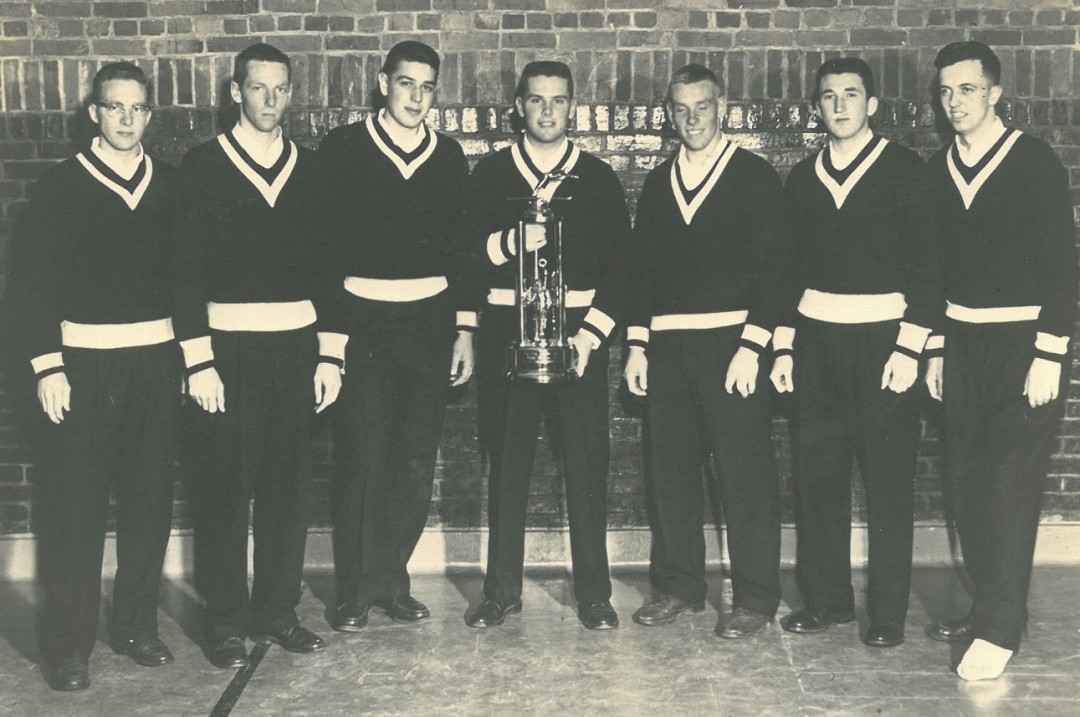
Bowdoin College ski team circa 1958 with state championship trophy. John Christie is third from right. He was originally a reluctant competitor. Credit: John Christie

Bowdoin College ski team circa 1958 with state championship trophy. John Christie is third from right. He was originally a reluctant competitor.
Credit: John Christie

Editor’s Note: SeniorsSkiing.com is proud to have this contribution from John Christie. John is a legend in the ski business. Founder, owner and/or manager of several New England ski resorts (Sugarloaf, Mt. Snow, Saddleback),  John has served as president of Vermont and Maine Ski Areas Associations, was a board member of the National Ski Areas Association and other charitable non-profits as well as author of books (The Story of Sugarloaf, Maine Outdoor Adventure Guide, Skiing Maine) as well as numerous and regular features in a variety of publications.  At 78, he is still discovering and re-discovering that “it’s never too late”.  Our kind of guy.

As someone who bought his first sea kayak just before he reached the age of 70, and now spends hours on end in the summer exploring Maine’s coastline, I guess I’m authorized to say that it’s never too late to discover a new way to enjoy the outdoors.

Similarly, I’m amazed as I travel from ski area to ski area in the winter and see the number of retirees who continue to ski regularly, many who’ve rediscovered the sport after a long absence, and, most impressively, seniors who’ve taken up alpine skiing for the very first time.
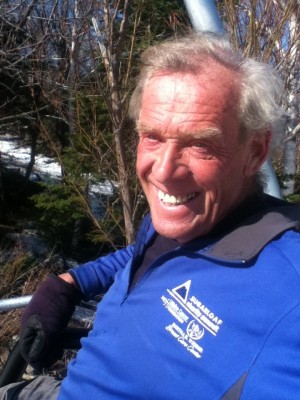
Former x-c racer in college, John Christie re-discovered cross-country skiing as a senior. Now he skis to enjoy the outdoors and keeps fit. Credit: John Christie

Former x-c racer in college, John Christie re-discovered cross-country skiing as a senior. Now he skis to enjoy the outdoors and keep fit.
Credit: John Christie

It’s those newcomers to the sport who are discovering how much fun, and how easy it is to make the most of Maine’s long winters. Thanks to improvements in ski equipment technology, along with senior-friendly professional instructors at virtually every ski area in the state, learning to ski at an advanced age is not only a piece of cake, but it’s an opportunity to enjoy the winter to its fullest.

But enough about alpine skiing. Many seniors have learned that a few hours out on cross-country skis is a magical way to spend a winter day.

I was introduced to cross-country skis during my freshman year in college, in 1956. Not because I had harbored a yearning to do so, but because I had little choice. You see, this was the now by-gone era of the four-event intercollegiate competitor that required those of us who wanted to claim our berth on the team to compete in all four disciplines: downhill, slalom, jumping and cross-country.

As an alpine skier, I begrudgingly became a Nordic competitor as a reasonably accomplished jumper and a slightly more than passable cross-country racer. Any success I had in achieving decent results related in no way to my having mastered the technique or much of any technique at all. I did it through exhausting exertion, determination, youthful fortitude and strength, a nagging feeling that I had a responsibility to my team and my beloved Bowdoin, and sheer stupidity.

The result was that every race, a symphony of intermittent stumbling, cursing and frequent vomiting was, I’m sure, great entertainment for the throngs of co-eds along the racecourse. I remember one race in particular in Farmington where I not only artfully combined all of the above, but added an especially amusing touch by sticking a ski pole directly into the top of my right foot, finishing the race in great pain and with a bloody sock. An act to be replicated decades later by a certain Red Sox pitcher during a crucial World Series game.

So that was my context for cross-country skiing. An activity to be undertaken when absolutely required and avoided whenever possible. This less-than-enthusiastic attitude for the sport was further encouraged by the quality of the equipment during my racing hey-days: loose-fitting boots, easily-breakable wood skis and bamboo poles, and bindings that deluded the skier into thinking that he could actually control his skis on icy downhill runs. And skis without any edges, of course.

It’s not too much of a stretch to say that when I stepped up on the stage to accept my hard-earned Bowdoin degree in June of 1959, my first thought was, “Thank God, now I’ll never have to cross-country ski again!”

Although my antipathy toward the sport was clearly more exaggerated than the average skier, it’s apparent that very few people were eagerly embracing the activity during the 1960’s . It was during this period of time that I was cutting my teeth in the ski business, and alpine skiing was my life. When I left the business in the late 1970’s to embark on more mature, and fiscally-reliable pursuits, I was surprised…no, shocked…to hear that people were being lured to, and actually embarking on cross-country skiing for FUN!

So was born the renaissance of the sport, and the next act in the evolution of cross-country skiing from hunting to warfare to exploration to competition to recreation. I begrudgingly reintroduced myself to it, as I was taking a self-imposed hiatus from alpine skiing, and was pleasantly surprised with two things. First, the technology had evolved from wood to composite skis, from imitation to actual bindings that allowed you to actually control the skis, and from waxable wood bottoms (that never adequately and simultaneously accommodated the proper waxes for both uphill and downhill skiing) to fish scales that provided for both uphill traction and downhill gliding. Second, I was struck that without the need to better your competitors, you could actually ski along at a leisurely pace and even enjoy the serenity and the scenery and the exhilarating fun of being out in nature on a crisp winter day.

The popularity came about for a variety of reasons, including the increasingly prohibitive cost of alpine skiing for some folks. Additionally, there was a growing national awareness of the importance of physical fitness, so many people were becoming more active, and when the summer hiking season was over they were looking for a winter counterpart.

So that was my reintroduction, thankfully, to an activity I’ve grown to love. I will say that when the weather’s right, and I have the time, I’ll head for the hills with my alpine skis, but increasingly I’ll opt for the fun of a few hours out on the trail on my skinny ones.




Inspiring “Powder Philosophy”: George Jedenoff, 98

George Says Make The Most Of What You’ve Got.

SeniorsSkiing.com salutes George Jedenoff on his 98th birthday. Credit: Ski Utah

SeniorsSkiing.com salutes George Jedenoff on his 98th birthday.
Credit: Ski Utah

“It’s a pleasure by itself to be in the great, fresh cold air that seems to uncloud your brain…It’s a chance to reflect on your own life…[Skiing] is an opportunity to reflect on the wonderful things you can do…The plusses far outweigh the minuses…Take time to appreciate the positives.”

Thanks to Ski Utah for sending along this message from a ski legend, George Jedenoff, who has been skiing in the Wasatch for the past 56 years.

Remembering The Great Big Washington’s Birthday Touring Race

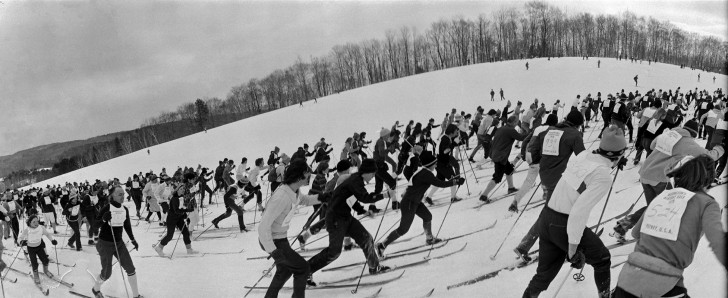
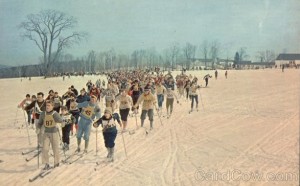
Bang and everyone charges off across the hay field. The Washington's Birthday Race circa 1971 or so. Credit: Spencer Grant

Bang and everyone charges off across the hay field. The Washington’s Birthday Race circa 1971 or so.
Credit: Spencer Grant

 Such Fun. Should We Do It Again?

What a celebration of winter it was. Imagine several hundred cross-country skiers, some serious racers—even Olympians—, college kids, couples and families, office people (like us) up from the Big City, all in a long line, awaiting the gun in a big, snow-covered Vermont hayfield. Bang, and everyone charges off, either fast skating or slowly shuffling to the far end where the field funnels into a tractor road and the rest of the 20-km (12-mile) course beyond.

This was the Washington’s Birthday Touring Race, a “people’s race” in more or less the same tradition as Sweden’s Vasaloppet where you went from point to point or town to town, not stopping if you’re racing or stopping for a picnic snack if you weren’t. In 1963, Eric Barradale, a Brattleboro dentist and former Dartmouth Outing Club member, and a cluster of southern Vermont educators, business people and professionals, thought a race like the Vasa would help promote cross-country skiing in the US. Back then, Nordic skiing was esoteric, and an event like a great, big race would—and did— attract lots of attention.

A small group of SKIING magazine staffers participated in the 1971 edition along with about 1000 other folks. We arrived with brand new kangaroo skin boots, wooden skis, four pin bindings and bag of waxes. It was our first time ever on cross-country skis. In fact, SKIING magazine’s editor and our boss Al Greenberg gave us a lesson in his office before we left for Vermont in our rented car. “Just shuffle like you have bedroom slippers on and keep your arms moving.” Doug Pfeiffer, the editor-in-chief at the time, opined about ski wax. “Some concoctions are said to include whale blubber,” he hinted mysteriously. The hook was set. The night before the race, we learned how to put on pine tar and wax in the basement of the Whetstone Inn, in Marlboro. From that delicious aroma, we knew we were going to love it.

The GWBDR was modeled after Sweden's Vassalopett. Credit: CardCow

The GWBDR was modeled after Sweden’s Vassalopett.
Credit: CardCow

The first race in 1963 had 54 participants. Bob Gray, a two-time Olympian and student of John Caldwell, a long time coach, member of the 1952 Olympic team and eventually USSA team coach, was the winner. Bob told us in a recent interview the first race went from Hogback Mountain to Brattleboro. In subsequent years, the race was held on different courses throughout southern Vermont, some more challenging than others, all linking towns around the area. And the numbers of participants grew. Bob said, “We had the US Women’s Cross-Country team in one race. More and more competitive racers started coming.” That’s when Barradale started having second thoughts.

“There were racers knocking people off the track,” said Gray. “Barradale got discouraged.” The charm of a citizen’s race was disappearing as more and more serious racers showed up. Over the years, we had always thought the race was finally called off because of lack of snow. We asked Bob Gray if that was the reason. “No, it was because the race became too much of race.”

The final official Washington’s Birthday Race was held in 1973. Bob Gray was in that one, too, as he was in five since 1963. The people’s race run by a group of volunteers was experiencing the embarrassment of success. Too many details, too many arrangements, and too many racers. “After 1973, there were about five years where we had loop races around the a county club in Brattleboro for real racers, but the basic idea was lost,” said Gray. Gray said he got to keep the Winner’s Bowl when the race “retired”.

Gilbert_Stuart_Williamstown_Portrait_of_George_WashingtonIn 1971, our group from SKIING managed to come in dead-last. Our wax had long gone, we got lost, yet we laughed our way to end point at Putney School. We did get a pin for finishing. It instantly became one of our proudest possessions.
Should we have another generation of the Washington Birthday Race? Would you go?


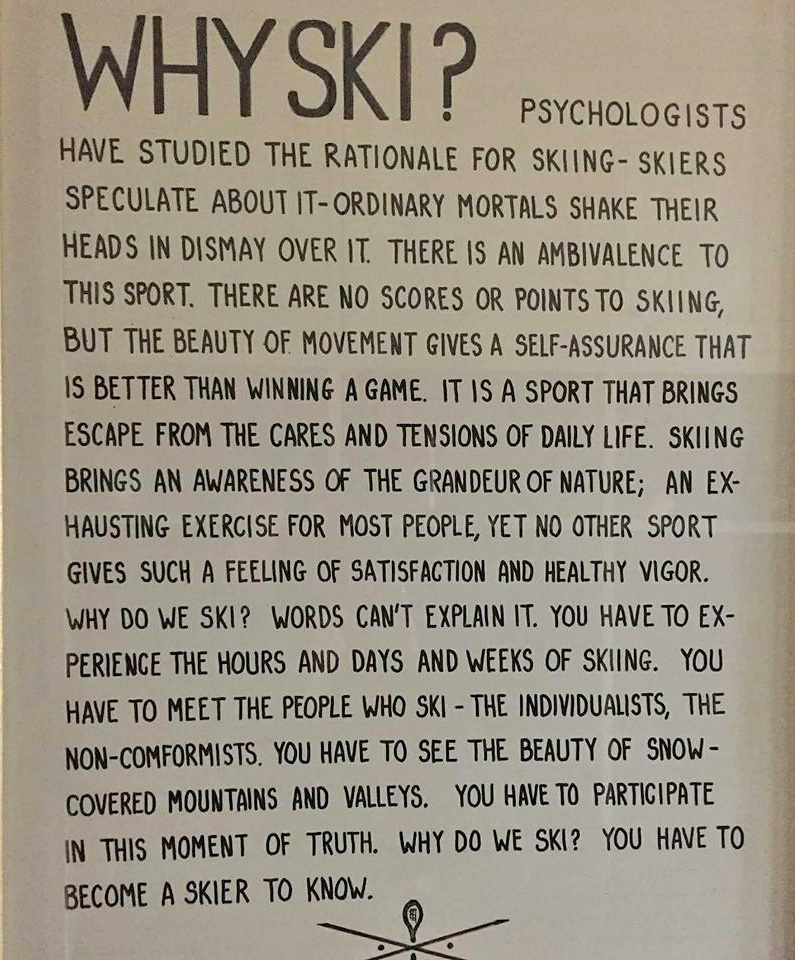
Why Ski?

From NSP Eastern Division Safety Team, Corinth, NY

whySki__

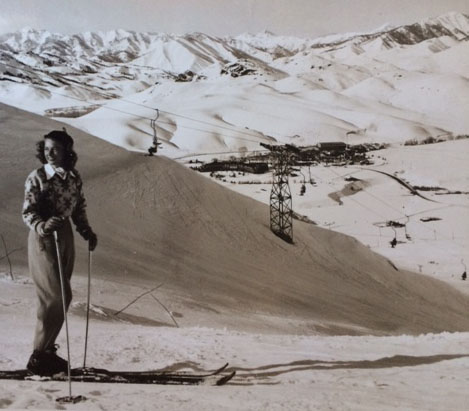
B_Sun Valley 1950

Bebe Wood: Approaching 90 And Going Strong

Skiing Since The 30s, She Has Seen Lots Of Changes.

In 1949, 23 year old Bebe Wood left her job at Dartmouth College and traveled to Idaho seeking adventure as a ski bum in Sun Valley. By then, she had already been skiing for about 10 years!  Thus began her long association with the ski industry. Today, approaching her 90th birthday, she remains actively involved as a Host at Ragged Mountain in New Hampshire.

As a youngster in Marblehead, MA, she and her siblings taught themselves how to ski at a nearby golf course. By the late 1930’s her sister, five years her senior, had a driver’s license so they started going up to Cranmore in North Conway, NH. It was there that she became immersed in the sport.

Bebe Wood was an original ski bum in Sun Valley in 1950. Credit: Bebe Wood

Bebe Wood was an original ski bum in Sun Valley in 1949-50.
Credit: Bebe Wood

Following graduation from college, she went to work at Dartmouth as medical secretary. She and her friend Jean Adams joined the Dartmouth Outing Club which was an opportunity for travel around Northern New Hampshire and Vermont—Stowe, Cranmore and Suicide Six. They also skied locally at the Oak Hill rope tow in Hanover. “The DOC was a wonderful experience”, says Bebe. “We all loved to ski, yodel and sing. We had a great time.”

In the winter of 1949-50 Bebe and Jean Adams headed west to be ski bums in Sun Valley. They worked as waitresses and had plenty of time for skiing during the day. Bebe also had time to be a Sun Valley model for a Life Magazine shoot there and appeared in a February 1950 issue. “We had the best time there,” Bebe says. “Dartmouth was connected to Sun Valley back then and we were able to ski with some top notch eastern skiers.”

During the following ten years or so there was not much skiing in her life as she and her new husband were starting a family and moving around. But in 1963 they moved to Bristol, NH. And that move heralded her return to skiing in a big way.

In 1964 she began her long tenure at Ragged Mountain where she directed the junior program for school kids. She continued in this role until the mid 1980s when Ragged closed. During the next few years, Bebe taught at nearby King Ridge in New London, NH where she was part of the ski school until Ragged reopened in 1989.

All along the way Bebe found time to become PSIA certified, a first aid instructor, make two trips to the Alps skiing in Switzerland, Austria an Italy and a return trip to Sun Valley.

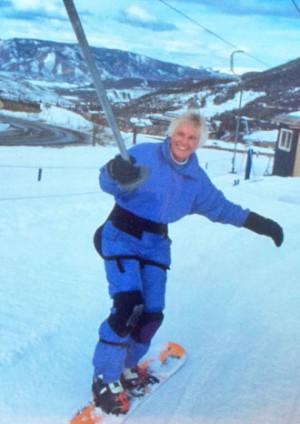
Bebe learned snowboarding at 70. Credit: Bebe Wood

Bebe learned snowboarding at 70.
Credit: Bebe Wood

Bebe retired from instructing in 2007 but continued as head the Courtesy Patrol until it was phased out a few years ago. Not wanting to be idle, however, she remains active at the resort today as a mountain host. You can find her in the base lodge greeting skiers and boarders, chatting with folks as come in for a break, checking with patrol on the latest conditions and dispensing all kinds of local knowledge and information about the resort and the general area.

Bebe stopped skiing five years ago at the age of 85. “Not because I can’t ski,” she says, “but because I’m now too afraid of getting hurt. I have no one to take care of me if I were to get injured. I do miss it, though.”

Bebe sees the evolution of equipment and technique as a positive thing that has made the sport much easier to learn and continue. “Sometimes the technical details get confusing but if the continued development of new equipment and technique makes the sport easier that’s good for its growth,” she said. When asked about other changes she’s seen, she said that in the old days skiers were just one big happy family. They sat around the fireplaces in old ski lodges and never complained about rope tows that wore out ski gloves or conditions that were less than ideal. Now she says, skiers want everything to be perfect. And there are so many people you have to be a little more careful.

According to Bebe, “It’s still a wonderful sport. It should be available in all schools free of charge so all kids have a chance to experience it.” She thinks there are more seniors skiing now than ever before. “New and better equipment keeps people going longer,” she says, and hopes that “more people being on the hill does not discourage older skiers.” She knows some seniors in their late 70s and early 80s who still ski, including some 10th Mountain veterans. “But the group is dwindling.”

What keeps her coming back? Why does she continue to work even though she no longer gets out on the hill? Love of the outdoors, a desire to keep up with the sport and the people in it, the opportunity to meet new people with similar passions are just a few of the reasons. “You don’t have to be young to enjoy it. It brings family and friends together.” Of teaching she says, “I can still look at skiers and tell what they’re doing wrong. I can tell who has had lessons and who hasn’t.”

Bebe Wood today.

Bebe Wood today. Tuckerman’s Ravine was a favorite spot. Credit: Joan Wallen

Approaching her 90 th birthday in a few months and summing up her lifetime involvement in a sport she loves, Bebe states, “I wouldn’t have changed a thing.” Including, or perhaps especially, her ski bumming year in Sun Valley. “If young people have a chance to be a ski bum, they should go for it. It’s an experience to always remember.”

Ski Ballet: Polka Anyone?

Kinda Catchy.

Anyone know where this was filmed and when?

Remembering Stein

SeniorsSkiing.com Co-Publisher Jon Weisberg Remembers His Encounter With The Ski Legend.

Several years ago, Jon Weisberg shared a chair lift ride with Stein and later on a dinner table.  Here are his recollections as published in Huff 50.

Stein Eriksen, one of the first ski celebrities, was a pioneer in acrobatics. Credit: Park City

Stein Eriksen, one of the first ski celebrities, was a pioneer in acrobatics.
Credit: Park City

Stein_