Tag Archive for: nordic skiing

Cross country skiers

Tips to Buy New XC Ski Gear for This Winter

Cross country skiers

Last winter XC ski gear was in demand like never before and all segments of cross country ski equipment sold out, with few or no options for retailers to reorder. There also was an uptick for backcountry gear and snowshoes.

Retailers are still experiencing demand and supply issues. Coupled with global supply chain challenges, everything from the components that complete a ski binding to the actual cardboard boxes in which products are shipped have been in short supply. Demand and wait times have increased dramatically for these vital pieces, further impacting supply. 

Responding to these factors, retailers placed orders as early as possible and for as much gear as they could get. But some wholesale distributors limited the amount of equipment they planned to make available in the US.

The result? Retailers may not be able to reorder sold out merchandise.

If you want to get new gear this year, here are some tips from Burlington, Vermont retailer Ski Rack:

Start Early

The earlier you begin the process the more likely you’ll get the right winter gear for you. The process begins with your own preliminary research into what you’re looking for and how you want to enjoy the outdoors this winter. Starting early is great! However, keep checking for new arrivals.

Buy Locally

Once you’ve identified the type of XC ski activity you’re interested in (for example, skiing in tracks, on ungroomed trails, in the backcountry, or ski skating) the next step is to head to a local gear shop and talk with the retail experts. They can be a great resource to help with sizing and to discuss various details, including differences between products. Consider custom fitting for all categories, to get the right gear the first time. This way, you’ll save time and avoid having to return something down the line when you find it’s not the right fit. By then, that item may not be in stock anymore.

Flexibility

Another key piece of getting winter gear this year is flexibility. There are lots of options from many brands that will serve you well. Some models may already be sold out for the year, pre-sold, or unavailable for months. It’s advisable to explore all options to see what the best fit may be, even if it’s not your first choice, but ACT FAST! If you find something you want at the store, don’t wait. It could be gone the next day or the next hour.


This Week In SeniorsSkiing.com (Nov. 20)

SPECIAL EDITION: MAKE MORE TRACKS!

Credit: Trapp Family Lodge

Focus On Nordic, Snowshoeing, Fat Biking: Rationale, The Market Forecast, Videos: How To XC, Snowshoe, Fat Bike, Hidden Gem XC Resorts, Lesson Advice, Mystery Nordic Star, Trail Preferences.

There’s more to winter besides downhill skiing. This issue will explore additional ways you can Make More Tracks.

Let’s be clear at the top: We love Alpine skiing, the thrill, the speed, the grace, and all that. We always will, so don’t think this Special Edition of SeniorsSkiing.com devoted to alternative winter snow sports is an abandonment of the mainstay that almost all of our readers have been participating in for years.

However, this year, we anticipate that while our readers will at first enthusiastically head to Alpine resorts, reserve online, gear up in their cars, mask up, social distance, eat a bag lunch, and all the rest, many will grow weary of those restrictions. Or become frustrated. Or not bother going at all.

But, since we know our readers love winter and snow, we also anticipate that they might be open to alternative snow sports that might be new to them or to which they may be returning. Like cross-country skiing and snowshoeing.  These are accessible, easy to learn the basics, affordable, safe (social distance built in), and good for body and soul.

Since the beginning of October we have been publishing a series of articles named Make More Tracks. These include instruction, resort reports, clothing advice, and the like.  In addition, we’ve compiled a Make More Tracks Resource Guide with a compendium of articles about the alternative winter snow sports, covering gear, destinations, technique, and how to dress, and much more.

Co-Publisher Mike Maginn on wooden skis, circa 1970.

We are dedicating this entire issue to Nordic skiing, snowshoeing, and Fat Biking. Hopefully, you will read something that might stir you to think about getting into other winter sports. We’ve been loving cross-country skiing since the early 70s. So much so that we still (occasionally) get out our wooden skis, wax, four-pin bindings, and take a loop around the farm across the street. On a bluebird day with perfect snow, the right wax combo, and a Heineken in your backpack, there is nothing like it.

ANNOUNCEMENTS

We are extending our special introductory classified ad offer until Dec. 4th. That means you can post a classified ad for 30 days from the date you post for just $1. We’re hoping you take advantage of this opportunity to find ski buddies, share rides, rent condos or apartments, and sell gear and collectibles.

We’ve been contacted by several readers who are frustrated by having to re-enter their name and email on the subscription pop-up. We know this can be frustrating. Here’s what you can do to eliminate the problem: TURN ON “ENABLE COOKIES” IN YOUR BROWSER ON EACH DEVICE YOU USE TO ACCESS SENIORSSKIING.COM. We’re working with our IT resource to make enabling cookies more clear as a way to avoid constantly re-entering name and email.

This Week

SeniorsSkiing.com’s cross-country editor and publisher of XCSkiResorts.com  Roger Lohr explains what XC means to him. Our thanks to him and cross-country journalist and consultant Jonathan Wiesel for their support and contributions to the Make More Tracks series. Click here.

Our Mystery Glimpse picture this week is a Nordic competitor who may be the greatest xc racer of all time. We predict some of our readers will get this one right away; others will have no clue. Such is the fate of Nordic celebrity in the snow sport world.  You will also learn the name of that odd parka from last week. Click here. 

“Au naturel” trail across Appleton Farms field. Credit: SeniorsSkiing.com

This week’s Question For You asks our reader’s preference for what kind of XC ski trail they like best: groomed and groovy or no grooming. Our choice is actually a little of both. Click here.

We have a short video about a cyclist making his first fat bike ride on a chilly day. We learned that keeping toes warm is a project. Click here.

Kelly Davis is a noted snow sports industry market researcher. We met her several years ago when she was director of research at SIA, the industry trade group. Currently, she runs Snow Sports Insights, a consulting company that brings information to decision-makers about the changing market place. Here’s her view of what’s happening this year in the Nordic/Snowshoe market space. Interesting stuff, and thanks to Kelly for allowing us to reproduce this article which first appeared on the Cross Country Ski Area Association website. Click here.

Credit: LL Bean group lessons

Snowshoeing is the easiest alternative for those who want to get outdoors in the winter without a learning curve or significant outlay of cash. It is also the most grandchild-friendly choice. Here’s a short video that explains the basics of How To Snowshoe from LL Bean. Click here.

Cross-country editor Roger Lohr offers his inventory of XC ski resorts that he considers “hidden gems”, tucked away from hustle and big areas. These resorts offer extraordinary opportunities to enjoy a socially-distanced vacation in snow country. Yes, you can! Click here.

Methow resort has lots of ways to make more tracks. Credit: XCSkiResorts.com

Cross-country journalist and consultant Jonathan Wiesel expounds on when and how you might take XC lessons: Group or private.  Trust us, we’ve been xc skiing since the 70s and we took a brief lesson last winter from a former Olympian and US Ski Team member Sue Wemyss at the Great Glens Trails Outdoor Center in Gorham, NH. Amazing how quickly you can improve your stride with a few simple moves. Click here.

For those readers who have never tried to cross-country ski or who might have tried to learn on their own, here’s a short video from REI that is a clear and really helpful guide on How To Cross-Country Ski. Click here

Finally, the Skiing Weatherman Herb Stevens explains how the winds of November will favor some regions and not others. Click here. 

Thank you for reading SeniorsSkiing.com.  Please tell your friends, and remember, there are more of us every day and we aren’t going away.

Appleton Farms, Ipswich, MA. Trails are groomed by a volunteer group. Credit: SeniorsSkiing.com


Make More Tracks: XC Boost Coming?

Is This A Surge Season For Nordic?

Will more people head to skinny skis this season?

Will the upcoming cross country (XC) season fulfill the hoped-for surge projected by many in the industry? The COVID pandemic has some projecting a coming boom similar to the bicycle industry, which saw such a surge of sales and activity last spring. The kids were not in school, people were looking to get out of the house, and there are many other factors resulting in packed bike trails and sold out bike racks at many retail outlets across the world.

XC skiing is similar to bicycling but it is also different in some significant ways. Most people know how to use a bike and many already own one, but few own XC skis or know about using them. You can take a bike out of the garage and go out on the road, while XC skiing requires cold weather and snow cover.

In the US, XC ski sales that once reached a high of 800,000 pairs annually in the 1980s have been on a plateau for decades to fewer than 200,000 pairs sold annually. The Olympic gold medal earned by Americans Diggins and Randall infected us with enthusiasm but it has not resulted in substantial increases in the number of XC skiers or XC ski sales. And now as ridiculous as it sounds, the pandemic offers another anticipated bull market for XC skiing.


In association with the pandemic, XC skiing (and snowshoeing, too) is a recreation that has everything going for it, and it is just what the doctor ordered. The benefits of XC skiing include wellness associated with getting outdoors in nature and exercise. Social distancing is a key element of the sport and last spring during the shutdown, people showed an increased enthusiasm for learning something new.

XC ski dealers (retail shops) are anticipating the upcoming season. According to content in FasterSkier.com, Nathan Schultz founder of Boulder Nordic Sport said, “Everybody started riding bikes because that was all they could do. It went from zero to 500 percent. It seems like more and more people are coming to us saying they want to get into XC skiing this year. They are coming in at the end of August instead of October and November when they usually show up.”

XC resorts like Great Glen Trails in NH offer groomed trails, lodge, instruction.

The word from product suppliers like Fischer, Rossignol, and Salomon, which sell both alpine and XC ski products, is that their alpine ski shop dealers are building their XC ski equipment inventories. They are anticipating the XC ski surge and they’re also concerned about restrictions at alpine ski areas and the projected decrease in travel. How many people are planning to get on a plane to go on a ski trip this coming year? Ski areas that have traditionally relied on travelers are expecting a much larger visitation from locals this year.

The FasterSkier.com article also covered the supply side of the XC ski industry referencing sourcing for raw materials, manufacturing, lead time for orders, and plans to fill mid-season reorders from ski dealers. The ski industry has had time to anticipate this and they think that dealers are expecting a big year and may run out of products to sell. This of course, is a balancing act for retailers because they want to be able to maximize sales while ending the season with minimal inventory.

How much the projected XC ski surge will help XC ski area operators or be limited to retailers will depend on the allocation of XC ski outings. People who want to go XC skiing can go to a XC ski area to enjoy groomed ski trails or they can go out locally on nearby ungroomed public trails, parks or golf courses. The benefits of XC ski areas are multifold, but factors for the equation include awareness of recreationalists about XC skiing, the perception about travel safety, paying for XC skiing, and the relative extensive volume of local places to ski when covered with snow. People appear to be accustomed to the virus mitigation protocols (masks, distancing), so that should not be such a big deal with regard to visiting a XC ski area. One of the biggest tips for newcomers to XC skiing is to get a lesson from a pro.

In a typical year, XC skiers pray for snow but now snowsports industry professionals and XC skiers are on the same page hoping that the pandemic slows while XC skiing surges!

Skating is a racing technique on Nordic skis. Credit: John Lazenby

Ski West Yellowstone

Cross Country Apparel: Recommendations From An Expert

Guidelines For What To Choose And Why.

[Editor Note: Thanks to Roger Lohr, publisher of XCSkiResorts.com, for this review of the latest in XC skiwear that was printed first on that site.]

Wearing the right apparel for cross country skiing can keep you warm and comfortable.

I’ve often wondered why there isn’t more hoopla about cross country skiwear. I’m not talking about the suction suits worn by cross country ski racers; rather, I mean the recreational garb, which is versatile, functional, and fashionable.

Currently, I cross country ski wearing apparel from vendors like Craft, Sporthill, Swix, and others.  What is important is that the products that I select to ski in fit a number of personal parameter preferences.

Comfortable Pants For XC Skiing

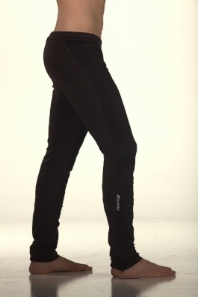
XC Ski pants with zipper all the way up the leg.

The Craft AXC Touring Pants (about $80) that I wear have zippers along the entire length of the legs, and, at the ankle, there is an elastic area closed with a zipper and a snap.

I feel that this pant ankle set-up is the most significant aspect of the pants. It tightly fits around the boot and keeps snow out of the boot top, avoiding wet socks while skiing.

And if you’re worried about losing your keys, the zippered side pockets are comforting to lock away your valuables.

The comfortably lined material of the Craft pants is also enough to stay warm with or without a base layer underneath.

Craft Cross Country Ski Jacket

Sporthill, Craft, and Swix jackets have most everything I want in a jacket, except few have pit zips to provide an extra way to cool off and transport perspiration away. These jackets have a mesh liner and material that is comfortable when you zip up the collar on a very cold day.

Look for jackets with cuffs and neck closures, mesh linings and, if you can find it, under arm zippers.

I’ve used the packable hood on the jacket quite a few times when it suddenly got cold out on the trail. The high-hip fit keeps you warm, and the zipper side pockets can be closed to avoid losing pocketed items. The jacket arms might have extended fleece cuffs, which are a nice touch to keep snow out of your glove. The inside chest pocket has a zipper and a hole for an earbud cable from my phone or iPod for the times that I want musical accompaniment on solo trail outings.

Socks And Gloves

Socks, gloves, shirts, and base layers are an entirely other matter that will need to be covered in a separate article. In short, parameters for selecting socks include thickness, space for your toes, and height of the sock on your leg. Expect to pay as much as $25 or more for quality socks these days.

I have a few different pairs of gloves so I can adjust to the temperature ranging from heavier, insulated, three-fingered gloves for the really cold days to lightweight gloves for springtime. I also have base layers in various thicknesses to correlate to warm and cold days. Moving perspiration away from the body is very important, and I use very lightweight underwear on those nice winter or spring days, but on the coldest days I use a heavier or thicker base layer pants and a top that has a turtleneck.

Problem: Limited Inventory In Stores

One of the challenges that confronts cross country skiing apparel availability is the fact that there is a limited inventory of these products in retail outlets. Because the cross country market is smaller than Alpine, there are relatively few sales in the stores. Retailers react by purchasing fewer items offering less selection in the following year. So let’s break this cycle. Go out and purchase more cross country skiing apparel!

XC Skiing: Older, Wiser, And Cheaper

A Veteran Ski Instructor Finds Nordic Matches His Senior Skiing Philosophy.

A seasoned Alpine skier (left) compared to a pro Nordic skier. XC is easy to do wrong.
(Credit: Brad Noren_

Older, wiser, cheaper, what is this about? It reflects on what happens with age for most, but let’s put it into a skiing context. Having taught skiing since 1971, I’ve discovered these are the three adjectives that seem to reflect on one’s skiing philosophy with the passing of time.

Most of us in this age group probably skied a lot in the 70s and 80s, maybe even the 60s. I’m sure those memories are rich with fun, challenge and thrill. But as we move into the present, the love of the sport is struggling against those three words in many ways, and, for some, as the song says, “The Thrill is Gone”.

Over my many years of skiing and teaching skiing, I watched aging skiers make changes that were hard to accept (me included). This often resulted in some quitting the sport (not me included). Back to the “older” adjective; in brief, “the body doesn’t do that anymore”. The “wiser” adjective points to personal safety issues, and the “cheaper,” well, you know what that means.

Being “older, wiser, and cheaper,” I have found cross country skiing to be an excellent sport for seniors but often not understood or accepted by the once serious downhill skiing fanatic of decades past.

XC skiing will give you the opportunity to circumvent most of the “older” issues by building muscular strength, adaptive fitness, respiratory health, and the thrill of learning will return. A new challenge is in your future. XC skiing will make you much “wiser” on how your body parts really work, because you will be focusing on efficient movement, good diet, refined balance and more. XC skiing can also be “cheaper” than the downhill sport.

Being both an alpine and Nordic ski instructor, there’s a problem I’ve seen with the move from alpine to Nordic. Alpine skiers sometimes feel that since they are a seasoned, 40-year plus alpine skier, black diamonds, powder, NASTAR gold and all that they can put on a pair of XC skis and master the Nordic/XC sport.

Yes, you can try that but you will surely miss the fun, challenge, and the thrill. You must learn to XC correctly. XC skiing is easy to do BUT even easier to do wrong. I have seen this happen over and over again with close ski friends who are expert alpine skiers in their day. Ditch the ego and take a Nordic/XC ski lesson, you will not regret it. Yes, you will bring many skills in from your downhill resume, but you will also learn things you never even thought of. Your health will likely improve; you are going to be wiser learning a new skill, and you might—probably will—spend less cash.

And don’t give up your love for downhill because I also know your downhill skiing skills are going to be strengthened, and you will find a new thrill there as well.

For more information on properly learning XC skills, check out my web site, Nordic Fusion. As I tell all I ski with “Glide Long and Prosper”.

Senior Skiers: Take Care in the Sun!

Advice From a Dermatologist Nordic Skier.

The sun is by far and away the most common cause of both (1) skin cancer and (2) skin aging.

More than two million cases of skin cancer are diagnosed annually in the USA. Caught early, most skin cancers can be removed, leaving a cosmetically acceptable scar. In more advanced cases, valued anatomic parts such as noses and ears can be partially or completely lost. Unfortunately, ten thousand deaths occur yearly in the US from skin cancers.

Many Nordic skiers, blithely dedicate ourselves to going outside as much as we can whether skiing in the winter or running, biking, and hiking during snowless times. My recommendations to preserve skin health while frolicking out of doors:

  • Exercise early in the morning (before 10) or later in the after- noon (after 4) when the sun is less damaging.
  • Wear clothing that covers or shades the skin (e.g., a broad- brimmed hat is better than a visor).
  • Apply a “broad-spectrum” (protects against UV-A and UV-B) reasonably thickly with an SPF of at least 30. If downhill skiing or hiking all day, consider re-applying at lunch
  • Consult a dermatologist periodically, especially if you’re over 50, have a non-healing sore/bump, or have a changing or new brown or black spot.

Returning To X-C: New Technology, New Found Serenity

John Christie, Ski Industry Veteran, Re-Discovers His Love For Cross-Country Skiing.

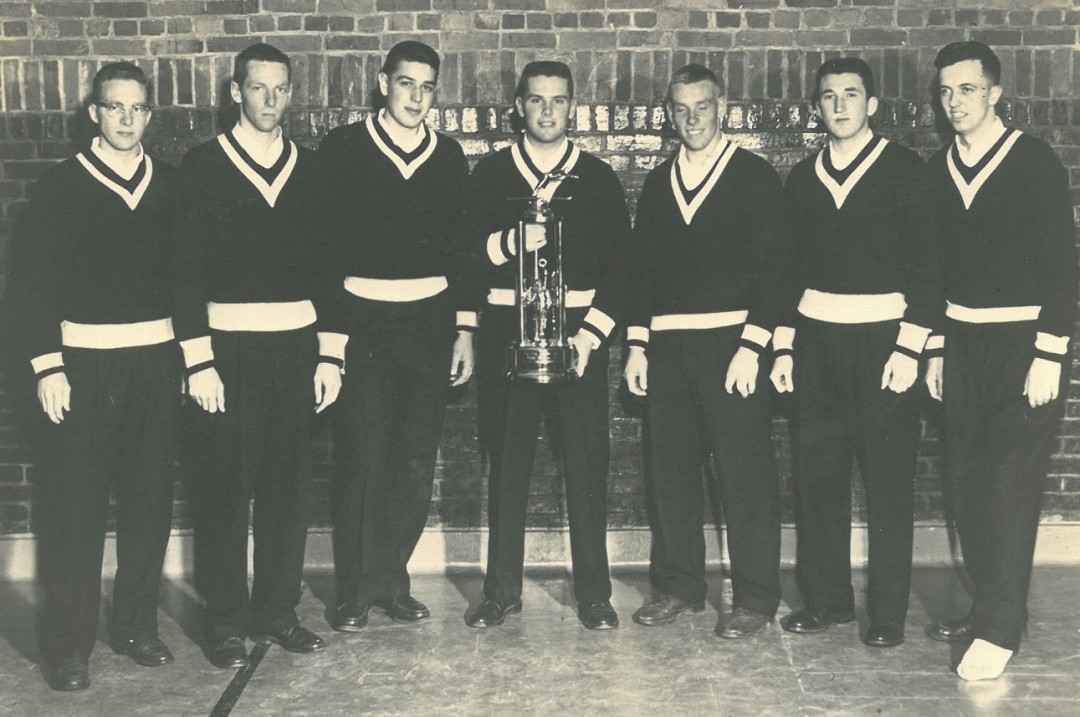
Bowdoin College ski team circa 1958 with state championship trophy. John Christie is third from right. He was originally a reluctant competitor. Credit: John Christie

Bowdoin College ski team circa 1958 with state championship trophy. John Christie is third from right. He was originally a reluctant competitor.
Credit: John Christie

Editor’s Note: SeniorsSkiing.com is proud to have this contribution from John Christie. John is a legend in the ski business. Founder, owner and/or manager of several New England ski resorts (Sugarloaf, Mt. Snow, Saddleback),  John has served as president of Vermont and Maine Ski Areas Associations, was a board member of the National Ski Areas Association and other charitable non-profits as well as author of books (The Story of Sugarloaf, Maine Outdoor Adventure Guide, Skiing Maine) as well as numerous and regular features in a variety of publications.  At 78, he is still discovering and re-discovering that “it’s never too late”.  Our kind of guy.
As someone who bought his first sea kayak just before he reached the age of 70, and now spends hours on end in the summer exploring Maine’s coastline, I guess I’m authorized to say that it’s never too late to discover a new way to enjoy the outdoors.

Similarly, I’m amazed as I travel from ski area to ski area in the winter and see the number of retirees who continue to ski regularly, many who’ve rediscovered the sport after a long absence, and, most impressively, seniors who’ve taken up alpine skiing for the very first time.

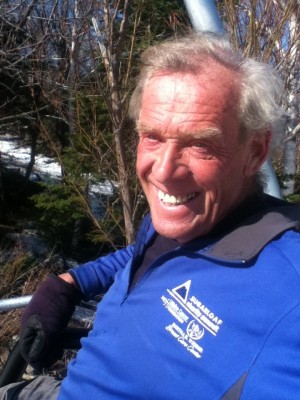
Former x-c racer in college, John Christie re-discovered cross-country skiing as a senior. Now he skis to enjoy the outdoors and keeps fit. Credit: John Christie

Former x-c racer in college, John Christie re-discovered cross-country skiing as a senior. Now he skis to enjoy the outdoors and keep fit.
Credit: John Christie

It’s those newcomers to the sport who are discovering how much fun, and how easy it is to make the most of Maine’s long winters. Thanks to improvements in ski equipment technology, along with senior-friendly professional instructors at virtually every ski area in the state, learning to ski at an advanced age is not only a piece of cake, but it’s an opportunity to enjoy the winter to its fullest.

But enough about alpine skiing. Many seniors have learned that a few hours out on cross-country skis is a magical way to spend a winter day.

I was introduced to cross-country skis during my freshman year in college, in 1956. Not because I had harbored a yearning to do so, but because I had little choice. You see, this was the now by-gone era of the four-event intercollegiate competitor that required those of us who wanted to claim our berth on the team to compete in all four disciplines: downhill, slalom, jumping and cross-country.

As an alpine skier, I begrudgingly became a Nordic competitor as a reasonably accomplished jumper and a slightly more than passable cross-country racer. Any success I had in achieving decent results related in no way to my having mastered the technique or much of any technique at all. I did it through exhausting exertion, determination, youthful fortitude and strength, a nagging feeling that I had a responsibility to my team and my beloved Bowdoin, and sheer stupidity.

The result was that every race, a symphony of intermittent stumbling, cursing and frequent vomiting was, I’m sure, great entertainment for the throngs of co-eds along the racecourse. I remember one race in particular in Farmington where I not only artfully combined all of the above, but added an especially amusing touch by sticking a ski pole directly into the top of my right foot, finishing the race in great pain and with a bloody sock. An act to be replicated decades later by a certain Red Sox pitcher during a crucial World Series game.

So that was my context for cross-country skiing. An activity to be undertaken when absolutely required and avoided whenever possible. This less-than-enthusiastic attitude for the sport was further encouraged by the quality of the equipment during my racing hey-days: loose-fitting boots, easily-breakable wood skis and bamboo poles, and bindings that deluded the skier into thinking that he could actually control his skis on icy downhill runs. And skis without any edges, of course.

It’s not too much of a stretch to say that when I stepped up on the stage to accept my hard-earned Bowdoin degree in June of 1959, my first thought was, “Thank God, now I’ll never have to cross-country ski again!”

Although my antipathy toward the sport was clearly more exaggerated than the average skier, it’s apparent that very few people were eagerly embracing the activity during the 1960’s . It was during this period of time that I was cutting my teeth in the ski business, and alpine skiing was my life. When I left the business in the late 1970’s to embark on more mature, and fiscally-reliable pursuits, I was surprised…no, shocked…to hear that people were being lured to, and actually embarking on cross-country skiing for FUN!

So was born the renaissance of the sport, and the next act in the evolution of cross-country skiing from hunting to warfare to exploration to competition to recreation. I begrudgingly reintroduced myself to it, as I was taking a self-imposed hiatus from alpine skiing, and was pleasantly surprised with two things. First, the technology had evolved from wood to composite skis, from imitation to actual bindings that allowed you to actually control the skis, and from waxable wood bottoms (that never adequately and simultaneously accommodated the proper waxes for both uphill and downhill skiing) to fish scales that provided for both uphill traction and downhill gliding. Second, I was struck that without the need to better your competitors, you could actually ski along at a leisurely pace and even enjoy the serenity and the scenery and the exhilarating fun of being out in nature on a crisp winter day.

The popularity came about for a variety of reasons, including the increasingly prohibitive cost of alpine skiing for some folks. Additionally, there was a growing national awareness of the importance of physical fitness, so many people were becoming more active, and when the summer hiking season was over they were looking for a winter counterpart.

So that was my reintroduction, thankfully, to an activity I’ve grown to love. I will say that when the weather’s right, and I have the time, I’ll head for the hills with my alpine skis, but increasingly I’ll opt for the fun of a few hours out on the trail on my skinny ones.


Remembering The Great Big Washington’s Birthday Touring Race

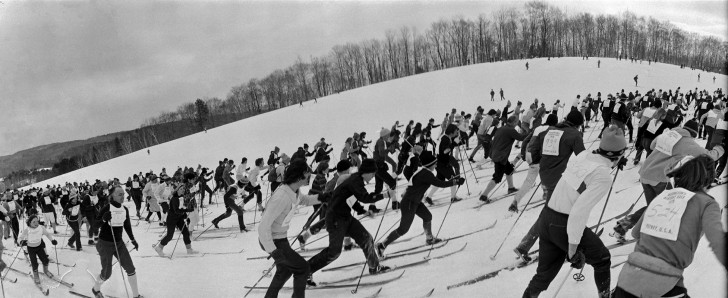
Bang and everyone charges off across the hay field. The Washington's Birthday Race circa 1971 or so. Credit: Spencer Grant

Bang and everyone charges off across the hay field. The Washington’s Birthday Race circa 1971 or so.
Credit: Spencer Grant

 Such Fun. Should We Do It Again?

What a celebration of winter it was. Imagine several hundred cross-country skiers, some serious racers—even Olympians—, college kids, couples and families, office people (like us) up from the Big City, all in a long line, awaiting the gun in a big, snow-covered Vermont hayfield. Bang, and everyone charges off, either fast skating or slowly shuffling to the far end where the field funnels into a tractor road and the rest of the 20-km (12-mile) course beyond.

This was the Washington’s Birthday Touring Race, a “people’s race” in more or less the same tradition as Sweden’s Vasaloppet where you went from point to point or town to town, not stopping if you’re racing or stopping for a picnic snack if you weren’t. In 1963, Eric Barradale, a Brattleboro dentist and former Dartmouth Outing Club member, and a cluster of southern Vermont educators, business people and professionals, thought a race like the Vasa would help promote cross-country skiing in the US. Back then, Nordic skiing was esoteric, and an event like a great, big race would—and did— attract lots of attention.

A small group of SKIING magazine staffers participated in the 1971 edition along with about 1000 other folks. We arrived with brand new kangaroo skin boots, wooden skis, four pin bindings and bag of waxes. It was our first time ever on cross-country skis. In fact, SKIING magazine’s editor and our boss Al Greenberg gave us a lesson in his office before we left for Vermont in our rented car. “Just shuffle like you have bedroom slippers on and keep your arms moving.” Doug Pfeiffer, the editor-in-chief at the time, opined about ski wax. “Some concoctions are said to include whale blubber,” he hinted mysteriously. The hook was set. The night before the race, we learned how to put on pine tar and wax in the basement of the Whetstone Inn, in Marlboro. From that delicious aroma, we knew we were going to love it.

The GWBDR was modeled after Sweden's Vassalopett. Credit: CardCow

The GWBDR was modeled after Sweden’s Vassalopett.
Credit: CardCow

The first race in 1963 had 54 participants. Bob Gray, a two-time Olympian and student of John Caldwell, a long time coach, member of the 1952 Olympic team and eventually USSA team coach, was the winner. Bob told us in a recent interview the first race went from Hogback Mountain to Brattleboro. In subsequent years, the race was held on different courses throughout southern Vermont, some more challenging than others, all linking towns around the area. And the numbers of participants grew. Bob said, “We had the US Women’s Cross-Country team in one race. More and more competitive racers started coming.” That’s when Barradale started having second thoughts.

“There were racers knocking people off the track,” said Gray. “Barradale got discouraged.” The charm of a citizen’s race was disappearing as more and more serious racers showed up. Over the years, we had always thought the race was finally called off because of lack of snow. We asked Bob Gray if that was the reason. “No, it was because the race became too much of race.”

The final official Washington’s Birthday Race was held in 1973. Bob Gray was in that one, too, as he was in five since 1963. The people’s race run by a group of volunteers was experiencing the embarrassment of success. Too many details, too many arrangements, and too many racers. “After 1973, there were about five years where we had loop races around the a county club in Brattleboro for real racers, but the basic idea was lost,” said Gray. Gray said he got to keep the Winner’s Bowl when the race “retired”.

Gilbert_Stuart_Williamstown_Portrait_of_George_WashingtonIn 1971, our group from SKIING managed to come in dead-last. Our wax had long gone, we got lost, yet we laughed our way to end point at Putney School. We did get a pin for finishing. It instantly became one of our proudest possessions.

Should we have another generation of the Washington Birthday Race? Would you go?


Eat Your Way To Fitness: Gourmet Ski Tours

Lots of Chocolate: Nordic Ski and Snowshoe Events Collected By XCSkiResorts.com

From Roger Lohr, XCSkiResorts.com: Want a guilt-free way to indulge yourself with food while exercising? XC Skiing is one of the best forms of aerobic exercise but if you go on a “Gourmet Ski Tour” on your xc skis or snowshoes, you may very well eat your way to fitness at a number of trailside food stops. What a grand time so go ahead, eat, ski, and be merry – appetizers, wine, champagne, fondue, entrees, desserts, and more.

Here’s a cross section of the culinary XC ski events that are planned this winter across the country with a varied menu of fun and fine cuisine.

EAST

Smugglers Notch in VT has Sweets and Snowshoes every Wednesday night 7-9 PM for adults only. Hot cocoa, coffee, and desserts await snowshoers after a 30-minute trek to a pavilion and campfire. A warming meal of hot soup, bread and beverage at a trailside cabin is a destination for the Soup and Snowshoes guided trek mid-day on Sundays, and on Tuesday nights there’s a Snowshoe Adventure Dinner at the mountain summit.

Eastman (NH) Cross Country’s Nordic Nibbles in Grantham, NH on January 18 has a Scandinavian theme with a visit to a fire pit at each stop for cheese from a local smokehouse, Lindt chocolate, gingerbread cake and pastries, local dairy milk for hot coco, soup, and the main meal from 11 AM – 1 PM.

Munching along at Eastman's outdoor ski party. Credit: Roger Lohr

Munching along at Eastman’s outdoor Nordic Nibbles ski party.
Credit: Roger Lohr

The Valentine’s Day Destination S’Mores Station at Bretton Woods Nordic on February 14 with two self-guided tour for sweets from 10 AM – 4 PM. The shorter tour will be less than 2 km on easy trails so it’s great for the kids. Purchase S’Mores Kits at the center or at the station to make your own.

The Chocolate Festival at Mount Washington Valley Ski & Snowshoe Center in Intervale, NH on February 22 is an inn-to-inn affair at 10-12 stops to experience your chocolate fantasies including moose and fondue. Go on a tour of any length and actually gain calories, even if you ski as far as 20 kilometers. A shuttle is also available for those that have overindulged at the event dubbed the “Sweetest Day on the Trails.”

CENTRAL

The Upper Peninsula of Michigan in Ironwood features cuisine from local restaurants that can be purchased at a nominal fee along a designated route along the trails at the Taste of the Trails on the ABR trails on March 7 at 11 AM – 2 PM.

MOUNTAINS

Snow Mountain Ranch in Granby, CO hosts the Grand Huts.org Progressive Dinner on Feb 28 with a multi-course meal at outposts along the trail in a fundraiser for the huts.

Just Desserts Eat & Ski in the Enchanted Forest in Red River, NM on February 28 features goodies from 20 different local restaurants at three trailside stations with up to 100 desserts within a 4 kilometer loop. Their motto is, “It’s not a race, just a gorge fest.”

The Rendezvous Trails in West Yellowstone, MT features cuisine from local restaurants that can be purchased at a nominal fee along a designated route along the trails at the Taste of the Trails on February 7.

Crested Butte Nordic Center has has the Magic Meadows Yurt Dinners reached by a 2 km ski or snowshoe tour where 10 gourmet dinners are offered during the winter including the Saturday Yurt Dinners each month, and special dinners on Winter Solstice on December 20, New Year’s on December 31 and Valentine’s Day on February 14.

Look to the Galena Lodge in Ketchum, ID for the Full Moon Dinners on nights associated with the full moon, (Jan 3 & 4, Feb 3,4, & 5, Mar 5,6, & 7, Apr 3 & 4) whereby you can go ski or snowshoe ($5 snowshoe rental offered) and then return to lodge for a four-course dinner at $40 or half price for kids under 12. There are also special Wine Dinners, Holiday Dinners, and a Valentine’s Day Dinner.

Lone Mountain Ranch in Big Sky, MT has the Glide & Gorge event on March 8 from 11:30 AM-2 PM with trail luncheon stationed with appetizers, soups, entrees, desserts from the Ranch’s four-star kitchen, local brew, wine, music and shuttles.

WEST

Royal Gorge XC Ski Resort in Soda Springs, CA has the Royal Fondo Tour on Jan 25 with skiing or snowshoeing to various huts along the trails for snacks and lunch at the resort deck.

Tahoe Donner Cross Country Center in Truckee, CA has the Taste of Truckee presenting food from local restaurants along the trails on Mar 22.

Cypress Mountain outside of Vancouver, BC has Ladies Only Chocolate Fondue Snowshoe Tours on Friday and Sunday nights starting at 6:30 PM. Warm up with a mug of steaming apple cider before enjoying appetizers then a chocolate fondue Jan 9 & 23, Feb 6 & 20, and Mar 6. These programs include rental equipment, trail access, guides/instructors, and the appetizers.