Tag Archive for: SeniorsSkiing.com

Short Swings!

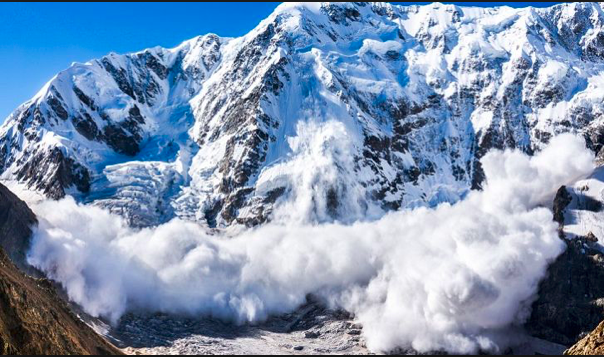
Have you ever been in or near an avalanche? Big Mountain skiers everywhere are accustomed to hearing and feeling the reverberations of bombs and other technologies used to dislodge slides, making the areas safer.

A few years ago, Taos added a chair to improve accessibility to Kachina Peak.  Last week, following inspection by patrol, a slide there killed two. 

At the top of NinetyNineNinety at Park City Mountain Resort (the part of the area formerly known as The Canyons), there’s a gate and signs clearly spelling out avvy risks of going into that part of unpatrolled backcountry. Similar warnings probably exist on Kachina Peak.

Warnings at the top of NinetyNineNinty

Several years ago a friend instructing at The Canyons joined a search party looking for a couple whose car was in the otherwise empty parking lot and who hadn’t picked up their child from daycare. My friend explained the methodical nature of combing the post-avalanche slope where the couple was thought to be buried. It was late in the day, but there was ample light. My friend, a geologist, had been trained to seek anomalies…things that were different from the surroundings. Looking up the slope, he detected something angular, possibly the back corner of a ski. He told the search leader, who advised him and the rest of the party to continue probing the cement-like snow to detect what might be buried below. They found nothing until they reached the angular ski tail jutting from the snow. It led them to the two buried bodies. A tragedy.

Last year, I became friends with a man in his 40s who was rescued from a backcountry avalanche. I don’t remember his full description other than how horrific an experience it was and how, after months of hospitalization and rehabilitation, it altered his life.

The website of the National Avalanche Center, a unit of the National Forest Service, shows 551 US avalanche fatalities since 1998. All but five (on Mt Washington in NH and on Mt Mansfield in Stowe) occurred in the West. Most were in back and side country. 177 skiers died. 68 boarders died. 2 were snow shoers. 196 were snowmobilers. 48 were climbers. Five were ski patrol.

This year, alone, there have been 26 snow-related deaths at European resorts.

Once, skiing a remote in-bounds section of The Canyons, I set off a minor slide. It only made it to the tops of my boots, but it was dense and difficult to get free.

There are older skiers who seek out the adventure and solace of side and back country. I no longer have the lungs to climb, but if conditions are right, I rarely hesitate to take a gate or duck a rope for a promising patch of powder on the other side. But with every year I think a bit longer before I do.

Free Lift Tickets for Furloughed Government Employees

Mad River Glen  (VT), Sugarbush (VT) and Snow King (WY) announced free skiing benefits to furloughed government employees. Sugarbush upped the ante by extending the freebie to immediate family members. The deals will end when the shut-down ends. 

Knee Issues?

Ski-Mojo and Elevate are products for those experiencing knee problems. Both are advertisers. Ski-Mojo is a set of light-weight shock absorber springs that reduce pressure on the knees by 33%. Worn under ski pants, the device reduces pain and fatigue. The people I’ve talked with who use Ski-Mojo, swear  by it. Elevate is a soft, robotic ski exoskeleton that boosts quad strength and reduces muscle fatigue and joint pressure. The product causes loads to pass the knee entirely;  improving knee stability and preventing normal wear and tear. Elevate is available to demo at locations in Lake Tahoe and Park City.  

Saturday is Ski California Safety Day 

Resorts throughout California and Nevada will participate in Ski California Safety Day this Saturday, Jan. 26. Each of the 15 participating resorts will host activities designed to inform guests about skiing and riding safely. Topics range from avalanche and deep snow safety to proper chairlift loading and riding. More at skicalifornia.org.

Will Renovated Snowpine Bring New Vibe to Alta?

That’s the question explored in an article this week in The New York Times Travel Section. The Snowpine Lodge was the funkiest of Alta’s five lodges. I know this from multiple stays at each of them over my 45+ years skiing Alta. Accommodations were less than luxe. Food was okay. Guests – maybe because we were all subjected to the same musty smells and low, head-bumping passageways – always seemed to bond. That was back then. The new Snowpine is said to be super-luxe, Aspen or Vail style…with prices to match. It may raise eyebrows among readers who know and love Alta, or simply raise the bar for the other lodges.

Solitude to Host FIS World Snowboardcross and Skicross Championships

The world’s best snowboardcross and ski cross athletes will compete at Solitude, Feb 1-3 in the 2019 FIS World Championships. It will be the biggest winter event in Utah since the 2002 Olympics.

Mont-Tremblant International Airport

The single strip airport is about 20 miles north of the resort. Porter Airlines and Air Canada flights connect through Toronto. A quick check shows that New Yorkers and Bostonians can get round trip fares are as low as $275. Both airlines include free flights for kids and free lift tickets. Click here for details. 

Breckenridge to Ski to Memorial Day

That’s the plan for this and future seasons, conditions and US Forest Service permitting.

Videos Worth Watching

Teton Gravity Research generally produces interesting ski videos, and this one (4+minutes) is no exception. It focuses on the challenges a young skier faces at the top of a cornice before skiing a beautiful, steep line.

Kings and Queens – The Evolution of Corbet’s Couloir is fun. The 7+ minute video shows a competition of men and women skiing and boarding Jackson Hole’s famed chute.  Please comment if you’ve had the Corbet’s Experience, and we’ll compare notes.

Experience Something New at Whiteface

Mirror Lake Inn ,in Lake Placid, is a lovely place to stay when visiting Whiteface Mountain and other North Country attractions. Starting this season, Andrew Weibrecht, son of the Inn’s owners and an Olympic medalist, is available to ski with Mirror Inn guests at Whiteface. For details, click on the adjacent ad.

Cell Phone Dying on the Mountain?

Try the GearBeast phone holder. The $9.99 – $12.99 device (SeniorsSkiing.com readers receive a 20% discount; enter SENIORS-SKIING at checkout) fits over the neck and under the parka where your body warmth keeps the phone battery from draining. Other benefits? You won’t drop the phone when using it on the lift. And the mini pocket for credit card, ID and a few bills lets you leave bulky wallets in the car or lodge. Click on the company’s ad. 
Buried Alive In Deep Snow

Where’s Laurie? She’s Gone.


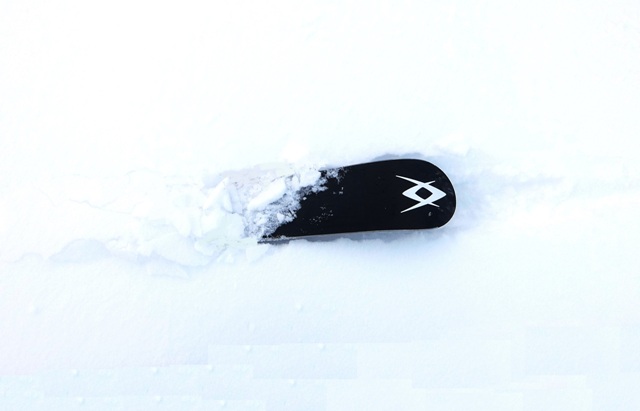
That’s Laurie under there. Credit: Harriet Wallis

Here’s a lesson for vacationers and anyone else who skis in the West.

Let me set the stage.

A snowstorm dumped several feet of light, fluffy snow, and we were skiing at Brighton, UT, our home resort. We know every inch of the mountain—its steeps, its trees, its gentle slopes.

Dreams are made of fresh snow like this. Fearsome steep slopes become mellow ones. Moguls disappear. It was deep, and it was bottomless. It was hero snow.

Then to get back to the lift, it was a wide open slope. Learning skiers like the slope because of its gentle pitch. It had been recently groomed, so the new snow there was only half as deep. Although it’s a basic, easy slope, it’s still fun to bounce along in the fresh snow.

Then Laurie—my skiing companion—disappeared. Where’d she go? Did she ski around the little grove of trees? Did she pass me? Where is she? She’s gone. Holy cow, she’s suddenly vanished.

Scanning the slope I saw a black dot. It was just a few inches of the bottom of a ski—her ski—sticking out of the snow. After all the steep, deep slopes, she fell on the easy slope.

But why wasn’t she wallowing to get up? Why was there no movement? Something was wrong. I struggled up slope and reached the ski, but still no Laurie.

There was no crater. There was no hollow. There was no indication that an entire human being was buried right there. The only tell tale was the tip of her ski sticking out of the snow. I began digging,

She had fallen forward, head first, into snow that was as soft as feathers. The soft snow poofed up, buried her, then settled over her as though nothing had happened. It pinned her down. She couldn’t move. Couldn’t thrash. Couldn’t call out for help.

She could have died there. It was an avalanche burial—but there was no avalanche. It was in bounds, on an easy slope, and in snow that wasn’t very deep.

It was a lesson that verifies what we all know: Mother Nature can play nasty tricks. Don’t ever ski alone.

To read more from Harriet click here for her stories on SkiUtah.

Magic Mountain

SeniorsSkiing Guide: Magic–Where Skiing Has A Soul

Magic Mt. Has $29 Tickets On Thursdays!

Magic is right-sized for seniors and families.

We are zipping down Wizard, a 1.6-mile-long intermediate trail that hugs the West Side, in seven inches of new snow with lots of woohoos and yippees. At many areas, this trail would be flattened by now. Not so at Magic Mountain in South Londonderry, Vt.

Groomers will leave the snow to powder hounds until the weekend. They will, however, smooth trails out on the more easy going East Side to keep everyone happy.

Is Robert Frost hanging around Magic Mt? Credit: Tamsin Venn

Natural snow makes some of the East’s most interesting, fun, and challenging trails and glades all the more sweet. Add a trail mainly to yourself midweek, friendly locals, and reasonable prices – Throwback Thursdays lift tickets cost only $29 – and it’s like skiing back in the old days.

When Swiss instructor Hans Thorner started Magic in 1960, he picked Glebe Mountain for a reason: exciting, wooded terrain that reminded him of his home in the Alps. Back in the 60s and 70s, Magic Mountain had a huge following. Thorner sold it in 1985. After, the vagaries of skiers, investment, real estate, and weather meant customers drifted away because they could not count on it to be open,  and it has had its ups and downs since then.

President Geoff Hatheway and his band of 16 investors (Ski Magic) are changing all that. They have launched an ambitious five-year plan to make Magic appeal both to die-hard skiers, families, and the 18- 19– year-old set. The group is investing in snowmaking (now at 60 percent) and lifts. Notably they are putting in new lifts to provide mid-mountain skiing and more lift capacity to the summit.

Hatheway typifies the die-hard Magic loyalist. He skied here in 1998 and his kids went through the racing and free skiing programs. Like others he appreciated the family friendly alternative to nearby Stratton Mountain.

“Here’s what you won’t find at Magic, a high speed lift and trails groomed Soup to Nuts,” says Hatheway frankly.

Magic President Geoff Hatheway likes early runs on snowy days. Credit: Tamsin Venn

What you will most like find are other senior buddies either on the lift or in the Black Line Tavern, a popular locals’ watering hole. Throwback Thursdays extend to food and drink specials here, the bands are live, and no one is in a hurry.

Magic is open Thursday to Sunday, plus holidays, and on any day it snows 6 inches or more. It has a daily sales ticket limit of 1,500 to keep lift line wait times short and glades uncrowded.

Mountain Facts

Vertical Drop 1,500 feet

205 skiable acres

29 trails, 11 gladed runs

3 Chair Lifts, 3 Surface Lifts

Tickets

Seniors (70+) day $54; season pass $499

Buy online in advance and pay as little as $44.99

Throwback Thursdays $29 (except holidays and powder days of 6” or more) with purchase of Throwback Card ($149)

Magic Mountain Trail Map Click Here

Magic Mountain Webcam Click Here

There it is. An accessible mountain that has something for every senior. Credit: Magic Mt.

70s Ski Testing: On The Snow

Step 2: Go Out, Do It.

One of the joys of working at Ski Magazine was that I was paid to test skis!!!  Ski manufacturers shipped skis to our lab for testing and when it was completed, the skis were covered with self-adhesive shelf-paper and numbered so the testers couldn’t identify the ski. 
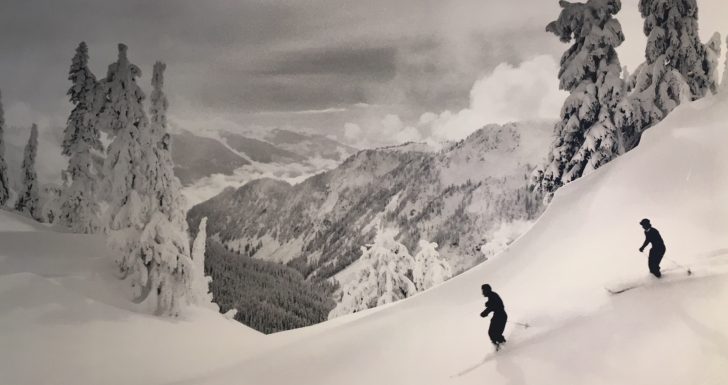
Mother Nature dictated our location and we didn’t want to test at the same area Skiing used.  One year we started at Mount Hood but weather and poor snow forced a move to Mammoth before we settled on Park City the following year.

Areas were picked that could give testers access to a lift that served terrain suitable to our needs.  To create a hard, icy surface, the area allowed us to spread ammonium nitrate on the snow to create a hard frozen granular.

For racing skis, we set up a NASTAR type course with thirty gates and applied ammonium nitrate to make it rock hard.  Racing skis were tested just like the others before we pulled them aside for the days when we would ring them out on a racecourse.

Our contract testers – six men and four women – and me were all certified instructors with either coaching and/or racing experience.  John Perryman and his wife Joan were expert skiers and were part of the test team.  We wanted strong skiers who could ski consistently and could handle a ski without changing their technique. 

To get it right, it wasn’t about blasting down the mountain on one ski after another.  SKIpp demanded a disciplined methodology.  Each year, we reviewed the on-snow maneuvers designed to replicate how beginners through experts skied.

Because some brands were putting their name under clear P-Tex, testers were not allowed to pick up the ski prior to skiing on them.  To help ensure that each ski was tested the same way, the methodology was designed to minimize the tendency of a tester to adapt his/her technique to the ski.  Testers were limited to two runs per ski. 

 The tester came to the tent to score the test ski and write his or her comments before taking another ski.  Each day we tested ten skis because we learned beyond that it became hard to differentiate each ski’s performance.

The best skis didn’t generate many memorable comments although one tester wrote “On the icy snow, this ski tracks like a train on rails and in the soft stuff, it will derail you.”  Another wrote, “A two-by-four with an upturned end would be better than this ski.”

In the evening, skis were prepped for the next day and the day’s data tabulated.  Even though it was preliminary, we were pleasantly surprised at how well the on snow results compared to the lab’s prediction.

Testing ten skis took us to lunch.  For the afternoon, the testers could pick a ski from that day or prior days to enjoy.  It was tough, demanding skiing, but somebody had to do it!

Mystery Glimpse: Trackless World Of Snow

Alpine Universe

Now here’s an amazing picture from the Alf Engen Museum, Park City, UT.  What are we looking at? What’s the place? And, more importantly, who took the picture?  No, not Ansel Adams, but close.

Last Week

Yes, indeed, the Very Special Guest was Princess Elizabeth who visited the Mittersill Alpine Resort near Cannon Mt., NH, in 1951, probably in connection with her trip to Canada that year.

Why would the future Queen of the Realm stay at a then-remote ski resort in Northern New Hampshire?

We infer that she was visiting a member of the Hapsburg royal family, Mittersill’s founder Baron Hubert von Pantz, a wealthy Austrian sportsman and hotelier. His Tyrolean-themed Mittersill Club in Austria—a mecca for royalty from all over Europe—came to a sudden end in 1938 when the Nazis invaded.  He resettled in New Hampshire and in 1945 opened the Mittersill Alpine Resort, which consisted of an Inn and number of unique, mountain-themed cottages, reflecting the Austrian style.

From the Mittersill Inn.

We visited the Mittersill Alpine Resort last February, checked out some of the original chalets, and found a collection of unusual illustrations posted on the walls of the Inn.  These charming pictures reflect another time, a Tyrol where horses and sleighs carried sports people dressed in “ski costume” around the mountains. We asked the Inn’s staff what the history of these magnificent pictures was but no one knew. We strongly suspect the Baron brought them with him from his club in Austria.


And here’s a poster from the Mittersill Mountain Club’s early days.  Cozy, eh?


SeniorsSkiing Guide: Brian Head Resort

Brian Head is Utah’s southernmost ski resort. But its base elevation is the highest. At 9600’, the bottom of Brian Head is higher than the top of Deer Valley. It took about a day before I got acclimated.

In terms of Utah ski resorts, Brian Head is relatively small: 650 acres and a 1320’ vertical. It’s possible to add another 300’, but that would require a steep out-of-bounds climb. 

Because of its location, Brian Head can be a snow magnet, especially when southern storms are prevalent. I skied the resort after a modest but windy storm. Every now and then the clouds lifted to reveal glimpses of the dramatic red rock countryside. On a bluebird day, the views must be magnificent.

The resort got going in the mid-60s when Alta’s Alf Engen was invited down by the first of several owners to help lay out the trail system. The place has developed significantly over the years. 

Today, there here are two mountains connected by a ski bridge. Navajo Mountain is gentle; Giant Steps Mountain, a bit more challenging. Eight chairs are available. The #7 chair and the black diamond area it serves were closed during my visit. My impression is that Brian Head’s blacks would be considered blues at other resorts, 

Getting from parking lot to lifts is effortless. We only visited Giant Steps Lodge where we booted up in the lower level (coin-operated lockers available for storage) but needed to exit and walk a short slope to get to cafeteria and restrooms…a minor detail unless you have the urge.

Senior pricing is good: If you’re 65+, weekday tickets are $30; weekend tickets are $43. Holidays, the price climbs to $57. Season passes are available to 62-69 year olds for $329; 70+ for $219. Season pass holders also get three days at each of 15 other smallish areas in Arizona, California, Colorado, Idaho, Michigan, New Mexico, Utah, and Wyoming. It might be worth the purchase for that benefit alone!

Another Brian Head price advantage is the low cost of its ski school. A weekend lesson is $75. The resort has other attractive instructional offerings as well.

Lodging options are limited to two hotels and a whole lot of condos. We stayed in a pleasant one bedroom in one of the hotels, Cedar Breaks Lodge. It has underground parking and easy elevator access to all floors. The first night we ordered pizza and wings in its restaurant. All I can report is that the beer was good and the hamburgers delivered to other guests looked edible.

The other hotel is the Best Western Premier. It’s nice looking, serves a respectable sit-down breakfast, and features a basic-menu steakhouse.

Other than the day lodges there are only two non-hotel restaurants: Pizanos Pizzeria (which we didn’t try) and Sook Jai Thai Cuisine, a Thai home-kitchen with acceptable dishes and a lack of central heating. 

Contemplating a stay of more than a few days? Investigate the many condo offerings and stock up on food in Parowan (at the bottom of the 13 mile access canyon) or in the larger community of Cedar City, 32 miles away.

Brian Head is a 3-hour drive, from Las Vegas, where winter flights often cost less than flying in and out of Salt Lake City, 4½-hours north. The resort would pair well with a visit to Vegas or one to nearby Zion National Park and/or Bryce Canyon National Park

If I wanted a laid-back, inexpensive, Western ski vacation, perhaps with grandkids learning to ski or board, I’d look into the southern comfort of Brian Head. 

For Brian Head Trail Map Click Here.

For Brian Head Giant Steps Webcam Click Here.


Rope Tow Escapades

Grabbing That Twirling Rope Was Not Easy.

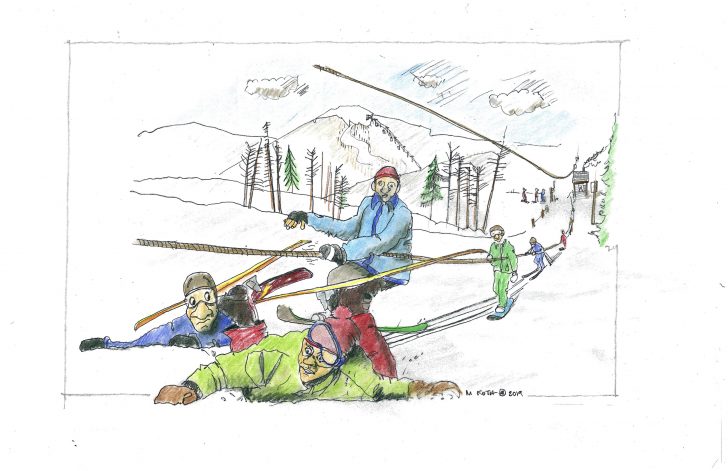
We’ve all been there. Cartoon Credit: Mike Roth

It was the early 1960s, I was in first or second grade and learning to ski at Mohawk Mountain in Connecticut. At the time Mohawk had just installed the first chairlift in Connecticut but most of the experiences I remember where on their numerous rope tows.

The first thing newbies had to master was slowly gripping the rope. Despite instructions to slowly grasp the rope, all first-timers, including myself instantly use a death grip. As a result I’d get hurled up the mountain about five feet before doing a face plant.

To my relief (and later amusement) there was no shortage of people making the same mistake. Every so often there’d be heaps of beginners tossed about on both sides of the tow. Sometimes people got so jumbled up it was impossible to tell whose arms, legs, skis or poles belonged to whom.

After repeating this several times in front of my laughing, older siblings and their friends I finally learned to adjust my acceleration by gently grabbing the rope. Once underway it was an exhilarating ride up the hill.

It was exhilarating because the rope tows at Mohawk moved at about 16 mph. To put that in perspective, modern-day high-speed chairlifts travel at about 12 mph.

After a few tiring rides up the hill someone showed me how to reach my left hand behind my back and grasp the rope while still holding on with the right hand. This did wonders in making the ride physically tolerable.

Another essential skill was learning how to stop once underway. This skill was needed when someone further up the tow fell and blocked the path. Until this skill was learned there would be spectacular pileups. Easing up on your grip wasn’t sufficient because the friction of the rope would tear your gloves apart. Instead you would have to turn one of your skis perpendicular to the hill and use it to keep you from sliding backwards.

The people who didn’t learn this skill would inevitably slide backwards down the hill bumping those behind them. I remember struggling to maintain my place on the tow while two or three skiers slid back into me.

Being six or seven years old the last thing I wanted was to be on the rope tow without others close ahead and behind me. Without other riders close by I would desperately try to hold the rope up off the snow. Being so heavy I’d have to bend over and hold the rope just inches above the snow; a backbreaking way to ride up the hill.

Another challenge was following a tall skier and when you’re a little kid they’re all tall. One of my friend’s fathers was 6’2″. When I rode behind him I’d have to reach up at head level to hold on to the rope. This was another excruciating way to ride up the hill.  In the lift line there was always jostling among my friends to be in the middle of the pack among like-sized skiers.

Being the youngest of three brothers and skiing with a bunch of boys from our neighborhood there was no shortage of mischief. When unloading from the rope tow the older boys would whip the rope in an attempt to knock those following off the tow.

The art form was perfected when one could whip the rope enough to knock off a follower but not so much as to get yelled at by the lift attendant. Those who excelled at this learned to look innocent and express dismay over what happened.

Years later it occurred to me that it was ironic that rope tows, one of the most difficult lifts to master, were most often found serving beginner slopes. I guess they served to toughen us up.

End note: I just recently learned about rope tow speeds at Mohawk having read Nicholas Howe’s fabulous article The Wonders of Walt in the December 2004 issue of Ski Heritage Magazine. Walt Schoenknecht was the ski visionary who founded Mohawk and soon after Mount Snow, Vermont.

Fryeburg, ME, 1936. First rope tow. Credit: MaineSkiMuseum

This Week In SeniorsSkiing.com (Jan. 18)

Silver Streaks, PopUp Problem, Snowmaker Gloves, 70s Ski Test, Mystery Guest, Conditioning Advice, Big Bromley Resort Review.

We stopped at Waterville Valley’s Silver Streak corner in the base lodge last Monday to introduce ourselves and spread some SeniorsSkiing.com stickers to the members who had gathered for coffee and donuts. Silver Streaks is a club program that is supported by the WV management with a separate place to park, gather, store equipment, have parties, races, and other special events. Correspondent Tamsin Venn wrote an article about the Streaks in 2015. Click here to read it.

The Silver Streaks is the oldest senior ski program in the country. We think it’s a model for other resorts.

But something that one member said got us thinking. We asked if they had heard about SeniorsSkiing.com, and one member said, “How would I have heard about you?” Excellent question and difficult to answer. SeniorsSkiing.com doesn’t advertise, we do have a modest Facebook presence, we try to link to other sites and stories. The best and most effective way for new readers to find us is to be referred by someone who is already a subscriber. Please spread the word.

This Week

Whoops.

We explain our annoying Popup Problem that came with last week’s edition. We are very sorry some readers had an issue with re-entering name and email address countless times.

Pat McCloskey gives us a steer to snowmaker’s gloves that really can make a difference if you ski in wet, wet conditions.

Marc Liebman continues his series on ski testing with an interesting article that describes how the parameters of ski performance were actually defined back in the 70s.

Our Mystery Glimpse this week is quite challenging. You might be able to identify the mystery guest, but where did this person stay? There are hints.

Orthopedist Dr. Peter Schmaus contributes his advice for focusing your conditioning on core muscles and why that is important, not only for skiing or other snow sports but for living as a healthy senior.

Finally, we hear from Tamsin Venn with a Resort Review of Bromley Mountain, VT., a classic ski area with “just right” skiing for seniors.


Remember folks, January is Learn To Ski And Snowboard Month. Bring a friend, bring your grandchildren. Get out there and enjoy the cold. Click here for more.

Thanks for reading SeniorsSkiing.com. Please tell you friends, it’s how we get new readers. And remember, there are more of us every day, and we aren’t going away.

Bromley is right-sized for seniors, lots of do-able trails, even the Black Diamonds. Credit: Bromley

Short Swings!

There’s a pattern to most chairlift conversations. I usually start mine by asking: “Are you local?” My other go-to intros are a comment if it’s cold as hell or if it’s a bluebird day. Use any of these ice-breakers, and most people drop into the groove as easily as a needle on an old 78 (remember them?). 

A double or triple provides the ideal number of conversationalists. Quads and six-packs can be a challenge. I’m sure you’ve experienced those multiple conversations.

Topics generally are benign, although I’ve been exposed to strong political points of view and strong racial epithets. Since the chair is both public and private space, when that kind of ugliness occurs, I have no compunction making my point of view known.

One time, on a triple, I listened to someone describe an active money-laundering scheme. I bit my tongue, anxiously waiting to get away.

I enjoy riding with youngsters and learning what’s on their minds. What they like in school. What they like to read, movies they’ve seen, etc. Those can be some of the best lift conversations.

Many chairlift chats become boasting platforms. Cliff-hucking. Days skied. Resorts visited. The fancy lodge where others on the chair aren’t staying. Etc.

Generally, there’s a brief lull before it’s time to raise tips, check for loose clothing, and tell the others to “Have a good run.” Every now and then when skiing alone, I’ll ask a fellow chair mate if he or she wants to take a run. Some of those have resulted in a pleasant few hours.

Increasingly, people riding the chair are plugged into some electronic device and remain incommunicado. It bothered me for a while, but I got used to it. What I’ve never gotten used to are the people, generally on the younger side, who get on the lift and choose not to say a word. It’s probably more my problem than theirs, but sitting next to a totally silent bump on a log suspended 40’ or 50’ off the ground is weird and seems to be a violation of conventional chairlift etiquette. 

And there’s the occasional pleasant experience of riding solo. A time to enjoy the scenery and to feel the sun or the wind or the cold. Sometimes it’s just nice to be on the chair alone.

Innovative Robotic Ski Device Reduces Muscle Fatigue and Joint Pressure

Elevate is the new robotic ski exoskeleton that boosts quad strength and gives greater control, stronger turns, and longer runs, while reducing muscle fatigue and joint pressure.

Sensors and smart software on the exoskeleton anticipate the skier’s intent and uses air actuators to automatically adjust torque at the knees. The device is fully adjustable and follows the body’s lead, helping the skier feel lighter and more energized. As you’ll see in this video, the skier is always in control.

https://youtu.be/VPnh0j7lPj0

I haven’t experienced the device yet, but from my perspective, it has the potential to be an important addition to the older skier’s toolkit.

Elevate is advertising with SeniorsSkiing.com and offering readers a 10% discount on rentals at its Lake Tahoe and Park City locations. At this time it is only available as a rental. Click on the ad to learn more.

Discounted Backcountry Guides at Squaw Valley Alpine Meadows

Alpenglow Expeditions, located at Squaw Valley Alpine Meadows, conducts lift-accessed backcountry tours of the National Geographic Bowl and Tram Ridge zones at Squaw Valley and the Munchkins zone at Alpine Meadows. Tours are guided by American Mountain Guide Association (AMGA) trained ski guides.  Go with them midweek and get a 20% discount. More info at alpenglowexpeditions.com. If booking online, use promocode SquawAlpine20 at checkout.

Monday is Pizza and Powder Night at Brighton

Brighton Resort at the top of Utah’s Big Cottonwood Canyon is often overlooked by those visiting Utah to ski. That’s a mistake. The area has great terrain and is a magnet for snow, often getting more accumulation than areas around it. Unlike most other Wasatch areas it has an old-fashioned, homey vibe. It’s a wonderful place to ski. If you’re in the area on a Monday night, Brighton is offering four passes and a large pizza for $125. Click here for more.

Monday is Value Night at Jiminy Peak

Jiminy Peak Mountain Resort in western Massachusetts has a seven-hour night skiing lift ticket for $19 on three Monday nights in January: Jan. 14, 21, and 28.

Safe Descents Ski and Snowboard Insurance

You’re older. You’re going skiing. You want protection. Safe Descents is ski and snowboard evacuation insurance costing $56.99 for the season or $4.75 for a day. The policycovers ambulance or air evacuation services from any ski resort in the United States. It also covers sending a loved one to the hospital and/or getting the insured back home following a hospital stay. Policy holders are covered for a maximum of $25,000. Safe Descents policies are underwritten by the global Starr Indemnity and Liability Company. For more information, click on the Safe Descents ad.

Join Us in the Alps

Join us the week of March 10 when we ski in the Aosta Valley with guides from AlpskitourEach day, we’ll go to a different resort in Italy, Switzerland and France. The all-inclusive price — $4,500 to $5,500 per person– depends on where you fly to and whether you stay in a 3 or 5 star hotel. Orsden is a sponsor and giving a parka to each participant. If interested, email me: jon@seniorsskiing.com.

Coming Soon: SeniorsSkiing.com Annual Fundraising Campaign

In a few weeks, we’ll start our second annual fundraising campaign. Please support our efforts to bring you weekly information and to advocate on behalf of older snow sports enthusiasts. Thank you!

Jeeves, Please Hand Me My Skis

There are many skiers of every age who take to the hills once or twice a year, often schlepping skis that aren’t suited for their destinations or gear that is simply out-of-date. Ski Butlers is a white glove rental/delivery service that solves those problems. Give them your info ahead of time, and they deliver gear and accessories to where you’re staying. Their technicians help  you get the right fit. If you don’t like what they delivered, they’ll meet you and provide alternatives. Ski Butlers services most big name resorts throughout the West (Whistler Blackcomb, included) and France.  Click here for more info.
PopUp Problem Perplexes Publishers

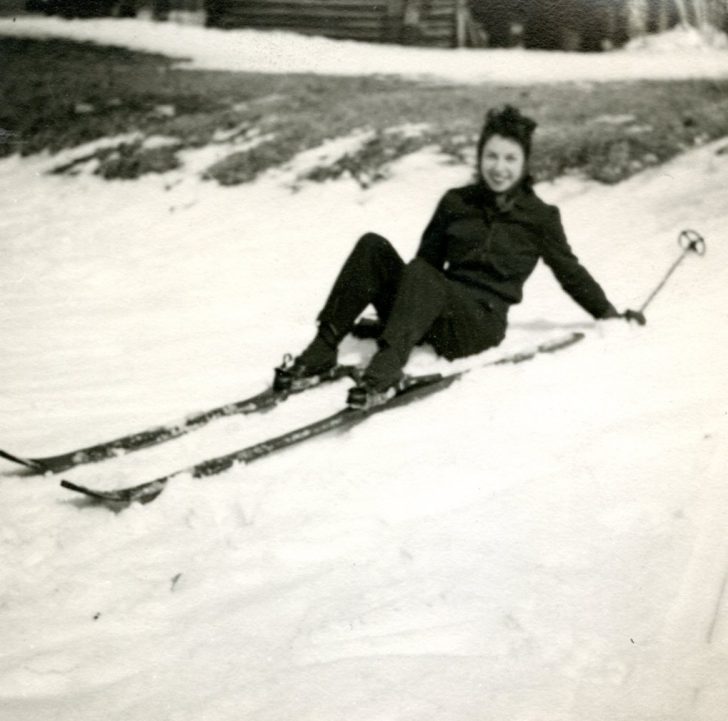
Last Week’s Edition Had Some Issues.

Whoops!

Imagine our surprise when we began to receive complaints—some strongly worded—from our readers about having to re-enter their name and email to access our online magazine. That is, re-enter again and again and again. And again.

We thought it was a typical but annoying problem that is usually on the reader’s side of the screen: When “cookies” are disabled or the reader uses a different browser or device, a similar set of symptoms happens. The solution is usually pretty simple: Turn on cookies on browser.

But no, not this time around. We believe the problem can be traced to a flaw in the popup software we use as a result of a WordPress update. We thank our stalwart software designer Alice Winthrop of Gate-House Design who tracked down the developer of the software and disabled the popup until the problem can be corrected.

Which brings us to why we have a popup in the first place. For one thing, we want to offer visitors a chance to subscribe for free. The popup also appears if a subscriber—or a non-subscriber visitor—is trying to access our Subscriber-Only Content. We ask subscribers to confirm their information before getting access to such assets as Free (Or Almost Free) Skiing For Seniors, Ski and Boot Recommendations, our Historic Ski Poster e-book, and other items.

The alternative to the popup is for subscribers to create an account with a username and password. That is not something we want to manage, nor do we think it is necessary for an online snow sports magazine for seniors. Nor do we believe our readers want to remember yet another password. Hence the popup.

Let us know if you have any issues, suggestions, concerns. We love to hear from you.

We apologize for any inconvenience this may have caused.

Snowmaker’s Gloves For Wet Weather: The Joka Waterproof

Wear What Works In The Wet.

Joka Glove is $28, mittens also available as are other models.

I usually take most of my vacation time in the winter because I like to ski out West and in the Adirondacks.  And more often than not, the trips are something to look forward to when you live in the Mid-Atlantic and have to deal with the rain and sleet events that plague our winters here in “the banana belt”.  I always tell everyone if you can stay dry, skiing in the rain is not bad since the snow is soft, and the turns are, well, hero turns on hero snow.  Enter the Joka Waterproof Glove.

If you go to the CHS Snowmakers web site, you will find an array of perhaps the finest waterproof gloves that you will ever purchase for a very reasonable price.  Joka gloves are rubber and have an inner, removable fleece liner  that can be easily removed and dried.  These are true snowmaker gloves and are perfect for skiing in the rain.

I have a Pro Gore-Tex from Patagonia that keeps me completely dry, but the Achilles heel has always been wet leather gloves that get soaked and cold.  When I found the Joka gloves on a recommendation from a friend, I became a believer and an evangelist. You can literally submerge these gloves up to the fleece lining  in a bucket of water and never get wet. Everybody is buying them down here in the banana belt, and you should too if you venture out in weather that is not quite optimal.

The other nice thing about the gloves is that you can “squeegee” your goggles without scratching your lenses. When it really rains, I have to reach up and clear the goggles and these gloves are non -abrasive to the goggle lens.  A definite plus for expensive goggles that are sensitive to handling.

My suggestion: Do yourself a favor, buy a pair.  You can use them in the yard, on a mountain bike, or skiing in the rain.  As my friend the Shark always says, “No such thing as bad weather, just bad clothing choices.”


70s Ski Testing: Defining How Skis Work

Step 1: Inventing The Right Metrics

[Editor Note: In this new series, former SKI editor Marc Liebman recounts how serious ski testing began as a way to provide consumers with objective information about ski performance.]

In the early seventies, ski design was in the midst of a revolution that is still going on today.  It started in 1959 when Art Molnar and Fred Langendorf marketed the first ski with a fiberglass reinforced core under the Tony Sailer brand.  When it came out, skis were made predominantly from wood with a P-Tex bottom and segmented edges screwed into the core.  One piece steel edges were coming into vogue.

Computers and programs to model flex patterns, torsion (twisting) and the impact of different materials on ski performance were in their infancy. Ski design was (and still is) a mix of sound engineering, materials science, and experience.

Ski manufacturers touted the benefits of fiberglass versus aluminum sheets or rods or u-shaped metal versus foam or wood cores and the list went on and on.  Ski Magazine’s (and Skiing’s) customer research said that their readers wanted an objective way to compare skisNet net, we – the skier – were confused.

In 1971, Ski Magazine contracted John Perryman, an aerospace engineer to come up with a methodology that would achieve four objectives:

  1. Measure the dynamic and static properties of the ski;
  2. Analyze these properties mathematically because they don’t act in isolation and are intimately related to each other;
  3. Correlate bench testing with a rigorous on-snow program that requires the skis to be put through a standard set of maneuvers by the tester on a variety of snow conditions and terrain without knowing the ski’s identity; and
  4. Present the results in an easy to understand format that enables the skier to compare ski A with ski B.

The program was called SKIpp for Ski Performance Prediction.  Each year, SKI magazine tested more than 200 skis, all roughly 200 centimeters long. I was on the initial team. Calculations were done with a slide rule and data tabulated on my Bowmar Brain, one of the first electronic calculators.  We created five metrics that we believed defined ski performance:
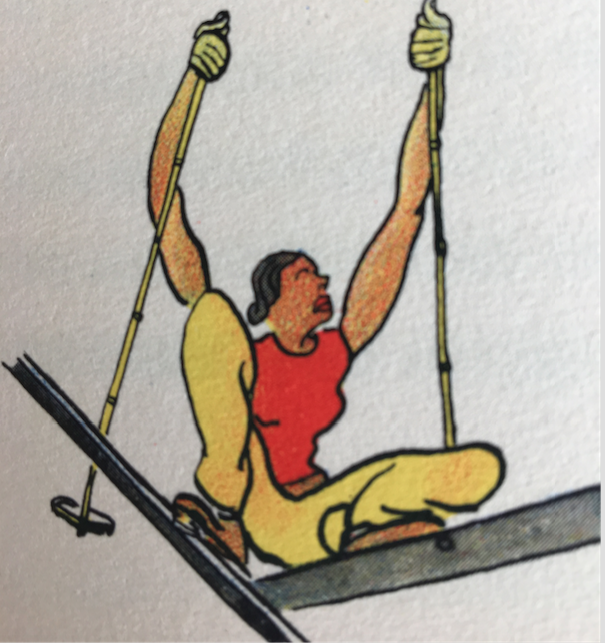
  1. Foreflex dynamics – complex calculation of the force needed to bend the front portion of the ski and its resistance to rapid flexing;
  2. Afterflex dynamics – same as the front for the portion of the ski behind the boot;
  3. Effective torsion – combination of resistance to a ski’s twisting and how sidecut affects ski’s ability to turn in an arc;
  4. Effective Compression – measured the camber of the ski along with the force needed to flatten the ski; and
  5. Damping – ability of the ski’s to suppress vibration.

Based on the data gathered, we could predict how:

  1. Easy a ski was to turn;
  2. It would perform in different snow conditions; and
  3. How it stable it would be at high speed.

Looking back, we didn’t realize how far ahead we were in ski performance analysis.  In the beginning, several manufacturers challenged our results, but in the end, they came around to our side of the table which was that the correlation between our lab analysis and on snow performance was amazingly accurate.

Focus On Conditioning: Still Time For This Season

[Editor Note: This article was contributed by Peter Schmaus, MD, Orthopedic Spine and Sports Medicine Center, Paramus, NJ. and Senior Attending Physician, Hackensack University Medical Center. SeniorsSkiing.com is very grateful to have his view on conditioning.]

Pay Attention To Body Tuning Before You Hit The Slopes Or Trails.

Many of us pay more attention to our equipment than the most important equipment of all—us! Many ski injuries and overuse syndromes can be avoided by simple preventative maintenance. While sharpening your edges and maintaining bindings are smart, even more important is a musculoskeletal tune up on yourself. This is even more crucial as we age and the musculoskeletal system inevitably displays the wear and tear of the years.

We lose muscle mass annually as we age over 40, but this can be reversed with the correct exercise regimen. Joints inevitably become stiffened both from cartilage thinning as well as tightening of the soft tissues surrounding the joints and spine. These conditions, while not completely reversible, can be managed with exercise programs stressing both flexibility and strengthening.

While stabilization and core are buzzwords frequently used in the fitness field, for snow sports those words cannot be repeated too often. Fitness trainers, therapists, and physicians refer to muscle groups that are core stabilizers. These include the rectus abdominus, external and internal obliques, back extensors, and the pelvic floor muscles.

These are your natural weight lifting belt and lumbar support muscles. They stabilize and support the spine in all planes, and a strong core helps provide balance and force required to carve a turn or navigate a field of moguls. Core muscles even support your spine when pulling off your boots at the end of the ski day. Exercise methods include Swiss ball, back extension, modified crunches, various planks and supermen. All can be done in the home without elaborate gym equipment. And do not forget the simple push up and proper squat.

We frequently refer to the posterior chain, which includes the gluteal muscles, the hamstrings as well as latissimus, and back extensors. Regimens can include lunges, modified dead lifts, squats, kettle bells and burpees. If your bodyweight does not provide sufficient resistance, add some light weight. Simple flat plates, kettle bells, or even resistance bands will suffice. Then move on to side-to-side exercises, which simulate ski motion.  Keeping your center of gravity well centered is the physics behind a good day on the mountain.

Be mindful that snow sports, while not overly aerobic, do require exertion and therefore increased cardiovascular activity. That is aside from the long walk uphill though the parking lot with all your heavy equipment.

Also important especially as we age are balance exercises. Stand on a balance or wobble board. Not a challenge? Hold two light weights. Go through your regimen while remaining balanced on the board. It is not easy in the beginning, but the benefits of enhanced balance and stability are crucial on uneven terrain. Constructing a preventative exercise program well in advance of those first days on the mountain will reduce the risk of injury, making those days on the mountain more enjoyable and injury and pain free.  

SeniorsSkiingGuide: Big Bromley

Bromley Mountain Is Just Right For Seniors.

Bluebird day at the top of Bromley Mtn, VT. Credit: Tamsin Venn

At Bromley Mt. in southern Vermont, runs are not too long and not too short, just right for senior legs to make a top-to-bottom, 1,300 vertical-foot run without a thigh-burn break.

Although you would be remiss not to stop. Views from the top of the Sun Mountain Express stretch from the Adirondacks to the White Mountains. In the near distance, snow-dusted hills and ridges roll away. Trails curve through bright deciduous trees, and dipping into a glade is a friendly undertaking.

I found the sweet spot on a trail called Corkscrew over to Pabst Peril, smooth as Guernsey butter, after a recent seven-inch snowfall. The Pabst reference is to Bromley’s original owner, Fred Pabst, grandson of Captain Frederick Pabst, founder of Pabst Blue Ribbon Beer.

Black diamonds here are really what other areas would call blues, reducing the high alert meter. A high speed lift and groomed trails ensure sharable speed and vertical feet tallies on your Ski Tracks app. A south facing slope, flooded in sunshine on a wintry day, is enough to banish SAD for the entire winter, although some skiers’ fondest memories are sun-and-shorts spring ski days, and the world is grand.

Bromley is known as a young family-friendly mountain, which is always good news for seniors. It welcomes a lot of others as well: tele skiers (a popular annual telefest); moms (Feb. 8 is Mom’s Day Off); snowboarders  (Sochi Olympics medalist Alex Deibold is a native son); uphill skiers sunrise through dusk . (The Appalachian Trail swings around back.); and exchange students (who trade Lima, Peru for Peru, Vt., to work here in their summer). Also innkeepers, young racers guided by the Bromley Outing Club, and lines of kids in weekly afternoon school programs.

Bromley is right-sized for seniors, lots of do-able trails, even the Black Diamonds. Credit: Bromley

As an independent mountain, managed by Brian and Tyler Fairbank of the Fairbank Group, which also runs Cranmore Mt. and Jiminy Peak, Bromley still has a senior’s season pass, and senior day pass discounts as low as $39 for a midweek day ticket if bought at least a day in advance.

The Silver Griffins is “for skiers 60 plus with a sunny attitude.” For $15 annual dues, you get parking near the base lodge midweek non-holiday (the youngsters have to park on the other side of Route 11), discounts in the cafeteria, ski shop, rental and repair service area, plus a name badge, monthly after ski parties in the Stratton View alcove, other social functions, and lots of tall tales from when Bromley was a two J-Bar mountain.

Fun Facts

Marvie Campbell celebrates 50 years as a ski instructor at Bromley.

Seniors Seasons Pass: 70 plus, $549; age 65-69, $599. No blackout dates.

Advance Sale Lift Tickets: As low as $39, depending on day and month.

Bring the grandkids: Bromley put in a terrain park this year, built by the experts at Arena Snowparks.

Fat Tire Fridays: Burger and Beer Special for $10 in the Wild Boar Tavern.

Skiing History Day: March 2. Fanatics unite. https://www.bromley.com/winter/events/

Why Stay Home Lodging: Midweek $99/night, includes lodging, tickets, and breakfast for two. http://lodgeatbromley.com/vermont-vacation-packages/

50th Anniversary: Marvie Campbell celebrates her 50 years as a Bromley ski instructor this year.

Mountain Stats

  • Summit Elevation 3,284 feet
  • 47 Total Trails
  • Nine lifts
  • 86 percent Snowmaking
  • www.bromley.com

Click here for trail map


fact vs belief

Short Swings!

I write this column every week to share information and ideas about being in and on the snow. I haven’t yet had the pleasure of being there this season. It’s still a week or so off.

Sometimes it’s clear what I’ll write about: there’s a new survey; we’ve published one of our annual lists; Big Skiing, Inc. is systematically removing senior benefits. Those and other topics get a fair number of responses. Other times, the subject d’jour doesn’t present itself so easily and the dearth of reader comments reflects it. But, I always enjoy assembling the words.

More than one reader has accused me of naiveté because of comments about the amounts seniors spend when they go skiing. We explored that area in a reader survey at the end of last season and found that 56% of respondents reported they spent between $1000 and $5000 per person last season on skiing, boarding, and related activities. More than 10% spent $5000 or more, per person.

Those figures are “grossly in error,” wrote one reader who claimed the figure should be closer to $5 per day. Our data comes from survey questions that had almost 2000 responses. The resulting information reflects input that shows higher levels of spending. I can’t argue with what the reader observed in the lodge at her area of choice – those elderly $5-a-day brown baggers are found at many areas – but our surveys collect data from a large group. Unless readers have conspired in a massive fib fest, I’ll accept the survey results as closer to what actually happens when seniors go skiing.

Another recent survey result is that grandparents play a major role introducing grandchildren to the sport. This may be obvious, but I don’t think it is fully appreciated – especially by Big Ski, Inc., which relies on newbies to fuel its future. In the past 35 years, the number of skiers and boarders hasn’t grown. I have two young grandkids just starting out. We encourage them with related gifts. The survey that validated this concept. It showed that once introduced, almost 95% of the grandkids stay with it.

Like all surveys, ours are not perfect. But the questions are carefully written and the number of responses large enough to be accurate.

If you have topics you’d like explored in Short Swings!, please let me know. Alternatively, if you’d like to express your own interests on these paperless pages, we’re always open to article ideas and article submissions. They could be about your personal experience, your ski club activities, interesting skiers you know, etc. Click here for submission guidelines. 

Vermont Adaptive Snow Ball Fundraiser, Feb. 2 at Sugarbush

Vermont Adaptive Ski and Sports will host its fourth annual Snow Ball fundraiser, Thursday, February 7, at Sugarbush. Tickets are $40 for individuals and $70 for couples. For more info, click here.

January is Learn to Ski and Snowboard Month

January is the 11thannual Learn to Ski and Snowboard Month. Resorts across the country have great deals on beginner learning programs. Since its inception in January 2009, resort partners have provided 957,250 beginner lessons during the month of January. For more info, click here.


Liftopia Launches Hosted Ski Bus Trips

Liftopia, the largest online and mobile marketplace for ski lift tickets and mountain activities recently launched “Liftopia Experiences,” hosted ski bus trips. Liftopia Experiences are available in major metro markets in the U.S. and Canada including Baltimore, Boston, Chicago, Denver, Los Angeles, New York City, Minneapolis and Toronto. The trips include round-trip transportation to ski area along with lift tickets, rentals, lessons, and accommodations. For more information, click here.

Join Us in the Alps

Join us the week of March 10 when we ski in the Aosta Valley with guides from AlpskitourEach day, we’ll go to a different resort in Italy, Switzerland and France. The all-inclusive price — $4,500 to $5,500 per person– depends on where you fly to and whether you stay in a 3 or 5 star hotel. Orsden is a sponsor and giving a parka to each participant. If interested, email me: jon@seniorsskiing.com.

Coming Soon: SeniorsSkiing.com Annual Fundraising Campaign

In a few weeks, we’ll start our second annual fundraising campaign. Please support our efforts to bring you weekly information and to advocate on behalf of older snow sports enthusiasts. Thank you!

Mystery Glimpse: This Isn’t Easy

Bombing Down

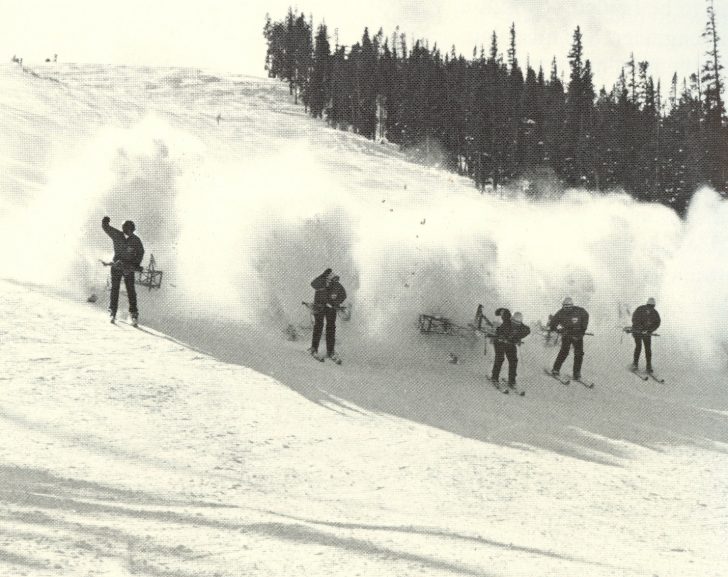
What is going on here? Party? Race? One thing we will tell you is that this looks like (and was) a very tricky maneuver on skis. One resort made these famous.  Name it? The inventor?  Thanks again to the Colorado Snowsports Museum at Vail.

Last Week

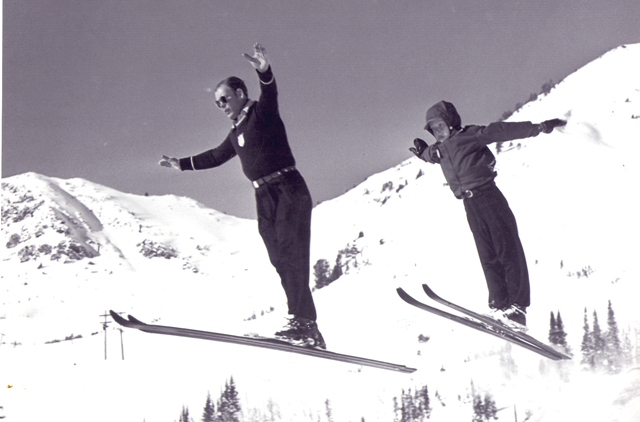
Indeed, this is Alf and Alan Engen doing some father and son ski jumping at Alta circa 1952. Alf was an early ski jumper who mastered Alpine skiing and helped start the ski school at Alta. He and his two brothers helped popularize skiing in the West, especially Utah and Idaho. Alf’s son, Alan, carries on the family tradition today at Alta.

The Alf Engen Museum at Park City contributed this photo.

The photo came from the Museum’s Ray Atkeson collection. Atkeson (1907-1990) was a photographer best known for his landscape pictures, particularly in the American West. His black and white ski photos are considered some of the finest ever captured.

The museum contains more than 300 trophies, medals, uniforms, scrapbooks, skis, boots, photos, films and other collectables that span some 70 years in the career of the Engen family. The museum’s educational component gives school children a skiing-based foundation to study subjects such as the water cycle, physics and Utah’s colorful history.

Alf Engen. Check those pole baskets.

The Museum recently added a fully functional virtual ski experience designed and built by Utah-based company Unrivaled. The ride takes you through an amazing downhill ski experience and even gives the authentic feeling of skiing by adding wind and even snow to the overall downhill experience.


Memoir Of A Telemark Skier

“Telemarketers” Found Each Other To Practice Their Distinctive Style.

[Editor Note:This remembrance of Telemark skiing by Roger Lohr first appeared in his publication XCSkiresorts.com.]

The North American Telemark Organization set a record with this group turn at Mad River Glen in 1980.

In the 1970s, telemark skiers were called the free heelers, telemarketers, and the Lunatic Fringe. But these skiers performing the historical telemark turn down the slopes at alpine ski areas were seen as “the vanguard of the slopes” by many for their ability and skill descending the runs at high speeds, in the moguls, and landing aerials on their cross country skis. But telemarkers were often heard commenting that they were only riding the lifts at alpine ski areas to improve their downhill skills for the backcountry. Some claimed “free the heel, free the mind”, but they became intoxicated with riding chairlifts rather than getting their thrills in the backcountry.

These days, as alpine touring and backcountry skiing become more popular, the telemark subculture may be a declining breed at the alpine ski areas. However, there was a time when they were racing down through the gates and partying hard and celebrating their differences based on what was perceived as their retro ski techniques. They were dressed in wool pants or knickers with ear flapped knit hats with elongated tassles (designed by Vermonter Poppy Gall, a woman entrepreneur, designer, and currently a co-director of the Vermont Ski & Snowboard Museum).

NATO Founder and Telemark legend Dick Hall wiggles through a narrow spot.

Today, telemarkers, or what is left of this group, are no longer counter culture, but in their heyday, telemark festivals, traveling clinics and workshops, and more were the brainchild of the North American Telemark Organization (NATO) created in 1975 by Richard (Dickie) Hall of Waitsfield, VT. In 2017, Dickie Hall was inducted in the Vermont Ski Hall of Fame, which is a long way from his first time telemark skiing with a dozen others as a group at Pico Mountain, Vt. in 1974.

According to author David Goodman’s article about telemarking in Powder Magazine, “the telemark turn was invented in 1868 by Sondre Norheim in the Telemark district of Norway. As alpine skiing and techniques took over, it was not until Rick Borkovic of Crested Butte, CO, sparked a revival and a number of Nordic skiers rediscovered the old technique.”

I found out about telemarking from the 1977 book “Skiing Cross Country” by Canadian Ned Baldwin while I was living in southern Vermont. Most of us regarded Steve Barnetts’s “Cross-Country Downhill” as the bible of telemarking as it covered downhill techniques in depth. As I improved, I got to know many of the telemarkers in the region, mostly men but there were some women, too. We ran a race series, but beside the competition, it was really a clan of telemark skiers who met on scheduled dates at different ski areas.

As a racer, I felt disadvantaged on my Trucker Light Edge skis, which were narrower and softer compared to the Rossignol Randonee skis, which handled the ruts and hard pack better and were used by most of the other skiers. Always blame the equipment. But Dickie’s motto “Ski Hard. Play Fair. Have Fun” was not so much about winning as it was about spreading the telemark gospel.

Hall developed NATO, (according to Hall, it’s the peaceful one) to conduct workshops, training courses, expeditions, and festivals. He traveled as a telemark evangelist from his home in Waitsfield, VT, and visited the states in the northeast, the Rockies, California, and Alaska among others. These NATO telemark events would feature instructional clinics for all ability levels, and equipment suppliers’ gear for demo use. Hall created the telemark ski school at Mad River Glen as one of the first in the US, and he helped others to become telemark instructors across the country. Over the years, Hall estimated that he has introduced, instructed, or just shared his love of telemark skiing to about 40,000 people!

In 2015, NATO held its 40th and last telemark festival at Mad River Glen, which attracted about 200 participants, a far cry from the 13 attendees at the original Pico event. The races held at the festivals were usually the focus point at these events, but the “group telemark turn” was an activity we all shared together. The telemarkers in Colorado and Alaska would try to top the eastern telemarking crew of deplorables at Mad River Glen, but it is believed that 128 eastern telemarkers in a group turn is the standing record.

At Mad River Glen, Dickie was a task master when it came to the group telemark. In Dickie’s mind, it was paramount that we link two telemark turns for the attempt to count. The photo in the 1984 NATO Eastern Telemark Festival Series poster (and used in many other NATO materials) exemplifies one of those record-breaking group telemark attempts. On the day of that photo (I was there), many of the telemarkers who were near the end of the line got whipped into a gully, and it ended in a yard sale of significant proportion. No injuries, lots of laughs—indeed we played hard and had fun.

NATO is now defunct but Dickie Hall telemark videos are still available via email request at nato@gmavt.net

Author Roger Lohr and two buddies try a three-man tele turn. What’s with the group turning thingy, guys?

Ladies, Don’t Wear Black Underpants On Super Cold Days…

…And Other (Unusual) Tips On How Everyone Can Stay Warm.

Yup, it’s cold outside. Credit: Harriet Wallis

We all have our tricks to stay warm when the temperature plunges. Here are a few you might not have thought of.

Cheapo Hand Warmers

Cheapos worn under your ski gloves might work.

I’ve used the shake-’em-up hand warmer packets and tried every kind of liner. Splurge $1 and buy the stretchy little gloves that you can find everywhere: grocery stores, drug stores, big box stores. The knit fabric is the best for keeping my hands warm. Most are black, but choose a colorful pair. You’ll have a better chance of seeing them should you drop them on the locker room floor.

Hot Buns

If you buy those little gloves, then you won’t need the hand warmer packets in your gloves. Instead, put them between your base layers, especially if your ski pants gap in the back. The packets stay in place between base layers and they keep your lower back warm.

Potato Ears

Before the days of microwave ovens, my mother stuck a nail into each potato before baking. The nail conducted heat into the potato, and it sped up cooking. The same concept applies to earrings on cold days. A post through your ear conducts the cold into your body. Skip the fashion statement. Stay warmer.

[Editor Note: Eyeglass frames can also be cold conductors. Try skiing with prescription goggles or contacts, or go native and take off your specs.]

Two (Or Three) Sock Day

Wear one pair to the mountain, then change your socks before you put on your boots. Feet exude moisture even if you swear your feet don’t sweat. If it’s a really bitter day, change your socks at lunchtime too. It makes a big difference. I dare you to try it.

Some Assembly Required

About that black underwear. On really cold days, it’s a project to get assembled: Tuck this in, pull this up, pull that down over.

My base layers are black, and so are some of my undies. More than once I’ve toddled out of the ladies room wondering why I’m hobbled. Duh. Too many black layers. My underpants are still way down there. Retreat and reassemble. Don’t wear black undies on cold days. Go for your brightly colored ones. They’re easy to see as you put yourself together.

To read more from Harriet click here for her stories on SkiUtah.

Safe Driving: Wrap Tires With Chains

How Many Readers Carry Chains And Actually Know How To Mount Them?

Back in the old days, many of us had knobby snow tires even studded ones mounted on a separate set of rims stashed in the corner of the garage, ready for mounting.  Tire designs and compounds changed over the years.  Snow tires still exist, but all season tires are the norm. If you have a car/SUV that has four-wheel drive, you are good to go for most winter conditions.

Last year, in Box in the Back, I listed what you should carry for emergencies when you headed into the mountains.  What Else Should You Have In Your Car provides suggestions on what to do/not to do if you are forced to stop for a long period, either by an accident or road closure.

The best time and place to learn how to put on tire chains is in your driveway on a nice day. Worst: roadside in a snowstorm.

What wasn’t covered was chains with which I have a love-hate relationship.  They’re clunky, a pain in the rear to install on the side of the road.  If one section comes loose, it can beat the crap out of a fender, wrap around an axle, or rip out a suspension component.

While most of us prefer not to install chains, there are parts of the country where the local gendarmes have the right to insist you use them even on a four-wheel drive vehicle equipped with mud and snow tires.  No chains, no going any farther.

Some states require chains on snow-covered roads. You have no choice, so you better know how to use them.

Point one.  If chains are required, getting told to put them on is not the time to turn around, drive back to the last town you passed, and buy a set.  They should have been bought before you left the house and kept handy, i.e. where you can get to them without having to pull everything out of the trunk.

Research chains types to pick the ones that are the best fit for your vehicle and your needs.  Click here for a really helpful link that offers instructions on selecting the right chains.

Point two.  A chain “inspection/installation” station is not the place to learn how to put your chains on because it is cold, snowy, and often dark.  Don’t rely on some helpful soul to rescue you.  Putting chains on slush, cinder, sandy wheels is a dirty job, so be prepared.  Practice putting them at home before you leave. Put them on and take them off several times so you know the drill.  One enterprising soul I know has the instructions downloaded on his iPad as a reminder.  While it is a helpful reminder, a video is not a substitute for actual experience.

Point three.  While you don’t need a separate pair of overalls and boots, carry a small rubber mat you can kneel on and a pair of heavy rubber gloves you can slide over a pair of ski glove inserts.  Leather work gloves also work. This will keep your fingers from getting cold and numb or cut.  Practice with the gloves on.

You make be like me and hate chains, but don’t leave them behind because, one day, you’ll need them or possibly lose a day or so of skiing.

FAQ: Why Do I Have To (Constantly) Re-Enter My Email?

We Get This Question From Time To Time. Here’s What Happens And How To Solve This Problem.

If you are being asked to re-enter your email to confirm your subscription to SeniorsSkiing.com, you might be a bit annoyed.  We don’t blame you, but there is an explanation.

You are accessing SeniorsSkiing.com through a device that is different from the one you originally signed up on. Subscribing to SeniorsSkiing.com puts a “cookie” on your device.  If you use a different device, no cookie, so you are viewed as a non-subscriber. If you re-enter name and password, you’ll be okay with the new device.

You have disabled cookies or cleared browser history on your device. Even iPads can accept or disable cookies. Turn cookies back on, and you’ll not have to re-enter again, or leave it disabled and realize you have to re-enter each time.  Your call. 

You are trying to access our Subscriber-Only Content.  Instead of building a firewall that requires usernames and passwords, we elected a much simpler way of getting to our exclusive content: Just confirm your name and email.  You will have to do that each time you want to get to that information, which, by the way, is under the Community tab at the top.

You have upgraded or changed settings in your operating system or browser.

Those are the usual conditions that prompt the re-entry pop-up. If you are still having trouble, please contact us at info@seniorsskiing.com.  Hang in there!

This Week In SeniorsSkiing.com (Jan. 4)

Holy Ticket Shock, Favorite Article of 2018, Belleayre, Ski Test Series, Flyin’ Mystery, Encore For Layering Basics, Sir Arnold Lunn.

There is a reason SeniorsSkiing.com tries to promote reasonable pricing for seniors who have been supporting the sport for decades.

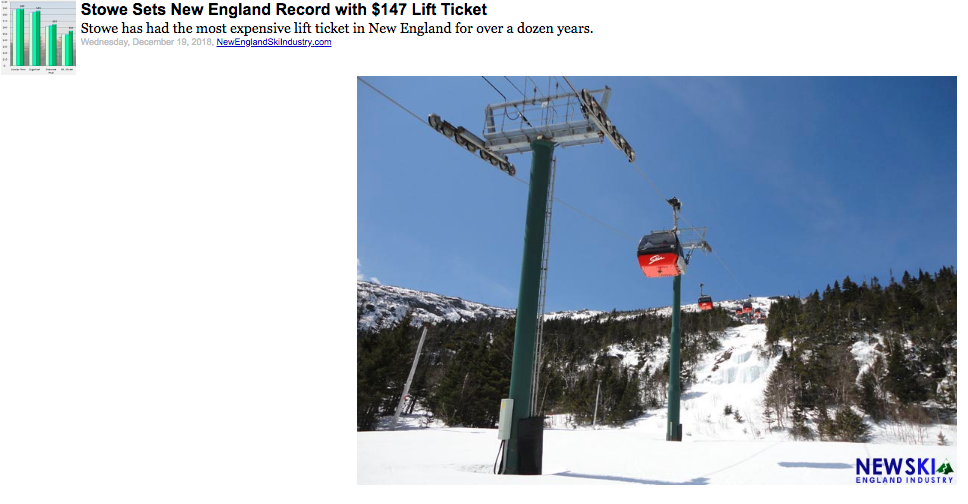
News like the following is evidence that the voice of seniors is needed to get a lot louder in the corporate halls of the ski industry. The headline is from New England Ski Industry.com.

In case you can’t read it the graphic, it says “Stowe Sets New England Record With $147 Lift Ticket.” Read the whole story by clicking here. All of this is designed to push consumers to purchasing Epic season passes which may or may not be a good deal, depending on how often you ski and where you go.

This week’s Short Swings has an excellent summary of the lift ticket/season pass situation in a Ski History article by none other than John Fry, long time snow sports journalist and member of the US Ski and Snowboard Hall of Fame. If you’re a relatively infrequent skier—say five or six times a season—you’re going to be paying the highest ever ticket prices. If you are a frequent senior skier, you’re not going to get the big discounts you used to get at big resorts. Clearly, the multi-resort season pass is focused on the sport’s “best customers”, those who ski frequently and who often head to destination areas, but who represent only about 28% of the total skiers. Pareto Principle, 80-20 rule. Does this strategy make sense?

Favorite Article Of 2018: Free Skiing For Seniors

That is why many of our readers favor “mom and pop” areas, the archetypical ski resort that has low-key facilities, moderate terrain, and reasonable prices. In fact, many of these areas offer free or almost free skiing for seniors. And that is also why our annual listing of resorts that offer free or almost free skiing was the most read article of the year.

If you haven’t seen our directory of 145 ski resorts in the US and Canada that offers free or almost free skiing to seniors, click on the third menu box that reads Free Skiing For Seniors. You may be asked to re-enter your name and email address to access subscriber-only content.

This Week

We have a new resort review for Belleayre Mountain, a two-hour drive from the NY metropolitan area from Bob Nesoff, a veteran snow sport and travel journalist. Did you know Belleayre has a brand new gondola to whisk skiers up the slopes? A gondola in the Catskills!

Janet Franz reports on the basics of layering, based on a presentation by North Face’s Stan Kosmider at the recent Northeast Winter Weather Summit. There are nuances about what is worth wearing and why that we didn’t know. If you’re wearing the same old waffle long underwear that you’ve worn for years, you’ll want to think about how to re-dress.

Our Mystery Glimpse this week is a family affair. Should be quick recognition for those who live and play in a certain part of the country. ‘Nuff said. Check out the clue and read about last week’s amazing snowboard Olympic champ, Shannon Dunn-Downing.

Correspondent and long-ago SKI magazine associate editor Marc Liebman brings an introduction to his new ski test series that offers a history of how it was done ‘way back in the 70s. Remember, that was a time when the number of products proliferated, and readers needed a way to sort through and make decisions. Both Ski and SKIING magazines pioneered ski testing. Marc presents a capsule history.

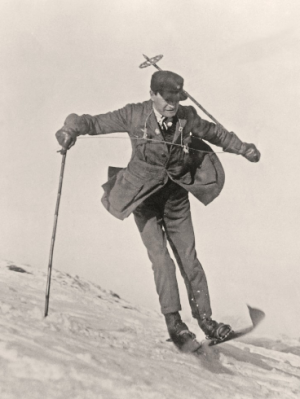
Finally, Jan Brunvand offers a delightful selection from Sir Arnold Lunn’s The Mountains Of Youth (1925) from the early days of “ski-ing”. Lunn was the British athlete who set the rules for downhill racing, advancing the sport and attracting untold numbers of new skiers.


January is Learn To Ski and Snowboard Month.  Bring a friend and get some discounts. Find out where and how by clicking here.

Happy New Year! Don’t wait, go out there and enjoy the winter. Tell your friends about us.

Remember there are more of us every day and we aren’t going away!


SeniorsSkiing Guide: Belleayre, A World Away…

…But Close Enough To Enjoy The Day.


The new Belleayre Gondola whisks skiers to the summit in comfort. This is part of the continuing upgrading of facilities at the mountain. Credit: Belleayre Mtn.

Folks living in and around major urban centers, with the exception of places such as Denver and Salt Lake City, often find it difficult to plan a ski day within an easy drive. And while the population is graying, more seniors are skiing that ever before. So the hunt for ski areas within easy driving distance becomes a chore.

Belleayre Mountain in Highmount, NY, off New York Throughway Exit 19 and about 40 minutes west of Kingston on a straight run along Rt. 28, neatly fills that bill. About an hour from Albany and two hours more or less from the New York City/North Jersey Metro area, the resort makes a day trip a reality for urbanites.

While there’s no danger of Belleayre ever becoming an Olympic ski venue, its trails offer enough of a challenge for expert and novice skiers alike.

The Catskills resort is owned by New York State’s Olympic Regional Development Authority, a public benefit corporation originally formed to manage the facilities at the 1980 Lake Placid games. Not too long ago in a move to cut expenses, New York dispensed with the Belleayre Gold Lifetime card that granted seniors over 70 the opportunity to ski for free. There was also a Silver Sliders Card for those with little color but silver in their hair, that also offered older skiers courtesies. But according to mountain spokesmen that program was discontinued because of a lack of participation.

Holders of the Gold Card often arrived at Belleayre on midweek days and more often than not were practically the only ones on the slope. Looking at the Gold and Silver cards, it’s difficult to understand why they would have been discontinued for lack of participation. The cost to the state of granting such privilege was microcosmic. 

In view of the fact that they did not detract from the mountain’s bottom line, they could have carried on infinitum. But powers beyond the mountain—read that to say “Albany”—decided that those over 70 years of age should pay to ski. The savings hardly filled the budget gap for Gov. Cuomo.

Onondaga trail looks ready for action. Nice blue! Credit: Belleayre Mtn.

There are discounted program that are currently offered. A septuagenarian will pay only $20 for a daily lift ticket. That’s not bad. If you fall into the 65 to 69 age category, your ski tab is $52 mid week and $60 weekend at the ticket window. If you buy online, that mid week price drops to $32. Belleayre also offers a variety of differently priced passes. A Season Ski3 combo pass good for Belleayre, Gore and Whiteface now costs $999 for those from 65 to 69. A Belleayre only pass was listed as $459 for 70 plus. Season passes would have been way cheaper if purchased in August.

All of that being said, Belleayre is one of the more attractive ski destinations in the Lower Northeast. It’s easy to get to and drive time is more than reasonable. The runs offer enough excitement for expert skiers with a variety of Black Diamonds running from the summit to the lodge. 

The blues are a terrific variety that give skiers an opportunity to condition their legs and move on to a more challenging blue before hitting the steep moguls and runs on the black diamond trails. Green trails are often used to loosen up before hitting  blues or blacks and are both easy enough for true novices and interesting enough for older skiers who simply want to put on skis and enjoy a day on the slopes.

Even on holidays and weekends when the caravans of buses head to the mountain from New York City, North Jersey, Albany and every school district in-between, the lift lines move along at a rapid pace giving you the opportunity to spend more time on the mountain and less time getting there.

The mix of skiers and snowboarders, young and not so young gives Belleayre a great panache. Respect for each other is paramount and it’s not uncommon to see a senior skier stopping to help or offer advice and suggestions to a younger skier who seems to be struggling down hill.

The mountain’s ski/snowboard school offers instructors capable of working with any age group to truly imparting the love of skiing.

For a trail map, click here.

For web cam, click here.

Two hours from New York/New Jersey is Belleayre. That’s doable for a mid-week run where you will find lots of room on the slopes. Credit: Belleayre Mtn.

70s Ski Testing: A New Series

This is the first in a series about Ski Magazine’s 1970s ski testing program called Ski Performance Prediction or SKIpp.  Its methodology combined engineering analysis as well as a structured series of on the snow maneuvers designed to bring out the best and worst of a ski under a variety of conditions.

Part one of the series Determining How Skis Worked is an overview of the engineering analysis.  The second part discusses the on-snow testing that we did and the third is about the politics of ski testing along with a lesson learned.

Ski (and boot and binding testing) programs came about because skiers were faced with a plethora of choices backed by marketing hype that was confusing at best and to some, downright misleading.  Both SKIING and Ski Magazine decided to jump into the fray and help their readers.  Ski’s approach was significantly different than Skiing.  Given several glasses of smoky, single malt scotch, I might be persuaded to cover the quicksand of boot and binding testing in the 70s.

On the Snow Testing is a very brief overview of the on the snow part of the program.  Typically, we were at a mountain for about twenty-five days and tested 200+ skis.  Not bad work if you can get it, but it wasn’t all fun.  It was work!

Ski testing unleashed a set of business issues that challenged the leadership of Ski Magazine.  Most of the discussions were well above my pay grade as a lowly associate editor.  However, on more than one occasion, I was called into a meeting with the high-mucky mucks and asked why manufacturer A’s didn’t get high marks.  In Politics of Ski Testing, there’s enough to give you an idea of what the discussions were like.

In the end, the SKIpp and the engineering teams at most of the manufacturers found common ground, and we helped each other out.  It was the marketing people that created all the problems because the cries from the ski shops were giving them migraines.

The shaped ski as we know it today wasn’t on the horizon.  The material science and engineering software that creates them was in its infancy and ski design was as much black art as it was engineering.  We got a glimpse of the future one year when we tested twenty odd short skis – 170 – 180 centimeters – and were pleasantly surprised by the results.  The market was ready and when engineering and materials science caught up, voilà, you have the shaped ski.

Weird Weather: Rethinking Ski Clothes For A Fickle Climate

Let’s Review The Basics Of Layering To Deal With Changing Weather.

Sun, fog, snow all in one day. How do you dress for that? Credit: Janet Franz

Here in New England, temperatures swing high and low a lot lately, with 50-degree-plus spikes and heavy rains interposing snow squalls and blizzards. This winter seems hell-bent on convincing the last climate change denier that something weird is going on. Accurately assessing atmospheric conditions for a day on the slopes can challenge even the most seasoned skiers.

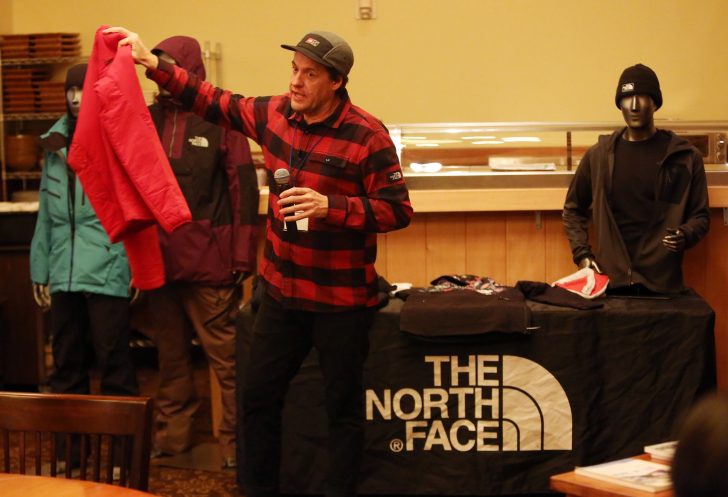
Stan Kosmider, field representative for The North Face, presented on “How to Dress for Cold Temperatures” at the Northeast Weather Summit at Stratton Mountain Resort in December. Credit: Martin Griff

Stan Kosmider, field representative for The North Face, talked with winter sports enthusiasts recently about packing for a multi-day cold weather adventure. “It could be a bluebird day, but the next day it’s pouring rain and icy,” he said. “So pack everything you own and plan on layers. You can remove or add clothes so that you never feel too hot or too cold.”

Three main layers provide for moisture management, heat retention and exterior protection.

Base: The most crucial layer for temperature and moisture control is the first one—your underwear. Skin sweats even when the air is cold, and if the perspiration soaks in to your long johns, the wet clothes will suck the heat out of your body, making you cold.

“The base layer gets moisture off your body and into the atmosphere,” explained Kosmider. This prevents excessive sweating, which can cause additional heat loss, especially when you slow down or stop to rest.

Look for under garments made of lightweight, breathable, wicking fabrics such as a synthetic (usually polyester) fiber, silk or ultra-fine merino wool. Avoid cotton, which absorbs and retains moisture, keeping the skin beneath it clammy and cold. A comfortably snug fit everywhere is essential, because to wick sweat efficiently, your next-to-skin layer must actually touch your skin.

Insulating: The middle layer’s job is to capture and retain body heat that radiates from your body, Kosmider explained. The more efficiently this layer traps heat, the warmer you will feel. Insulated jackets and sweaters come in a range of weights and synthetic and natural insulation choices abound. Down sweaters offer wind resistance but lose insulating efficiency when damp. Synthetic insulations mimic down’s efficiency, with better water resistance. Polyester fleece (not cotton fleece) is a great choice because it stays warm even when damp and dries fast. Fleece fabrics come in a range of plushness and thickness. Microfleece is thin and does a great job of wicking moisture away from the body.

For maximum temperature regulation, insulating clothing should fit close to the body, “snug, not baggy, and you should not have to size down,” Kosmider said. “The fabric should be thick enough to layer and be breathable,” so avoid thick fleece (more than 300 weight) or heavy wool sweaters. Fabrics with insulation-filled bubbles or ripples trap heat well.

Outer: The exterior layer, generally a shell jacket and pants, must do three things: block the wind, keep out rain and snow and allow sweat vapor to escape. Shells range from pricey mountaineering coats to simple wind-resistant jackets, but “even a $600 shell is worthless if you don’t have the right clothes underneath it,” said Kosmider.

Shell insulation types include down (again, warm but not waterproof), synthetic down (such as Primaloft, made from recycled plastic). “Down has the highest weight to warmth ratio, but when it gets wet it’s not warm. So, in this environment, it’s not reliable, and synthetic insulators are a better choice,” Kosmider explained. Shells with zippers and vents allow you to cool off without stripping down.

Shells may be waterproof/breathable for full-on squall conditions with high activity (they wick sweat but keep rain out) or water resistant/breathable for drizzly, breezy conditions and high activity. Avoid waterproof/non-breathable coats unless you plan to stand around in the rain (they keep precipitation out and trap sweat within). Kosmider recommends shells treated with a durable water repellent finish such as Gore-Tex – a rubberized, waterproof, breathable coating that allows water molecules to hold their shape, bead up and rolls off the surface.

Head, Face, Fingers and Toes

It’s not a myth that body heat escapes through the head, hands and feet. If you’re skiing or snowboarding, you should be wearing a helmet, which will keep your head warm. Look for a helmet with vents to let the heat out on warm days. For very cold days, don a skull cap or balaclava made of wicking fabric, because heads sweat, too. Liner socks and liner gloves keep feet and hands dry. Pack extra liners for extra sweaty days. A neck gaiter or face mask keeps the wind off cheeks and nose. Buffs serve the same purpose and work well as a headband to cover up “helmet hair” apres ski.

Product care

Ski clothes can be costly, but well cared for garments will last for many years, and layers will work best if cared for properly. Tiny pores in water-repellent fabrics become clogged with dirt and oils from skin, requiring periodic washing to remove debris and revive their breathability. Gore-Tex makes a special detergent for its products, but any liquid detergent without dyes, scents or fabric softeners will work. Dry garments in the dryer—without fabric softener— to reactivate the waterproof coating.

Down garments should also go into the dryer, without fabric softener. Use low heat, and place tennis balls or toddler’s shoes in the pockets to thrash the garments around so they will fluff up.

You can’t control the weather, but if you bring all your layering choices with you to the slopes, you can easily adapt as conditions change.


Mystery Glimpse: Who’s Flyin’?

Airborne Family Members.

Who is airborne? Can you guess where?  Hint: We can’t tell you the name of the museum that contributed this picture. Know why?

Last Week

Only one reader got this one.  The enthusiastic boarder is Shannon Dunn-Downing, the first U.S. woman to win an Olympic snowboard medal with a halfpipe bronze in 1998.

Shannon was the first woman to land several difficult halfpipe tricks in competition, including a frontside 540 in 1991, backside 540 in 1994, Mctwist in 1994, frontside 720 in 1995, and frontside rodeo 720 in 2001. She is also noted for working behind the scenes on the development women’s products for companies such as Burton Snowboards and Velvet Goggles.

In the mid-2000s, Shannon retired from professional snowboarding to focus on raising her family. She lives in Southern California and tries to surf whenever she can.

In 2016, the Colorado Snowsports Hall of Fame and Museum produced a tribute video to Shannon, highlighting her early days and Olympic success.  Check it out below.