From The Ski Diva: Keep Tootsies Warm

Advice On How To Manage Cold Feet.

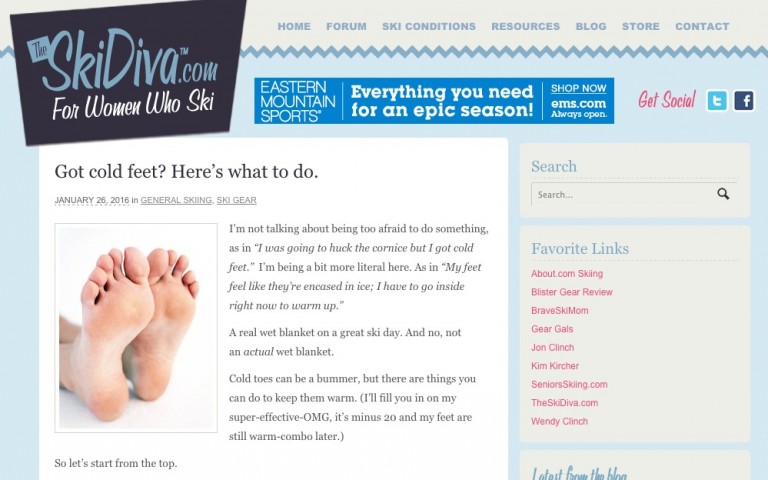
Our friend and fellow online ski magazine, The Ski Diva, has just posted a really helpful article on cold feet management.  This is important folks.  Cold toesies can ruin your day and might even discourage you from enjoying the world of winter outdoors.  Take a moment to check out The Diva’s suggestions, and feel free to add your own in COMMENTS.  Click on the toes to link to her site.

A_SkiDiva


New Senior Deal Site For Tahoe Area

Up Pops A New Senior Ski Site Out West. Well Done!

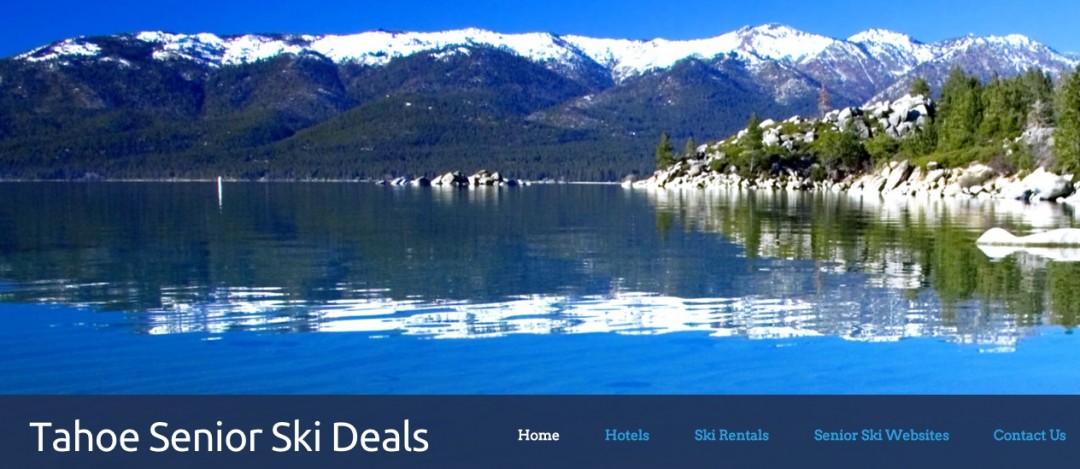
We are pleased to see that Michael Warner started a website for senior deals in the Tahoe area.  We like to think seniorsskiing.com stimulated his venture to some degree.  We now have an ally in trying to promote the needs and interests of senior snow enthusiasts by targeting a specific geographic area.

Michael Warner has launched a new ski deal site for seniors focusing on the Tahoe area. Credit: Tahoe Senior Ski Deal

Michael Warner has launched a new ski deal site for seniors focusing on the Tahoe area.
Credit: Tahoe Senior Ski Deal

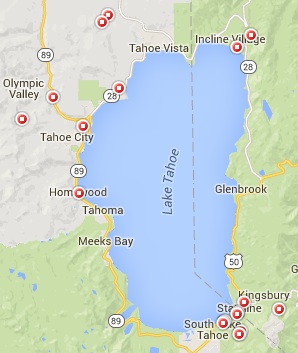
Tahoe Senior Ski Deals keeps tabs on lift pricing rates at 16 resorts throughout the Tahoe Donner region.  As we have learned in SeniorsSkiing.com’s Annual Ski Area Surveys, the best deals are always at the smaller areas like Boreal Mountain ($54, 65-69; $29, 70+) and Homewood ($47, 65-69; $20, 70+) for just two examples.  We were glad to see Tahoe Donner, a SeniorsSkiing.com Senior-Friendly Award Winner, on the list of deals ($22, 60-69, free, 70+).  In fact, Tahoe Senior Ski Deals calls Tahoe Donner the “Best Senior Prices”.

Tahoe Senior Ski Deals focuses on 16 resorts ringing the big lake. Credit: Google Maps

Tahoe Senior Ski Deals focuses on 16 resorts ringing the big lake.
Credit: Google Maps

The site also advises that seniors buy online at least three days before coming to the mountain.  There are always better deals online. The site also lists ski clubs and, notably, a link to SeniorsSkiing.com.  Thanks, Michael.

It shows that seniors can ski and enjoy the outdoors without having a hedge-fund account.  If you know of other sites that report ski or cross-country ski deals, clothing or gear discounts, please let us know.


Stocking Stuffer: Low Temperature Windshield Washer Fluid

Okay. It’s too big for a stocking, but it doesn’t need wrapped.

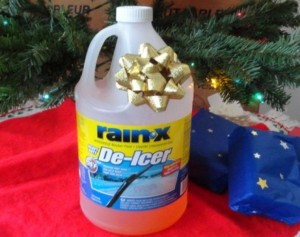
Practical and inexpensive, this De-Icer Windshield Washer can save your day. Credit: Harriet Wallis

Practical and inexpensive, this De-Icer Windshield Washer can save your day.
Credit: Harriet Wallis

A cheap but practical gift is a jug of low temperature windshield washer fluid with de-icer. Look on the label for a temperature rating that is -25 or -30 or lower. A gallon jug costs less than $5.

There are some days when a certain mix of temperature and humidity can cause windshields to glaze over as you climb in elevation or go over a pass. The “blue stuff” that’s usually in the your car reservoir will not defrost the windshield. Using low temperature windshield fluid will likely save your ski day.

There are several brands of low temperature windshield fluid. Different brands are different colors – orange, purple or pink. But none are blue. Stick a bow on the jug, and it’s wrapped!

You might want to buy a turkey baster too. Use it to suck the blue stuff out of the car’s reservoir and then replace it with the low temperature washer fluid.

It’s the little things that make a difference.

Big Sky, Big Win For 3 Gens

Can Mom (74) Adapt To Big Sky Skiing?

Heather, her son, and mom have a knock-out three-gen ski vacation at Big Sky. Credit: Greg Burke www.luxuryskitrips.com

Correspondent Heather Burke, her son, and mom have a knock-out three-gen ski vacation at Big Sky.
Credit: Greg Burke www.luxuryskitrips.com


SeniorsSkiing.com welcomes Correspondent Heather Burke, Ski Journalist LuxurySkiTrips.com and FamilySkiTrips.com

Big Sky is just as massive and scenic as it sounds, with over 5,750-acres and a skiable summit soaring to 11,166’ and dropping 4,350’ vertical feet to the base village. Boom. This Montana ski resort is as intimidating as it sounds, or at least it was to my 74 year old mom. She wanted to join us on a family ski trip, but she had serious alpine anxiety. Would she be able to keep up with us, my husband and me, and our 21 year old son? Would she remember all her skiing skills? Would it be like the proverbial bike after missing a season or two of alpine skiing?

She flew from Florida, a reverse snowbird, to meet us in beautiful Montana. Our first ski day together, I could tell she was wound up, and a bit winded from the elevation (Florida’s highest point doesn’t acclimate you to Big Sky country). As we walked to the Swifty high-speed quad (I carried her skis), I assured mom she had done this thousands of times before, and taught me to ski four decades ago.

As I made those first few gentle turns in sparkling soft snow on Mr K under brilliant blue sky, she followed. I looked over my shoulder to see her skiing fluidly, in perfect form, a pretty big smile on her face. She was feeling the elation of skiing, at 74, and I was feeling pride (and relief). To think that she’d been apprehensive seemed silly now. But her Florida friends had warned her, “don’t break a leg,” and “you’d better come back in one piece.”

Many senior skiers like wide groomers. Big Sky has some beauts. Credit: Greg Burke www.luxuryskitrips.com

Many senior skiers like wide groomers and big turns. Big Sky has some beauts.
Credit: Greg Burke www.luxuryskitrips.com

We skied four fantastic days on Big Sky’s gorgeous groomers—Elk Park Ridge to Calamity Jane.  Mom had her faves—Sacajawea and Ambush. We skied with my son and husband on Big Sky’s Moonlight Basin terrain, three generations sharing comfy quads. Over lunch in the spectacular Moonlight Basin Lodge, we laughed about how our gear and technique had revolutionized during our three generations, and told crazy ski instructor stories – all of us had taught skiing at some point. Mostly we had a blast. I can’t think of another sport than can span 50 years age difference. Senior skiing sure has changed, so has age… 70 is the new 40 for skiers.

The other change, now I’m the over-protective parent, of my mother. I controlled my mom’s ski environment during our week in Montana, leading her down ego-pleasing, beautifully groomed boulevards—Big Sky has many. Our last day brought soft glittery powder and she skied it like a champ. “I have never skied such amazing powder,” she said. I’m pretty sure she had in her six decades, this woman skied on barrel stave skis with trap bindings after all. But who am I to correct my mom though.

Big Sky was the best venue for our three generations, big mountain terrain for the boys, big blues for mom and me, and a compact village at the base – so she could ski back to the slopeside condo mid-day and I could catch up with my guys for tram laps and steep chutes. At après ski, with well-earned scotch in hand at Big Sky’s Carabiner Bar, mom toasted to our skiing legacy.

We returned her rental ski equipment and returned her on a plane safely back to her cynical Florida friends (in one piece, no broken leg). Big Sky made a big impression on these three generations of skiers.


 

Lift Tickets: An Area That Charges By The Hour?

And Other Ticket Pricing Ideas.

Station de ski du Semnoz offers hourly ski tickets. Huh?

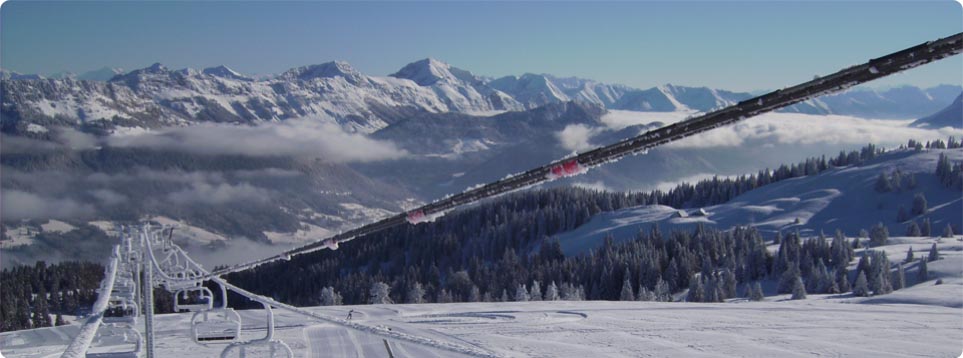
Station de ski du Semnoz with a  view of Mont Blanc offers by-the-hour lift tickets. That’s different.

Pre-season cocktail hour among veteran skiers often leads to talk of the new season’s pass prices. In 2001 or 2002, when Park City Mountain Resort changed its senior pass from free to $300, a flurry of letters to the editor registered collective outrage. Not to mention that even at $300, it was a great deal for a season’s pass. Now, under Vail’s ownership, it doesn’t matter if you’re 19 or 89, the cost is $599 for locals and $789 for everyone else. To be fair, they throw in the rest of the Vail-owned resorts with the purchase, but not The Canyons, the area next door under Vail’s management.

A short drive away is smaller, more intimate Sundance. Vertical and skiable acreage are smaller, but on weekdays it is less inhabited. On powder days, it is vacant, providing one untracked run after another, some on steep, continuously pitched terrain. Sundance’s food is equivalent to that of a well-reviewed restaurant. And maybe because he’s an older dude, Robert Redford cuts a great deal for seniors (65+). This year, a day pass is $21, up from $15 last season and $12 a few years before that. The season pass is $125.

We’ll be publishing an updated list of where and when the mature set can ski free. Last year, those privileges started at 63 (McCauley Mountain Ski Center, Old Forge, NY) and clustered around 70.

SSAWS (Spring, Summer, Autumn, Winter Skiing) Indoor Ski Dome outside Tokyo.

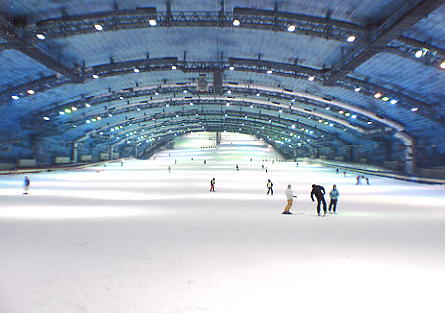
SSAWS (Spring, Summer, Autumn, Winter Skiing) Indoor Ski Dome outside Tokyo had three-hour day passes.

Throughout the industry, ticket-pricing models tend to follow the same ideas: Age, full day, half day, night, multi-day passes, 10 packs, etc. When it was in business, Lalaporte Ski Dome SSAWS, the indoor ski center outside of Tokyo, sold three-hour tickets. The monotony of the place made three-hours seem especially long.

We’ve just learned of an area not far from Chamonix that offers tickets based on the number of hours you choose to ski. Semnoz, is a short drive from Annecy, with a direct view of Mont Blanc. It is 5575′ above sea level, a midget compared to Mont Blanc’s 15,778′. Semnoz is a local’s place, which like Sundance, is reported to deliver endless untracked following big powder dumps.

We mention Semnoz because paying to ski by the hour is an idea that might deserve some attention here in the States.


More Hot Products From SLC’s Outdoor Retailers Show

Gee Whiz, Seniors, Here’s What’s Coming to a Store Near You!!

Shoes whose laces tighten without your needing to bend down to tie them.

Wireless heating insoles controlled with a smart phone app.

A small device that communicates your whereabouts and whether or not you need help when there’s no cell service— nywhere on the globe.

These are just a few of an endless array of products exhibited at the summer edition of the semi-annual Outdoor Retailers Show in Salt Lake City.

Every August, thousands of manufacturers and merchants—from mom and pop to big box—converge on the Salt Palace Convention Center in Salt Lake City to see and place orders for products to be sold a year from now. They return in January, this time focusing on winter sports.

Exhibitors are organized by product category. Paddle board, surf boards, water accessories, etc. in one section. Footwear, socks, foot beds, etc. in another. Yoga equipment here; camping gear there.

handsfree_heel_wheel

Treksta’s hands free lacing system works by sliding the heel back for lace up. Credit: Treksta

Back to those self tying shoes. You can look for them under the name Treksta Hands Free Shoes. It’s an athletic shoe (quite comfortable) with a foot-activated lacing system. Even the most active person will enjoy not having to bend down to tie or tighten shoe laces.

Digisole is a French import that will be in stores in a year. A programmable, heatable insole for ski and other cold weather boots, the insoles can reach 120 degrees F, a bit too toasty for most tootsies. The great thing about Digisoles is that they’re fully adjustable using an app on your Smartphone. Same phone app tells you how many steps that day, what the weather is, etc., etc. The soles are charged via USB connection, and, for most heat levels and in most conditions, will keep your feet comfy for 5-8 hours. Can’t wait to try it on the hill.

SPOT Gen3 will find you almost anywhere on the globe. Credit: SPOT GlobalStar

SPOT Gen3 will find you almost anywhere on the globe.
Credit: SPOT GlobalStar

Spot is a reasonably priced, pocket-sized, personal tracking device that, with the push of a button, lets family and friends know you’re ok or sends emergency responders your GPS location. It’s all about providing you and loved ones peace of mind when you’re out of cell range. Using satellite technology, it works from land, air and sea, anywhere on the globe. The unit, itself, can be purchased for about $75, and the satellite subscription is about $150 per year. A small price to pay for peace of mind. It’s a valuable and necessary addition to every pack or parka.

Try Nordic Walking: Many Benefits By Adding Poles To Hike

Poling While Hiking Is An Exercise Multiplier

Roger Lohr is co-founder and editor of XCSkiResorts.com and a noted writer on all the varieties of Nordic skiing.

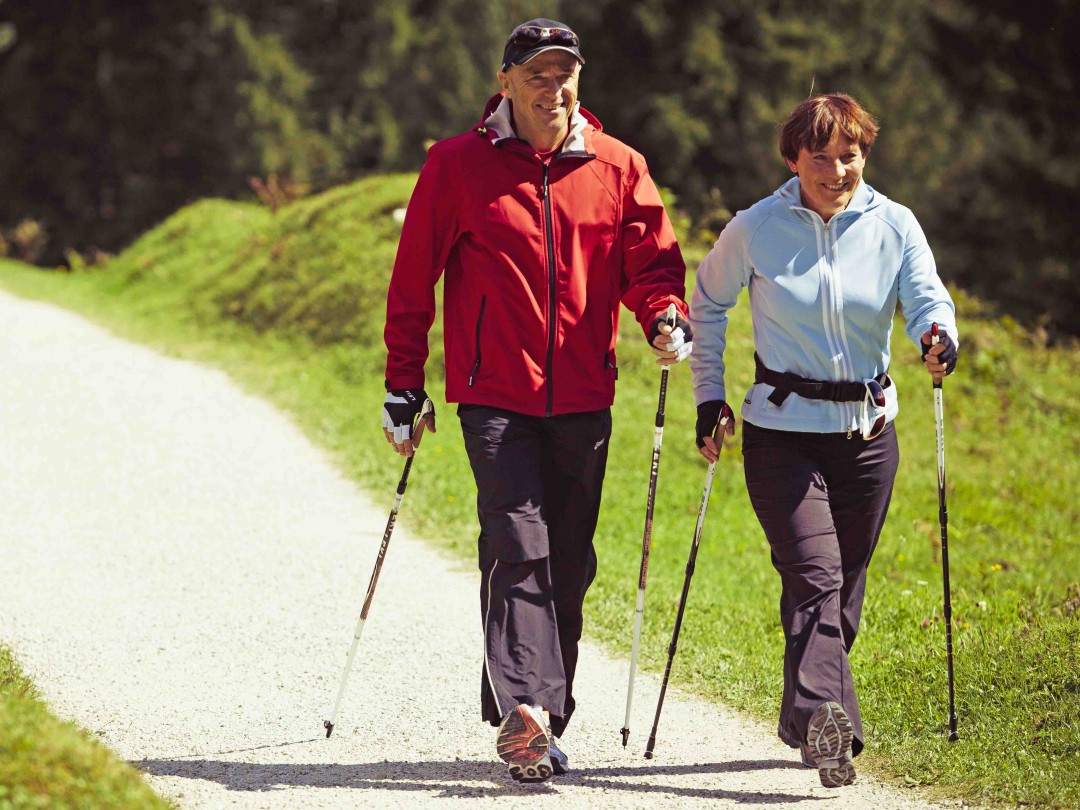
Walking a la Nordic raises efficiency of exercise by 40 percent. Credit: Leki

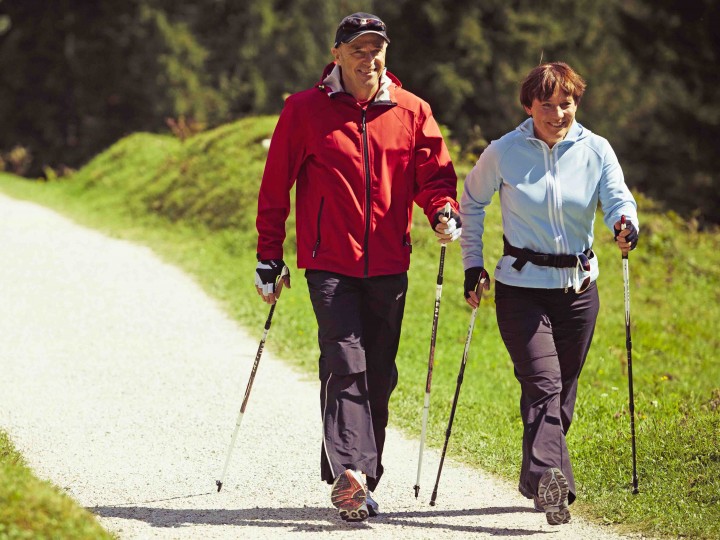
Walking a la Nordic raises efficiency of exercise by 40 percent.
Credit: Leki

More than 10 million Europeans of all ages and fitness levels are Nordic Walking (also known as Ski Walking) with special Nordic Walking Poles. This new fitness activity turbo-charges the normal walking regimen burning as much as 40 percent more calories compared to regular walking.

For those who are unfamiliar, Nordic walking is a fitness activity that combines walking with specially designed poles to engage the upper body muscles.

Nordic Walking poles help individuals with balance issues, knee issues or new knees, hip issues or new hips, back issues (including those with rods in their back), weight issues, multiple sclerosis (MS), Parkinson’s Disease, neuropathy, arthritis, bursitis, scoliosis, lumbar stenosis, fibromyalgia, post polio, osteoporosis, stroke recovery, cancer recovery, and other limitations to walking. Nordic Walking is helping thousands of people get off the couch, get outside, start walking safely, and effectively launching much needed walking campaigns.

The Human Kinetics book entitled Nordic Walking for Total Fitness by Suzanne Nottingham and Alexandra Jurasin covers the topic. Trekking (hiking with poles) and Nordic walking are two different activities that use very different poles and techniques. It may sound silly, but perhaps “walking is not just walking.” The pole angle, weight, grip, and straps are different between the aforementioned modes of walking. The Nordic walking pole is designed to allow your hands to relax in order to target the larger wrapping muscles of the back. But using poles of any kind automatically stimulates your spine and all of the muscles around it, even with inefficient technique. When walking, the key postural muscles of the core and upper body are engaged.

The book also includes fitness assessments, sample workouts for varying levels of interests from first timer to cross training triathletes. There are also suggestions about customizing your program. Training program recommendations are offered for building distance, fluctuating daily intensity, and rest days.

I’ve been a Nordic Walker for a few years and found many of the claimed attributes in the book regarding posture and exercise to be true. I’ve always been in search of a way to decrease the amount of time spent exercising, so I was sold when I heard that using the poles increases caloric burning by 40 percent. Being a cross-country skier, it is easy to quickly master Nordic walking. After a summer of Nordic walking, I noticed a marked improvement in my cross-country ski poling in terms of strength and timing. It seemed that I increased the amount of forward momentum that was attributable to poling and I was able to pole stronger and longer when skiing.

Nordic Walking for Total Fitness provides a foundation for anyone, ranging from those just looking for an activity to lose weight to health aficionados interested in taking it to higher levels of fitness.

Nordic Walking for Total Fitness is available for $19.95 plus shipping from Human Kinetics at www.humankinetics.com or call 217-351-5076. 

Ski Japan: Looking For Snow? Head West. All The Way.

Combine lots of snow with an exotic destination for an incredible skiing experience.

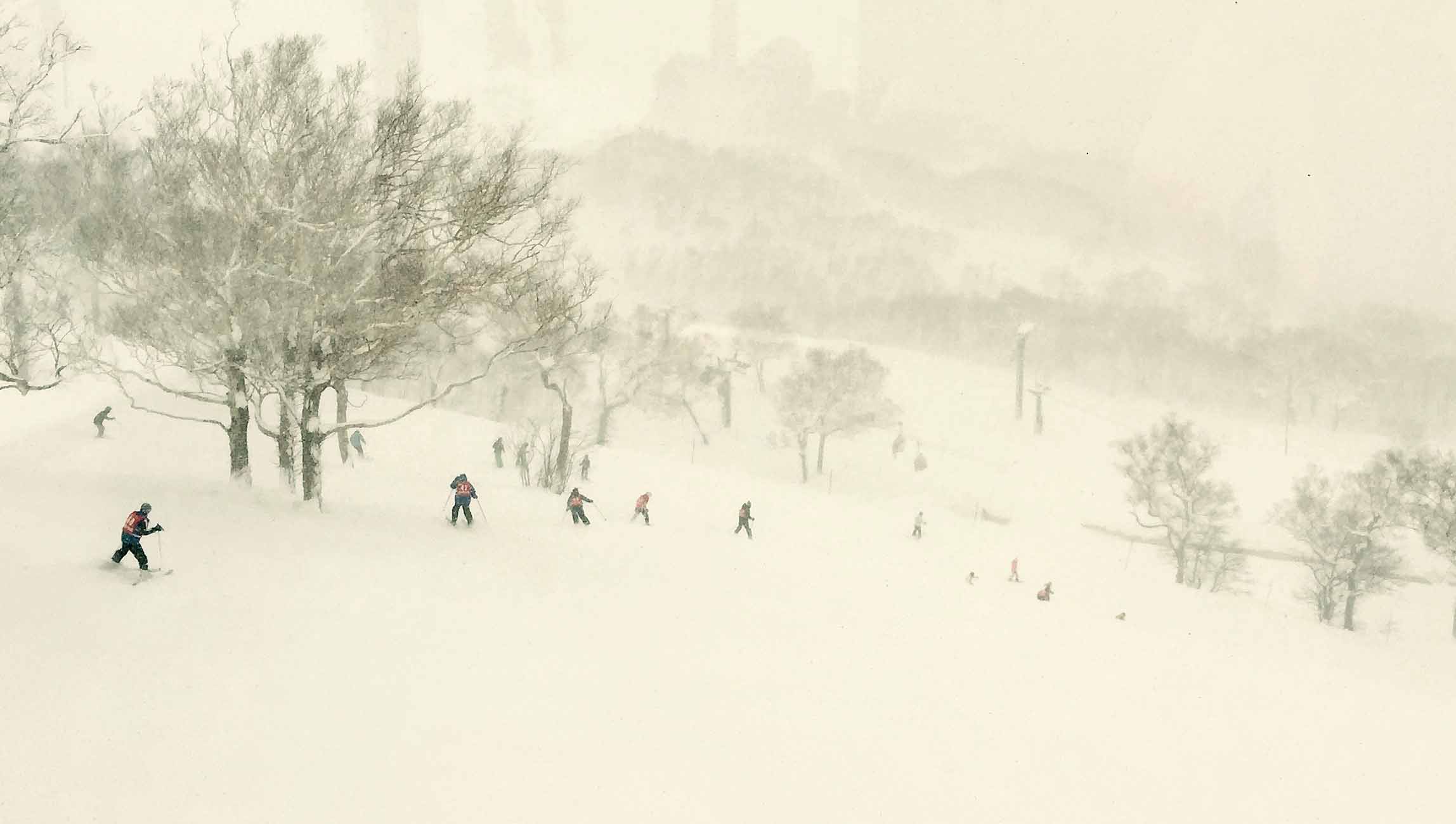
Almost like a Japanese woodcut,  skiers in Niseko run through the flakes. Credit: Susie Winthrop

Almost like a Japanese woodcut, skiers in Niseko run through the flakes.
Credit: Susie Winthrop

O.K., you adventurous senior powder-hounds: How far will you fly to find an awesome stash in this odd winter of snow conditions?  If you don’t fly east to New England or Quebec to ski, how about 14 hours on a JAL flight to Tokyo on a 787 “Dreamliner” direct from Boston?  When you get there, hop on another two-hour flight to Sapporo, the capital of Hokkaido, the northern most island in Japan. Then,  jump on a bus and three hours later you’re in Niseko, home to four (Annupuri, Higashiyama, Hirafu, and Hanazono) interconnected ski areas.  If it’s winter, it will be snowing.  Yes, guaranteed fresh light powder snow everyday all winter.  The aspen trees are perfectly spaced and slopes are rarely skied out, but guides, helicopters and snowcats also await those coveting untracked bliss.

However, the real adventure here is the fact that you’re in Japan. You’ll eat sushi, sashimi, tempura, gyoza, yakitori, miso soup and sea urchins. Be sure to stay

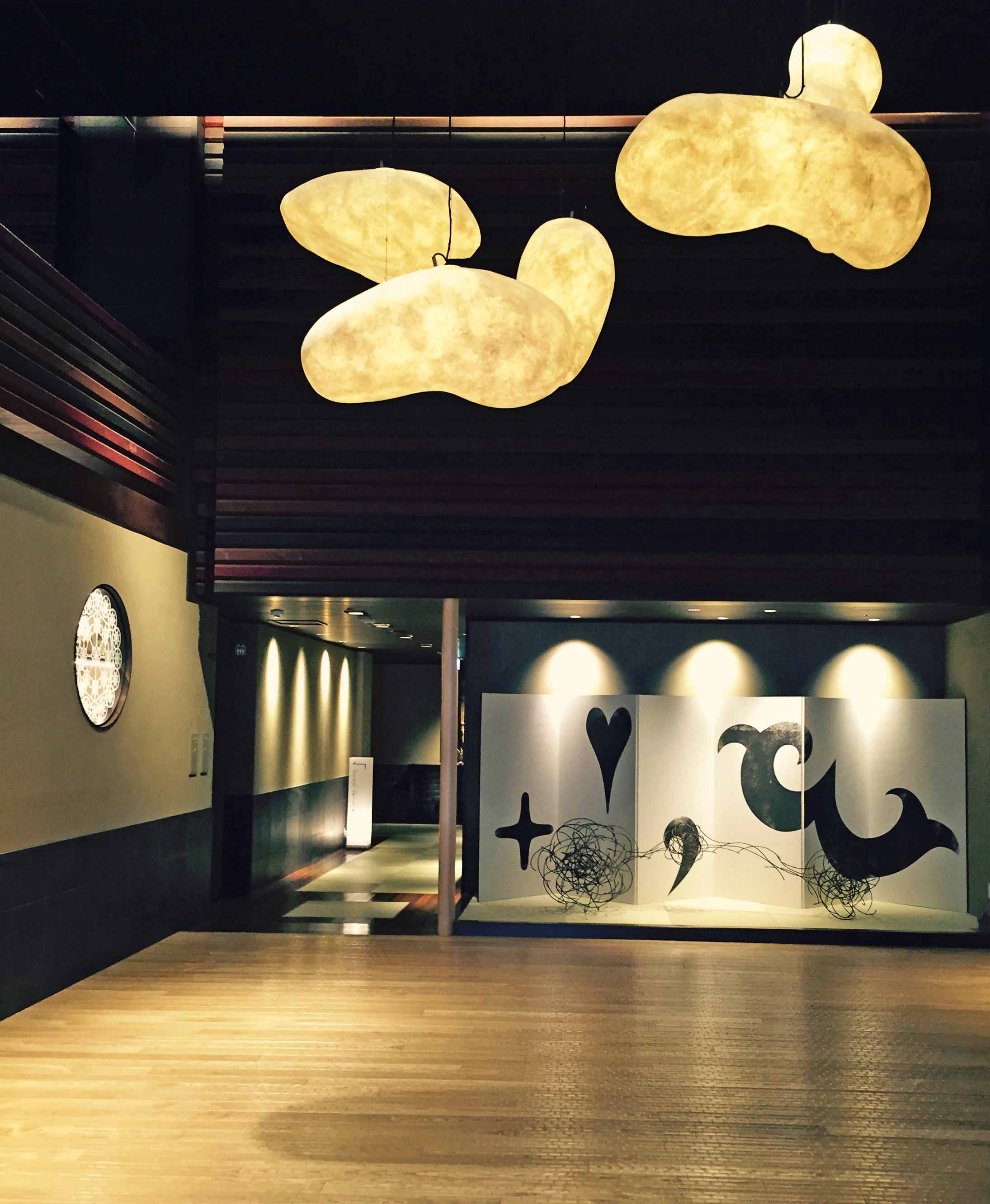
Moku No Sho ryokan has an onsen (hot water spring) on site. Credit: Susie Winthrop

Moku No Sho ryokan has an onsen (hot water spring) on site.
Credit: Susie Winthrop

at a real Japanese Inn (Ryokan) with hot spring fueled baths (Onsens).  You won’t need to bring a bathing suit to the springs; you bathe in the buff.  Niseko Moku No Sho, the fabulous inn we stayed at, provided a yukata (kimono bathrobe) and slippers which we wore at all time until we dressed for skiing.  You don’t even need to bring your own ski garb; you can rent it  at the mountain: parkas, pants, hats, mittens, goggles, helmets, snowboards, skis, boots, poles—all the latest, all for rent.

Like most things in Japan, the resort is clean, organized and efficient.  At the mountain, it took no time to pop grand-daughter, Eloise, in day care, purchase our senior three-day ticket (a real deal at $105 for three days on four mountains), rent our super-wide powder skis and get out on the slopes.  There are no lift lines, even during vacation week.

Tower of beer.  What a novel idea. Credit: Susie Winthrop

Tower of beer. What a novel idea.
Credit: Susie Winthrop

Looking for apres-ski fun? Make some friends and order a high “tower” of beer to share at the base lodge.  Or slide down to the Bar Ice igloo and warm yourself with a hot rum and butterscotch toddy.  “Kampai” is all the Japanese you’ll need to know.

For more information on skiing in Japan, click here.

Hydration Chronicles: An Easy Way To Keep Drinking

Carry Water On Your Back Like A Camel.

In my younger days, my friends and I launched our adventures without giving a thought to proper nutrition, hydration and so on. On one fondly remembered camping trip, provisions were down to shredded wheat, peanut butter and warm beer, and we still had fun.

Dehydration is pretty common and may be the reason for low energy.

Dehydration is pretty common and may be the reason for low energy.  Benefits of drinking water are many. No joke.

Now we have the benefit of decades of research in sports medicine, nutrition and physiology. When planning my slope time, I try to take advantage of this knowledge to give myself any boost I can, whether it’s diet, exercise or technique. Proper hydration, while an often-discussed topic, is easy to overlook when it comes to winter sports yet surprisingly easy to maintain.

Easy to overlook, because, well, it’s cold out! Cold, dry air and modern technical clothing which so effectively manages perspiration combine to mask how much you may be sweating even on the most frigid day. The “start/stop” exertion common to skiing, where you do a run then relax on the chair, can further hide the amount of water you may be losing through sweat. Medium intensity steady exercise can cause you to lose an average of two liters of water an hour; even if you halve that because the exertion in skiing isn’t steady, it’s still a significant loss. If you get cold, you can still lose through “cold dieresis”, where the body loses water through increased urine production.

The benefits of staying well hydrated are many: You avoid fatigue, confusion, irritability, dizziness. Your joints function better. When dehydrated, the body will draw water from the blood; decreased blood volume leads to colder extremities and greater susceptibility to hypothermia and frostbite. As dehydration increases the heart rate can rise as blood pressure drops.

For my water supply, I like to wear a hydration pack. I prefer a simple, minimal design like the CamelBak Bootlegger ($55) which is made to be worn under your jacket. This keeps the drinking tube from freezing and keeps the pack from shifting around as I ski, or snagging on a chairlift. It’s a simple matter to unzip my jacket a bit & pull out the tube to take a sip every 15 minutes or so,

Camelbak Bootlegger carries the right joy juice to keep hydrated. Credit: Camelbak

Camelbak Bootlegger carries the joy juice to keep you hydrated.
Credit: Camelbak

whether stopping for a breather on a run or while sitting on a lift. The Bootlegger holds 1.5 liters; usually I’ll only fill it halfway and press all the air out to keep it as flat as possible. It’s easy to refill when stopping for a break or lunch. The bulk is barely noticeable, and the water bladder is sturdy enough that I can lean back on the chair lift without fear of bursting it.

I use plain water, which makes keeping the bladder and tube clean very easy. Sports drinks like Gatorade aren’t necessary; they all contain some form of sugar, and some contain up to 150 mg of sodium per cup, which may be an issue if you need to watch sodium intake. I think electrolyte loss in skiing is minimal; it’s more an issue when hot-weather exertion causes copious sweating.

A hydration pack is a much more comfortable way to carry water than having a big bottle banging around in your pocket. Making access easy and convenient means you’re more likely to stay well-hydrated and keep the fun going!


Move It! Get Fit Your Way With Silver Sneakers

Nationwide Health Insurance Program Supports Senior Fitness.

Tune yourself up for ski season and beyond. Get started by checking your health insurance plan to see if it includes Silver Sneakers. It’s a nationwide program sponsored by many health insurance plans, and it encourages older adults to get fit in whatever way they want to.

Correspondent Harriet Wallis loves her Silver Sneakers aerobics class. Credit: Harriet Wallis

Correspondent Harriet Wallis loves her Silver Sneakers aerobics class.
Credit: Harriet Wallis

Silver Sneakers gives you access to gyms where you can walk on the treadmill, swim laps, stretch with yoga, lift weights and work out with certified instructors. You may also enjoy community-based programs that include everything from line dancing to boot camp. There are 12,000 Silver Sneaker facilities across the country. Find one near you and get going.

For me, I enjoy an aerobics class designed for seniors. It gets the heart rate up and the joints moving – but the class does it gently. My classmates and I are a heap of replacement parts. We’re full of metal hips, knees and shoulders. The instructor understands, and when she introduces a new move that’s too hard for some of us, we make adaptations. Nobody laughs. We’re all there for the fun of it and to keep our bodies moving.

But we “mambo” and we “grapevine.” We huff and we puff. We feel like prima donnas because we face a mirror and we can see ourselves. But we’re all wearing T-shirts, not tutus!

Silver Sneakers allows you to choose the exercise programs you like. Credit: Harriet Wallis

Silver Sneakers allows you to choose the exercise programs you like.
Credit: Harriet Wallis

Classes also offer the benefit of socializing with others of like age before and after class. Just for fun, our class goes to lunch once a month. The recent lunch reminder email said:  “We go right after class with sweat and no make-up. So far we have never been turned away looking and smelling of exercise.”

Many seniors fear trying something new because their heads fill up with negative thoughts such as: Will the class be too hard? What should I wear? Will I fit in? Skip those thoughts.

Find a Silver Sneakers program near you. Put on your sneakers and get going. Now.

Flash: Colder, Snowier Winter 2015 Forecast For New England

Latest Prediction from WBZ-TV Meteorologist Forecasts Cold and Snow

With the season just getting started, we’ve been diligently watching snow forecasts as we know know you have as well.  As we reported in an earlier post, Joel Gratz, our favorite snow meteorologist who prognosticates at OpenSnow, has been compared a number of weather models and found a consensus for dry in the Northwest, snowy in the Far West, and uncertain from the Rockies to New England.  But, then he says, don’t trust long range forecasts.

2015 Snowfall Predictions for New England Credit: WBZ-TV Graphic

2015 Snowfall Predictions for New England
Credit: WBZ-TV Graphic

With a couple of more months of data and many models to contemplate, Barry Burbank, Boston’s WBZ-TV meteorologist, has just put a new winter prediction in play.  Barry says that he’s “relatively confident of a cold and snow winter overall.”  He is calling for more snow in the New England area, 10-20 inches above average, for a total forecast of 55-65 in Boston.  That places 2014-15 as the third consecutive year above average.  He also is calling for cold, speculating that the Polar Vortex that vexed the Midwest last winter will be moving eastward.  Below average temperatures should reign especially in January when he expects an “outbreak of arctic air.”

So, New England senior snow enthusiasts, this is good news.  It also means you have to dress for the weather, prepare your equipment your car, and your self.  As the old Swedish expression says: “There is no such thing as bad weather, just bad clothing.”  Get ready.

Here’s Barry.  Click here for WBZ’s Winter 2015 video report.


Still Time for a Winter Tune-up

Get Ready Now to Ski and Snowboard!

Cold weather is approaching fast. Don’t procrastinate. There’s still time to get ready for the ski season. Fitness can help prevent injury, improve abilities and ensure a long, safe season.

Alpine fitness programs routinely include movements to enhance balance and stability, strength, power, agility, mobility and flexibility. Workouts

Exercise ball crunches tune up those all important abs. Credit: Harriet Wallis

Exercise ball crunches tune up those all important abs.
Credit: Harriet Wallis

often combine exercises in a circuit-type workout which includes an aerobic component. Although alpine sports are anaerobic in nature with short hard bouts of activity followed by rest, basic aerobic fitness can help the average winter enthusiast avoid fatigue related injuries. In addition to training more specific skills and energy systems, it’s prudent to include 60 minutes of aerobic activity 3-4 times per week.

Focus strength training on core, legs and shoulders. Incorporate exercises that require some twisting movements since many of our summer activities like hiking, biking and running are performed in a single plane of motion. Quad muscles and those in the lower leg are important for balance and turning. Hamstrings help protect knees. Hips play a role in lateral movements. Core and shoulders function as stabilizers.

Although gym machines can be helpful and certainly convenient, considerably larger benefits can be reaped with routines that use body weight, dumbbells, stability balls, kettle balls, medicine balls and exercise bands. Or check out TRX Suspension Training. Originating in Navy SEALs training,

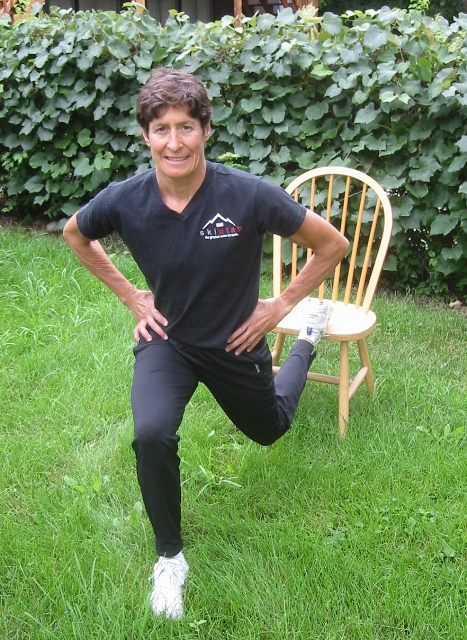
Work on balance with one-foot lunges. Credit: Harriet Wallis

Work on balance with one-foot lunges.
Credit: Harriet Wallis

TRX is used in the NFL and in USA Ski and Snowboard Teams to prepare for the season. TRX classes have also become extremely popular at many fitness clubs and recreation centers.

Look for exercises that include multiple joints because that’s how we move in all sports. Squats, leg curls and dead lifts, overhead press and rowing movements are good examples. With the lower body, progress from two-legged exercises to one-legged and then add some instability to the exercises to improve balancing abilities. Eventually add plyometric—explosive movement exercises—for power. Progress from two-footed hits to one. An easy activity associated with this ability is jumping rope.

Don’t neglect flexibility. Stretch after training and include muscles that were worked during the session as well as problem areas. A good yoga class is great way to improve flexibility. Pilates is another option and adds a little more of a strength component to the mix.

I hope this will help guide your quest for winter fitness. I wish I could individualize an actual exercise routine for each of you, but you can get help by looking for a trainer or class instructor in your area who has a solid understanding of the concepts covered above.

Jo Garuccio is a PSIA Trainer and Examiner, and she teaches at Snowbird. She’s also a Triathlon World Champion and a USA Triathlon Certified Coach. She’s a mega athlete and a mega sports enthusiast who loves to get people moving to be their best.

When Skiing Was New: Early Scenes From 30s To 50s

Skiing was once considered a fad like Mah-Jong.  That was a long time ago.

Here’s a seven-minute series of clips from John Jay’s “Ski Down The Years”, a visual history of skiing from the early days of rope tows in the mid-30s in New England to the FIS championships at Aspen in 1950.  From our current perspective, those initial attempts appear at once hardy and comical.

A flop on the Inferno, Mt. Washington, circa late 1930s.  Credit: John Jay.

A flop on the Inferno, Mt. Washington, circa late 1930s. Credit: John Jay.

Ski Mobile in North Conway, mid-1930s.  Credit: John Jay

Ski Mobile in North Conway, mid-1930s. Credit: John Jay

Oh, the technique! Downhill shoulders leading through a turn.  Bending forward at the waist.  Oh, the savior-faire.  Lowell Thomas, the celeb journalist, has a knowing air about him as he adjusts his skis.  And Gary Cooper puffing away at Sun Valley.  Oh, the early glory of powder skiing.  There’s a series of shots of Dick “Straight Down” Durrance skiing powder at Alta.  Amazing.  Most interesting is the formation skiing of the Tenth Mountain Division training on Mt. Rainier.

We’re lucky we have this kind of footage to reflect upon.  We remember the legacy of those early days in our own first skiing gear and experiences in the mid-1960s.  Leather lace-up boots, bear trap bindings, army surplus goggles, rope tows.  What equipment from your first days can you track back to that glorious time?


Handwarmers Expiration Date

The Truth About Hand Warmers

A hot tip for happy hands.

The fall hunting season can be the best time to stock up on the “shake ’em up” hand warmer packets that we put into our ski gloves and mittens. In my area—Salt Lake City—some big box stores have special deals on the packets in the fall when outdoorsmen are preparing to head to the woods for the deer hunt.

Beware outdated hand warmers. Credit: Harriet Wallis

Beware outdated hand warmers.
Credit: Harriet Wallis

But before you buy a load of special deal packets, examine them for the expiration date. It’s probably embossed or printed into the edge of the foil wrapper. Packets that are close to their expiration date may have lost their oomph.

Last year, my locker room buddies stocked up on hand warmers from a big box store in fall as usual. But then they moaned and groaned all winter about the packets. Many packets heated inconsistently and some never heated at all. On close examination, we found the packets to be nearly outdated, and some were past their expiration date. The store probably had old inventory and stocked the shelves with it first.

On the other hand, I’ve had packets buried in the bottom of my ski bag for several years, and yet they heated well.

The bottom line: To assure warm hands, check the expiration date before you buy. The expiration date should be several years into the future.

What’s your hand warmer story?