ICYMI March 2023

Photo by Holly Mandarich on Unsplashh

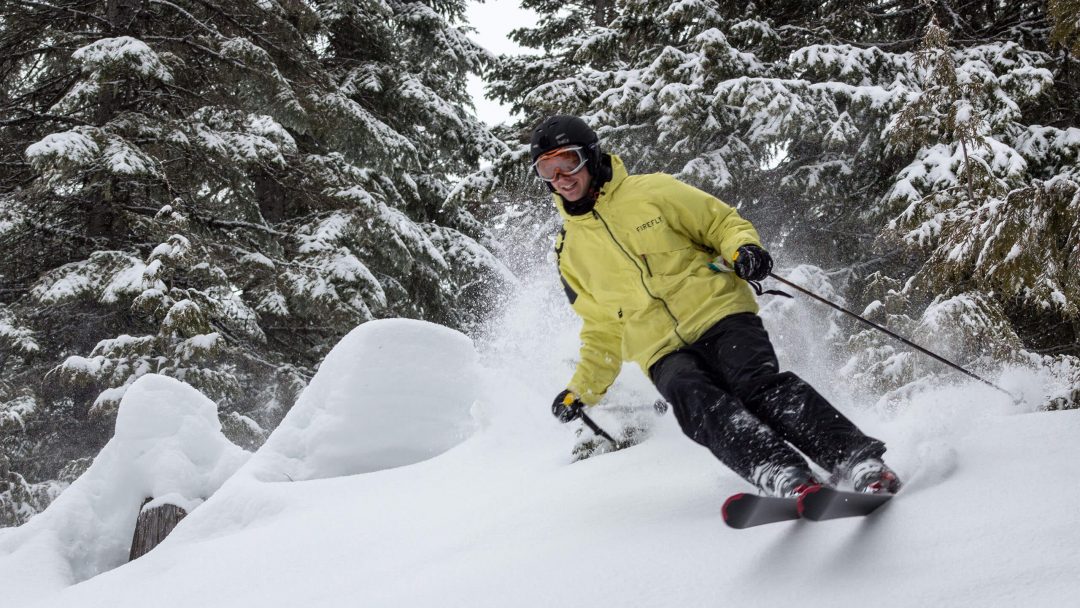
The days are getting longer and warmer, which means more sunlight to enjoy skiing and riding, and fewer layers.  If you are a fan of spring skiing – and who isn’t – put these slopeside and downtown events on your calendar in March.

Here’s our monthly ICYMI (in case you missed it) collection of this and that.

Extended Hours at Aspen/Snowmass/Highlands

 Ski and ride all major lifts until 4pm, including –

  • Aspen – Silver Queen Gondola and Ajax Express
  • Snowmass – Big Burn, Village Express and Elk Camp Gondola
  • Highlands – Exhibition
  • Buttermilk – Summit Express

Toyota Takeover Weekend at Park City

March 3-5 – There will be Toyota trucks and other models everywhere, including on the slopes, racing to the Waffle Hut at the Mid-Mountain Lodge, and a terrain park contest.  Weekend events also include concerts and an on-mountain scavenger hunt on the Canyons Village side of the sprawling resort.

Remember that parking reservations are required for the 2022/2023 season.

See our recent article on this season’s parking rules at Utah resorts, including prices.

https://seniorsskiing.com/new-parking-policies-and-prices-at-utah-resorts/

Toyota US Freestyle Championships at Waterville Valley, NH

March 25-26 – Athletes are competing for $3,000 first prize money in moguls and dual moguls.

Watching the events in person is FREE.  So is watching the Livestream via Twitch.

https://www.twitch.tv/usskiteam

Resort parking is free in lots 1-9.

Mardi Gras at Stratton, Vt.

 March 25 – Here it’s called Marchdi Gras, Stratton Mountain’s annual outdoors village block party. It’s an annual celebration of the seasons to ring in spring and enjoy live music, specialty food, drink and more in the Village.

Swing through the Village to receive Marchdi Gras beads and get ready for crafts and live New Orleans style performers in the Village from 2pm to 6pm.

https://www.stratton.com/things-to-do/events/marchdi-gras

Sun Valley Film Festival

March 29-April 2 – Returning for its 12th year, SVFF is five days of films, coffee talks, parties and more

SVFF supports independent film and the magic of storytelling. It’s mission to celebrate and award filmmakers who are established and emerging has earned the Festival accolades by the film industry, film festival goers, film lovers, and filmmakers.

The year-round Sun Valley Film Initiative develops professionals and illuminates the process of filmmaking, propelling emerging voices with grants and education.

Since 2012, SVFF has invited fans and filmmakers to America’s first ski resort to celebrate the magic of storytelling. Past Festival guests include such Hollywood legends as Gwyneth Paltrow, Clint Eastwood, Jodie Foster, Geena Davis and Oliver Stone, as well as avant-garde writers and filmmakers like Stephen Gaghan and Mark and Jay Duplass.

https://sunvalleyfilmfestival.org/event2/sun-valley-film-festival-2023/

Rendezvous Spring Festival at Jackson Hole

March 31-April 1 – The annual two-day music festival features a variety of FREE concerts in two locations – at Teton Village at the base of the resort and in the historic downtown Town Square.

Bands include the world-famous Preservation Hall Jazz Band from New Orleans, Ryan Bingham with The Texas Gentlemen, Grammy nominee Elle King and more.

Free tickets are required to some events to manage space.

https://www.jacksonhole.com/rendezvous

Slopeside Oxygen Bar

Adjust in style to alpine elevation with the new “Elevate” slope-side oxygen bar at the Four Seasons Jackson Hole. There’s also a menu of IV drip therapies offered in The Spa (open to non-guests) or your guest room, all in partnership with Housecall Hydration.

The new Elevate slope-side oxygen bar shares space with the popular Fahrenheit Forty-Seven Champagne bar.

The Skiing Weatherman February 24, 2023 

By the time you read this, a significant snow and ice event will have moved through the Northeast, signaling the start of the pattern change that I alluded to in my last installment. The stratospheric warming event that I discussed in my last installment has matured and now it is time for us to reap the benefits.  The polar vortex has been distorted by increasing pressure from the warming above and the cold air contained in the vortex has started to spread out to the mid-latitudes in several parts of the globe.

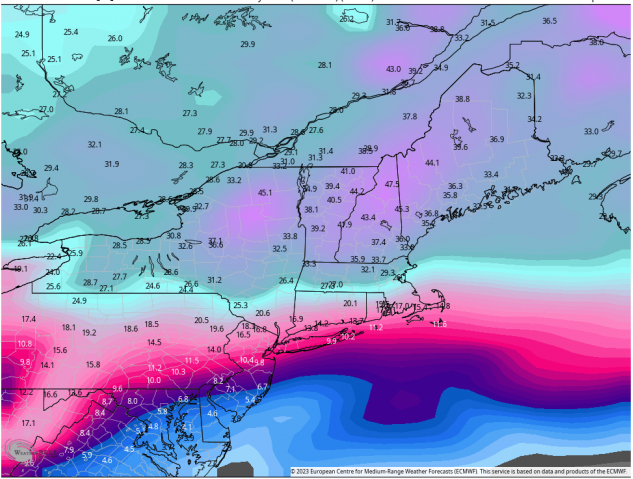
Colder air has already built up over much of Canada, as you can see from this map of surface temp anomalies from this morning.

Although the core of the colder air is located over the western half of the continent, that cold air will be progressing eastward as we head toward March.  In addition, the cold over eastern Canada is poised to be pulled south by the circulation around any sort of low-pressure center that moves through the Northeast.  There are two other things I want you to notice about this map.  First, the zone that separates the colder than normal from the milder/warmer than normal air masses stretches from Oklahoma to central New England.  This “baroclinic zone” is the likely storm track in the near term as low pressure systems feed off the thermal contrast available for energy to support the storm.  So, there will still be rain/snow lines to be concerned with, but that zone will be sinking southward as we head into March.  Lastly, notice the current warm anomalies over Greenland…those suggest the presence of an upper level ridge overhead and indeed, if we look at this snapshot of jet stream features for the same time we see an upper ridge poking its way into Greenland from the East.

If that ridge strengthens and expands westward over the next couple of weeks, an active storm track will develop underneath it…right through the eastern United States.  If we take a look at a jet stream forecast for the end of the first weekend in March, we will see that there is model support for this idea.

The ridge will extend west into northeast Canada with a broad trough covering much of the Lower 48.  Energy will come out of the piece of the trough in the Pac Northwest, traverse the country from west to east and feed off the thermal contrast that will still exist from the Ohio Valley to the east coast…that thermal ribbon will be further south, though, and that will mean opportunities for late season snow in the central Appalachians.

Here is a very interesting frame that shows the surface pressure tendencies for the 30 day period following the maturation of a stratwarm event…

The orange area shows high pressure anomalies over Greenland and the polar regions and the blue shows a tendency for low pressure areas along the eastern seaboard…can you say “late season Nor’easter”?  A jet stream set up like the ones shown for early March is one that is very favorable for eastern snowstorms.  Furthermore, with a strong ridge over Greenland and Canada effectively blocking the progression of systems around the northern hemisphere, the pattern is likely to remain in place for an extended period…perhaps much of next month.  Last…and certainly not least, here is a forecast for bountiful snowfall through the first week in April…

Based on a multitude of factors, some of which I have laid out in this piece, I think that the amounts you see are feasible, if not likely.  Better late than never, eh?

Low Key Skiing at Monetier les Bains, France

On the recommendation of a dear French friend who lives in Grenoble, we booked two weeks at Monetier les Bains in the Serre Chevalier Valley, between Grenoble and Turin in Italy.  It is less well-known and less crowded than such mega-resorts as Chamonix and Val d’Isere, which also makes them more low key.

The Serre Chevalier Valley ski resorts are spread over four small towns boasting 250 kms (200 miles) of pistes over 1,000 acres.

Monetierles Bains is the smallest of these towns and most authentically French. It’s well known in France for its aquatic spa center featuring geothermal spring water, which comes out of the ground at 110 degrees Fahrenheit and is cooled down to 97 degrees in a variety of settings including an outdoor pool.

After skiing, or on a day with poor weather, it’s a real treat to relax and enjoy the gentle feeling of the naturally heated water.

The town itself is one main street with a variety of shops selling local French delicacies, ski shops, and a few restaurants. While there are a few hotels, most  accommodations are apartment rentals, which can be booked through the local tourist office.

January is their low season, and February is the busiest month. There is a shuttle that runs every twenty minutes between the town center and the ski lifts, but it’s less than a ten minute walk.

It snowed the first few days we were there in January 2023, so it took me two or three days to find the pistes that were best for me. The lifts run from the village at 1,550 meters up to 2,850, with the mid-station at 2,176 meters, from where there are several tree-lined pistes down to the village.

Normally, I prefer to ski on open slopes above the tree line, but here I found that I preferred the variety of the pistes going back to the village. On snowy days I skied in the new snow until it got skied out, and on the sunny days I enjoyed the long runs on the groomed trails with hardly another skier in sight.

I never encountered a lift line, and if I had younger legs I could have skied more and more. The area serves mostly local folks and, on the weekends, families from Grenoble and its surrounding regions come to ski and enjoy the outdoors.

The base lodge was large enough to accommodate everyone and we never had to wait for a table. The food was tasty and reasonably priced. Since we were there for two weeks the waiters remembered us and were quick to bring us our favorite beer during our mid-day breaks. On the mountain, there are several quaint mountain restaurants with more limited menus at higher prices.

Monetier les Bains is a low-key ski area: in low season no crowds, no stress, everything easy and, of course, a free ski pass for seniors 75+.

People were friendly and everyone spoke good English, except for our landlord… my wife’s French saved the day.

Health Tips for Spring Skiing

Protecting your exposed skin, your eyes, and the rest of your body on the slopes in the strong spring sun is important at any age, and especially for us seniors who are more vulnerable to skin cancers, cataracts and dehydration.

These tips and reminders are from the University of Utah Health Services.

Snow can reflect up to 90% of sunlight and UV rays, increasing your exposure to damage.  Since UV exposure increases at altitude, at the top of the mountain your UV exposure could be up to 50% greater than a day at the beach.

This is true even on cloudy days, because sunlight can still filter through the cloud layers.

Any exposed skin needs sunscreen of SPF 40 or higher.  Zinc-based sunscreens provide the best protection since they reflect the sunlight.

  • Re-apply sunscreen every 2-3 hours.

Women should avoid high-gloss lipsticks or balms in favor of a product with SPF.

  • Re-apply every 1-2 hours to prevent dryness, chapping and sunburn.

Opt for a thin neck gaitor for added sun protection of the face and neck.

If you do find yourself sunburned, try calamine lotion, aloe or Vaseline to reduce pain and irritation.

  • It’s a good idea to plan ahead, and pack a small bottle, jar or tube of one of these sunburn treatments in your toiletry kit.

Eye Care

Up to 90% of the sun’s ultraviolet rays can bounce off the brilliant white snow surface back into your eyes. This means skiers and boarders – especially seniors – are at a greater risk for snow blindness, corneal sunburn, eye cancers and macular degeneration.

Long-term overexposure to UV radiation has also been linked to an increase in developing cataracts. And UV rays can prematurely wrinkle and damage the delicate skin around the eyes, and who needs more wrinkles!

Since prolonged exposure to snow reflection can cause lasting and permanent damage to your eyes, it is critical to always wear sunglasses or goggles on the mountain, including apres ski.

Wear tinted goggles, or sunglasses that completely wrap around the face.

Use polarized lenses with a UV400 rating, which filters out 99.9% of harmful UVA and UVB rays.

Don’t be fooled by cloudy days. UV rays can penetrate through clouds and haze, even on overcast days, when it’s difficult to see in the dreaded “flat light”.

Hydration

You work up a sweat in spring skiing/riding, so staying hydrated is even more important than in zero-degree downhill days.

Carry a small, flexible water bottle in your parka for hydration on the go. Even a few sips mid-run will help.

Polish off a glass of water at lunch or during a snack break.

Never pass a drinking fountain without using it.

Have a glass of water for each alcoholic drink you consume, and one more before bed.

This article was adapted from one on the Ski Utah website.

https://www.skiutah.com/blog/authors/lexi/spring-break-beyond-safety-tips-for

Cross Country Skiing in New Hampshire

Bretton Woods Nordic Ctr

In the winter, the snow-covered hills and mountains in New Hampshire beckon cross country (XC) skiing families, couples, and individuals aged five to 95. Each year thousands of recreational XC skiers make the sojourn to the Granite State for the beauty and serenity of winter outdoor recreation and rewarding wellness associated with cross country skiing.

New Hampshire’s XC ski areas range from packed trails heading out from a barn that offer stunning views to top notch facilities with trails maintained by snowcats and covered by snowmaking. Many resorts offer equipment rentals, clinics and lessons, and retail goods for what cross country skiers need to get started. Some XC ski resorts have guided tours and luxurious overnight accommodations. Here is a sampling of XC ski resorts in New Hampshire:

Across the grounds of the historic Omni Mount Washington Resort in the White Mountain National Forest, the Bretton Woods Nordic Center is one of the largest cross country ski areas on the East Coast. The 100 kilometer trail network crosses open fields, meanders through woods of spruce and fir, passes beaver ponds and mountain streams, and traverses open hardwood stands. There are many outstanding vistas of Mt. Washington from the trails for taking photos.

There is classical and skate skiing as well as snowshoeing on trails prepared with state-of-the-art grooming machines. Visit on-trail destinations including a warming cabin on Porcupine Trail and the lift-served Mount Stickney Cabin.

At the base of the Mt. Washington Auto Road on the Pinkham Notch side you’ll discover the magnificent setting of Great Glen Trails Outdoor Center. With 45 kilometers of cross country skiing, snowshoeing plus an old fashioned tubing hill, Great Glen offers everything needed for a full day of winter fun.

Great Glen’s scenic trail system offers an enjoyable combination of well-protected spruce and fir-lined trails plus wide open options offering breathtaking views into the Great Gulf Wilderness and surrounding peaks of the Northern Presidential range. Two warming huts are available throughout the network, including the scenic Great Angel Cabin with its stunning views into the Great Gulf.

With an average base elevation of 1,600 feet, plus one of the few Nordic snowmaking systems in the region, elevation really does make a difference at Great Glen, often allowing earlier skiing plus a deeper snow base throughout the season.

For even more adventure, guests of all ages will enjoy a comfortable winter tour on the 9-passenger Mt. Washington SnowCoach. This van with snow treads transports guests (weather permitting) to tree line (approximately 4,200 feet) on Mt. Washington into a sub-arctic world for a truly unforgettable adventure.

Great Glen is affiliated with the Glen House, which has 68 guest rooms that are reflective of the simplicity of Shaker design while its lobby embraces the history of the Mt. Washington Auto Road. Great Glen skiers can stop and visit the Notch Grille pub inside the Glen House, which has various seating options and a full service bar with drinks, full meals or lighter fare, a fireplace, and breathtaking views of Mount Washington out the back windows.

Jackson XC, on Rte. 16A in Jackson, NH, is a bucket list entry for Nordic skiers whether the preference is quiet striding through New England forests or all out skate skiing on an international race course. This 100 kilometer trail network through forest and farmland is woven into the fabric of this classic New England ski village with a heritage of skier hospitality. The JacksonXC ski trails are suitable for all ability levels and there are miles of dedicated snowshoe trails. This is the quintessential Nordic or xc skiing experience with the covered bridge, white steepled church, brookside trails, and the accompanying New England village with all of the trappings. JacksonXC operates under a Special-Use Permit with the White Mountain National Forest and with the cooperation of 76 private landowners and the town of Jackson. There’s a courtesy patrol to assist skiers on the trails if needed and a rescue service staff is trained and certified with the National Ski Patrol System. The maintained xc ski trails in and about the village of Jackson pass many country inns that are spaced throughout the region and the trails often lead right to the door of local inns, shops, and restaurants.

The Adventure Center at Waterville Valley has approximately 70 km of trails, which are groomed and tracked for skating and classic skiing and is known for its wide trails, which are dependably well groomed. Waterville is nestled in a high valley within a ring of mountains in the White Mountain National Forest. The town is a planned community where everything is at a skier’s fingertips. There are the great trails, a fitness center, indoor skating rink, and the Town Square (where the Adventure Center is located), which features a variety of restaurants and shops. But most significantly, Waterville Valley and its services and amenities make it great for families.

Waterville has two separate trail networks including the South End and the North End, which can be accessed by skis or by driving. Snowshoers are welcome to trek along the edge of the trails. Trails lead to easily accessible points of wonder including Greeley Ponds, Snow’s Mountain, Cascade Brook, and the Big Pines. Ask for assistance at the Adventure Center to reach these destinations.

Mt. Washington Valley Ski Touring & Snowshoe Center has more than 45 km of inn-to-inn trails, plus ski school and rentals. Trails connect the towns of Intervale, Kearsarge and North Conway offering views of the Saco River and Mt. Washington. Explore trails winding through riverside hayfields, mountainside spruce and hemlock forests offering a diverse selection of terrain for all abilities from easy rolling hills to more challenging intermediate and back country trails. Guided star-gazing tours and animal-tracking clinics are offered. In February, trailside businesses prepare a variety of goodies from hundreds of pounds of chocolate! Chocoholics xc ski or snowshoe the trails to enjoy chocolate prepared every way imaginable returning year after year to enjoy the Chocolate Festival, now in its 33rd year!

Gunstock Mountain Resort Outdoor Center is in Gilford, NH. The 27 km of trails are groomed for classic and skate skiing. Lessons and equipment rentals for xc ski, snowshoe, and fat biking are available at the Outdoor Center which also employs snowmaking to guarantee skiing as much as possible. Evening snowshoe ridge tour hikes are offered at night with a chairlift ride up the mountain and use of headlamps and snowshoes. Gunstock also offers a unique experience for XC skiers to accompany their dog to enjoy skiing out on the trails. Skijoring as it is known, is a hands-free skiing experience with Gunstock Outdoor Center XC supplying the tools and techniques needed to have a great day with your furry friend.

On the west side of New Hampshire is the Dartmouth Cross-Country Ski Center, located at Dartmouth College in Hanover, NH. The area maintains 30 km of groomed trails for classic and skate skiing in 3 areas at Oak Hill/Storrs Pond, Garipay Field and the former Dartmouth Golf Course. Trail tickets to these trails can be purchased in the Dartmouth Outing Club House near Occum Pond, which is on Rope Ferry Road or at the Oak Hill Ticket Booth and Warming Hut, which is located in the Oak Hill parking lot. There is ice skating on Occom Pond when it is frozen and the center has rental equipment including XC skis, snowshoes and ice skates.

Eastman Cross Country Center in Grantham, NH is on a golf course and residential community convenient to Route 89 at Exit 13. Situated on a golf course, Eastman has 36 km of groomed trails with 16 km of skate skiing and it is a Rossignol XC demo center. There are lessons and xc ski and snowshoe equipment rentals available. Destinations include the Troll House and John’s Glen Hut. Starting in January on Tuesdays the Snowshoe and Soup includes soup and bread after the group snowshoe outing.  After an outing in the clean, brisk air of Eastman’s hills, enjoy an après ski bite or brew at Forbes Tavern also located at The Center at Eastman.

Nordic Skier Wolfeboro XC is a XC ski trail network run by a nonprofit ski club now celebrating 50 years on the eastern shore of Lake Winnipesaukee in Wolfeboro, NH. Get trail passes at 47 North Main Street in Wolfeboro. There are 30 km of groomed trails for classic and skate skiing and 35 km of snowshoe trails. Nordic Skier has one of the best retail outlets for XC skiers including rental gear for XC skiing, snowshoeing, and ice skating. The Nordic Skier focuses on trail grooming and has plenty of testimony to verify the quality of their trails. They’ve acquired a low-snow grooming machine to offer the best trail conditions with the least amount of snow cover.

Some of the New Hampshire areas incorporate sustainability into their operations. The Glen House Hotel has a geothermal system that provides heating and cooling and offsite energy-generating projects harnessing hydro and solar power. There are at least two XC ski facilities in New Hampshire that offer EV charging stations including the Glen House hotel at the base of prestigious Mt. Washington and Eagle Mountain House in Jackson near Black Mountain.

Many people who tried the sport for the first time during the pandemic are returning to the trails and are bringing their friends and families with them. Cross country skiing brings people together, and gets them in touch with nature while doing something healthy, simple, and fun.

Many of the XC ski areas offer their season pass holders at participating cross country areas a one-time, complimentary, or discounted trail pass for a single day of cross country skiing or snowshoeing at other  cross country ski areas in NH. Click for a list of ski area season passholders that receive 50% off a one-day trail pass at the following XC ski areas at https://www.skinh.com/deals/season-passes

New Hampshire has more cross country ski areas across the state and for contact information at the SkiNH cross country ski areas click https://www.skinh.com/resorts


Seeking the Snow in Tahoe

View of Lake Tahoe (credit M. Roth)

After an early start to the ski season here in the East that I would describe as less than stellar, I went west, to Reno, Nevada to seek better conditions. My goal was the smaller ski areas within a short drive from Reno, not the larger and well-known ones on the side of Lake Tahoe in California.

Our the first day driving up the Mount Rose Highway, there were snowbanks as high as that 8’-0” high as we increased in elevation – a very encouraging sign of things to come.

The smaller ski areas in the Reno area are certainly not the magnitude of Heavenly or Kirkwood, Northstar or Palisades Tahoe.  But since you can ski just one trail at a time,  and these areas have the elevation to have and keep snow and they are much bigger than one would expect, they stack up well compared to an eastern“small area”.

Mount Rose Ski area, which you can see the slides from Reno, is the largest of the three areas we visited, with 2,000 feet of elevation and starting at 8,250 ft. Beautiful views of the Reno Valley, of course continual blue bird skies, without a cloud in site. There was plenty of snow on the mountain and the trails were groomed perfectly.

The surfaces at times were very much like Eastern skiing from groomed corduroy and as the day progressed some hard packed showed up. Now if the temperature was above 32 degrees, all that hard pack snow would have been soft packed powder because there was a very deep base below of 200-300 inches of snow.

In fact, one of the skiers with us, who was from California, commented that us easterners must love these conditions (which although he didn’t come out directly saying it, I don’t think he liked the surface). For me, wherever I can get on the snow, I am happy with the surface, unless of course it is boilerplate and to be honest , I have not encountered that in a very long time. Ski areas have made great advances in snow making and grooming to provide a good skiing surface most of the time.

Diamond Peak, just 27 miles from Reno, also the way to Lake Tahoe, offers great views of the lake as you ski down that you must stop and take a photo. This area is smaller than Mount Rose with the base at 6,700 feet and topping out at 8,540, with 1,500 feet of vertical and an  average annual snowfall 300 plus inches.

There are 28 trails marked and plenty of glades, with 655 acres of skiing. Great terrain to ski. Don’t forget to checkout their senior pass rates ($225 for years 70-79, Free 80+, and no blackout dates).

The third area, which was the smallest but not the least important, was Sky Tavern, a strange name for a ski area but with a history that ages way back into the late 50’s.  The area probably has the most meaning for skiing and promotion of skiing with the youth of the Reno Valley. This area is the oldest and largest non-profit ski and snowboard learning area.

Owned by the City of Reno, this ski area is devoted to teaching and training the city’s youth who want to learn to ski as well as aspire to skiing as a high school / college / olympic goals. The area staff is devoted) to this project. Founder Marcie Herz established the program in 1948, and her remaining family is still involved with the area.

This area’s learning and training staff can be compared with programs at Stratton Mountain School and other eastern ski schools and high school programs which don’t spend pots of money to train their children to become aspiring ski athletes.

Sky Tavern has 7,583 feet of base and 8,238 at the top, with about 800 feet in elevation, so they receive plenty of snow due to the high base elevation. On the weekends you can expect lots of training and families participating in this unique venue. They train in ski racing, terrain parks, aerials, and the park is striving to be a year-round training facility.

While staying in Reno, there are plenty of venues with a reasonable nightly cost as compared to staying on a mountain. We stayed at Circus Circus Hotel and Casino which gets you plenty to eat and play after skiing.

Rentals were also as easy as 1, 2, 3, at the base of the Mount Rose Highway, at Blue Zone Sports. The ski’s we rented were excellent and the staff were more than accommodating. You can get all your skiing gear at a one-stop rental/purchase shop.

I certainly recommend skiing these areas in lieu of the big boys on the other side of the highway.

Tina Basich medals_Basich archives

First Female Snowboarders Being Inducted to Us Ski and Snowboard Hall of Fame

Tina Basich

This year marks the first-ever induction of female snowboarder athletes to the US Ski and Snowboard Hall of Fame.  The honors go to to Shannon Dunn-Downing and Tina Basich, both icons and pioneers of women’s snowboarding.

The induction is at the annual awards event at Big Sky in April.  Both SeniorsSkiing Publisher Richard Lambert and Editor Evelyn Kanter are attending.

Few athletes have had as much impact in paving the way for women in Snowboarding as Tina Basich and Shannon Dunn.

Both experienced the challenges of being women competitors early in the sport, competing together from 1991-1996 on the World Cup Tour.

Sponsor support and contest prize money was nominal, and the norm of the day was that girls were equipped with men’s clothing and boards. Getting any magazine coverage was equally challenging. Together, these two women made it their goal to be the agents of change for women in the sport.

Both were chosen by their respective board companies to launch a Pro Model board, launched in 1994. At the time, the women’s snowboarding market was unproven, and few companies would take the risk to support it.

Shannon’s model, the ‘S.Dunn 150’, with its Sunflower graphics, had a huge appeal to the market and was launched by Sims Snowboards, and by no coincidence, had a female Marketing Director behind it. The ‘S.Dunn 150’ was the most successful selling women’s Pro Model of its time, reaching numbers equivalent to the Sims men’s Pro Model, the ‘Shaun Palmer’.

Shannon-Dunn

Gaylene Nagel, Sims Marketing Director at the time says, “It was so exciting to see the sales numbers come in so far above our expectations! But even more rewarding was to give Shannon a check that rivaled what the top pro men were making.” This was a landmark event as the women’s place in Snowboarding had been established.

Tina’s first Pro Model was launched by Kemper Snowboards, also in 1994. The following year, Tina moved to Sims, where she had two Pro Model designs and her boards were equally well received.

With the success of their Pro Model boards, Tina and Shannon joined the ranks of the top earners in the sport. Their worldwide visibility expanded their sponsorship opportunities, as well as their influence, opening the door for future pro women snowboarders.

Shannon and Tina took the opportunity of having these successful women’s boards under their feet as a springboard to actively push even more boundaries – which absolutely existed in the early days of the sport – like magazine and film coverage, contests, and clothing!

Tina and Shannon became iconic ambassadors for female Snowboarders, promoting and welcoming women through interviews, personal appearances and by working with all of their sponsors to design new products for women.

They joined creative forces with snowboard clothing company Swag, to start a women’s line of outerwear and street wear, calling it Prom. Sales/Marketing Director Lisa Hudson recalls, “The girls weren’t afraid to make a statement – from wearing pink to posing in the first Prom ads in prom dresses! They certainly got everyone’s attention – making the Prom launch a huge success and establishing women’s outerwear as a viable category.

On the competition front, Tina and Shannon together challenged the organizers at an International Air + Style event that would not allow women to compete in the Big Air, citing it was too dangerous for girls. Risk aside, they seized the opportunity to make a change for the future.

After doing a practice run with the boys, they convinced the organizers to allow them to compete. They both stuck their landings at the big event, for a cheering crowd and a stunned announcer. History was made that day for women in Big Air events. They raised the bar on the perception of what women could do – paving the way for future aspiring athletes like Jamie Anderson and Chloe Kim.

The board launches of 1994 were only the beginning for these two champions.

Shannon Dunn went on to win Olympic Bronze in Women’s Halfpipe in Nagano Japan (1998). Tina Basich was the first woman to land a 720 in competition, winning X Games Gold in 1998. Both of these events were internationally televised, further solidifying a place for women in competitive snowboarding for future generations.

Today the legacy continues.

Tina Basich recently launched a Pro Model with Capita Snowboards in 2021, for which she designed all of the graphics And now, almost 30 years later, they are celebrating being inducted into the US Ski and Snowboard Hall of Fame together, and being the first female Snowboarder athletes to do so.

Shannon Dunn recalls, “What a gift it has been to have a friend like Tina to share the journey through this male dominated sport– I feel like we were able to achieve much more by working together. Instead of being competitive with one another, we complimented each other, wanting the other to succeed. It was always, “Let’s do this!

Congratulations to these two trend-setting athletes.

How Alta Has Changed in the Past Fifty Years. Or Not.

Connie Marshall

I am often asked how Alta has changed in the past 40 or 50 years. This question always excites me, as my career began at Alta in 1974, so my personal journey weaves into the larger tapestry of the Alta story.  That includes several decades as the resort’s public relations manager, working with the media.

In a November 1970 article for Holiday Magazine, David Thomas wrote, “Alta is for skiing. A little-known resort in Utah has the simple claim to fame…. probably the world’s best skiing. Alta’s popularity has been limited by its relatively restricted accommodations and the relative absence of the sort of frantic ski life that draws winter vacationers to the Alps and some of the more social western resorts.”

What would a journalist muse about today? From my perspective, she would begin by penning, “Alta is for skiing. A well-known resort in Utah has this simple claim to fame…. the world’s best skiing. Alta’s popularity has grown as skiers have come to seek out and cherish authentic experiences both on and off the slopes.”

Skiers from the 1970’s returning today would feel immediately as though not much has changed. The lift system, while modernized – including the brand new Sunnyside lift on the Albion side – still respects the desire for every skier to find his own way around the mountain. Many of the buildings on and off the mountain surely are recognizable, albeit most have been remodeled to satisfy the changing needs of skiers and their families.

While Alta has embraced evolving lift technology, best practices in snow and avalanche management, progressive ski school philosophies for all skiers, convenient RFID lift access and management of the ski experience in a world that is ever growing in population that has led to required parking reservations on Fridays, Saturdays, Sundays and holidays, the vistas and uncomplicated layout of the mountain remain steadfast.

#Altamagic has evolved as a popular hashtag for all things in the social media world.

Those who stay on-mountain cherish their experiences in lodges that harken back to the culture of the elegant simplicity of the early romance of skiing. Most lodging has been independently owned and operated by the same linage of family members since they were built, creating a sense of family the moment one walks in the door.

Many lodges have a guest return rate of 70% percent who return year after year, with emerging generations of family and friends to spend time with other guests who they have grown over time to know. Few resorts or individual hotels or lodges can match that, anywhere in the world.

From my perspective, after a 44- year career with Alta Ski Area, I would like to speak about the community of employees and the skiers, both local and all who come from places all over the world. While this menagerie of humans has changed over the years, the same pull that brought all of us together to experience the insatiable thirst for the magic that befalls us and for the spirit of the mountain itself has not changed.

Not one bit.

Editor’s Note –

A visit to a cousin who had grown up in Alta led to a job as a ticket seller, with Connie advancing quickly to sales manager, then to decades as the resort’s first Marketing and Public Relations manager.  Along the way, she married, raised three children, and inspired and mentored scores of people – especially women – to influential careers in the world of winter sports. Connie also was a pioneer in forging bridges between the sometimes-contentious relationship between some resort managements and their local communities, and is widely respected throughout the ski industry.

Before her recent retirement, Connie received the Lifetime Achievement Award from the North American Snowsports Association (NASJA), nominated by SeniorsSkiing editor Evelyn Kanter. Connie continues to live close to Alta, volunteers for local and regional community groups, and still skis often at Alta.

The Connection between Diet and Longevity Skiing/Riding

Photo by amoon ra on Unsplash

Congratulations, your passion for skiing/riding has rewarded you. If you are reading this, you are a quinquagenarian, sexagenarian, septuagenarian, octogenarian, nonagenarian, or even a centenarian.  That’s a lot of “-genarians”, and a question we all face is how long we want to or intend to ski or ride.

A few seasons ago, I met a 91-year-old man who skis 120-130 days per season. He told me the Grim Reaper will need better skis than his to find and catch him.  The comment attests to his positive attitude and upbeat personality, both important to longevity, on the slopes and off.

If you distill the research on longevity, three factors stand out – genetics, attitude and lifestyle.  You are your genetics, so reading this checkmarks attitude.  That leaves lifestyle, diet and exercise.

More and more longevity research shows that social connections with family, friends and a community such as the community of skiers/riders, are among the most significant indicators of longevity.  We navigate the hill as individuals, however, choosing to do so with family, friends, and other skiers makes us an integral part of the mountain community.

Your doctor probably has told you the same thing as mine, that “your running days are over, so swim or walk.”  We all know aerobic capacity is essential for skiing, and recent research has shown that muscle mass and strength are much more a factor in longevity than previously.

So go take a walk or for a swim or to the gym.  Not crazy about the gym?  Use your ski boot to exercise at home or in your hotel room or condo. Raise a ski boot from the floor to over your head, first with one arm, then with the other; use both boots for a two-arm press, together or one at a time; hold the boot in front of you and do squats.

Diet is perhaps the most confounding factor in longevity.  Unfortunately, government dietary guidance over the last fifty years has been confusing, misleading, and in some cases flat-out wrong.  We lived through the low-fat years eating unsatisfying baked cardboard.  Now we know that fats are dietary essentials, but the right kind of fats – the unsaturated ones found in fruits, vegetables and nuts.

Many of us switched to diet drinks and “diet” foods in the belief that artificial sweeteners contribute zero calories, which is mostly true.  Consequently, we think we can eat more low-cal whatever because each one contributes fewer calories; we end up consuming even more total calories.  As that old advertising slogan goes – “Bet you can’t eat just one ….”

Now we know that artificial sweeteners stimulate appetite and promote weight gain.  We also now know that they make us crave sweeter food by overstimulating our sweet taste receptors.  Plus, they affect our gut biome, which can trigger even more serious health consequences.

What should a longevity skier do about diet?  It’s easy to be overwhelmed by all of the diet recommendations and their justification.  But most research, and your physician, still point to the benefits of the Mediterranean diet – fresh, minimally processed, seasonal, local vegetables and fruits; meats and fish in moderation; olive oil as the primary fat; and most importantly, wine in moderation.

Your guidepost is easy – don’t eat anything your great-grandmother would not recognize as food.  Sadly, the industrial agriculture-based food supply and distribution system makes it hard to do that, to eat for longevity.

So here’s your test – how much time do you spend in the center aisles of the grocery store?  The center aisles are where you find industrially-processed foods, so-called Frankenfoods, that do not contribute to longevity. The fresh foods you seek are on the peripheries. Also, grocery store shelves are stacked with the most appealing packages at eye level, so bend down or reach up for the better choices.

Walking around the outside of the supermarket, and reaching up and bending down is good exercise, too.

Virginia’s First Ski Area Restores the Nation’s Oldest Spa

Omni Homestead Snowman

The Homestead in Hot Springs, Virginia, is not the biggest ski area in the South, but it’s the oldest. When snowmaking was installed on new slopes in 1959, the historic hotel appended the words “ski” and “spa” to its self-description.

The hotel has been hosting guests “taking the waters” at local hot springs since 1766, a decade before the American Revolution. Today, its upscale offerings continue to make it a posh, even exclusive destination – one with its own ski hill.

It’s the perfect place where not-so-crowded slopes and not-too-difficult terrain for senior skiers to introduce the family, including the grandkids, to skiing and a rarefied escape to a newly refurbished hotel and spa facilities.

https://www.omnihotels.com/hotels/homestead-virginia/things-to-do/resort-activities/winter-activities

The Homestead’s Ski Area

Omni Homestead Ski Slope

A free shuttle links the hotel and the modest slope layout, which is open Sunday to Thursday this season.

Back in 1959 when Austrian immigrant and southern ski legend Sepp Kober designed and built the ski area, it included a “skimobile” trestle lift similar to one then in use at Mount Canmore in New Hampshire.  Also, it was the first are anywhere to rely solely on snowmaking, setting an example for the region and world.

His ski school was staffed by young Europeans whose accents became the norm at southern slopes, as well as in ski areas in the North and West. Sepp and his Austrian instructors are no longer with us, but his ski school still offers a family-friendly setting that makes skiers and boarders out of beginners from 4 years up. A Little Penguins Program focuses on children ages 5 to 11.

The Homestead’s 10 slopes, up from 5 in the 1980s, drop 700 vertical feet. The main double chairlift tops out at 3,200 feet. Two blue runs leave the top of the chair, Escape and Upper Main, and merge with Upper Main continuing along the chair to mid-station. There’s also a short, steep black run, Nose Dive, from the top of Upper Main, and a pair of blues, Upper and Lower Glades.

At mid-station, green Yonder-Weigh leads beginners off the lift back down to the lodge on a longer green run, Lower Main. Another green, Briar Patch, slips by the resort’s tubing park, Penguin Slides. Also from mid-station, a terrain park comes back to the main slope above the tubing runs. Absolute beginners have a learning area served by three surface lifts, and kids can ride mini-snowmobiles.

The base lodge has large picture windows and an outdoor deck backed by plexiglass to break the wind. On a spring ski weekends, white-coated chefs from the hotel flip gourmet burgers. An upstairs grill, Kober’s, serves lunch and dinner amid extensive memorabilia of the life and legend of Sepp Kober.

Alternatives to skiing and riding include The Homestead’s Allegheny Springs, an ice skating facility with rentals, and a spring-fed, two-acre water park where a steaming outdoor pool and hot tub are perfect for soothing sore legs.

Homestead Re-Opens After Major Makeover

Omni Homestead Outdoor Pool

The grande dame hotel reopened for lodging on Feb. 2, 2023, after a massive

$121+ million makeover, the most significant investment in the resort in more than a century. The resort is a member of the Historic Hotels of America, a nationwide collection of legendary lodging spots organized by the National Trust for Historic Preservation.

www.historichotels.org

The impressive Great Hall, five hundred guest rooms and suites, and numerous dining destinations were fully refurbished and ready to carry the venerable resort’s luxurious reputation well into the 21st century. Given The Homestead’s singular historical status, the work involved a painstaking preservation process that included restoring 978 original wood windows and hundreds of doors and repair of interior and exterior stucco, terracotta, limestone and brick masonry.

For many, the real “wow” is the complete restoration and reopening of the nation’s oldest historic spa structures.  Once called “the Jefferson Pools,” after Thomas Jefferson’s early 1800s visits, the restored Warm Springs Pools include buildings that always reminded me of what a nuclear power plant might look like if they’d been in use in the 19th century, including the plume of steam emerging from the top of the dome-shaped roofs. Restoration included preserving and/or replacing the historic wood structure, windows, doors, siding and roofing.

The restoration effort involved the Virginia Department of Historic Resources and

notable preservationists to be sure the project adhered to The Secretary of the Interior’s Standards for the Treatment of Historic Properties.

Head Back in Time

At the newly restored spring buildings, there are adult and family times for spa visits, and sex-segregated clothing optional sessions. But unlike back in Jefferson’s day, guests no longer hang from ropes in the warm mineral waters. Today foam noodle floats do the job without the upper body workout.

The Homestead’s slopes and snowmaking gave birth to the now bullish Southern ski market, but back in 1761, when the stone basin of the 1820s Gentlemen’s Bathhouse was first constructed, it became the oldest spa resort structure in the country. No wonder The Homestead’s 2,300 acres are today surrounded by aptly named “Bath” County.

With its impressive recent improvements, the entire Homestead experience is a fitting tribute to Kober, often called the “Father of Southern Skiing” for his decades-long efforts to nurture the active Southern ski market. Kober was inducted into the U.S. National Ski and Snowboard Hall of Fame in 2009.

anne-nygard

New Ikon Pass Resort Member in California

Photo by Anne Nygård on Unsplash

Add Snow Valley Mountain Resort in Southern California to the growing list of Ikon Pass members.

Alterra Mountain Company has closed on the purchase of the iconic destination, which has been in operation since 1924, making it one of the oldest ski resorts in the USA.  Snow Valley joins the operations of Big Bear Mountain Resort in Big Bear Lake, including Bear Mountain and Snow Summit, creating expanded access in Southern California and opening up new terrain to skiers and riders who call one of the three mountains home.

Located just 11 miles from Big Bear Lake, Snow Valley Mountain Resort is easily accessible from Pasadena, Santa Monica, Los Angeles and San Diego. The new three-mountain experience will offer skiers and riders a variety of terrain from beginner to expert, and the ability to progress from greens to blues to blacks.

With a focus on the beginning of that progression, Snow Valley features some of the region’s best beginner terrain, with award-winning learning centers and a shared dedication to exceptional guest service. The addition of the resort also means that skiers and riders will have access to Southern California’s only chairlift serviced sledding area for enhanced snow play during the winter season.

The Ikon Pass and Big Bear Mountain Resort season passes will be accepted at Snow Valley starting Monday, February 20, 2023.

About Snow Valley

Home of Southern California’s only six-person chairlift, Snow Valley is in the San Bernardino Mountains in Running Springs, CA.

Snow Valley is Southern California’s most versatile ski area and has been rated as Southern California’s #1 Family-Friendly Resort, and Least Crowded Resort.

Advanced skiers and snowboarders love Snow Valley’s Slide Peak, a legendary Southern California slope with a 35-degree pitch.

The resort also offers night sessions and lift-served Snow Play (sledding).

Snow Valley is one of the largest resorts in the San Bernardino National Forest, with 1,041 feet of vertical drop, a summit of 7,841 feet and base at 6,800 feet -all spread across 240 acres of skiable terrain. Its longest run is one mile.

About Alterra Mountain Company

Alterra now owns and operates 16 premium ski, snowboard, and all-season destinations in six states and three Canadian provinces.  They include:

  • Steamboat and Winter Park in Colorado;
  • Palisades Tahoe, Mammoth Mountain, June Mountain, Big Bear Mountain Resort and Snow Valley Mountain Resort in California;
  • Stratton and Sugarbush in Vermont;
  • Snowshoe in West Virginia;
  • Tremblant in Quebec, Blue Mountain in Ontario;
  • Crystal Mountain in Washington; Deer Valley Resort and Solitude Mountain Resort in Utah;
  • CMH Heli-Skiing & Summer Adventures in British Columbia.

Alterra Mountain Company introduced the Ikon Pass for winter 2018/2019, which today offers skiers and riders access to more than 50 mountain destinations throughout the Americas, Europe, Australia, New Zealand, and Japan.

“Snow Valley Mountain Resort has been a treasured destination since 1924 and together we will continue its incredible legacy,” said Kevin Somes, Vice President and General Manager of Snow Valley Mountain Resort. “By becoming a member of the Alterra Mountain Company family of destinations, Snow Valley will continue to deliver exceptional guest experiences to ski and snow enthusiasts in Southern California, and beyond.”

“The acquisition of Snow Valley Mountain Resort is a continuation of our ongoing mission to build a premier portfolio of great mountains in robust markets,” said Jared Smith, President & CEO, Alterra Mountain Company. “As we do with all our destinations, we are excited to invest essential capital to enhance the on-site employee and guest experience to further strengthen our offerings to skiers and riders in Southern California.”

Snowshoeing in the Adirondacks

Snowshoeing Visit Adirondacks

One of the easiest ways to enjoy fresh mountain snow is by snowshoeing. If you can walk, you can snowshoe. It’s a great activity for an off-slope rest day, or any day, along established, well-groomed trails or making your own tracks through the woods.

Here’s how and where to snowshoe in the Adirondacks:

Adirondack Park comprises 6.2 million protected acres in upstate New York, nearly half of which is state-owned land, accessible to everyone. There are flat trails, lower-elevation hikes, cross country ski trails, golf courses, mountain bike trails, along with trails that skirt local villages, all with convenient snowshoe opportunities throughout the region.

Trails are often multi-purpose, allowing visitors to snowshoe, walk, hike, or XC ski. There also are challenging trails throughout the Adirondacks for those who prefer to test their skills; and snowshoes are recommended, if not required, for those hiking many of the region’s mountains.

One well-known and popular trail in the region, the Jackrabbit Trail, is a 50-kilometer gem.  It begins in Keene and meanders through Lake Placid and Saranac Lake to Paul Smiths, connecting with four ski centers and several backcountry routes along the way.

There are many other trails throughout the region, along lakes, climbing low-elevation mountains, and through charming and historic towns and villages. The CATS trails, on the eastern edge of the Adirondacks, allows visitors to take in breathtaking views of the high peaks to the west and Lake Champlain to the east.

Some hotels and resorts have snowshoes available for guests’ use on their own trails, or on nearby trails. Lapland Lake Vacation Center in Northville has 12 kilometers of trails specifically designated for snowshoeing, with equipment available for guests. Lake Clear Lodge is a 25 acre property with miles of groomed trails that lead to the Jackrabbit Trail and other backcountry adventures.

The Dewey Mountain Recreation Center in Saranac Lake, Mt. Van Hoevenberg in Lake Placid, and the Cascade Welcome Center in Lake Placid, offer snowshoe rentals, as do many local outdoor sports outfitters.  The Adirondack Interpretive Centers in Newcomb and Paul Smiths and The Wild Center in Tupper Lake offer snowshoes for visitors. Even some local town libraries offer snowshoes as part of a program to encourage outdoor adventure.

Check out these snowshoe events throughout the region in February and March:

Feb. 4th – The Adirondack Mountain Club offers an introductory program entitled Backcountry Snowshoeing for Beginners in Lake Placid for those who want to take their skills into the Adirondack wilderness. The course enhances participants’ understanding of equipment, techniques and safety considerations needed to snowshoe on any terrain.

Feb. 19th – The Adirondack Snowshoe Fest in Saranac Lake builds on the success of the World Snowshoe Championships in 2017. Festivities are throughout Saranac Lake, with 5k, 10k and 15k snowshoe races at Paul Smith’s Visitors Interpretive Center and Dewey Mountain.

Feb. 25th –  In Tupper Lake, visitors can take part in one of the community’s most popular events – the Tupper Lake BrewSki. Participants can ski or snowshoe along the beautifully maintained James C. Frenette Sr. Recreational Trails to different stations along the route. Breweries from around the region will be on hand to pour samples as participants gather and mingle by fire pits located at each brew station. Noon to 4 p.m.

Also, Great Camp Santanoni in Newcomb is hosting “winter weekends” in February and March, offering group snowshoeing or cross-country skiing to the great camp where participants can enjoy and learn more about its history.

Taking part in any winter outdoor activity in the Adirondacks requires preparation, no matter your physical ability, activity or destination, for an enjoyable and safe experience. Learn more about winter preparedness, including some important tips, on the official New York State Department of Conservation website.

See also the Seniors Skiing article on what’s new this season at New York State ski/snowboard resorts.  https://seniorsskiing.com/whats-new-this-season-new-york-state/

The Adirondack Mountains offer some of the best opportunities for outdoor recreation in a beautiful, natural setting, all within a day’s drive for 25% of the entire North American population. Winter weather, spectacular scenery, a snowy backdrop, the love of winter, and taking part in a new outdoor activity is enough to make anyone an outdoor enthusiast in the Adirondacks. Whether snowshoeing along the region’s trails, along a lake or taking part in a regional event, the region offers many opportunities to embrace snowshoeing in the Adirondacks.

The Regional Office of Sustainable Tourism is the destination marketing and management organization for Hamilton and Essex counties, including the communities of Lake Placid, Tupper Lake and Saranac Lake, all located within the Adirondacks in New York state.

ICYMI February 2023

There’s so much happening at ski/snowboard/XC resorts this season, so we are alerting you to these special events to put on your calendar in February. The list includes world-class racing and a mountaintop art exhibit.

ICYMI (in case you missed it):

JH Kings and Queens of Corbets Veronica Paulson first womans backflip

Kings and Queens of Corbet’s Competition at Jackson Hole

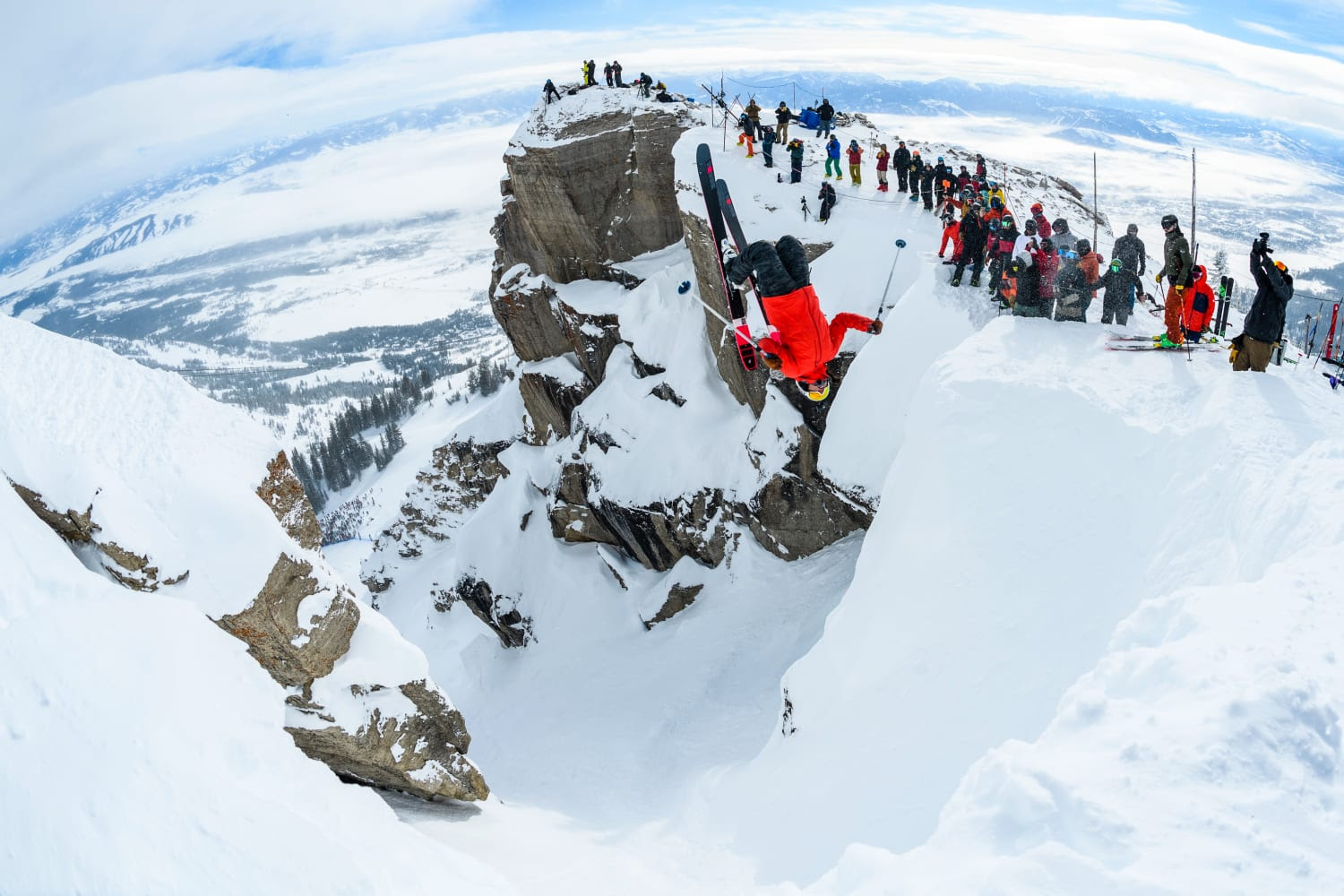
This impressive competition debuted in 2018, featuring equal prize money in an athlete-judged event with adrenalin-charged moves such as double backflips, nose butters and other high-flying tricks. huge methods.

Now in its 6th year, the famous Kings and Queens of Corbet’s competition returns February 4 – 11, amid some of the best snow conditions in decades at JHMR. The resort has reported more than 260 inches of snowfall this season to date, and the Kings and Queens competition is part of a full slate of Royal Week events planned for visitors during the week including athlete appearances, autograph signings, daily apres and exclusive parties.

“There is nothing more mind-blowing than watching athletes send 60-foot tricks that will change what you thought was possible. And the best way to experience all of it is in person at the base of Corbet’s Couloir in Tensleep Bowl,” says Jess McMillan, Director of Events and Partnership at Jackson Hole Mountain Resort.

This year’s roster of athletes confirmed to appear at Kings and Queens of Corbet’s includes skier and two-time king Karl Fostvedt (2018, 2021) and 2020 champion Parkin Costain, reigning queen Piper Kunst and 2020 women’s champion Veronica Paulsen.  For more information, visit www.jacksonhole.com.

Also see our recent article on where to ski and what to do in Jackson Hole. https://seniorsskiing.com/seniorsskiing-guide-jackson-hole-not-for-experts-only/

Ullr Nights Celebration at Snowmass

Celebrate the Norse god of winter and embrace the cold under the stars with Ullr Nights, a winter party at Elk Camp on Snowmass. Ride the gondola up, have dinner inside from 5:30-7:30pm, then head out for tubing, laps on the Breathtaker  Alpine Coaster, snowbiking and s’mores and hot coca next to a roaring bonfire.

Ullr Nights are February 15 and 24 and March 17 and 24.  Reservations arerecommended.  Tickets are $67 for unlimited tubing and coaster rides or $12 general admission to the bonfire.  Both include the gondola ride to and from Elk Camp.

https://www.aspensnowmass.com/visit/activities/winter/ullr-nights

World Pro Ski Tour at Bear Valley

The World Pro Ski Tour (WPST) returns to this California resort Feb. 10-12, with two men’s and two women’s races on the same course and with equal prize money.

Bear Valley has a rich history with WPST, hosting such renowned skiers as 3x Olympic Gold Medalist Jean Claude Killy and World Champion and Olympic Silver Medalist Billy Kidd.  This year, returning champions include Tour Champions Rob Cone and Tuva Norbye, along with a field of international pro racers. There has been skiing at Bear Valley since 1855.

Race dates and times are as follows:

Feb. 10th – 10am – Qualifiers.

Feb. 11th and 12th – 11am – Men’s & Women’s Giant Slalom Races & 3:30pm Tito’s Après Party

Find more information at www.WorldProSkiTour.com.  Watch live at www.FloLive.tv

Art at the Summit in Courchevel

The 14th annual Art at the Summit show features huge bronze sculptures by the award-winning artist Lorenzo Quinn, the son of Academy Award-winning actor Anthony Quinn. The works are on display all season, gracing the summits, the heart of the multi-summit resort, and at the Galerie Bartoux Courchevel, which is sponsoring the exhibit.

Lorenzo Quinn’s monumental sculptures have been exhibited at the Pyramids of Giza in Egypt, the canals of Venice and the parks of London. This is his first exhibit in the Alps. The sculptures are described as gravity-defying, poetic and true odes to love, including Quinn’s love of the outdoors.

Ikon Celebrates an Icon

When she wins, you win.

Mikaela Shiffrin,World champion alpine skier and Ikon Pass ambassador, just reset the world record for the most all-time World Cup wins for any female skier in history with 83 gold medals, and there are still several more races left in the season for her to add to the total.

To celebrate her milestone, Ikon Pass is giving away three ski packages for the 23/24 ski season at one of ten Ikon Pass destinations –

  • Mammoth Mountain and Palisades Tahoe in California
  • Solitude Mountain Resort and Snowbird in Utah
  • Sun Valley Resort in Utah
  • Revelstoke Mountain Resort and SkiBig3 in Canada
  • Killington Resort inVermont.

Each prize package includes –

  • Three nights lodging and rentals
  • Ikon Pass jacket and bag
  • 2023/2024 Ikon Pass
  • Mikaela Shiffrin Oakley goggles
  • Full adidas Terrex ski kit including jacket and bibs
  • Signed item from Mikaela
  • Message from Mikaela

Here’s how to enter to win:

  • Visit https://bit.ly/IkonMikaela
  • Complete at least 83% of Mikaela’s trivia correctly
  • Enter your name and email address
  • Winner will be drawn by the end of the 2023 World Cup season.

And, in the meantime, practice your own race skills and dream of joining the U.S. Ski and Snowboard team by visiting a NASTAR course for FREE through the end of the current winter season. Just present a valid lift ticket or pass – either an Ikon Pass or a resort specific pass.

Did we miss anything on your calendar?  Please add to the comments section.


The Skiing Weatherman January 27, 2023

In this installment I am going to hit three topics for the price of one.  First, I had a day on the snow last week that I don’t think I will ever forget.  I was in Salt Lake City for a trade show and snuck away to Park City for a day.  It is the first time I have been there since Park City Mountain Resort was combined with The Canyons.  The resulting seven mile WIDE network of trails, slopes and tree skiing is hard to fathom, but so was the amount of snow.  I haven’t seen that much snow on a mountain since I was (happily) stuck in four day storm in Austria more than 35 years ago.  Practically every turn made off the groomers last week was high shin to waist deep…just remarkable stuff.  And a hats off to Jonathan, the manager at Canyon Mountain Sports, who guided me to the fattest ski that I had ever used…and they worked like a charm!

Second, I need to sound off on something that has bugged me for some time.  Many of you know that I have been a snow condition reporter for almost 40 years now.  Along the way, I ran into some rather nefarious forms of snow reporting, where the “new snow” numbers didn’t match very well with Mother Nature’s output.  Well, the inaccuracies and obfuscation reached a new low this morning as I checked out the results of an overnight storm that started with a thump of snow across most of the Northeast but ended with a variety of precip types, including some rain, all the way to far northern New England.  I wanted to sneak in a late week day trip and was checking out “who got what” overnight.  I consulted the largest web site for snow conditions in the world (and to quote Billy Crystal’s Fernando from SNL…”and you know who you are”…) and what I found was in simple terms, a mess.

One column of the reports is dedicated to “Snowfall” and maybe that’s part of the problem as it should say “NEW Snowfall”.  You see, just about the entire region got 2 to as much as 9 inches of snow…before the other stuff came out of the sky.  I wanted to use the reports to determine the northern extent of where the garbage cut down on the snow total and then make a decision on a destination for the next day.  Unfortunately, the snowfall listed in the report ranged from 1 to 20 inches because the resorts listed snowfall for the past 1,2,3,4,5,6,or 7 days…there was absolutely no uniformity to the reports!!!  And I am not even taking into account that two other storms in the prior seven days also had other forms of precip.  Between the fact that there is no accounting for any sleet, freezing rain, or plain rain…as though it never happens…and the resorts seem to use any time frame they want, it makes it next to impossible to make an informed decision based on the reporting system as it is presented.  And I haven’t even included the practice of reporting one snowfall total for vertical drops of 1 to 3 thousand feet…funny, they always use the higher number from the summit.  Anyway, Caveat Emptor…we deserve better.

On to #3…the weather…and I will be briefer than usual.  The pattern has been changing to a colder one over the Northeast, but it has been slow…slower than I thought it would be a few weeks ago.  But, it IS changing.  This next week will see the temps trend down, but in terms of snowfall, there will only be weak systems racing from west to east, producing only snow showers with light accumulations in the mountains.  The week of the 6th will be colder than normal, and this frame of the jet stream shows part of the reason why…


This jet stream forecast for Sunday the 5th shows a direct feed of air from the northwest corner of the continent.  Counterclockwise flow around the trough over northeastern Canada is going to combine with clockwise circulation around the ridge building northward toward the Yukon, where the air is arriving from Siberia.  Here is a forecast for the temperature anomalies at 5,000 feet at that same time stamp…these temps act as a proxy for surface temps…

You can easily see the glide path from the Yukon to the Northeast on this slide.  Now, there is some risk of an extreme cold outbreak during the first half of February, but at a minimum, we shouldn’t have to worry about rain vs. snow too much early next month.  Longer term, I am bullish on the second half of the season and I will delve into that topic next time.  I know Festivus was last month, but thank you for the space for the Airing of Grievances…

Still Searching for Stein’s Studebaker

It’s a known fact that the great, late skier Stein Eriksen bought a new Studebaker in April 1953 from the dealership owned by Everett Kircher, founder of Michigan’s Boyne Mountain ski resort, where Stein was working at the time. The unknown is which model he owned, and what happened to Stein’s Studebaker.

I’m interested because my wife Judy and I own a restored 1953 Studebaker Starlight Coupe that her dad bought the same year.  It’s also is sometimes called a Commander Starlight, and was Studebaker’s main model that year.

Correspondent Jan Brunvand with his 1953 Studebaker Starlight coupe. In the background, early snow on the Wasatch mountains. Credit: Jan Brunvand

The classic Raymond Loewy design was variously described at the time as a “sports car,” “a sports coupe,” and “a graceful 1953” model. Stein once told me—in a brief encounter on a chair lift at Deer Valley—that it “looked like an Italian sports car” and that he sold it in Oslo.

That’s as far as I got until recently when I learned a bit more about Stein’s Studebaker. The somewhat melancholy occasion was a memorial service in Frisco, CO, for my brother Tor Arne Brunvand who passed away last spring. Tor was in the hospitality business in Summit County for many years before moving east, ending his career owning a hotel in Waterville Valley, NH.

Among the locals who showed up in Frisco this past October to remember Tor was another great Norwegian/American skier, Trygve Berge. He had been a colleague of Stein’s as an instructor in the early and mid 1950s, then became co-founder of Breckenridge ski resort. At  age 90, he is still skiing gracefully – as gracefully as Stein did.

Trygve, Tor, Jan

I had met Trygve a couple of times when he came to ski with Stein in Utah. Here’s a photo of us taken in January 2007 at Deer Valley. This was before I became interested in Stein’s Studebaker, so the subject never came up.

Meeting Trygve again in Frisco, I pulled up a photo of our Studebaker on my iPhone and asked him if Stein’s car had looked something like that. “Yes,” he said, “but Stein’s car was yellow.”

Perfect, since Studebaker did offer both the Starlight coupe (my car) and the Starliner hardtop version in yellow. I could just picture Stein with his blond hair waving in the breeze driving this beauty.

Our own Studebaker is dark green, shaped like the red one with the roof pillar in this brochure.

Just as the program started, Trygve added, “Stein loved to drive that car with the top down.”

Uh oh. Studebaker did not make a convertible version of this 1953 car. I double-checked in the literature and online.

So what’s going on here? In later years some people did customize ’53s as ragtops, but it’s unlikely a car dealer would  have done it, or that Stein would have waited around for the job.

More likely, I think, is that Trgyve’s statement is what psychologists call a “false memory.”

With the windows down and the wind blowing freely through the cabin, it would be easy to extrapolate a memory from so many years ago as an image of Stein tooling around town with the top down, even though the actual top of his car was likely solid metal and not  removable.

At least that’s what I will continue to believe until (and if) I learn anything more about Stein’s Studebaker.

Skiing Cervinia, the Italian Side of the Matterhorn

Stanley and son in Cervinia

Snow was falling when we arrived in the small Italian town of Cervinia, for 3 1/2 days of skiing to celebrate my 80th birthday.  Arriving from Israel, my two daughters, son and I drove the 180 km. (112 miles) from the Milan airport to Cervinia on an overcast December afternoon.

Cervinia is the Italian side of the Matterhorn. I first skied here in the Fall of 1966, on my way home after two years in the Peace Corps, where I served in the tiny landlocked country of Malawi, in Southern Africa.  Since then, a lot has changed in Cervinia. In Malawi, too, I’m sure.

Since that first visit, Cervinia has more than doubled in size, hotels have all been up-graded several times, the main street is now a pedestrian mall, and alternative lifts have been added to eliminate the need to climb more than 100 steps to reach the cable car that Mussolini built in 1936.  It’s now possible to ski from Val Tournache, which is below Cervinia, all the way to the areas in Zermatt on the Swiss side, via what is possibly the largest inter-connected ski area in the world.

What hasn’t changed is the snow.  It’s still deliciously welcoming and smooth, like gliding on white chocolate.  It’s why I call Cervinia Mt. Toblerone.

Mt. Toblerone

The town itself is at 2,050 meters (6,725 feet).  Lifts take you up to 3,480 meters (11,417 feet) meters to Plateau Rosa on the Italian side and up to 3,883 meters (just under 13,000 feet) to the Klein Matterhorn station on the Swiss side.  From there, you can ski the only International World Cup downhill course while enjoying endless breath-taking views of the Matterhorn.

The course is a joy to cruise; wide enough for easy GS turns and not that steep, with some interesting terrain near the end. From there you can ski back down to the village or stay up and tackle some red runs (in Europe, red is the equivalent of black runs in the USA) above the town.

If you’re not up for checking out the downhill course, from Plateau Rosa you can ski down the Zermatt side and enjoy cheese fondue for lunch, and then take the scenic 30-minute Gornegrat cog railway train back to the top, to connect with the cable car back to the Italian side. There’s a sign at the top with arrows – Italy this way, Switzerland that way – to guide you to the proper trail home.

The lifts in Cervinia are modern detachables with wind shields, various versions of gondolas, and a new cable car with room for 125 skiers that takes you up to the Plateau Rosa in 7 minutes from the Laghi Cima Bianchi mid-station.  We encountered only one old-fashioned non-detachable chairlift.

No matter where you ski in the resort, the view is dominated by the great massif of the nearly pyramidical snow-covered Matterhorn. As you move around, the profile of the mountainchanges and the light beams down from different angles while the clouds come and go.

Calzone in Cervinia

The town of Cervinia is very accessible.  The main street is lined with relatively small hotels, fancy shops, and restaurants. Local folks are a font of helpful information about how to navigate the area.  We stayed at the Hotel DaCompagnoni in the center of town and nearly a ski-in ski-out.

And the food, very Italian and very good whether it’s pizza, pasta, fish or a big steak, is all at reasonable prices, and far less expensive than the Zermatt side.  And not just in town – there are several mid-mountain restaurants with equally memorable meals.

We had three and a half great days skiing and being together in Cervinia. I can’t wait to return again.

Guided Snowshoe Tour with a Naturalist

Purity Spring Resort in Madison, NH has partnered with Tin Mountain Conservation Center (TMCC) to bring snowshoe guided naturalist tour programs at the NH Audubon “Gertrude Keith Hoyt & Edward Eaton Hoyt, Jr. Wildlife Sanctuary” and trails located at the resort. These guided tours, led by naturalist and TMCC Outreach Coordinator Heather McKendry, will be offered to guests staying at the resort and others may participate, too. The partnership will also give resort guests free access to TMCC’s programs on their trails and facilities.
Purity Spring’s Marketing Director Thomas Prindle explained, “As a Supporting Partner of the Tin Mountain Conservation Center, Purity Spring Resort aligns many opportunities to enjoy outdoor recreation with their efforts to foster a greater awareness and understanding of the natural environment. In addition to being able to offer custom guided tours of the NH Audubon Hoyt Wildlife Sanctuary right here at the resort, we provide our guests additional access to the Tin Mountain Conservation Center and the ability to participate in the programs they offer throughout the year.”

For nature and history aficionados, there are six snowshoe tour dates this season that start at 11 AM (remaining dates include Saturdays on February 4 and March 4, and Wednesday, February 22).

The sanctuary has 135 acres and 2.4 miles (3.8 kilometers) of trails which is part of the 1,400 acres originally purchased and homesteaded by Edward Hoyt Sr. in the area with family roots dating back to the 1800s. Purity Lake was dammed in the late 1700s by European settlers who also built a mill in East Madison. The homestead succumbed to fire in 1914 and there was a girls camp that was run between 1934 and 1977. The sanctuary land was bequeathed to NH Audubon in 1991.

The naturalist tours feature geological and sanctuary features associated with glacial deposits in the last ice age. The white pine are the dominant tree species with northern hardwoods and diverse wildlife in the sanctuary include winter finches, bobcat, fox, coyote and more. There are a number of short looped trails in the sanctuary that can be snowshoed or cross country skied in the winter.

The guided snowshoe tour is available in a package with Purity Spring accommodations including overnight lodging, breakfast in the Traditions Café and the tour. For the lodging package check with Purity Spring Resort to make a reservation and there are some snowshoe rentals available (www.purityspring.com or 603-367-8896). The cost for the public to participate is $15 per person.

Purity Spring Resort is associated with King Pine Ski Area in Madison, NH with 45 skiable acres, six ski lifts, 17 trails, and a 350-foot vertical. The family-friendly ski area is in a valley in the White Mountains National Forest and it has the longest running recreational and instructional ski camp in the country (since 1939). King Pine has been making memories for family vacations for generations. The resort specialty is for families who want to discover destinations that will engage parents and kids together, and it is celebrating its 60th anniversary this year.

Five Things You Should Know When a Skier Crashes

“Stop! Don’t do that. Don’t move him”, I screamed.

My husband had misjudged the slope, crashed, and landed in a heap in the middle of the trail. He was also out cold.

We were skiing with his good buddy Lars when it happened. Lars skied to him and dragged him by his right arm until his body flattened out. Meanwhile, I was screaming at Lars to stop. But he didn’t stop.

By the time I side-stepped up the hill to the scene, Lars said, “I had to straighten him out. He looked so uncomfortable.”

Unconscious skiers are not uncomfortable – they are unconscious, and anybody who moves them before Ski Patrol arrives can make an injury worse.  That’s likely what happened to my husband.

X-rays showed his shoulder was broken. Surgery and hardware repaired the bone, but fragile nerves might have snapped when he was dragged by his arm. We’ll never know.

The bone healed, but the nerve damage was complete. My husband has never again had use of his right arm. It was dead.

If Lars had some basic knowledge about what to do, it might have turned out better.

I talked with Mark Pollish, a career patroller and 40 year veteran of the Alta Ski Patrol, for some guidelines that we recreational skiers should heed in case of an accident.

Do No Harm

First of all, he said, when you come upon an accident, “Do no harm.”

When somebody crashes, “Don’t rush into the situation and become part of the problem. Whether it’s a ski crash or an accident on the highway, think extreme safety. People are quick to want to help, but don’t do anything that might jeopardize their safety or yours.”

The next guideline logically follows “Do no harm.”

Do Not Move the Person

“Do not move the person. That includes do not remove their skis. You don’t know what the injuries might be. There could be spinal injuries and moving the person could make it worse,” he said.

It doesn’t matter whether the skier or snowboarder is awake or unconscious. Don’t move them.

Just last year, I listened to two skiers awarding themselves kudos because they thought they were heroes. They saw someone fall and not budge, so they rolled him around and propped him up because he looked “so uncomfortable” He was unconscious through it all, and he was still unconscious when Ski Patrol arrived. Moving him could have caused serious damage. We’ll never know.

The first two guidelines focus on what you should not do.  These next three are what you should do, Pollish said.

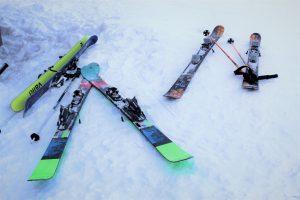
Make an X with your skis.

Take off your own skis and drive the tails into the snow forming an X well above the accident.  Or, if you ride, plant your board upright in the snow. It warns others to stay clear of the area and also marks the location of the incident.

Call the patrol and stay on the phone with them.

Whether you are at your home mountain or visiting a resort across the country, it’s a good idea to have the patrol’s emergency number in your phone so you can reach them quickly, Pollish said.

At some ski areas, the main number is the best way to get connected to the patrol. At others, the patrol might be reached through 911. It varies from resort to resort, so it’s best to find out before you need to call for help.

Then be sure to “stay on the phone with the patrol” Pollish said, and give them “as much information as possible: location, description of the person, and what you know about the.situation.”

Finally, stay with the downed skier until the patrol arrives. You might be able to provide additional information that they need, he said.

Think safety. Ski safely.

Now, are your ready for a pop quiz? What are the 5 things you should know and do when a skier crashes?

Cross Country Skiers: Do You Prefer Classic Skiing or Skate Skiing?

Cross Country Skiing at the Frisco Nordic Center, Frisco, Colorado by Todd Powell

Prospective cross country skiers often make a decision opting for either classic skiing or skate skiing. These two forms of cross country skiing are very different regarding where they can happen, what type of gear is used, the techniques employed, how fast the skiing is, and how much energy is necessary on an outing.

For a first time or inexperienced cross country skier, classic skiing may be the best choice because it is easier to learn and less physically demanding. As the classic skier advances (and gets left in the dust by good skate skiers) it may be less difficult to master skate skiing. In general, the skate skier should be more physically fit while classic skiers can ski at a casual pace if they so choose.

Cross Country Ski Terrain

Whether classic or skating, cross country skiing on groomed trails (already packed and perhaps tracked, too) is easier than skiing on ungroomed terrain such as the golf course, existing ungroomed trails, or across the snow-covered landscape. The snow on a groomed trail is machine-maintained by a ski area operator or ski club groomer to be consistent and packed so the skier can use their gear and techniques to slide efficiently. While it may look like cross country skiers are simply walking on skis, the diagonal stride technique combined with the ski characteristics are intended to grip and glide when weight is applied on a single ski. But skiing on a golf course that is covered with snow and does not have maintained trails can be at times deep, wet, frozen or breakable ice, or other conditions that are difficult to ski.

Skate skiing requires packed terrain on a trail or hard packed area like a snow covered iced-over lake in the springtime. Additionally, skaters should have some flexibility and be somewhat physically fit. A skate skier moves from side-to-side in a V-shaped technique. Going up hills on the trail will require a skate skier to have good timing and some strength to maintain sliding momentum on the skis.

A cross country ski area trail will often have a tracked section along the right side of the trail for classic skiers and a wider flat lane that may be about 10-12 feet in width for skaters to deploy their V-technique. The tracks seem like parallel rails compressed in the snow and they make classic ski gliding easier by keeping the skis going in a straight line. Sometimes the snow is the right condition to allow “crust cruising” or skating across the terrain without a specified trail.

Galena skiers

Cross Country Ski Gear

Classic skiing uses longer skis, often with a waxless base which provides the ski grip. The long skis distribute the skier’s weight allowing glide when the skis are equally weighted and grip when all the skier’s weight is applied to one ski. When a skier switches their weight from one ski to the other, the first ski needs to hold (not slide) while you spring off of it on to the other ski. In the olden days that grip was provided by a wax that was applied to the base in correlation to the air and snow temperature but today ski bases have patterns (for example, mini teeth or skin-type material) that allows the ski to hold on the snow to provide that grip. Ski racers still use an array of wax or other compounds to get optimal grip and glide.

Skate skis are shorter and they rely on skier weight shifting and momentum, rather than employing a base grip. Skaters use longer ski poles (length reaching from the ground to between the skier’s bottom and bridge of the nose) providing more of a push forward in the V-technique movement and allows the skier to shift their weight from ski to ski while gliding in an angular direction (like a speed ice skater). The skate skier’s boot upper is higher up the leg with a plastic cuff and this provides more support to push off the ski for the weight shift. The skater’s weight must be shifted mostly to the sliding ski which is moving in an angle away from the center of the trail. The complete weight shift is one of the biggest challenges for the beginning skater as many of them tend to keep their weight in the center of the position rather than committing out over the sliding ski. The centered weight position minimizes the glide for the skate skier.

The classic ski boot enhances forward skiing with the skis parallel and are generally less stiff than skate ski boots. The ski boot stiffness is in the sole and can be felt by twisting the boot, thus the skating boot sole is much stiffer than the classic ski boot sole. 

The classic skier’s ski pole length should be as high as the arm pit or shoulder. When used correctly, the classic skier’s poles can enhance forward momentum by comfortably swinging their arms to have some push off behind. This enhanced forward momentum associated with the ski poles is an even more important element of skate skiing.

Bindings on XC skis are built to provide support and a strong connection between boot and the ski. For example, the binding for skating is manufactured to withstand the pressure of the side to side application.

Other Factors

Equipment-wise, owners of a smaller car should know that the space in their vehicle will accommodate the skate skiing gear better than the longer classic skis. Additionally, the skater’s gear is generally more expensive compared to classic ski equipment. All ski equipment is available in a range of cost and like anything else, you get what you pay for. 

It is important to be aware of the different types of equipment within any of the XC ski categories. For example, classic skis can be narrow, stiff and fast producing much more glide but perhaps less control, while a backcountry ski would preferably be softer and wider to float in the deeper snow. Classic skis may be versatile to be applicable on tracked trails and also for ungroomed snow conditions. For most skiers, skate skis are too short and narrow so it is difficult on anything but packed snow. With such issues in mind, skiers have to be careful when buying new or used equipment to be certain that their acquisition will fit their intended needs.

Another smart suggestion is to rent equipment and get a lesson at the outset. An instructor will provide technique tips for either classic or skate skiing and the initial outing may make the choice obvious for a first timer or beginner. Experienced skiers may seek out a “try before you buy” demo available at some ski areas to actually test different pairs of skis and boots.

Regardless of whether classic or skate skiing is the preference, cross country skiing is the greatest winter on-snow activity combining fitness and wellness with the natural outdoor winter environment while moving under your own power.

The Skiing Weatherman January 13, 2023

Happy New Year to one and all!  I hope you got some packed powder turns in during the holiday week because dry surfaces have been hard to come by during the first half of this month.  The January thaw typically comes along in the late 10’s/20’s of this month, which you can actually see in the historical data as a modest bump in observed temperatures.  This year the thaw came very early, which was unusual but not unprecedented.  An upper ridge was dominant over the East during the first week of the month, which led to a cessation in snowmaking operations as well as a pause in opportunities for meaningful natural snow.  A pattern change of sorts got underway last weekend, and mountain crews took advantage of colder temps this week to rehab terrain as we head into the MLK weekend.  A messy storm is taking an unfavorable track as we close out this week, but it will be turning colder over the weekend, so if you are skiing or riding during the holiday, you can plan on sliding through some snowmaking plumes on open terrain.

While the East has been running lean in the fresh snow department, you no doubt have been hearing about the parade of storms that have been plastering the West with fresh snow…especially the coastal ranges that get first dibs on the incoming moisture.  Those moisture laden upper troughs have been working their way out onto the Plains and then fighting with the upper ridge that has been over the East much of this month.  Most of the troughs have been deflected to the northeast, running through the Great Lakes and into Canada, and that is a track that draws moisture and mild air northward, bringing rain or mixed precip along the full length of the Appalachians.  Occasionally, one of the troughs fights its way straight east, weakening and dislodging the ridge in its path.  This scenario is what played out last weekend, leading to a colder week.   That cold air has helped to produce some snow on the front end of the system moving through the East late this week, but the track is inland, as illustrated by this slide from Friday a.m.

A low center over Albany allows milder air to reach all the way into southern Quebec, so much of the front-end snow has been washed away.  The backside of the low will bring some snow to northern New York and northern New England, and the air mass for the weekend will be seasonably cold, allowing a resumption of snowmaking.  Next week will turn somewhat milder again, but there are strong signs that a major pattern change will get underway later next week.  It won’t be a “light switch” to a cold and snowy regime, but in the transition, there is the potential for a significant snowfall on the 20th/21st that would benefit area primarily north of I-90.  South of there it will likely be a mixed precip event, with a nice shot of snowmaking temps following the passage of the low center.  Here is a look at a surface map for next Friday afternoon…

Once again, the low center will cross central New England, but there will be enough cold air around to the north of the low for a healthy snowfall.

Longer term, there are changes in the southwest Pacific and eastern Indian Ocean with respect to where thunderstorms are clustered that point to a colder than normal regime developing during the final week of January and continuing right on into February.  This season has been uneven at best and a downright dud in some parts of the East, but that thunderstorm correlation (also known as the MJO, or Madden Julian Oscillation) is an excellent winter forecast tool and I am leaning on it heavily.  Right now, I am very bullish on the second half of the season here in the East.  Here is a look at the 5,000 foot temp anomalies for the 27th, showing that the coldest air poised to dominate the East by month’s end.

For the most part, conditions are epically outstanding out west, but pummeling of storms will end in about ten days, with the northern Rockies becoming the typically La Nina favored region for continued snows…the southern Rockies resorts could still use some snow.  The northern Great Lakes are looking good, but the thaw has impacted the rest of the Midwest.   The central and southern Appalachians need some snow as they are anxiously awaiting the pattern change that I believe is on the horizon.


Seniors Enjoy Steep Discounts at Most Idaho Ski Areas

Collectively, Idaho’s ski areas boast 29,000 feet of vertical spanning more than 21,000 acres, short lift lines, and extremely affordable passes. Plus, most offer skiing seniors significant discounts on lift tickets (and season passes).

Here’s a comprehensive list of the deals available to seniors looking to ski Idaho:

  • Bald Mountain Ski Area (Pierce) — Seniors ages 70 and older ski for free.

    At Bald Mountain, a small nonprofit ski area near Pierce in North Central Idaho, seniors ages 70 and older ski for free while full-day adult lift tickets go for only $25. Nestled amongst the vast Clearwater Mountains along the Gold Rush Historic Byway, Bald Mountain offers 21 runs that span 140 acres of skiable terrain with 845 feet of vertical. It is operated by the Clearwater Ski Club on land leased from PotlatchDeltic Corp., a forest products company based in Spokane, Wash. (Photo courtesy of Idaho Tourism)

  • Bogus Basin Mountain Recreation Area (Boise) — Seniors ages 70 and older enjoy discounts on lift tickets, with a full day costing $57 vs. $76 for adults 18-69, late arrivals (1 p.m. to close) costing $49 vs. $69, and twilight passes (3 p.m. to close) costing $32 vs. $39. There are no discounts on night passes (6 p.m. to close). Seniors also can purchase discounted Nordic passes, with full-day passes costing $17 vs. $24 for adults 13-69 and half-day passes costing $12 vs. $17. There are no senior discounts on winter tubing or the Glad Runner mountain coaster.
  • Brundage Mountain Resort (McCall) — Seniors ages 70 and older enjoy discounts on lift tickets, with a full day costing $62 during the regular season and $64 on holidays vs. $86 and $94, respectively, for adults ages 18-69. Likewise, seniors receive discounts on late-arrival tickets, which cost $48 during the regular season and $50 on holidays vs. $72 and $76, respectively, for adults. Seniors also enjoy discounts on multiday tickets. Buy full-day tickets online two days ahead of time and enjoy additional discounts. Brundage does not offer discounts for seniors booking snowtubing at the McCall Activity Barn, snowcat adventures, or snowmobile tours.

    Brundage Mountain Resort in Southwest Idaho near McCall about two hours north of Boise is home to what SKI Magazine has claimed is “the best powder in North America.” Its base area is blessed with more than 320 inches of snow annually, creating a consistently satisfying mix of bluebird and powder days throughout winter. It is also home to some of the best senior lift ticket discounts in the Gem State. (Photo courtesy of Ski Idaho)

  • Cottonwood Butte Ski Area (Cottonwood) — The mountain doesn’t offer seniors discounts, but full-day adult lift tickets only cost $20.
  • Grand Targhee Resort (Alta, WY) — Seniors ages 65 and older enjoy discounts on lift tickets, with a full day costing $90 during the regular season and $103 on holidays vs. $120 and$135, respectively, for adults ages 13-64. Buy your alpine ski tickets online and save up to 6 percent on most dates. Seniors also can purchase discounted Nordic passes, with day passes costing $15 vs. $20 for adults. Grand Targhee does not offer discounts for seniors booking snowshoe tours. Those wishing to fatbike its winter sports trail system must purchase a full-day alpine lift ticket or Nordic trail ticket.
  • Kelly Canyon Resort (Ririe) — Seniors ages 70 and older enjoy the same lift ticket pricing as juniors ages 6-12, with a full day costing $59 vs. $79 for adults ages 13-69. Likewise, half-day and night-skiing lift tickets cost seniors $39 vs. $59 for adults.
  • Little Ski Hill (McCall) — The mountain doesn’t offer seniors discounts, but full-day adult lift tickets only cost $25.
  • Lookout Pass Ski & Recreation Area (Mullan) — Seniors ages 80 and older ski for free. Seniors ages 62-79 enjoy discounts on lift tickets, with full-day passes costing $45 midweek, $52 on weekends, and $54 on holidays vs. $55, $66, and $73, respectively, for adults ages 18-61. Buy them online well before 8 a.m. the day before your visit and save another $3 per ticket. Additionally, if you show your photo I.D. or birth certificate at the ticket window on your birthday you’ll receive a free lift ticket on your birthday.

    Show your photo I.D. or birth certificate at the ticket window of Lookout Pass Ski & Recreation Area on your birthday and you’ll receive a free lift ticket for that day. Plus, seniors ages 80 and older ski for free and 62- to 79-year-olds enjoy sweet discounts on lift tickets. Near the historic town of Wallace and straddling the Idaho-Montana border and the Mountain and Pacific time zones, Lookout Pass is debuting its Eagle Peak expansion this winter, nearly doubling its footprint and adding another 500 feet of vertical. (Photo courtesy of Lookout Pass Ski & Recreation Area)

  • Lost Trail Ski Area (Sula, MT) — “Golden agers” 60 to 69 years old and seniors ages 70 and older enjoy discounts on lift tickets, with a full day costing $50 and $29, respectively, vs. $58 for adults ages 13-59. Likewise, golden agers and seniors only pay $45 and $26 for half-day passes, respectively, vs. $53 for adults.
  • Magic Mountain Ski Resort (Kimberly) — The mountain doesn’t offer seniors discounts, but full-day adult lift tickets only cost $40.
  • Pebble Creek Ski Area (Inkom) — Seniors ages 66 and older enjoy discounts on lift tickets, with a full day costing $50 and a half day costing $42 vs. $62 and $49, respectively, for adults ages 18-65. Pebble Creek does not offer seniors discounts on lift tickets that only allow riding on the Aspen beginner lift, which costs $25 for guests ages 6 and older.
  • Pomerelle Mountain Resort (Albion) — Seniors ages 70 and older enjoy discounts on lift tickets, with a full day costing $27 online and $37 at the ticket window vs. $50 and $60, respectively, for adults ages 13-69. Pomerelle does not offer seniors discounts on half-day and night tickets.
  • Rotarun Ski Area (Hailey) — The mountain doesn’t offer seniors discounts, but adult lift tickets only cost $15. Plus, Rotarun offers free public night skiing 6-9 p.m. Wednesdays.
  • Schweitzer (Sandpoint) — Seniors ages 65 and older enjoy discounts on lift tickets, with a full day costing $97 their first visit and $92 to reload their RFID card for subsequent dates vs. $110 and $100, respectively for adults ages 18-64. Schweitzer does not offer seniors discounts on afternoon and twilight lift tickets or Nordic trail passes. Book a stay in any Schweitzer-managed property and receive discounted lift tickets.
  • Silver Mountain Resort (Kellogg) — Seniors 65 and older enjoy discounts on lift tickets, with a full day costing $60 midweek (Monday-Friday), $64 on weekends, and $70 on holidays vs. $65, $71, and $75, respectively, for adults ages 18-64. Likewise, senior half-day tickets cost $55 midweek and on weekends and $60 on holidays vs. $57 and $65, respectively, for adults. Seniors also enjoy discounted scenic gondola rides (the resort is home to the world’s longest single-stage gondola that serves a ski area), which cost them $17.95 vs. $21.95 for adults. Silver Mountain does not offer seniors discounts on snowtubing or passes to Silver Rapids, Idaho’s largest indoor waterpark, which is adjacent to the resort’s Morning Star Lodge in the gondola village.
  • Snowhaven Ski & Tubing Area (Grangeville) — Seniors ages 62 and older enjoy discounts on lift tickets, with a full day costing $22 vs. $24 for a regular adult ticket and half-day passes costing $17 vs. $22 for a regular adult ticket. There are no senior discounts on snowtubing.
  • Soldier Mountain (Fairfield) — Seniors ages 70 and older enjoy discounts on lift tickets, with a full day costing $39 online and $54 at the ticket window vs. $59 and $74, respectively, for adults ages 18-69. Half-day tickets cost $24 online and $39 at the ticket window vs. $44 and $59, respectively, for adults. Soldier Mountain does not offer seniors discounts for its snowcat adventures.

    Seniors save 27 percent off regular adult prices when purchasing their Soldier Mountain lift tickets onsite at the ticket window, and up to one-third when they buy them online. It is one of only 10 ski areas in the U.S. you can rent out for the day. For $6,000 you can privately book the mountain during nonoperational days (Mondays-Wednesdays) for corporate retreats or personal events. So if you and 99 friends got together, you could have the entire mountain to yourself for the day for only $60 apiece. (Photo courtesy of Ski Idaho)

  • Sun Valley Resort (Sun Valley) — Seniors ages 65 and older enjoy discounts on lift tickets, with a full day ranging from $86-145 depending on the date vs. $104-225 for adults ages 13-64.

    Boasting 3,400 ft. of vertical, Sun Valley Resort’s senior discounts are nearly as steep, reaching upwards of 35 percent. For the third consecutive year, SKI Magazine named it the top ski resort in North America in its 2022 Annual Resort Guide. Sun Valley ranked no. 1 in the West for overall satisfaction, lifts, dining, and local flavor, and also ranked highly in the grooming, guest services, lodging, après, nightlife, and family friendly categories. (Photo courtesy of Sun Valley Resort)

  • Tamarack Resort (Donnelly) — Seniors ages 70 and older enjoy discounts on lift tickets. When pre-purchased in advance online, a full-day pass costs seniors $40 midweek and weekends and $60 on holidays vs. $55, $75, and $90, respectively, for adults ages 18-69. When purchased at the ticket window, seniors pay $60 for a half day, $75 for a full day, and $95 on holidays vs. $80, $115, and $135, respectively, for adults.

Please visit skiidaho.us for more details.

skijoring Banff Lake Louise Tourism

Things to Do in Banff/Lake Louise Besides Skiing

Skijoring Banff Lake Louise Tourism

If you aren’t too tired after a day or more on the slopes of Lake Louise, Sunshine and Mt. Norquay, there are plenty of options, including ice skating and horse-drawn sleigh rides. Events at SkiBig3 and in the towns of Banff and Lake Louise are back and better than before the so-called “pandemic pause”.

Here’s what to put on your calendar between now and spring.

Snow Days in Banff

Every January, Banff and Lake Louise come alive with the annual Snow Days Winter Festival. The streets of downtown Banff transform into larger-than-life winter galleries with giant snow sculptures, and onlookers line Banff Avenue to watch skijoring, as skiers are pulled through the snow by horses.  And more events, including just for kids.

  • Jan. 18 – 29, 2023

Mt. Norquay’s Stay & Apres Series

End your day on the mountain by going straight from the chair to cheers with the new Stay & Après Tasting Sessions, from 4 to 5 p.m. at Lone Pine Restaurant at Mt. Norquay on five days this season. This informative and delicious series of après ski tasting experiences is free with a valid lift ticket or season pass.

Kick your boots up, relax, sip on amazing drinks, and learn from an expert from Black Stallion wines (March 4), Park Distillery (Jan. 20 and Feb. 24), Hendo (Feb. 25) and Banff Ave. Brew Co. (March 10). There are only 20 spots available for each session, which is open to adults aged 18 and over. Sign up now or day of in the Cascade Lodge.

  • Jan.  20; Feb. 24, 25; March 4, 10 

Demo Days at Lake Louise Ski Resort

Try out the latest and greatest skis and snowboards from your favorite brands for free at Demo Days at Lake Louise Ski Resort. Visit a tent in the base area with a valid lift ticket or pass (along with an ID and credit card) and choose the gear (first come, first served) you’d like to try for a few laps. A rep will set up the gear to fit your own boots.

  • Feb. 17, and March 18, 2023

Cardboard Sled Derby

Race down the Norquay Tube Park for your chance to win great prizes, and even greater bragging rights. The catch? You’ll be racing in a self-made sled built from only the following items: tape, string, garbage bags, glue, and cardboard. Prizes are awarded for the fastest sled, best crash, and best overall.  Or just watch.

  • Feb 3, 2023, 6:30pm to 10pm

Norquay’s Lifts of Love

Feb. 11, 2023

High-speed quad dating returns to Mt. Norquay this February. Lifts of Love is a fresh take on speed dating, promising you’ll meet somebody new on every chair. The $45 entry fee includes a lift pass, an Apres Ski Mixer including food and drink specials and a live DJ, in The Lone Pine, beginning at 9 p.m.

  • Feb. 11, 2023

Nightrise at the Banff Gondola

At Nightrise, Sulphur Mountain’s summit is transformed after dark through four digital art installations inspired by the area’s First Nations history. Vibrant lighting, multimedia effects, video projections and music bring the mountaintop to life in new and unexpected ways. The installation was created by visionary Montreal-based multimedia studio Moment Factory in partnership with the Stoney Nakoda Nation.

Reservations recommended, whether you opt for just the digital light experience or add drinks or dinner at the Northern Lights Alpine Kitchen.

  • Dec. 2, 2022 – April 9, 2023

Slush Cup

Banff Sunshine plays host to its three-day #slushtival each May, promising true spring skiing and snowboarding, music, dancing and entertainment.

The Slush Cup is a neon, nutty, nail-biting pond skimming event, now in its 95th (ish) year, and celebrated traditionally on the last day of the ski season (Banff/Lake Louise is North America’s longest non-glacial ski season. Laugh as the brave attempt to travel across an ice-cold pond on skis or a snowboard while wearing crazy costumes. Also, check out the Slushshine Rail Jam and the Water Gate Banked Slalom.

  • May 21-23, 2023

What’s your favorite run at Lake Louise?  Sunshine?  Norquay?

See you on the slopes!

ICYMI January 2023

Photo by Roman Kraft on Unsplash

There’s so much happening at ski/snowboard/X-C resorts this season.  So, in addition to regular posts, we also offer this monthly calendar of this and that tidbits ICYMI (in case you missed it).

Here’s what’s happening in January.

22nd X Games at Aspen

Competitors from across the globe – as well as local Olympians Hanna Faulhaber and Alex Ferreira – gear up to take the world’s stage the weekend of January 27-29 at X Games Aspen.  Watch the action in Women’s and Men’s Snowboard and Ski Slopestyle, Big Air, SuperPipe and Knuckle Huck at Buttermilk Mountain – for FREE.

New this year, X Games is offering special packages including athlete meet-and-greets, front-row viewing, hospitality experiences and other events.

For the latest X Games Aspen 2023 event information, visit xgames.com

Fire & Ice Shows at Whistler/Blackcomb

Skier’s Plaza lights up every Sunday night through March 12 with a spectacular display of skills at the legendary Fire & Ice Show, where Whistler’s best skiers and riders jump and flip through a blazing ring of fire accompanied by an electric mix of music and dance.

It is an exciting evening of FREE live entertainment to enjoy with family and friends, starting at 9pm. Dress warmly, grab a hot chocolate and prepare to be amazed.

Uphilling in Jackson Hole 

Snow King, the town’s “other” ski area – a favorite of locals – and the only one which allows uphilling.

Uphill skiing at ski resorts is a special privilege, as millions of dollars are invested into snowmaking, grooming, and keeping trails safe.  In addition, the liability of collisions between uphill and downhill skiers is a major concern (and resort expense).  Please follow uphill travel policies posted online and be sure to purchase an uphill travel season or day pass for your visit.

Expect to be greeted and turned around by a staff member if you do not have your uphill pass displayed as you skin up the hill.  Dogs are not allowed on the mountain at any time lifts are running, and single file uphill travel is required.

New Boutique Hotels in the Catskills

If you are skiing at Belleayre, Hunter, Plattekill or Windham, there are some interesting new so-called “design forward” boutique hotels in the area with upscale amenities.  Check out Eastwind, Hotel Lilien and Bluebird Hunter Lodge.

Also new is AutoCamp Catskills in Saugerties, the first in New York and second on the East Coast, with high-end, boutique-style amenities. There are classic 31-foot Airstream campers, high-end tents, suites, and modern cabins situated among  hiking trails and a Clubhouse gathering space.

Ski Up to Six Utah Resorts in One Day 

The Ski Utah Interconnect Tour is for skiers with strong legs and lungs and an equally strong desire for bragging rights. It’s also for advanced and expert level skiers with equipment capable of going backcountry in between some resorts in the Wasatch Range. Sorry, no snowboarders, because Alta and Deer Valley do not allow snowboarders.

The interconnect operates daily – conditions permitting – with guides trained in backcountry safety and etiquette (top of both lists is never ski ahead of your guide). There are group tours at $475 per person and private customized tours at $1,499.  Bragging rights included. https://www.skiutah.com/explore/the-interconnect-tour

Dine Out Deal

If you are visiting Whistler/Blackcomb January 20th to February 5th, you can enjoy the 21st Annual Dine Out Vancouver Festival downtown and taste the world across the city at more than 350 restaurants with multi-course meals and unique culinary experiences. During a normally slow time of the year, the festival has become a popular time for Vancouverites and visitors to Whistler/Blackcomb to support local restaurants.  There are set menus at three price ranges: $20-$34, $35-$50, or $50-$64. Details here.

Background – Such dine-out meal deals started in NYC a couple of decades ago, to boost business in the slow post-holiday weeks.  The NYC Restaurant Week template has been copied by hundreds of cities, from Albuquerque to Vancouver.

Next Season News – Winter Park

Winter Park is replacing its Pioneer lift with a brand-new six-pack for the 2023-24 season.

The new lift will include a mid-load station that will allow guests to avoid arduous catwalks at the bottom of the current Pioneer zone.

This season – and hopefully next season, also – take the train to the chairlift. See our article on the Winter Park Ski Train.

https://seniorsskiing.com/take-the-train-to-the-chairlift/

See you for another ICYMI next month – or on a chairlift, gondola or magic carpet before then.

Mike Roth cartoon

Ageing Skiing Concerns – AKA, Skiing on the Edge

As I get older, skiing is still a thrill I look forward to every chance I get to go. My major concern these days is skiing safety and skiing with courtesy, which go hand in hand.  As a senior, I worry about falling (which doesn’t happen very often, I might add), but even more about being “taken out” by a reckless skier or snowboarder.

In my skiing past I have learned courtesy on the slopes, following the rules of skiing that were posted then. Today those rules may be posted here and there, but I fear that people either don’t know how to read today or just don’t care about other people sharing the skiing terrain.

I have seen notifications posted on the monitors at lifts at Stratton and placed in very conspicuous places in the cafeteria at Mount Snow and other resorts, but it doesn’t seem to matter. When was the last time you heard someone coming up behind you making the statement, “on your left” or “on your right”? In the 60’s and 70’s, you heard it all the time. Now never!

I have kept track of this lately and of all the times of my being passed, it was just one or two times out of 100. Not very good odds. I call it out it every time I am going to pass someone, because they do have the right of way.

The other day I saw a truck on the highway with the notification to be careful when passing.

If you note the sketch included in this post, it does the same.

I ski very cautiously. For one, I ski along the edges of a trail. Yes, I do run the risk of falling into the trees, but that’s my decision. The reason for skiing along the edge is two-fold – the snow is always better there since it’s pushed to the edges as the day progresses, and if someone is going to pass me it will be on one side only. That reduces the chances of collision by 50%!  However, I must admit that I have been passed on the tree side at least a couple of times in my life.

In addition to skiing along the edges, I ski totally under control at a pace that is comfortable to me. I also have reduced my choices of trails to cruisers rather than steeps and for the less traveled trails on the mountain rather than the more popular ones.

As we age, it is also a problem to be able to turn our bodies and look behind us as we decide to turn, so I am going to try something new this year. I am putting rear-view mirrors on my poles to see if that will help – or will it even work?

I am always looking for suggestions as to what can be done to improve, even solve the safety situation. We shouldn’t have to just take our chances. I will continue to take my chances because I am not going to give up skiing. I plan to continue skiing untill my body won’t let me anymore. I don’t want someone else to make that decision for me – other than my doctor. And he’s a skier.

Lessons Ski Resorts Learned from Their Covid Experience

Photo by Glade Optics on Unsplash

The pandemic caused ski area management teams to change how they run their resorts. Covid affected every business function from technology to marketing and communications to day-to-day operations.

As a group, ski areas were forced to learn how to react quickly to an ever-changing set of guidelines emanating from the Federal government as well as those from state governments that were often not in sync with Federal rules. Coupled with travel restrictions, the covid pandemic forced management teams to become more agile in ways they never imagined.

The lessons learned emerged from the “covid years” fell into three large buckets – technology, staffing and marketing.

Bucket “one” were the marketing and operating challenges that accelerated implementing automation at almost every level of operations. For skiers, the most visible were RFID (radio frequency identification) tags that reduced the number of lift ticket checkers at lift entry points.

Resorts updated their apps for mobile phones so skiers could buy food at kiosks, order meals at on-mountain restaurants, and pick up their lift tickets and season passes with touchless technology.  Keeping websites current to reflect the changing guidelines and the impact on the area required management teams to drastically shorten their web site updating cycle-times.

Each new set of guidelines affected the marketing and communications messaging which drove new content to be incorporated quickly on the website. Websites became a primary means to ensure that skiers knew the area was open for business and what precautions they needed to take to be allowed to ski or snowboard.   Social media also played a role, so Facebook pages and other applications became increasingly important ways to communicate with skiers.

The technology fell into two groups – the ones an area implemented and will continue to use and improve. The second were applications that were needed or planned to cope with covid and now are in their hip pockets in case of another similar set of challenges.

The second bucket of lessons came were changes in their marketing message and how areas communicated with skiers. Traditional messaging changed from “come to our area, the skiing is great and you’ll have a wonderful time” to “we’re open, conditions are great, and here’s what we’re doing to comply with the guidelines”.

How to operate a ski area with less than the full staff is the third bucket of lessons learned. Management teams made difficult choices as they wrestled with ensuring guests had a great vacation while running at the area with roughly 70% of what would be considered the desired staffing level. Operating hours of some facilities were curtailed; some services were eliminated; how and when trails were groomed was changed while at the same time, the area operated as many lifts as possible to minimize lift lines.

Staffing shortages forced area management teams to increase cross- training so with little notice they could, for example, move a lift operator to a food and beverage site or to a customer service desk. Positive covid tests forced daily changes in staffing plans.

Overall, ski area managers said the changes made during the Covid pandemic will benefit both skiers and ski areas in the long term.

First, covid forced managers to learn how to react to rapid changes in the regulatory environment, the market and the economy knowing that what worked yesterday and today, may not work tomorrow. Second, technologies that before covid would have taken two or three years to implement were created, tested and in use in a year or less.

Senior skiers will benefit from these changes. For example, if you have an IKON or Epic pass, you never need to stand in a line to get your lift ticket. Soon data from your trips up ski lifts will be used to create models that forecast skier movements. In a few years, you may be able to look at an app on your smartphone and see where the lift lines are! How cool will that be!