IMG_8152

This Issue

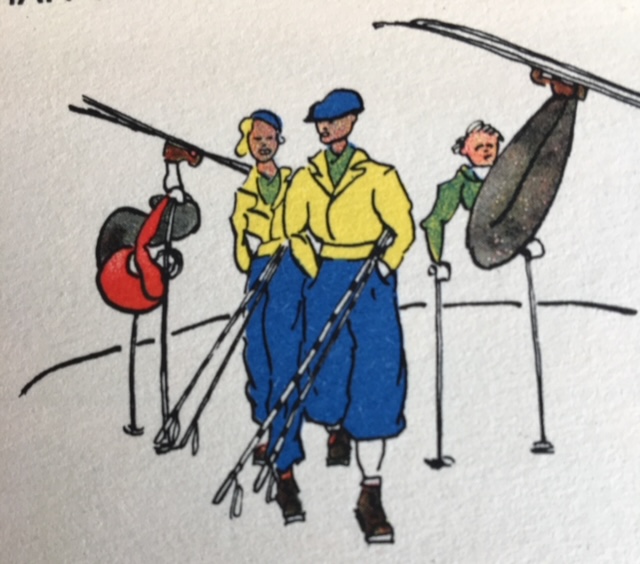
From the book, Ski-Fibel by Hubert Mumelter. 1935

Ever since Vail Resorts and Alterra started gobbling up ski areas, there’s been industry chatter about corporate vs. independent resorts. Among other topics, this issue’s Short Swings! weighs in on the issue.

Ski instructor and contributor, John Gelb, reports on Alta’s Intermediate Breakthrough instruction program and suggests ways to replicate it at other areas. One suggestion: take lessons on Sunday, when ski school activity tends to taper off.

Don Burch is back with another skiing video. No flips and hucks here, simply shots from a variety of New England mountains presented in a gentle and artistic mix.

British author Bob Trueman offers practical (and at times, counterintuitive) advice for when you select ski gear. Jackson Hogen of realskiers.com provides excellent guidance on keeping that gear in good shape.

The innovative Dahu ski boot is profiled. Jon refers to its breakthrough design as the Tesla of ski boots.

X-C editor Roger Lohr advises shopping for X-C equipment early this season. Supplies are low, and inventory probably will not be restocked.

And Herb Stevens, The Skiing Weatherman, gets us up to date on what to expect in mountain weather around the country. Spoiler alert: It’s snowing in the West and more areas are spinning their lifts.

If you enjoy SeniorsSkiing.com, forward it to a friend. The next issue will be distributed Friday, November 12.

“Intermediate Breakthrough – IB” at Alta, Utah

Hello readers, super great comments and questions on my “Secrets for Your Best Ski Season Ever” piece.  Also spoke with two readers in follow up.  I can sense everyone’s excited for this ski season – me too.  Shoot me your thoughts or questions and I’ll reply.

Alta’s Intermediate Breakthrough program help people go from blues to blacks

Previously I mentioned my good friend (60+) who improved bigtime from only four group lessons at Alta, UT last March.  Result: his skiing improved from confident “blue” skier to eager “black” skier.  In just four lessons.  So let’s dig in to what Alta’s program looks like and why it works.

And it’s worth doing even if you’re NOT going to visit Alta.  Here’s why: it’s a great template for asking the right questions of any ski school or instructor.  As a ski instructor, I LOVE when any skier in a group or private lesson tells me what they want to be able to do better/different.

Source: Alta

Now, back to Alta’s “Intermediate Breakthrough” group lessons.  Curious, I reached out to both Alta’s Ski School Director, and to the instructor who led the program my friend had found so helpful.  A few key observations:

  1. They seek decent “blue run” skiers who want to improve.
  2. They want skiers who will put some thought into their skiing, actively thinking of improvements they’d like to make.
  3. And, they want skiers to go out and practice the improvements a lot, and talk about what they’re seeing and feeling in their skiing.

I spoke with both Jonathan Doty, the on-snow instructor who led the Intermediate Breakthrough (IB) program, and with Jeremy Moore, Alta Ski School Director, who helped design it.  IB consists of one half-day group lesson per week for four consecutive weeks; a total of four group lessons. Talk to your ski buddies and try to pull together 3-4 who could join the lesson; next, talk to ski school and try to schedule a half-day morning lesson for four consecutive Sundays with same instructor.Many Sundays are QUIET at ski schools, so you may have better luck creating a special deal.

Jeremy insisted “the IB program is well-suited for anyone who’s skiing at least easy blue groomed terrain comfortably, and also is willing to put some time and energy into thinking about and hopefully improving their skiing”.

Source: Alta

Best preparation?  Here’s Jeremy again, “You don’t have to prepare in any specific way. However, it would potentially help improve your overall experience if you took some time to think and feel your skiing and come up with some concepts of what you like or don’t like about your skiing so you have a baseline to start from with your coach.”

From my friend, I learned that the IB format focuses on several “themes”, specifically one per week.  I asked Jeremy to unpack this a bit for me.  Jeremy: “The Alf Engen Ski School at Alta is a skills-based ski school, and we help students understand the How/What/Why they are doing with their skis.”  He added, “There are only 3 things you can do to your skis: rotate them, pressure them, or tip them on and off their edges”.  Sounds like a little, but it’s a lot!

Jonathan expanded on the “theme” focus: “We want skiers to succeed not only with us but on their own.  Each week we focus on a specific task they can practice outside of IB lessons, and a theme creates a flow to the lesson where the skills build on each other.”

As an instructor mostly doing private lessons, I know many people are concerned about “being judged” by others, particularly their friends.  Jonathan insisted: “This is a common thought, but everyone is putting themselves out there, and are on a personal journey.  This is a judgment-free zone!”

Like I wrote last time, whenever we improve our skiing proficiency…we have more fun!  Try to create this program at your favorite ski area…or just go to Alta.

Enjoy Don Burch’s Newest Creation

Don Burch creates short, artistic ski videos that capture the small moments showing people of all ages and abilities having fun together on the mountain.

Skiing The East” features scenes from Stowe, Okemo, Otis Ridge, Sunday River, Killington, Sugarbush, Mount Snow, Stratton, Wildcat, Magic, Waterville Valley and Maple Valley (long closed). Enjoy this two-minute ride.

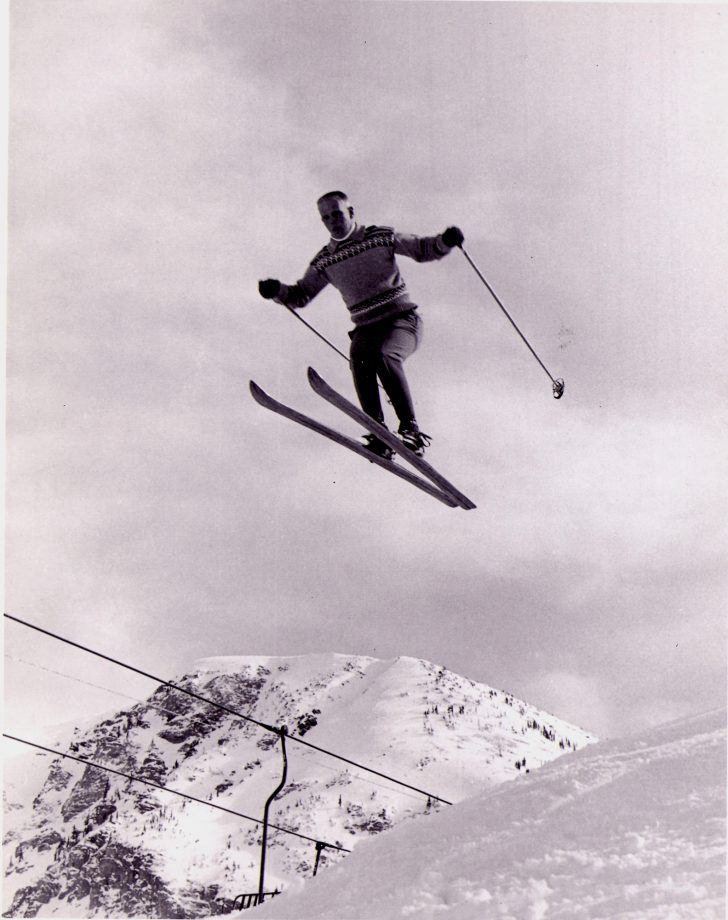
Alan Engen - Gelande at Alta circa 1961-1

Test Your Skiing Knowledge

Each issue of SeniorsSkiing.com has a picture to help test your skiing knowledge. The pictures are from collections in a variety of participating ski museums, which we encourage you to visit and to support.

Who is this Utah living ski legend?

This image was submitted by the Alf Engen Ski Museum, located in Park City, Utah. The museum is dedicated to preserving the rich history of skiing in the Intermountain region. Its extensive collections and interactive exhibits make it an innovative leader among the world’s ski museums.

The jumper in this image is well-known in many ski circles. A member of one of America’s best-known skiing families, he was an active Nordic and Alpine competitor, ski school director of one of Utah’s premier resorts, and the author of a few books on skiing. What is his name? If you know or want to take a guess, send your answer to jon@seniorsskiing.com. The first person to correctly identify this living skiing legend will receive a free pair of EZFIT Universal Insoles from Masterfit (retail value: $44.95).

The correct answer and the name of the winner will appear in the next issue of SeniorsSkiing.com.

The winner of the last Test Your Skiing Knowledge (several others had the correct answer but were not the first to submit it) is Charlie Sanders of Briarcliff Manor, NY. He correctly identified the site in the image as White Sands National Monument in New Mexico. Charlie has impressive ski history credentials. He is the author of “Boys of Winter: The US 10th Mt Division in WWII.”  His article,“Sunshine On My Shoulders: The History of Ski Music, appears in the current issue of Skiing History magazine. Charlie also serves on the boards of the International Skiing History Association and the US Skiing and Snowboarding Hall of Fame. His prize is Arcadia Publishing’s book, Skiing in New Mexico. Several readers sent their answers to “Comments.” When submitting a Test Your Skiing Knowledge response, please email to jon@seniorsskiing.com.

This Issue

Years ago, a fellow I knew in the fitness industry commented, “You don’t ski to get in shape. You get in shape to ski.”

I didn’t always agree, but as I’ve aged, I’ve realized that it really does require considerable training to prepare for the season.

This issue has some good advice from Pat McCloskey about similarities between mountain biking and skiing and how the former helps prepare for the latter.

Also included is a photo-essay offering excellent pre-season training advice that can be done on your own. It first appeared in last season’s Masterfit Buyer’s Guide. How do I know this is the right advice? For several months, now, I’ve been working with a trainer to help me get in shape for the season. All of the recommended exercises (plus a lot more) are in my 2-3 x a week routine.

Dave Chambers has written his account of skiing the Canadian Rockies with a few friends in the 2020-21 season. The Aussies have always been great travelers, and in this informative account, he and his mates crisscrossed the mountains enjoying seven different resorts in one trip.

I’ve come to appreciate the unique skiing experience as an occasional alternative to quotidian resort skiing. Frequent contributor, Jonathan Weisel, introduces us to the beauty of cross-country skiing in Yellowstone National Park. Yellowstone Expeditions, which operates a small yurt village and provides 5-day guided trips and specialized photo trips, sounds like a fantastic ski experience.

And Herb Stevens, the Skiing Weatherman, provides a heads up on the weather and what to expect from it. Parts of the West are getting inundated. Let’s hope and pray that this is a good sign for the entire season…and the wildfire-mitigating snowpack.

Check out your skiing knowledge with this image submitted by the New Mexico Ski Hall of Fame and Ski Museum. While you’re there, learn who correctly identified Arthur Conan Doyle from the last Test Your Skiing Knowledge photo.

Finally, enjoy Jon’s ShortSwings! column. At the end of his sometimes quirky ski news roundup, there’s a link to a ski film shot more than a century ago. We rarely see jump turns like those anymore.

weather map

The Skiing Weatherman-October 15, 2021

A bit of a false start…

In the past week, some significant early season snow has fallen over portions of the western U.S. and far western Canada.  The season is off and running…at least for now…as Wolf Creek Pass in southern Colorado will open this weekend with limited terrain.  I wish I could say that it is a sustainable plan going forward, but unfortunately, the weather pattern that brought the early snow is breaking down and not locking in.  Here is a look at the jet stream pattern that lead to much of the western snow earlier this week…

On this map from Tuesday morning, the dark blue feature in the west is a deep upper level trough where cold air pooled after travelling south from Canada.  The counter clockwise flow around the center of circulation over northern Arizona dragged the cold air southward and mixed it with moisture pulled off the Pacific to provide the ingredients for Wolf Creek’s snow.  The high elevation of the ski area (10,000+ feet) in the San Juan Mountains helped, too. The result was 14 inches of snow…enough for the groomers to work with so some early turns will be possible this weekend.  The other notable feature on the map is the strong ridge that covers much of the eastern half of the continent.  Ridges are warm and late September and the first half of October have been a classic case of “endless summer” east of the Mississippi.  Heck, I haven’t even heard of any frost yet, let alone snowflakes.  

The pattern is going to change this weekend, however.  First, it is going to become more progressive.  That is, the troughs and ridges will be moving along across the continent.  For the most part, the jet stream has been in a stagnant mode for the past several weeks.  I would love to tell you that the ridge is going to break down and go away, but unfortunately, it is going to migrate northward in Canada.  That will allow troughs to cut underneath it and move across the U.S., with each trough bringing along a shot of cooler…not colder…air with it.  When the troughs pass through the West, the air will be chilly enough for high elevation resorts to pick up some additional snowfall, but the air masses just won’t be cold enough to generate snow or snowmaking temps further east.   And that is where the position of the migratory ridge becomes important.  As I indicated earlier, ridges support warmer air masses, and with warm anomalies headed for central and northern Canada, the process of stockpiling early season cold will become more difficult to start.  This map of 5,000 foot temperature anomalies, valid on the 24th, illustrates this issue.

The temperatures at 5,000 feet are an effective proxy for surface temperatures in the forecasting world, and you can plainly see that Canada is projected to be blanketed with (relatively) warm air later this month.  You can also see a cool swath over the East where a trough will be passing through, but again, it won’t be cold enough to jump start the season.  This is not a long term issue, though.  We just have to give the increasingly longer nights a chance to cool things down in the prime source region for U.S. cold and we will be starting the process from a warmer baseline this season.  I am still bullish on November, based on analog years I have identified.  I will delve into those in my next installment.  Until then, patience is a virtue.

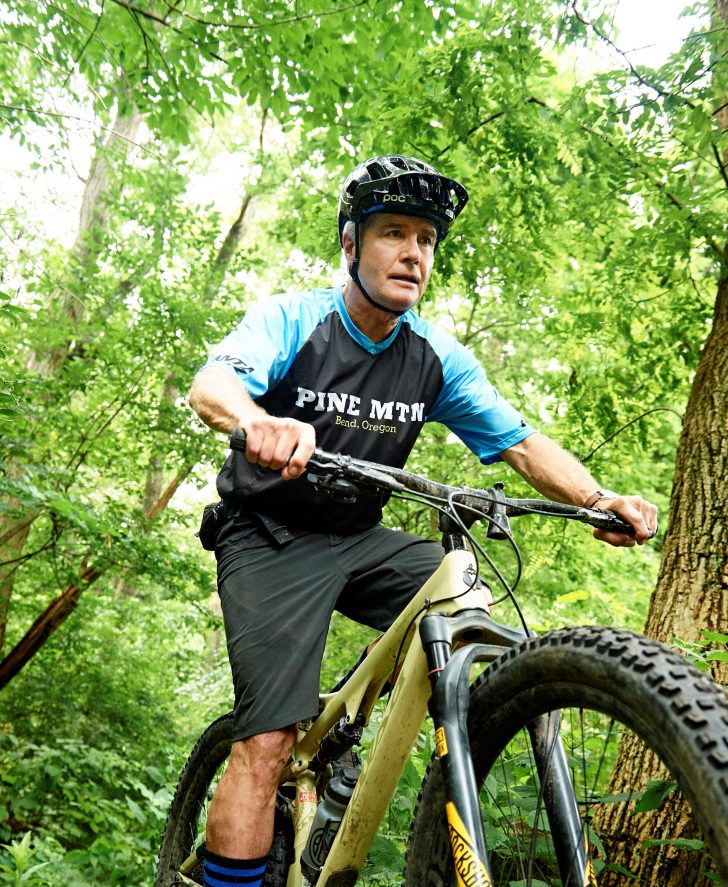
210715_PatMcCloskey_Doch_DSC_6768r (2)

How Mountain Biking Improves My Skiing

Pat McCloskey training for ski season. Picture: Becky Thurner, Thurner Photography, Pittsburgh, Pa

There are many similarities between mountain biking and skiing aside from the fact that both sports engage the same type of people.  I love to mountain bike, but I use it primarily as an exercise to keep me in shape for skiing.  I don’t take any chances. I ride to ride another day.  But it is good exercise and keeps your skiing skills sharp in the off season.  Consider the following:

  • Look Ahead –  As in skiing, if you focus on the tips or your front tire, you’ll reduce the amount of reaction time needed to make any last minute changes.  You are way better off concentrating on what is down the trail by looking ahead.  This way, you have plenty of time to make adjustments and won’t get caught off guard by changes in terrain.  Just like skiing, look ahead not at your front tire.

Focus on the trail ahead. Picture: Pat McCloskey

  • Tire selection – I tend to like a more knobby tire to handle all kinds of different terrain.  Here in Western Pennsylvania and West Virginia, we have many rocks and roots which tend to become slick when the weather turns ugly.  A good tire with a good rubber compound and an aggressive tread pattern can be ridden all year long.  The important thing is to make sure there is an adequate knobby pattern on the edges of the tire to help with cornering in slick conditions.  As with good ski edges, if you have a good tire edge pattern, you can lean the bike over in the turns…similar to carving on the slopes.
  • Body position – Utilize body position on the bike to face the new turn, keeping your outside pedal weighted just like you would do with the outside ski during an aggressive GS turn.
  • Terrain selection – Just like in skiing, selection of terrain and line is important on a mountain bike.  When looking ahead, you can quickly see your line and make your way over and through rough terrain.  Momentum is your friend and the shocks will soften the blow of rugged trails.  Be aggressive but always be safe.  At our age, no need to be a hero. Look ahead and select a good line just like you would on a pair of skis.  

Mountain biking is great aerobic exercise as well which is important in skiing.  If you’re in good aerobic shape and your legs are strong from riding, you’ll enjoy your ski season all the more.  Ride to ride another day, get in shape, and be ready for the season to come.

Test Your Skiing Knowledge

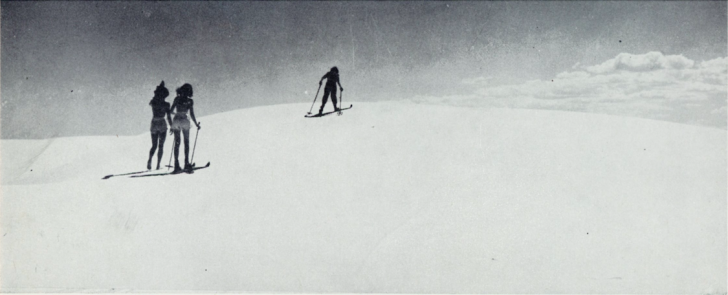
Where are these skiers? Source: New Mexicao Ski Museum

Each issue of SeniorsSkiing.com has a picture to help test your skiing knowledge. The pictures are from collections in a variety of participating ski museums, which we encourage you to visit and to support.

This image was submitted by New Mexico Ski Hall of Fame and New Mexico Ski Museum, located outside Albuquerque, at the base of the Sandia Peak Aerial Tramway. The museum collects, preserves and displays items connected with and/or celebrating the history of snow skiing in New Mexico. The Ski Hall of Fame celebrates individuals who have contributed substantially to the development of skiing and snowboarding in the state.

It is open daily year-round, and admission is free.

Where in New Mexico are the skiers in this picture? The first person to identify the correct location (email  jon@seniorsskiing.com) will receive a copy of Arcadia Publishing’s book, Skiing in New Mexico.

The correct answer and the name of the winner will appear in the next issue of SeniorsSkiing.com.

The winner of the last Test Your Skiing Knowledge (a few others had the correct answer, but were not the first to submit it) is George Treisbach of Harrisburg, Pa and Copper Mt, Co. He identified author Arthur Conan Doyle, creator of Sherlock Holmes. Congratulation for this mystery well-solved, George. Enjoy the  membership we purchased for you to The New England Ski Museum.

Ski class

Secrets for Your Best Ski Season Ever

Over 11 seasons I’ve probably taught 500-600 kids and adults as a part-time instructor at Stratton/VT & Butternut/MA. “Never-evers”, experts, 4-yr olds to 80-yr olds. Me: flipping through trail names like a deck of cards, choosing the best run for the task at hand and my eager, anxious learner. 

Here’s the huge thing I’ve learned:

Anyone can become a better skier, if the skier has both a desire and determination to improve…simply by taking a few ski lessons at the outset of ski season.  

Why at the beginning?  

Because each season, starting out, we’re all squirming and thinking, trying to put our skiing back together again.  So instead of once again reinforcing some of the “bad” habits carried over from last season, you can trade them for one or two new/better ideas that will help you ski with more skill.  

But wait, there’s more: any improvement in your skiing proficiency ALWAYS leads to enjoying skiing more!  (Shoot me your questions at the end and I’ll reply.)

As an instructor, I’m lucky.  In early December we do OUR training.  We take refresher lessons with the best instructor “trainers” at our resorts.  We’re brushing up on our skills.  It helps me a lot.  But it took me a while to accept the fact I still needed to be in “learning” mode.  

This season try this… either by yourself or with a friend who’s at a similar ability level.  Sign up for a private lesson of 2-3 hours on your second day of the season. On the first day, ski around and get a feeling for what’s working and… what’s not.  Think about what you’d like to change, what’s confusing or difficult, what you’d like to ask questions about, then write it down.  Now you’re ready for that lesson on Day 2.  Because now you’re engaged in being an “active learner”. Real progress as a skier doesn’t just “happen” to you.  It comes as a result of efforts you make to change what’s not working, in favor of more useful approaches.

I witnessed this approach in action, in Utah, last March.  One of my best friends, with whom I’ve skied for 40 years, took a short program of four group lessons at Alta.  Called “Intermediate Breakthrough” it seeks skiers who truly desire improvement.  My friend wanted to improve, and was ready to do what it took.  He explained what he wanted from the lessons, and he worked hard to use the skill tips offered by his instructor.

And he not only improved…he made a quantum leap in his overall skiing proficiency, and in his ability to ski more challenging terrain while enjoying it.  It was remarkable to see, and it was the result of only four lessons, but four lessons in which both student and instructor were invested in producing real results.  Alta’s “Intermediate Breakthrough” is awesome.

Believe me, you can do it too… It’s totally worth it.

Ski class

mystery picture

This Issue

Welcome back, fellow Senior Skiers!!! This is the first issue of SeniorsSkiing.com for the 2021-22 season. As usual, there’s a lot of original content.

Ski instructor and contributor John Gelb offers excellent advice about taking lessons at the beginning of the season. Day 1: ski around and take notes on what you want to strengthen or improve. Day 2: Have your instructor focus on what you observed in Day 1.

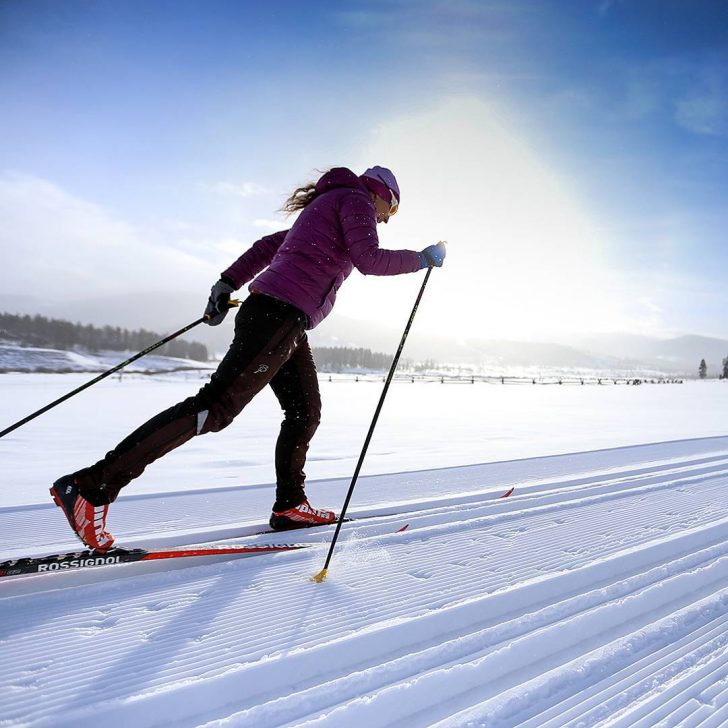
Planning a X-C ski holiday? Jonathan Weisel, longtime writer, X-C area designer, and area operator, explains what to look for and where to go for the best X-C skiing vacation.

Gary Henderson

If you’re looking for an exotic Alpine skiing experience, consider the skifields of New Zealand. New contributor, Gary Henderson is a member of the Tukino Ski Club on Mt Ruapehu, where prices are reasonable, getting there takes some effort, and everyone pitches in with the chores. It sounds delightfully anachronistic.


In the August Reader Survey, 37%+ of the 3000+ respondents, indicated they intended to purchase skis in the next two years. There are some great choices for older skiers and some excellent information on what to look for in a ski that will perform well without tiring the skier.

Credit: Don Burch

Many of you have commented on Don Burch’s ski art and artistic ski videos. Don’s delightful video recap of his 2020-21 season may whet your appetite for the coming season.

mystery picture

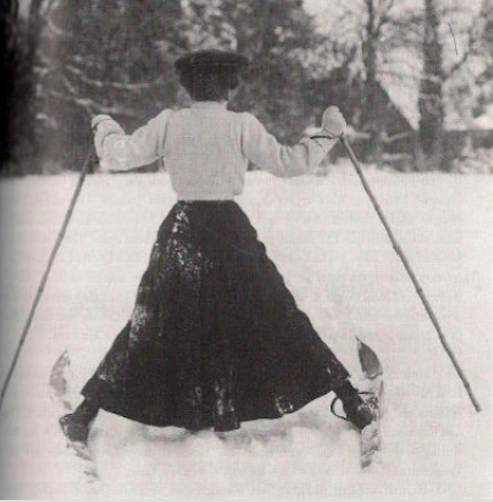
Test Your Skiing Knowledge sources images and objects from ski museums and asks readers to submit their best guesses. It’s our way of promoting membership and visitation to ski museums. We’ll purchase a one-year membership to the New England Ski Museum for the first person to identify the man pictured in the feature.

Skiing History magazine: Sept-Oct 2021

The Fall issue of Skiing History magazine is summarized by contributor and SeniorsSkiing.com Advisory Council member, Seth Masia. Skiing History is a must-read for anyone interested in the subject. The new issue features an article on ski songs going back to the 19th Century, complete with YouTube links to actual performances!

As usual, Jon’s Short Swings! column is filled with interesting tidbits from around the industry. There’s a weird video compilation of modern individual flying machines – maybe they’ll eventually replace ski lifts.

Signs of hope for a productive season: It’s been snowing at higher elevations in the West, and ice has formed at the top of New Hampshire’s Mount Washington.

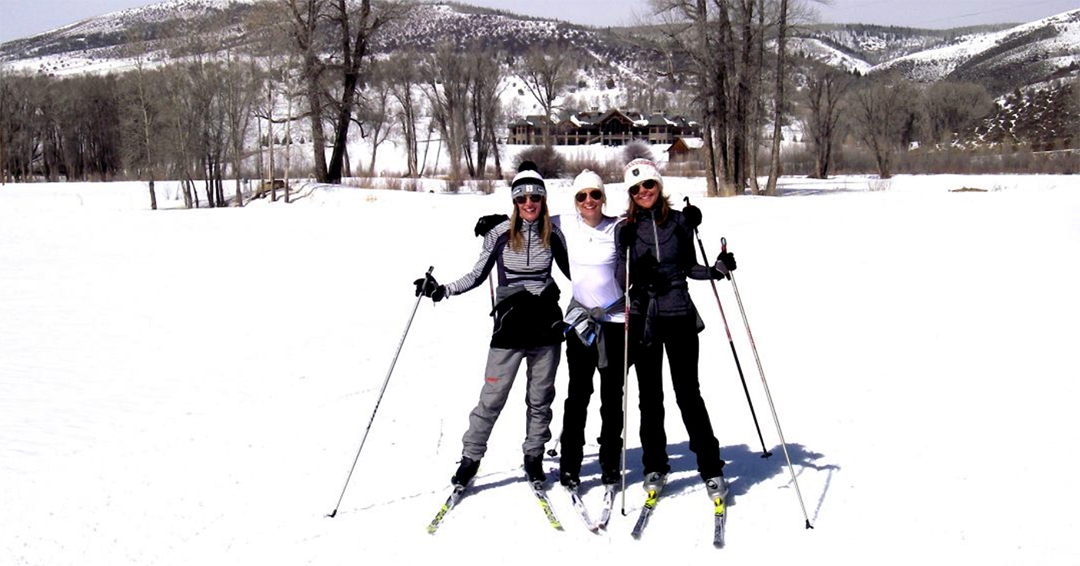
XC ski group

Planning Your XC Ski Vacation

XC ski group

Let’s say you’ve decided to take a cross country ski vacation. That’s a great idea because it’s a wonderful way to escape city stress.
But there are a lot of other good reasons. You can ski your brains out or veg out, get a tan, see new country, ski but avoid midwinter cold, eat incredible meals, enjoy a romantic interlude, or savor a family vacation.

If you’re looking to combine sport with comfort, there are hundreds of places to choose from in North America: inns, lodges, guest ranches, wonderful old hotels, B&Bs, downhill ski resorts, National Parks, and more. The variety is almost a little intimidating. So here’s how to get a handle on choosing your vacation destination.

Resources
The most sweeping source on XC areas in the U.S. and Canada is https://xcski.org/. Another option is https://www.xcskiresorts.com/. You can also consult books to find out about trails and tours in several states and provinces; order winter guides from tourism agencies; and read https://thenordicapproach.com/ as well as Cross Country Skier magazine.

Systems
Any way you go about it, there’s the problem of selecting from this excess of riches. So here’s a method that helps establish priorities; then you can comb through those resources to choose when and where to go.

The three primary categories are budget; amount of time available; and ambiance. Should you plan on spending $100 a day, or $250? Is a January week (can be cold, perhaps more times indoors) less desirable than a long weekend in February (may be crowded)? Are you looking for a family atmosphere, a second-honeymoon spot, or a place where you’re comfortable as a single person?

Other considerations may include the practical (altitude) and aesthetics (mountain or forest setting, Spartan or luxurious accommodations, fine or simple dining, an intimate experience or one shared with several dozen people…).

Range of activities is another factor. A lot of vacationers are cross country devotees; others enjoy the sport but want some daily relief. You might be intrigued by downhill skiing conveniently nearby; guided snowshoe tours; dog sledding, sleigh rides, riding horseback through the snow, overnighting in a yurt, ballooning, ice climbing, even fly fishing and snowmobiling! Then there are the on-site amenities like hot tubs, saunas, entertainment, and massage.

To provide an example of the screening process, let’s assume you’re an adventurous type who wants to stay for five days at a classy establishment with outstanding food and excellent skiing, all for a reasonable price – so look to lodges in the upper Midwest, or inns in northern New England. If you’re a downhill skier, think about winter ranches in the Rockies, where you have tracks outside your cabin door, then can hit the slopes at world-famous resorts like Steamboat Springs and Big Sky.

Tips

  • If you want to hone technique, consider places where instruction is part of a lodging/meal package.
  • If you’re staying at one location, you may want to try a couple of new routes every day. As a rule of thumb, multiply 5 kilometers per day (double that if you’re an experienced, vigorous skier) by the number of days you have free to figure how large the trail system should be. You may also want to check by phone to see how much of a trail network is suited to your ability and ambition.
  • In general, the further north you head or the higher the elevation, the longer the season and the more powdery the snow. Less predictably, I believe that the Midwest has the finest terrain for any level of skier; the Northeast has the most skiing history; and the Sierras’ and Rockies’s altitude may give you a headache. (I’ve lived in Montana, Colorado, and Wyoming, so clearly the skiing is worth the pain!)
Exhibition, Mt. Snow

Last Season

Don Burch is a frequent contributor of interesting ski pictures and videos. He put together this 2-minute video of highlights from his 2020-21 season. If you want to stoke your imagination for the coming season, click here and enjoy!

Question For You: How Did You Learn?

Did How You Learn Help Or Hinder Your Current Technique?

Hannes Schneider brought Austrian “technique” to the US in early 30s.

I remember taking couple of lessons when I started skiing in the mid-60s. Lessons were based on the snow-plow, stem christie, christie school.  Very Austrian. It served me well over the years I skied up to the time my Alpine career went on hiatus.

When I came back to skiing about 15 years ago with new short skis, new boots, I was trapped in the world of my early technique: still stem christies from time to time, narrow stance a la Stein Ericksen, actually trying to “wedlen” under the lifts. Boy, that didn’t seem to work. And actually still gets in the way.

So I took a lesson and tried to adapt. Better but not easy; old habits die hard.

Which leads us to our question for you this week:

What ski school method was used when you learned to ski? Or did you even take a lesson? How has your “Ur-technique”—the fundamentals from decades ago—impact how you ski today? Help? Hinder? What did you have to unlearn? How did you do that?

Please let us know what your experience has been. Make a comment in Leave A Reply in the box below.

Ski School, Austria, 1930s.


Finally! A Ski Boot For Older Feet

I recently had an online boot-fitting session with Dahu, the remarkable Swiss ski boot that advertises with SeniorsSkiing.com.

Before sending a pair of loaners, the company asked for my street shoe size. I could have used their App to determine foot volume but didn’t go through that short step. As it turned out, the boots they sent were the correct size.

Why is this Swiss-designed ski boot remarkable? This is not the same-old prettified with a new buckle or a different color. Dahu was conceived and developed to be fitted more easily, minimize ski boot discomfort, and maximize skier performance.

Although I have not yet skied Dahu, I am convinced it is the ideal boot for older skiers.

Here’s why: The boot has a comfortable, insulated leather inner boot with a patented grooved rubber sole that interfaces strategically with grooves in the shell. This interlocking interface enhances the boot’s torsional stiffness, thus maximizing energy transfer from skier to ski. 

Worn separately from the shell, the inner boot delivers traction in all conditions. Good looking, too.

Dahu’s shell is made of Grilamid polyamide composite, a Swiss product combining lightness and durability and consistent flex at all temperatures.

The shell features a hinged tongue with two micro-adjustable buckles and a hinged, releasable rear, incorporating the patented aluminum Powerbeam spine. Similar to the inner boot that interfaces with the shell, the Powerbeam helps transfer body energy to the ski. It also contributes to each skier’s ideal stance. 

Like another Swiss product – Swiss cheese – the shell is filled with holes. This feature eliminates the vexing hotspots on most skiers’ feet. Those of you who’ve engaged skilled boot fitters to reshape conventional boots using hair dryers and other tools will know what I’m talking about. By analyzing the common hot spots on most skiers’ feet and removing those sections of shell, Dahu has overcome that issue – extremely important for skiers whose feet have changed with age.

I haven’t skied them yet, but my 40-minute Zoom fitting session assured me it will be a good on-hill experience.

Words don’t do this boot justice. I strongly recommend visiting Dahu’s website to get a more visual picture of the way this unique product works.

One additional thing:  Dahu named its shell, Corsair, after the aircraft carrier fighter planes. I’m sure it’s a lot easier to slip foot into liner and liner into shell than it is to land on an aircrat carrier. 

Students of Naval history will recall that corsairs also were pirate ships operating hundreds of years ago. Based on ease of fit, comfort and performance, I think Dahu’s Corsair shell and that super comfortable liner will be plundering attention and sales from the rest of the industry.

How will you change

Question For You 12: How Will You Change?

The 2020 Season Will Be Like No Other. Things Will Be Different. Will You Be, Too?

You know the scene: COVID rules in play at resorts, mostly involving reduced capacities, reservations, limitations on indoor activities, restricted food service, and the whatever else ski area managers have created to protect customers.  It ain’t business as usual.
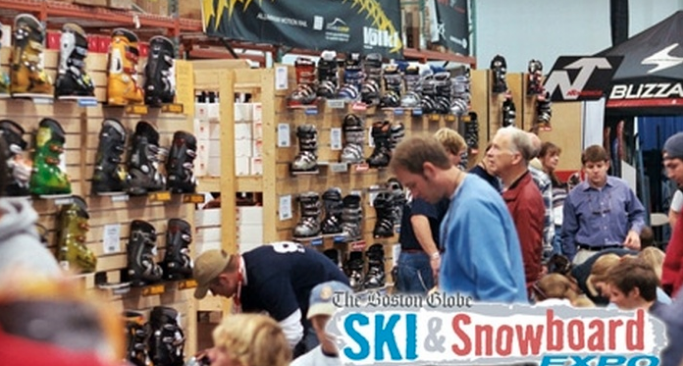
We’d like to know how this is going to impact your behavior this upcoming snow season. Do you find yourself thinking of buying more or fewer equipment items? Are you deliberately planning less outings? More outings? Will ski alone? Will all of these new rules combine to make you skip this season entirely? What are you planning to do to adapt your routine if you venture out to an Alpine resort? Share your thoughts with your fellow readers.

How will you change your usual snowsports/skiing/outdoor habits this winter to accommodate COVID rules?


Ski Snowboard Expo

Ski/Snowboard Consumer Expos Offer Info and FUN!

[Editor Note: This article first appeared in SunandSnowAdventures.com, an online magazine published by Mary Jo Tarallo, the former head of Learn To Ski And Snowboard Month.]

Come down to the Consumer Shows. Bargains and discounts galore.

Ski and snowboard consumer expos are a great way to get ready for or learn more about the sports. And, they are FUN! Most feature music, demos and food samplings PLUS the latest deals from resorts and product suppliers. Shows feature gigantic sales on equipment, clothing and accessories. Some include ski and snowboard swaps.

Attend an expo and Bring a Friend! Shows have already started (and some are over) but most will continue through the fall. See the schedule below.

Expos in Denver and Boston are among the best with various special features for the entire family.

Some shows also provide indoor lessons and most offer an opportunity to sample culinary and beverage selections of some sort. See the schedule below for details.

Albany, NY: Northeast Ski and Craft Beer Showcase, Albany Capital Center | November 1 – 3, 2019

Boston: Ski & Snowboard Expo; Seaport World Trade Center | November 14 – 17, 2019

Denver: Ski and Snowboard Expo; Denver Convention Center | Oct. 25 – 27, 2019

Las Vegas:  SnowJam Ski and Snowboard Expo; Cashman Center | November 23 & 24, 2019 

Los Angeles: Ski Dazzle Ski Show & Snowboard Expo; L.A. Convention Center | December 6 – 8, 2019 

Phoenix: Phoenix Ski Show/Avalanche Sale | Phoenix Convention Center; November 22-24, 2019

Portland, OR: Snowvana | Oregon Convention Center | November 22-23, 2019

Portland, OR: Ski Fever and Snowboard Show | Portland Expo Center | November 1 – 3, 2019   

Sacramento: Nor Cal Ski and Snowboard Festival; Cal Expo Fairgrounds | November 15-17, 2019 

San Diego: SnowJam Ski and Snowboard Expo;  Del Mar Fairgrounds | November 8 & 10, 2019

San Francisco: Nor Cal Ski and Snowboard Festival | Pier 35 | November 1-3, 2019

Santa Clara CA: Nor Cal Ski and Snowboard Festival |Santa Clara County Fairgrounds| November 8-10, 2019

Spokane, WA: Inlander Winter Party | Spokane Convention Center | November 15 & 16, 2019

Whippany, NJ: New Jersey Ski and Snowboard Expo (NJ Ski and Snowboard Council) | Hanover Marriott | November 8, 2019 |


APEX Boots: Simplicity. Comfort. Performance.


If there’s a skiers’ Hell, its boot room will be full.

Many of you have written to complain that your boots don’t provide good support; they’re too cold; you have to tighten them until your feet go numb. They have you thinking about ending your skiing careers. 

There’s no other piece of equipment that stimulates as much discomfort and emotion.

For those of you who suffer, I have these words of advice: either seek out a professional bootfitter or try Apex. 

Really good boot fitters can be found in some ski shops, not all. Some are more skilled than others, and finding a good one can be hit or miss. America’s Best Bootfitters.com lists those who have gone through an important training certification program.

Fantastic Experience!

But many of you have problem feet that even the most skilled bootfitter won’t be able to help. Fortunately, I’m not among your ranks. But I am curious. So, last season I spent time skiing the Apex boot. A fantastic experience!

Apex Boots

The Apex system is a hybrid of a soft and comfortable walkable boot and a stiff open chassis. You slip the soft boot on with ease – even on cold days – and turn a knob that controls a thin cable snugging the boot to the contours of your foot. Walk from the lot or around the lodge with these super-comfortable boots. When it’s time to ski, step into the chassis, close the three buckles, and step into your bindings. It’s as simple and as comfortable as that.

I skied them in the Rockies and in the Alps, and they did what any well-fitting boot should do. They transferred my movements to my skis, provided proper and comfortable support, and kept my feet comfy, even on some brutally cold mornings.  I used the Anterro model  ($899), which is Apex’s top of the line Big Mountain edition.  It’s available in a women’s model (Antero-S; $799), as well. The other two choices are the Crestone (All Mountain; $749) and the Blanca (Ladies All Mountain; $649).

Different Look

Since they’re different looking, they serve as an ice-breaker, which got me into a variety of conversations. I ran into people who were aware of Apex but skeptical about them. Understandable, but not fair. The boot skis very nicely (and COMFORTABLY). A few fellow riders knew some Apex converts and reported they were pleased. After I wrote a brief article about the boots (That was before I skied them), several Apex owners wrote in to report how much they love them. A few outliers emailed admonishments that I should know better. I’d refer them as well as anyone interested in how other skiers respond to Apex to the user reviews on the Apex website. People with all kinds of foot conditions explain how Apex resolved them.

My only criticism is that it took a while to get accustomed to managing the two components. But, really, not that long.

Bottom Line

Here’s the bottom line: If you want a solution for uncomfortable or underperforming conventional ski boots, invest in a pair of Apex boots. You can get them fitted in ski shops stocking the boot. Or you can purchase them directly through the manufacturer’s website. I spoke to one of the Apex executives while preparing this article. Readers ordering the boot directly (Discount code SENIOR3000) will get free shipping in the lower 48, a ski boot bag from Kulkea (value: $149.95), and free demos for friends and family through 2020 at Apex’s demo center in Golden, Colorado. The offer is good through November 30.

Ötzi the Ice Man: Three Millennia Older Than Mel Brooks


Reconstruction: Alfons & Adrie Kennis © South Tyrol Museum Archaeology/Ochsenreiter

He may not be the world’s oldest skier, but at more than 5000 years, he is the world’s oldest and best-preserved wet mummy. Given his advancing years, Ötzi is in particularly good shape. 

Named for where he was found in 1991 by two hikers on the Italian-Austrian border, Ötzi now resides in the South Tyrol Museum of Archaeology in the lovely small Northern Italian city of Bolzano. If you find yourself in the general vicinity, I strongly recommend paying him a visit.

© South Tyrol Museum of Archaeology

One of the many effects of global warming is the discovery of ancient things thawing their way out of the ice: thousand year old skis in Oppland County, Norway; a 500-year-old girl with perfectly preserved hands found in the Andes; an almost intact wooly mammoth found in Russia’s Arctic Lyakhovsky Islands. To learn more watch this brief “Secrets of the Ice” video.

But Ötzi stands apart, for his age, his superb condition, and the extensive science applied to understanding who he was. His genome has been mapped, his stomach contents carefully analyzed, and his belongings extensively interpreted. 

He is thought to have been a traveling shaman dispensing medical treatments. Evidence for that is in the form of fungi with antibiotic properties found in a sack. He also had dots and lines tattooed on either side of his lower spine at known acupuncture pain relief sites. Interestingly, even today, similarly located tattoos are found on people from primitive cultures.

Ötzi also had no hand callouses and underdeveloped upper body musculature, suggesting he was not engaged in agriculture or other physically demanding activities. Indeed, his animal skin clothing was finely put together and his axe decorative and showing little wear, possible signs of status and respect.

But respected or not, Ötzi was murdered. A 21st Century police detective examining the evidence concluded he was murdered a day or two following a violent fight. A cut on one of his hands suggests he had defended himself during the recent altercation. An arrowhead found in his body had severed an artery and caused his death. Detective work showed it was shot from a distance of about 100’. Because he was found with all his belongings, the possibility of theft has been ruled out.

© South Tyrol Museum of Archaeology/Ochsenreitr

Visitors to the museum view Ötzi’s gnarled flesh and twisted frame through a window in the freezer room where he’s on display. 

A reconstruction based on everything known about him stands in an adjacent gallery, created with the help of police forensics. 

Some of you may remember that long before Ötzi came out of the ice, Mel Brooks was considered to be the world’s oldest man. He and Carl Reiner drew upon his longevity in their classic comedy routine.

The South Tyrol Museum isn’t large, but it is one of the most fascinating places I’ve seen. If you’re planning a trip to the Dolomites, it’s a place you’ll want to visit along the way.

PopUp Problem Perplexes Publishers

Last Week’s Edition Had Some Issues.

Whoops!

Imagine our surprise when we began to receive complaints—some strongly worded—from our readers about having to re-enter their name and email to access our online magazine. That is, re-enter again and again and again. And again.

We thought it was a typical but annoying problem that is usually on the reader’s side of the screen: When “cookies” are disabled or the reader uses a different browser or device, a similar set of symptoms happens. The solution is usually pretty simple: Turn on cookies on browser.

But no, not this time around. We believe the problem can be traced to a flaw in the popup software we use as a result of a WordPress update. We thank our stalwart software designer Alice Winthrop of Gate-House Design who tracked down the developer of the software and disabled the popup until the problem can be corrected.

Which brings us to why we have a popup in the first place. For one thing, we want to offer visitors a chance to subscribe for free. The popup also appears if a subscriber—or a non-subscriber visitor—is trying to access our Subscriber-Only Content. We ask subscribers to confirm their information before getting access to such assets as Free (Or Almost Free) Skiing For Seniors, Ski and Boot Recommendations, our Historic Ski Poster e-book, and other items.

The alternative to the popup is for subscribers to create an account with a username and password. That is not something we want to manage, nor do we think it is necessary for an online snow sports magazine for seniors. Nor do we believe our readers want to remember yet another password. Hence the popup.

Let us know if you have any issues, suggestions, concerns. We love to hear from you.

We apologize for any inconvenience this may have caused.

How Cozy Are Your Feet?

Cozy Feet. Happy Skier. That’s the headline for the APEX  Ski Boot System advertisement at the right of this article. It’s worth taking notice…especially with the unusual, limited time 20% discount to SeniorsSkiing.com readers.

In  a reader survey from a few years ago, we asked which new equipment you intended to purchase in the coming season. 25% of you responded “ski boots.” Your reasons generally had to do with issues of comfort and support. Cold feet. Painful feet. Blackened toe nails. The need to spend more time than wanted in the lodge. Difficulties getting the damn things on and off.


APEX offers an excellent solution to these and other problems. It combines a comfortable snowboard-type boot with a hardshell partial exterior. The beauty of this approach is that it allows the wearer to walk to the lift or the lodge in the soft boot only and carry or leave the hardshell in the bindings.

There are many ways to adjust the boot and many sources of help to get it right.

The boot was conceived by Denny Hanson, whose Hanson rear-entry skiboot was popular in the 1970s and is still favored by some older skiers who fell in love with the comfort it provided.

For some, finding a boot that is functional and comfortable is enough of an obstacle to get in the way of their favorite winter outdoor activity. If that includes you, or if you are curious about stepping into a new, comfortable, and proven ski boot design you may want to 1) demo the APEX (free to SeniorsSkiing.com readers) at any of its dedicated demo centers (click here for locations), or 2) take advantage of the company’s rare 20% discount (exclusively for SeniorsSkiing.com readers) by entering SENIOR3000 at checkout.

Holiday Gifts For Senior Skiers

If you’re still looking for something different and/or special for older snow enthusiasts, the following suggestions are discounted for SeniorsSkiing.com followers and can be ordered online.

APEX Ski Boot combines a removable Open Chassis with a walkable boot.

APEX Boot System is offering 20% off retail for SeniorsSkiing.com readers. This is the boot many olderskiers are talking about. It’s a good performer, comfortable, and let’s you walk with ease. No issues getting it on or off. Enter Senior3000 at checkout.


Panda Poles have bamboo shafts and are beautifully hand-crafted in Idaho. SeniorsSkiing.com subscribers get a 30% discount off the regular price of $95. Enter SENIORS30 at checkout.

Orsden makes wonderful parkas and pants in great colors. They’re sold only online. Comparable products in stores sell for twice as much. SeniorsSkiing.com subscribers get a 30% discount through December 31. Enter WINTER30 at checkout.


The Buffalo Wool Company makes socks, gloves, hats from bison down mixed with silk, yak, wool, and cashmere. SeniorsSkiing.com subscribers get a 10% discount. Enter SeniorsSkiing in the discount code window at checkout.

DeBooter is a skiboot jackthat makes boot removal a breezeSeniorsSkiing.com subscribers get a 20% discount. Enter SENIORSSKIING at checkout.

GearBeast  is a colorful smartphone carrier attached to a comfortable neckstrap. While skiing, the phone is under the parka, keeping it warm, accessible, and safe. GearBeast has a little built-in pocket to carry credit card, driver’s license and a few bills. SeniorsSkiing.com readers receive a 20% discount (regular price: $9.99 – $12.99) by visiting gearbeast.comand entering SENIORS-SKIINGat checkout.

Wild West Jerky makes great-tasting, all-natural, jerky products. SeniorsSkiing.com subscribers receive a 20% discount off full retail. Enter seniorsskiing in the promo code window at checkout

Happy Holidays!

Additions to List of US and Canadian Areas Where Seniors Ski Free

Last week we published our annual list of resorts where seniors can ski free. For the first time, we added the results of our survey of all Canadian ski areas.

Several readers notified us of areas with free skiing privileges that we had overlooked. They include Arizona Snow Bowl (AZ), Boreal (CA), Loveland (CO), Bellayre (NY), and Cataloochee (NC). Catalooche requires you to be 65. The others, 70.

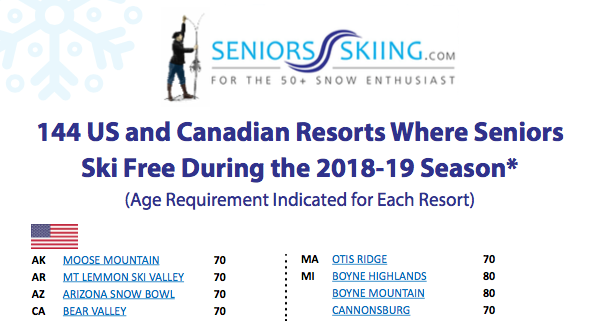
The list now totals 144 places in North America where seniors can ski free (or almost free). To find the list, click “Community,” then “Subscriber Only Content,” then “Free Skiing For Seniors.” Or take a shortcut by clicking here.

We encourage all readers to submit the names of other areas offering free skiing to seniors or the season passes for $125 or less or day tickets for $25 or less.

Many thanks to the readers who sent in updates.


INVITE

PARTYTIME!!!! Wednesday, November 14 in NYC

Come celebrate 5 years of SeniorsSkiing.com!

You’ll meet other older skiers and have a chance to win some terrific raffle prizes, including, a trip to Okemo, a pair of APEX boots, Orsden parkas, a season of Safe Descents ski and snowboard insurance, DeBooter ski boot jacks, Bootster ski boothorns, discounts on Masterfit boot products, subscriptions to Skiing History magazine, etc. RSVP if you can. Otherwise, just drop-in. Details follow:

INVITE

You’re Invited! SeniorsSkiing.com’s Fifth Anniversary Party

Additional Raffle Prizes: Safe Descents ski and snowboard insurance.

Peace of Mind: Simplified and Inexpensive Ski/Board Insurance

Safe Descents provides ski and snowboard evacuation insurance in an uncomplicated manner and at very attractive prices. I just purchased coverage for the entire season for $56.99.

For that amount, Safe Descents covers any ambulance or air evacuation services if I’m injured in-bounds at any ski resort in the United States. That’s in addition to other coverage like sending a loved one to the hospital and/or getting me back home following my hospital stay. These and other benefits have a maximum of $25,000. The company’s policies are underwritten by the global Starr Indemnity and Liability Company. Safe Descents recently started to advertise with SeniorsSkiing.com.

Before making my purchase, I googled “snow skier’s insurance” and clicked on a few of the options that popped up. Without getting too far into the details, what I found was confusing, exclusionary, and expensive. The websites were complicated. In one case, after filling in all the details, the site informed me that it doesn’t insure people 70 and older. In another case, insurance for a one-week ski trip in the US was quoted at $319. Granted, these appear to be general travel insurance plans tweaked to include a skier’s emergency evacuation needs, but it still was pricey.

The Safe Descents coverage is strictly for ski and snowboard evacuation insurance. The company’s website is in plain language and easy to read. (Click on the adjacent Safe Descents ad to reach the website. It rotates with the Ski Mojo ad.) The online enrollment process is simple and to the point. At present, two products are offered: The one I purchased is for the entire season and costs $56.99. The other offering is for a day of skiing/boarding and costs $4.75.

Last year, at Copper Mountain, I sat in the base lodge, while members of the ski patrol, a fireman and a policeman tried to convince a man who had hurt himself to use the waiting ambulance to go to the hospital. He refused because his insurance would not cover the cost. He planned to wait to see if his injury got worse and if it did, drive there himself.

I know that some healthcare plans provide a portion or all of necessary ambulance and/or air evacuation services. But those services add-up quickly. The coverage offered by Safe Descents will cover the difference. A season’s coverage for $56.99 — at Vail or Aspen, the cost of a few burgers and beers — simply makes sense. It’s good value for peace-of-mind.